18 Party Card Games for a Night Everyone Actually Joins
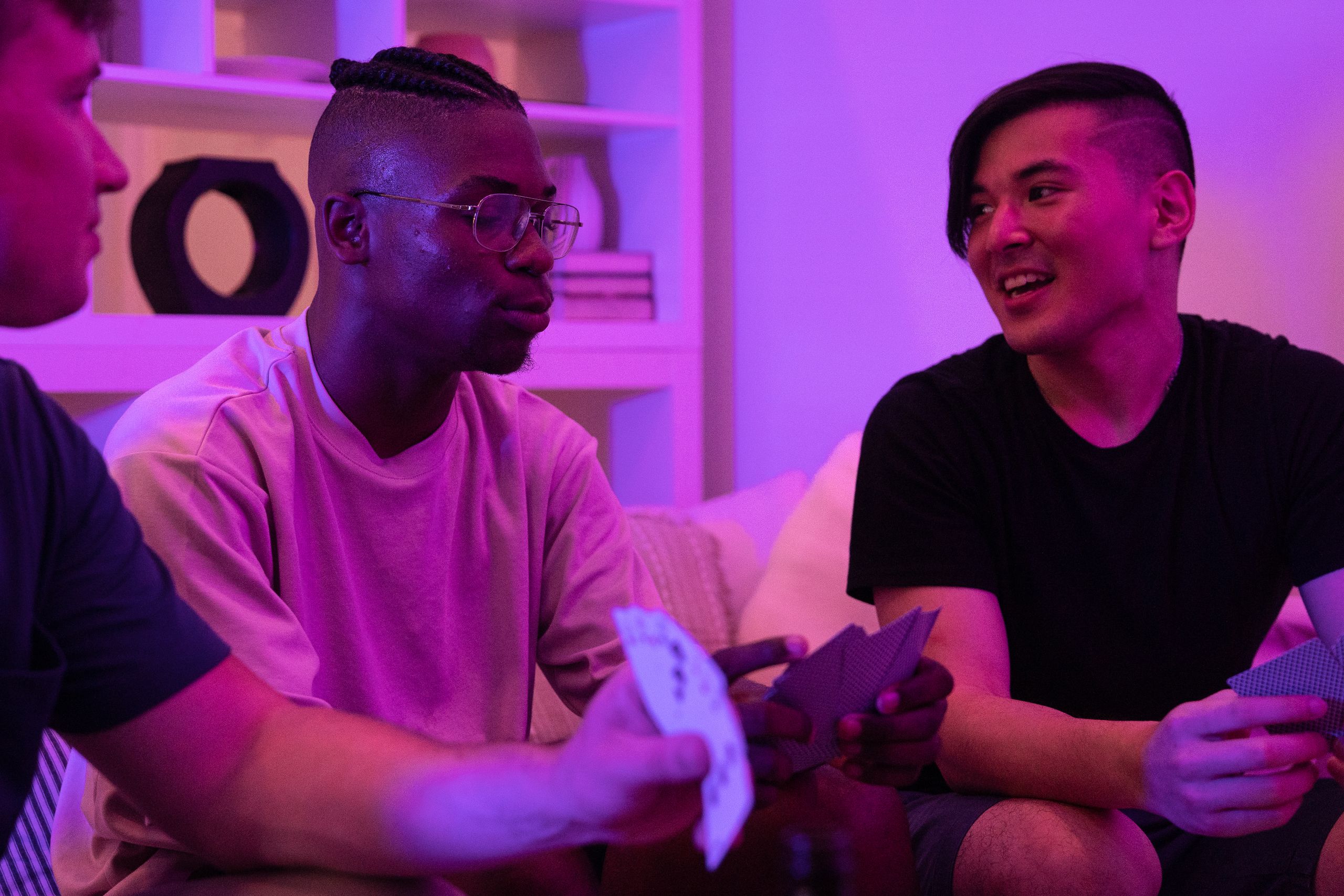
I used to think a good party needed a big plan, a themed menu, and a playlist I spent hours on. Then one Friday night, with eight friends crowded into my living room and nothing ready except a deck of cards and a bag of chips, we played until past midnight and nobody wanted to leave. That night taught me something I keep coming back to: the best party card games are the ones that get everyone playing within five minutes, no long rulebook required.
Since then I have tested every game on this list at my own table, with groups from four to twelve people, kids and grandparents mixed in. I picked them by a simple test: could I teach it in under three minutes, did the quietest person in the room join in, and did anyone ask to play it again? If a game failed any of those three, it did not make the cut.
Related article: if your group skips drinks entirely, I also put together party games for adults without alcohol that pair well with everything below. Keep a couple of decks and one boxed game by the couch, and you will never stare at a silent room again.
Key Takeaways
- Start with one fast game like Uno or Taco Cat Goat Cheese Pizza to warm the room up before trying anything longer.
- Mix one loud game, one quiet strategy game, and one team game across the night so every personality gets a turn to shine.
- Keep groups of six or more on team or speed games, because turn-based games drag when people wait too long between turns.
- A standard deck of cards covers five games on this list for free, so you do not need to buy a box for every idea.
- Teach only the core rule first and add the tricky rules mid-game; nobody remembers a ten-minute explanation.
18 Party Card Games That Actually Get Played
1. Uno — The One Nobody Refuses
Uno is the safest opener in my house because literally everyone already knows it, or learns it in one round. I deal seven cards each, set the draw pile in the middle, and within two minutes my mother-in-law is skipping my turn with a straight face. The color and number matching keeps kids in the game, while the Draw Four and Reverse cards give adults just enough mischief to stay interested.
The honest downside is that a game can drag when someone keeps drawing cards, so I cap our house rule at three draws and then the turn passes. We also play the UNO Extreme version sometimes, where the launcher fires out random cards and the whole table yells. That version is louder, messier, and absolutely not for a quiet evening.

Pro Tip: Play to 500 points across several rounds instead of a single hand, so one unlucky deal does not end the night for anyone.
Cost: Around $6–$10 | Time: 15–30 minutes | Difficulty: Easy
2. Exploding Kittens — Fast, Funny, and Slightly Evil
Exploding Kittens is the game I pull out when the group wants something quick and silly. The idea is simple: you draw cards and hope you do not pull the Exploding Kitten, and if you do, you need a Defuse card or you are out. The artwork is ridiculous in the best way, with cards like Taco Cat and Hairy Potato Cat, and my teenagers quote the card names for days afterward.
I like that a full round takes about fifteen minutes, which makes it perfect between dinner and dessert. The downside is that eliminated players sit out, so with a big group I run it as a tournament: the winner stays, two new players rotate in. That keeps everyone involved and stops anyone from scrolling their phone in the corner.

Pro Tip: Shuffle the Defuse cards back in carefully and count them first, because one missing Defuse changes the whole balance of the game.
Cost: Around $20 | Time: 15–20 minutes | Difficulty: Easy
3. Sushi Go! — The Cutest Game on the Table
Sushi Go! is a pick-and-pass game where everyone holds a hand of sushi cards, picks one to keep, and passes the rest along. You score for sets like three sashimi or the most maki rolls, and the whole thing is over in fifteen minutes. I introduced it at a family dinner and my eight-year-old niece beat all the adults, which she has never let us forget.
What I love is how calm it is compared to the shouting games on this list. Nobody is eliminated, the art is adorable, and even shy guests can play without performing for the room. The only watch-out is that the scoring takes one practice round to click, so I score the first round openly on paper and explain each set as we count it.

Pro Tip: For eight or more players, grab the Sushi Go Party version instead, since the base game tops out at five players.
Cost: Around $10–$15 | Time: 15 minutes | Difficulty: Easy
4. Love Letter — Sixteen Cards, Endless Bluffing
Love Letter fits in a tiny pouch, has just sixteen cards, and still produces the most dramatic moments of any game I own. Each player holds one card and tries to get their love letter to the princess, using guards to guess opponents’ cards and barons to compare hands. A round takes about five minutes, which means we always play best of five.
I keep this one for smaller groups of three or four, because with two players it feels a bit thin and with six it gets chaotic. The downside is that a bad guess can knock you out in the first minute, so I warn new players up front: getting knocked out early is normal, and the next round starts in about ninety seconds anyway.
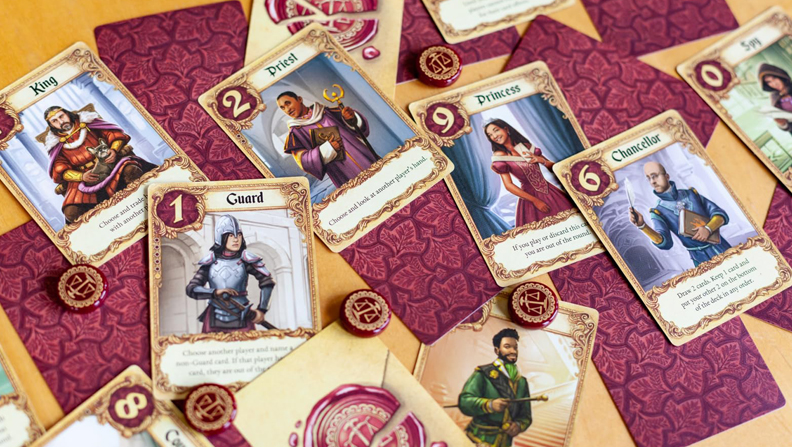
Pro Tip: Watch what cards have already been played before guessing with the Guard, because a guess for a card that is already gone is a wasted turn.
Cost: Around $10 | Time: 20 minutes | Difficulty: Easy to medium
5. Coup — The Bluffing Game That Starts Arguments (The Good Kind)
Coup is a bluffing game where everyone claims to be a duke, an assassin, or a captain, and anyone can call your bluff. I played it with six friends one New Year’s Eve and we were still arguing about who lied best a week later. Each player starts with two hidden character cards and two coins, and the last player with a card left wins.
The game shines with five or six players who enjoy a bit of theater, and it falls flat with a shy group, so I read the room before suggesting it. The honest downside is player elimination again: the first person out can wait ten minutes. My fix is simple, and it works every time: the eliminated player becomes the banker and handles the coins, so they stay in the conversation.

Pro Tip: Bluff small and early, because the player who claims the duke on turn one with total confidence is rarely challenged.
Cost: Around $12 | Time: 15–20 minutes | Difficulty: Medium
6. Skip-Bo — The Quiet Favorite Grandparents Love
Skip-Bo is the game my mother asks for by name, and that tells you everything about its pace. Each player has a personal stockpile and races to play cards in number order onto shared building piles, using Skip-Bo wild cards to fill gaps. It is gentle, it is strategic, and nobody has to shout or slap the table.
I deal it out when the night needs a slower gear, usually after the loud games have worn everyone out. A full game can run forty-five minutes, which is the main downside, so for parties I play a short version: whoever clears ten cards from their stockpile first wins the round. That keeps it to about twenty minutes and still feels complete.

Pro Tip: Save your Skip-Bo wild cards for the end of your stockpile run, because burning one early usually costs you a longer turn later.
Cost: Around $8 | Time: 20–45 minutes | Difficulty: Easy
7. Phase 10 — The All-Night Rummy Challenge
Phase 10 is the game for the group that wants to settle in and stay a while. Like rummy, you build sets and runs, but each of the ten phases asks for something different, from two sets of three to a run of nine. I started it at seven one evening with four friends and we were still on phase eight at ten, completely unbothered, because the slow climb is the whole point.
The tricky part is the length, so I never start Phase 10 after nine at night. For a party I play the short version, racing to phase five instead of ten, which lands around forty-five minutes. Keep a simple score sheet on paper and a pen nearby, because tracking who completed which phase is the one piece of admin the game demands.

Pro Tip: Hold your Wild cards until you can complete a phase in one move, because playing them early just paints a target on your hand.
Cost: Around $8 | Time: 45–90 minutes | Difficulty: Easy to medium
8. Dutch Blitz — Pure Chaos in Four Colors
Dutch Blitz is speed solitaire played against everyone at once, and it is the loudest quiet game I own. Each player has their own colored deck and races to build shared piles in number order while also clearing their own blitz pile. There are no turns, so the moment I say go, the whole table erupts into shuffling, shouting, and laughing.
I only play it with four people at a table with real elbow room, because with more players or a small table the decks collide and someone always knocks over a drink. That is the honest downside: you need space and a sturdy table. Play it on the dining table, not the coffee table, and keep drinks on a side counter.
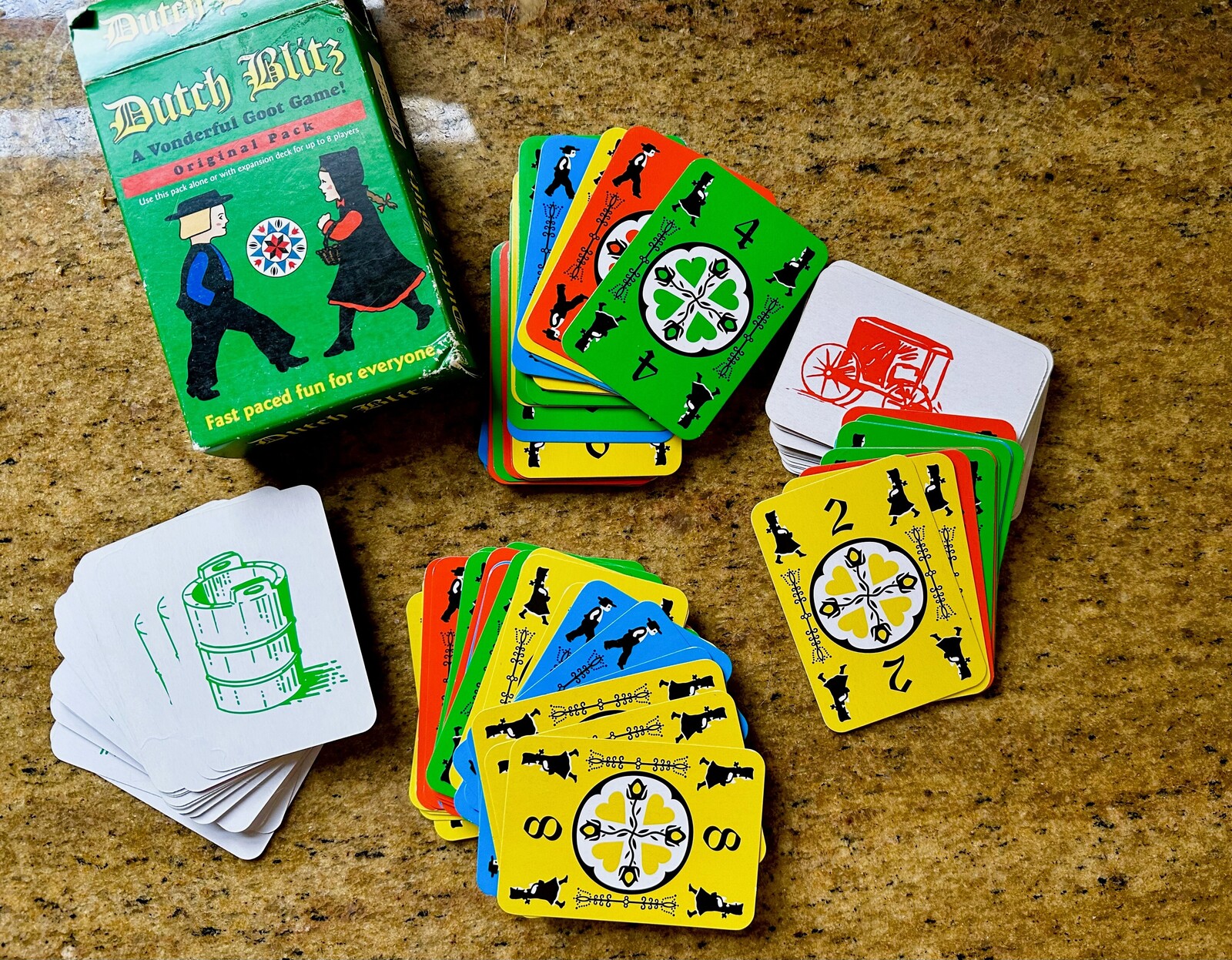
Pro Tip: Sort your blitz pile by glancing at the top three cards only, because digging through the whole pile wastes the seconds that win rounds.
Cost: Around $12 | Time: 20–30 minutes | Difficulty: Medium
9. Taco Cat Goat Cheese Pizza — The Slap Game Kids Beg For
Taco Cat Goat Cheese Pizza has the silliest name on this list and the simplest rules: players take turns flipping cards and saying taco, cat, goat, cheese, pizza in order, and when the word matches the card, everyone slaps the pile. The last hand down takes the cards. I played it with my nephews and a group of adults, and the adults were somehow more competitive than the kids.
The game takes about ten minutes and works best with four to eight players standing or sitting close together. The watch-out is the slapping itself, so I set one rule before we start: open palms only, no grabbing, and anyone who slaps on a wrong match picks up the pile. That single rule has prevented every argument we have ever had over it.

Pro Tip: Say the words at a steady rhythm instead of speeding up, because rushing makes you miss the matches and lose the pile.
Cost: Around $10 | Time: 10–15 minutes | Difficulty: Easy
Also read: if your crowd loves a quiz round between card games, my trivia night party ideas work perfectly as a breather between two loud rounds.
10. Throw Throw Burrito — Dodgeball Meets Cards
Throw Throw Burrito is what happens when a card game meets dodgeball, and yes, it is as ridiculous as it sounds. You collect matching sets of cards, and when someone plays three burrito cards, a battle starts and foam burritos fly across the room. I cleared the coffee table, pushed the chairs back, and watched my normally polite friends dive behind the sofa.
You need real floor space for this one, and I mean it: at least a few clear feet around the table, with breakables moved out of range. The cards themselves are simple to learn, so the game works for ages seven and up, and a round takes about fifteen minutes. The downside is the cleanup, because burritos end up under furniture every single time.

Pro Tip: Play in socks on a rug if you can, because everyone ends up lunging and sliding, and hard floors make it a bruise contest.
Cost: Around $25 | Time: 15–20 minutes | Difficulty: Easy
11. Monopoly Deal — All the Fun, None of the Three Hours
Monopoly Deal takes the property-trading heart of Monopoly and squeezes it into a fifteen-minute card game, which is the best thing anyone has ever done to that franchise. You collect three complete property sets to win, charge rent with action cards, and steal sets with the Deal Breaker card. My husband, who refuses the board game on principle, asks for this one by name.
The first game takes a little patience because the action cards have a lot of small text, so I read the first three action cards aloud for the table before we start. After that it clicks fast. The honest downside is luck: sometimes the property cards just do not come, and there is no strategy that fixes a bad shuffle. We play best of three to smooth that out.

Pro Tip: Keep money cards in your bank instead of hoarding them as actions, because an empty bank means paying rent with your precious properties.
Cost: Around $8 | Time: 15–45 minutes | Difficulty: Easy to medium
12. Apples to Apples — The Judge Decides What Is Funny
Apples to Apples is my go-to when the group includes people who do not usually play games. One player judges each round, everyone else plays a noun card they think matches the adjective card, and the judge picks the funniest or strangest fit. There is no skill to learn, no score to stress about, and the judge role rotates so everyone gets to be the decider.
I have seen the quietest guest win the whole night with one perfectly absurd card choice, which is exactly why this game works for mixed groups. The downside is that it needs at least four players to be fun, and with more than eight the rounds start to drag. My fix is a house rule: the judge must pick within thirty seconds, timed on someone’s phone.

Pro Tip: Play to the judge’s taste, not your own, because the player who wins is the one who figures out what makes the judge laugh.
Cost: Around $20 | Time: 30–45 minutes | Difficulty: Easy
13. The Crew: The Quest for Planet Nine — Teamwork Without Talking
The Crew is a cooperative trick-taking game, which means everyone at the table wins or loses together, and that changes the whole mood of the night. Players work through fifty missions, each with a small task like winning a trick with a specific card, and the twist is that you cannot talk about your cards. You communicate only through tiny tokens that hint at your hand.
I play this one with three or four friends who like a quieter challenge, usually late in the evening when the loud games are done. The downside is that it is not a first-game-of-the-night pick: new players need one full mission to understand the silent communication, and explaining it cold takes a few minutes. Once it clicks, though, my group asks for it every time.

Pro Tip: Start on mission one even if your group is experienced, because the early missions teach the token system better than any explanation.
Cost: Around $15 | Time: 20–40 minutes | Difficulty: Medium
14. Codenames — Two Teams, One-Word Clues
Codenames turns a grid of twenty-five word cards into a team battle, and it is the best game on this list for a big group. Two spymasters give one-word clues to connect their team’s words, and the rest of the team debates every clue out loud. I played it with ten people at a birthday party and the whole room was shouting suggestions within two minutes.
You need at least four players, and it works best with six or more, so this is not a couples’ game. The honest downside is downtime for the team that is not guessing, so I keep rounds moving with a two-minute sand timer per turn. The spymaster role also suits confident players best, so I let volunteers take it rather than assigning it.

Pro Tip: Give clues that connect two words at once instead of playing it safe with one, because bold clues win games and cautious clues stall them.
Cost: Around $15–$20 | Time: 15–30 minutes | Difficulty: Easy to medium
15. Spoons — A Deck of Cards and Kitchen Cutlery
Spoons is the cheapest game on this list and one of the most chaotic. You need a standard deck, one fewer spoon than players, and a table everyone can reach. Players pass cards around the circle trying to collect four of a kind, and the moment someone has four, they grab a spoon, and everyone else lunges for the rest. The last person without a spoon loses the round.
I played it at a family reunion with nine people and a set of plastic spoons, and it ended with everyone laughing too hard to deal the next hand. The watch-out is real: use cheap spoons, not your good silverware, and keep the table clear of glasses. My one rule is no standing lunges across the table, because someone always gets an elbow.

Pro Tip: Pass cards quickly even with a bad hand, because the speed of the passing is what forces mistakes and opens up the spoon grab.
Cost: Free with a deck and spoons | Time: 15–20 minutes | Difficulty: Easy
16. Cheat (B.S.) — Lie With a Straight Face
Cheat, which most of my friends know as B.S., needs nothing but a standard deck and a willingness to lie politely. Players take turns placing cards face down and claiming a rank, and anyone can call out a suspected lie. If the claim was false, the liar picks up the pile; if it was true, the accuser does. The first player to empty their hand wins.
I love this one for teenagers because it teaches bluffing without any fancy components, and the accusations get funnier as the pile grows. The downside is that it can stall if everyone plays honestly, so I add one house rule: you must lie at least once per round. That single rule keeps the game moving and the table laughing.
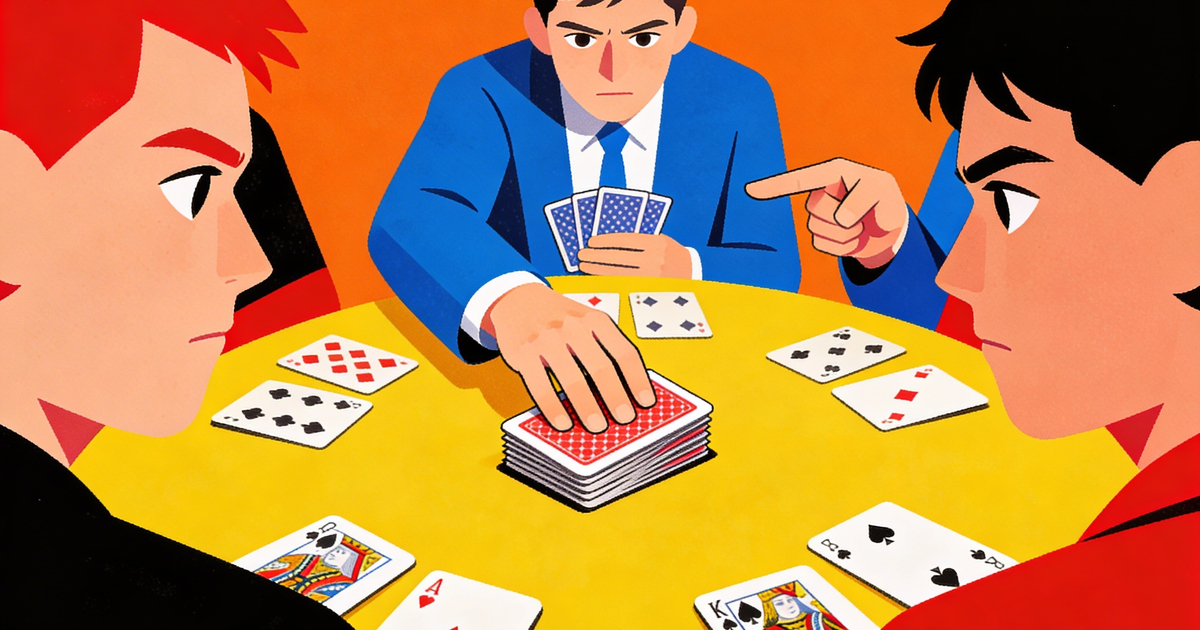
Pro Tip: Lie about small piles early, because a huge pile late in the game is the one nobody dares to challenge.
Cost: Free with a standard deck | Time: 15–30 minutes | Difficulty: Easy
17. Crazy Eights — The Original Shedding Game
Before Uno existed, there was Crazy Eights, and it still holds up beautifully with a plain deck of cards. Match the suit or number of the top discard card, play an eight to change the suit, and be the first to empty your hand. I taught it to my kids on a road trip with a deck from a gas station, and it has been our default car-and-couch game ever since.
The beauty here is zero cost and zero learning curve for anyone who has held cards before. The honest downside is that with only two players it can feel repetitive, so I add the scoring version for couples: face cards count ten, eights count fifty, and we play until someone passes five hundred penalty points. That small change makes every card matter.

Pro Tip: Hold your eights until you truly need them, because an eight spent early is an escape route you will miss later.
Cost: Free with a standard deck | Time: 15–30 minutes | Difficulty: Easy
18. Spades — The Serious Table’s Favorite
Spades is the game for the friends who want a real contest, not just a laugh. Played in partnerships of two, each team bids how many tricks it will take, spades are always trump, and the team that hits five hundred points first wins. I play it with three other friends who take it very seriously, and our rematch rivalry is now a running joke in our group chat.
This one needs four players and a bit of patience to learn the bidding, so I do not suggest it as the first game of the night. Teach the bidding with one open practice hand, cards face up, and everyone understands it in ten minutes. The downside is that a bad bid can sink a round fast, so I remind new players that underbidding slightly beats overbidding almost every time.

Pro Tip: Count the spades in your hand before you bid, because the number of spades you hold is the most reliable guide to your bid.
Cost: Free with a standard deck | Time: 30–60 minutes | Difficulty: Medium
Which Game Fits Your Night?
If you are staring at this list of party card games wondering where to start, match the game to your group first. A loud group of eight needs something different from a quiet table of four.
| Game | Best For | Players | Time | Vibe |
|---|---|---|---|---|
| Uno | Any group, any age | 2–10 | 15–30 min | Easy and familiar |
| Exploding Kittens | Quick warm-up rounds | 2–5 | 15–20 min | Silly and fast |
| Sushi Go! | Calm family nights | 2–5 | 15 min | Gentle and cute |
| Love Letter | Small groups | 2–4 | 20 min | Quick bluffing |
| Coup | Friends who love drama | 3–6 | 15–20 min | Bluffing and theater |
| Skip-Bo | Grandparents and slow evenings | 2–6 | 20–45 min | Relaxed strategy |
| Phase 10 | Long evenings | 2–6 | 45–90 min | Steady challenge |
| Dutch Blitz | High-energy groups | 2–4 | 20–30 min | Chaotic speed |
| Taco Cat Goat Cheese Pizza | Kids and loud rooms | 2–8 | 10–15 min | Slap-happy chaos |
| Throw Throw Burrito | Active groups with space | 2–6 | 15–20 min | Physical and wild |
| Monopoly Deal | Board game fans in a hurry | 2–5 | 15–45 min | Trading and take-that |
| Apples to Apples | Mixed groups and non-gamers | 4–10 | 30–45 min | Funny and easy |
| The Crew | Quiet cooperative nights | 2–5 | 20–40 min | Team puzzle |
| Codenames | Big parties | 4–10+ | 15–30 min | Team debate |
| Spoons | Zero-budget chaos | 3–10 | 15–20 min | Fast and physical |
| Cheat (B.S.) | Teenagers and bluffers | 3–10 | 15–30 min | Bluffing, no cost |
| Crazy Eights | Any deck, anywhere | 2–7 | 15–30 min | Classic and simple |
| Spades | Serious card players | 4 | 30–60 min | Competitive bidding |
Mistakes I Made (So You Don’t Have To)
Teaching every rule before the first card is dealt. I once spent twelve minutes explaining Coup while everyone nodded politely and retained nothing. Now I teach the core rule, deal the cards, and add edge cases as they come up.
Picking a long game for a big group. Phase 10 with eight people was my worst hosting mistake, because turns took forever and half the table drifted off. Big groups need team games, speed games, or simultaneous play. Save the long games for four players or fewer.
Forgetting the table itself. Dutch Blitz on a small coffee table ended with a spilled drink, and Throw Throw Burrito near a bookshelf ended with a broken vase. Now I match the game to the furniture: loud physical games get the dining table and clear floor, quiet games get the couch.
Letting eliminated players sit idle. In Exploding Kittens and Coup, the first person out used to sit quietly for ten minutes, which kills the mood. Now eliminated players become bankers, scorekeepers, or snack managers, and I run short tournaments so everyone rotates back in quickly.
Frequently Asked Questions
What is the best card game for a large party of ten or more?
Codenames and Apples to Apples handle ten or more players best, because they split into teams or rotate a judge instead of making everyone wait for a turn. Spoons also scales well if you have enough spoons and table space. I avoid turn-based games like Phase 10 with a crowd that size, because the waiting kills the energy.
Which card games work with just a standard deck?
Spoons, Cheat, Crazy Eights, and Spades all need nothing but a standard fifty-two card deck, and I keep two decks in a kitchen drawer for exactly that reason. If you own zero boxed games, start with Crazy Eights for kids, Cheat for teenagers, and Spades for the serious table. One deck covers a whole evening.
How do I keep a game night fun for both kids and adults?
Pick games where age does not decide the winner, like Uno, Sushi Go!, and Apples to Apples, and let kids judge a round of Apples to Apples so they feel in charge. I also keep the first game under fifteen minutes, because a fast early win makes kids want to stay for the longer games afterward. Avoid heavy bluffing games with young kids, since they can feel left out of the joke.
What if my friends say they do not like card games?
Start with Throw Throw Burrito or Taco Cat Goat Cheese Pizza, because neither feels like a traditional card game and both get people laughing within two minutes. I have converted more than one self-declared non-gamer with a foam burrito to the face. If they still resist, Apples to Apples is the gentlest next step, since there is nothing to learn and no way to play badly.
How many games should I plan for one party night?
Three is my magic number: one fast warm-up, one main game, and one closer. Mine is usually Taco Cat Goat Cheese Pizza, then Codenames, then a final round of Uno. Planning more usually backfires, because the group finds a favorite and wants it twice.
Final Thoughts
The best game nights I have hosted were never about the fanciest box on the shelf. They were about a table full of people who all felt included, a game that took two minutes to teach, and at least one moment where everyone laughed at the same time. These eighteen party card games give you that mix: fast ones, funny ones, quiet ones, and one serious one for the competitive table.
Read this next: if your next gathering is a big one, my party games for large groups will help you scale the whole evening up without losing the fun. Start with Uno, keep a deck in the drawer, and let the night take care of itself.






One Comment