21 Thanksgiving Porch Decor Ideas (Welcoming, Weatherproof & Under $60)
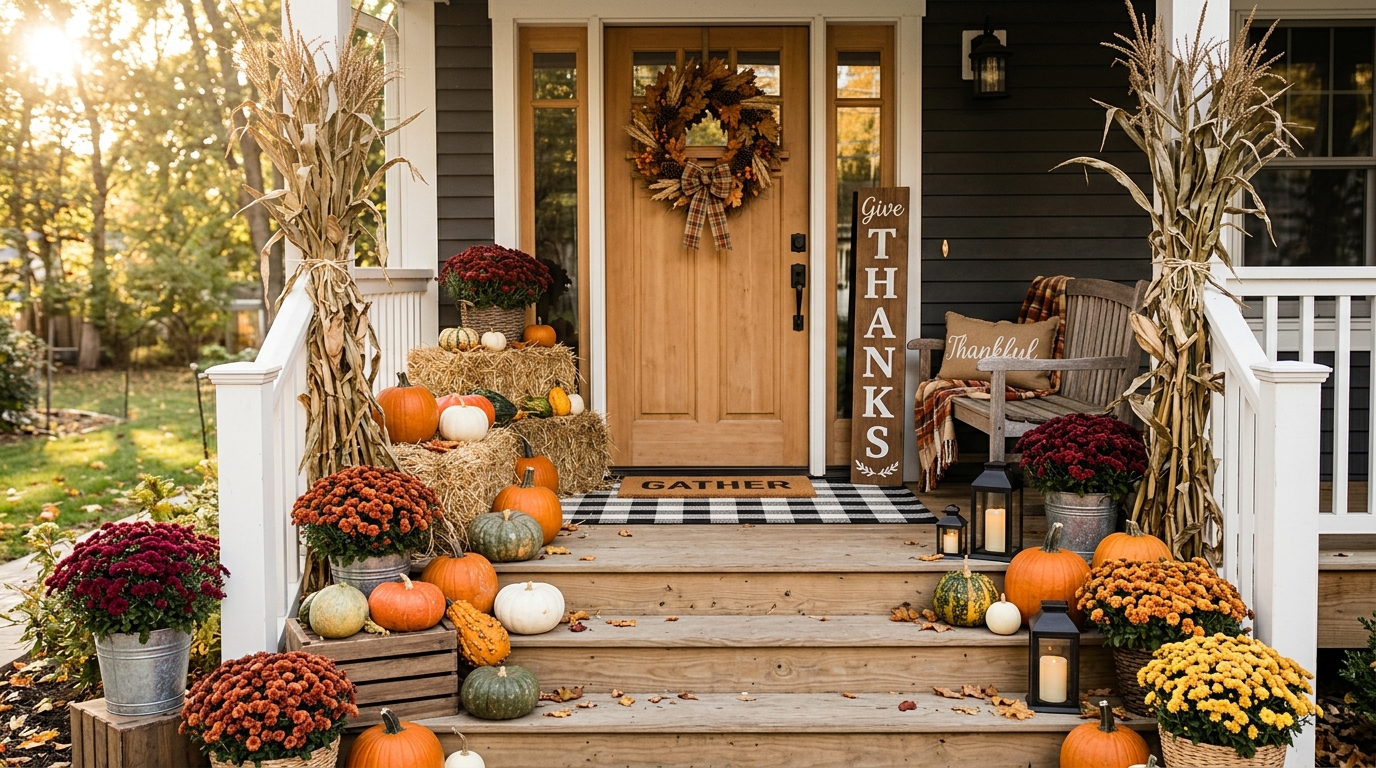
I love the way a thoughtfully decorated porch makes a home feel ready for Thanksgiving before anyone even steps inside. Pumpkins, warm lights, autumn leaves, and a welcoming doormat can turn an ordinary entrance into a cozy seasonal display without requiring a big budget or a full weekend of work.
When I plan Thanksgiving porch decor, I focus on three things: keeping the decorations secure, choosing pieces that can handle November weather, and making the entrance look inviting without blocking the walkway. Whether I have a spacious covered porch, a few concrete steps, or a small apartment doorway to decorate, I can create a beautiful harvest-inspired look with a few well-chosen accents.
In this guide, I share 21 Thanksgiving porch decor ideas for different spaces, budgets, and weather conditions. From pumpkin stacks and wheat door swags to corn stalks, lanterns, plaid textiles, and warm string lights, these ideas help create a welcoming entrance that feels festive throughout November.
Save this for later
Table of Contents
I also explain how I choose between real and faux pumpkins, estimate decorating costs, protect outdoor decorations from wind and rain, and transition a porch from Halloween to Thanksgiving. With budget options starting around $30, a simple color scheme, and reusable decorations, I can create a seasonal display that looks polished without overspending.
Key Takeaways
- Best decorating approach: I repeat three coordinating colors, layer decorations at different heights, and keep the entrance clear.
- Budget planning: I can create a charming display for around $30, build a fuller arrangement for $60, or add lighting and finishing touches with a $100 budget.
- Weather protection: I secure lightweight decorations with zip ties, use weights where appropriate, and choose outdoor-rated materials.
- Real or faux pumpkins: I use faux pumpkins in windy locations and stacked displays, while real pumpkins and potted mums add natural texture.
- Lighting matters: Warm-white string lights, battery-operated lanterns, and solar path lights help guests find the entrance after sunset.
- Easy seasonal updates: I reuse my autumn decorations and change a few accents to make the porch feel ready for Thanksgiving.
Related article: 20 Thanksgiving Table Decoration Ideas That Guests Will Talk About All Year
How Do You Decorate a Porch for Thanksgiving?
I start by dividing the porch into four decorating areas: the front door, the spaces on either side of it, the floor, and the lighting. This gives me a simple plan before I buy anything and helps prevent the entrance from looking cluttered.
For the door, I choose a wreath, wheat swag, or seasonal sign. On either side, I add pumpkin stacks, potted mums, or corn stalks. A layered doormat anchors the entrance, while lanterns and outdoor lights provide a welcoming glow after sunset.
I also arrange decorations from tallest to shortest. Corn stalks or a tall branch display can sit toward the back, medium-height plants go in the middle, and pumpkins or small gourds fill the front. Repeating colors such as burnt orange, cream, and deep green ties everything together.
I can usually complete a basic setup in an afternoon. Depending on what I already own, the size of my porch, and the materials I select, a practical budget might range from $30 to $100.
The Door Zone
1. The Pumpkin Stack Flanking the Door
I like using matching pumpkin stacks on both sides of the front door because they create a balanced harvest display without requiring much extra decoration. I arrange three pumpkins in descending sizes on each side, keeping the largest at the bottom and the smallest at the top.
Real pumpkins can cost around $15 per stack, depending on their size and where I shop. Faux pumpkins may cost $20–$25 per stack, but I can pack them away and use them again next year. I allow about 15 minutes to arrange both sides.
For real pumpkins, I choose flat-bottomed varieties that stack securely. If I use lightweight faux pumpkins in a breezy location, I secure them with a suitable outdoor-safe anchor.
Best for: Covered porches, open steps, and entrances that need a noticeable seasonal focal point.

2. The Wheat Bundle Door Swag
A wheat bundle offers a simple alternative to a traditional fall wreath. I gather dried wheat stems, tie them with copper-colored ribbon, and hang the bundle from a sturdy door hook.
Materials generally cost around $8–$10, and I can finish the arrangement in about 10 minutes. Since a wheat swag sits relatively flat against the door, it can work especially well when a bulky wreath would interfere with a storm door.
I check that the stems are tied tightly and positioned away from the door hinges. Dried wheat can shed or become brittle in damp conditions, so I prefer a sheltered entrance for this decoration.
Best for: Small entryways, storm doors, and rustic Thanksgiving decorating.

3. The Fall Wreath Upgrade
When I already have a plain grapevine wreath, I can turn it into a Thanksgiving decoration with a few inexpensive additions. I attach faux autumn leaves, small velvet pumpkins, and a wired plaid bow to create a fuller, more seasonal design.
A basic wreath might cost $5–$7, while the complete project can come to approximately $16. I set aside about 25 minutes to arrange the decorations and secure everything in place.
I use weather-resistant faux foliage and suitable adhesive, especially if the wreath will hang outdoors. Velvet accents look lovely, but I keep them under a covered entrance because decorative fabrics can absorb moisture.
Best for: Front doors that need a traditional autumn focal point.

4. The Welcome Sign Vignette
A vertical wooden sign can make an entrance feel personal without taking up much space. I lean a sign with a welcoming seasonal message against the wall beside the door, then add a pumpkin and a small lantern at its base.
A sign usually costs around $12–$18, and the complete arrangement takes approximately five minutes to style. I like this idea because I can move the pieces around until they look balanced without attaching anything permanently to the wall.
Before placing a wooden sign outdoors, I check whether its paint and finish are suitable for exterior conditions. Many decorative signs are intended for indoor use, so I bring mine inside when heavy rain or snow is expected.
Best for: Covered porches with a little spare floor space.

5. The Layered Doormat
I use a layered doormat to give the entrance an immediate seasonal update. A larger plaid or buffalo-check outdoor rug underneath a smaller coir doormat adds pattern, texture, and a clear visual boundary around the doorway.
The lower rug can cost about $12, depending on its size and material. Once I have the pieces, arranging them takes only a couple of minutes.
I make sure both mats lie flat and do not create a tripping hazard. For exposed entrances, I choose outdoor-rated materials that dry reasonably quickly and can be lifted for cleaning.
Best for: Apartment entrances, small porches, and anyone who wants an easy decorating change.

Pro Tip: Before shopping, I choose three main colors and use them throughout the porch. Burnt orange, cream, and deep green make a warm combination, while rust, mustard, and brown create a more muted autumn look. A consistent palette helps inexpensive decorations look coordinated.
Corners and Height
6. The Corn Stalk + Hay Bale Corner
I use corn stalks and a hay bale when I want my porch to have a classic harvest appearance. A bundle of dried stalks can be fastened to a sturdy porch post, with a hay bale and a couple of pumpkins arranged at the base.
Stalk bundles often cost around $8–$12, while a small bale may cost about $8. I allow roughly 20 minutes for the arrangement, including securing the stalks.
Although these materials are designed to be outdoors, the display still needs protection from strong wind. I attach the stalks firmly, position the bale on a stable surface, and keep the arrangement away from doorways and walkways.
Best for: Open steps, porch posts, and larger entrances that need height.

7. The Lantern Cluster Trio
Three lanterns in different sizes create an attractive focal point beside the front door. I group a tall lantern, a medium one, and a smaller version together, then place battery-operated pillar candles inside for a soft evening glow.
I can put together a budget-friendly trio for approximately $10–$25 by combining affordable lanterns with one more decorative piece. Setup takes about 10 minutes, and battery candles with timers reduce the need to switch them on manually.
For uncovered porches, I select lanterns designed for outdoor use or bring them inside during bad weather. I also make sure they cannot tip easily and avoid using real flames near dried foliage, hay, or fabric.
Best for: Covered porches, sheltered steps, and evening entertaining.

8. The Ladder Display
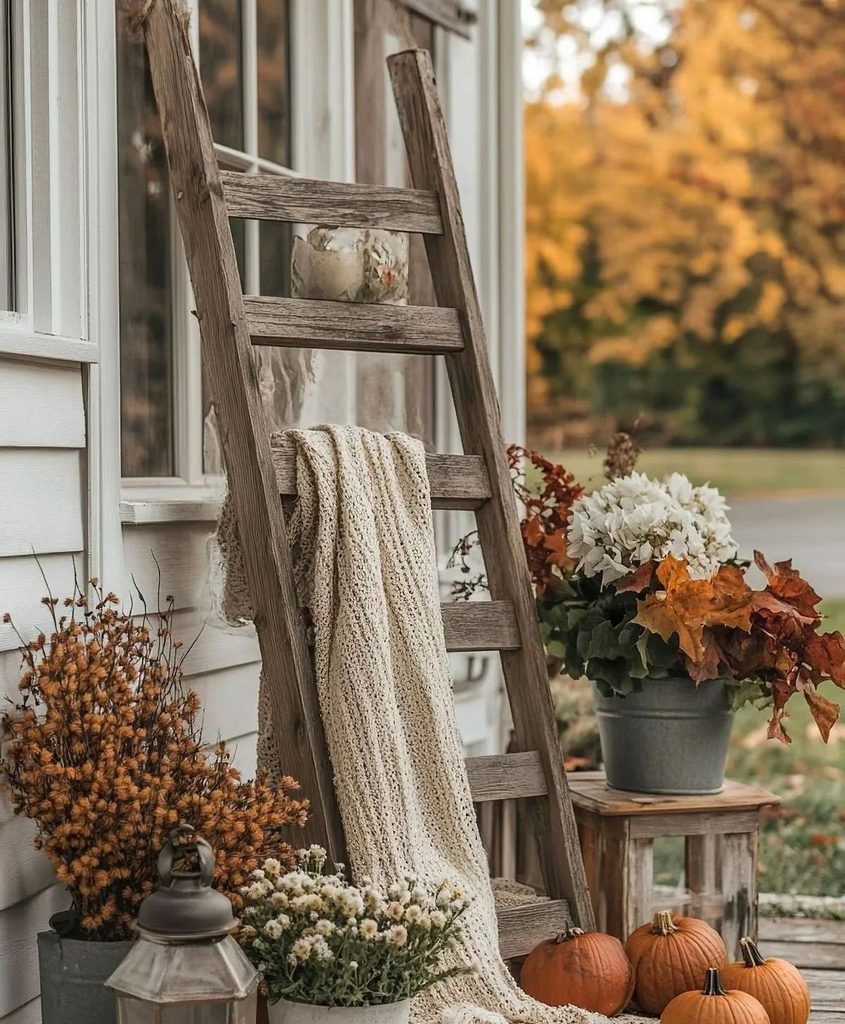
A small wooden ladder can turn an empty porch wall into a decorative display. I lean a stable ladder against the wall and arrange miniature pumpkins, a folded plaid throw, and a strand of autumn garland across its rungs.
A secondhand ladder might cost $10–$15, and I can finish the styling in approximately 15 minutes. The different levels let me display several seasonal accents without spreading them across the floor.
I reserve this idea for a covered porch because untreated wood can swell or warp when repeatedly exposed to rain. I also secure the ladder so it cannot slide, and I keep it out of the main walking route.
Best for: Covered porches with an unused wall or corner.
9. The Galvanized Bucket of Branches
When I want a tall decorative element without spending much, I use a galvanized metal bucket filled with branches. Bare twigs, curly willow, or sturdy branches from the yard give the arrangement height, while faux autumn leaves add seasonal color.
A basic bucket may cost around $8, bringing the total to approximately $14 if I need to purchase a few decorative stems. I can assemble the display in about 10 minutes.
To prevent tipping, I place a suitable weight in the bottom of the bucket and arrange the branches so they do not catch too much wind. I also check for sharp ends and avoid branches that could interfere with the doorway.
Best for: Open steps and entrances that need a weather-tolerant vertical accent.

10. The Tiered Plant Stand Harvest
A tiered plant stand helps me decorate a small porch without covering every available inch of floor space. I arrange miniature pumpkins, gourds, and a potted mum on two levels, mixing different shapes and heights to make the display interesting.
A simple two-tier stand may cost around $15, and styling it takes about 10 minutes. I like this setup because it creates a layered harvest display in a relatively compact footprint.
I choose a stand with a stable base and keep heavier pots on the lower shelf. If the stand is metal, I check its outdoor suitability and avoid leaving water trapped beneath the pots.
Best for: Apartment doors, narrow porches, and compact entryways.

The Cozy Layer
11. The Plaid Blanket on the Bench
A plaid blanket makes porch seating look warmer and more inviting. I drape a throw over one arm of a bench or rocking chair rather than folding it into a perfect rectangle, creating a relaxed look that suits the season.
A decorative throw may cost around $10–$15, and arranging it takes about a minute. It is an inexpensive finishing touch that adds color and texture without requiring any complicated DIY work.
I use this idea under a covered porch roof and bring the blanket indoors when rain, snow, or overnight frost is expected. For a more exposed area, an outdoor-rated textile is a more practical choice.
Best for: Covered porches with benches, rocking chairs, or outdoor seating.

12. The Pillow Swap
I can refresh existing porch seating simply by changing the pillow covers. Rust, mustard, caramel, and cream work well with common autumn decorations and coordinate easily with pumpkins and plaid textiles.
A pair of seasonal outdoor pillow covers may cost around $12, and switching them takes about five minutes. This is especially useful when I want a noticeable change without buying entirely new cushions.
I look for covers labeled for outdoor use and follow their care instructions. Even weather-resistant fabric benefits from being brought inside during prolonged rain or stored when the seating area will not be used.
Best for: Covered porch benches, outdoor chairs, and small seating areas.

13. The Railing Garland
I use faux autumn garland to carry the harvest colors from the doorway down the porch steps. I fasten the garland along the railing with suitable outdoor ties and add a few decorative pinecones for extra texture.
Depending on the railing length, two strands may cost approximately $16–$24. I allow about 20 minutes for installation and adjustments.
Rather than loosely draping the garland, I secure it at several points so wind cannot pull it away from the railing. I also check that no section hangs into the walking space or covers handrails where guests need a firm grip.
Best for: Open steps, front railings, and porches that need decoration beyond the door.

14. The Crate Side Table Vignette
A wooden crate can serve as a simple side table beside a porch bench. I turn a sturdy crate into a small display surface and arrange a lantern, a pumpkin, and a faux potted mum on top.
A crate may cost around $10, and the entire setup takes approximately five minutes. It is an easy way to use vertical space while bringing together several decorations I already have.
I choose a crate that sits level and can support the items on top. Since untreated wood may absorb water, I keep this arrangement under a roof or use a properly sealed crate intended for outdoor conditions.
Best for: Covered seating areas and porches with room for a small accent table.

The Glow (Plan for Dark Arrivals)
15. Warm String Lights on the Railing
Warm-white string lights help a Thanksgiving porch feel welcoming after sunset. I weave them through the railing garland or run them along the porch roofline to create a gentle glow without making the entrance look overly bright.
Outdoor-rated strands may cost around $10–$15, and installation takes about 20 minutes, depending on the layout. I prefer a warm tone because it complements autumn colors and makes the porch feel more comfortable.
I check the product’s outdoor rating and follow its installation instructions, including the manufacturer’s guidance on outlets, extension cords, and timers. I also secure the lights so they cannot dangle into the walkway.
Best for: Covered porches, open steps, and entrances used after dark.

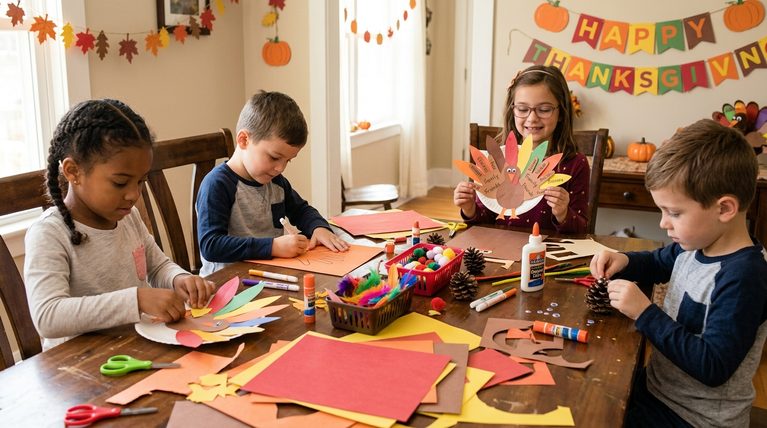
Also read: 17 DIY Thanksgiving Crafts For Kids
16. The Candle Lantern Night Plan
I make evening lighting easier by setting battery-operated lantern candles on timers as soon as I finish decorating. A consistent schedule means I do not have to remember to turn each light on before guests arrive.
If I already own the candles, this idea may not cost anything extra. I set the timers according to the manufacturer’s instructions and choose an evening schedule that suits my household.
Battery candles are particularly convenient around dried wheat, hay, leaves, and blankets because they avoid the open flame of traditional candles. I still check batteries periodically and use lanterns that are suitable for their intended location.
Best for: Anyone who wants dependable evening porch lighting with minimal daily effort.

17. Solar Path Lights to the Steps
Solar path lights help guide visitors toward the front steps while adding a subtle decorative touch. I place four warm-toned stake lights along the walkway, spacing them evenly so the route looks organized rather than crowded.
A set of four may cost around $12–$15, and installation often takes about 10 minutes. Since solar lights do not require household wiring, they can be a practical choice for walkways where adding electrical fixtures is inconvenient.
I place them where their panels receive enough daylight to charge and avoid locations where guests might kick or trip over them. Their brightness and operating time depend on sunlight, battery condition, and the model, so I check them before Thanksgiving evening.
Best for: Open steps, longer walkways, and homes with dark outdoor entrances.

Pro Tip: I test the porch lighting after dark rather than relying on how it looks during the day. That quick check helps me spot dark steps, glare, loose wires, and decorations that obstruct the path before guests arrive.
Small Spaces and Finishing
18. The Apartment Door Version
I do not need a large porch to create a seasonal entrance. For an apartment doorway, I combine a slim wheat swag, a layered doormat, a small faux pumpkin stack, and a battery-operated lantern.
With budget-friendly pieces, I can aim for about $30 and spend roughly 20 minutes arranging everything. The trick is to keep the decorations within my own doorway area instead of spreading them into a shared hallway.
Before decorating, I check building rules about door hangings, hallway clearance, and items placed outside the apartment. I also avoid open flames and select lightweight pieces that can be secured safely.
Best for: Apartments, condos, and small entrances with limited floor space.

19. The Step Pumpkin Runner
A pumpkin runner creates a festive path along the porch steps. I place one pumpkin on each step, alternating sides where space permits, while keeping the middle of every tread clear for walking.
A display for five steps may cost around $12–$18, depending on the pumpkin size and whether I choose real or faux varieties. Setup takes about 10 minutes.
For exposed steps, I favor lightweight faux pumpkins secured with a suitable outdoor-safe anchor. I check every step from top to bottom to make sure the arrangement does not narrow the walking surface or create a slipping or tripping hazard.
Best for: Open steps and porches with a clear railing edge.

20. The Mum Clusters
Potted mums add living color to a Thanksgiving porch, especially when I group several plants together instead of scattering them individually. I choose cream, rust, and golden-yellow flowers to complement pumpkins, dried stalks, and autumn foliage.
In late October, individual mums may cost around $6–$8, although local prices and pot sizes vary. I arrange two or three pots near the base of a taller display to create a fuller harvest corner.
Chrysanthemums can tolerate cool autumn weather, but their hardiness depends on the variety and local conditions. I check the soil regularly, provide suitable drainage, and follow the plant’s watering needs rather than relying on a fixed schedule. Removing spent flowers can also keep the display looking tidy.
Best for: Open steps, porch corners, and anyone who wants natural seasonal color.

21. The Weatherproofing Kit
I treat weatherproofing as part of decorating rather than something to fix after the first windy day. A few inexpensive supplies can help keep the entire display in place.
My basic kit includes outdoor-rated ties for stalks and garland, suitable anchoring putty for lightweight faux pumpkins, weights for stable containers, and a weather-appropriate protective finish for painted signs. Depending on what I already own, I can budget around $10 and spend about 15 minutes securing the arrangement.
I check each item’s instructions before using adhesives, sealants, or weights. I also inspect the display after strong winds or heavy rain, because even well-secured decorations may need adjustments as conditions change.
Best for: Every porch, especially exposed entrances and areas that regularly experience wind or rain.

Should You Use Real or Faux Pumpkins Outside?
When I choose pumpkins for outdoor decorating, I consider their location, the local weather, and whether I want to reuse them next year. Real pumpkins bring natural color and texture, while faux versions are convenient for stacked arrangements and exposed spots where lightweight decorations need extra securing.
Uncarved real pumpkins can last several weeks in cool conditions, but their lifespan depends on temperature, moisture, variety, and how they were stored. Repeated freezing and thawing, prolonged rain, and contact with wet surfaces can speed up deterioration. I place real pumpkins on a dry, stable surface rather than leaving them in standing water.
Faux pumpkins usually cost more initially, but I can store them after Thanksgiving and bring them out again the following autumn. For my decorating plan, I would use natural mums and dried corn stalks, faux foliage, and a mixture of real and artificial pumpkins.
Real vs. Faux: The Honest Comparison
| Element | Real (Cost / Lifespan) | Faux (Cost / Lifespan) | The Look |
|---|---|---|---|
| Pumpkins | Around $4–$8 each; may last several weeks in suitable conditions | Around $6–$12 each; potentially reusable for years | Real pumpkins have natural surface variation; faux pumpkins offer consistency |
| Mums | Around $6–$8 per pot; seasonal flowering depends on care and weather | Around $8–$12; reusable if stored carefully | Live mums offer natural texture and changing blooms |
| Corn stalks and hay | Around $8–$12 for a stalk bundle; generally suitable for the autumn season when kept reasonably dry | Faux alternatives vary in availability and cost | Real stalks and hay provide an authentic harvest appearance |
| Leaf garland and wreath greenery | Around $10–$15 for some natural options; freshness varies with weather | Around $8–$12 for some faux options; often reusable | Faux foliage can retain its shape and color longer outdoors |
Prices are approximate examples, not fixed market rates. Actual costs and lifespans depend on the product, retailer, and local conditions.
My preferred combination is live mums, natural corn stalks, faux garland, and reusable faux pumpkins for the more exposed parts of the display. This mix balances natural texture with convenience and helps reduce the amount I need to replace every year.
Pro Tip: I inspect faux pumpkins before storing them. I remove dirt, let them dry completely, and pack them in a labeled container away from excessive heat and moisture. That small step helps keep them ready for the following season.
How Much Does Thanksgiving Porch Decor Cost?
I plan my porch decorations in budget tiers so I can decide which pieces matter most before shopping. I also check what I already own, because a lantern, plaid blanket, or wreath from a previous season can save money without making the display look repetitive.
- Around $30 — Simple entrance: I focus on the door area with a pumpkin arrangement, a refreshed wreath, and a layered doormat. This is enough to make a small porch or apartment entrance feel seasonal.
- Around $60 — Classic harvest porch: I add a corn stalk corner, a lantern grouping, and a plaid blanket or another cozy accent. This creates more height, texture, and visual balance.
- Around $100 — Full seasonal display: I include railing garland, outdoor-rated string lights, potted mums, and a pumpkin arrangement along the steps, adjusting the selection to fit the space.
These are planning estimates rather than guaranteed totals. I compare local prices and adjust for the size of the porch, the quality of the materials, and any decorations I already have.
I also think about future use when choosing between real and faux items. Reusable lanterns, faux pumpkins, and artificial garland may lower the cost of decorating in later years, while live plants and fresh seasonal materials usually need replacing.
Common Porch Decor Mistakes
Leaving decorations unsecured. Lightweight pumpkins, tall stalks, and garland can shift when the wind picks up. I secure the pieces that could fall or blow away and use suitable weights in stable containers.
Using delicate fresh greenery in exposed areas. Fresh greenery may dry out, shed, or discolor faster than expected. I reserve delicate natural foliage for sheltered locations and use suitable faux alternatives where weather exposure is a concern.
Forgetting evening lighting. A porch can look beautiful in daylight but feel dark when guests arrive after sunset. I test the lighting ahead of time and illuminate steps and walkways without creating glare.
Blocking the walking route. I place pumpkins and plant pots along safe edges rather than in the middle of steps. Keeping the route clear matters more than achieving perfect symmetry.
Mixing too many colors. A collection of unrelated decorations can make the entrance feel busy. I choose three coordinating colors and repeat them through the wreath, textiles, pumpkins, and lighting accents.
Ignoring material care. A decorative sign or blanket may not be made for outdoor use. I check product labels, protect delicate pieces from rain, and store them when the weather becomes unsuitable.
Pro Tip: Before guests arrive, I walk from the sidewalk to the front door as if I were visiting for the first time. I check visibility, footing, lighting, and the stability of every large decoration.
🍂 Quick Summary
- Best for: Covered porches, open steps, and apartment entrances throughout November.
- Budget: Plan for approximately $30 for a simple display, $60 for a fuller harvest arrangement, or $100 for additional lighting and finishing touches.
- Setup time: Allow roughly 1–2 hours for a complete display, depending on the size of the porch and how much preparation is needed.
- Favorite ideas: Pumpkin stacks, corn stalks with hay bales, and a layered plaid doormat.
- Weather essentials: Secure lightweight decorations, protect delicate materials, and choose outdoor-rated lighting.
- Easy savings: Reuse faux pumpkins, garland, lanterns, and signs rather than buying a new collection each year.
Thanksgiving Porch Decor FAQ
When should you put up Thanksgiving porch decor?
I usually plan to switch to Thanksgiving decorations after Halloween, often at the beginning of November. That gives me several weeks to enjoy the harvest look before the holiday.
If I already have a general autumn display, I may only need to change the wreath, doormat, ribbon, or accent colors. This keeps the transition quick and reduces the need to buy new decorations.
How do you transition a porch from Halloween to Thanksgiving?
I remove spooky decorations such as cobwebs, skeletons, and themed lighting while keeping pumpkins, hay bales, and other neutral autumn pieces. Then I introduce warmer accents such as wheat, plaid, cream textiles, and harvest-colored foliage.
With many decorations already in place, the change can be relatively quick. I finish by checking the lighting and securing any items that will remain outdoors through November.
What can you put on a porch that won’t blow away?
I focus on decorations that can be securely attached, safely weighted, or placed in stable containers. Hay bales, properly secured corn stalks, weighted metal buckets, and anchored faux pumpkins can work well when arranged correctly.
No outdoor decoration is completely windproof. I check the weather, use appropriate outdoor-rated fasteners, and bring lightweight or fragile items inside when strong gusts are expected.
How do you decorate a small apartment door for Thanksgiving?
I keep the arrangement compact with a slim wheat swag or wreath, a layered doormat, a small pumpkin grouping, and a battery-operated lantern. These pieces provide seasonal color without requiring a large porch.
I also check the building’s rules about door decorations and shared hallways. I avoid blocking exits, walkways, or neighboring doors, and I choose battery-operated lighting instead of open flames.
How much does a full Thanksgiving porch setup cost?
I would budget around $30 for a simple entrance, $60 for a more layered harvest display, or $100 for a setup with additional lighting, garland, and potted mums. The final cost depends on the size of the porch and the materials I select.
Reusable decorations can reduce future spending. If I already own the larger faux pieces, I may only need to replace seasonal flowers or a few real pumpkins the following year.
What survives rain and frost best?
I prioritize galvanized metal containers, suitable faux pumpkins, outdoor-rated garland and lights, and securely fastened dried stalks. Potted mums can also tolerate cool weather, depending on the variety and local conditions.
Painted wooden signs, decorative blankets, and natural pumpkins need more attention. I keep delicate pieces sheltered, protect wood with an appropriate exterior finish, and avoid leaving pumpkins in standing water.
How long do real pumpkins last on a porch?
Uncarved pumpkins may last several weeks outdoors in favorable cool conditions, but there is no guaranteed lifespan. Direct sunlight, dampness, damaged skin, and repeated freezing and thawing can cause them to deteriorate sooner.
I choose pumpkins without soft spots or visible damage, keep them off wet surfaces, and inspect them regularly. If a pumpkin becomes soft, leaks, or develops significant mold, I remove it rather than keeping it in the display.
Where do I buy corn stalks and hay bales?
I check farm stands, pumpkin patches, garden centers, and seasonal garden departments at hardware stores. Many sellers stock harvest materials in autumn, although availability and prices vary by region.
I look for dry, intact stalks and a bale that can sit securely on the porch. If I am shopping late in the season, I call ahead to check stock rather than making a trip without knowing what is available.
How do I attach corn stalks to a porch post?
I position the stalk bundle against a sturdy post and fasten it at two points with suitable outdoor-rated ties. I place one tie toward the upper portion of the bundle and another lower down, then use ribbon or twine to conceal the fasteners if desired.
After installation, I gently check whether the bundle shifts and tighten the ties as needed. I also make sure the arrangement cannot fall across the steps or interfere with the handrail.
What’s the best lighting for a Thanksgiving porch?
I like warm-white string lights, battery-operated candle lanterns, and solar path lights. Together, these can highlight the decorations, add a welcoming glow, and help guests see where they are walking.
I choose outdoor-rated products and test them after dark. Solar lights need sufficient daylight to charge, while battery candles and string lights need occasional checks to make sure their power sources are working.
Can I decorate if my porch is just three concrete steps?
Absolutely. I would place a few pumpkins along the outer edges of the steps, position a potted mum at the bottom if there is room, and use a compact branch display or lantern beside the door.
A layered doormat and a simple wreath can finish the look. I keep the walking surface clear and choose decorations that will not slide on concrete when it becomes wet or icy.
How do I keep squirrels from eating my pumpkins?
I cannot guarantee that a repellent will keep squirrels away, so I choose faux pumpkins when protecting the display is a priority. For real pumpkins, I keep the area tidy, remove food scraps, and inspect the display for signs of nibbling.
I avoid applying homemade mixtures or chemical products without checking that they are appropriate for the material and safe around children, pets, and nearby plants. If squirrels repeatedly damage the pumpkins, switching to artificial ones is the simplest long-term option.
What goes on the porch bench for Thanksgiving?
I would start with a plaid throw, a pair of rust or mustard outdoor pillows, and a small side table holding a lantern or pumpkin. These pieces create a coordinated seating area without requiring a lot of decorations.
I keep textiles under a covered roof and bring them inside during wet weather. I also make sure the bench remains comfortable and usable instead of filling every seat with decorative objects.
How is this different from my fall porch from September?
A September porch can lean toward brighter oranges, greens, and general autumn foliage. For Thanksgiving, I can make the same arrangement feel more seasonal by adding deeper rust, cream, copper, brown, and plaid accents.
I do not need to replace everything. Changing a wreath ribbon, swapping pillow covers, and updating the doormat can refresh an existing fall display with relatively little effort.
When does the Thanksgiving porch come down?
I usually plan to refresh the display after Thanksgiving, although the exact timing depends on my household and local weather. Some neutral decorations, such as lanterns and outdoor lights, can transition into winter decorating.
Before storing everything, I clean reusable pieces, let them dry thoroughly, and group them in labeled containers. I discard damaged natural materials and check that the remaining decorations are in good condition for next year.
A Porch Worth Coming Home To
I believe a welcoming Thanksgiving porch comes from a few thoughtful choices rather than filling every available space. Pumpkin stacks, dried stalks, potted mums, cozy textiles, and warm lighting can create a festive entrance without requiring an expensive makeover.
I start with the space I have, choose a small group of coordinating colors, and prioritize decorations that suit my local weather. If I invest in reusable pieces and protect them properly, I can bring them back each autumn while adding only a few fresh details.
Most importantly, I keep the entrance safe and comfortable for everyone who visits. A clear walkway, stable decorations, and lighting that helps guests find the door matter just as much as the finished look.
Read this next: 17 Thanksgiving Party Favor Ideas That Will Leave a Lasting Impression
Conclusion
Thanksgiving porch decor is an opportunity to make the entrance feel warm, seasonal, and inviting without spending more than necessary. From rustic corn stalk arrangements and pumpkin displays to simple wreaths and softly glowing lanterns, there are plenty of ways to create a beautiful harvest look for almost any home.
I recommend starting with a realistic budget, choosing weather-appropriate materials, and reusing decorations wherever possible. A small apartment doorway can look just as welcoming as a large front porch when the colors and details work together.
With a little planning, I can create a Thanksgiving porch that looks lovely during the day, welcomes guests after sunset, and stays in good shape throughout the season.


5 Comments