Budget Baby Shower Ideas
Planning a baby shower on a limited budget starts with making a few decisions before spending any money. After planning showers with different budgets, I have found that the guest count, venue, food, and decorations usually have the biggest effect on the final cost.
A smaller shower does not need a complicated setup. A comfortable location, a manageable menu, a few well-placed decorations, and time for the guests to celebrate with the mom-to-be can be enough.
The biggest budgeting mistake is trying to save a little on everything while still buying too many things. Instead, I decide which two or three parts of the shower matter most and put more of the available budget there. The remaining categories can stay simple.
When I plan a baby shower on a budget, I start by setting a maximum spending limit and dividing it into categories such as food, drinks, decorations, invitations, activities, and favors. That gives me a clear amount to work with before shopping begins.
Guest count comes next because every additional person can affect several parts of the budget, including food, drinks, seating, invitations, favors, and sometimes the size or cost of the venue.
For the venue, a home, backyard, community space, or another suitable low-cost location can remove a major expense. If the shower is outdoors, I make a practical weather backup plan before sending invitations so a sudden change does not lead to expensive last-minute arrangements.
Food can be kept manageable by choosing a menu that suits the time of day, preparing suitable dishes ahead of time, comparing unit prices, and avoiding specialty ingredients that will only be used once. A morning or afternoon shower can work particularly well for a lighter menu.
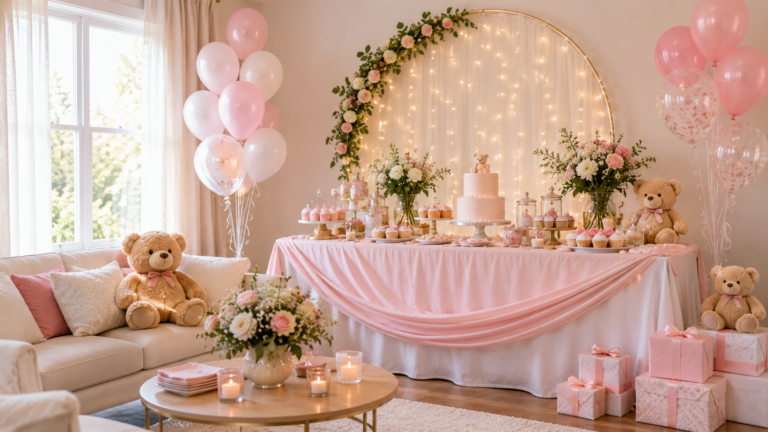
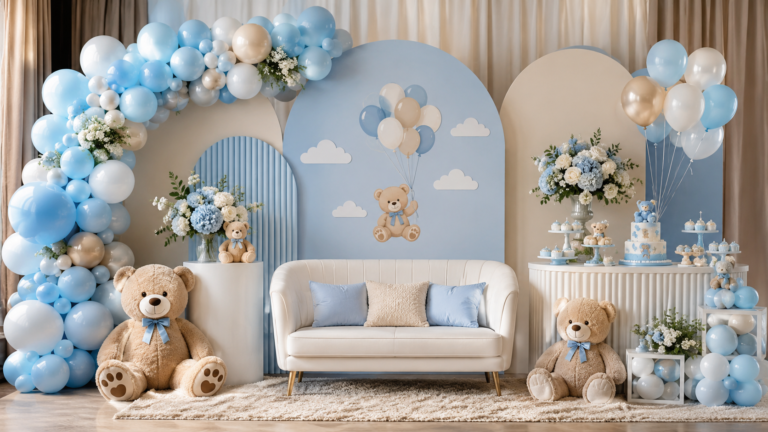
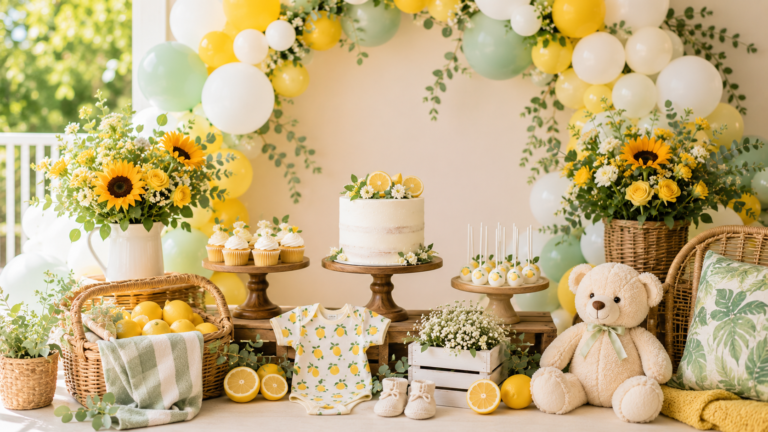
Decorations do not need to cover the entire room. I get more impact by creating one or two focal points with paper decorations, balloons, greenery, a simple backdrop, or reusable pieces I can use again at future parties.
Save this for later
Table of Contents
Party favors are optional. When I include them, I calculate the complete per-guest cost, including packaging and supplies, and choose something that makes sense for the particular group rather than assuming every favor will suit every guest.
Key Takeaways
- Set the total spending limit before buying anything.
- Divide the budget into categories and prioritize the two or three areas that matter most.
- Decide on the guest count early because it affects almost every other expense.
- Consider a home, backyard, or free community space before paying for a formal venue.
- Compare unit prices and check store brands, promotions, and bulk options rather than assuming larger packages cost less per serving.
- Choose a food menu that matches the time of day and can be prepared without creating unnecessary work.
- Treat DIY as a time-and-material decision rather than assuming homemade always means cheaper.
- Use one or two decorated focal points instead of spending money on every surface.
- Keep balloons and balloon fragments away from babies and young children because of choking and suffocation risks.
- Skip favors if they take money away from more important parts of the celebration.
Related article: Bee Themed Gender Reveal Baby Shower
A budget works best when it guides the decisions rather than making the whole shower feel restricted. Once the total amount and guest count are settled, the rest becomes much easier to plan.
How To Throw a Baby Shower on a Budget from the Beginning
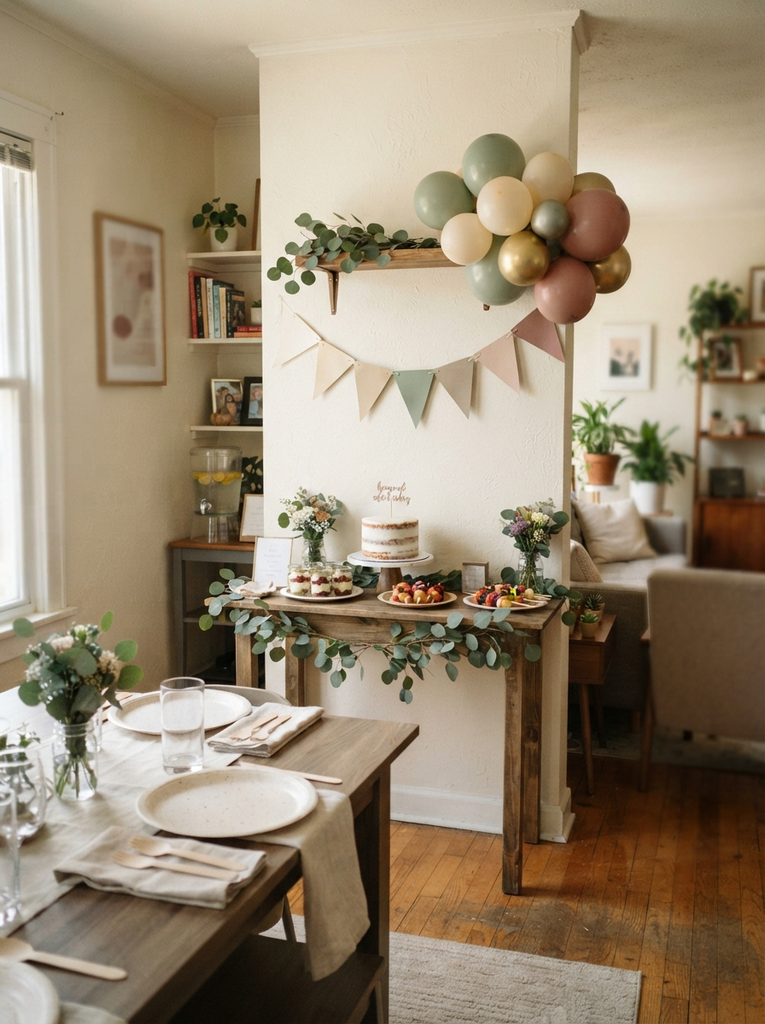
The first step is deciding exactly how much I can spend. I write down the maximum amount and divide it into categories such as food, drinks, decorations, invitations, activities, and favors.
I leave a little flexibility within that plan rather than spending every dollar immediately. Unexpected needs can come up during setup, so having some room in the budget makes the final stages less stressful.
Not every category deserves the same amount of money. If the shower is mainly about sitting together, good food may matter more than elaborate decorations. If photos and the overall visual setup are important, I might put more toward the backdrop and dessert table instead.
That two- or three-category priority system is one of the easiest ways to prevent a limited budget from becoming stretched across too many details.
The guest list comes next. Guest count is not just an invitation decision; it affects how much food and drink I need, how many chairs are required, how large the space needs to be, and whether favors are worth including.
If the mom-to-be is already having another shower, I check whether some guests will naturally be covered by that event. Someone does not necessarily need to attend two separate showers simply because they know the same person.
I also consider the type of gathering I am planning. A small group of close friends and family may make more sense than trying to accommodate every acquaintance when the budget and space are limited.
Invitations can be kept straightforward. Digital invitations, printable designs, or an online invitation service can provide the necessary details without adding a large printing and postage expense.
The venue is another early decision. A home, backyard, community room, or another suitable space that is free or inexpensive can make more room in the budget for food and decorations.
For an outdoor shower, I plan the backup before the event rather than waiting for the weather forecast on the morning of the party. That might mean having enough indoor space available, reserving a covered area, or choosing a location with a practical weather alternative.
A morning or mid-afternoon shower can also help shape the food budget. Guests are less likely to expect a full lunch or dinner when the event is clearly planned around a lighter meal period, although I still make sure there is enough substantial food for the length of the gathering.
Alcohol is optional, not a requirement for a baby shower. A drink station with sparkling water, lemonade, iced tea, coffee, fruit-infused water, or another appealing non-alcoholic option can give the table plenty of variety without creating an alcohol expense.
Friends and family can make the preparation easier too. Rather than asking everyone to “help,” I give specific jobs. One person might bring a dessert, another can help assemble decorations, and someone else can arrive early to arrange the tables.
Pro Tip
I write down the jobs that genuinely need another person and assign them before the day of the shower. Clear tasks are much easier for people to accept than a general request for help when the host is already busy.
Let’s Talk Food and Drinks.
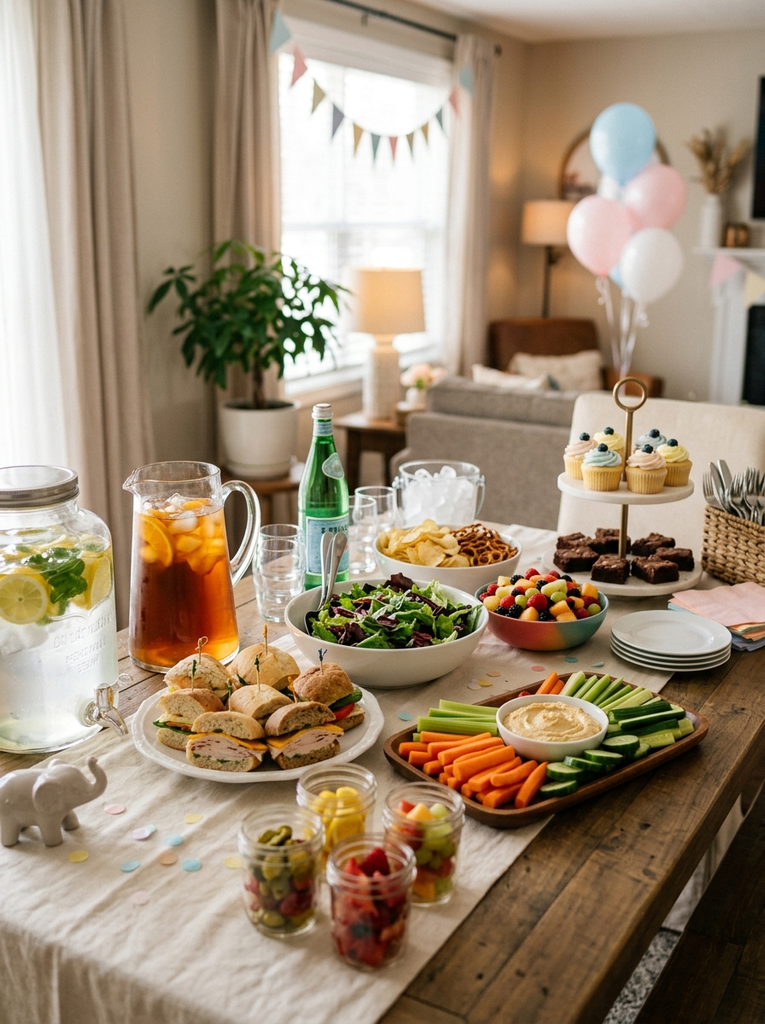
Food is an area where a little planning can prevent both overspending and waste. I start with the number of guests, the time of day, and the length of the shower before deciding what to serve.
Rather than building a long menu, I usually aim for a manageable mix of filling foods, lighter snacks, fruit or vegetables, a dessert, and drinks. The exact choices depend on the event, but the important part is making sure the dishes work together.
Make-ahead food is particularly useful. Items that can be prepared the day before reduce the amount of cooking and assembling required while guests are arriving.
I also avoid buying specialty ingredients for one recipe unless that recipe is genuinely important to the menu. Familiar ingredients that can be used across several dishes are easier to budget and leave less unused food afterward.
When shopping, I compare prices between stores and check the unit price rather than relying on the package price. Store brands, weekly promotions, and bulk options can sometimes reduce the cost, but a larger package is not automatically the better deal if I cannot use everything.
A shared-food approach can work for an informal shower when guests are comfortable contributing. The key is assigning dishes intentionally. I might ask one person to bring a savory appetizer, another to bring fruit, and another to bring dessert.
That approach is much easier to manage than telling everyone to bring whatever they want. Without some coordination, a host can end up with several desserts but not enough savory food or drinks.
A pregnancy-craving theme can be a fun optional food idea if the mom-to-be has mentioned specific cravings. Guests could bring a food connected to one of those cravings, but I would not assume every pregnancy comes with unusual food combinations.
Food safety becomes especially important when the menu includes perishable foods. I plan enough refrigerator or cooler space for foods that need to stay chilled and avoid leaving perishable dishes at room temperature for extended periods.
For a buffet, I prefer putting out reasonable amounts and replenishing dishes as needed instead of placing the entire supply on the table at once. This can help with both food quality and waste.
I also ask about dietary restrictions and common allergies when planning the menu. Ingredient information can help guests make informed choices, and keeping certain foods separated can reduce unnecessary cross-contact, but labeling alone cannot guarantee that an allergen will not be present.
Pro Tip
I make a simple food list before shopping and mark which dishes can be prepared one or two days ahead. That turns the menu into a preparation schedule instead of leaving everything for the morning of the shower.
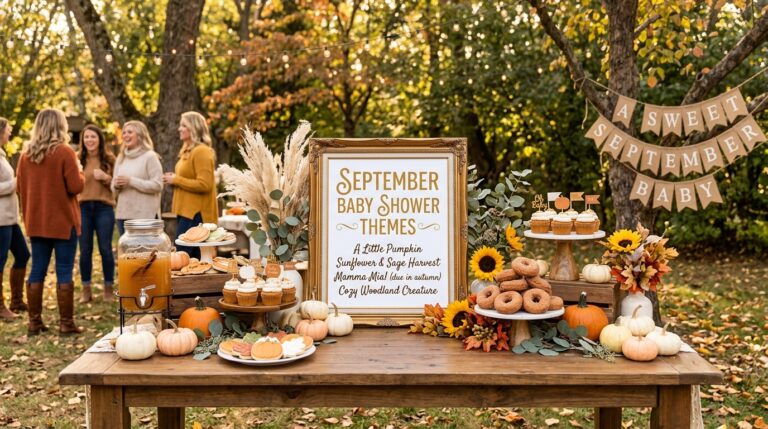
Also read: September Baby Shower Ideas
Baby Shower Decorations
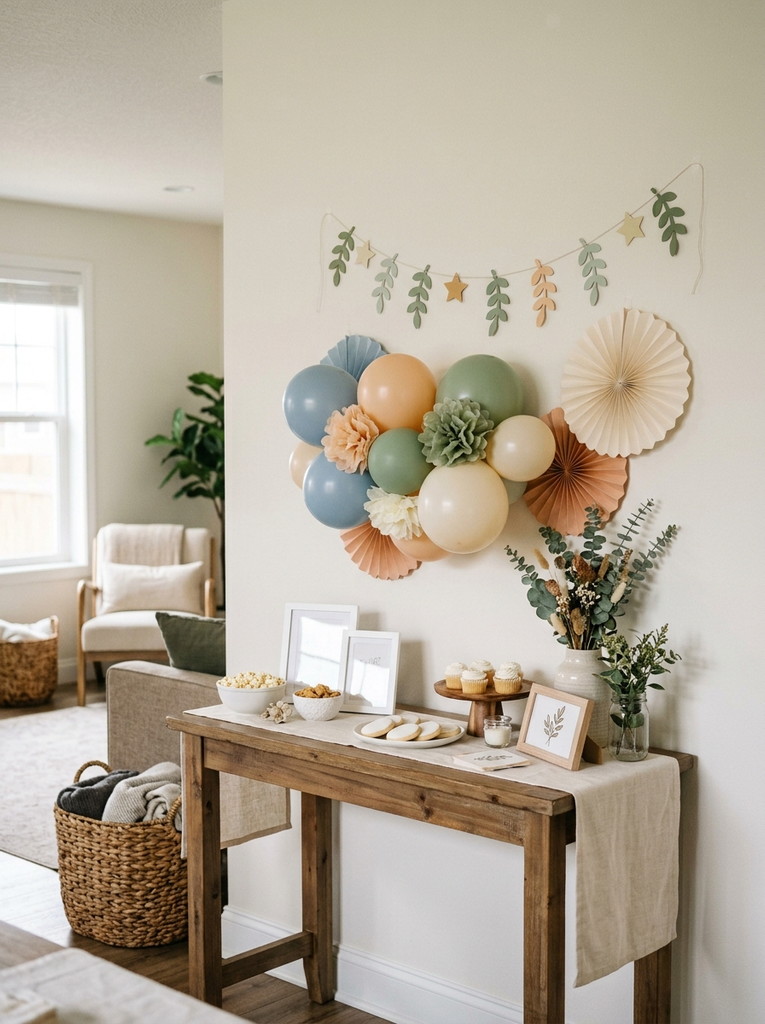
Decorations can make a noticeable difference, but I do not try to decorate every wall, table, and corner.
Instead, I create one or two areas that guests will naturally notice. A dessert table, welcome sign, gift area, photo backdrop, or dining table can become the main visual focus.
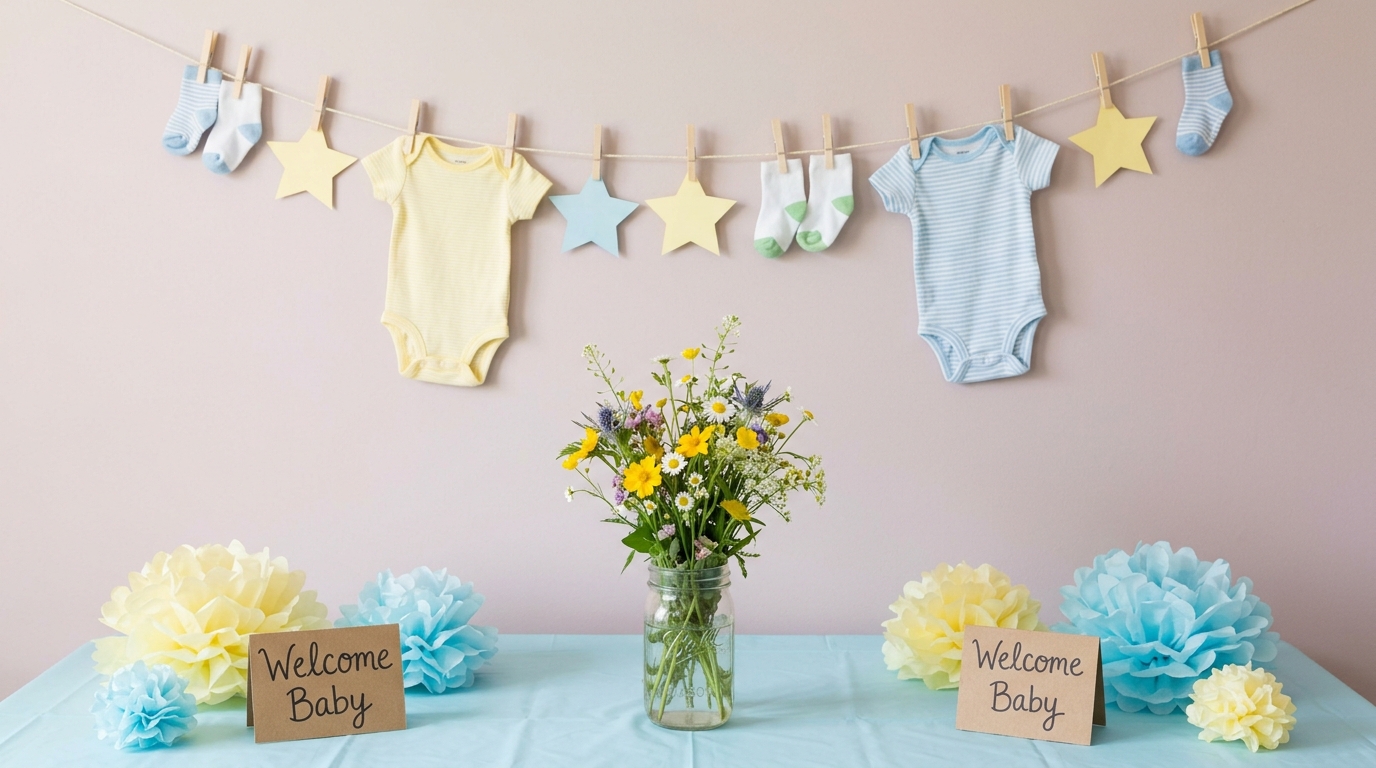
Low-cost paper decorations are useful for this. Tissue-paper flowers, paper fans, garlands, streamers, and handmade signs can add color without requiring a large collection of purchased décor.
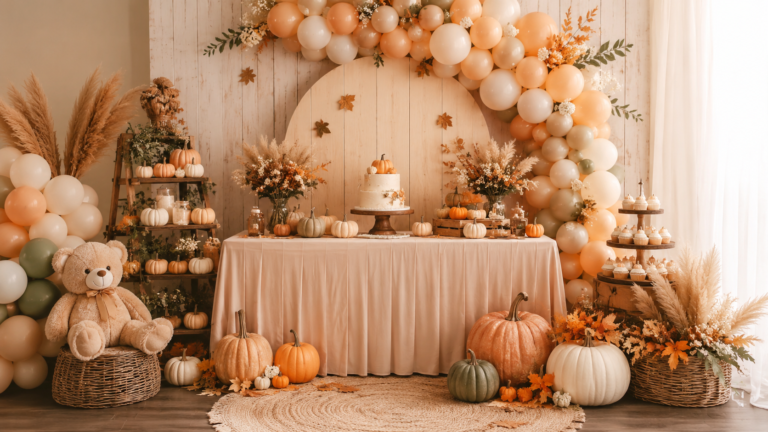
Balloons can create a strong backdrop or table display without decorating the entire room. A small balloon cluster or simple garland can be enough when it is placed where guests will see it most.
I do not automatically assume DIY is cheaper, though. If a homemade balloon installation requires specialty tools, several packs of materials, or hours of preparation, buying a simpler ready-made option may make more sense for the particular budget.
That is why I consider both material cost and my available time. Saving $20 on supplies is less useful if the project requires an entire day of work that I do not realistically have available.
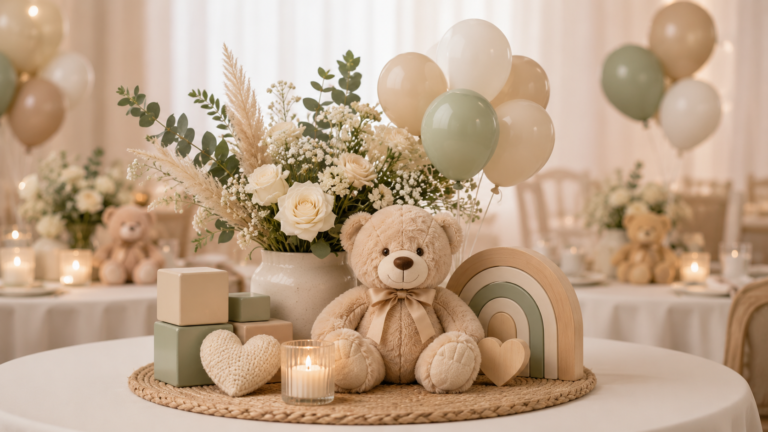
Greenery can provide another inexpensive way to fill a table or backdrop. Depending on the theme, a few suitable stems in vases can add texture without requiring numerous decorative objects.
Reusable décor is another place where I try to spend carefully. Neutral vases, baskets, stands, frames, tablecloths, and serving pieces can be used for birthdays, showers, holidays, and other gatherings.
For balloon decorations, safety needs to be part of the setup. Balloons, uninflated balloons, popped balloons, and balloon fragments should be kept away from babies and young children because they can create choking and suffocation hazards. Adult supervision does not make loose balloon pieces safe for infants or toddlers.
If babies or very young children will be present, I make sure decorative pieces are positioned where they cannot reach them and clean up broken or discarded balloon pieces promptly.
Party Favors or No Favors?
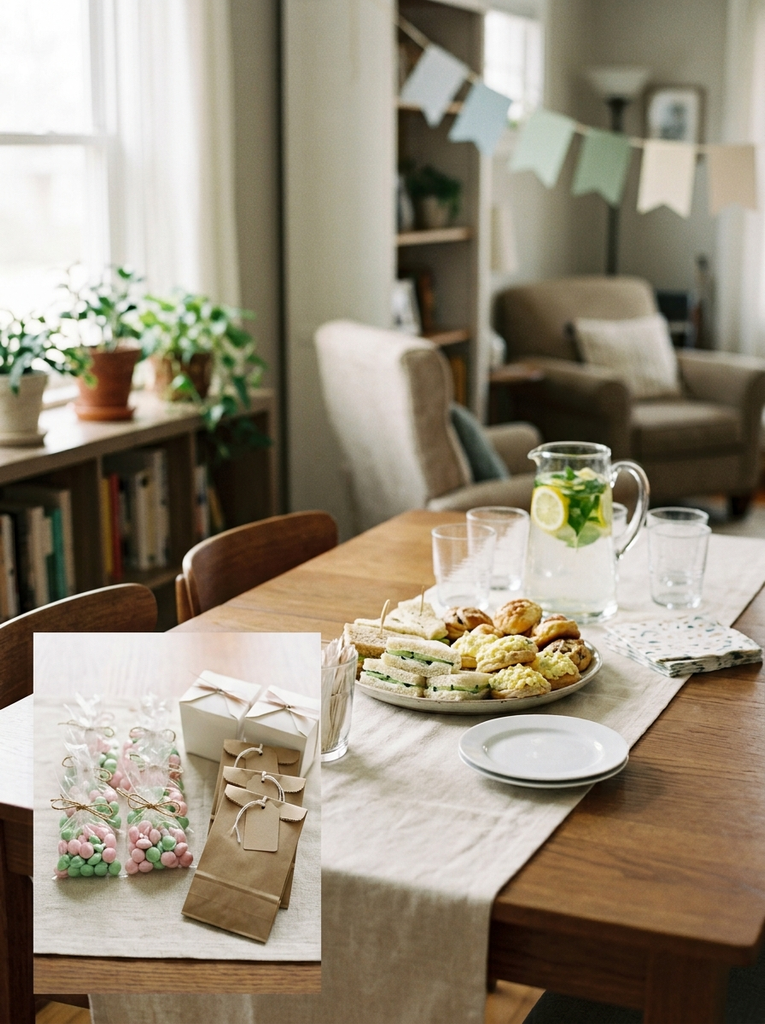
Party favors are optional, particularly when the budget is tight. There is no need to take money away from food, seating, or other essentials just to make sure every guest leaves with a gift.
If favors are part of the shower, I first decide how much I can afford to spend per guest. A $2 favor for 30 people already represents $60, and the real cost can be higher once bags, ribbon, tags, labels, or other packaging are included.
That calculation makes it easier to decide whether favors fit the budget at all.
Pro Tip
I set the total favor budget before choosing the favor. Working backward from the amount available prevents a cute idea from quietly becoming one of the larger expenses.
How To Throw a Baby Shower on a Budget with Inexpensive Favors
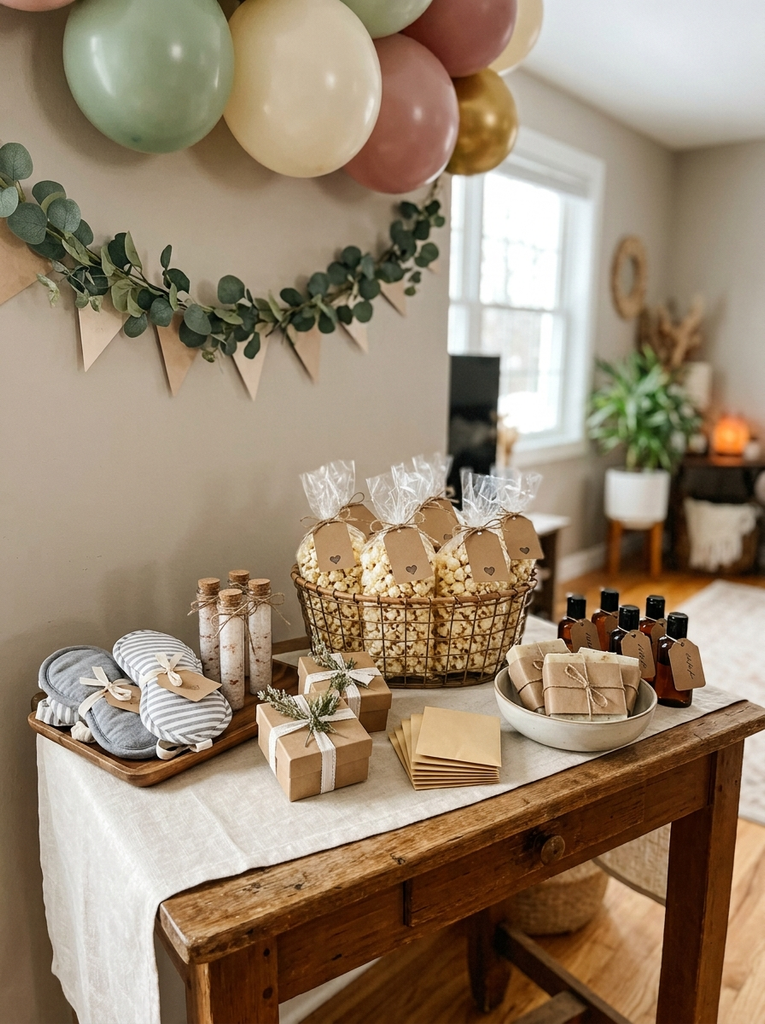
A small popcorn favor can work well for a “ready to pop” style theme. A clear treat bag, popcorn, a small ribbon, and a simple tag are enough to create a coordinated favor without complicated assembly.
Sleep masks are another option when they suit the guest group. A basic sleep mask can be packaged with a small note or another inexpensive item, keeping the presentation neat without adding unnecessary materials.
Personal-care favors require a little more thought because they are not suitable for everyone. Nail polish, lip balm, body scrub, skincare products, and similar items can be useful for some guests but may not work for people with allergies, sensitivities, ingredient restrictions, or personal preferences.
For homemade lip balm or body scrub, I would include a complete ingredient list rather than assuming the product is appropriate for everyone. Clear ingredient information gives guests the opportunity to decide whether they want to use it.
I also consider the age and needs of the guests before selecting any small favor. If children will be attending, I avoid giving them small items that could create a choking risk.
A favor should add to the experience rather than become another task that takes over the planning process. If making or packaging dozens of favors becomes stressful, skipping them is a perfectly reasonable budget decision.
A practical budget baby shower comes together by making the important decisions in the right order. I start with the total amount available and the guest count, then work through the venue, food, drinks, decorations, and optional extras.
The money does not need to be divided equally between every category. A well-planned menu and comfortable space may matter more for one shower, while another may justify putting more of the budget toward decorations or photography.
DIY projects can help, but only when the supplies and preparation time make sense. Comparing prices, reusing décor, coordinating food contributions, and removing unnecessary extras can often save more than trying to make every single item from scratch.
The main purpose of the shower is to bring people together to celebrate the parents and the upcoming arrival. The budget should support that goal rather than creating pressure to buy elaborate decorations or favors.
If hosting the shower is intended as my gift to the mom-to-be, that can be part of the overall gift decision too. A separate present is optional and should fit within the budget rather than being something I feel obligated to add.
Read this next: October Baby Shower Ideas
Frequently Asked Questions
How can I throw a baby shower on a small budget?
Set your total budget first, keep the guest list manageable, use a low-cost venue, and prioritize food and a few key decorations instead of extras.
What food should I serve at a budget baby shower?
Choose a manageable mix of make-ahead snacks, sandwiches, fruit, desserts, and non-alcoholic drinks. Comparing unit prices can also help control grocery costs.
Are baby shower favors necessary?
No. Favors are optional, especially when money is limited. If you include them, choose a low-cost item that suits your guests and calculate packaging costs too.
Conclusion
The simplest way to control a baby shower budget is to decide the total spending limit and guest count first. From there, I prioritize the venue, food, decorations, and favors according to what will make the biggest difference for that particular celebration.
A home or low-cost venue, a manageable menu, focused decorations, and optional favors can keep spending under control without making the event feel bare. The best budget decisions are the ones that save money while also saving unnecessary work.