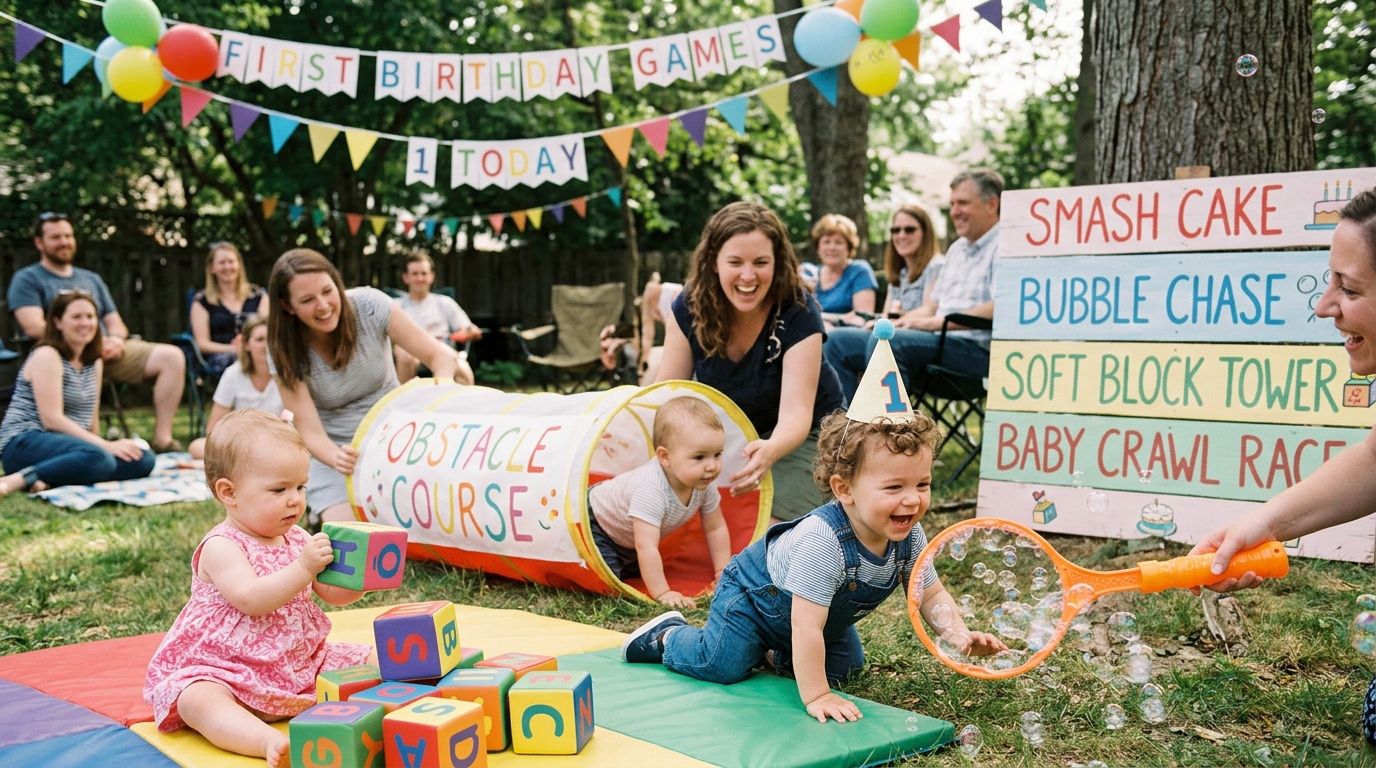
20 Easy First Birthday Games Everyone Will Enjoy
First birthday games are a little different from games for older children. At age one, children may become overwhelmed by too much noise, too many people, or activities that last too long. I find that short, flexible games and activities work much better.
A first birthday also usually has a mixed-age guest list. Babies, toddlers, older children, parents, grandparents, and friends all need something they can enjoy without making the birthday baby follow a strict schedule.
I keep the setup simple whenever possible. Bubbles, blocks, soft toys, music, and family photos can provide plenty to do without filling the party with complicated rules. Most importantly, the baby’s comfort comes first, even if that means skipping a planned game.
This list includes 20 first birthday games and activities for different ages and for the whole family. The first group focuses on simple movement, sensory play, music, and discovery for children ages 1–3. The next group offers slightly more structured games for children ages 3 and up.
I also included five family games that give parents, grandparents, and friends a chance to take part in the celebration. Photo matching, baby trivia, and a family relay can be especially useful when adults want something fun to do between food, photos, and cake.
Save this for later
Table of Contents
I would not try to schedule every activity. For most first birthdays, two or three organized games plus one or two simple drop-in activities are plenty. I leave room for snacks, photos, cake, naps, diaper changes, and those unexpected changes in the baby’s mood.
Key Takeaways
- I keep first birthday games short because young children can lose interest quickly.
- I choose age-appropriate toys and keep small game pieces away from babies and toddlers.
- Drop-in activities give children something to do without a strict schedule.
- Family games help parents, grandparents, and other guests participate.
- The birthday baby’s mood, comfort, and nap schedule matter more than finishing every game.
- Outdoor activities need a reasonable space and a backup plan for changing weather.
- I avoid elimination when possible so younger children can keep participating.
Related article: 54 of the Most Perfect First Birthday Ideas for Girls
How Many Games Do You Need for a First Birthday?
A first birthday does not need a packed schedule. I usually recommend planning two or three organized games and one or two simple drop-in activities, then leaving plenty of open time.
The party will naturally include eating, opening gifts, taking photos, visiting with family, and caring for the birthday baby. A nap or unexpected fussy period can also change the schedule quickly.
Having a few activities ready gives me options without making the celebration feel rushed. If everyone is already having fun, there is no reason to stop the party just to fit another game into the plan.
First Birthday Party Games for 1–3 Years
For ages one to three, I focus on movement, sensory play, music, and simple discovery. Children in this age group should not be expected to understand complicated rules or wait patiently through long turns.
Adult help is useful, especially with babies who are still crawling or learning to walk. I also choose materials that are suitable for the youngest children attending, inspect toys before the party, and keep small game pieces and prizes away from babies and young toddlers.
Bubble Chase
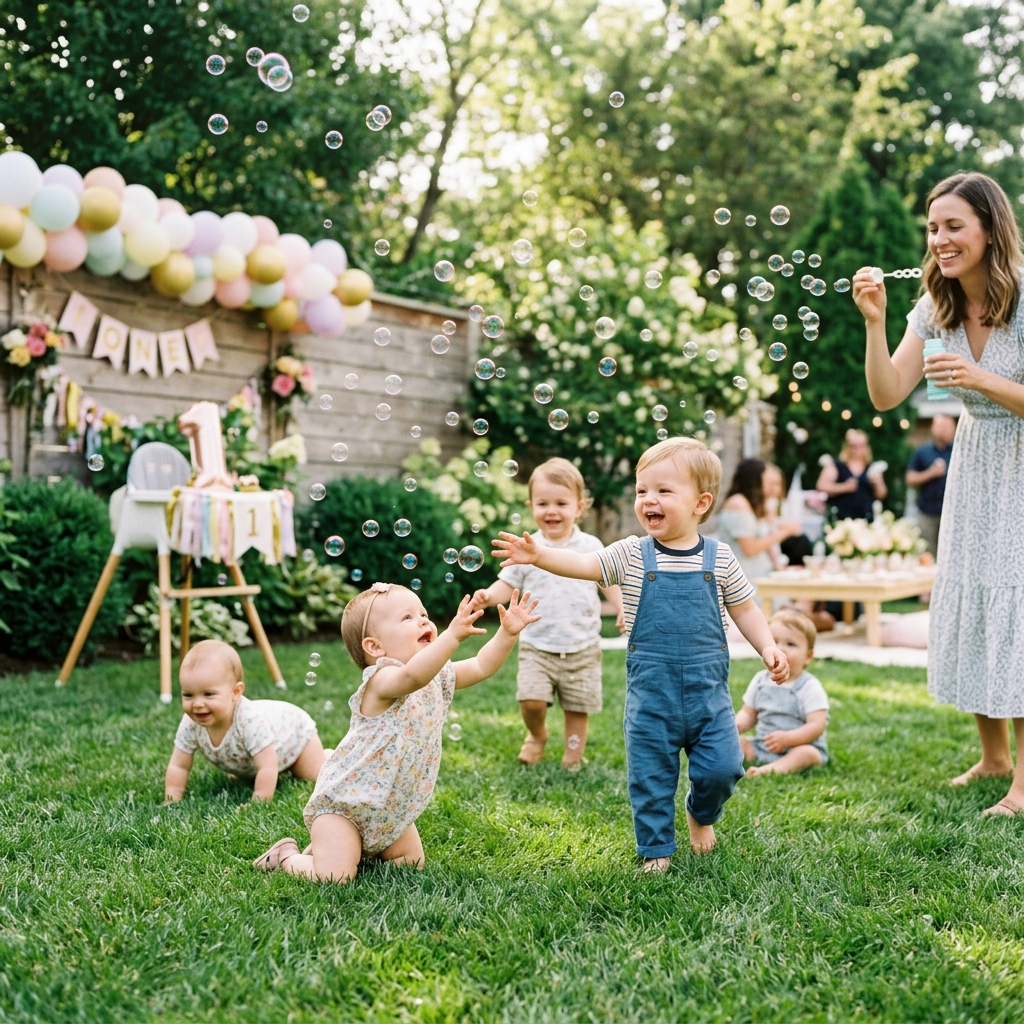
Bubbles are an easy way to get little ones moving without explaining a complicated game. An adult can blow bubbles by hand, or a bubble machine can create a steady stream while children watch, reach, crawl, or walk after them.
I set this up in an open area with enough room for children to move around. Outdoors is convenient because the party floor is less likely to become an issue, but bubble solution can still make hard surfaces slippery.
The bubble solution and machine stay out of children’s reach, and I keep the activity away from food and drinks.
Pro Tip: Have towels or a way to wipe up spills nearby, especially if bubbles are being used on an indoor floor.
Duck Pond Pick
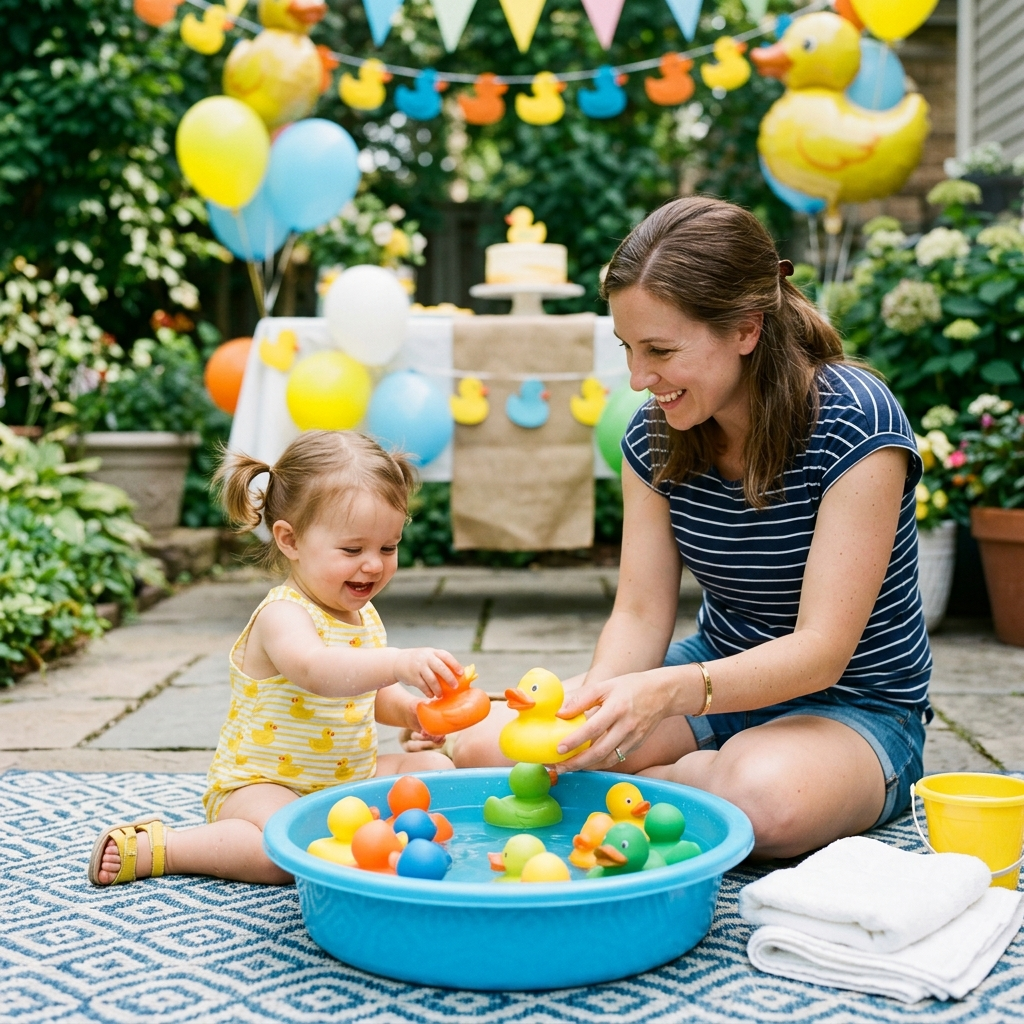
For a duck-themed party, a shallow tub can become a simple picking activity. Large, age-appropriate rubber ducks float in the water, and children can choose one with an adult right beside them.
I would avoid tiny fishing rods, small prizes, and little attachments that could become unsafe for young children. The activity is not a self-serve water station, even when the container is small or shallow.
Towels make cleanup easier, and I place the activity away from the food table. For an outdoor summer party, large floating frogs or fish can replace the ducks.
Pro Tip: Never leave a baby or toddler unattended around water. Keep close adult supervision throughout the activity.
Ball Pit Treasure Search
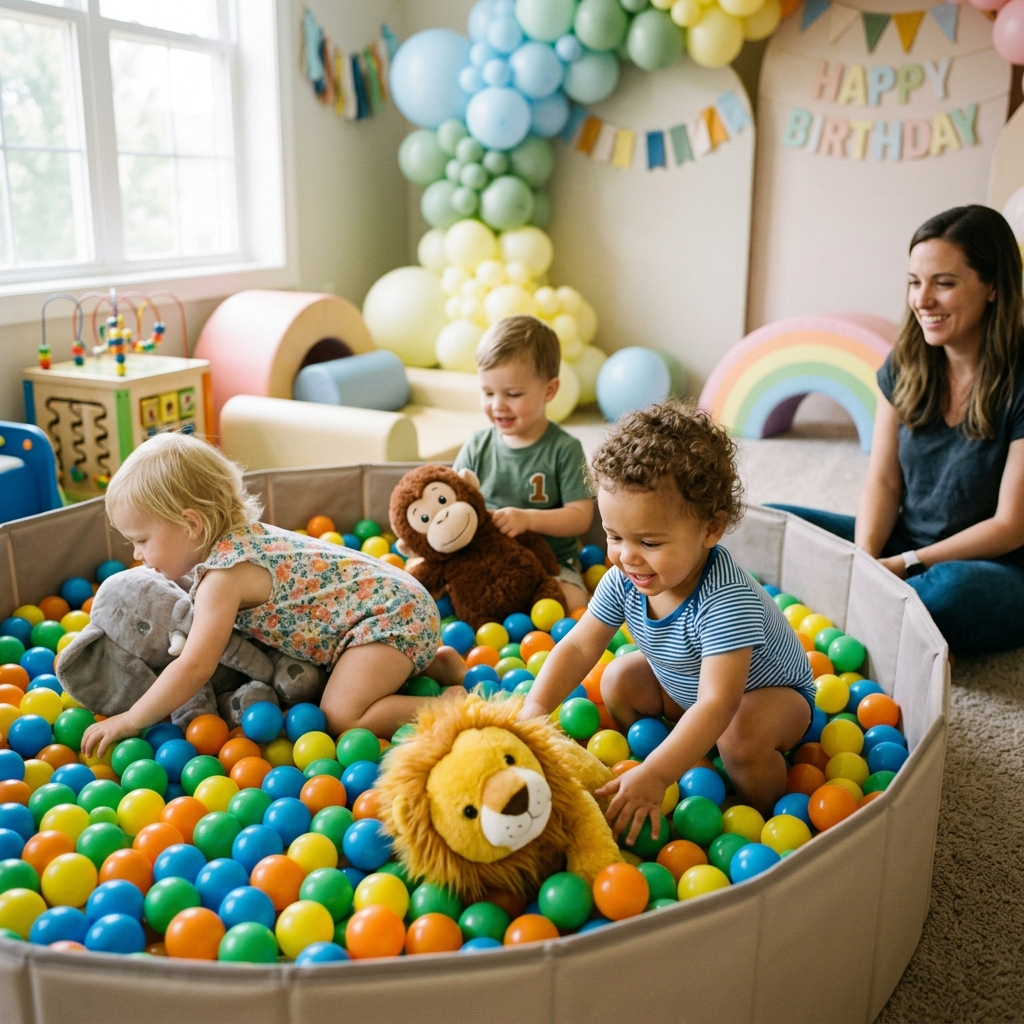
A ball pit can become a simple treasure hunt when I place a few large, soft toys among the balls. Children can sit, crawl, reach, and search without needing to follow complicated instructions.
The toys and ball pit should be suitable for the youngest children participating. I check the balls and toys before the party for damage, loose parts, or anything that should not be in reach of a baby or toddler.
For a themed party, large plush animals can work as the hidden treasures. A safari celebration could use larger soft animal toys, for example.
Pro Tip: I keep the treasure pieces large and easy to inspect rather than using tiny favors or prizes.
Crawl Race for Toddlers
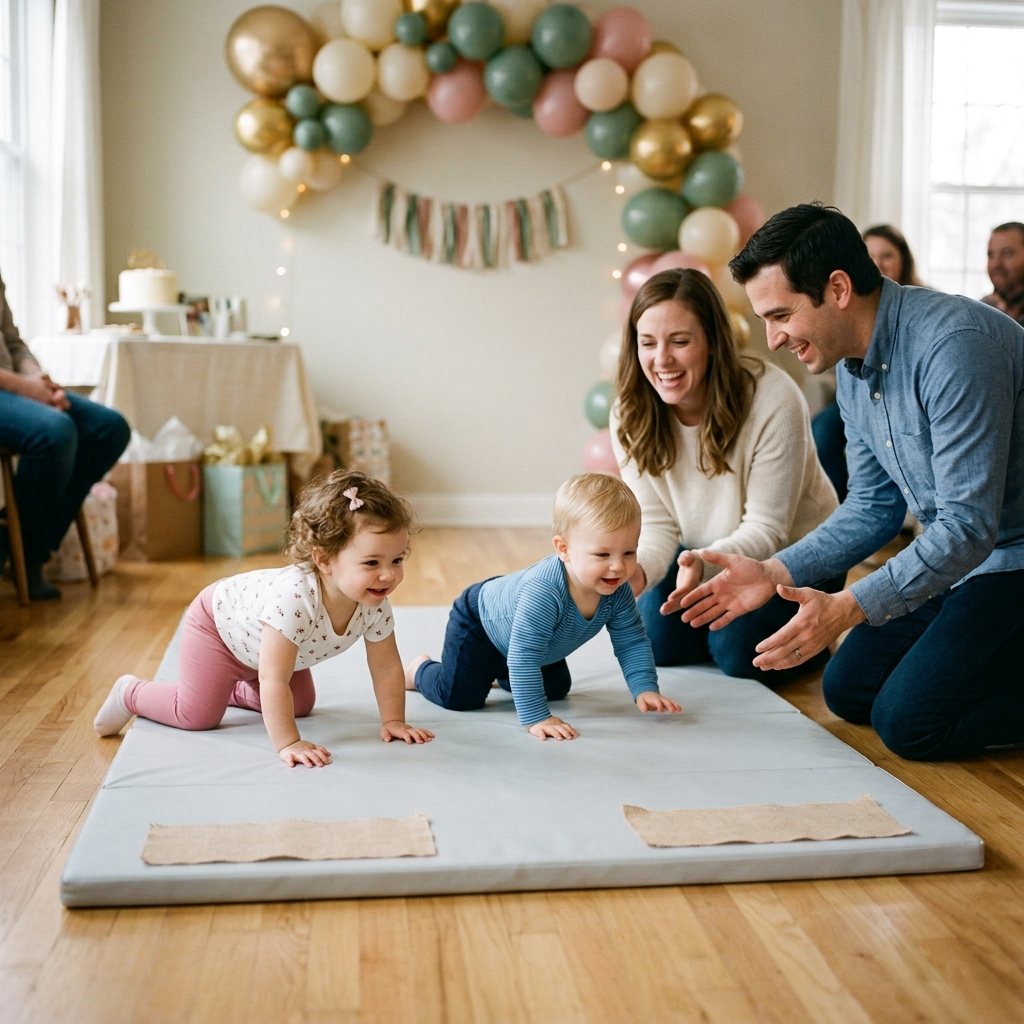
A crawl race is more of a playful moment than a serious competition. I place a soft mat on the floor, mark a short starting and finishing point, and let parents encourage their little ones to move toward the finish.
Some babies crawl quickly, some stop to look around, and others decide they would rather sit down. That is completely fine. I do not put pressure on children to reach the finish or declare a winner.
The course should be short and clear, with furniture and other trip hazards moved out of the way.
Pro Tip: Put an interesting, age-appropriate toy at the finish rather than using a small treat as motivation.
Find the Toy
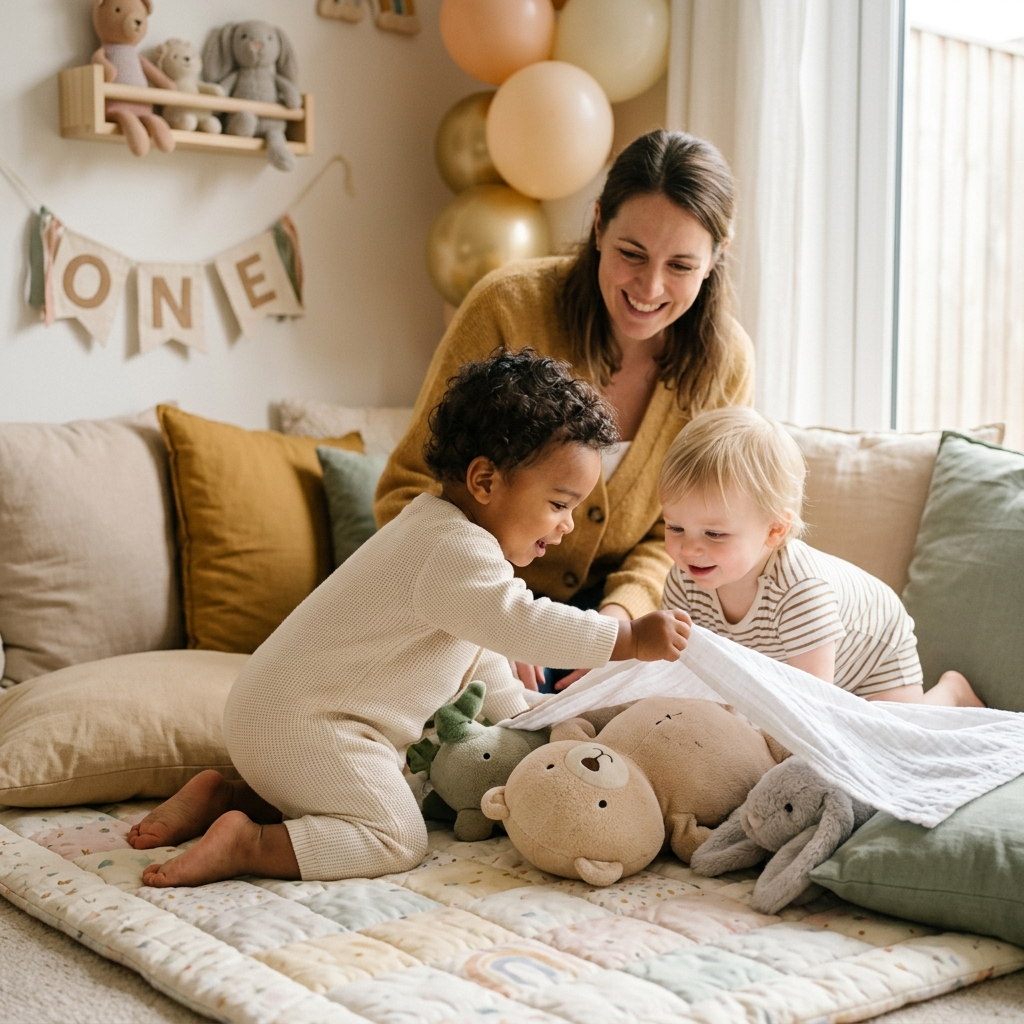
I hide a few large, soft toys in very easy places around a designated play area. A toy might peek out from behind a cushion or sit partly underneath a lightweight cloth.
For children who are just learning to walk, the hiding spots should be obvious enough that discovery does not become frustrating. Theme-matching plush toys can also work as simple keepsakes.
I keep the search area away from stairs, electrical cords, unstable furniture, and anything a child could pull down.
Pro Tip: Limit the activity to one clearly supervised area rather than hiding toys throughout the entire party space.
Guess the Sound
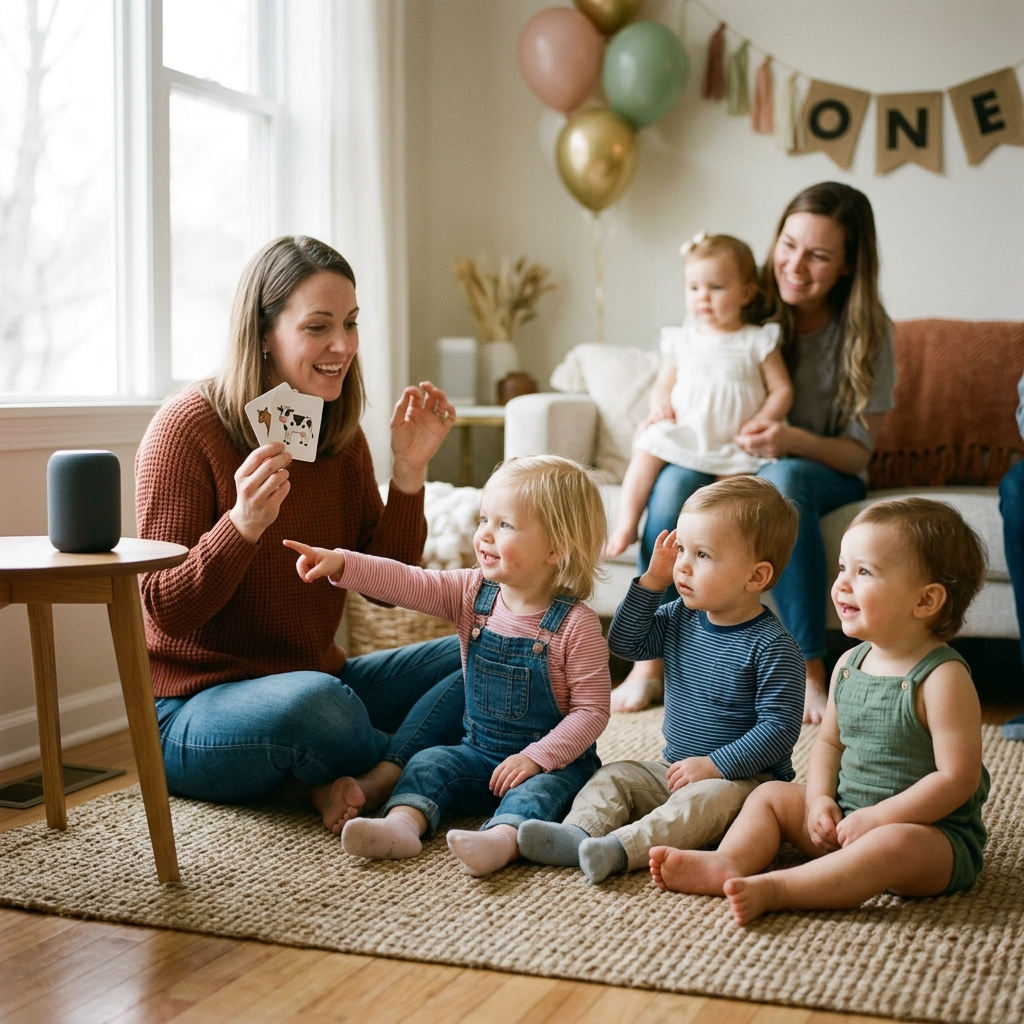
I use familiar sounds for a quick listening activity that does not require children to sit still for long. Animal sounds, rain, a doorbell, or other everyday noises give children something recognizable to react to.
A child might point, make a sound, clap, or simply look toward the speaker. There is no need for every child to give the correct answer.
This works well before a quieter part of the party, such as cake time or sitting down for food.
Pro Tip: Keep the volume comfortable for young ears. A small speaker at a moderate level is enough for this activity.
Peek-a-Boo
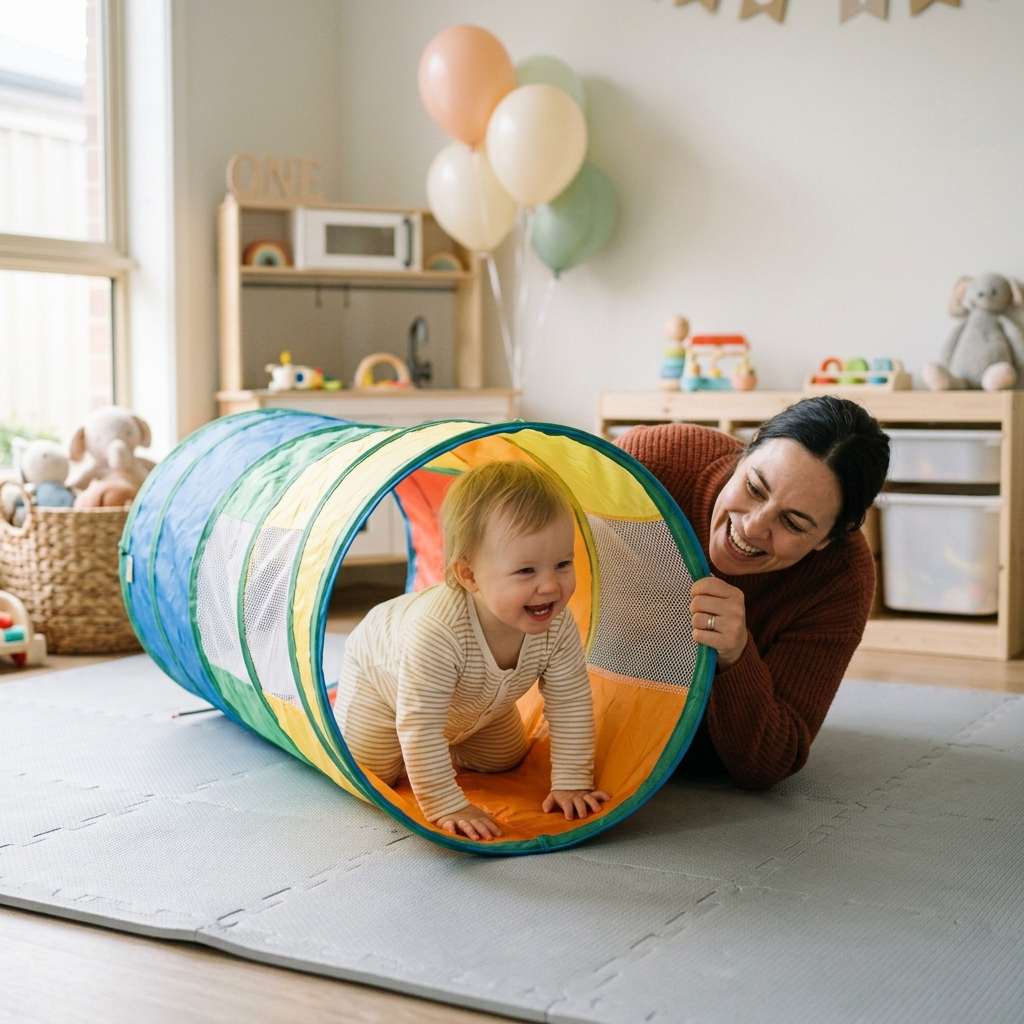
Peek-a-boo is simple enough for babies while still being entertaining for toddlers. A play tunnel or another sturdy, child-appropriate structure can give children a place to crawl through while an adult plays peek-a-boo from the other side.
I make sure the structure is stable and designed for children’s play rather than relying on an improvised setup that could collapse. Lightweight decorations can be added around the entrance if they are firmly secured.
I avoid loose ribbons, long strings, hanging decorations, or anything a child could pull down, wrap around themselves, or put in their mouth.
Pro Tip: Keep the area uncluttered so children can enter and exit the tunnel without bumping into furniture.
Build a Block Tower
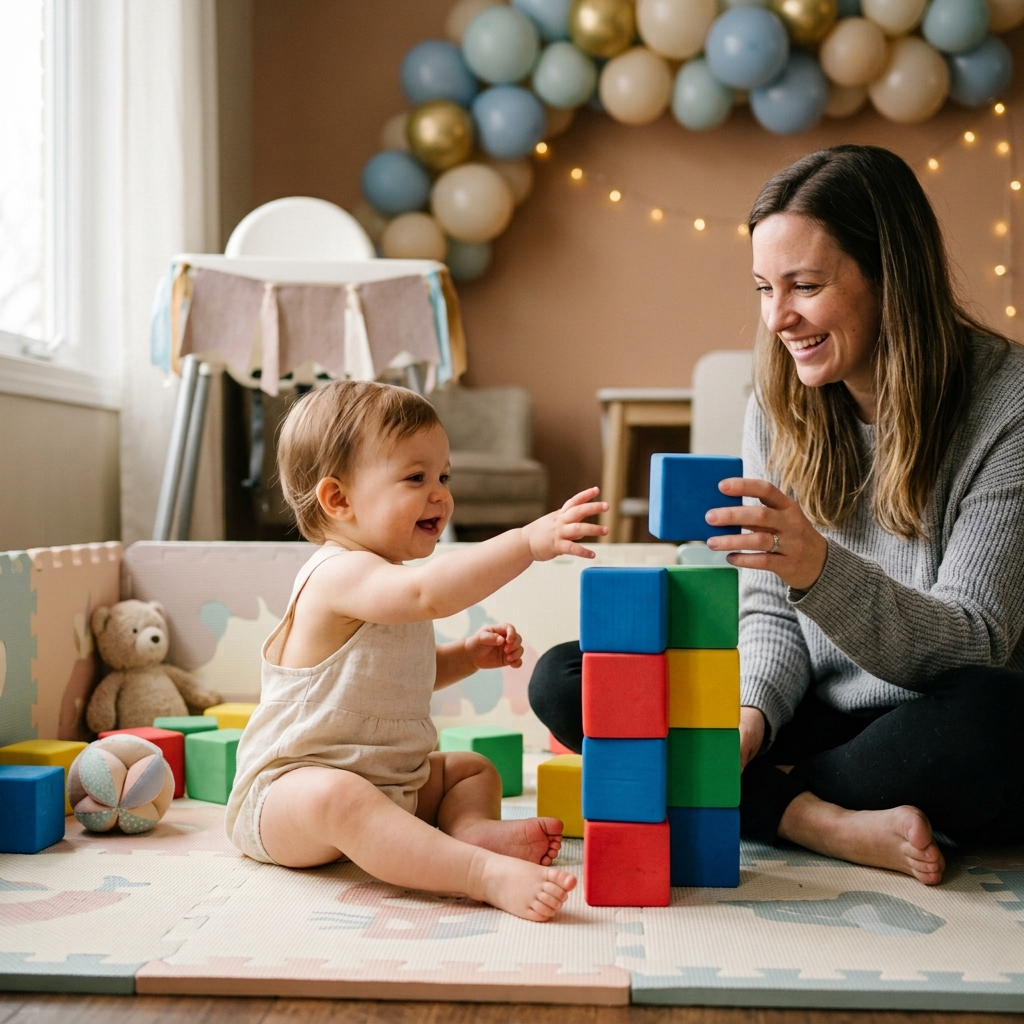
Large, age-appropriate blocks give little ones an easy activity: stack them, knock them down, and start again. An adult can help build the tower while the child gets to enjoy knocking it over.
I choose blocks specifically suited to the youngest children attending rather than small construction pieces. Several children can also play beside one another, so they do not necessarily need to wait for turns.
A soft play mat underneath makes the area more comfortable and helps keep the blocks contained.
Pro Tip: Keep the tower low for young children and use only blocks that are appropriate for their age.
Pass the Bear
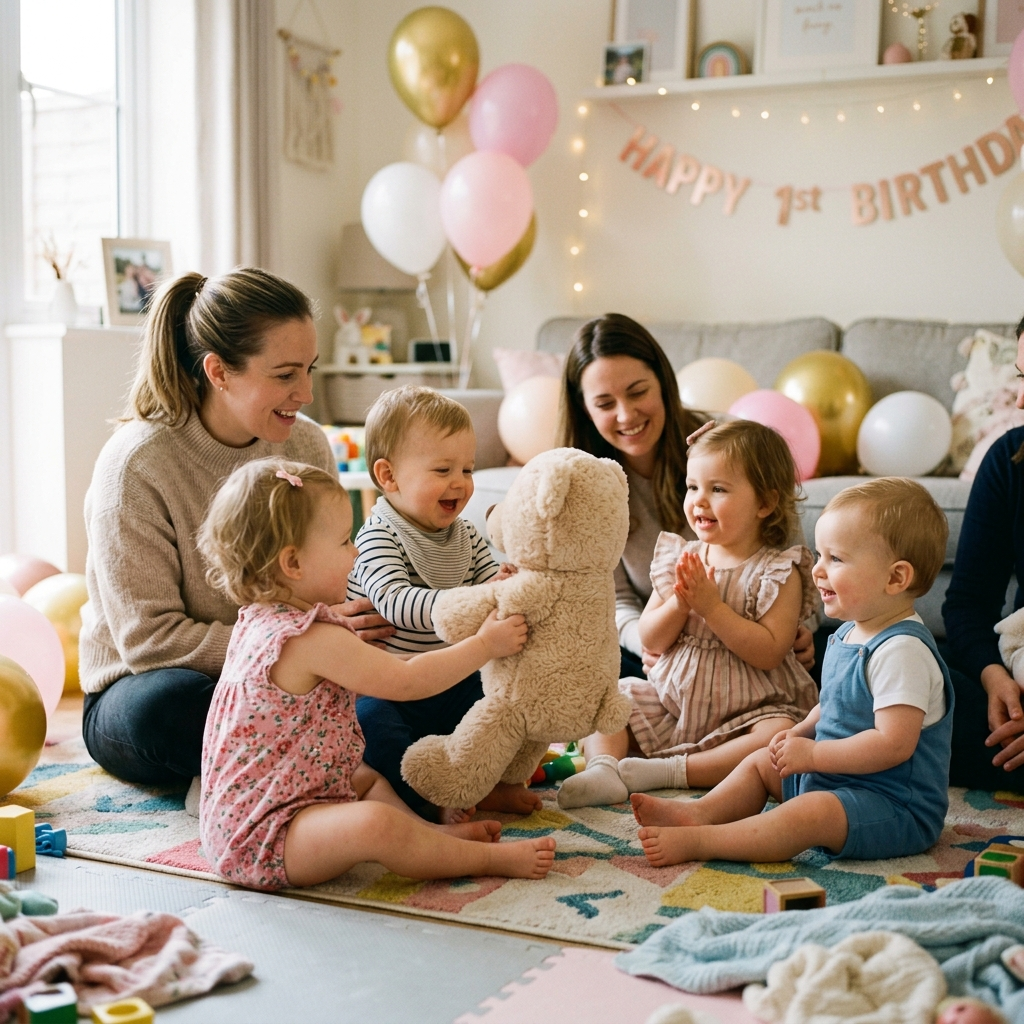
For this activity, children can sit in a small circle with parents nearby while a large stuffed animal is passed around to music. When the music stops, the child holding it can receive applause, a sticker, or another age-appropriate form of recognition.
I keep each round short and let children opt out if they do not want to hold the toy. There is no need to eliminate anyone at this age.
The stuffed animal can easily match the theme. A duck, bunny, dinosaur, or another large plush toy can replace the bear.
Pro Tip: Make sure every participating child gets a turn rather than focusing on a single winner.
First Birthday Party Games for 3+ Years
These activities are better suited to children around three and older who can follow simple instructions. I still keep the rules flexible because a three-year-old and an older child may have very different coordination and attention spans.
When younger children are nearby, I keep harder or faster activities separate from the baby play area. Younger children do not need to compete directly with older children to enjoy the party.
Musical Freeze Dance
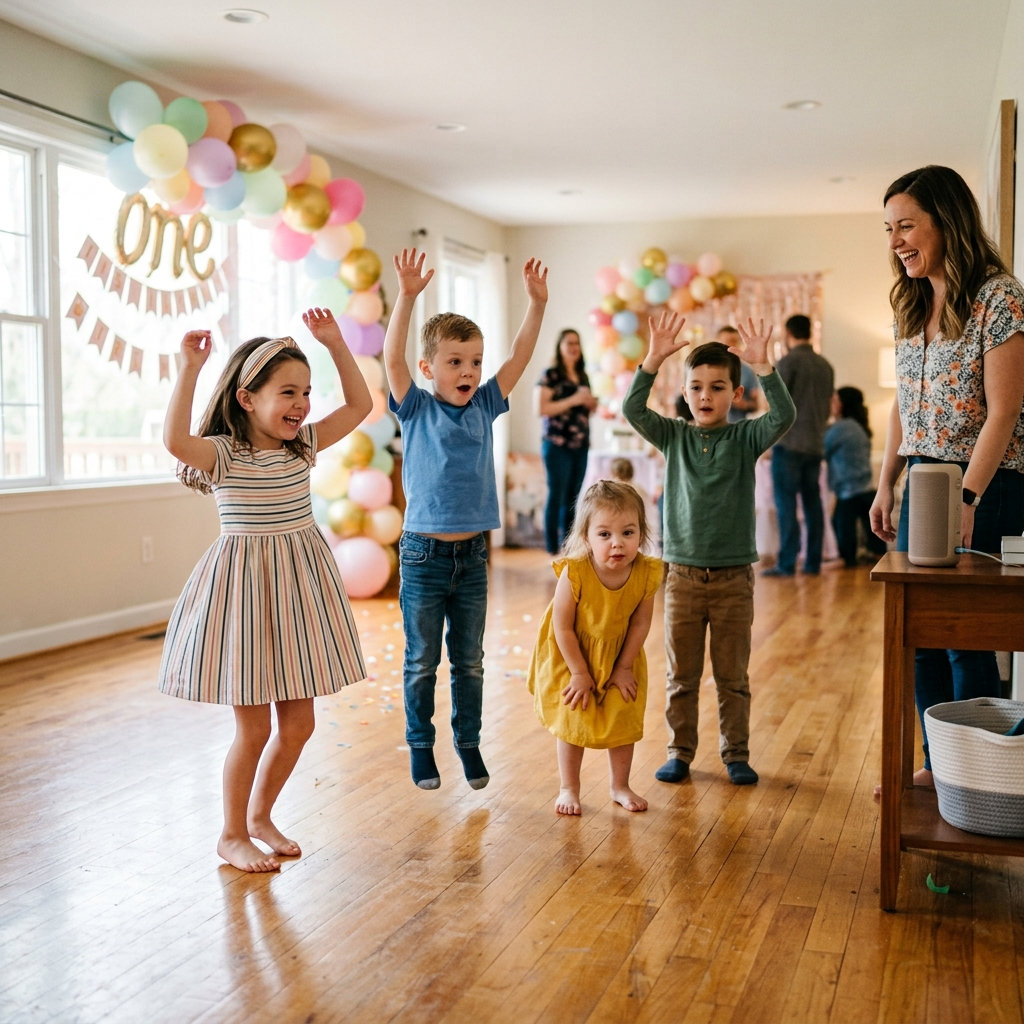
I play child-friendly music and let the children dance until the music stops. Everyone freezes when the music pauses, then starts dancing again when the music returns.
I skip elimination because staying in the game keeps it more enjoyable for a mixed-age group. Calling out poses such as a duck, butterfly, or superhero can add another playful element.
The dance space should be clear of chairs, drinks, toys, and other obstacles.
Pro Tip: Keep the music at a comfortable volume and have one adult control the playlist.
Also read: 16+ Creative Arts and Crafts Birthday Party Ideas
Bean Bag Toss
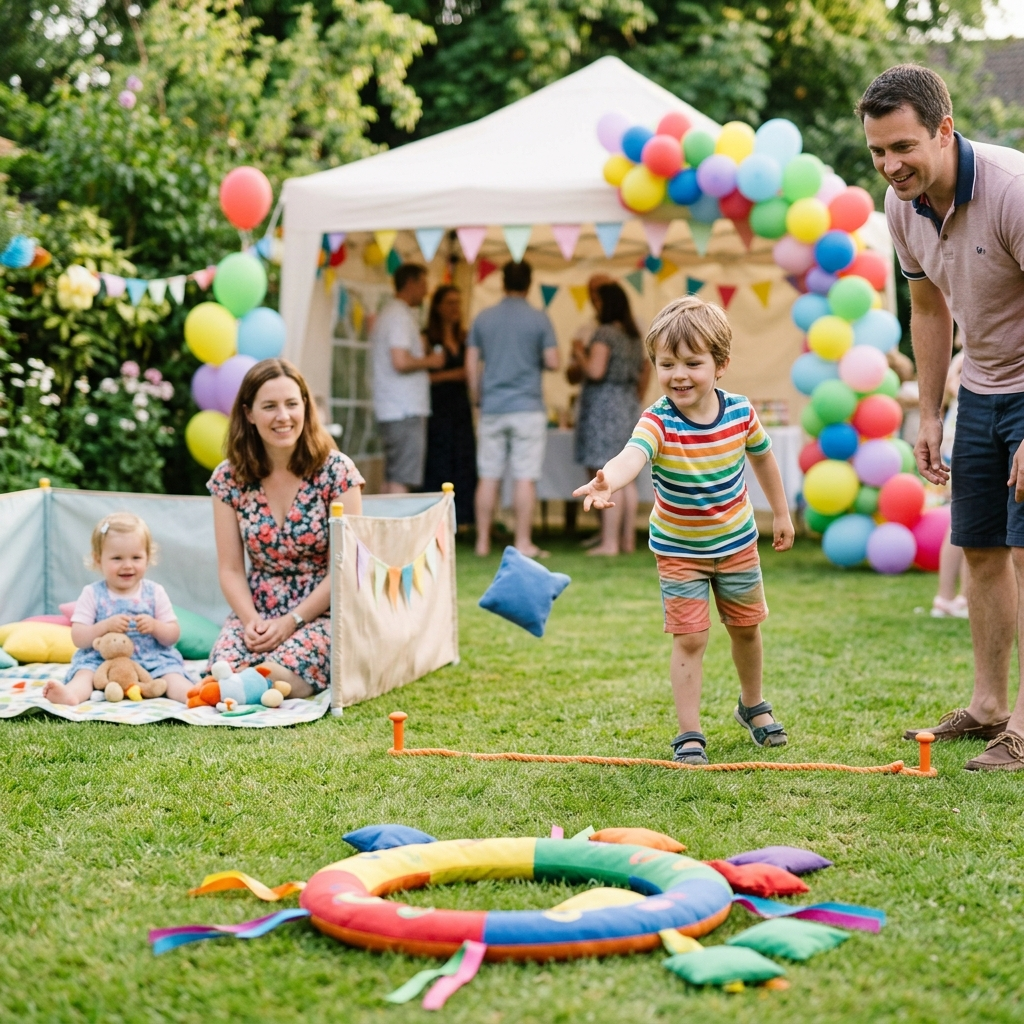
A large hoop or target on the ground makes an easy tossing game. Younger children can stand closer to the target, while older children can move farther back.
Soft bean bags are a better choice around children than hard objects. I also leave plenty of space between the throwing line, spectators, and younger children.
I focus more on encouragement than strict scoring. Every successful or unsuccessful toss can get the same positive reaction.
Pro Tip: Run the game away from babies and keep the throwing area clearly marked so children know where to stand.
Color Search
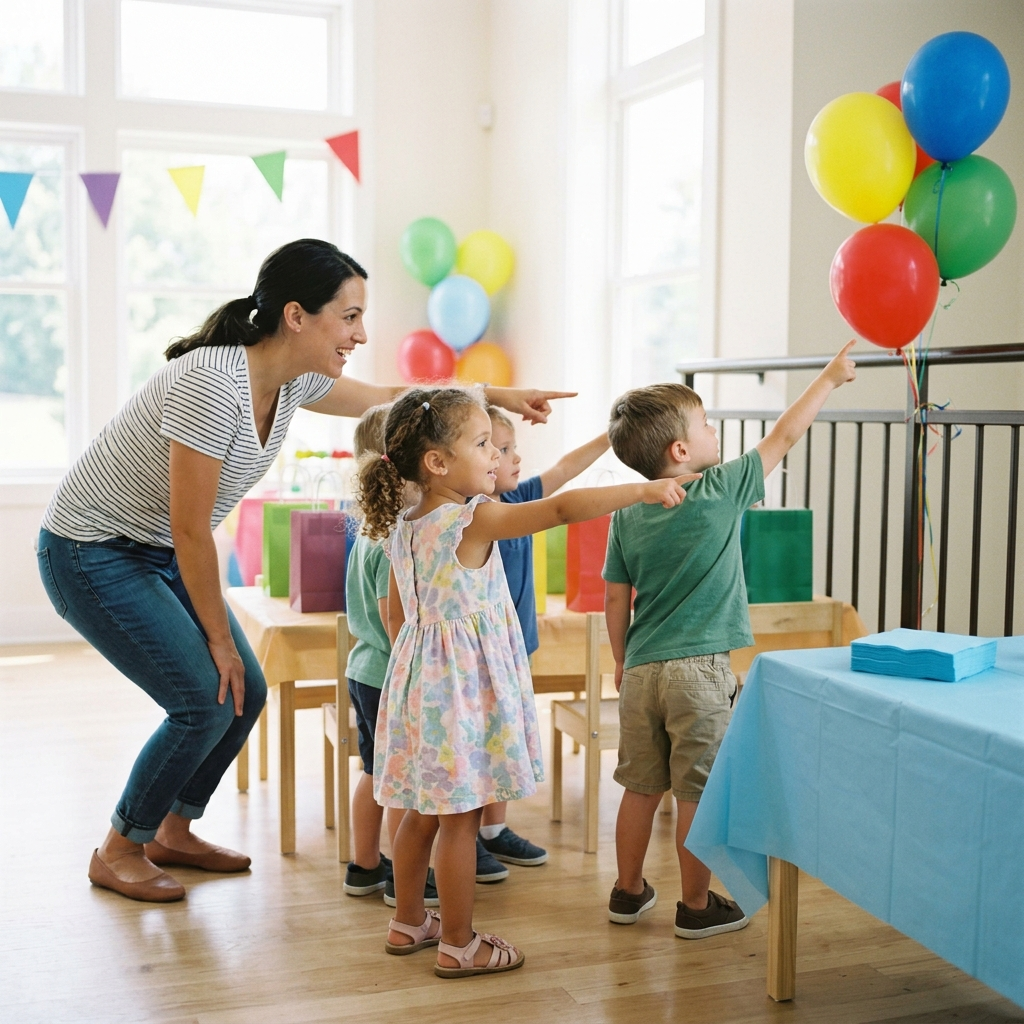
I call out a color and ask children to find or touch something nearby that matches it. Party decorations such as balloons, napkins, clothing, and table coverings can become part of the game.
This works best as a cooperative search rather than a race. Children can look together, point things out, and move around within a defined party area.
I keep the boundaries away from kitchens, driveways, stairs, and any other restricted area.
Pro Tip: Before starting, tell children exactly where they can search so the activity stays controlled.
Pin the Crown on the Birthday Baby
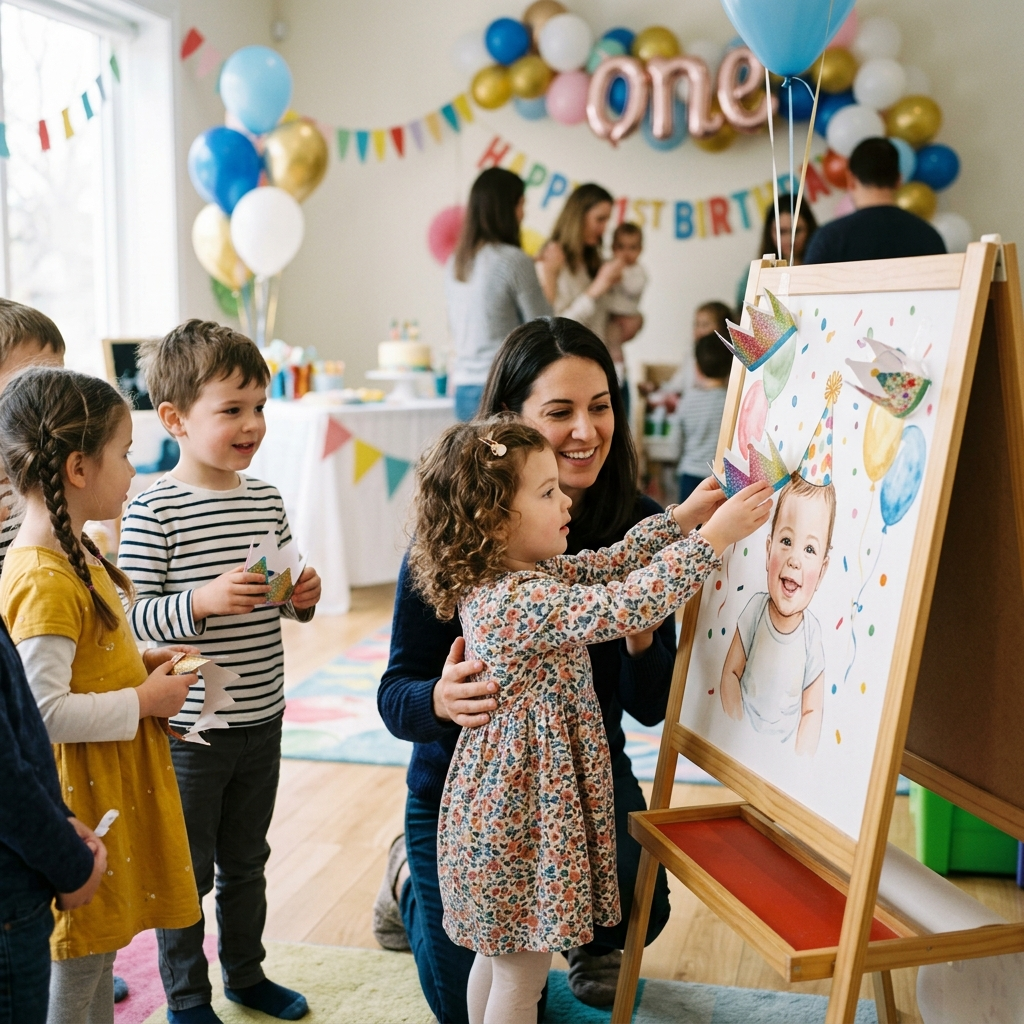
For this first-birthday version of a pin-the-item game, I use a poster, photo, or illustration of the birthday baby. Children place a lightweight paper crown on the picture rather than anywhere near the actual child.
With young children, I do not use blindfolds, spinning, or anything that could disorient them. They can simply take turns placing the crown while looking at the poster.
Removable adhesive keeps the activity easy to set up and take down. The crown can also be changed to another theme-related item, such as a bow, flower, or party hat.
Pro Tip: Use lightweight pieces and removable adhesive so nothing becomes a falling or wall-damage problem.
Hopscotch
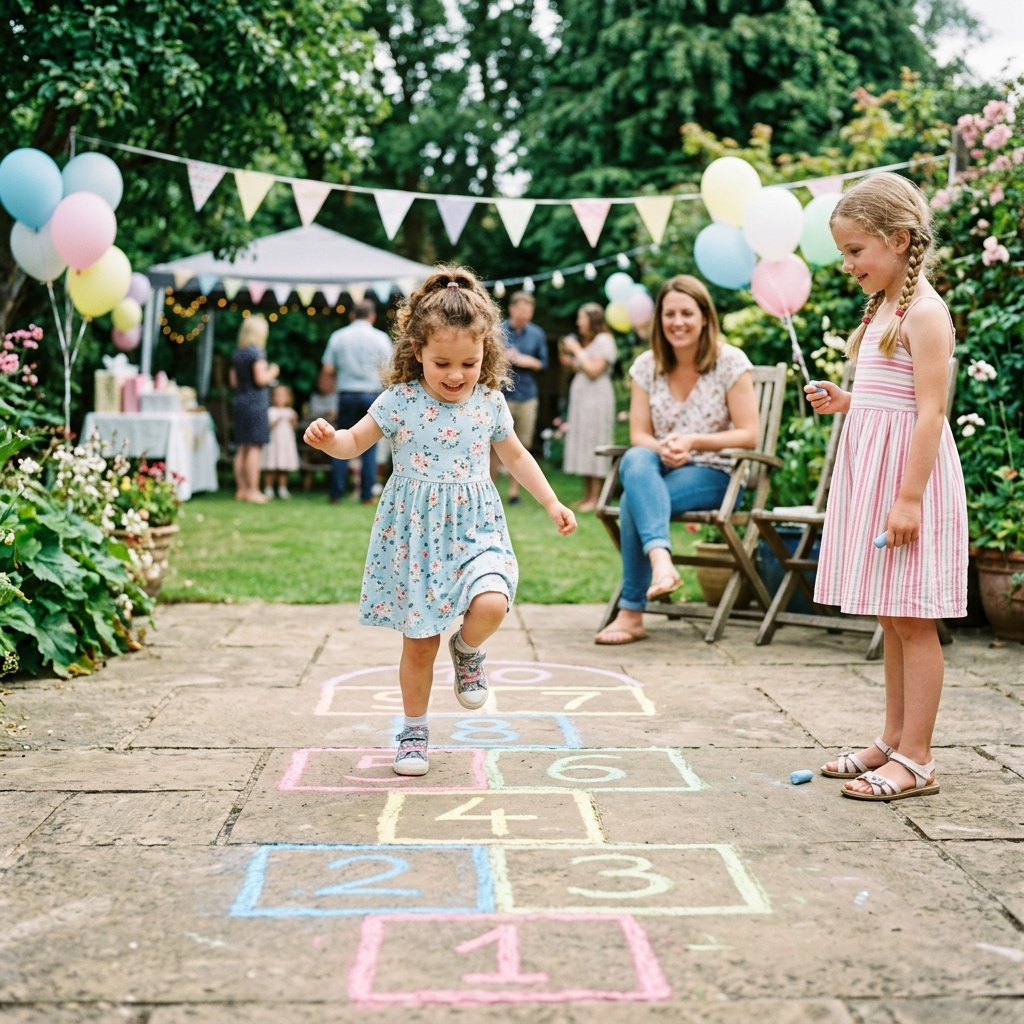
For an outdoor party, sidewalk chalk makes a simple hopscotch area. Indoors, a suitable reusable mat can work, provided it sits securely on the floor.
I keep the rules flexible because a three-year-old may walk through the squares rather than hop through a traditional pattern. Older children can follow more of the familiar rules if they want.
The playing surface needs to be flat and clear, with no loose mats, slippery areas, or obstacles nearby.
Pro Tip: Treat it as an age-flexible movement activity rather than expecting every child to perform traditional hopscotch.
1 Minute Challenges
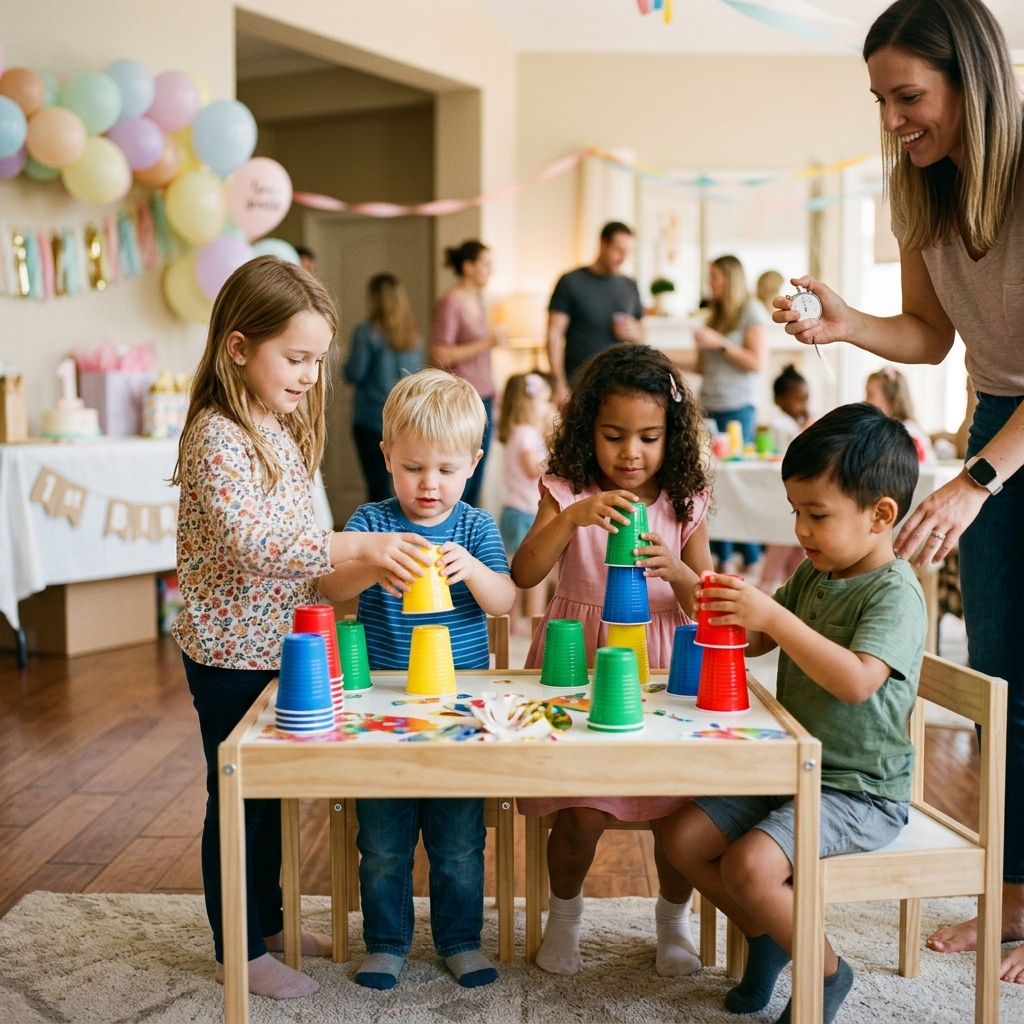
Short one-minute challenges can add variety without requiring a long group game. I choose simple tasks using age-appropriate materials and adjust the difficulty for different ages.
Large cups, soft balls, or similar supplies can be used for different challenges. I avoid anything involving objects in children’s mouths, sharp or fragile items, unsafe rushing, or activities that encourage children to push into one another.
Preparing the supplies before guests arrive makes each round much easier to run.
Pro Tip: Keep the rounds brief and explain the challenge before starting the timer so children spend more time playing than waiting.
First Birthday Games for Family
The family section is one of my favorite parts of a first birthday because adults are celebrating a major milestone too. Parents, grandparents, relatives, and friends can enjoy simple memory-based games without turning the party into a formal competition.
I keep these activities optional and light. They can run in the background or be used during a quieter part of the celebration.
Match the Monthly Milestone Photo
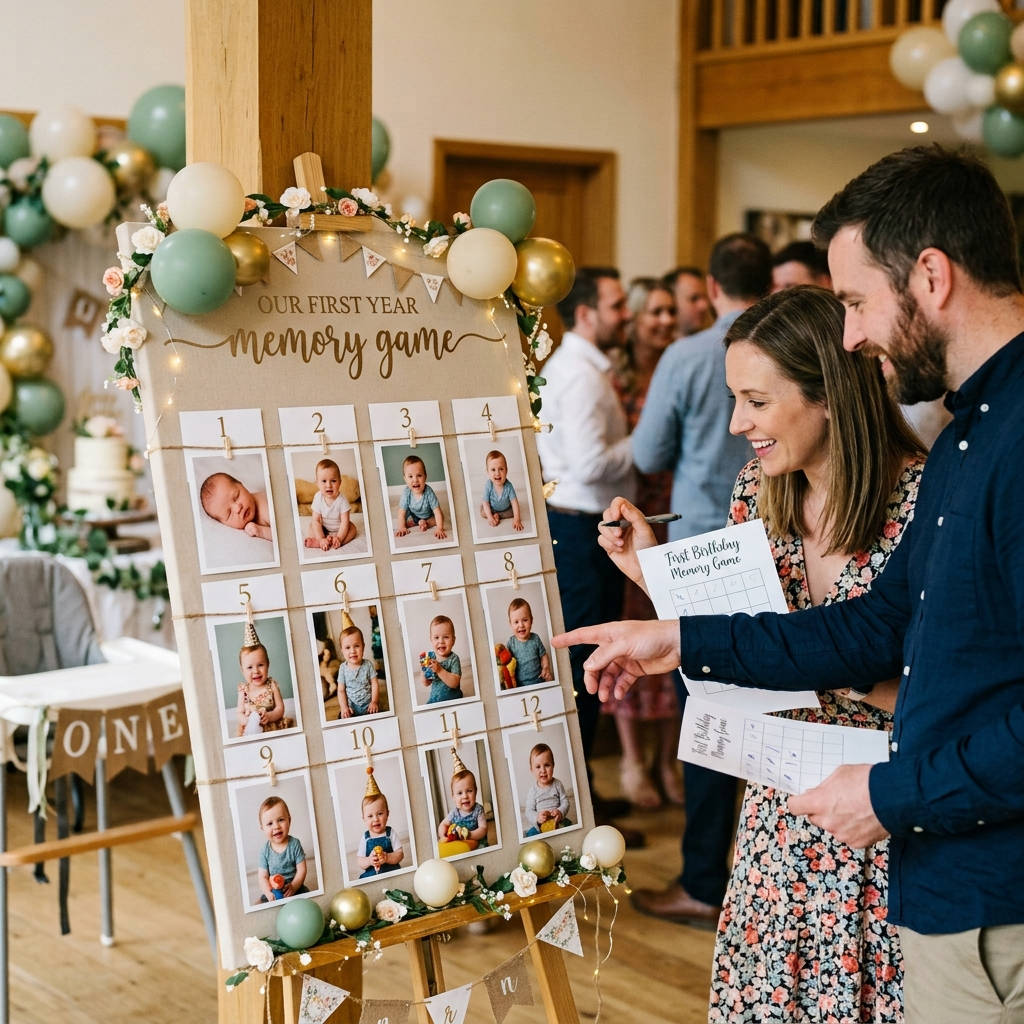
I display one photo from each month of the baby’s first year and ask guests to match each picture with the correct month. Numbered photos and a simple answer sheet make the game easy to follow.
The pictures can stay on display throughout the party, so guests do not need to stop everything to participate. It also gives family members an easy conversation starter as they look back through the baby’s first year.
Before displaying personal photos, I ask the people pictured if they are comfortable with them being used at the party.
Pro Tip: Collect the answer sheets before cake time and announce the person with the most correct matches when everyone is gathered.
Guess the Age in the Picture
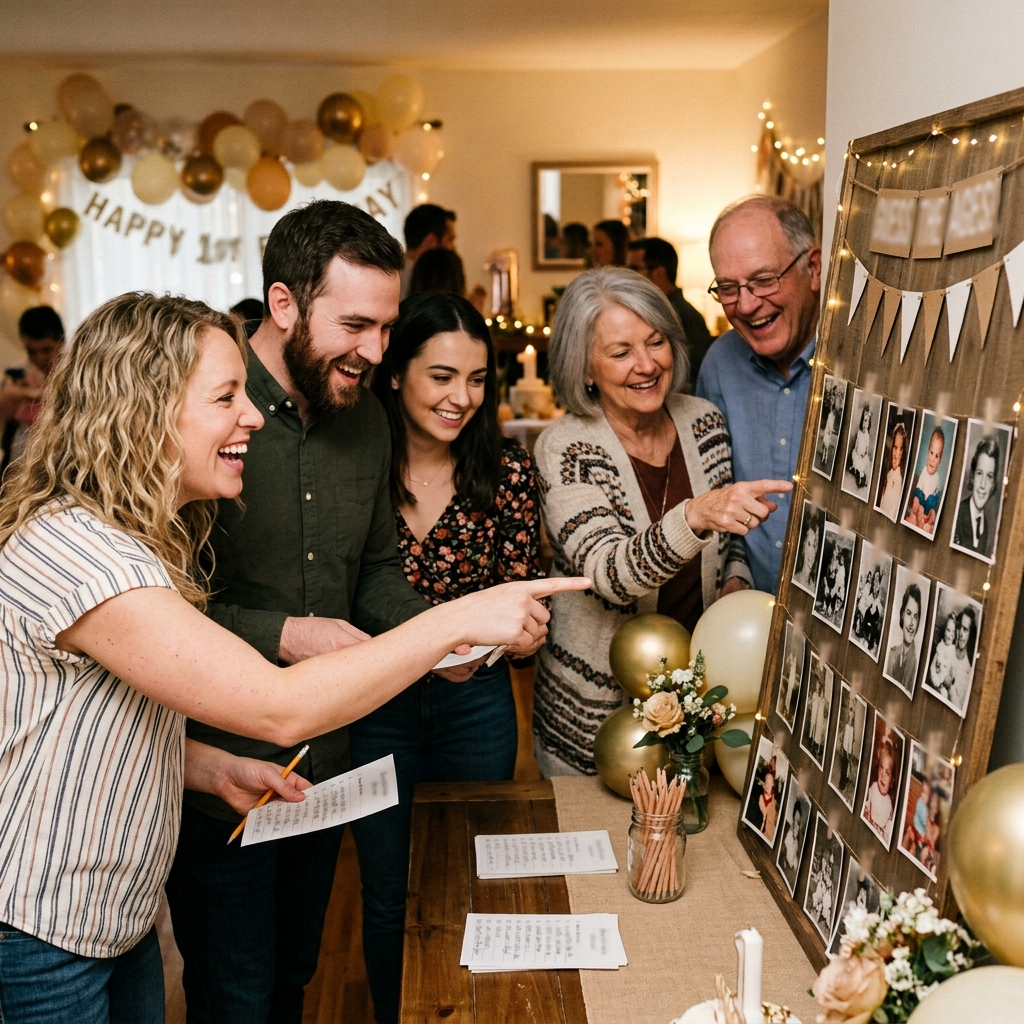
For this game, I collect childhood photos of the baby’s parents, grandparents, or other family members and ask guests to guess who is pictured.
Family resemblance can make the guesses surprisingly difficult, which is often what makes this activity entertaining. I number each picture and provide a simple answer sheet.
The photo display can remain up for the whole party, giving guests something to look at whenever they have a quiet moment.
Pro Tip: Get permission before using family photos, especially if guests may photograph the display.
Who’s Baby’s Favorite?
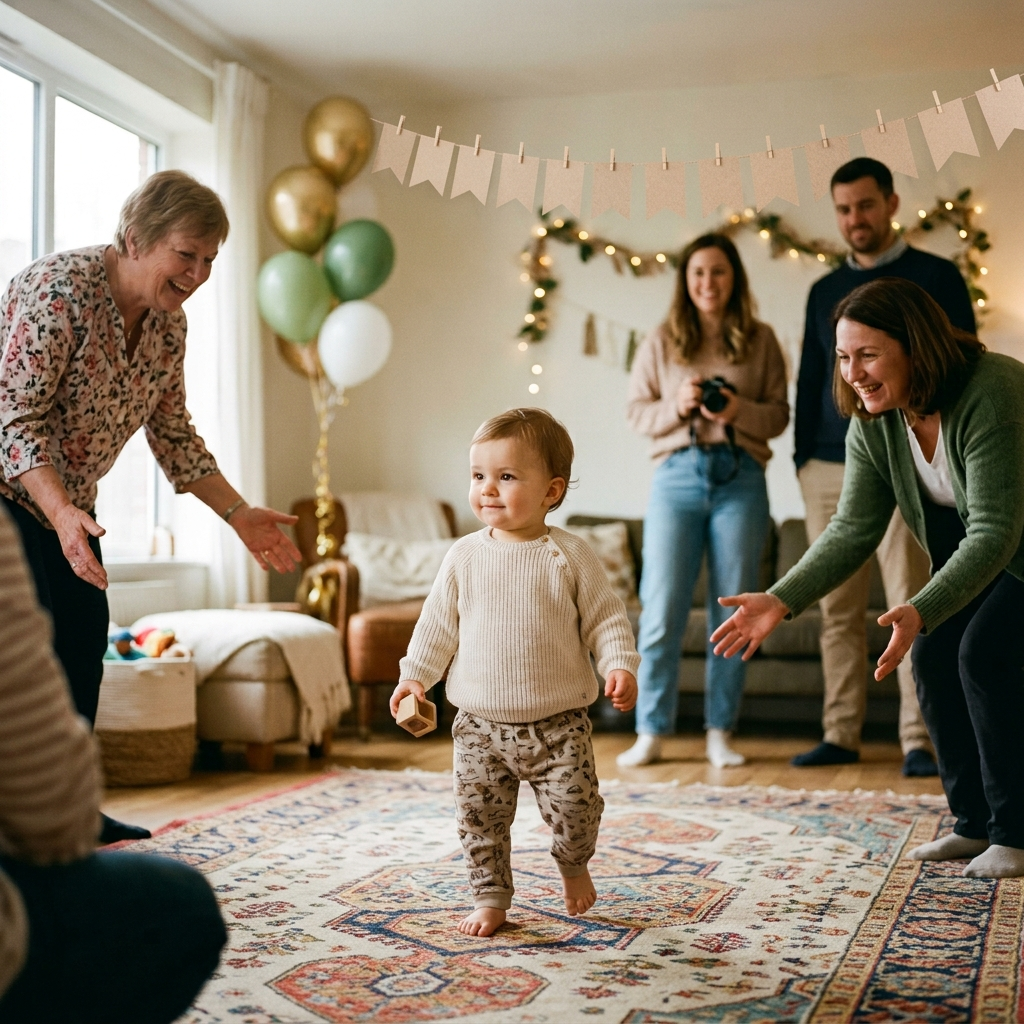
This is simply a playful way to see which familiar family member the baby approaches first. Two or more relatives can stand a short distance away while the baby decides where to go.
I treat the result as a funny party moment, not as a measure of affection. Babies make choices based on their mood, surroundings, attention, and plenty of other things.
The baby should be comfortable and interested in participating. If the child becomes upset, tired, or wants to be held, I stop the game.
Pro Tip: A photo or short video is optional if the family wants to capture the moment, but participation should always come first.
Birthday Trivia

A short quiz about the baby’s first year gives adults a chance to test what they remember. Questions can cover the first word, favorite food, favorite song, or other simple milestones.
Around 10 questions is enough for a party. Guests can answer individually or work in small teams, depending on the size of the gathering.
I keep the questions light and avoid anything the family would consider too personal. The completed quiz can also become a small keepsake from the birthday.
Pro Tip: Prepare the answer key before the party so checking the results takes only a few minutes.
Family Relay
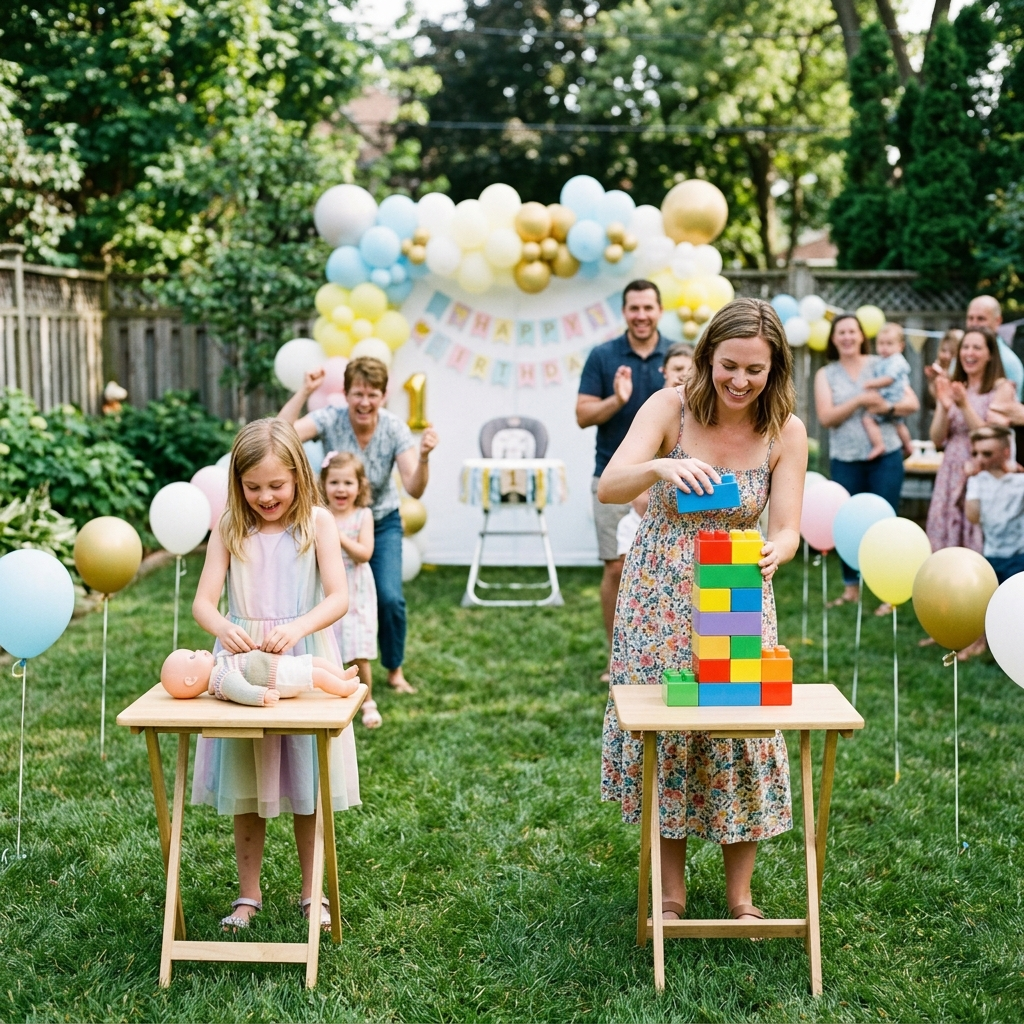
For a larger outdoor party, an optional family relay can get the adults involved. Instead of athletic challenges, I use silly first-birthday tasks such as dressing a baby doll, stacking large blocks, or identifying a lullaby.
The relay is about laughing together rather than speed or physical ability. I prepare the stations ahead of time and leave enough room for people to move safely between them.
The actual birthday baby should not be used as part of a relay. I also avoid sharp objects, hot items, fragile materials, or challenges that involve unsafe lifting, running, or pushing.
Pro Tip: Four or five simple stations are plenty. Keep the activities easy enough that everyone can join without needing special skills.
A first birthday does not need a full schedule of games to be enjoyable. I would rather have a few useful activities ready than spend the party trying to move everyone from one game to another.
For most celebrations, two or three organized activities and one or two drop-in options are enough. The right choices depend on the children’s ages, the available space, the weather, and the birthday baby’s normal routine.
I also leave room for naps, food, photos, cake, diaper changes, and unexpected mood changes. If the baby is tired or simply does not want to participate, that takes priority over the schedule.
The goal is not to complete every game on the list. A flexible plan gives everyone more room to enjoy the celebration naturally.
Read this next: Celebrate in Style with a ‘One Happy Dude’ First Birthday Party
Frequently Asked Questions
How many games should I plan for a first birthday?
I usually plan two or three organized games and one or two simple activities. This leaves enough time for food, photos, cake, naps, and changes in the baby’s mood.
What games are best for a 1-year-old birthday party?
Simple activities such as Bubble Chase, Peek-a-Boo, Build a Block Tower, and Find the Toy work well. I focus on movement and discovery rather than complicated rules.
How can I include adults in a first birthday party?
Family games such as Match the Monthly Milestone Photo, Birthday Trivia, and Guess the Age in the Picture give adults an easy way to participate without taking attention away from the birthday baby.
Are first birthday games safe for babies and toddlers?
I choose age-appropriate toys, avoid small game pieces and prizes, keep young children supervised, and remove hazards from play areas. Water activities require close adult supervision at all times.




3 Comments