21 Party Games for Small Groups That Work Brilliantly With 4 to 8 People
Small groups are my favorite kind of party, and the hardest to plan games for. Four to eight people is too many for a quiet board game and too few for the big team games, so I spent a year testing party games for small groups at our own place, usually with six friends, pizza, and a strict rule that nobody sits out. What I learned is that the best small-group games have short turns, room for side conversations, and a way for a losing player to come back.
I picked these 21 party games for small groups the way I always pick them: we played them, with real groups of four, six, and eight, and I kept notes on what actually happened. Games that left half the table waiting got cut. Games that needed a referee got cut. What stayed are the games that kept everyone in play, needed almost no setup, and ended with people asking when we are doing it again. A few of these are now monthly traditions at our house.
Key Takeaways
- With 4 to 8 players, pick games where turns take under a minute and nobody waits more than a few minutes between turns.
- Mix one strategy game, one silly game, and one creative game per night so every kind of player gets a moment to shine.
- Most of these party games for small groups cost under $25, and several need nothing but cards, paper, and a phone timer.
- Small groups argue less about rules when you read the rules out loud together once, before the first round.
21 Party Games for Small Groups That Work With 4 to 8 People
1. Poker Night, Small Stakes
Poker with a small group is the gold standard of game nights, and small stakes are the secret. We play with chips worth pennies, or sometimes just bragging rights, and the game stays friendly instead of tense. With four to eight players you get real bluffing without the endless waiting of a big table, and a full tournament takes about ninety minutes. I love that poker rewards patience and reading people, not just luck. The downside is real, though: it is a bad pick if anyone at the table hates card games, so check first, and keep the buy-in low enough that losing it feels funny, not annoying.

Cost: Under $15 for chips and cards | Time: 60 to 90 minutes | Difficulty: Medium
Pro Tip: Use a timer for blinds. Without it, poker night drifts and the last players get bored.
2. Board Game Marathon
A board game marathon is our go-to when six friends come over and nobody can agree on one game. We line up three shorter games instead of one long one, and everyone votes on the order. The marathon format means a bad game only lasts thirty minutes, and the person who lost the first game often wins the second, which keeps the whole night competitive. I have learned to pick games with different energies: one strategy, one silly, one creative. The downside is table space and rules explanations, so I pre-read every rulebook and teach each game in under five minutes, or it does not make the lineup.

Cost: $20 to $40 per game | Time: 2 to 3 hours | Difficulty: Easy to medium
Pro Tip: Keep a visible scoreboard across all three games. A marathon needs a champion, not just three winners.
3. Trivia Tournament
Trivia is the most reliable small-group game I know, because everyone has one weird category they dominate. We split into two teams, use a free trivia app or questions I write myself, and play five rounds of ten questions with a music round at the end. The team format is the key: quieter friends contribute without the pressure of answering alone, and the music round always produces the loudest arguments. The downside is question quality, because bad trivia questions ruin the night, so I test every question on myself first and throw out anything ambiguous. Keep rounds short and the snacks close.

Cost: Free with an app | Time: 45 to 60 minutes | Difficulty: Easy
Pro Tip: Let the losing team write the final round next time. It keeps the rivalry friendly and the questions fresh.
4. Word Association Games
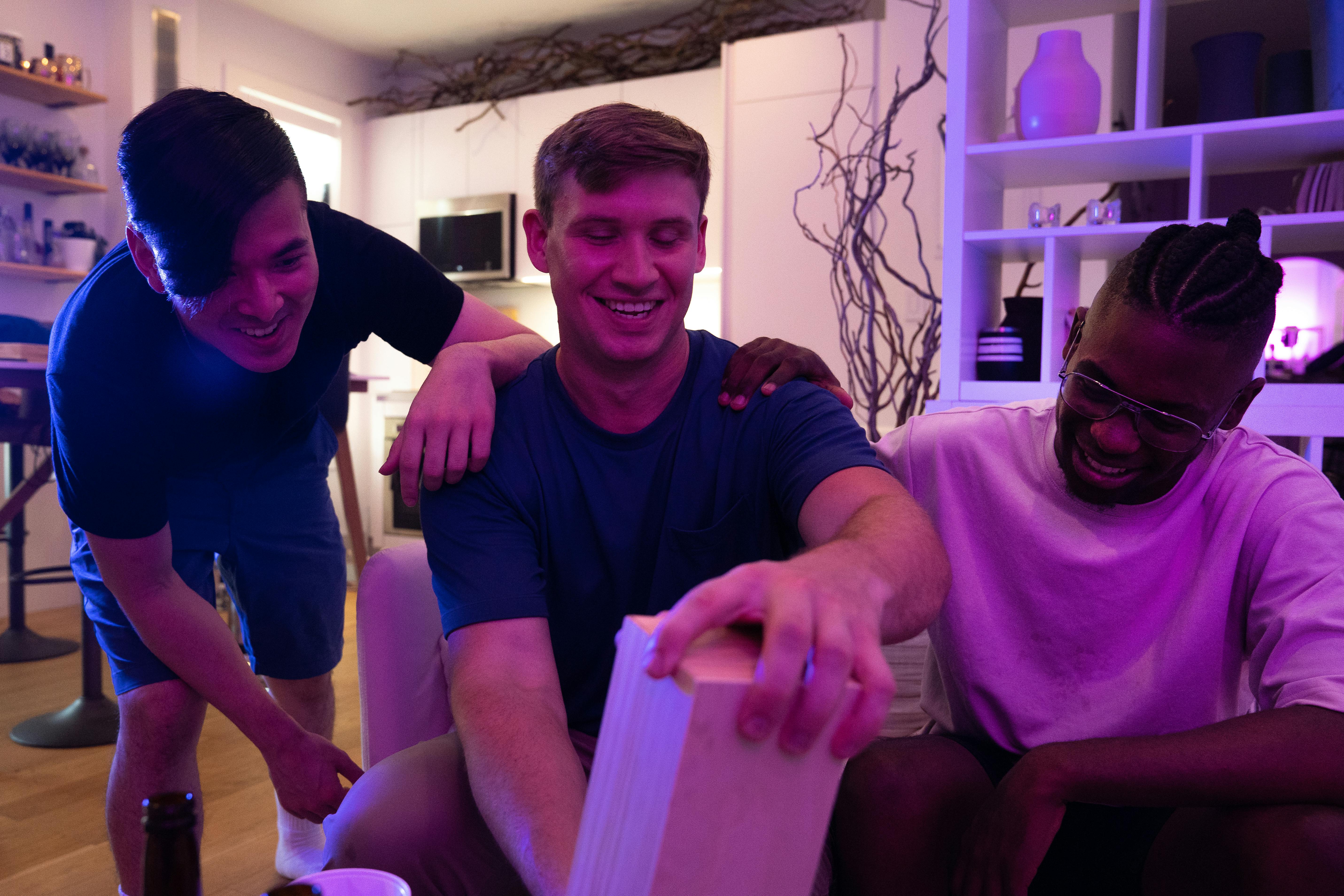
Word association games, the kind where one person gives a one-word clue and the team guesses the link, are perfect for small groups because they make everyone talk at once in the best way. We play the team version with two teams of three or four, and the arguments about whether “ocean” connects to “blue” or “wave” are half the fun. I love that these games need almost nothing: cards or an app, and a table. The downside is that they favor the loudest talker, so we rotate the clue-giver every round and ban interrupting during the thinking minute. That one rule changed the whole game for us.
Cost: $15 to $25 for a card set, or free with an app | Time: 30 minutes | Difficulty: Easy
Pro Tip: Play the first round open-handed so new players learn the clue style before it counts.
5. Monopoly Night
Monopoly with a small group is a different game than the marathon version everyone dreads. With four or five players and a house rule that games end after 90 minutes with the richest player winning, it stays fun instead of endless. We add pizza and a rule that all trades must be announced out loud, which creates the best negotiations of the night. I will be honest: Monopoly still has a luck problem, and one bad stretch of rolls can sink a player early. The time limit fixes most of that, and nobody has ever asked to keep playing past it, which tells you the limit is doing its job.

Cost: Around $25 | Time: 60 to 90 minutes | Difficulty: Easy
Pro Tip: Set the 90-minute timer where everyone can see it. The deadline makes the last twenty minutes thrilling.
6. Jenga Tournament
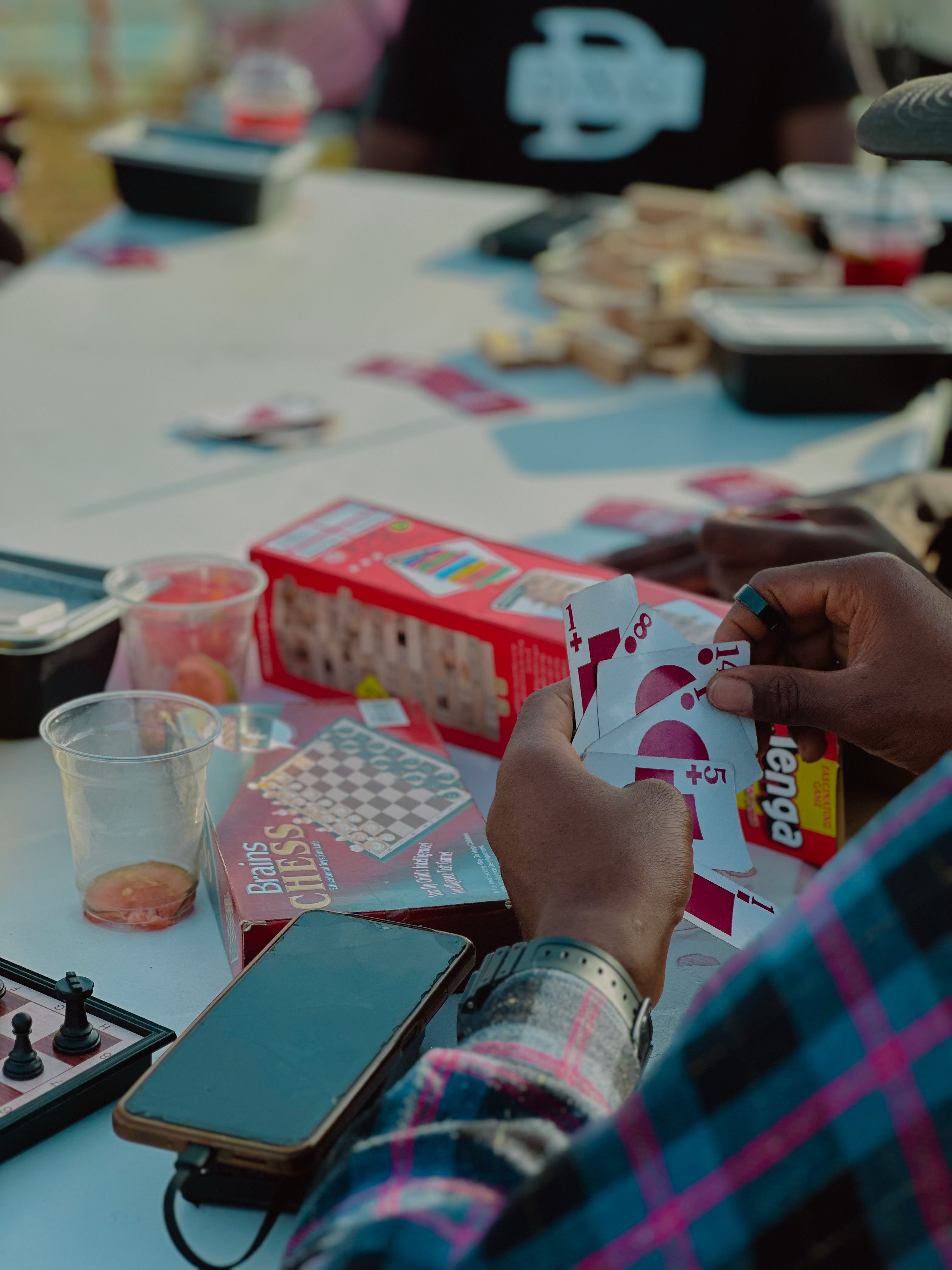
A Jenga tournament is the easiest small-group game to run, and the most dramatic. We play bracket style: pairs face off, winners advance, and the final is best of three. The whole thing takes about half an hour, and the crowd around the tower gets louder with every pull. I love that it needs no skill to start and real nerve to finish, so brand-new players can beat confident ones. The downside is that it is over fast if someone is reckless, so we play a house rule: you must use only one hand, and you cannot touch the tower to test a block. That rule alone doubles the tension.
Cost: Around $15 | Time: 30 minutes | Difficulty: Easy
Pro Tip: Play outside if you can. A falling tower on grass is funny; on a glass table it is a disaster.
7. Mahjong Night
Mahjong night started as an experiment and became a monthly fixture with our six-player group. The tile game, not the solitaire version, is social in a way card games are not: everyone builds their own hand while watching everyone else’s discards, and the table talk is constant. It took us one slow learning night to get the basics, and now a full game takes about twenty minutes. The downside is the learning curve and the tile set cost, so borrow a set for the first night or use a free app to learn before buying. Once it clicks, though, it is the game our friends request by name.

Cost: $25 to $40 for a tile set | Time: 20 minutes per game | Difficulty: Medium
Pro Tip: Print a one-page cheat sheet of the basic hands. New players need it, and experienced players stop explaining mid-game.
8. Video Game Tournament
A video game tournament works brilliantly for small groups because the games do the refereeing. We set up a simple bracket with short party games, racing games, and one fighting game, and each match lasts five minutes, so nobody sits out long. The best part is the crowd: with six people, the watchers become commentators, and the commentary is often funnier than the match. I have learned to pick games anyone can learn in one round, because a game that needs practice kills the tournament for newcomers. The downside is screen hogging, so we cap each person’s total play time and rotate the controller on a timer, no exceptions.

Cost: Free with games you own | Time: 1 to 2 hours | Difficulty: Easy
Pro Tip: Start with a racing game. Everyone understands racing instantly, and it sets a fun tone.
9. Card Game Rotation
Card game rotation is our answer to the friend who says they hate card games: we play four different quick card games in one night, fifteen minutes each, and everyone finds one they like. Uno-style games, trick-taking games, and one bluffing game make a good set, because they use different skills. The rotation keeps the night moving and stops any one game from overstaying its welcome. The downside is rules fatigue, since every switch needs a two-minute explanation, so I pick games with almost no setup and teach each one with a single practice hand. By the third game, the group teaches itself.

Cost: Under $15 for card decks | Time: 60 minutes | Difficulty: Easy
Pro Tip: Write the rotation order on a card and prop it up where everyone can see it. No mid-night debates about what is next.
10. Karaoke Contest
A karaoke contest with six friends is controlled chaos, and I mean that fondly. We draw song genres from a hat, everyone performs once, and the group scores on enthusiasm, not talent, which is the only fair way to score karaoke. The contest format works because it gives shy singers a reason to try: they are performing for points, not for judgment. Our best night ended with a full-group finale that nobody planned. The downside is volume and song choice arguments, so we cap performances at one song each, keep it to early evening, and ban anyone from picking a song longer than four minutes.

Cost: Free with an app | Time: 1 hour | Difficulty: Easy
Pro Tip: Score on a 1-to-10 paddle system, like a talent show. It is faster than debating scores out loud.
11. Darts Tournament
Darts is the perfect small-group pub game at home, especially with a magnetic board on a door. We run a simple knockout bracket, and each match is first to a set score, so the whole tournament takes about forty minutes. What I love is that darts gives everyone a physical moment in the spotlight without needing athletic skill, and the crowd reactions are half the fun. The downside is safety and space: you need a clear throwing lane and a board that cannot damage your walls, so magnetic or soft-tip only, and nothing breakable within a few feet. Our board hangs on a closet door for exactly that reason.

Cost: $15 to $25 | Time: 40 minutes | Difficulty: Easy
Pro Tip: Mark the throwing line with tape and enforce it. Dart players creep forward without noticing.
12. Puzzle Race
A puzzle race with a small group is calmer than most party games, and that is exactly why it belongs on this list. Split into two teams, give each team the same 300-piece puzzle, and race the clock. The teamwork is real: one person sorts edges while another hunts colors, and the table talk is relaxed and funny. We play this one on nights when the group wants to hang out without shouting, and it always ends with both teams helping each other finish, which tells you something about the vibe. The downside is table space, so use a puzzle mat or a card table you can leave up overnight if the race runs long.

Cost: $10 to $20 per puzzle | Time: 1 to 2 hours | Difficulty: Easy
Pro Tip: Buy two identical puzzles, not one shared puzzle. Racing needs identical starting points.
13. Cocktail-Making Challenge
The cocktail-making challenge is the game our friends photograph the most. Each team gets the same mystery ingredients and twenty minutes to invent a drink, and the group votes on taste, looks, and name. The best name we ever had was for a drink that tasted terrible, which tells you how the voting really works. This game is brilliant for small groups because everyone has a job: one person mixes, one garnishes, one presents. The downside is cost and mess, so set a small ingredient budget, use plastic cups for tasting, and keep one person on cleanup duty with a prize for the cleanest station.

Cost: $20 to $30 for ingredients | Time: 45 minutes | Difficulty: Easy
Pro Tip: Include one non-alcoholic team option with the same ingredients. Mocktail teams often win on creativity.
14. Murder Mystery Night
Murder mystery night is the most ambitious game on this list, and the most memorable when it works. We use a printable kit for six players, everyone gets a character, and the host guides the evening through three rounds of clues. The small group size is actually perfect: with six people, everyone is a suspect and everyone gets lines, which never happens in bigger groups. I love watching quiet friends become dramatic suspects. The downside is preparation: the host needs an hour to set up, and the game needs players willing to act a little. If your group is shy, start with a comedy-themed kit rather than a serious one.

Cost: $15 to $30 for a printable kit | Time: 2 hours | Difficulty: Medium
Pro Tip: Assign characters a week early so people can dress up. Costumes double the fun for free.
15. Two Truths and a Lie, Group Edition
Two Truths and a Lie scales beautifully to small groups, and it is the best icebreaker I know for a mixed group that does not all know each other well. Each person writes three statements, reads them out, and the group votes on the lie. The game works because it rewards good storytelling, not just facts, and the reveal always starts a real conversation. We play it at the start of the night, before anything competitive, because it warms the room up. The downside is that one vague player can stall the game with long stories, so we cap each person’s turn at two minutes with a gentle timer, and it keeps everything moving.

Cost: Free | Time: 20 to 30 minutes | Difficulty: Easy
Pro Tip: Ban statements about jobs and hometowns. The best lies are about weird experiences, not resumes.
16. Cooperative Board Games
Cooperative board games are my secret weapon for groups with mixed competitiveness. Instead of fighting each other, everyone fights the game together, which means the competitive friend and the shy friend are suddenly on the same team. We play games where the group wins or loses together, and the table talk is constant strategy, not trash talk. I love that these games end with either a shared victory dance or a shared groan, and both feel great. The downside is the “quarterback problem,” where one confident player bosses everyone else, so we rotate the decision-maker each round and let every player make the final call on their own turn.

Cost: $25 to $40 | Time: 45 to 60 minutes | Difficulty: Medium
Pro Tip: Start with a cooperative game that has no traitor mechanic. Trust games come later, once the group trusts each other.
17. Chess Ladder Tournament
A chess ladder sounds serious, but with a small group it becomes a cozy, competitive evening. We run a ladder where the winner stays on and challengers rotate in, so everyone plays several short games instead of one long one. The format is perfect for mixed skill levels: a strong player faces fresh opponents every round, and beginners get to watch and learn between games. I am not the strongest player in our group, and the ladder is how I improved, because I got to study other people’s games. The downside is that chess intimidates some people, so we keep games to ten minutes with a timer and ban post-game lectures.

Cost: Free with a board | Time: 60 minutes | Difficulty: Medium
Pro Tip: Pair the ladder with snacks and music. Chess feels like a party when the room does not feel like a library.
18. Living Room Dance-Off
A living room dance-off is the game that turns a good night into a legendary one. We use a dance game app or just a playlist, split into two teams, and each team gets one song to perform. The scoring is by applause, which is gloriously unscientific and completely fair in spirit. I love that it gets everyone moving after an evening of sitting, and the videos, taken with permission, become group-chat gold for months. The downside is space and self-consciousness, so clear the furniture, start with a group dance so nobody goes first alone, and never, ever force anyone to perform solo.

Cost: Free | Time: 30 minutes | Difficulty: Easy
Pro Tip: Use a playlist of songs everyone knows. A dance-off dies when the song is unfamiliar.
19. Most Likely To
Most Likely To is the simplest game on this list and one of the loudest. Someone reads a prompt, like “most likely to fall asleep at a party,” and everyone points at the person it fits best. The person with the most fingers pointed at them takes the card, and the player with the most cards at the end wins, or loses, depending on how you look at it. It works for small groups because everyone knows each other well enough for the answers to sting a little and be funny. The downside is that it can drift into teasing, so we ban prompts about looks, money, and exes before the first card, and the game stays kind.

Cost: Under $15 for a card set, or free with homemade prompts | Time: 20 minutes | Difficulty: Easy
Pro Tip: Write your own prompts about your specific friend group. Generic prompts are fine; personal ones are unforgettable.
20. Pizza and Games Night
Pizza and games night is less a game and more a format, and it is the one I recommend most to new hosts. Order pizza, put out two or three short games, and let people drift between eating and playing with no schedule at all. The lack of structure is the point: small groups do not need a host running a show, they need a good room, good food, and games within reach. We have had some of our best nights this way, with a board game on the coffee table and a card game on the kitchen counter. The downside is that without a plan, the night can drift into just watching TV, so put the games out before anyone arrives and leave the TV off.

Cost: Cost of pizza plus games you own | Time: 2 to 3 hours | Difficulty: Easy
Pro Tip: Put one game on the table before guests arrive, already set up. A set-up game gets played; a boxed game stays boxed.
21. Retro Video Game Night
Retro video game night is pure nostalgia, and it works even for friends who never play modern games. Old arcade-style games are simple enough that anyone can join in one round, and the pixel graphics make everyone laugh in a fond way. We set up a mini console or an emulator on a laptop, and the tournament is just high scores, winner stays on. I love that it bridges generations in a friend group: the oldest games are the ones everyone somehow knows. The downside is that retro games can feel repetitive after an hour, so pair it with a board game for the second half of the night and end on a high score, not a yawn.

Cost: Free with an emulator, or $30 to $60 for a mini console | Time: 1 to 2 hours | Difficulty: Easy
Pro Tip: Start with a racing or fighting game from the era everyone remembers. Familiarity beats novelty here.
Which Small-Group Game Fits Your Night?
| Game type | Best for | Cost | Time |
|---|---|---|---|
| Card and board | Classic game nights, all skill levels | Under $25 | 30 to 90 minutes |
| Creative and talking | Mixed groups, new friends | Free to $15 | 20 to 45 minutes |
| Active and silly | High-energy nights, big laughs | Free to $25 | 30 to 60 minutes |
| Video and retro | Low-effort hosting, casual players | Free to $60 | 1 to 2 hours |
Mistakes I Made (So You Don’t Have To)
Picking games for twelve people. Our early game nights failed because I bought games designed for big parties and tried to squeeze them into six players. Half the mechanics fell apart. Now I check the player count first, and if a game shines at eight or more, I save it for a bigger night. For larger nights, this related article on games for large groups is the one I actually use.
Letting one game eat the whole night. A four-hour board game with six tired people is not a party, it is a hostage situation. I cap every game at ninety minutes now, and if it runs long, we finish it next time. Nobody has ever complained about a game night ending on time.
Forgetting the non-gamers. Every group has one person who came for the company, not the competition. I now always include one low-pressure game, like a puzzle or a talking game, so that person has a way in. Game night should feel like a party, not a tournament.
Frequently Asked Questions
What are the best party games for small groups of 4? Poker, Jenga, trivia in two teams, and card game rotation all work beautifully with exactly four players, because nobody waits long and every round matters.
Can small-group games work outdoors? Absolutely. Jenga, darts with a soft-tip board, and board games on a steady table all move outside well. For more outdoor ideas, also read our outdoor party games for adults, which includes several that scale down to small groups.
How do I host a trivia night for a small group? Split into two teams, use five rounds of ten questions, and end with a music round. Write your own questions if you can, because personal questions about your friend group get the biggest reactions. For more trivia formats, read this next for trivia night party ideas that work for any group size.
Final Thoughts
The best party games for small groups are the ones where everyone plays, everyone talks, and nobody checks the clock. Start with one game from this list that fits your group’s energy, add pizza, and let the night build from there. Small groups are a gift: you can hear everyone, include everyone, and actually finish a game. Use that, and your game nights will become the ones your friends plan their month around.