17 Unique Party Games for Senior Citizens Celebrations
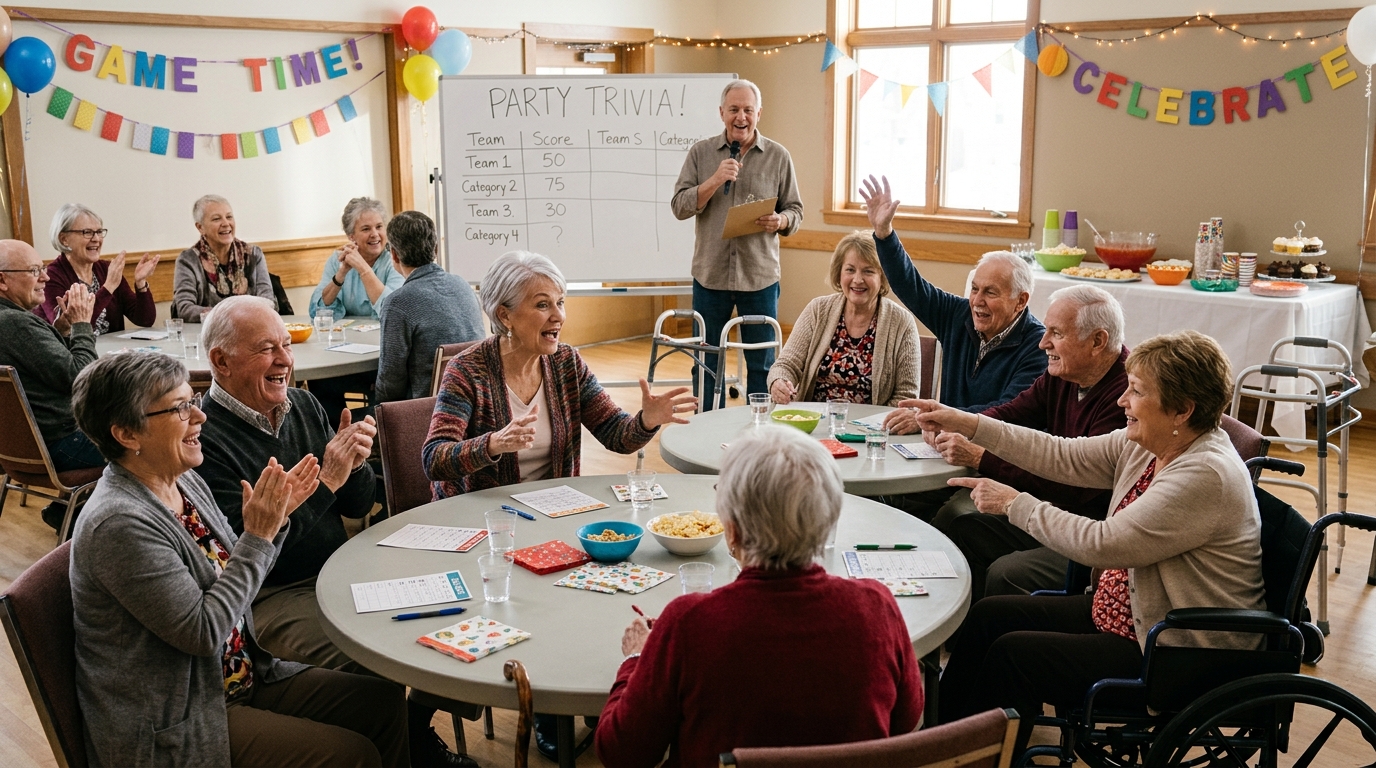
I find that the most enjoyable senior celebrations are not necessarily the ones with the biggest budgets or the fanciest decorations. They are the gatherings where people feel comfortable joining in, sharing stories, laughing together, and making new memories. Choosing the right party games can help create that atmosphere, whether I am planning a family reunion, a retirement party, a milestone birthday, or an afternoon at a senior community center.
When I choose games for older adults, I look for activities that are easy to understand, flexible enough for different abilities, and enjoyable without putting anyone under pressure. Music, familiar objects, word games, and simple team challenges are all excellent places to start.
I have gathered 17 party games for senior citizens that suit different interests, group sizes, and celebration settings. The list includes familiar favorites such as Bingo, Scrabble, and Karaoke, along with creative activities like Pictionary, Guess Who, and Photo Scavenger Hunt. I have also included gentle movement games such as Bean Bag Toss, Balloon Volleyball, and Croquet.
Save this for later
Table of Contents
For each activity, I explain how to organize it, what supplies are useful, how long a round might take, and how to make participation more comfortable. These ideas can work for indoor parties, outdoor gatherings, retirement celebrations, and family events with guests who prefer different levels of activity.
Key Takeaways
- For large groups: I would start with Bingo, Musical Bingo, Name That Tune, or group Karaoke because guests can participate together without needing complicated equipment.
- For quieter gatherings: Scrabble, Memory Game, and Fact or Fiction offer relaxed activities that encourage conversation and concentration.
- For gentle movement: Bean Bag Toss, Chair Volleyball, Balloon Volleyball, and Croquet can be adjusted to suit the venue and participants.
- For memorable conversations: Guess Who and Photo Scavenger Hunt give guests opportunities to share stories, photographs, and personal interests.
- For inclusive celebrations: I would provide comfortable seating, readable instructions, clear audio, and alternatives for anyone who prefers not to stand or move around.
- For easier planning: I recommend choosing three or four games rather than scheduling all 17 in one event. This leaves time for refreshments, conversation, and breaks.
Related article: 23 Fun Retirement Party Games to Make the Celebration Unforgettable
17 Unique Party Games for Senior Citizens Celebrations
When I plan games for a senior celebration, I first consider who will attend and what they might enjoy. A group of lifelong friends may love music and storytelling, while a mixed-age family gathering might prefer drawing challenges or simple team competitions.
I also consider the location, available equipment, and how much time guests want to spend playing. Some activities work best around a table, while others need an open space. Having a mix of quieter games and gentle movement activities gives guests more choice throughout the celebration.
Party Games for Senior Citizens
1. Bingo

Estimated time: 10–20 minutes per round | Group size: 4 or more | Setting: Indoors or outdoors under suitable cover
Bingo is one of the easiest games I would choose for a senior birthday party, family reunion, or community celebration. The rules are straightforward, the equipment is affordable, and players can participate while seated.
What I need:
- Bingo cards with clear, readable numbers
- Numbered calling tokens or a digital number generator
- Pens, large markers, or counters
- Small prizes, if desired
To organize the game, I give each guest a card and explain the winning pattern before starting. I call the numbers one at a time, allowing players enough time to find and mark each matching number. The first person to complete the selected pattern calls out Bingo, and I check the card before announcing the winner.
I can make the activity more personal by using themed cards for birthdays, holidays, or retirement parties. Picture Bingo is another option, especially when I want a break from traditional number cards.
For guests with low vision, I would choose large-print cards and high-contrast markers. In a noisy room, a microphone or a quieter location can make the calls easier to hear.
Pro Tip: I prepare extra cards and markers before guests arrive. For a longer celebration, I use different winning patterns in successive rounds to keep the game interesting without changing the basic rules.
2. Name That Tune

Estimated time: 15–25 minutes | Group size: 4–20 or more | Setting: Indoors
Music is a wonderful conversation starter, and Name That Tune gives guests a chance to recognize songs they know and enjoy. I would choose music that reflects the group’s interests rather than assuming everyone prefers songs from the same decade.
What I need:
- A prepared playlist
- A phone, computer, or music player
- A speaker with clear sound
- Paper and pens for team answers, if needed
Before the celebration, I create a playlist containing familiar songs from several decades. During the game, I play a short section of each track and invite guests to name the song or artist. Players can answer individually, write their guesses, or work in teams.
I might include old movie themes, classic pop songs, country favorites, or well-known dance music. I can also introduce a themed round, such as songs about love, travel, or celebrations.
I keep the scoring simple. Guests earn one point for a correct title and an optional additional point for identifying the singer. If a song proves difficult, I play a longer clip or offer a hint rather than letting the round drag on.
Pro Tip: I test the sound system beforehand and keep the volume comfortable. I also prepare a printed song list for anyone who would prefer to read along and check that the music can be played legally at the event.
3. Charades

Estimated time: 15–30 minutes | Group size: 6–20 | Setting: Indoors or outdoors
Charades is a lively choice when I want guests to laugh, communicate, and work together without buying special equipment. One player acts out a word or phrase while the rest of the team tries to guess it without spoken clues.
What I need:
- Small cards with words or phrases
- A bowl or container for the cards
- A timer, if desired
- A score sheet for competitive rounds
I prepare prompts based on familiar subjects, including gardening, cooking, animals, household chores, holidays, and popular films. Each player draws a card and acts out the clue while teammates guess the answer.
I usually allow 60–90 seconds per turn, although I would extend the time for a relaxed game. Teams can earn a point for each correct answer, or everyone can play together without keeping score.
To make the activity more accessible, I allow players to act while seated and use simple hand gestures or facial expressions. Anyone who does not wish to perform can read the cards, keep score, or help guess.
Pro Tip: I avoid prompts that require fast movement, balancing, or getting down on the floor. I also let players pass on a card without explaining why, so nobody feels uncomfortable.
4. Karaoke

Estimated time: 20–45 minutes | Group size: 4–20 or more | Setting: Indoors or a sheltered outdoor area
Karaoke can turn an ordinary gathering into an entertaining musical afternoon. I like the flexibility of this activity because guests can sing solo, perform duets, join a group song, or simply listen and applaud.
What I need:
- A karaoke machine or compatible app
- A screen displaying lyrics
- A microphone and speaker
- A prepared list of songs
I would begin with familiar songs that are easy to sing along with and invite volunteers to choose what comes next. If the group enjoys a little friendly competition, I could offer lighthearted awards for the most enthusiastic performance, best duet, or most memorable song choice.
I would not require anyone to sing alone. Group performances are a useful alternative for guests who feel shy, and an audience role allows people to enjoy the event without performing.
For readability, I would display lyrics in a large font and make sure the screen is visible from the seating area. A microphone with adjustable volume can help keep the sound clear.
Pro Tip: I prepare a playlist before the party and ask guests about their musical preferences in advance. This reduces waiting time and gives everyone a better chance of hearing a song they recognize.
5. Scrabble
Estimated time: 20–45 minutes | Group size: 2–4 per board | Setting: Indoors
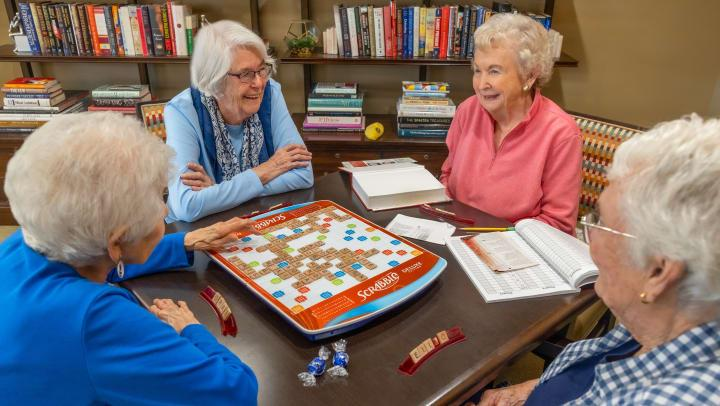
Scrabble is a good choice for guests who enjoy words, spelling, and thoughtful challenges. Players use letter tiles to form words on a board, earning points according to the letters and scoring spaces they use.
What I need:
- A Scrabble board and letter tiles
- A score sheet and pencils
- A dictionary, if the group wants one
- A well-lit table with comfortable seating
I would set up a table where players can reach the board easily and explain the rules before the first turn. Each player draws tiles, forms a word connected to those already on the board, and records the score.
A traditional game can take a while, so I would use a shorter version for a party. For example, players could take five turns each, with the highest score winning. Another option is to award points for creating words without using the full scoring system.
For guests who have trouble distinguishing small letters, larger-letter tiles or a larger-format word game may be more suitable. I would also allow enough time between turns rather than rushing players.
Pro Tip: I keep the dictionary nearby and agree on acceptable words before play begins. For a mixed-ability group, a cooperative version where everyone contributes to one shared word board can be more enjoyable than individual competition.
6. Pictionary

Estimated time: 15–30 minutes | Group size: 6–20 | Setting: Indoors or outdoors under cover
Pictionary is a creative game that encourages teamwork and often produces funny results. One person draws a word or phrase while teammates try to identify the subject before time runs out.
What I need:
- A whiteboard, drawing pad, or large sheets of paper
- Thick markers
- Prepared word cards
- A timer and score sheet, if desired
I would prepare simple prompts such as a birthday cake, a dog, a garden, a suitcase, a cup of tea, or a familiar holiday. Players take turns drawing while their teammates guess. I would give each turn around one minute, with additional time available for guests who prefer a slower pace.
The drawings do not need to look realistic. In fact, an unusual drawing can make the game even more entertaining. I would focus on participation rather than artistic skill.
I would use large drawing surfaces and thick markers so the pictures are easy to see. Guests who do not want to draw can suggest answers, select prompts, or keep score.
Pro Tip: I prepare a mix of easy and moderately challenging clues. If I am hosting guests with different abilities, I let teams work together and remove the timer so the game stays relaxed.
7. Giant Jenga

Estimated time: 10–20 minutes | Group size: 2–8 players per tower, with spectators | Setting: Spacious indoor area or level outdoor surface
Giant Jenga adds a dramatic element to a party because everyone watches to see whether the tower will remain standing. Players take turns removing a wooden block and placing it on top without causing the structure to fall.
What I need:
- A giant Jenga set with manageable block sizes
- A level, stable playing surface
- Enough space around the tower
- A small table or designated area for unused equipment
I would build the tower according to the manufacturer’s instructions and explain the rules before starting. Each player removes one permitted block per turn and carefully places it on the top of the tower. The round ends when the tower falls, and the last player to complete a successful move wins.
The size and weight of the blocks matter. Some giant sets can be difficult to grip or heavy enough to cause injury if they fall. I would choose a lightweight set, place it on the floor or a suitable low surface, and keep spectators at a comfortable distance.
Guests who prefer not to handle the blocks can participate by predicting which move might topple the tower or recording each round.
Pro Tip: I check the manufacturer’s guidance and the stability of the playing area before starting. If the blocks are too heavy or the tower is too tall, I switch to a standard tabletop Jenga set.
8. Bean Bag Toss

Estimated time: 10–20 minutes | Group size: 4–12 or more | Setting: Indoors or outdoors
Bean Bag Toss is one of the activities I would consider for a celebration where guests want a little movement without complicated rules. Players throw soft bags toward a target board, earning points according to where each bag lands.
What I need:
- Soft bean bags
- A cornhole board or suitable target
- A clear throwing area
- A score sheet, if desired
I would place the target on a stable surface and start with a short throwing distance. Each player takes turns throwing an agreed number of bags, and the team with the highest score wins after the selected number of rounds.
The distance can be adjusted according to comfort and the space available. Guests can throw from a seated position if the board is at an appropriate height, and teams can share the throwing duties.
For indoor celebrations, I would choose soft bags and a compact target. I would also make sure no one walks through the throwing area while a player is taking a turn.
Pro Tip: I test the distance before guests arrive. A shorter target distance often makes the activity more enjoyable for beginners and helps keep the focus on participation rather than accuracy.
9. Photo Scavenger Hunt

Estimated time: 20–40 minutes | Group size: 4–20 | Setting: Indoors or outdoors
A Photo Scavenger Hunt is an enjoyable way to encourage teamwork and observation. Instead of collecting physical objects, players search for specific items or scenes and photograph them.
What I need:
- A printed checklist for each team
- A phone or digital camera
- Pens for checking off completed tasks
- A safe, clearly defined search area
I would create a list of easy-to-find subjects, such as a colorful flower, a birthday decoration, a book with an interesting cover, something shaped like a heart, or a group photo featuring three smiling people.
Players work individually or in small teams to complete the list. I would give everyone around 20–30 minutes, depending on the venue, and bring the group together afterward to share their pictures.
For an outdoor event, I would keep the search area close to the main gathering space and avoid uneven paths or unnecessary walking. For an indoor celebration, I could use items already in the room.
Guests who prefer not to walk around can participate by choosing the checklist items, reviewing photographs, or directing their teammates.
Pro Tip: I prepare a seated version using printed photographs of objects around the venue. Guests can identify the items on the list without needing to use a camera or move between locations.
Also read: 19 cool Teen-Favorite Party Games for Teenagers to Make the Night Epic
10. Balloon Volleyball

Estimated time: 10–20 minutes | Group size: 6–12 | Setting: Indoors or a sheltered outdoor area
Balloon Volleyball offers a playful alternative to traditional volleyball. The balloon travels more slowly than a regular ball, making it easier for players to follow its movement and take turns tapping it.
What I need:
- One or two balloons
- A lightweight net or clearly marked dividing line
- Chairs, if a seated version is preferred
- An open area free from obstacles
I would divide the players into two teams and position them on opposite sides of the line. The aim is to keep the balloon moving between teams without letting it touch the floor. I might count consecutive taps or award a point when the opposing team fails to return the balloon.
A seated circle is another option for smaller groups. Instead of keeping score, everyone can work together to see how many taps they can achieve before the balloon lands.
I would leave enough space between chairs and remove objects that could cause someone to trip. Anyone who finds reaching difficult can help count the taps or cheer on the teams.
Pro Tip: I use a lightweight balloon and keep the game area compact. If latex allergies are a concern, I choose a suitable non-latex alternative and check the product information before use.
11. Fact or Fiction

Estimated time: 15–30 minutes | Group size: 4–15 | Setting: Indoors or outdoors
Fact or Fiction is a conversation game that can help guests learn surprising details about each other. Each participant shares two statements about themselves, one true and one made up, and the group tries to identify the invented statement.
What I need:
- Paper and pens
- A bowl or container for collecting statements
- A score sheet, if desired
- Optional prompt cards for anyone who needs ideas
I would ask each person to prepare two short statements about a hobby, a favorite food, a memorable trip, or an unusual skill. For example, someone might say they once learned to bake bread and that they have visited every continent. The group votes on which statement they think is fictional, and the participant reveals the answer.
For larger parties, I would collect the statements in advance and read them aloud without identifying their authors. Guests can write their guesses on paper or vote by raising their hands.
I would avoid sensitive subjects and give everyone the option to pass. The aim is to create enjoyable conversations, not to pressure people into revealing private details.
Pro Tip: I provide a few example statements before the first round. This helps guests understand the format and gives anyone who feels stuck a starting point.
12. Chair Volleyball

Estimated time: 10–20 minutes | Group size: 6–12 | Setting: Indoors or on a level, sheltered surface
Chair Volleyball is a seated variation of volleyball that can work well when some guests prefer not to stand for an extended period. Players remain seated and gently pass a lightweight balloon or soft ball across a low net or imaginary boundary.
What I need:
- Sturdy chairs with stable legs
- A balloon or lightweight soft ball
- A low net or visible dividing line
- A clear playing area
I would arrange the chairs in two facing rows, leaving enough room for arms and legs to move comfortably. Once the teams are ready, players take turns tapping the balloon toward the opposite side. The objective is to keep it moving and cooperate with teammates.
For a more relaxed version, I would remove scoring and challenge the entire group to achieve a set number of successful passes. Guests can take breaks or skip turns whenever they need to.
I would choose chairs appropriate for each participant, check that they cannot slide easily, and avoid requiring anyone to lean far forward or sideways. Anyone who finds reaching difficult could serve as a scorekeeper or team caller.
Pro Tip: I demonstrate the game before starting and use gentle passes rather than competitive hits. If the balloon moves too quickly or the room is crowded, I reduce the playing area or switch to a tabletop version.
13. Croquet

Estimated time: 20–40 minutes | Group size: 2–8 players per course | Setting: Outdoors on suitable ground
Croquet is a traditional lawn game that combines accuracy, planning, and friendly competition. Players use mallets to hit balls through hoops arranged on a lawn, following an agreed route.
What I need:
- A croquet set with mallets, balls, and hoops
- A reasonably level lawn
- A clear course layout
- A score sheet, if needed
I would set up a short course before guests arrive and explain the order in which the hoops should be passed. Each player takes a turn hitting their ball toward the next hoop, and the winner is the first to complete the course according to the agreed rules.
For a senior celebration, I would simplify the course and allow plenty of time between turns. Lightweight equipment with comfortable grips may be useful for guests who find standard mallets difficult to handle.
Croquet is not suitable for every outdoor space. I would check the lawn for holes, slippery patches, and other hazards, and provide a seated alternative for guests who prefer not to walk around.
Pro Tip: I keep the course short and avoid placing hoops too close together. If the ground is uneven or the equipment is difficult to manage, Bean Bag Toss may be a more practical outdoor option.
14. Memory Game

Estimated time: 10–20 minutes | Group size: 3–12 | Setting: Indoors
A Memory Game is inexpensive to prepare and can be adjusted to suit the group. I would use familiar objects arranged on a tray, allowing players to study them before covering the tray and removing one or more items.
What I need:
- A tray or tabletop
- Five to ten familiar objects
- A cloth or cover
- Paper and pens for written answers, if desired
I would begin with five or six distinct objects, such as a spoon, a key, a flower, a cup, a notebook, and a small toy. Guests study the arrangement for about 30–60 seconds before I cover it. I then remove one object and invite everyone to identify what is missing.
For a more challenging round, I could remove two objects or change the position of several items. For an easier version, I would use fewer objects and allow guests to discuss their guesses together.
I would choose items that are easy to distinguish visually and arrange them with enough space between them. Guests who have difficulty seeing the objects can examine them more closely before the tray is covered.
Pro Tip: I keep the game lighthearted and avoid treating it as a test of anyone’s memory. I focus on enjoyment, observation, and conversation rather than comparing participants or making claims about cognitive improvement.
15. Guess Who Game

Estimated time: 20–35 minutes | Group size: 6–20 | Setting: Indoors
Guess Who is especially suitable for family reunions, milestone birthdays, and retirement celebrations where guests enjoy looking back on shared memories. The traditional version uses childhood photographs, but I can adapt it for groups that do not have access to old pictures.
What I need:
- Copies of photographs
- A bulletin board or display area
- Numbered labels
- Paper and pens for guesses
Before the party, I would ask willing participants to submit a childhood or earlier-life photograph. I would number each picture and display the photographs without names. Guests receive a numbered list and try to match each image to the correct person.
Once everyone has made their guesses, I reveal the answers and invite participants to share a short story about their photographs. The conversation can be just as enjoyable as the guessing game itself.
For a community group, I might use photographs of well-known entertainers, historical personalities, or familiar objects from earlier decades instead. This avoids excluding guests who would rather not share personal photographs.
Pro Tip: I ask permission before displaying any personal picture and check that the photographs are clearly visible. If the group is large, I display duplicate copies or use a screen to show the images.
16. Musical Bingo

Estimated time: 15–30 minutes | Group size: 4–20 or more | Setting: Indoors
Musical Bingo combines song recognition with the familiar excitement of Bingo. Instead of numbers, the cards contain song titles or artist names, and players mark the matching entry when they hear a song.
What I need:
- Musical Bingo cards
- A playlist of familiar songs
- A phone or computer and speaker
- Pens or counters for marking cards
I would prepare cards containing a selection of songs from different periods and play short clips in a random order. When guests recognize a song on their cards, they mark the corresponding title. The first person to complete the agreed pattern wins.
I would choose songs according to the group’s preferences, perhaps including old movie themes, popular classics, country favorites, or well-known seasonal music. A themed version can work especially well for Christmas parties, anniversaries, and retirement celebrations.
I would keep the cards readable and make sure the audio is clear. If a song is unfamiliar, I can play a longer section or offer a hint so guests have a fair chance to identify it.
Pro Tip: I prepare the playlist and cards together so every song on the list appears on the appropriate cards. I also check the audio before guests arrive and allow enough time between clips for players to mark their answers.
17. Simon Says

Estimated time: 10–15 minutes | Group size: 5–20 or more | Setting: Indoors or outdoors on a level surface
Simon Says is a simple game that requires little equipment and can be adapted for seated participation. One person gives instructions, and players follow only the commands that begin with the words “Simon says.”
What I need:
- A designated leader
- A list of simple commands
- Comfortable seating, if needed
- Optional score cards for a points-based version
I would begin with easy actions such as clapping hands, waving, touching a shoulder, or pointing toward the ceiling. The leader occasionally gives a command without saying “Simon says.” In the traditional version, players who follow that instruction are eliminated.
For a senior celebration, I prefer a version where nobody is eliminated. Instead, players earn points for following the correct commands, or everyone stays in the game until the final round. This makes the activity more welcoming for guests who do not want the pressure of being singled out.
I would demonstrate each movement and avoid instructions that require quick standing, bending, balancing, or reaching beyond a comfortable range. Guests who prefer not to move can take turns leading the game.
Pro Tip: I start slowly and increase the pace only if everyone is comfortable. A seated version with simple hand movements is an easy way to include more guests without making the game physically demanding.
Frequently Asked Questions
What are the best party games for senior citizens?
Some of the best party games for senior citizens include bingo, Name That Tune, charades, trivia, Scrabble, Pictionary, and musical bingo. I like these options because they encourage conversation, laughter, and friendly competition while accommodating different interests and abilities.
How can I make party games easier for seniors with limited mobility?
I recommend choosing games that can be played while seated, such as bingo, memory games, Guess Who, and Name That Tune. I also make sure the playing area is comfortable, instructions are easy to follow, and any materials are within everyone’s reach.
How many games should I plan for a senior citizens’ party?
For a two- to three-hour celebration, I suggest planning around four to six games, depending on the group size and pace. I leave time for refreshments, conversation, and breaks so guests can enjoy the gathering without feeling rushed.
What supplies do I need for senior citizens’ party games?
The supplies depend on the games I choose, but common items include bingo cards, pens, paper, music, balloons, bean bags, board games, and small prizes. I prefer using materials that are easy to handle and preparing everything in advance to keep the celebration running smoothly.
Read this next: 29 Engaging Indoor Youth Group Games for Teens
Conclusion:
When I plan a celebration for senior citizens, I focus on choosing activities that make it easy for guests to connect and enjoy themselves. These 17 party games offer a range of options, from music and word challenges to storytelling, creative play, and gentle movement.
I would not try to fit every game into one afternoon. Instead, I would choose three or four activities that suit the group, prepare the equipment in advance, and leave enough time for refreshments and conversation. For example, I might start with Bingo, follow it with Name That Tune, offer Bean Bag Toss for guests who enjoy a little movement, and finish with Guess Who.
I also make comfort and inclusion part of the planning process. Clear instructions, comfortable seating, suitable lighting, readable materials, and regular breaks can make activities easier to enjoy. I would always give guests the option to watch, participate from their seats, or skip a game altogether.
Ultimately, a successful senior celebration is not about how many games I manage to organize or who wins the most prizes. It is about creating opportunities for people to spend time together, share stories, and leave with happy memories.