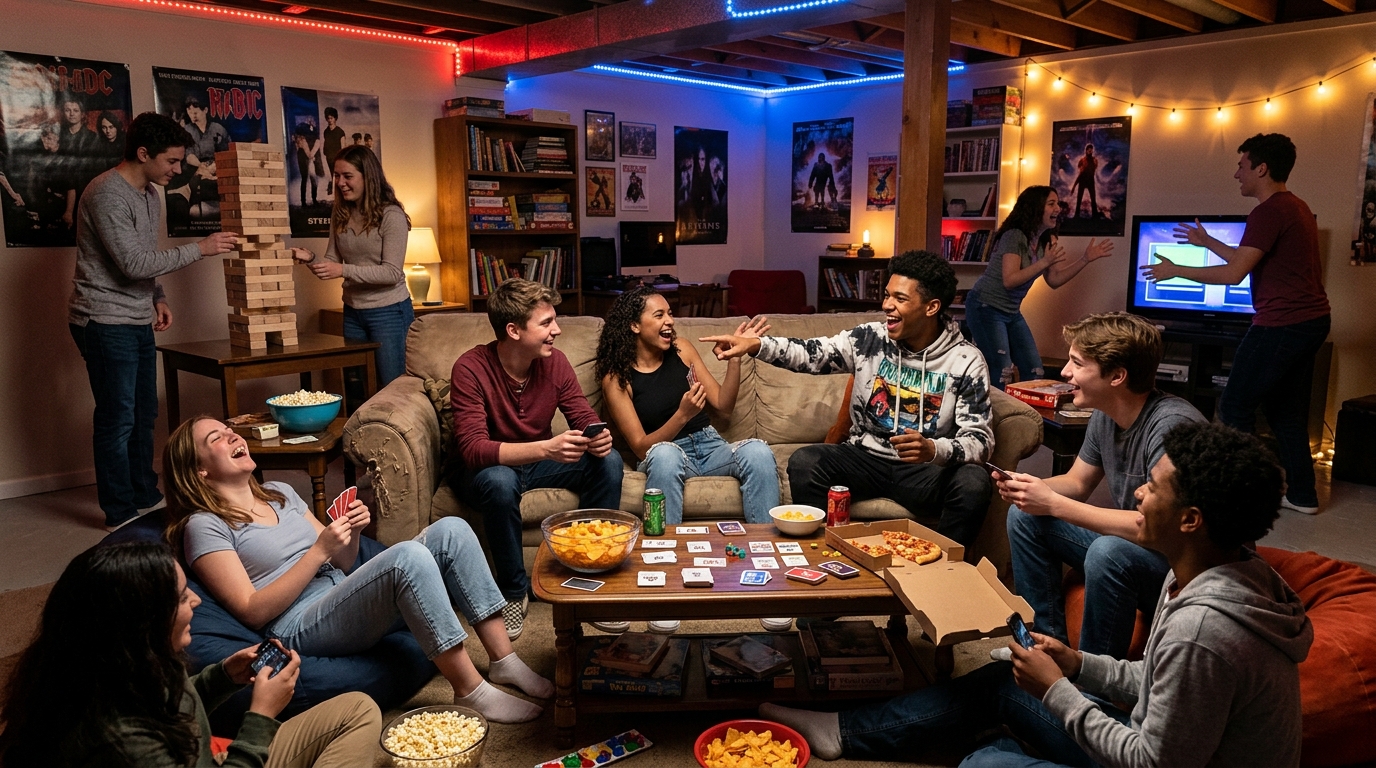
19 cool Teen-Favorite Party Games for Teenagers to Make the Night Epic
Planning a party for teenagers can be challenging when everyone has different interests. Some guests enjoy dancing and friendly competition, while others would rather solve clues, draw funny pictures, or sit around answering silly questions. I find that a mix of activities makes it easier to keep a party enjoyable without expecting everyone to participate in the same way.
When choosing party games for teens, I consider the group size, available space, budget, and relationships between guests. A game that works well in a backyard might not suit a small living room, and a performance challenge might appeal to some teenagers more than others. The best plan leaves room for different personalities, breaks, snacks, and casual conversation.
These 19 party games for teens include active team competitions, creative challenges, guessing games, and relaxed conversation starters. Options such as Balloon Pop Relay, Scavenger Hunt, Lip Sync Battle, Charades, and Capture the Flag can suit birthday parties, sleepovers, and weekend gatherings. Most use inexpensive supplies you may already have at home.
Save this for later

Table of Contents
I recommend preparing four to six games, explaining the rules before each round, and adjusting the activities to suit your guests’ interests and comfort levels.
Key Takeaways
- Choose a variety: Mix active games with creative and conversation-based activities.
- Keep preparation simple: Paper, pens, sticky notes, a phone for music, and household supplies cover many games.
- Match games to the setting: Use clear indoor spaces for seated games and safe outdoor areas for running activities.
- Make participation optional: Allow guests to pass, change roles, or choose a seated alternative without embarrassment.
- Stay flexible: Four to six prepared games are a useful starting point, not a requirement to play every activity.
Related article: 13 Donut Party Games to Sweeten Up Your Celebration
19 Teen-Favorite Party Games for Teenagers to Make the Night Epic
1. Balloon Pop Relay

Balloon Pop Relay adds movement and friendly competition to a teenage birthday party. Divide the guests into two or more teams, mark a starting line, and place the balloons at a turning point a short distance away. Each player takes a turn completing the relay before tagging the next teammate.
For the traditional version, a player sits on a balloon to pop it, then returns to the starting line. The first team to pop all its balloons and have every player finish the relay wins. If popping balloons is uncomfortable or unsuitable for the setting, use a balloon-carrying relay instead.
For the alternative, players carry a balloon between their knees or balance it on their hands while walking to the turning point and back. If a balloon falls, they stop to retrieve it before continuing.
What you need: Balloons, a clear playing area, and a marker for the turning point.
Pro Tip: Check the playing surface and move furniture out of the way before starting. Collect popped balloon fragments immediately and keep them away from children and pets because they can be a choking hazard. If a guest has a latex sensitivity, choose a non-balloon relay instead. Never require anyone to pop a balloon if the sound makes them uncomfortable.
2. Truth or Dare (With a Twist)

Truth or Dare works well when guests are still getting comfortable with one another. Instead of using personal or embarrassing questions, prepare lighthearted prompts that encourage creativity and laughter.
Write truth questions and harmless challenges on separate slips of paper. Put them in two bowls, and let each player choose which type of prompt to answer. Some examples include naming a fictional character they would invite to dinner, describing their dream vacation, or doing a funny robot impression.
Players can pass on any prompt without explaining why. Keep the game moving by allowing them to draw another slip or choose a different activity. Nobody should have to reveal private information, accept unwanted physical contact, perform a dangerous stunt, or post anything online.
What you need: Paper, pens, and two bowls or containers.
Pro Tip: Prepare around 15–20 prompts before the party so you are not making up questions while everyone waits. Keep the wording suitable for the group, and avoid challenges that target someone’s appearance, relationships, identity, or personal circumstances.
3. Lip Sync Battle

A Lip Sync Battle gives teenagers a chance to perform without having to sing. Guests choose a favorite song, take turns acting out the lyrics, and add dance moves or simple props to make the performance more entertaining.
Performances can be solo, in pairs, or in groups. Before starting, set up a clear performance area and create a playlist so guests do not have to search for songs between turns. Give each performer a similar amount of time.
Instead of choosing only one winner, award titles such as Most Creative Performance, Best Stage Presence, Funniest Routine, and Best Team Performance. This gives guests different ways to stand out, even if they are not confident dancers.
What you need: A phone or music player, speakers if available, and optional props such as hats or sunglasses.
Pro Tip: Check the lyrics before adding songs to the playlist, keep the volume comfortable, and leave enough room for movement. Guests who prefer not to perform can help with music, judging, or choosing the next song.
4. Scavenger Hunt

A scavenger hunt turns a party into a team challenge. Players search for objects, solve clues, or complete small tasks within a set time. I like this format because it can be adapted to a birthday theme without requiring special equipment.
Prepare a shared list of items to find, such as something blue, a star-shaped decoration, or an object beginning with a particular letter. For a more challenging version, write clues that lead to approved locations around the house or yard.
Divide guests into teams, give everyone the same list, and set a finishing time. You can award one point for each correctly found item or give different points to clues based on their difficulty. For photo challenges, make sure anyone appearing in a picture agrees to be photographed.
What you need: A list of items or clues, paper, pens, and optional prizes.
Pro Tip: Set boundaries before the hunt starts. Keep players away from private rooms, roads, electrical equipment, cleaning products, and other hazardous areas. Outdoor hunts should take place in a familiar space with suitable lighting and weather conditions. For smaller homes, use a tabletop scavenger hunt with objects placed around one room.
5. Murder Mystery Game

A Murder Mystery Game gives teenagers a fictional case to solve together. Each player receives a character card or role, learns some information about the story, and shares clues during the investigation. The aim is to work out what happened and identify the fictional culprit.
You can use a printable mystery kit or create a simple storyline of your own. Assign the roles before the game begins, distribute the clues, and explain when players may ask questions or reveal information. Give everyone time to discuss the evidence before submitting a final guess.
For larger parties, divide guests into smaller investigation teams. Each team can review the clues and agree on a suspect before sharing its conclusion. Choose a mystery that suits the group’s interests and the time available, rather than one with complicated rules that take longer to explain than to play.
What you need: Character cards, clues, pens, and a written solution for the host.
Pro Tip: Make sure every participant has something useful to contribute. Prepare extra roles or investigation tasks for larger groups, and choose a storyline appropriate for the guests’ ages and comfort levels.
6. Would You Rather?

Would You Rather? is an easy party game because it requires no equipment and can be played almost anywhere. One person presents two options, and everyone chooses which they prefer. Guests can explain their reasoning or simply give an answer.
Try questions such as:
- Would you rather be able to pause time or rewind the last minute?
- Would you rather explore the ocean or travel into space?
- Would you rather give up streaming shows for a month or stop listening to music for a week?
- Would you rather have a personal chef or a personal driver?
For a larger group, ask players to move to different sides of the room based on their answers, provided there is enough clear space. In a smaller room, everyone can answer from their seats.
Pro Tip: Prepare a short list of questions before the party, but let guests suggest their own as well. Avoid prompts about someone’s appearance, finances, identity, romantic life, or private experiences. The game works best when different opinions lead to conversation rather than teasing.
7. Freeze Dance

Freeze Dance is a simple way to bring music and movement into a teenage party. Play a song while everyone dances, then stop the music without warning. When the sound stops, players must freeze in place and hold their positions until the music starts again.
For the elimination version, anyone who moves sits out the next round. However, I prefer the points-based alternative for groups that want everyone involved throughout the game. Award a point whenever a player freezes successfully, and play a set number of rounds before counting the scores.
Change the music between rounds to keep things interesting. Guests can use small dance moves, funny poses, or simple gestures depending on the room and their comfort levels.
What you need: A music player and a clear area.
Pro Tip: Keep the floor dry, move furniture out of the dance area, and set the volume at a comfortable level. Avoid movements that require jumping or spinning in a crowded room. Anyone who prefers not to dance can control the music or act as the judge.
8. Blindfolded Makeup Challenge
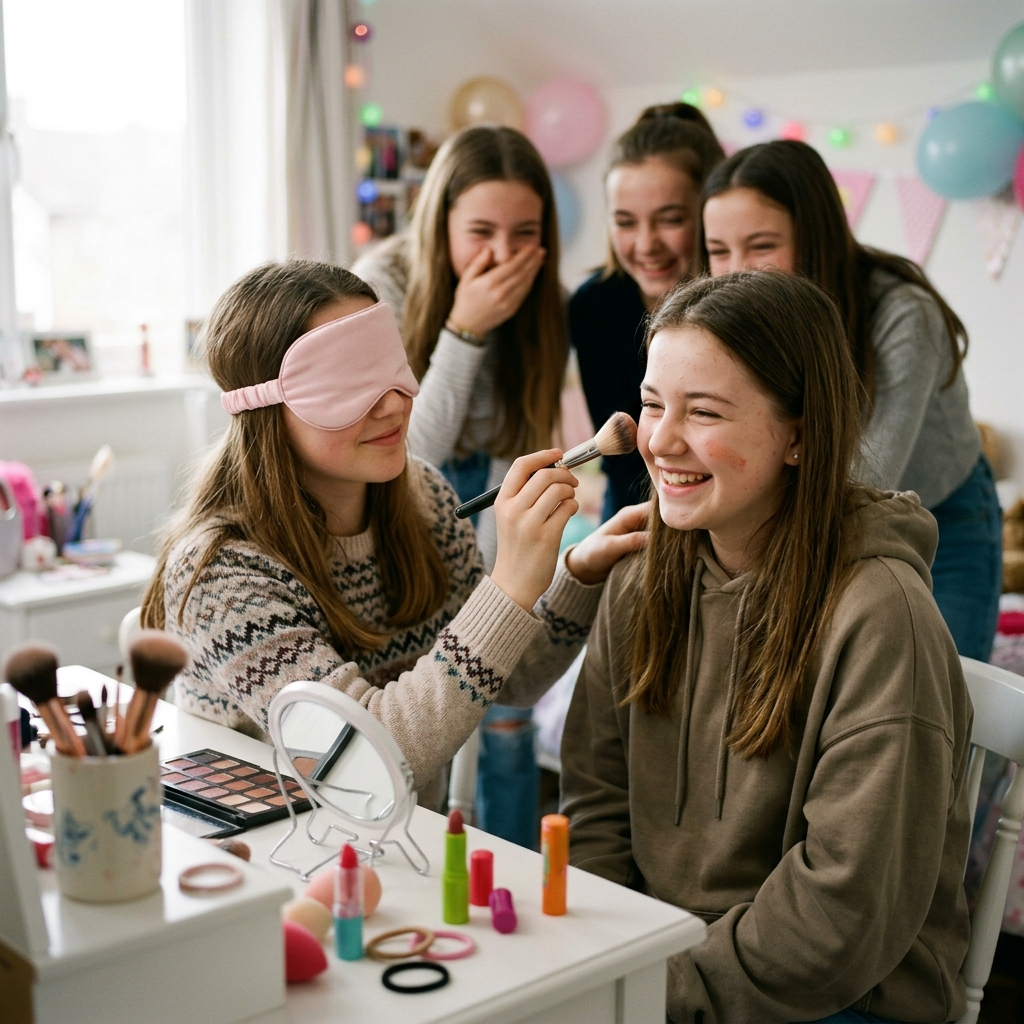
The Blindfolded Makeup Challenge is a creative activity for teenagers who enjoy beauty-themed games. However, I recommend making the paper-template version the main option because it avoids the hygiene concerns and discomfort that can come with applying cosmetics while blindfolded.
Print simple face outlines and give each player a template, colored pencils, and washable markers. Players wear a sleep mask while drawing a funny makeup look on the paper. After a set time, everyone reveals their designs and votes for categories such as Most Colorful, Most Imaginative, or Funniest Result.
If the group wants a real makeup activity, let participants apply products to their own faces while looking in a mirror, without blindfolds. Use clean tools and respect anyone who does not want cosmetics applied to their skin. Never share mascara, eyeliner, lip products, or other products that contact the eyes or mouth.
What you need: Paper face templates, colored pencils or markers, and an optional timer.
Pro Tip: Prepare the templates before guests arrive. The paper version keeps the focus on creativity and gives everyone a way to participate without using shared cosmetics or touching another person’s face.
9. Photo Booth Challenge

A Photo Booth Challenge combines creativity with party memories. Set up a simple background using a plain sheet, a curtain, or existing decorations. Place inexpensive props nearby, such as hats, sunglasses, scarves, or paper signs.
Divide guests into pairs or small teams and give each group a photo prompt. They might recreate a movie poster, pose like a music group, make a dramatic album cover, or take a funny team picture. Give each team a few minutes to plan and capture its image.
Once everyone has finished, let guests vote for categories such as Funniest Pose, Most Creative Idea, and Best Group Picture. A phone camera is enough; you do not need to purchase a photo booth or special equipment.
What you need: A background, a phone or camera, and optional props.
Pro Tip: Ask permission before photographing anyone, and obtain separate permission before sharing photos online. Guests can participate as photographers, prop managers, or judges without appearing in pictures. Avoid props with sharp edges or small detachable parts that could create hazards.
Also read: 29 Engaging Indoor Youth Group Games for Teens
10. Sardines
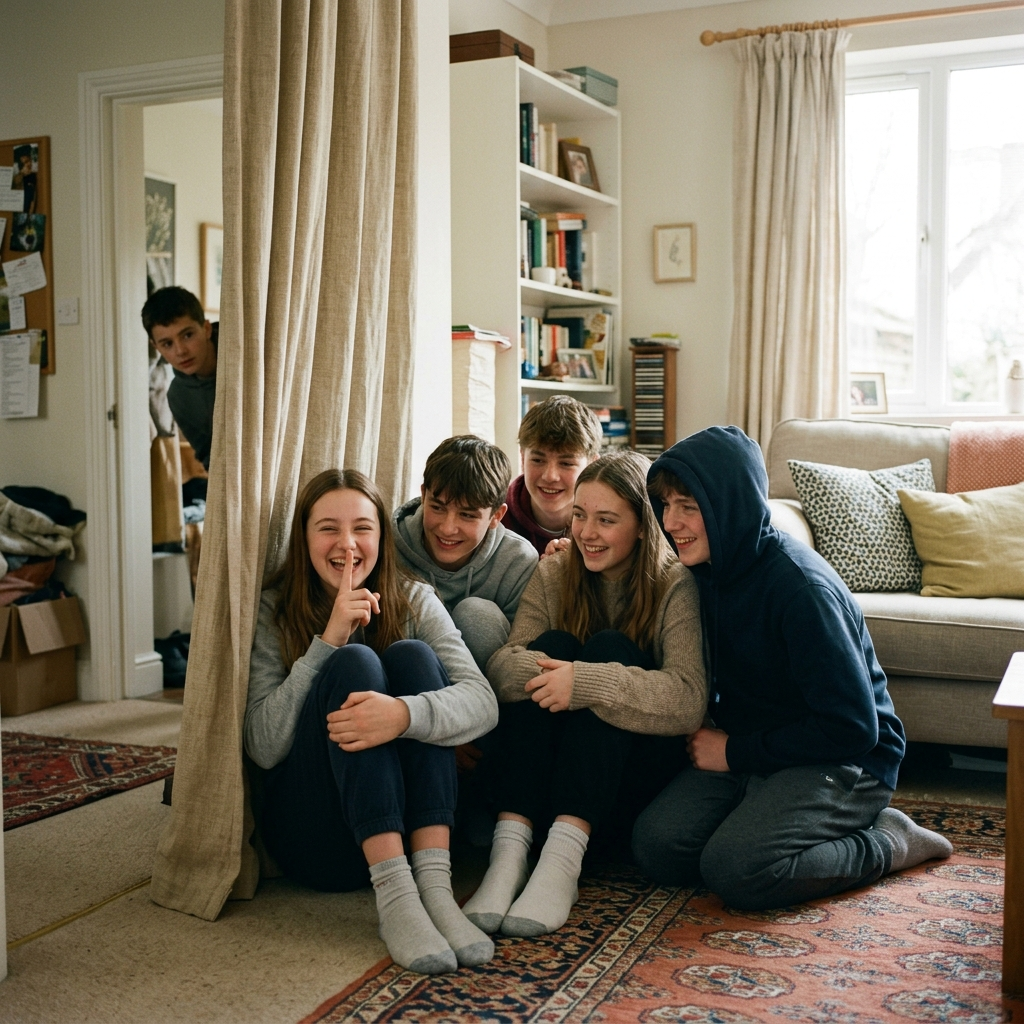
Sardines is a variation of hide-and-seek in which the hiding group grows as the game continues. One player hides while the others search. When a searcher finds the hidden player, they quietly join them in the same hiding place rather than announcing the discovery.
The remaining players continue searching until they find the group. The last person still searching can become the first hider in the next round, or you can rotate the role so everyone gets a turn.
This game works best in a familiar home or an enclosed outdoor area with clear boundaries. In a smaller house, use a designated room or limited play area rather than allowing guests to search the entire property.
What you need: No special supplies, just an agreed hiding area and a clear set of rules.
Pro Tip: Prohibit hiding in appliances, enclosed storage containers, locked rooms, garages containing tools or machinery, and places where someone could become trapped. Avoid dark, slippery, or inaccessible areas. Keep exits clear, and make sure players can leave a hiding spot easily.
11. Charades
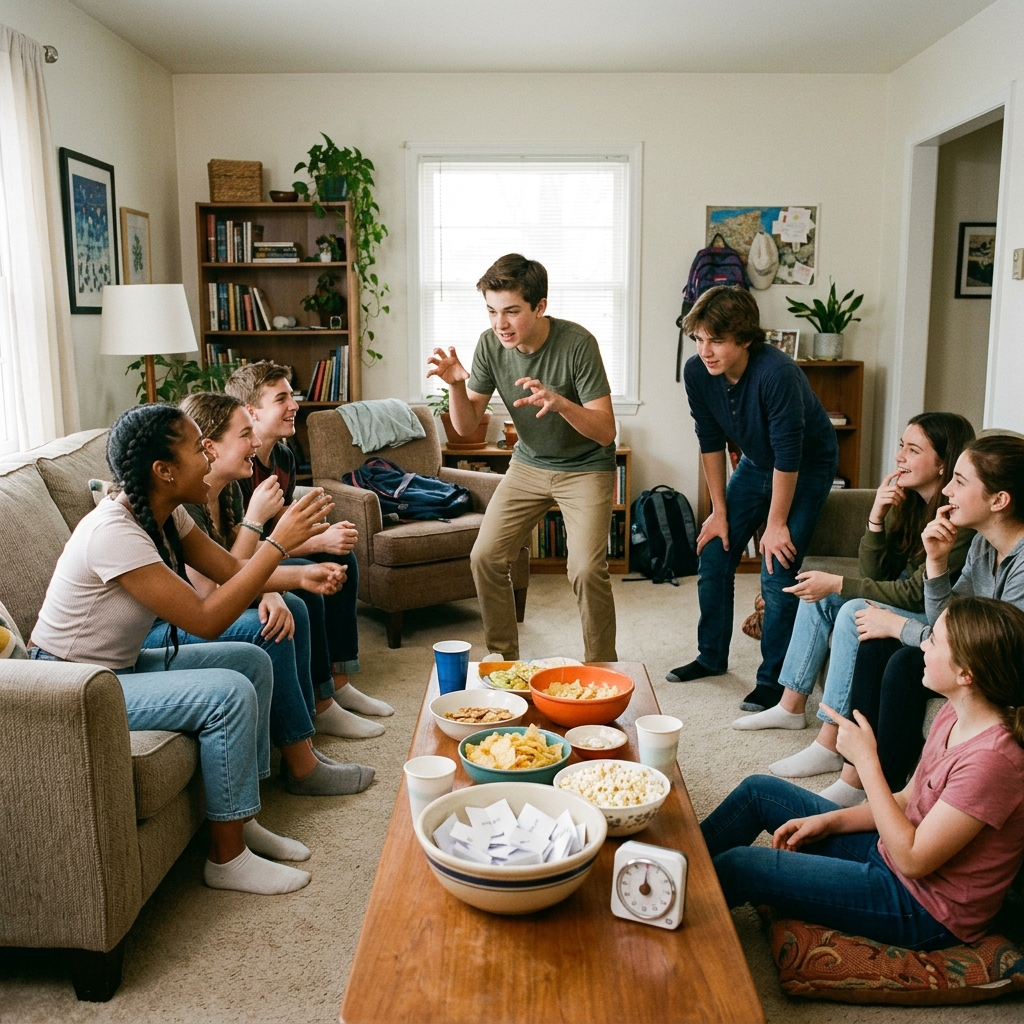
Charades is a reliable choice for a group that enjoys acting, guessing, and friendly competition. Players take turns drawing a prompt and acting it out without speaking while their teammates try to guess the answer.
Prepare cards with recognizable categories such as animals, everyday activities, hobbies, popular films, familiar songs, or fictional characters. Divide the guests into teams, set a timer for each turn, and award one point for every correct answer.
Before the game begins, explain whether players can use gestures to indicate the number of words or syllables. They should not speak, spell the answer in the air, or point to objects that reveal the solution unless you decide otherwise. Anyone who draws a prompt they cannot act out can pass and choose another.
What you need: Paper slips, pens, a bowl, and an optional timer.
Pro Tip: Mix easy and challenging prompts so players with different interests can participate. A no-score version works just as well when the group would rather laugh together than compete.
12. The Emoji Game
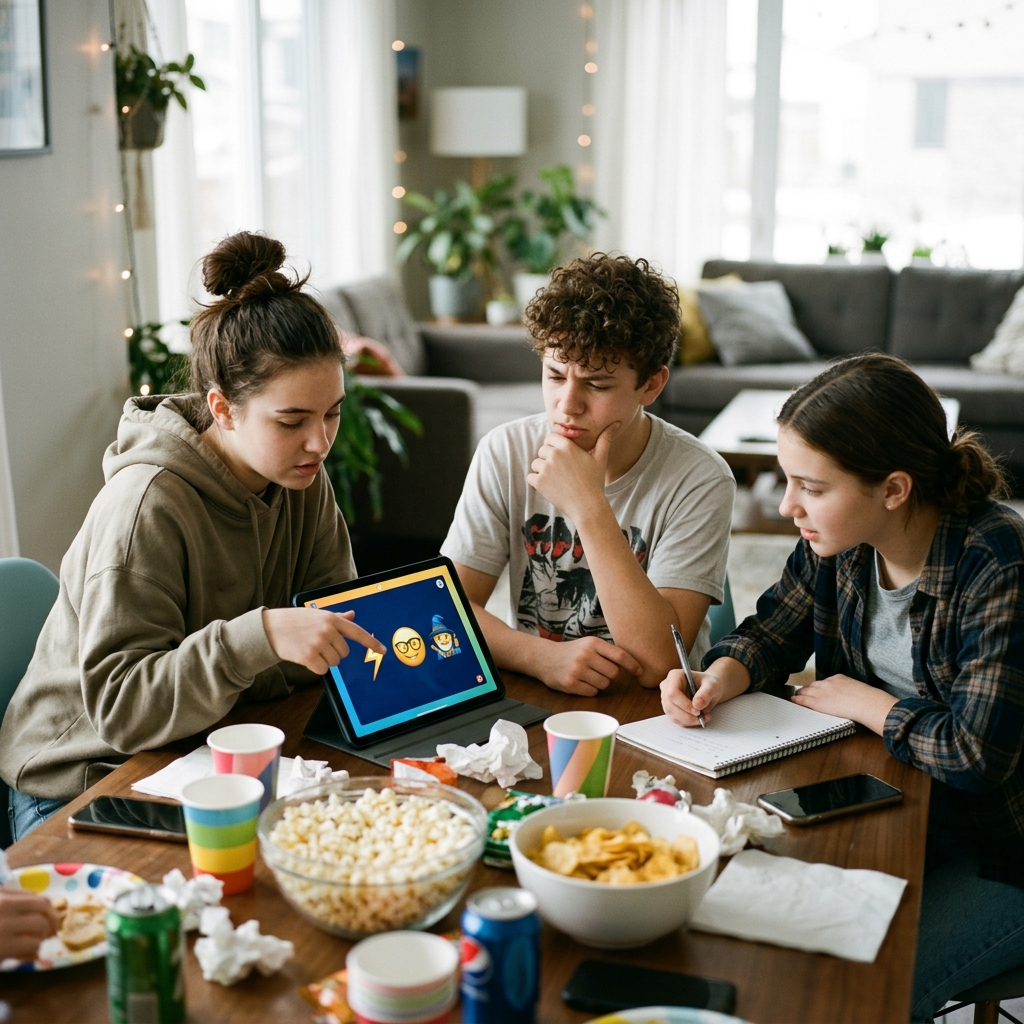
The Emoji Game challenges teenagers to identify movies, songs, expressions, or familiar phrases from combinations of emojis. It works well indoors and requires very little preparation.
Write each emoji clue on a card, display it on a screen, or read it aloud if the emojis are easy to describe. Players can compete individually or form teams. Give one point for each correct answer, and keep an answer key so the host can check guesses quickly.
For example, a lightning bolt, glasses, and a wizard’s hat might point toward a story about a young wizard. Choose clues that match the group’s interests, and avoid references that only one guest is likely to understand.
What you need: Prepared emoji clues, paper or a screen, and an answer key.
Pro Tip: Test the clues on the device you plan to use before the party. Some emojis look different across devices, so printed cards or a prepared slideshow can help everyone see the same symbols. For a longer game, create separate rounds for movies, music, and common phrases.
13. Donut Eating Challenge

The Donut Eating Challenge can be a funny addition to a party, but I would focus on comfort and food safety rather than speed. The traditional version involves suspending individual donuts from strings so participants can try to take bites without using their hands.
If you choose this version, use a stable, securely installed support that cannot tip or fall when the donuts move. Give each participant their own donut and allow them to eat at a comfortable pace. There should be no pressure to finish first or eat more than they want.
For a safer alternative, organize a donut decorating challenge. Set out plain donuts and suitable toppings, then let participants create designs and vote for categories such as Most Colorful, Most Creative, or Best Theme.
What you need: Donuts, plates, napkins, and optional decorating supplies.
Pro Tip: Check ingredient labels and ask about allergies and dietary restrictions before serving food. Keep hands and utensils clean, avoid cross-contamination, and offer suitable alternatives where possible. Never encourage speed eating or ask anyone to continue if they are coughing, choking, or having difficulty swallowing.
14. Human Knot
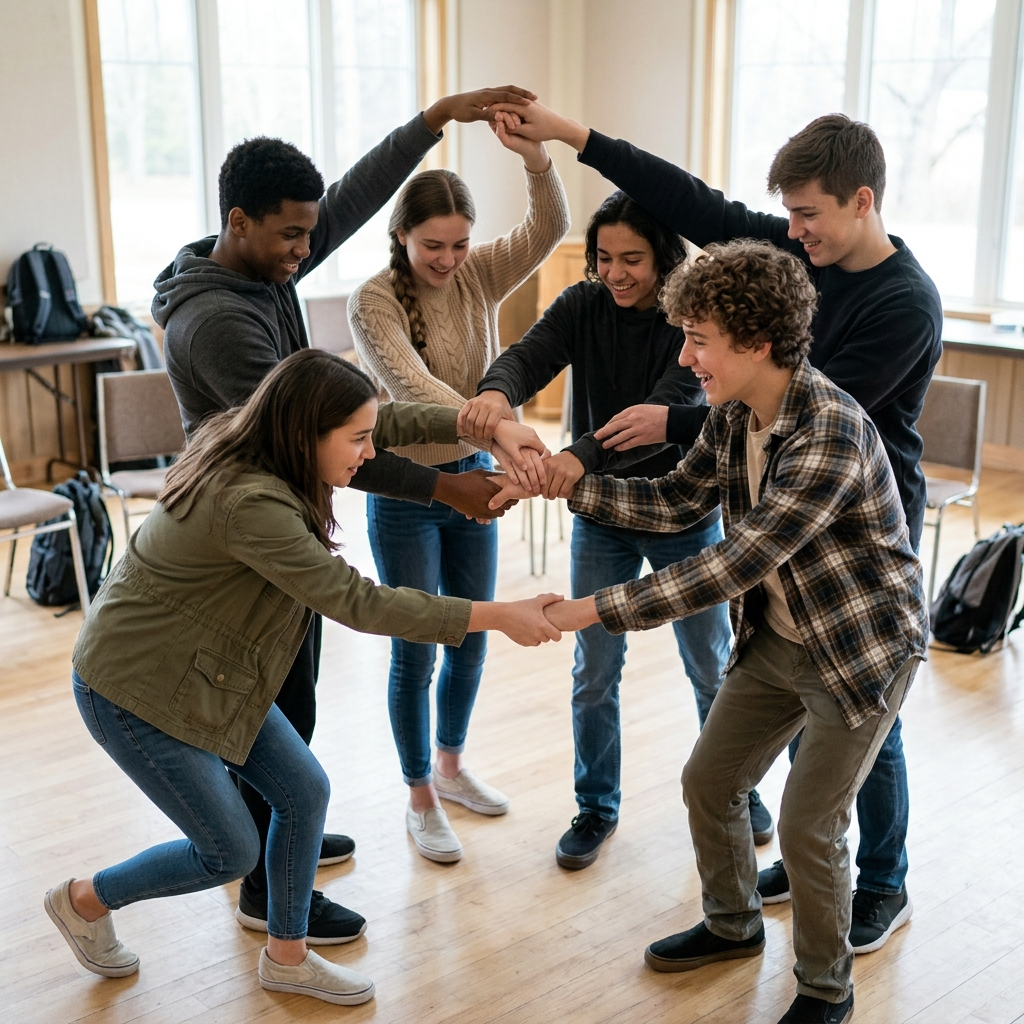
The Human Knot is a cooperative game that relies on communication rather than winning through speed. Players stand in a circle, reach across, and take the hands of two different people who are not standing directly beside them. The group then works together to untangle the knot without letting go.
Start with a manageable group size and make sure everyone has enough room to move. Players can step over arms or duck under them slowly while talking through each movement. If the group becomes uncomfortable or cannot find a safe way out, release hands and start again.
There is no need to race. The goal is to work together until the group forms a circle again, or to see how far everyone can untangle the knot within an agreed time.
What you need: Enough open floor space; no equipment is required.
Pro Tip: Participation should be voluntary, and nobody should pull, twist, or force another person’s arms or joints. Guests who prefer not to hold hands can try a seated variation using loops of string, with each person helping guide the group through the puzzle.
15. Who Am I?

Who Am I? is a guessing game in which players try to identify a name or object assigned to them. Prepare cards with recognizable fictional characters, animals, public figures, or familiar objects. Give each player a card without showing them the answer.
Players take turns asking yes-or-no questions, such as “Am I an animal?” or “Am I a character from a movie?” The group answers according to the card, and the player continues asking questions until they guess correctly or reach the agreed question limit.
You can play individually or divide guests into teams. A themed version using favorite books, games, or movies can make the clues easier to recognize.
What you need: Paper cards, pens, and optional tape or sticky notes.
Pro Tip: Hold the card above the player’s head or let another guest display it rather than attaching it to the skin. Choose names that suit the group’s shared interests, and avoid references intended to embarrass or single out a particular guest.
16. Twister
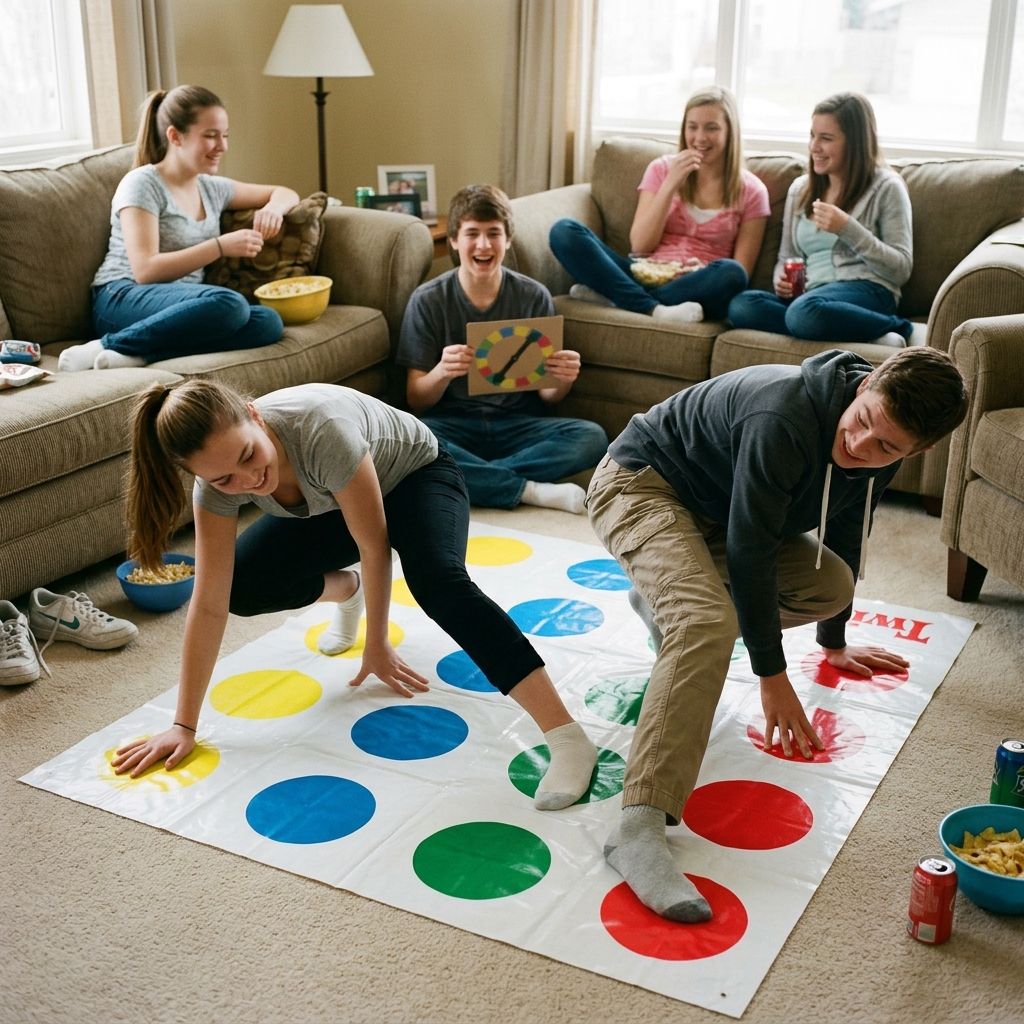
Twister adds a physical challenge to a party using a mat of colored circles and a spinner. The caller spins the wheel and announces a body part and a color, such as the right hand on blue. Players follow each instruction while trying to stay balanced.
A round ends when a player falls, touches the mat with an unsupported body part, or cannot complete the required position according to the rules you set. The last player remaining wins. Explain the rules before the first round so everyone knows which movements are allowed.
What you need: A Twister mat and spinner, or a suitable alternative with securely placed colored floor markers.
Pro Tip: Use a flat, dry, nonslip surface with plenty of clearance around the playing area. Never ask players to stretch beyond their comfort or ability. Guests who prefer not to balance on the floor can take turns calling the moves, keeping score, or joining a seated color-matching version.
17. Pictionary

Pictionary is a drawing game in which teammates try to guess a word or phrase before time runs out. Divide the group into teams, prepare a stack of prompt cards, and give each player a turn as the artist.
The artist draws the prompt while teammates call out guesses. Set a time limit, such as 60 seconds, and award one point for each correctly guessed word. Continue rotating artists until everyone has had a turn or the team with the most points wins.
Before starting, agree on whether letters, numbers, spoken clues, and gestures are allowed. I would keep the rules simple and choose prompts that match the group’s interests, including everyday objects, animals, hobbies, and well-known characters.
What you need: Paper or a whiteboard, markers or pens, prompt cards, and an optional timer.
Pro Tip: You do not need artistic skill to enjoy this game. Use large paper or a whiteboard so teammates can see the drawing, and let anyone who prefers not to draw act as the guesser, prompt reader, or scorekeeper.
18. Spin the Bottle (With a Twist)
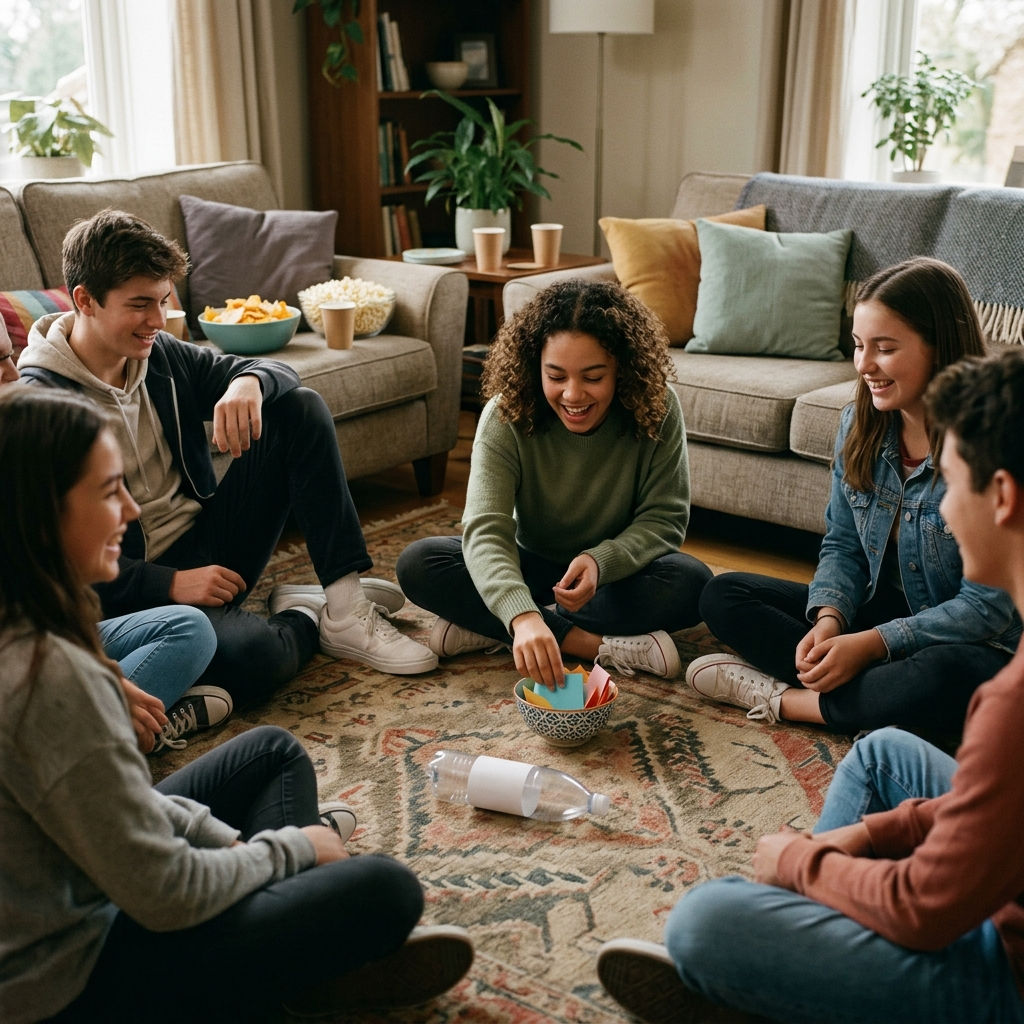
This version of Spin the Bottle uses harmless questions and challenges instead of kissing or other romantic activities. Players sit in a circle, and one person spins a bottle placed on a clear, stable surface. The person it points toward chooses a prompt from a bowl or selects from a few options.
Prompts might include telling a clean joke, naming five favorite snacks, doing a short robot impression, or describing an imaginary dream holiday. After completing a challenge, that player spins the bottle for the next turn.
Everyone should be free to pass without explanation. Keep the prompts lighthearted and avoid unwanted touching, romantic pressure, alcohol-related tasks, humiliating dares, private disclosures, or sharing photos and videos without permission.
What you need: A plastic bottle, prompt cards, and a bowl or container.
Pro Tip: Prepare the prompts in advance and review them before the party. If a player does not want to answer a question or perform a task, let them draw another card or sit out the round. No challenge should depend on someone ignoring their own boundaries.
19. Capture the Flag
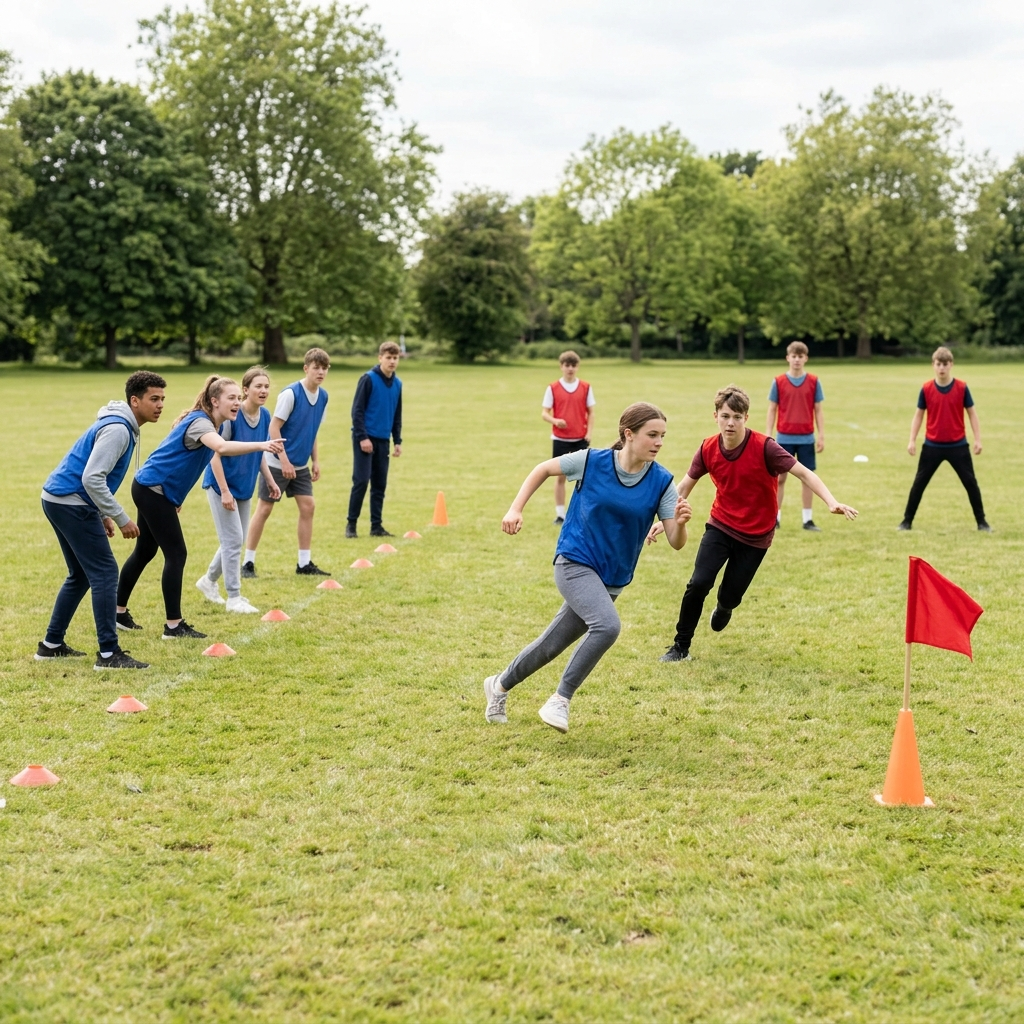
Capture the Flag is an energetic outdoor game that combines teamwork, planning, and friendly competition. Divide players into two teams and assign each team a territory. Place one clearly visible flag or piece of colored cloth in each team’s designated area.
The goal is to enter the opposing team’s territory, retrieve its flag, and return it to your own side without being tagged. Before play begins, explain the boundary lines, tagging rules, and what happens when a player is tagged. For example, tagged players might return to their starting area before rejoining the game.
The team that brings the opposing flag back to its own territory wins. For smaller groups, you can shorten the boundaries or play a clue-based version in which teams search for a hidden flag rather than running after one another.
What you need: Two flags or pieces of cloth, boundary markers if needed, and a suitable playing area.
Pro Tip: Choose a familiar space away from roads, steep slopes, slippery ground, and hidden hazards. Set a no-contact rule, avoid tackling or pushing, and use adequate lighting if the game continues late in the day. A walking-only version is a good alternative for guests who prefer not to run.
Frequently Asked Questions (FAQs)
1. What are some fun party games for teenagers?
Some fun options include Scavenger Hunt, Lip Sync Battle, Charades, Pictionary, Freeze Dance, and Would You Rather? I recommend mixing active games with creative challenges and conversation starters so guests can choose activities that suit their interests.
2. Can teenagers play party games indoors?
Yes. Games such as the Emoji Game, Who Am I?, Murder Mystery, Charades, and Pictionary work well indoors. Choose activities that fit the available room, move breakable objects out of the way, and save running games for a suitable outdoor area.
3. How many games should I plan for a teen birthday party?
Four to six prepared games are a useful starting point for many parties. You do not need to play every game on your list. Leave room for food, music, conversation, and breaks, and add another activity if guests are still interested.
4. What are some inexpensive games for a teenage sleepover?
Would You Rather?, Charades, Who Am I?, the Emoji Game, and Freeze Dance can all be organized with little or no additional spending. Paper, pens, sticky notes, and a phone for music are enough for many activities.
5. How can I make party games comfortable for everyone?
Explain the rules before each game and make participation voluntary. Give guests the option to pass, take a different role, or choose a seated alternative. Avoid personal questions, unwanted physical contact, and challenges that single out individuals. Clear boundaries and respectful rules help everyone enjoy the gathering.
Read this next: 29 Best Halloween Games for Kids – Fun, Spooky & Easy to Play!
Conclusion
A fun teenage party does not need an expensive setup or a schedule packed with activities. A handful of games that match the group’s interests, a few basic supplies, and enough space to play can be all you need.
I recommend preparing four to six options and choosing a mix of active, creative, and relaxed games. Explain the rules clearly, keep challenges voluntary, and adjust the plan if guests would rather spend more time chatting or listening to music.
Whether the group prefers a scavenger hunt, a lip-sync battle, or a simple round of Would You Rather?, the aim is to create an enjoyable gathering where everyone feels welcome.



3 Comments