
29 Engaging Indoor Youth Group Games for Teens
When I plan an indoor youth group night for teens, I don’t try to make every game complicated. I’ve found that a better mix is usually a few active games, something creative, a conversation game, and at least one strategy-based option.
I also keep several no-equipment games in my back pocket. A room can turn out smaller than expected, supplies can go missing, or an activity can finish early. Having a few simple backups makes those changes much easier to handle.
For teen groups, I also pay attention to how much waiting is involved. If several people are sitting around for long stretches, I switch to a game where more of the group can participate at the same time. The room, group size, energy level, and available supplies all affect which games I choose.
This list includes 29 indoor youth group games for teens, ranging from active choices such as Balloon Volleyball and Freeze Dance to quieter options such as Mafia, Story Chain, and Two Truths and a Lie.
I’ve included games that require little or no equipment alongside activities that use simple household or party supplies. That makes it easier to adjust the plan when I’m working with a limited budget or an unfamiliar room.
The list also gives me options for different group sizes and personalities. Some games focus on movement and friendly competition, while others give teens more time to talk, solve clues, create something, or work together.
Save this for later
Table of Contents
For a two-hour youth gathering, I would normally plan about 4–6 main activities rather than trying to play all 29. I leave time for introductions, explaining rules, switching games, getting drinks, socializing, and unexpected delays.
Key Takeaways
- I like alternating high-energy and lower-energy activities so the group does not stay at one pace all evening.
- I always keep a few no-equipment games for teens ready as backups.
- With a large group, I prefer simultaneous games, smaller teams, or activity stations that reduce waiting.
- Before physical games, I clear furniture, glass, sharp corners, loose cords, and other obvious hazards.
- A 10–15-minute game rotation is a useful guideline, but I adjust it when a particular activity is working well.
- I avoid unnecessary elimination because keeping teens involved usually makes the evening easier to manage.
- For games involving balloons, blindfolds, hiding, running, or physical contact, I set the boundaries before anyone starts.
Related article: 29 Best Halloween Games for Kids – Fun, Spooky & Easy to Play!
29 Indoor Youth Group Games for Teens
1. Balloon Volleyball

Balloon Volleyball is an easy way to add movement without bringing a regular volleyball into a crowded indoor room. I divide the teens into two teams and create a center line using painter’s tape, a rope, or a row of chairs placed safely away from the playing area.
The teams try to keep the balloon from touching their side while sending it across the center line. I usually set a simple point target so everyone knows when the round ends.
Before starting, I move furniture out of the playing space and keep spectators away from the active area. I also remind players not to push, dive, or chase the balloon into furniture.
Because balloons can pop, I keep a few extras nearby and pick up broken balloon pieces as soon as the game ends. I don’t leave popped pieces on the floor where someone could later step on them or a younger child could find them.
Pro Tip: I keep the game away from ceiling fans, light fixtures, glass, and other breakable items whenever possible. A balloon may be light, but a crowded room can still become difficult to control.
2. Human Knot

Human Knot is one of the no-equipment games I use when I want teens to work together without needing a pile of supplies. Everyone stands in a circle, reaches toward the center, and takes the hands of two different people.
The group then tries to untangle itself without letting go. I encourage everyone to talk through the next move instead of pulling or suddenly changing direction.
I make the physical-contact expectation clear before beginning. Nobody should pull another person’s arms, twist a joint, or force a movement that feels uncomfortable.
If someone doesn’t want to participate because of the close contact, I let them step out without making it a big issue. For a large youth group, I divide everyone into several smaller circles rather than creating one huge knot.
Pro Tip: I tell players to stop immediately if someone says they are uncomfortable or in pain. The goal is to solve the puzzle, not to force everyone through it.
3. Minute to Win It Challenges
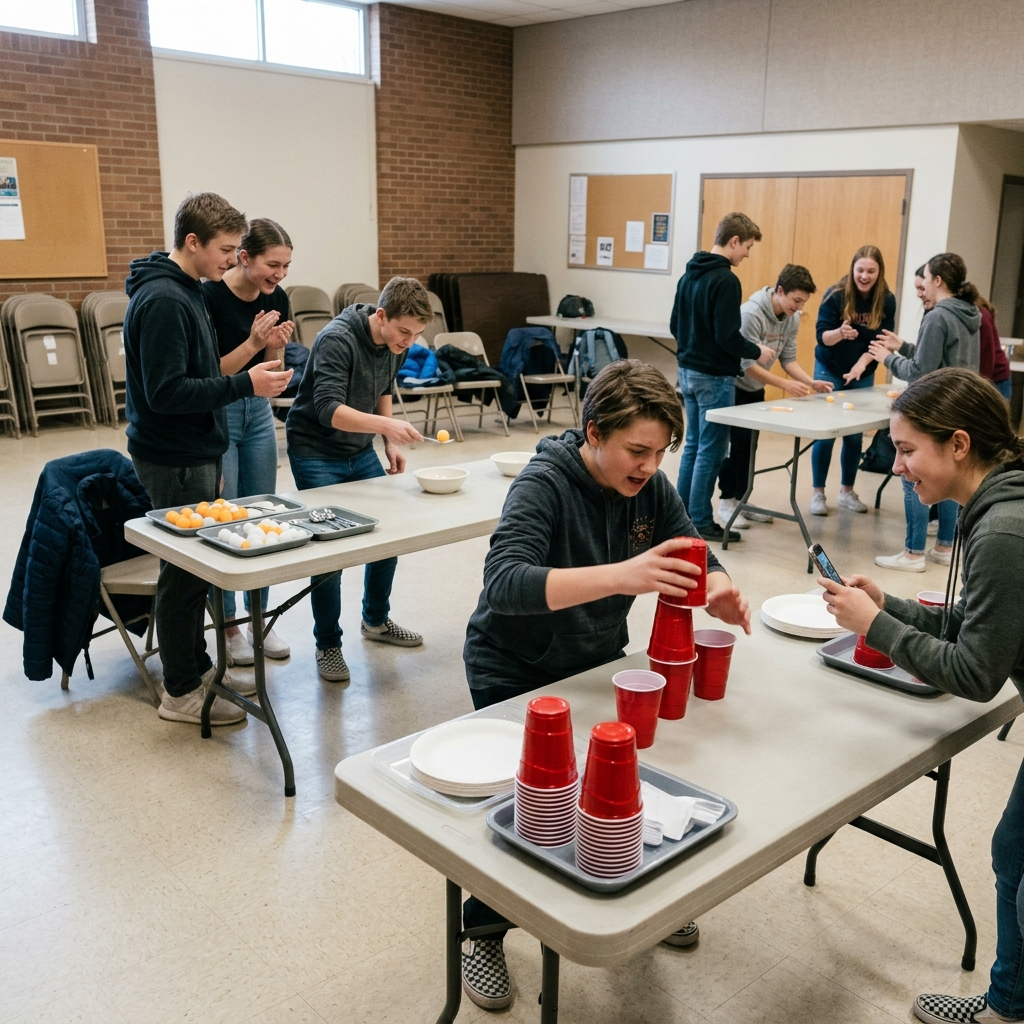
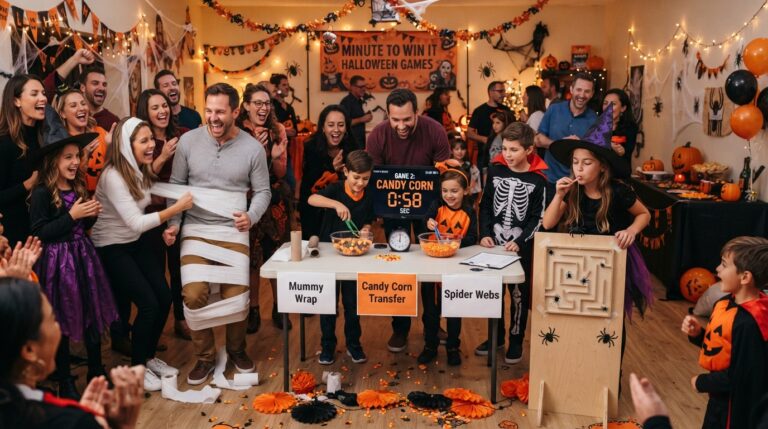
Minute to Win It Challenges are useful when I want several short activities instead of one long game. Each challenge has a simple objective and a short time limit, often around one minute.
I might use cup stacking, moving lightweight objects with a spoon, balancing a ping-pong ball, or another simple task that can be completed with inexpensive supplies.
I demonstrate every challenge before starting because a one-minute activity doesn’t leave much room for a long explanation. I also prepare the supplies in separate trays so I can move quickly from one challenge to another.
For teens, I like mixing challenges that require different types of movement and accuracy. I don’t want the entire round to favor only the fastest person.
Pro Tip: I avoid tiny pieces when younger children may also be using the room, and I choose supplies that are easy to clean up and unlikely to create a trip hazard.
4. Pictionary

Pictionary is a reliable team game when I want something creative without requiring much setup. One person draws a word or phrase while their teammates try to identify it.
I keep the basic rules simple: no speaking, letters, numbers, or written clues. Before the game starts, I prepare prompts that feel appropriate for teenagers rather than using very young children’s vocabulary.
For a large group, I prefer running multiple teams or drawing stations at the same time. That way, teens spend more time playing and less time watching someone else take a turn.
5. Sardines

Sardines is a reverse version of Hide and Seek. One person hides while everyone else searches. When a player finds the hiding person, they quietly join them instead of announcing where they are.
The hiding space gradually fills up, which is where the name comes from. I set strict boundaries before the first round because indoor hiding games can quickly become difficult to supervise.
I check the entire play area first and tell everyone which rooms and spaces are off-limits. I don’t allow hiding in closets, locked rooms, behind appliances, on top of furniture, or anywhere that makes it difficult to get out.
Pro Tip: I use only hiding places that are easy to access and easy to leave. I also remind teens that squeezing into an unsafe space is never worth winning a round.
6. Mafia

Mafia is a good choice when the group enjoys mystery, discussion, and strategy more than physical activity. Players receive secret roles, and the group works through rounds of discussion and voting to figure out who may be part of the Mafia.
I use a narrator or leader to guide the game. For a first round, I keep the roles simple rather than introducing a long list of special characters.
The game is completely fictional, so I keep the language focused on mystery, secret roles, and elimination from the game rather than graphic violence. Once everyone understands the basic format, additional roles can be added if the group wants more complexity.
7. Human Tic-Tac-Toe
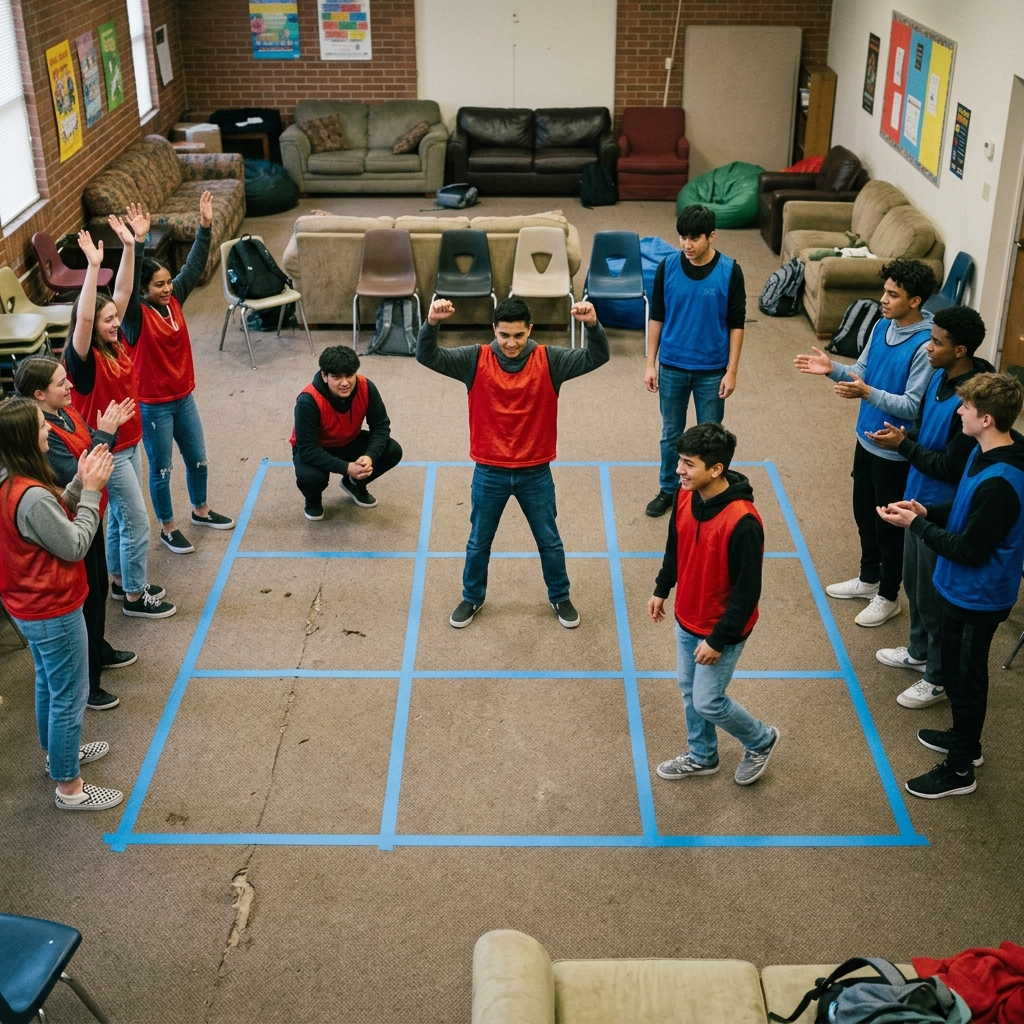
For Human Tic-Tac-Toe, I make a large 3×3 grid on the floor using painter’s tape. Two teams take turns sending one person into an empty square.
The goal is simply to get three teammates in a row. I like using teams because the teens have to decide together where each person should go.
I keep the turns short and remind players to walk rather than sprint toward a square. The grid should have enough space around it so participants do not collide when changing positions.
For a larger group, I run several smaller games instead of having everyone wait for one giant match.
8. Blindfolded Obstacle Course
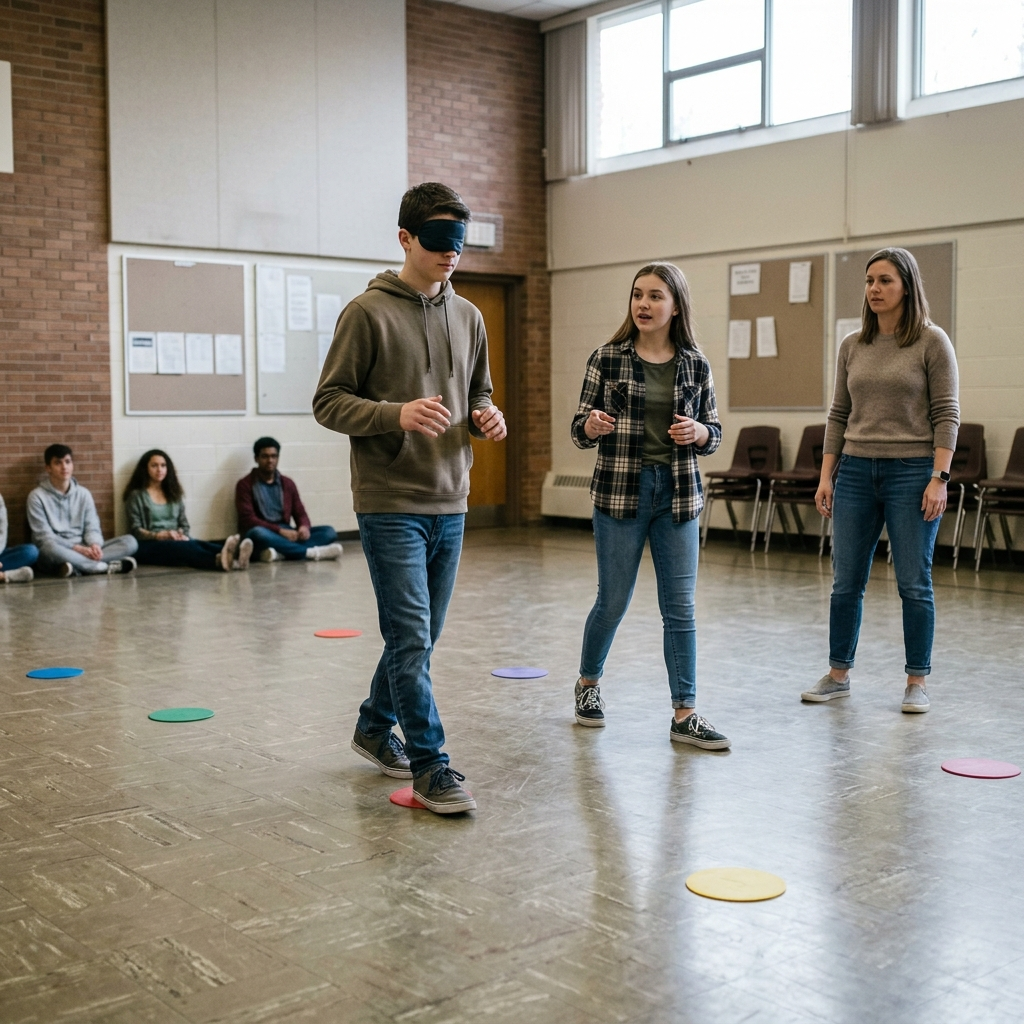
I treat this activity more cautiously than most of the games on this list because blindfolding someone removes their ability to see what is around them. I prefer calling it a Blindfolded Communication Challenge and keeping the physical setup very simple.
If I use an obstacle element, I choose only soft, stable objects that are widely spaced on a clear floor. I keep stairs, elevated surfaces, sharp objects, unstable furniture, hard obstacles, and clutter completely out of the activity.
One participant receives verbal directions from a teammate while moving slowly through the designated area. A leader stays close enough to stop the activity if the participant loses balance or becomes uncomfortable.
A safer alternative is a verbal navigation challenge with no physical obstacles at all. The participant can follow directions to identify objects, move between marked spots, or complete a simple sequence without having to navigate a course.
Pro Tip: I never treat the blindfold itself as a safety feature. It makes supervision and clear instructions more important, not less.
9. Balloon Stomp

Balloon Stomp can become chaotic quickly, so I use extra care with the traditional version where balloons are attached near players’ ankles. Running, turning, and trying to reach another person’s balloon can create collisions in a crowded indoor room.
When space is limited, I prefer a safer team version. I can place balloons in clearly marked areas and have teams complete controlled popping challenges instead of having everyone chase one another.
If I do use the ankle version, I need a large, completely open floor with no furniture in the playing area. I make it clear that there is no pushing, grabbing, diving, or tackling, and I stop the game immediately if players become too aggressive.
Afterward, I collect every popped balloon piece. Small pieces should never be left scattered around the room.
Pro Tip: For most indoor youth events, I prefer stationary or team-based balloon challenges over a full-room stomp battle. I get the same playful competition with much better control of the space.
10. Silent Disco
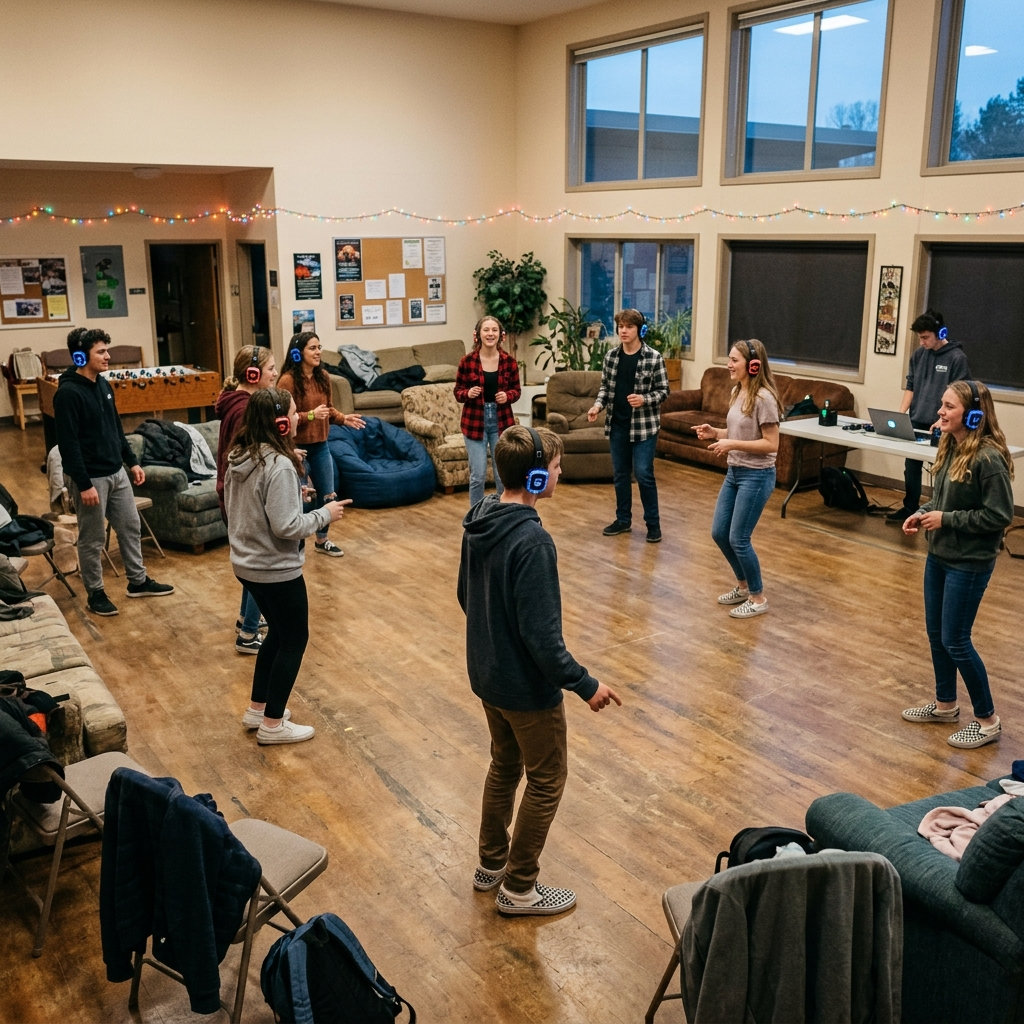
Silent Disco is one of the higher-equipment activities on this list. Teens use headphones to listen to music while dancing in a designated area.
I like it as an optional activity when the group has access to the necessary headphones and music setup. Most of the other games here need little or no special equipment, so I would not build the entire event around a silent-disco setup.
Before starting, I test the headphones and make sure the music is playing properly. I also keep the volume comfortable, establish the dance area, and make sure there is enough room for people to move without bumping into furniture.
11. Two Truths and a Lie

Two Truths and a Lie is one of my favorite no-equipment icebreakers for teens who may not know one another well. Each person gives three statements about themselves, with two being true and one being false.
The rest of the group tries to identify the false statement. I encourage harmless facts about hobbies, favorite foods, unusual skills, movies, sports, or everyday experiences.
I don’t require anyone to share private information or something embarrassing. Giving participants freedom to choose their own statements makes the game much more comfortable.
12. Marshmallow Tower Challenge
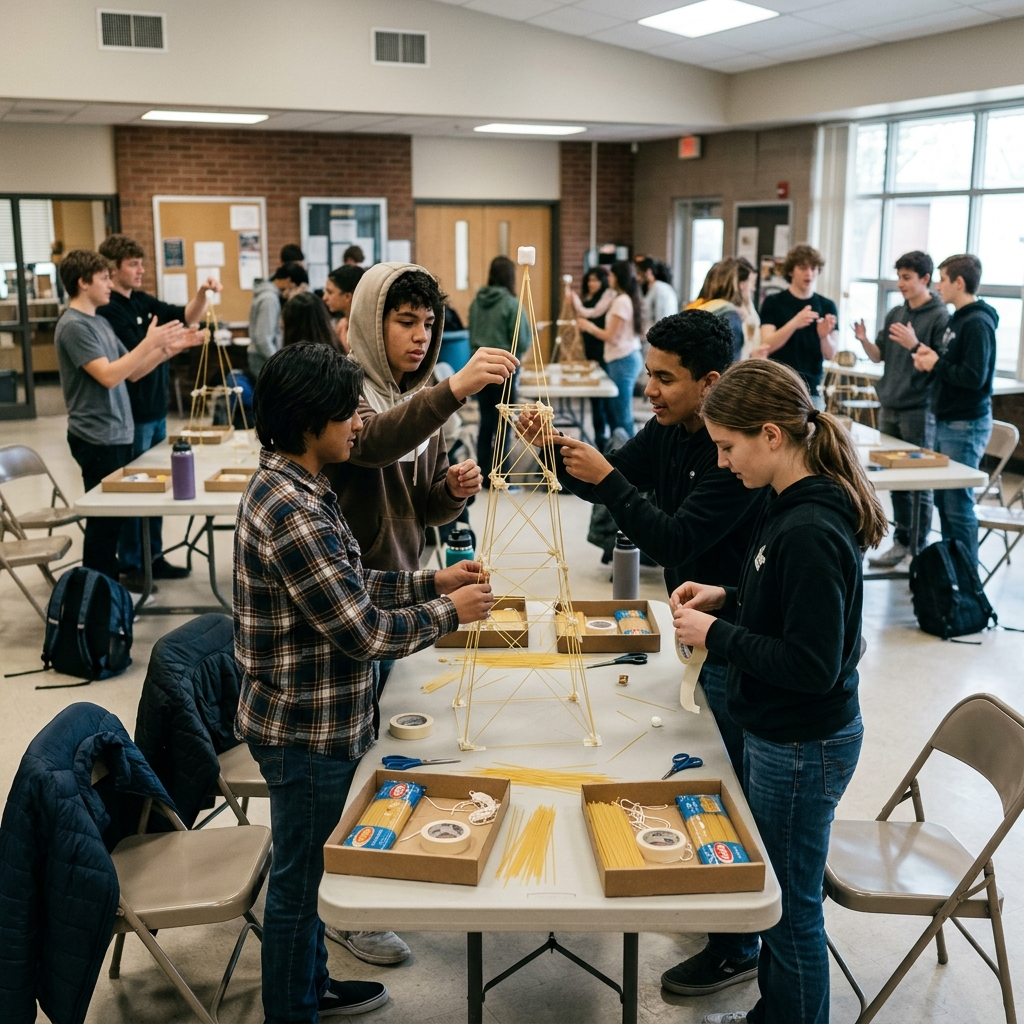
For the Marshmallow Tower Challenge, I divide teens into small teams and give each group the same basic supplies: uncooked spaghetti, tape, string, and a marshmallow.
The objective is to build the tallest free-standing structure with the marshmallow supported at the top. I set a fixed building period and measure the structures only after everyone has stopped working.
I like watching teams test an idea, discover that it doesn’t work, and make adjustments. The activity naturally gives them something concrete to discuss and change as they build.
Pro Tip: I prepare identical supply kits before the group arrives. Equal materials keep the competition straightforward and save time during setup.
13. Would You Rather?

Would You Rather? works well when I want a relaxed conversation game with no supplies. I give the group two harmless choices and let everyone decide which option they would prefer.
For teens, I keep the questions funny or imaginative without asking about sexuality, family conflict, trauma, dangerous behavior, or embarrassing personal experiences.
Participants can raise their hands, move to different sides of the room, or explain their choice. I like giving everyone the option to pass rather than requiring an answer.
14. Charades
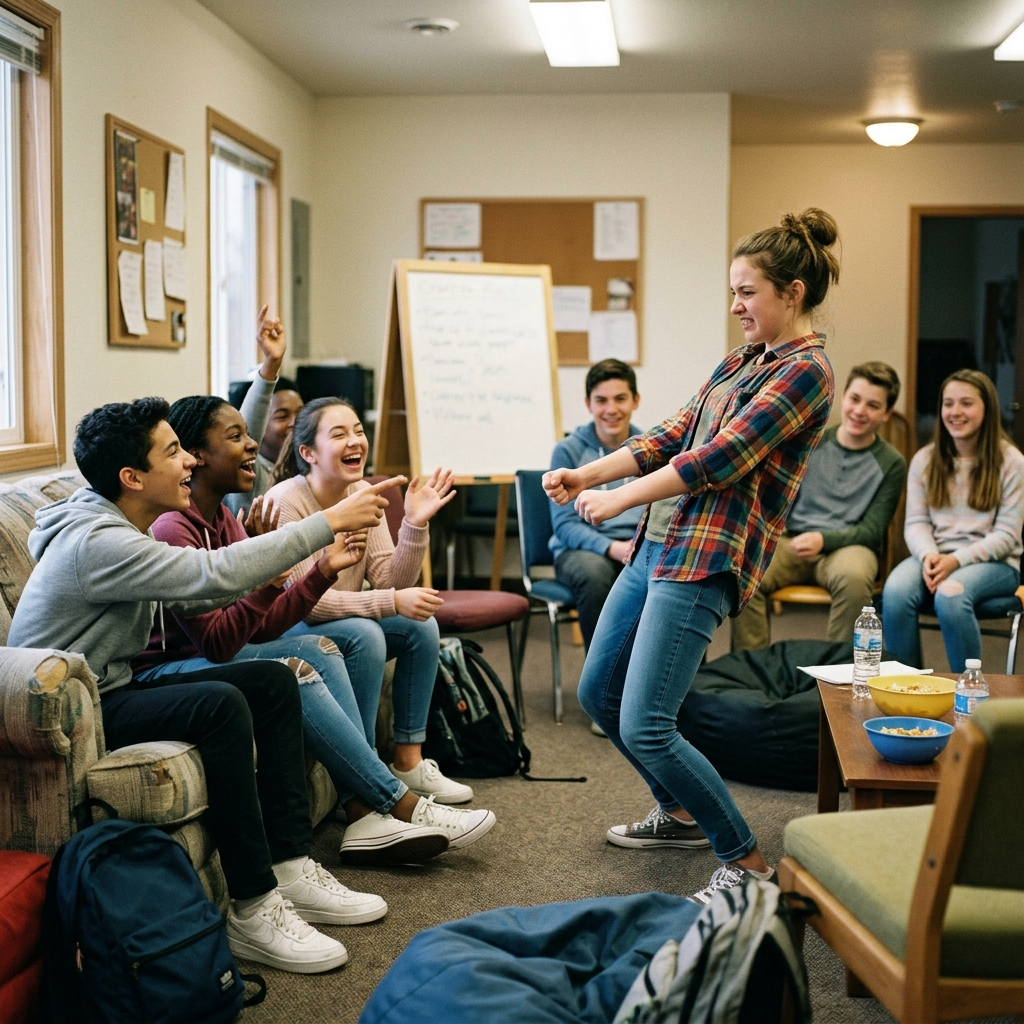
Charades needs very little preparation, but I still make the game better by preparing prompts ahead of time. One person silently acts out a word or phrase while teammates try to guess it.
For teens, I choose prompts involving movies, hobbies, school situations, sports, travel, everyday activities, or other subjects they are likely to recognize.
If someone is uncomfortable acting alone, I let two people act together. That small adjustment can make the game easier for quieter participants without changing the basic rules.
15. Freeze Dance
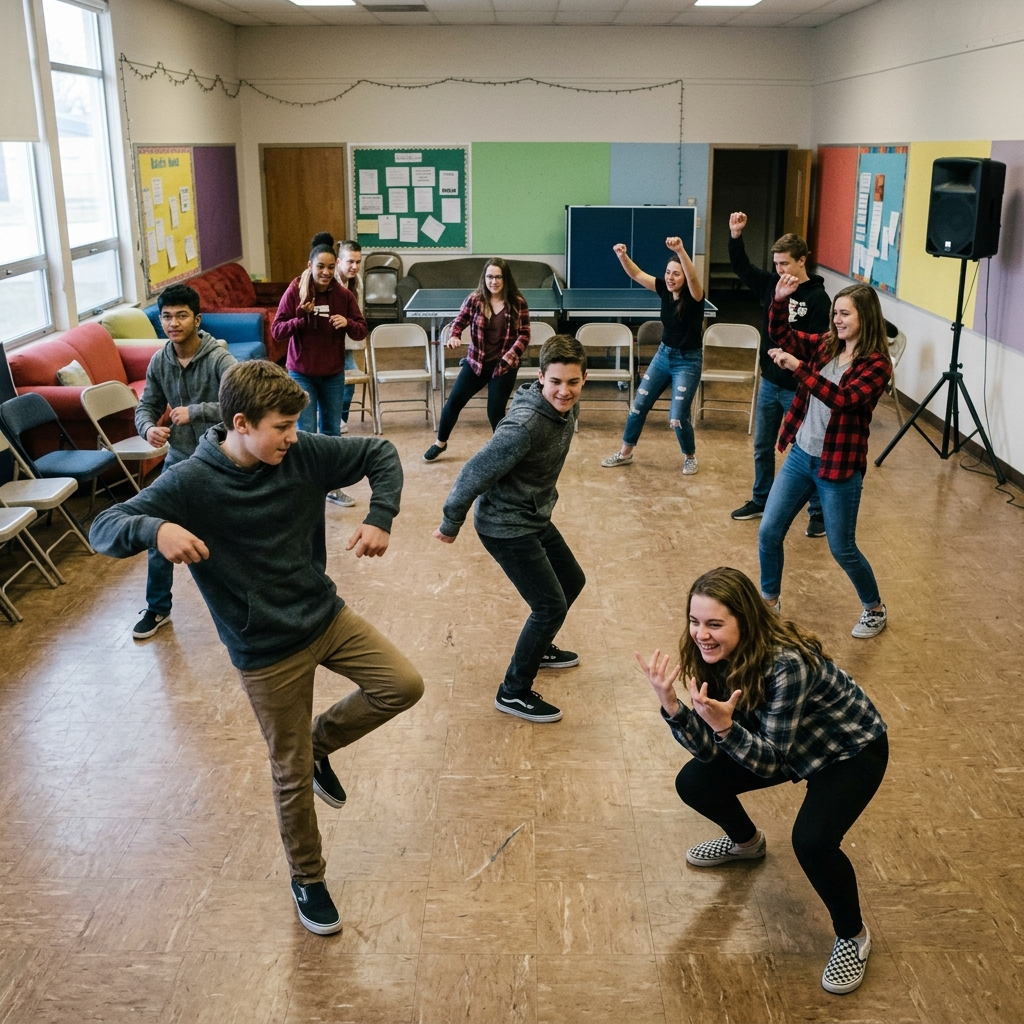
Freeze Dance can feel more teen-friendly when I treat it as a music and movement challenge rather than a children’s elimination game. I play music and let everyone move until the music stops.
When the music cuts out, everyone freezes in whatever position they are in. I sometimes award points for the funniest freeze pose or run team rounds instead of eliminating players.
I clear the floor first and remind everyone that the game does not involve climbing furniture, pushing, jumping into other people, or unsafe movements. Music volume also stays at a level where participants can still hear instructions.
Pro Tip: Themed rounds work well with teens. I might use a dramatic pose round, a music-video-style freeze, or a silly character pose instead of simply eliminating anyone who moves.
16. Hot Seat

Hot Seat gives the group a short question-and-answer activity. One person sits in the designated seat while the others ask quick, harmless questions for a set amount of time.
I keep the questions focused on favorites, hobbies, movies, food, travel, games, or funny preferences. I don’t use the game as an excuse to pressure someone into discussing private subjects.
Anyone in the Hot Seat can pass on a question. That rule is important because the game works better when answering feels voluntary rather than forced.
Also read: 27 Hilarious Ice Breaker Party Games For Adults
17. Telephone

Telephone is an easy no-equipment backup. I whisper a short sentence to the first person, who passes it quietly to the next participant until the message reaches the end of the line.
With teens, I make the sentences more interesting than a basic children’s phrase. Funny event-related messages, unusual combinations of words, or slightly complicated sentences tend to create more entertaining changes.
For a large group, I divide everyone into teams and give each team the same starting sentence. The first team to correctly repeat the original message can earn a point.
18. Four Corners
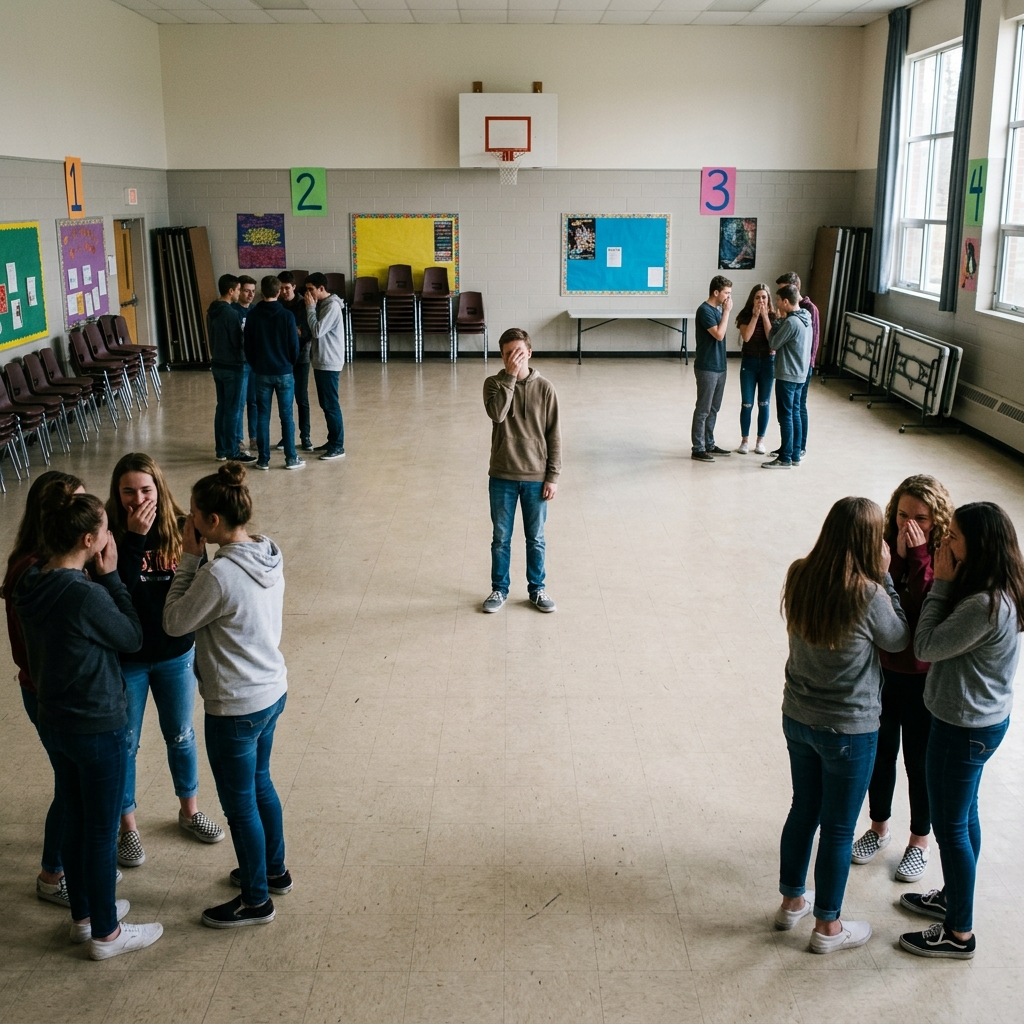
Four Corners needs four clearly defined areas of the room. One participant stands in the middle with their eyes closed while everyone else quietly chooses one of the corners.
The person in the middle calls out a corner, and players standing there sit out for that round. The process continues until one person remains.
I check the room before starting. Furniture, boxes, cords, glass, or other obstacles should not block the corners, and I remind everyone to walk rather than run between areas.
If the room is too small or crowded, I choose a different game instead of trying to force Four Corners into an unsuitable space.
19. Simon Says
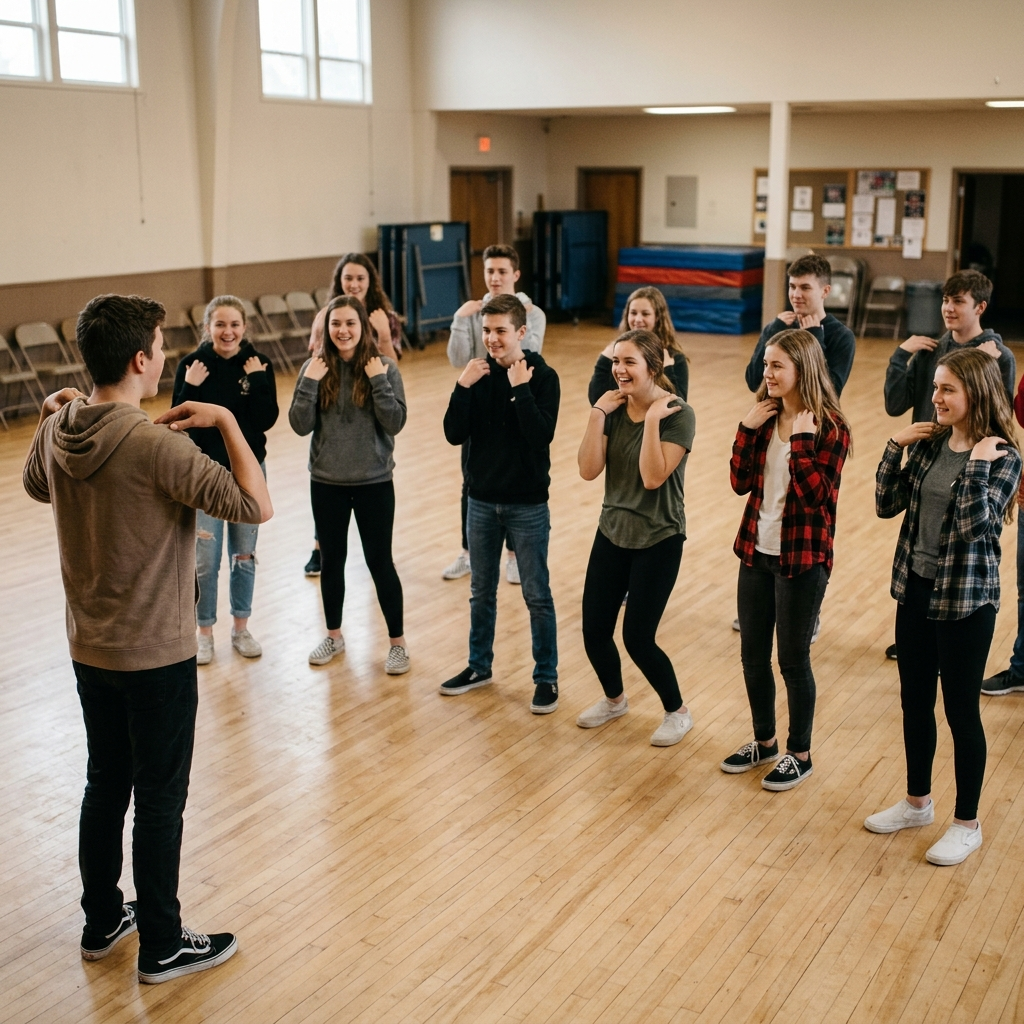
Simon Says can work well with teens when I make the commands faster, less predictable, and more themed. Instead of only using simple movements, I can include event-related instructions or quick sequences that require careful listening.
The important rule stays the same: players should only follow an instruction when it begins with “Simon says.”
For a larger group, I sometimes use team scoring rather than immediate elimination. This keeps more people involved while still rewarding careful listening.
I avoid commands involving climbing, jumping over furniture, physical contact, or movements that could cause someone to lose balance.
Pro Tip: A few deliberately tricky commands make the teen version more challenging without needing complicated rules. I just keep every movement safe and easy to perform indoors.
20. Speed Stack

Speed Stack is a quick cup-stacking competition that works particularly well as a short station. Players build and take down a specified cup pattern as accurately and quickly as they can.
I give everyone a practice round before timing anyone. That way, the competition measures how quickly they can perform the pattern rather than who understood the instructions first.
I use lightweight cups and a stable table or floor surface. A stopwatch is enough for timing, so there is no need for specialized equipment.
21. Reverse Charades

Reverse Charades changes the usual format by having several people act while one person guesses. I divide the group into teams and give each team a prompt.
The larger group of actors can work together to communicate the same idea, which keeps several teens active at once. That makes this one of my stronger choices when I need a game for a larger youth group.
I prepare the prompts beforehand and keep the rounds short. There is usually no need to overcomplicate the scoring.
22. Name That Tune
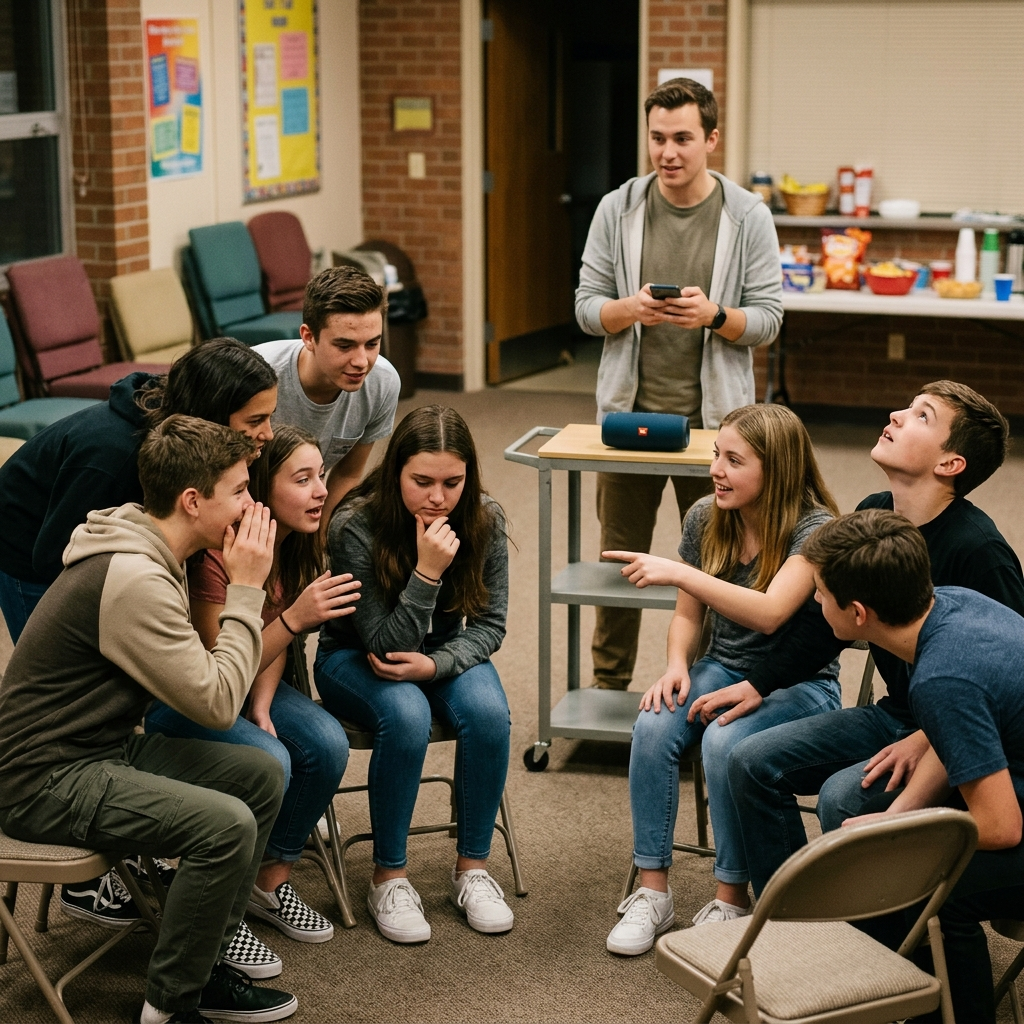
Name That Tune works well when music is already part of the event. I play a short section of a song and have individuals or teams identify the song title.
I don’t assume every teen knows the newest music. I mix familiar choices with age-appropriate songs that fit the group and event.
A team format gives participants a chance to discuss their answer before responding. It also means the game does not depend on one person recognizing every song.
23. Heads-Up Style Guessing Game

This guessing game has one participant holding a word or phrase where they cannot see it while the rest of the team gives clues.
I can use a phone-based version if the group already has access to it, but I don’t make an app necessary. Printed cards work just as well for a youth group gathering and keep everyone focused on the same activity.
I prepare categories such as movies, foods, hobbies, animals, places, or everyday objects. The clue-givers have to explain the answer without simply saying the word itself.
Pro Tip: I make two or three sets of cards for a large group and run teams simultaneously. That keeps the waiting time short.
24. Wink Murder

Wink Murder is a fictional mystery game built around observation and deduction. One person is secretly selected as the “murderer,” and that player uses a designated signal, such as a wink, to eliminate participants from the round.
A leader or narrator manages the secret selection and explains the rules before play begins. The group then watches one another and tries to work out who has the secret role.
I keep the language playful and non-graphic. The focus is on solving a fictional mystery, not on describing violence.
25. Story Chain

Story Chain is a creative game where each participant adds one sentence to a shared story. The next person has to continue from whatever happened in the previous sentence.
I sometimes give the group a theme such as a strange school day, a mysterious delivery, an unexpected road trip, or a disastrous party.
The story doesn’t need to make perfect sense. In fact, the unexpected changes are usually what make the activity funny. I also avoid putting anyone on the spot to produce a clever line immediately.
26. Pass the Parcel

For Pass the Parcel, I wrap a small prize inside several layers of paper. The group passes the parcel while music plays, and the person holding it when the music stops removes one layer.
I can put a small challenge, question, or activity between some layers instead of making the final prize the only interesting part.
I choose age-appropriate prizes and don’t rely entirely on candy. Small stationery items, novelty items, party favors, or non-food surprises can work just as well.
27. Paper Plane Contest

A Paper Plane Contest gives teens a creative activity followed by a simple competition. Everyone gets a sheet of lightweight paper and creates a plane before taking turns testing it.
I can score the planes in several ways, including distance, accuracy, or flight time. Using different categories keeps the contest from being only about which design travels farthest.
I use an open area with a clearly marked launch line. Nobody should walk into the flight path while another participant is throwing a plane.
Pro Tip: I have everyone stand behind the same launch line and collect the planes only after the round is finished. That makes the activity much easier to control.
28. Hot Potato

Hot Potato is quick to set up, but I give it a teen-friendly twist instead of relying only on elimination. Participants pass a soft ball, beanbag, or another soft object while music plays.
When the music stops, the person holding the object can answer a trivia question, name something from a category, complete a funny prompt, or earn a point for their team.
I prefer this format because participants stay involved instead of gradually leaving the game until only one person remains. A soft object is also much better than a hard item when people are passing quickly.
29. Emoji Pictionary

Emoji Pictionary gives a modern spin to a guessing game. I create emoji combinations that represent movies, songs, phrases, foods, places, or other recognizable ideas.
Teams work together to figure out what the emoji sequence means. I use a mixture of easy and more challenging clues so everyone gets some quick wins while still having something to think about.
Phones are not necessary. I can print the emoji clues ahead of time and display one card at a time, which works especially well when I want the whole group looking at the same clue.
Frequently Asked Questions About Indoor Youth Group Games for Teens
What are the best indoor games for a youth group?
I usually choose games based on the room, group size, and energy level rather than picking one universal favorite. Balloon Volleyball, Human Knot, Minute to Win It Challenges, Reverse Charades, Mafia, Two Truths and a Lie, and Story Chain give me a useful mix of active, creative, social, and strategy-based options.
What games can teens play indoors with no equipment?
Some of my easiest no-equipment games are Mafia, Human Knot, Two Truths and a Lie, Would You Rather?, Charades, Telephone, Story Chain, Simon Says, Hot Seat, and Reverse Charades.
These are especially useful when plans change because I can start them with little preparation.
What are good icebreaker games for teens who don’t know each other?
I like starting with Two Truths and a Lie, Would You Rather?, or a simple version of Hot Seat. I keep the questions light and give teens the option to pass rather than requiring anyone to share personal information.
Once the group has warmed up, I can move into a team activity such as Reverse Charades or Balloon Volleyball.
How do you keep a large youth group engaged indoors?
I try to reduce long periods where everyone waits for one person. Games such as Reverse Charades, Balloon Volleyball, Freeze Dance, Human Tic-Tac-Toe, and team-based Minute to Win It Challenges can involve several people at once.
For especially large groups, smaller teams, activity stations, and multiple leaders can make transitions easier. I also shorten individual turns when I notice the group starting to lose interest.
How many games should you plan for a youth group night?
For a two-hour youth gathering, I usually prepare around 4–6 main activities rather than trying to use every game on this list. A 10–15-minute activity is a useful starting point, but I treat that as a flexible guideline.
I leave additional time for introductions, explaining rules, changing activities, drinks, socializing, and unexpected delays. I also keep one or two no-equipment games ready in case something finishes early.
What are some good low-prep games for teens?
My low-prep choices include Two Truths and a Lie, Would You Rather?, Mafia, Telephone, Story Chain, Charades, Reverse Charades, and Hot Seat.
I like keeping these ready because they require little equipment and can usually be adjusted to different group sizes without much advance planning.
Read this next: 21 Brilliant TikTok Games to Play With Friends (No Props) 2026
Conclusion
I don’t think a successful teen game night depends on finding one perfect activity. What works better for me is choosing a combination that matches the room, the group size, the available supplies, and the mood of the evening.
I might start with a conversation-based icebreaker, move into a more active team game, and then switch to a strategy or creative activity. If the group is getting tired, I have quieter options ready. If energy is high, I can bring out another movement-based game.
I also find that a little preparation makes a noticeable difference. Clearing the floor, preparing supplies in advance, explaining boundaries, having paper alternatives to technology, and keeping a few no-equipment backups ready can prevent small problems from disrupting the evening.
With these 29 indoor youth group games for teens, I can build the schedule around the people and space I actually have rather than trying to force every game into the same format. A little preparation, clear boundaries, and a few backup games can make the whole evening much easier to manage.


3 Comments