
20 Party Games for Couples That Turn Any Night In Into Date Night
My husband and I have a Friday-night rule: phones down, snacks out, and a real game on the table. After years of date nights that fizzled into scrolling side by side, we started collecting party games for couples that actually work with just two players, and the difference has been ridiculous. Some nights get competitive, some get silly, and a few have ended with us laughing so hard we forgot who was winning.
I picked these 20 party games for couples the same way I pick everything for this blog: we played them, more than once, in our own living room. If a game needed four people to be fun, it got cut. If it took an hour to learn, it got cut. What stayed are the games that work for two, need almost no setup, and still feel like a party instead of a chore. A few of these we play weekly; the rest come out whenever friends cancel and we decide to make our own fun.
Key Takeaways
- Two-player games need a different design than group games: look for short rounds, direct competition, and choices that matter.
- Mix game types across the week: a word game one night, a strategy game the next, and something silly when you are both tired.
- Most of these party games for couples cost under $25 or need nothing but a deck of cards and a timer.
- Keep a running score across the month. Our little championship trophy is a chipped mug, and we fight over it like it is made of gold.
20 Party Games for Couples We Actually Play
1. Two Truths and a Lie, Couples Edition
We play this one over takeout at least twice a month, and it still surprises me. Each of us writes down three statements about ourselves, and the other has to spot the lie. The trick is to use real memories, not invented ones: my husband once claimed he had never broken a bone, and I believed him for a full minute before remembering his skateboard summer. The game works because couples think they know everything about each other, and then one small story proves they do not. Keep the statements short and specific, and ban anything genuinely hurtful before you start.

Cost: Free | Time: 15 minutes | Difficulty: Easy
Pro Tip: Write your statements on paper first. Spoken ones give you away through your face.
2. Chess Duel
Chess is the game that taught us how to lose gracefully, or at least how to pretend to. We play a 10-minute timer each, which keeps it from turning into a silent two-hour stare, and the loser makes the tea. I am not a good chess player, and that is honestly part of the appeal: I have learned to love the small wins, like holding my ground for twenty moves or pulling off a fork I actually planned. The downside is real, though. If one of you is much stronger, it stops being fun fast, so the stronger player should play with a handicap, like giving up a rook.

Cost: Free with a board you own, or under $20 | Time: 20 to 30 minutes | Difficulty: Medium
Pro Tip: Use a chess app for hints on your first few games. It speeds up learning without spoiling the match.
3. Scrabble Showdown
Scrabble is our Sunday-afternoon ritual, and it has revealed an ugly truth: my husband knows an alarming number of two-letter words. We play with a kitchen timer set to two minutes per turn so nobody can spend ten minutes rearranging tiles in silence. The game rewards vocabulary, but it also rewards board sense, and I have won games with short, well-placed words while he hoarded fancy letters. The honest downside is that it can feel lopsided if one of you reads a lot more than the other, so we sometimes play with a shared dictionary app and allow challenges.

Cost: Around $20 for the board game | Time: 45 minutes | Difficulty: Easy to medium
Pro Tip: Agree on the dictionary before the first tile goes down. Nothing kills the mood like a mid-game argument about whether qi counts.
4. Gin Rummy Card Night
Gin rummy is the card game we reach for when we want something calm but still competitive. All you need is one standard deck, and a full match takes about half an hour. I love that it is mostly skill with just enough luck to keep the weaker player hopeful: I have come back from what looked like a hopeless hand more than once. The scoring is simple once you play a round, and we keep a running tally on the fridge. The downside is that it can feel quiet and repetitive after three games in a row, so we usually cap it at two and switch to something louder.

Cost: Under $5 for a deck of cards | Time: 30 minutes | Difficulty: Easy
Pro Tip: Play to 100 points instead of a single hand. The comeback potential is what makes it exciting.
5. Jenga Tower Challenge
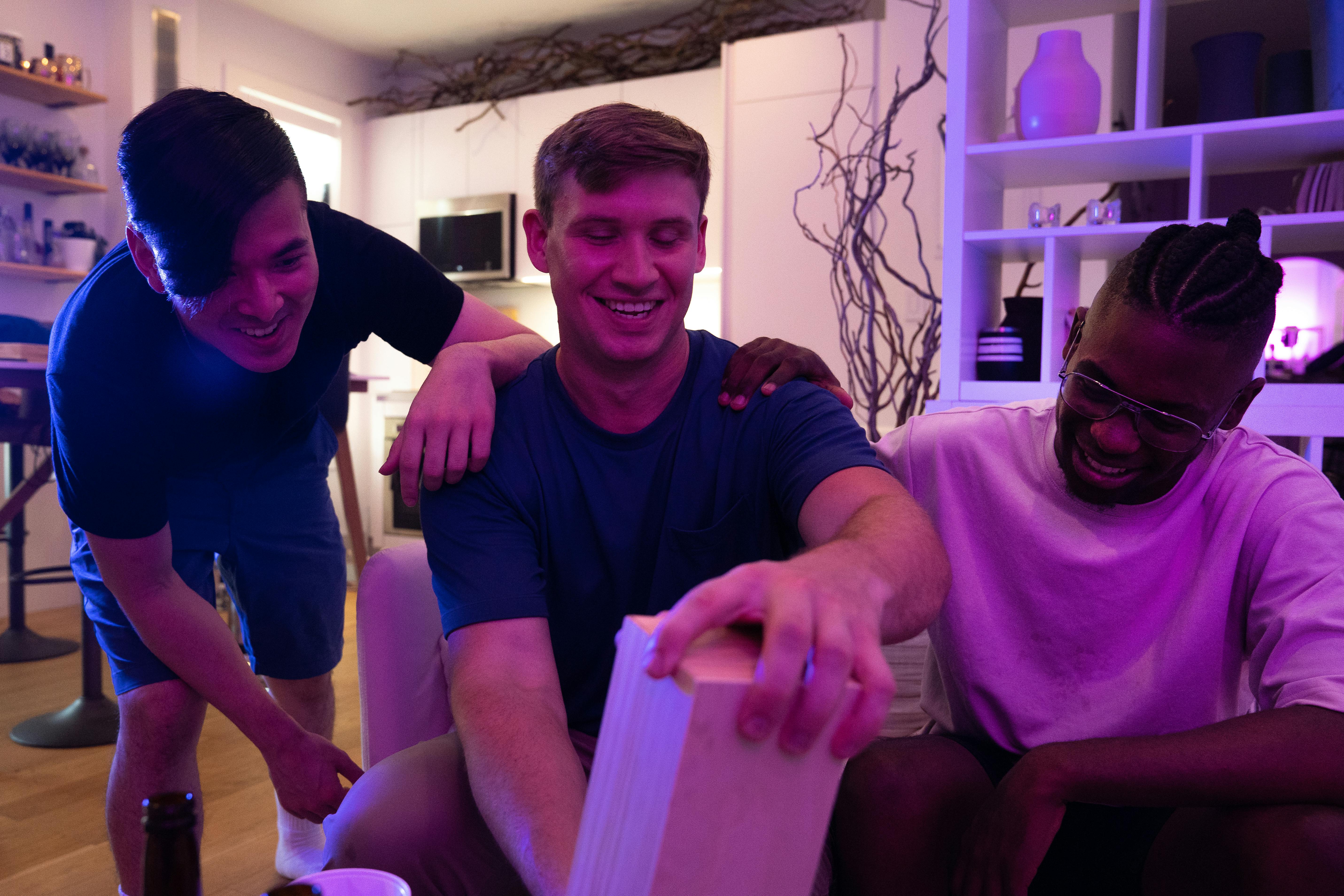
Jenga with two people is pure tension in the best way. Every pull matters, and the tower gets personal: my husband once spent a full minute blowing on a block to test it, which is technically legal and deeply annoying. We play with a twist where the loser has to answer a question from a jar of silly prompts, which keeps the stakes fun instead of stressful. The game itself is cheap, quick, and works even when you are both tired. The downside is that it is over fast once the tower falls, so we usually play best of three.

Cost: Around $15 | Time: 15 minutes | Difficulty: Easy
Pro Tip: Play on a steady table, not the couch. A wobbly surface ends the game before it starts.
6. Backgammon Battle
Backgammon surprised us both. It looks old-fashioned, but it is fast, tactical, and the doubling cube adds real drama: doubling when you are ahead feels gloriously bold and occasionally backfires spectacularly. We learned it from a ten-minute video and were playing properly the same evening, which is rare for a strategy game. The luck of the dice keeps it close even when one of us is playing better, and a full match rarely takes more than twenty minutes. The only honest downside is that the rules for bearing off confuse everyone at first, so expect one slow learning game.

Cost: Around $20 to $30 for a decent set | Time: 20 minutes | Difficulty: Medium
Pro Tip: Learn the doubling cube early. Without it, backgammon is only half the game.
7. Puzzle Race
A puzzle race is our low-energy date night, and I mean that as a compliment. We buy the same 500-piece puzzle twice, set a timer, and race to finish, or we work one puzzle together and compete on who places the most pieces. It sounds quiet, and it is, but there is something genuinely connecting about sitting side by side sorting edge pieces and talking about your day. The downside is space: a puzzle eats a whole table, and ours once lived on the dining table for a week because we refused to quit. Use a puzzle mat if your table needs to be a table again.

Cost: $10 to $20 per puzzle | Time: 1 to 2 hours | Difficulty: Easy
Pro Tip: Sort edge pieces first, always. Skipping that step is how a relaxing night turns into a silent argument.
8. Dominoes Duel
Dominoes is the most underrated two-player game we own. It costs almost nothing, the rules take two minutes to explain, and the strategy sneaks up on you: blocking your partner’s tiles feels wonderfully sneaky. We play the classic block game and the all-fives scoring version, and the second one is better once you know the basics because every tile placement can score. I like that it works outdoors too; we have played it on a park bench with coffee, which is not something you can say about most board games. The downside is that it can end in a blocked, low-scoring stalemate, so play to a target score across several rounds.

Cost: Under $10 | Time: 20 minutes | Difficulty: Easy
Pro Tip: Count the tiles left in your hand out loud at the end. It teaches you the blocking strategy fast.
9. Wine and Word Games
Wine and word games night is our Friday treat: one glass each, a word game like Boggle or a crossword race, and a strict rule that nobody checks their phone. The wine makes us braver with weird words and worse at spelling them, which is exactly the point. We once spent twenty minutes arguing over whether a made-up word should count if it sounded convincing, and that argument is now a running joke. The honest downside is obvious: keep it to one glass if you want the game to stay a game, and skip this one entirely on nights when either of you is tired, because tired plus competitive is a bad combination.

Cost: Free with games you own | Time: 30 minutes | Difficulty: Easy
Pro Tip: Use a small whiteboard for scores. It feels like a real game show and stops all score disputes.
10. Karaoke Duet Night
Karaoke at home is gloriously unserious, and that is why it works for couples. We use a free karaoke app on the TV, take turns picking songs for each other, and duets are mandatory at least once. My husband picked a power ballad for me on our first karaoke night and I have never forgiven him, in the fondest possible way. The game part is simple: score each other, or use the app’s scoring, and the loser picks the next takeout. The downside is neighbor awareness if you live in an apartment, so we keep it to early evening and close the windows. Nobody needs to hear our rendition of a rock anthem at midnight.

Cost: Free with an app | Time: 1 hour | Difficulty: Easy
Pro Tip: Start with a duet you both know by heart. A confident opener makes the whole night braver.
11. Couch Co-op Video Game Night
Co-op video games saved our rainy weekends. We play puzzle platformers and farming games where we work together instead of against each other, and it is genuinely relaxing: no score, no timer, just two people solving something side by side. The first time we finished a co-op puzzle level after an hour of failing, we high-fived like we had won something real. The downside is screen-time creep, because one more level is never one more level, so we set a hard stop time before we start. If you do not own a console, plenty of great co-op games run on a basic laptop.

Cost: Free to $30 per game | Time: 1 to 2 hours | Difficulty: Easy to medium
Pro Tip: Pick games with shared progress, not split-screen competition. Co-op means co-op.
12. Truth or Dare, Grown-Up Edition
Truth or dare for couples is only as good as the prompts, so we wrote our own. Ours are a mix of sweet (tell me your favorite memory of us), funny (do your best impression of me), and mildly embarrassing (sing your least favorite song with feeling). We keep a jar of folded prompts so nobody has to think under pressure, and we both get one pass per night, no questions asked. The pass rule matters: it keeps the game fun instead of awkward. The downside is that it can drift into serious territory if the truths get heavy, so we keep it light on purpose and save the deep talks for walks.

Cost: Free | Time: 30 minutes | Difficulty: Easy
Pro Tip: Write 20 prompts together on a quiet evening first. Pre-written prompts are ten times better than improvised ones.
13. Charades for Two
Charades with two people sounds impossible until you try it, and then it becomes the funniest game on this list. One of us acts, the other guesses, and the acting is deliberately terrible: my husband’s impression of a washing machine is now legendary in our house. We use a phone app for prompts so we never run out, and we play in rounds of five with a one-minute timer. The downside is that it needs energy, so it is a bad pick for exhausted nights, but on a good night it produces the kind of laughing that makes your stomach hurt. Keep score loosely or not at all; the performance is the point.
Cost: Free with an app | Time: 20 minutes | Difficulty: Easy
Pro Tip: Ban sounds but allow props from around the room. A tea towel as a cape changes everything.
14. Strategy Board Night
Once a week we pick a heavier strategy game, something with a real board and real decisions, and we treat it like an event: snacks, drinks, phones in another room. These are the games that make you think three moves ahead and then watch your beautiful plan collapse because your partner saw something you missed. I love that feeling, even when I lose, because it means the game is actually fair. The downside is time: these games run 60 to 90 minutes, and learning one can take a full evening, so start with a short tutorial video and accept that your first game will be slow.

Cost: $25 to $40 per game | Time: 60 to 90 minutes | Difficulty: Medium to hard
Pro Tip: Play your first game of any new strategy title with the rulebook open. Nobody enjoys losing to a rule they did not know existed.
15. Monopoly Deal Date Night
Full Monopoly can ruin a date night, but Monopoly Deal, the card version, is a different animal: fifteen minutes, constant stealing, and just enough chaos to keep both players dangerous until the last card. We play it at the kitchen table with tea, and the rule is that table talk is encouraged, which means outrageous bluffing is part of the game. I once won by playing completely innocently for ten minutes while holding the cards I needed, and my husband still brings it up. The downside is that the dealbreaker card can feel brutal when it lands, so we play best of three to take the sting out of a single lucky steal.

Cost: Around $10 | Time: 15 to 20 minutes | Difficulty: Easy
Pro Tip: Keep your property sets spread out so your partner cannot tell at a glance what you are one card away from completing.
16. Would You Rather, Couples Edition
Would You Rather is the easiest game on this list and one of the most revealing. We take turns asking questions, and the rule is you have to answer, no dodging, even when both options are terrible. The best questions are personal and specific: would you rather relive our first date exactly as it happened, or erase it and have a perfect one? Those questions start real conversations, which is the whole point. The downside is that generic internet lists get boring fast, so write your own questions over time and keep them in a note on your phone. Our list is now 80 questions long and still growing.

Cost: Free | Time: 20 minutes | Difficulty: Easy
Pro Tip: Alternate silly and serious questions. All silly gets shallow; all serious gets heavy.
17. Memory Match Card Game
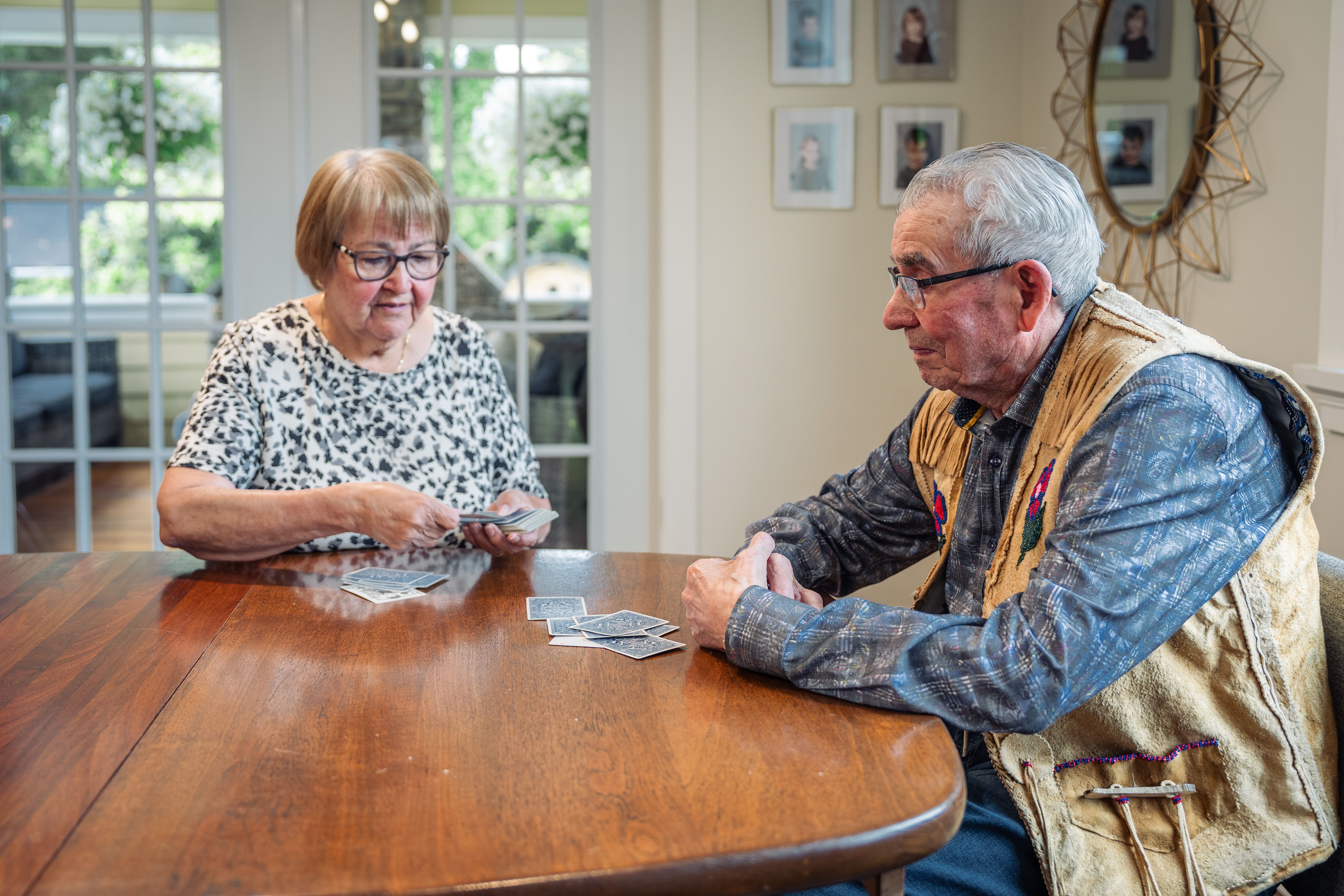
Memory match, the game where you flip pairs of cards face down, is pure and simple, and it is shockingly competitive with two people. We use a regular deck and lay out a grid, and the trick is that you have to remember not just your own flips but your partner’s too. I am terrible at this game and my husband is annoyingly good, which means my wins feel enormous. It is also a genuinely nice wind-down game: quiet, no luck involved after the shuffle, and over in ten minutes. The downside is that it is not much of a party game if you want noise and energy, so save it for calm evenings.
Cost: Free with a deck of cards | Time: 10 to 15 minutes | Difficulty: Easy
Pro Tip: Play with a smaller grid first, like 4 by 4. A full 52-card grid is brutal for beginners.
18. Newlywed Quiz
The newlywed quiz is the game that ends with I cannot believe you did not know that about me, said with love. We each write ten questions about ourselves, swap papers, and answer without peeking. The questions range from favorite food to most embarrassing school memory, and the scoring is simple: one point per right answer, and the loser cooks dinner. What I love is that it works at any stage of a relationship: new couples learn things, and long-term couples discover how much they have forgotten. The downside is that it can sting if someone scores badly, so frame it as discovery, not a test, and laugh at the misses.

Cost: Free | Time: 20 minutes | Difficulty: Easy
Pro Tip: Include two joke questions. They keep the quiz from feeling like an exam.
19. Darts Duel
A magnetic dartboard on the back of a door turned our hallway into a tiny pub, and darts night is now a weekly fixture. We play simple countdown games, and the beauty of darts is that it is physical without being athletic: you can play in socks, with a drink nearby, while talking. I am not good at darts, but the handicap is built in: the board forgives bad throws just often enough to keep me hopeful. The downside is wall damage if you use steel tips indoors, so go magnetic or soft-tip, and hang the board somewhere a wild throw cannot hit anything precious. Our board hangs on a door that leads to a closet, for exactly that reason.

Cost: $15 to $25 for a magnetic set | Time: 20 to 30 minutes | Difficulty: Easy
Pro Tip: Stand at the same line every time. Mark it with tape so nobody creeps forward on important throws.
20. Singalong and Guitar Night
Our last pick is not really a game, and that is why it made the list. One of us plays guitar, badly and happily, and the other sings along, also badly and happily, and we keep score only in the sense that we remember which songs made us laugh hardest. It turns a normal evening into something that feels like an occasion, and it costs nothing. The honest downside is that it needs one person willing to be a beginner in front of the other, which takes a little courage the first time. After that first time, though, it becomes the easiest yes of the week, and some of our best date nights have been just this.

Cost: Free | Time: 30 to 60 minutes | Difficulty: Easy
Pro Tip: Keep a shared playlist of songs you both half-know. Half-known songs are funnier than perfect ones.
Which Party Game for Couples Should You Start With?
| Game type | Best for | Cost | Time |
|---|---|---|---|
| Card games | Quiet nights, small budgets | Under $10 | 15 to 30 minutes |
| Board and strategy | Weekend events, real competition | $15 to $40 | 30 to 90 minutes |
| Talking and guessing | Getting closer, zero setup | Free | 15 to 30 minutes |
| Active and silly | High-energy evenings, big laughs | Free to $25 | 20 to 60 minutes |
Mistakes I Made (So You Don’t Have To)
Picking games that need four players. Our first game shelf was full of party games that said 3 to 8 players on the box, and with two of us they fell flat. Now I check the two-player rules before buying anything, and I skip games that only work with a variant. If you love card nights, this related article on card games for parties has more two-player-friendly picks.
Keeping score too seriously. I once sulked for an evening after losing three games in a row, and it taught me that the scoreboard is a tool, not a verdict. We now reset scores weekly and keep a silly prize for the monthly winner. The game should end with both people wanting to play again.
Playing the same game every night. We burned out on one board game by playing it nine nights in a row, and it took months before we touched it again. Rotate. Even your favorite game needs a break, and the variety is what keeps date night feeling like a date.
Frequently Asked Questions
What are the best party games for couples with no supplies? Two Truths and a Lie, Would You Rather, Truth or Dare, and the Newlywed Quiz need nothing but yourselves. Start with those if you want to try the idea tonight without buying anything.
Are dice games good for two players? Yes, plenty of dice games work beautifully with two, especially quick push-your-luck games. For a full list, also read our dice games for parties, which includes several that scale down to two players nicely.
How do I stop game night from turning into an argument? Set three rules before you start: a time limit, a silly prize instead of a serious one, and a rule that anyone can call a break. Competitive couples fight about games the same way they fight about directions: it is never really about the game, so keep the stakes low and the snacks high.
Final Thoughts
The best party games for couples are not the fanciest ones on the shelf. They are the ones you actually play, on ordinary Tuesdays, when you could have just watched another show. Start with one free game tonight, add a card game this weekend, and build from there. If you ever want a night with zero alcohol involved, read this next for party games that stay loud without a drink in sight. However you play, keep it kind, keep it silly, and let the loser pick the takeout. That last rule has saved our game nights more than once.