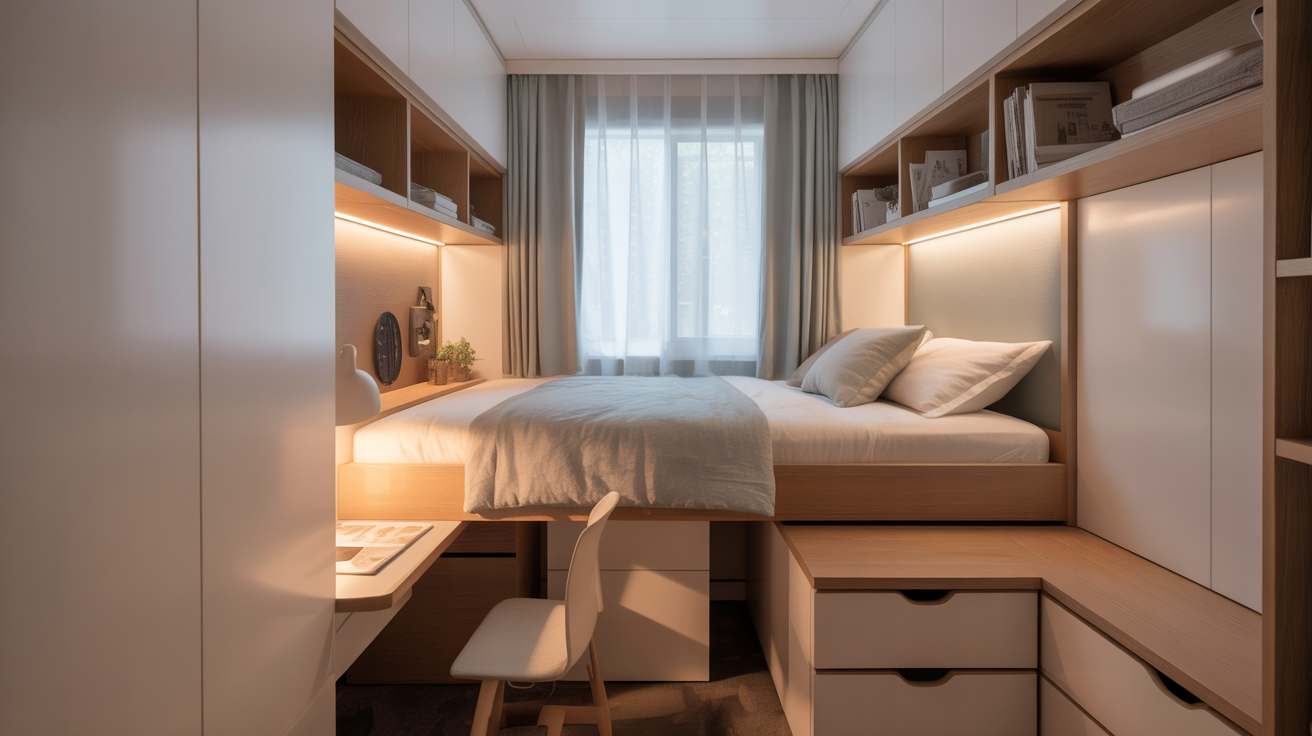
21 Very Small Bedroom Ideas
A small bedroom can feel challenging to decorate, especially when every inch matters. I’ve worked with compact spaces that seemed impossible to organize, yet a few smart design choices completely changed how they looked and functioned. The good news is that you don’t need a larger room to create a comfortable and stylish bedroom.
According to interior design experts, visual openness, smart storage, and proper lighting can make even the smallest rooms feel significantly larger. In this guide, I’m sharing practical ideas that help maximize space while keeping your bedroom inviting and functional.
Save this for later
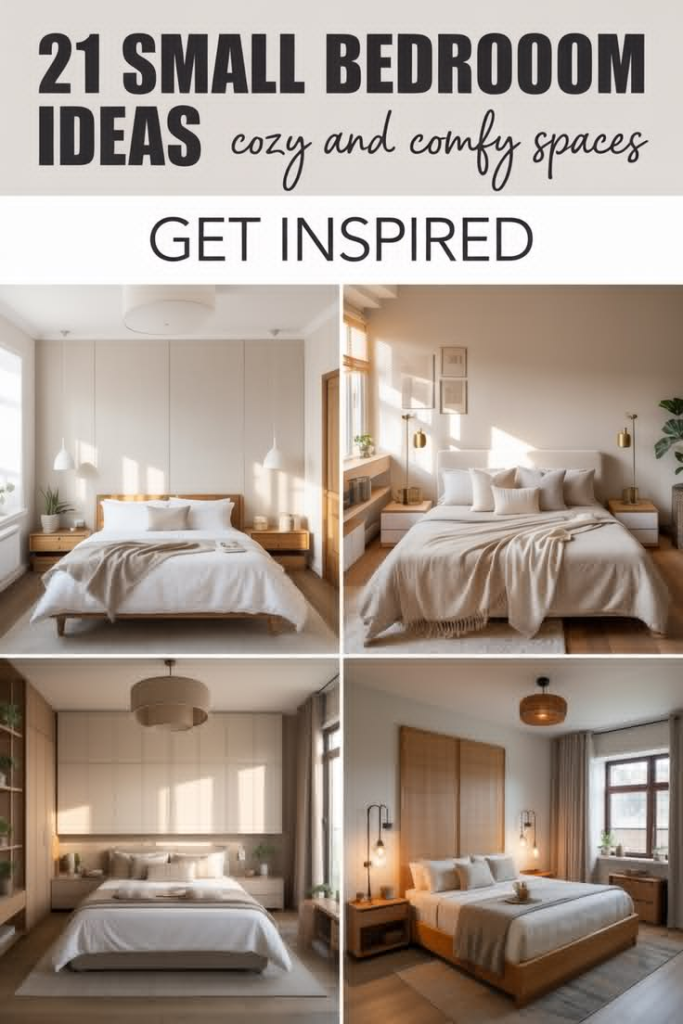
Table of Contents
If your bedroom feels cramped, the right design choices can make a huge difference. This article covers 21 simple ways I use to create the illusion of more space, improve storage, and make a small bedroom feel brighter and more comfortable. From choosing lighter colors and adding mirrors to using multifunctional furniture and hidden storage, these ideas help transform a tiny room into a space that feels organized, open, and relaxing.
Key Takeaways
- Light colors help reflect natural light and create a larger appearance.
- Vertical storage makes use of walls instead of valuable floor space.
- Furniture with exposed legs creates a more open visual effect.
- Hidden storage solutions reduce clutter and improve organization.
- Mirrors and natural light can instantly make a room feel bigger.
- Multi-purpose furniture helps maximize functionality in limited spaces.
- Keeping decor simple prevents a small room from feeling overcrowded.
Related article: 23 Bedroom Decor Trends in 2026
Keep Colors Light
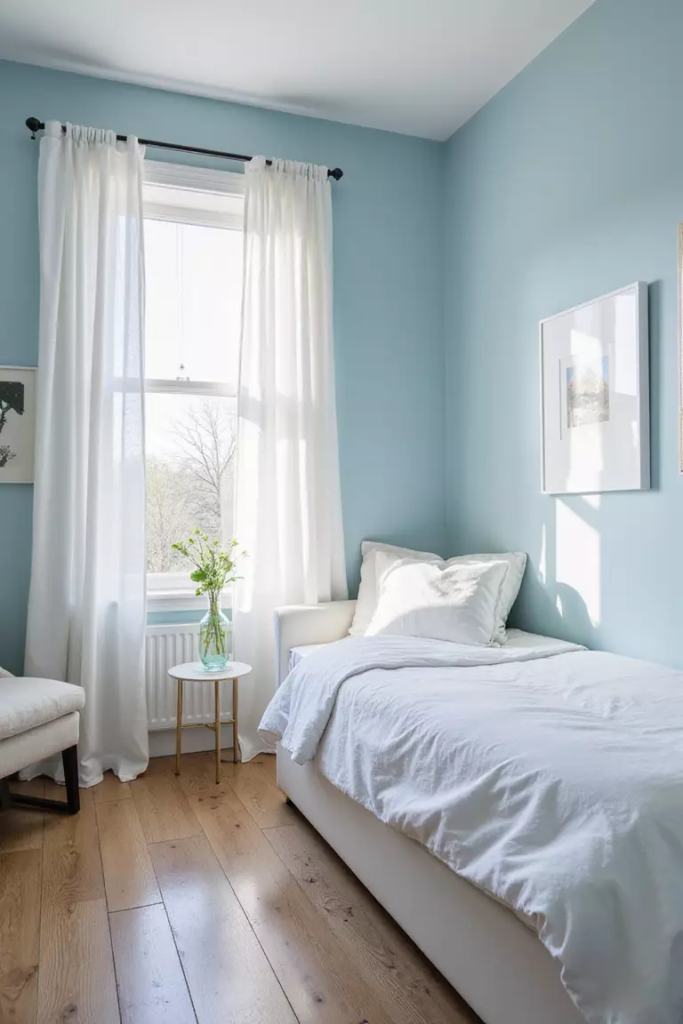
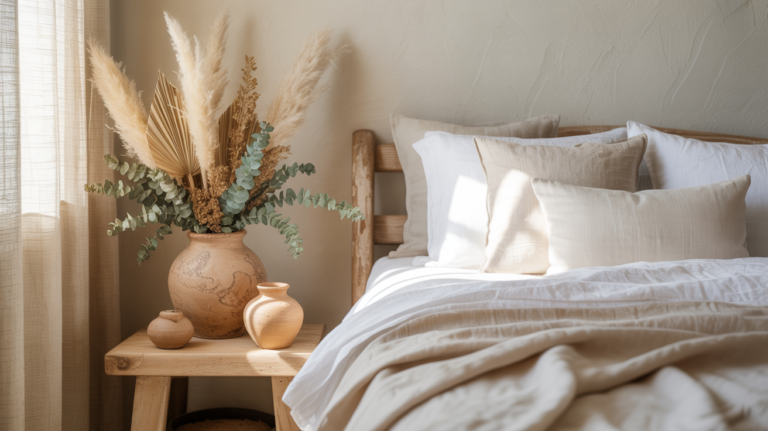
When I decorate a small bedroom, one of the first things I focus on is color. Soft shades such as white, cream, light gray, and pale blue help reflect light throughout the room.
Lighter tones create a more spacious feeling because they don’t visually close in the walls. Dark colors can look beautiful, but they often make compact rooms feel tighter than they actually are.
Pro Tip: Use matching light-colored bedding and curtains to create a seamless look that visually expands the space.
Use Vertical Space
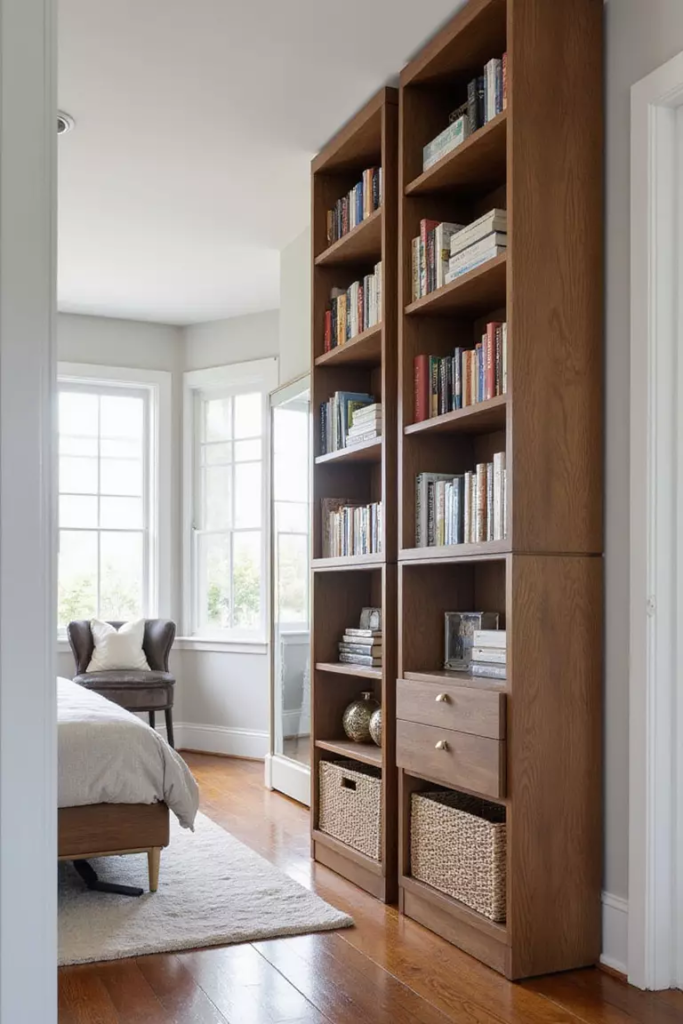
In a small bedroom, I always look upward before adding more furniture. The walls provide plenty of storage opportunities without taking away floor space.
Tall shelving units, wall-mounted shelves, and hanging organizers help keep items organized while drawing attention toward the ceiling. This simple trick can make a room feel taller.
Studies on interior perception show that vertical lines naturally guide the eye upward, creating the impression of added height.
Choose Furniture With Legs
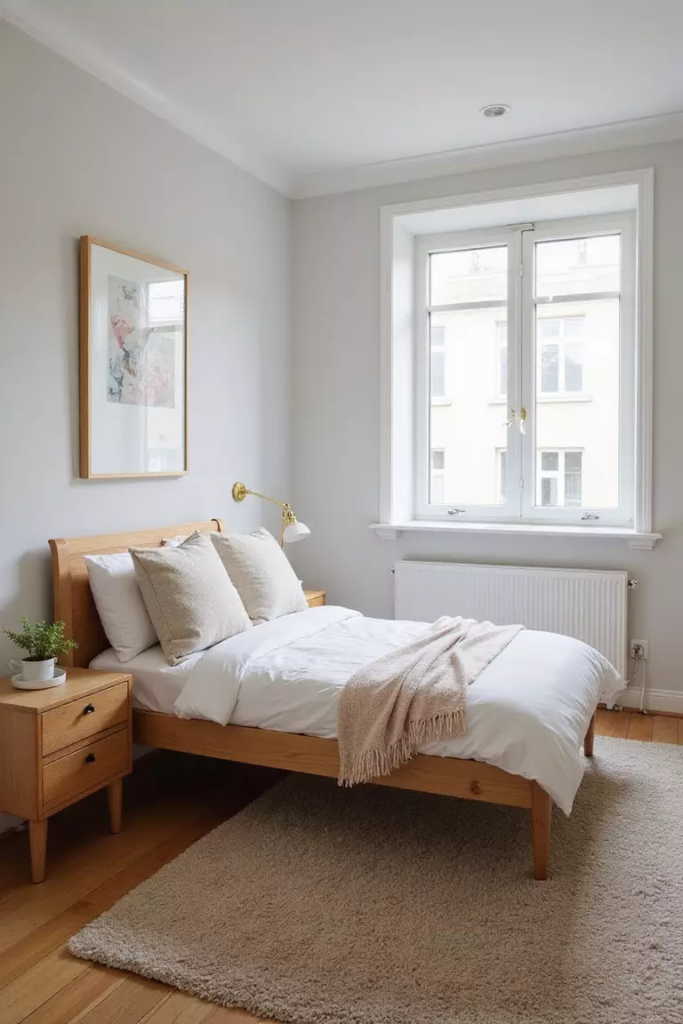
Furniture that sits slightly above the floor often makes a room feel less crowded. I prefer beds, nightstands, and dressers with visible legs whenever possible.
Being able to see the flooring underneath furniture creates visual continuity, which helps the room appear more open.
Large, bulky furniture that extends directly to the floor can make a compact bedroom feel heavier and more enclosed.
Install Wall Sconces
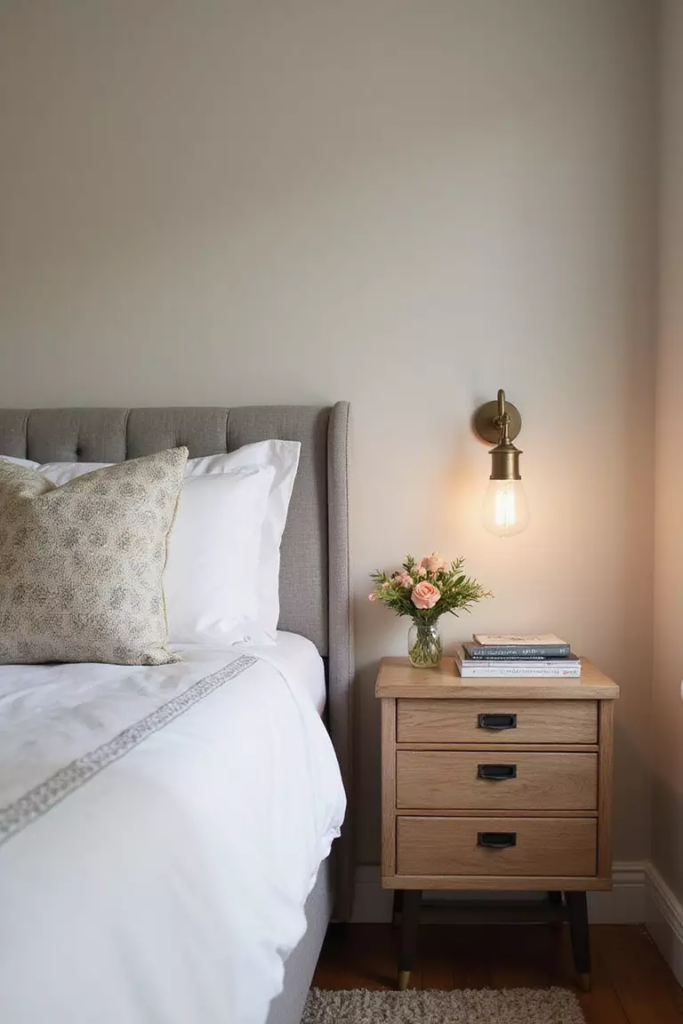
Nightstand space is often limited in a very small bedroom. That’s why I like replacing table lamps with wall-mounted sconces whenever possible.
Wall lighting frees up valuable surface space while still providing plenty of light for reading or relaxing.
Choose streamlined fixtures with adjustable arms if you want both function and style without adding clutter.
Get A Headboard With Storage
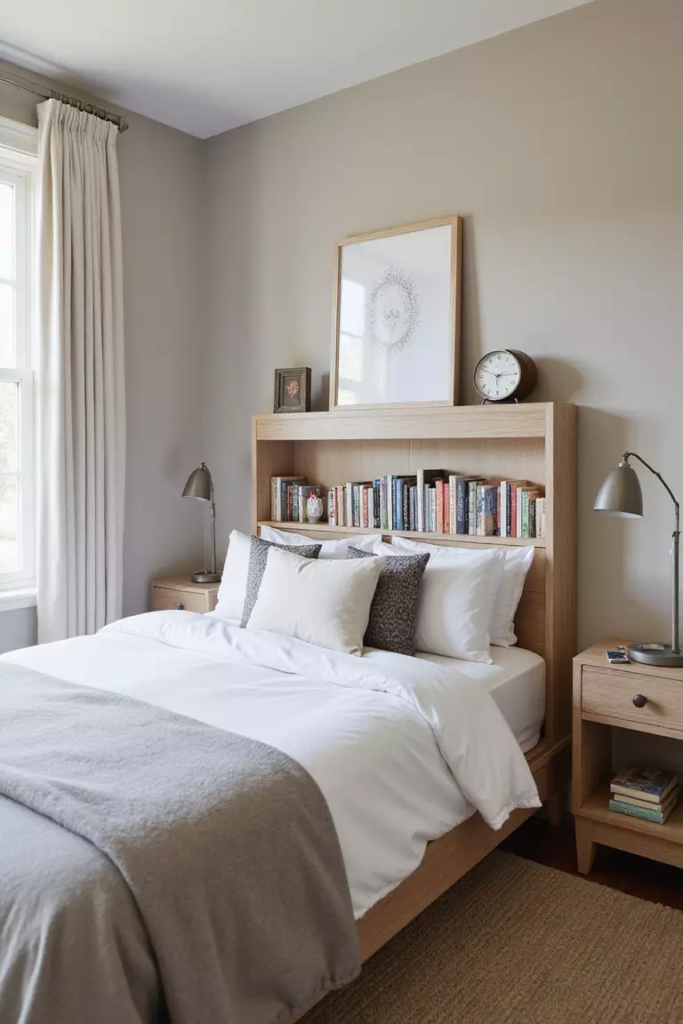
I love furniture that serves more than one purpose, especially in small bedrooms. A storage headboard adds useful organization without requiring extra furniture.
Built-in shelves can hold books, chargers, glasses, decorative accents, or nighttime essentials within easy reach.
Instead of adding another shelving unit to the room, I let the bed provide some of the storage work.
Use Mirrors Wisely
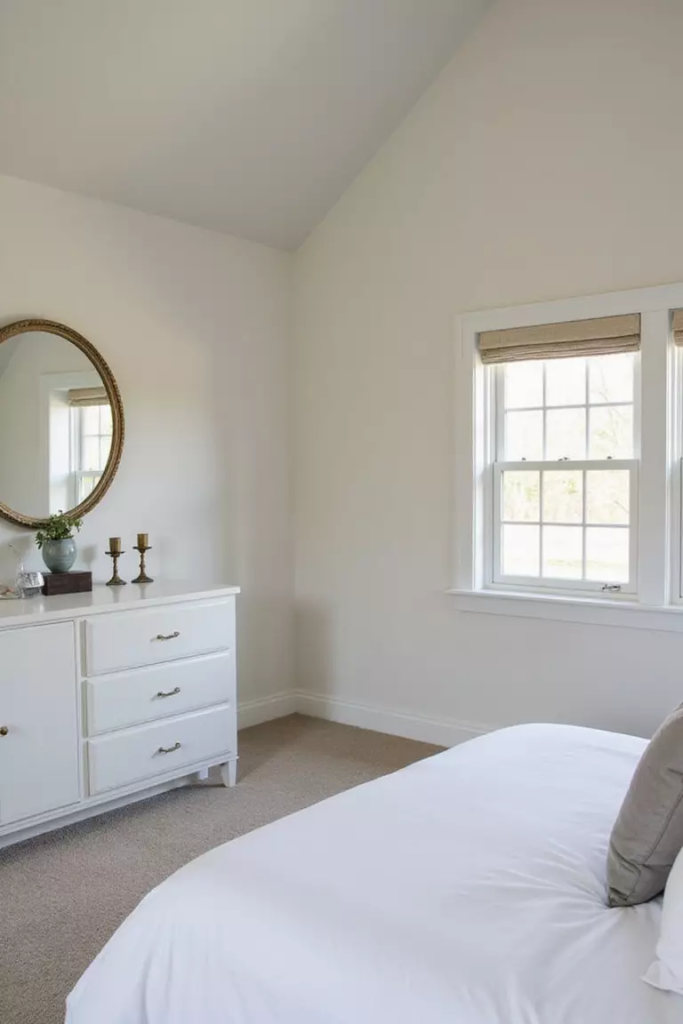
Few decorating tools are as effective as mirrors in a small bedroom. A properly placed mirror can instantly increase brightness and create the illusion of more square footage.
I often position a large mirror across from a window so it reflects daylight throughout the room.
This technique not only makes the room feel larger but also improves overall lighting without additional fixtures.
Pro Tip: Floor-length mirrors can serve both practical and decorative purposes while maximizing the sense of openness.
Opt For Floating Shelves
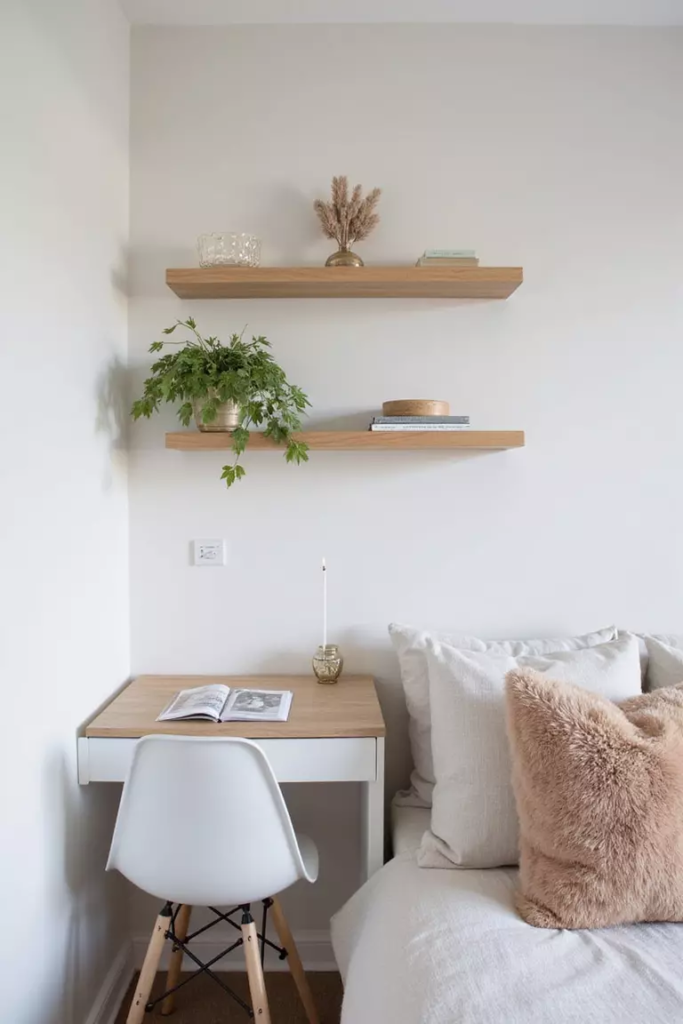
Floating shelves are one of my favorite storage solutions for compact bedrooms. They provide space for books, plants, and decorative items without the visual weight of large furniture.
Because the supports are hidden, these shelves create a cleaner appearance than traditional shelving systems.
I usually install them above desks, beds, or unused wall sections to make the most of every inch.
Choose A Loft Bed
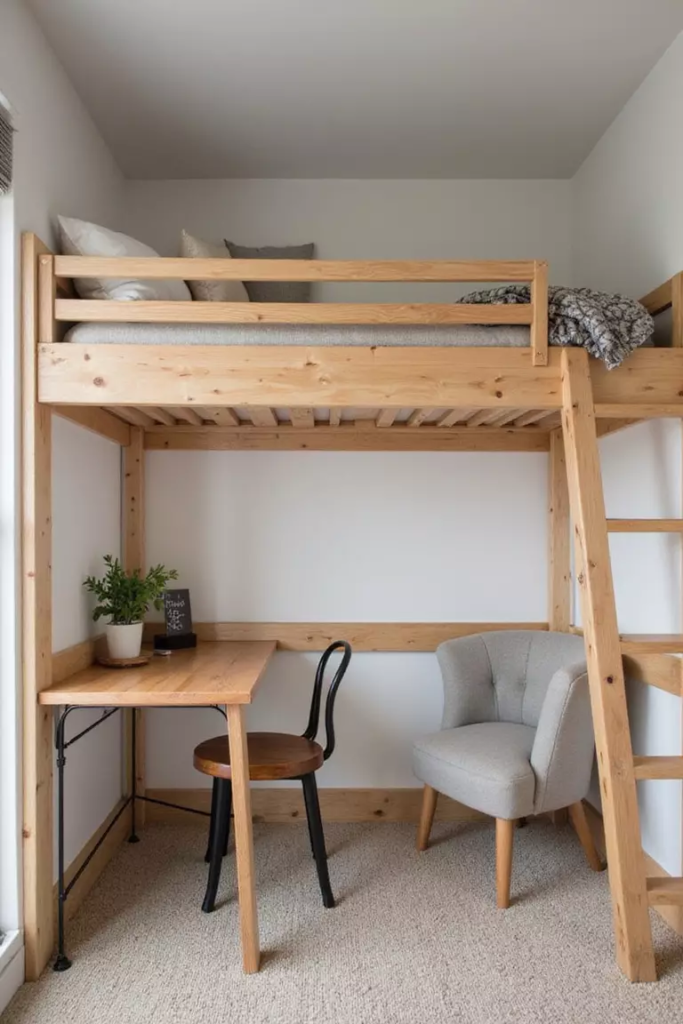
When floor space is extremely limited, a loft bed can completely change how the room functions.
Raising the sleeping area creates valuable space underneath that can be used for a desk, reading nook, dresser, or additional storage.
For students, apartment dwellers, or anyone working with a tiny bedroom, this setup can effectively double the usable space.
Use Under-Bed Storage
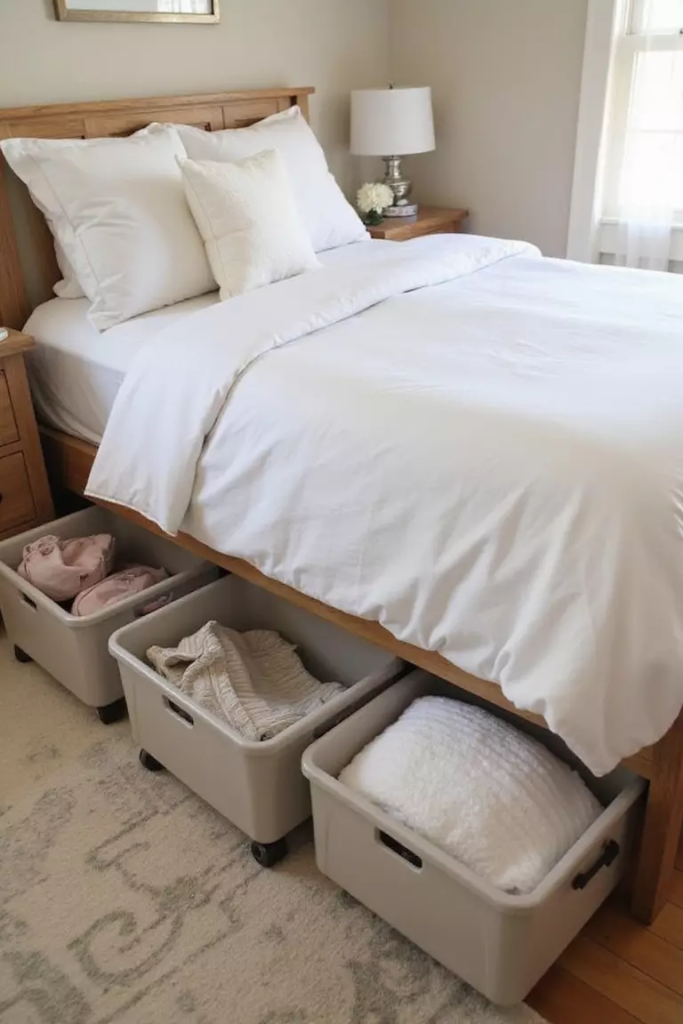
The area beneath the bed is often one of the most overlooked storage spots in a home.
I use low-profile storage containers, rolling drawers, or vacuum-sealed bags to store seasonal clothing, extra blankets, and shoes.
Keeping these items hidden helps maintain a cleaner appearance, which is important because clutter can make a room feel much smaller than it really is.
Mount Your TV
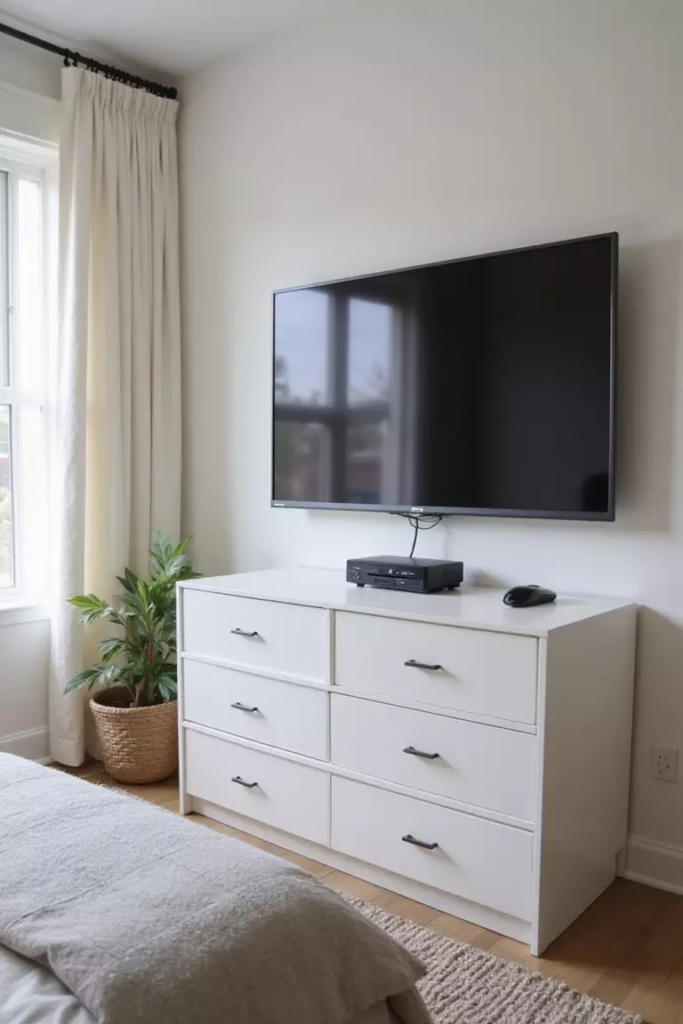
If a television is part of your bedroom setup, mounting it on the wall is usually the smartest choice.
Wall mounting eliminates the need for a dedicated TV stand and frees up furniture surfaces for other uses.
Modern flat-screen TVs take up very little visual space and contribute to a cleaner, more streamlined room design.
Also read: 35 Teen Boy Bedroom Ideas that Balance Cool and Functional
Add Stripes
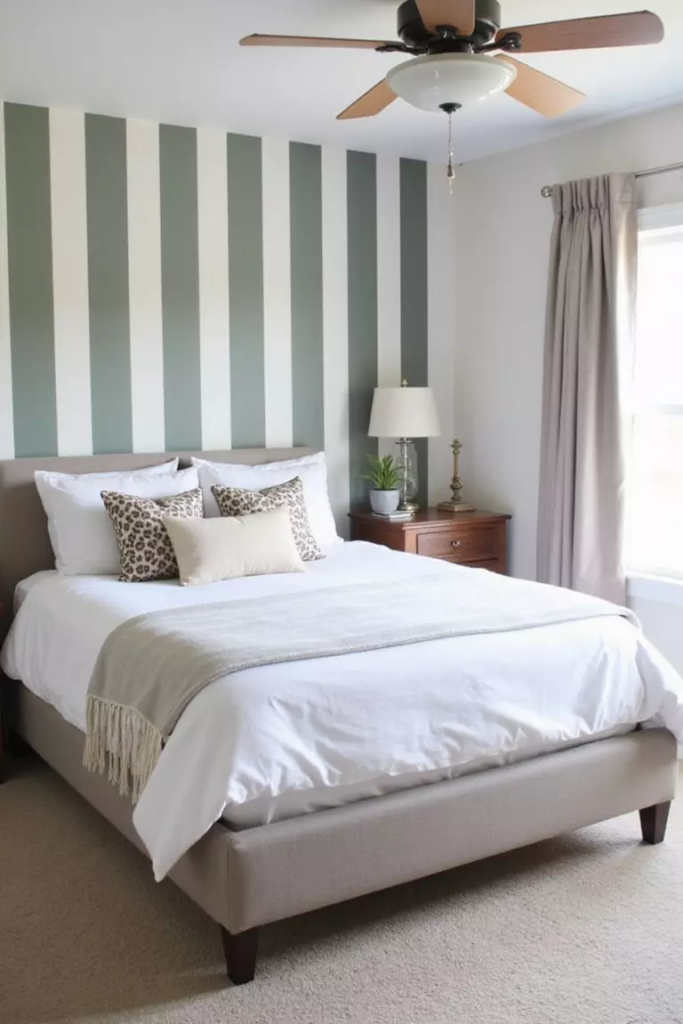
I’ve found that stripes can change how a room feels without requiring major renovations. The direction of the stripes matters more than most people realize.
Vertical stripes naturally make a room seem taller, while horizontal stripes can visually stretch a narrow space and make it feel wider.
The key is keeping the pattern subtle. Soft contrasts work best because bold stripes can overwhelm a compact bedroom.
Pro Tip: Try striped bedding or an area rug if you want the effect without committing to painted walls.
Minimize Furniture
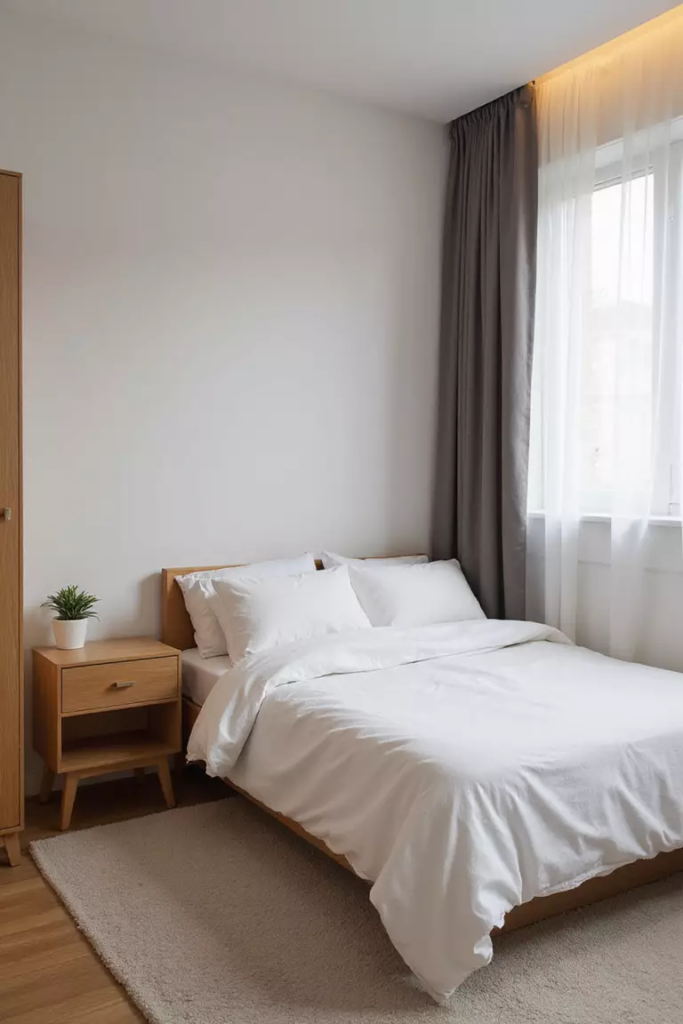
One mistake I often see in small bedrooms is trying to fit too much furniture into the space.
I always evaluate whether each piece is truly necessary. Removing even one oversized item can dramatically improve traffic flow and openness.
A bed, practical storage, and one small accent piece are often enough for a comfortable and functional bedroom.
The more breathing room you create, the larger the room will feel.
Use A Murphy Bed
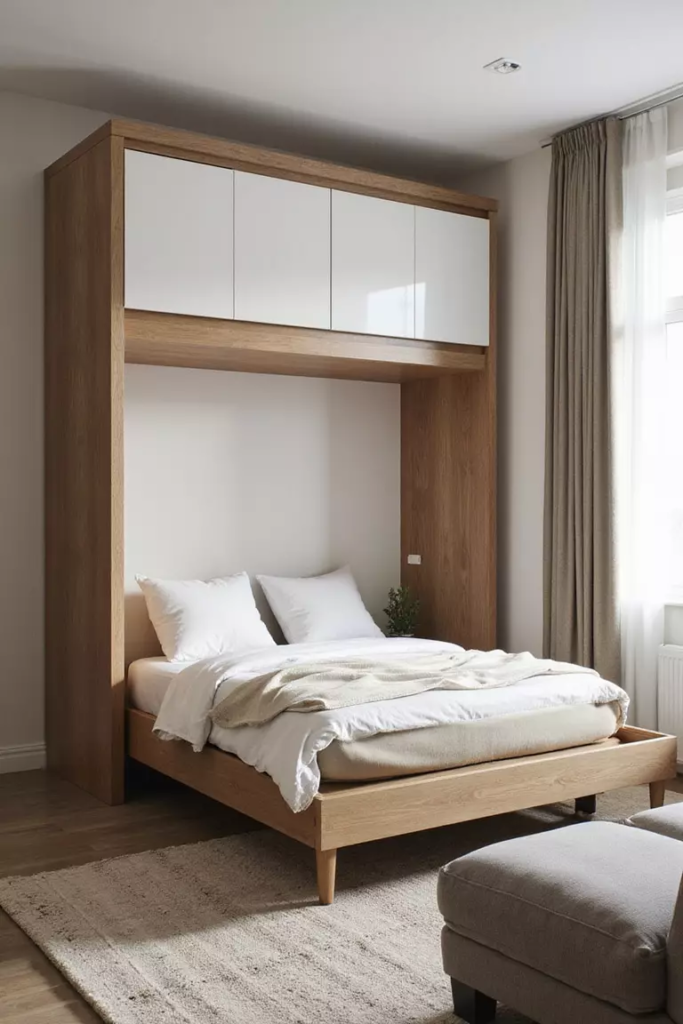
A Murphy bed is one of the smartest space-saving solutions available for extremely small rooms.
When folded away, the bed disappears into the wall, opening valuable floor space throughout the day.
This setup works especially well for studio apartments, guest rooms, or bedrooms that also serve as home offices.
I like this option because it allows one room to serve multiple purposes without feeling crowded.
Choose Multi-Functional Furniture
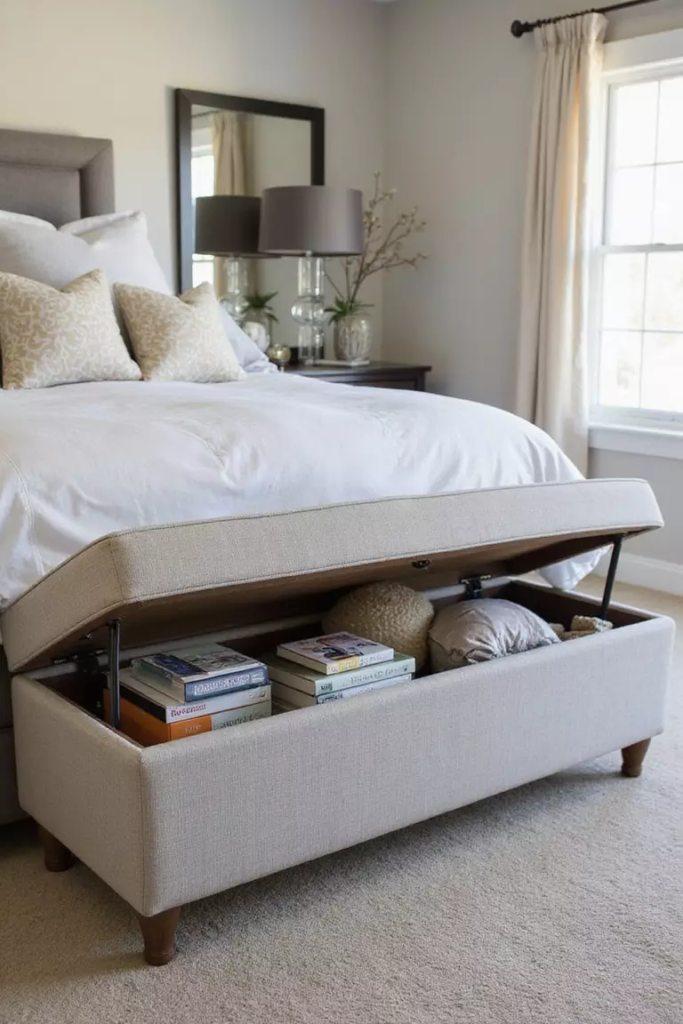
Whenever I shop for furniture for a small bedroom, I look for pieces that can perform more than one job.
Storage ottomans, lift-top benches, nightstands with drawers, and desks that double as vanity tables help reduce the number of separate furniture items needed.
According to furniture industry reports, multifunctional furniture remains one of the fastest-growing categories because homeowners are increasingly maximizing smaller living spaces.
Pro Tip: Before buying new furniture, ask yourself if it can provide both storage and function.
Keep Window Treatments Simple
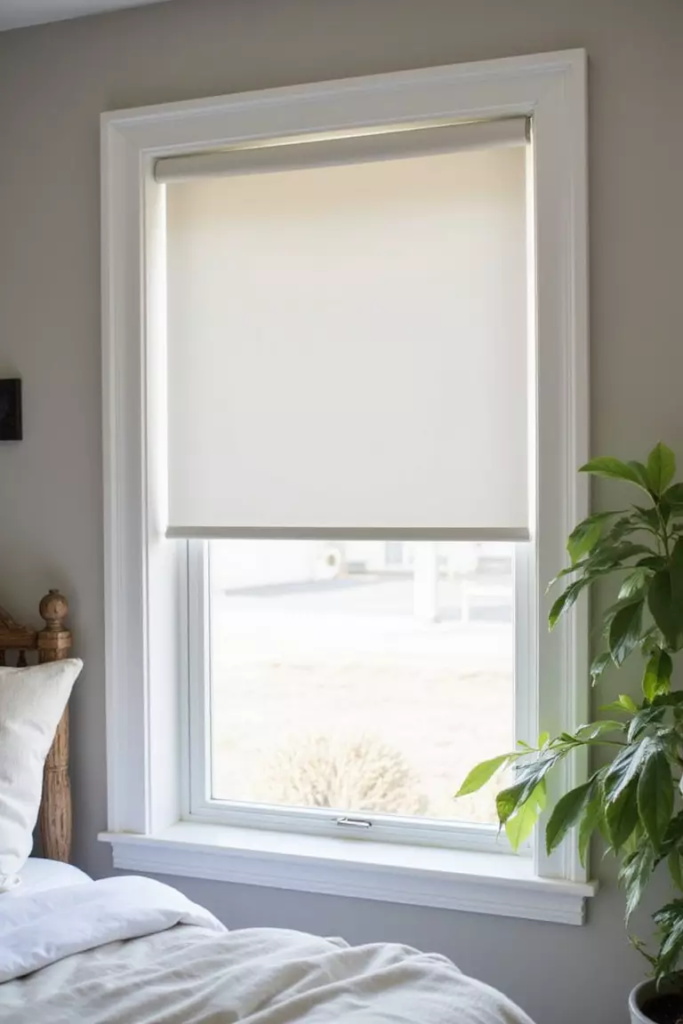
Natural light is one of the easiest ways to make a room feel larger, so I avoid heavy curtains whenever possible.
Lightweight curtains, roller shades, or simple blinds allow sunlight to enter while maintaining privacy.
Complicated window treatments can make a small bedroom appear busy and visually crowded.
A clean, simple window design helps maintain an airy and open atmosphere.
Declutter Regularly
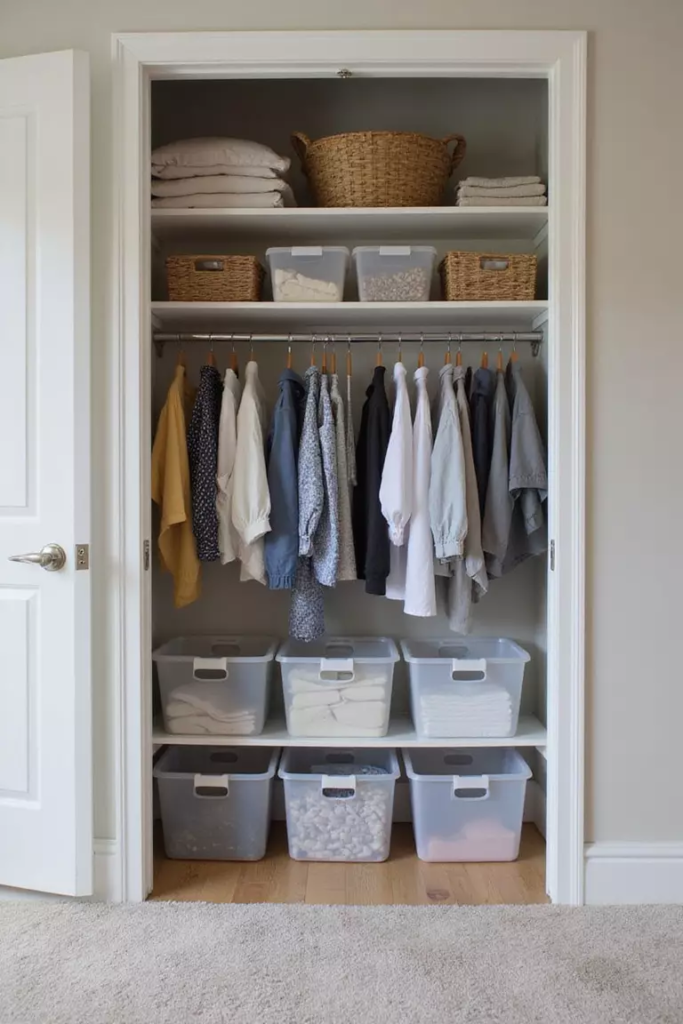
No decorating trick works if clutter takes over the room.
I make it a habit to sort through clothing, accessories, and miscellaneous items every few months. Keeping only what I actually use helps maintain order.
Research consistently shows that organized environments can help reduce stress and improve focus.
Even a few minutes of tidying each day can make a noticeable difference.
Use A Corner Shelf
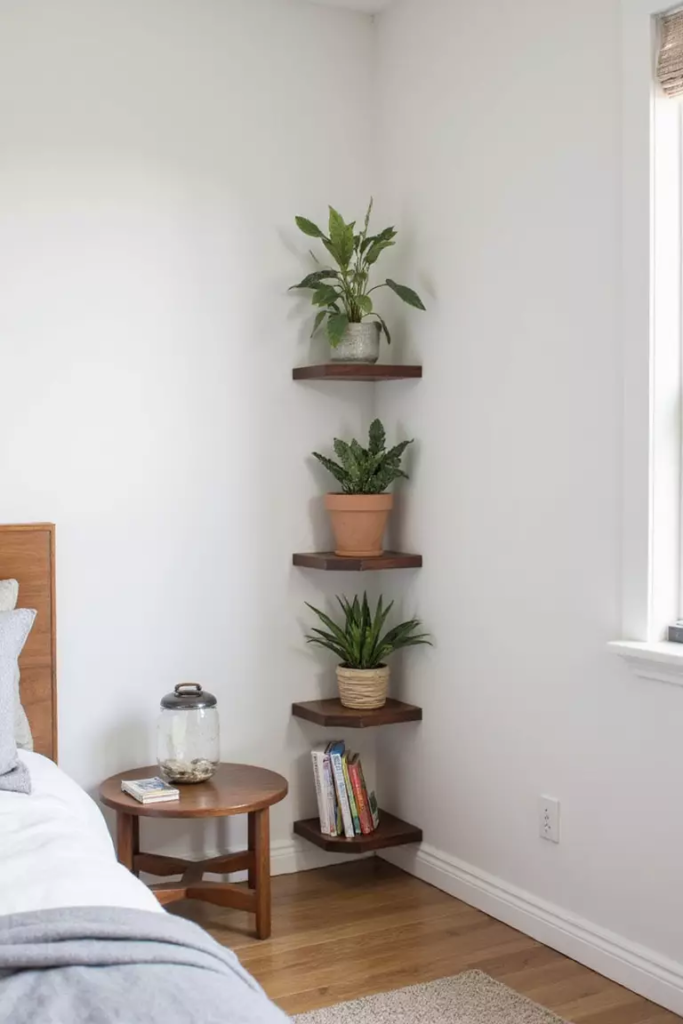
Corners are often forgotten, but they can provide valuable storage in a small bedroom.
I like using corner shelves for books, plants, framed photos, or decorative accents.
Since they fit into otherwise unused areas, they add storage without interfering with movement around the room.
Choose a design that complements the overall style of your bedroom for a cohesive look.
Hang Art Strategically
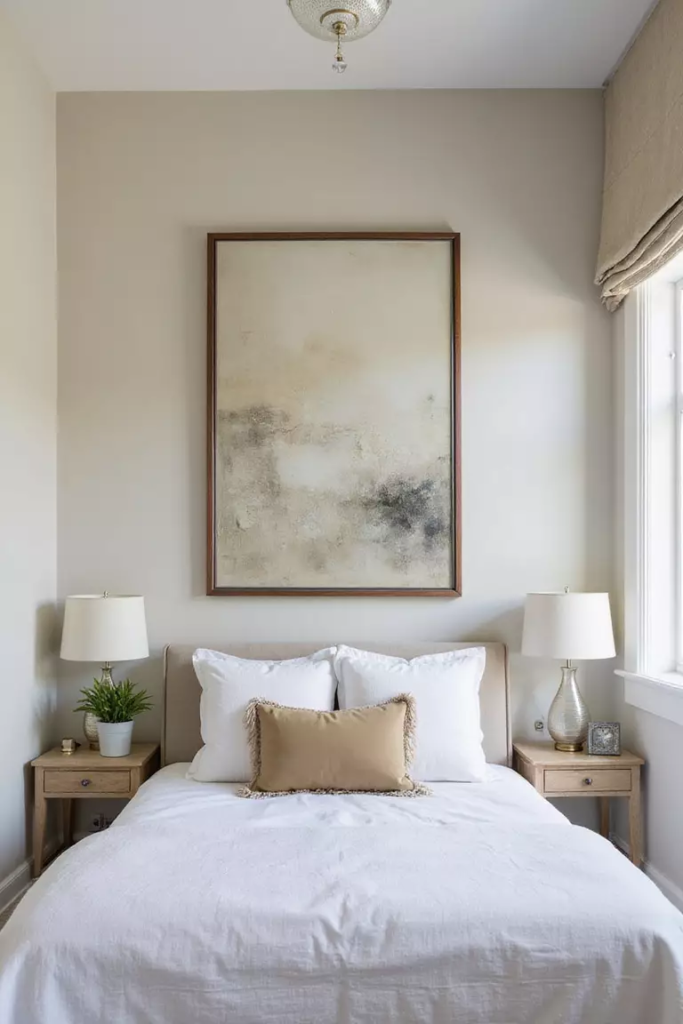
Artwork can make a small bedroom feel stylish without taking up physical space.
Instead of covering walls with many small frames, I usually choose one larger piece that creates a strong focal point.
A single statement artwork helps simplify the visual landscape and prevents walls from looking cluttered.
Hanging artwork slightly higher can also encourage the eye to move upward, making the room feel taller.
Paint The Ceiling
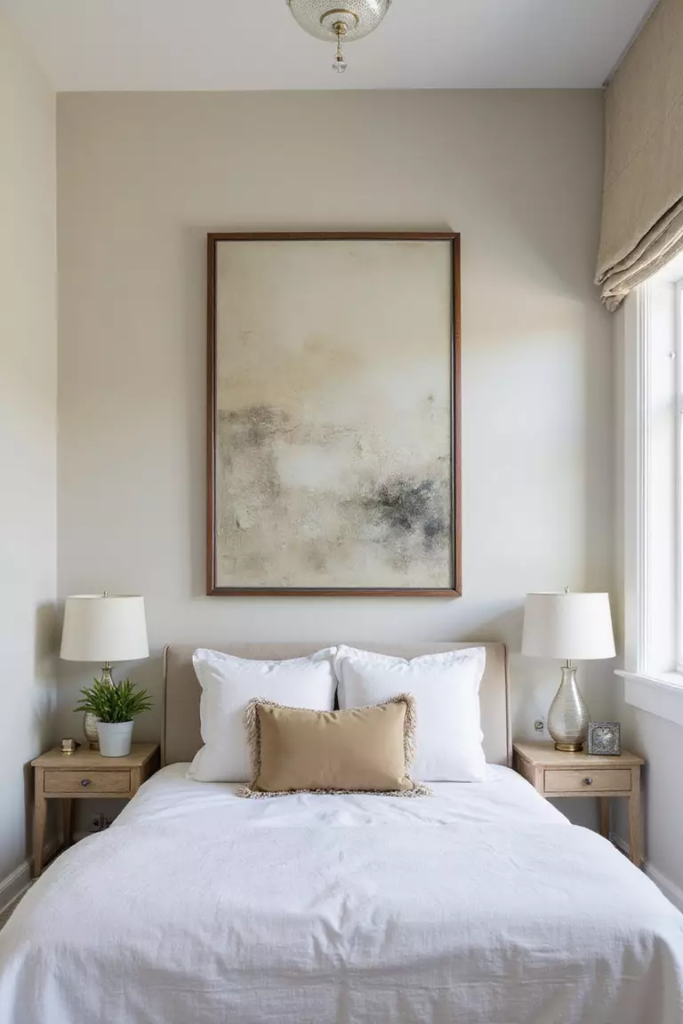
The ceiling is often overlooked, but it can play a major role in how spacious a bedroom feels.
I like using a shade that is slightly lighter than the wall color because it helps create the illusion of height.
Soft whites, pale blues, and gentle neutrals work particularly well for this purpose.
This simple paint adjustment can make a compact room feel noticeably more open.
Let In Natural Light
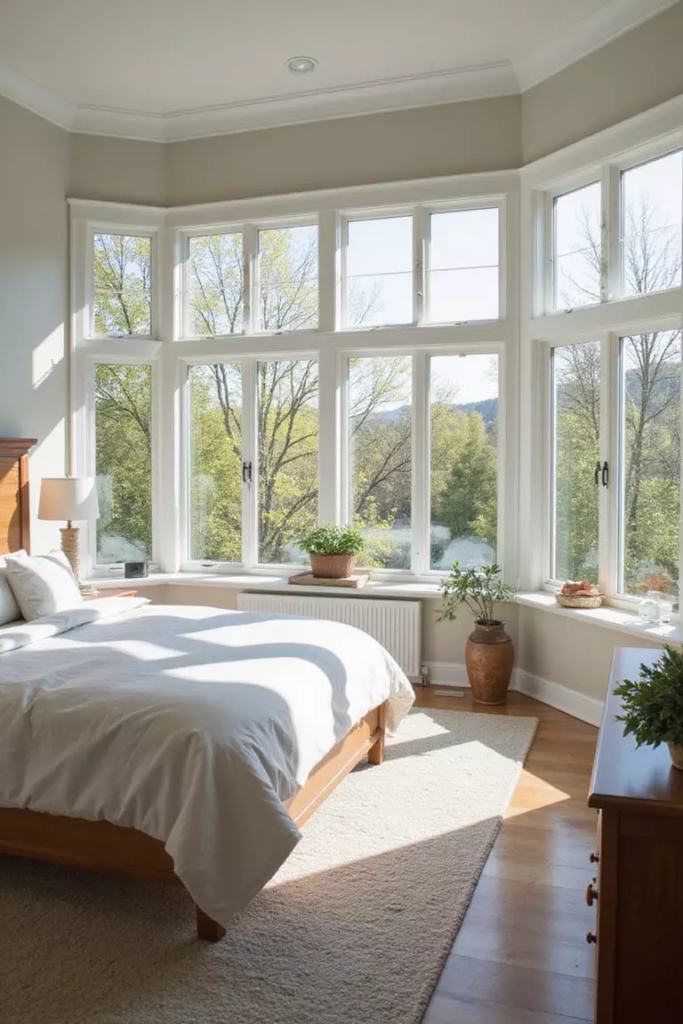
Whenever possible, I try to maximize every bit of natural light available.
Bright sunlight creates depth, improves mood, and visually expands a room. Studies have even linked natural daylight to improved sleep quality and productivity.
Keep window areas clear and avoid blocking light with oversized furniture.
If sunlight is limited, strategically placed mirrors can help distribute available light more effectively.
Read this next: 19 Single Woman Bedroom Ideas
Install Pocket Doors
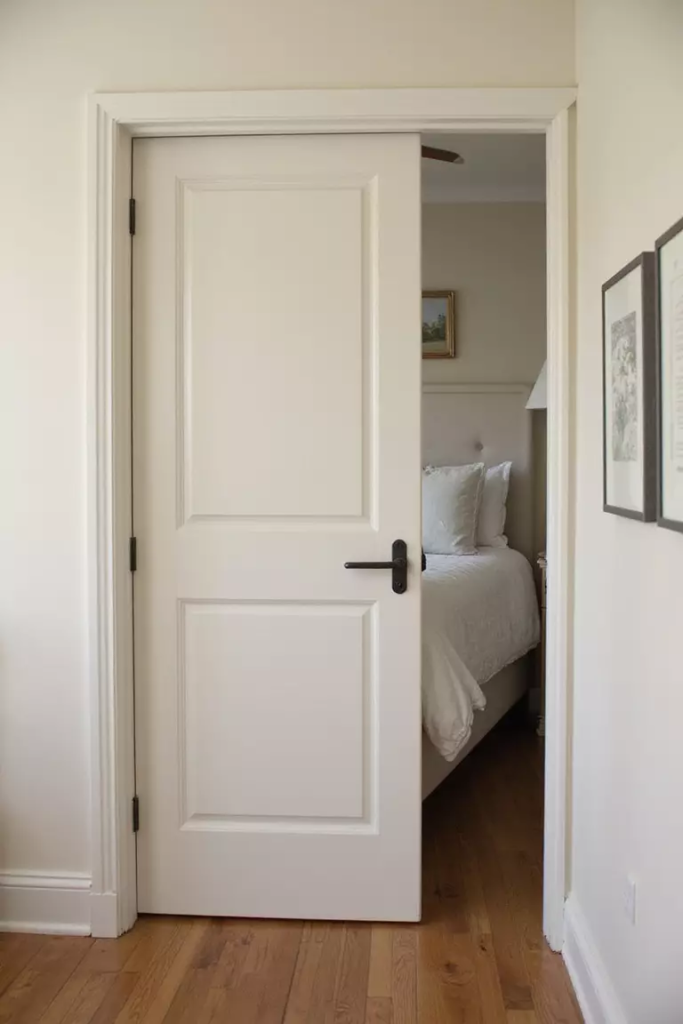
Traditional doors require clearance space every time they open and close.
Pocket doors slide directly into the wall, eliminating the swing area and creating more flexibility for furniture placement.
In a very small bedroom, even a few extra square feet of usable space can make a noticeable difference.
While installation requires some planning, the long-term space savings can be worth the investment.
FAQ’s
What colors make a small bedroom look bigger?
I recommend light shades such as white, cream, soft gray, and pale blue because they reflect more light and create a more open appearance.
How can I add storage to a very small bedroom?
I use under-bed storage, floating shelves, storage headboards, and multifunctional furniture to increase storage without sacrificing floor space.
What is the best furniture for a tiny bedroom?
Furniture with built-in storage or multiple functions works best. Pieces with exposed legs also help make the room feel more spacious.
Conclusion
A small bedroom doesn’t have to feel cramped or limiting. I’ve learned that thoughtful design choices often matter more than the room’s actual size.
By focusing on smart storage, multifunctional furniture, natural light, and clutter-free organization, it’s possible to create a bedroom that feels both comfortable and spacious. Even implementing a few of these ideas can transform a tiny room into a space that feels larger, more functional, and far more enjoyable to spend time in.

2 Comments