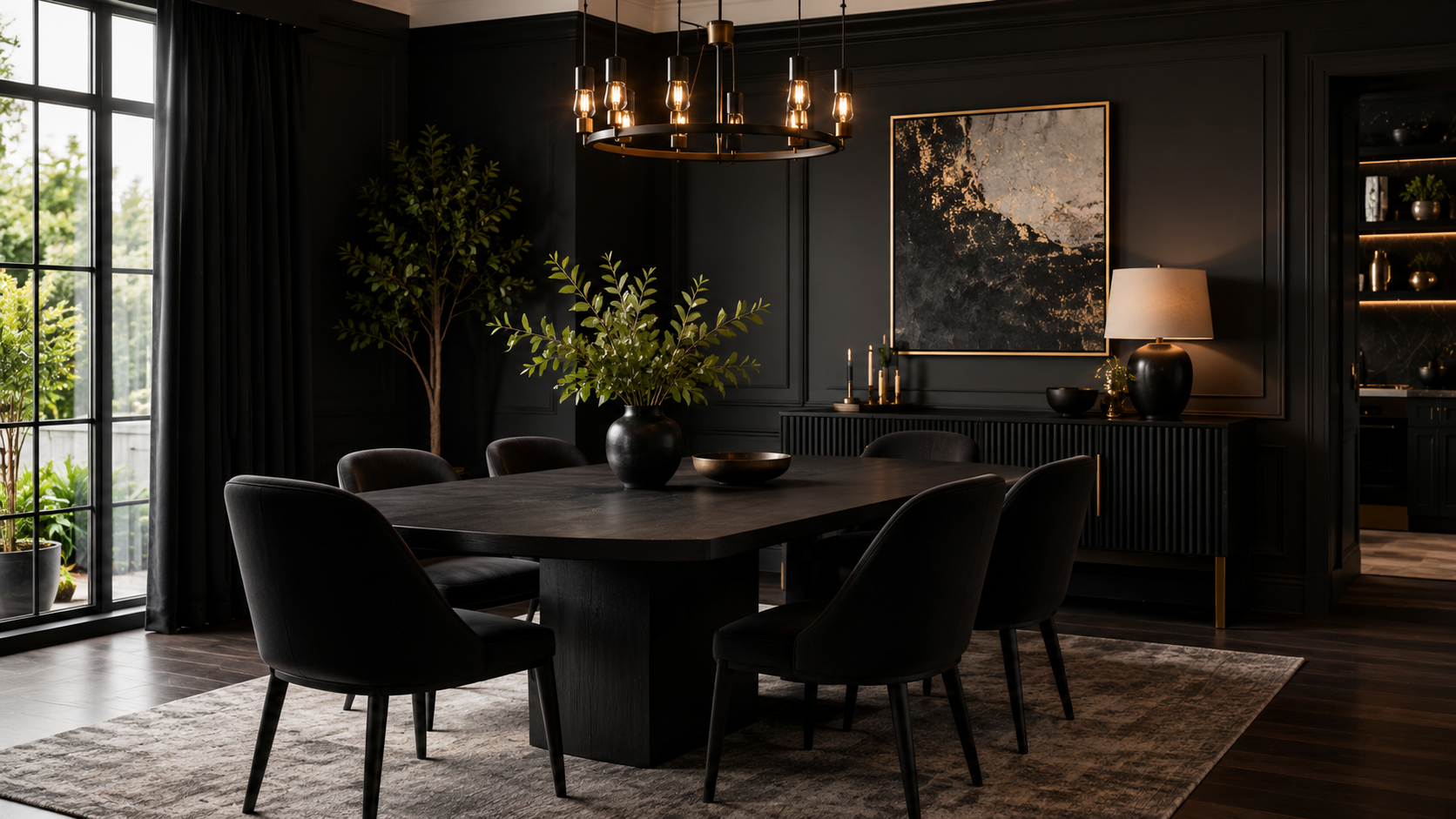
How to Decor Black Dining Room Ideas
I used to think black dining rooms would make a home feel smaller or too dark. After seeing how different finishes, lighting choices, wood tones, and lighter accents work together, I changed my mind. Black can actually make a dining room feel warm, polished, and surprisingly inviting.
For me, the key is balance. I would never treat black as simply a wall color. I look at the entire room—chairs, table, flooring, lighting, artwork, mirrors, and natural light—before deciding how much darkness to introduce.
These 19 black dining room ideas show me that there is more than one way to decorate with dark colors. I can use charcoal instead of pure black, bring in navy or deep green, add black furniture to a light room, or use dark wallpaper for more texture.
I can also soften black with natural wood, greenery, colorful rugs, leather, velvet, white furniture, metallic finishes, or plenty of lighting. For smaller dining areas, using black selectively can create definition without making the space feel cramped.
Save this for later
Table of Contents
The most important lesson I take from these rooms is that lighting and contrast matter. If I combine dark surfaces with warm illumination and a few lighter elements, the dining room can feel cozy rather than gloomy.
Key Takeaways
- I can use charcoal, navy, or forest green if pure black feels too strong.
- Natural wood helps soften an otherwise dark dining room.
- Mirrors can add depth and reflect available light.
- Brass and gold accents work especially well with black.
- Velvet, rugs, greenery, and textured walls prevent a dark room from looking flat.
- In a small dining room, I prefer using black on furniture or selected walls instead of covering everything.
- Warm bulbs are especially useful when working with a dark color palette.
Related article: 25 Fall Living Room Decor Ideas To Cozy Up Your Space in 2026
1 Embrace Formal Charcoal Elegance
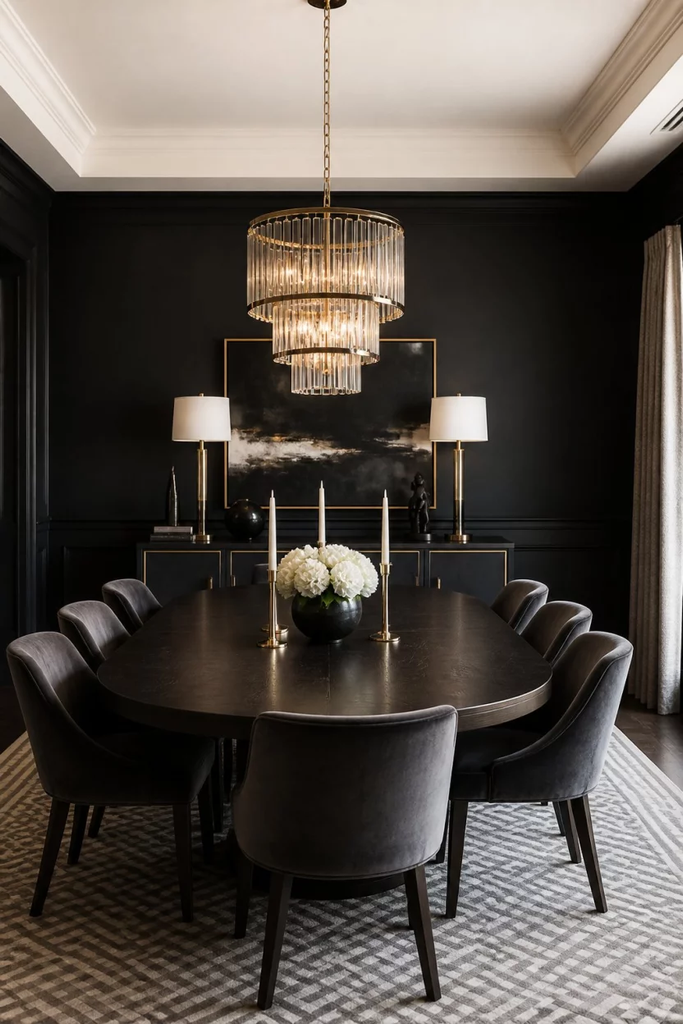
If I want the look of a black dining room without committing to the strongest possible shade, charcoal is one of my favorite starting points.
I would pair charcoal walls with a substantial wood dining table and upholstered gray seating. The combination gives the room visual weight while still leaving enough softness for everyday family meals.
A patterned rug underneath the table can break up the darker surfaces. I also like using different textures rather than relying on several similar shades of black.
Pro Tip: I would test a charcoal paint sample on more than one wall before painting the whole room. Natural and artificial light can make the same dark shade look noticeably different throughout the day.
2 Pop Of Deep Teal And Abstract Art
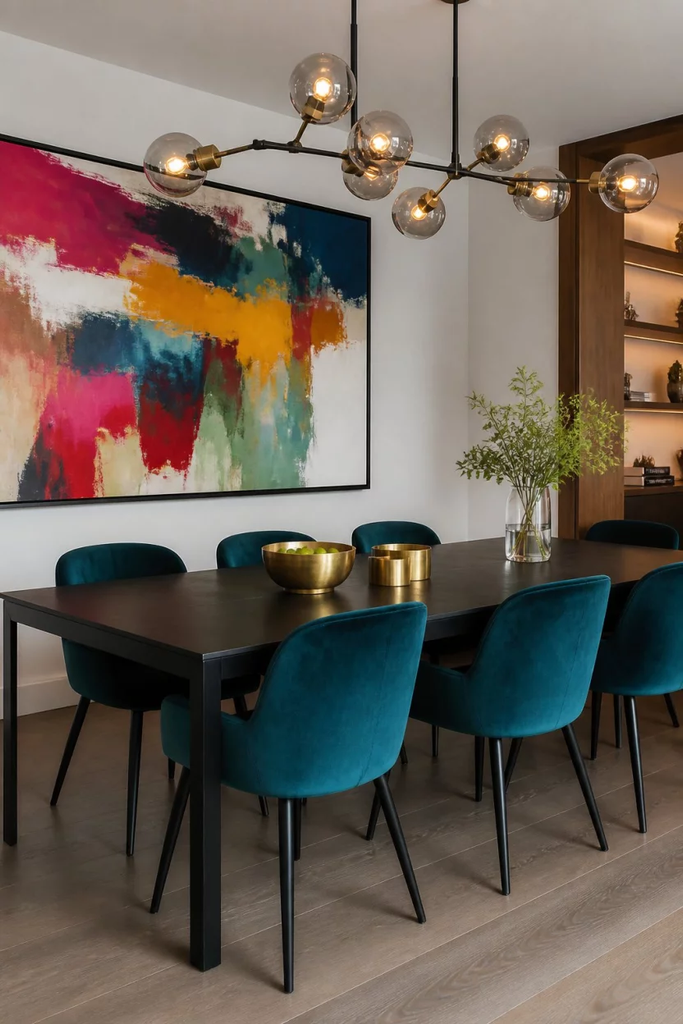
Black becomes much more interesting when I place a richer color next to it. Deep teal is especially useful because it has enough depth to complement black without creating an overly bright contrast.
I would use teal upholstered dining chairs around a black table and then add colorful abstract artwork. The artwork gives the eye somewhere to travel and keeps the space from becoming visually heavy.
Warm pendant or chandelier lighting is important here. I prefer warmer light in dining rooms because it makes dark finishes and saturated colors feel more comfortable during evening meals.
Pro Tip: If I am unsure about buying colorful chairs, I can introduce teal through cushions, artwork, or a rug first.
3 Modern Open Concept Grid Mirrors
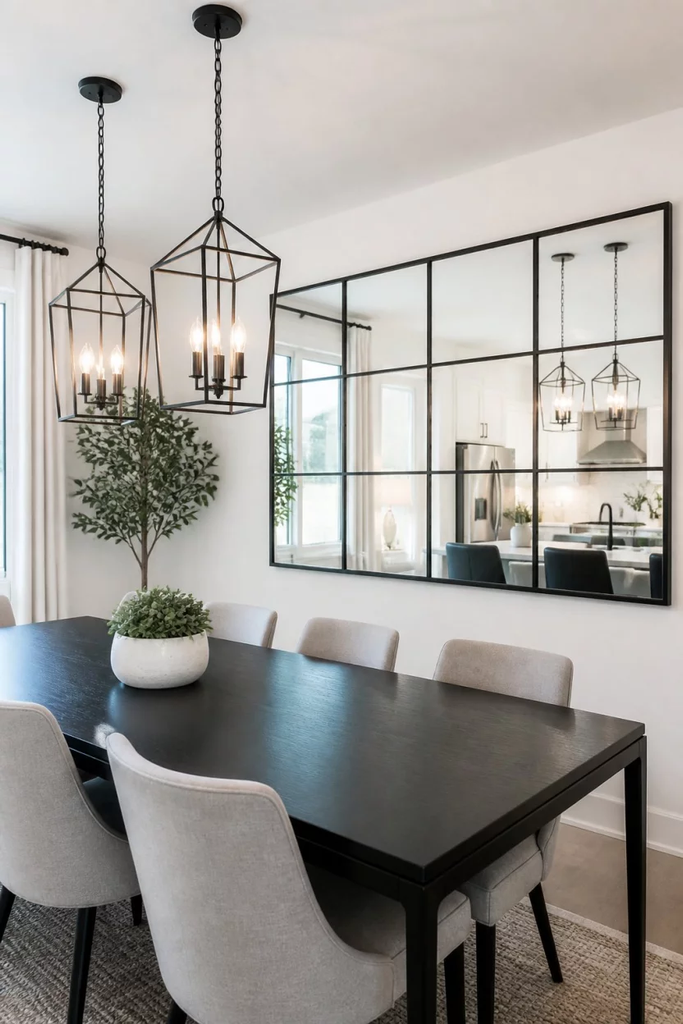
I don’t need black walls to create a dark dining room aesthetic. Sometimes a black dining table, chairs, lighting, and wall accessories are enough.
In an open-plan home, I like combining a dark table with lighter chairs. This keeps the dining area connected to the brighter kitchen or living space instead of creating a visual wall between the zones.
A large grid-style mirror can also help. I find that mirrors are particularly useful in dining areas because they reflect light and make the room feel more layered.
Geometric lighting can repeat the black accents and give the whole area a more intentional appearance.
4 Go For The Gold At The Table
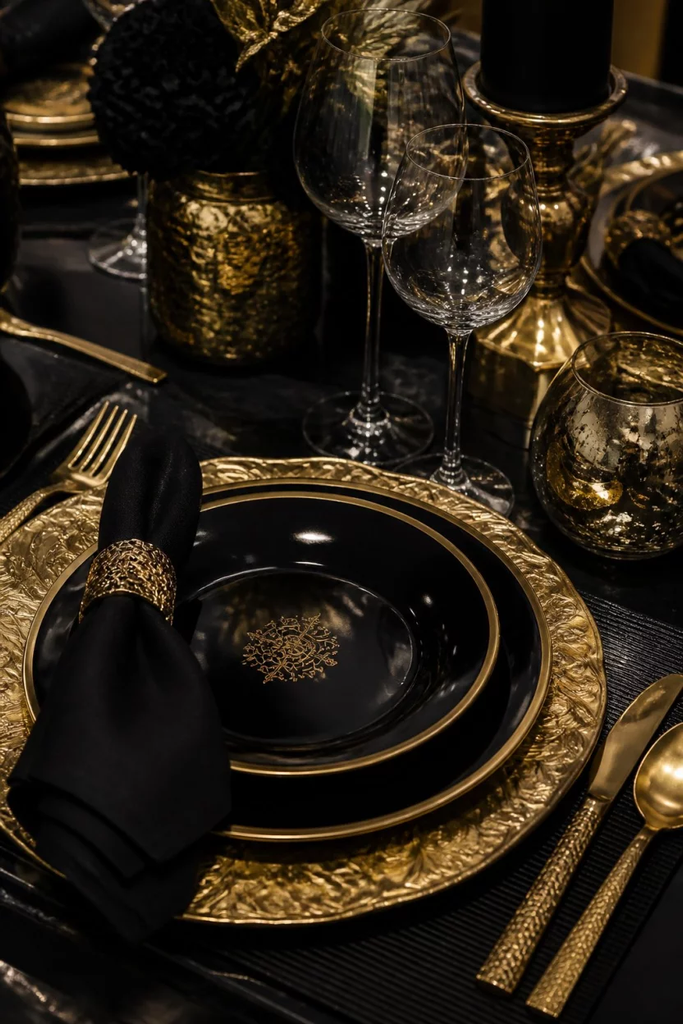
Black and gold are an easy combination when I want my dining table to feel dressed up.
I would start with black dinnerware, dark napkins, or a black table runner and then add gold-toned chargers, flatware, candleholders, or other small accents. I don’t need every item to be metallic.
The trick is restraint. Too much gold can quickly make the table look busy, while a few well-placed metallic details can create a more refined setting.
I especially like this approach for dinner parties because I can change the accessories without changing the actual dining room.
5 Dramatic Paneled Walls And Greenery
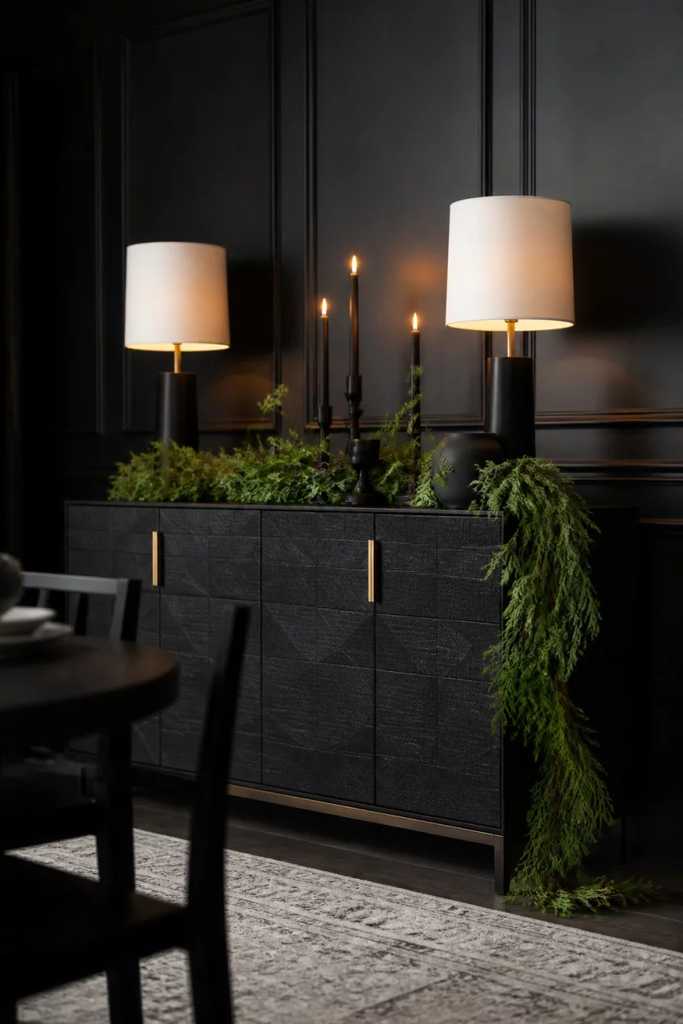
If a plain black wall feels too simple to me, I would consider wall paneling. The raised sections create shadows and give the dark surface more character.
A black paneled wall can look especially good behind a sideboard or buffet. I would decorate that area with lamps, candles, framed pieces, or seasonal accessories.
Greenery is another simple way I like to soften dark interiors. A long leafy arrangement or a few potted plants can bring natural color into the room without competing with the black background.
Pro Tip: I would keep the greenery slightly loose and natural rather than arranging every leaf perfectly. The organic shapes create a nice contrast against structured wall panels.
6 Crystal Brilliance In Dark Spaces
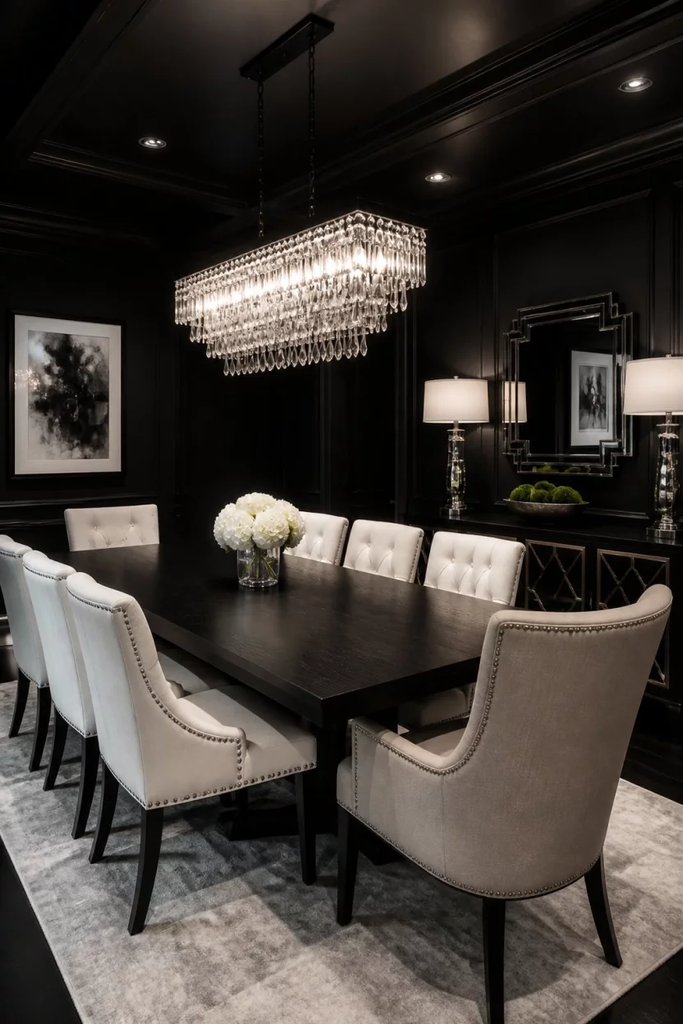
For a dramatic dining room, I can take the dark palette much further by using black on both the walls and ceiling.
This approach works best for me when there is a strong lighting feature to break up the darkness. A crystal chandelier can provide sparkle and reflect light across the room.
I would also introduce lighter seating, such as white or cream upholstered chairs. The contrast gives the room a clear focal point instead of allowing all the dark surfaces to blend together.
Because this is such a bold design, I would pay close attention to the room’s existing natural light before committing to it.
7 Cozy Eclectic Mix And Mismatch
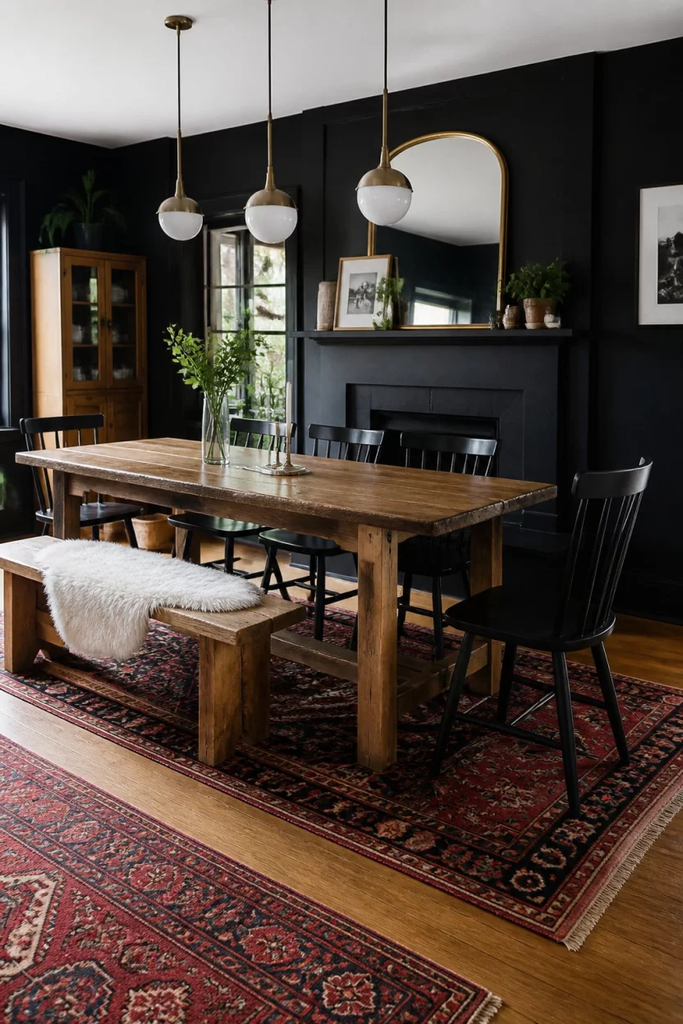
Black doesn’t have to mean formal. I can make a dark dining room feel relaxed by mixing furniture styles and materials.
A rustic wood table works beautifully with mismatched black chairs because the natural grain breaks up the darker palette. I also like adding a bench for a more casual feel.
Soft throws and colorful rugs can make the space feel comfortable rather than serious. This is the kind of dining room I would choose for a home where meals often turn into long conversations.
Pro Tip: When mixing chairs, I like keeping one element consistent—such as color, height, or material—so the room still looks connected rather than random.
8 Moody Waves And Emerald Velvet
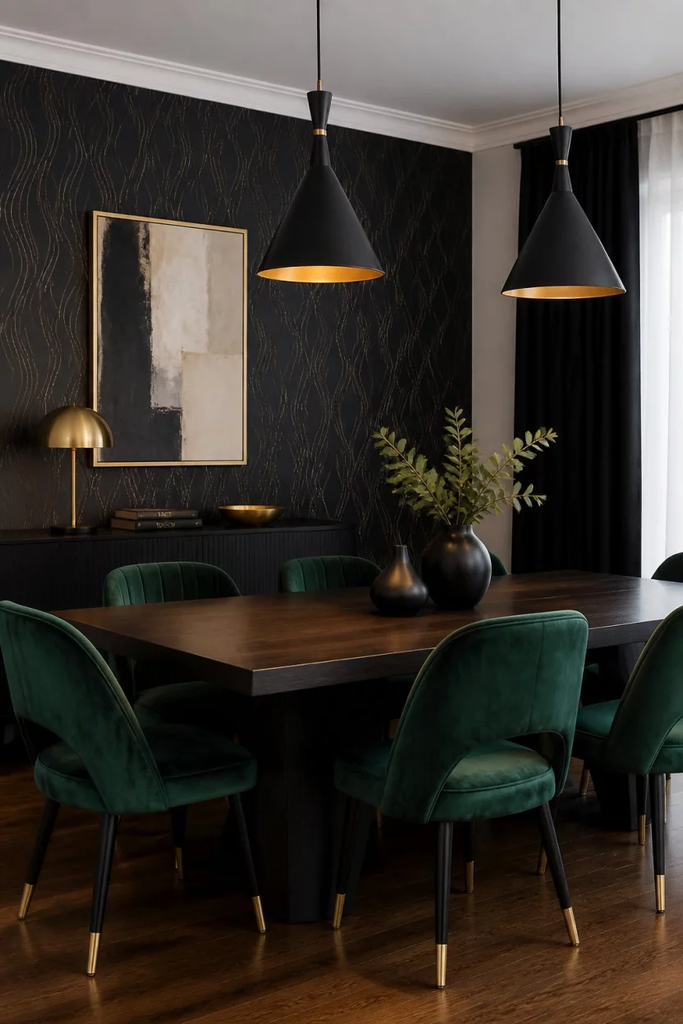
Wallpaper gives me another way to introduce black without relying on a single solid paint color.
A dark wavy pattern adds movement to the walls, while emerald velvet dining chairs bring in a rich accent color. The combination feels dramatic but still warm.
I would use focused pendant lights above the dining table so the eating area remains bright while the surrounding walls stay moodier.
Velvet also adds useful texture. In a room with several dark surfaces, tactile materials can keep the design from appearing flat.
9 Autumn Glow With Dark Furniture
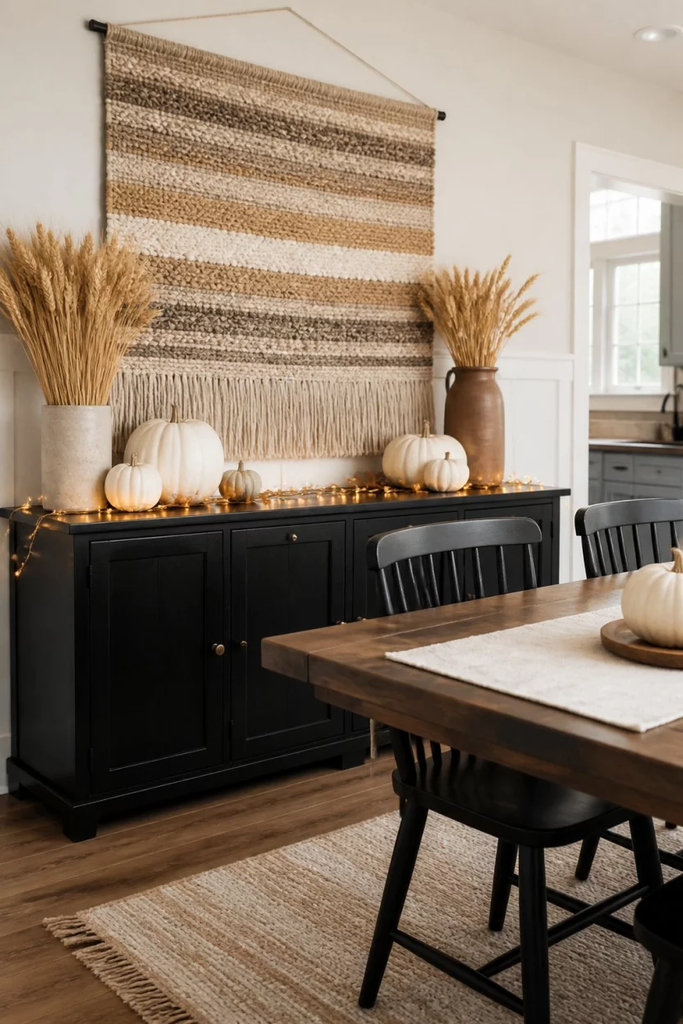
I don’t think seasonal dining decor needs to be limited to light or neutral furniture. A black buffet can become an excellent background for autumn accessories.
I would place pale pumpkins, dried wheat, branches, or other natural seasonal pieces against the dark furniture. The contrast makes these lighter decorations much more noticeable.
String lights can add another layer of warmth, while a woven wall piece can bring in natural texture.
The advantage of this approach is that I can keep the furniture year-round and simply change the accessories as the seasons change.
10 Navy Blue And Warm Leather
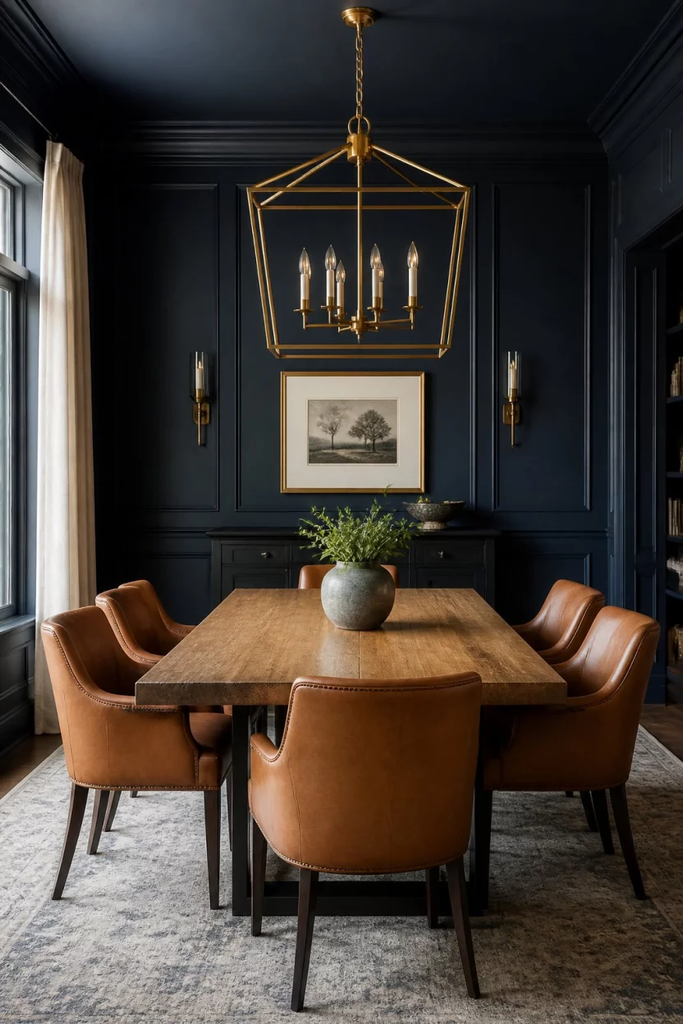
Navy is one of my favorite alternatives when I want the depth of black with a little more color.
Deep navy walls work particularly well with warm wood and caramel-colored leather. The warmer materials stop the room from feeling overly cool.
I would finish the look with brass lighting or hardware. Brass introduces a warm metallic note that connects nicely with both navy and leather.
This combination is also practical because natural wood and leather tend to hide everyday wear better than some very pale dining finishes.
Also read: 15 Hot Pink Bedroom Ideas for A Bold and Fun Look
11 Grand Paneled Cages Of Light
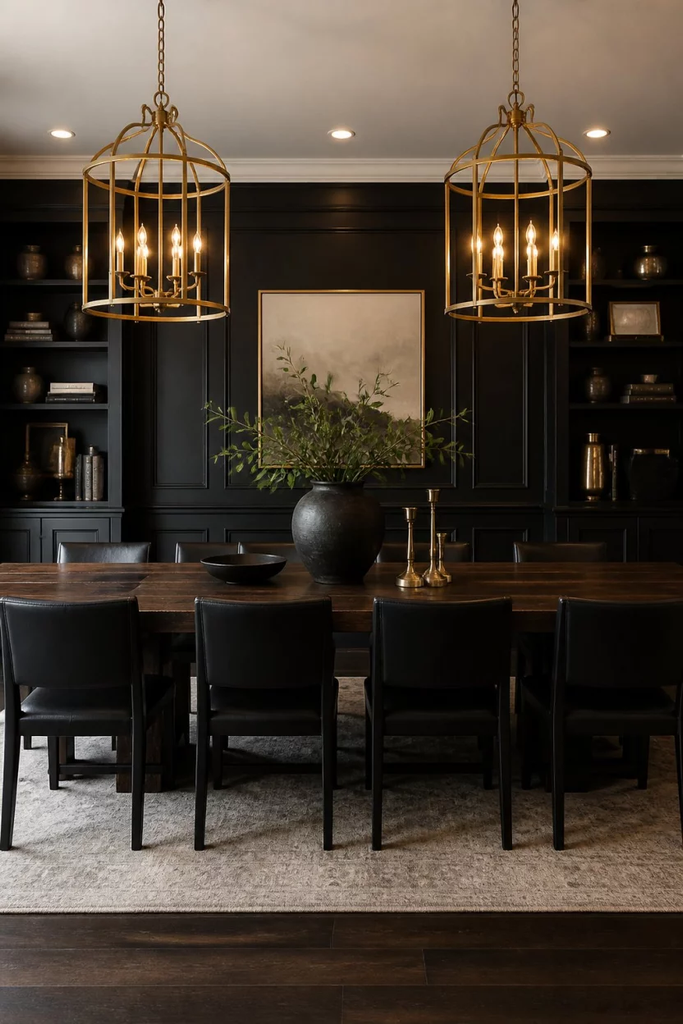
A large dining room gives me more freedom to use dramatic lighting. Instead of relying on one central fixture, I can use two matching chandeliers over a long table.
Gold or brass cage-style fixtures stand out especially well against black paneled walls. They also add visual height by drawing attention toward the ceiling.
For me, this works best when the table and chairs have fairly simple shapes. The wall treatment and lighting already provide plenty of detail.
If the dining room has a high ceiling, I would make sure the fixtures are appropriately scaled so they don’t disappear in the larger space.
12 Mid-Century Nook With Pink Accents
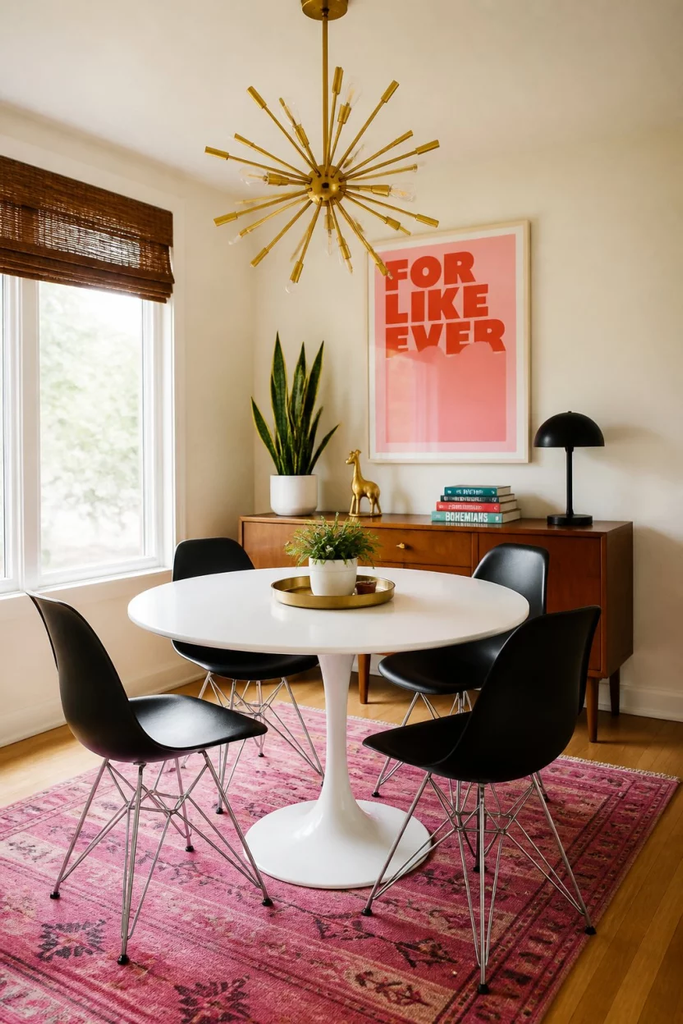
A small dining area can still handle black. In fact, I often find that a few dark pieces help define a compact dining nook.
I would pair black dining chairs with a light-colored table to keep the furniture arrangement visually balanced. A colorful pink rug can then add personality without requiring permanent changes to the walls.
A sculptural mid-century light fixture can complete the look and give the small area a clear design identity.
Pro Tip: In a compact dining space, I prefer furniture with exposed legs because more visible floor area can make the arrangement feel less crowded.
13 Live-Edge Wood And Mixed Seating
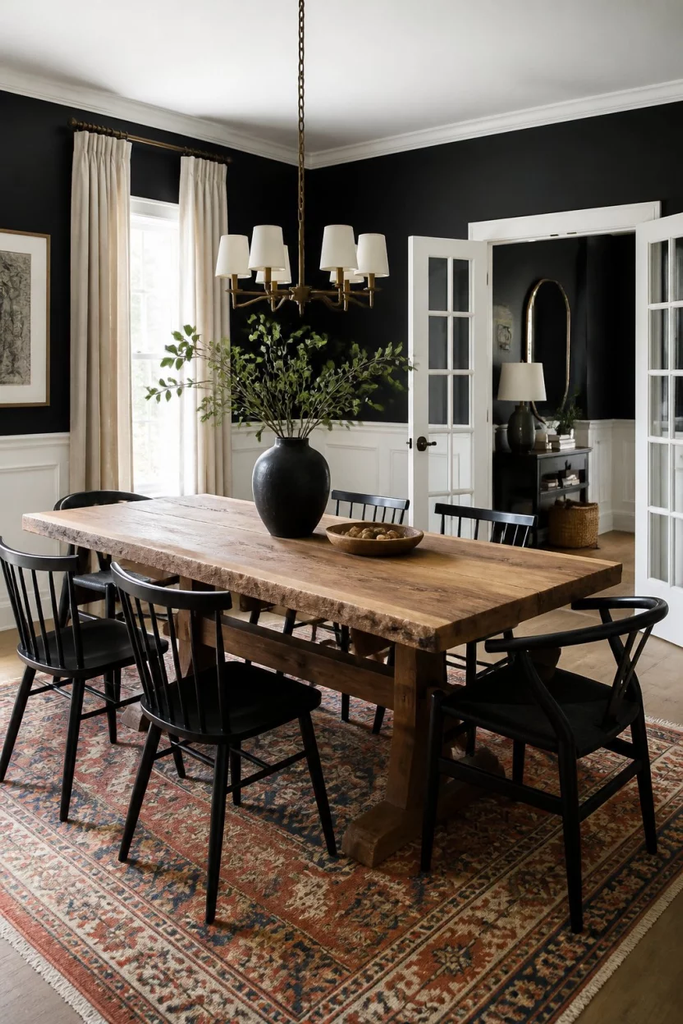
Natural wood is one of the easiest materials I use to soften a dark dining room.
A live-edge table introduces irregular curves and visible wood grain, which creates a nice contrast with black chairs and darker walls.
I also like mixing seating styles when the table has a strong natural character. It makes the room feel collected over time instead of looking like everything was purchased as one matching set.
White trim around doors and windows can provide another useful break from the dark palette and help define the room’s architectural details.
14 Deep Green Walls And Spindle Backs
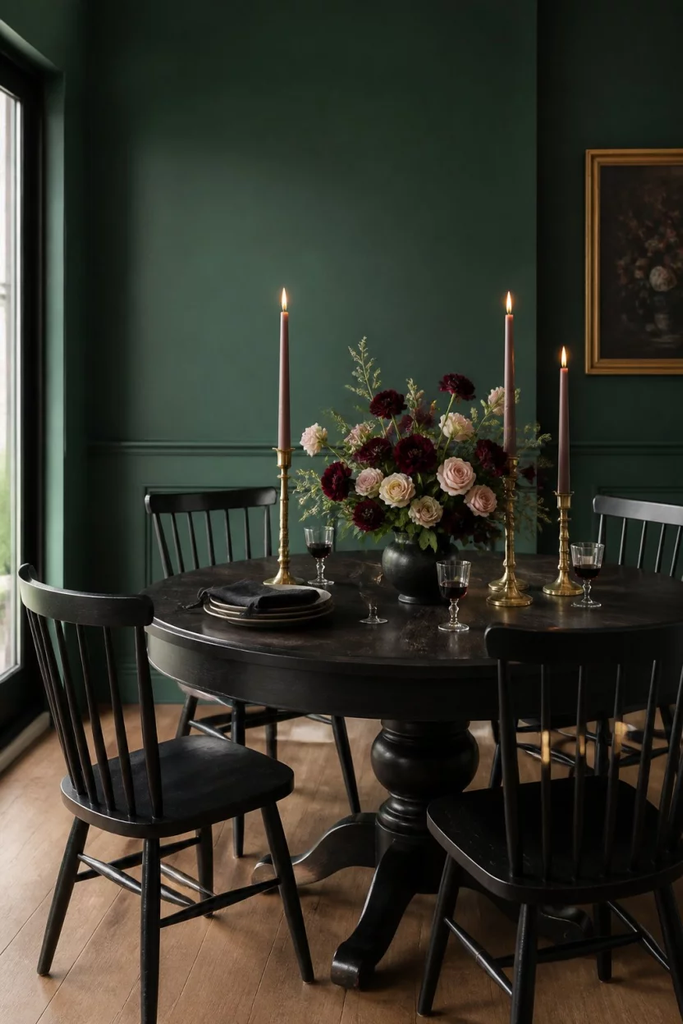
When I want a classic, moody dining room but don’t want black walls, deep forest green is a strong alternative.
A round dark table makes the dining arrangement feel intimate because everyone can see each other more easily. Black spindle-back chairs add a traditional detail without making the room look old-fashioned.
I would bring in brass candleholders and fresh flowers to add warmth and color.
This approach is particularly appealing to me for homes with traditional woodwork because deep green naturally works with many warm wood finishes.
15 Bold Dark Floral Statement Wallpaper
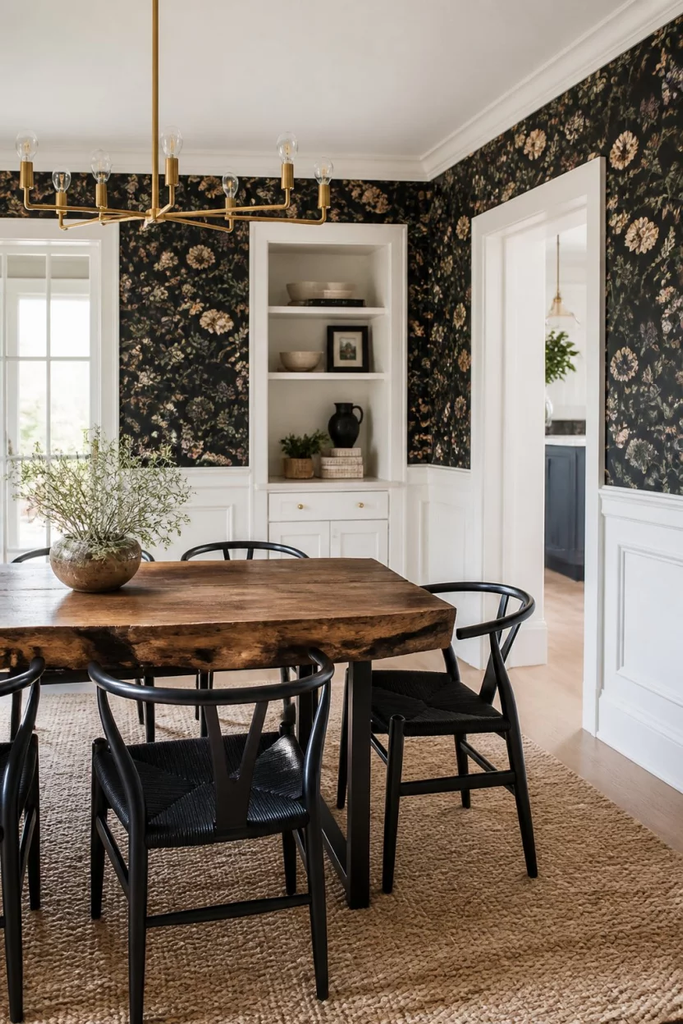
I can also use a dark floral wallpaper to create a dramatic focal wall.
The botanical pattern adds movement and softer shapes to an otherwise dark dining room. I would balance it with simple black chairs and a natural wood table.
A gold linear chandelier can provide a modern contrast against the floral design. This keeps the room from leaning too heavily toward either traditional or contemporary styling.
Pro Tip: If I am worried about committing to wallpaper, I would use it on one feature wall first rather than covering the entire dining room.
16 Festive Hutches And Fall Decor
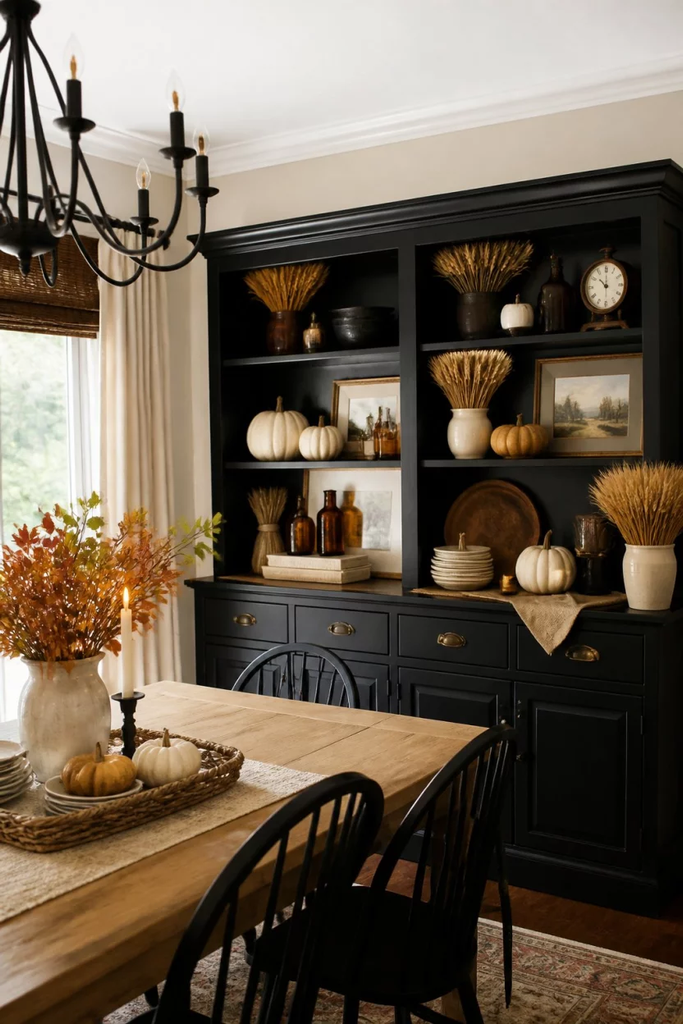
A large black hutch can become both storage and decoration in a dining room.
I like using dark shelving or cabinet interiors to display lighter dishes, glassware, ceramics, dried branches, and seasonal decorations. The darker background makes individual pieces easier to notice.
To prevent the furniture from overpowering the room, I would pair it with a lighter wood dining table and keep the surrounding walls relatively simple.
For a fall or Thanksgiving setting, natural wheat, warm metals, and neutral ceramics can create a welcoming table without requiring a complete seasonal redesign.
17 Minimalist Black Contemporary Lines
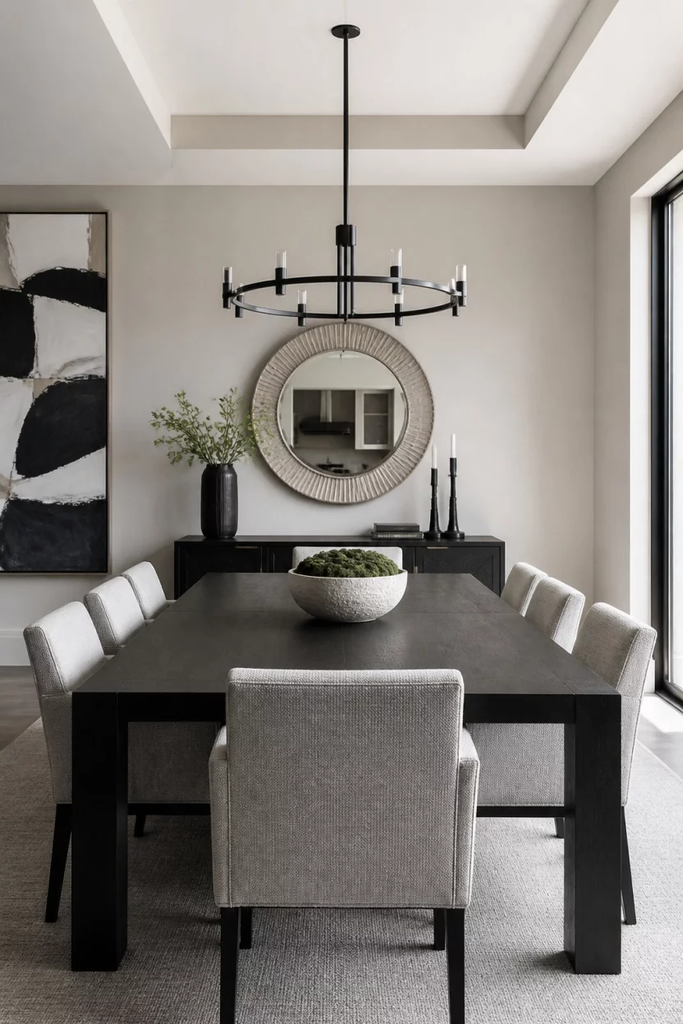
Black works extremely well with a minimalist approach because the color itself creates visual impact.
I would use a long dark dining table with light gray chairs and keep the rest of the room relatively uncluttered.
Rather than filling every wall, I prefer choosing one distinctive artwork piece and perhaps one large textured mirror. This gives the room personality while preserving the clean look.
Natural light is especially helpful here. It creates contrast across the dark furniture and keeps the minimalist space from appearing flat.
18 Airy Wallpaper And Organic Bases
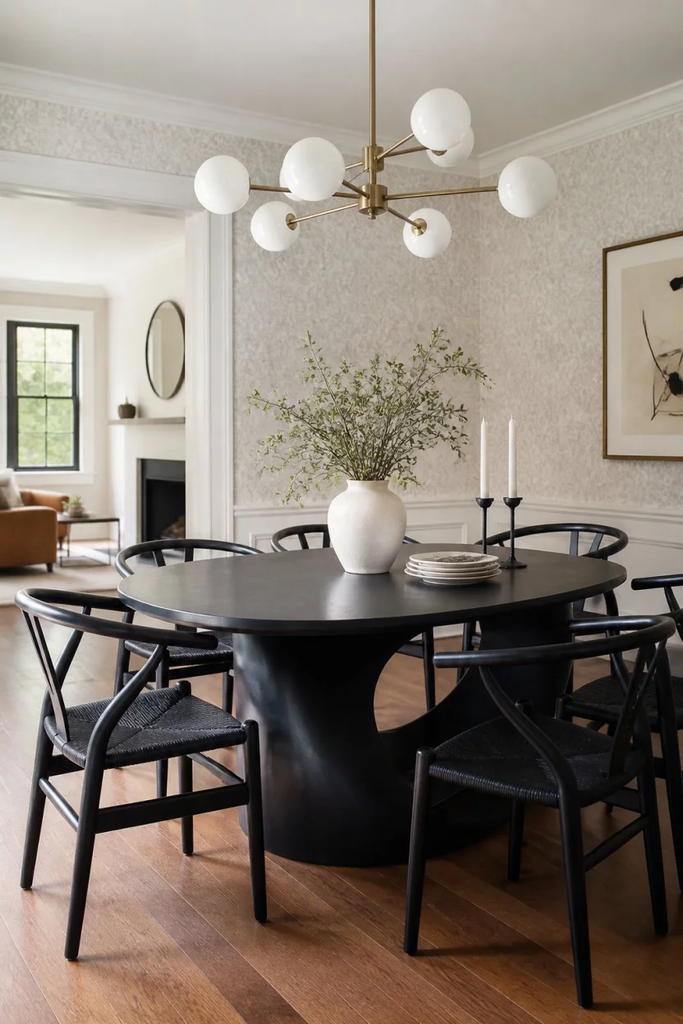
Sometimes I want black furniture to stand out without making the entire dining room dark.
In that situation, I would use a light patterned wallpaper or pale walls as the background. A black dining table with an unusual sculptural base can then become the main focal point.
Black wishbone-style chairs reinforce the look while maintaining an open visual feel.
A rounded globe chandelier can soften the sharper lines of the furniture and add another light-colored shape above the table.
This is one of the easiest approaches for someone who loves black furniture but still wants an airy dining room.
Read this next: 19 Summer Bedroom Ideas for Your Breezy Escape
19 Glossy Blacks And Candlestick Drama
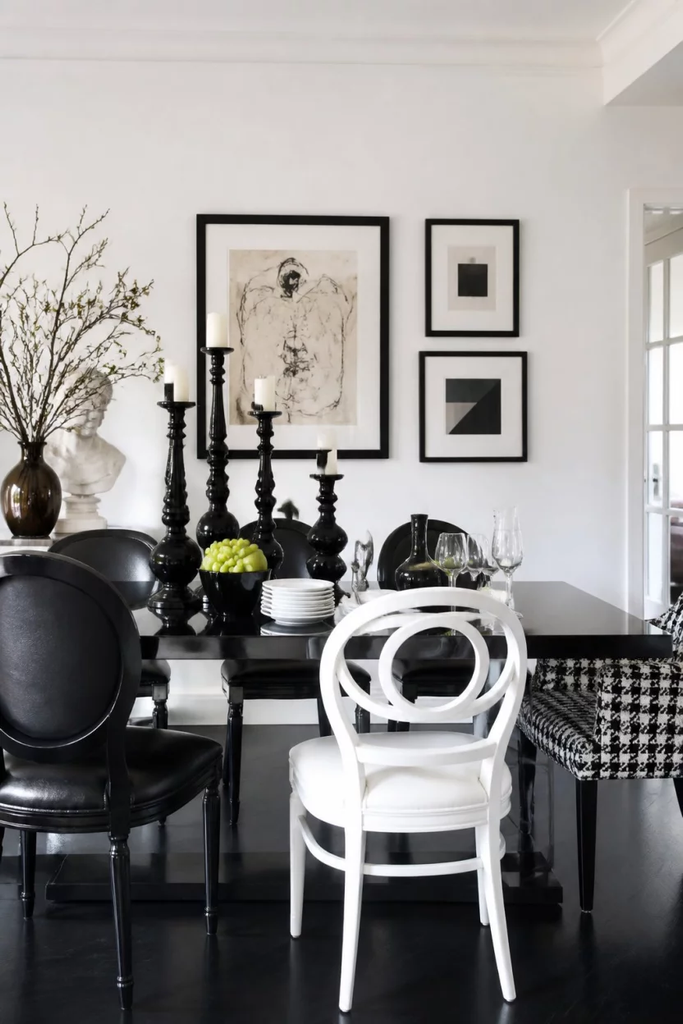
A glossy black dining table gives me something a matte finish cannot: reflection. The surface can bounce light around the room and make the dark furniture feel more dynamic.
I would mix black and white chairs rather than matching every seat. This creates an eclectic appearance while keeping the classic black-and-white palette intact.
Tall candlesticks can add height to the table arrangement and create a warmer atmosphere during dinner.
If I use a glossy table, I would keep the rest of the room from becoming too reflective. Combining shiny furniture with softer textiles and natural materials creates a more comfortable balance.
How To Make A Black Dining Room Feel Warm
I have found that the biggest mistake with a dark dining room is using too many cold, flat finishes at once. Black looks much more inviting when I mix it with warm materials and different textures.
I like adding natural wood through the dining table, flooring, shelves, or sideboards. Wood grain gives the room a softer feel and prevents the black from becoming visually overwhelming.
Lighting also makes a major difference. I prefer warm-white bulbs in dining areas, especially for evening meals. Table lamps, wall sconces, pendant lights, and candles can all add small pools of warmth.
I also use lighter fabrics, greenery, artwork, and rugs to create contrast. These details don’t have to be expensive; even a cream runner or a simple leafy arrangement can noticeably change how the room feels.
Pro Tip: Before choosing your final black paint, test a sample on the actual dining room wall and look at it in both daylight and evening light. Dark colors can appear very different depending on the room’s lighting.
How To Choose The Right Black For Your Dining Room
Not every black paint looks the same. Some blacks have blue or gray undertones, while others have warmer brown or charcoal undertones. I always consider the existing colors in my dining room before choosing one.
If my room has cool gray flooring or furniture, I may prefer a cooler black or charcoal shade. If I have warm wood, brass, beige, or cream nearby, a softer black with warm undertones can create a more connected look.
I also think about the size and natural light of the room. A dining room with large windows can usually handle more dark surfaces, while a small room with limited daylight may benefit from using black selectively.
For a less permanent approach, I can introduce black through furniture, lighting, artwork, curtains, or a single accent wall. This lets me experiment with the trend without committing to a completely dark room.
Pro Tip: I recommend viewing a paint sample beside your dining table, flooring, and trim rather than looking at the color by itself. The surrounding finishes can change how the black appears.
Frequently Asked Questions
1. Is black a good color for a dining room?
Yes. I find black can make a dining room feel cozy, elegant, and dramatic when balanced with good lighting and lighter accents.
2. How can I make a black dining room feel brighter?
I recommend adding mirrors, light-colored chairs, natural wood, warm lighting, and metallic accents. These elements help break up the darker surfaces.
3. What colors go well with a black dining room?
I like pairing black with white, cream, natural wood, emerald green, navy, teal, brass, and warm leather. The right combination depends on the style and mood I want.
Conclusion
Black dining room ideas can work in many different homes, from traditional spaces with paneled walls to small modern dining nooks. I don’t think there is one correct way to use dark colors.
For my own design approach, I would start with the room’s natural light and then decide where black makes the most sense. It might be the walls, dining table, chairs, cabinetry, wallpaper, or simply a few accessories.
The best results usually come from contrast. I can pair black with warm wood, creamy upholstery, greenery, colorful artwork, brass, leather, or soft textiles to give the room depth and personality.
If I am nervous about going completely dark, I would start small. A black dining table or sideboard can give me the look I want without requiring a major renovation.


One Comment