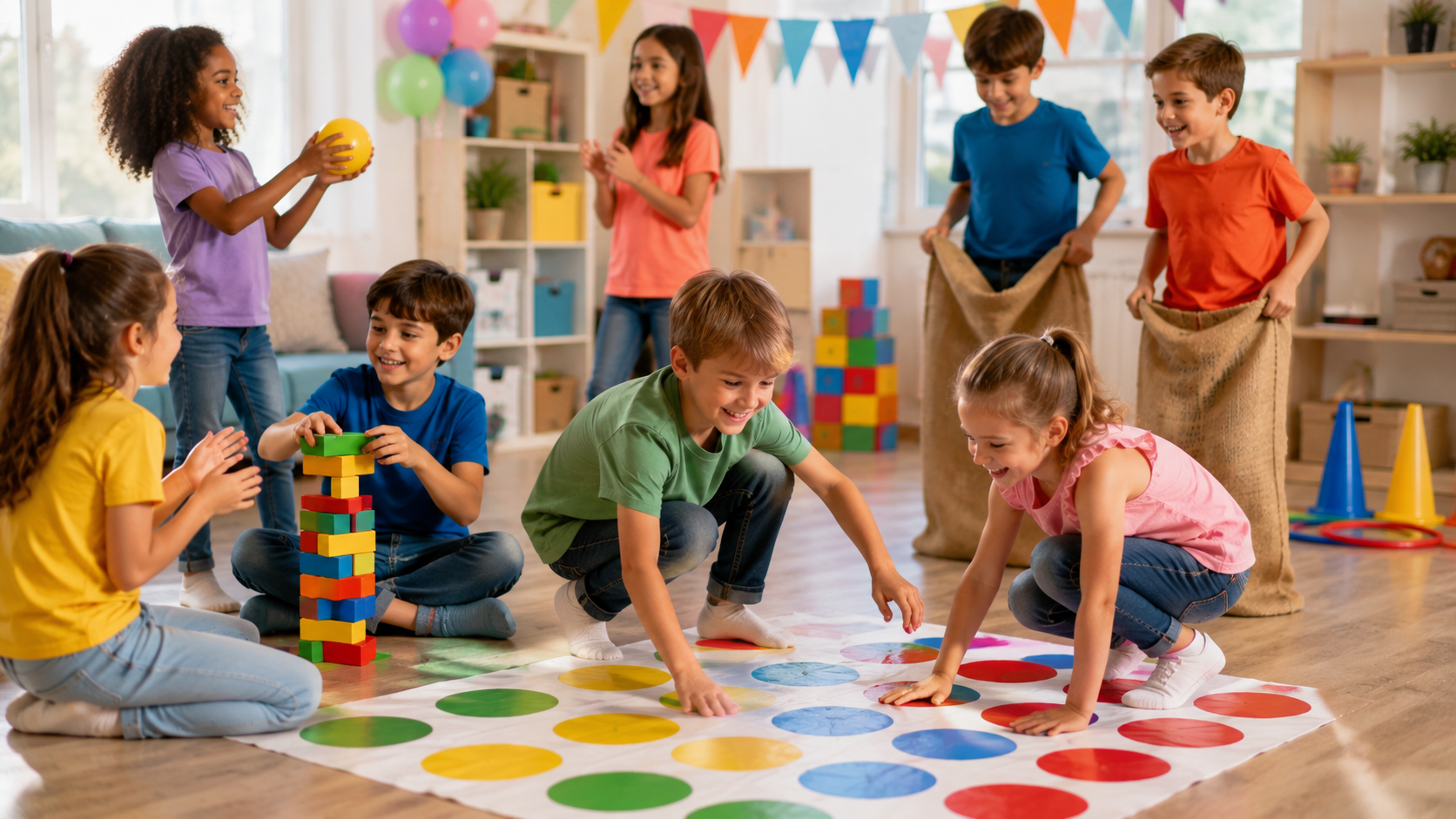
22 Ideas For Kids Group Games
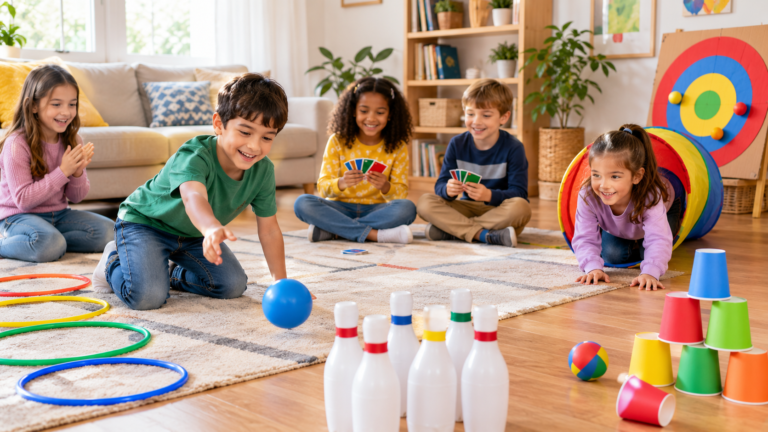
When several kids are together, keeping everyone busy can be harder than it sounds. I’ve found that the best group games are not always the most complicated ones. Simple activities with clear rules often work much better, especially when children are different ages.
I also look for games that give every child something to do instead of leaving players sitting around waiting for their turn. That small change can make a big difference in how smoothly a group activity goes.
Whether I’m planning an indoor afternoon, a birthday party, a family gathering, or an outdoor play session, I like having several group game ideas ready. Here are 22 options that can help kids stay active, creative, social, and involved.
I’ve included 22 group games for kids that work across different spaces, ages, and energy levels. Some are active outdoor games, while others are quieter indoor activities involving building, art, storytelling, music, or simple movement.
I prefer games with short instructions, little preparation, and flexible rules because they are easier to manage with a large group. Activities such as Balloon Toss, Color Hunt, Story Relay, and Build Together can also be adjusted for younger or older children.
Save this for later
Table of Contents
For energetic groups, I would choose games that involve movement and teamwork. When the kids need to settle down, I’d switch to activities such as Quiet Tiles, Mystery Box, Art Spread, or Story Relay.
Key Takeaways
- I choose games with simple rules that children can understand quickly.
- Group activities work better when everyone has a role.
- Outdoor games should give children enough room to move safely.
- Indoor games should match the available space and noise level.
- For mixed-age groups, I adjust roles instead of expecting every child to play exactly the same way.
- Cooperative games can help reduce arguments caused by winners, losers, and elimination.
- I keep rounds short so children can move between activities before they lose interest.
Related article: 22 Party Games for Kids
What Indoor Group Games Work Best For Kids At Home?
When I’m choosing an indoor game, I first consider how much space I actually have. A game that sounds exciting outdoors can become frustrating when several children are squeezed into a living room.
I usually favor activities that need little equipment and do not involve fast running. Listening games, building activities, guessing games, and controlled movement are easier to supervise inside.
Another thing I consider is whether children remain involved throughout the game. If four kids are waiting while one child plays, boredom can quickly turn into arguments.
Pro Tip: Before starting, explain the main rule in one or two sentences and demonstrate it once. Kids usually understand a game faster when they can see what to do.
Which Outdoor Group Games Are Fun For Large Groups Of Kids?
Outdoor games give children more room to move, but I still avoid activities that leave most of the group standing around. With a large group, I prefer games where several children can participate at the same time.
Team challenges, movement games, simple obstacle activities, and cooperative tasks are especially useful. I can also divide a large group into smaller teams when the number of children becomes difficult to manage.
Safety matters just as much as entertainment. I check the playing area for traffic, sharp objects, slippery surfaces, and equipment that could cause falls before starting.
Game Table
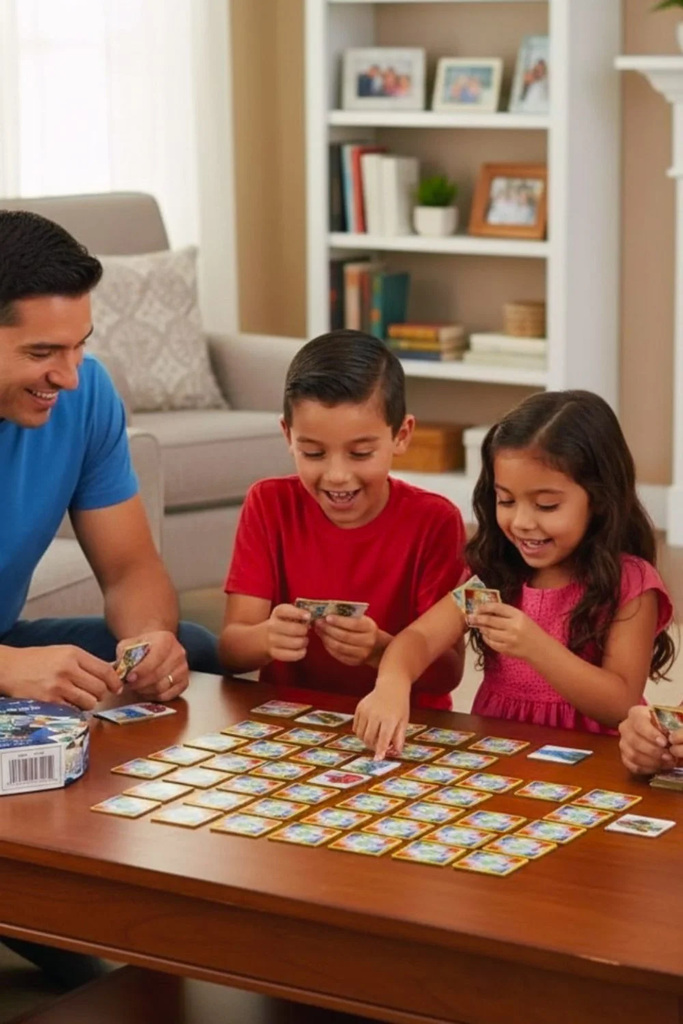
Table games give children a shared place to focus without requiring a lot of physical space. I like using a dining table, coffee table, or even a clean floor area for card games, matching activities, and simple tabletop challenges.
I keep the setup uncomplicated so children can start playing quickly. If snacks are involved, I usually keep them away from the main playing area because spilled drinks and scattered food can interrupt the activity.
For younger children, I choose larger game pieces that are easy to handle and supervise closely when small pieces are being used.
Backyard Climb
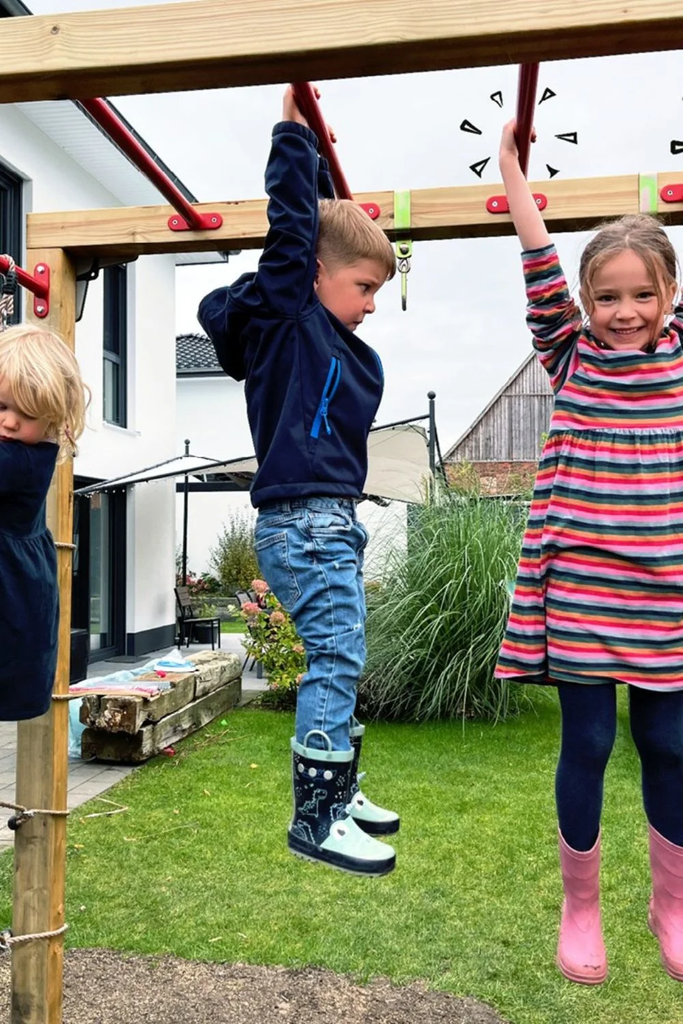
Climbing activities are a natural way for children to use their energy. If I have access to a suitable climbing frame, monkey bars, or another age-appropriate structure, I can turn it into a simple group activity without creating complicated rules.
I always check that climbing equipment is sturdy and suitable for the children’s ages. I also make sure there is enough space around the structure so children are not crowded underneath someone who is climbing.
Climbing can support balance, coordination, and upper-body strength while giving kids an active way to play.
Pro Tip: I avoid encouraging children to climb higher simply to make the game more exciting. The goal is active play, not reaching the highest possible point.
Block Corner
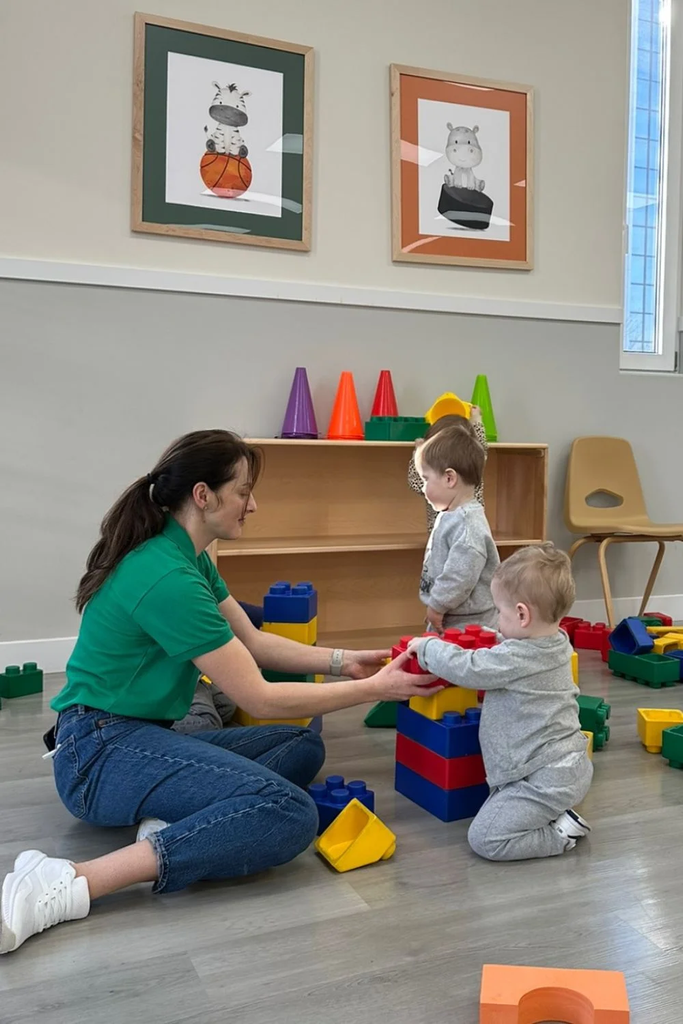
A block-building area is one of my favorite choices for younger children because it combines creativity with social play. I set out large blocks on a soft, clear surface and give the kids a shared building challenge.
Instead of telling them exactly what to construct, I might suggest making a tower, house, bridge, or pretend town. This leaves room for children to contribute their own ideas.
Building together also gives children opportunities to practice sharing materials, communicating plans, and solving small problems as a group.
Blanket Run
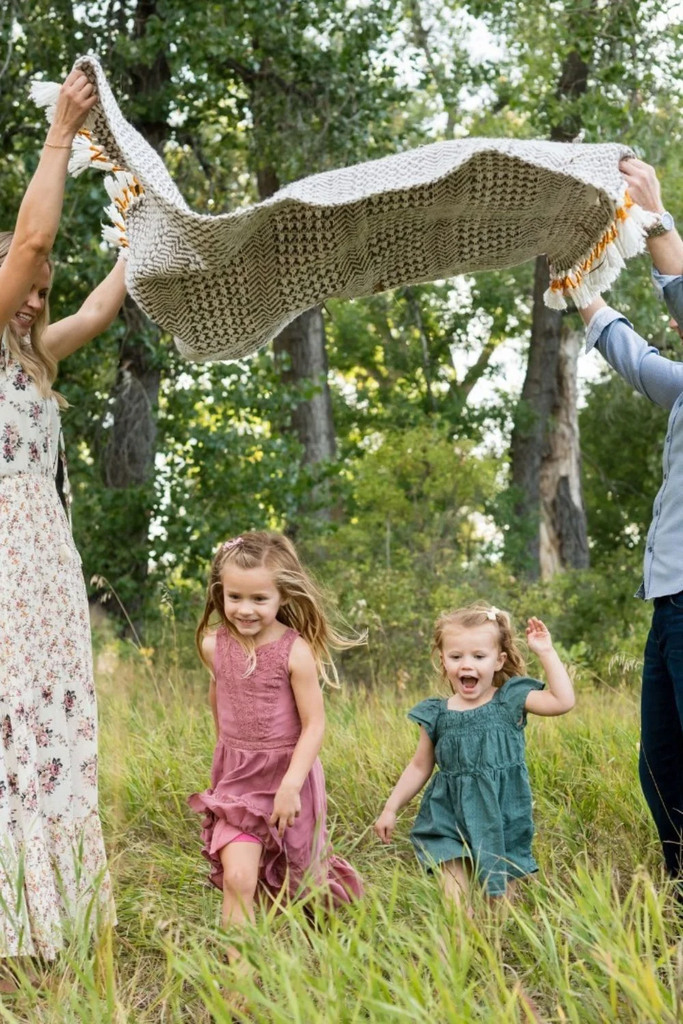
A lightweight blanket can turn into a surprisingly entertaining group activity. I use an open yard or another obstacle-free space and make sure everyone understands where to run and where to stop.
Children can take turns moving under the raised blanket or participate together when the space and supervision allow it. I treat it as a playful movement activity rather than a race.
Because there is very little equipment involved, it is an easy option for family gatherings, backyard play, or children’s parties.
Pro Tip: I use a lightweight, breathable blanket and keep the activity away from furniture, steps, and other obstacles.
Bike Circle
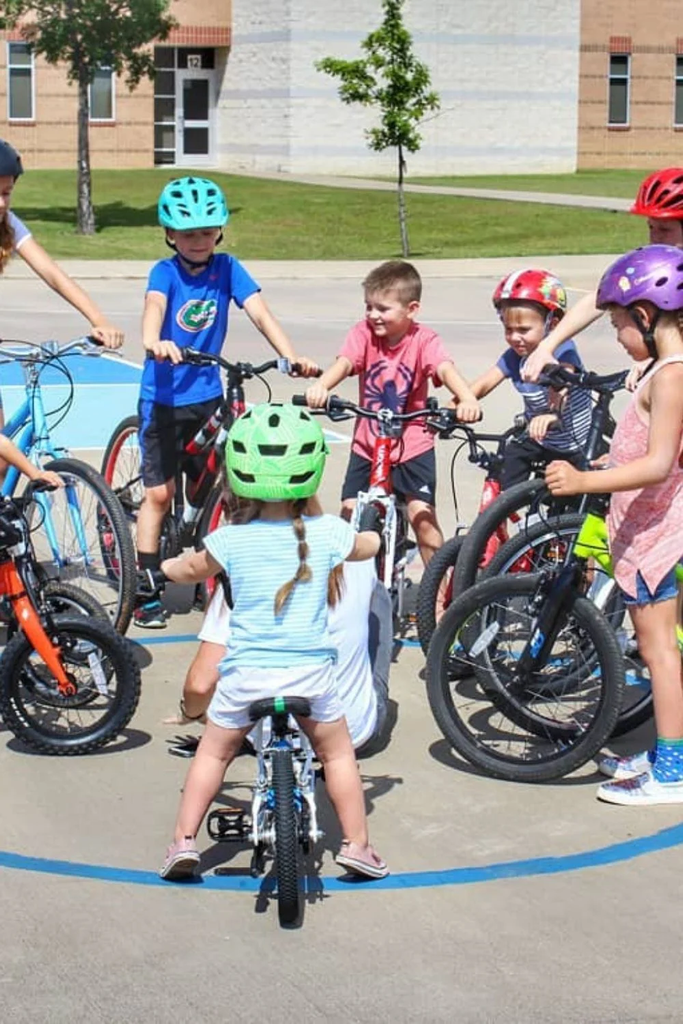
When children have bicycles or balance bikes, I prefer organized group riding over uncontrolled racing. A quiet, flat, traffic-free area gives children room to practice moving together.
I can create a simple route or have one child lead while everyone else follows at a comfortable speed. Younger riders may need more space and closer supervision.
Group riding encourages children to watch where they are going, maintain awareness of others, and practice basic bike control.
Helmets and suitable protective equipment should be used, and I never use a public road as a casual play area.
Mystery Box
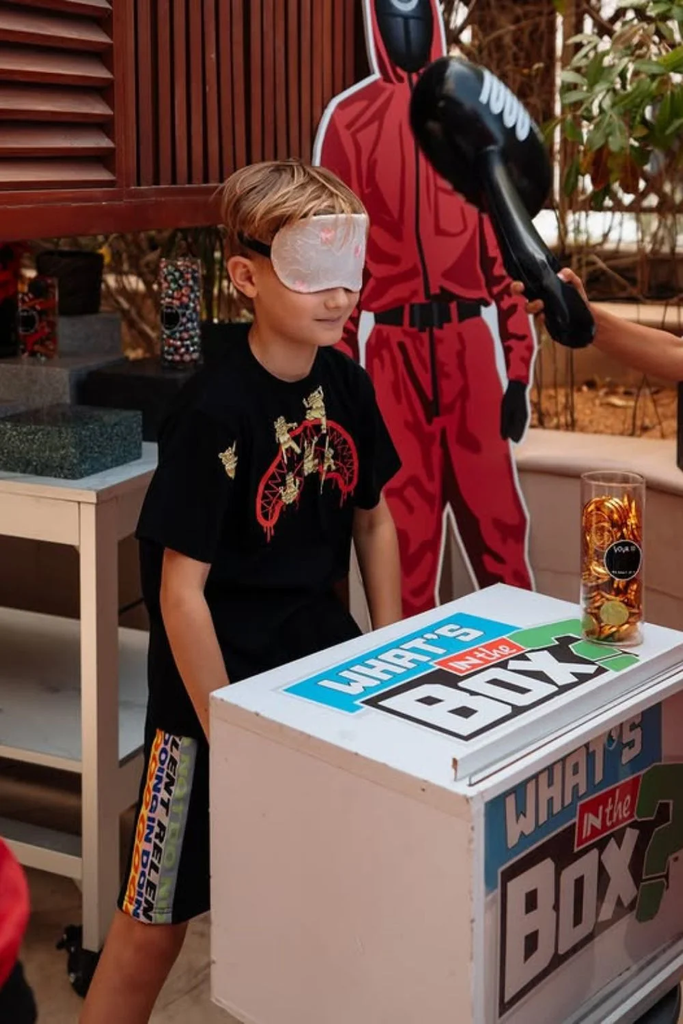
A Mystery Box game works well when I want something that combines curiosity with conversation. I place several safe objects inside a container and let children feel or describe an item without immediately looking at it.
The group can guess what the object might be based on its shape, texture, weight, or sound. I make sure every object is safe for the children’s age group.
This game is particularly useful when I want a quieter activity that still gives everyone a chance to participate.
Pro Tip: I choose familiar household objects with noticeably different textures and shapes so the guessing part stays interesting.
Floor Twist
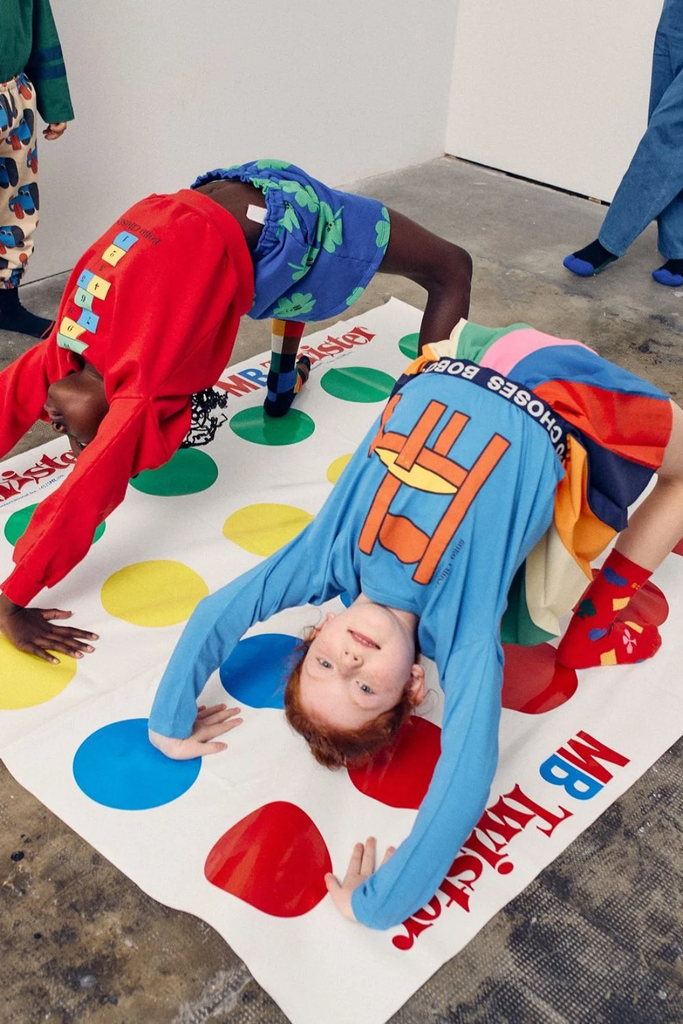
For an indoor movement game, I can mark different spots on the floor with removable tape or use a play mat. Children then follow simple instructions involving hands, feet, turns, stretches, or changes in position.
I keep the movements slow enough for the available space. The focus is on listening and coordination rather than speed.
This is a useful choice when children have energy to burn but the weather or room size does not allow outdoor play.
Path Play
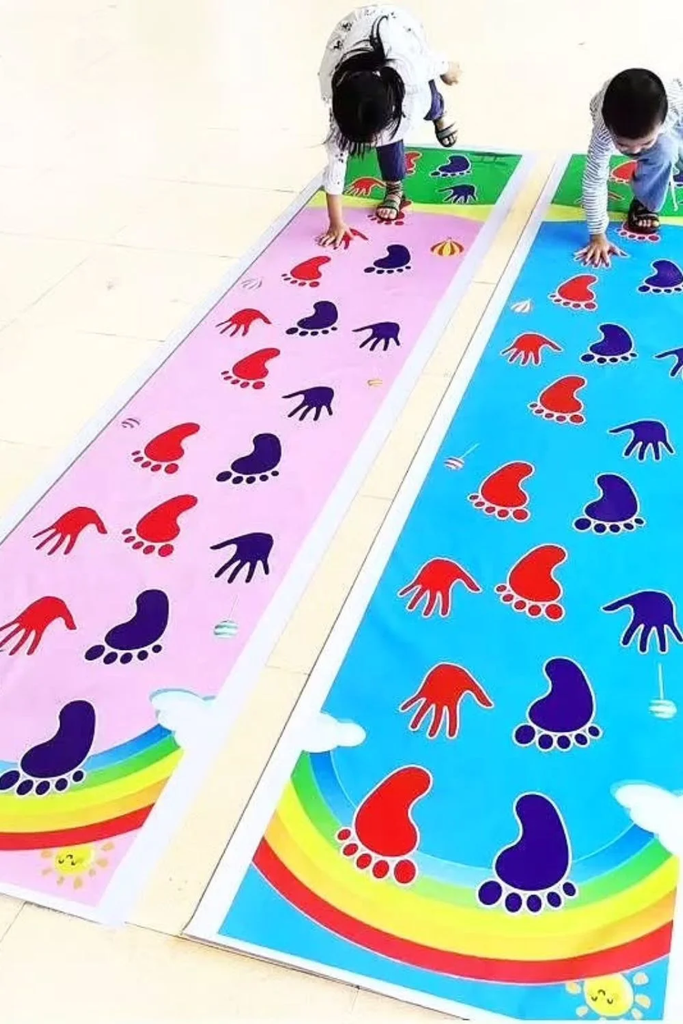
I can turn an ordinary hallway or clear floor into a simple movement path using tape, paper shapes, or floor markers. Kids follow the route while stepping, balancing, or placing their hands and feet according to the instructions.
I leave enough space between children so they are not bumping into one another. Each child can move at their own pace instead of feeling pressured to finish first.
This type of activity gives children a physical challenge while also asking them to pay attention to directions.
Balloon Toss
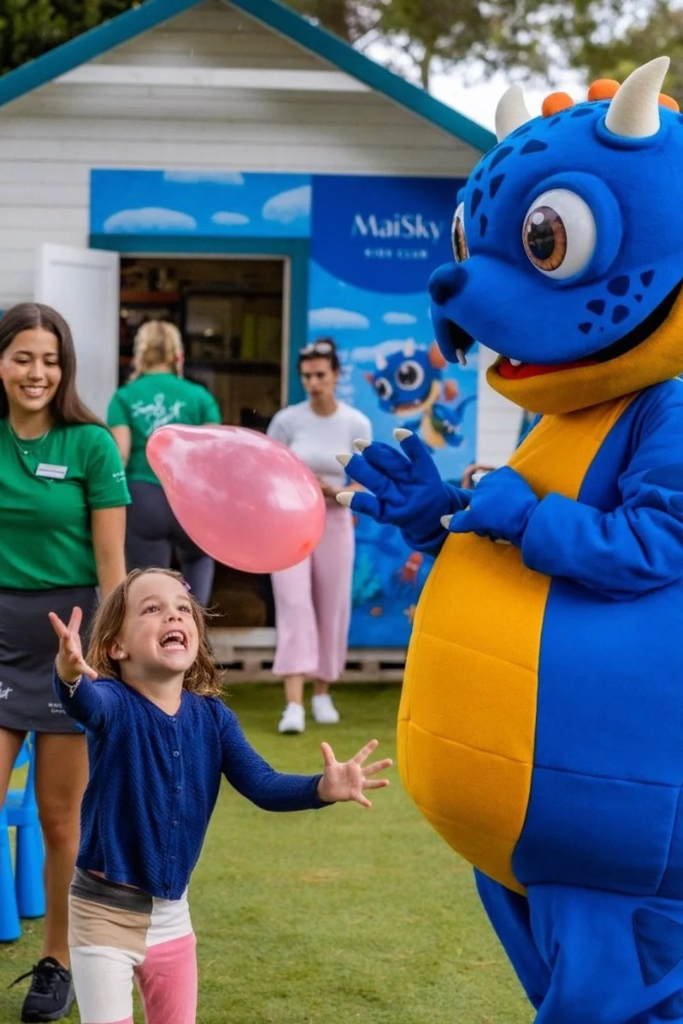
Balloons make group play slower and easier to control than many traditional ball games. I give the children one or more balloons and set a simple team goal, such as keeping the balloon from touching the ground.
The children have to communicate and move around the space while trying to keep it in the air. There does not need to be a winner for the game to be enjoyable.
For younger children, I use a larger open area and supervise closely. I also remember that latex balloons can be a choking hazard if they burst, so broken balloon pieces should be removed immediately.
Pro Tip: For very young children, I stay close and use larger play areas so adults can quickly collect any popped balloon pieces.
Team Practice
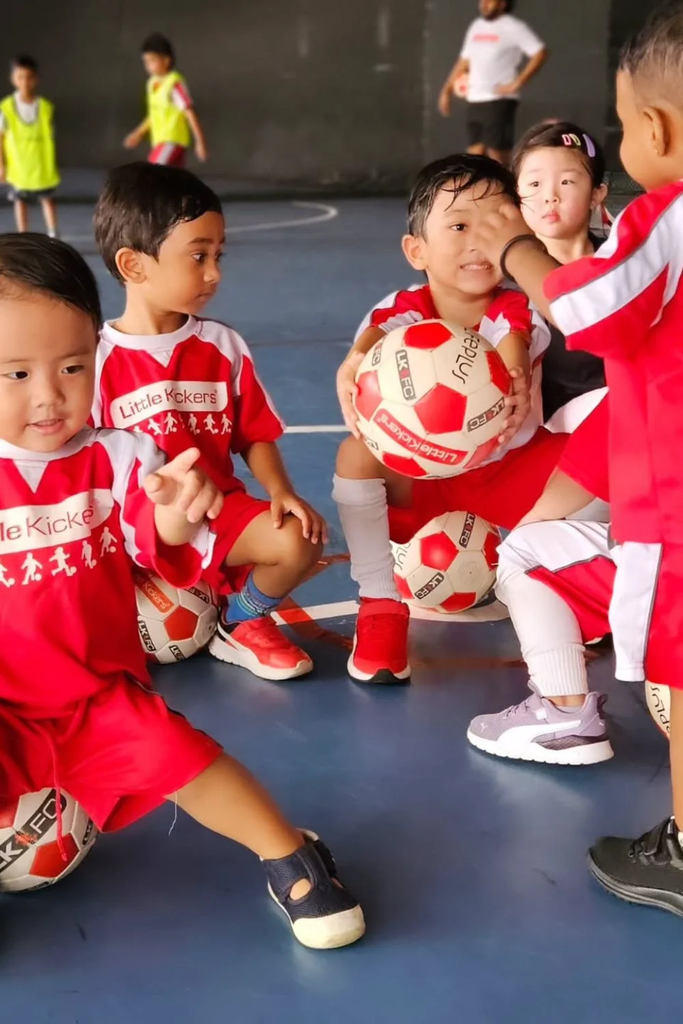
I like low-pressure sports activities when children want to play with balls but are not ready for a full competitive game. Each child can have a ball and practice one basic skill at a time.
Depending on age, I might use rolling, gentle throwing, stopping, dribbling, or short passes. The goal is participation rather than keeping score.
This approach can make sports feel less intimidating for beginners while giving more confident children an opportunity to practice control and coordination.
Build Together
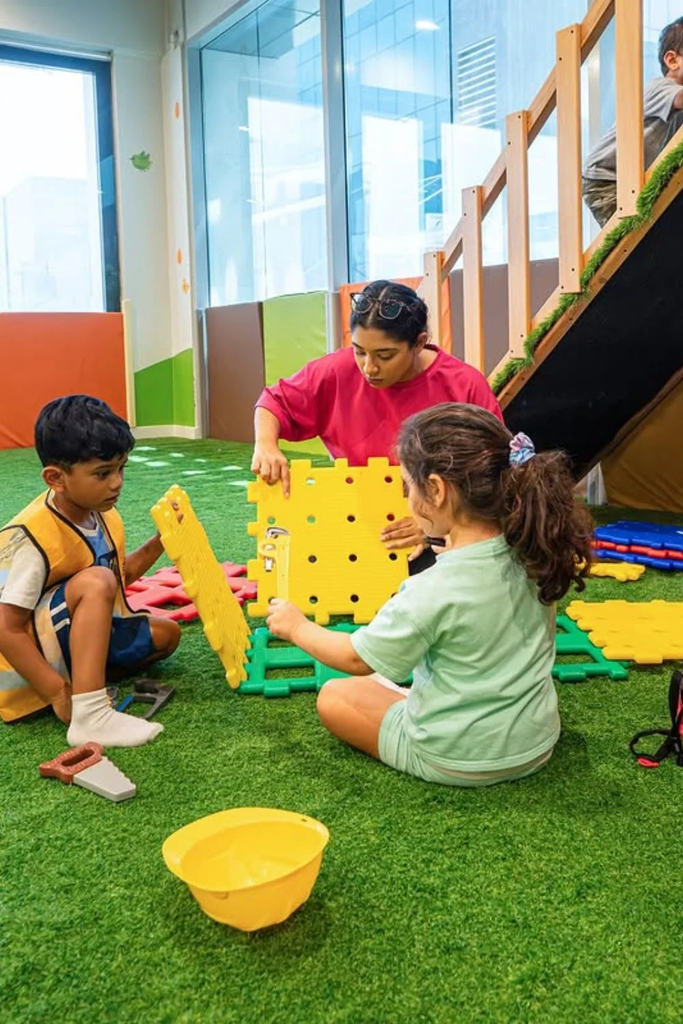
Group construction activities can quickly turn a noisy room into a focused play area. I provide large building pieces and suggest a shared project rather than asking each child to build separately.
For example, the group could create a pretend city, animal shelter, castle, road, or playground. Children can decide who builds which part and change the design as they go.
I find that collaborative projects are especially helpful when I want an activity that encourages communication without making competition the main focus.
Also read: 50+ Ideas for How to Plan a Hockey Theme First Birthday Party
Game Lounge
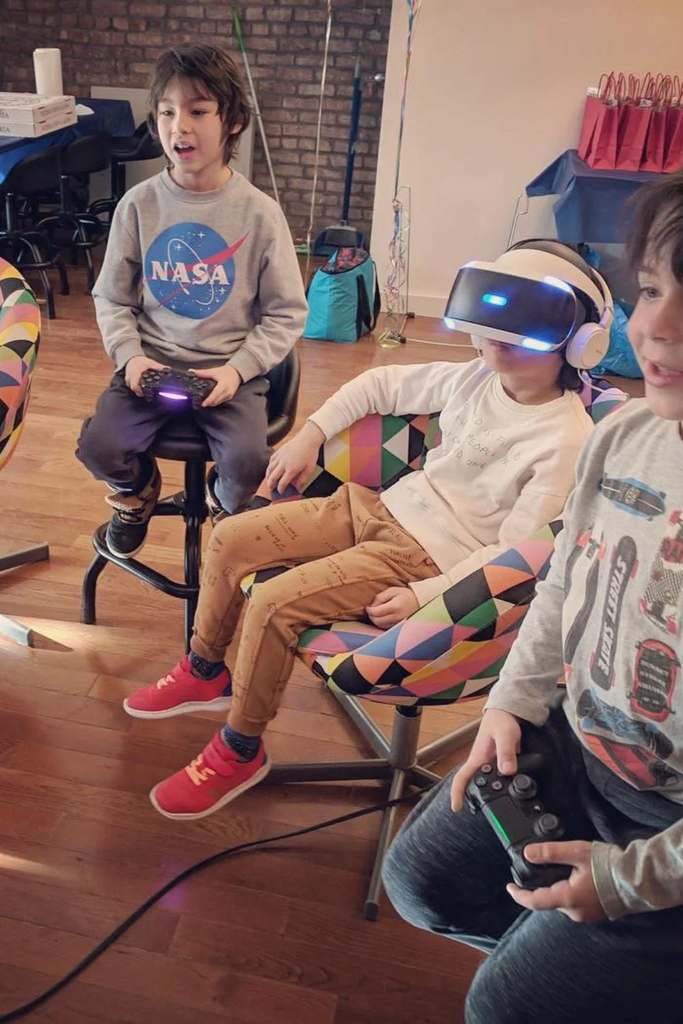
When children use screens together, I prefer cooperative or multiplayer games where they communicate rather than simply watching one child play.
I set a reasonable time limit and rotate roles so one child does not control the activity the entire time. Younger children may also need help understanding the controls.
A shared gaming session can become more social when children discuss strategies, solve problems together, and take turns.
Pro Tip: I choose games that match the children’s ages and abilities. If one child is struggling with the controls, I give them a simple role so they can still participate.
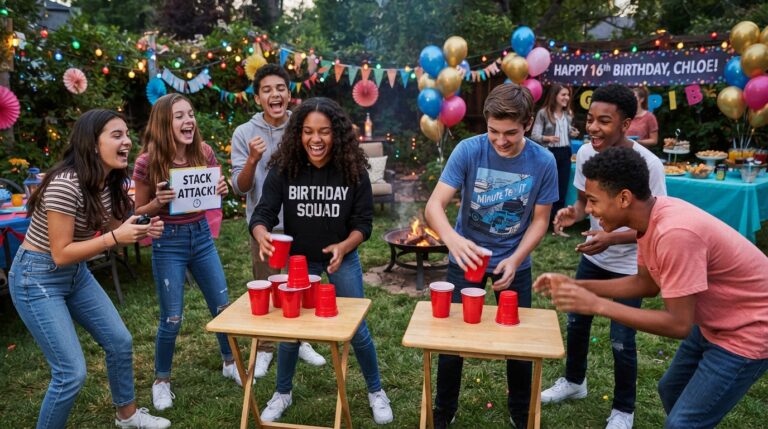
Stack Challenge
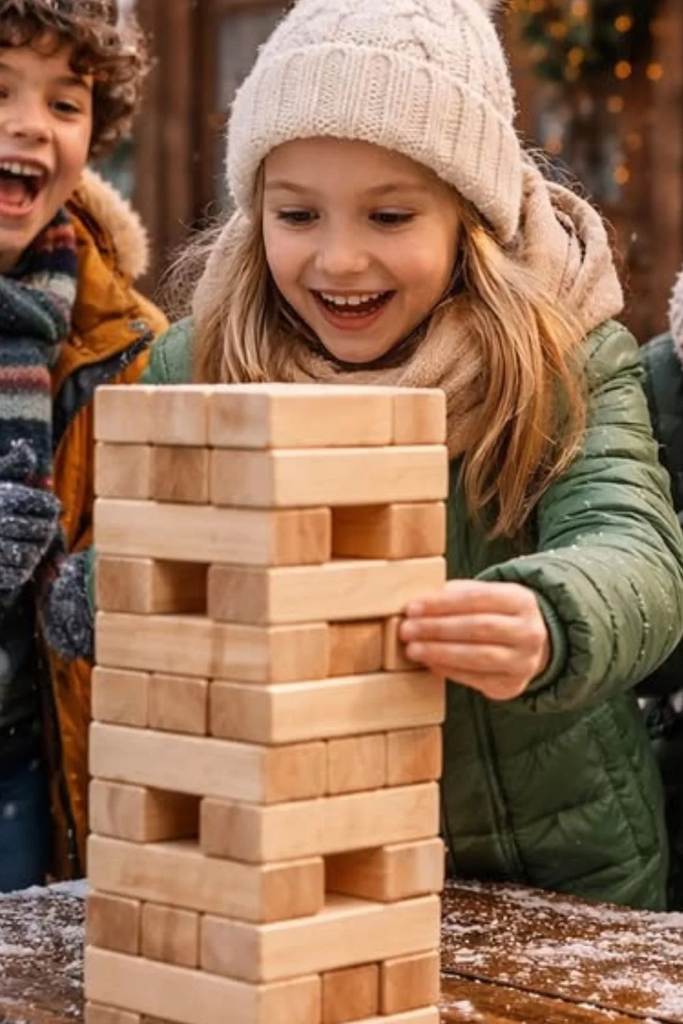
A stacking challenge is an easy activity for a group because it needs very little preparation. I use large blocks or sturdy, age-appropriate objects and ask children to build the tallest or most unusual structure they can make together.
Another option is to take turns adding one piece at a time without knocking the structure down.
The slow pace can be useful when children need to transition from energetic play to something more controlled. It also gives them a chance to practice patience and careful hand movements.
Quiet Tiles
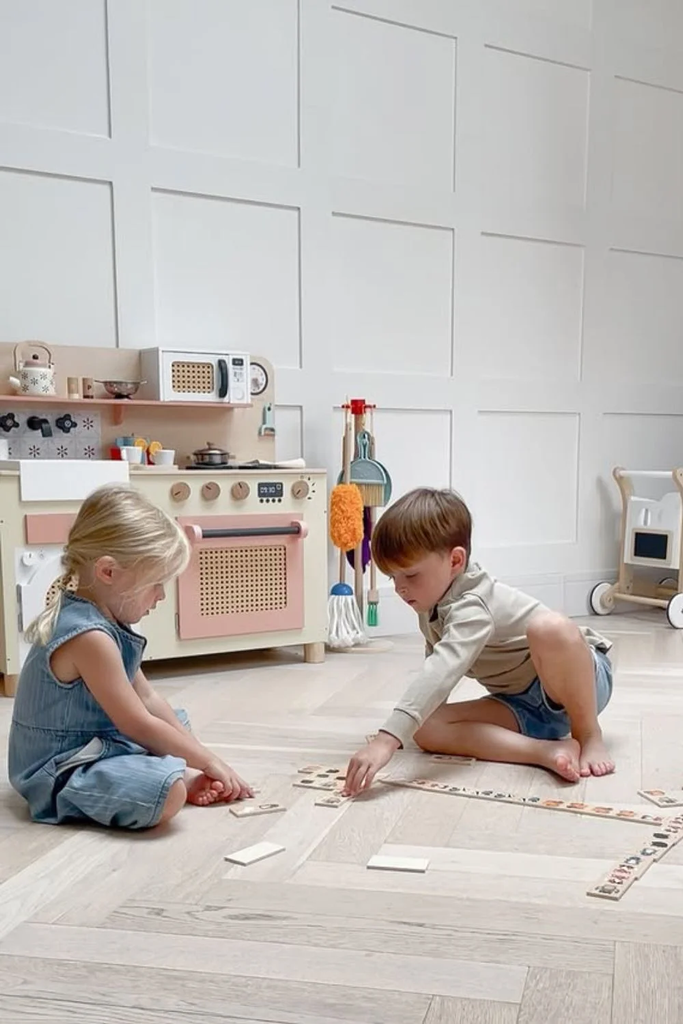
When a group needs a calmer activity, I like using tiles, dominoes, matching cards, or other simple pieces on a clear floor or table.
Children can work together to make patterns, match items, create designs, or build a long domino path. I avoid complicated rules and let the activity stay flexible.
This is a good option for rainy afternoons, quiet family time, or the period after an active game when children need to slow down.
Art Spread
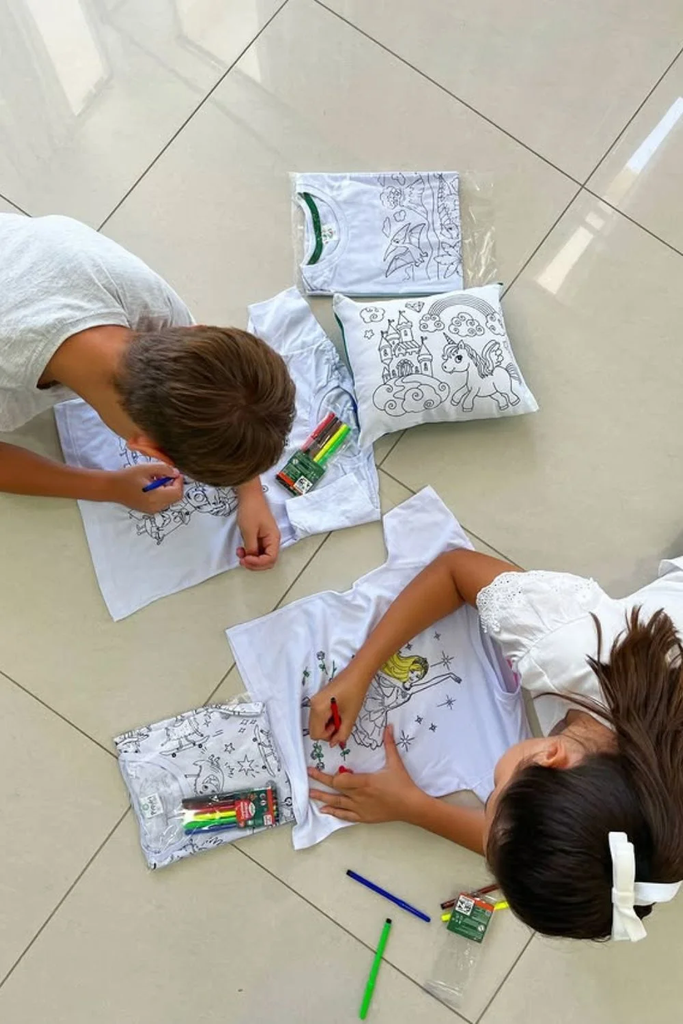
Group art gives children a chance to create while sharing a common space. I cover the work surface and provide paper, washable art supplies, stickers, crayons, or other age-appropriate materials.
Rather than giving everyone the exact same project, I sometimes provide one theme and let each child interpret it differently. For example, everyone might create their own garden, imaginary animal, or dream house.
I find that having enough workspace is important. Crowding can turn a relaxing craft session into frustration, especially when several children are using supplies at once.
Pro Tip: I place commonly used supplies in small containers around the work area so children do not have to reach across one another.
Target Play
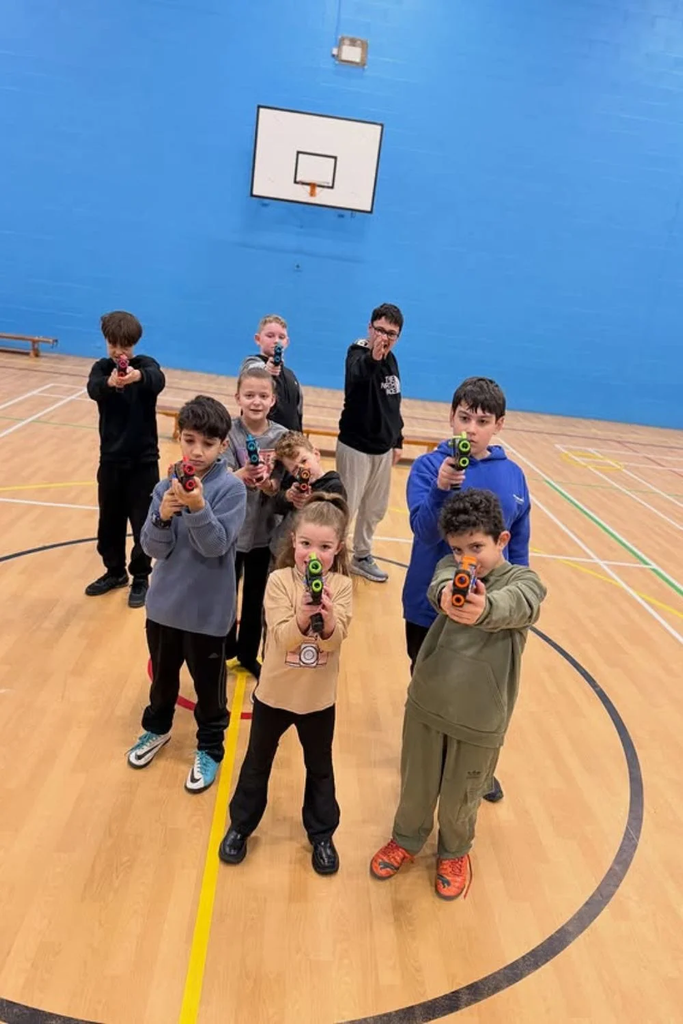
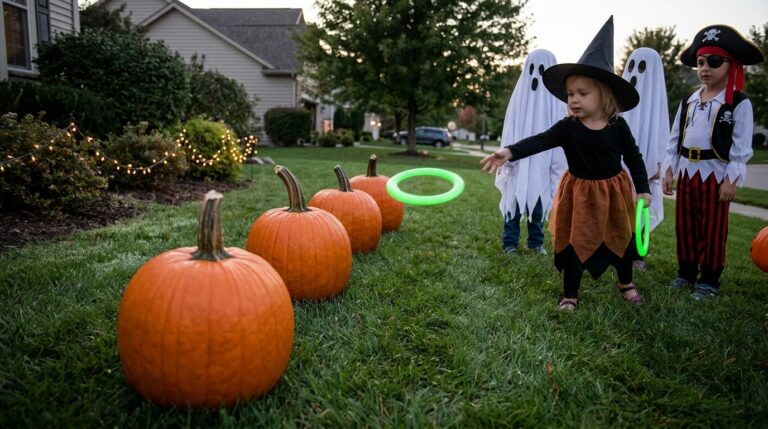
Target games give active children a clear purpose without requiring a complicated sport. I can use soft balls, beanbags, hoops, buckets, or other safe targets.
Instead of making one child the target, I set up several targets and allow children to rotate between them. This keeps the game more organized and gives everyone repeated opportunities to participate.
I adjust the distance according to age and ability. Younger children should not have to throw from the same distance as older children.
Sound Circle
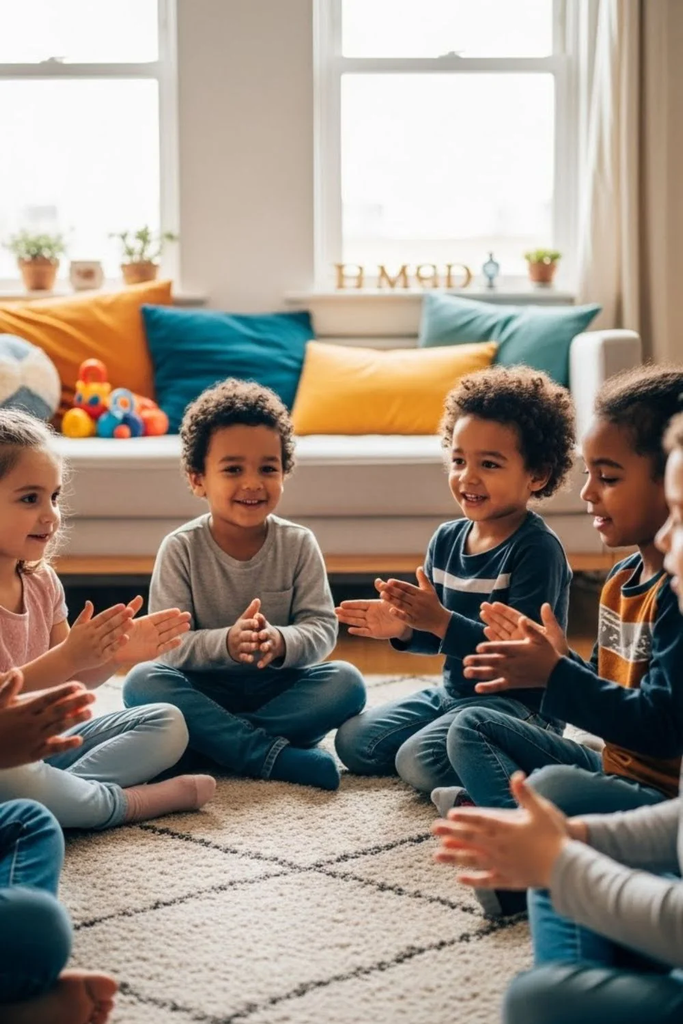
A Sound Circle is a simple listening game that needs no special equipment. I have the children sit or stand in a circle and give each person a sound or movement to repeat.
One child can begin with a clap, tap, snap, or simple vocal sound. The others copy it, and I gradually add another sound to create a group rhythm.
The game can become quite funny without becoming physically chaotic. It also encourages children to listen carefully to one another.
Shadow Chase
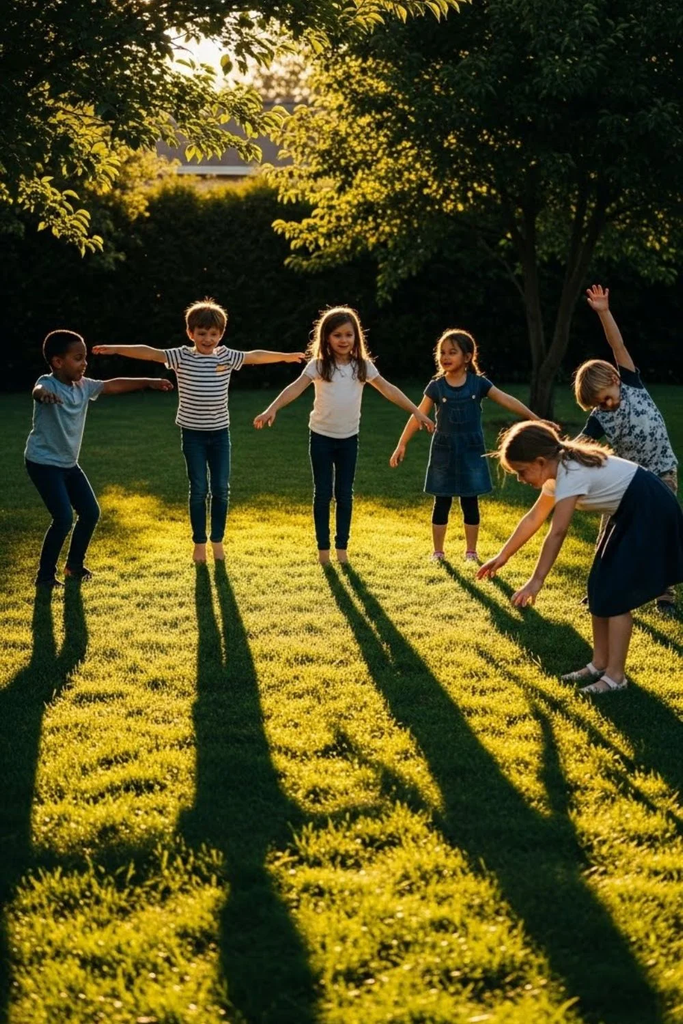
Shadows can become the main feature of a game when the sun is in the right position. I choose a safe outdoor area and have children copy simple poses or movements while watching their shadows.
One child can lead while the others imitate. I can also call out shapes such as a star, animal, letter, or jumping pose.
Because the activity is based on copying and observation rather than running, it can keep children interested without requiring lots of equipment.
Story Relay
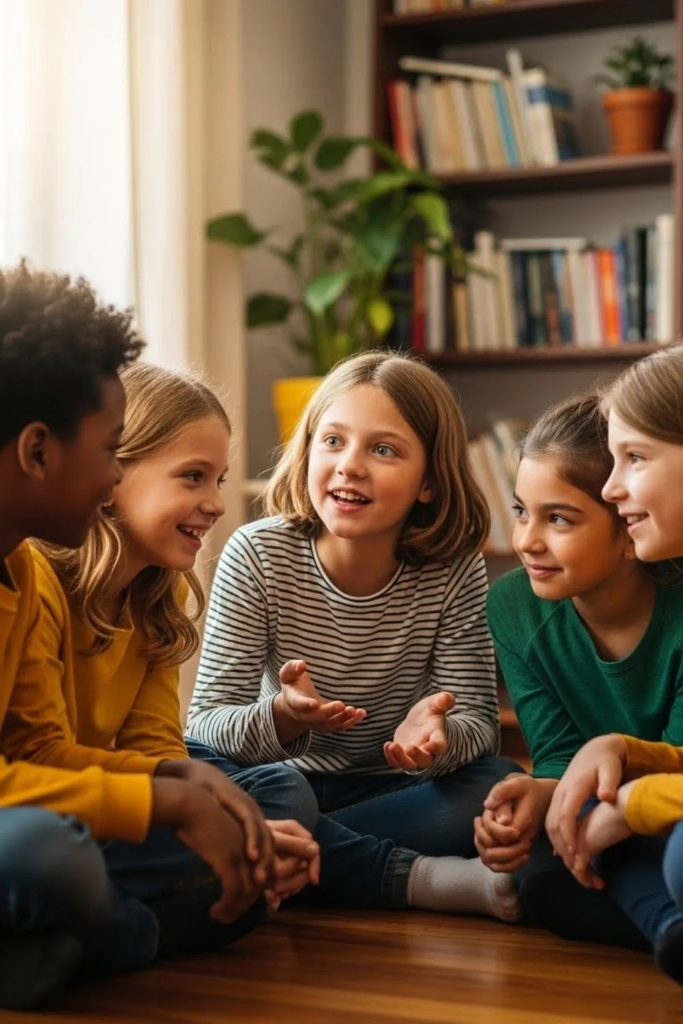
Story Relay is one of my favorite quiet group games because children can create something together. I have everyone sit in a circle, then ask one child to begin with a single sentence.
The next child adds another sentence, and the story continues around the group. I do not worry about making the story perfect. The funny twists are often what make children enjoy it.
I find this activity useful for encouraging listening, imagination, speaking confidence, and cooperation.
Pro Tip: If younger children struggle to think of a sentence, give them a simple prompt such as a character, location, animal, or object to include.
Color Hunt
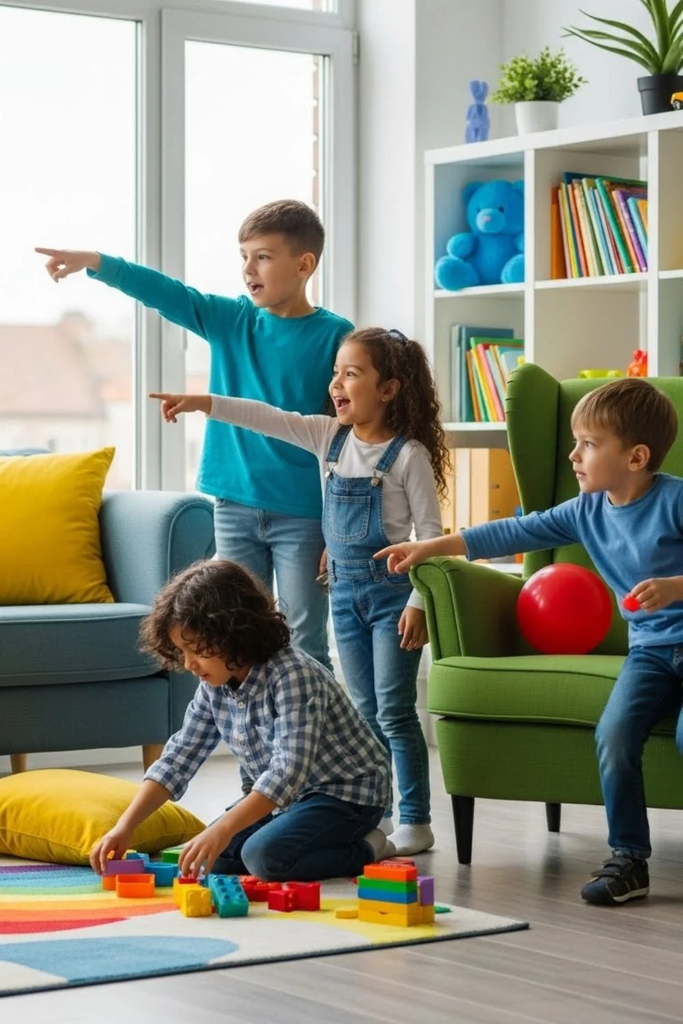
Color Hunt gets children moving while giving them a very clear task. I choose a safe area and call out a color. The children then search for an object in that color and return to the starting point.
I can make the game easier for younger kids by choosing common colors and keeping the search area small. Older children can be given less common colors or asked to find multiple objects.
Short rounds work best because the children stay focused and I can quickly change the challenge.
Human Maze
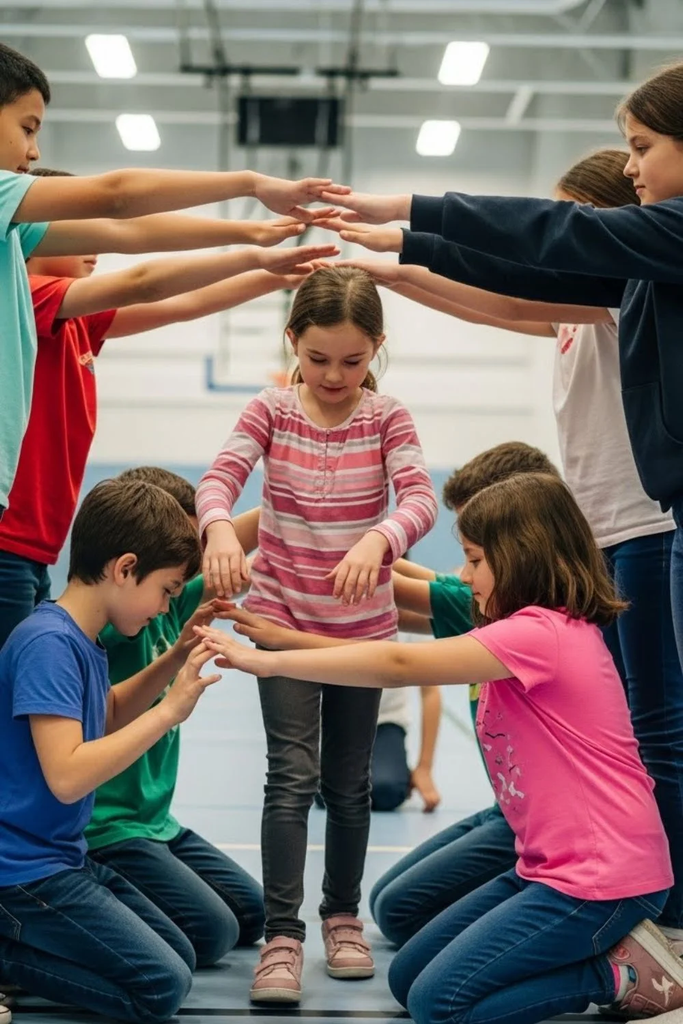
A Human Maze turns the children themselves into part of the activity. I arrange the group in a safe open area and create simple pathways using standing or kneeling positions.
One child moves through the pathway slowly while the others remain in their positions. I emphasize careful movement instead of speed.
This game works best when there is plenty of room and everyone understands that pushing, running, or grabbing is not part of the activity.
Pro Tip: I demonstrate the route before starting and use a walking pace. The game becomes more enjoyable when children focus on solving the pathway rather than racing through it.
Read this next: Winter First Birthday Party Ideas for Boys
Rhythm Walk
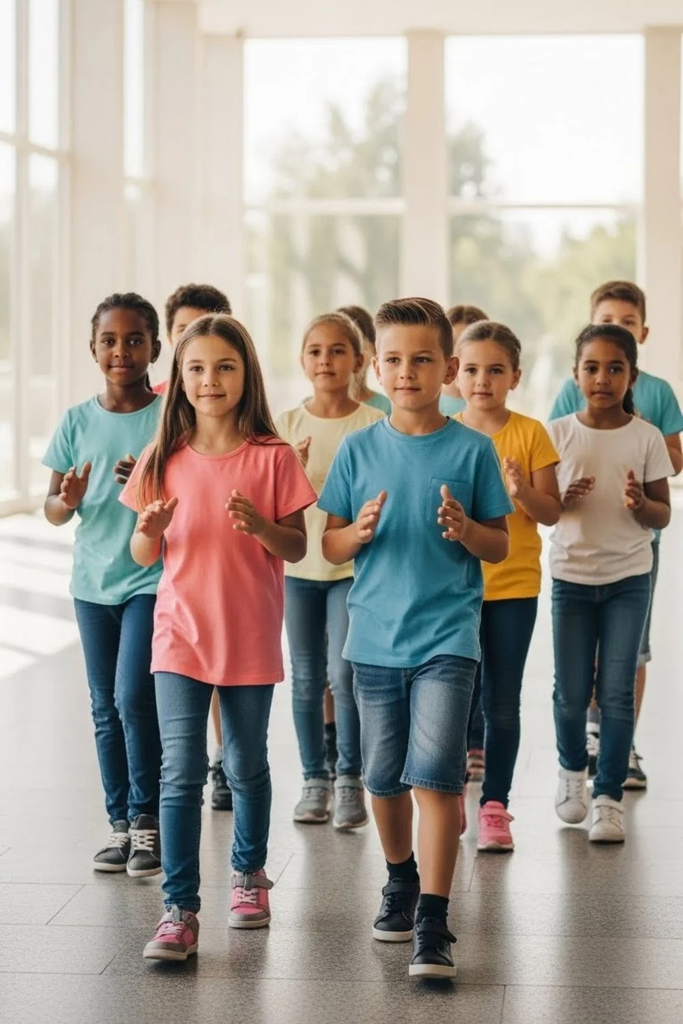
Rhythm Walk combines simple movement with listening. I create a steady beat by clapping or tapping, and the children walk according to that rhythm.
When the beat stops, they stop. When it changes, they change their pace or direction. I can make the rhythm faster or slower depending on the age and energy level of the group.
This is especially helpful when I want to bring a noisy group back to a calmer level while keeping them active.
FAQ’s
How do you keep group games from turning loud or chaotic?
I keep the instructions short and explain what children should do before the activity starts. I also use short rounds rather than letting one game continue until everyone becomes bored.
If the noise level starts getting too high, I switch to a cooperative game or a quieter activity. I find that changing the type of game is often more effective than repeatedly telling children to be quiet.
What if kids of different ages don’t want to play the same game?
I give children different roles within the same activity. Younger kids can handle simpler tasks, while older children can help explain rules, keep time, or take on a more challenging version of the game.
I also avoid making every activity dependent on one skill level. When children feel that they have something useful to contribute, mixed-age games usually become easier to manage.
Conclusion
I’ve found that successful group games are less about having the newest toys or the most elaborate setup and more about choosing an activity that fits the children and the space.
For high-energy groups, I’d start with Balloon Toss, Color Hunt, Bike Circle, or Target Play. When everyone needs to settle down, Mystery Box, Quiet Tiles, Art Spread, and Story Relay are much better choices.
The biggest tip I can give is to stay flexible. If a game is not working, I don’t force it. I change the rules, shorten the round, divide the group, or move to another activity. A simple game that keeps everyone involved is usually far more successful than a complicated one that creates arguments.


3 Comments