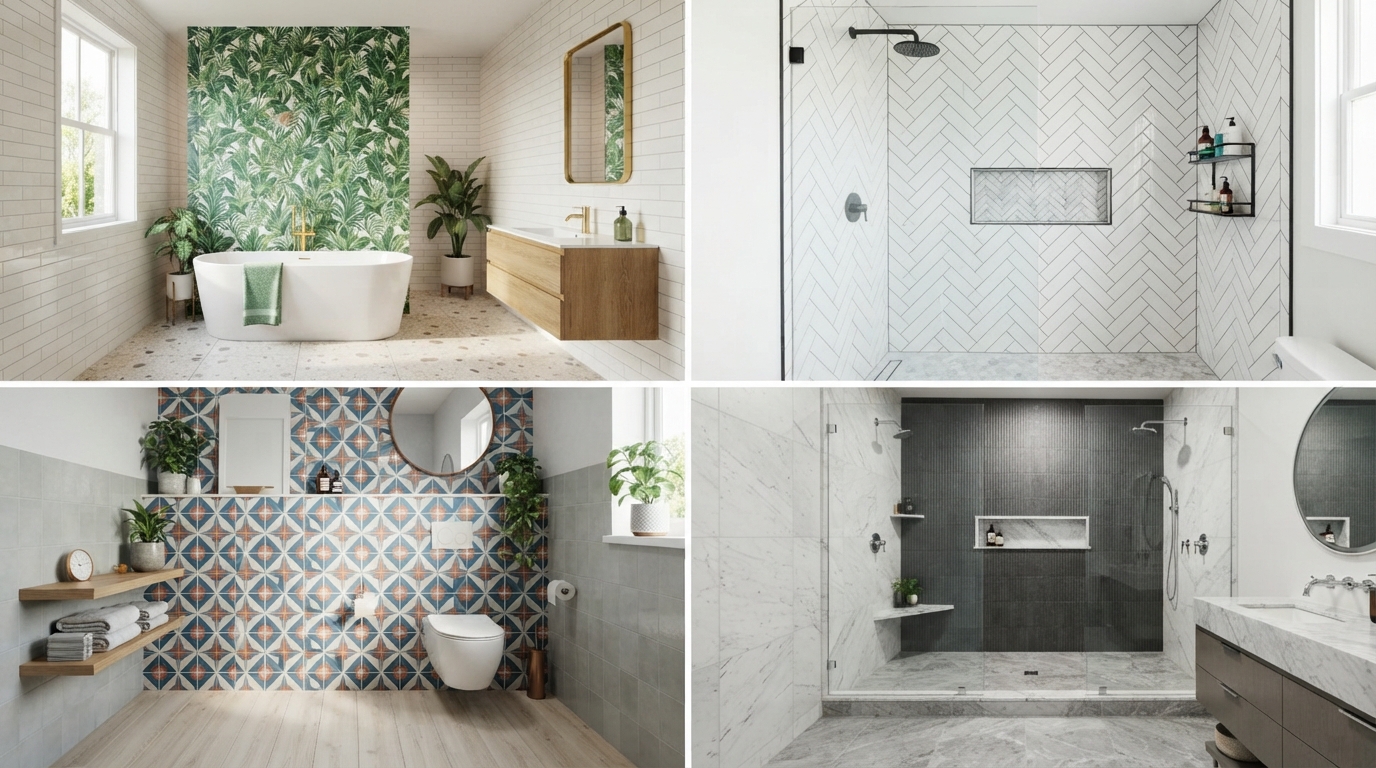
27 Bathroom Tile Ideas to Inspire Your Next Renovation
I’ve found that bathroom tile can completely change the personality of a space, even when I’m not replacing the vanity, bathtub, or other major fixtures. A new floor, shower wall, or backsplash can add color, texture, pattern, or a cleaner overall look.
When I plan a bathroom update, I don’t choose tile based on appearance alone. I also consider moisture, cleaning, durability, grout, lighting, and whether the product is actually suitable for the surface where I plan to install it.
In this guide, I’m sharing 27 bathroom tile ideas that give me plenty of options, from quiet neutral designs to bold patterns and rich colors.
I can use bathroom tile to create almost any mood, from a bright and timeless white bathroom to a dramatic space with dark tile or a colorful patterned floor. Natural-looking materials can add warmth, while geometric shapes and decorative mosaics can make a simple bathroom feel more distinctive.
Some of these ideas work particularly well for small bathrooms, while others are better suited to larger rooms where I have more wall or floor space to experiment. I can also use one statement tile instead of covering the entire bathroom with a complicated design.
Save this for later
Table of Contents
Before I buy anything, I always check the manufacturer’s recommendations for floor or wall use, water exposure, maintenance, and slip resistance. I also look at tile samples in the actual bathroom because artificial showroom lighting can make colors and finishes look very different.
Key Takeaways
- I can create a noticeable bathroom makeover without changing every fixture.
- Light tile can help make a compact bathroom feel brighter and more open.
- Dark tile can create a dramatic feature wall when balanced with lighter finishes.
- Natural stone looks and earthy colors add warmth and texture.
- Patterned tile works well when I want the floor or wall to become the focal point.
- I should choose floor tile with appropriate slip resistance for wet areas.
- Grout color can significantly change the appearance of a tile pattern.
- I get better results when I use one main statement tile and keep supporting finishes simpler.
Related article: 30 Bathroom Storage Ideas to Keep Your Space Organized
1. Pebble Floor Tiles
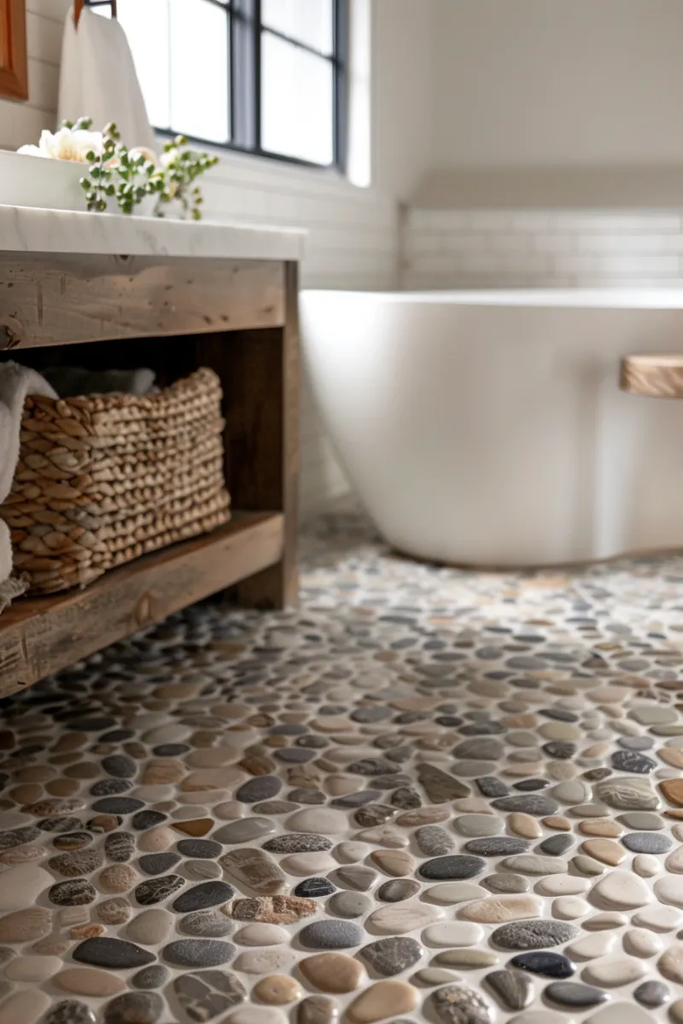
I like pebble floor tile when I want my bathroom to have a natural, relaxing feel. The irregular stones introduce texture and make the floor look less uniform than standard square or rectangular tile.
This style can work particularly well in a shower area or around a freestanding tub. The natural appearance also pairs nicely with wood vanities, neutral walls, and simple white fixtures.
Pro Tip: I always pay attention to the amount of grout between individual pebbles. More grout lines mean more surface to clean, so I would choose a finish and grout color that fits my maintenance routine.
2. Biophilic Bathroom Tiles
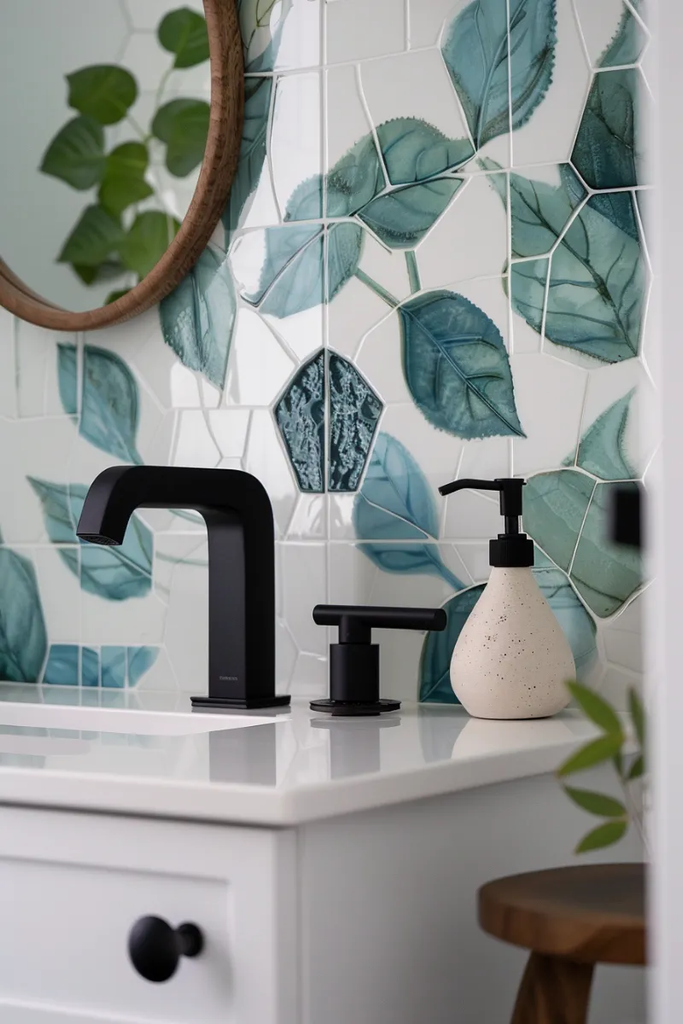
I can give my bathroom a nature-inspired appearance with tile featuring leaves, branches, organic shapes, or calming green and blue colors. This is a simple way to bring a botanical theme into the room without filling every corner with plants.
I like combining these tiles with natural wood, woven baskets, stone accessories, or neutral-colored towels. The combination feels fresh without becoming overly decorative.
Pro Tip: If the botanical tile has a detailed pattern, I keep the vanity, flooring, and accessories relatively simple. This gives the pattern room to stand out instead of making the whole bathroom visually crowded.
3. Hexagon Tiles
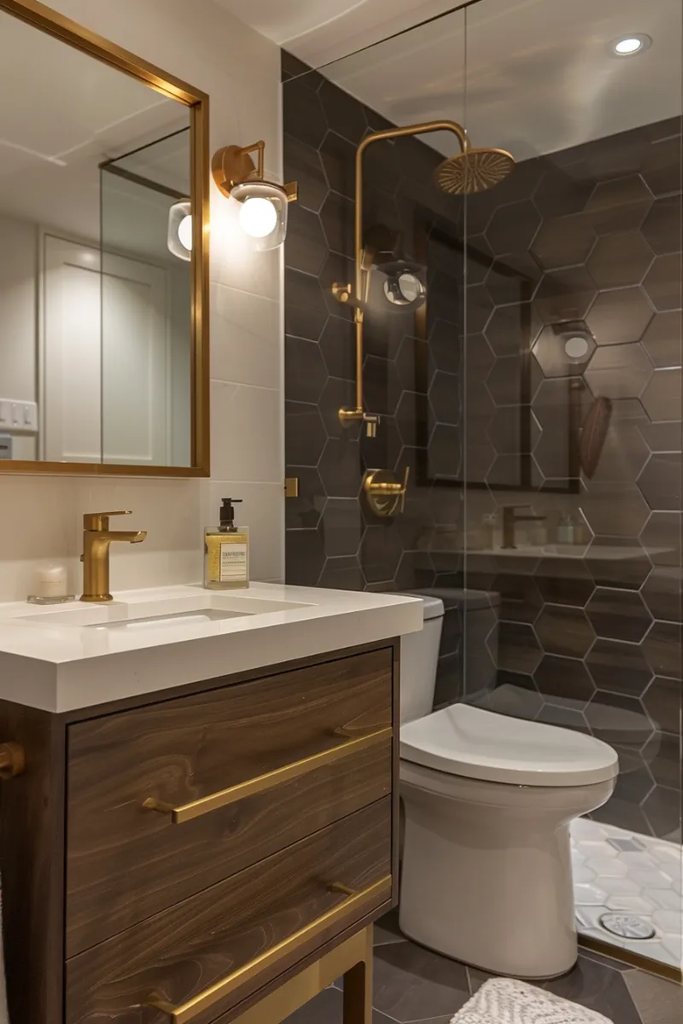
Hexagon tile gives me an easy way to add geometry to a bathroom. Small hexagons can create a detailed mosaic effect, while larger hexagons give me a cleaner and more modern appearance.
Dark hexagon tile can make a shower wall especially striking. I like balancing it with white fixtures, natural wood, and warm metal hardware.
Pro Tip: Before installation, I lay out a few rows of the tile pattern so I can see how the edges will finish. This helps me avoid awkward cuts in highly visible areas.
4. White Subway Tiles
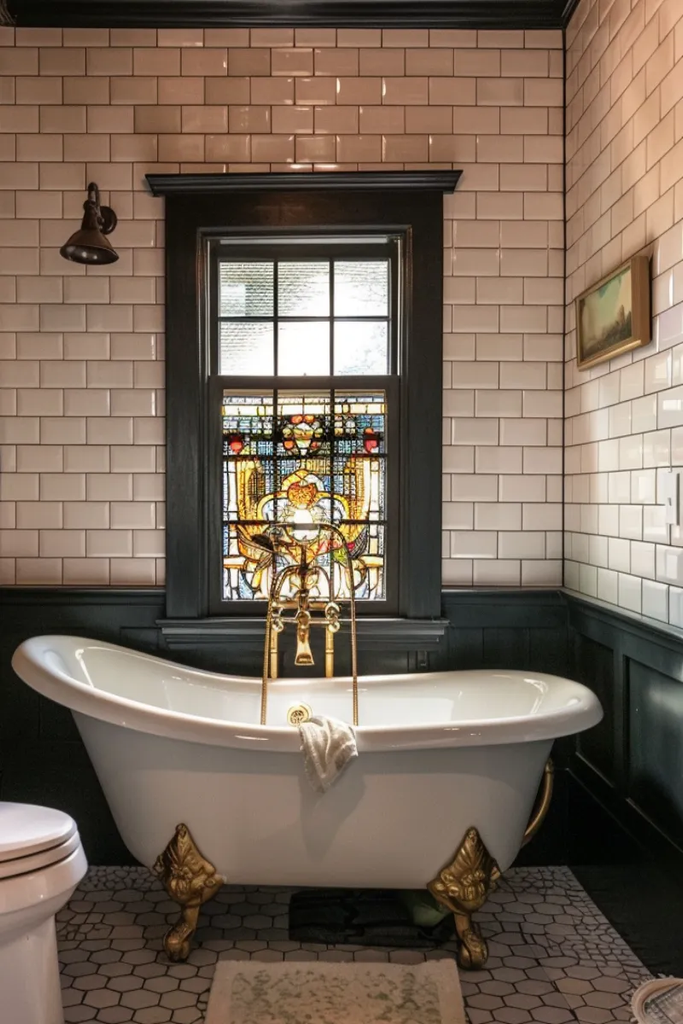
White subway tile is one of the most flexible choices I can make for a bathroom. Its simple rectangular shape works with traditional, farmhouse, vintage, transitional, and contemporary designs.
I can also change its appearance simply by changing the installation pattern or grout color. A darker grout emphasizes every individual tile, while a matching grout creates a quieter wall.
Pro Tip: I don’t choose grout color from a tiny sample alone. I compare it against the actual tile because even a small difference in tone can change how strong the finished pattern looks.
5. 3D Tiles
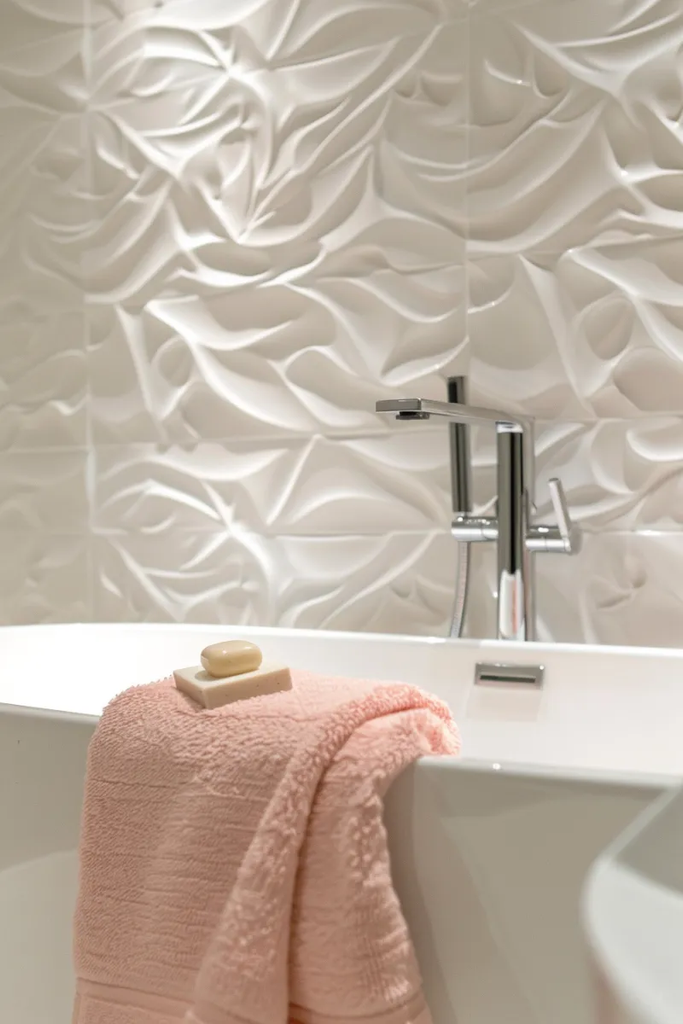
When I want texture rather than a strong color, I like using three-dimensional tile. Raised patterns can create shadows and highlights as bathroom lighting moves across the surface.
This type of tile works especially well as a feature wall behind a vanity or bathtub. I usually avoid combining it with several other bold patterns.
Pro Tip: I check how the tile looks under both natural and artificial light before installing it. A textured surface can cast much stronger shadows than it does in a showroom.
6. Marble Tiles
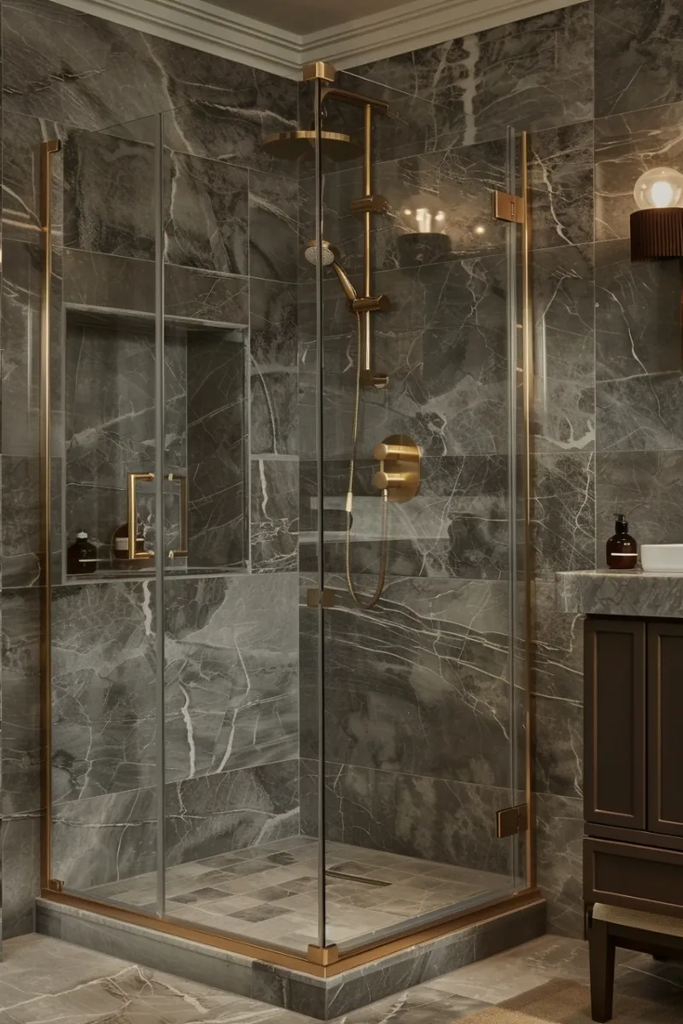
Marble tile can give a bathroom a sophisticated appearance through its natural veining and variation. Gray, cream, and warm beige versions can work with many different bathroom styles.
I also have the option of marble-look porcelain tile if I want the visual effect of marble with a different maintenance profile. When I use natural stone, I check the care and sealing requirements first.
Pro Tip: I always bring cabinet, countertop, and hardware samples together before choosing the marble tone. Cool and warm undertones can clash even when each piece looks attractive by itself.
7. Glossy Black Tiles
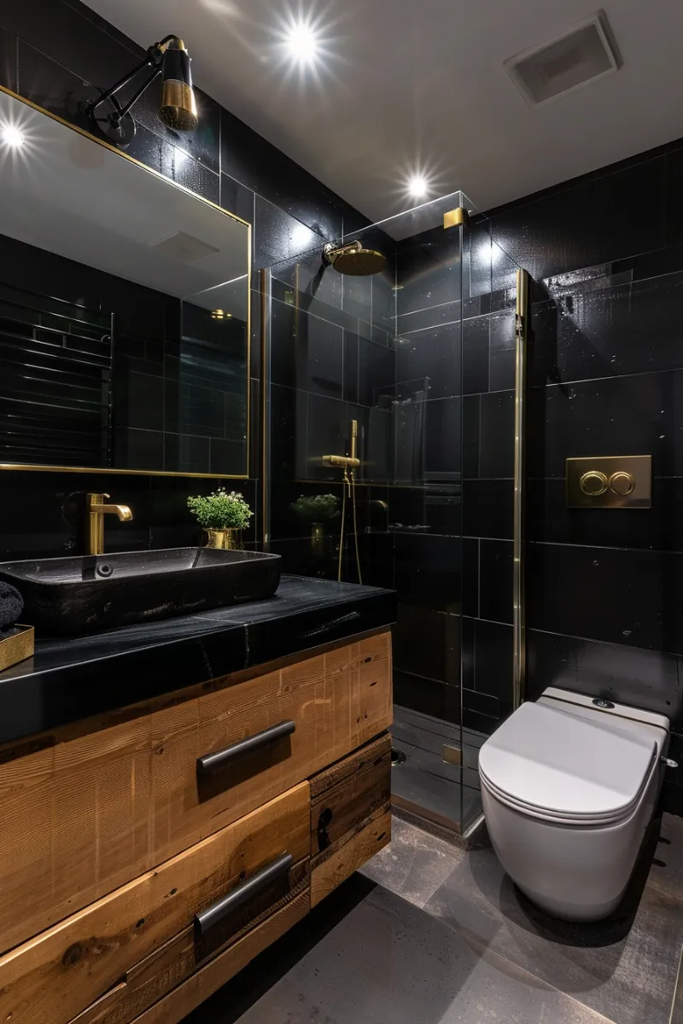
Glossy black tile can make a shower wall or backsplash feel dramatic and modern. The reflective surface can also bounce available light around the room.
I like pairing black tile with white fixtures, warm wood, brass, or bronze. This prevents the bathroom from becoming visually heavy.
Pro Tip: I use black glossy tile strategically rather than automatically covering every wall. A single dark feature can provide the drama I want while keeping the rest of the room brighter.
8. All-White Tiles
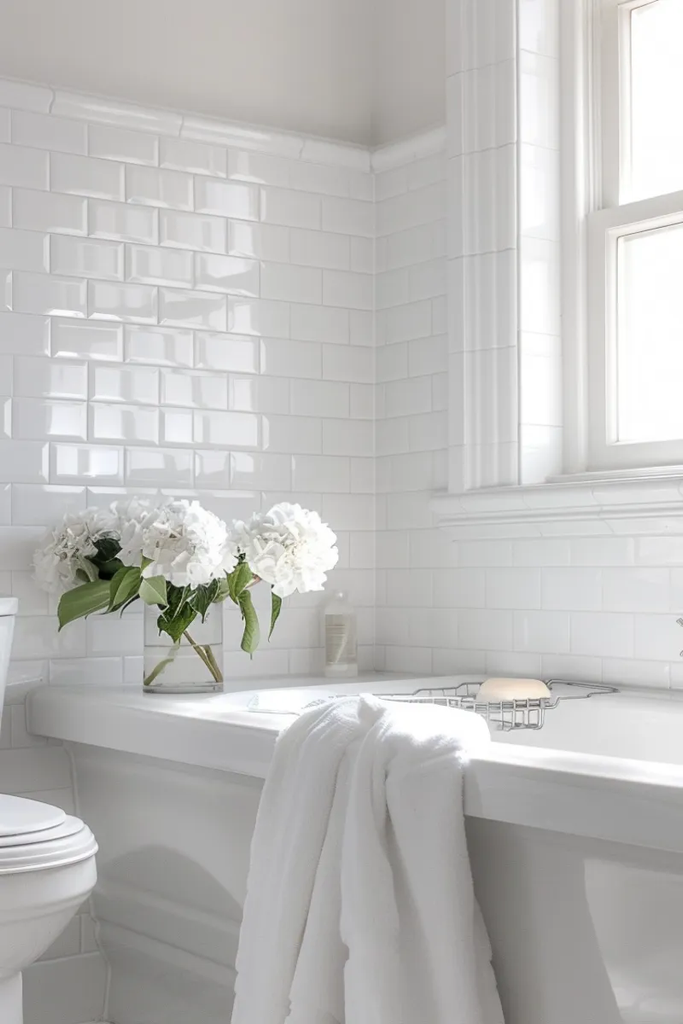
An all-white bathroom can feel bright, clean, and timeless. Using the same general color family across the walls and floor can also create a more connected appearance.
The key for me is adding texture so the room doesn’t feel flat. Wood, woven materials, plants, towels, and subtle tile patterns can all bring warmth into the space.
Pro Tip: When I use mostly white tile, I choose at least one contrasting texture or natural material. A wood vanity or woven basket can make a surprisingly big difference.
9. Zellige Tiles
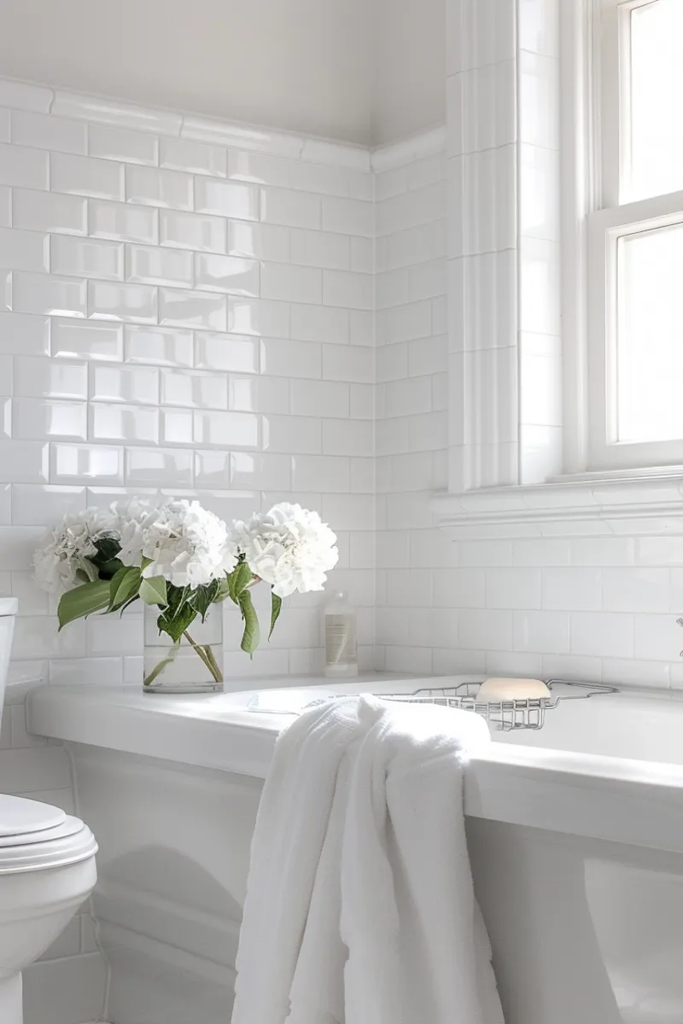
Zellige-style tile gives me a handmade appearance through variations in color, texture, and surface. Even when the overall color is neutral, those small differences keep the wall from looking completely flat.
I like this style with wood cabinetry and warm metal fixtures. It works especially well when I want a relaxed bathroom that still feels polished.
Pro Tip: I order enough tile to account for shade variation and carefully mix pieces during installation. The natural variation is part of the appeal, so I want it distributed rather than concentrated in one area.
10. Blue Shower Tiles
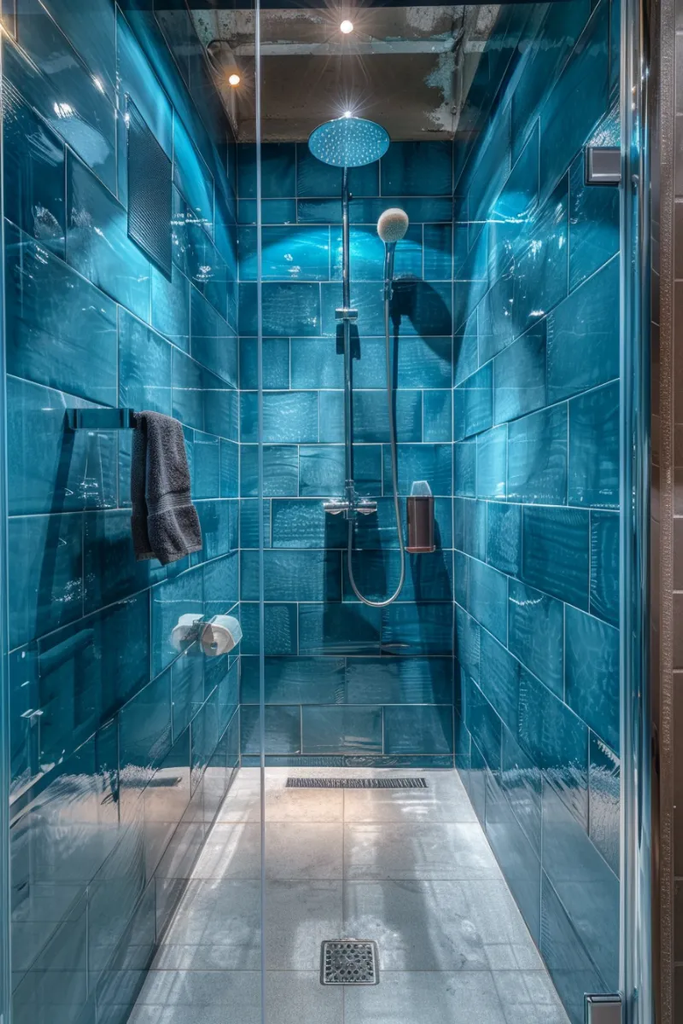
Blue tile can make a shower feel cool, calm, and refreshing. I can choose pale blue for a lighter appearance or navy and royal blue when I want the shower to become a stronger focal point.
I find that blue works particularly well with white fixtures and warm wood tones. Brass hardware can also add warmth against deeper shades.
Pro Tip: I test blue tile against my bathroom lighting before committing. Blue can look noticeably different under warm bulbs compared with daylight.
11. Vertically Stacked Subway Tiles
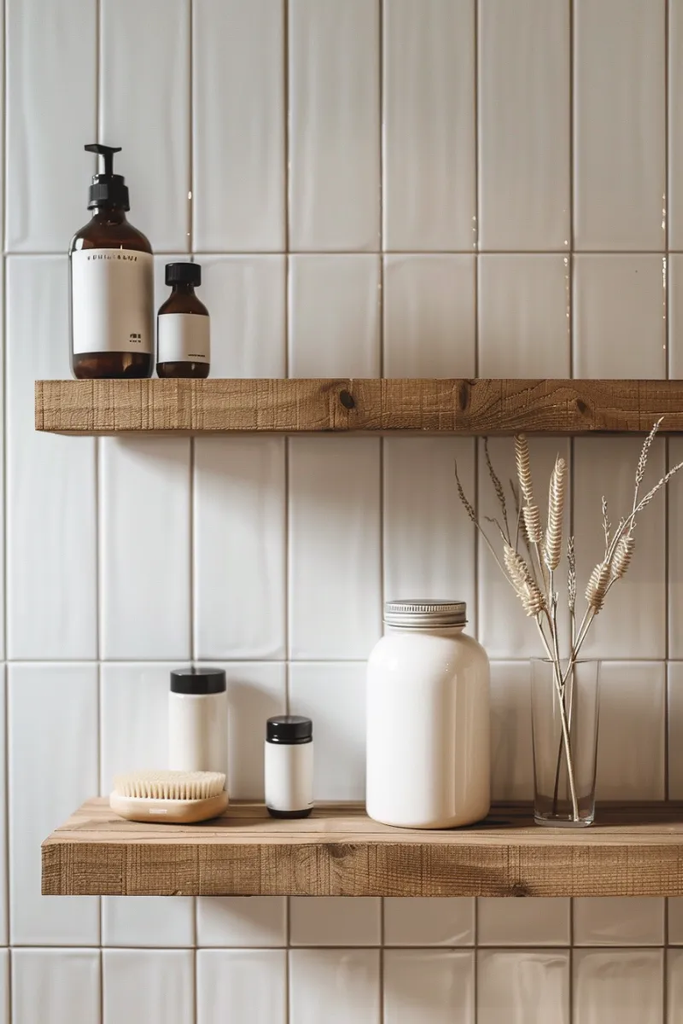
I can give traditional subway tile a modern update simply by turning the layout vertically. The upward direction naturally draws attention toward the ceiling.
This can be useful when I want to emphasize the height of a bathroom without adding another decorative pattern.
Pro Tip: I measure the wall carefully before choosing the tile size. I want to avoid ending with a very narrow strip of tile at the ceiling or around the main fixtures.
12. Jewel-Toned Deep Green Tiles
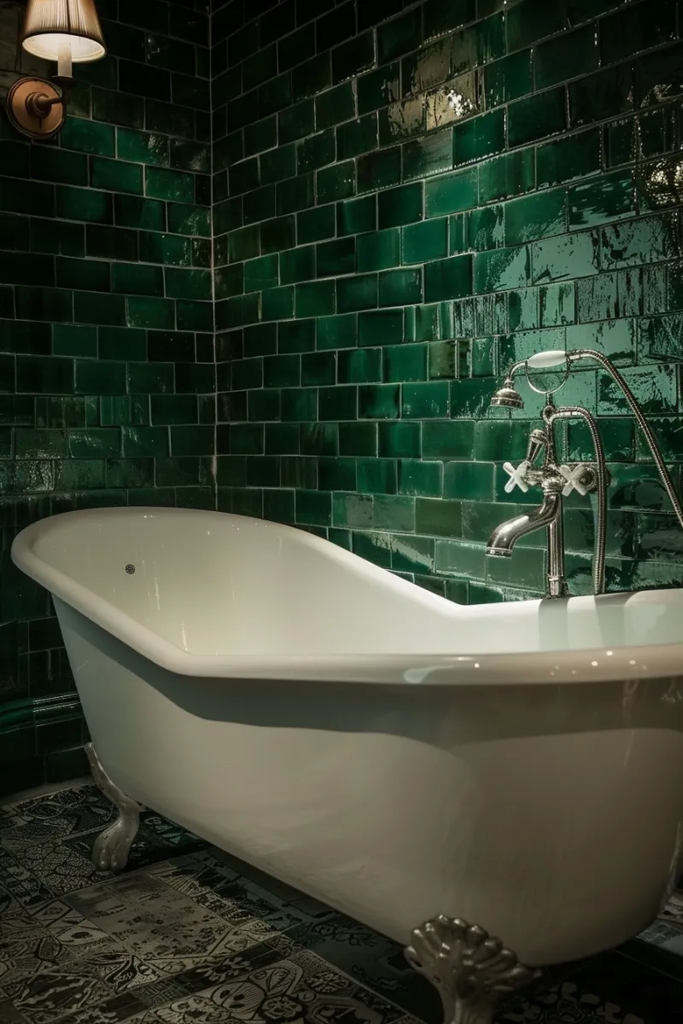
Deep green tile gives me a rich color option while still feeling connected to nature. It can make a bathroom feel dramatic without relying on black.
I like combining deep green with brass, cream, white, or natural wood. These lighter elements keep the darker tile from taking over the entire room.
Pro Tip: If I’m nervous about using a strong green, I start with one shower wall or vanity backsplash rather than covering the entire bathroom.
13. Travertine Tiles
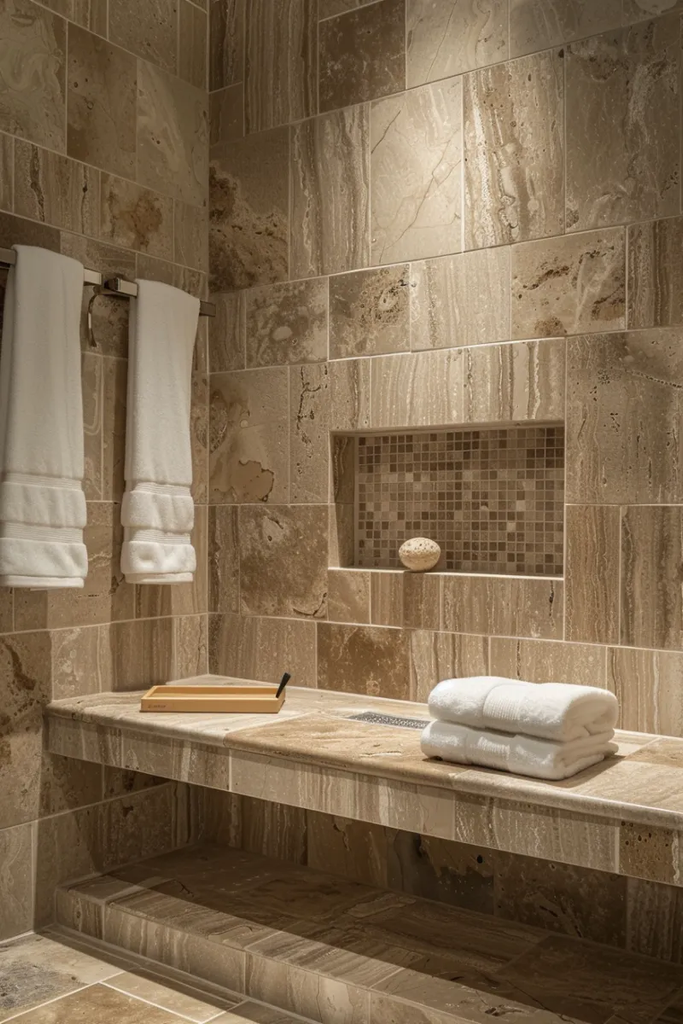
Travertine brings earthy tones and natural stone variation into a bathroom. Its warm beige and tan shades can create a comfortable, spa-like atmosphere.
I like combining it with white towels, wood accents, simple fixtures, and warm lighting. The result feels natural without needing many decorative accessories.
Pro Tip: I confirm the exact care requirements before purchasing natural travertine. Bathroom moisture makes it especially important to follow the manufacturer’s cleaning and sealing recommendations.
14. Botanical Tiles
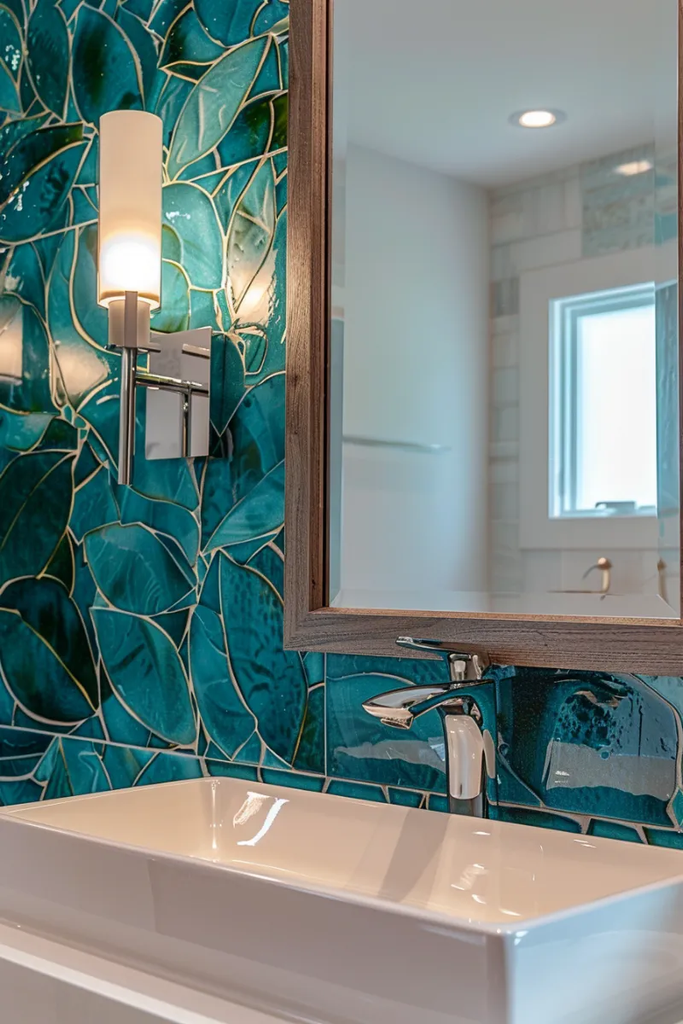
Botanical tile can turn an ordinary bathroom wall into artwork. Leaf and plant-inspired patterns work particularly well when I want color without using a very bright or intense palette.
I prefer keeping the vanity and fixtures simple when the wall contains a detailed botanical print. That balance helps the pattern remain the main feature.
Pro Tip: I choose my mirror size after deciding where the patterned tile will go. A large mirror can hide much of a beautiful feature wall if I don’t plan the layout first.
Also read: 28 Modern Farmhouse Bathroom Ideas for Every Taste
15. Checkerboard Tiles
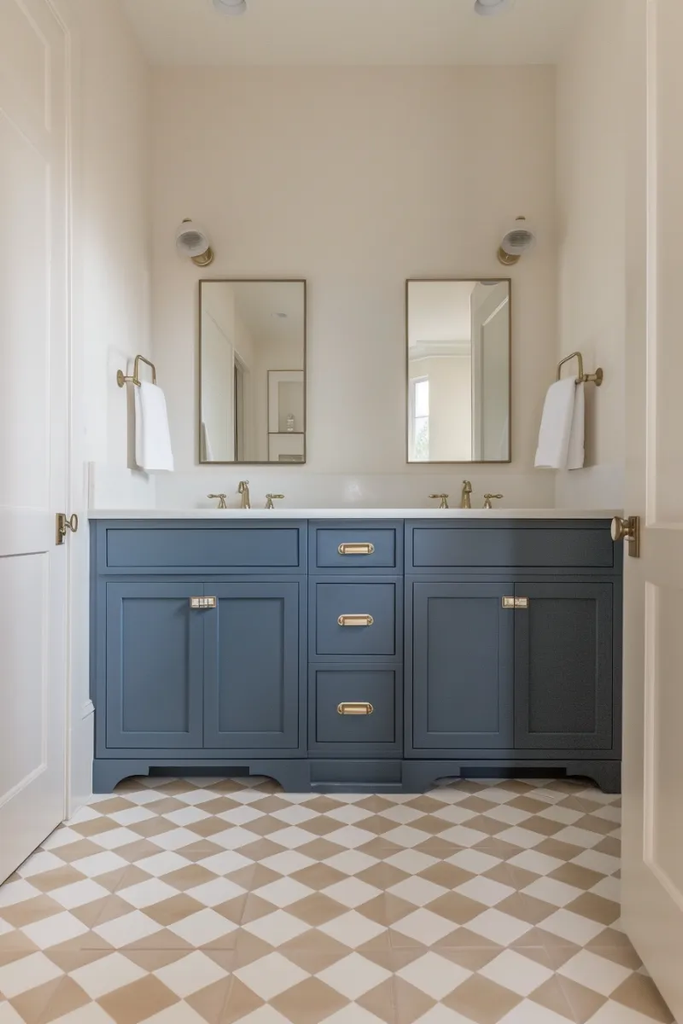
Checkerboard flooring creates an instantly recognizable pattern. I can use classic black and white, or choose softer combinations such as cream and beige for a warmer result.
Because the floor already has a strong pattern, I usually keep the walls simpler. A solid-color vanity can provide contrast without competing with the floor.
Pro Tip: I decide whether I want the pattern to feel bold or subtle before choosing the colors. High contrast makes the checkerboard more noticeable, while similar shades create a softer effect.
16. Herringbone-Patterned Subway Tiles
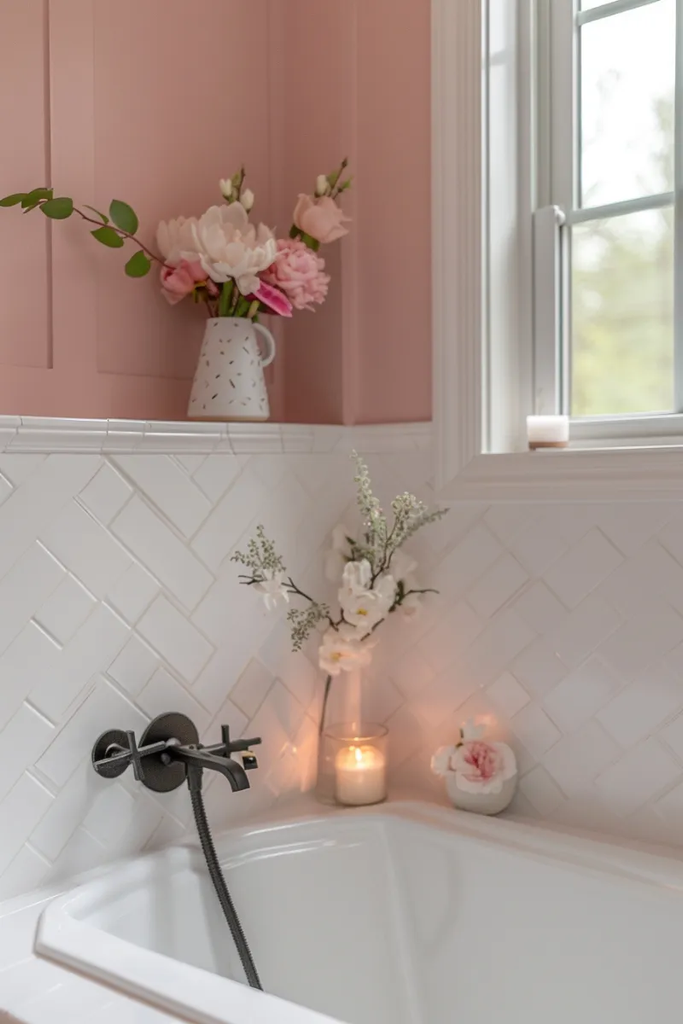
Herringbone gives ordinary subway tile a more decorative appearance. The angled arrangement creates movement without requiring a completely different tile style.
I can use it behind a vanity, in a shower, or as a feature wall. It works especially well when I want texture and pattern but still prefer a relatively simple color palette.
Pro Tip: I don’t use herringbone everywhere unless the room is very simple. One well-planned feature area is often enough to give the bathroom a custom appearance.
17. Moroccan-Style Floor Tiles
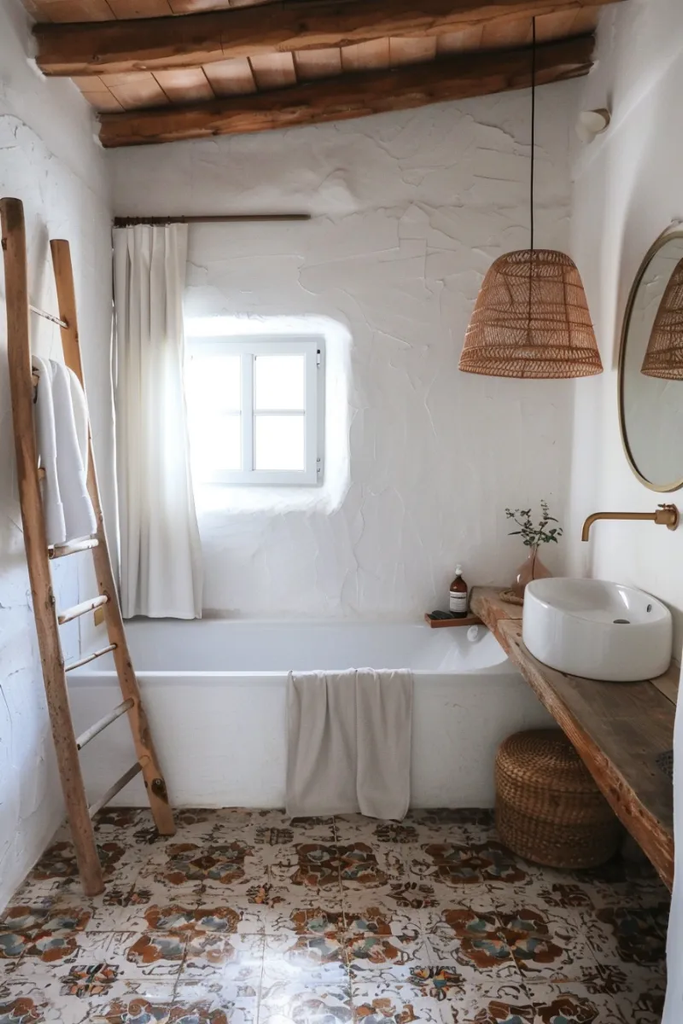
Moroccan-inspired patterns are a great way for me to introduce personality through flooring. I can use colorful designs for a lively bathroom or neutral patterns for a more understated look.
I like pairing patterned floors with white walls, wood furniture, woven accessories, and warm metal finishes. This keeps the overall design balanced.
Pro Tip: I take the floor pattern into account when selecting towels, rugs, and shower curtains. I avoid adding another competing pattern unless the colors clearly coordinate.
18. Metallic Patterns
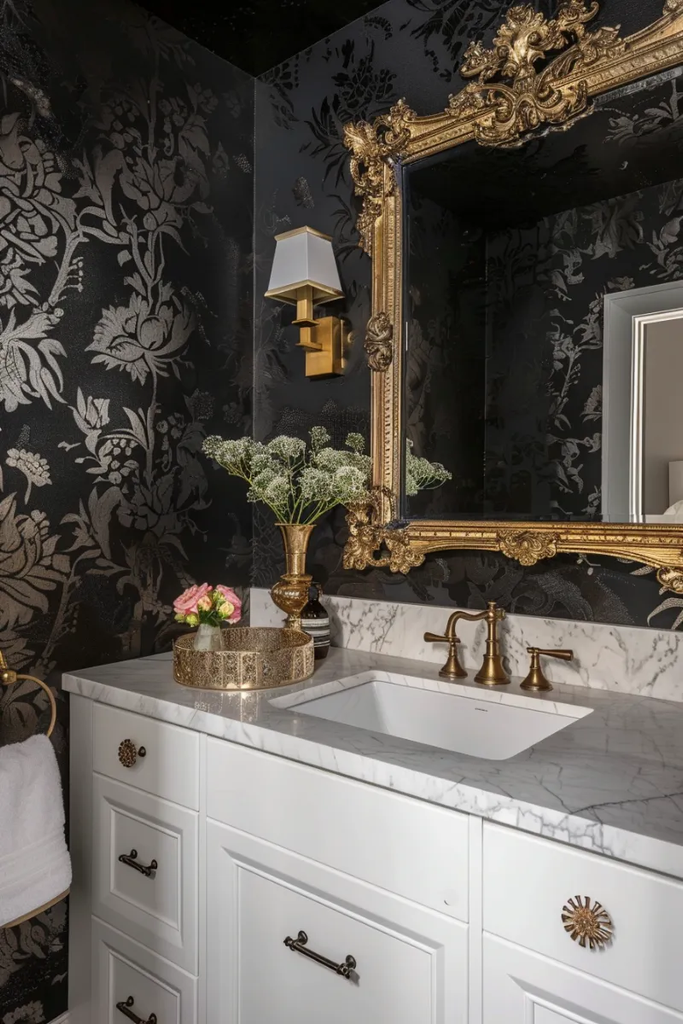
Metallic tile patterns can give a bathroom a glamorous touch. Gold, bronze, or copper details can look especially striking against darker backgrounds.
I prefer using metallic tile as a feature rather than covering every surface with it. Warm lighting can also emphasize metallic details and make them more noticeable.
Pro Tip: I match the metallic undertone with my bathroom hardware. Mixing metals can work, but I make the combination intentional instead of accidentally combining several unrelated finishes.
19. Black and White Patterns
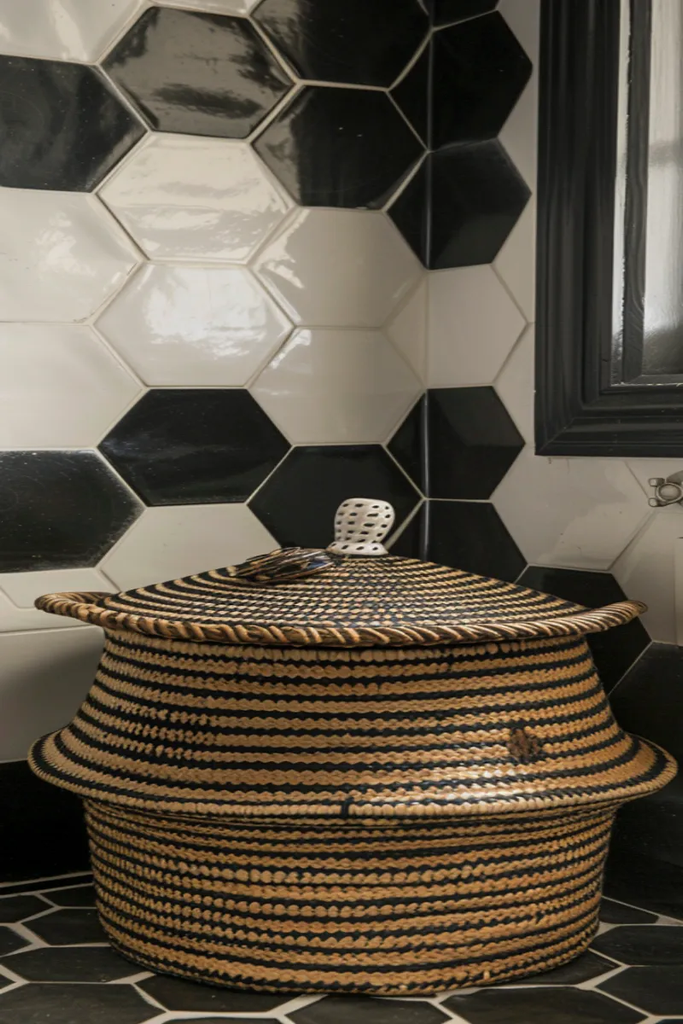
Black-and-white tile gives me plenty of contrast without requiring a colorful palette. Geometric patterns can work on floors, shower walls, backsplashes, or small decorative sections.
I like adding natural wood or woven accessories to soften the strong contrast. This keeps the bathroom from feeling too stark.
Pro Tip: I use black-and-white patterned tile on one major surface and let the other surfaces remain quieter. This makes the pattern look intentional instead of overwhelming.
20. Raised-Pattern Wood Looks Tile
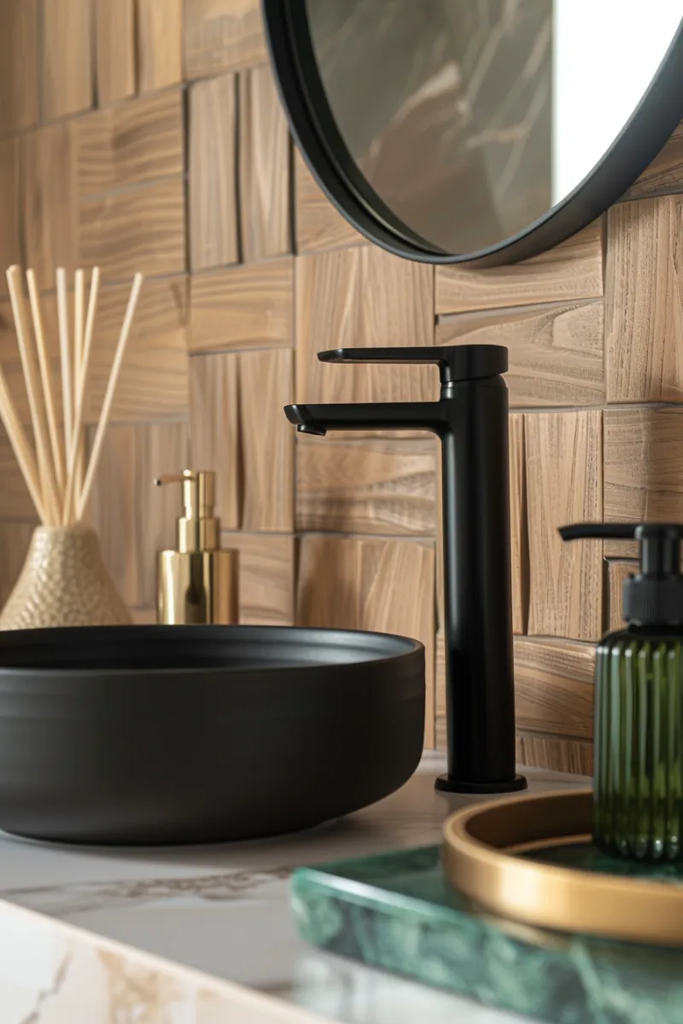
Wood-look tile can help me introduce the warmth of wood-inspired design into a bathroom. A raised or textured pattern adds another layer of interest to a feature wall.
I like using this approach when I want a warm modern bathroom without making it look overly rustic.
Pro Tip: I confirm that the specific product is intended for bathroom use and the particular surface where I plan to install it. Not every wood-look product is suitable for every wet application.
21. Royal Blue Tiles
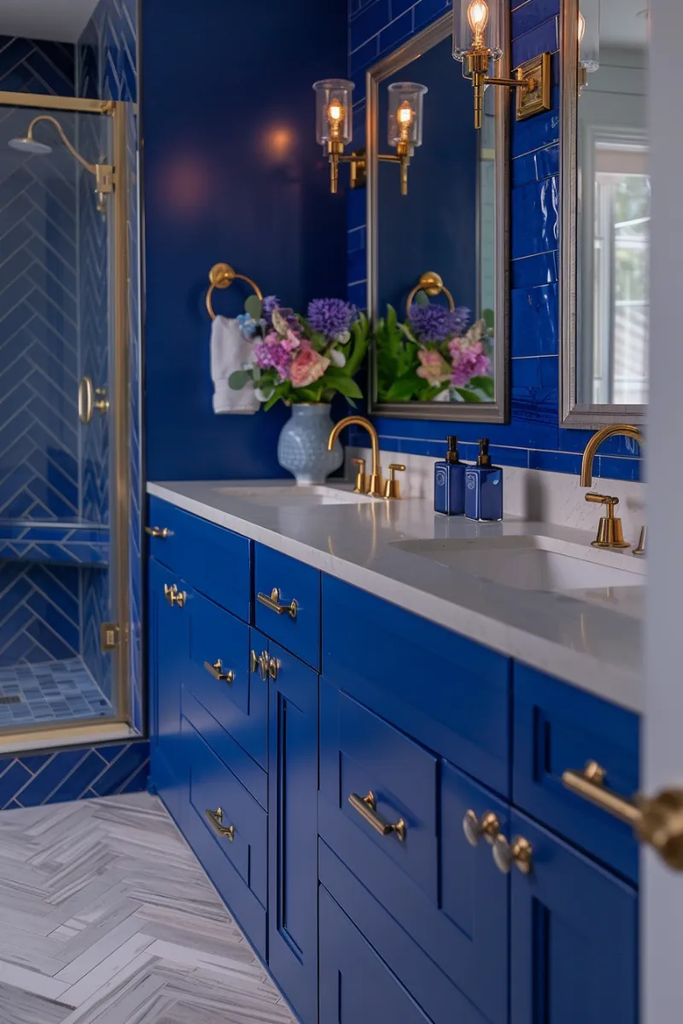
Royal blue tile can create a strong focal point around a shower or vanity. I especially like it in a herringbone layout because the pattern gives the bold color even more movement.
White countertops, brass hardware, and light fixtures create a useful contrast against the deeper blue.
Pro Tip: I limit the number of additional accent colors when using royal blue. Two or three supporting finishes usually look more controlled than a collection of unrelated colors.
22. Ultra-Luxe Marble Looks
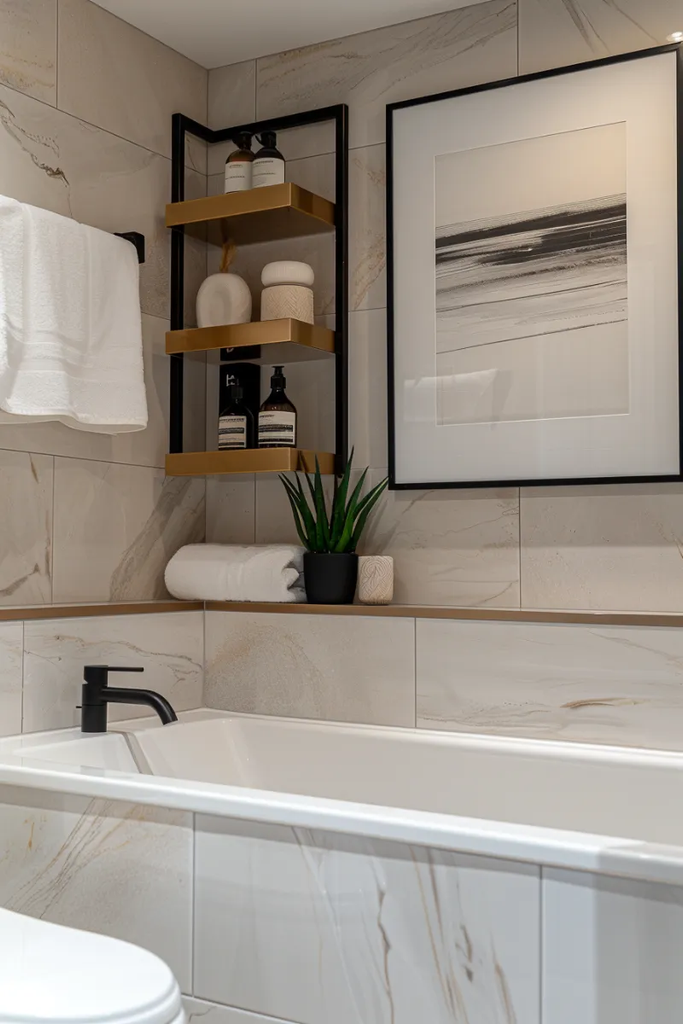
Marble-look tile lets me create a luxurious visual effect with warm beige, cream, or white tones. The veining can provide enough detail that I don’t need additional decorative patterns.
I like this approach when I want an elegant bathroom that still feels comfortable and not overly formal.
Pro Tip: I compare several marble-look samples side by side. Veining direction, background tone, and pattern scale can make two products with the same general color look completely different.
23. Chinoiserie Pattern Tiles
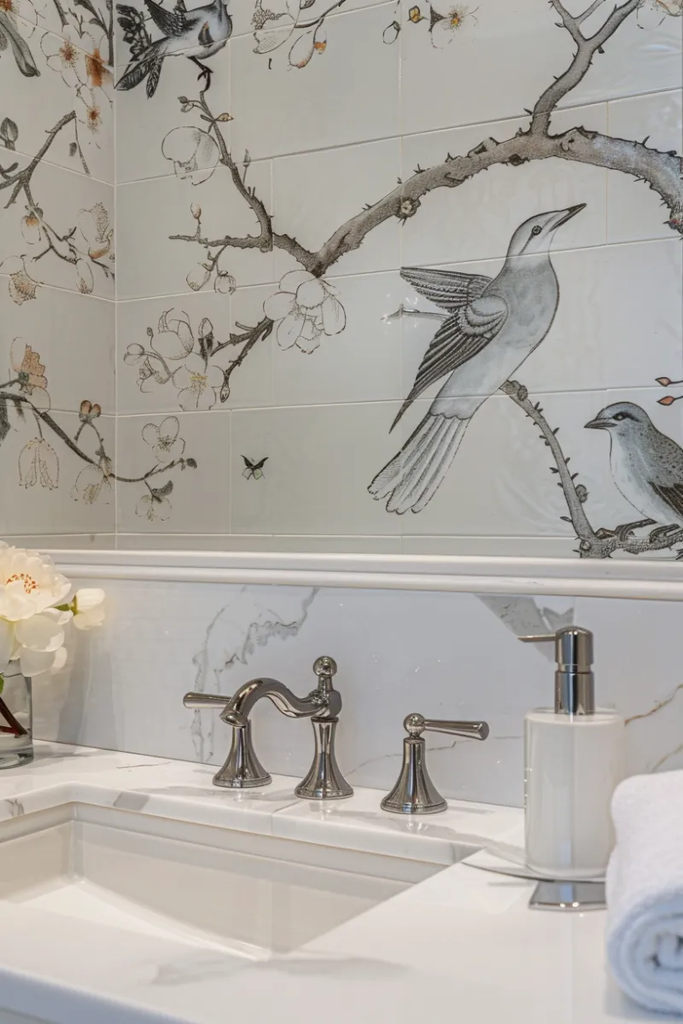
Chinoiserie-inspired tile can bring detailed artwork into the bathroom through birds, flowers, branches, and other decorative motifs.
I would usually make this the main statement surface. A simple vanity, understated countertop, and minimal accessories give the intricate design enough visual space.
Pro Tip: I think about where the pattern will be interrupted by outlets, mirrors, plumbing, or cabinets before installation. A highly detailed pattern looks best when the main motif isn’t awkwardly cut off.
24. Multi-Colored Tiles
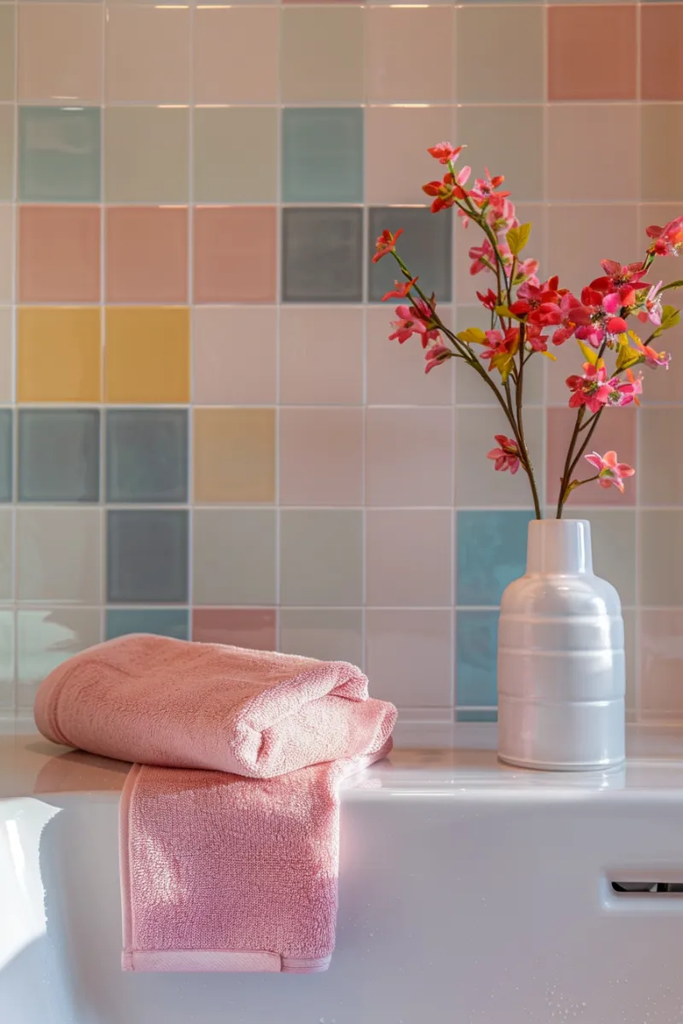
Multi-colored tile gives me an opportunity to make the bathroom more cheerful. Soft pastel combinations can add plenty of color without making the space feel overly intense.
I like using colorful tile behind a bathtub or on one feature wall while keeping the remaining surfaces neutral.
Pro Tip: I pull one or two colors from the tile for towels and accessories rather than matching every color in the pattern. This creates a more coordinated finish.
25. Sage Green Clay Tiles
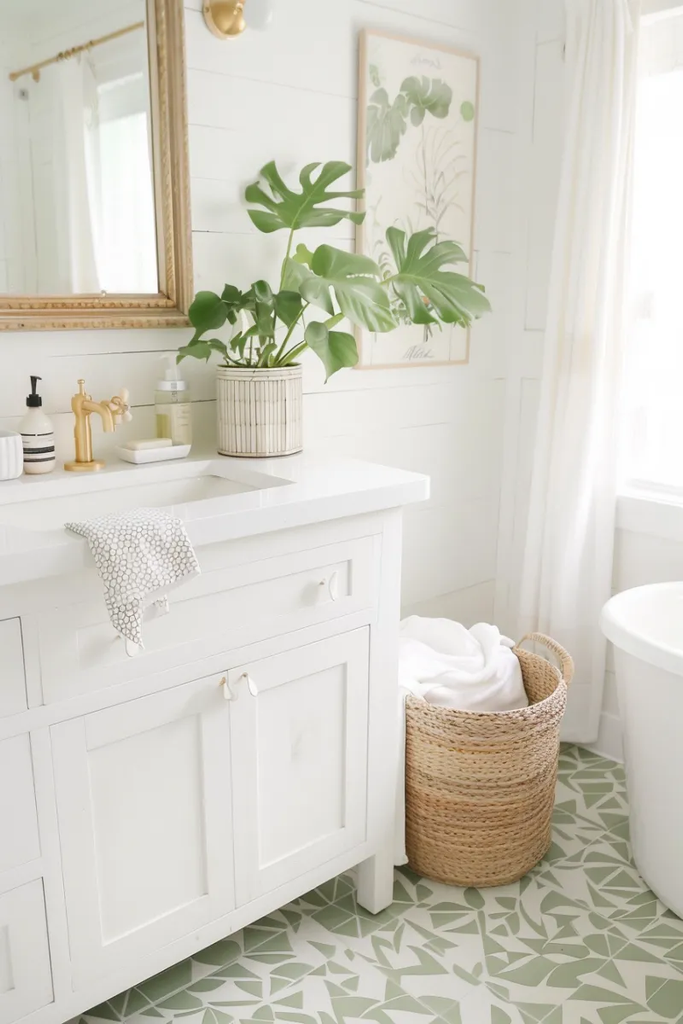
Sage green has a softer appearance than many saturated greens, which makes it easy for me to use in both vintage-inspired and modern bathrooms.
I like pairing sage with cream, natural wood, brass, and warm lighting. The combination feels comfortable and works well when I want a bathroom with character rather than a stark modern look.
Pro Tip: I compare sage samples in the bathroom at different times of day. Green can shift considerably depending on surrounding colors and lighting.
26. Gold-and-Brass Star Mosaic Tiles
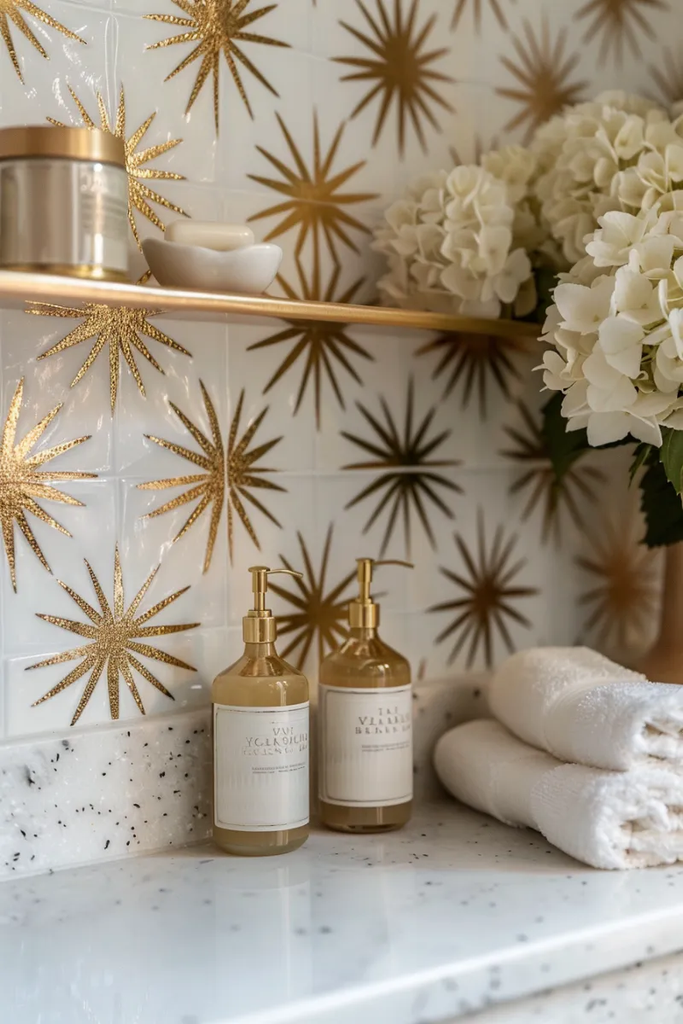
Star-shaped mosaic tile can make a small bathroom surface feel like a piece of artwork. Gold and brass tones add warmth and pair well with neutral walls and cabinetry.
I would use this type of detailed tile selectively, such as behind a vanity or in a recessed area, so the pattern remains special.
Pro Tip: I keep the surrounding accessories simple when the mosaic contains metallic details. Too many competing decorative pieces can make a small bathroom feel cluttered quickly.
27. Plaid Pattern Tiles
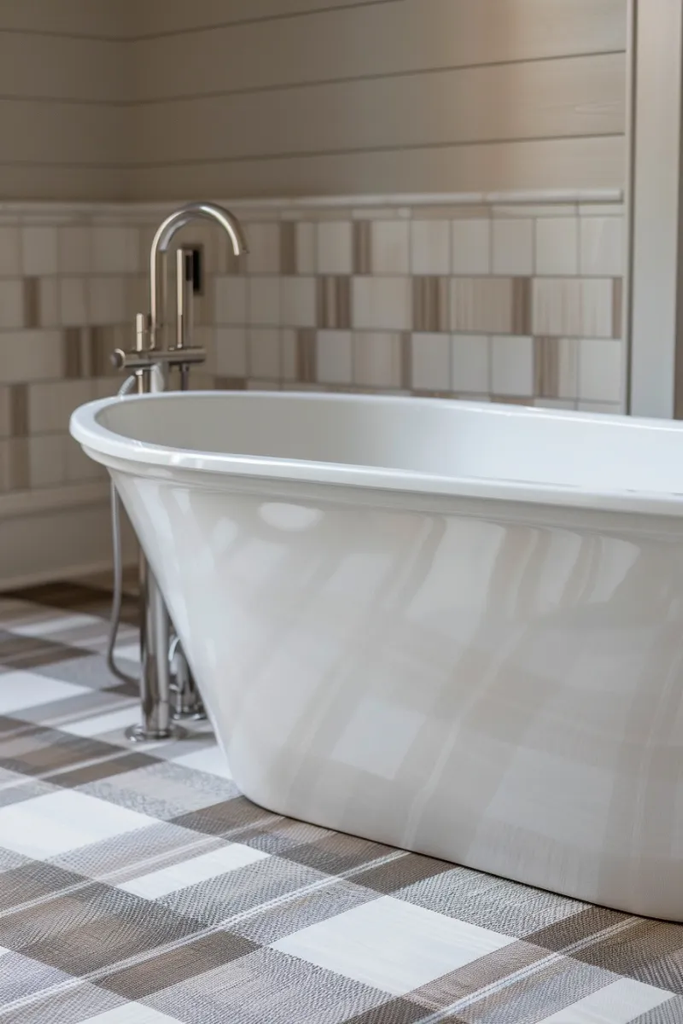
Plaid-pattern tile gives me an unusual alternative to more common geometric flooring. Neutral versions can create visual interest while keeping the bathroom sophisticated.
I like pairing a patterned floor with simple walls, clean fixtures, and a streamlined bathtub or vanity. This gives the floor room to become the main design feature.
Pro Tip: I check how the plaid pattern aligns with the walls and major fixtures before installation. Symmetry and careful layout matter more when the pattern has strong horizontal and vertical lines.
Read this next: 27 Bathroom Paint Color Ideas To Transform Your Space
FAQs About Bathroom Tile Ideas
What tile is best for a bathroom?
Porcelain and ceramic tiles are popular bathroom choices because they are durable, water-resistant, and available in many colors, sizes, and patterns.
What color tile makes a small bathroom look bigger?
Light colors such as white, cream, pale blue, and soft gray can make a small bathroom feel brighter and more spacious.
Is patterned tile a good choice for a bathroom?
Yes. I can use patterned tile on the floor, shower wall, or backsplash to add personality. I usually keep other surfaces simple to avoid a busy look.
How do I choose the right bathroom tile?
I consider where the tile will be installed, moisture exposure, slip resistance, maintenance, size, color, grout, and how it works with my existing bathroom fixtures.
Conclusion
When I choose bathroom tile, I try to balance appearance with everyday practicality. A tile can look beautiful in a photograph, but I also need to know whether it suits the surface, handles the bathroom environment, and fits the amount of maintenance I’m willing to do.
The 27 ideas above give me plenty of directions to consider, whether I prefer natural pebble textures, classic white subway tile, colorful patterns, rich green and blue shades, marble looks, or decorative mosaics.
My best advice is to get physical samples before making the final decision. I check them with my existing flooring, vanity, countertop, fixtures, and bathroom lighting. That small step helps me see the complete combination before I commit to an expensive renovation.

3 Comments