23 DIY Party games For Kids
Planning a kids’ party becomes much easier when I match the games to the children, the available space, and the amount of preparation I actually have time for. A large backyard gives me room for races and water games, while a living room calls for activities with smaller movement zones.
I also try not to schedule one high-energy game after another. Mixing active challenges with creative or quieter games gives children different ways to participate and makes the party easier to manage. Many of the ideas below use supplies I already have at home, so the setup can stay affordable without making the activities feel thrown together.
These 23 DIY party games for kids include movement games, team challenges, creative activities, guessing games, and familiar party favorites. Some take only a few minutes to prepare, while others are better suited to the main activity portion of a birthday party or outdoor gathering.
I choose games according to age, group size, floor space, weather, and energy level. Preschoolers generally need short instructions and simple rules, while older children can handle scoring, timed challenges, clues, and more complicated variations.
The list includes homemade games using balloons, paper plates, bottles, cups, buckets, cards, household containers, and other inexpensive supplies. I also include quieter choices such as Marshmallow Tower, Cup Stack Challenge, and Charades for those moments when the group needs a break from running.
Save this for later
Table of Contents
Safety matters just as much as entertainment. I check the play area before active games, supervise activities involving food or small materials, collect balloon fragments promptly, and adapt or skip an activity when it is not appropriate for the children attending.
Key Takeaways
- Match each game to the children’s ages, abilities, group size, and available space.
- Use household supplies such as cups, cardboard, paper plates, bottles, and homemade cards whenever practical.
- Alternate active games with quieter activities so the party does not become exhausting.
- Prepare supplies and game boundaries before guests arrive to reduce waiting time.
- Keep a couple of short backup games ready in case an activity ends sooner than expected.
- Use cooperative rules when competition is likely to leave younger or less confident children behind.
- Check the play area and materials carefully, especially for balloons, food, water, strings, and small or sharp pieces.
Related article: 21 Easy Luau Party Games With Instructions
1. Balloon Pop Relay
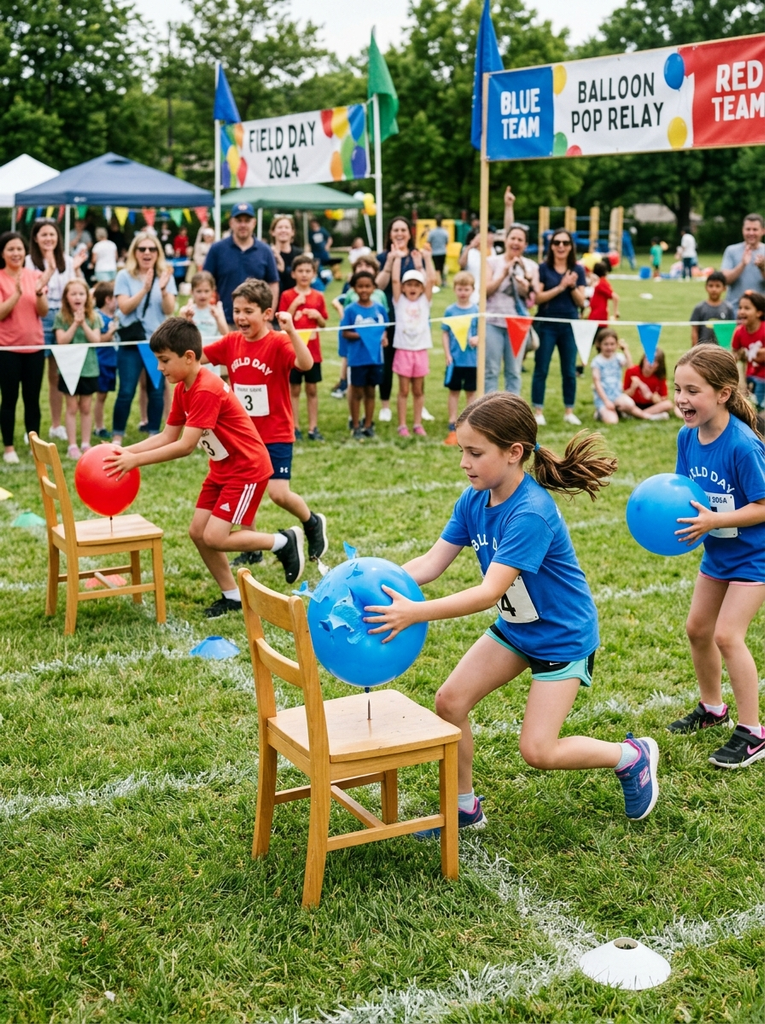
For a high-energy outdoor activity, a balloon pop relay gives children a clear job and keeps the group moving. I divide the players into teams and place an equal number of balloons at a designated spot for each team.
One child runs to the balloons, pops one using the agreed method, and returns to tag the next teammate. The team continues until its balloons are gone. For a smaller group, I can skip teams and let children complete the relay individually.
This is better suited to children who can follow running and turn-taking instructions. I keep the course free from furniture, cords, glass, sharp objects, and slippery areas.
Broken and uninflated balloons need particular attention because they can be hazardous to young children and pets. I collect every fragment before moving on to another activity.
Pro Tip: Use different-colored balloons for each team so children can immediately identify which balloons belong to them. This also makes cleanup and counting easier.
2. Pin the Tail (or Something!)
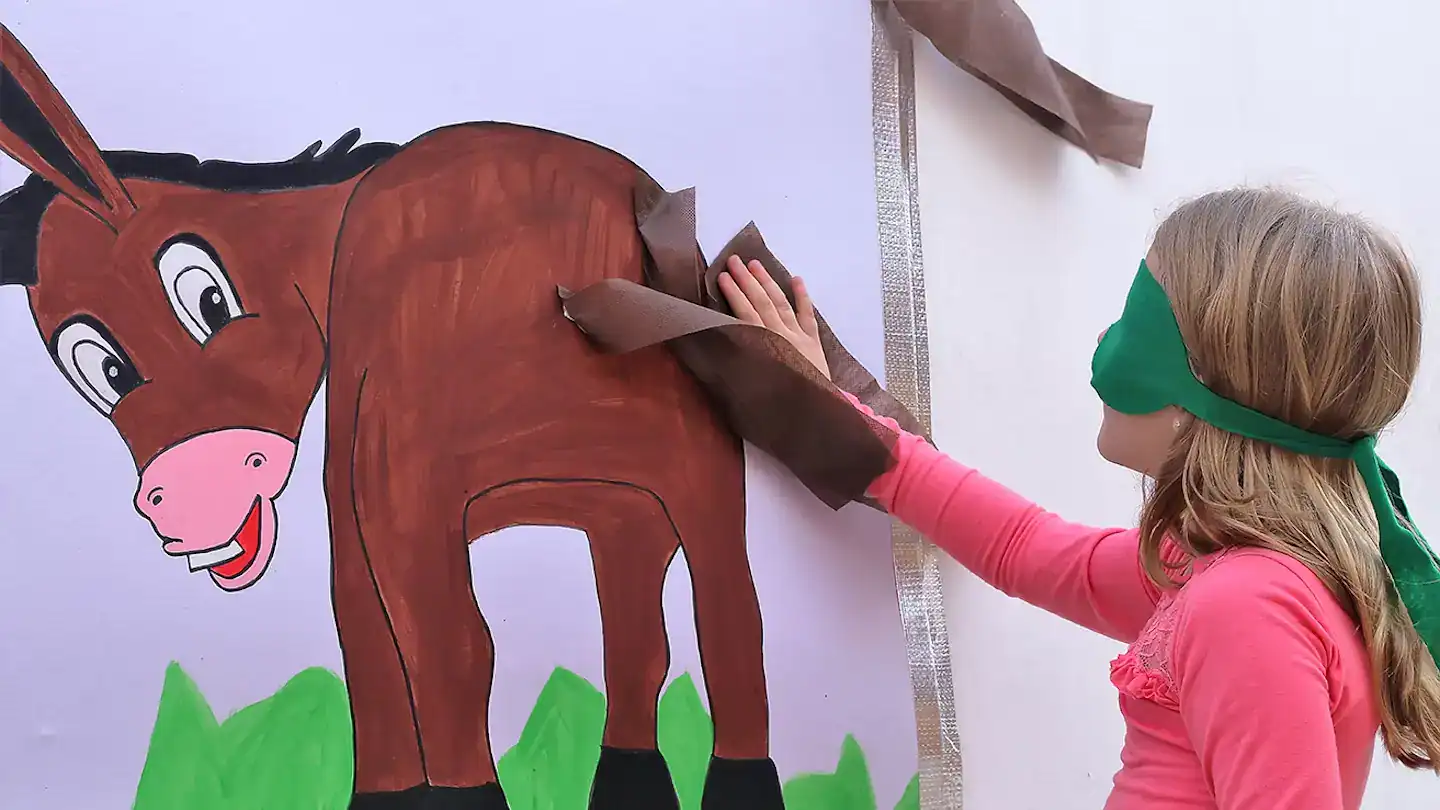
I can turn this familiar party game into a homemade activity that matches almost any theme. A cardboard dinosaur, unicorn, pirate, animal, or other character can replace the traditional donkey.
I draw or print a large target and make removable pieces from cardstock. Depending on the children’s ages, the pieces might be a tail, hat, horn, crown, spot, or pair of wings.
Older children may enjoy using a blindfold, but I do not require one for younger players. There is also no need to spin children around; removing that part makes the activity easier to manage and avoids deliberately making them dizzy.
Pro Tip: Put each child’s name on their game piece before the first turn. It gives me a quick way to see where everyone placed their piece and makes the finished poster a fun party keepsake.
3. Treasure Hunt
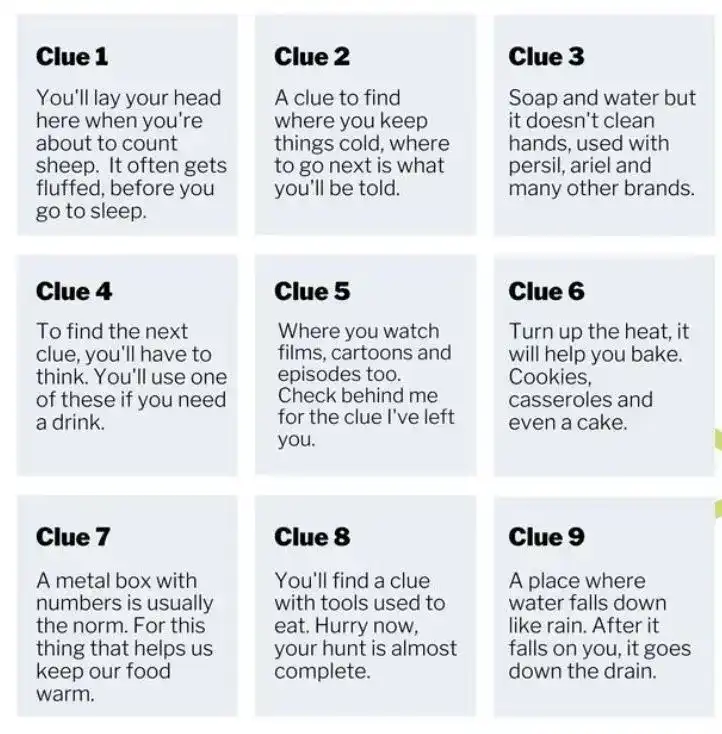
A treasure hunt turns ordinary rooms or a backyard into a themed activity without requiring much equipment. I create clues on index cards or scrap cardboard and hide them in safe, accessible places.
For preschoolers, picture clues are usually more practical than written riddles. Older children can follow short clues, solve simple puzzles, or work in teams to reach the final location.
The treasure does not need to be expensive. Stickers, pencils, themed paper goods, or individually appropriate party favors can work. I check small prizes carefully because an item suitable for an older child may not be appropriate for a toddler.
I also avoid hiding clues near stairs, hot appliances, locked areas, roads, or places where children would need to climb furniture.
Pro Tip: Give each team a different first clue if several children are participating. This prevents everyone from crowding into one location and reduces waiting.
4. DIY Ring Toss
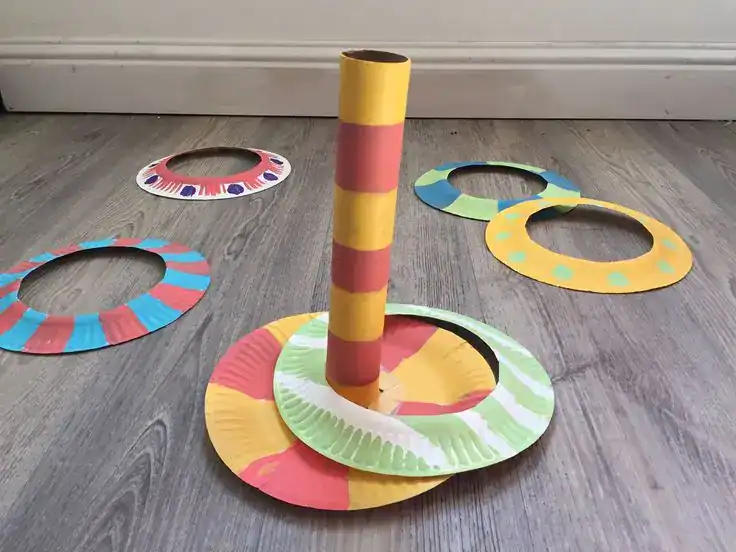
For a homemade ring toss, I can turn empty bottles or sturdy household containers into targets. Paper plates with their centers removed make lightweight rings, while cardboard can be cut into larger rings for younger children.
The targets can be placed at different distances, giving me an easy way to adjust the challenge. Younger children can stand closer, while older players can earn more points for reaching the farther targets.
Unlike the Hula Hoop Contest, this game focuses on aiming rather than continuous movement. That makes it useful for a smaller indoor space or as a quieter activity between energetic games.
Pro Tip: Add numbers to the bottles with paper labels and let older children keep their own scores. For younger players, skip scoring and count successful throws instead.
5. Musical Freeze Dance
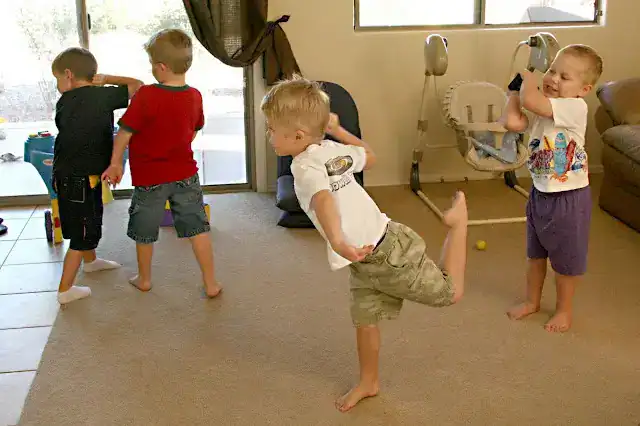
Freeze dance is one of my go-to choices when I need an activity that requires almost no equipment. I play age-appropriate music and let the children move until the music stops.
When it pauses, everyone freezes. Rather than eliminating children after a mistake, I usually keep the whole group involved and change the challenge by asking for a particular pose.
A clear area is important. I move toys, cords, breakable decorations, slippery rugs, and other obstacles out of the way before starting.
This game is especially useful for mixed-age groups because the rules can stay simple for younger children while older kids can add dance moves or themed poses.
Pro Tip: Prepare a short playlist before the party rather than choosing songs one at a time. It keeps the activity moving and gives me more control over the pace.
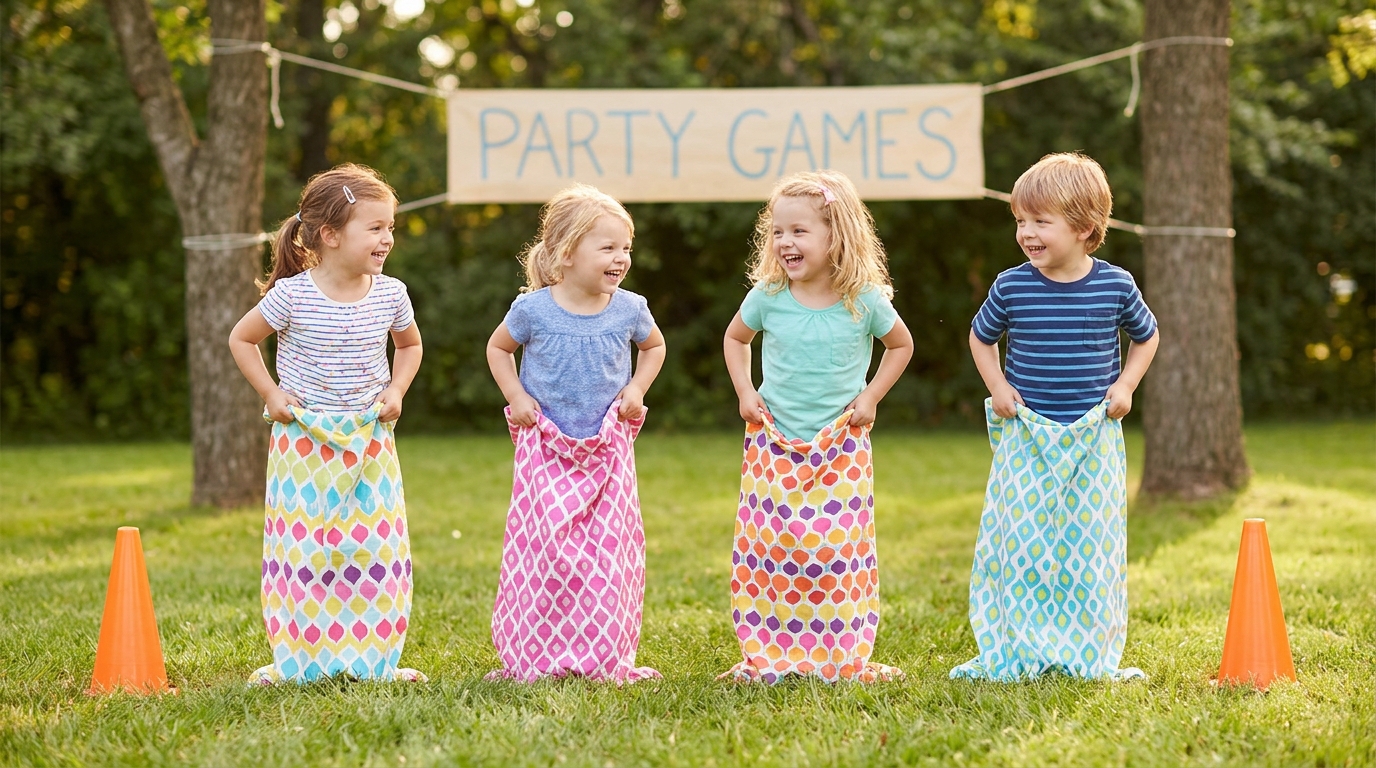
6. Sack Race
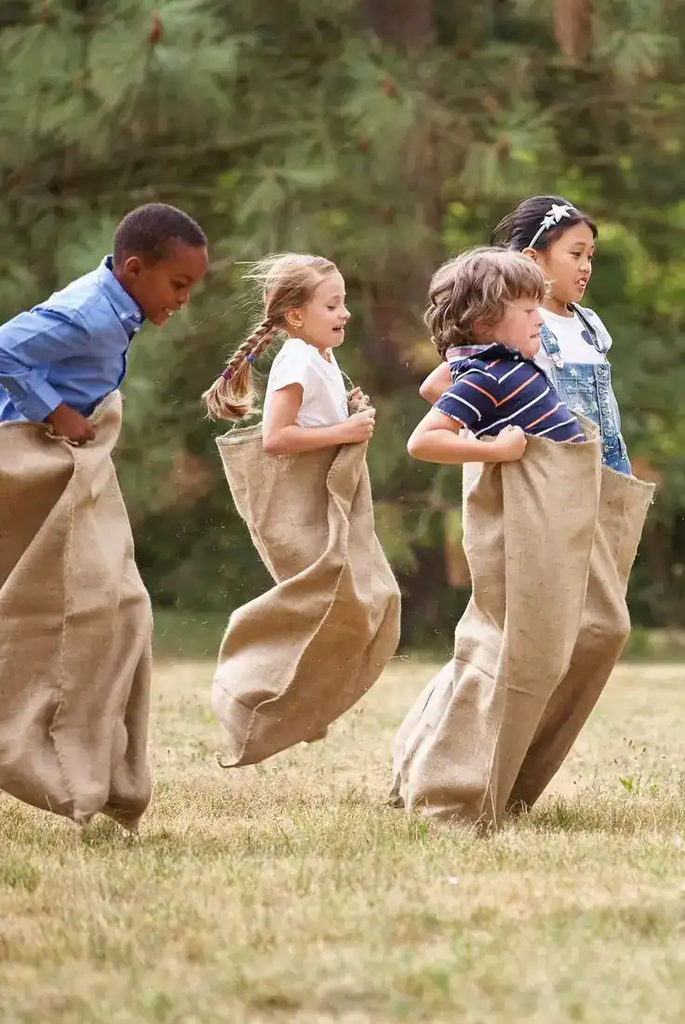
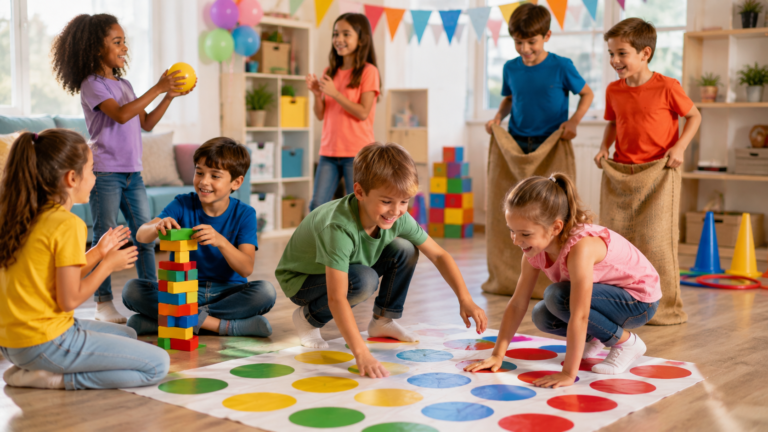
A sack race needs more open space than most of the indoor games on this list, so I usually save it for a backyard, park, or other suitable outdoor area. Sturdy sacks or appropriately sized pillowcases can serve as the homemade equipment.
Each child hops from the starting line to the finish line. For younger children, I shorten the course and let them walk or make small hops instead of turning the activity into a speed contest.
I inspect the route first and remove stones, toys, garden tools, holes, and other hazards. Several short heats are easier to supervise than sending a large group across the same course at once.
Pro Tip: Mark two or three short lanes with cones or household objects that are safe to place on the ground. This gives children their own space and makes the race easier to organize.
7. Obstacle Course
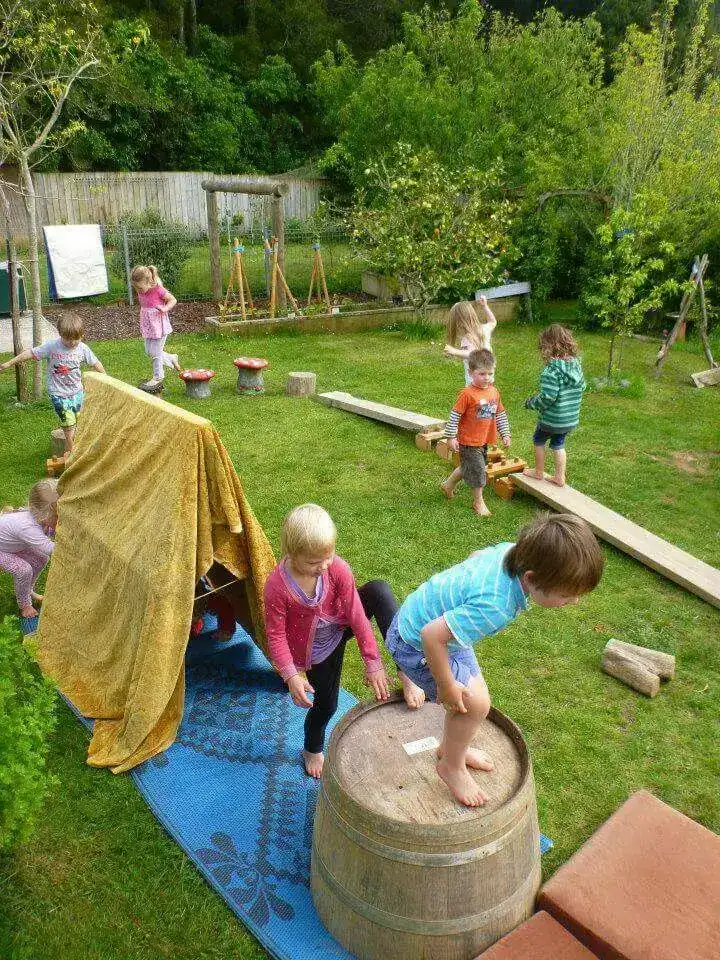
An obstacle course lets me build a party activity around things already available at home. Cardboard boxes, pool noodles, cones, cushions, and jump ropes can create stations for stepping, crawling, walking around, or moving under an obstacle.
I keep everything low and stable. Children should never need to climb unstable furniture or jump from a height to complete the course.
For mixed-age groups, I create an easier route for younger children and add optional challenges for older ones. The course can also be cooperative, with the group trying to complete every station rather than competing for the fastest time.
Pro Tip: Set up the course in one direction so children do not cross paths. I walk through it before the party and remove anything that shifts, tips, or creates an unexpected trip hazard.
8. Paper Plate Ping Pong
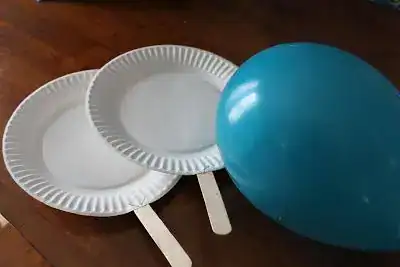
Paper plates and craft sticks can become homemade paddles for a lightweight indoor game. Instead of using a hard ball, I use a balloon so the movement is slower and more manageable in a family room or other limited space.
Two children can keep the balloon moving between them, or a small group can work together to see how many controlled hits they can make before it touches the floor.
The paddles should have no sharp edges, and I check that any attached craft sticks are secure. The game stays away from glass, breakable decorations, ceiling fans, and crowded areas.
Pro Tip: Make the paddles before guests arrive and reinforce the handles with tape. That leaves more party time for playing instead of last-minute crafting.
9. Guess the Animal
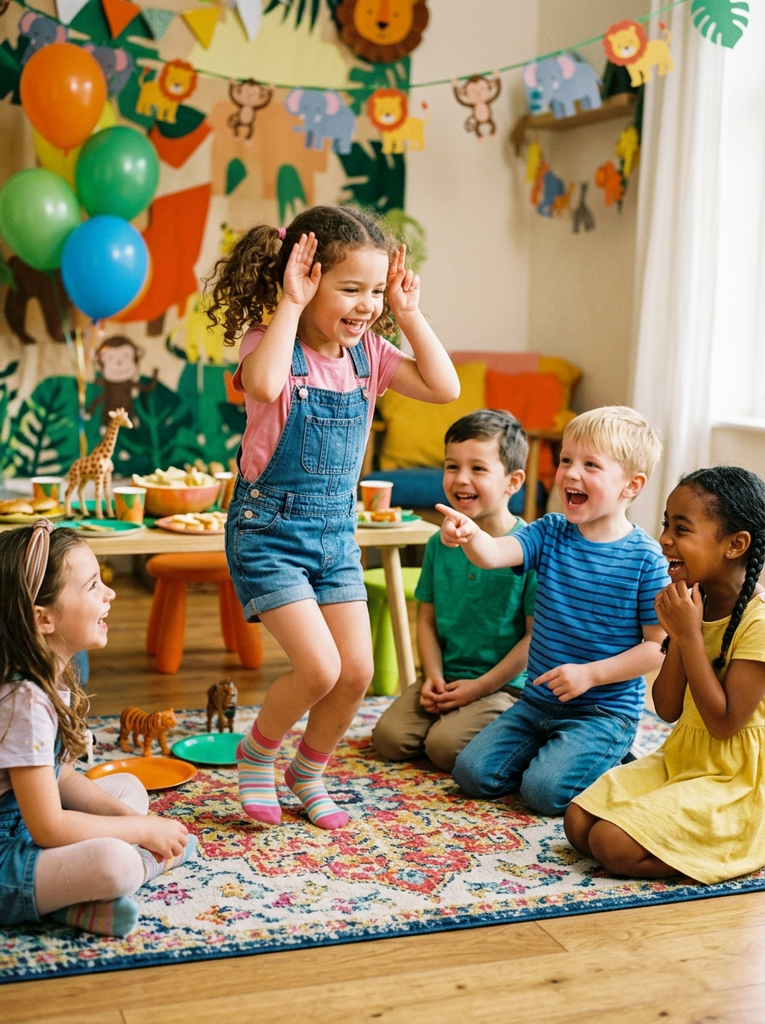
This guessing game is particularly useful for preschoolers and children who enjoy pretend play. I prepare homemade cards with animal names or, for children who are not reading yet, simple animal pictures.
One player chooses a card and acts out the animal while the others guess. A child who feels uncomfortable performing alone can act with a partner or choose a simpler movement.
I keep the animal choices familiar at first, then introduce less obvious ones if older children are playing. There is no need to eliminate anyone after a wrong guess, so the whole group can keep participating.
Pro Tip: Prepare two sets of cards—pictures for younger children and word cards for older ones. That lets me run the same game with a mixed-age group without changing the basic rules.
10. Water Balloon Toss
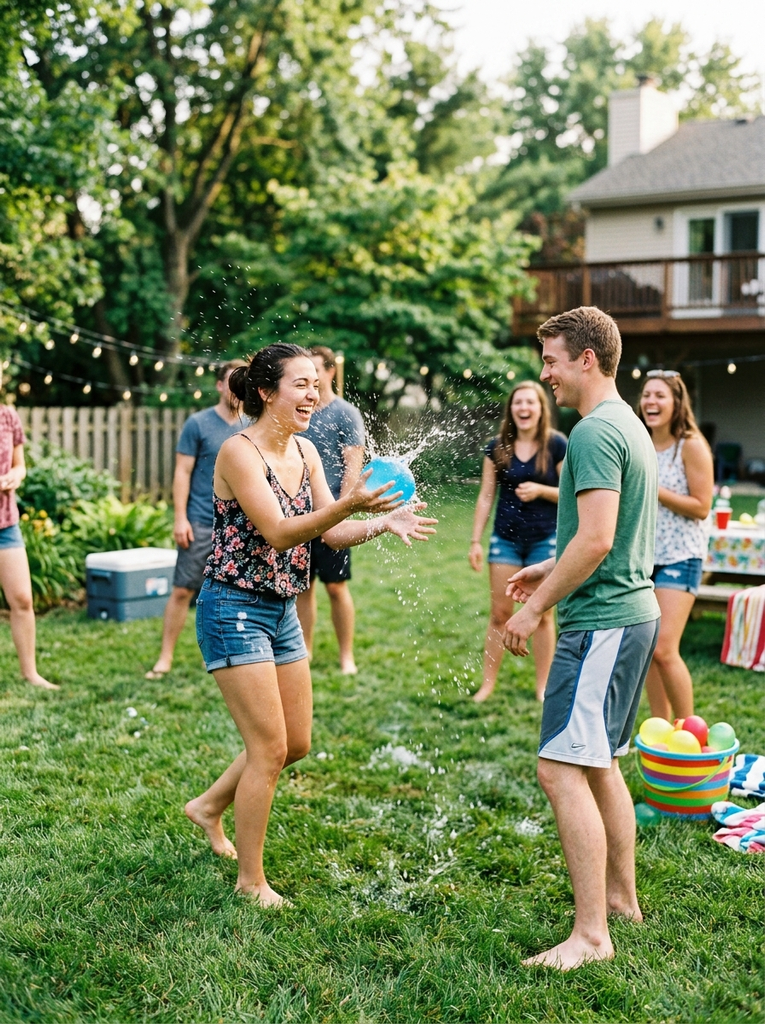
A water balloon toss is best reserved for a warm outdoor party where there is enough room for pairs to move without bumping into others. Each pair starts close together and gently tosses the balloon back and forth.
After a successful catch, they can take a small step backward. The activity ends for that pair when the balloon breaks or drops.
I keep the throwing area away from electrical equipment and choose a surface where water will not create an obvious slipping problem. Broken balloon pieces must be picked up immediately rather than left on the ground.
Pro Tip: Give each pair a clearly marked space instead of letting everyone spread out randomly. It reduces collisions and makes it easier to supervise the activity.
11. Cookie Face Race
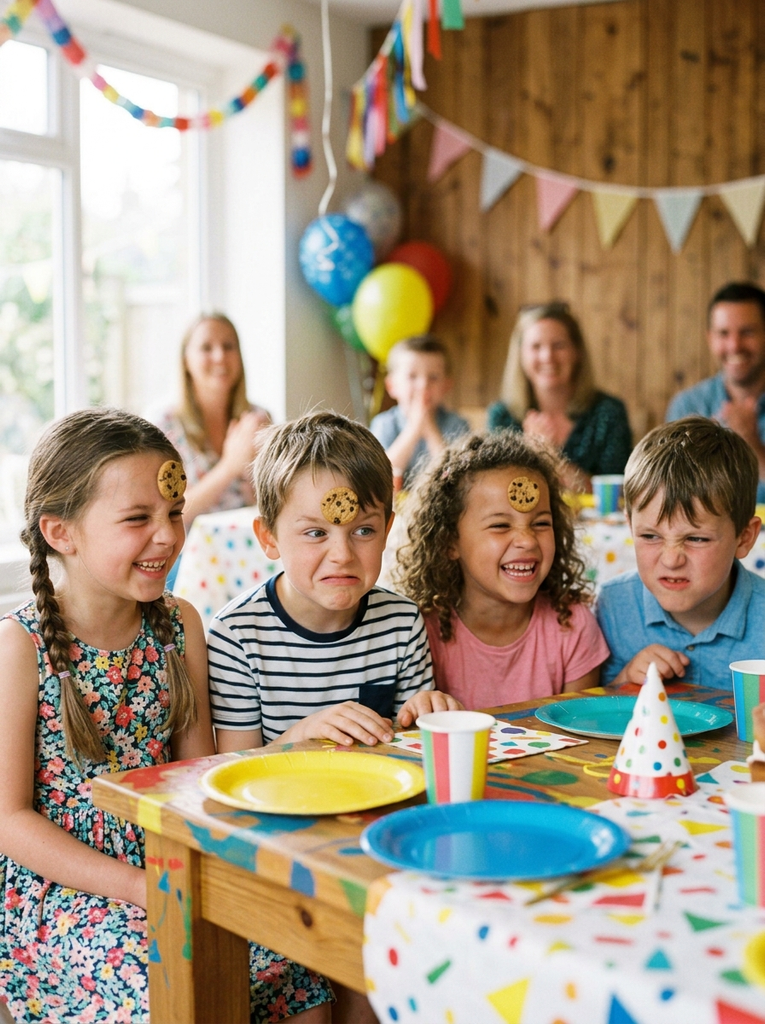
For this silly food-based challenge, children sit down while a cookie is placed on the forehead. They try to move it toward their mouth using facial movements rather than their hands.
I keep the game seated so children are not walking or running while concentrating on the cookie. Before serving any food, I ask parents or guardians about known allergies and dietary restrictions, but I still treat the information as something that needs careful checking rather than assuming one food is suitable for everyone.
Individual portions are more practical than having children share food during the game. For very young children, I may replace the food challenge with a non-food facial-expression game.
Pro Tip: Use a sturdy napkin or washable tray underneath each player. It catches crumbs and makes cleanup much faster when several children play in succession.
12. Hula Hoop Contest
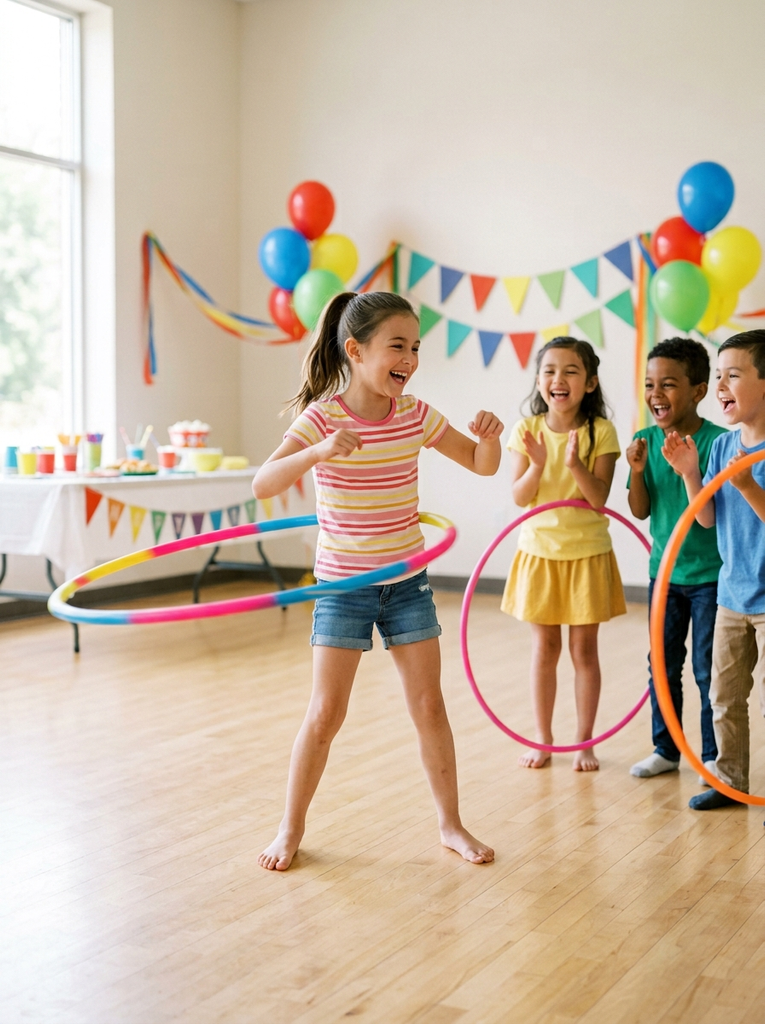
A hula hoop contest needs more movement space than a ring toss, making it better for a backyard, gym, or larger party area. Each child gets a hoop and tries to keep it moving for the agreed amount of time.
I can add variations such as switching direction, lifting one arm, or seeing how many seconds a player can maintain the motion. For younger children, simply experimenting with the hoop can be the entire activity.
I leave enough room between players so spinning hoops do not hit other children, furniture, or decorations.
Pro Tip: Run several short rounds rather than one long competition. Children who lose their hoop quickly can rejoin the next round without spending much time waiting.
13. Sponge Relay
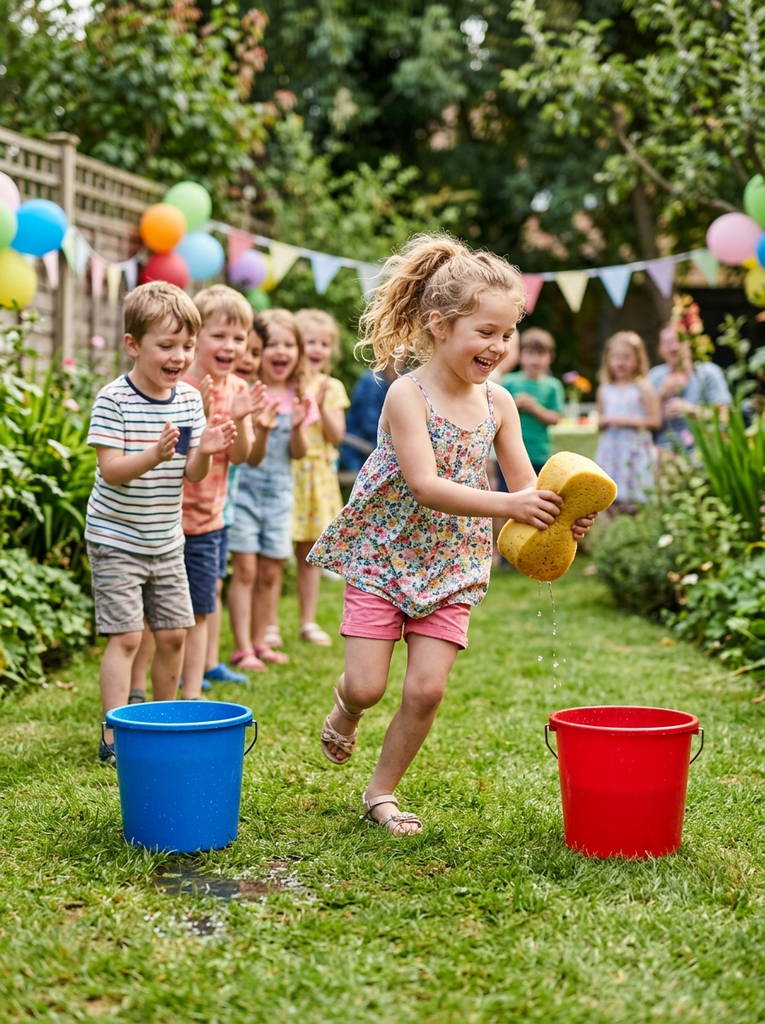
A sponge relay gives me a water game without requiring children to handle water balloons. Each team gets one bucket containing water and another empty bucket, plus a large sponge.
Players soak the sponge, carry it to the empty bucket, squeeze out the water, and return for the next turn. The team that reaches a marked fill line first completes the challenge.
I keep this game outdoors and away from electrical equipment. The play area should remain controlled because splashed water can make some surfaces slippery.
Pro Tip: Mark the target level on each empty bucket before the game starts. The children then have a visible goal, and I do not need to judge which team has transferred “enough” water.
Also read: 19 Engaging Sweet 16 Party Games for Non-Stop Fun
14. Limbo Challenge
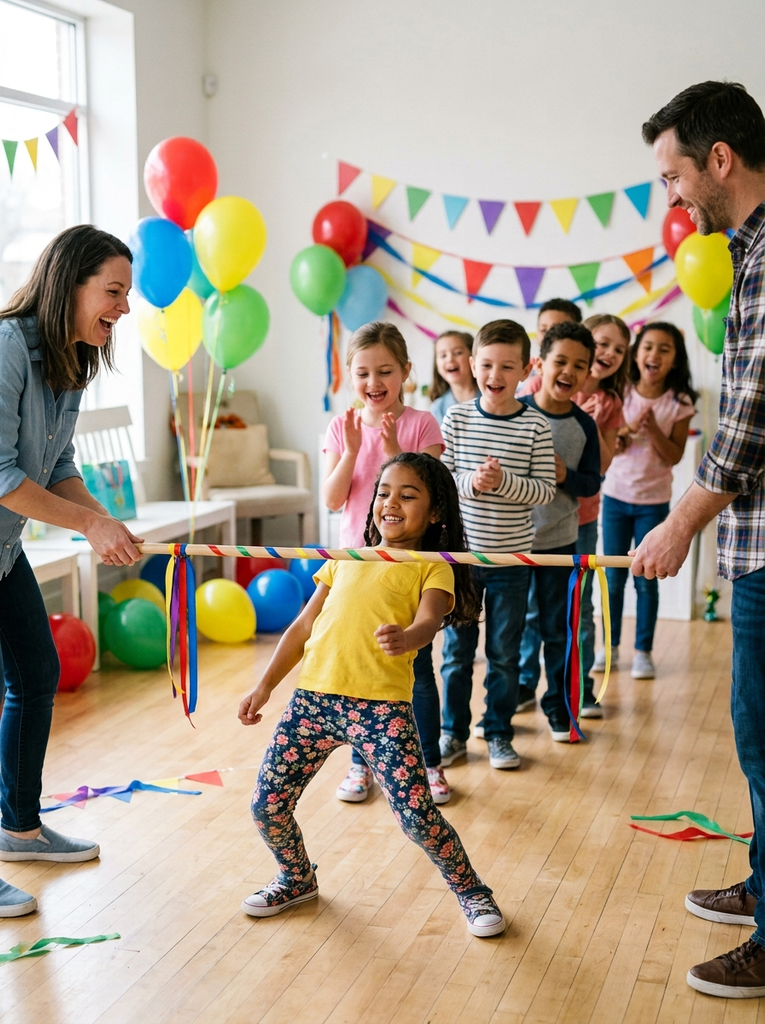
Limbo needs very little preparation, but the setup still matters. A lightweight bar or similar object can be held by adults at both ends so it can be released easily if a child loses balance.
Children take turns moving underneath without touching the bar. I lower it gradually, but I do not expect children to force their bodies into uncomfortable positions just to stay in the game.
A level, nonslip playing surface with plenty of surrounding space is important. For younger children, I keep the bar higher and treat it as a movement challenge rather than a serious competition.
Pro Tip: Have children move one at a time while the rest wait behind a visible line. This keeps the area organized and prevents children from walking into the path of the player.
15. Mummy Wrap
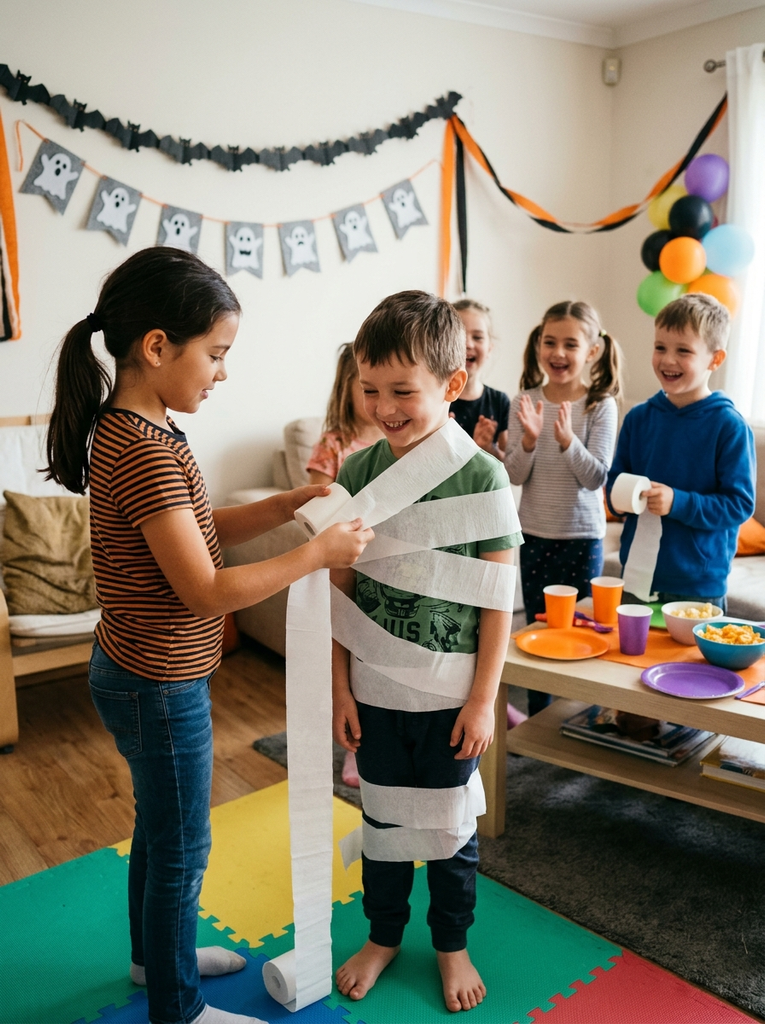
Pairs can turn a roll of toilet paper into a playful mummy-making challenge. One child gently wraps the other, then they can switch roles if time allows.
The objective is not really about wrapping as quickly as possible. I focus on creating a funny costume while keeping the child’s face, neck, and head completely free. Nothing should be tight enough to interfere with breathing, vision, or comfortable movement.
I also set a short time limit so children do not keep adding layers simply to win. Used paper can go directly into a large cleanup bag when the round ends.
Pro Tip: Instead of awarding the fastest pair, let children vote on categories such as “funniest mummy” or “most creative mummy.” It takes the pressure off speed and gives more children a chance to shine.
16. Marshmallow Tower
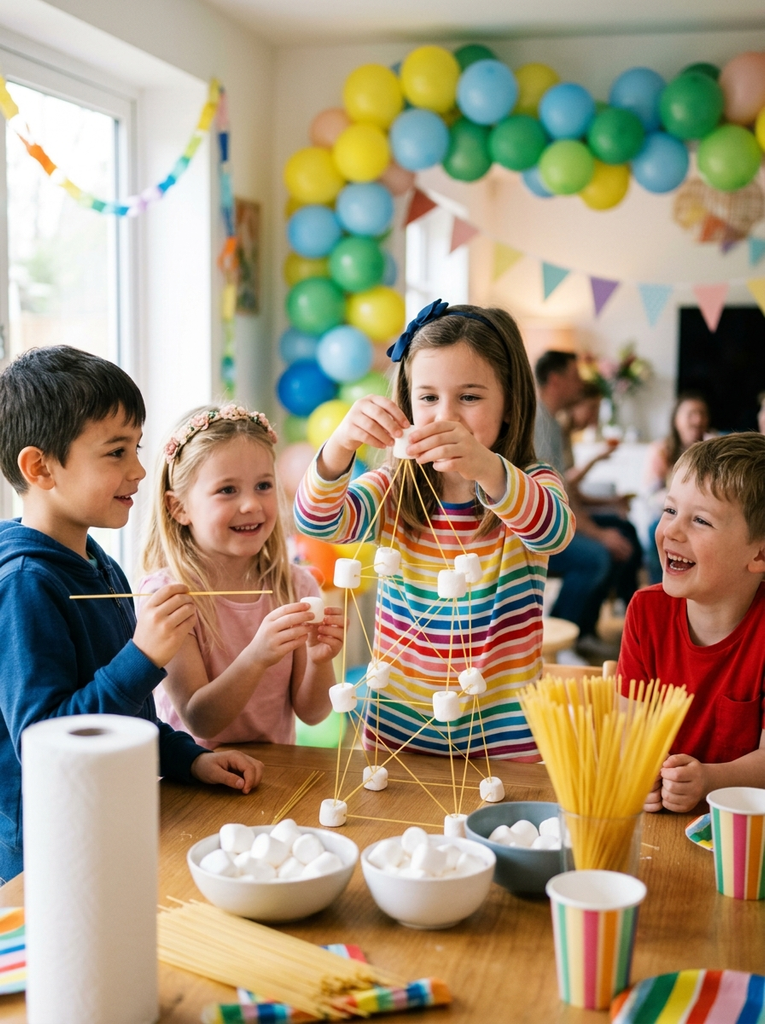
Marshmallows and toothpicks can become a small engineering-style building challenge. Each child or team receives a set amount of material and tries to make a structure that stands on its own.
This works particularly well as a quieter break after running games. Older children can be given a height or time challenge, while younger participants can simply experiment with connecting pieces.
Toothpicks require close adult supervision because they are sharp. I do not use this activity with children who are too young to handle the materials safely, and I keep the supplies away from toddlers. I also check food allergies before using marshmallows.
Pro Tip: Give teams a small tray or sheet of cardboard as their building surface. It keeps loose marshmallows and toothpicks contained and makes cleanup much easier.
17. Cup Stack Challenge
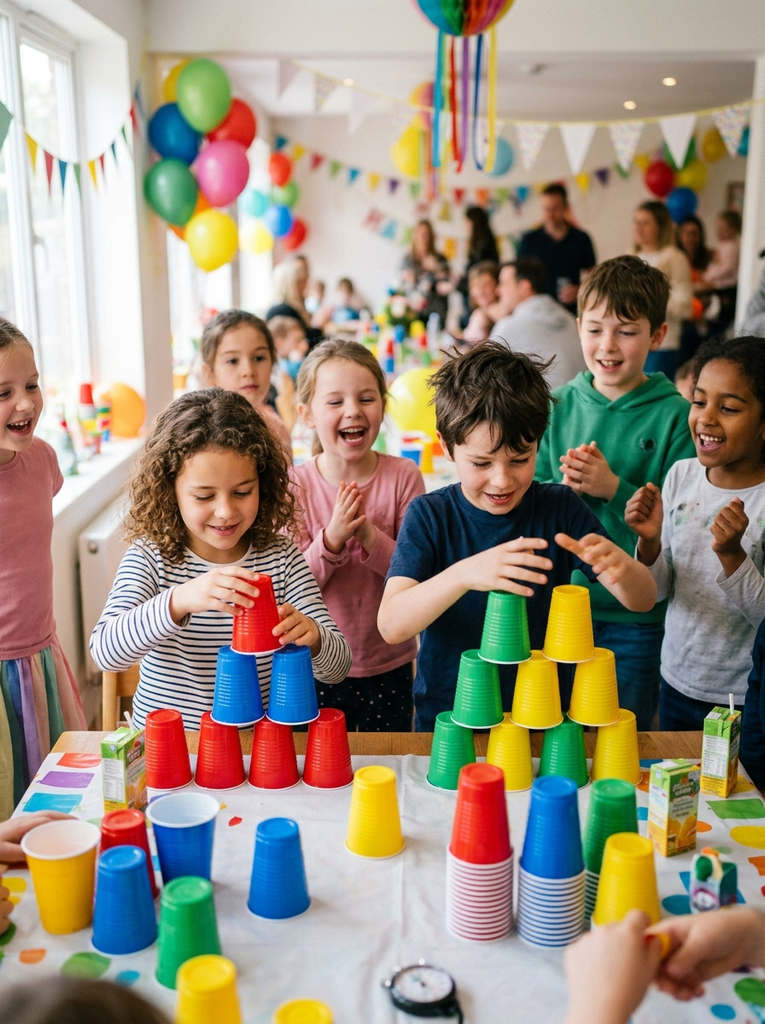
Lightweight plastic or reusable cups turn into a quick coordination game with almost no preparation. Each player gets the same number of cups and builds a pyramid before returning everything to one stack.
For older children, I can add a timer or require a particular stacking pattern. With younger children, the goal can simply be completing the stack correctly without a time limit.
This game takes little floor space, so it is useful when the party is indoors or the weather changes unexpectedly. I check cups for cracks or sharp edges before handing them out.
Pro Tip: Set up several identical cup stations instead of making children share one stack. More stations mean less waiting and make the challenge feel faster for a larger group.
18. Balloon Stomp
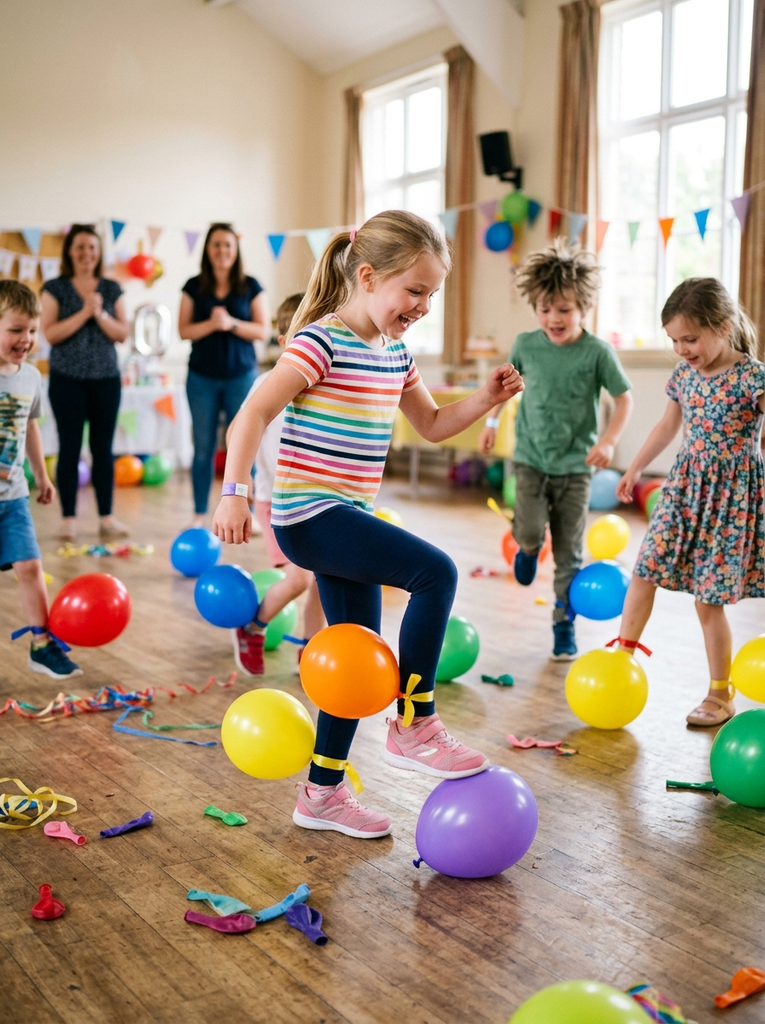
Balloon stomp is much more active than Balloon Pop Relay. Instead of completing a team relay, children move within a defined area while trying to pop other players’ balloons and protect their own.
Because balloons, strings, and moving feet can create entanglement and trip hazards, I reserve this game for children who can follow the boundaries and rules reliably. I do not use it with toddlers or in a crowded room.
The playing area stays small and uncluttered, and I stop the game if children begin grabbing, pushing, tackling, or deliberately interfering with another player’s movement. Balloon fragments are collected immediately after each round.
Pro Tip: Give each child one balloon and run very short rounds. A short reset between rounds lets me inspect the area and remove fragments before starting again.
19. Pass the Parcel
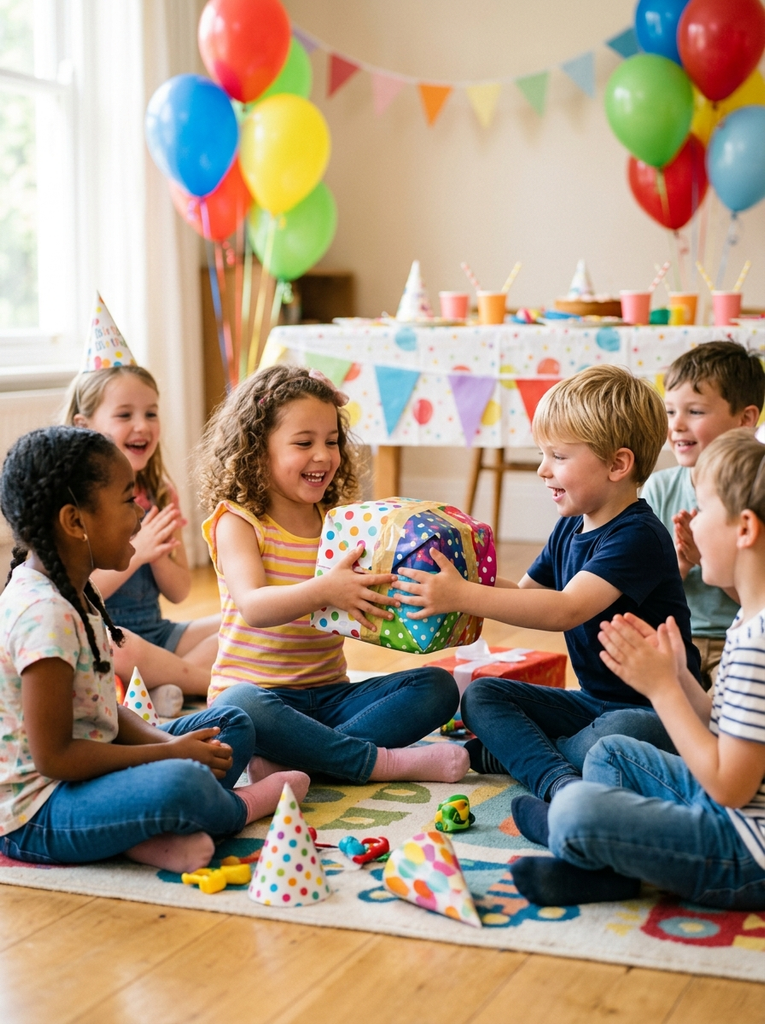
Pass the Parcel works particularly well when I need a seated game that includes the whole group. I wrap a small prize in several layers of paper and have the children pass it around while music plays.
When the music stops, the child holding the parcel removes one layer. I continue until the final prize is revealed.
For a larger group, I can place small surprises such as stickers or paper notes between some layers so that the activity feels rewarding throughout rather than depending entirely on the final prize.
I choose prizes that are appropriate for the children attending and avoid small objects when very young children are part of the group.
Pro Tip: Use scrap wrapping paper, newspaper, or decorated paper from previous projects for the layers. It keeps the DIY theme going and reduces the amount of new party material needed.
20. Simon Says
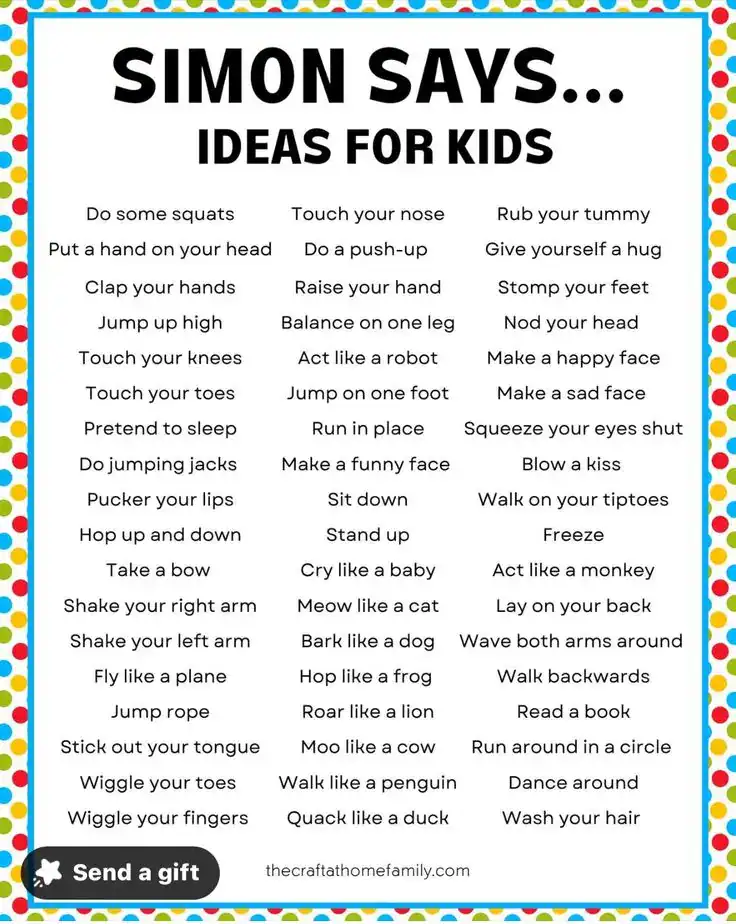
Simon Says is my reliable no-supply backup when a planned activity finishes early or the group needs a quick change of pace. One person gives instructions, but players follow only when the command begins with “Simon says.”
For preschoolers, I stick with actions such as clapping, touching their nose, turning around, or making an animal sound. Older children can handle faster instructions and more complicated combinations.
I often keep children in the game after mistakes instead of eliminating them. This works especially well for mixed-age parties because nobody has to sit out for long.
Pro Tip: Let a child become Simon after a few rounds. Taking the leader’s role gives older or confident children something extra to do while helping the game last longer.
21. Spoon and Egg Race
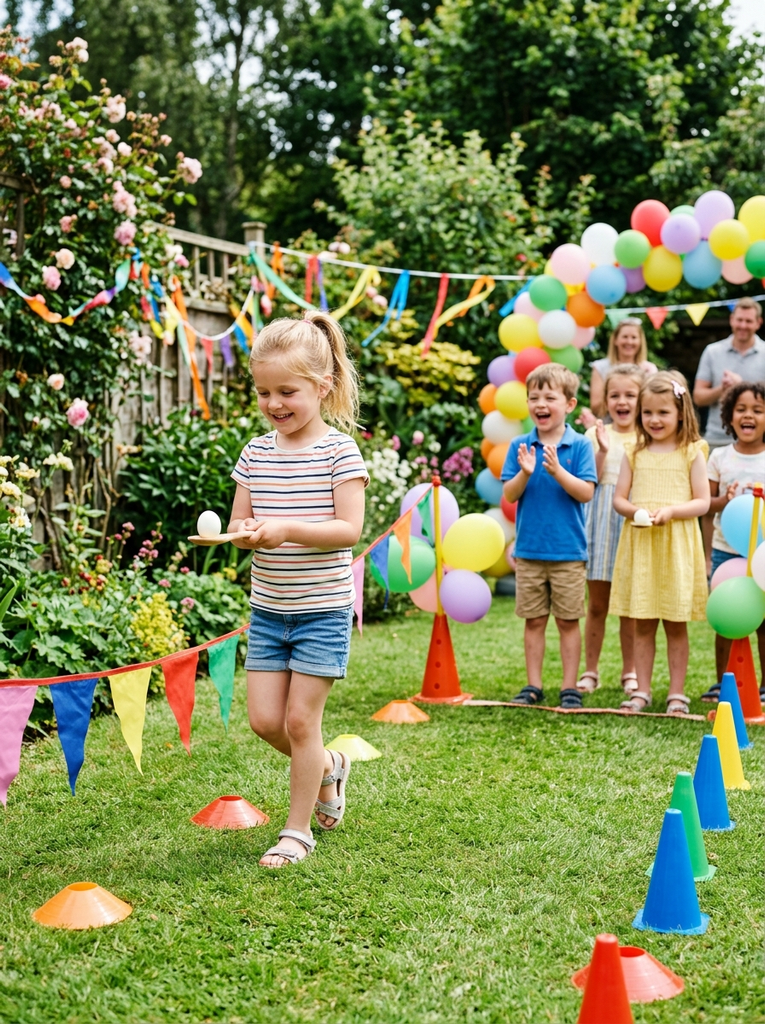
For most kids’ parties, I prefer plastic eggs over real eggs. They are reusable, easier to clean, and remove the mess that comes with dropped food. Each child balances an egg on a spoon while walking from one point to another.
Older children can try a slightly longer route or a few gentle turns. I avoid making younger children run because keeping the egg balanced is already enough of a challenge.
The route should be clear of furniture, cords, slippery patches, and other children. Everyone gets a practice turn before the timed version begins.
Pro Tip: Use large plastic eggs that are easy to see rather than tiny objects. If the eggs are too light, adding a small, securely enclosed weight can change how they balance, but I keep the basic version simplest for younger players.
22. Three-Legged Race
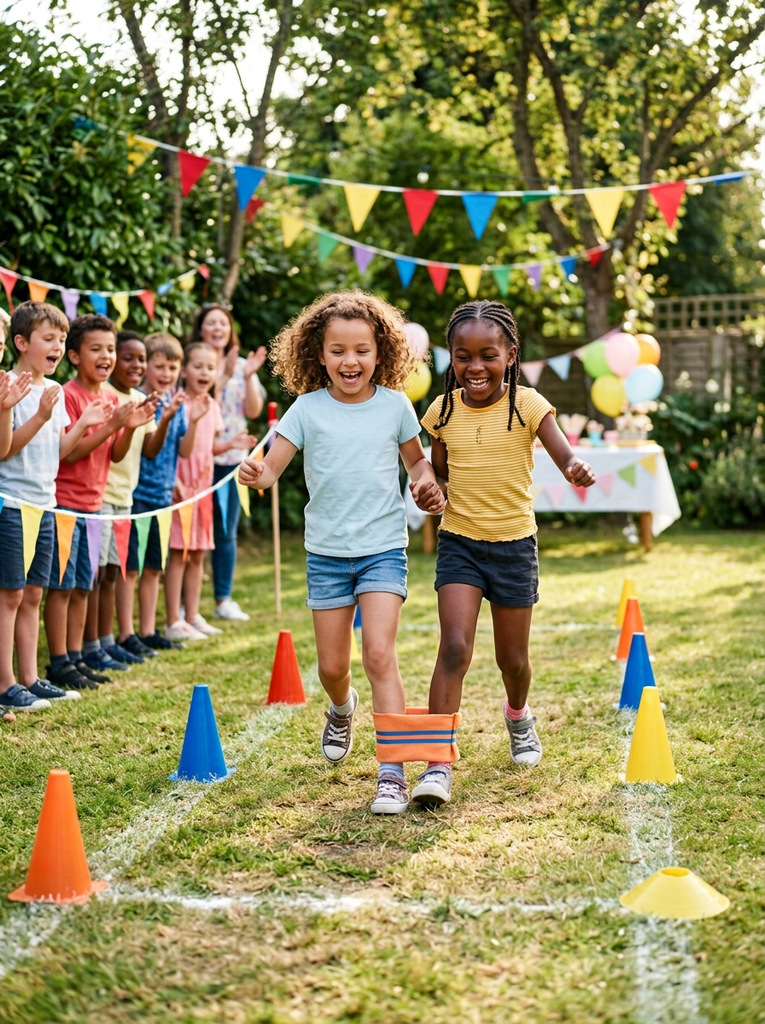
A three-legged race is different from a sack race because the challenge is coordination between two people rather than individual hopping. Pairs work together to reach the finish line while keeping their movements in sync.
If I use a tie, it should be soft and secure without restricting circulation, and children should practice walking before the race begins. I choose partners of reasonably similar height when possible.
For younger children or anyone uncomfortable with the tied version, a cooperative partner-walking race is a better alternative. The pairs simply hold hands or walk side by side without connecting their legs.
Pro Tip: Have each pair agree on a rhythm before starting, such as “left, right.” A short practice round usually prevents the chaotic first few steps that can cause unnecessary falls.
23. Charades
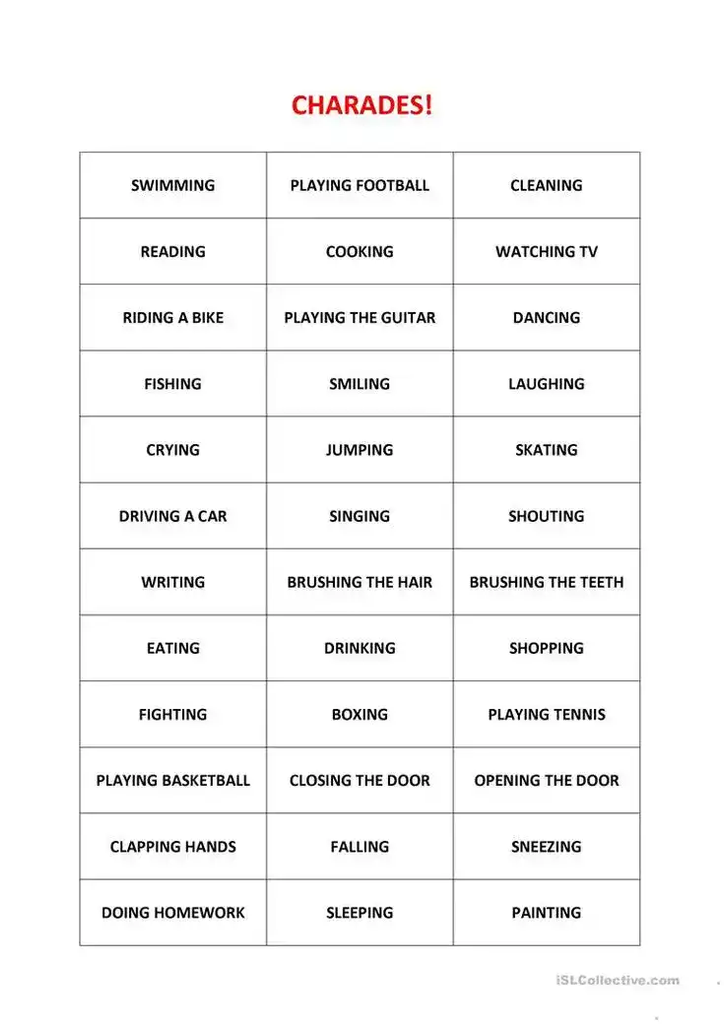
Charades needs almost no equipment, which makes it another useful backup activity. I create homemade cards from scraps of paper and write or draw animals, actions, objects, or party-themed prompts.
Younger children can use picture cards and familiar actions, while older kids can handle more detailed prompts. Children who are shy can act with a partner or choose a prompt they feel comfortable performing.
After several energetic games, Charades gives the group a chance to sit, watch, guess, and laugh without needing much physical space.
Pro Tip: Sort the cards into easy, medium, and challenging piles before the party. I can then adjust the difficulty quickly instead of stopping the game to rewrite prompts.
Read this next: 14 First Birthday Boy Themes From Classic to Trendy
FAQs
What are some easy DIY party games for kids?
Some easy options include Freeze Dance, Simon Says, Charades, Cup Stack Challenge, and DIY Ring Toss. Most need only basic household supplies or no supplies at all.
How many party games should I plan for kids?
I usually prepare about 4–6 games for a typical kids’ party, depending on the party length and children’s ages. Having a few extra backup games is helpful if an activity ends early.
What supplies do I need for DIY kids’ party games?
Common supplies include balloons, paper plates, cups, cardboard, bottles, buckets, spoons, homemade cards, and craft materials. I choose supplies based on the games, ages, and available space.
Conclusion
I do not try to use all 23 games at one party. A better plan is usually to select a few activities that fit the children, available space, weather, setup time, and overall energy level.
For example, an outdoor birthday party might include a sack race, obstacle course, and sponge relay, followed by Charades or Pass the Parcel when the group needs a quieter activity. A small indoor party may work better with Pin the Tail, Cup Stack Challenge, Guess the Animal, and Freeze Dance.
The supplies do not have to be expensive. Cardboard, paper plates, cups, bottles, homemade cards, buckets, and other household materials can provide most of what I need. What matters more is preparing the area, explaining the rules clearly, and having flexible alternatives ready.
I also keep safety and inclusion in mind throughout the party. I remove hazards from movement areas, supervise food and small-material activities appropriately, clean up balloon fragments and water promptly, and adjust rules when a game is not suitable for a particular child.
The best party game is not necessarily the most complicated one. When the activity matches the children attending and gives everyone a comfortable way to participate, even a homemade game with a few household supplies can become one of the highlights of the celebration.



One Comment