
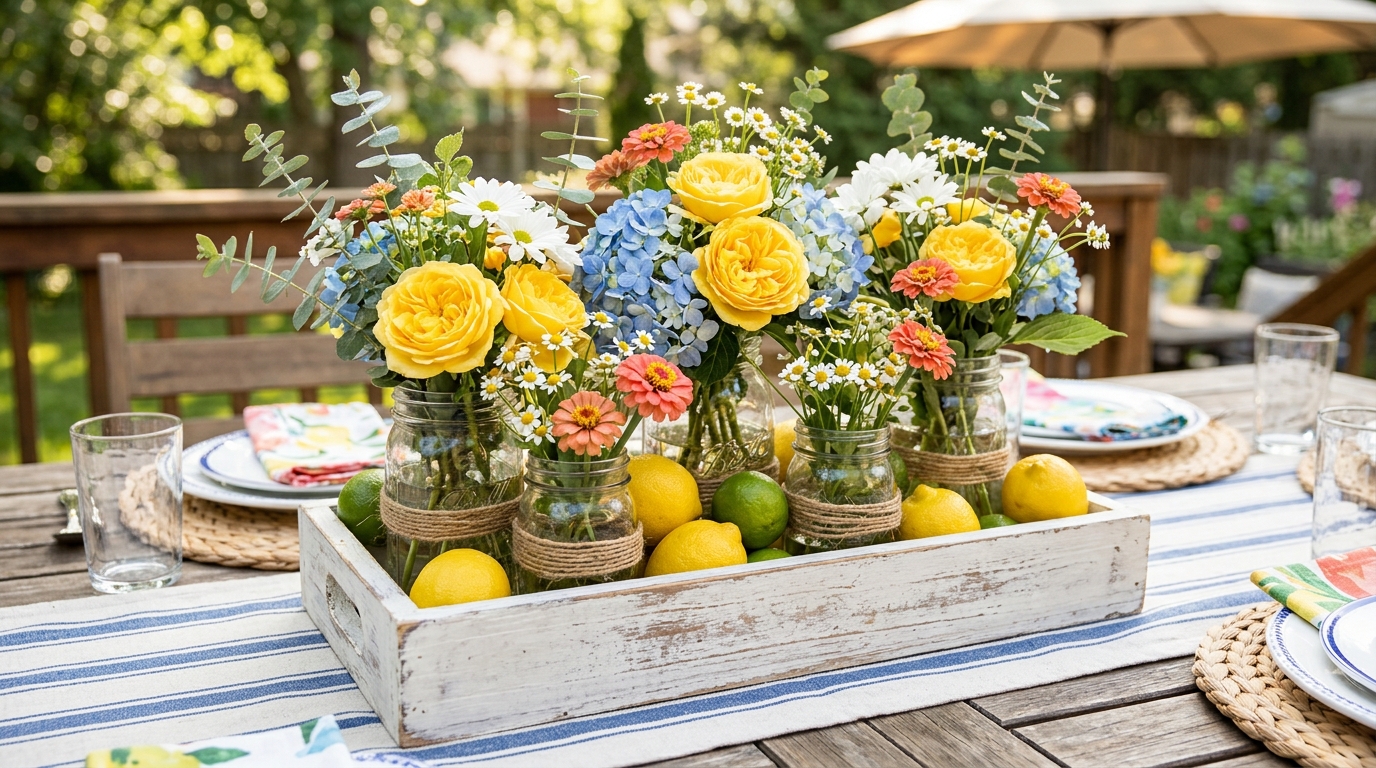
23 DIY Summer Centerpiece Ideas for Dining Table
Summer is when I naturally want my dining table to feel lighter, more colorful, and ready for relaxed meals. Over time, I’ve found that a good centerpiece is not just about how it looks. It needs to leave enough room for plates and serving dishes, stay stable when people are moving around the table, and allow guests to see one another.
For everyday dinners, I tend to use smaller arrangements that can stay on the table without getting in the way. For parties and longer tables, repeating a few small arrangements often works better than trying to build one oversized display. The ideas below range from repurposed containers and citrus arrangements to fresh flowers, herbs, candles, and reusable décor.
These 23 DIY summer centerpiece ideas cover a range of decorating styles, budgets, and occasions. I’ve included arrangements for family dinners, backyard barbecues, brunches, weddings, picnics, farmhouse-style gatherings, and larger summer celebrations.
Some projects involve actual repurposing or assembling, while others are more about thoughtful styling. Mason jars, beer bottles, baskets, vintage containers, lemons, watermelon, hydrangeas, succulents, and fresh mint all provide different ways to bring seasonal color and texture to a dining table.
Save this for later
Table of Contents
When planning any centerpiece, I consider the table dimensions first. A low arrangement is usually easier for conversation, while several small pieces can help fill a long table without creating one large obstruction. I also think about wind, heat, candles, food placement, and how easily the centerpiece can be moved when dinner is served.
Key Takeaways
- I match the size of the centerpiece to the table rather than filling the available space simply for decoration.
- Low arrangements help maintain sightlines when guests are sitting across from one another.
- Several small arrangements can work well on long tables and are easier to move when food is served.
- Lemons, watermelon, flowers, greenery, and fresh mint provide natural seasonal details without requiring elaborate crafting.
- Repurposed containers should be checked for cracks, chips, instability, and suitability for holding water.
- Decorative fruit should be kept separate from food intended for serving, particularly when it has been cut or placed in decorative water.
- Candles need stable containers and enough clearance from flowers, greenery, paper, and other combustible materials.
- Succulents can become reusable table décor, but their light and watering requirements vary by variety.
Related article: Mushroom Crafts for Adults: From Quick Projects to Thoughtful Gifts
1. Beer Bottle Centerpiece
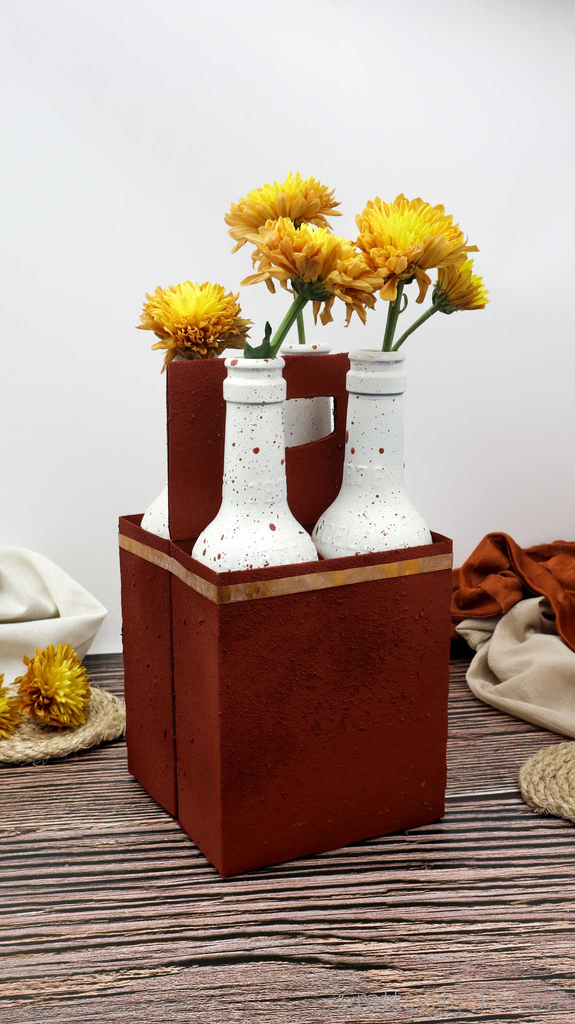
Clean glass beer bottles can become useful little flower vessels instead of going straight into the recycling. I like grouping several bottles together because their narrow shapes let me create a fuller display without taking up much table width.
After cleaning them thoroughly, I can remove the labels or decorate the bottles with paint, ribbon, or decorative tape. For a casual barbecue or backyard gathering, a row of matching bottles can give the table a relaxed, coordinated look.
Before using any bottle, I check it for chips, cracks, or sharp edges and make sure it sits securely. If I’m adding water, I use a clean bottle that is appropriate for that purpose rather than assuming every reused container is suitable.
Pro Tip: On a long table, I prefer several small bottle groupings rather than one large cluster. This distributes the color while leaving more space for serving dishes.
2. Yellow Rose Centerpiece
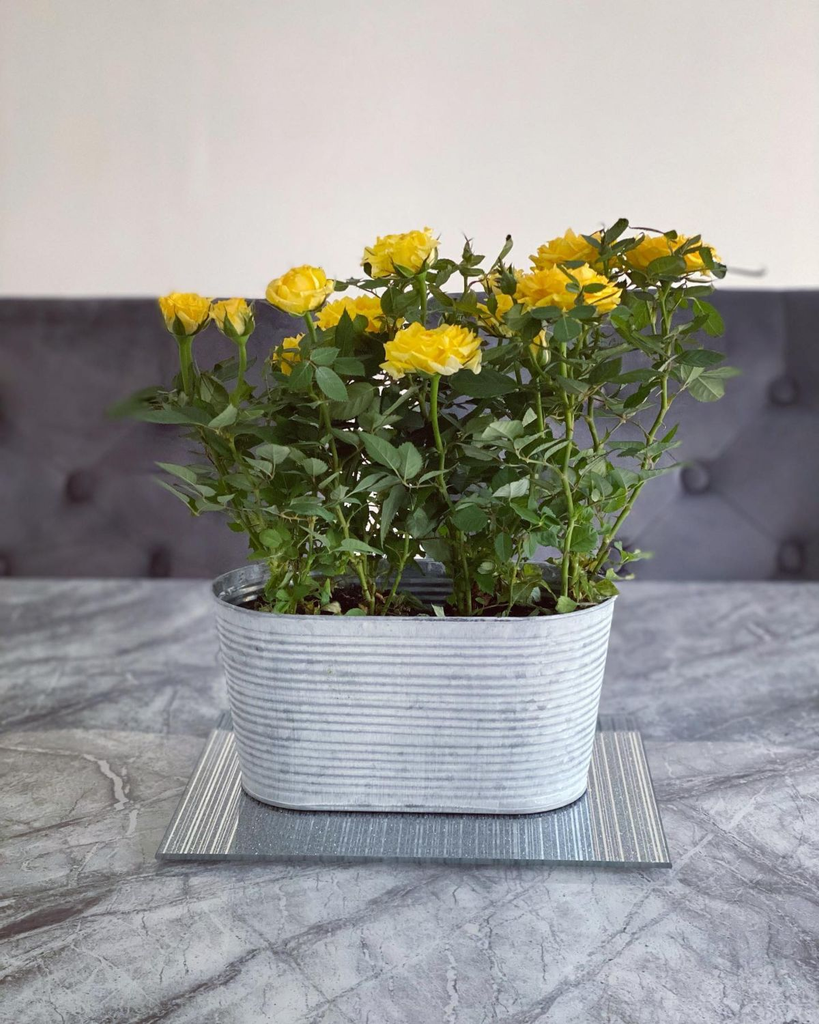
Yellow roses bring a strong summer color to the table without requiring much additional decoration. A small bunch in a clear or neutral vase can work nicely for brunch, a backyard meal, or a relaxed outdoor celebration.
I usually let the yellow flowers provide the main color and keep the surrounding décor quieter. White linens, natural wood, or soft green foliage can balance the arrangement without competing with the blooms.
For a smaller dining table, trimming the stems to create a compact arrangement keeps the flowers within the table’s usable space and makes conversation easier.
3. Vibrant Summer Florals
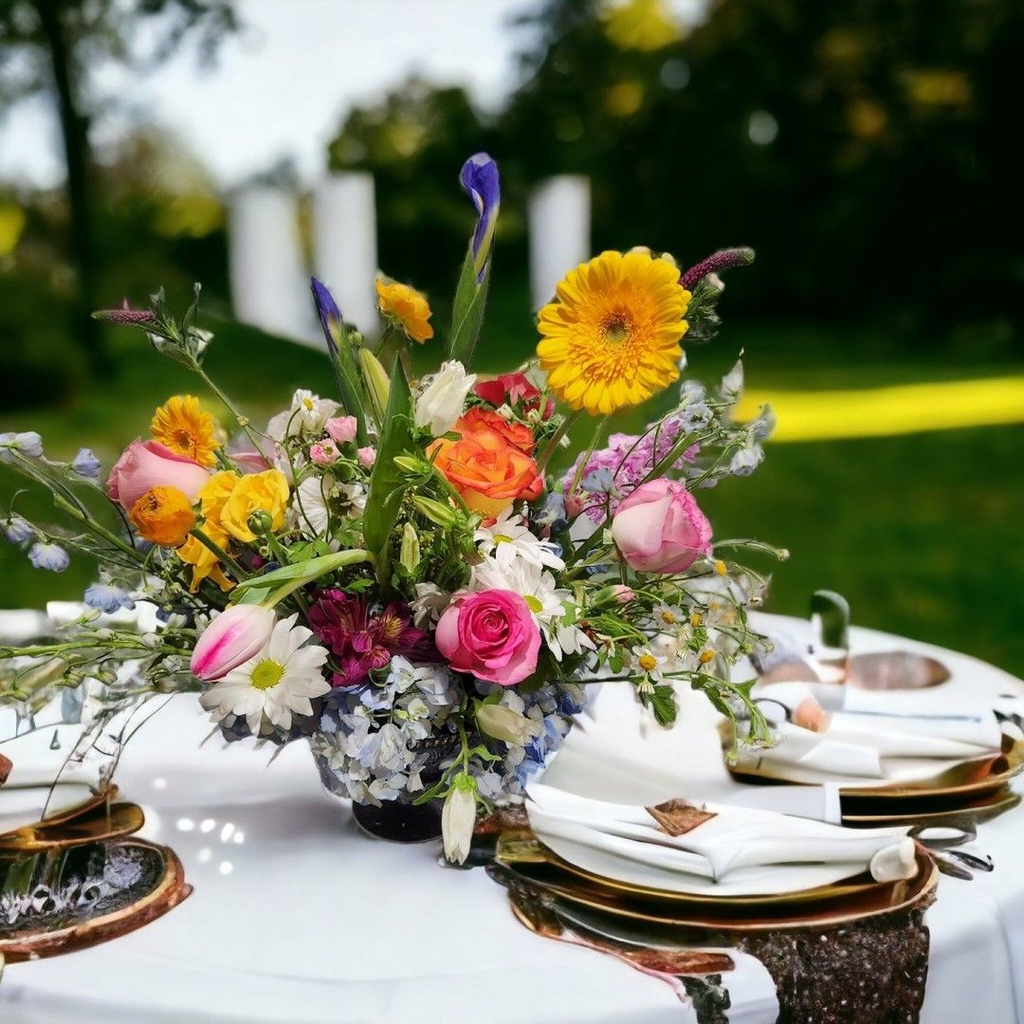
When I want more color than a single-flower arrangement provides, I combine several seasonal blooms in complementary shades. Bright flowers can bring energy to a dinner table, particularly for birthdays, summer parties, and outdoor celebrations.
A mixed arrangement can also be adjusted to match the rest of the tablescape. Repeating one or two flower colors in napkins, plates, or small decorations helps the different elements feel connected.
If fresh flowers are impractical for a particular event, a good-quality artificial arrangement can provide a similar visual effect without needing water or maintenance during the gathering.
Pro Tip: When buying fresh flowers, I look for seasonal or locally available varieties when practical. They can make sourcing easier while giving the arrangement a natural connection to the time of year.
4. Elegant Natural Centerpiece
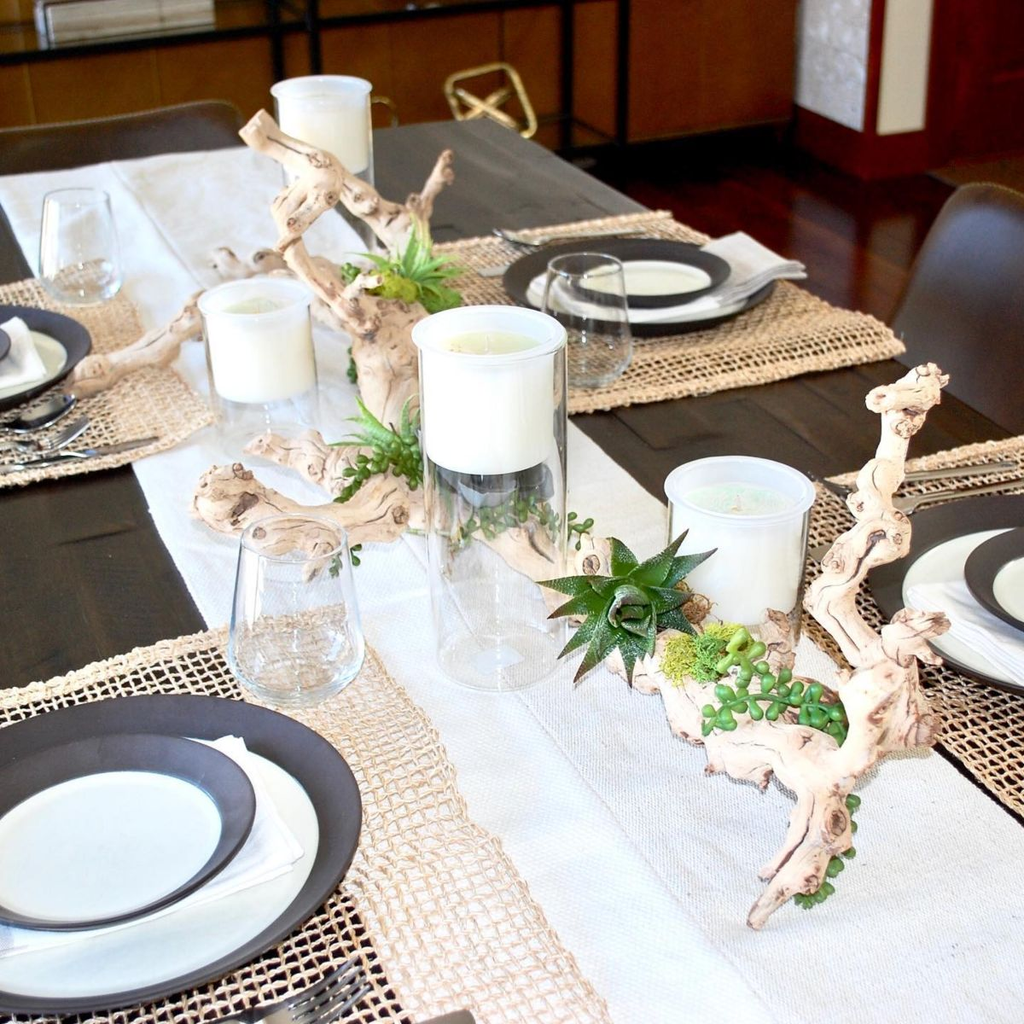
For a dining table with a wood or neutral finish, natural materials can provide enough visual interest without adding lots of color. I like combining greenery, wood, pottery, and small candle holders for a relaxed arrangement.
The key for me is keeping the individual pieces relatively restrained. One clear focal point is easier to work with than several competing decorations, especially when the table will also hold food.
If candles are included, I choose stable holders and leave clear space between the flame and flowers, leaves, paper, ribbons, or other materials that could catch fire.
5. Easter Egg Centerpiece
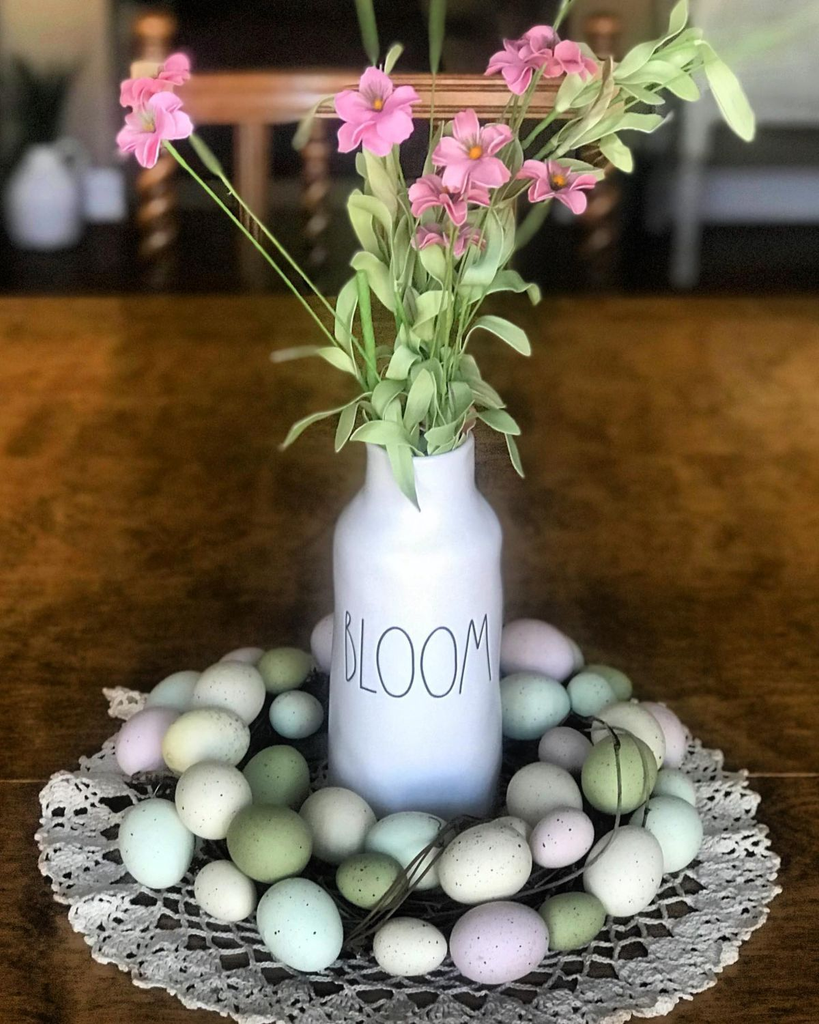
Decorative eggs can work beyond the holiday itself when they are styled as part of a softer spring-to-summer display. I like combining pastel eggs with a simple vase, delicate flowers, and a light placemat or tray.
This approach suits a brunch or family gathering where I want a seasonal transition rather than a strongly themed holiday table. Keeping the eggs in a small cluster also makes the centerpiece easy to remove when dinner begins.
For a more summer-oriented version, I can replace heavier seasonal accents with pale flowers, greenery, or natural textures.
6. Summer Tulips
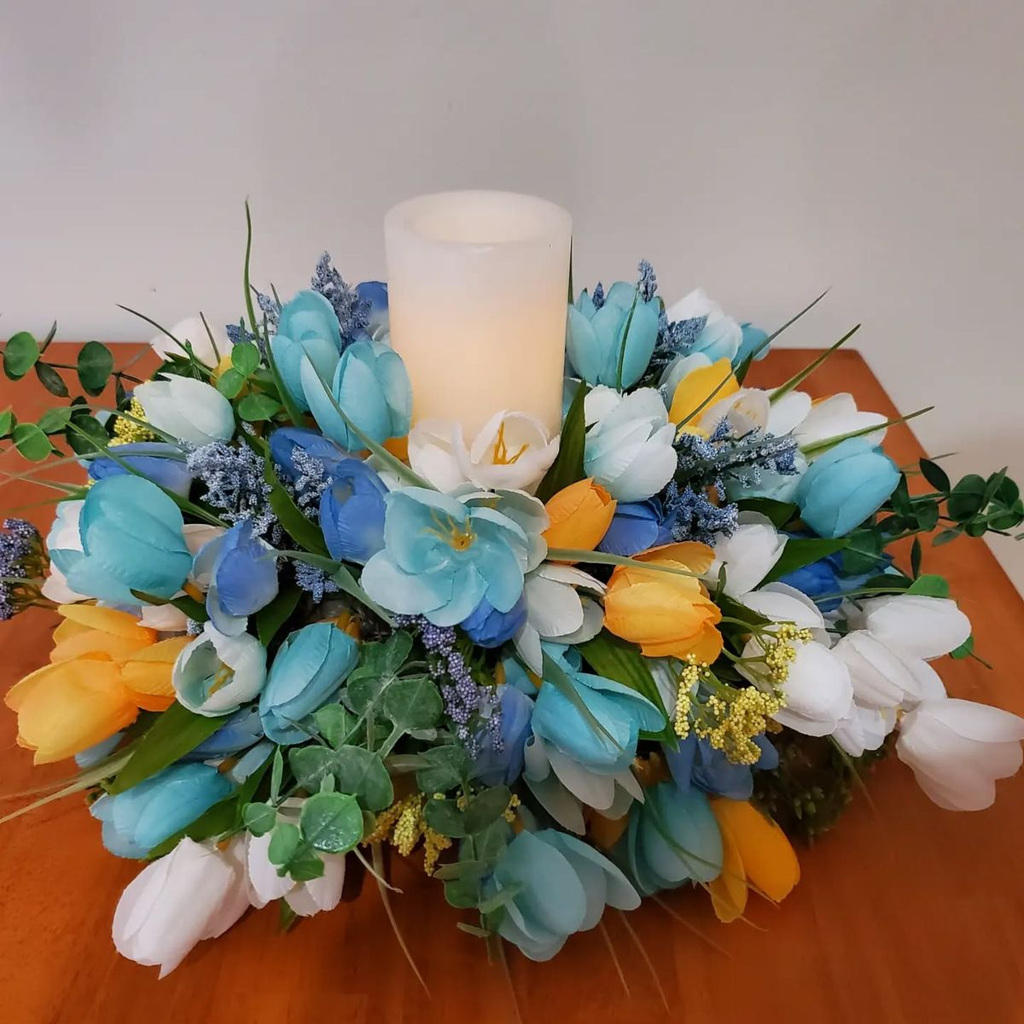
Tulips can make a dining table feel colorful without needing a complicated arrangement. I like using a combination of bright shades and placing the flowers around a central flameless candle for an informal focal point.
The height matters more to me than the number of flowers. If guests are sitting opposite one another, I trim the stems so the arrangement does not become a visual barrier.
Fresh flowers also need basic care. I use a clean vase and fresh water, remove damaged stems, and keep the arrangement away from excessive heat or direct sun when possible.
Pro Tip: For an outdoor dinner, a flameless candle can provide the same central glow without adding an open flame to a breezy table.
7. Cozy Dining Table Centerpiece
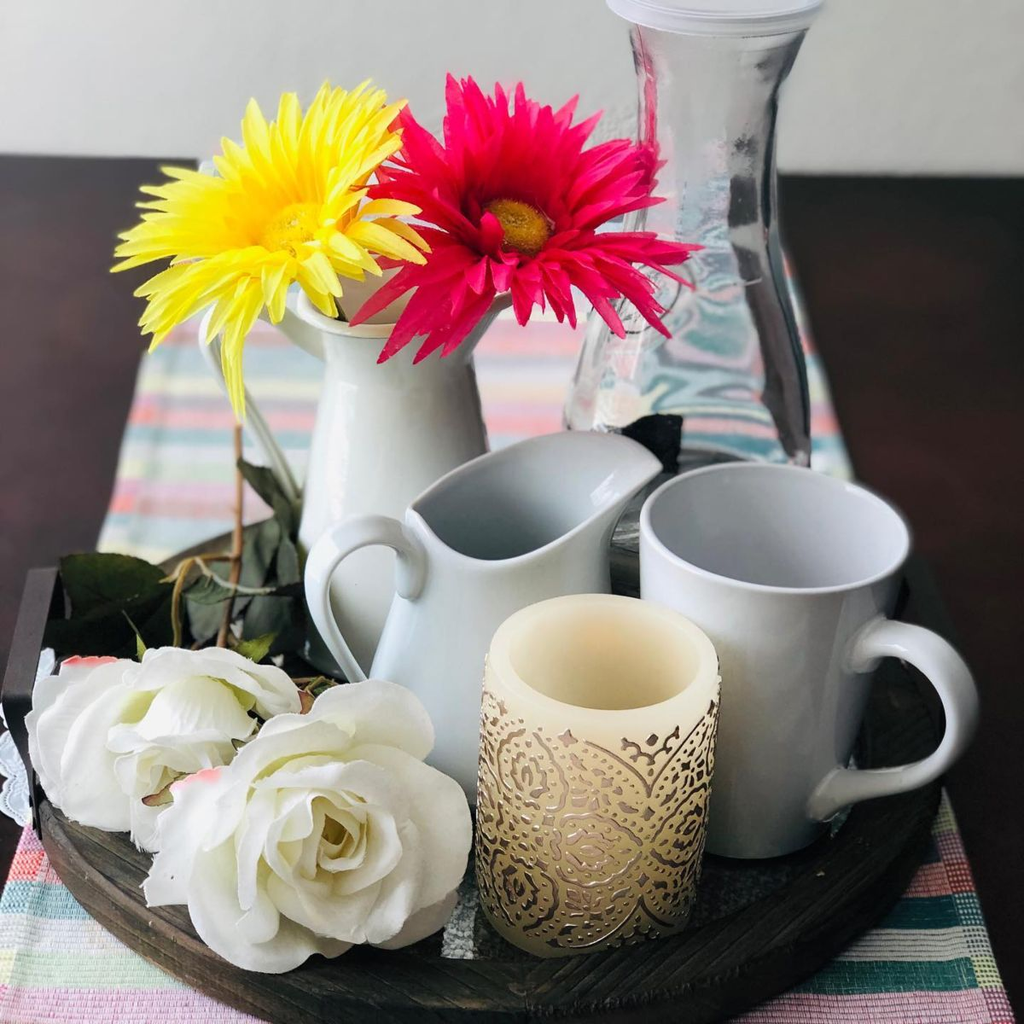
For an everyday family meal, I usually keep the centerpiece smaller than I would for a formal celebration. A compact vase of seasonal flowers, a little greenery, or a few coordinated decorative pieces can make the table feel finished without taking away useful dining space.
This is also a good approach when serving food family-style. The centerpiece can sit slightly to one side before dinner and be moved easily when serving bowls and platters need more room.
I find this style particularly useful for small dining tables where every inch of usable surface matters.
8. Lemon Slice Mason Jars
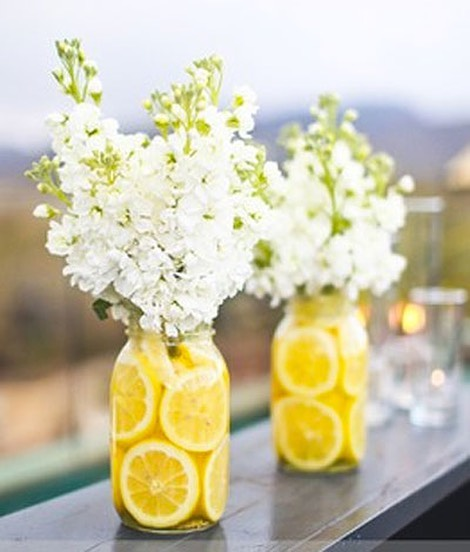
Here, the lemon slices are part of the arrangement itself. I can place clean lemon slices inside clear mason jars, add water, and arrange flowers above them. The citrus creates a visible yellow layer that gives the flowers a distinctly summery backdrop.
This works especially well for garden parties, outdoor weddings, brunches, and casual celebrations where I want a repeated arrangement. Several matching jars along a table create consistency without requiring one oversized centerpiece.
I prepare these close to the event and use clean containers and fresh water. Decorative fruit should be treated as décor rather than automatically considered suitable for later serving.
Pro Tip: I keep the lemon-and-flower jars separate from drinking glasses and food-serving containers. Decorative water and floral materials should not be treated as food-safe simply because the fruit itself is edible.
9. Wildflower Mason Jars
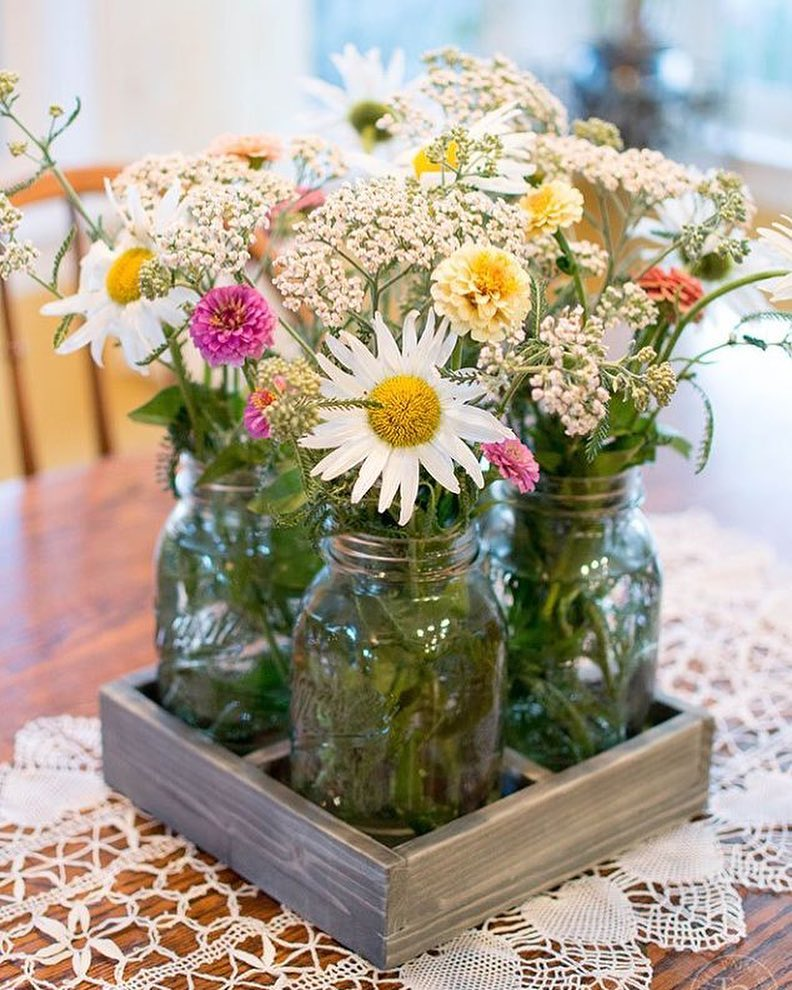
Wildflowers give mason jars a completely different purpose from the lemon arrangement above. Instead of making the container part of the visual centerpiece, I use several small jars as individual flower holders and let the loose shapes of the blooms provide the character.
This is particularly useful for picnics, farmhouse-style tables, and informal backyard meals. The jars can be spaced along a long table or grouped on a smaller one.
I also like that each jar can be moved independently. If serving dishes need more space, I can quickly shift a few jars instead of dismantling a large centerpiece.
10. Simple Lemon Cylindrical Vase
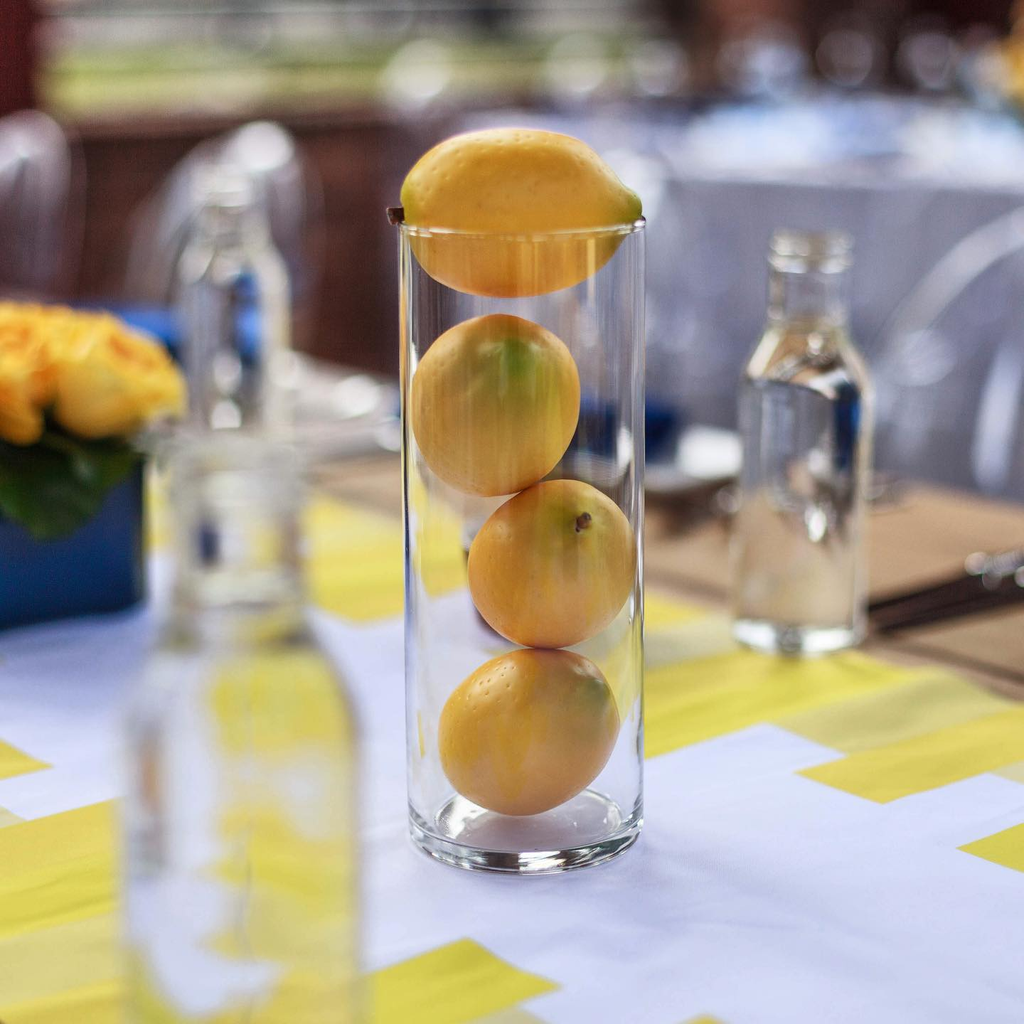
The cylindrical vase approach is useful when I want one coordinated design that can be repeated several times. Lemon slices sit inside clear, straight-sided vases, while flowers rise above them to create a consistent look.
Unlike the smaller mason jar arrangement, I would use this style when decorating a longer table or a larger event where repeating identical vessels helps establish visual rhythm.
The repeated color and shape can make a long table feel organized without requiring every part of the table to carry a separate decorative element.
Pro Tip: I measure the available table space before making several arrangements. It is much easier to keep serving areas clear when I know how much width each vase will occupy.
11. Lemon Accents
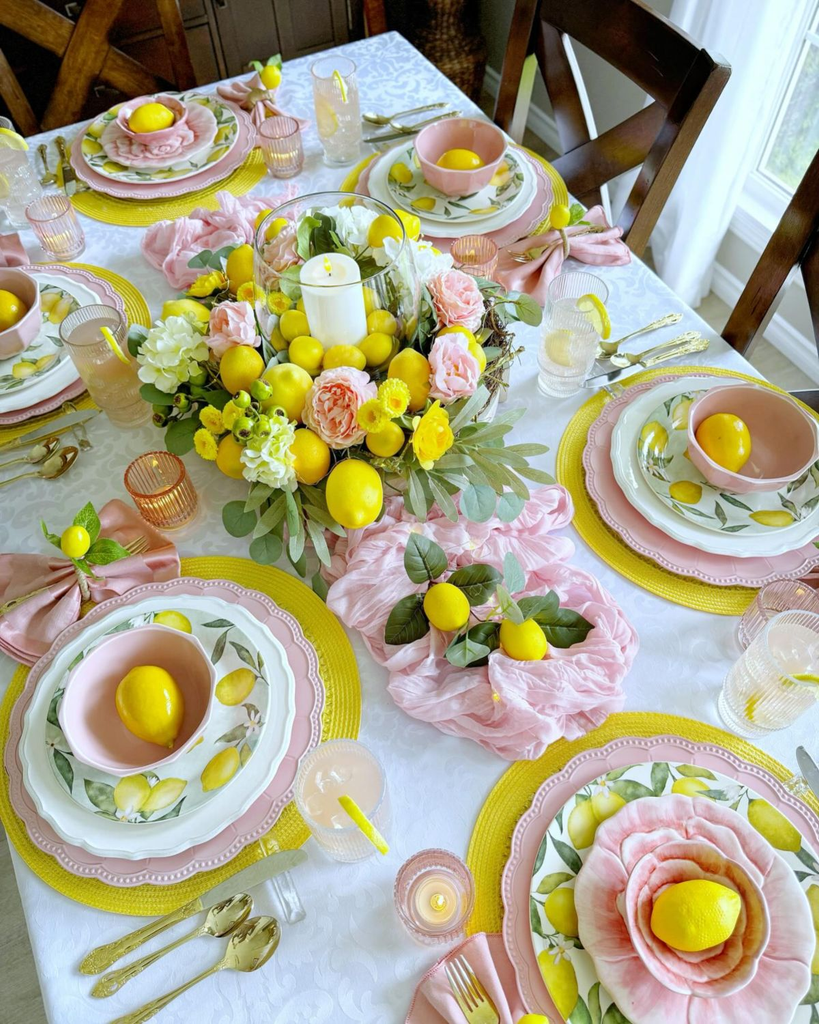
Whole lemons can provide a summer accent without becoming the centerpiece itself. I might place a few clean, undamaged lemons around a vase, inside a decorative tray, or beside folded napkins.
This is different from the lemon-slice arrangements because the fruit stays intact and works as a supporting detail. I especially like this approach when the table already has flowers and I only need another small touch of yellow.
For a coordinated tablescape, I can repeat the lemon color in flowers, napkins, or another small decorative element rather than adding more objects to the table.
12. Red, White, & Blue Mason Jars
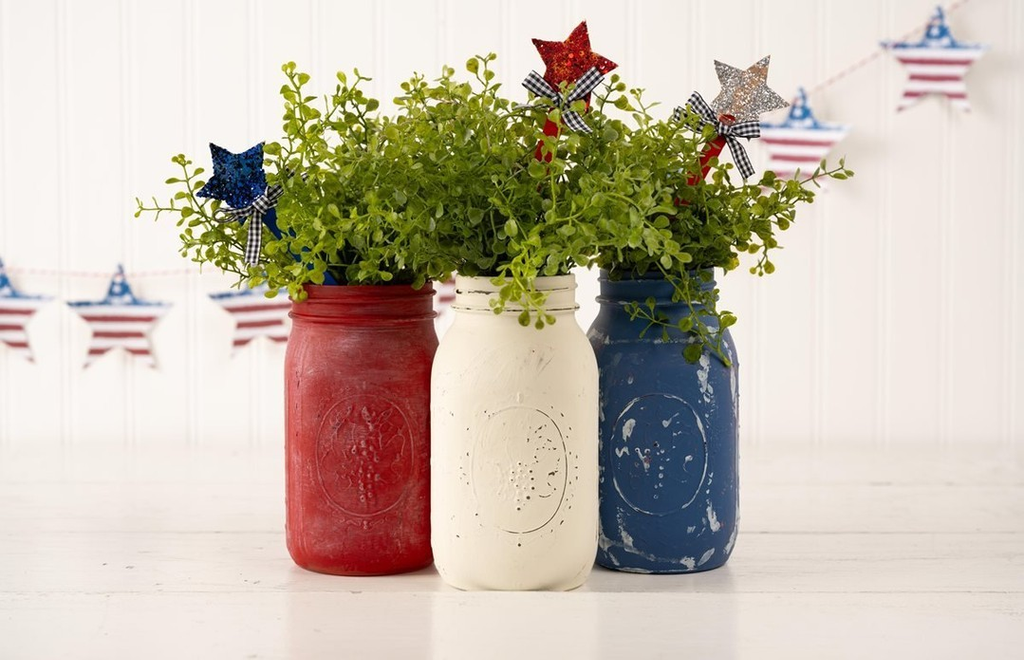
For Memorial Day, Independence Day, or Labor Day gatherings, I can turn mason jars into small red, white, and blue flower arrangements. Each jar can hold a different color or a mixed bouquet, depending on the look I want.
Several small jars work well on a long outdoor table because they can be distributed between plates and serving areas without creating one large obstruction.
I can also reuse the jars for other occasions by changing the flowers and removing the patriotic accents. That makes the project useful beyond a single summer celebration.
Also read: Mindfulness Crafts for Adults: Slow, Simple Ideas for When Your Mind Feels Loud
13. Watermelon Centerpiece
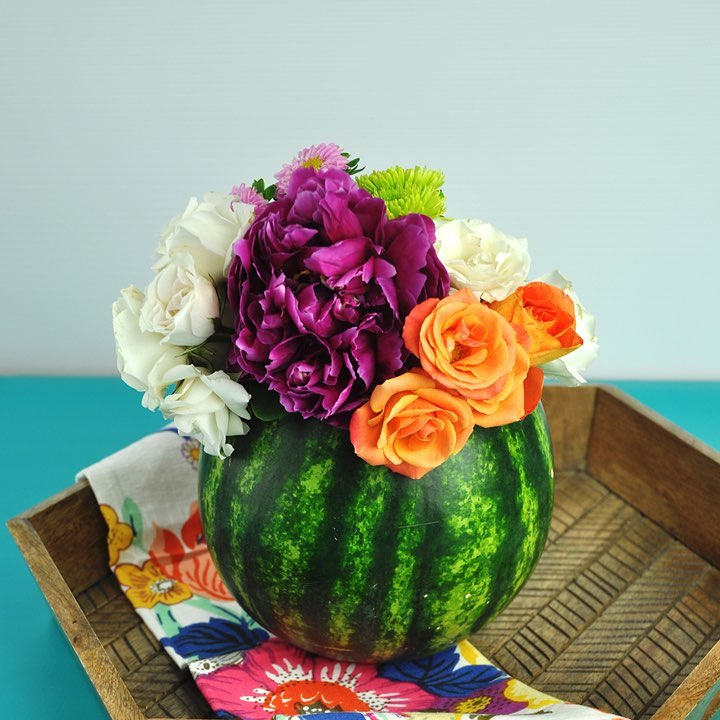
A watermelon can become a seasonal flower container when I want the table to have a playful focal point. The green rind and pink interior immediately create a strong summer color combination.
I would reserve this idea for a casual barbecue, picnic, birthday, or backyard gathering rather than a formal dinner. The container itself is part of the decoration, so the rest of the table can stay fairly restrained.
Because this involves cut fruit, I keep the watermelon properly chilled before the event and avoid leaving it exposed to hot outdoor conditions for extended periods. I also use clean preparation surfaces and keep decorative materials separate from food intended to be eaten.
Pro Tip: I make this centerpiece as close to serving time as practical and place it somewhere stable where it will not be bumped by passing guests.
14. Delicate Florals and Candles
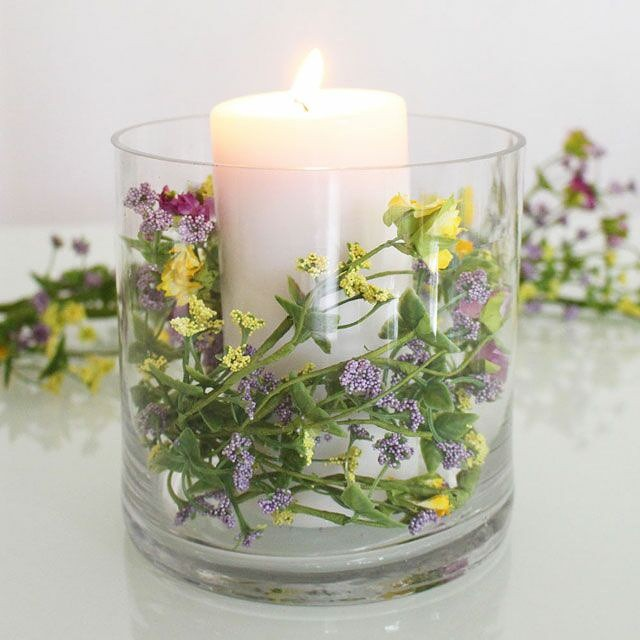
Small floral arrangements paired with candles can work beautifully for an evening summer dinner, anniversary, engagement party, or wedding reception. I like keeping the flowers low and spacing the candles so each element has room to stand on its own.
For any open-flame setup, I use stable candle holders and keep flames away from petals, foliage, paper, ribbons, and other combustible materials. I also position them where guests are unlikely to knock them over.
Outdoor conditions deserve extra attention. Wind can make an open flame difficult to manage, so flameless candles are a practical alternative when the setting calls for them.
15. Painted Pineapple Centerpiece
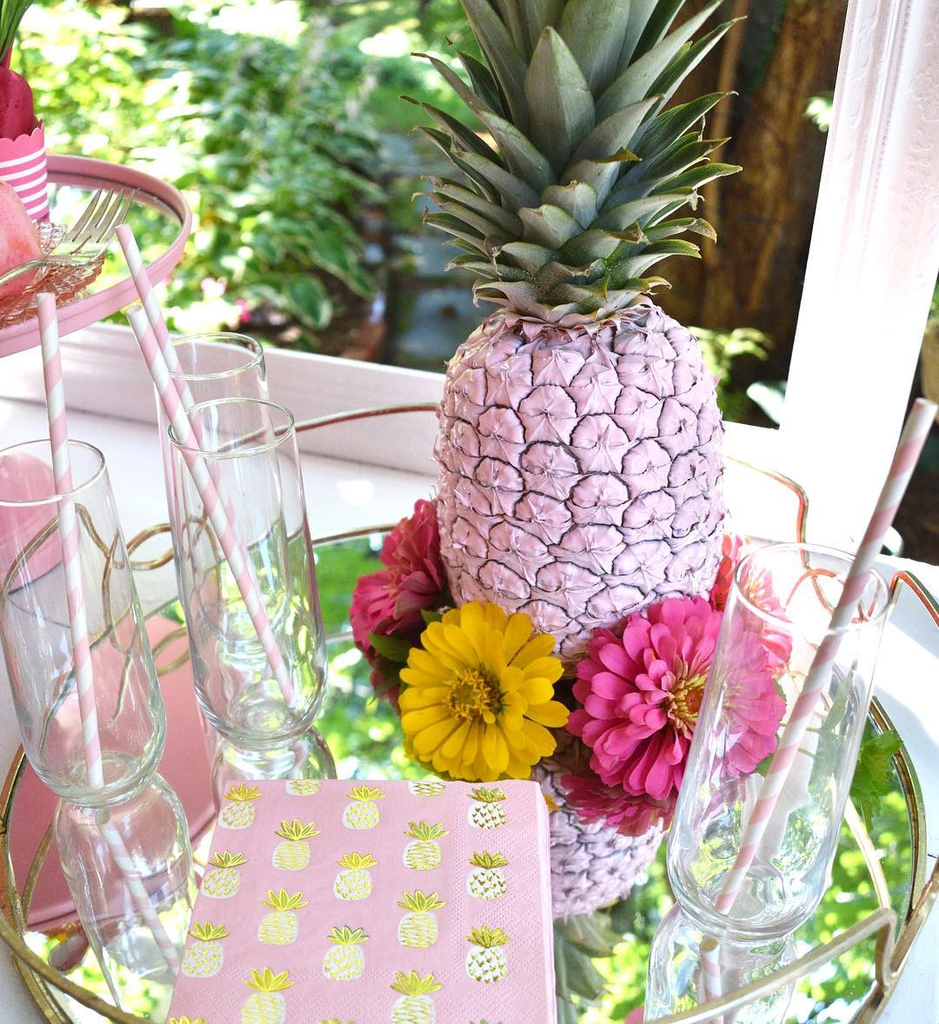
A pineapple brings an unmistakable tropical note to a summer table. I can style one with tropical flowers, colorful napkins, drinkware, or greenery for a pool party or casual outdoor celebration.
If I want to add paint, I treat the pineapple as decorative only. I would never paint fruit that I plan to cut up and serve later because the painted surface is not intended for food contact.
For a food-related display, I can instead use an appropriate decorative pineapple made from a non-food material. That gives me the tropical shape without confusing decoration with something intended to be eaten.
16. Lemon Hydrangea Centerpiece
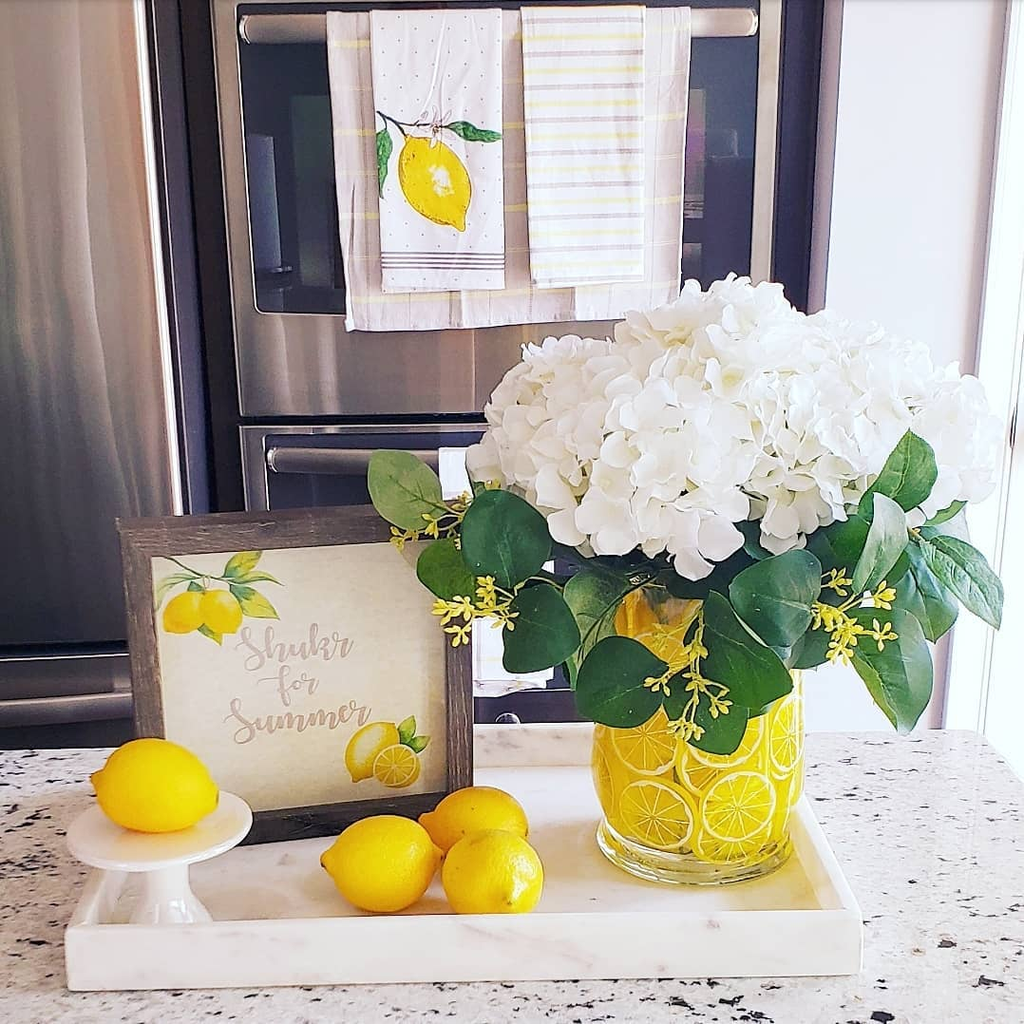
Hydrangeas create a fuller floral display than the smaller lemon arrangements, so this is the option I reach for when I want flowers to be the main focal point. I can add lemons around the base or within the surrounding décor to bring in a stronger summer color.
This works particularly well for a larger dining table, garden party, or brunch where the centerpiece has enough room to stand out without competing with the serving dishes.
I still keep the arrangement at a practical height and width. A full centerpiece should not force guests to look around it or leave too little room for plates and glasses.
Pro Tip: If the table is narrow, I reduce the width rather than simply adding more flowers. A compact arrangement can still look full when the blooms are grouped thoughtfully.
17. Chicken Feeder Centerpiece
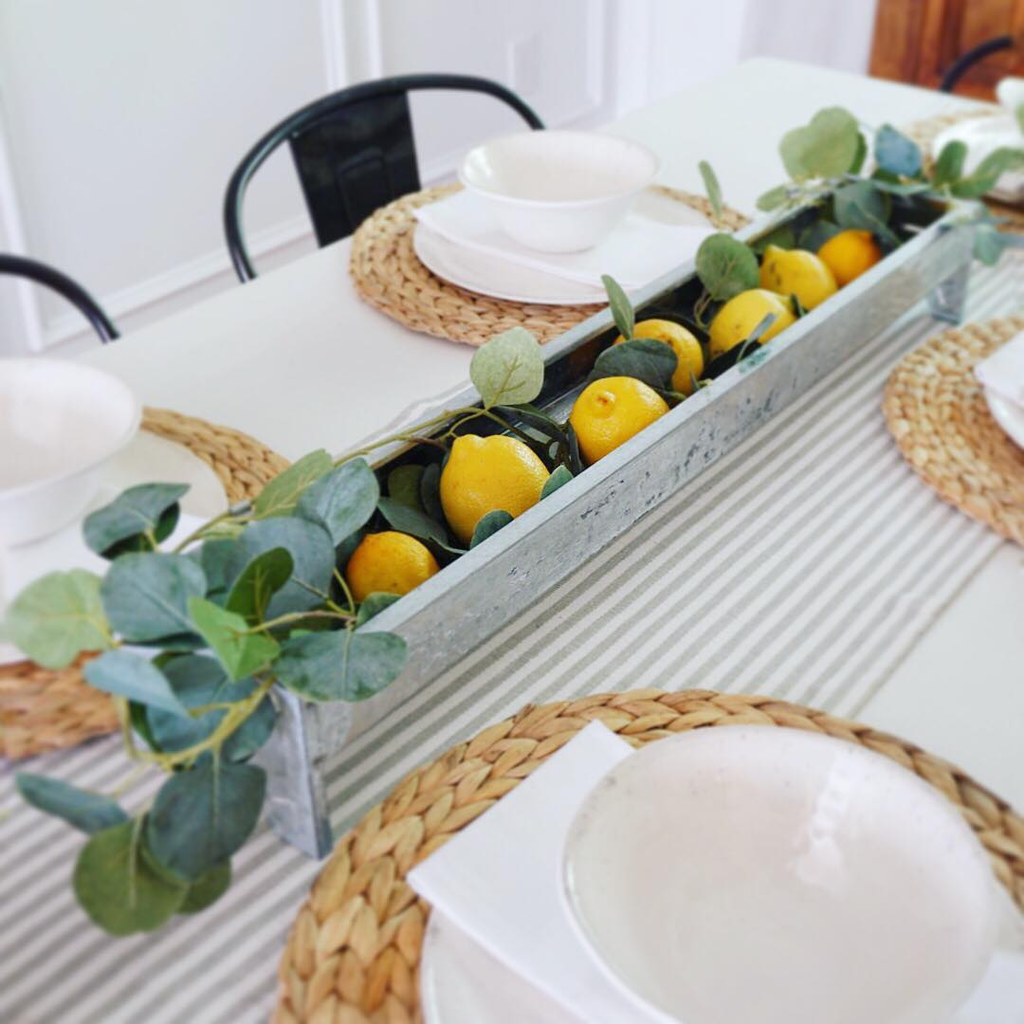
A vintage-style chicken feeder can give a farmhouse table an interesting focal point. I can fill the display with lemons, greenery, or flowers while using the feeder’s long shape to decorate a longer dining table.
Because an old feeder may have an uncertain history or material, I do not assume that it is suitable for direct water contact. A separate clean, watertight inner container is the practical choice for holding flowers and water.
Before placing it on the table, I clean the piece thoroughly, check for rust or damage that could make it unstable, and make sure the finished arrangement will not tip when the table is bumped.
18. Vintage Centerpieces
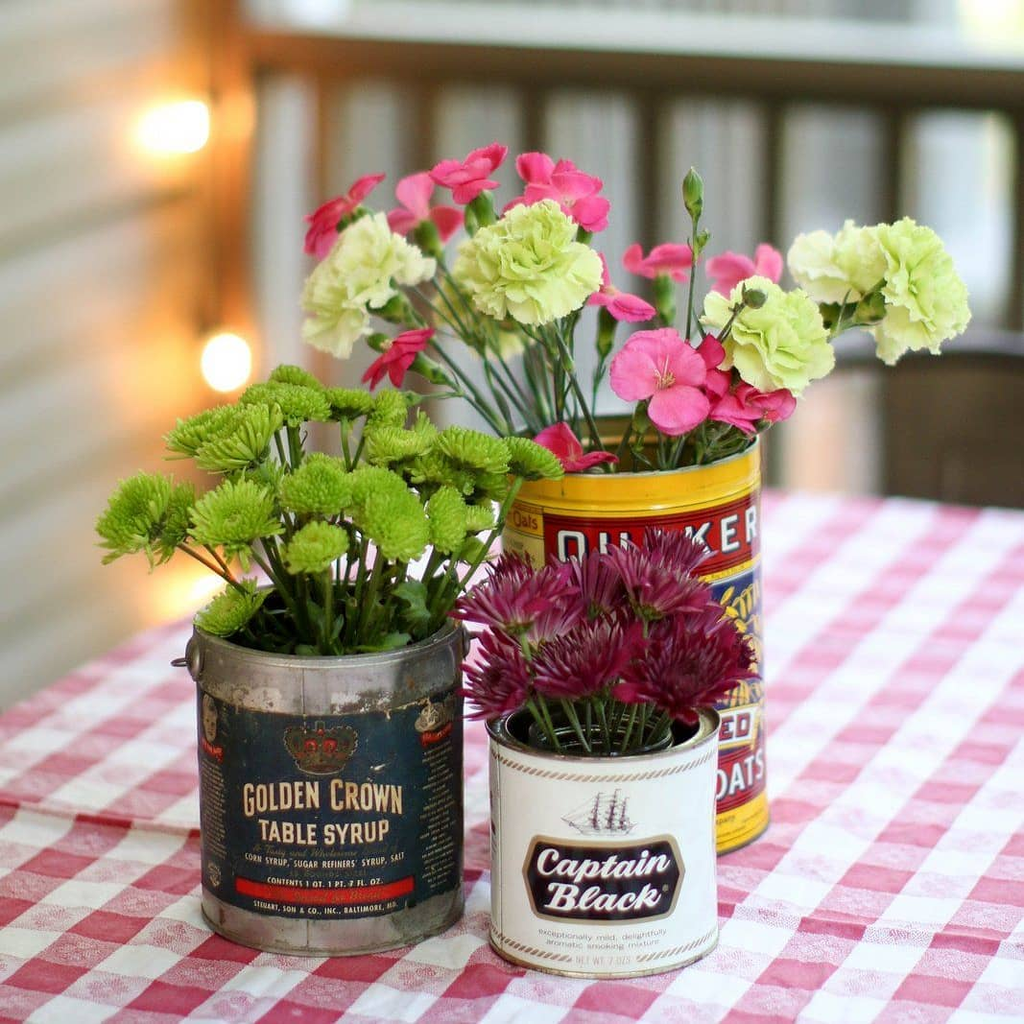
Old pitchers, tins, jars, and other vintage containers can give a summer table a collected farmhouse feel. Rather than trying to make each piece identical, I use a consistent flower color or similar natural material to connect the different containers.
This approach suits picnics, barbecues, farmhouse-style dinners, and casual outdoor entertaining. It is also useful when I want to decorate with pieces already available at home.
I inspect vintage containers carefully for cracks, chips, sharp edges, and instability. If a container is not suitable for direct contact with water, I place a clean watertight vessel inside it instead.
19. Pottery and Basket Tray
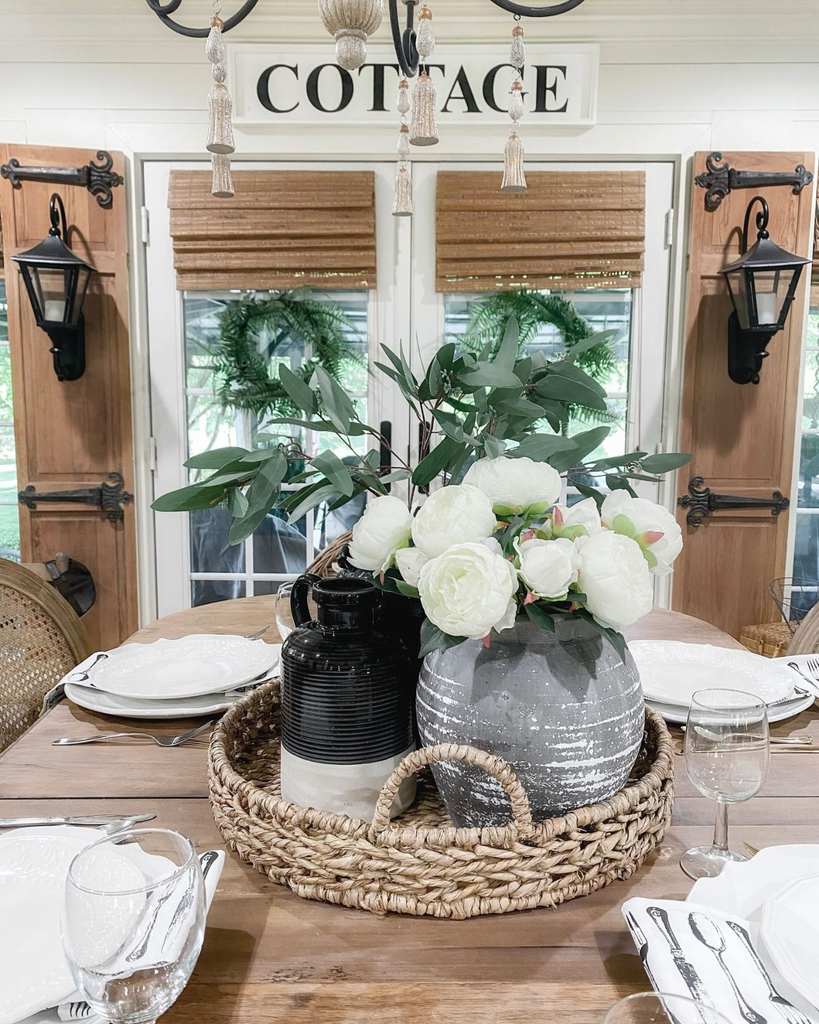
A basket tray gives me a useful base for gathering several smaller decorative pieces into one movable centerpiece. I can arrange pottery vases, seasonal flowers, greenery, and other lightweight pieces on the tray.
This is different from the individual mason jar arrangements because the tray creates one defined focal area. It also means I can lift the entire centerpiece away when it is time to bring out serving dishes.
For everyday dining, I find this particularly practical because the pottery and basket can be reused throughout the year. Summer flowers are what give the arrangement its seasonal character.
Pro Tip: I check that the tray sits flat before adding anything to it. A stable base matters more once several glass or ceramic pieces are placed on top.
20. Floating Candle Centerpieces
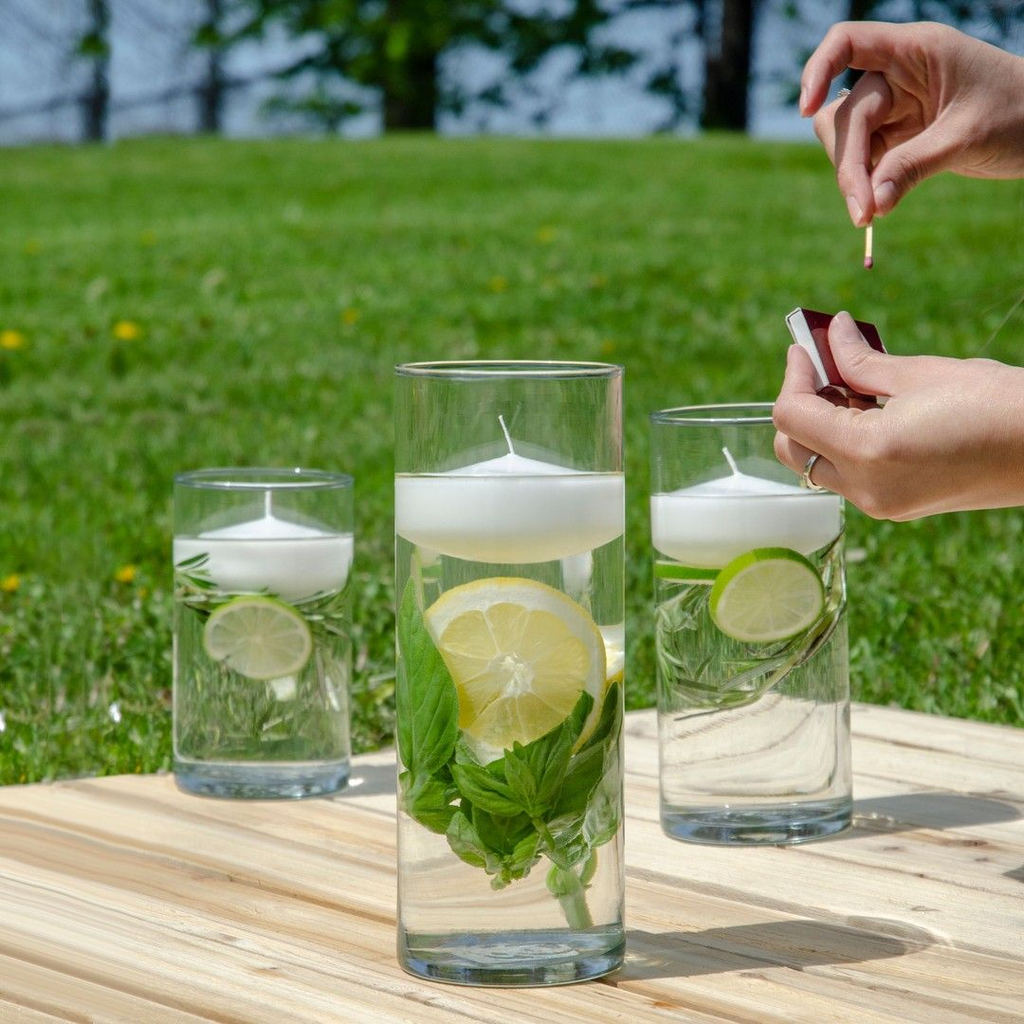
A floating candle arrangement can create a focal point without requiring a large flower display. I can use a stable glass container filled with water and add floating candles, then surround the vessel with a few flowers or pieces of greenery.
I keep the candles away from anything combustible and make sure the container is placed where guests are unlikely to knock it over. On an outdoor table, wind and uneven surfaces are reasons to consider flameless alternatives.
I would not add essential oils or other substances to decorative water simply because they are marketed for fragrance. If I want scented water, I use a product specifically intended for that purpose and keep it separate from food and drink.
21. Antique Planter
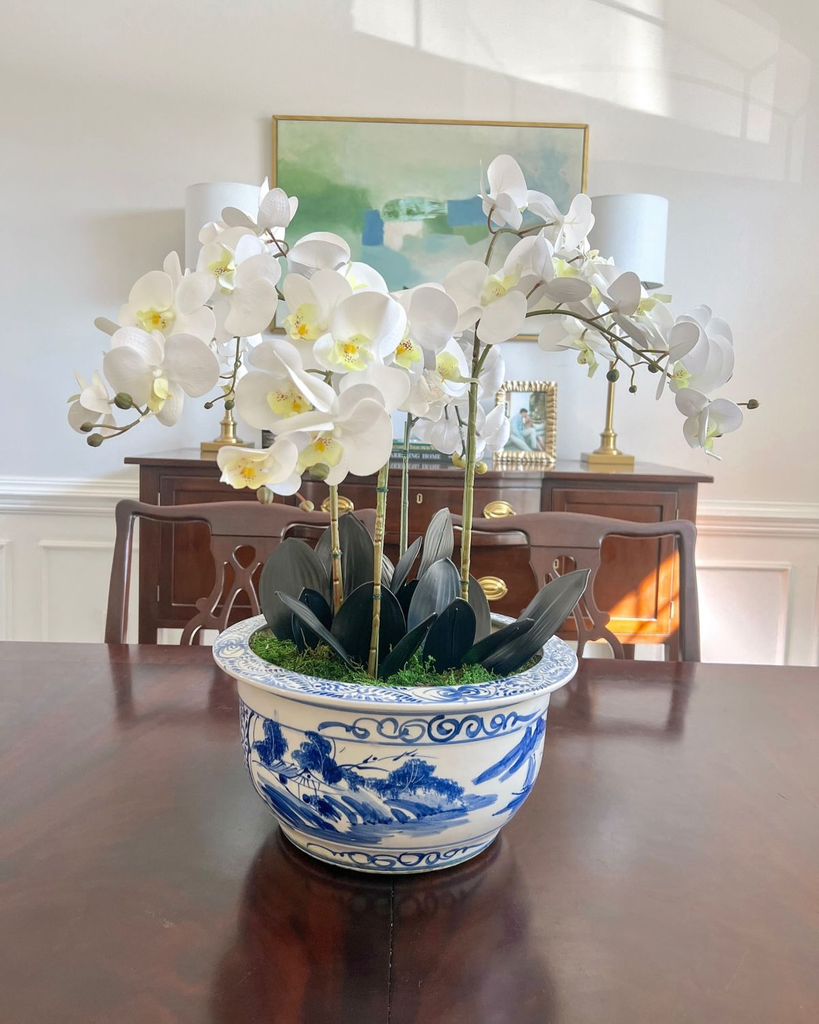
An antique blue-and-white planter can become the focal point of a summer dinner table without requiring many additional decorations. I like pairing a patterned planter with white flowers because the contrast lets the container remain visible.
The beachy or coastal feel works well for outdoor dinners, summer brunches, and relaxed entertaining. Since the planter already has a strong visual presence, I keep the surrounding pieces relatively quiet.
As with other vintage containers, I check the planter for cracks, instability, and suitability for holding water. A separate watertight insert can protect the container and the table surface when needed.
22. Delicate and Rustic Succulents
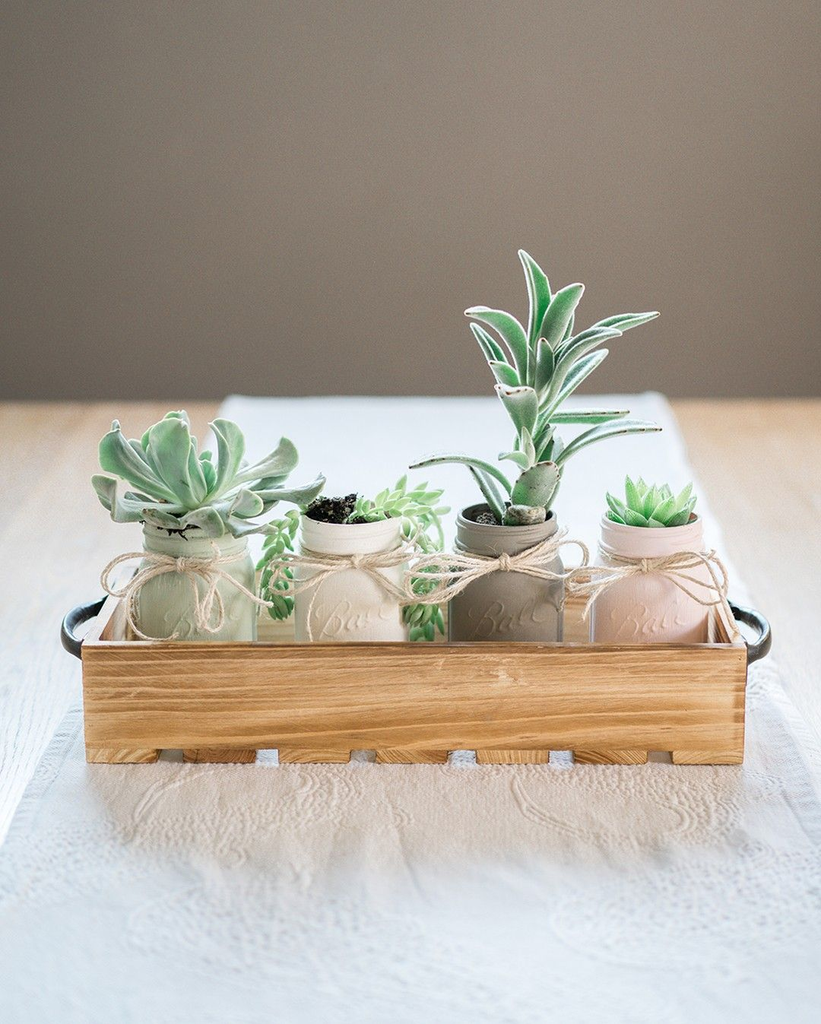
Small succulents can give a table a rustic look while providing décor that can be reused after the event. I can arrange them in small pots or jars and group them inside a wooden box or tray.
The combination of greenery, wood, and glass works well for casual summer dinners, farmhouse tables, and outdoor gatherings. I especially appreciate this option when I want the centerpiece to remain useful after the party.
Succulent care varies by variety, so I do not assume every plant needs the same amount of light or water. A centerpiece kept indoors may not receive enough light for certain types, and excess water sitting in a tray or container can damage the table.
Pro Tip: I place a waterproof saucer or liner beneath potted succulents when needed. It protects the table while allowing me to move the plants to a brighter location after the event.
23. Summer Minty Centerpiece
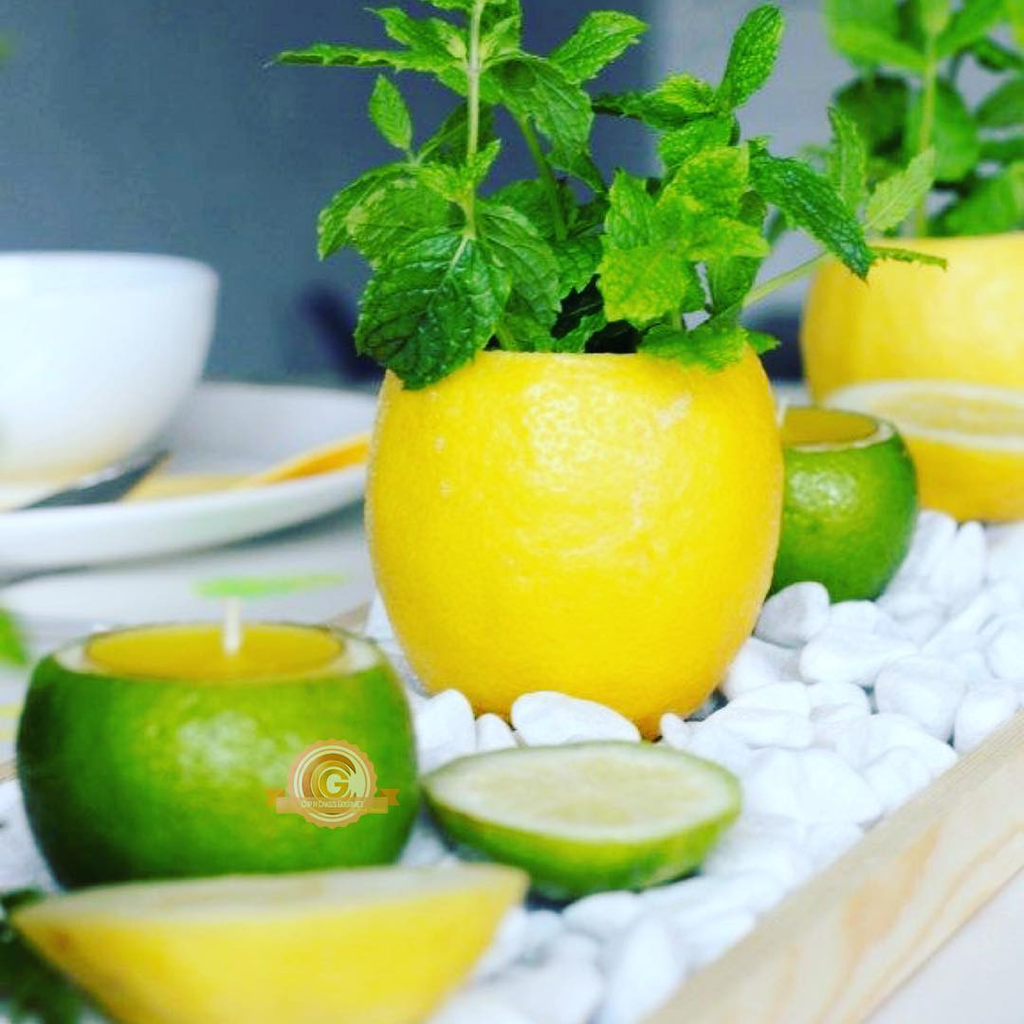
Fresh mint gives me a natural way to bring greenery and a recognizable summer herb to the table. A few stems in small glasses or jars can be combined with flowers, lemons, or other seasonal greenery.
This works especially well for garden lunches, casual dinners, and outdoor gatherings where a relaxed arrangement fits the setting. The mint can also complement a table where citrus or other summer ingredients are already part of the menu.
If mint or other herbs are intended for food or drinks, I keep those edible portions separate from decorative stems and materials. Decorative plant material should not automatically be assumed suitable for consumption.
Pro Tip: I prepare fresh mint close to the event and keep it cool until the table is ready. That helps the stems look presentable without turning the centerpiece into another task during the meal.
Read this next: Relaxing Crafts for Adults That Turn Ordinary Moments Into Self-Care
Frequently Asked Questions
What flowers work well for summer centerpieces?
I like using seasonal flowers such as roses, tulips, hydrangeas, and wildflowers. I choose varieties based on availability, table size, and the overall color scheme.
How do I keep a centerpiece from blocking conversation?
I keep arrangements relatively low when guests will sit across from each other. For long tables, several smaller arrangements can work better than one tall centerpiece.
Can I use fruit in a summer centerpiece?
Yes. Lemons, watermelon, and other summer fruits can add natural color. I keep decorative fruit separate from food intended for serving and handle cut fruit with appropriate refrigeration and food-safety practices.
Conclusion
A summer centerpiece does not need to be expensive or complicated to make an impact. I can create a useful table arrangement from flowers, citrus, herbs, vintage pieces, mason jars, baskets, or other materials I already have.
The biggest lesson I’ve learned is to consider how the table will actually be used. Guests need room for plates and glasses, food needs somewhere to go, and conversation is easier when the centerpiece does not block everyone’s view.
Whether I’m decorating a small family table, a long outdoor table, or a larger celebration, seasonal materials can provide plenty of color and personality. These ideas can also be adjusted for different budgets, occasions, and decorating styles, which makes them useful well beyond a single summer gathering.