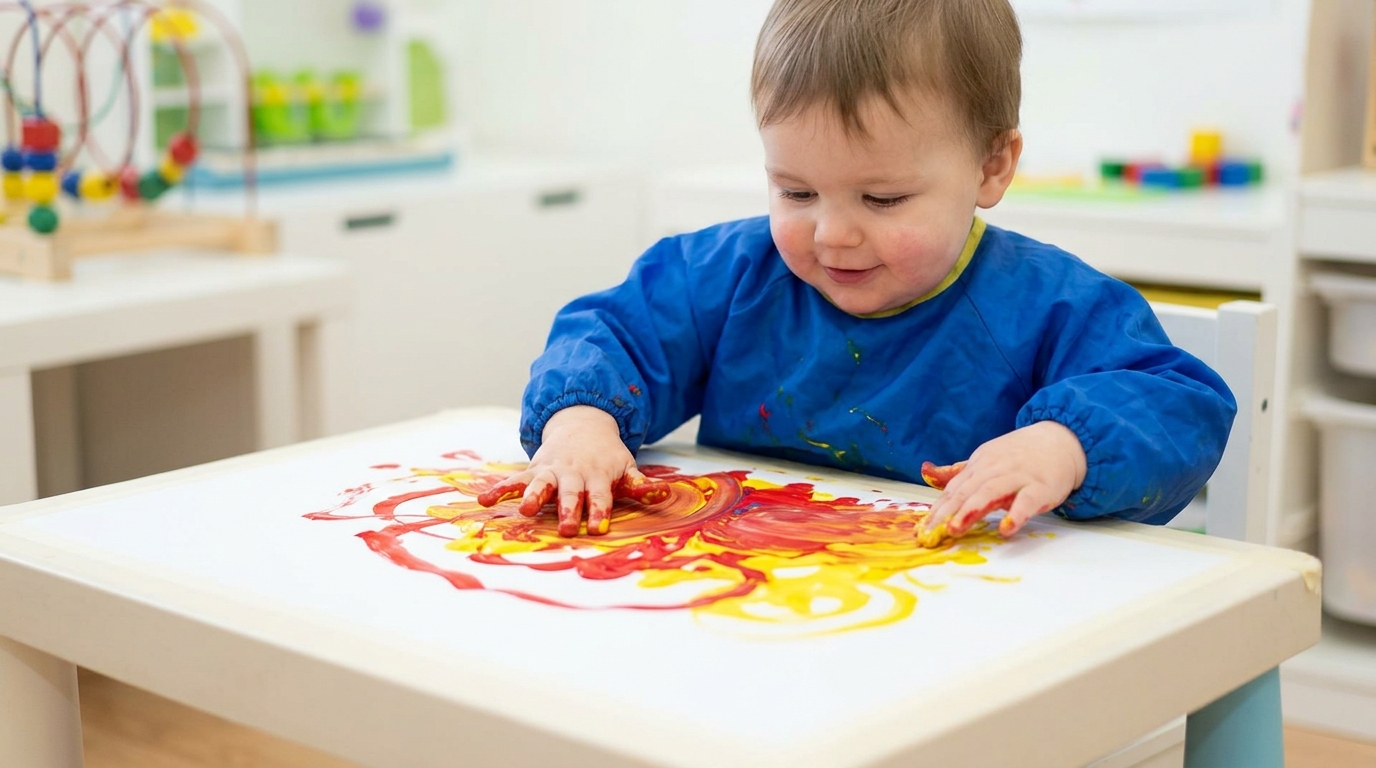
41 Crafts for 2 Years Old
Two-year-olds can be wonderfully curious and wonderfully unpredictable at the same time. One minute they may be completely focused on painting, and the next they are ready to move on to something else. That is why I look for crafts that give little hands plenty to touch, paint, stick, stamp, tear, and explore without expecting a perfect result.
For me, the process matters much more than the finished picture. A butterfly covered in uneven fingerprints or a paper plate with paint in unexpected places is still a successful toddler craft. I would much rather see a child making choices and enjoying the activity than trying to make their work match an adult-made example.
I also keep the child’s attention span in mind. Some crafts may hold their interest for 15 or 20 minutes, while another may last only five. Having several simple ideas available means I can switch activities without turning craft time into a struggle.
Before we begin, I check every material. At age two, small pieces, loose decorations, food items, craft tools, and some sensory materials need close adult supervision. I prepare cutting, mixing, gluing, or other difficult steps ahead of time whenever possible.
These 41 crafts for 2-year-olds cover painting, paper crafts, recycled-material projects, nature activities, sensory play, animal crafts, seasonal artwork, and simple keepsakes. I like having this kind of variety because a toddler’s interests can change quickly.
Many of the projects use inexpensive supplies already found around the house, including paper plates, cardboard tubes, paper, coffee filters, cotton materials, recycled containers, and everyday objects. There is no need to build a huge craft collection just to keep a two-year-old busy.
Several ideas also create natural opportunities to practice colors, simple counting, matching, stamping, making choices, and following one or two directions. I treat those as part of the activity rather than turning craft time into a formal lesson.
Save this for later
Table of Contents
The most important adjustment is the adult’s role. A two-year-old can often do the fun, hands-on portion while an adult prepares the pieces that require cutting, sharp tools, hot surfaces, or more complicated assembly.
Key Takeaways
- Keep toddler crafts flexible and focus on the experience rather than a perfect finished product.
- Choose activities based on the child’s current interests, attention span, and tolerance for mess.
- Prepare cutting, mixing, and other difficult steps before the child starts.
- Closely supervise small pieces, food materials, adhesives, utensils, and sensory supplies.
- Household and recycled materials can provide plenty of inexpensive craft options.
- Use seasonal crafts as simple opportunities to talk about colors, animals, weather, holidays, and nature.
- Protect the work area before messy projects begin, and keep wipes or a damp cloth nearby.
Related article: 28 fun and easy crafts for kids
41 Crafts for 2-Year-Olds
How I Choose Crafts for a 2-Year-Old
Before picking a project, I consider how much preparation it needs, how messy it will be, and what the child seems interested in that day. A toddler who wants to paint may not be interested in a gluing project, and that is completely fine.
I also look at what the child can safely manage. Pre-cutting shapes, setting out only the materials needed, and keeping the workspace small can make a big difference.
For a first attempt, I usually choose something with a short setup and a clear action, such as stamping, painting, or sticking large pieces onto paper. Once the child is settled, there is plenty of time to try the more involved ideas.
1. DIY Paper Mache
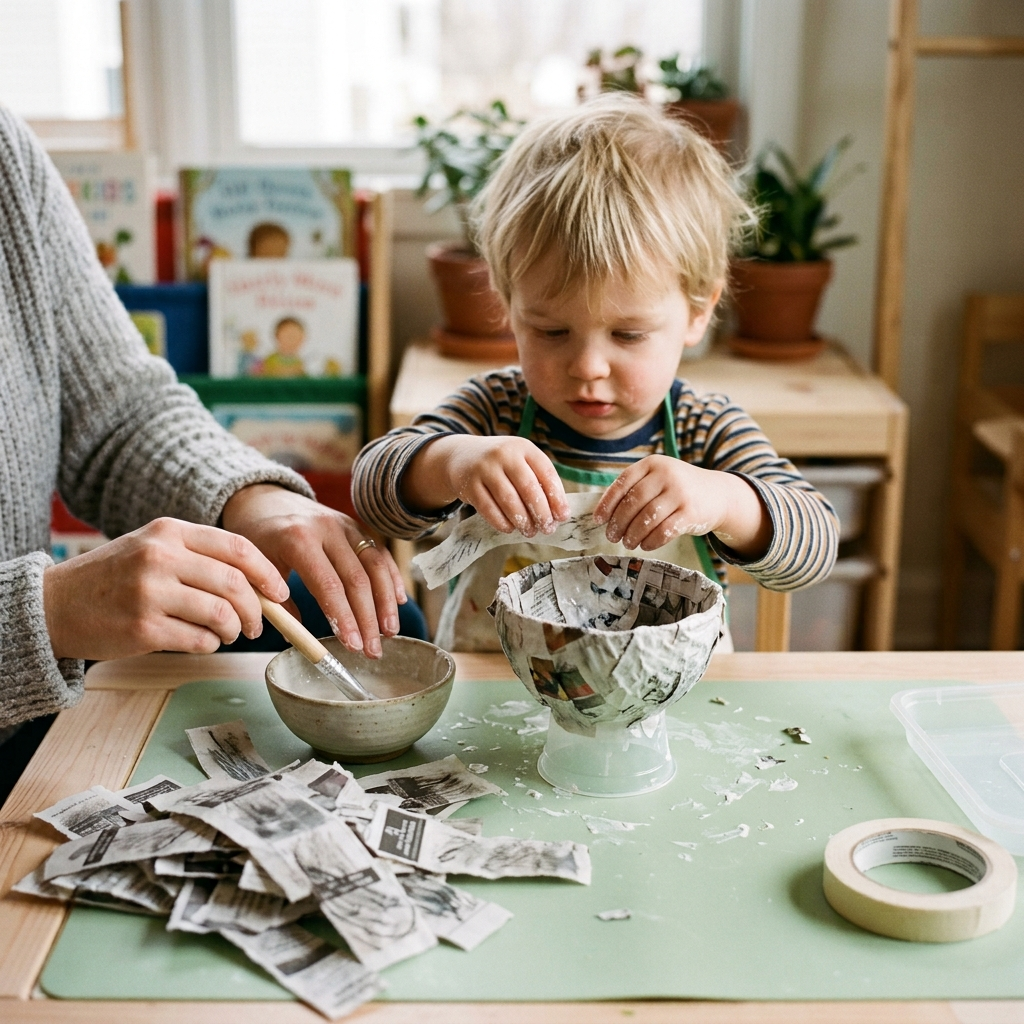
Paper mache is a good choice for a slow afternoon when there is plenty of time for preparation and drying. The toddler can tear or place paper pieces and help spread paste with close supervision while an adult handles the more complicated shaping.
I would start with a small project rather than attempting a large sculpture. A smaller shape is easier for little hands to cover and less frustrating if their attention moves elsewhere.
Because paper mache paste can get everywhere, I cover the table first and keep a washable mat underneath. The finished piece will also need plenty of time to dry before it can be painted or decorated.
Pro Tip: Prepare the paste, paper strips, and work surface before bringing the toddler over. At this age, long waits can quickly end the activity.
2. Fall Suncatcher
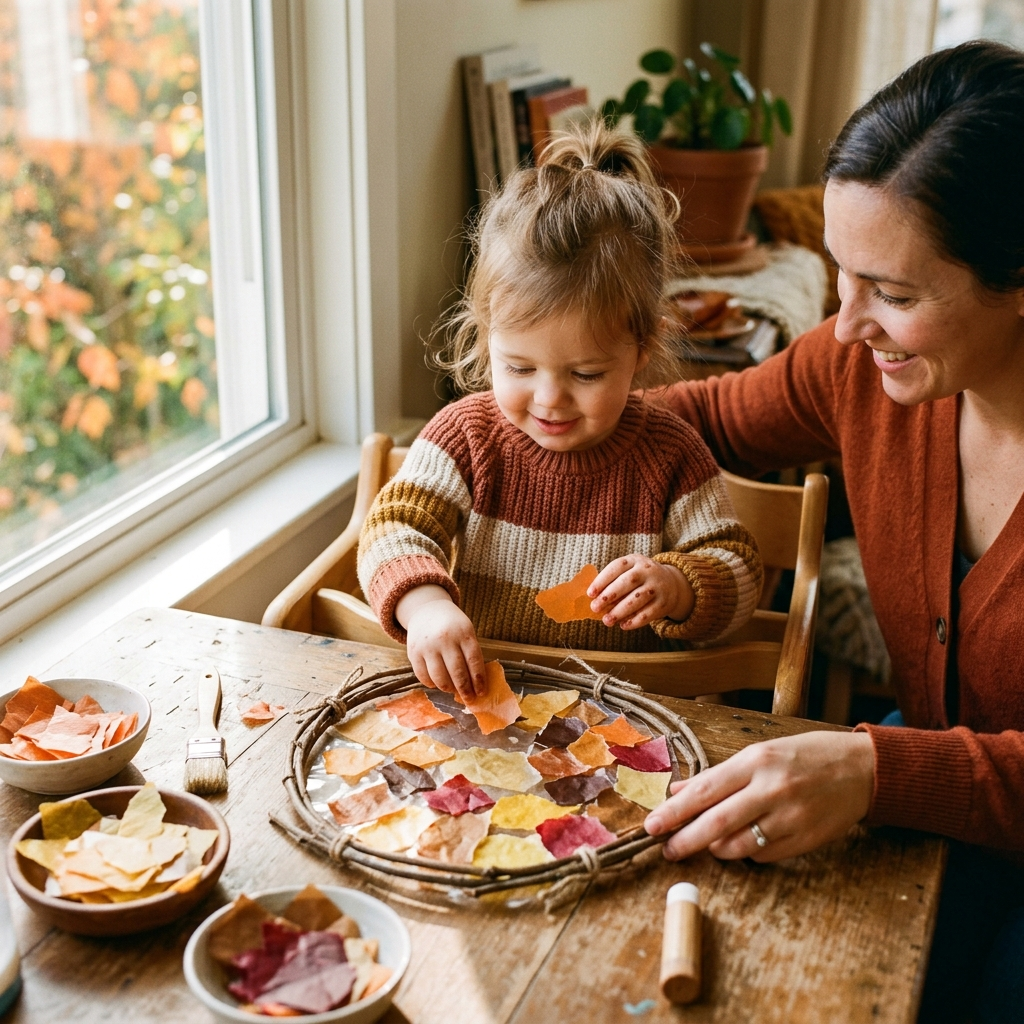
Fall suncatchers are a simple way to play with autumn colors while making something that can later hang in a sunny window. I like giving the child a few color choices instead of laying out every possible shade.
An adult can prepare the frame and adhesive surface first. The toddler can then decide where the colored pieces should go and create their own arrangement.
There is no need to make every section even. The changing light through the finished piece is what makes this craft so appealing.
3. Recycled CD Ladybugs
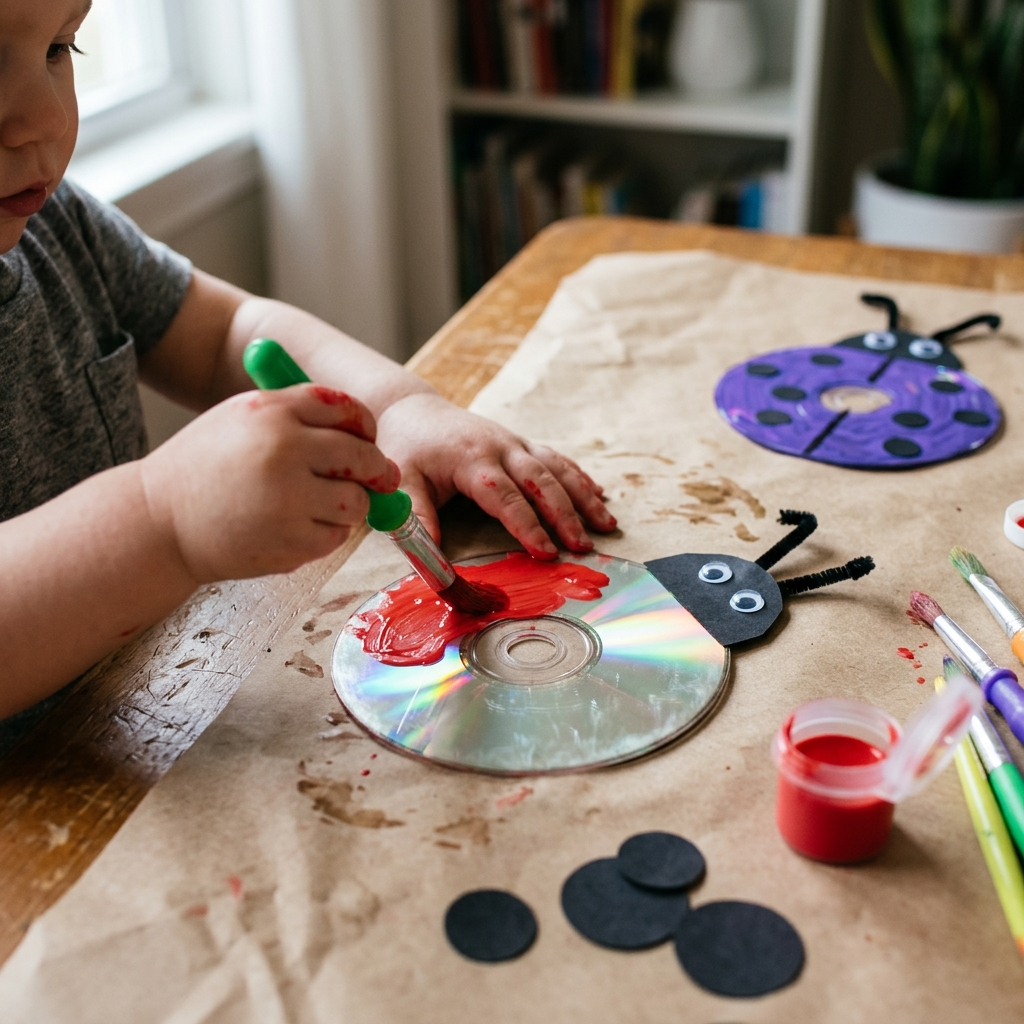
An old CD can become a bright ladybug with some paint and a few prepared pieces. I like projects like this because they turn an item that might otherwise be discarded into something a child can decorate.
The adult should inspect the disc carefully and handle any sanding, cutting, or preparation involving rough or sharp edges. Once the surface is ready, the toddler can paint the ladybug and help decorate it.
Red and black are an obvious combination, but I would not worry about keeping the colors realistic. A purple, blue, or rainbow ladybug is just as fun at this age.
4. Butterfly Symmetry Painting
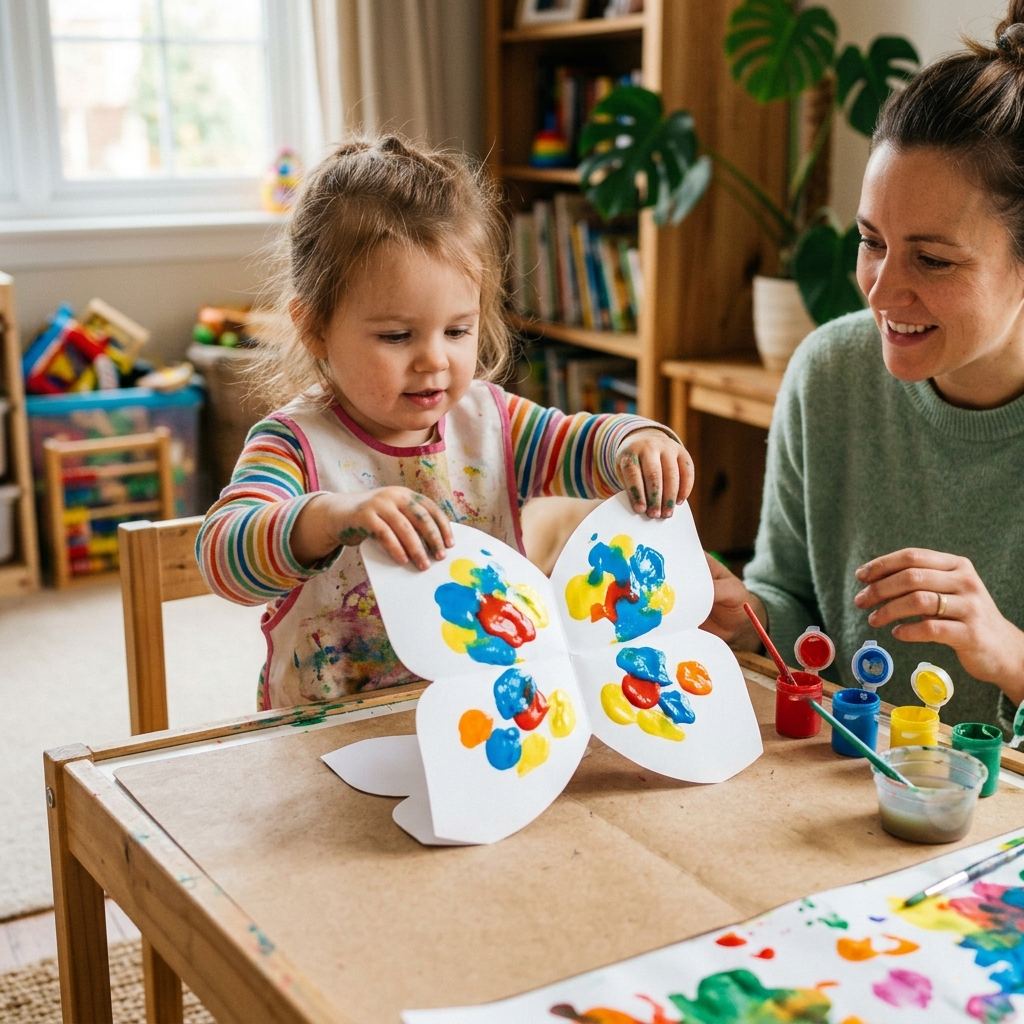
Butterfly symmetry painting gives a two-year-old a fun surprise without requiring them to draw a butterfly themselves.
I prepare a butterfly shape on thicker paper and add paint to one side. After folding the paper together and opening it again, the child can see how the paint has transferred to the other side.
Cardstock or another sturdy paper works better than very thin paper because wet paint can make lightweight sheets buckle. Let the toddler choose the paint colors and enjoy the reveal.
5. Salt Dough Ornaments
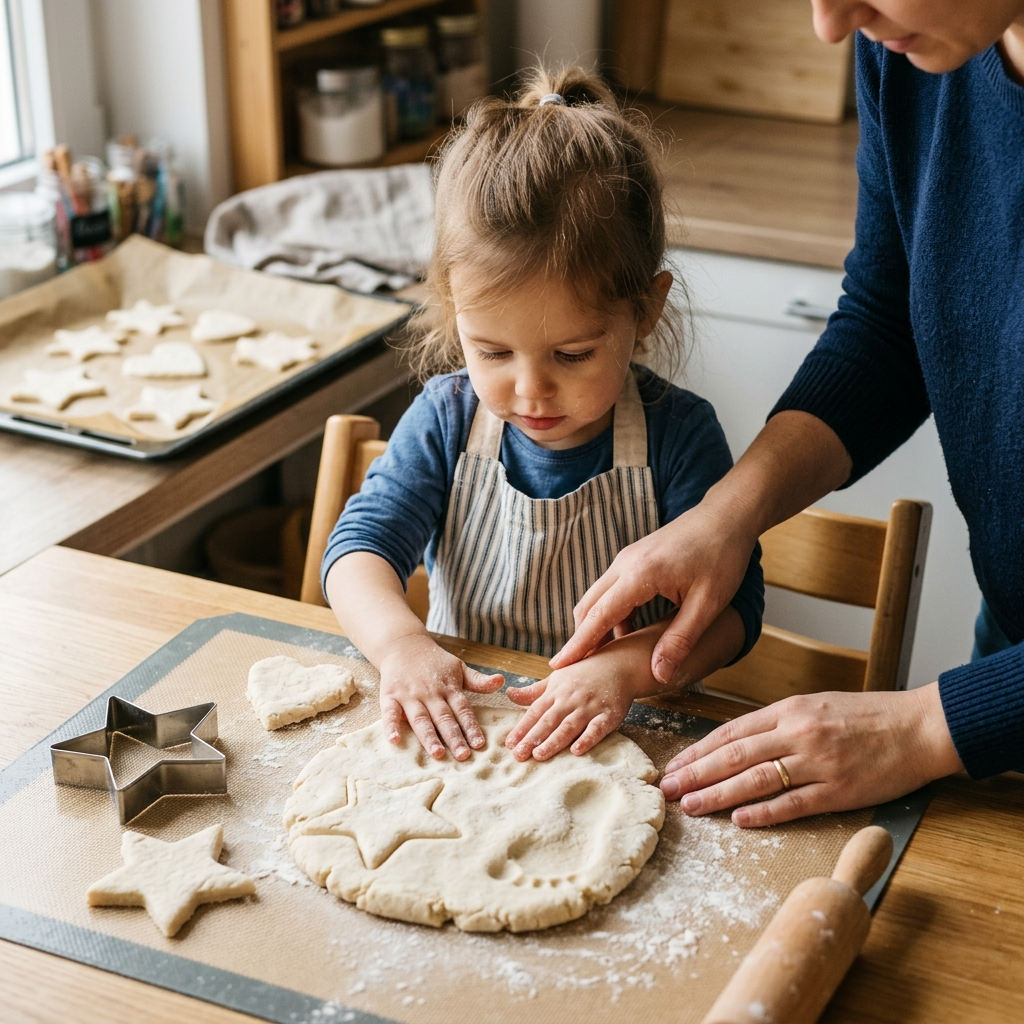
Salt dough is useful beyond the holiday season. It can become ornaments, simple shapes, handprint keepsakes, or little decorations for different times of the year.
For a two-year-old, I keep the shapes uncomplicated. They can press the dough, make fingerprints, flatten it, or use a large cutter while an adult handles baking and any hot equipment.
One important reminder is that salt dough is not edible. I keep it away from mouths and supervise the entire activity, especially because toddlers may naturally explore unfamiliar materials by tasting them.
Pro Tip: Date the back of a finished keepsake. A simple toddler handprint can become much more meaningful when you know exactly how old the child was when it was made.
6. Corn Craft
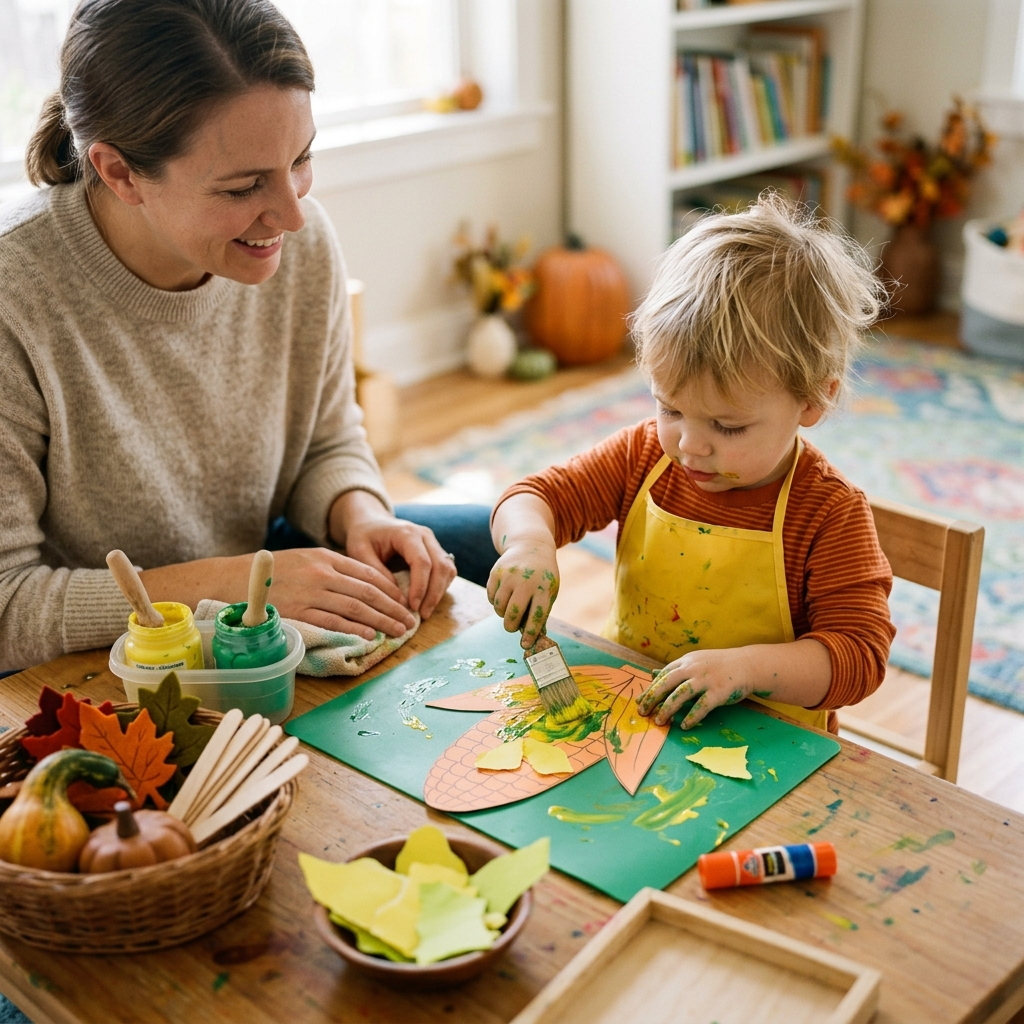
A corn craft can fit nicely into conversations about fall, farms, food, or how plants grow. The art itself can stay very simple, with the toddler adding paint, paper, or another texture to a prepared corn shape.
I like mixed-material crafts because the child gets to notice how different materials feel and behave. However, dried corn kernels, grains, and other tiny pieces can present a choking risk for young children.
For that reason, I keep small materials directly supervised and use larger alternatives when appropriate.
7. Cotton Ball Sheep
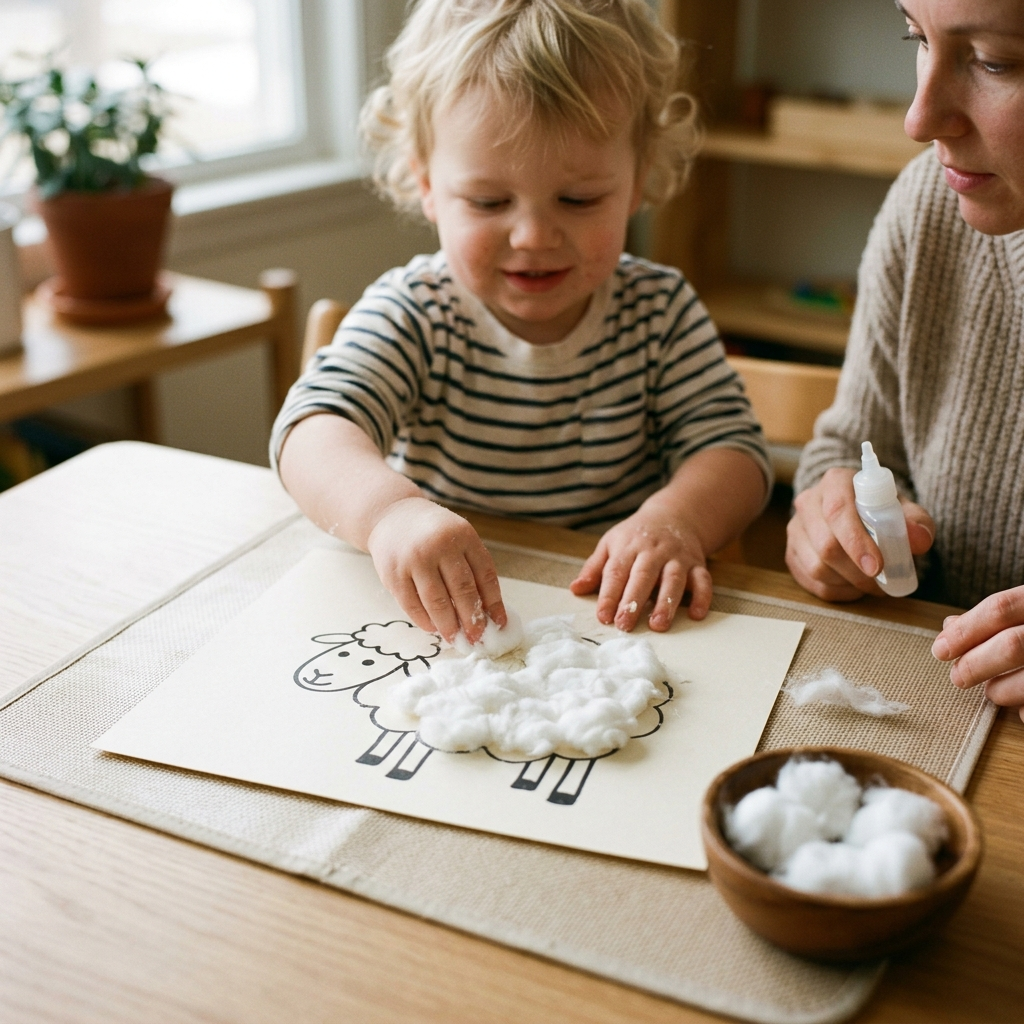
A cotton ball sheep is mostly about texture. The basic sheep outline can be drawn or printed ahead of time, leaving the toddler to cover the body with cotton.
Little hands can pick up the cotton and place it around the shape while an adult manages the adhesive as needed. The uneven coverage is part of the charm.
Loose cotton pieces should not be treated as toys, so I keep the activity within arm’s reach and clean up the extras when we are finished.
8. Sun Suncatcher
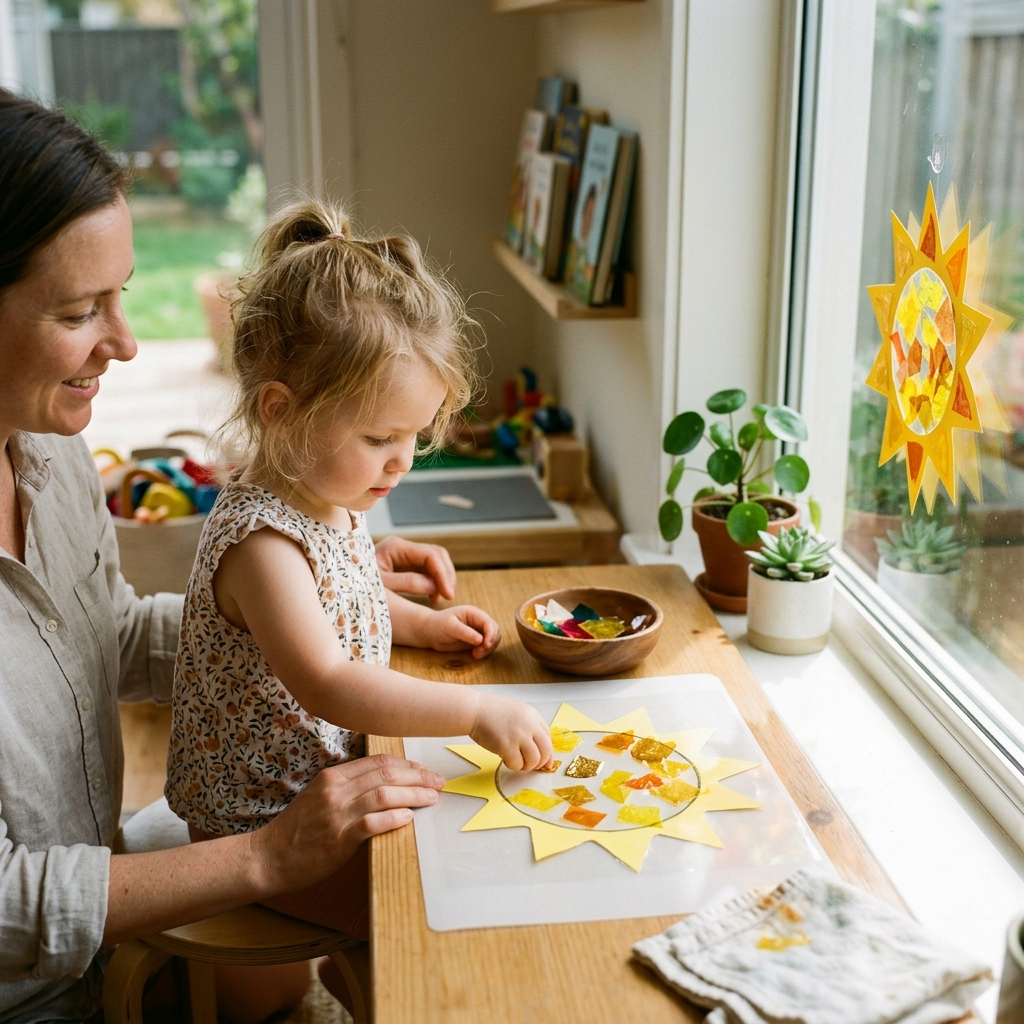
A sun-shaped suncatcher works well when I want a bright project with very little drawing. The adult can prepare the outline and adhesive surface while the toddler focuses on arranging the translucent pieces.
Once it is finished, placing it near a sunny window lets the child see the colors change with the light.
Pro Tip: Set everything up before the toddler joins you. Having the surface ready to decorate keeps the activity moving and gives little hands something to do right away.
9. Fingerprint Dandelion
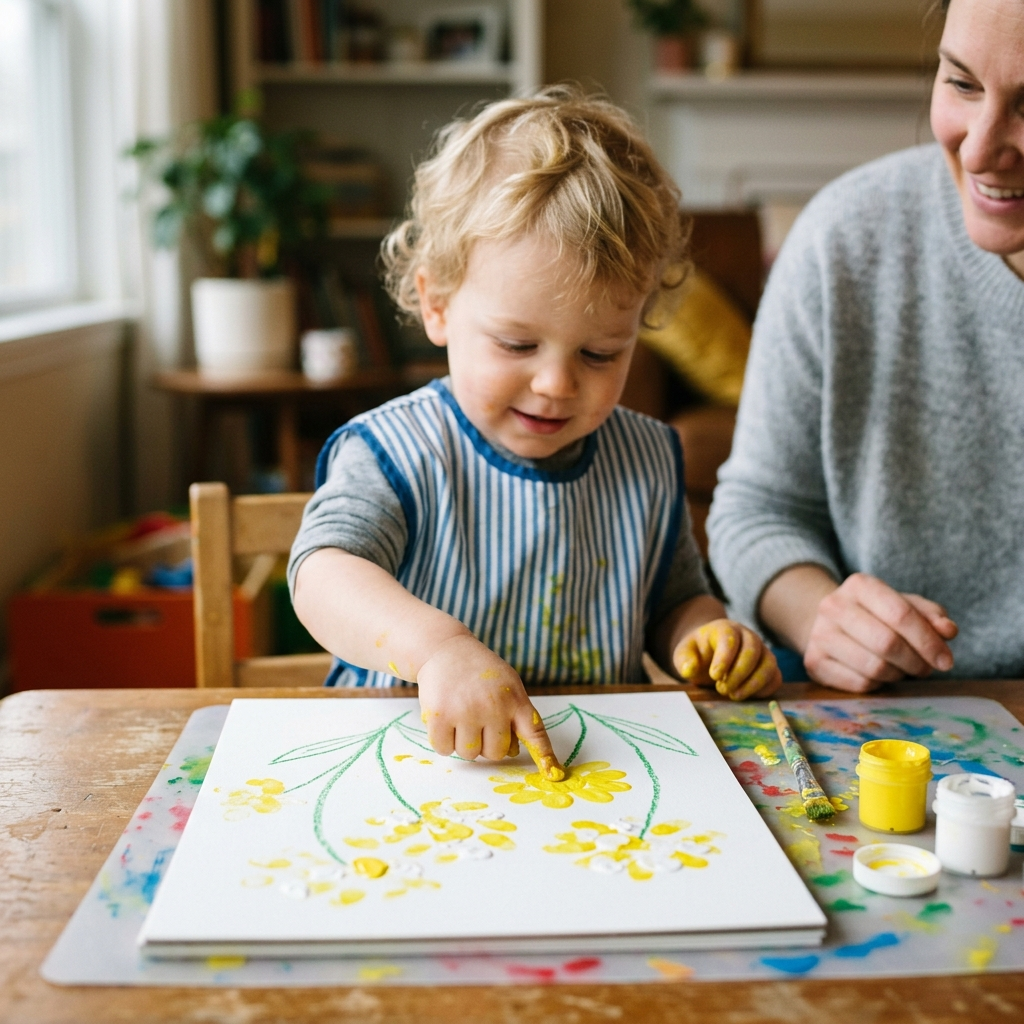
Fingerprint dandelions make lovely keepsakes because the tiny fingerprints become part of the flower.
I draw the stems and branches beforehand and let the child add the flower heads with their fingertips. There is no need to guide every print into a precise position.
For a keepsake, I write the child’s name and age on the back once the paint has dried. It is an easy way to preserve a small snapshot of this stage.
10. Easy Construction Paper Pieces Rainbow
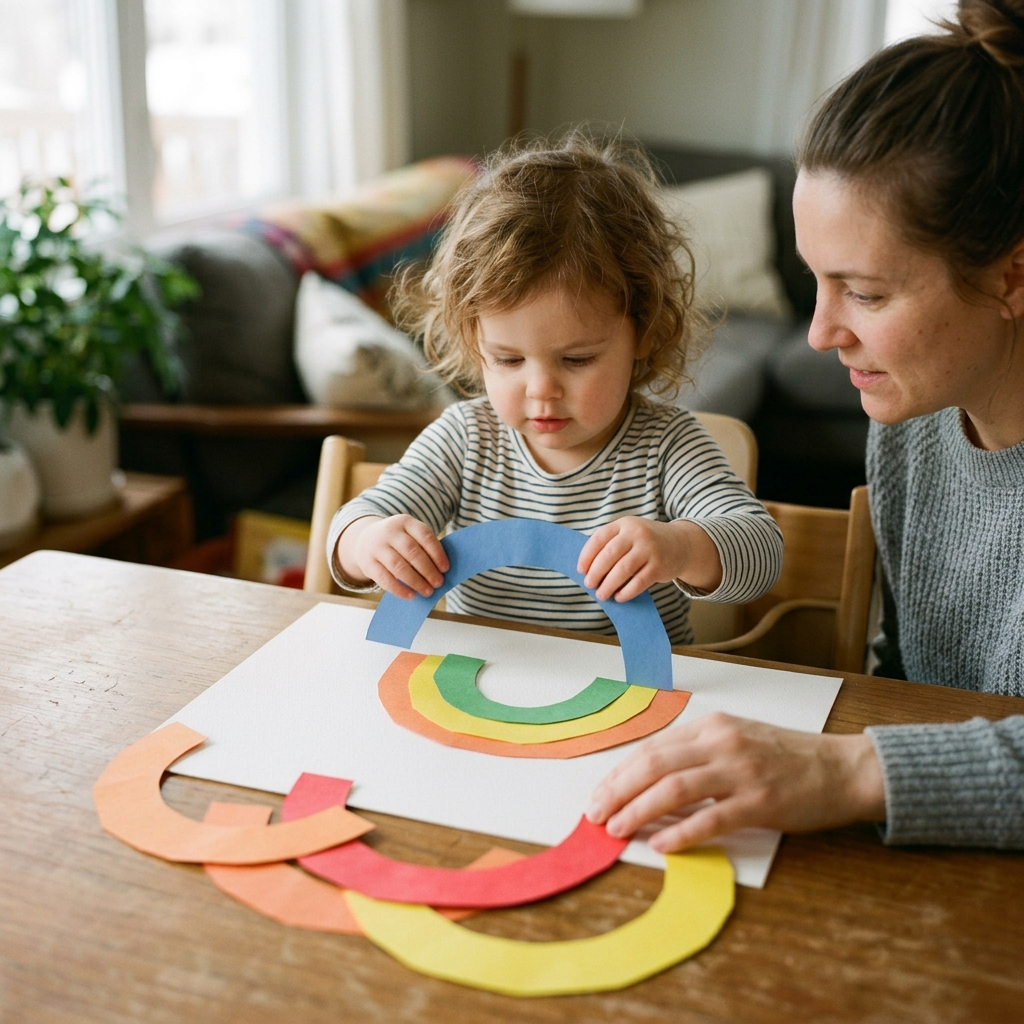
A construction paper rainbow combines a simple craft with color matching. I pre-cut the pieces and let the toddler decide where they belong.
We can name the colors as we work, but I do not expect a two-year-old to remember a particular rainbow sequence. The goal is simply to make the activity manageable and enjoyable.
If a full rainbow has too many pieces, start with two or three colors. The same activity still works with a smaller selection.
11. Painting With Jellybeans
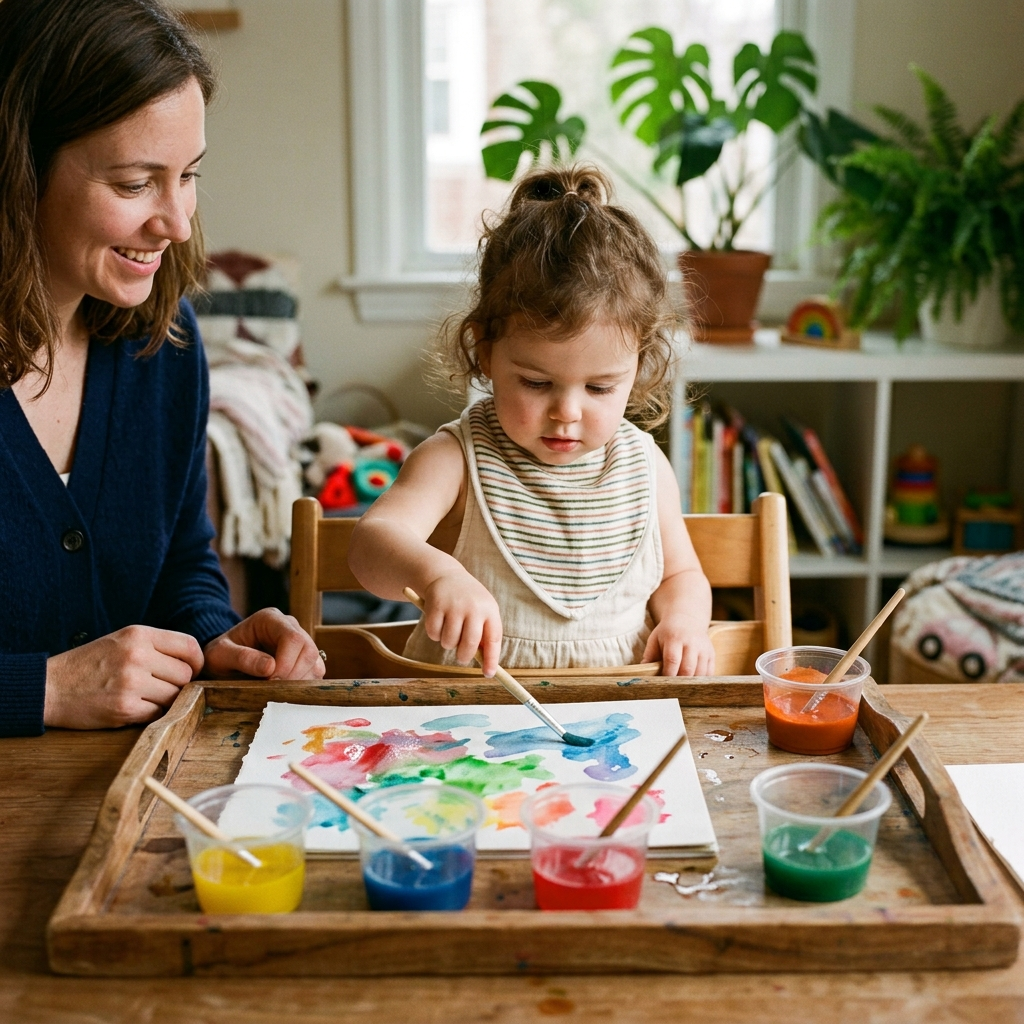
Jellybean painting is an unusual way to make colored water for artwork. I treat the jellybeans as food used to create the color rather than as something the toddler should snack on during the craft.
An adult can place a small number of jellybeans into separate cups of warm water and allow the color to dissolve. The child can then use a brush to paint with the colored water.
I keep the remaining candy away from the workspace and check for food allergies or dietary restrictions before using this idea with a group.
Pro Tip: A tray underneath the cups and paper makes cleanup much easier if the colored water spills.
12. The Very Hungry Caterpillar Activity
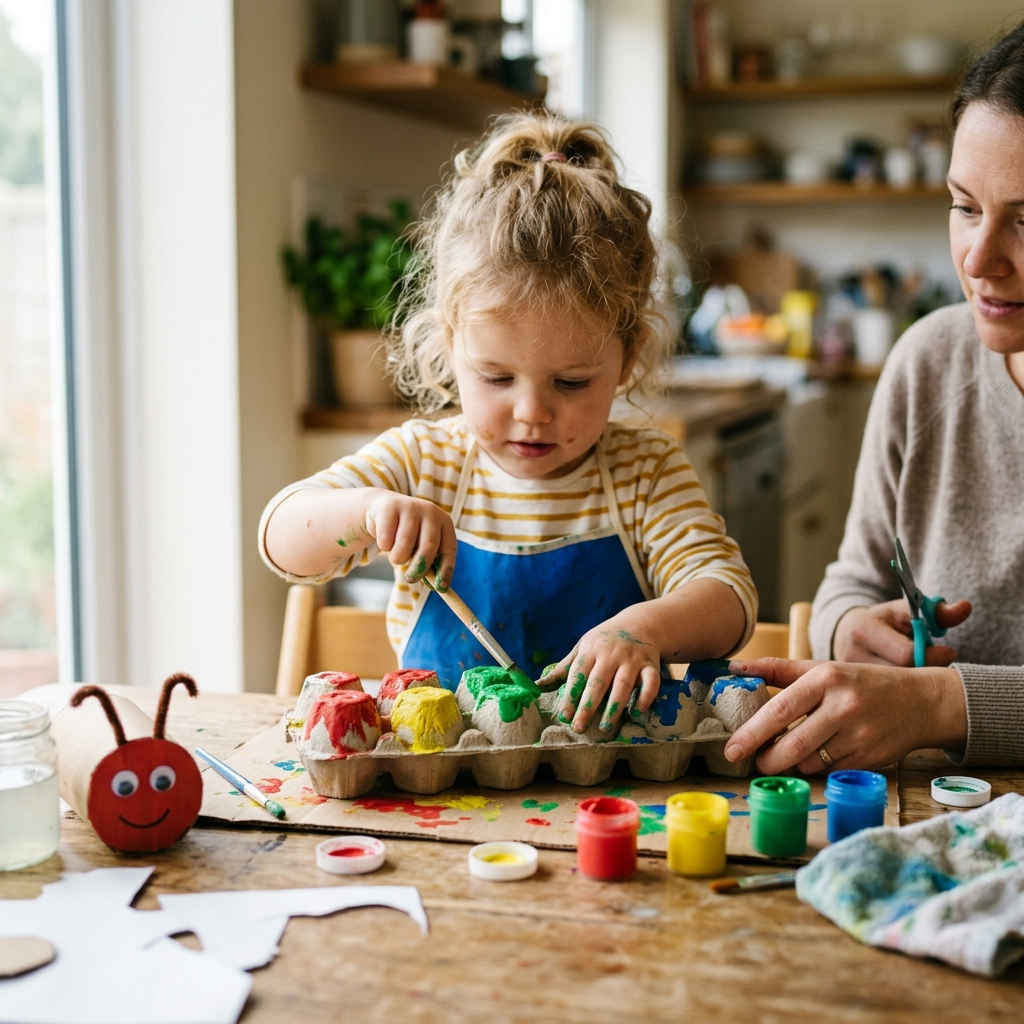
An empty egg carton can make a fun caterpillar body and gives an everyday item a second use.
I prepare the carton and handle any cutting before the toddler starts. Painting the individual sections gives little hands an easy way to work across the whole caterpillar.
We can talk about colors, numbers, and different foods while decorating it. I keep the conversation simple and let the child decide how their caterpillar should look.
13. Galaxy In A Jar
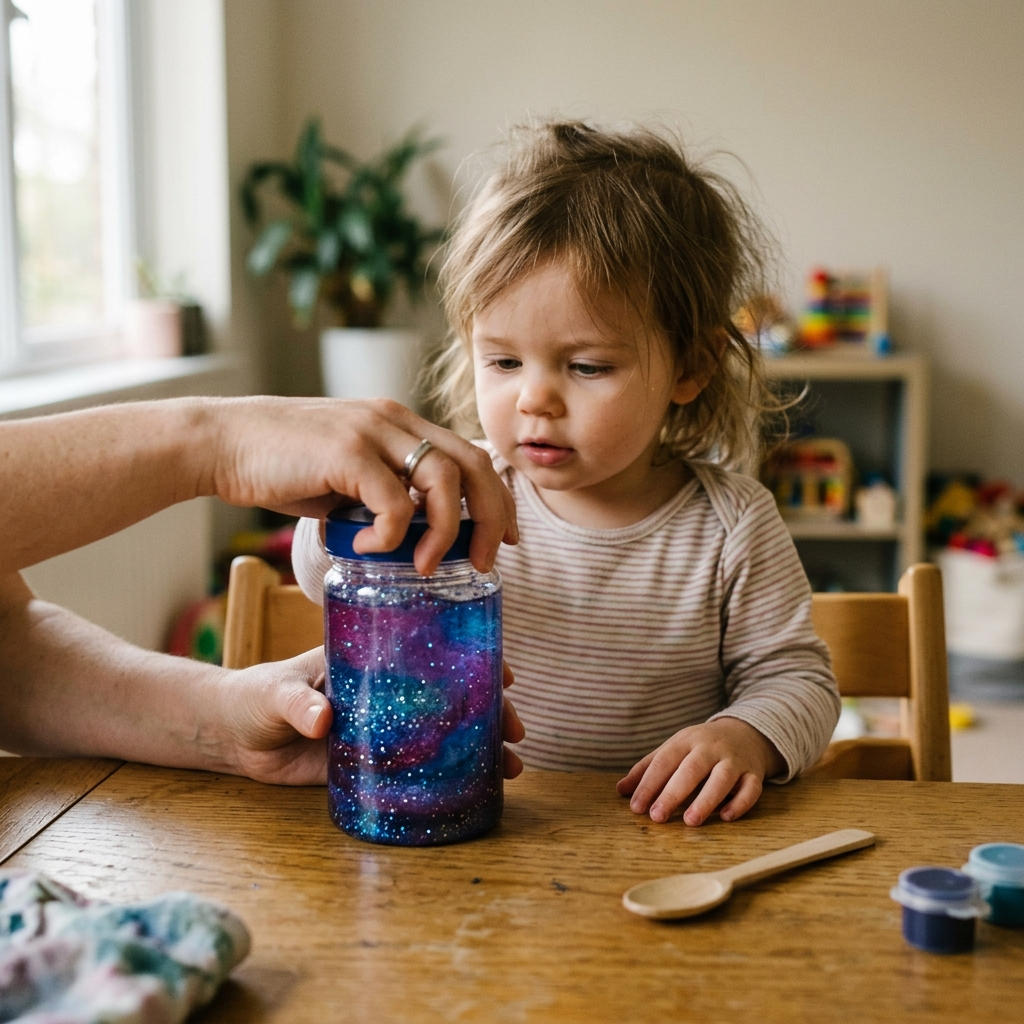
A galaxy jar is a more visual, sensory-style project that can be interesting to watch after the crafting is finished.
For a two-year-old, I use a sturdy plastic container rather than glass and make sure the lid is securely closed. An adult should handle the filling and sealing, particularly when using glitter or other small materials.
I treat the finished jar as a supervised sensory item rather than something for the toddler to carry around. That keeps spills, broken containers, and loose materials easier to manage.
14. Paper Plate Dinosaur
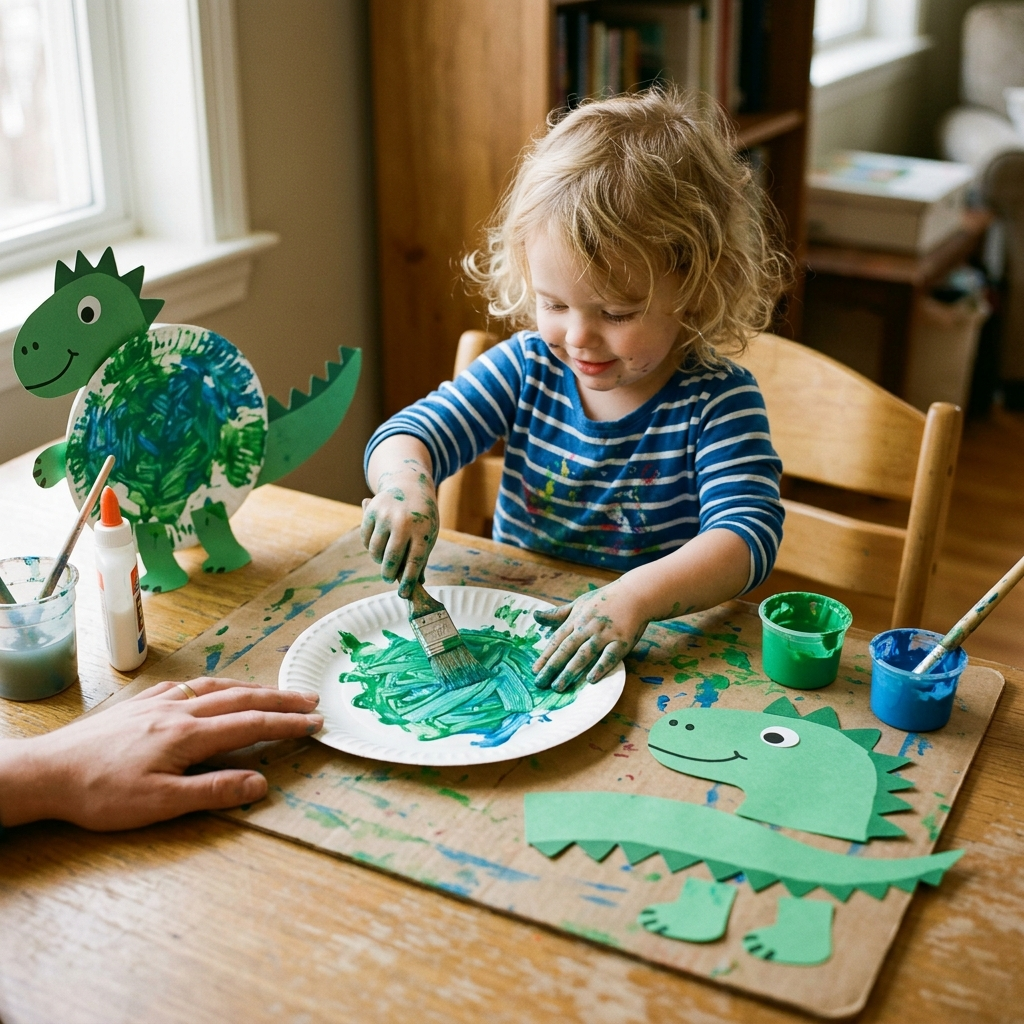
Paper plates are inexpensive and easy to turn into animals, which makes them especially handy for toddler crafts.
For the dinosaur, an adult can prepare the head, tail, feet, and other pieces that require cutting. The child can concentrate on painting the plate and choosing the colors.
Once assembled, the dinosaur can also become part of pretend play. I like that the craft can continue beyond the painting table instead of immediately becoming a decoration.
15. Shell Painting
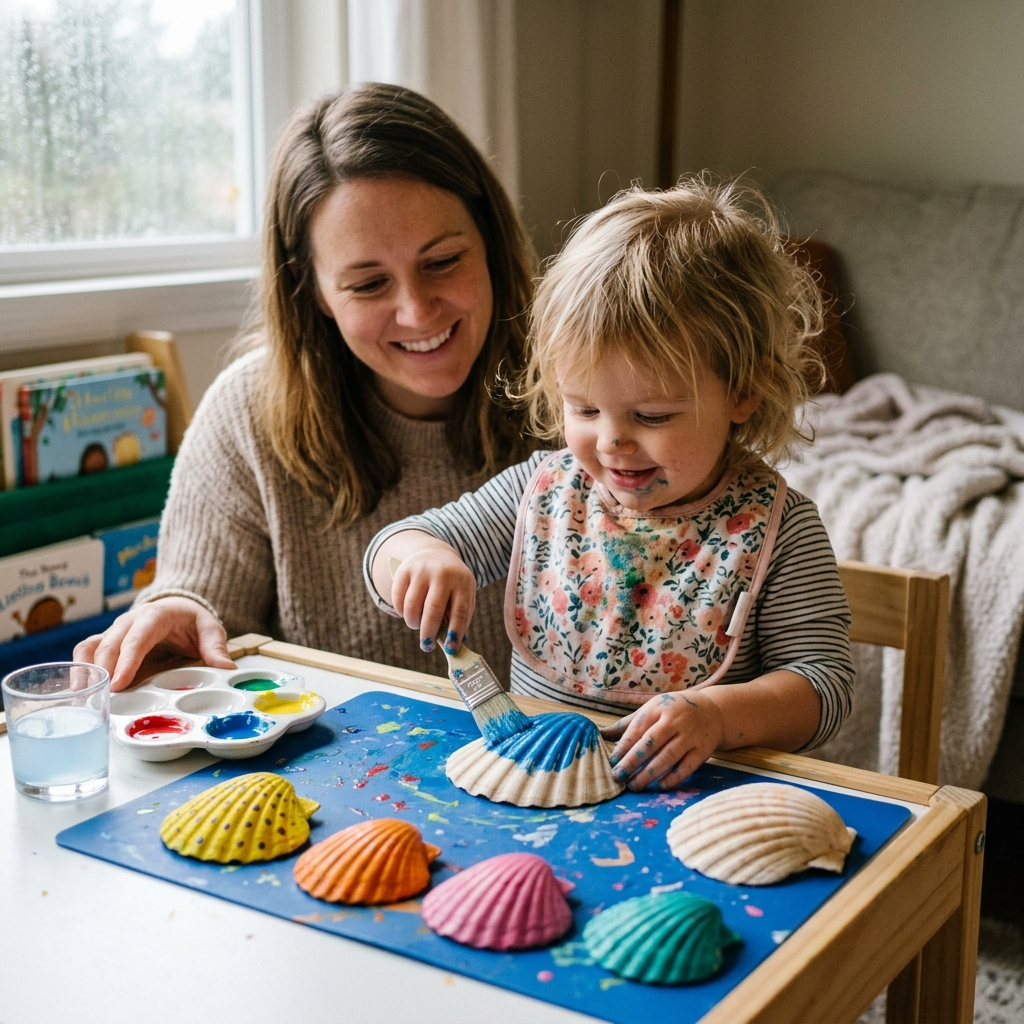
Painting shells can work well after a beach trip or simply as a rainy-day craft at home. I wash and dry the shells before putting them on the table.
Before using them, I check for sharp or broken edges. The toddler can then paint the smooth surfaces with washable paint and experiment with different colors.
If the shells will be displayed outside, any protective coating should be applied and allowed to dry by an adult according to the product directions.
16. Bubble Wrap Octopus
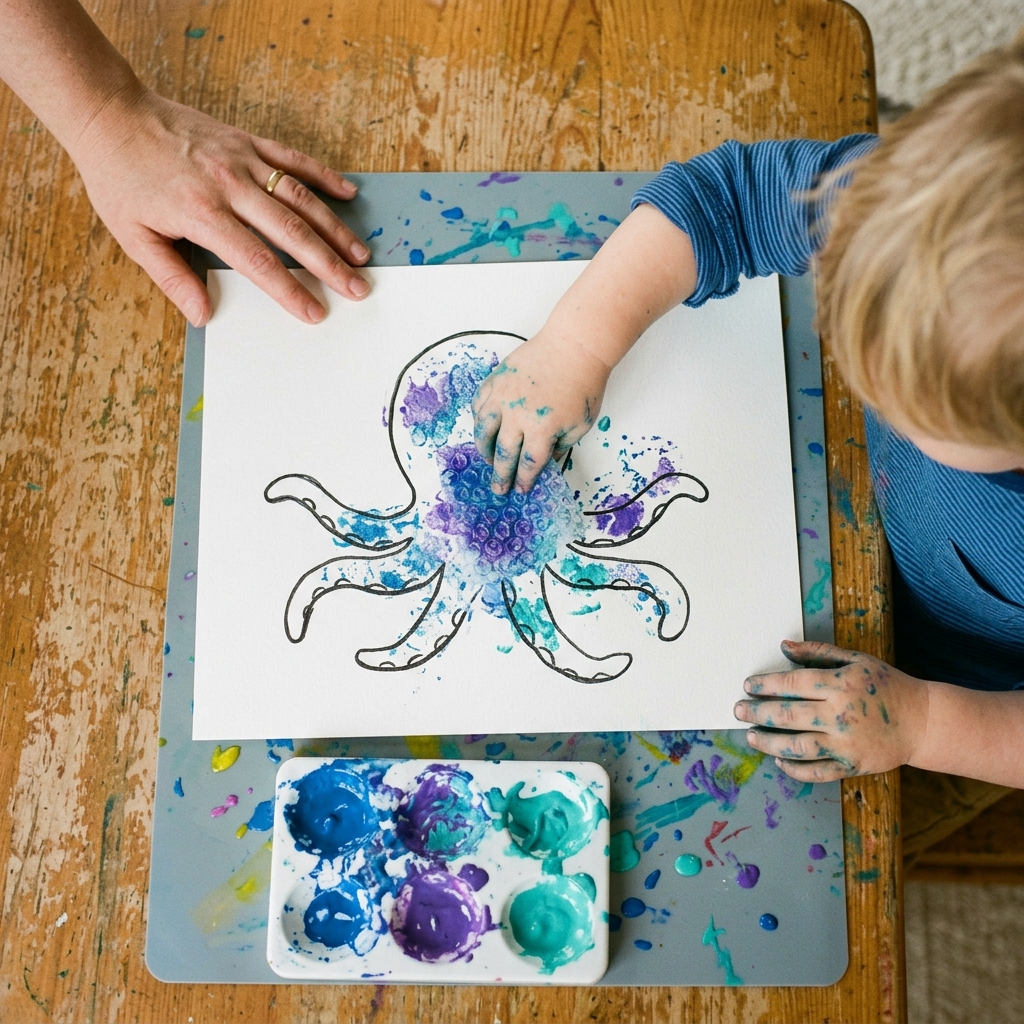
Bubble wrap creates a fun textured effect when used as a stamping tool. I prepare the octopus shape and let the toddler press or dab bubble wrap into washable paint.
The project comes together quickly, which is useful when attention spans are short. Several octopuses can also be made if a child wants to keep stamping.
Bubble wrap should not be left with a two-year-old for unsupervised play. I keep the piece small, stay nearby, and remove it when the activity is finished.
Pro Tip: Use a manageable piece of bubble wrap rather than a large sheet. It is easier for small hands to control and keeps the work area less chaotic.
17. Ladybug Paper Plate
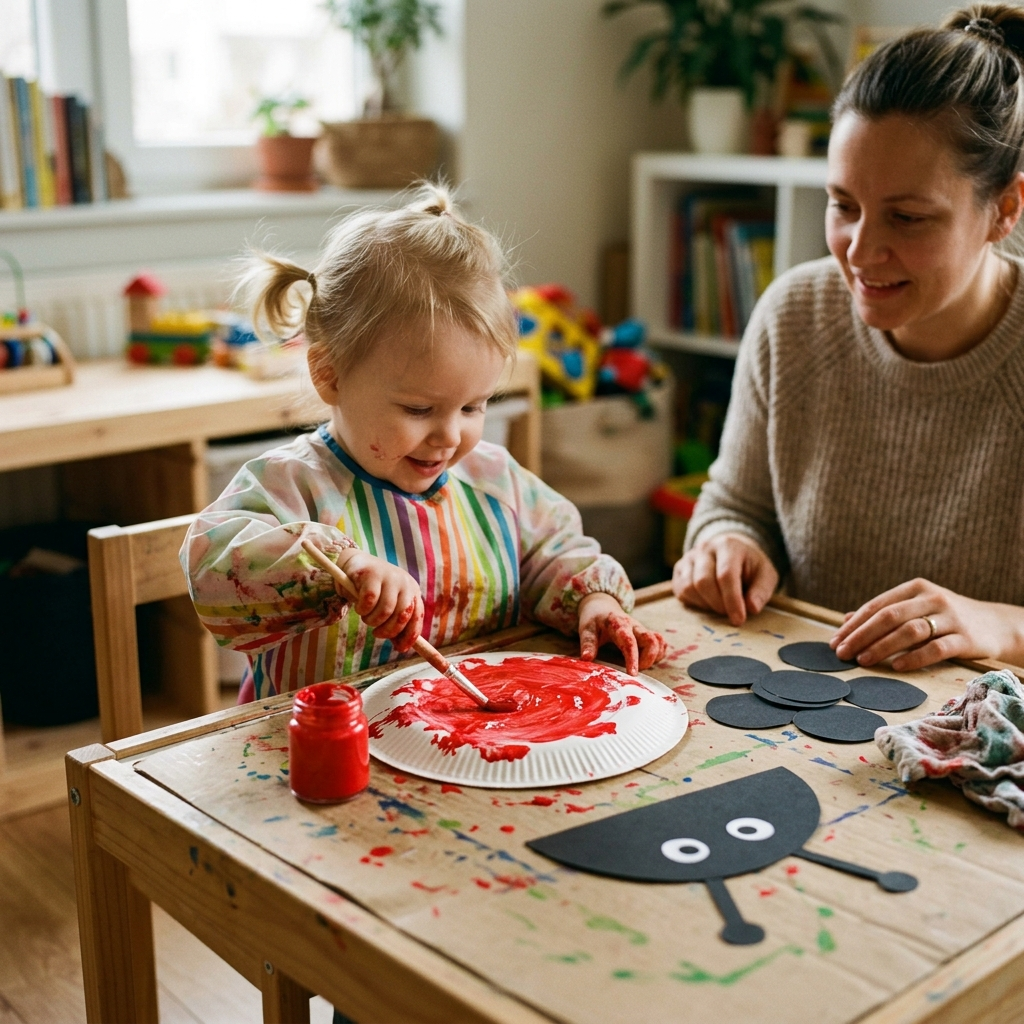
A paper plate ladybug is another straightforward animal craft, but it has a different feel from the recycled CD version.
The toddler can paint or color the plate first. Once it is dry, an adult can cut and assemble the wings and add the remaining details.
Large pre-cut spots are easier and safer for this age than asking a toddler to use a small paper punch or scissors.
18. Fall Tree
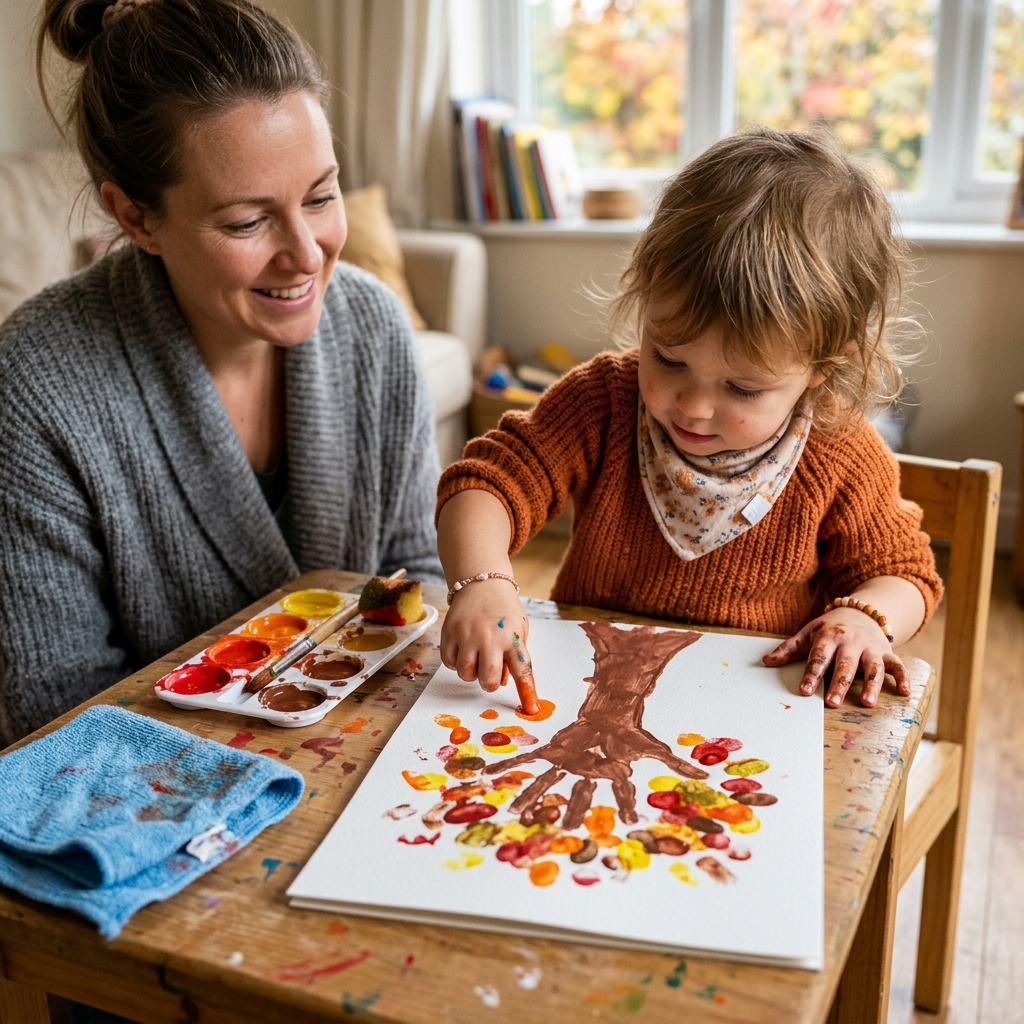
A fall tree gives me an easy way to talk about changing seasons while creating a colorful picture.
One version uses the child’s arm and hand as the tree trunk and branches. After the trunk is complete, leaves can be added with fingerprints, a sponge, or a large stamp in fall colors.
If the child does not enjoy having paint on their skin, there is no reason to force it. A brush or sponge works just as well.
Pro Tip: Keep a damp cloth nearby before starting a handprint project. It makes the transition from painting to cleanup much easier.
19. Winter Hat
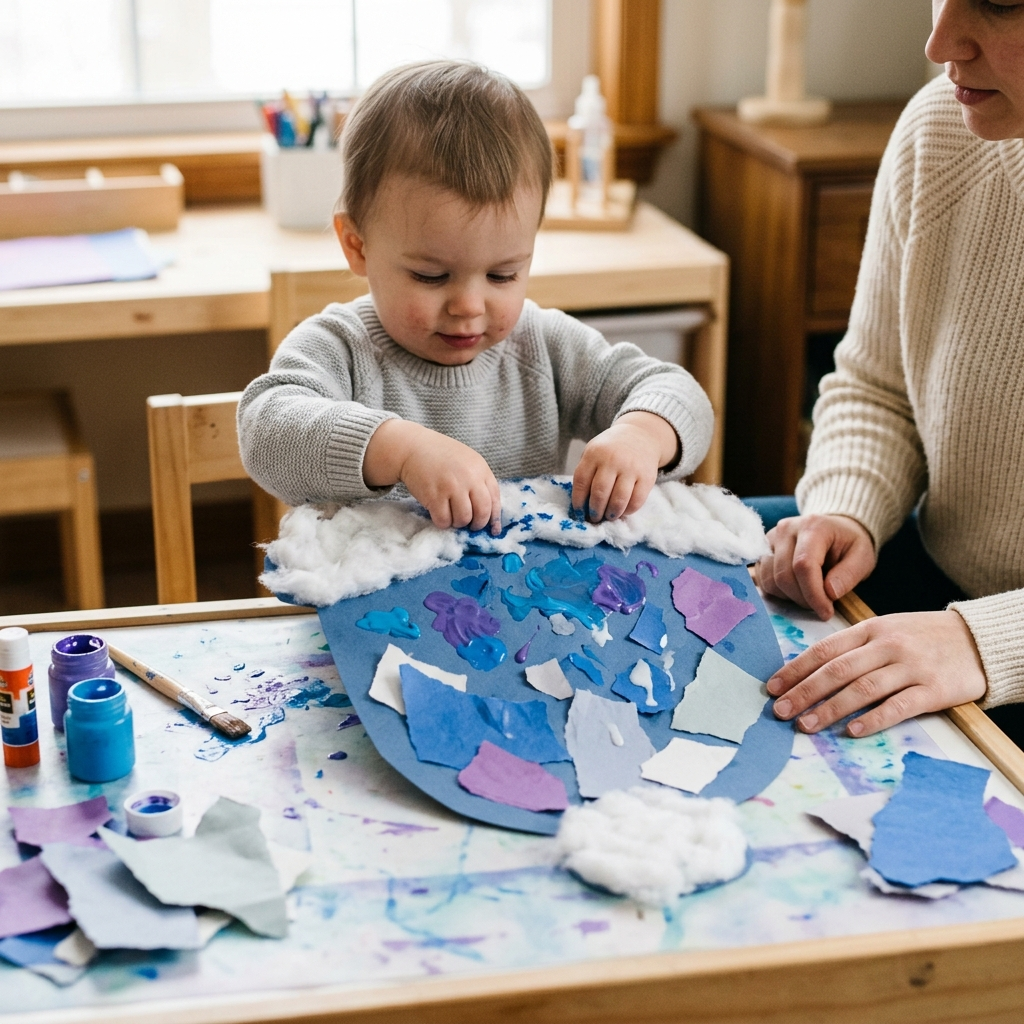
A winter hat craft is simple enough for a two-year-old and leaves plenty of room for different textures.
I prepare the hat shape ahead of time and let the child decorate it with washable paint, large paper pieces, or other suitable materials. Cotton can give the top a soft, snowy appearance.
I avoid putting a pile of tiny decorations within reach. Larger, age-appropriate materials are easier to manage and still give the child plenty of choices.
20. Paper Plate Dalmatian
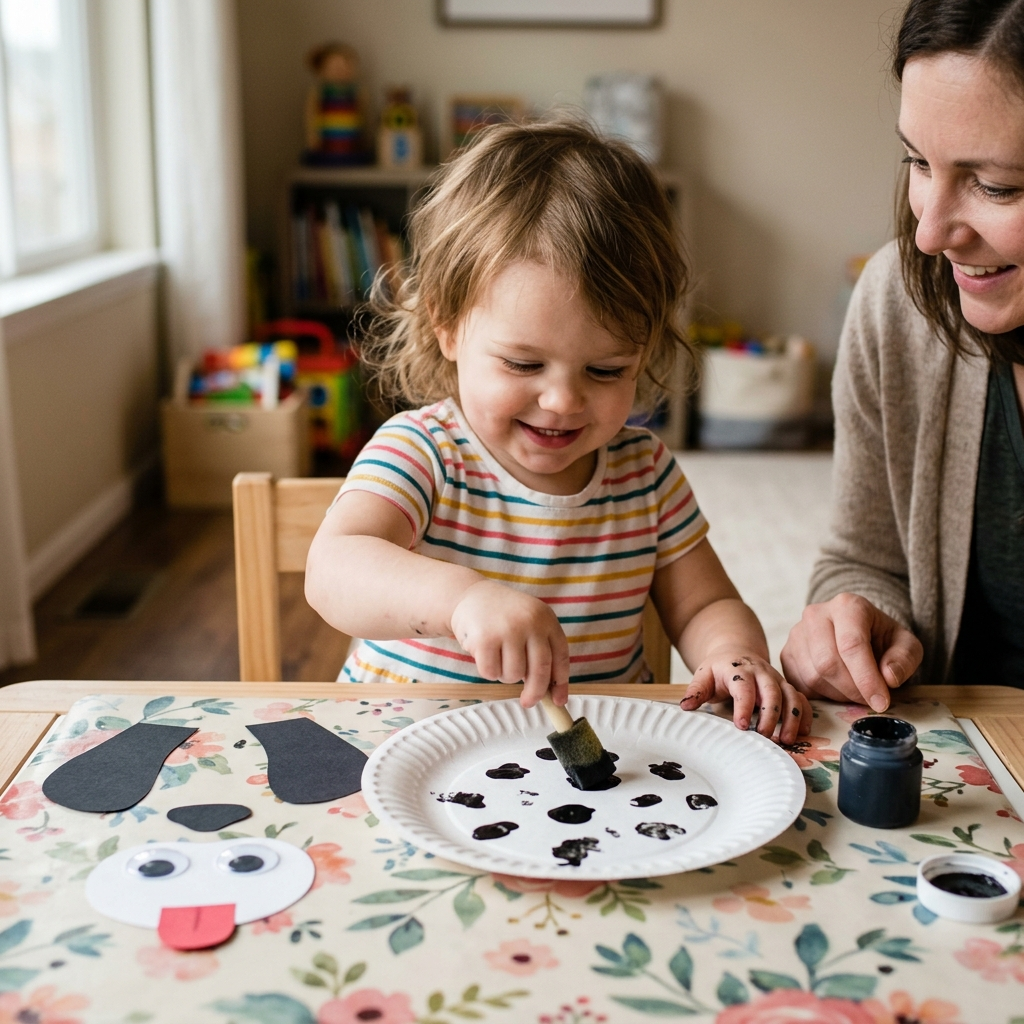
A paper plate can also become a friendly Dalmatian, and this one is especially easy to personalize.
The toddler can decorate the plate with spots while an adult prepares the ears, face, and other pieces. Once everything is dry, the dog can be assembled.
I like asking children whether they want their dog to look like a pet they know. It gives the craft a personal connection instead of making it just another animal picture.
Also read: 31 Cute Craft Ideas
21. Paper Plate Christmas Tree
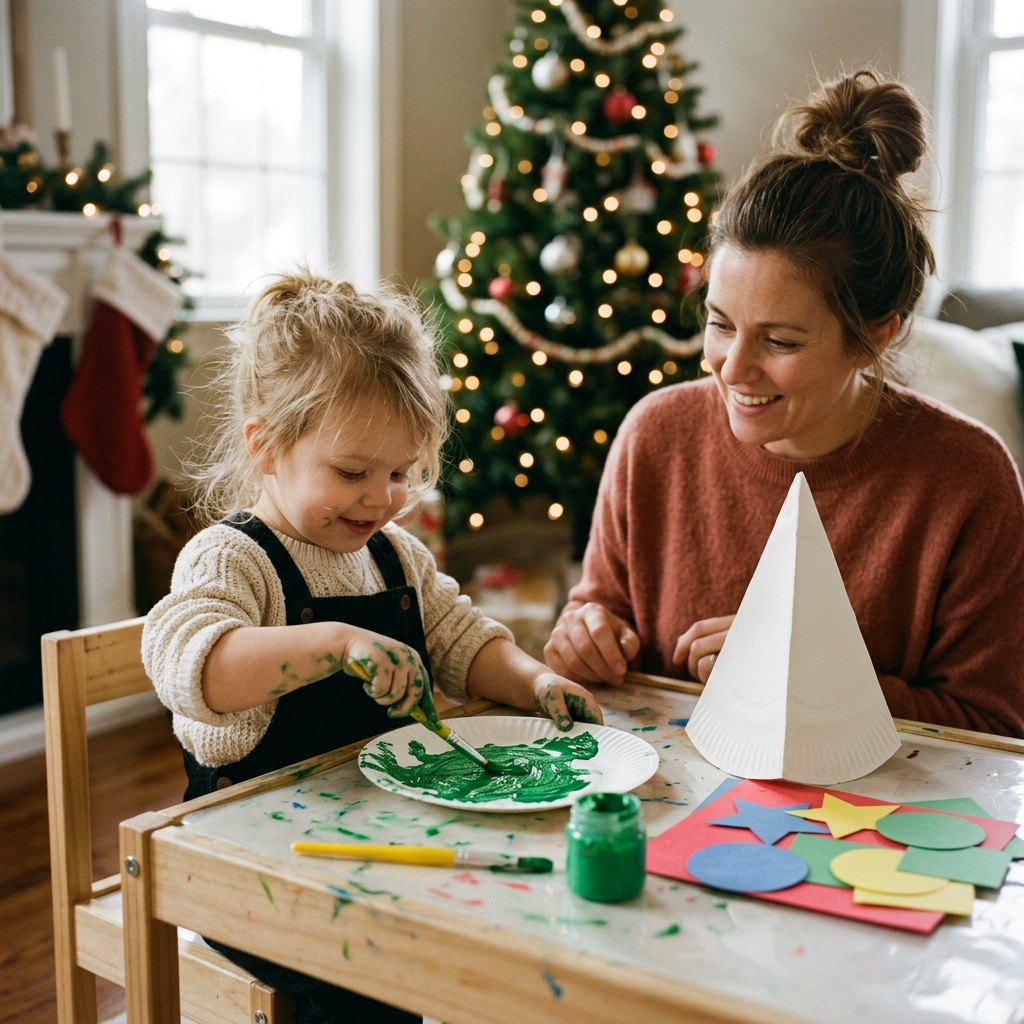
A paper plate Christmas tree is an inexpensive holiday craft that gives toddlers a large surface to decorate.
I let the child paint the plate before the adult cuts and folds it into the tree shape. After it dries, large paper decorations can be added.
The activity can also become a simple holiday conversation about colors, trees, ornaments, and shapes without expecting the toddler to create a specific design.
22. Fall Handprint
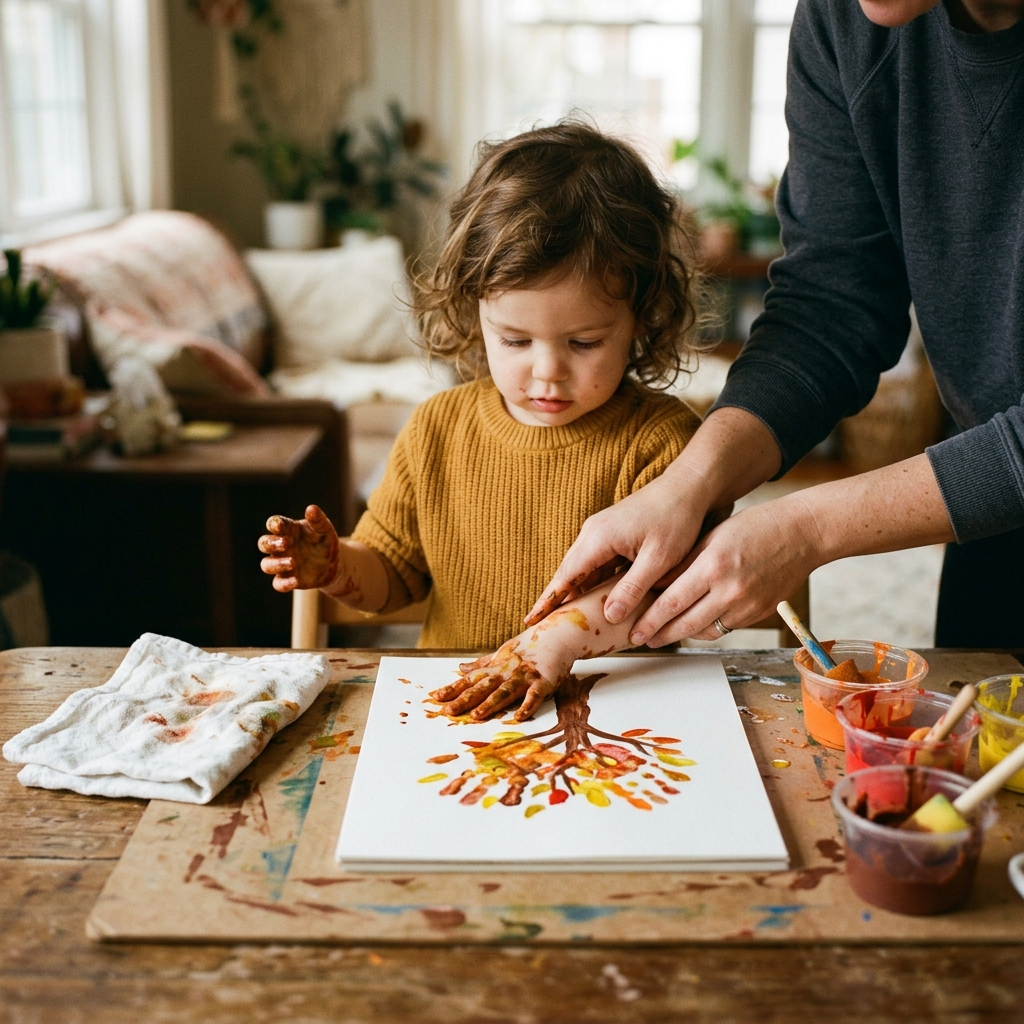
Handprint crafts are easy to adapt to different seasons, and fall colors make an especially nice keepsake.
I might turn a handprint into leaves or a tree, or simply use several autumn shades to create a colorful print. The child does not need to position their hand perfectly for the artwork to work.
Some toddlers love messy paint, while others immediately want it washed off. A sponge, brush, or stamp is an easy alternative when a child does not like paint on their hands.
23. Climbing Heart Monster Valentine
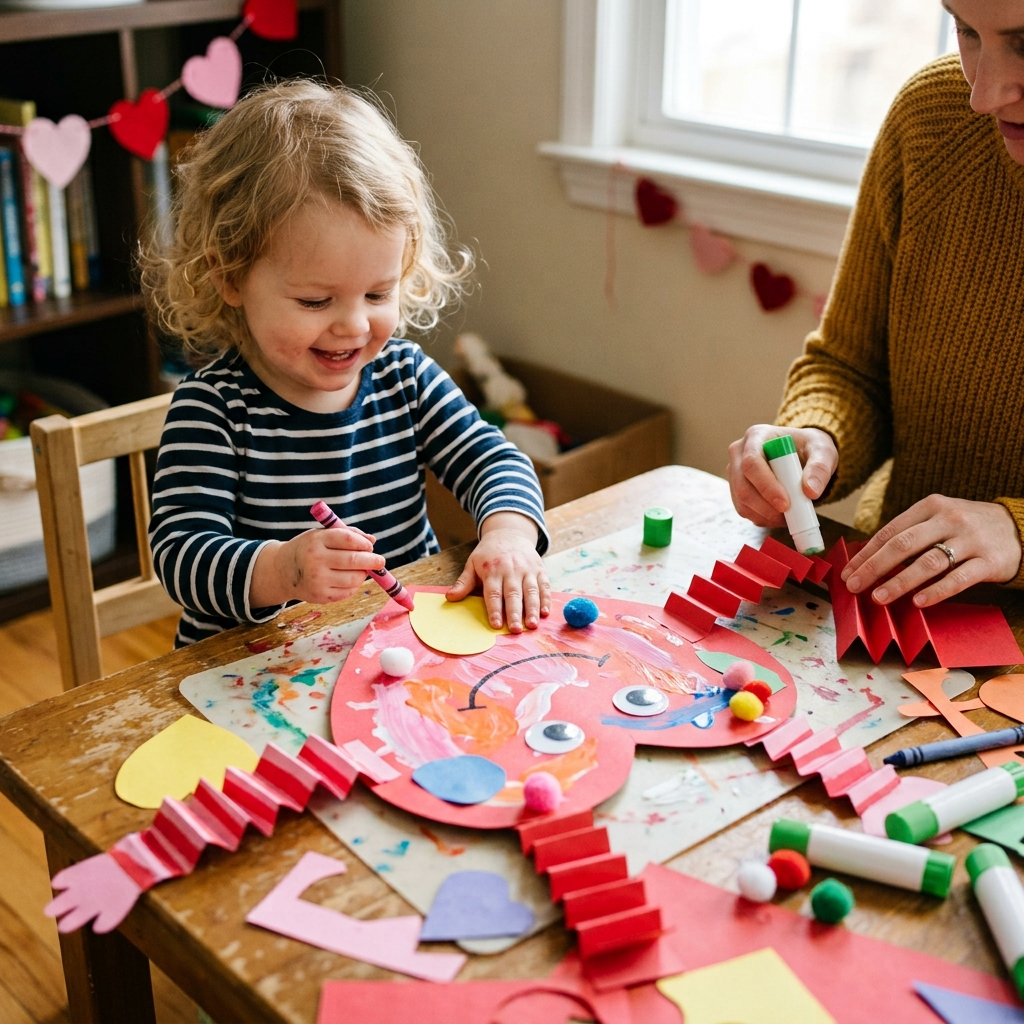
A heart monster makes a playful Valentine’s Day craft with plenty of room for silly details.
I prepare the heart and accordion-folded paper limbs ahead of time. The toddler can help choose colors and decorate the body while the adult handles cutting and assembly.
If using googly eyes or other small decorations, I keep them under direct supervision and use larger alternatives when appropriate for the child.
24. Muddy Pig
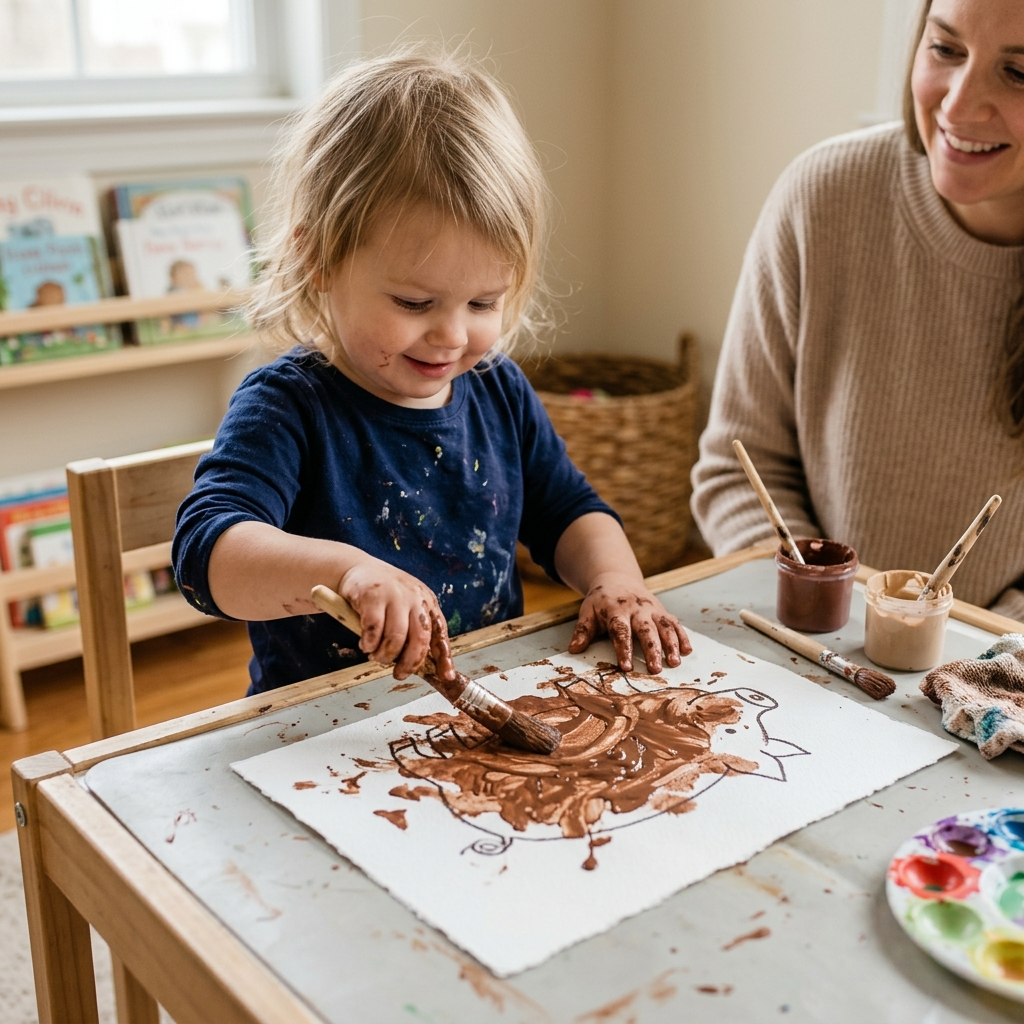
A muddy pig is a good match for toddlers who enjoy getting messy.
I start with a simple pig outline and let the child add brown paint to create the muddy effect. The exact amount of paint does not matter; a very messy pig can be part of the fun.
A tray or washable mat underneath helps contain the activity. This craft also gives me an easy opening for talking about farm animals and what they might do outdoors.
25. Ice Cream Activity
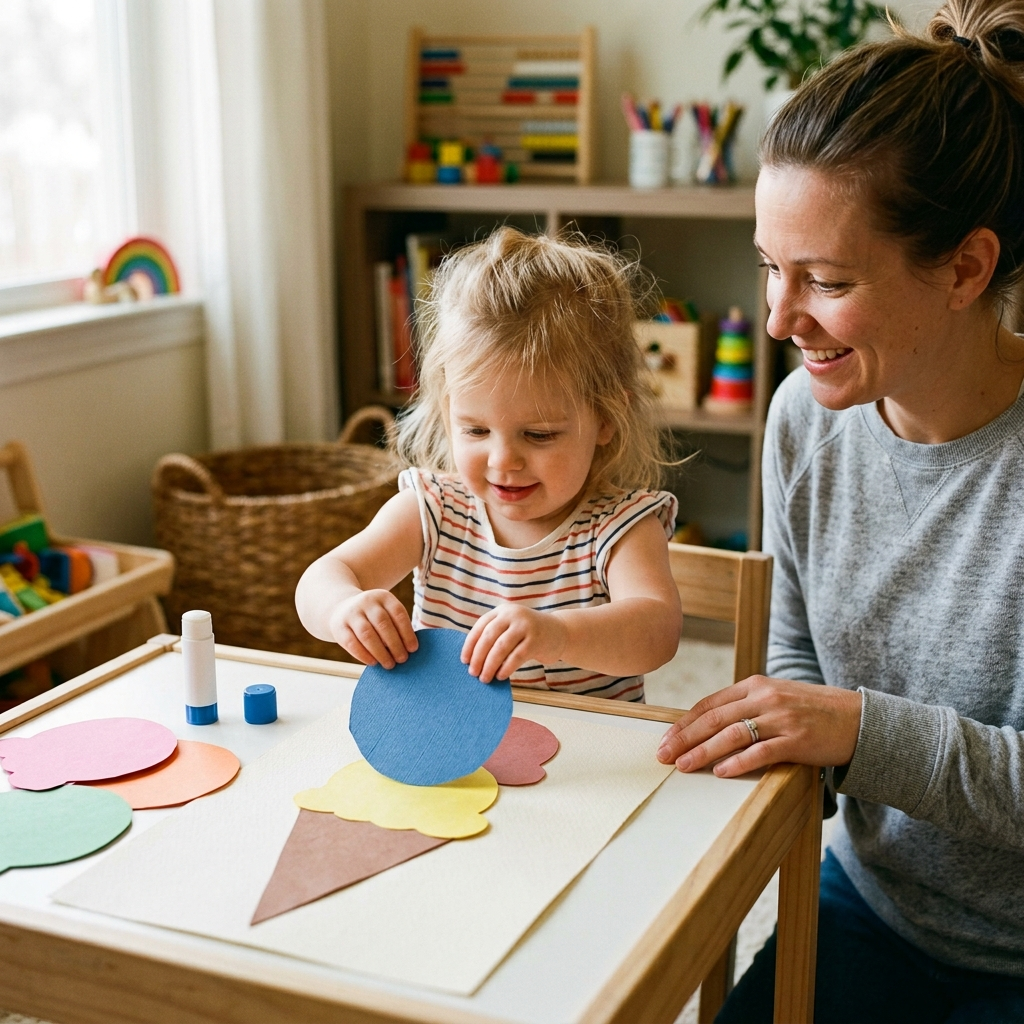
An ice cream activity can combine color choices with simple counting. I prepare a cone and several large paper scoops, then let the child decide which colors and how many scoops to use.
For a toddler, large pieces are much easier to handle than tiny paper shapes. An adult can manage any cutting while the child concentrates on stacking and decorating.
I keep real food separate from the craft. If ice cream is part of the day, it can be the treat afterward rather than something mixed into the activity.
Pro Tip: When working with several children, give each one a prepared set of pieces. It reduces waiting and makes it easier for everyone to participate.
26. Easy Color Wheel
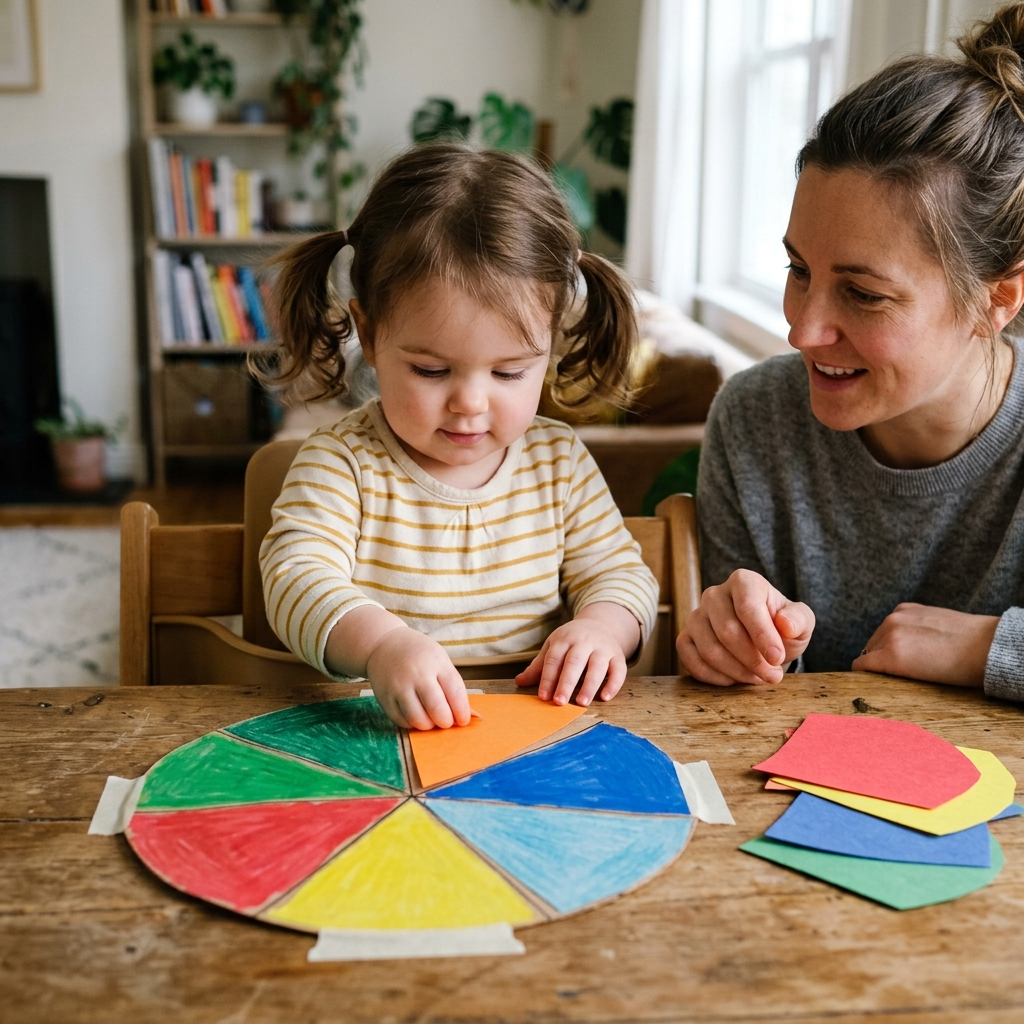
A simple color wheel introduces color matching without making the project too complicated.
For a two-year-old, I use a small number of clear colors and encourage the child to match, point to, or place the pieces. Naming colors together is enough; there is no need to introduce more advanced color theory.
The activity can be shortened easily if the child loses interest. Even a few successful matches make a perfectly reasonable stopping point.
27. Summer Watermelon Handprint
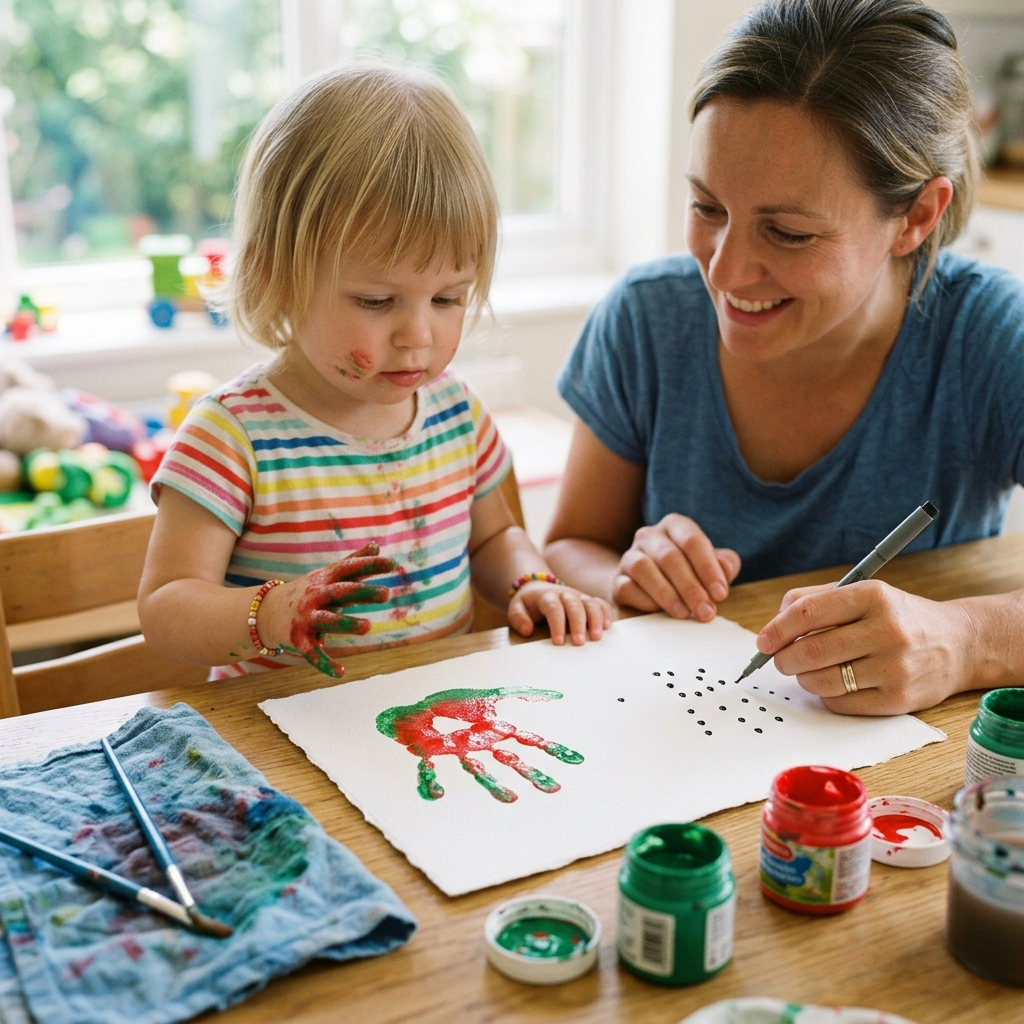
A watermelon handprint makes a cheerful summer keepsake. I prepare the paper first so there is no delay once the child’s hand is covered in paint.
The main watermelon colors can be painted onto the hand, then pressed firmly onto the paper. An adult can add the small seed details after the print has dried.
I keep a damp cloth close by because painted hands and toddlers are not a combination I want to leave unattended for long.
28. Rocking Paper Plate Sheep
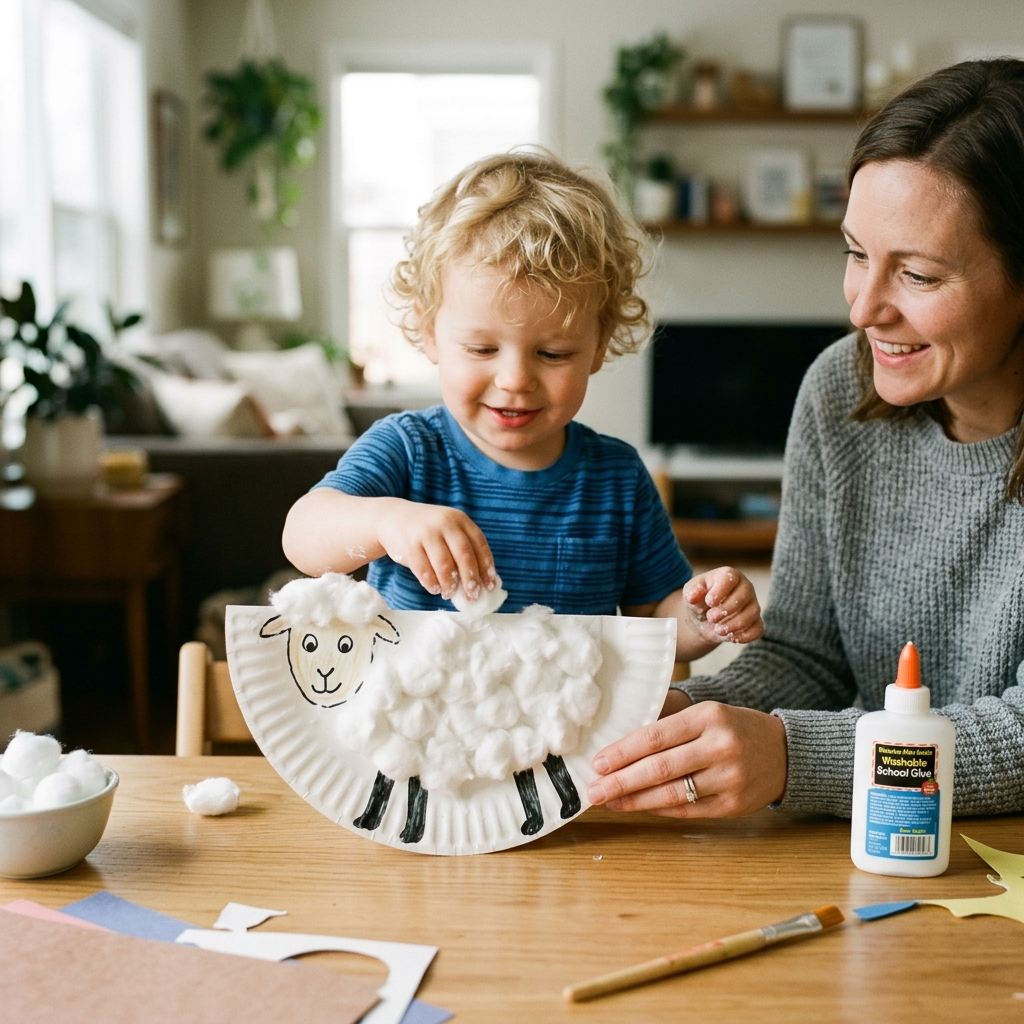
This sheep is different from the cotton ball version because the finished project can rock back and forth.
I let the toddler decorate the paper plate before handling the assembly. Cotton can be used to add texture, but the finished sheep should stay under supervision when loose pieces are involved.
Once assembled, the rocking motion can turn the finished craft into a simple pretend-play prop rather than just a picture.
29. Apple Painting
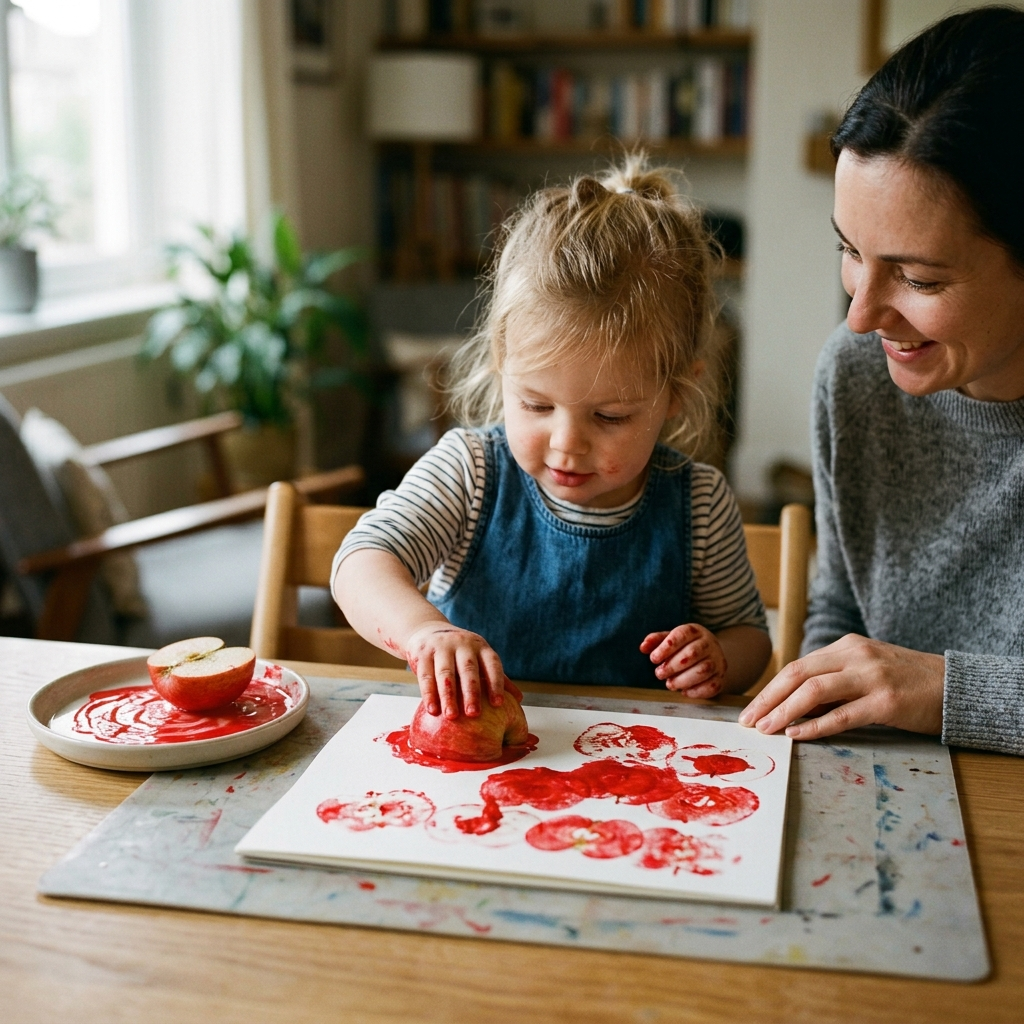
An apple half makes a chunky stamp that can be easier for small hands to grip than a traditional paintbrush.
An adult should cut the apple and prepare a shallow amount of washable paint. The toddler can press the cut side into the paint and then onto paper.
I keep the paint layer thin enough to show the apple shape. Too much paint tends to turn the print into a blob.
Pro Tip: Use a tray under the paper if the child is still learning to control how firmly they stamp.
30. Everyday Item Fireworks Art
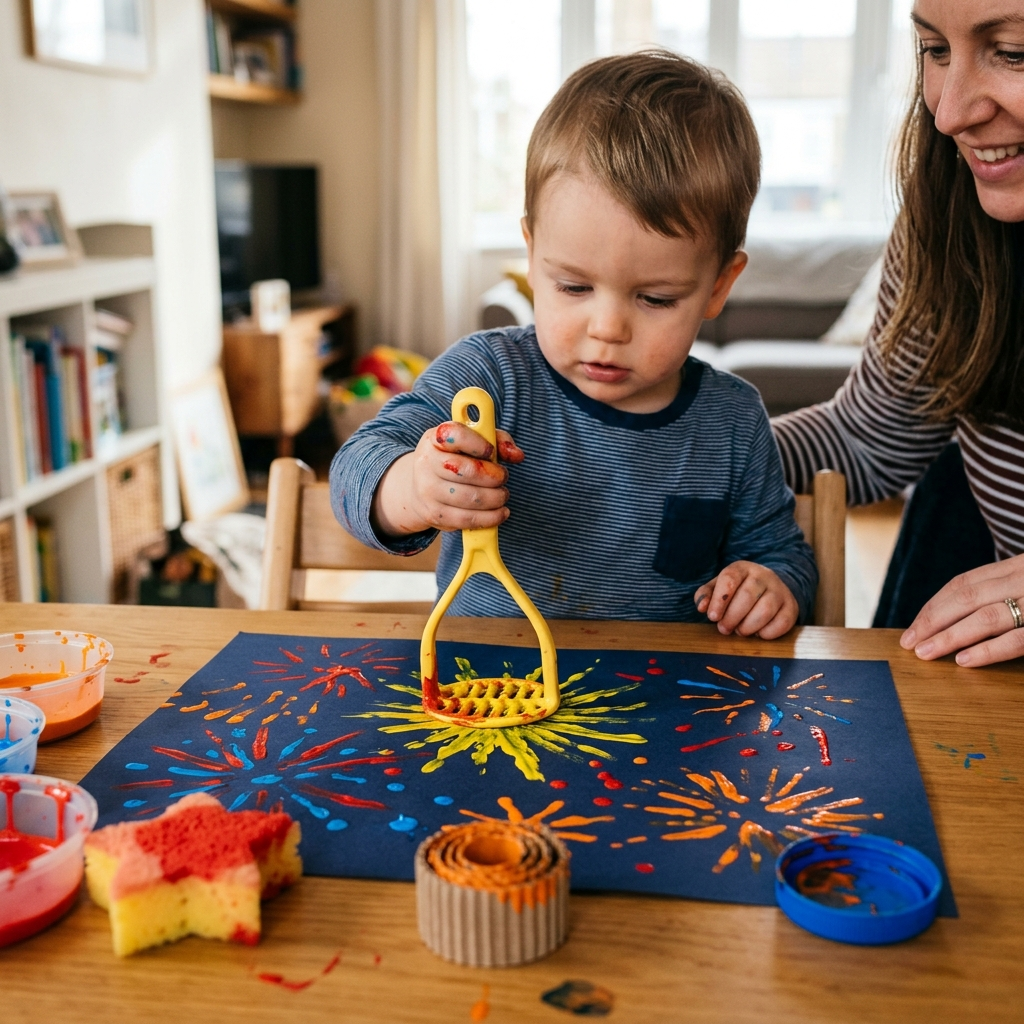
This fireworks project is useful when I want a quick summer-themed activity without a trip to the craft store.
Large household objects can create different stamping patterns, so I let the child experiment with the marks instead of trying to reproduce one exact fireworks display.
Before using anything as a stamping tool, I check it for sharp edges, loose small pieces, or anything unsuitable for toddler handling.
31. Nature Monsters
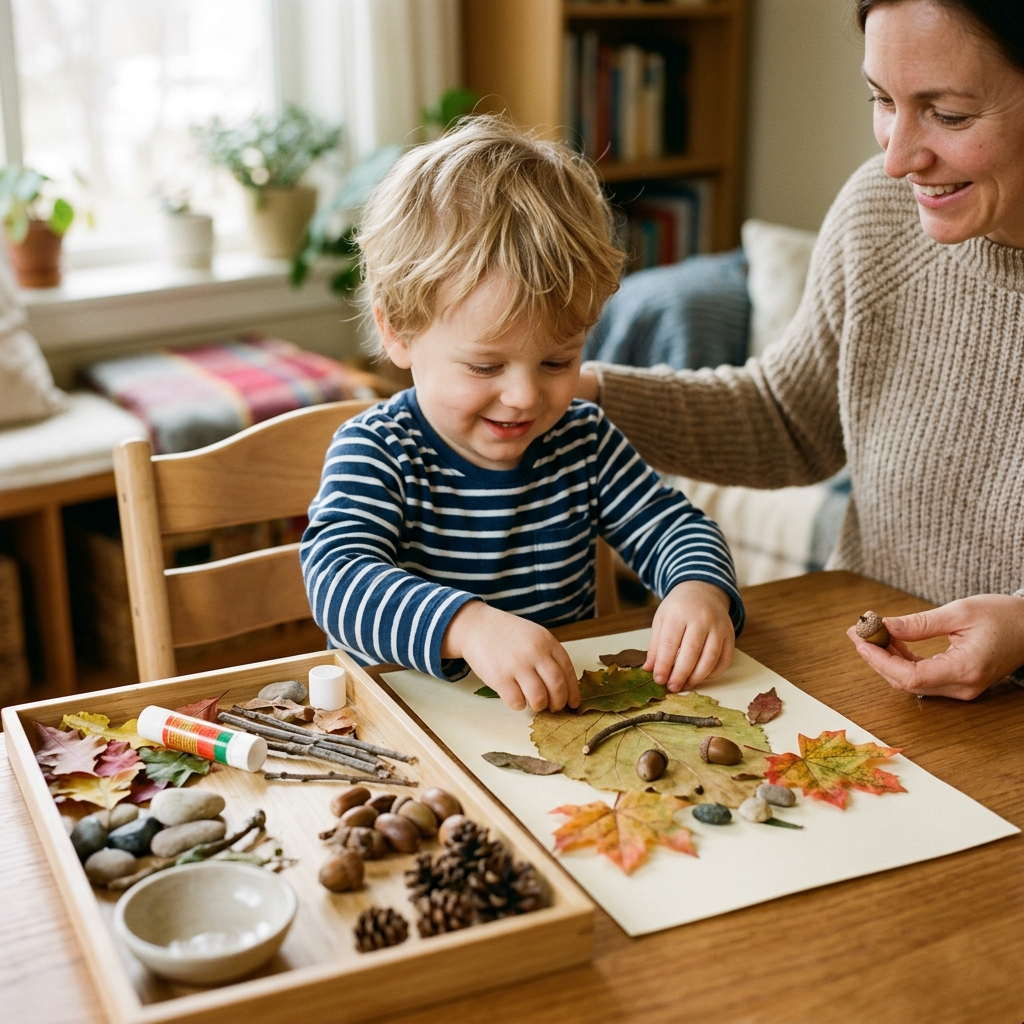
Nature monsters combine a short outdoor collection walk with an indoor craft.
I explain beforehand that we only collect safe items that are already on the ground. Unknown plants, mushrooms, animal waste, sharp objects, and anything that looks unsafe stay where they are.
Back inside, leaves, suitable fallen pieces, and other safe finds can become silly monster faces. I enjoy this craft because the child gets to make the design up rather than follow a fixed example.
Pro Tip: A small collection bag makes the outdoor part easier. Once inside, spread the items on a tray so they can be inspected and sorted before crafting.
32. Painting With Salt
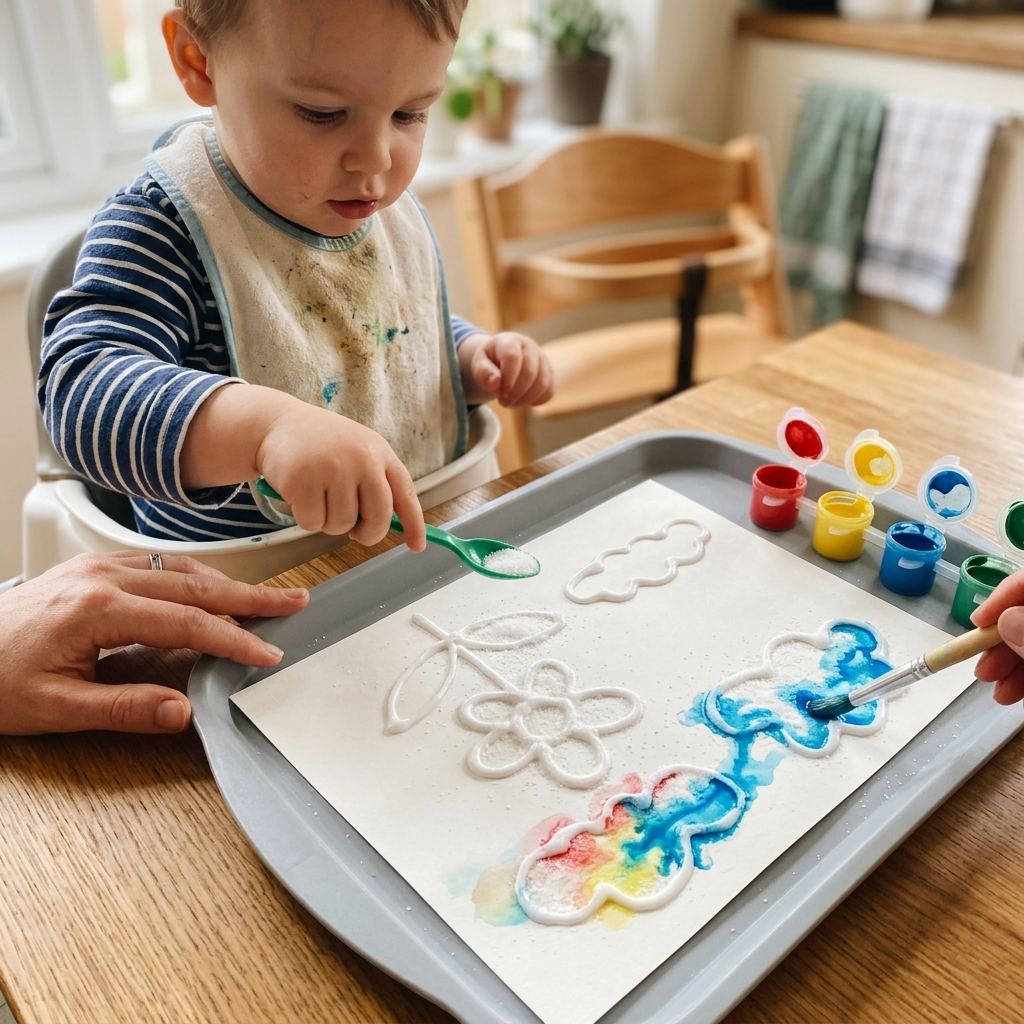
Salt painting offers a different texture from ordinary paper-and-paint projects.
I prepare a simple picture with strong outlines and handle the adhesive step. The toddler can help add salt and then watch the color move along the textured lines.
I supervise closely and keep loose salt away from mouths and eyes. Once the artwork is finished, it needs a flat place to dry.
33. Coffee Filter Flowers
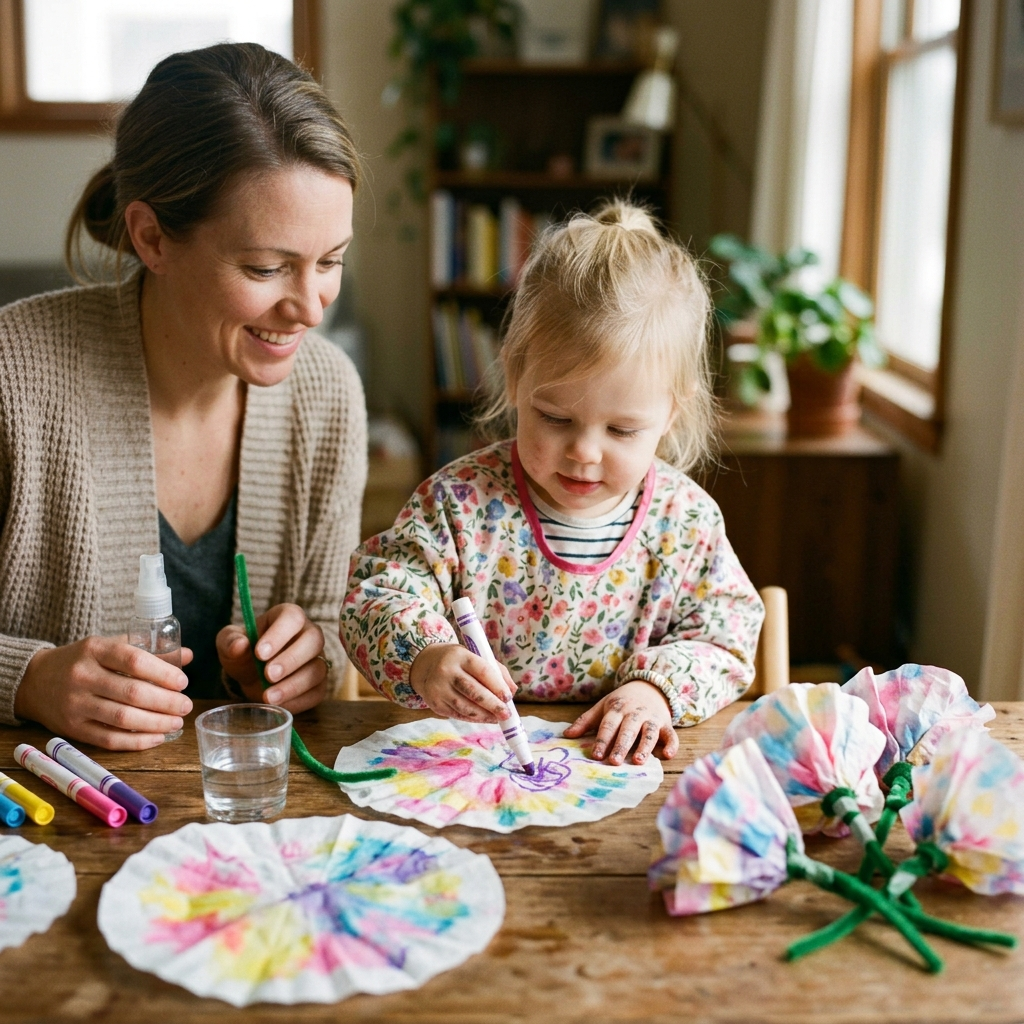
Coffee filters make inexpensive flower shapes and are especially fun when the colors spread across the paper.
A toddler can add washable marker or watercolor while an adult handles the water, cutting, and final shaping. The results will vary depending on how much color is used, which is part of the appeal.
I would keep the project simple rather than worrying about making realistic flowers. Different colors and patterns can all work.
34. Dinosaur Toilet Paper Roll
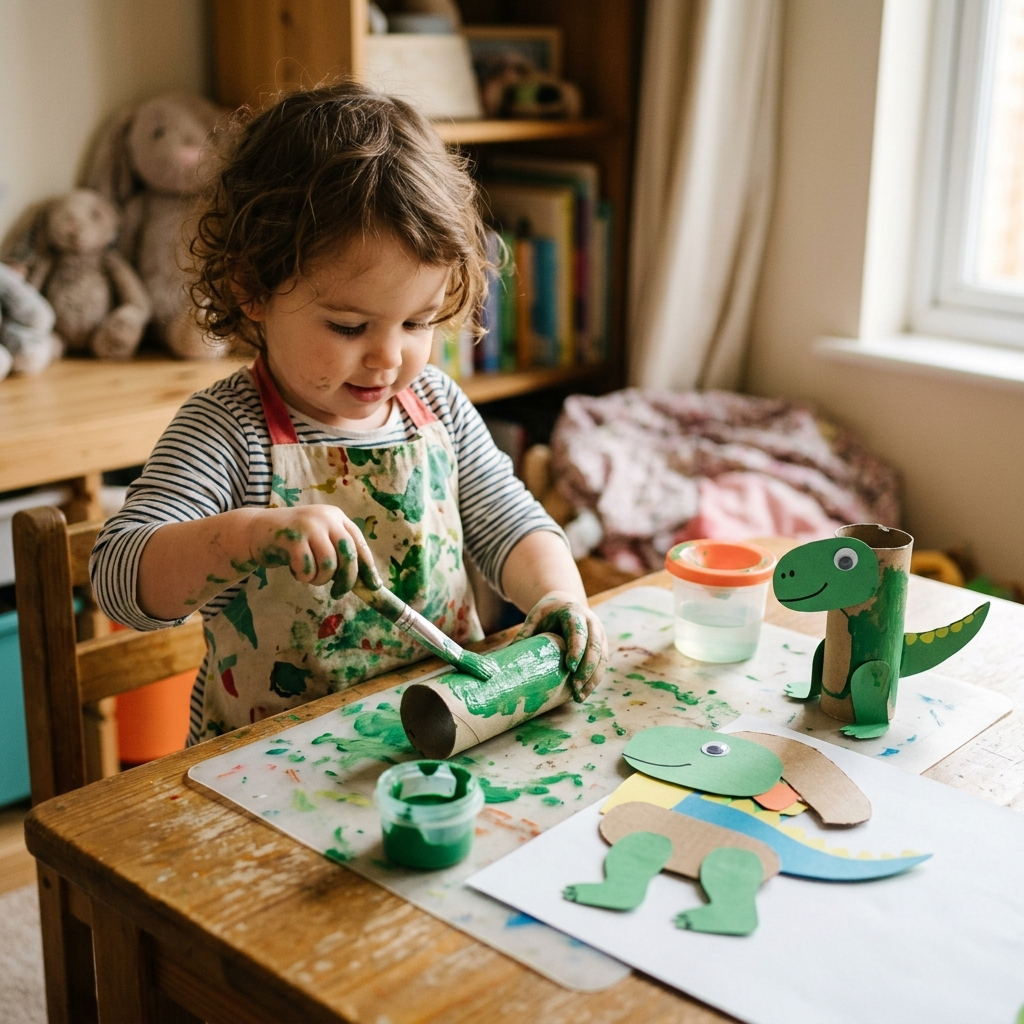
A cardboard toilet paper roll can become a dinosaur with a few prepared paper pieces.
I cut the head, feet, and tail ahead of time so the toddler can focus on painting and decorating the tube. Once everything is dry, the pieces can be assembled into the finished animal.
This same basic construction can be adapted into other creatures later, making cardboard tubes worth keeping in a small recycled-craft box.
35. Q-Tip Painted Dragonfly
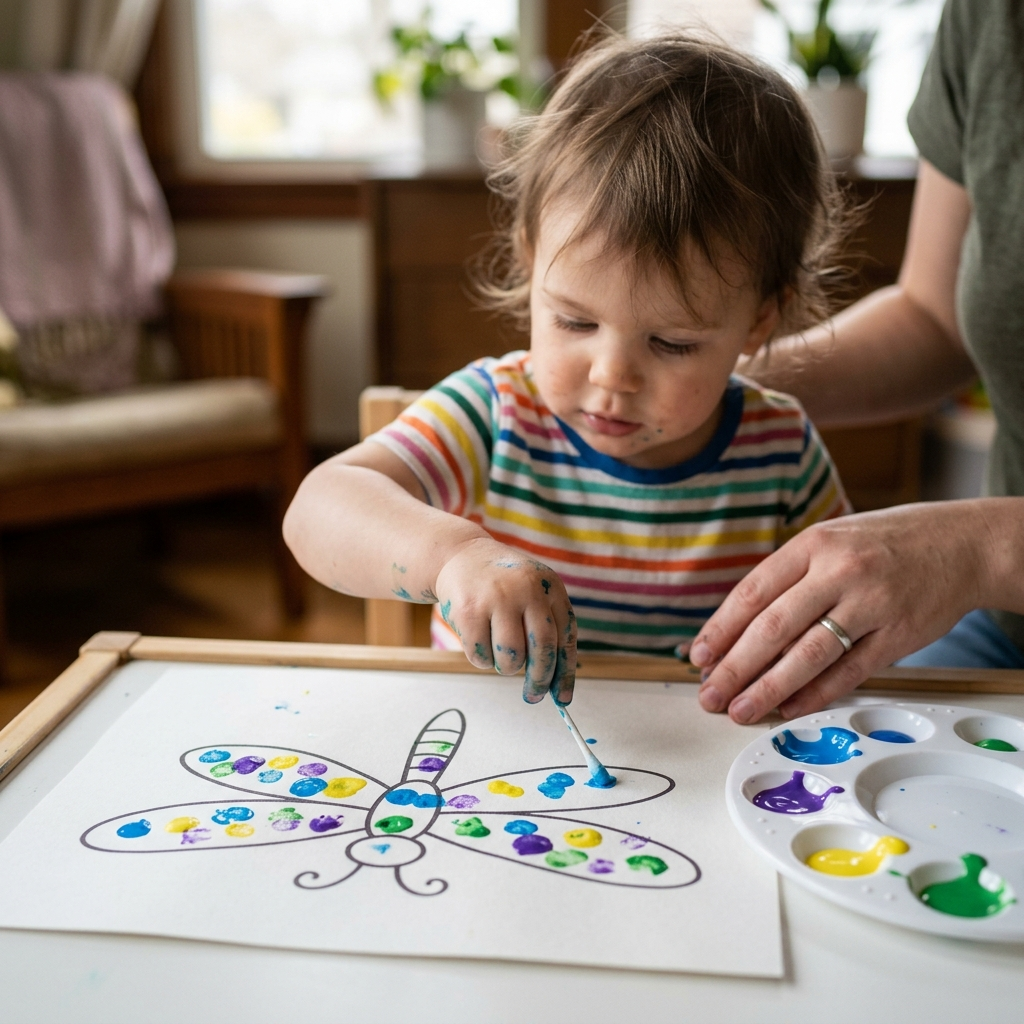
A Q-Tip can create small dots and marks that give a dragonfly a different texture from brush painting.
I prepare the main dragonfly outline and give the toddler a small amount of washable paint. They can use the cotton swab as a stamping tool rather than trying to paint detailed lines.
Cotton swabs are craft tools here, not toys. I stay within arm’s reach and never allow them to be placed in ears, noses, or mouths.
36. Easy DIY Flower Ribbon Hairband
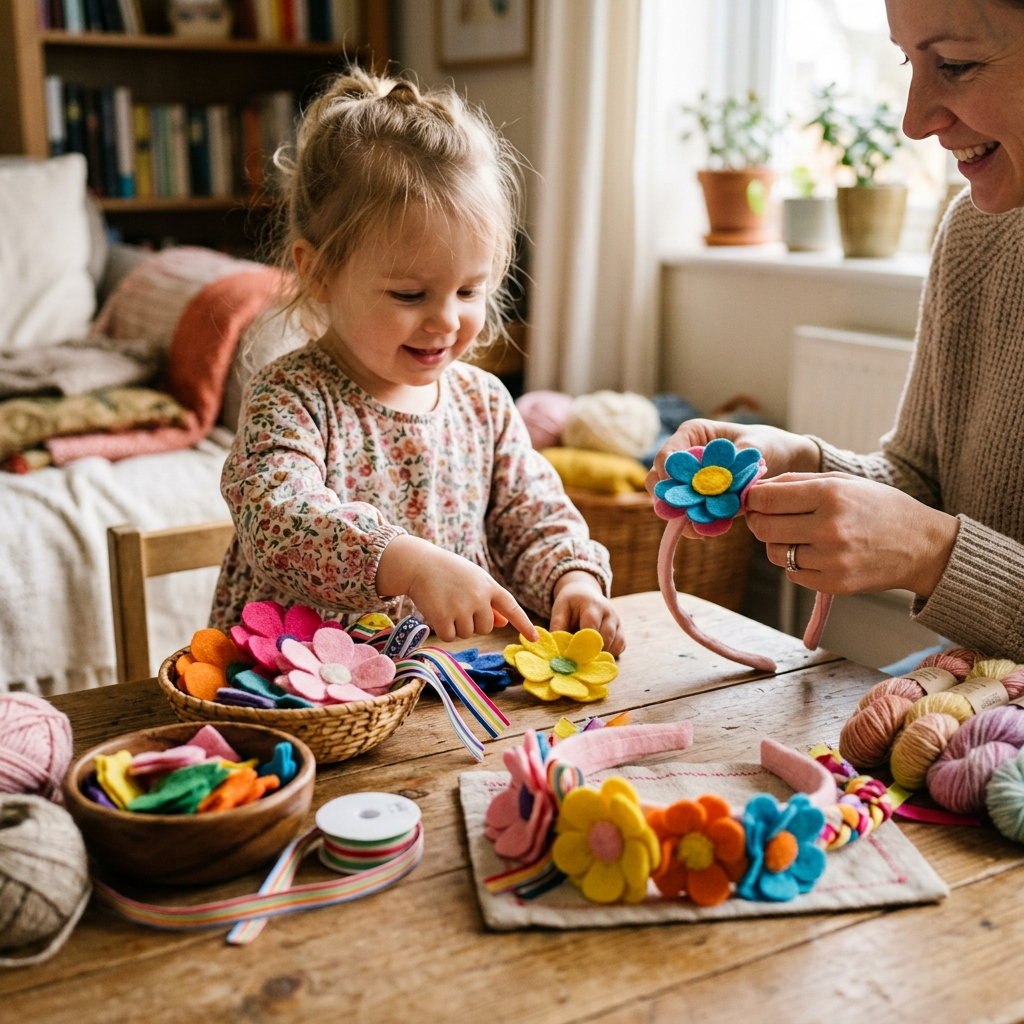
A wearable craft can be especially appealing to toddlers who enjoy pretend play and dressing up.
I prepare the hairband and attach the decorative pieces myself, checking that everything is secure. For a two-year-old, I avoid loose embellishments that can easily be pulled off.
Felt flowers are one option, but large simple shapes can work too. Letting the child choose between a few colors gives them some control over the finished accessory.
37. Jellyfish Craft
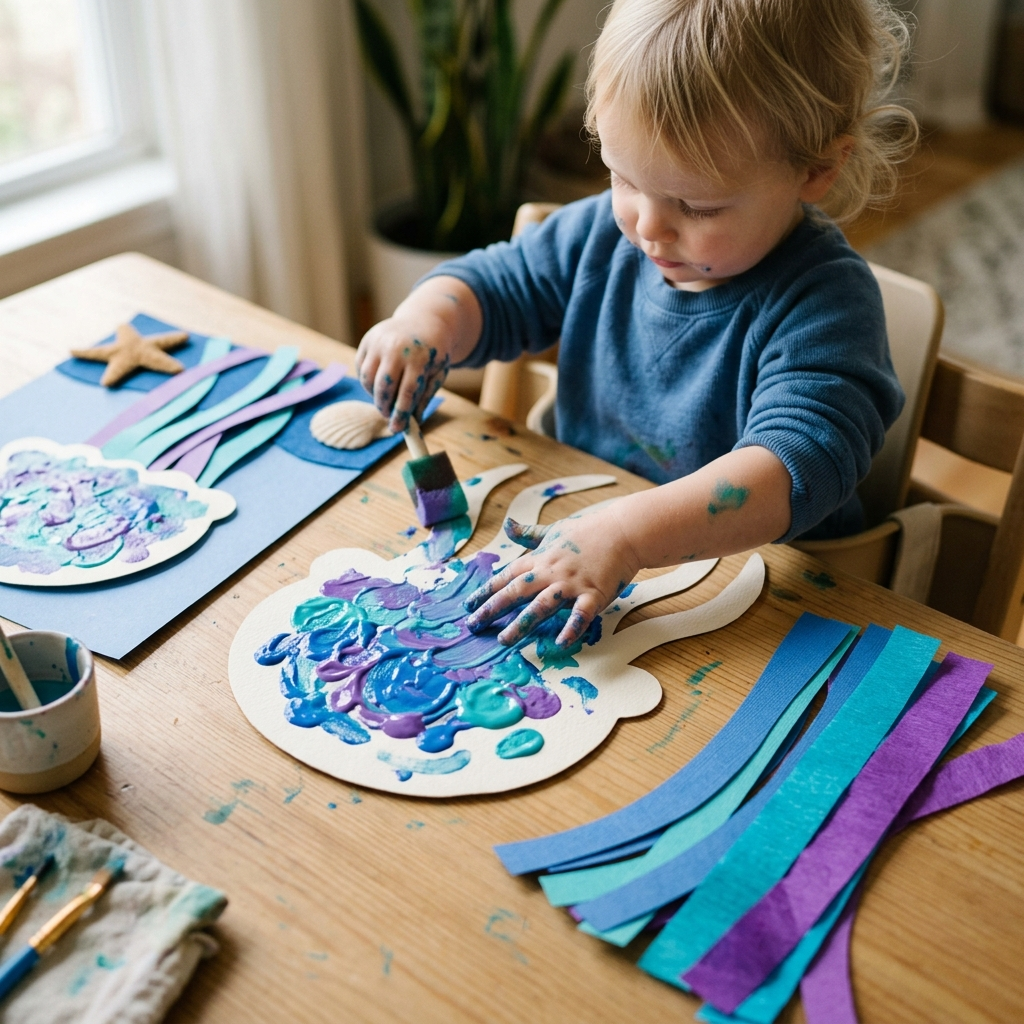
Jellyfish are simple to turn into a toddler-friendly craft because the body can be a basic shape with paper tentacles underneath.
The adult can prepare the body and any pieces that need cutting. The child can then paint, color, or decorate the main shape.
I keep the tentacles and decorations suitably large and supervise any loose pieces. The finished jellyfish can also be used to create a simple ocean-themed pretend-play scene.
38. Handprint Sun Paper Plate
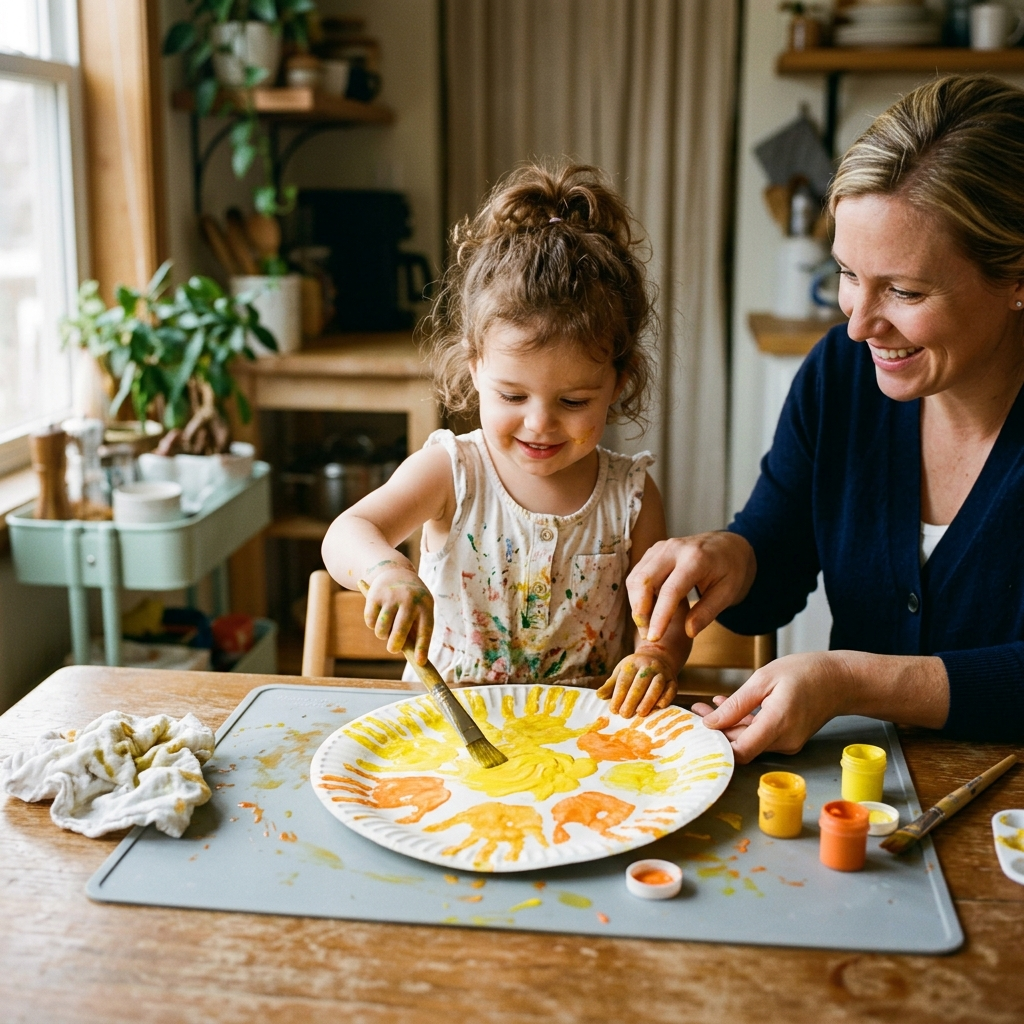
A paper plate sun makes another fun handprint keepsake, with the hand shapes becoming rays around the outside.
I prepare the hand shapes and let the toddler help paint the center of the sun. Different shades of yellow and orange can be used if the child wants more variation.
The handprints do not have to line up perfectly. Uneven rays are part of what makes the finished piece look like genuine toddler artwork.
39. Paper Plate Hot Air Balloon
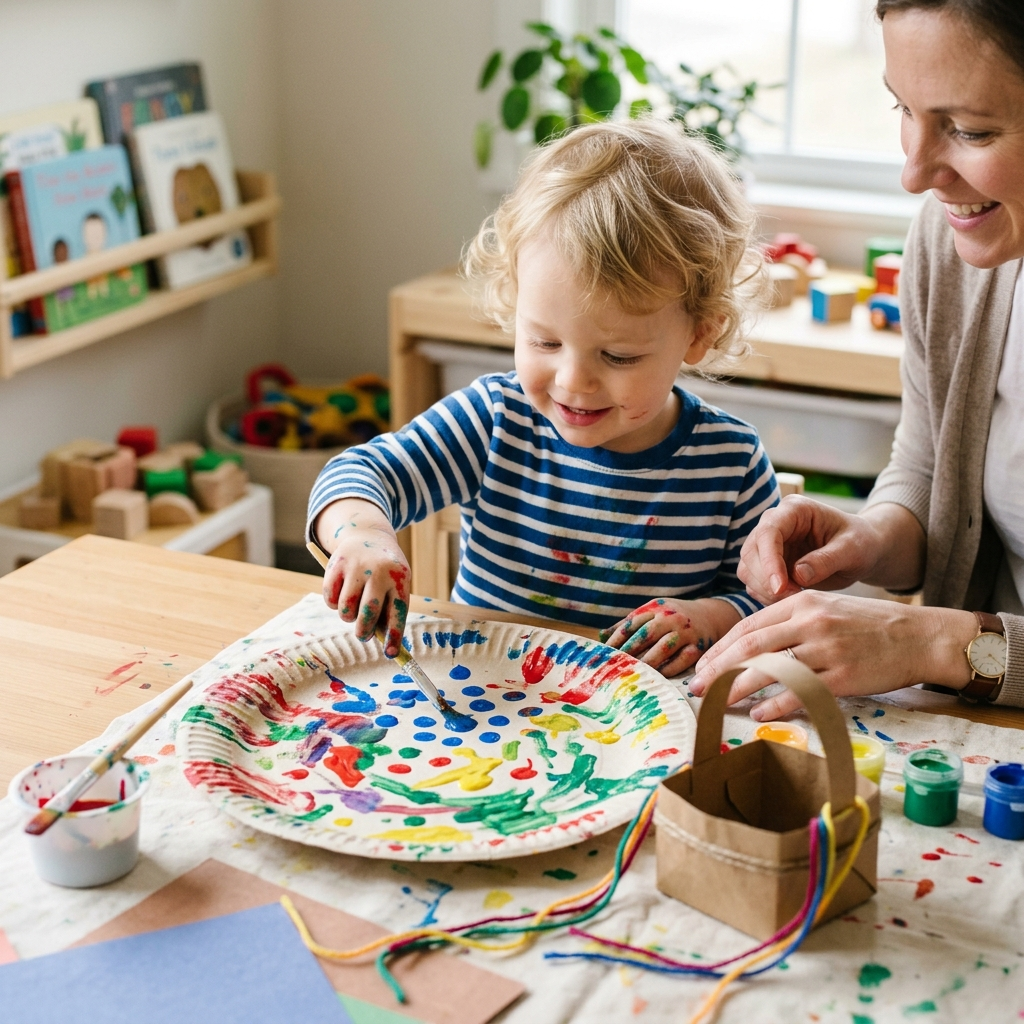
A paper plate hot air balloon gives toddlers a large space for free-form decorating.
I let the child choose the colors and marks for the balloon while an adult handles the cutting and construction. Dots, stripes, fingerprints, and random brush marks can all become part of the design.
Once the balloon is assembled, a simple basket or large paper character can be added if appropriate. I like leaving this one open-ended rather than telling the child exactly what their balloon should look like.
40. Fork Stamped Dandelions
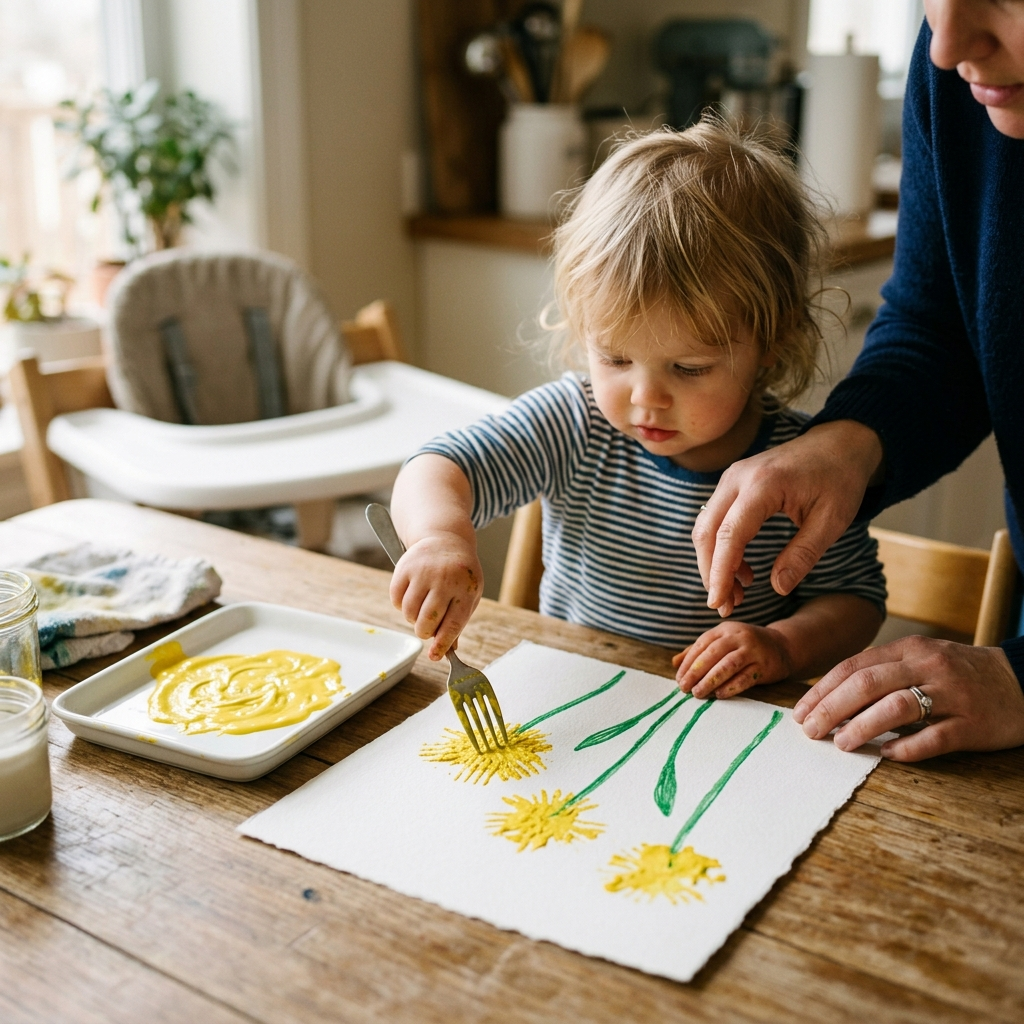
A fork creates an interesting flower texture when dipped lightly into paint and pressed onto paper.
I prepare the stems first and use a small amount of washable paint on a tray. The toddler can make the flower heads by stamping with the fork while an adult stays close.
Because a fork is still a utensil with pointed edges, it remains an adult-supervised craft tool. I remove it as soon as the stamping portion is finished.
The same method can also be used with different colors to create other flowers.
41. Ice Painting
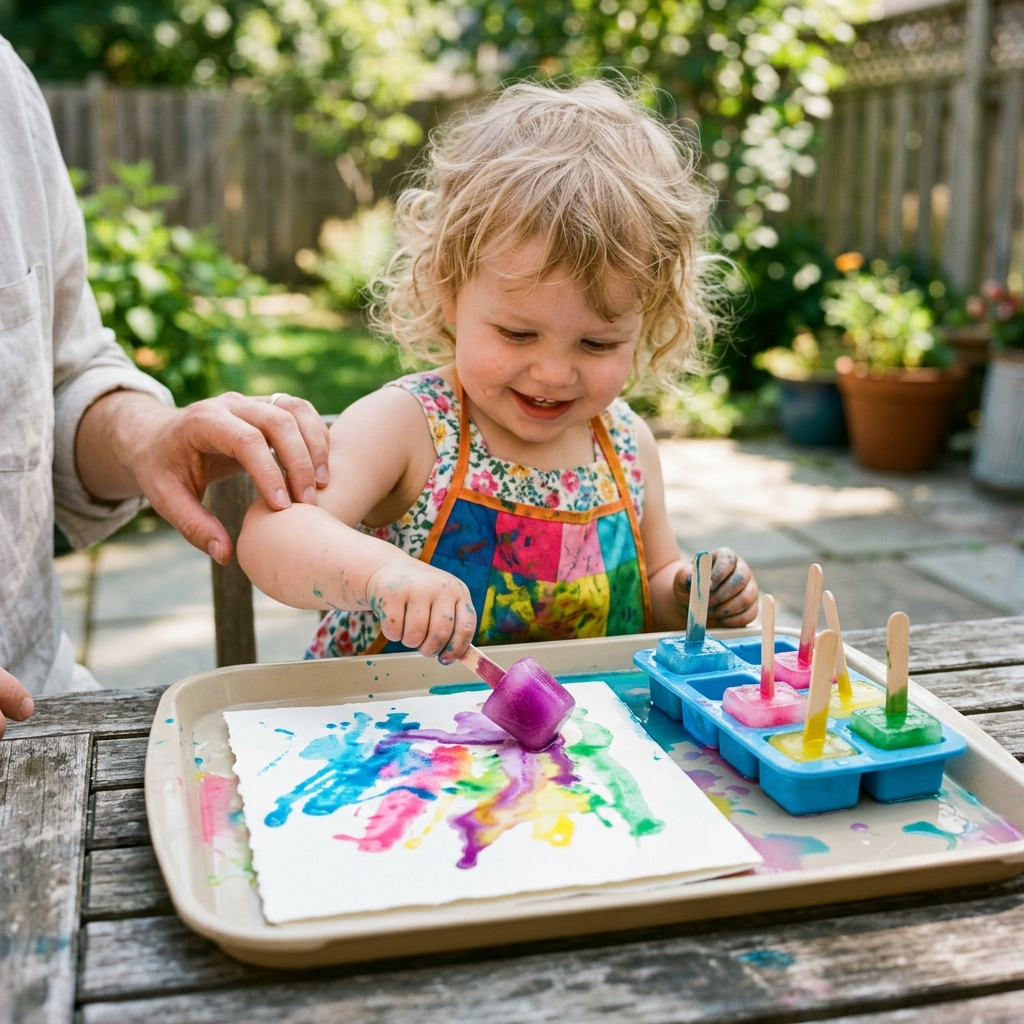
Ice painting is a fun warm-weather activity because the child gets to watch the artwork change as the colored ice melts.
I freeze washable liquid colors in an ice tray and add sturdy handles during preparation. The toddler can then move the frozen pieces across thick paper or cardstock to make colorful marks.
A tray underneath catches the melting water and makes cleanup much easier. I also keep the frozen pieces under supervision and make sure they are being used for painting rather than treated as something to chew.
Pro Tip: Choose thick paper. Lightweight printer paper tends to become soggy and tear as the ice melts.
Frequently Asked Questions
What crafts are good for a 2-year-old?
Simple crafts that involve painting, stamping, tearing paper, sticking large pieces, or exploring textures work well for 2-year-olds. I find it helpful to choose activities with very little setup and allow the child to create without worrying about making the finished craft look like the example.
What supplies do I need for toddler crafts?
Basic supplies such as washable paint, thick paper, paper plates, cardboard tubes, cotton balls, crayons, glue, and recycled household items can cover many toddler crafts. I also keep a tray or washable mat nearby to make cleanup easier.
How long should a craft activity last for a 2-year-old?
There is no set time because attention spans vary. Some children may stay with a craft for 15–20 minutes, while others may move on after a few minutes. I usually prepare the activity so it can be stopped and continued later without a problem.
Are crafts safe for 2-year-olds?
Toddler crafts need close adult supervision, especially when they involve small pieces, loose decorations, food items, shells, scissors, utensils, or sensory materials. I prepare cutting and other adult-only steps ahead of time and keep anything that could be mouthed or swallowed out of reach.
How can I make crafts easier for a 2-year-old?
I keep the number of supplies small, pre-cut difficult pieces, use washable materials, and give simple choices such as two paint colors or two decorating options. If a child dislikes a texture, I switch from fingers to a brush, sponge, or stamp rather than forcing the activity.
Read this next: 17 Pipe Cleaner Crafts for Kids That Are Fun to Twist Together
Conclusion
The best craft for a two-year-old does not have to produce a picture worthy of a refrigerator makeover. I care much more about whether the child had a chance to make choices, experiment with materials, and enjoy the process.
Attention spans will vary from day to day. One afternoon a toddler may happily paint for 20 minutes, while another day they may make a few marks and decide they are finished. I see both as normal parts of crafting at this age.
Keeping a small box of paper plates, cardboard tubes, paper, washable paint, cotton materials, and other reusable supplies makes spontaneous craft time much easier. I can choose something based on the season, the child’s mood, or simply what they want to try that day.
Most importantly, I put safety ahead of the finished artwork. Small pieces, food-based materials, utensils, adhesives, sensory supplies, and anything that could be mouthed deserve appropriate supervision. A simple craft that is safe, relaxed, and genuinely enjoyable is far more valuable than a complicated project that leaves everyone frustrated.



2 Comments