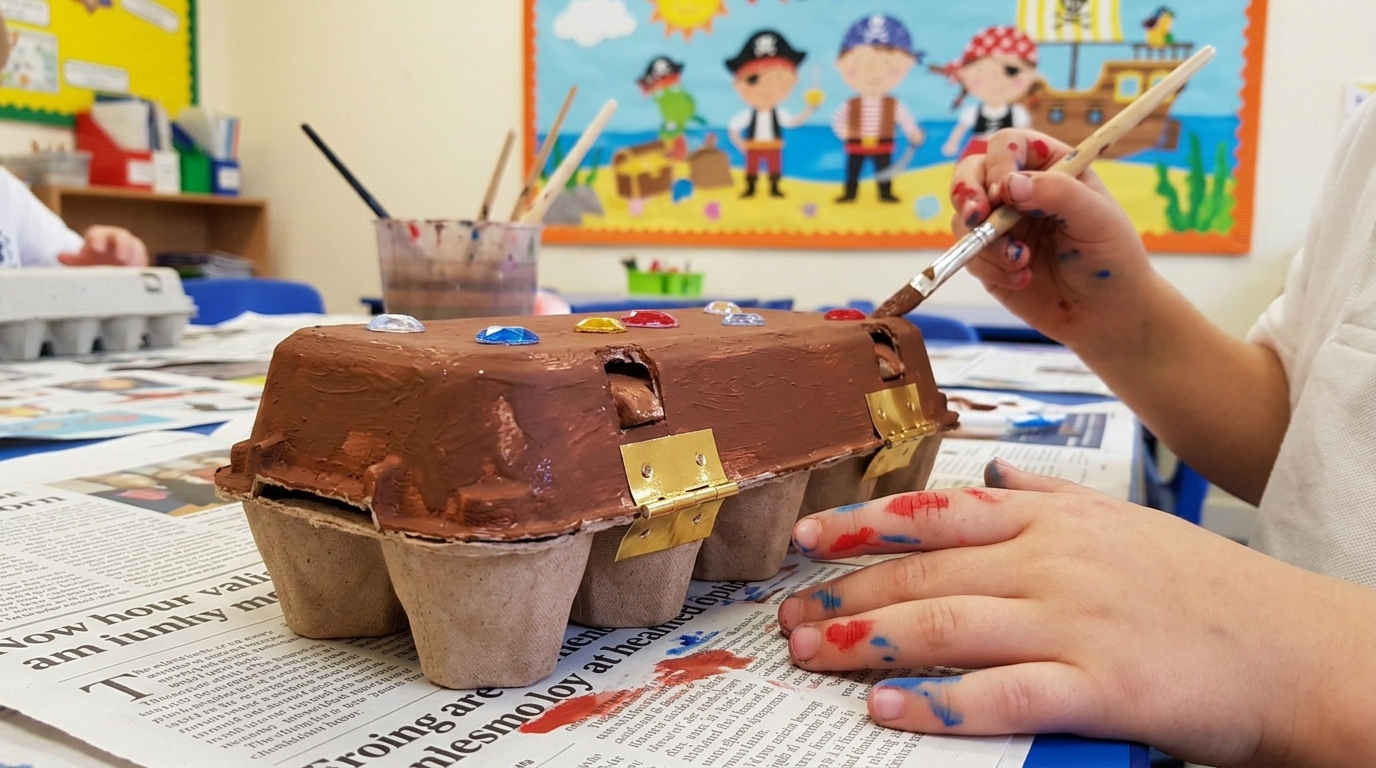
21 Pirate Crafts for Kids
Pirate crafts are one of those activities I can pull out when kids need something hands-on and imaginative to do. The theme gives them plenty of room to make ships, treasure chests, pirate characters, flags, and accessories without needing expensive supplies.
When I plan crafts for children, I care less about making every project look perfect and more about giving kids something they can actually create and play with afterward. Many of these ideas also work well for rainy days, classroom projects, playdates, and pirate birthday parties.
I’ve gathered 21 pirate crafts for kids using simple materials such as paper plates, cardboard rolls, paper cups, popsicle sticks, egg cartons, paper bags, clothespins, and recycled containers. The collection includes pirate characters, ships, treasure boxes, costumes, puppets, flags, and sensory play.
Some projects are quick enough for younger children, while others involve more cutting or assembly and are better suited to older kids. I usually prepare the difficult parts first and let children take over the decorating, choosing colors, and adding their own details.
Save this for later
Table of Contents
Many of these crafts can keep working after the glue dries. A finished pirate ship can become a pretend-play toy, a paper bag pirate can star in a homemade story, and a treasure chest can be used for a scavenger hunt or sorting game.
Key Takeaways
- Pirate crafts can become props for pretend play, stories, and treasure hunts.
- Paper, cardboard, egg cartons, cups, and other recycled materials help keep costs down.
- Choose projects according to the child’s age, attention span, and cutting ability.
- Keep small craft pieces away from children who may put objects in their mouths.
- These ideas can work for home, classrooms, playdates, rainy days, and birthday parties.
- Adults should handle difficult cutting, hot glue, and other steps that are not appropriate for the child.
Related article: 41 Crafts for 2 Years Old
How to Choose a Pirate Craft for Kids
I usually choose a craft by looking at the child’s age, how long they are likely to stay interested, and how much preparation I have time for. A five-minute hat may be better for a busy birthday party, while a detailed ship can work nicely for a quieter afternoon.
It also helps to consider the mess level and what happens after the craft is finished. If I want an activity that leads into pretend play, I’ll choose a ship, puppet, sword, hook, or treasure chest rather than a decoration that simply sits on a shelf.
For group activities, I find that pre-cutting pieces and giving each child a defined workspace makes the whole session easier to manage.
1. Paper Plate Pirates
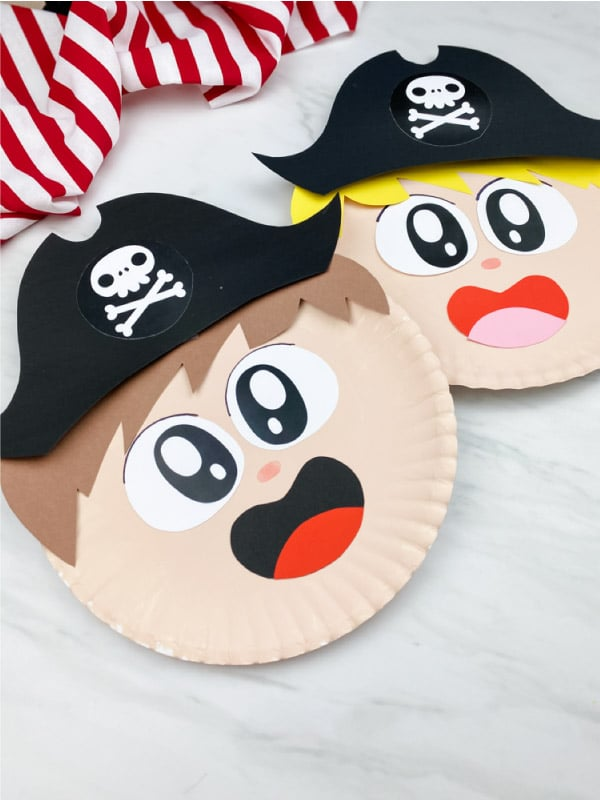
A paper plate gives children a large, flat surface for creating their own pirate faces. I like this version because there is plenty of room for painting, drawing, and adding paper details without requiring a complicated structure.
Construction paper can become the pirate hat, eye patch, beard, hair, or clothing. Children can change the facial expression and colors, so the finished crew does not have to look identical.
For younger children, I would prepare the larger paper shapes ahead of time and let them concentrate on painting and decorating. Older kids can take on more of the cutting and design work.
Pro Tip: Make several paper plate pirates and tape them to a wall or cardboard box to create a simple pirate crew for pretend play.
2. Handprint Pirate Paper Craft
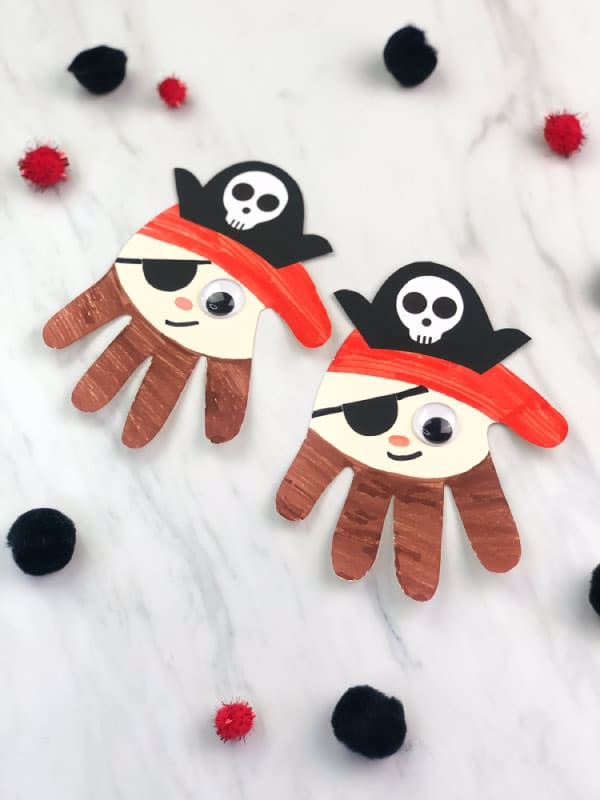
A handprint pirate has a different purpose from a regular pirate character because the child’s handprint becomes the main part of the design. I especially like this type of project as a keepsake because the finished picture captures a small moment in time.
The hand can be painted and transferred onto paper, then turned into a pirate with a hat, face, clothing, beard, or eye patch. The rest of the design can be drawn or made from larger paper pieces.
This is a good quick activity when I do not want to set up a complicated craft station. For toddlers, I leave out tiny decorations such as small googly eyes and use larger pieces instead.
3. Paper Cup Pirate Spyglass
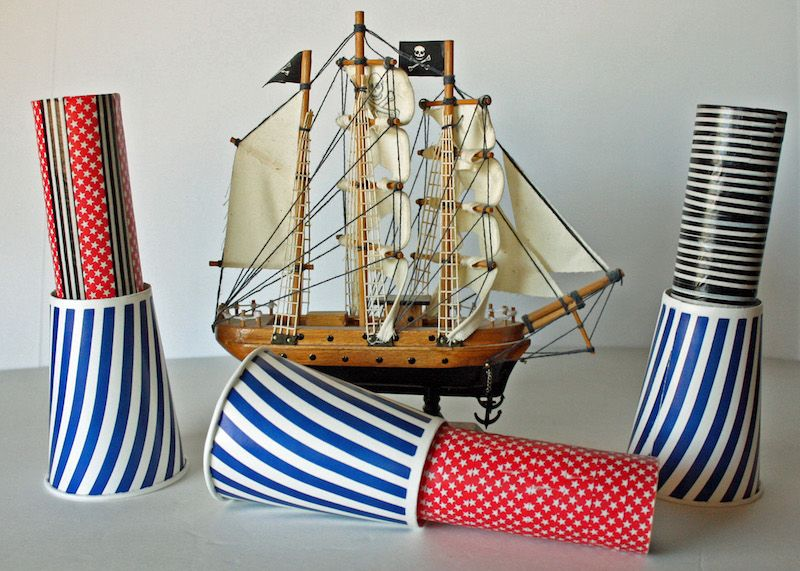
A pirate spyglass gives children something they can actually use after making it. Cardboard tubes and a paper cup can form the basic shape, while cardstock, paper, markers, stickers, or decorative tape can cover the outside.
Once it is decorated, kids can use the spyglass to search for an imaginary island, hidden treasure, or pirate ship. That extra playtime is one reason I like this craft for parties and playdates.
I prepare any tricky cutting before younger children begin. The cardboard should be free from sharp edges, and the finished spyglass should stay lightweight.
Pro Tip: For a pirate birthday party, make the basic spyglasses ahead of time and let each child decorate one as they arrive.
4. Transparent Treasure Box Craft
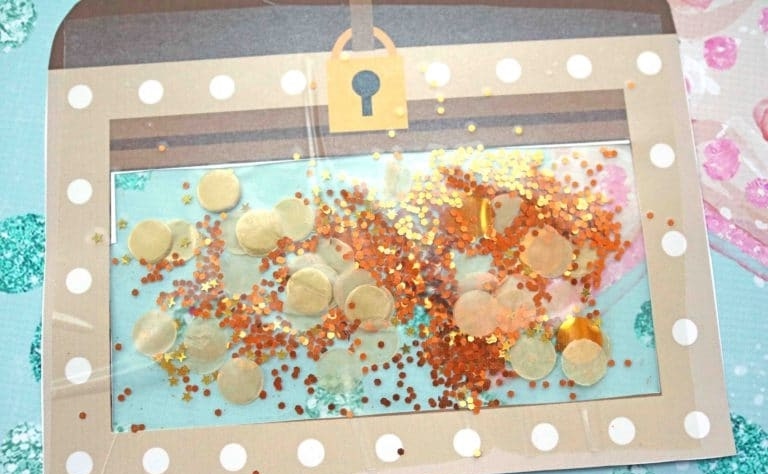
A clear or translucent recycled container makes a fun little treasure box because children can see their collection without opening it. A small plastic container or another suitable clean container can work without buying a specialty craft box.
I like giving children a selection of larger decorative pieces such as paper shapes, feathers, shiny paper, or sequins and letting them decide how their treasure box should look.
After decorating, the box can hold pretend coins, paper treasures, or other suitable objects. It can also become part of a sorting activity or treasure hunt.
For young children, I keep small decorative pieces under close adult supervision and use larger alternatives whenever possible.
Pro Tip: In a classroom, prepare one container and one supply area per child if space allows. It cuts down on reaching across the table and makes cleanup easier.
5. Rocking Paper Plate Pirate Ship
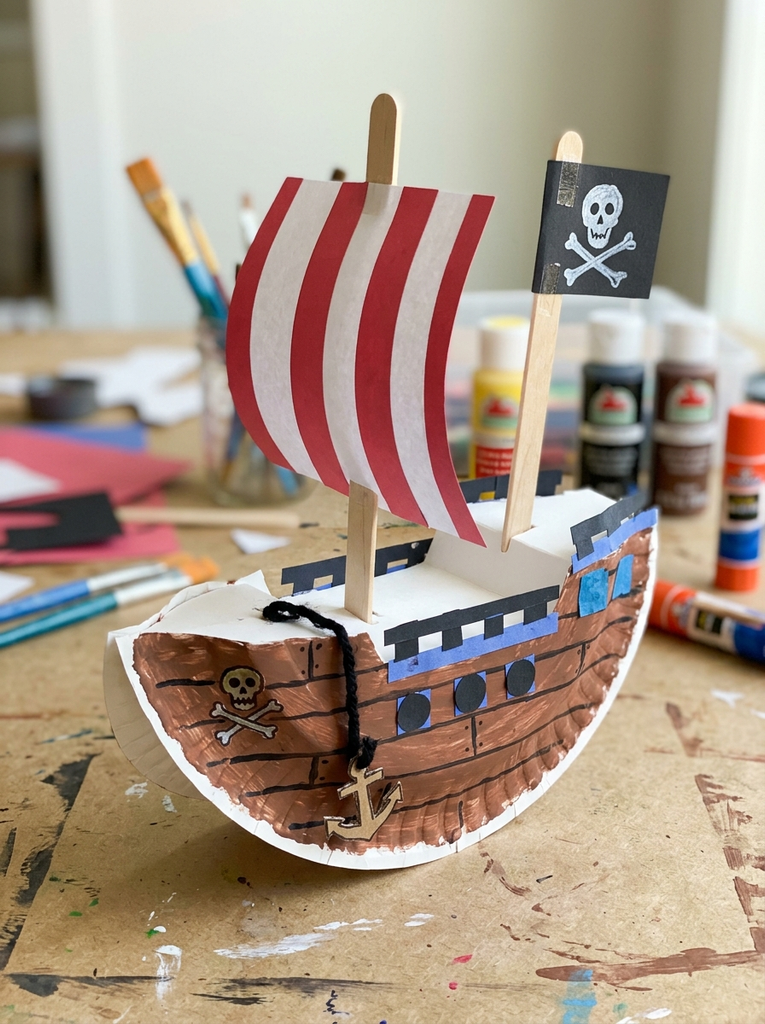
This pirate ship stands out because it is designed to move. A paper plate can be shaped and decorated into a small boat that rocks back and forth, giving children something more interactive than a flat ship picture.
Add a paper sail, mast, pirate flag, windows, or a little captain. I keep the decorations lightweight so the boat can still rock once everything is attached.
This is a nice tabletop craft for younger children because much of the fun comes from decorating and then moving the finished ship across an imaginary sea.
Pro Tip: Put the finished boat on blue construction paper and let children use the paper as their ocean for simple pirate stories and races.
6. DIY Duct-Tape Pirate Swords
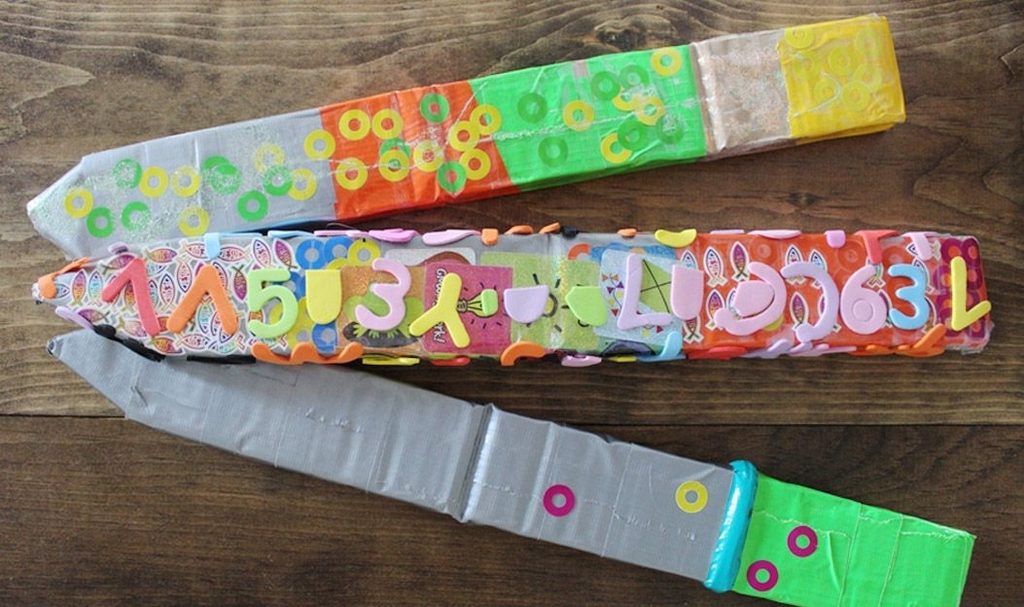
Pirate swords are best treated as pretend-play props, not weapons. I use cardboard or another soft, lightweight material for the base and cover it with duct tape before children decorate it.
The ends should be rounded rather than pointed, and I avoid rigid, heavy, or sharp materials. Stickers, paper shapes, additional tape, or markers can give each sword its own look.
Before children start playing, I set a simple rule: the swords stay away from people’s faces and bodies, pets, furniture, and other children. They are for pretending, not hitting or poking.
For a birthday party, preparing the sword shapes in advance gives kids more time to decorate and play.
7. Popsicle Stick Pirate Crew
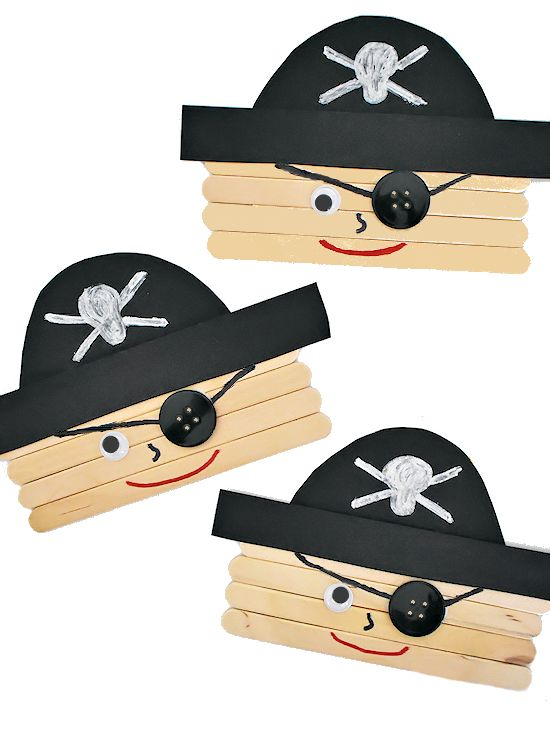
Popsicle sticks are a good choice when I want to make several small pirate characters rather than one large figure. Each stick can become a different crew member with a paper hat, eye patch, beard, hair, or drawn-on face.
The small size makes these useful for tabletop storytelling. Children can create a captain, sailor, lookout, or any other character they invent.
If I’m reusing craft sticks from another project, I check them for splinters or damaged edges first. Small decorative pieces also need supervision around young children.
Pro Tip: Make a few different pirates and give each one a name. Kids can then use the crew for a simple homemade pirate story.
8. Cardboard Roll Pirate Craft
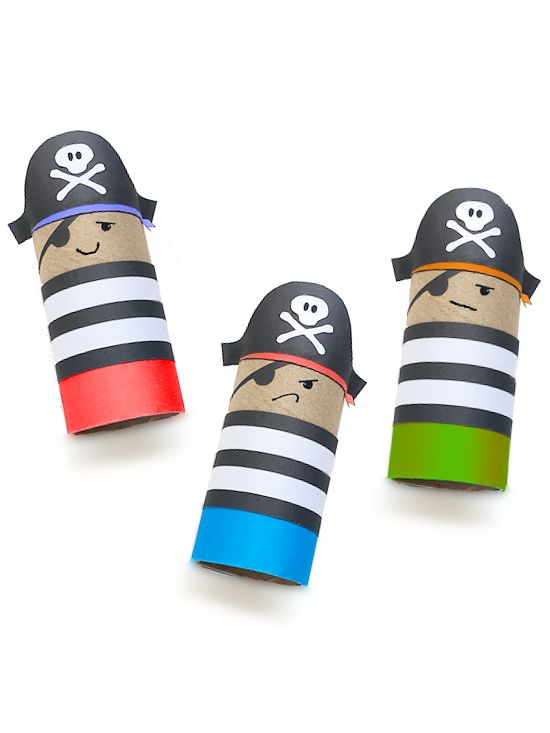
An empty cardboard roll gives children a standing 3D pirate figure rather than a flat character. That difference makes this craft particularly useful for pretend play or decorating a shelf or playroom.
Construction paper can cover the roll and create the pirate’s clothes, hat, belt, and face. Markers are useful for adding details without needing lots of separate supplies.
Younger children can work with prepared paper pieces, while older kids can design and cut more of their own shapes. I make sure the recycled cardboard rolls are clean and dry before using them.
Once several are finished, they can stand together as a pirate crew.
9. Nature Stick Pirate Ships
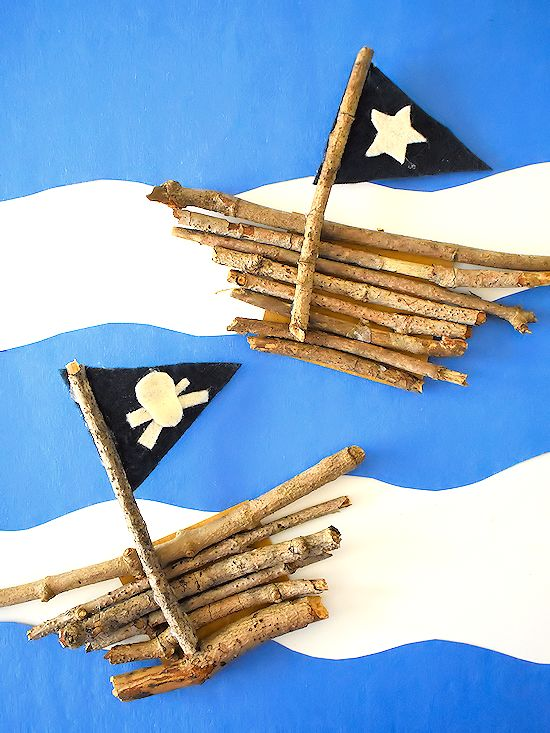
This craft starts before the actual making. On a suitable day, children can go outside and collect appropriate fallen sticks to use as the framework for a rustic pirate ship.
I make the collection part simple: we look for dry materials that are already on the ground rather than breaking branches from living plants. I also avoid unknown plants and anything that looks contaminated.
Before crafting, an adult should inspect the collected sticks and remove anything sharp, broken, splintered, or otherwise unsuitable. Paper sails and simple flags can then complete the ship.
The finished boats have a natural, rustic look and can be displayed or used in a pirate-themed pretend-play scene.
10. Fizzing Pirate Treasure Chests
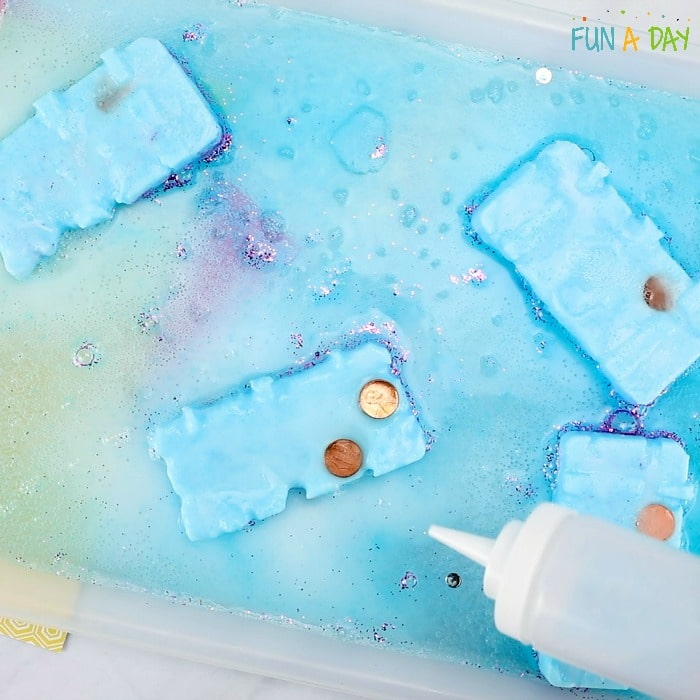
Fizzing treasure chests can add a simple science element to pirate play because children get to watch hidden objects appear as the mixture reacts. I would only use a clearly child-appropriate, established recipe rather than combining random household ingredients.
An adult should prepare the mixture according to the recipe and supervise the activity from start to finish. I also keep the work away from food preparation and eating areas and take reasonable care to prevent the mixture from getting into eyes or onto skin.
Use larger, age-appropriate treasure objects rather than tiny gems, coins, or other pieces around toddlers. Children should never be left alone with the activity.
A washable tray underneath each activity area makes cleanup much easier.
Pro Tip: Prepare the treasure chests before the activity begins so children can focus on the searching and observation instead of waiting for the setup.
Also read: 30 paper quilling ideas to keep you busy
11. Wooden Spoon Pirate Crew
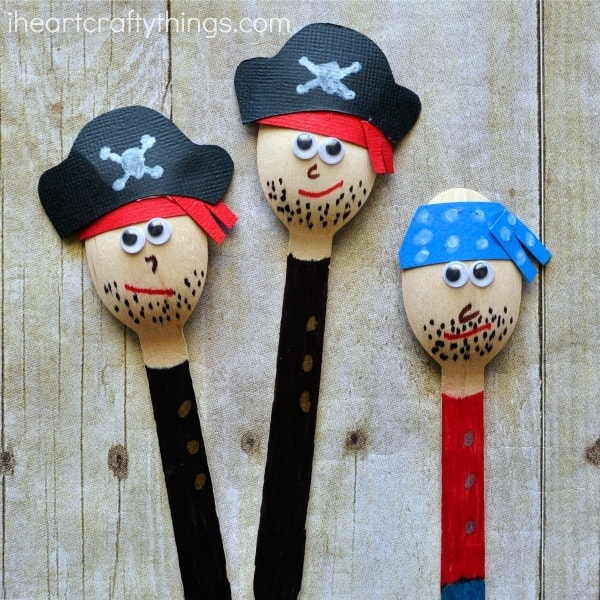
Wooden spoon pirates work differently from the smaller popsicle-stick figures because they are naturally suited to puppet-style play. Children can hold the spoons while acting out conversations between different members of the crew.
Paint, paper, yarn, and markers can create faces, hair, hats, bandanas, and clothing. I like letting children make the characters different from one another instead of giving everyone the same design.
If hot glue is needed for hair or other decorations, an adult should handle that part. Once everything is dry, the spoon pirates can become characters in a homemade pirate show.
A cardboard box can also serve as a simple ship or puppet stage.
12. Paper Bag Pirates
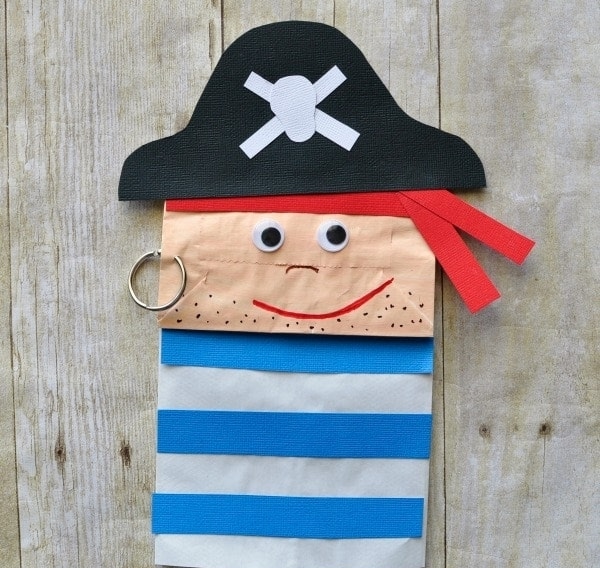
A paper lunch bag makes a great storytelling puppet because the folded bottom creates a natural movable mouth. That gives this craft a clear purpose beyond simply making another pirate figure.
Children can add a hat, beard, hair, eye patch, clothing, and facial features with paper and markers. Older kids can design and cut their own pieces, while younger children can decorate from prepared shapes.
Painting the bag is another option if I want to reduce the amount of paper cutting. I just let the paint dry before adding the final details.
Afterward, children can use their pirates to act out a treasure hunt, tell a short story, or perform a little puppet show.
13. Egg Carton Pirate Ship
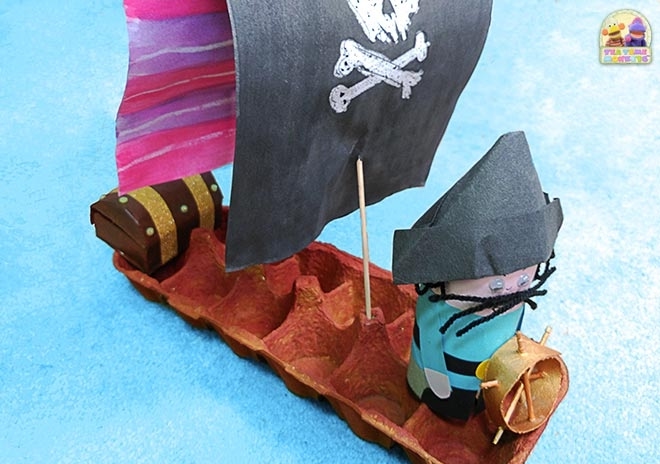
An empty egg carton gives children a ready-made 3D base for a pirate ship. I like this project because the recycled container becomes part of the construction rather than simply being used as decoration.
Cardboard or paper can create sails, while craft sticks can form masts. A small captain, treasure chest, flags, and other details can be added according to the child’s design.
I clean and inspect recycled materials before crafting and handle difficult cutting for younger children. Older kids can take more responsibility for planning and decorating their ship.
Pro Tip: Give each child a different flag design if you are making several ships. It makes them easy to tell apart during tabletop games.
14. Clothespin Pirate Ships
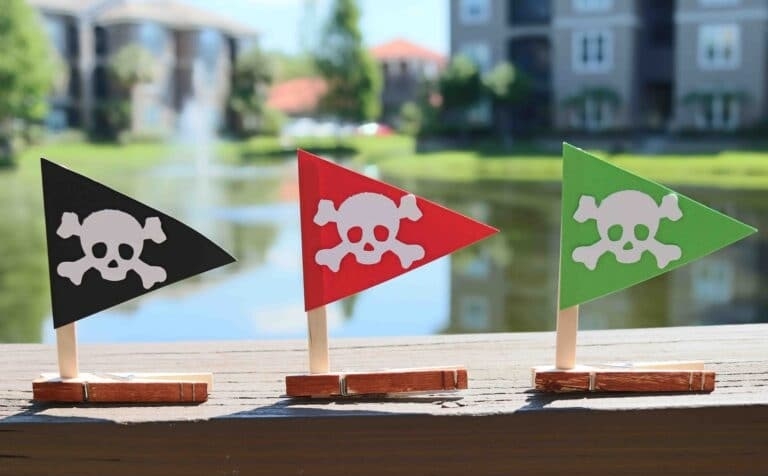
Clothespin ships are much smaller than the egg-carton boats, which makes them useful for miniature tabletop play. A wooden clothespin can form the body of the boat, while a small paper sail and craft-stick mast complete the basic shape.
The simple construction means children can concentrate on painting and decorating rather than spending a long time assembling the ship.
I check wooden clothespins for damaged or splintered areas before using them. Because the parts are small, this craft is better suited to children who can use the materials appropriately with adult supervision.
Once several are ready, kids can make a miniature pirate fleet and move the boats around a tabletop ocean.
15. Pirate Treasure Hunting Slime
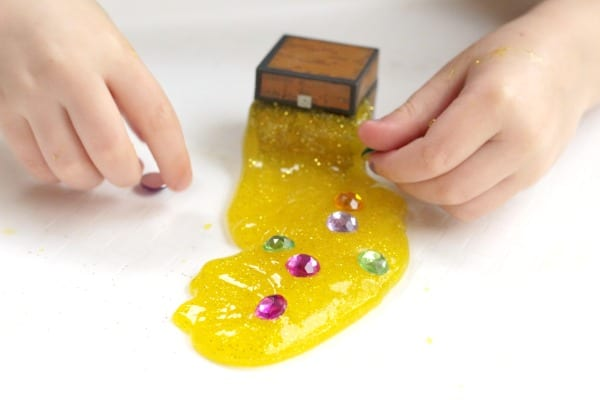
Pirate treasure slime turns sensory play into a themed search activity. Children can work through the slime to find suitable hidden treasure while pretending they are searching for something valuable from a pirate chest.
I stick with an established slime recipe and follow its ingredient directions rather than changing the formula casually. Slime is not food, so children should not taste it, and adults should supervise the activity.
For toddlers or children who are still likely to mouth objects, I would choose a different sensory activity instead. Small gems, beads, coins, and similar treasure pieces should not be used where they could become accessible to a young child.
A tray underneath the slime keeps the activity contained and makes cleanup much easier.
Pro Tip: Use larger, easy-to-see pretend treasure for older children and skip hidden small objects altogether for toddlers.
16. Customized Pirate Hooks
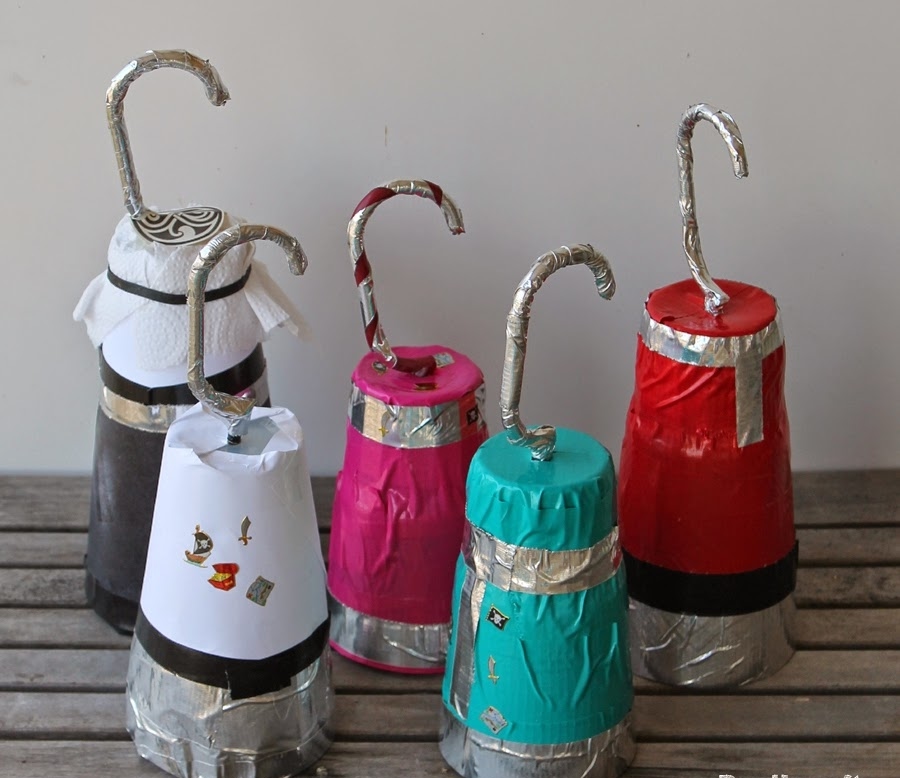
A lightweight pretend pirate hook can be a fun costume accessory for a pirate party. I keep the design simple and use soft or lightweight craft materials rather than anything sharp, pointed, or heavy.
The hook should not have tight loops around the wrist or hand, and nothing should be designed to go around a child’s neck. I also avoid anything that could restrict movement or become a snagging hazard.
Children can decorate their finished accessory with paper, stickers, markers, or other suitable materials. If the basic shapes require cutting, I prepare them before the decorating activity.
During play, the hook stays firmly in the pretend-play category. It should never be used to poke, pull, snag, or grab another child or pet.
17. DIY Pirate Paper Hat
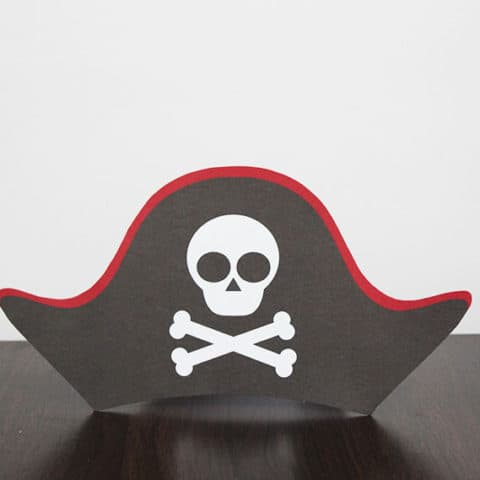
A pirate paper hat is one of the quickest ways to turn a regular outfit into a costume. The basic hat can be prepared from paper, then decorated with a pirate symbol, stripes, or a child’s own design.
For a party, I would cut the hat shapes ahead of time and have markers and larger decorations ready at the table. That keeps the activity moving when several children are crafting at once.
The finished hats can become part of a treasure hunt, photo area, or pretend-play game. I like crafts that give children something to wear because the making and playing become part of the same activity.
Pro Tip: If you are short on party time, prepare the hats completely and make decorating the five-minute activity instead.
18. Popsicle Stick Pirate Flags
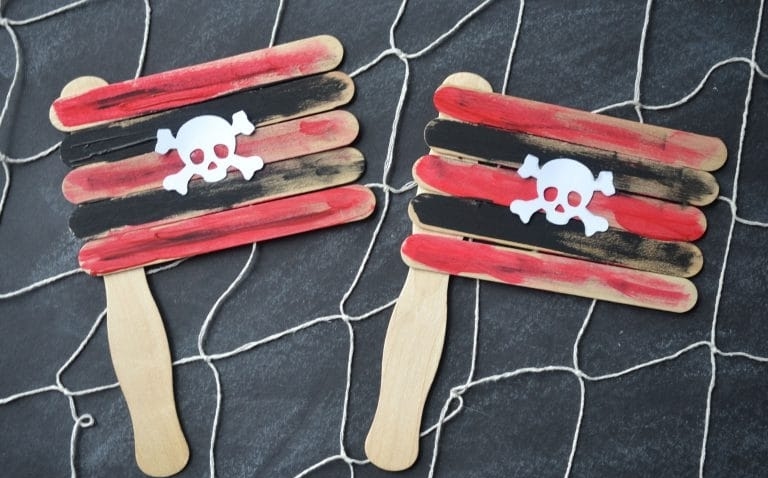
A small pirate flag can add a finishing detail to a miniature ship or pirate display. Children can make the flag from paper and attach it to a suitable craft stick, then draw their own pirate symbol.
If I am making these for a party, I keep the craft version separate from anything being used with food. Ordinary craft sticks should not be assumed to be food-safe.
For cupcake or other food decorations, I use an appropriate food-safe pick or decoration instead. Around very young children, I also avoid giving them pointed sticks to carry.
Pro Tip: Make several flag sizes so the same craft can decorate miniature ships, cardboard forts, or a larger pirate display.
19. Colorful Paper Cup Parrot
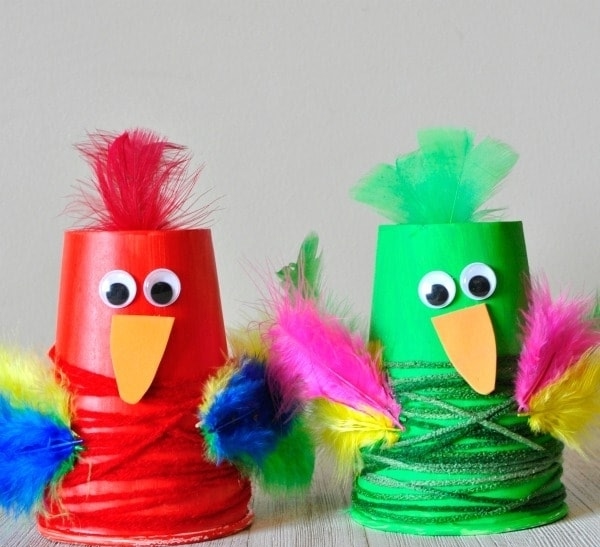
A pirate parrot gives the craft collection a different character from all the ships and pirates. A paper cup provides the body, while paper, markers, and other decorations can create the wings, beak, eyes, and tail.
Bright colors make this one especially fun. Children can choose their own color combinations and give each bird a different personality.
Feathers and other small decorations should be used with appropriate supervision, particularly with young children. For toddlers, larger paper shapes are a simpler alternative to tiny loose pieces.
Once finished, the parrots can sit on a cardboard pirate ship or beside the pirate characters during pretend play.
20. Pirate Treasure Chest Craft
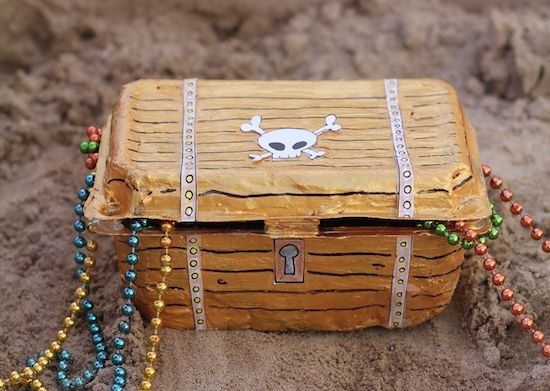
A recycled container can become a simple treasure chest without requiring a specialty craft kit. I like using whatever suitable clean container is already available and letting the decorating do most of the work.
Paper, paint, markers, or craft tape can create the appearance of a pirate chest. Children can add their own symbols and then fill it with paper coins, drawings, or other suitable pretend treasures.
For a classroom, preparing the containers before the activity leaves children more time to decorate. A separate supply station can also make group crafting easier to manage.
Afterward, the chest can be used for sorting, storing pretend treasure, or holding clues for a homemade treasure hunt.
21. Pirate Ships in a Bottle (The Easy Way)
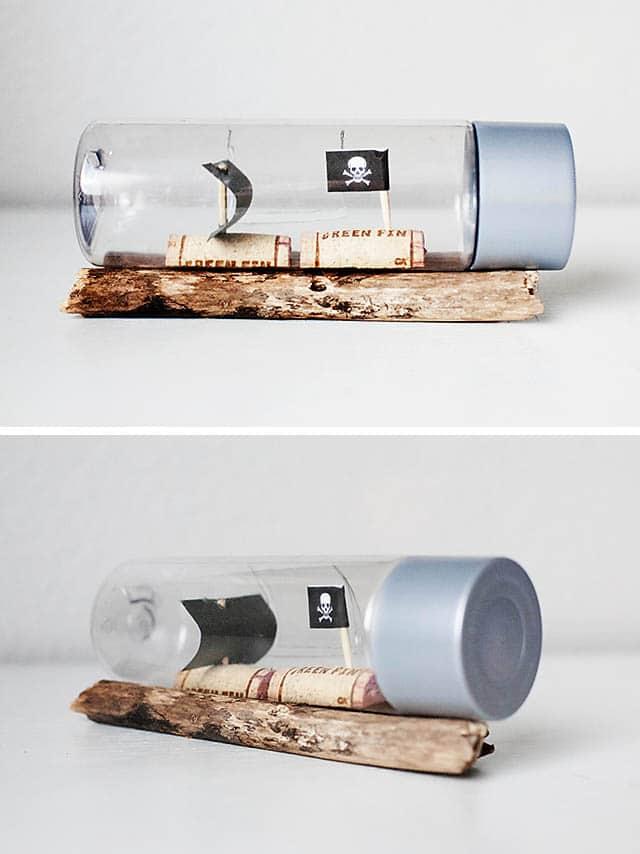
The easy version of a ship in a bottle does not need the detailed construction used for miniature models. A clear plastic bottle or another suitable transparent container can hold a simple paper or cardboard pirate ship.
I focus on making the ship recognizable rather than trying to build tiny, complicated details. A basic hull, mast, paper sail, and pirate flag are enough to create the idea.
Adults should handle cutting and any difficult assembly, and the container needs to be checked for sharp edges or damaged areas. I also avoid leaving small removable pieces where young children can reach them.
For older children, this can become a room decoration after the project is complete. A small display on a shelf or nightstand can turn the craft into a lasting reminder of the pirate activity.
Frequently Asked Questions
What are some easy pirate crafts for kids?
Some of the easiest options are paper plate pirates, pirate paper hats, popsicle stick pirate flags, cardboard roll pirates, and paper cup spyglasses. I like these because they use simple materials and can be adjusted for different ages.
What supplies do I need for pirate crafts?
I usually keep paper plates, construction paper, cardboard rolls, paper cups, popsicle sticks, markers, child-safe scissors, glue, and recycled containers on hand. These supplies are enough for many of the projects in this list.
What pirate crafts are good for preschoolers?
For preschoolers, I prefer simple projects such as paper plate pirates, handprint pirates, paper bag puppets, and pirate hats. I prepare difficult cutting steps beforehand and supervise children when using scissors, glue, or small decorations.
How can I use pirate crafts at a birthday party?
I like turning the crafts into party activities by having children decorate pirate hats, flags, swords, or treasure chests. The finished crafts can then become costume pieces, party favors, or props for a treasure hunt.
How do I make pirate crafts safer for young children?
I choose non-sharp, child-appropriate materials and closely supervise activities involving scissors, glue, small decorations, strings, or craft sticks. For toddlers, I avoid loose small pieces such as tiny beads, gems, and googly eyes because they can be choking hazards.
Read this next: 28 fun and easy crafts for kids
Conclusion
I like pirate crafts because they can lead naturally from making to playing. A paper plate becomes a pirate, an egg carton becomes a ship, and a simple container can turn into a treasure chest filled with imaginary finds.
When I choose a project, I consider the child’s age, attention span, available supplies, and how much preparation the activity requires. For groups, I find that preparing difficult pieces ahead of time leaves more time for the part children usually enjoy most—making their own choices.
The finished craft does not need to look like the example. What matters to me is that children have room to decorate, invent characters, tell stories, and use what they made afterward.
The best pirate craft is often the one that gives children something to make, imagine, and play with afterward.


2 Comments