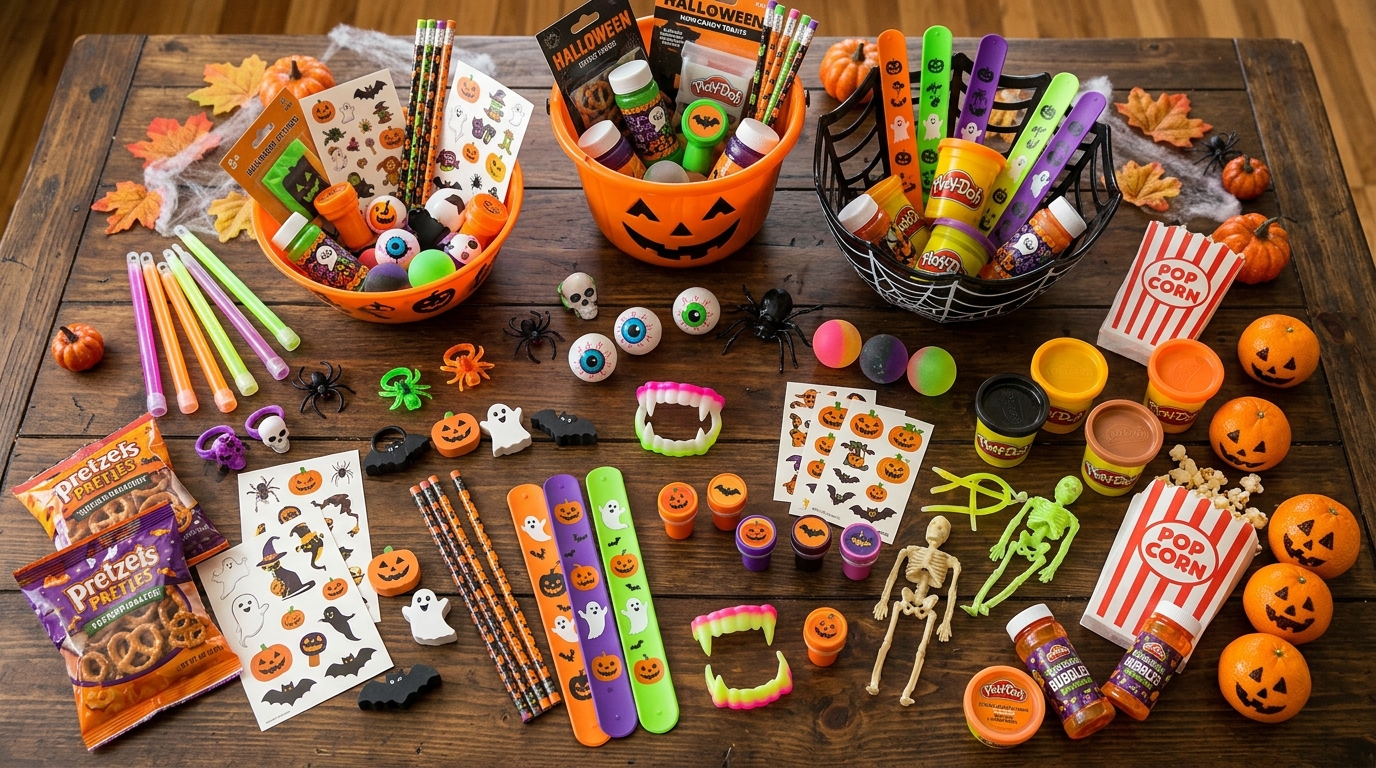
23 Non-Candy Halloween Treats That Make the Perfect Surprise
I like having a few non-candy Halloween treats ready because not every child wants another piece of candy at the end of a long night. Some schools and parties also have rules about food, while some families simply prefer a small toy, activity, or other non-food surprise.
When I choose Halloween handouts, I look at three things first: age suitability, actual play or use value, and a reasonable bulk price. I also pay attention to how well an item will hold up once it gets tossed into a crowded trick-or-treat bag.
A low-cost favor can still feel special when it gives a child something to play with, wear, create with, or use later. I don’t need every item to be elaborate. I just want it to feel like an intentional little Halloween surprise.
If I were preparing non-candy Halloween treats for a neighborhood, classroom, or party, I would start with simple options such as glow bracelets, bubble wands, temporary tattoos, mini activity books, and other small items with clear play value.
For younger children, I pay close attention to the manufacturer’s age recommendation and to small parts. A favor that works well for an older child may not be appropriate for a toddler simply because it is small and inexpensive.
I also check classroom, school, and venue rules before buying in bulk. Some events may have restrictions on food, small toys, messy products, prank items, or wearable accessories.
I don’t think I need 23 different products to make a good selection. A much easier approach is to choose one attention-grabbing item and add one or two inexpensive fillers. That keeps the bags manageable and makes bulk buying easier.
Save this for later
Table of Contents
When food is involved, I keep edible treats separate from non-food choices. I read the current package information instead of assuming a food is suitable for a particular allergy or dietary need.
Key Takeaways
- Glow bracelets are one of my favorite choices for nighttime trick-or-treating.
- Small toys and activity items can give children something to use after Halloween night.
- I check the manufacturer’s current age guidance before buying children’s favors.
- Small parts deserve extra caution around toddlers and preschoolers.
- A candy bowl plus a separate non-food option gives families more choice.
- I check current ingredient and allergen information before offering packaged food.
- Bulk buying works best when I calculate the cost per usable piece.
- I look for sturdy items that can survive a full trick-or-treat bag.
Related article: 17 Halloween Minute to Win It Games for Adults (Materials & Rules)
What Are Non-Candy Halloween Treats? (And What They Aren’t)
When I use the term non-candy Halloween treats, I mean small surprises that can be handed out instead of traditional sweets. They can include toys, stationery, accessories, puzzles, activity items, crafts, or other non-food favors.
Some work especially well for trick-or-treating, while others make more sense for a classroom or organized Halloween party. I don’t expect one item to suit every event or every age.
What they are:
- Small toys with age-appropriate play value
- Stationery such as pencils, notebooks, or themed erasers
- Accessories such as bracelets or hair clips
- Puzzles and activity books
- Simple craft or creative items
- Non-food surprises for families who prefer an alternative to candy
What they aren’t:
- Automatically healthier than candy
- Automatically safer for every child
- Appropriate for every age
- Automatically suitable for children with allergies
- Exempt from school or venue rules
- Required to be handmade or expensive
That last point matters to me. I don’t think a good Halloween favor needs to be complicated. A small activity book or glow bracelet can be a better choice for my purpose than a more expensive item that is fragile or difficult to distribute.
Pro Tip: Before ordering a large quantity, I like to test one item when possible. I check how it opens, whether anything comes loose, whether the packaging holds up, and whether it actually fits the age group I have in mind.
How I Choose Non-Candy Halloween Treats
I don’t choose these items based on appearance alone. When I am preparing Halloween handouts, I think through where they will be used and who will receive them.
1. Age suitability: The manufacturer’s current age recommendation is my starting point. I don’t assume that an item marketed as a children’s favor works for every child.
2. Small parts: Rings, tiny toys, detachable decorations, and small balls get extra attention when younger children are involved.
3. Durability: A favor has to survive storage, transportation, and a crowded trick-or-treat bag. I avoid items that look like they will crack, leak, or fall apart easily.
4. Cost per child: I calculate the price per usable piece rather than judging a package by its sticker price.
5. Where it will be handed out: Something funny at a neighborhood event may be a poor choice for a classroom. The setting changes what makes sense.
6. Mess: Ink, bubble solution, glitter, and other messy products need more planning than a sticker sheet or notebook.
7. Play or use value: I prefer something a child can actually do something with rather than an item that simply fills a bag.
8. Rules: I check teacher, school, venue, or party restrictions before placing a large order.
9. Bag size: A favor may be great on its own but awkward if it takes up too much room in a small treat bag.
This is also why I don’t think every item on this list belongs in every Halloween situation. The right choice depends on the children, the setting, and how the treats will be distributed.
Candy vs. Non-Candy: How They Actually Compare
I don’t consider non-candy treats automatically better than candy. They simply give me another way to offer a Halloween surprise, especially when I want to include non-food choices.
| Factor | Candy | Non-Candy Treats |
|---|---|---|
| Cost | Often inexpensive in bulk | Varies by item and pack size |
| Food allergies | Requires ingredient and allergen checking | Non-food items avoid food ingredients, but still require product and age checks |
| Entertainment | Usually eaten quickly | Some provide longer play or activity value |
| Storage | Some candy can melt or become sticky | Many small favors store easily |
| School policies | May be restricted | Some non-food options may fit school rules better |
| Age considerations | Still requires age awareness | Small toys and parts require particular attention |
For me, the biggest advantage is choice. I can offer candy to families who want the traditional experience while keeping a separate bowl of non-food treats for children who need or prefer another option.
That setup also makes distribution easier because nobody has to guess what a child or parent wants.
The 23 Best Non-Candy Halloween Treats
1. Glow Sticks and Glow Bracelets
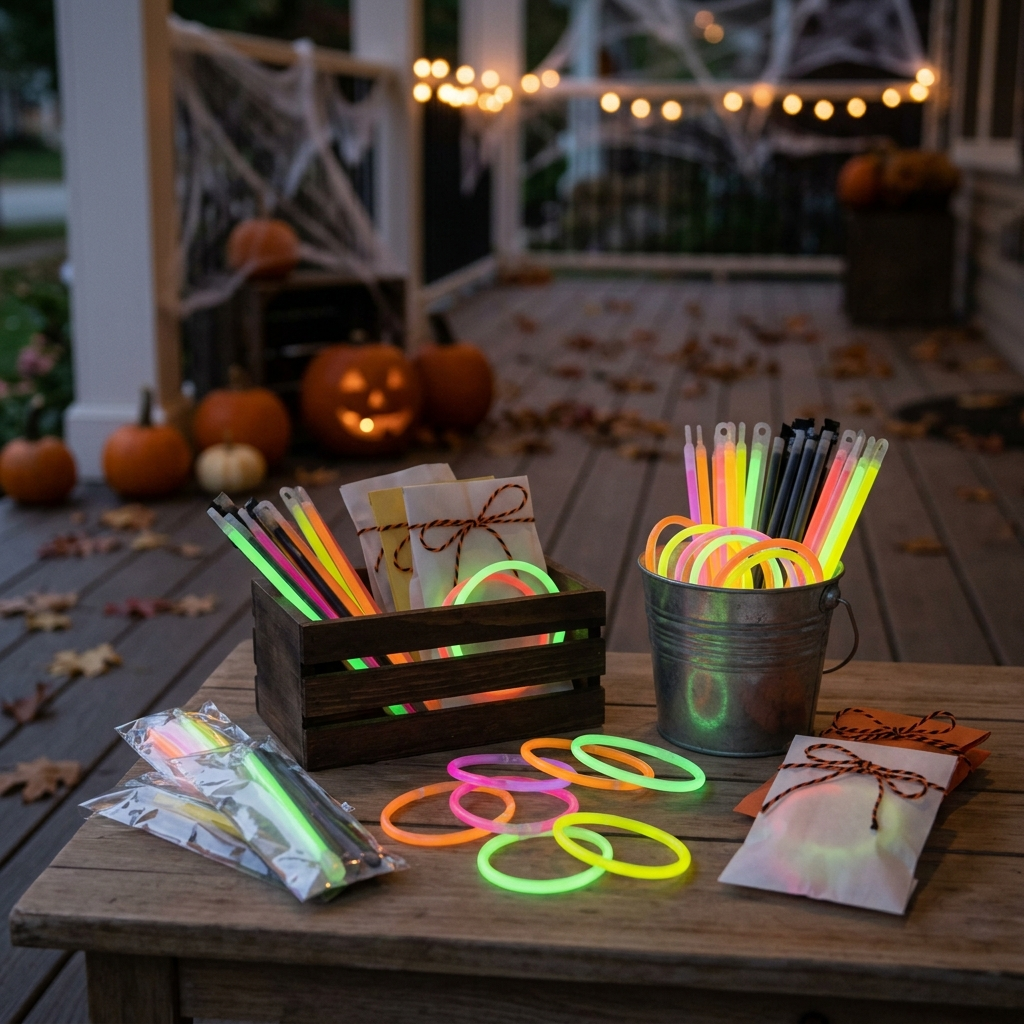
Best for: children who meet the product’s recommended age range
Glow bracelets are one of my favorite choices for nighttime trick-or-treating. They are lightweight, easy to hand out, and children can use them right away.
I especially like the visual effect when several children in a group are wearing them as they walk between houses. They also make sense for a neighborhood event where children will be outside after dark.
When I buy glow products, I check the packaging and inspect them before distributing them. I don’t hand out products that are cracked, damaged, or leaking, and I follow the manufacturer’s instructions rather than opening or modifying them.
Pro Tip: If I’m buying a large quantity, I prefer a simple multipack over several complicated styles. It makes distribution quicker and gives me fewer pieces to sort.
2. Mini Play-Doh Cans
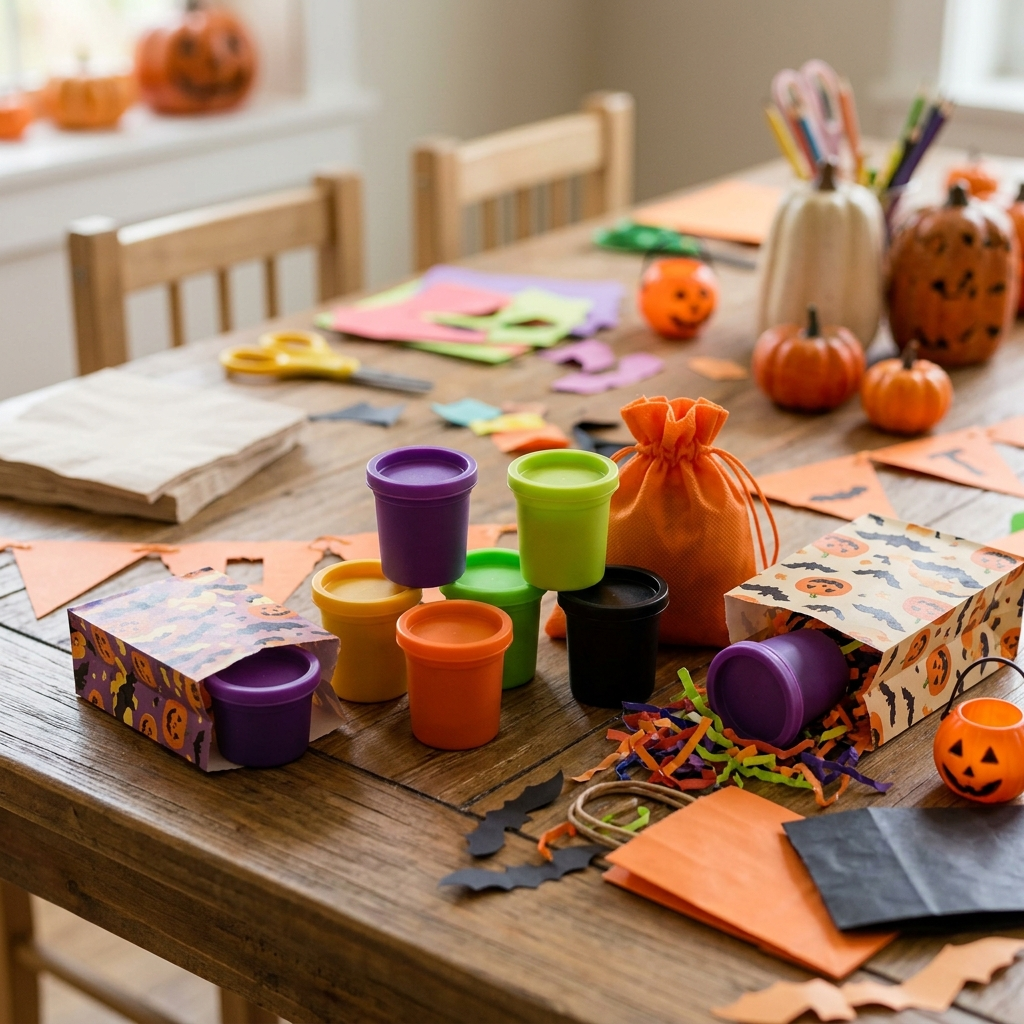
Best for: children who meet the manufacturer’s current age recommendation
Mini modeling compound containers are useful when I want a favor with more play value than a simple novelty item.
The smaller containers fit easily into party bags, and seasonal colors can make them feel more appropriate for Halloween. I find these especially useful for classroom celebrations and parties where children will have somewhere to sit and play afterward.
I don’t assume all modeling compounds have identical ingredients or age recommendations. I check the specific product packaging before buying and follow its directions.
For younger children, I also consider whether an adult will be available to supervise use.
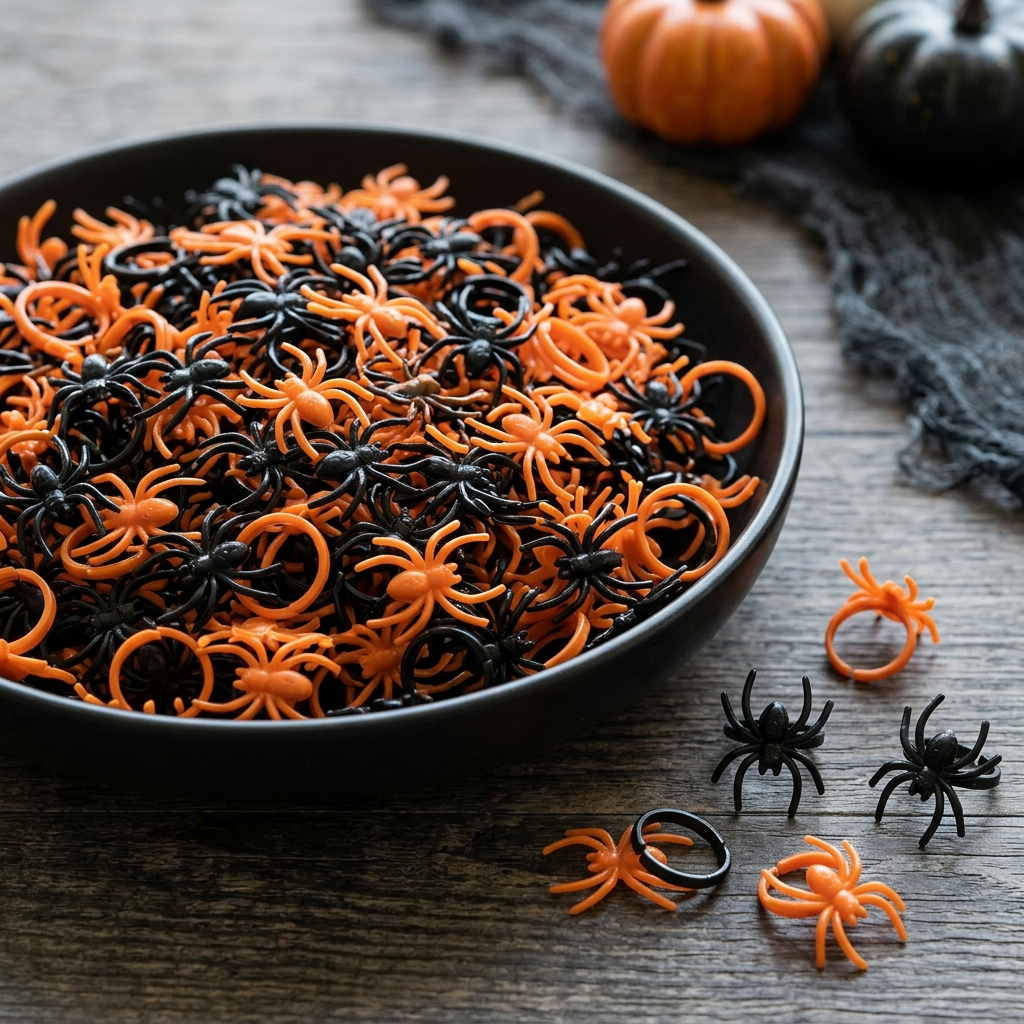
3. Spider Rings (Bulk)
Best for: children who meet the product’s age recommendation
Spider rings are inexpensive bulk favors and are easy to add to a Halloween treat bag.
I like them when I need a large number of small Halloween-themed items, particularly as one part of a larger favor bag. They take up very little space and are instantly recognizable as a Halloween novelty.
The small size is also the main reason I am careful with them. I don’t give spider rings to toddlers or to children who may put small objects in their mouths. The product’s age guidance should be checked before distribution.
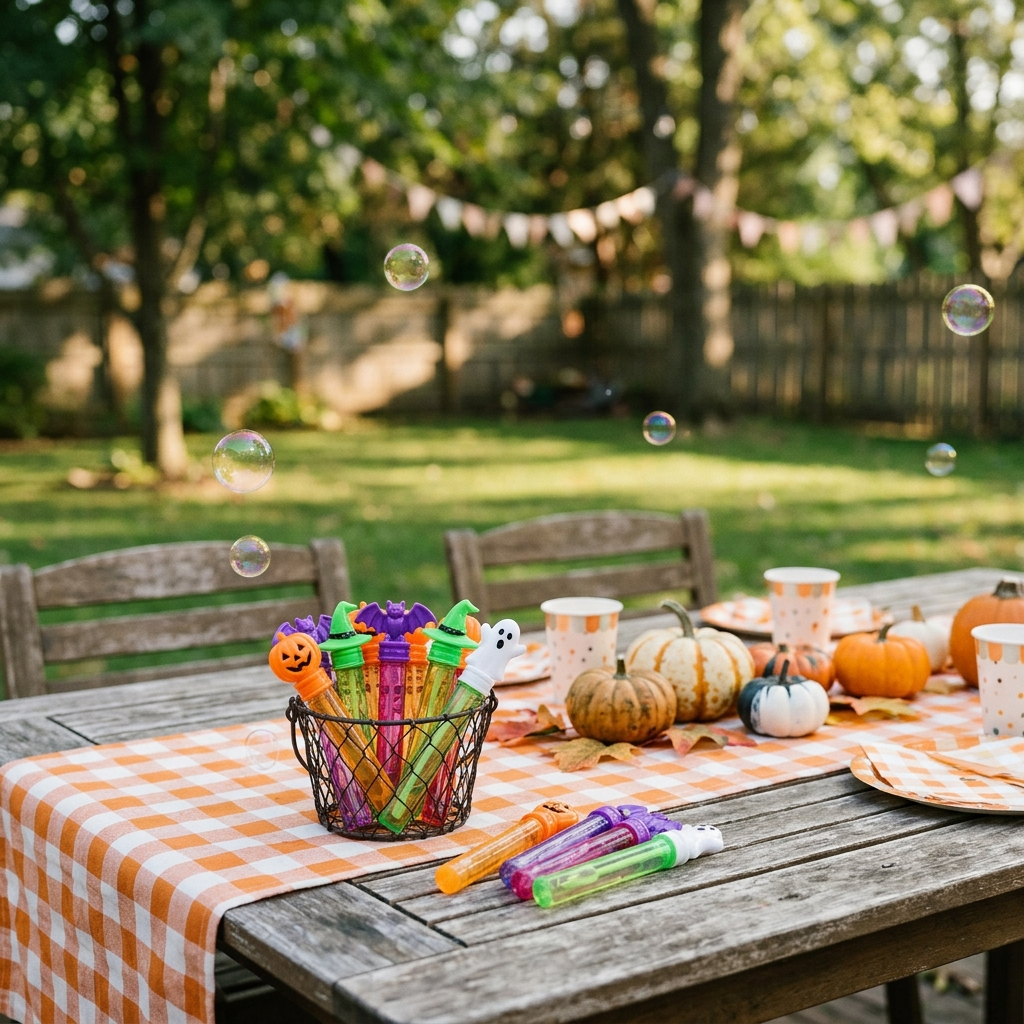
4. Bubble Wands (Mini)
Best for: children who meet the manufacturer’s current age recommendation
Mini bubble wands give children something they can actually use instead of simply taking home a decorative favor.
I like them particularly for outdoor parties and neighborhood events. Children can use them after receiving the favor, although I make sure there is enough space for them to play without getting in the way of other guests.
With younger children, I supervise use and keep the container closed when it isn’t being used. Bubble solution is not something children should ingest, so I would not choose this option for a setting where close supervision isn’t practical.
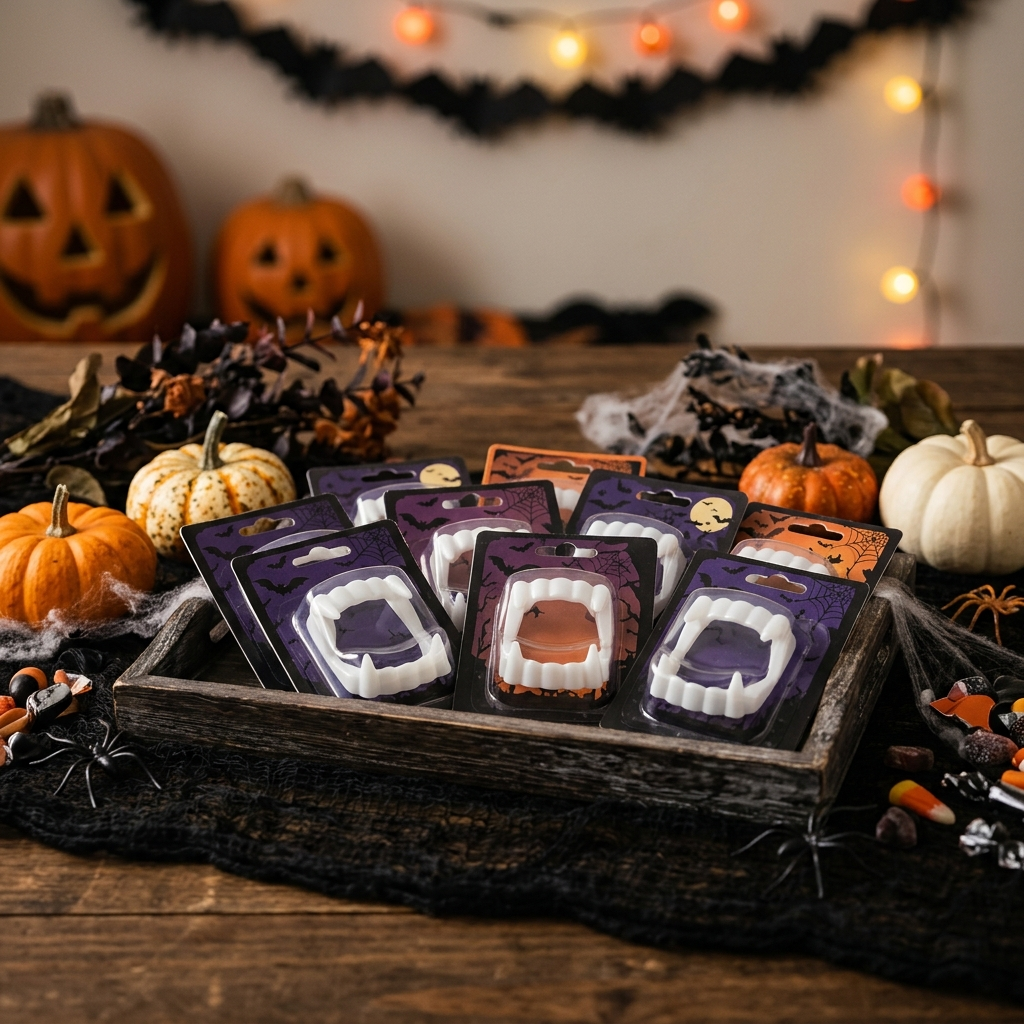
5. Vampire Fangs
Best for: older children who meet the product’s age recommendation
Vampire fangs are a fun costume-style favor for children who enjoy Halloween dress-up.
I would reserve these for children who meet the product’s stated age range. Costume accessories can have small or detachable components, so I don’t treat them as a universal favor for younger children.
I also check the packaging for material information and instructions. At a party, I prefer making these an optional choice rather than automatically putting them into every child’s bag.
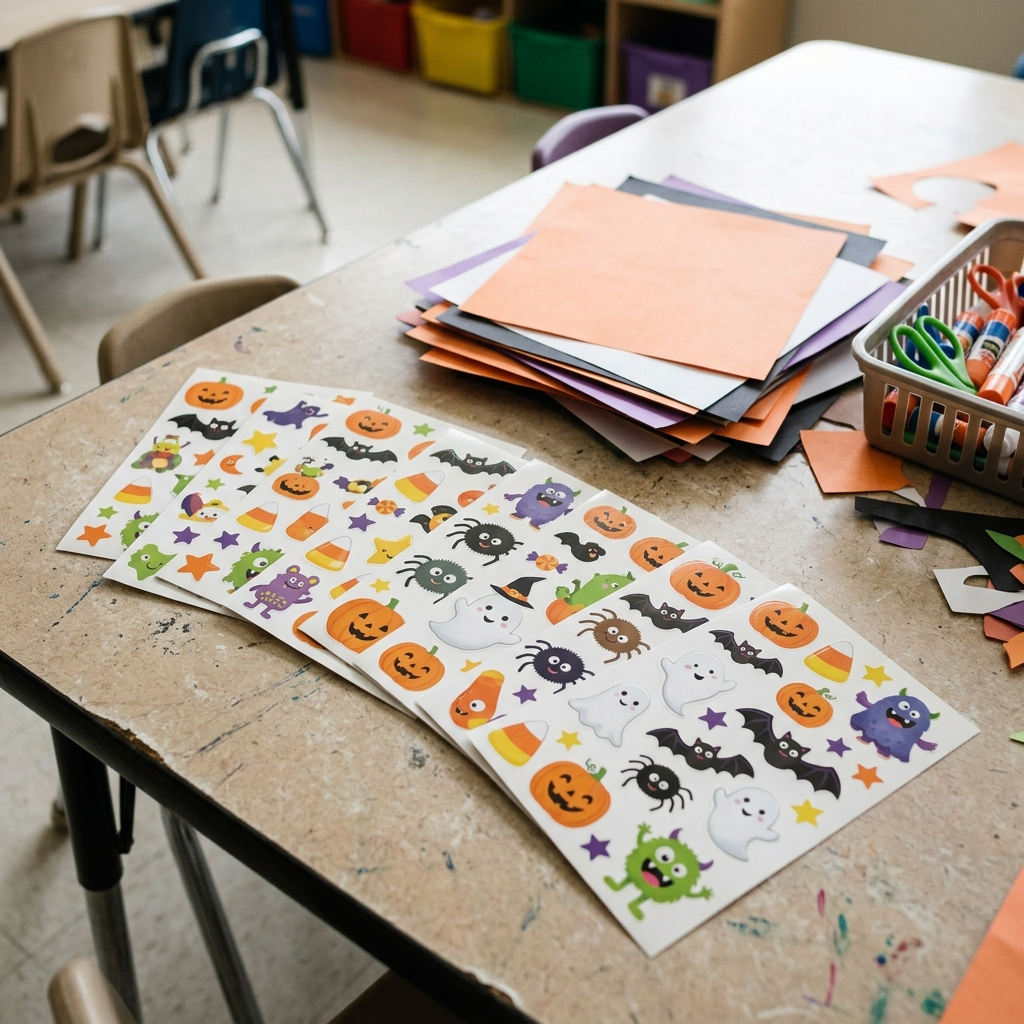
6. Halloween Stickers (Sheet Packs)
Best for: classrooms, parties, and children who meet the product’s age guidance
Halloween sticker sheets are an easy filler when I need something inexpensive and lightweight.
I like pumpkins, ghosts, bats, spiders, and friendly monsters because children can choose their favorites or use them for a Halloween craft later.
For younger children, I look for larger stickers and follow the product’s age guidance. I don’t assume every sticker sheet is appropriate for toddlers simply because it is made for children.
I usually pair stickers with another item if I want the treat bag to feel more substantial.
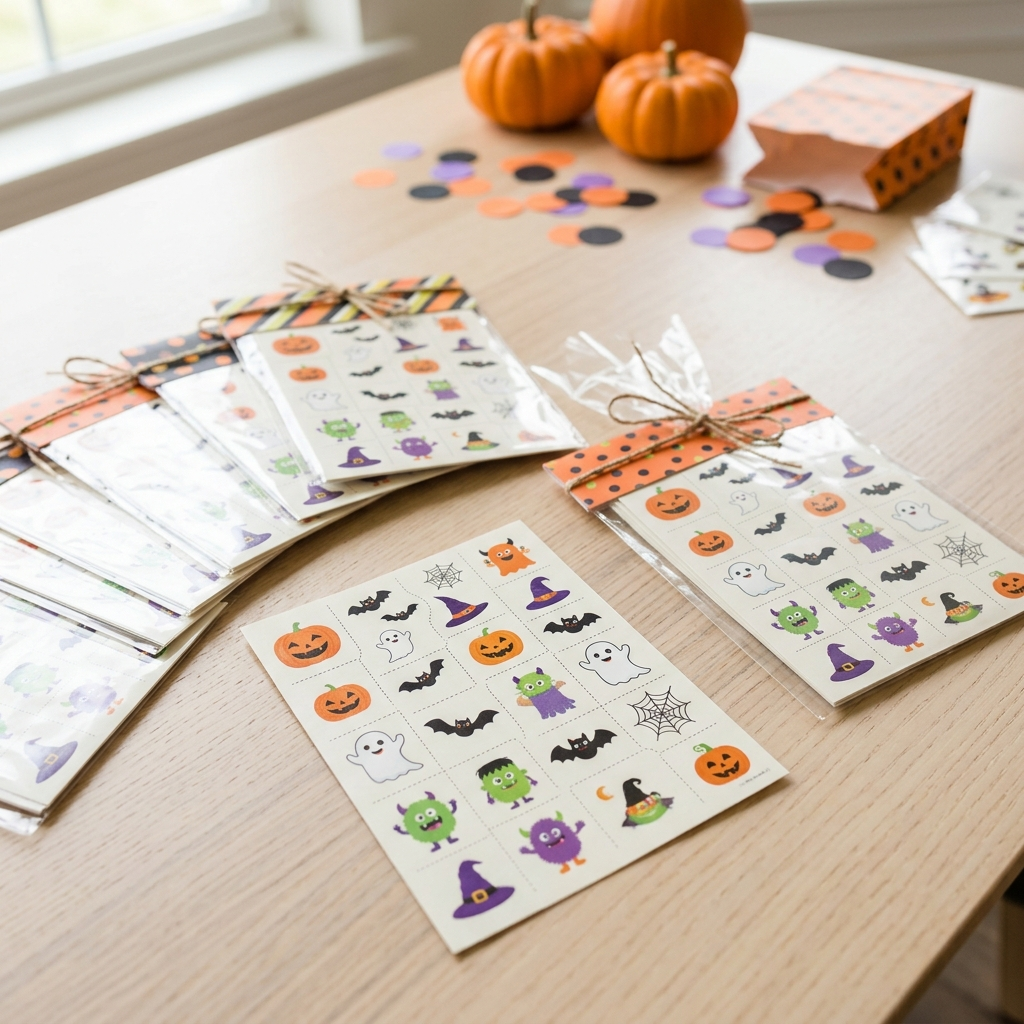
7. Temporary Tattoos (Halloween Themes)
Best for: children who meet the product’s age recommendation
Temporary tattoos work well as party favors because they add a wearable element without taking up much storage space.
I like Halloween designs such as bats, pumpkins, ghosts, and friendly monsters. A small sheet can fit easily into a treat bag or classroom envelope.
I follow the package instructions for application and removal and check the manufacturer’s age guidance. If a child or parent has concerns about using a particular product on skin, I would simply offer another favor instead.
8. Whoopee Cushions (Mini)
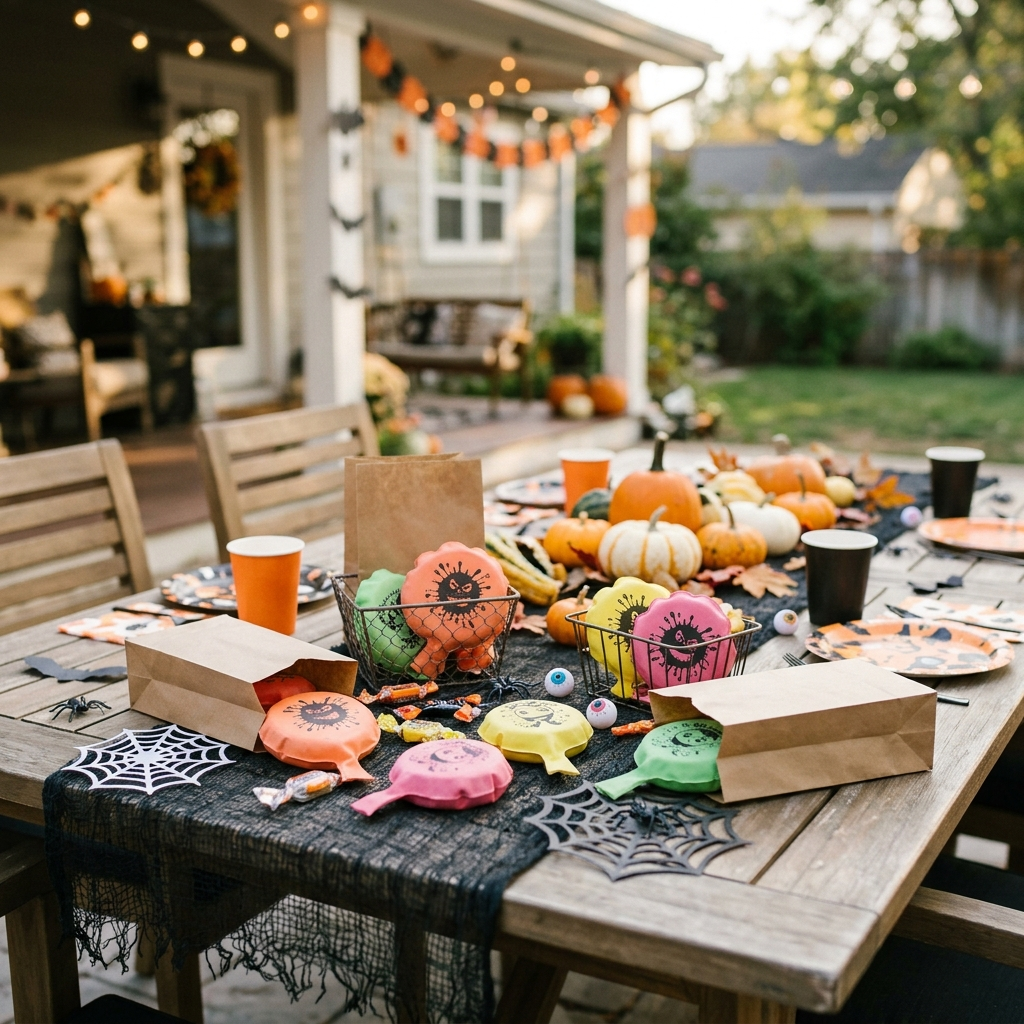
Best for: older children and settings where prank favors are appropriate
Whoopee cushions can get a big reaction, but I think the setting matters more with this favor than with most of the others.
At a family Halloween event or casual neighborhood gathering, the joke may fit perfectly. In a classroom, church event, library program, or quiet indoor party, it may create more disruption than fun.
I would also consider whether teachers, parents, or venue staff are comfortable with prank-style favors before buying them in bulk.
This is one of those items I would treat as an optional novelty rather than a universal Halloween handout.
9. Glow-in-the-Dark Bouncy Balls
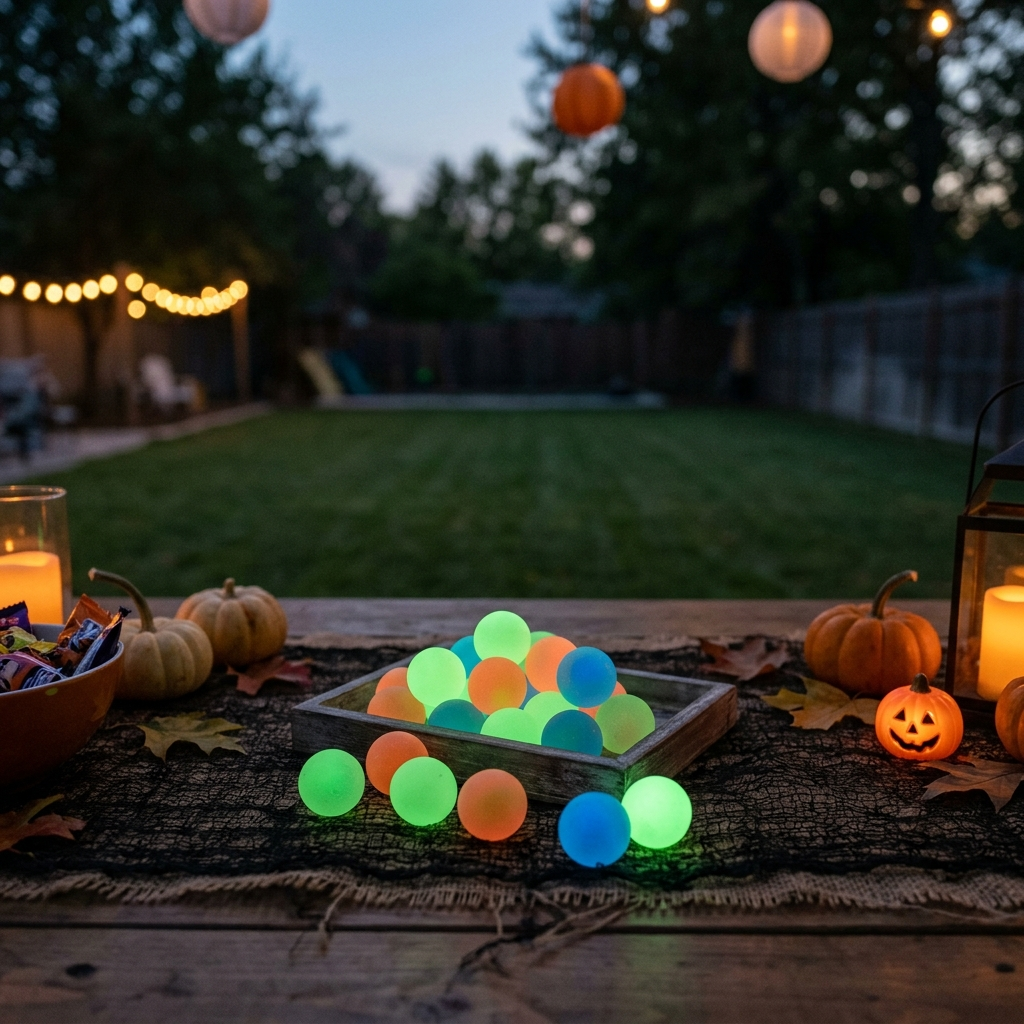
Best for: children who meet the manufacturer’s age recommendation
Glow-in-the-dark bouncy balls have an obvious nighttime appeal. I like the idea of children receiving something that becomes part of the evening rather than simply going into a drawer.
Because small balls can present a choking concern for young children, I keep these for children who meet the product’s age guidance. I also consider where they will be used.
If children are going straight back into a crowded trick-or-treating group, I don’t want them bouncing balls through other people’s paths. A backyard or other suitable play area makes more sense.
10. Halloween Pencils (Set of 36)
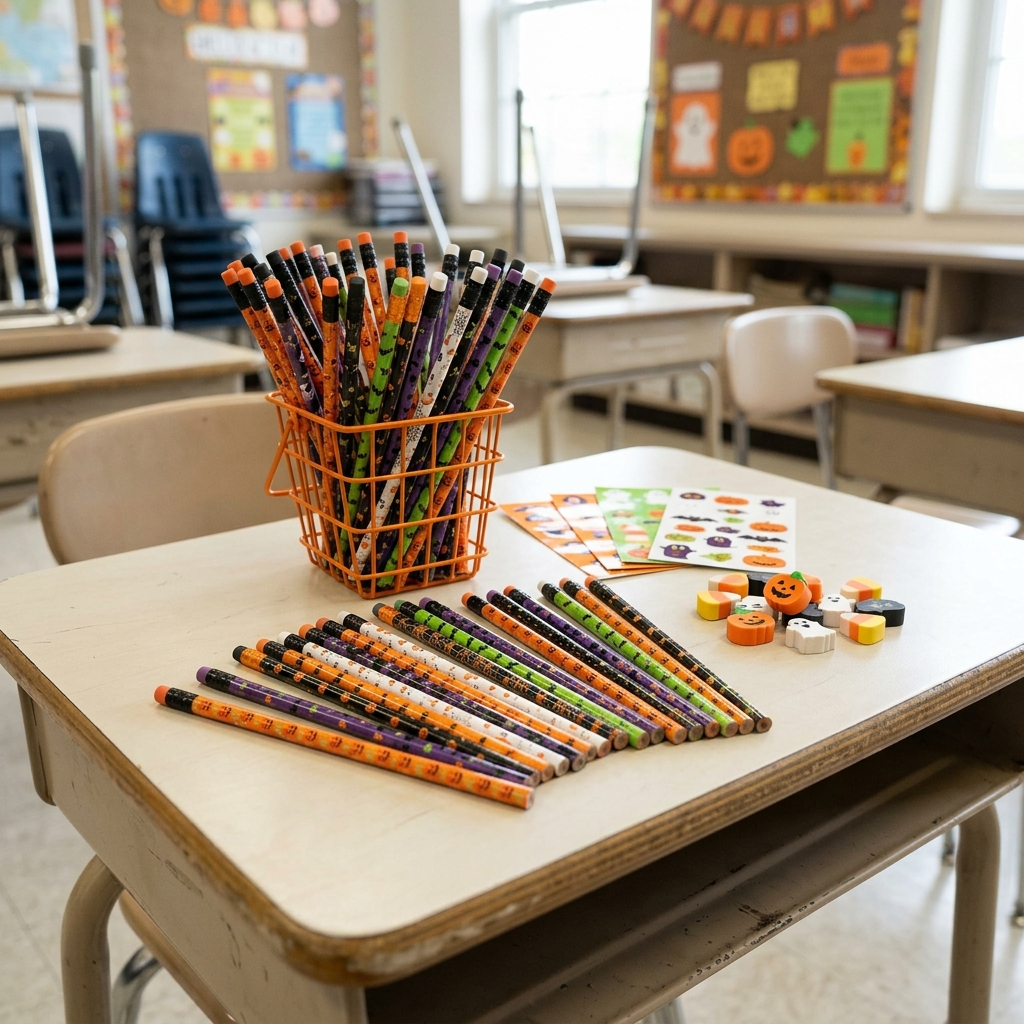
Best for: classrooms and school-friendly party settings
Pencils are practical, although I don’t usually consider them the most exciting favor on their own.
I prefer using them as a filler alongside stickers, themed erasers, or a small activity. That way, the pencil has a purpose without having to carry the entire Halloween surprise.
For classroom quantities, I check the teacher’s rules before buying. Some classrooms may have restrictions on gifts, stationery, or other small items, so I would rather confirm first than end up with a box I cannot use.
11. Mini Slinkies (Halloween Colored)
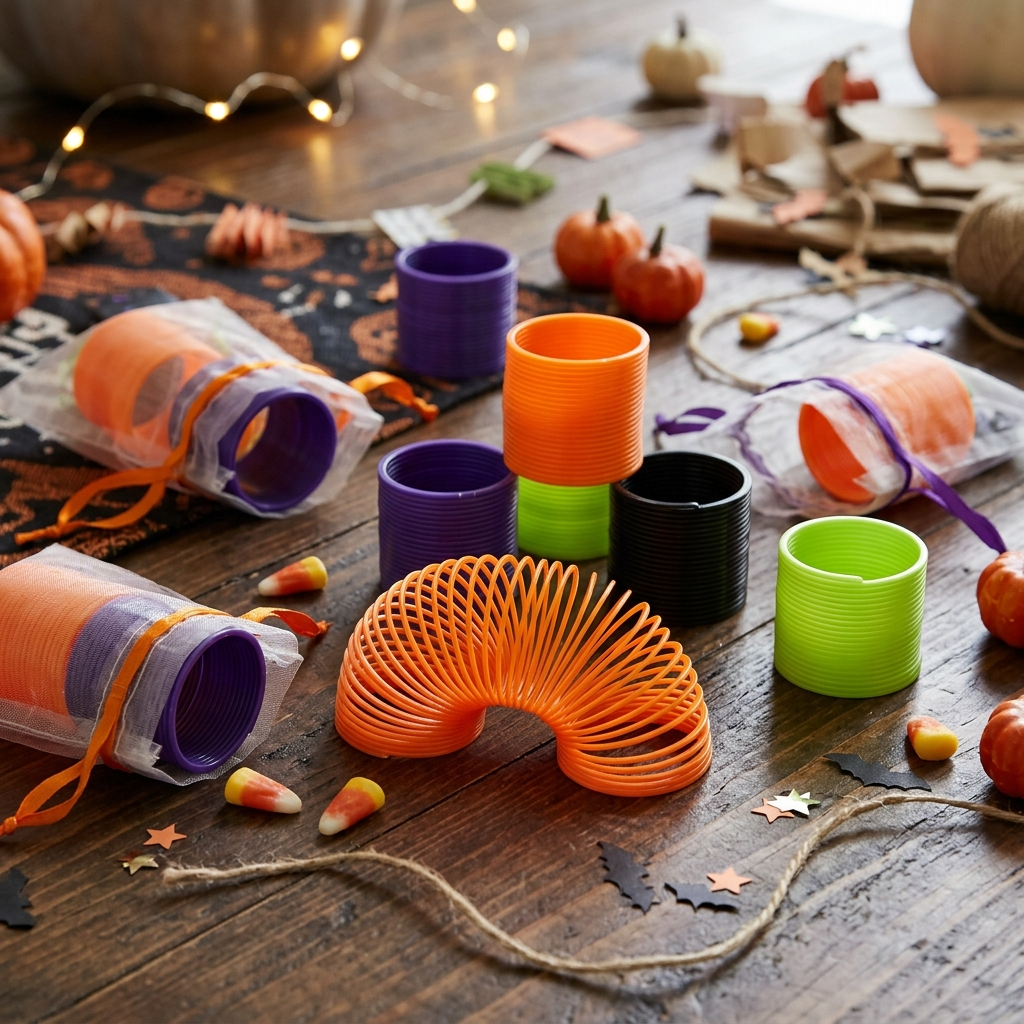
Best for: children who meet the manufacturer’s current age recommendation
Mini slinkies are appealing because they don’t need batteries, charging, or complicated instructions.
Orange, black, purple, or other Halloween colors fit easily into a seasonal favor bag. Children can start playing with them immediately.
Before distributing them, I look for damaged or badly bent pieces. I also follow the manufacturer’s age guidance, particularly when younger children are attending.
Their small size makes them convenient, but it also means I don’t treat them as appropriate for every age group.
12. Halloween Erasers (Themed Shapes)
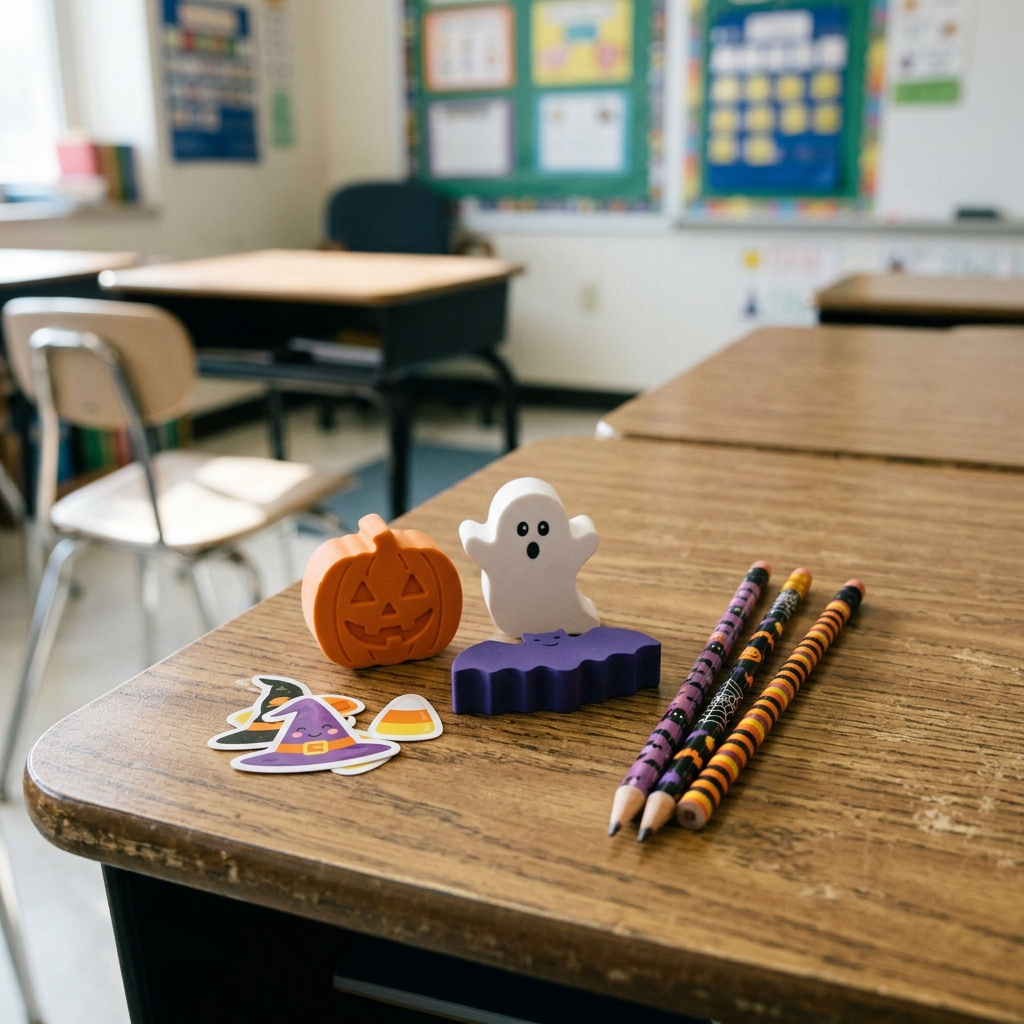
Best for: classrooms and children who meet the product’s age guidance
Themed erasers give ordinary school supplies a Halloween twist. Pumpkin, ghost, bat, and other seasonal shapes can make them more interesting than plain erasers.
I prefer larger, sturdy designs rather than extremely tiny novelty pieces. The small size of some erasers makes age awareness important.
For a classroom favor, I might pair a themed eraser with a Halloween pencil and a sticker sheet. It creates a small stationery bundle without adding much weight or cost.
Also read: 21 Simple and Fun Halloween Science Experiments for Kids
13. Spider & Bug Finger Puppets
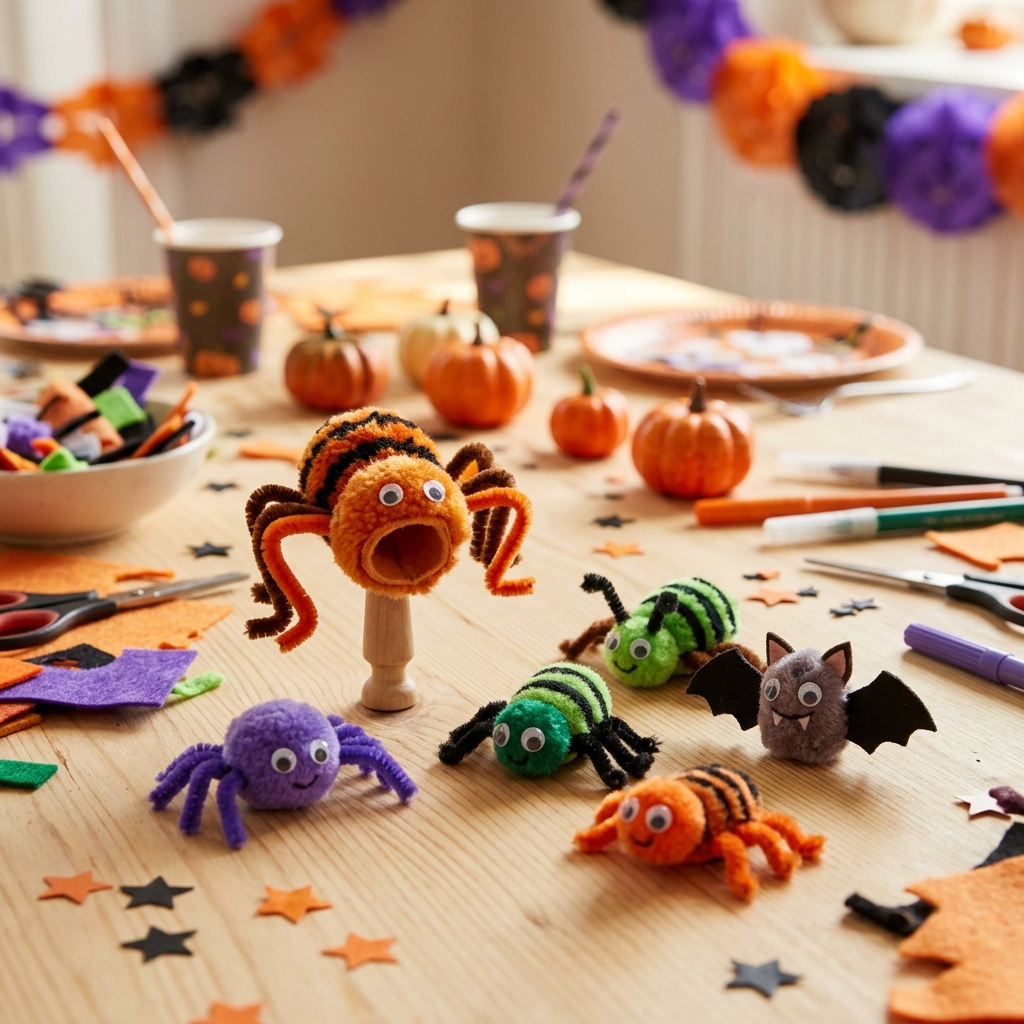
Best for: children who meet the manufacturer’s age recommendation
Finger puppets can turn a simple Halloween favor into a small imaginative-play activity.
I like demonstrating one quickly when I’m handing them out at a party. Showing a child how the puppet works can make the favor feel more interesting than simply dropping it into a bag.
Because these are small, I pay attention to age guidance and construction. I would not automatically give them to toddlers or preschoolers without checking the specific product.
14. Mini Notebooks (Halloween Print)
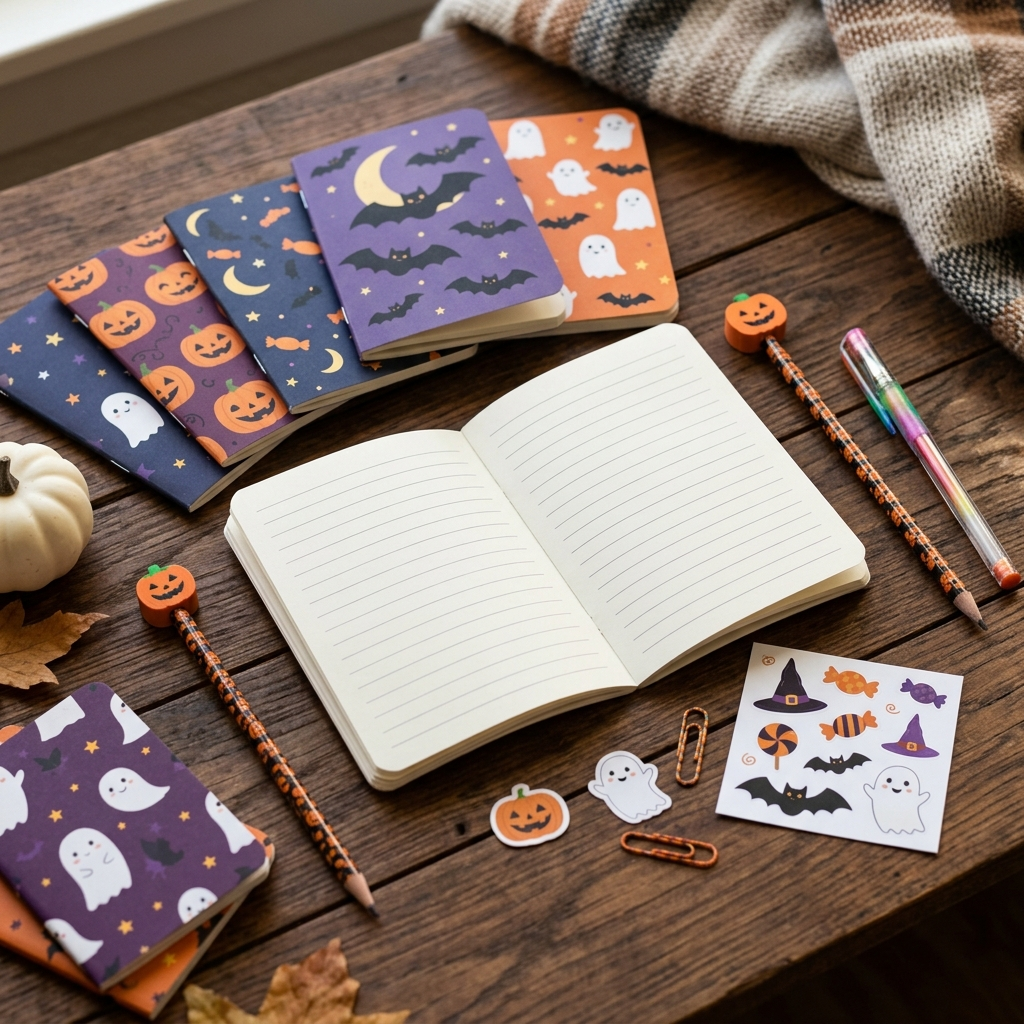
Best for: tweens and older children
Mini notebooks are a better fit when I’m looking for something that feels less like a toy.
Older children and tweens can use them for notes, drawings, lists, or Halloween ideas. A spooky cover gives the notebook a seasonal touch without making it useful only on Halloween.
I also like creating a small stationery bundle with a notebook, Halloween pencil, stickers, or colored pencils. This gives older children several ways to use the favor instead of filling their bag with several unrelated novelty toys.
15. Rubber Halloween Bracelets
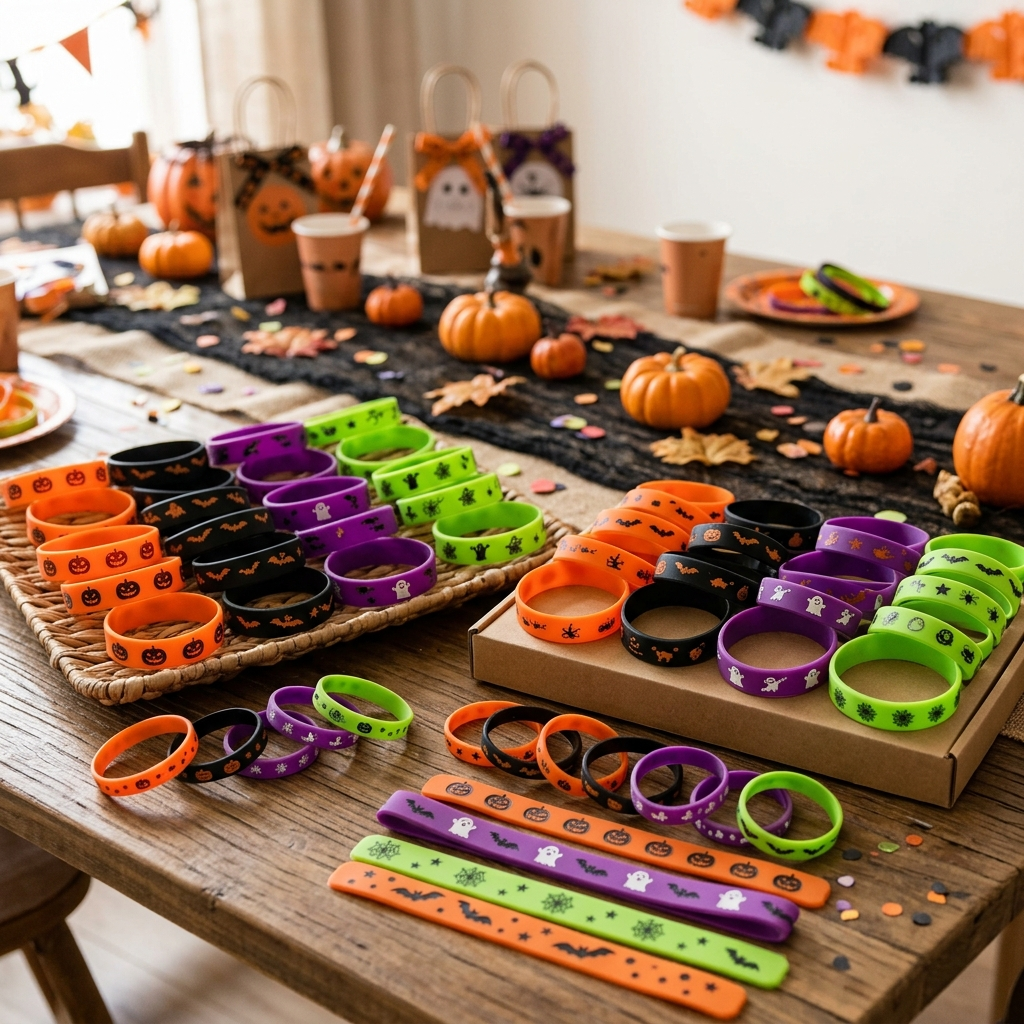
Best for: school-age children who meet the product’s age guidance
Halloween bracelets are lightweight and easy to distribute, which makes them convenient when I have a large group.
Pumpkins, ghosts, bats, and other seasonal designs work well without taking up much space in a treat bag.
I check the product information for recommended ages and inspect bracelets for loose decorations or pieces that could detach. I also pay attention to sizing rather than assuming one bracelet will fit every child comfortably.
16. Halloween Crayon Packs (4-count)
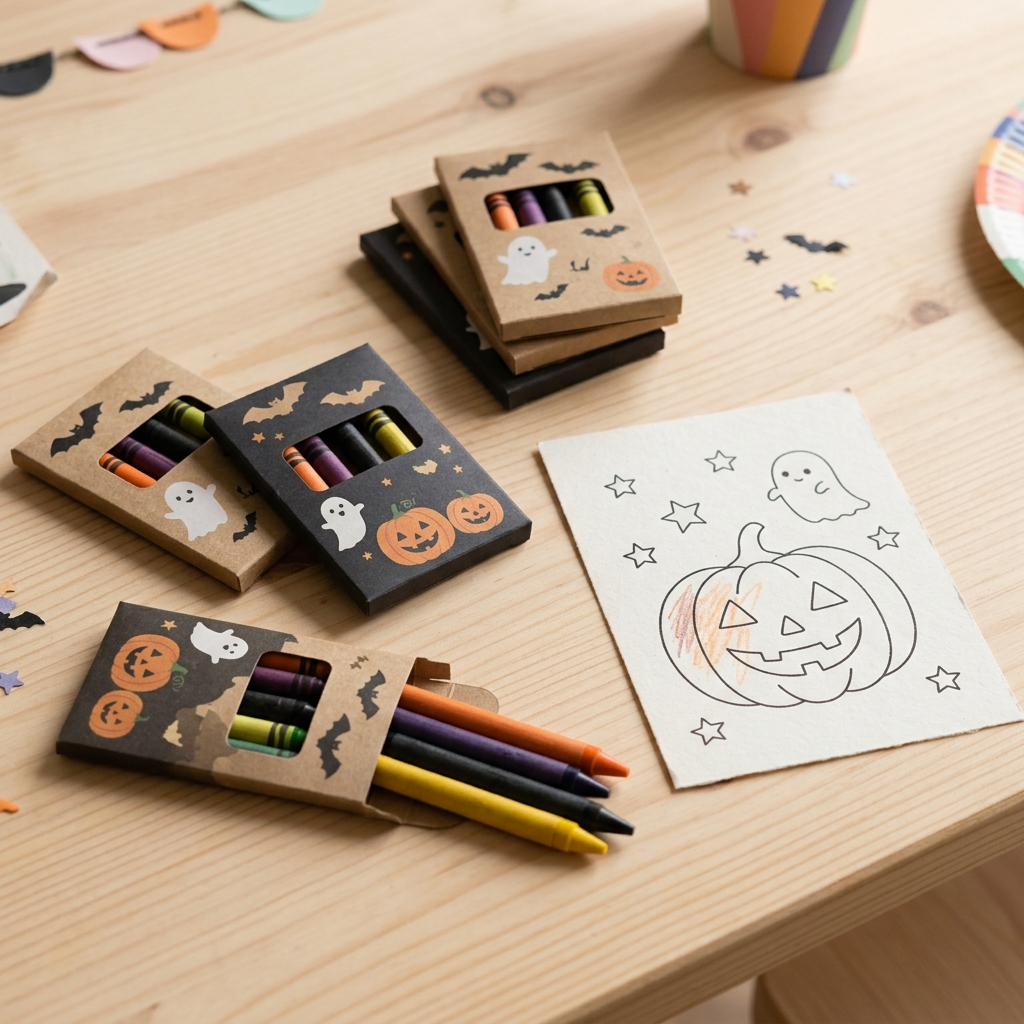
Best for: children who meet the manufacturer’s current age recommendation
Four-count crayon packs are useful when I want a small creative favor without adding a full box of supplies to every bag.
The compact size also makes sense when I’m already including several other items. I would rather have a small, usable set than fill a bag with supplies a child may not use.
For a party, I can pair the crayons with a Halloween coloring page or simple activity sheet. That turns the favor into a small activity instead of just a box of crayons.
17. Mini Maze Puzzles
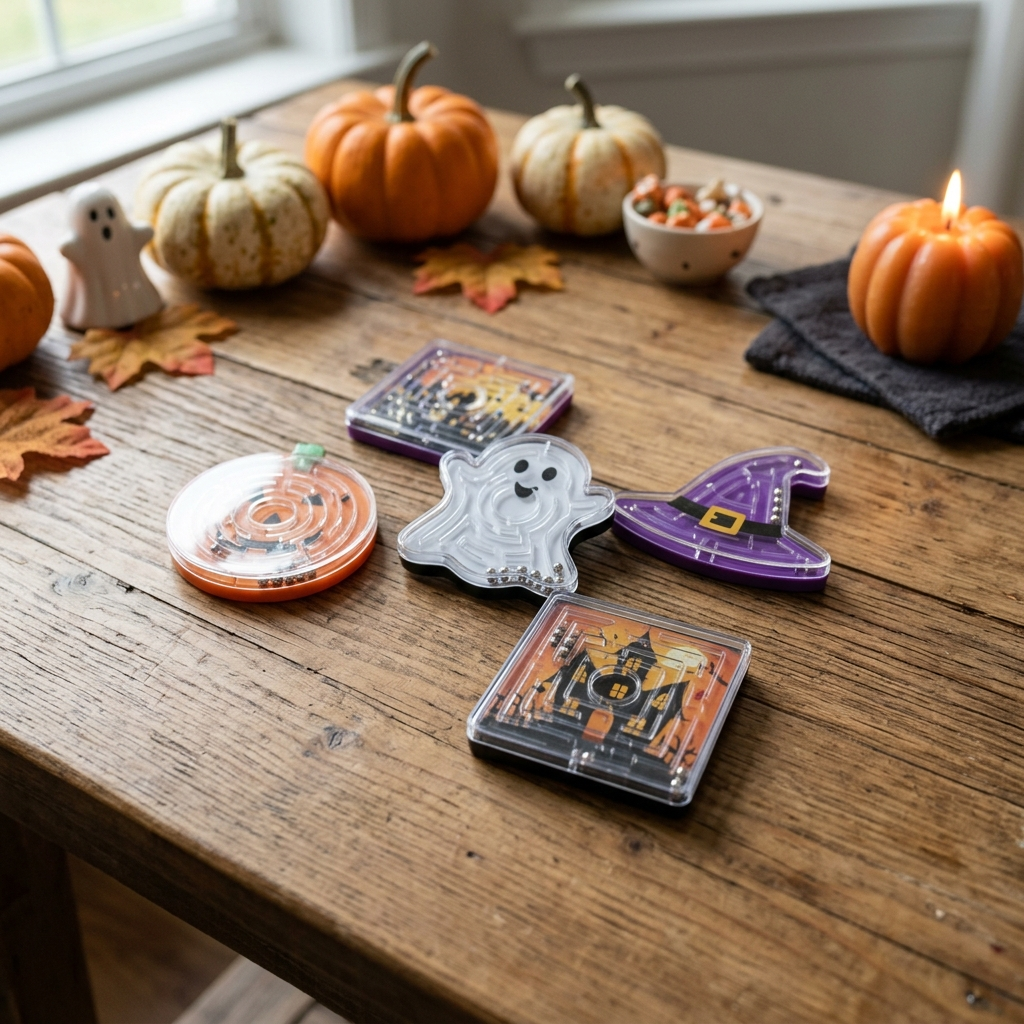
Best for: children who meet the manufacturer’s current age recommendation
Mini maze puzzles are one of my quieter choices. They can give children something to work on while traveling home, waiting for another activity, or sitting at a classroom party.
I like them for settings where I don’t want another noisy novelty toy. They also take up little room in a treat bag.
Before buying, I check the size, construction, and age recommendation. I don’t assume a small puzzle is suitable for a younger child simply because the puzzle itself looks simple.
18. Halloween Stamps (Self-Inking)
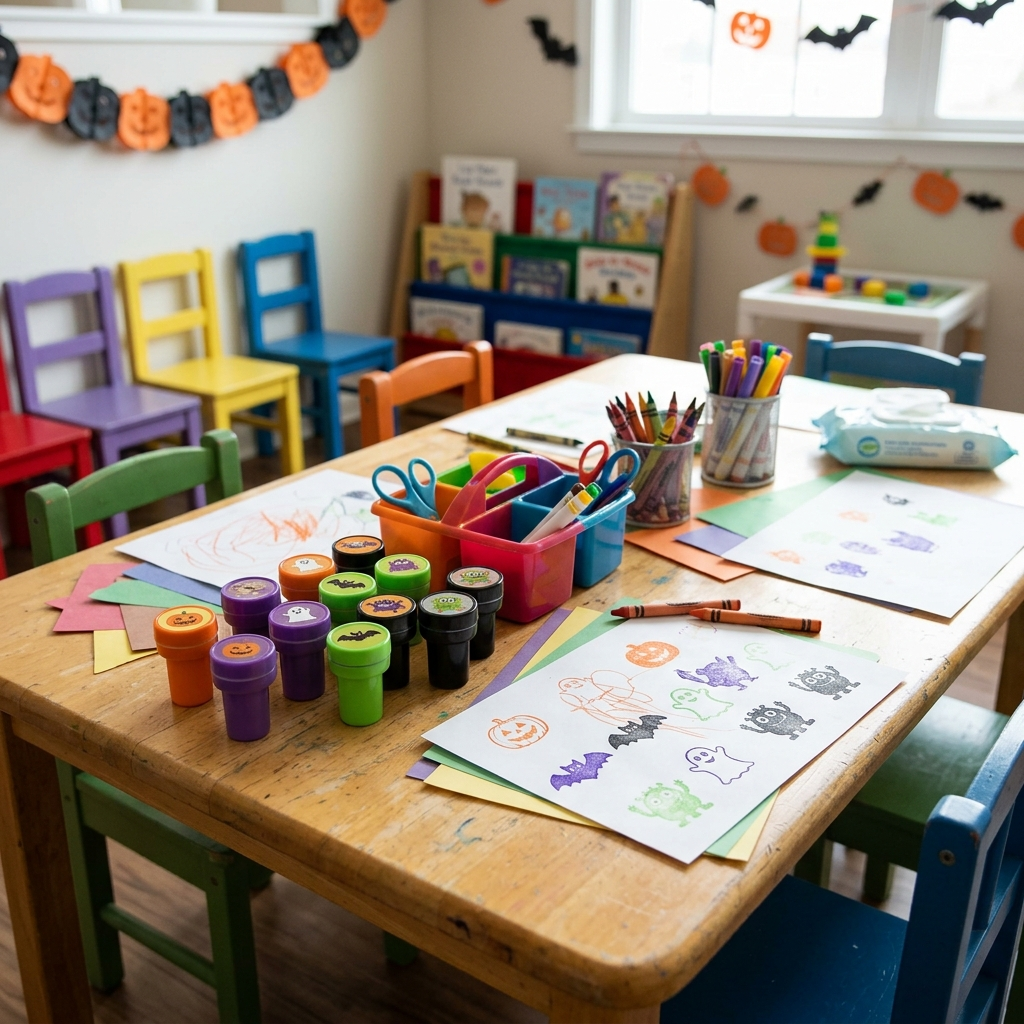
Best for: classrooms and supervised creative activities
Halloween stamps can turn an ordinary piece of paper into a quick seasonal craft.
Pumpkin, ghost, bat, and monster designs work well for classroom activities or a supervised craft table. For a party, I prefer setting up a stamping area rather than putting loose inked stamps into every treat bag.
Self-inking does not mean mess-free. Ink can still transfer to hands, clothing, tables, or other items, so I keep stamps away from food and provide a suitable surface for using them.
19. Halloween Hair Clips/Bows
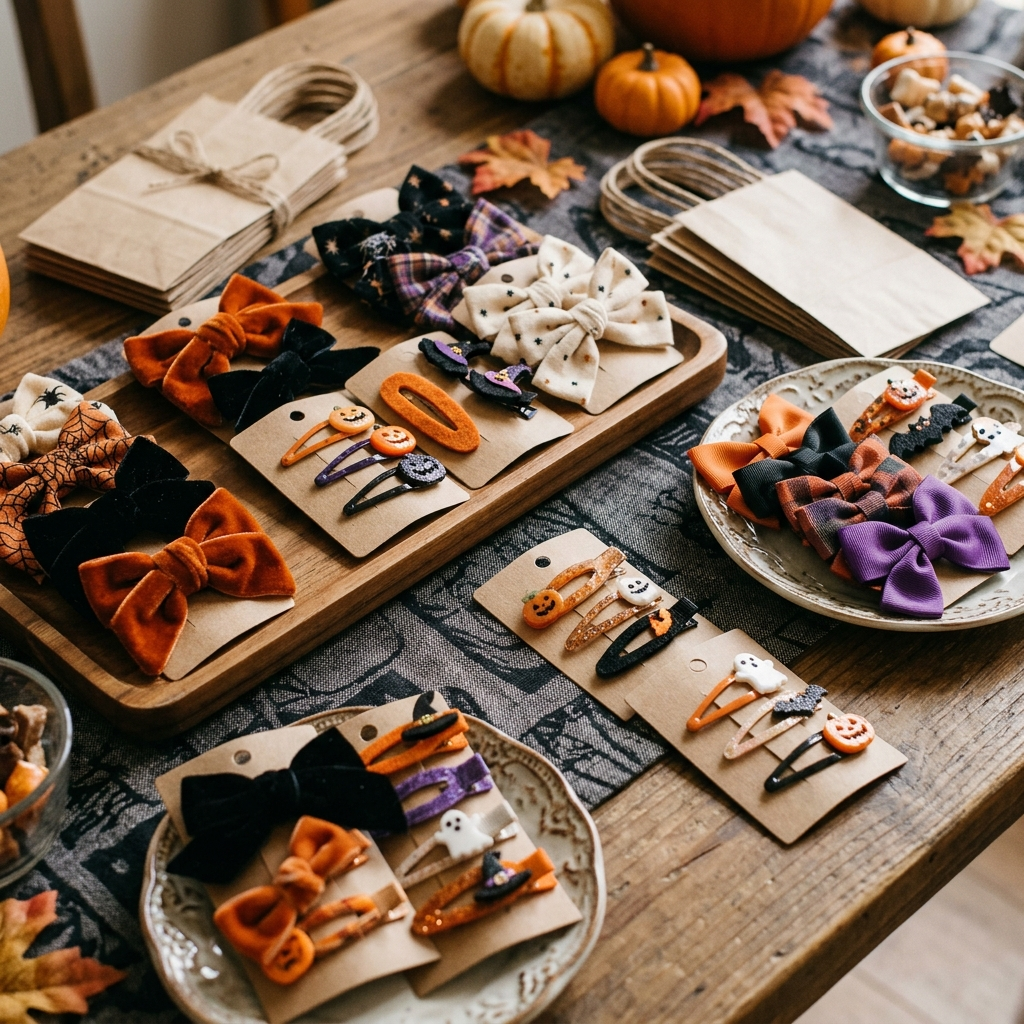
Best for: children who use hair accessories and meet the product’s age guidance
Halloween hair clips and bows can be a nice optional favor for children who enjoy wearing accessories.
Pumpkin, ghost, bat, and other seasonal designs can add a little Halloween detail to an outfit. I don’t assume every child wants or uses hair accessories, so I would offer these as a choice rather than making them the default favor.
Before handing them out, I check for sharp edges, loose decorations, or pieces that could detach. I also follow the product’s age guidance.
20. Skeleton & Pumpkin Keychains
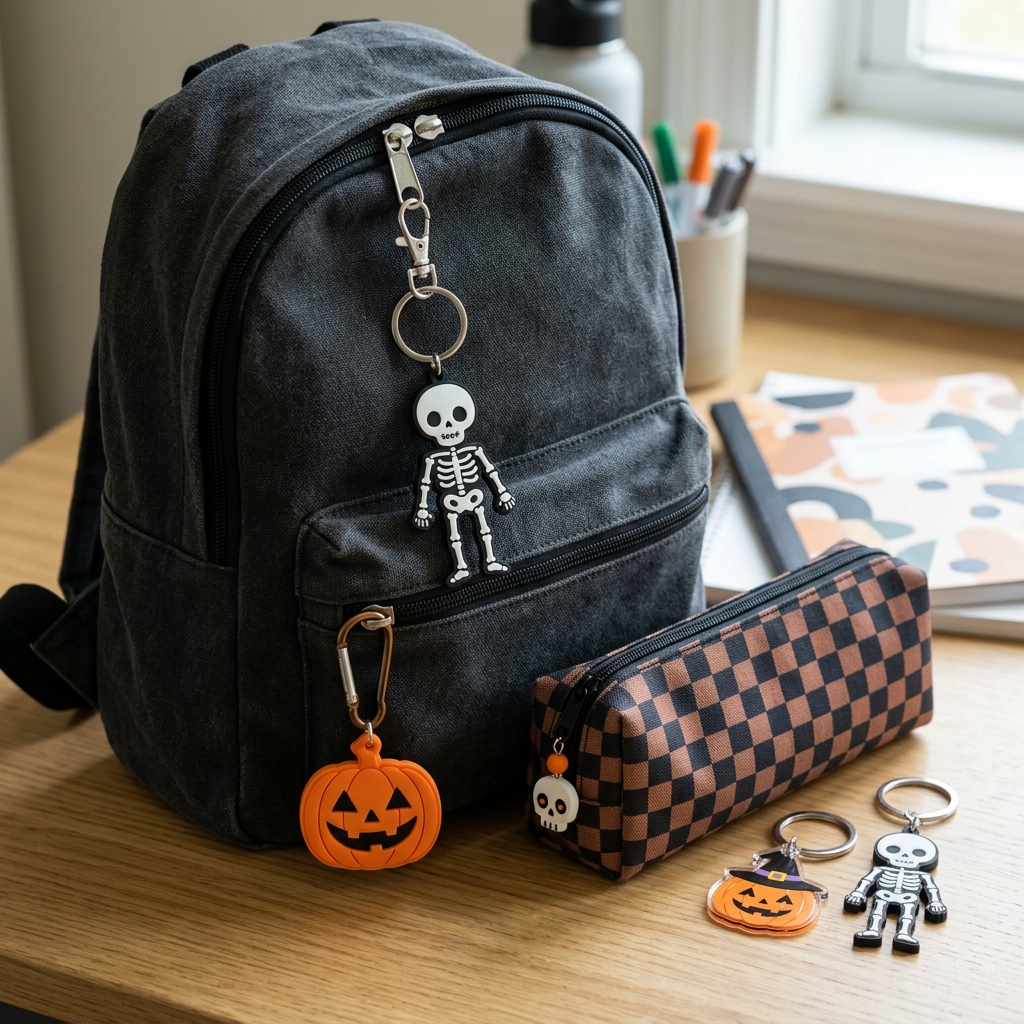
Best for: tweens and older children
Keychains make more sense to me for older children because they can be attached to backpacks, pencil cases, or zipper pulls.
Skeletons, pumpkins, and other Halloween designs can give a tween something they may continue using after October.
Durability matters here. I look at the attachment point and any small decorative pieces before buying a large quantity. I would choose a different favor for younger children if the keychain contains small components that aren’t suitable for them.
21. Mini Activity Books (Halloween Mazes/Coloring)
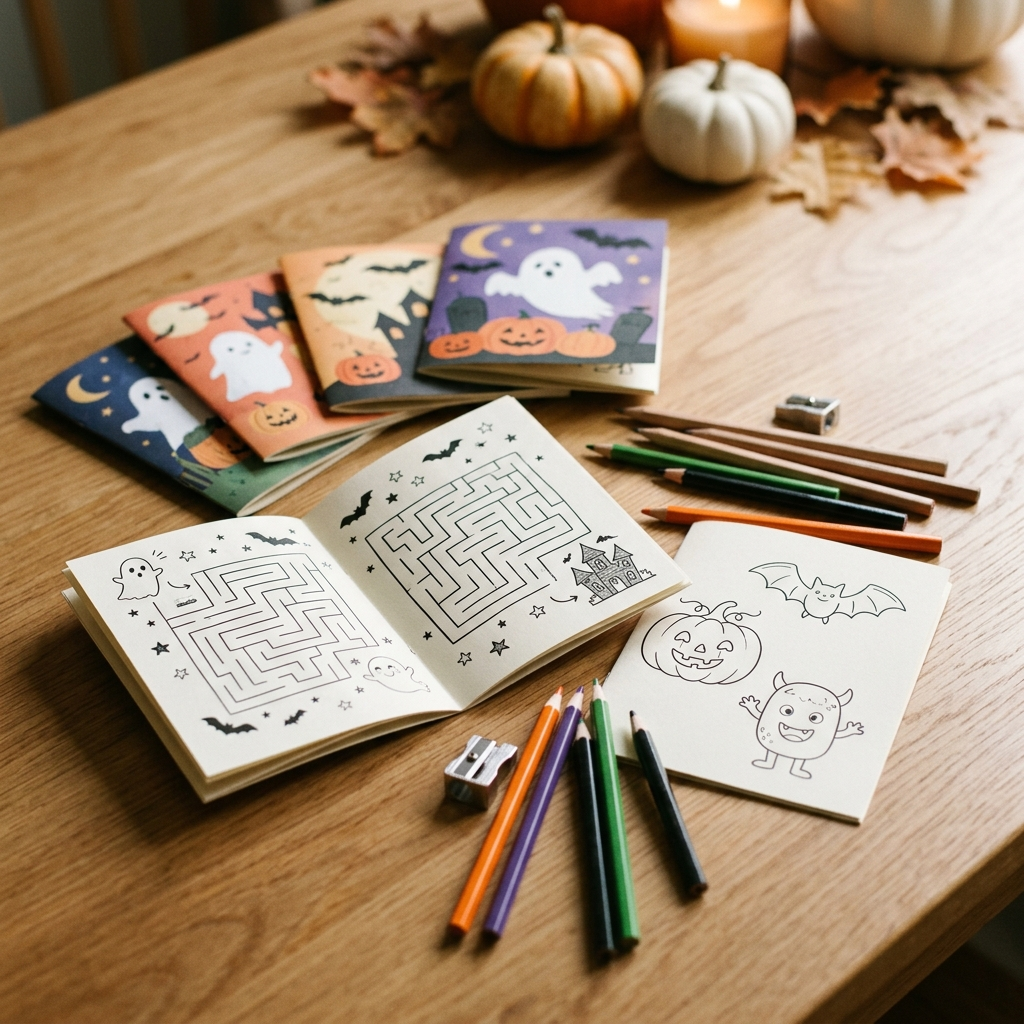
Best for: children who meet the manufacturer’s age recommendation
Mini activity books are one of the more substantial favors on this list because they can contain several pages of coloring, mazes, matching activities, or simple puzzles.
I like them when I want to give children a quiet activity they can take home. They don’t require batteries and can be useful during a car ride, while waiting for dinner, or after the excitement of trick-or-treating settles down.
Unlike the single maze puzzle above, an activity book gives children several pages and different types of activities. That makes it a stronger standalone favor when I don’t want to build a larger treat bag.
22. Packaged Pretzel Snacks
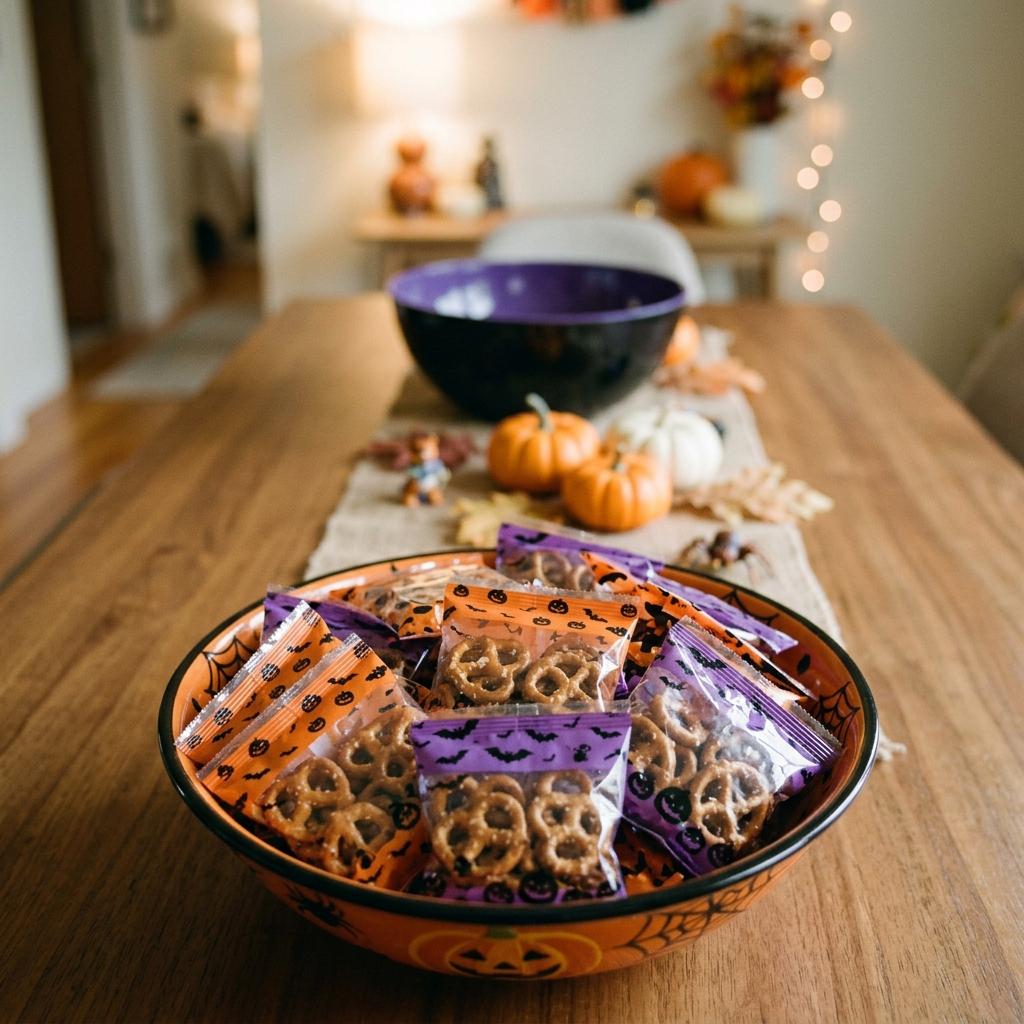
Best for: families who want an edible option and can determine that the specific product is appropriate
Packaged pretzels can be convenient when I want to provide a food choice alongside non-food Halloween treats, but I don’t label them universally allergy-friendly.
I read the current ingredient list and allergen declaration on the package before purchasing. I also check for precautionary statements about manufacturing or shared equipment when those statements are provided.
I don’t rely on a product being familiar or having worked for a previous event. Labels and formulations can change, and parents or caregivers should make the final decision about whether a particular food is suitable for a child.
For a Teal Pumpkin-style setup, I keep packaged food physically separate from non-food treats during storage and distribution.
23. Packaged Fruit Snacks
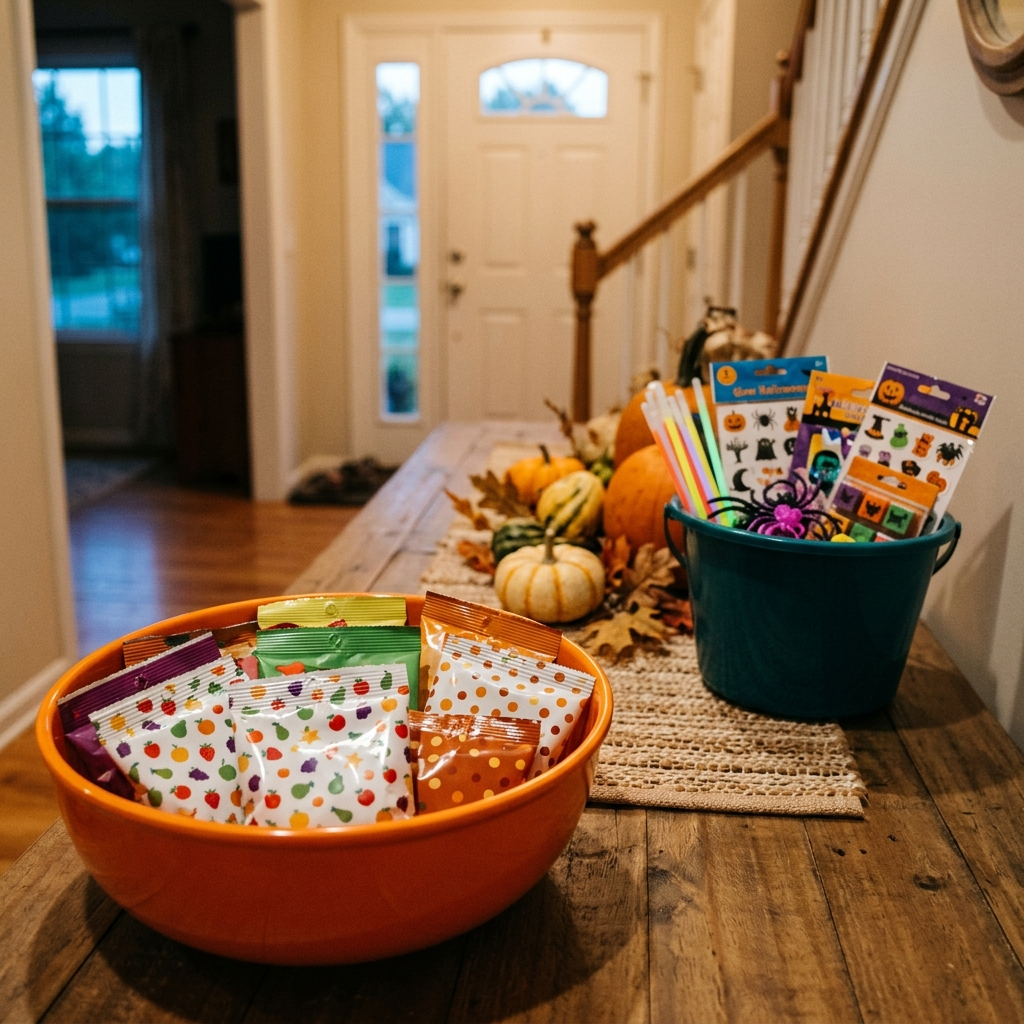
Best for: families who want an individually packaged food option
Packaged fruit snacks can be another easy addition when I want to provide an edible alternative, but the same label-checking rules apply.
I don’t consider a fruit snack automatically suitable for children with food allergies just because it is fruit-flavored or marketed toward children. I check the current ingredients, allergen information, and any precautionary statements on the package.
Terms such as “free from” a particular group of allergens also don’t mean the product is appropriate for every individual allergy or dietary need. Parents and caregivers are in the best position to decide what their child can eat.
For children who need a non-food option, I keep the toy and activity choices clearly separated from the packaged snacks.
Pro Tip: When allergy inclusion is my main goal, non-food choices can simplify the handout process because I don’t have to evaluate an edible product for every possible dietary restriction. I still check the age and product information for the non-food item itself.
What Is the Teal Pumpkin Project (And Should You Join)?
The Teal Pumpkin Project helps signal that a home has non-food Halloween treats available for children with food allergies or dietary restrictions.
The practical part is simple: a teal pumpkin or other project signage lets families know that there is an alternative to food. It can make the choice visible before a child reaches the door.
I don’t think participating means giving up candy. A separate candy bowl and non-food treat bowl can work well together.
I would also keep food and non-food treats physically separate during storage and distribution. A teal pumpkin signals the availability of non-food choices; it does not mean that every food item at the house is suitable for every allergy.
How Much Do Non-Candy Halloween Treats Cost in Bulk?
The price of non-candy treats can change considerably depending on the retailer, brand, pack size, product type, and seasonal availability. Because of that, I use price ranges as planning categories rather than treating a particular price as a permanent rule.
I usually think about the choices in three broad groups:
Budget: Stickers, simple pencils, themed erasers, tattoos, and other small fillers.
Mid-range: Glow bracelets, bubble wands, bracelets, finger puppets, and small puzzles.
Higher-cost: Mini modeling compounds, activity books, larger novelty items, and some keychains.
If I’m preparing for 50 children, I start with my total budget and work backward from the number of usable pieces I need.
For example, if a package costs $10 and contains 100 usable pieces, the calculation is:
$10 ÷ 100 = $0.10 per piece
If another package costs $12 and contains 24 usable pieces:
$12 ÷ 24 = $0.50 per piece
These are examples of how I compare packages, not current market prices.
Pro Tip: I divide the package price by the number of usable pieces, not simply the number printed on the front. If several pieces arrive damaged, are unsuitable for the age group, or aren’t needed for the event, they don’t really count toward my usable quantity.
I also buy enough for the expected number of children plus a small backup. The amount I keep in reserve depends on whether attendance is fixed, whether the event is open to the neighborhood, whether children may take more than one, and whether a few items could arrive damaged.
🎉 Quick Summary
Best for: Trick-or-treating, classroom celebrations, Halloween parties, and neighborhood events where non-food choices are useful.
Budget strategy: I keep costs under control by choosing a small number of bulk items instead of buying 23 different products.
My top pick: Glow bracelets are my favorite for nighttime trick-or-treating because they are easy to distribute and immediately usable for children who meet the product’s age guidance.
Simple favor strategy: One attention-grabbing item plus one or two inexpensive fillers is usually easier for me to organize than a complicated favor bag.
Important reminder: I check age guidance and small parts before distributing anything, particularly when toddlers or preschoolers are involved.
Common Mistakes Hosts Make With Non-Candy Treats
The biggest mistake I try to avoid is choosing a favor simply because it looks cute or inexpensive. The item still has to work for the children, the setting, and the way it will be distributed.
Here are the problems I watch for:
- Ignoring age guidance: A small toy that works for an older child may not be suitable for a toddler.
- Overlooking small parts: Rings, tiny balls, detachable decorations, and miniature toys need extra consideration around young children.
- Buying fragile favors: Anything likely to crack, leak, or lose pieces inside a crowded trick-or-treat bag is frustrating.
- Skipping school or venue rules: I check restrictions before buying large quantities rather than discovering them after everything arrives.
- Assuming a food is allergy-safe: I read the current package information and let parents or caregivers decide whether a particular food is appropriate.
- Mixing food and non-food options: I keep them separate so families can clearly identify the choices.
- Buying too many different products: A smaller selection is easier to count, organize, store, and distribute.
- Forgetting quantity planning: I consider expected attendance and keep a small backup instead of buying exactly one item per expected child.
- Choosing messy items without a plan: Stamps, bubbles, and similar favors need a suitable place and sometimes supervision.
- Giving prank favors in the wrong setting: A whoopee cushion may work at a casual neighborhood event but be a poor classroom choice.
- Choosing a favor that doesn’t fit the bag: I check the size before ordering a large quantity.
I try to think of non-candy treats as small gifts rather than consolation prizes. That mindset helps me choose items with actual play or use value instead of simply filling a bag.
Frequently Asked Questions About Non-Candy Halloween Treats
What are good non-candy Halloween treats to hand out?
Some of my favorite choices include glow bracelets, bubble wands, temporary tattoos, stickers, mini activity books, and age-appropriate small toys. The best option depends on the children’s ages and where the treats will be distributed.
Are non-candy Halloween treats more expensive than candy?
They can be, but they don’t have to be. Small bulk favors may cost relatively little per child, while larger toys and activity books can cost more. I compare the price per usable piece before buying.
What are good non-candy Halloween treats for toddlers?
I choose only items specifically labeled for the child’s age and avoid small parts, detachable pieces, and other unsuitable items. I don’t use a one-size-fits-all list because product construction and age recommendations vary.
What are good non-candy classroom Halloween treats?
Stickers, pencils, themed erasers, activity books, mini notebooks, and some other stationery or activity items can work well. I check the teacher or school’s rules before purchasing a large quantity.
Can I mix candy and non-candy treats?
Yes. I prefer using separate containers so families can choose between traditional candy and non-food options without having to sort through a mixed bowl.
What are good non-food options for children with food allergies?
Non-food choices such as stickers, glow products, activity books, and other age-appropriate favors can provide an alternative to edible treats. I still check the product’s age guidance and ingredients or materials where relevant. Parents and caregivers should decide what is appropriate for their child.
Where can I buy non-candy Halloween treats in bulk?
I compare party-supply stores, discount retailers, warehouse stores, craft stores, and online retailers. I look at the final cost per usable piece rather than choosing based only on the package price.
How early should I buy non-candy Halloween treats?
I prefer buying early enough to compare pack sizes, check the product details, and replace anything that doesn’t meet my needs. Waiting until the last few days can leave fewer choices and make quantity planning harder.
Read this next: 35 Halloween Party Food Ideas for Kids (Easy, Spooky and Fun)
Closing
I don’t think a memorable Halloween treat has to be expensive or complicated. A small toy, activity, accessory, or other non-food surprise can work well when I choose it with the children and setting in mind.
If I’m preparing for a large group, I would rather buy one or two good bulk items than spend hours assembling elaborate bags that create unnecessary work.
My usual approach is simple: choose one item with a little extra excitement, add an inexpensive filler if needed, and make sure everything fits the age group and event.
I also keep the practical details in mind. I check product guidance, inspect favors before handing them out, read food labels when I offer packaged snacks, and keep food and non-food choices separate.
That bit of planning makes the handout easier for me to manage and gives families a clearer choice on Halloween night.



2 Comments