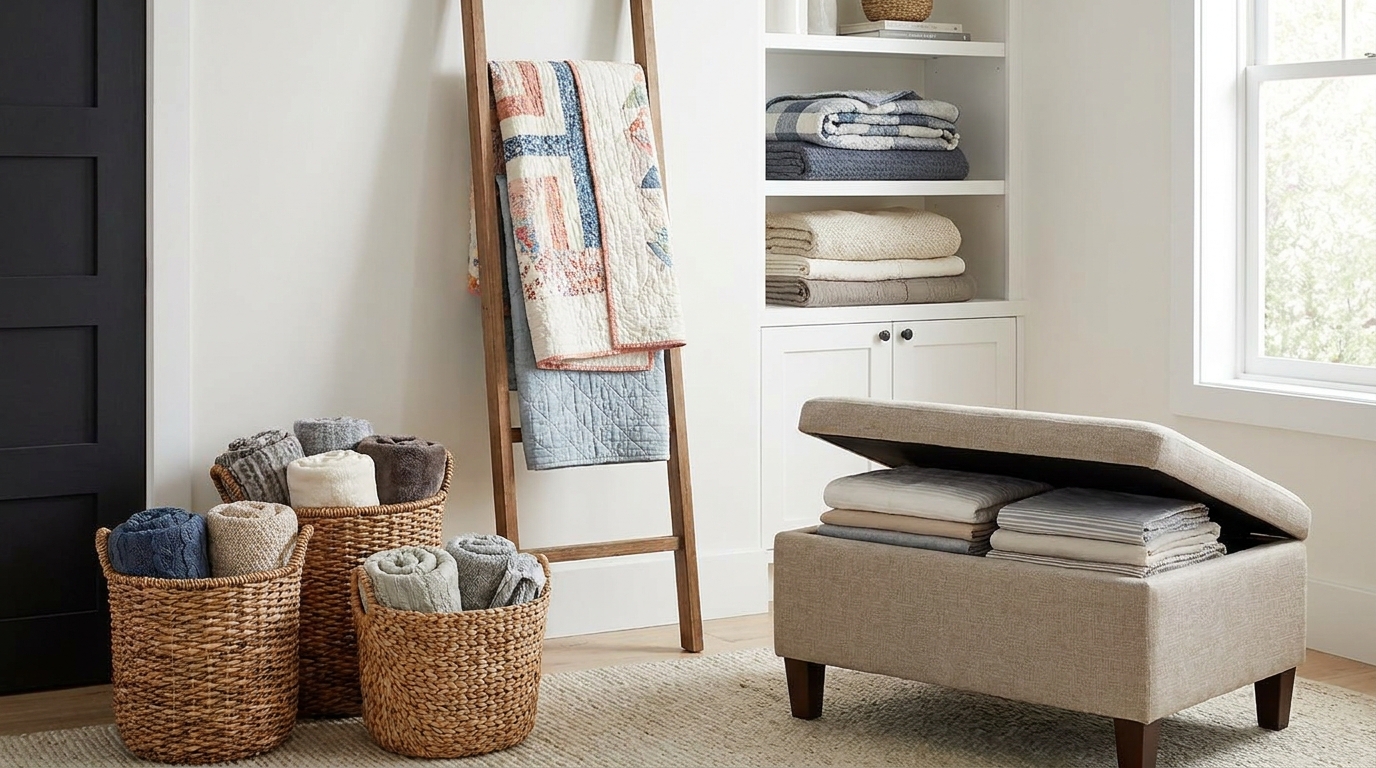
18 Blanket Storage Ideas for 2026
I like having extra blankets within reach, especially when the weather gets chilly or I want to make the living room feel more comfortable. The problem is finding a place for everything without filling every closet, shelf, and corner with bulky fabric. A good blanket storage system helps me keep my home tidy while making it easy to grab the blanket I need.
I focus on three things when organizing blankets: protecting the fabric, making the most of available space, and choosing storage that fits naturally into the room. Whether I have a few decorative throws or several thick winter blankets, the right setup can make a noticeable difference.
Save this for later
Table of Contents
I can store blankets neatly using woven baskets, storage trunks, closet shelves, blanket ladders, wall-mounted racks, and zippered fabric bags. For everyday throws, I prefer accessible options near the sofa or bed. For seasonal bedding, I look for storage that protects blankets from dust, moisture, and pests without taking up valuable living space. Before putting anything away for several months, I make sure it is clean and completely dry.
Key Takeaways
- Choose storage based on use: Keep everyday blankets in baskets or on a ladder, and store seasonal blankets in labeled containers.
- Protect delicate fabrics: Use breathable cotton bags for long-term storage when suitable, especially for wool and heirloom blankets.
- Make small spaces work harder: Under-bed bags, vertical racks, and wall-mounted organizers can free up closet space.
- Prevent unpleasant odors: Always store blankets when they are completely dry, and keep them away from damp areas.
- Keep storage practical: Clear windows, labels, handles, and removable lids make it easier to find and retrieve blankets.
- Match storage to your home: A wooden chest, woven basket, or decorative cabinet can provide storage while complementing your decor.
Related article: 20 Dress Up Storage Ideas for 2026
How to Preserve an Old Blanket?
When I want an old blanket to last, I pay attention to how I clean, fold, and store it. Even a blanket that is no longer used regularly can deteriorate if it stays damp, collects dust, or gets compressed under heavy items for months.
I start by checking the care label and cleaning the blanket according to its fabric. Once it is completely dry, I fold it loosely enough to avoid excessive creasing. I also avoid placing heavy objects on top of delicate quilts or knitted blankets because constant pressure can flatten the fibers.
For storage, I choose a cool, dry location away from direct sunlight. Breathable cotton or linen bags are useful for many natural-fiber blankets, while clean storage boxes can work well when they are kept dry and checked periodically. I avoid leaving blankets in damp basements or hot attics, where temperature and humidity can fluctuate.
For wool blankets, I check for signs of moth activity before putting them away. Cedar products may help discourage certain fabric pests, but they are not a substitute for cleaning and inspecting stored textiles. I also keep strongly scented products separate from delicate fabrics if there is any risk of staining or irritation.
Pro Tip: If I am storing a valuable quilt or an older handmade blanket, I avoid tight folds in the same places year after year. Refolding it occasionally and using suitable acid-free tissue at vulnerable folds can help reduce stress on delicate fabric.
What is the Lifespan of a Blanket?
I do not expect every blanket to last the same number of years. Its lifespan depends on the material, how often it is used, washing methods, exposure to sunlight, and the conditions in which it is stored. A frequently used fleece throw may show wear sooner than a quilt that spends most of its time protected in a closet.
As a general planning estimate, a well-maintained everyday blanket may last around five to ten years, although some high-quality wool blankets and carefully preserved quilts can last much longer. This is not a fixed lifespan, so I look at the blanket’s actual condition rather than replacing it based on age alone.
To help my blankets last longer, I follow the manufacturer’s washing instructions and use a detergent suitable for the material. I avoid excessive heat when drying because it can shrink certain fabrics or damage their fibers. I also rotate seasonal blankets so that one favorite throw does not receive all the wear.
Before storing a blanket for an extended period, I inspect it for loose threads, thinning patches, stains, and signs of pests. Small problems are often easier to address before the blanket is packed away.
Pro Tip: I use a simple seasonal rotation system. When the weather changes, I wash and dry the blankets that need cleaning, store them properly, and bring out the ones suited to the coming season.
Hidden Storage Table with a Decorative Top

I like furniture that serves more than one purpose, and a storage table is a practical way to keep blankets nearby without adding another bulky piece of furniture. A basket-style table with a removable top can hold a throw while also providing a surface for a book, cup, or small decorative item.
To create this look, I would choose a sturdy wire or metal basket and fit it with a secure, removable top. A wooden top gives the arrangement a simple, natural appearance, while a decorative resin finish can add color and personality.
I would fold the blankets loosely inside the basket and leave enough room to lift them out easily. If the basket has wide openings, a fabric liner can help prevent snags, especially with knitted or loosely woven blankets.
For a small living room, this setup is useful beside a sofa or armchair. I would also check that the top sits securely and that the basket can support its intended use.
Pro Tip: If I use a metal basket, I check the interior for sharp edges before adding blankets. A smooth liner helps protect the fabric from catching on the frame.
Woven Basket with Lid Storage

A woven basket with a lid is one of my favorite options for keeping everyday blankets out of sight. It adds texture to a room, and the blankets remain easy to reach when I want to relax on the sofa or make the bed more comfortable.
I would choose a basket that is large enough for the blankets without forcing them inside. A removable lid helps keep out ordinary household dust, while a soft cotton liner can protect delicate fabric from rough wicker strands.
Placement matters, too. A basket beside the couch works well for throws used throughout the week, while a larger version near the foot of the bed can hold extra bedding. I would avoid placing a tightly packed basket in a damp corner because trapped moisture can create unpleasant odors.
For a coordinated look, I would choose a basket that complements the room’s existing wood tones, upholstery, or other natural materials.
Pro Tip: I keep frequently used blankets near the top instead of stacking everything tightly. That way, I can grab one without disturbing the rest.
Folded Blanket Box Organizer

When I need to organize several blankets at once, individual storage boxes make it easier to separate them by size, material, or season. I can use the same approach in a bedroom closet, a linen cupboard, or the space beneath a bed.
I prefer sturdy fabric bins with handles because they are easy to pull off shelves. A clear lid or label helps me identify the contents without opening every box. If I use boxes with solid sides, I label them with simple descriptions such as winter blankets, guest bedding, or lightweight throws.
Rolling blankets can save space in some boxes, while folding them flat works better for thicker quilts and blankets that crease easily. I avoid compressing delicate materials too tightly because this can leave deep creases and flatten their texture.
If the storage area is dark, a nearby motion-sensor light can make it easier to find what I need. I would keep any electrical lighting away from fabric and avoid placing heat-producing lights inside storage containers.
Pro Tip: I measure the shelf or under-bed clearance before buying storage boxes. This prevents me from ending up with containers that are too tall to fit or too deep to pull out comfortably.
Closet Shelf Storage Setup

A closet with built-in shelves can hold a surprising number of blankets when I give each shelf a clear purpose. Instead of making one large pile, I separate everyday throws, guest blankets, and bulky winter bedding.
I usually place heavier blankets on sturdy, lower shelves and lighter items higher up. This makes the stack easier to reach and reduces the risk of a heavy blanket falling when I pull something out.
Fabric bins and baskets help contain smaller throws, while folded blankets can remain visible on open shelves. If I have several similar blankets, I arrange them by size or color so the closet looks orderly and I can locate them quickly.
I also leave some breathing room between stacks rather than filling every shelf to its limit. Overcrowding makes it harder to remove individual blankets without upsetting the rest of the arrangement.
Pro Tip: I use shelf dividers to keep folded blankets upright. They are particularly helpful when the shelves are wide and stacks tend to lean over.
Zippered Fabric Storage Box

A zippered fabric storage box works well when I want to protect blankets from everyday dust while keeping them easy to identify. Many styles include a transparent front or top panel, which saves me from opening several containers to find a particular blanket.
I look for a box with reinforced sides, a smooth zipper, and handles that can support the filled container. Before storing blankets, I make sure the interior is clean and dry. I also check that the box is not so small that the blankets have to be forced inside.
These boxes can fit on closet shelves, beneath beds, or inside larger wardrobes. They are especially useful for separating guest bedding from the blankets I use every day.
For long-term storage, I pay attention to the material. Some fabric boxes are breathable, while others have synthetic linings that restrict airflow. I choose according to the blanket’s care needs and the humidity of the storage area.
Pro Tip: I label the box even if it has a clear panel. The label remains useful when the container is stacked or stored in a dark closet.
Open Wooden Shelf Storage

Open wooden shelving lets me store blankets where they are easy to reach while making them part of the room’s decor. It works particularly well in living rooms, guest rooms, and bedrooms where I have a little extra wall space.
I fold each blanket into a similar size and arrange the stacks by color, texture, or use. Matching folds create a more organized appearance, while a few contrasting colors keep the shelves from looking too uniform.
Baskets on the lower shelves can hold smaller throws or blankets that do not fold neatly. I also leave enough space between the stacks to remove one without pulling apart the entire shelf.
Because open shelving exposes fabric to dust and sunlight, I would reserve it mainly for blankets that are used regularly. Delicate heirloom quilts and seasonal bedding are usually better stored in a protected space.
Pro Tip: I keep open shelves away from direct sunlight where possible. Prolonged exposure can fade some fabrics, particularly brightly colored or naturally dyed textiles.
Decorative Woven Storage Box

A decorative woven storage box is a good choice when I want blanket storage to feel like part of the bedroom design. Floral patterns, textured weaves, and natural finishes can add visual interest without requiring extra furniture.
I would place the box at the foot of the bed, beside a dresser, or in an unused corner. Before choosing one, I check its dimensions and make sure the lid can open without hitting nearby furniture.
A soft cotton liner is useful when the woven material has a rough texture. I also avoid filling the container so tightly that the lid presses against the blankets, as this can make retrieval difficult and leave the fabric heavily compressed.
For a cohesive look, I choose colors that complement the bedding or curtains rather than trying to match every item exactly.
Pro Tip: I reserve decorative boxes for a small collection of blankets. If I have more bedding than the box can comfortably hold, I use separate seasonal storage rather than cramming everything together.
Scented Blanket Box Setup

I prefer blankets to smell clean when I take them out of storage, but I do not rely on fragrance to achieve that. The most important step is washing or cleaning the fabric when needed and making sure it is completely dry before putting it away.
Once the blanket is ready, I can place it in a clean storage box with a small lavender sachet nearby. A cedar block is another option for some storage spaces, particularly when I want to discourage fabric pests. Neither fragrance nor cedar replaces proper cleaning or pest inspection.
I keep scented items separate from delicate fabrics so that oils or concentrated fragrances do not stain the material. I also avoid adding fragrance to blankets that belong to someone with a known scent sensitivity.
This approach works well for guest bedding, spare throws, and blankets stored between seasons. A box with a lid can help keep out dust, provided the storage area remains dry.
Pro Tip: If a stored blanket smells musty, I air it out and investigate possible moisture before adding any fragrance. Covering up the odor without addressing its cause can make the problem harder to detect.
Vintage Cabinet Blanket Storage

A vintage cabinet can turn blanket storage into an attractive feature while making use of furniture I already own. It works well in a bedroom, hallway, or living room, especially when I want to avoid adding plastic containers to the decor.
I arrange folded blankets by size and keep the ones I use most often on an easy-to-reach shelf. Smaller throws can go in baskets or fabric organizers inside the cabinet, while larger blankets need enough space to fold without excessive pressure.
Before using an older cabinet, I check for rough wood, loose hardware, musty odors, and signs of insects. If the interior has a strong smell or visible dampness, I address that before storing textiles inside.
I can use the top surface for a lamp, framed photograph, or other decoration, but I keep the cabinet stable and avoid placing heavy items where they could fall when the doors open.
Pro Tip: I place a clean shelf liner inside the cabinet if the shelves are rough or dusty. It makes routine cleaning easier and provides an additional barrier between the wood and the blankets.
Also read: How to Store Fabric – 12 Genius Hacks to Organize
Wall-Mounted Blanket Rack

When floor space is limited, a wall-mounted blanket rack can provide storage without taking up another corner. I like this option for compact apartments, small bedrooms, and living rooms where blankets need to stay within reach.
I would choose a rack with enough depth and sturdy supports to hold the expected weight. The mounting hardware must suit the wall material, and heavier racks should be secured to appropriate structural support rather than attached carelessly to drywall.
Blankets can be folded over the bars or rolled and placed on a rack designed to hold them. I avoid making the display too crowded because tightly packed fabric can be difficult to remove and may lose its neat appearance.
A wooden rack can soften a modern room, while a simple metal design can suit an industrial or minimalist space.
Pro Tip: Before drilling, I check the rack’s full dimensions and the clearance around nearby doors, furniture, and walkways. This helps prevent the blankets from getting knocked down during everyday use.
Decorative Storage Trunk

A storage trunk gives me a place to keep several blankets while adding a substantial decorative element to the room. Depending on its design, it can sit at the foot of a bed, beneath a window, or against a living room wall.
I would choose a trunk with enough interior space for folded blankets and a lid that opens safely. A smooth interior or removable fabric liner helps protect the fabric from splinters, rough edges, and accumulated dust.
For better organization, I place frequently used blankets near the top and seasonal bedding underneath. I avoid piling too much weight onto delicate quilts and leave room to remove individual items without emptying the entire trunk.
If I want to use the trunk as a bench, I make sure it is designed to support seating and that the lid has suitable safety hardware. Not every decorative chest is built for sitting.
Pro Tip: I check the inside of a wooden trunk for moisture and musty smells before storing textiles. A clean, dry interior is more important than how attractive the trunk looks from the outside.
Blanket Ladder Display

A blanket ladder is a simple way to display throws while keeping them easy to grab. I like how it uses vertical space and can add a relaxed, layered look to a living room or bedroom.
I choose a ladder made for displaying blankets rather than assuming an ordinary ladder will work safely. It should be stable, positioned securely, and used according to the manufacturer’s instructions.
To arrange the blankets, I fold each one lengthwise and drape it evenly over a rung. I leave enough space between them to show their colors and textures without making the ladder look overcrowded.
This method works best for lightweight throws that I use regularly. For expensive quilts, delicate fabrics, or blankets that need protection from dust, I prefer enclosed storage.
Pro Tip: I keep the ladder away from high-traffic walkways and secure it if its design requires wall support. That reduces the chance of it slipping when I remove a blanket.
Vertical Blanket Rack

A vertical blanket rack makes use of height when there is not much room for wide baskets or cabinets. I would consider one for a narrow bedroom, a guest room, or an unused corner where extra bedding tends to accumulate.
Depending on the design, the rack may hold folded blankets on several bars or keep rolled blankets in separate compartments. I choose a model that supports the size and weight of my collection without bending or tipping.
I arrange blankets by thickness or purpose, placing everyday throws where they are easiest to reach. I also leave a little room between items so that removing one does not disturb everything else.
If I use a wall-mounted version, I confirm that the wall and fixings can safely support the load. For a freestanding rack, I check its base and follow any anti-tip instructions.
Pro Tip: I measure the available height and width before buying a rack. A narrow organizer is useful only if it fits the space and allows blankets to be removed comfortably.
Cozy Basket Beside the Bed

A basket beside the bed is a convenient place for the blanket I reach for at night or during a quiet morning. It keeps the bedding close without requiring extra shelves or drawers.
I would choose a basket with handles if I plan to move it between rooms. A lined basket is especially useful for knitted throws or blankets with loose threads that could catch on rough woven edges.
For a casual appearance, I fold the blanket loosely and leave the top visible. If I prefer a tidier look, I fold it into a compact rectangle that fits neatly inside the basket.
I make sure the basket does not block a doorway or create a tripping hazard beside the bed. A size that fits the available floor space is more useful than one that holds every spare blanket.
Pro Tip: I keep just one or two regularly used blankets in the bedside basket and store the rest elsewhere. This makes the area easier to clean and keeps the basket from becoming an overflow bin.
Outdoor Bench with Hidden Storage

An outdoor storage bench can provide seating and a place for blankets on a covered patio or balcony. It is useful when I enjoy spending cool evenings outside and want a throw nearby without carrying one out from the bedroom each time.
For this setup, I choose a bench specifically designed for outdoor conditions. The storage compartment should offer suitable weather protection, but I do not assume that every outdoor bench is completely waterproof.
I store only clean, fully dry blankets inside and choose materials that suit the environment. Outdoor-rated throws are generally a more practical option than delicate wool blankets or heirloom quilts, particularly in areas exposed to humidity.
Even when the bench is covered, I check the compartment periodically for condensation, leaks, and musty odors. I bring textiles indoors during prolonged wet weather if the storage space cannot keep them dry.
Pro Tip: I use a separate washable bag inside the bench to keep outdoor throws organized. I can take the bag indoors quickly when the weather changes.
Stackable Fabric Storage Bags

Stackable fabric storage bags help me organize bulky blankets without dedicating an entire closet to them. They are especially useful beneath a bed or on shelves where individual bags can be lifted out as needed.
I look for bags with sturdy handles, reliable zippers, and a clear window or label area. Before stacking them, I check that the bags are designed to support the weight and that the bottom containers will not collapse under pressure.
I fold blankets to fit the bags without forcing the zippers closed. For seasonal storage, I separate bedding by room or season so I do not have to unpack several bags just to find one throw.
These bags are not all equally breathable. For natural fibers that need airflow, I select a suitable breathable option and store it in a dry area. I use less breathable containers only when they are appropriate for the blanket and the storage conditions.
Pro Tip: I label each bag on the side facing outward. This makes it easier to identify winter bedding or guest blankets when several containers are stacked together.
Printed Fabric Storage Bags

Printed fabric storage bags are a useful option when I want practical storage that also looks attractive. Floral prints, simple geometric patterns, and soft colors can make a closet feel more coordinated while keeping spare blankets contained.
I choose bags with enough room for the blankets I plan to store and a clear window or label so the contents are easy to identify. The print is a personal choice, but the construction matters more for long-term use.
For blankets that I do not need every day, I fold them neatly and place them inside the bags without overfilling them. I then arrange the bags on a closet shelf or under the bed, keeping heavier containers lower when possible.
Printed bags work well for children’s rooms and shared bedrooms because separate bags can hold bedding for different people. However, I still check the fabric and lining to make sure they are suitable for the items stored inside.
Pro Tip: I assign a different label to each bag rather than relying on the exterior print. This is particularly helpful when multiple bags have similar colors or patterns.
Neutral Fabric Storage Bags

Neutral fabric storage bags are a practical choice when I want the closet to look simple and coordinated. Shades such as beige, gray, cream, and soft brown work with many interior styles and help make mixed storage containers look more consistent.
I use these bags for spare blankets, guest bedding, or seasonal throws that do not need to stay on display. Clear windows, handles, and labels make it easier to find the right contents without unpacking everything.
Before storing blankets, I make sure they are clean and completely dry. I also avoid stacking bags so high that the bottom ones become difficult to remove or the fabric inside gets compressed for long periods.
For a small bedroom, I would place suitable bags under the bed or on the highest closet shelf that I can reach safely. Frequently used blankets should stay in a more accessible location.
Pro Tip: I measure the space beneath my bed before choosing bags. Low-profile containers often work better than bulky boxes, especially when the bed frame has limited clearance.
FAQs
How to pack blankets to save space?
I start by sorting blankets according to thickness and deciding which ones I need regularly. I fold lightweight throws into compact rectangles and roll suitable blankets when that makes them easier to fit into a storage bag.
For seasonal bedding, vacuum storage bags can reduce the volume of some bulky blankets. However, I check the manufacturer’s instructions and the blanket’s care requirements before using them. Prolonged compression may be unsuitable for down-filled bedding, delicate quilts, wool, or other materials that can lose loft or develop deep creases.
Once packed, I label each bag and place heavier items on sturdy lower shelves. I avoid crushing delicate blankets beneath heavy containers and leave everyday bedding somewhere easy to reach.
Pro Tip: I measure the available storage space before packing. This helps me choose the right container and prevents me from squeezing blankets into bags that are too small.
How to store blankets after winter?
Before storing winter blankets, I inspect them for stains, loose threads, and signs of pests. I clean them according to their care labels and make sure they are completely dry before folding them away.
I then choose storage based on the material and available space. Breathable cotton bags are useful for many natural-fiber blankets, while clean boxes can protect suitable items from household dust. I avoid damp basements, poorly ventilated areas, and places exposed to extreme temperature changes.
I keep the stored blankets away from direct sunlight and check them periodically if they will remain packed for several months. When colder weather returns, I inspect the blankets and air them out as appropriate before using them again.
Pro Tip: I label seasonal containers with the blanket type and storage date. This makes the next seasonal changeover quicker and helps me remember which items may need inspection.
Read this next: 22 Under Desk Storage Ideas for 2026
Conclusion
I find blanket storage much easier when I choose a solution that suits the room, the type of blanket, and how often I use it. A woven basket or blanket ladder works well for everyday throws, while closet organizers, storage trunks, and fabric bags can handle larger collections and seasonal bedding.
The most important part is not how decorative the storage looks. I focus on keeping blankets clean, completely dry, and protected from excessive dust, sunlight, and compression. With a little planning, I can keep my favorite blankets accessible throughout the year without letting them take over my home.