
20 Sock Storage Ideas for 2026
used to think a messy sock drawer was just one of those small household problems I had to put up with. But when I couldn’t find a matching pair before leaving the house, I realized that a little organization could save time every day. Socks are small, easy to misplace, and surprisingly good at turning a tidy drawer into a cluttered mess.
I’ve found that the best sock storage system doesn’t need to be expensive or complicated. A few drawer dividers, fabric bins, or even a simple basket can make a noticeable difference. The key is choosing a setup that fits the space I have and making sure every pair has a designated place.
Save this for later
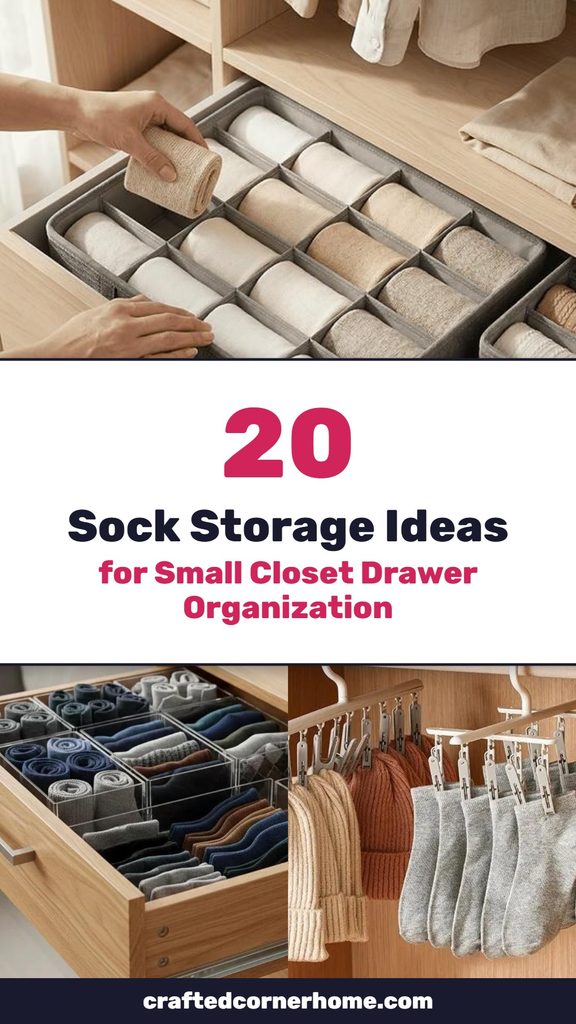
Table of Contents
I can keep my sock collection organized by using divided drawers, hanging organizers, labeled containers, wall-mounted dispensers, and baskets. The right solution depends on how many pairs I own, how much storage space I have, and whether I prefer keeping socks in a drawer, closet, or laundry area. Simple habits, such as pairing socks before putting them away and separating seasonal styles, also help prevent clutter from returning.
Key Takeaways
- I use drawer dividers and grid organizers to give each pair a specific place.
- Hanging racks, door pockets, and wall dispensers help me save drawer space.
- I sort socks by type, color, season, or family member to make them easier to find.
- I keep frequently worn socks within easy reach and store seasonal pairs separately.
- I check my sock collection regularly and remove worn-out or uncomfortable pairs.
- I choose washable or easy-to-clean organizers to keep my storage area practical.
Related article: 20 Dress Up Storage Ideas for 2026
How Can You Keep Socks From Getting Lost or Mixed Up?
I start by keeping socks together throughout the laundry process. Instead of tossing individual socks into the hamper separately, I place them in a dedicated mesh laundry bag. This helps prevent small items from becoming trapped inside larger clothes or disappearing behind the washing machine.
After washing, I match the pairs before putting anything away. I then separate everyday socks, athletic socks, ankle socks, and thicker winter pairs into their own groups. This simple habit makes it easier to find what I need without rummaging through the entire drawer.
I also avoid overcrowding my storage space. When too many pairs are squeezed into one compartment, socks become difficult to see and put away neatly. Removing worn-out pairs and storing seasonal socks elsewhere can free up valuable space.
Pro Tip: I keep a small basket near my laundry area for unmatched socks. When another sock turns up, I check the basket before assuming its partner has disappeared for good.
1. Grid Organizer

When I want to organize socks without installing anything permanent, a fabric grid organizer is one of the first options I consider. Its individual compartments keep pairs separated, making it easier to find the right style without pulling apart a stack.
I can place the organizer inside a dresser drawer, on a closet shelf, or in a wardrobe compartment. I usually roll or fold each pair and place it inside a square, keeping everyday socks toward the front and less frequently worn pairs farther back.
Fabric organizers are lightweight and easy to move when I rearrange my closet. Some designs also have enough room for small accessories, such as tights, handkerchiefs, or other compact clothing items.
Pro Tip: I measure the inside of my drawer or shelf before buying a grid organizer. This helps me avoid wasting space around the edges or choosing one that makes the drawer difficult to close.
2. Clip Hanger

I like clip hangers when drawer space is limited but there is an unused section of closet rod. Instead of taking up room in a dresser, the hanger allows me to keep several pairs together in one vertical space.
I fold each pair and secure it with a clip, making sure the clips hold the socks without leaving marks or stretching delicate fabric. I can arrange the pairs by color, activity, or season, depending on how I use them.
This option works particularly well in small bedrooms, shared wardrobes, and laundry rooms. It also makes it easy to see the available pairs at a glance.
One thing I consider is the weight of the hanger. A lightweight design is convenient, but I make sure it is sturdy enough to hold the number of pairs I plan to store.
Pro Tip: I reserve clip hangers for frequently worn socks or athletic pairs that I want to access quickly. I keep delicate, loose-knit, or easily stretched socks folded in a drawer instead.
3. Sock Dispenser

A sock dispenser offers a different approach to organizing everyday essentials. Rather than keeping pairs spread across a drawer, I load rolled socks into a compact container so they are ready to grab when I need them.
I look for a dispenser with an opening that allows socks to come out easily without pulling several pairs out at once. Transparent materials are useful because I can see when the container needs refilling.
This type of storage can work well on a closet shelf, inside a wardrobe, or on a bedroom dresser. It is especially helpful when I want to keep a small collection of everyday socks together and avoid taking up an entire drawer.
I make sure each pair is rolled securely enough to stay together but not so tightly that elastic fibers remain under unnecessary tension.
Pro Tip: I use a dispenser for similar-sized socks. Mixing bulky winter socks with thin ankle socks can make it harder to remove one pair neatly.
4. Drawer Trays

Drawer trays help me turn one large, cluttered space into smaller sections that are easier to manage. Instead of allowing socks to slide around whenever I open the drawer, I give each group a defined area.
I can use one tray for everyday socks, another for sports socks, and a smaller section for no-show styles. If the drawer is deep enough, several trays can sit side by side without making the contents difficult to reach.
I prefer trays that fit snugly but still leave enough room to remove them for cleaning. Adjustable or modular options are useful when drawer dimensions are unusual or my storage needs change.
Pro Tip: I arrange the trays according to how often I use each group. My most frequently worn socks go at the front, so I don’t have to reach over other compartments every morning.
5. Rotating Rack

A rotating rack is useful when I need a dedicated place to handle socks during laundry day. Instead of spreading small items across a drying rack, chair, or railing, I can attach them to clips arranged around a rotating frame.
The rotating design lets me reach different pairs without moving the entire rack. Depending on the model, I can place it on a suitable hook, use a freestanding version, or install a rack with an appropriate wall attachment.
I find this idea most helpful for drying and temporarily holding socks rather than long-term closet storage. Once the pairs are completely dry, I can move them directly into their assigned drawer compartments.
For indoor drying, I leave enough space around the rack for air to circulate. Good airflow helps moisture evaporate more efficiently and reduces the chance of damp laundry developing an unpleasant smell.
Pro Tip: I check that every sock is fully dry before storing it in a closed drawer or container. A tidy arrangement is not worth trapping moisture inside my clothes.
6. Labeled Bins

Labeled bins make sock storage easier when I have several different types to keep separate. I can dedicate one container to everyday pairs, another to athletic socks, and a third to thicker styles for colder weather.
I particularly like transparent bins because I can see their contents without opening each container. Labels provide an extra reminder of where everything belongs, especially when more than one person shares the same storage area.
Before buying bins, I check their height and width against my available drawer space. Containers that fit together neatly are easier to arrange than a collection of mismatched boxes.
I also avoid filling each bin to the top. Leaving a little room makes it easier to return clean socks without disturbing the rest.
Pro Tip: I use short, clear labels such as “Daily,” “Sports,” and “Winter.” Simple wording makes the system easy for everyone in the household to follow.
7. Fabric Boxes

Fabric boxes are a practical choice when I want to separate socks without using rigid plastic containers. Their soft sides work well inside larger drawers, on closet shelves, and in wardrobes where I need a flexible arrangement.
I place similar socks together in each box, keeping the pairs folded or rolled so I can see what is available. If I have a wide drawer, I can line up several boxes to create separate sections without installing permanent dividers.
These boxes are also useful for small clothing accessories. I can use a spare container for tights, stockings, or other lightweight items rather than mixing everything together.
I pay attention to the material before choosing one. Removable inserts or washable fabric covers are helpful because storage containers can collect lint and dust over time.
Pro Tip: I choose boxes with firm enough sides to hold their shape. Very floppy containers can collapse when I remove a pair from the middle.
8. Honeycomb Divider

Honeycomb dividers create a series of small cells that keep individual pairs from spreading across the drawer. I like this layout because every section has a clear purpose, and I can see more of my collection without moving other socks around.
I fold or roll each pair and place it into a separate cell. Smaller compartments are suitable for ankle socks and thin everyday styles, while wider sections can accommodate bulkier pairs.
Some honeycomb organizers can be expanded or trimmed to fit particular spaces, but I check the manufacturer’s instructions before making adjustments. I also measure the drawer carefully so the divider does not buckle or leave too much unused room.
This method is particularly helpful if I tend to toss clean socks into the drawer without thinking about where they belong.
Pro Tip: I keep the same category in neighboring cells. Grouping similar pairs together makes the organizer easier to maintain than assigning compartments randomly.
9. Shelf Bins

When my dresser drawers are already full, I look for unused shelf space in the closet. Shelf bins give socks their own storage area without taking up room needed for larger clothing items.
I place the bins where I can reach them comfortably and organize the contents according to how frequently I wear each type. Everyday pairs can sit on a lower shelf, while seasonal socks can go higher if I do not need them often.
Clear bins make it easy to identify the contents, while fabric versions create a softer look that blends with bedroom storage. I can also use matching containers to keep the closet looking consistent.
If I stack bins, I make sure the lower containers remain accessible and that the stack is stable. I avoid placing frequently used socks underneath heavy boxes.
Pro Tip: I label the front of each bin so I can identify the contents even when several containers look alike.
Also read: How to Store Fabric – 12 Genius Hacks to Organize
10. Drawer Channels

Drawer channels create long, narrow sections that work well when I prefer arranging socks in rows rather than individual squares. They are especially useful in wide drawers where smaller organizers might leave awkward gaps.
I use one channel for everyday socks, another for athletic pairs, and a separate section for thick winter styles. Within each channel, I line up the pairs so I can see the options from above.
Adjustable dividers are useful because they can accommodate different drawer widths. I check that the dividers stay firmly in place when I open and close the drawer, as loose separators can shift and allow socks to mix again.
This setup works best when I keep the number of pairs in each row manageable. Overfilling the channels makes it harder to retrieve a pair without disturbing the others.
Pro Tip: I place my most frequently worn socks in the easiest-to-reach channel and reserve the back section for occasional-use pairs.
11. Color Rows

Organizing socks by color is a simple way to make a drawer look more orderly while helping me choose a pair quickly. I arrange light colors together, follow with darker shades, and group brighter patterns separately.
This approach is useful when I own several similar styles in different colors. It allows me to locate a particular shade without searching through multiple piles.
I can use color sorting on its own or combine it with categories. For example, I might keep black work socks in one section and colorful athletic socks in another, arranging each group by shade.
The system stays effective as long as I return each pair to its assigned row after laundry. If I have limited drawer space, I can use only a few broad color groups rather than trying to separate every shade.
Pro Tip: I prioritize sock type over color if I often need specific pairs for work, exercise, or school. It is more useful to find the right kind of sock quickly than to maintain a perfect color arrangement.
12. Vertical Slots

Vertical storage is one of my preferred methods for drawers where socks tend to disappear beneath other pairs. Instead of stacking everything horizontally, I fold each pair into a compact shape and stand it upright in a divided section.
This makes it easier to see what I own at a glance. I can remove one pair without pulling several others out, which helps the drawer stay organized during daily use.
Long dividers or compartment trays can make this arrangement easier to maintain. I choose sections that are wide enough for the socks to stand comfortably without being squeezed into place.
I also adjust the folding method according to the fabric. Thick winter socks need more room than thin dress socks, so I avoid forcing every pair into the same size compartment.
Pro Tip: I test the arrangement by opening and closing the drawer a few times. If the socks fall over, I reduce the size of each group or add dividers for better support.
13. Minimal Drawer

I don’t always need to buy an organizer to improve a sock drawer. Sometimes, removing unnecessary items and arranging the remaining pairs neatly is enough to make a big difference.
I begin by taking everything out and matching the pairs. Then I separate everyday socks, sports styles, no-show pairs, and heavier options into small groups. I place these groups on different sides of the drawer, leaving enough space to see and remove each pair.
This approach is useful when I have a manageable collection and a drawer with enough room to keep categories apart. It also makes cleaning easier because there are no extra containers to remove.
The main challenge is maintaining the arrangement. Without dividers, socks can gradually drift into neighboring groups, so I return each pair to its original place after washing.
Pro Tip: I use the one-in, one-out rule when my drawer begins to feel crowded. When I add a new pair, I consider whether an older or rarely worn pair can be removed.
14. Door Pockets

The back of a closet door can provide useful storage when there is little room in the dresser. A hanging pocket organizer creates multiple compartments for socks while keeping the floor, shelves, and drawers available for other belongings.
I can dedicate individual pockets to everyday socks, sports socks, seasonal pairs, or different family members. Transparent pockets make the contents easier to identify, while fabric designs offer a simple way to keep everything out of sight.
Before hanging an organizer, I check the available door clearance. The pockets should not interfere with handles, nearby furniture, or the door closing properly.
I also avoid putting too many heavy items into the pockets, particularly when the organizer is attached with lightweight hooks.
Pro Tip: I keep the pockets I use most often around waist or chest height. This makes it easier to grab a pair without stretching or bending down.
15. Wall Dispenser

A wall-mounted sock dispenser is worth considering when I want to free up both drawer and shelf space. It holds rolled pairs in a vertical container, keeping them together in one designated location.
I choose a design that allows me to load socks from the top and remove them easily from the opening. The opening needs to be wide enough for the rolled pairs without letting several fall out at once.
This arrangement can work near a dressing area, inside a closet, or in a laundry room. However, I check the dispenser’s dimensions and mounting requirements before deciding where to install it.
If the container is opaque, I label it clearly so I know which socks are inside. I also keep the number of pairs within its capacity to prevent the stack from becoming jammed.
Pro Tip: I use a wall dispenser for a small collection of everyday socks rather than my entire wardrobe. Keeping the selection limited makes it easier to retrieve pairs without disturbing the rest.
16. Peg Board

A peg board offers a more creative approach to sock storage. Instead of hiding every pair inside a drawer, I can arrange selected socks on hooks or pegs in a visible display.
I find this idea most suitable for colorful, patterned, or novelty socks that I like to keep easy to see. The board can be placed in a dressing area, closet, or craft room, provided there is enough space to access it comfortably.
I choose pegs or clips that hold socks securely without stretching the fabric. I also make sure the board is mounted to a suitable surface using hardware appropriate for its weight.
Because socks displayed openly can collect dust, I reserve this setup for pairs I wear regularly and keep the rest in enclosed storage.
Pro Tip: I arrange the pegs in small groups according to color or style. A consistent layout makes the display look tidy and makes choosing a pair easier.
17. Mesh Dividers

Mesh dividers are a useful option when I want lightweight compartments without bulky plastic containers. Their flexible sides can help separate socks inside drawers, wardrobes, or closet shelves.
I place folded pairs in each section and keep similar styles together. Depending on the design, the compartments may work well for ankle socks, everyday pairs, or lightweight seasonal styles.
Mesh organizers are easy to move around and can be convenient when I need to reorganize a shared wardrobe. I check whether the material is washable and whether the seams are strong enough to handle repeated use.
Although mesh allows air to move through the material, it does not replace proper drying. I always make sure socks are completely dry before putting them away.
Pro Tip: I choose a mesh organizer with enough structure to remain upright. If the sides collapse easily, socks can slide between compartments and recreate the clutter I wanted to avoid.
18. Grid Boxes

Grid boxes combine the convenience of a storage container with the order of individual compartments. I find them useful when I want to keep socks contained while making each pair easy to identify.
I can place the box in a drawer, on a shelf, or inside a wardrobe. Each square holds a pair or a small group of similar socks, depending on the size of the compartments.
This setup is particularly practical for people who own different sock lengths or fabrics. I can separate thin dress socks from thicker everyday styles without needing several large storage containers.
I measure the box before buying it to make sure it fits the intended space. A box that is too tall may prevent a drawer from closing, while one that is too small can leave unused space around the edges.
Pro Tip: I reserve a few compartments for new or recently purchased socks until I have time to remove packaging, match pairs, and place them in their permanent sections.
19. Box Sections

Box sections provide a straightforward way to organize socks by category without filling a drawer with individual containers. I use a larger divided box when I want several groups to stay together in one place.
For example, I can reserve one section for everyday socks, another for athletic pairs, and a third for thicker winter styles. If the storage is shared by a family, separate sections can also be assigned to each person.
I prefer compartments that are easy to reach into and large enough to hold the pairs without cramming them together. If I have a deep drawer, I can choose a box that uses most of its width while still leaving room to open the drawer comfortably.
After laundry, I return each pair to the correct section instead of setting everything on top and sorting it later. This keeps the system manageable even when several loads of clothing need to be put away.
Pro Tip: I take a quick look at each section when putting away clean laundry. If one area is consistently overflowing, I either move less-used pairs to seasonal storage or remove socks I no longer need.
20. Sock Basket

A sock basket is an easy solution when I want to keep frequently worn pairs close at hand. It works particularly well for thick winter socks, cozy lounge socks, or other styles I reach for regularly at home.
I can place the basket beside my dresser, near the bed, or on a closet shelf. A woven basket adds texture to the room, while a fabric bin offers a softer alternative that can fit neatly into a wardrobe.
To keep the basket from becoming a dumping ground, I fold or roll each pair before placing it inside. I also limit the basket to one category of socks so I can find what I need without sorting through unrelated items.
If I use an open basket, I choose a location away from damp areas and excessive dust. I keep clean socks separate from laundry that still needs washing.
Pro Tip: I use a small basket for my most frequently worn socks and store occasional-use pairs elsewhere. This keeps the everyday selection easy to reach without allowing the basket to overflow.
FAQs
How often should you reorganize your sock drawer?
I find that a quick check every few weeks is usually enough to keep a sock drawer under control. The exact frequency depends on how many pairs I own, how often I do laundry, and whether other people share the storage space.
During each check, I match any separated pairs, return misplaced socks to their proper sections, and remove pairs that have holes, stretched elastic, or uncomfortable wear. I also check whether any compartments have become too crowded.
If I use drawer dividers or labeled bins, I don’t need to empty the entire drawer every time. A few minutes of maintenance after laundry can prevent a small mess from becoming a larger organizing job.
What is the best way to store seasonal socks?
I store seasonal socks separately when I don’t expect to use them for several months. For example, thick wool socks can go into a clean storage box during warmer weather, leaving more room for lightweight everyday pairs.
Before storing them, I wash and dry the socks according to their care labels. I then place them in a clean, dry container and keep it away from dampness, direct sunlight, and excessive heat.
I label the box with its contents and place it on a closet shelf or another suitable storage area. When the weather changes, I can swap the boxes rather than reorganizing the entire drawer.
For delicate or natural-fiber socks, I follow the care instructions and choose a container that protects them from dust without trapping moisture.
Read this next: 26 Dining Room Storage Ideas for 2026
Conclusion
I’ve found that keeping socks organized is less about buying the perfect organizer and more about giving every pair a reliable place. Drawer trays, grid dividers, hanging racks, fabric boxes, and simple baskets can all work well when they match the available space and the way I use my socks.
I start by sorting my collection, removing worn-out pairs, and deciding which styles I need every day. Then I choose one storage method that is easy to maintain instead of trying several systems at once.
The best setup is the one I can keep tidy after laundry without adding extra work to my routine. With a little planning and regular upkeep, finding matching socks can become a much simpler part of getting ready.




3 Comments