
20 Dress Up Storage Ideas for 2026
I’ve found that keeping children’s dress-up clothes organized is much easier when every costume, accessory, and pair of shoes has a place of its own. Princess dresses, superhero capes, tutus, and pretend-play accessories can quickly take over a bedroom when there isn’t a practical way to store them.
I don’t think an organized dress-up area needs an expensive wardrobe or a large playroom. A simple clothing rack, a few labeled baskets, or a small DIY closet can make a real difference. I focus on storage that children can reach themselves, so choosing an outfit and putting everything away afterward become easier parts of playtime.
I’m sharing 20 dress-up storage ideas that help me make better use of available space while keeping costumes visible, accessible, and easy to tidy. From compact clothing racks and house-shaped wardrobes to cube shelving, wall-mounted rails, and repurposed trunks, these options suit different room sizes and budgets.
Save this for later
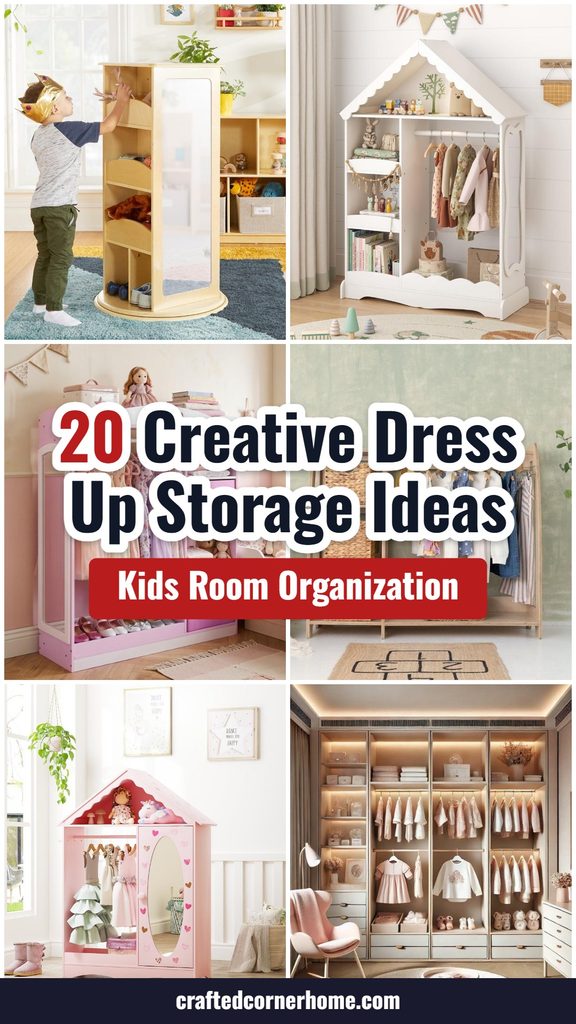
Table of Contents
I also explain how I would choose a storage setup, organize small accessories, protect clothing from dust, and make the area comfortable for children to use independently. Whether you’re arranging a dedicated playroom or creating a small dress-up corner in a bedroom, these ideas can help you build a practical system that works for everyday play.
Key Takeaways
- Make clothing easy to reach: I prefer low hanging rails and open shelves that children can use without climbing.
- Use vertical space: Wall-mounted racks and tall shelving help keep floors clear in smaller rooms.
- Separate small accessories: I use baskets, bins, and labeled containers to keep crowns, masks, shoes, and capes together.
- Choose storage that fits the collection: A compact rack may be enough for a few costumes, while a wardrobe works better for a growing collection.
- Keep clothes in good condition: I avoid packing away damp garments and use clean, dry storage areas to reduce the risk of musty odors and mildew.
- Make cleanup part of playtime: When every item has a clear place, children can learn to return costumes after use.
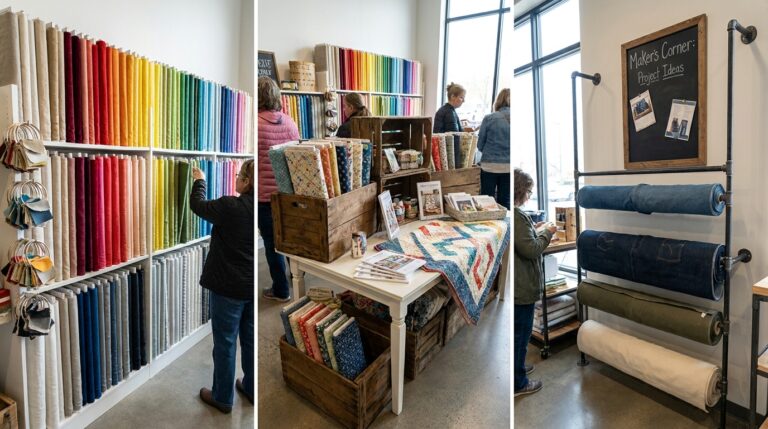
Related article: How to Store Fabric – 12 Genius Hacks to Organize
What Is Clothing Storage Called?
I usually describe a place for organizing clothes as a wardrobe, closet, dresser, armoire, or clothing rack. The right name depends on the type of furniture and how I plan to use it.
For children’s costumes, I also like the term dress-up station. It describes a small area where outfits, shoes, hats, and pretend-play accessories are kept together for easy access.
I find that open storage is especially useful for younger children because they can see their choices without opening several drawers or searching through boxes. A low rail, a few baskets, and a small shelf can provide enough room for a basic collection.
Before choosing furniture, I measure the available floor and wall space and consider how many outfits need to fit. I also check that the rack is stable, the shelves are secure, and any mirror or wall-mounted unit is properly attached.
Pro Tip: I start by sorting costumes into three groups: frequently used outfits, occasional-use costumes, and small accessories. This helps me decide how much hanging space and how many storage bins I actually need.
1. Rotating Tower Station with Built-In Mirror

I like the idea of a rotating dress-up tower because it combines several storage functions in one compact piece of furniture. The vertical design can provide hanging space, open shelves, and a mirror without spreading everything across the room.
I would use the shelves for crowns, toy jewelry, small handbags, and other accessories, keeping the hanging section for dresses and costumes. A mirror makes it easier for children to see their outfits, while a rotating base can help them reach different items.
Before choosing this design, I would check that the base turns smoothly and cannot tip easily. Heavy accessories should stay on lower shelves, and the mirror should be securely fitted.
Pro Tip: If I’m setting up a rotating unit, I leave enough clearance around it so the rack can turn without hitting a wall, bed, or other furniture.
2. Pink Mini Wardrobe with Hanging Rail

A small pink wardrobe can make a dress-up corner feel cheerful while keeping costumes in one place. I would choose a design with a low hanging rail so children can take out their favorite outfits and return them without needing help.
The lower section works well for shoes, folded tutus, and fabric accessories. Small bins are particularly helpful when several costumes have matching pieces that might otherwise get separated.
I would avoid filling the wardrobe too tightly. Leaving a little space between garments makes it easier to find an outfit and reduces the chance of delicate decorations catching on nearby clothes.
Pro Tip: I use child-friendly hangers that fit the garments properly. Oversized hangers can stretch small shoulders, while flimsy hangers may bend under heavier costumes.
3. Simple Clothing Rack with Top Shelf

A basic clothing rack is one of the first options I would consider for a small dress-up collection. It keeps costumes visible, takes up relatively little space, and can be moved when I need to rearrange a bedroom or playroom.
I would use the top shelf for lightweight hats, folded accessories, and small labeled containers. The hanging bar would hold dresses, capes, and outfits that are easier to store on hangers than in piles.
If I choose a movable rack, I check its weight capacity and make sure the wheels lock securely. A stable frame matters, especially when children may pull clothing off the rail.
Pro Tip: I arrange costumes by type or color, depending on the collection. Keeping similar items together makes it easier to spot missing pieces and put everything back in the right place.
4. House-Shaped Dress-Up Closet with Floral Top

A house-shaped wardrobe turns ordinary storage into part of the playroom decor. I like this style because the frame creates a little pretend dressing area without requiring a separate room.
I would use the low hanging bar for dresses and costumes, then reserve the cubbies underneath for shoes, bags, and folded accessories. Lightweight artificial flowers along the top can add color without taking up useful storage space.
For safety, I would keep decorations firmly attached and avoid placing anything heavy above the hanging area. If the structure is tall, I would secure it according to the manufacturer’s instructions.
Pro Tip: I measure the longest costume before building or buying a house-shaped closet. This helps me avoid a design where dresses drag across the floor or cover the storage cubbies.
5. Vanity-Style Dress-Up Station with Lighted Mirror

A vanity-style station combines costume storage with a place for children to look at their finished outfits. I would choose this arrangement for a bedroom or playroom where there is enough room for a mirror, a clothing rail, and a small accessory shelf.
The hanging bar keeps dresses from getting buried under other items, while the side shelves can hold pretend makeup, hair accessories, toy jewelry, and small bags. Battery-powered or child-safe lighting can make the area feel inviting without requiring complicated installation.
I would avoid real glass mirrors in areas where active play is common unless they are securely installed and appropriately protected. Any electrical lighting should also be safely mounted, with cords kept out of children’s reach.
Pro Tip: I keep everyday accessories in the easiest-to-reach containers and reserve the upper shelves for items used less often.
6. Scalloped Mini Wardrobe with Side Mirror

A scalloped wardrobe adds a decorative touch while still offering useful space for costumes. I would consider this style when I want a storage piece that looks attractive in a bedroom but remains practical enough for daily use.
The hanging rail can hold dresses and jackets, while the lower cubbies provide a home for shoes, small bags, and folded outfits. A side mirror makes the station more useful without needing a separate dressing table.
I would choose a finish that is easy to wipe clean and check that decorative edges are smooth. If the wardrobe has a narrow base, I would pay particular attention to stability.
Pro Tip: I avoid overcrowding the shelves with decorations. Keeping most of the available space for costumes and accessories makes the wardrobe easier to maintain.
7. Pink Open Wardrobe with Side Shelves

An open wardrobe with side shelves is useful when I want to store costumes alongside everyday dress-up accessories. The open design lets children see their choices, and the shelves create separate areas for items that should not be hung.
I would place frequently used dresses on the rail and use the side shelves for shoes, folded skirts, hats, and small bags. A few matching baskets can make the setup look less cluttered while keeping loose accessories easy to find.
Because open storage does not protect clothing from dust as well as a closed wardrobe, I would keep the area clean and wash or refresh garments according to their care labels.
Pro Tip: I keep a small basket near the bottom for accessories that need to be returned to their proper places. It provides a convenient temporary spot during cleanup without letting items spread across the floor.
8. Built-In Closet with Layered Hanging Space

A built-in closet with two hanging levels can make good use of a larger costume collection. I would use the upper rail for longer or less frequently worn outfits and the lower rail for clothing that children use most often, provided the layout is safe and accessible.
Central shelves can hold folded garments, bags, and labeled containers. Separating outfits by character, season, or type also makes it easier to locate matching pieces without emptying the closet.
This arrangement works best when the rods and shelves are fitted securely and the height suits the people using them. I would not expect a young child to reach an upper rail independently.
Pro Tip: I measure both the rail height and the length of the longest garments before setting up a built-in system. A little planning helps prevent clothes from brushing against the floor or getting trapped in drawers.
9. Low Dress-Up Rack with Bottom Bin

A low rack is a practical choice for younger children who are learning to manage their own belongings. I like that the hanging bar keeps costumes visible while the bottom bin provides a convenient place for soft items that do not need hangers.
I would hang dresses, small jackets, and lightweight capes on the rail, then place tutus, wings, and fabric accessories in the bin. A side hook can hold a small bag, provided it is positioned safely and does not create a snagging hazard.
I would choose a sturdy rack with a broad, stable base rather than one that wobbles when a child pulls on a garment.
Pro Tip: I avoid putting too many items in the bottom bin. When children can see what’s inside and remove one item without emptying everything, cleanup becomes much simpler.
10. Montessori-Inspired Open Wardrobe

A Montessori-inspired wardrobe emphasizes accessibility and gives children opportunities to manage their own belongings. For dress-up storage, I would keep the setup simple, with a low hanging rail, a few open shelves, and baskets that are easy to lift.
I would place two or three outfit choices within reach rather than displaying every costume at once. Less frequently used clothing can stay in a separate container, which helps keep the main area manageable.
This approach is not about creating a perfect display. I find it more useful to arrange the space around a child’s height, habits, and ability to put items away safely.
Pro Tip: I start with a small selection of costumes and adjust the setup as the child’s interests change. A storage system should support play rather than make choosing an outfit feel like work.
Also read: 23 Under Stair Storage Ideas for 2026
11. Cube Shelf Hack with Hanging Rod

Cube shelving can be adapted into a dress-up station when I need both hanging and folded storage. I would use one section for baskets and accessories, then add a suitable hanging bar to create a place for costumes.
The cubes can separate shoes, crowns, masks, and other small pieces, while the rail keeps dresses visible. This combination is particularly useful when I already own a cube organizer and want to make better use of it.
Before adding a rod, I would check the shelf’s construction and the rod’s installation requirements. A tension rod should only be used where the surfaces and design are suitable; I would not rely on an improvised setup that could fall under the weight of clothing.
Pro Tip: I label the baskets with simple words or pictures. Children who cannot yet read can still learn where shoes, hats, and accessories belong.
12. White Open Storage Rack with Shelving

A white storage rack offers a simple look that can fit into many bedroom styles. I would choose one with a hanging bar and a few shelves so that costumes and accessories can stay together without requiring several separate pieces of furniture.
The rail can hold dresses, capes, and jackets, while baskets on the shelves can collect small items. White furniture can make a corner feel visually lighter, although I would choose a finish that is easy to clean if the station gets frequent use.
I would check the shelf dimensions before buying containers so they fit without sticking out or blocking access to the hanging clothes.
Pro Tip: I use only a few consistent basket styles instead of mixing lots of colors and sizes. This creates a more orderly appearance while making the contents easier to sort.
13. Luxe Walk-In Closet with Ambient Lighting

A walk-in closet can be adapted for a large dress-up collection when there is enough space and a suitable budget. I would divide it into clear sections for hanging costumes, folded garments, shoes, and accessories instead of treating the whole closet as one storage area.
Closed cabinets can protect special outfits from dust, while shelves and drawers keep small pieces organized. Soft lighting helps illuminate the contents, but I would prioritize safe installation, good visibility, and easy access over decorative effects.
For most families, a full walk-in closet is not necessary. I see it as an option for a dedicated playroom or a home that already has an available closet that can be reorganized.
Pro Tip: I keep delicate or sentimental costumes separate from everyday play clothes. That way, special pieces are less likely to be damaged during regular dress-up sessions.
14. Minimal A-Frame Clothing Rack

An A-frame rack is a good option when I want something compact and visually simple. Its open structure allows costumes to remain visible, and the natural wood finish works well with neutral or colorful playroom decor.
I would use the bar for dresses and lightweight outfits, then place a small basket or tray underneath for shoes and accessories. Since this design usually offers less storage than a wardrobe, I would keep only the most frequently used costumes on display.
Stability is important with freestanding racks. I would check that the frame is properly assembled and does not rock when clothing is removed.
Pro Tip: I rotate a few costumes in and out of the rack instead of trying to display the entire collection. This saves space and can make familiar outfits feel interesting again.
15. Costume Rack with Metal Hanging Bar

A metal clothing rack is worth considering when I need a straightforward solution that can handle regular use. I would look for a sturdy frame with a suitable weight rating, a stable base, and enough height for the longest costumes.
This style works well in a playroom, bedroom, or designated corner of a larger room. I would add a separate basket for accessories rather than hanging every small item from the rail, which can make the area crowded.
Some metal racks are adjustable, making them useful as a collection changes. However, I would check the joints, wheels, and locking mechanisms before letting children use the rack regularly.
Pro Tip: I avoid pulling a loaded rack across the floor unless it is designed to move safely. Lifting or repositioning it according to the manufacturer’s instructions helps prevent tipping and damage.
16. House-Shaped Wardrobe with Oval Mirror

A house-shaped wardrobe with an oval mirror can create a playful focal point in a child’s bedroom. I like the combination of a decorative frame and practical storage because it makes the dress-up area feel intentional rather than like an extra clothes rack.
I would use the hanging rail for dresses and capes, with a lower shelf for shoes and folded accessories. Pastel hangers or a few coordinated storage boxes can tie the look together without taking up too much room.
I would make sure the mirror is securely fitted and the frame is anchored when necessary. Decorative furniture still needs to be stable enough for a busy play area.
Pro Tip: I leave space in front of the mirror so children can step back and see their outfits without bumping into nearby furniture.
17. DIY Floral Dress-Up Closet

A DIY floral closet is a useful project when I want a personalized dress-up area without buying a complete wardrobe. A simple wooden frame, a hanging rail, and a lower shelf can provide the basic structure, while decorative trim and artificial flowers add a playful finish.
I would plan the dimensions around the available space and the longest costumes. The lower shelf could hold shoes and baskets, while the rail keeps dresses and capes off the floor.
I would use materials suitable for furniture construction rather than relying on cardboard for a structure that must support heavy clothing. Decorative pieces should be firmly attached, and any paint or adhesive should be appropriate for indoor use and fully cured before children use the station.
Pro Tip: I complete the storage structure before adding decorations. This helps me avoid covering mounting points or placing flowers where they interfere with hanging clothes.
18. White Storage Station with Side Bins

A white storage station with side bins offers a useful balance between open hanging space and concealed storage. I would choose this arrangement when I want costumes to remain visible but prefer small accessories to be tucked away.
The hanging rail can hold outfits that crease easily, while side bins provide space for masks, jewelry, hair accessories, and other small pieces. Folded clothes can go on a shelf, keeping the main rail from becoming overcrowded.
I would choose bins that slide in and out easily and are large enough to hold their contents without becoming too heavy for a child to handle.
Pro Tip: I assign each bin one clear category, such as hats, shoes, or accessories. When categories are consistent, it’s easier to spot where an item belongs after playtime.
19. Dresser Trunk Storage with Mini Hanging Bar

A storage trunk paired with a small hanging rail can work well for a collection that includes bulky and delicate items. I would use the trunk for capes, wings, tutus, and soft accessories, while the rail keeps dresses and costumes that need hanging separate.
This setup can also make use of furniture I already have, provided the trunk is clean, dry, and safe for children. I would avoid putting heavy items inside if a child needs to lift them out independently.
If the trunk has a lid, I would check its hinges and closing mechanism to reduce the risk of trapped fingers. A low, open storage box may be a better choice for younger children.
Pro Tip: I place folded fabric items in breathable organizers inside the trunk rather than packing them tightly. This makes it easier to find matching pieces and helps prevent the contents from becoming a tangled pile.
20. Wall-Mounted Hanging Station

A wall-mounted hanging station is one of my preferred options when floor space is limited. It uses the wall for storage while leaving more room for toys, a play mat, or other bedroom furniture.
I would install a hanging rail at a suitable height and add a shelf above it for lightweight hats or labeled containers. Matching hangers can give the area a tidy appearance, while a small basket nearby can hold shoes and accessories.
The most important part is secure installation. I would use suitable fixings for the wall type, follow the hardware instructions, and make sure the rail and shelf can support their intended loads. If I cannot confirm the wall construction, I would get help with installation rather than guessing.
Pro Tip: I keep the top shelf for items that adults can retrieve safely and place everyday costumes on the lower rail. This makes the station easier for children to use without climbing.
FAQs
What material is best for storing clothes?
I choose storage materials based on the type of clothing, the available space, and how often the items will be used. Metal racks are useful for hanging costumes, while solid wood and well-made engineered wood can provide a sturdy frame for wardrobes and shelving.
For accessories and folded clothing, I like breathable fabric bins because they are lightweight and easy to move. Cotton garment bags can also protect special outfits from dust when they are stored in a clean, dry place.
For long-term storage, I avoid putting away damp clothing or sealing garments in plastic bags when moisture may be present. I make sure everything is completely dry before storing it and check the care label before using any special storage method.
What to put in clothes storage?
I organize dress-up storage around the items children use during pretend play. Costumes, dresses, capes, tutus, shoes, hats, masks, toy jewelry, and small bags can all have their own designated places.
I use hanging rails for garments that are easier to keep on hangers, shelves for folded clothing, and baskets for smaller accessories. Less frequently used costumes can go in labeled containers, while favorite outfits stay within easy reach.
I also leave some empty space rather than filling every shelf and basket. This makes it easier to return items after playtime and leaves room for new costumes without requiring a complete reorganization.
Read this next: 21 Bathroom Towel Storage Ideas for 2026
Conclusion
I’ve found that the most useful dress-up storage system is one that fits the room, suits the size of the collection, and makes everyday cleanup manageable. A simple clothing rack may be all I need for a few favorite outfits, while a small wardrobe or cube shelving system can offer more flexibility as the collection grows.
When choosing between these 20 dress-up storage ideas, I would start by measuring the available space, sorting the costumes, and deciding which items need hanging space versus shelves or bins. I would also prioritize stable furniture, secure mounting, and storage that children can use safely.
My main goal is to make costumes easy to find and return. With a little planning and a consistent place for each item, I can keep the play area more organized without sacrificing the fun that makes dress-up time special.


2 Comments