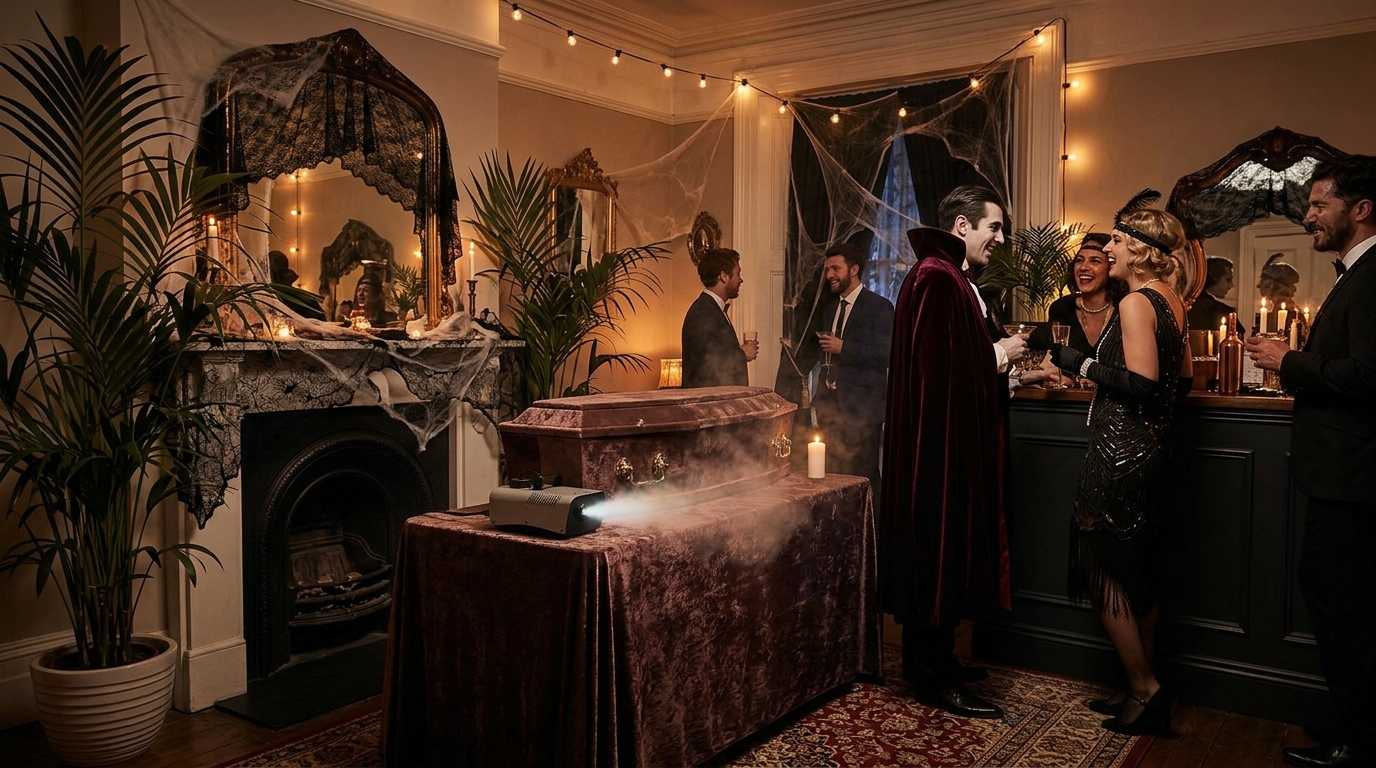
30 Halloween Party Games for Adults That Are Actually Fun
A Halloween party can have great costumes, food, music, and decorations and still feel flat if guests have nothing easy to do together. I learned that I don’t need to schedule the whole evening. A few well-timed games usually give the party enough structure while leaving plenty of room for people to talk.
For a four-hour gathering, my approach is to plan about three structured activities and keep one or two low-pressure options available in the background. That gives guests something to join without making the party feel like a program they have to follow.
I also think about the people coming, not just the games themselves. A fast outdoor game may work beautifully for 20 energetic friends but be completely wrong for a small apartment or a mixed group that includes quieter guests.
I choose Halloween party games according to four things: guest count, available space, energy level, and how comfortable people are with one another. Easy icebreakers work well during the arrival period, while team games make larger groups easier to manage.
For a party of around 20 adults, I would prepare one simple icebreaker, one team-based game, and a costume contest or other group activity. A passive game such as candy guessing, bingo, a photo booth, or an emoji puzzle can stay available for late arrivals and guests who would rather participate casually.
Safety and cleanup also affect my choices. Physical games need clear space, pumpkin carving needs appropriate tools and supervision, and drinking games should never make alcohol consumption a requirement. I always want guests to have a comfortable way to participate without drinking.
Key Takeaways
- About three structured games can be enough for a four-hour party.
- Team formats are easier to manage as the guest list grows.
- Passive activities work well for staggered arrivals and quieter guests.
- Physical games need clear space away from stairs, fragile items, and crowded areas.
- Multiple costume categories give guests more than one way to compete.
- Drinking games should be optional, with nonalcoholic versions available.
- Small apartments are better suited to trivia, cards, puzzles, guessing games, and conversation activities.
Related article: 35 Halloween Party Food Ideas for Kids (Easy, Spooky and Fun)
Icebreakers for the First Hour
The first 30 to 45 minutes can be the most awkward part of an adult Halloween party. Guests rarely arrive together, and some may know only the host. I prefer activities that can start without gathering everyone in one place.
1. Who Am I? Halloween Edition
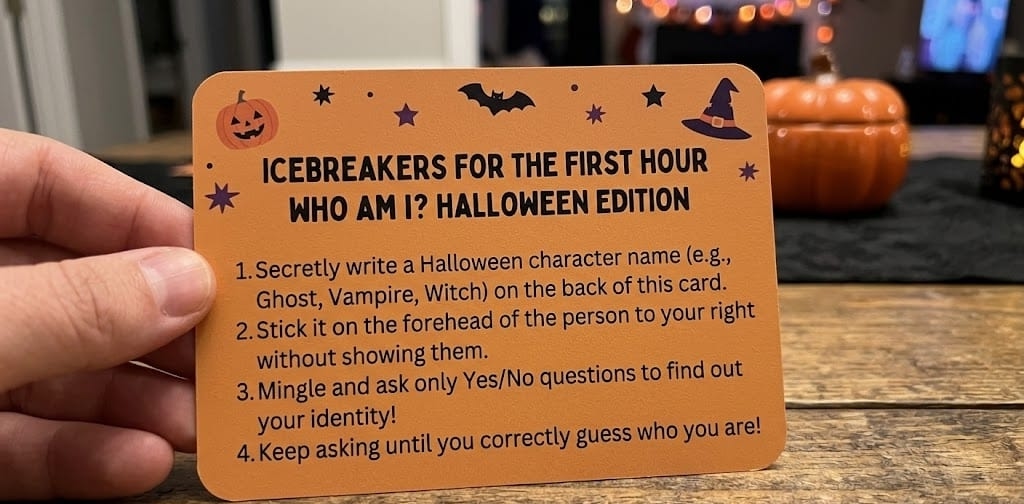
I write familiar Halloween character names on small cards and attach one to each guest without letting them see it. The goal is to identify the character by asking other guests yes-or-no questions.
The game creates a reason to approach someone without requiring introductions in front of the entire room. It also keeps working as new guests arrive.
Best for: 10 to 40 guests, especially mixed groups where people do not all know each other.
Pro Tip: Choose recognizable characters rather than obscure horror references. The game should encourage conversation, not turn into a difficult trivia contest.
2. Halloween Bingo
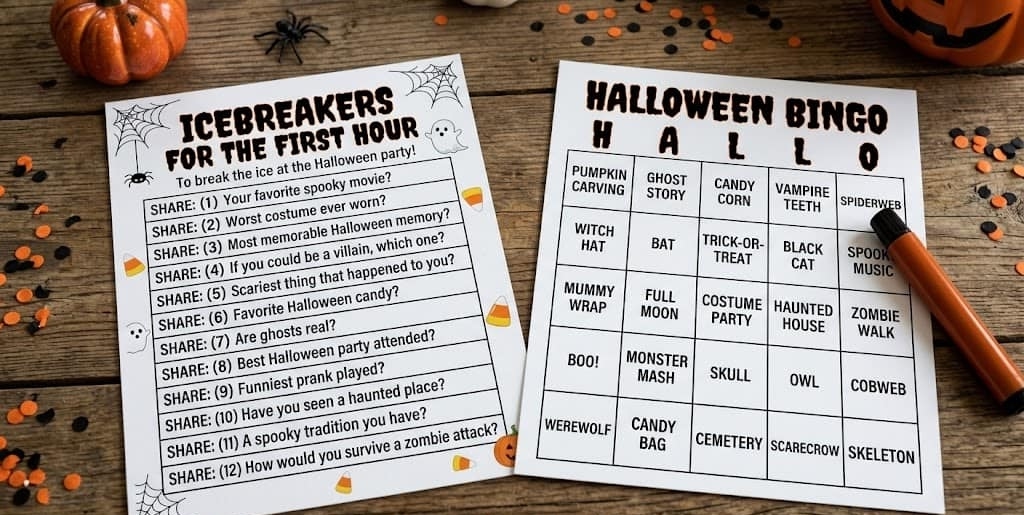
For this version, I make bingo cards based on things guests might notice during the party. A square could mention a pumpkin costume, someone talking about a horror movie, a specific decoration, or another harmless party observation.
Guests mark their cards as they notice the events. Because nobody needs to wait for a formal start, it works particularly well when people arrive at different times.
Best for: 15 to 30 guests and parties where I want a background activity that can continue for a while.
3. Guess the Candy Jar
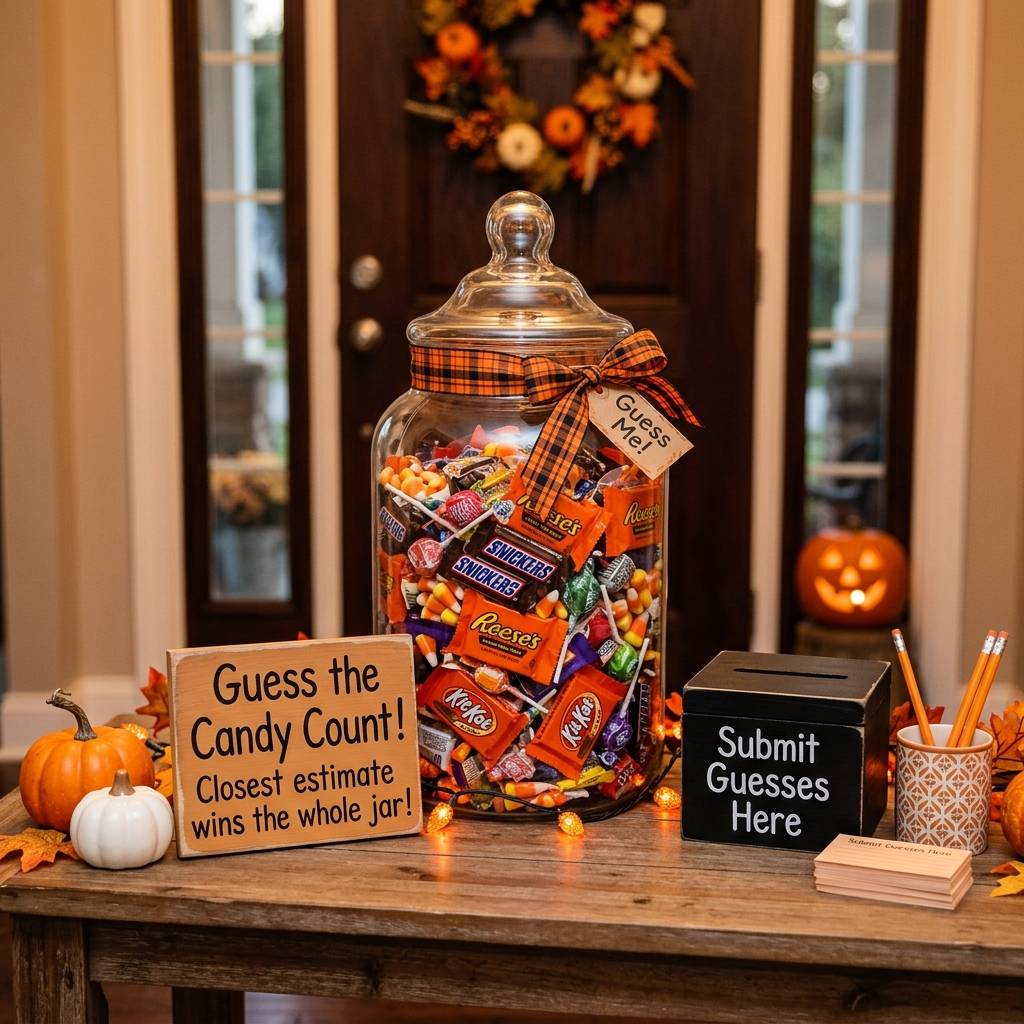
I fill a clear jar with wrapped Halloween candy and place it near the entrance. Each guest writes down a guess for the number of pieces inside, and the closest estimate wins.
There is no group explanation, no special equipment, and almost no setup. The jar also serves as a simple piece of Halloween decor.
Best for: Any group size, especially when I want the easiest possible activity.
Pro Tip: Keep the guesses on individual slips or a small clipboard so the game remains tidy instead of becoming another item guests have to carry around.
4. Two Truths and a Haunting
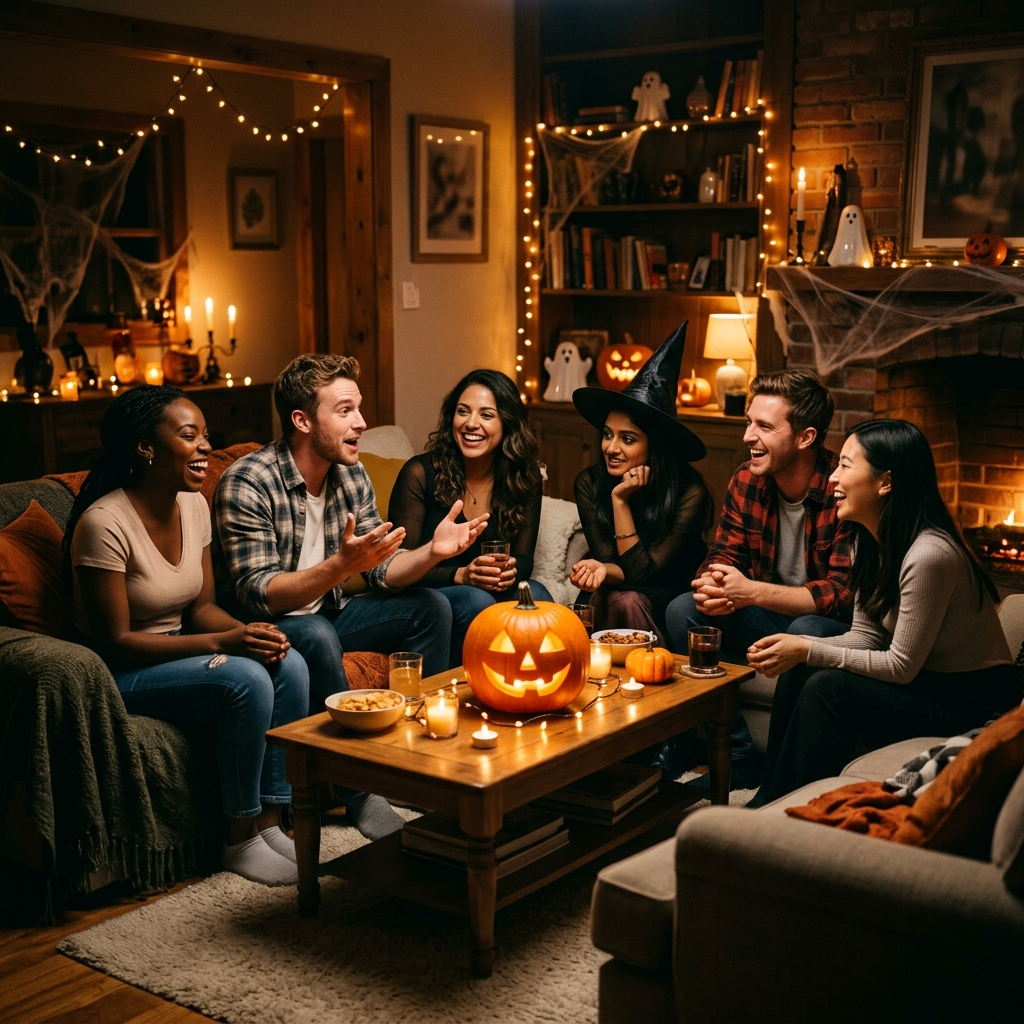
This is a Halloween version of a familiar conversation game. Each person shares three statements about a creepy coincidence, unusual Halloween memory, strange experience, or fictional spooky event. The group tries to identify the made-up statement.
I keep the prompts light. Nobody needs to share something genuinely upsetting just to make the game interesting.
Best for: 6 to 12 guests sitting together who enjoy storytelling.
5. Costume Speed Rounds
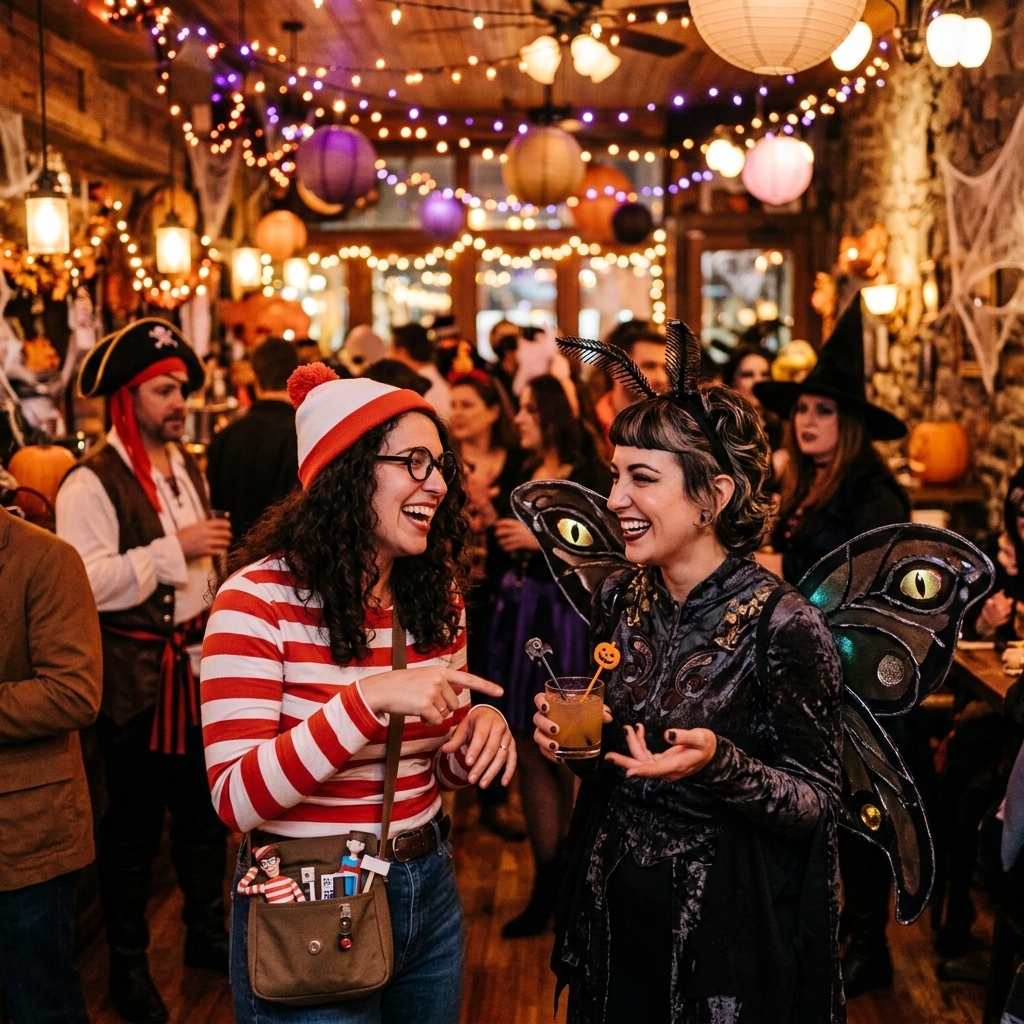
Instead of asking everyone to introduce their costume to the entire room, I pair guests for short conversations. Each person explains what they are dressed as and what inspired the costume before switching partners.
This gives guests a clear conversation topic without putting anyone on stage. It is particularly useful when costumes are creative or homemade and people want to explain the idea behind them.
Best for: 12 to 20 guests during the first hour.
6. Halloween Emoji Decode
I prepare a printed sheet of emoji combinations representing Halloween movies, characters, songs, or phrases. Guests can solve the puzzles alone or work with someone nearby.
Because the sheets can be handed out whenever someone arrives, this makes an easy activity for a party with a long arrival window.
Best for: Any group size, particularly parties with staggered arrivals.
Pro Tip: Mix straightforward clues with a few harder ones. Guests should feel challenged without needing to search for every answer.
Big Group Games for 15 to 30 People
Once most guests have arrived, I move toward activities that work well with teams. Larger groups become difficult when every person has to wait for an individual turn, so I prefer games where several people can participate at once.
7. Murder Mystery Party
A murder mystery can serve as the main event because guests receive characters, information, and reasons to interact throughout the game.
This one needs more preparation than the other activities on my list. I send character information ahead of time and choose a format that matches the number of guests who have actually committed to participating.
Best for: 8 to 16 reliable participants with 2 to 3 hours available.
Pro Tip: I treat this as a planned event rather than a spontaneous party game. If guests are not interested in taking on roles beforehand, a shorter team game is usually easier.
8. Halloween Trivia Showdown
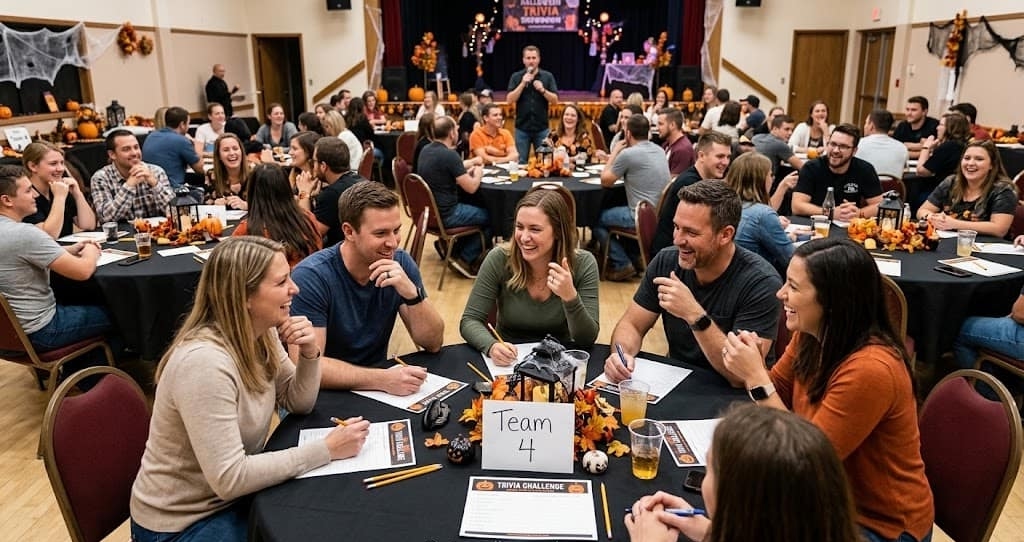
I divide guests into teams and use several short rounds covering accessible Halloween subjects such as movies, candy, traditions, music, monsters, and seasonal history.
I would rather have 20 well-chosen questions than a huge quiz that takes an hour. A mixture of easy and moderate questions keeps the game competitive without rewarding only the biggest horror-movie fan in the room.
Best for: 16 to 30 guests divided into teams.
Pro Tip: Avoid building the entire game around obscure facts. Familiar questions create more conversation and keep casual players involved.
9. Mummy Wrap Race
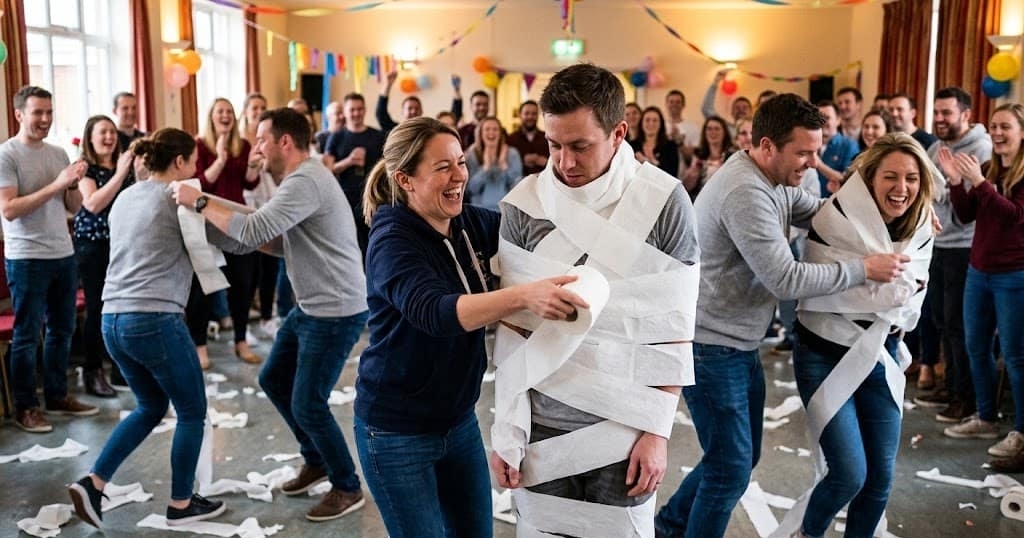
Teams choose one person to become the mummy while teammates carefully wrap them with toilet paper. Once the timer starts, the teams race to create their finished mummy.
This is a quick energy boost, but the cleanup needs planning. I use a hard floor or outdoor area whenever possible instead of carpeting.
Best for: 12 to 24 guests with enough open floor space.
Safety Note: Never wrap toilet paper around the neck, nose, mouth, or eyes. The person being wrapped should be able to breathe, see, and move comfortably.
10. Costume Contest with Real Categories
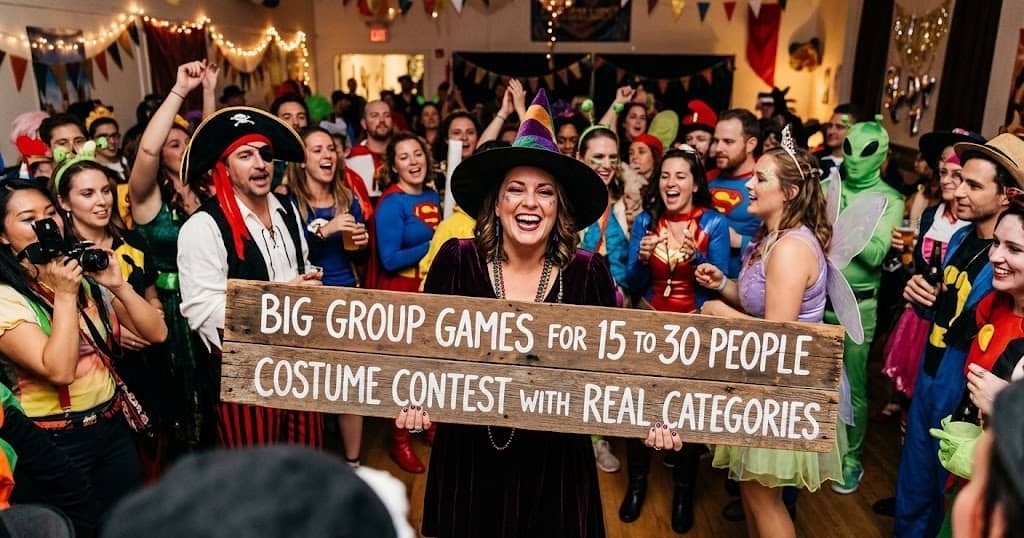
I get better participation when a costume contest has several categories instead of one “best costume” award. Funny, spooky, most creative, best DIY, cleverest concept, or best group costume can all give guests different ways to compete.
The categories should be announced before voting so guests know what they are judging.
Best for: Groups of 10 or more.
Pro Tip: Practical prizes such as gift cards, good candy, coffee cards, or other small useful gifts tend to be easier for guests to appreciate than novelty trophies.
11. Halloween Survey Showdown
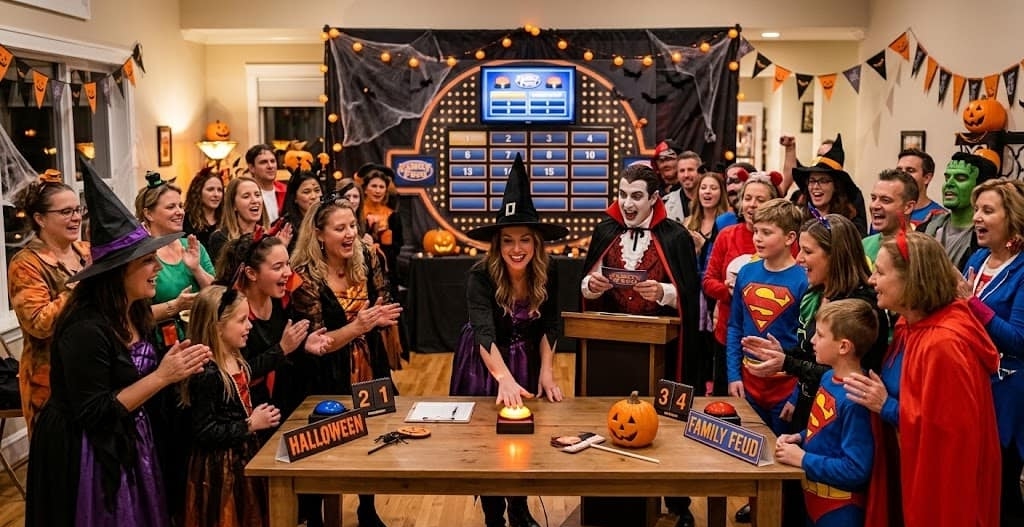
Before the party, I collect answers to a few Halloween questions from friends or family. During the game, teams try to predict the answers that appeared most often.
Questions can cover favorite Halloween candy, common costume choices, scary movie settings, seasonal foods, or decorating habits.
The personal responses are what make this different from ordinary trivia.
Best for: 14 to 24 guests divided into two teams.
12. Pumpkin Bowling
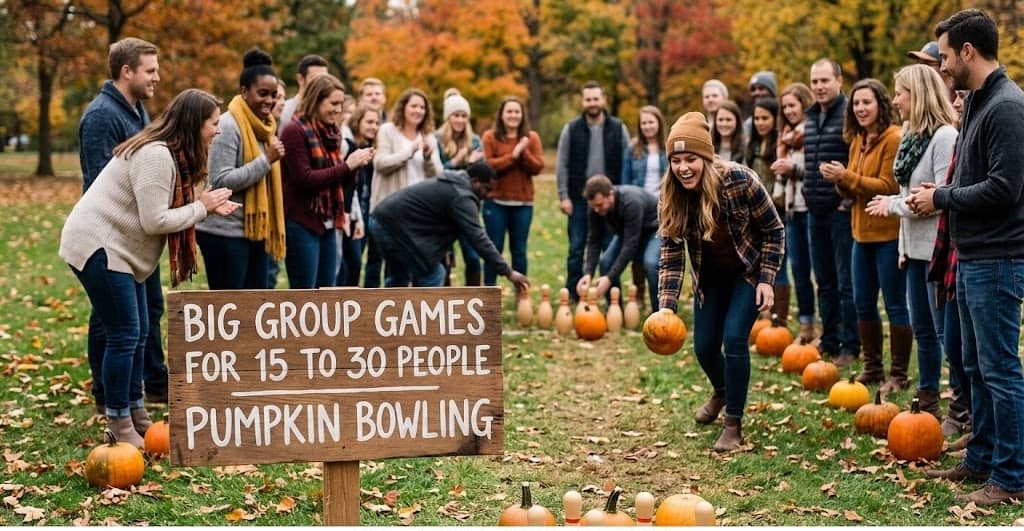
I turn lightweight bottles into simple ghost pins and use a small pumpkin as the bowling ball. The setup can work in a clear hallway or outside on a suitable surface.
Before starting, I remove fragile objects from the area and establish a throwing line so spectators are not standing in the path of the pumpkin.
Best for: 10 to 20 guests with a clear hallway, driveway, patio, or yard.
Safety Note: Use lightweight pins and keep everyone behind the designated line while someone is rolling the pumpkin.
13. Zombie Tag Freeze
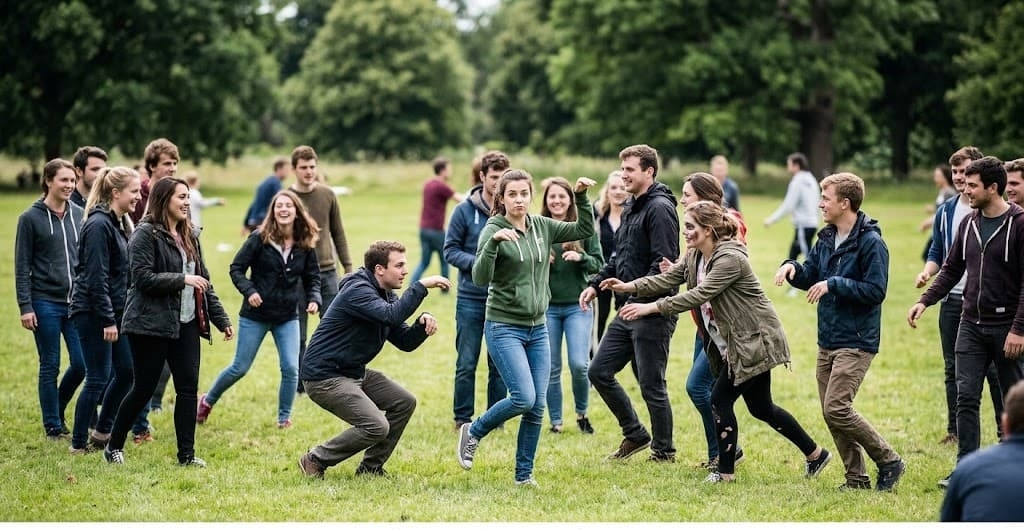
One player begins as the zombie. Tagged players join the zombie side, and play continues until the last untagged person remains.
This needs substantially more room than most games in this article. I would only use it outdoors or in a genuinely open area with no nearby stairs, vehicles, pools, furniture, or other obstacles.
Best for: 12 to 25 guests with suitable outdoor space.
14. The Great Candy Heist
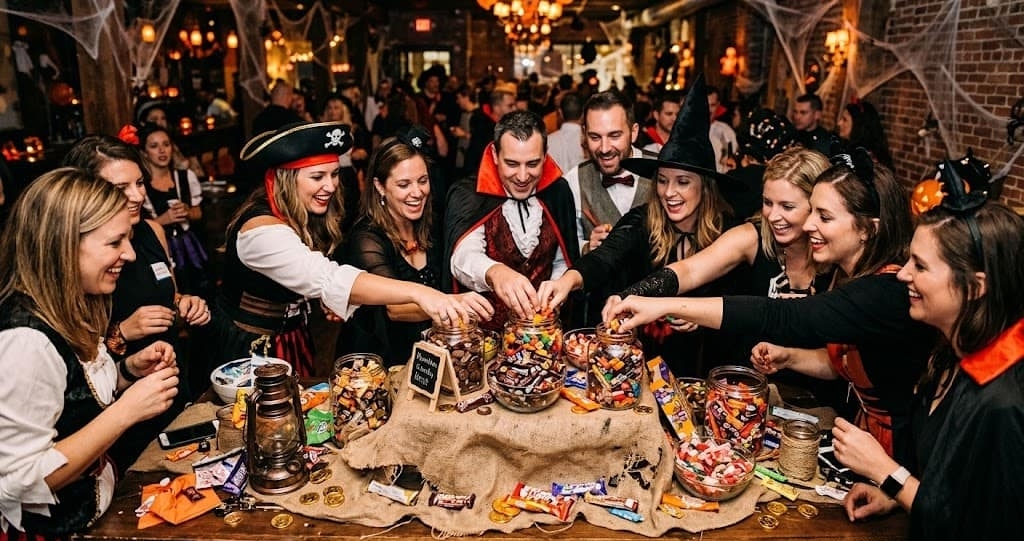
I wrap several small candy bundles and add one intentionally silly mystery prize. Players choose packages and follow simple swapping or stealing rules before the game ends.
The surprise is what makes inexpensive prizes entertaining. For food-related prizes, I use clearly identified packaged items and keep allergies and dietary restrictions in mind.
Best for: 10 to 18 guests seated in a circle.
15. Halloween Charades
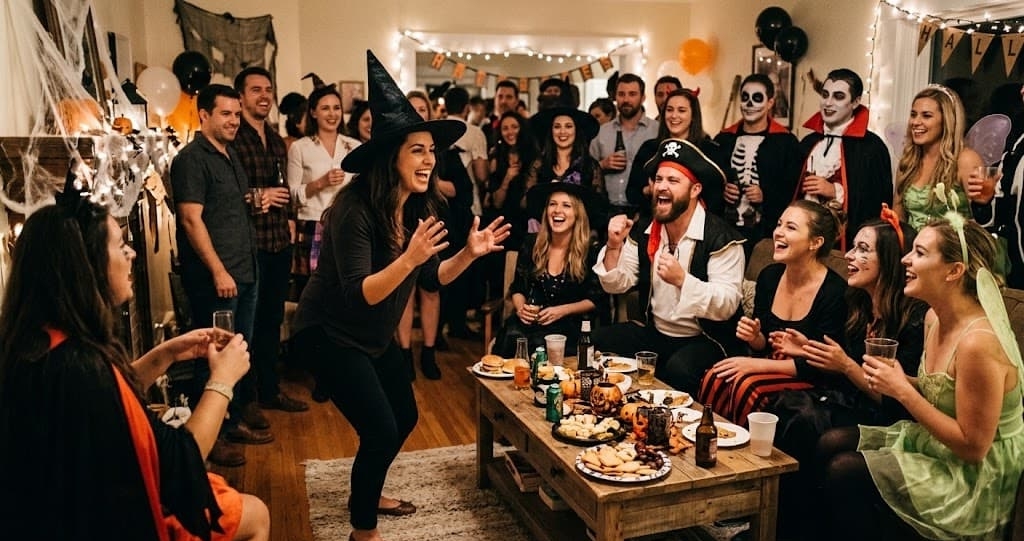
I write Halloween movies, monsters, activities, costumes, and seasonal objects on slips of paper. Teams take turns acting out the clues while teammates guess.
It is one of the easiest backup games to keep ready because the materials are minimal and the rules take less than a minute to explain.
Best for: 8 to 30 guests. For larger groups, I divide everyone into teams.
Pro Tip: Keep a bowl of easy clues available. If someone draws something too difficult, replacing it keeps the game moving.
16. Scavenger Hunt in Costume
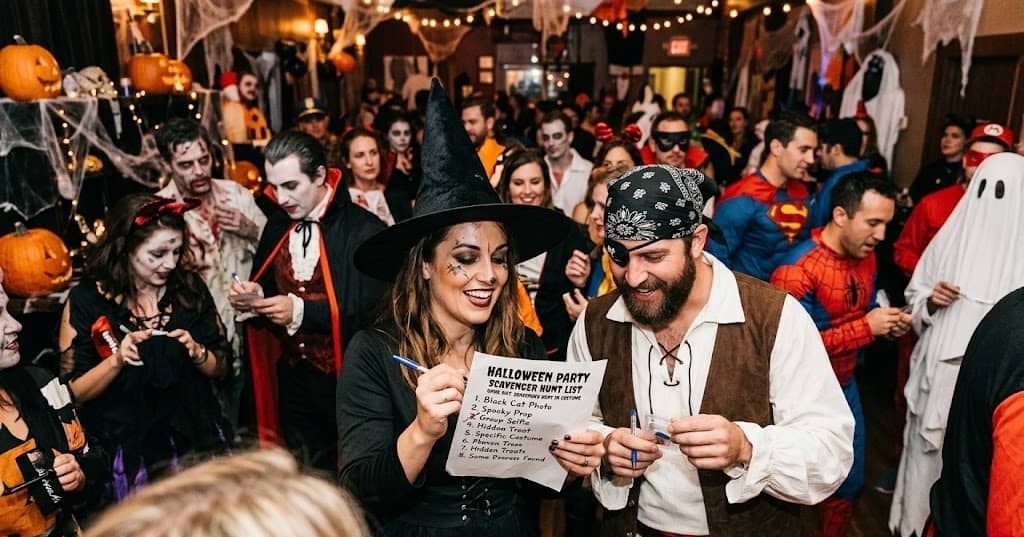
I create a list of photo or observation challenges that send teams around the party area. Examples include finding a pumpkin, photographing matching costume colors, or creating a group picture with several Halloween characters.
Before starting, I establish exactly which rooms and outdoor areas are included. Guests should never need to enter private areas or climb, squeeze through crowded spaces, or run indoors to complete a challenge.
Best for: 16 to 40 guests, particularly when a home has several usable rooms or an outdoor area.
Safety Note: Make the challenges about finding and photographing things rather than physical stunts.
Halloween Drinking Games
I keep drinking games optional. Water and substantial food should be available throughout the evening, and nobody should have to drink alcohol to participate.
For every game below, I am comfortable using points, tokens, water, mocktails, or other nonalcoholic options instead. The activity should still work without alcohol.
Also read: 21 Halloween Table Decoration Ideas (Elegant to Spooky, From $10)
17. Horror Movie Drinking Game
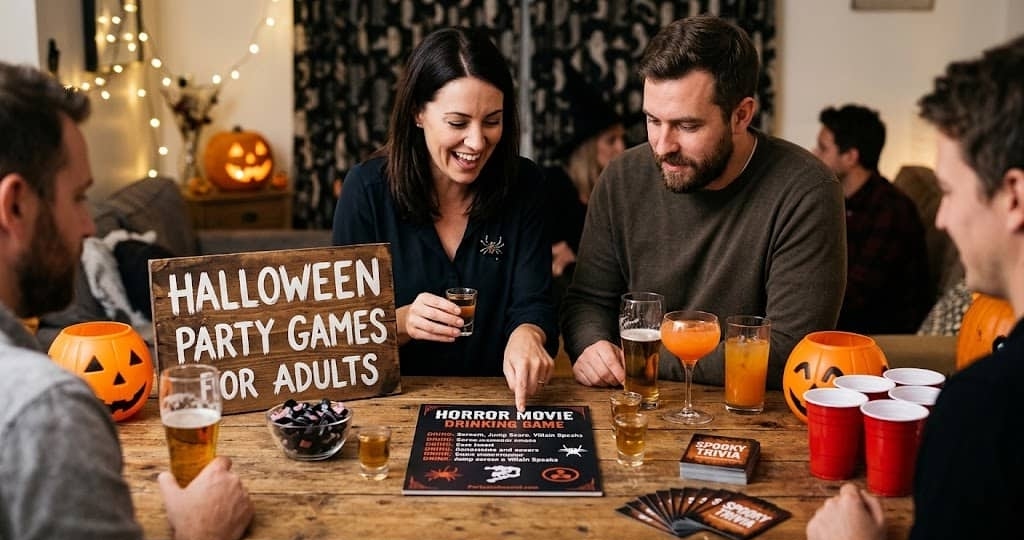
I choose a familiar horror movie and create a short list of recurring events. Instead of making alcohol the required response, players can collect tokens or points whenever one happens.
Possible triggers include a character splitting away from the group, an unexpected noise, a phone losing service, or another recognizable horror-movie moment.
Best for: 6 to 12 guests relaxing together later in the evening.
18. Witches Brew Roulette
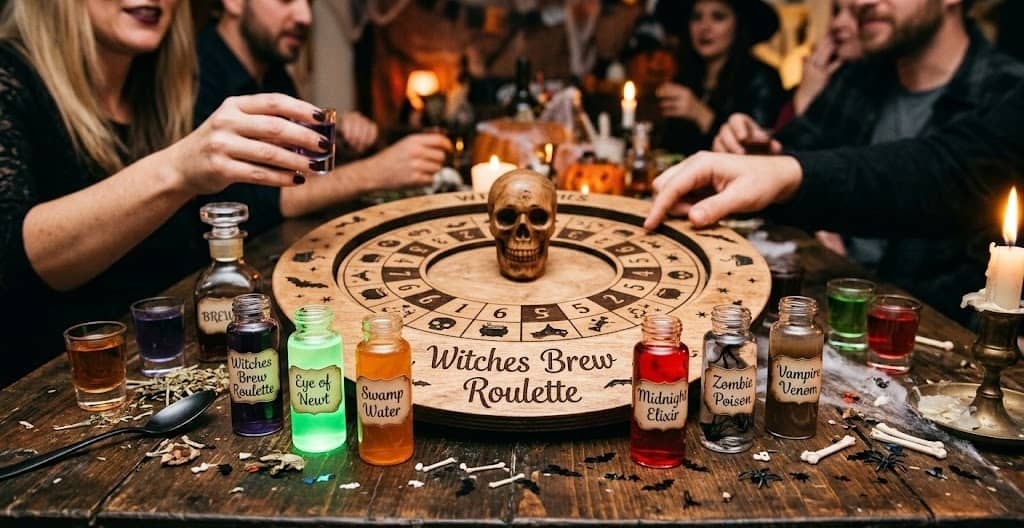
I prepare several small cups containing clearly identified, food-safe beverages with different flavors. A few can have unexpected but harmless flavors, such as pickle juice, while others are more familiar.
Nobody should be given an ingredient they cannot identify or a substance described only as a mystery. Guests need to be able to decline, and I would provide a nonalcoholic version without making anyone explain their choice.
Best for: 8 to 15 guests who are comfortable with a silly tasting-style game.
Safety Note: Use only known food-safe ingredients. Check for relevant dietary restrictions or allergies, do not use intentionally harmful ingredients, and never pressure anyone to taste something.
19. Never Have I Ever: Halloween
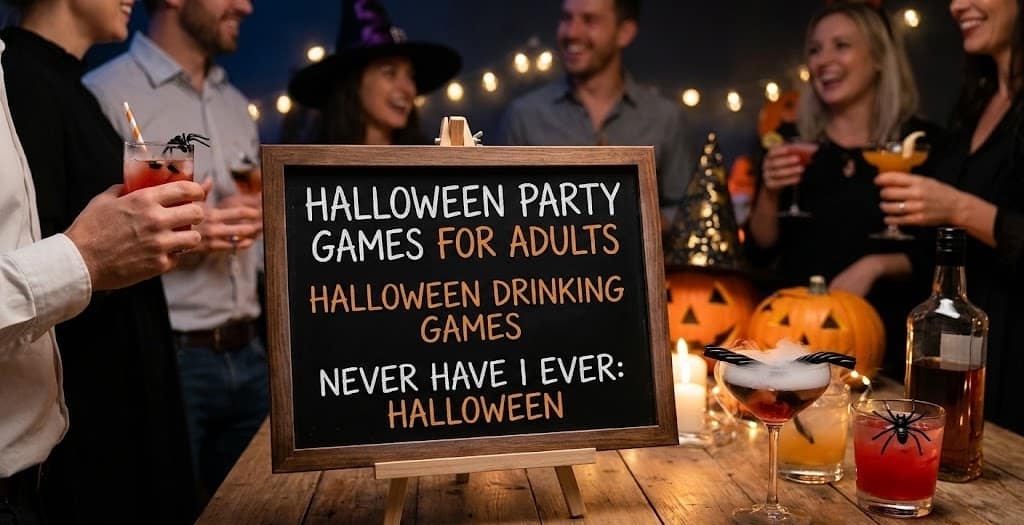
I prepare prompts around Halloween memories, costume mishaps, scary movies, haunted attractions, trick-or-treating, or decorating mistakes.
For an alcohol-free version, players can keep score with fingers, tokens, or points. I avoid prompts that pressure people to reveal sensitive personal experiences.
Best for: 6 to 14 guests who enjoy conversation.
20. Beer Pong, Cauldron Edition
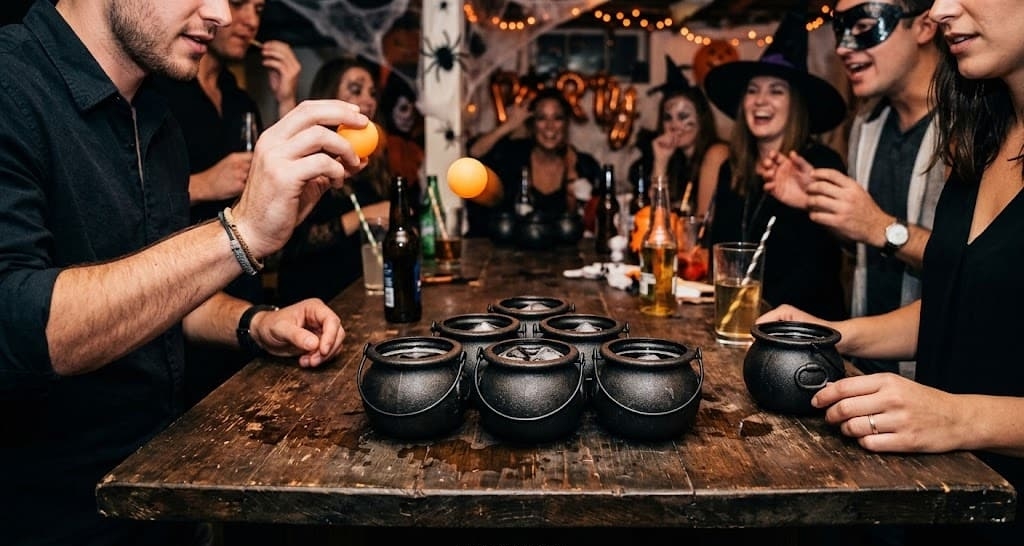
The Halloween version can use dark-colored cups and a cauldron-style container for the visual theme. The actual game does not require alcohol; water or another suitable nonalcoholic drink can be used instead.
I place the setup somewhere stable and away from the main food and serving area so the table does not become another obstacle.
Best for: 4 to 16 guests rotating through a casual tournament.
Safety Note: A nonalcoholic version is a full version of the game, not merely a substitute for people who cannot drink.
21. Flip Cup: Monster Mash
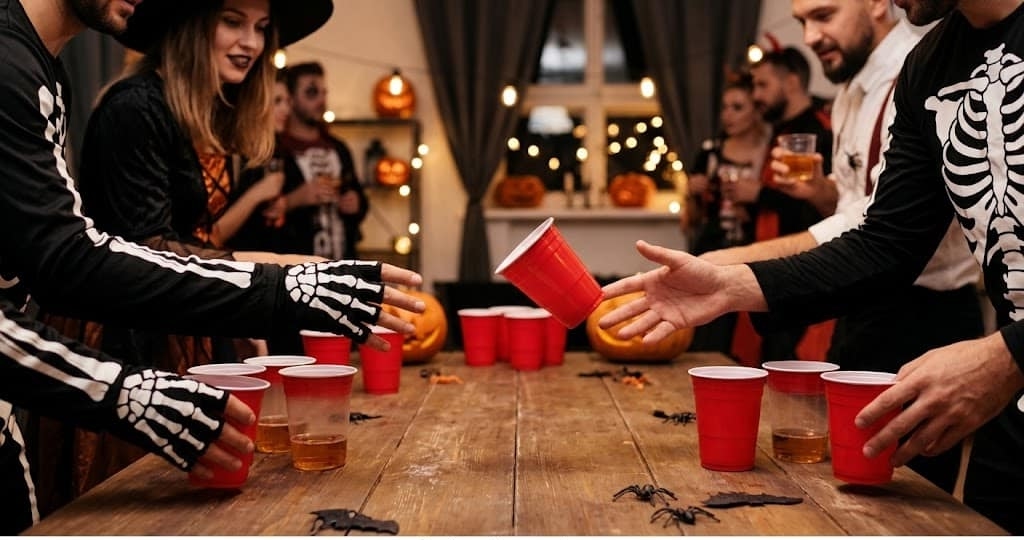
Teams compete in a cup-flipping relay, with a Halloween mask or another harmless costume challenge added for the losing team.
For a nonalcoholic party, the same relay works with water or another suitable beverage. The competition comes from the timing and teamwork, not from how much anyone drinks.
Best for: 12 to 20 guests with a stable, long table and enough surrounding space.
22. Spooky Story Shots
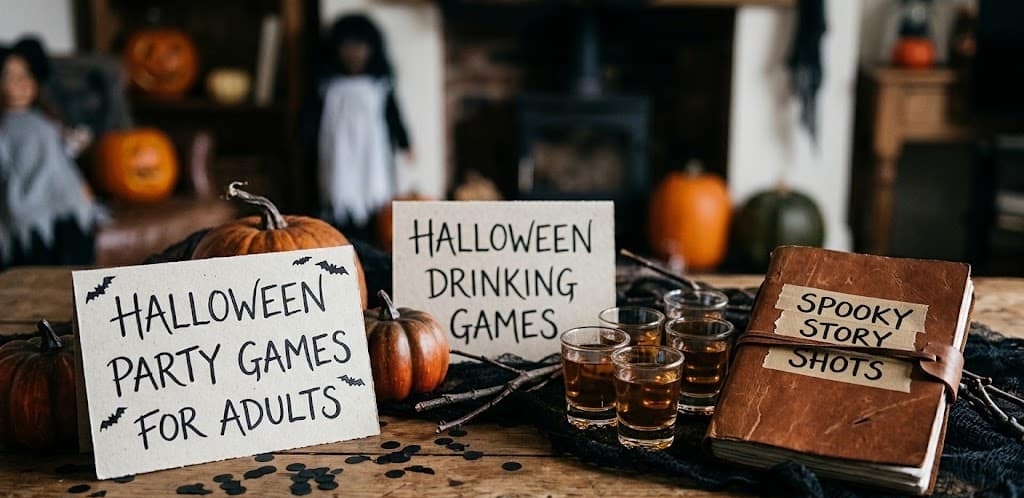
I start a fictional Halloween story with one sentence and have each person add another. If someone takes too long, the group can award a point to another player or give the storyteller a harmless Halloween challenge.
The story usually becomes funny and unpredictable without needing alcohol to make the activity work.
Best for: 6 to 12 guests around a table, fire pit, or comfortably lit seating area.
Quiet Games and Low-Key Activities
Not everyone wants to shout, compete, or move around. I like having a quieter corner where guests can participate at their own pace, especially later in the evening.
23. Tarot Reading Station
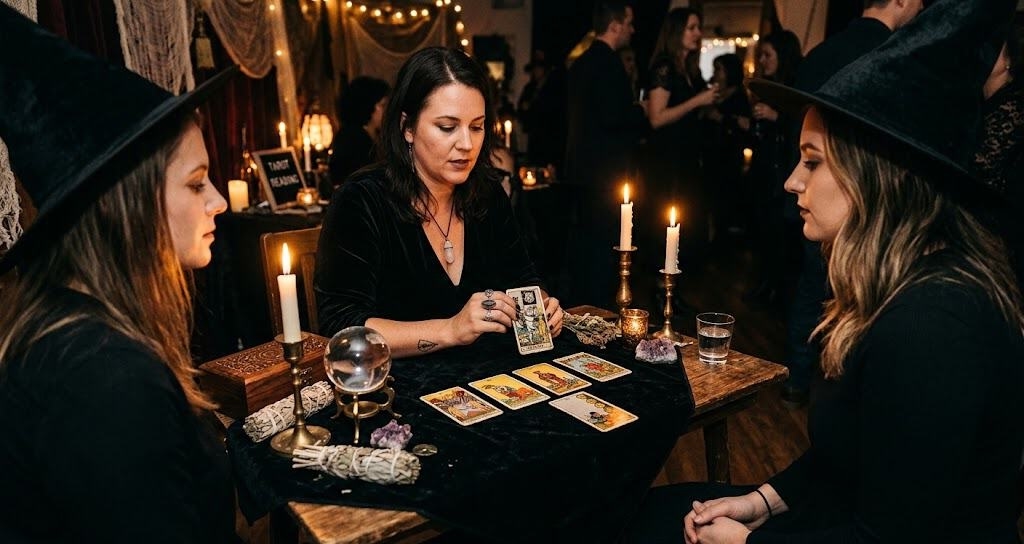
I set out a tarot deck, a basic reference guide, and a small table where interested guests can read cards for one another as Halloween entertainment.
I keep the activity firmly in the realm of fun and storytelling. Tarot should not be presented as a reliable way to make medical, financial, relationship, or other consequential decisions.
Best for: Any party where I want a self-directed conversation activity.
24. Halloween Fill-in-the-Blank Card Game
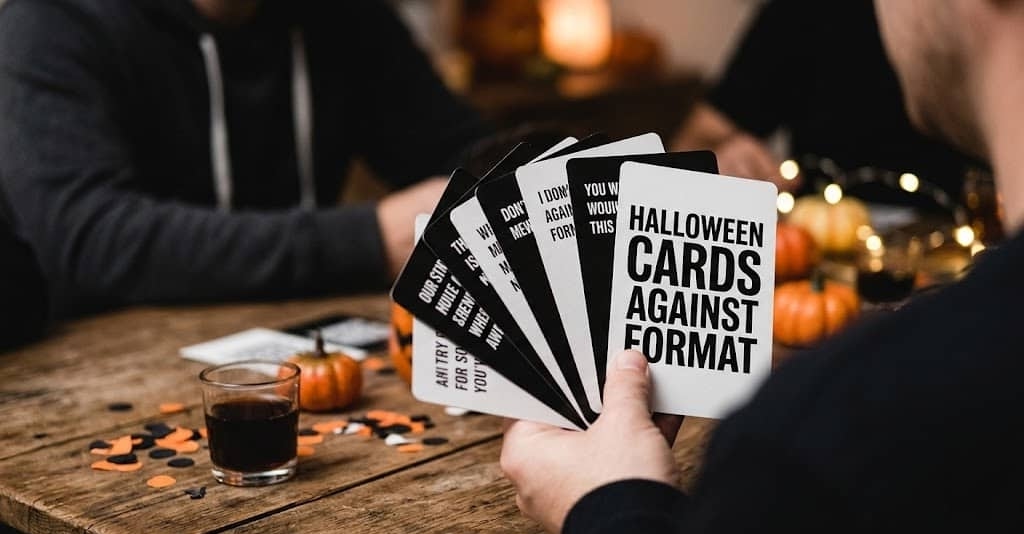
I make simple Halloween prompt cards with blanks that guests complete with funny answers. The group can then read the combinations aloud and vote on favorites.
For a workplace or mixed group, I keep the prompts clean and avoid material that could embarrass guests or require personal disclosures.
Best for: 6 to 10 guests seated together.
25. Pumpkin Carving Contest
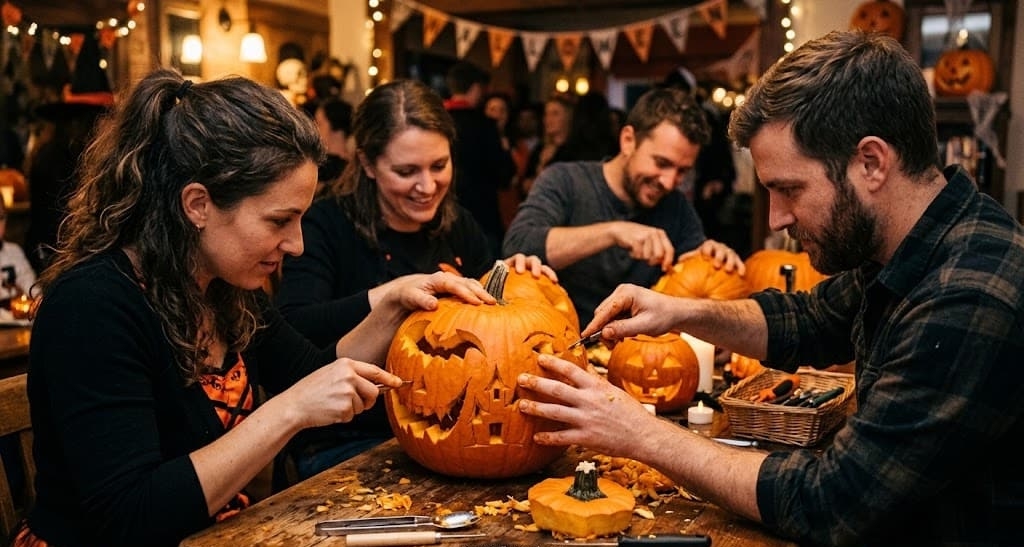
I give participants small pumpkins, appropriate carving tools, and about 30 minutes to create a design. A washable table covering and a separate container for pumpkin scraps make cleanup much easier.
I schedule this earlier in the evening if alcohol will be served later. Sharp carving tools and impaired judgment are not a combination I want at a party.
Best for: 8 to 16 guests who want a hands-on activity.
Safety Note: Use carving tools according to their instructions and keep the carving area organized. Children should not handle adult carving tools.
Pro Tip: If guests have already been drinking, switch to a no-carve decorating contest instead of trying to continue the carving activity.
26. Guess the Scent
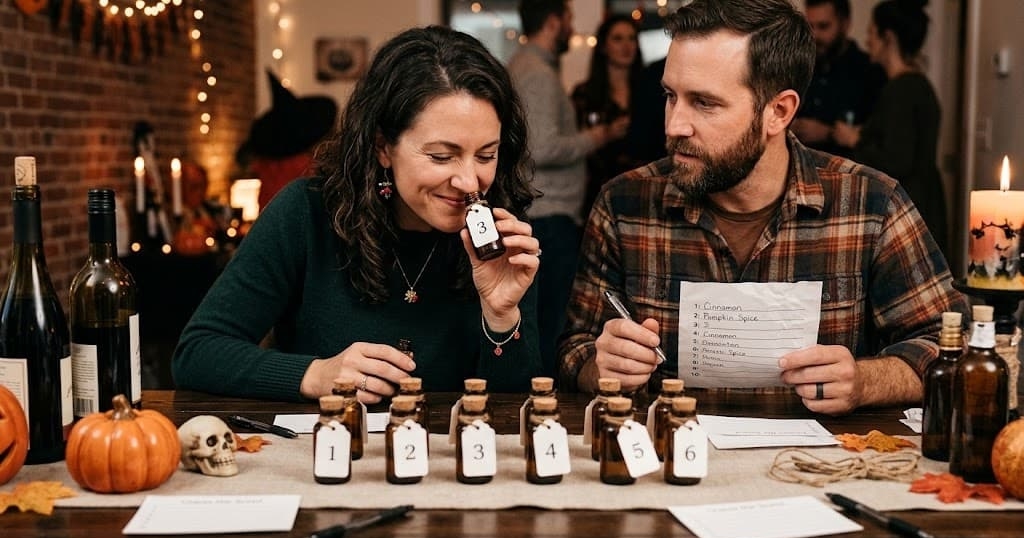
I put familiar scents into numbered containers and ask guests to identify them by smell. Coffee, cinnamon, vanilla, orange peel, cocoa, or pumpkin can work well.
There is no tasting involved. I also make participation optional because guests may have allergies, sensitivities, or simply dislike a particular smell.
Best for: 10 to 20 guests as a passive side-table activity.
27. Halloween Photo Booth Prompts
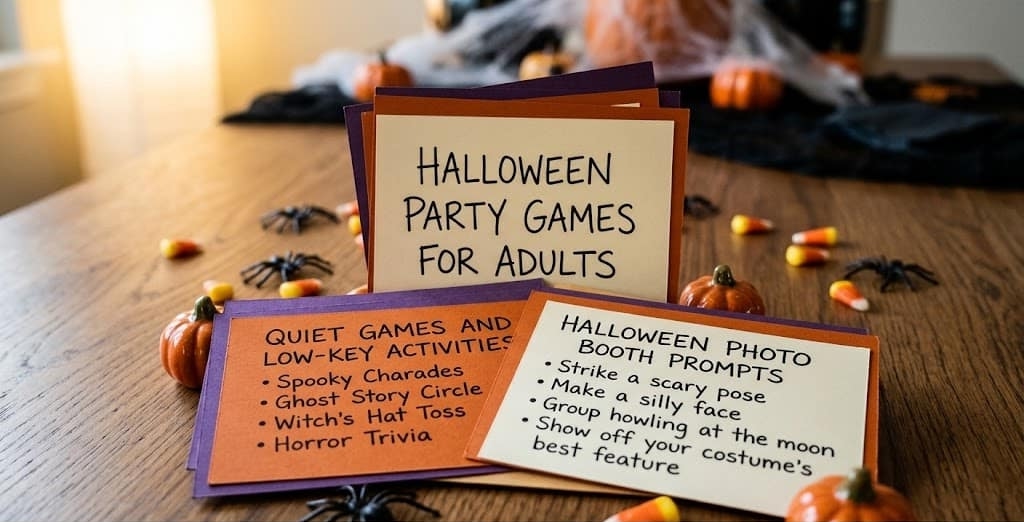
A photo booth gets more use when guests have something specific to do. I place prompt cards beside the backdrop with ideas such as a group monster photo, a dramatic horror pose, or the funniest expression.
The area should have enough lighting for clear photos and enough room for guests to enter and leave without blocking a main walkway.
Best for: Any group size.
Pro Tip: Keep props clean, sturdy, and easy to handle. I also avoid props that could become trip hazards when guests are carrying food or drinks.
28. Blind Candy Taste Test
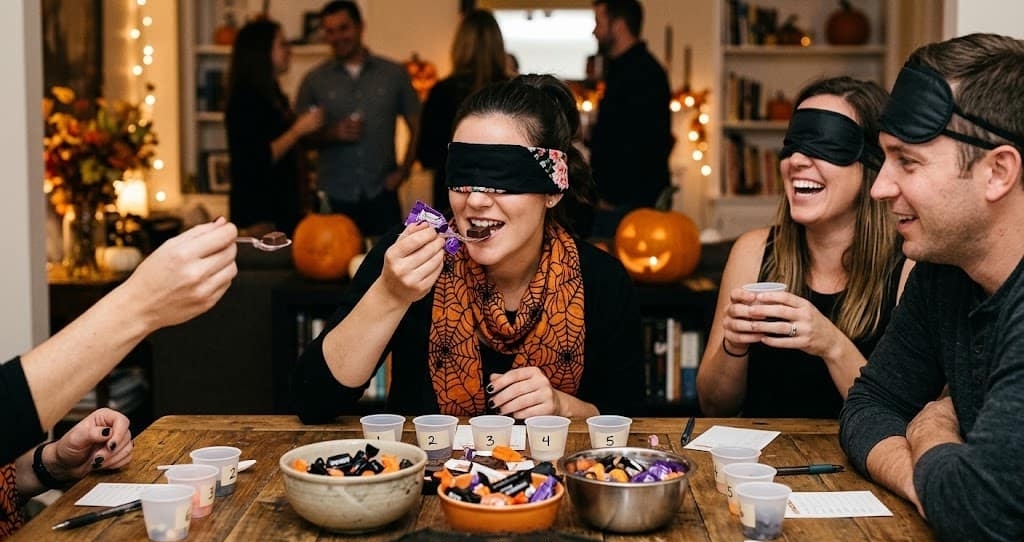
I use small portions of clearly identified candies and ask willing participants to identify them. Before anyone tastes anything, guests should be able to check the ingredients and decide whether the food is appropriate for them.
Nobody should be required to taste an unidentified item. Individually packaged candies can make ingredient information easier to provide, although packaging alone does not guarantee that a food is suitable for every guest.
Best for: 8 to 16 guests who enjoy food-based guessing games.
Safety Note: Keep allergen and dietary information available, make participation voluntary, and never substitute an unknown food simply to make the challenge harder.
29. Escape Room in a Box
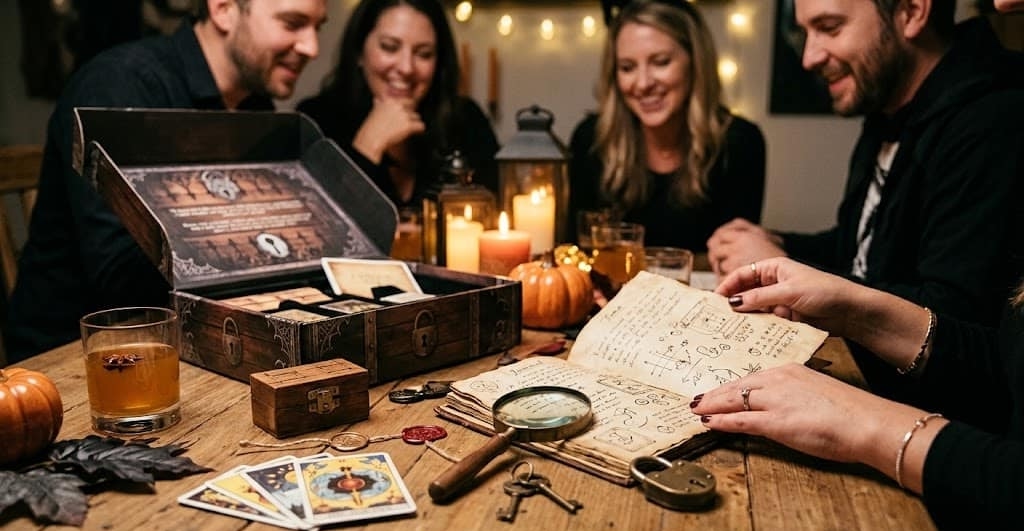
A boxed escape-room puzzle works well as a separate activity for guests who enjoy solving clues. I set it up at a side table or in another room so the rest of the party can continue without interruption.
Because participation is voluntary, a few interested guests can work through the puzzle while everyone else does something different.
Best for: 4 to 8 guests who enjoy puzzles and focused activities.
30. Halloween Playlist Battle
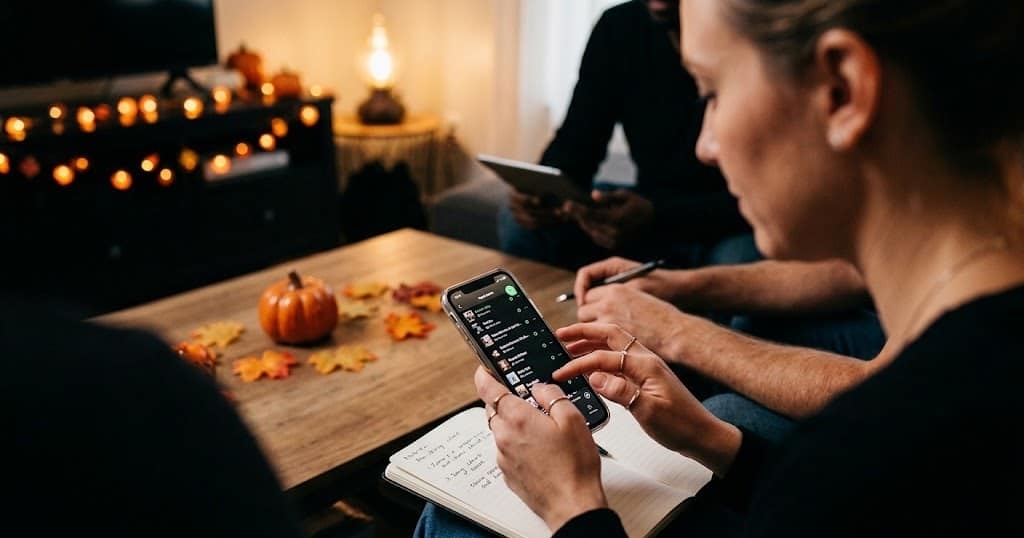
I ask each guest to add one or two Halloween-appropriate songs to a shared playlist. Later, guests can vote on categories such as best throwback, most unexpected choice, or biggest crowd reaction.
The activity doubles as a practical hosting tool because the guests help build the music instead of leaving me responsible for the entire playlist.
Best for: 10 to 30 guests and parties that run for several hours.
What games can adults play at a Halloween party?
For adult gatherings, I look for games with short explanations, clear stopping points, and a way for guests to participate without performing alone. Trivia, charades, costume contests, scavenger hunts, and quick team challenges all fit that approach.
I also avoid making every activity mandatory. A party feels more relaxed when guests can join a game, step away for food, or simply talk without feeling like they are missing an organized program.
For a group of around 20, two team games plus one passive activity gives me enough structure without filling the entire evening.
How do you keep a Halloween party fun without alcohol?
Without alcohol, I put more attention on activities, food, music, lighting, and conversation. The games themselves do not need alcohol to work.
Pumpkin decorating, trivia, photo prompts, Halloween bingo, candy guessing, charades, and a movie with a themed bingo card can all fill natural gaps in the evening.
For drinks, I like giving guests one or two seasonal choices such as sparkling cider, spiced cider, flavored sparkling water, or a simple mocktail. The presentation can make an ordinary drink feel more appropriate for the occasion without making alcohol the focus.
What is a good Halloween game for 20 people?
For 20 guests, Halloween trivia is an easy choice because the group can be divided into manageable teams and everyone can contribute at the same time.
A mummy wrap race works when the group wants something physical and there is enough open space. I would not use it simply because the guest count fits; the room and energy level still matter.
Games that require 20 separate turns are usually harder to fit into a busy party. Team formats reduce waiting and keep the activity moving.
Halloween Game Comparison Table
| Game | Players | Time | Cost | Energy level |
|---|---|---|---|---|
| Halloween trivia showdown | 16–30 | 20 min | About $0–$15 | Medium |
| Mummy wrap race | 12–24 | 8–10 min | About $5–$10 | High |
| Murder mystery party | 8–16 | 2–3 hrs | About $25–$45 | Medium |
| Costume contest | 10+ | 15–20 min | About $20–$50 | Medium |
| Who Am I? | 10–40 | Passive, 1 hr | About $3–$5 | Low |
| Pumpkin carving contest | 8–16 | 30 min | About $5+ per person | Low |
| Zombie tag freeze | 12–25 | 10–15 min | Free | High |
| Tarot reading station | Any | Passive, 2–3 hrs | About $10–$20 | Low |
Costs are approximate planning ranges. Actual prices depend on what I already have, the supplies I choose, and where I shop.
How to Actually Run the Night
For a four-hour party, my timeline is intentionally loose. I want enough structure to prevent a slow start without making guests feel as though they need to follow a schedule.
First 30–45 minutes: Passive activities go out as soon as guests arrive. I might have Who Am I? cards, the candy jar, bingo, the emoji puzzle, or the photo booth ready.
Around 7:45–8 p.m.: I introduce the first structured game once most guests have arrived. Trivia, charades, or another short team activity works well here.
Middle of the party: A costume contest or larger group game gives everyone another shared activity after people have had time to settle in.
Later evening: I let the party become more flexible. Some guests may gather around cards, others may watch a movie, use the photo booth, continue a puzzle, or simply talk.
The timeline is a framework rather than a rule. If people are already having a good conversation, I do not interrupt them just because the next game is technically scheduled.
Two hosting lessons matter here. First, prizes do not need to be expensive, but they should feel worth winning. Second, instructions should be brief. If guests need a long explanation before they can start, the game probably needs simpler rules.
I also keep one backup activity ready. A bowl of charades prompts or a short trivia list can save the evening if weather changes, a physical game becomes impractical, or a planned activity falls flat.
🎯 The short version:
✅ Plan about three structured games for a four-hour party
✅ Use team formats when the guest list gets larger
✅ Keep one passive activity available throughout the evening
✅ Use several costume categories instead of one winner-takes-all title
✅ Give high-energy games enough clear space
✅ Make alcohol-free versions a genuine option
✅ Keep instructions short and have a simple backup ready
Frequently Asked Questions
What time should Halloween party games start?
For a party beginning at 7 p.m., I generally wait about 30 to 45 minutes before starting the first structured game. That gives late arrivals time to come in without making me repeat the rules.
Passive activities can start immediately at the door.
How many prizes do I need for a Halloween party?
For about 20 guests, five to eight prizes can be plenty when several categories and games are involved. I would rather have a few useful prizes than a large collection of inexpensive novelty items.
Gift cards, coffee cards, quality candy, or small practical gifts are easy options.
What Halloween games work in a small apartment?
I would choose trivia, charades, card games, candy guessing, emoji puzzles, scent games, and photo prompts.
Running games, throwing games, and activities that require a lot of floor space are harder to manage when furniture and walkways are close together.
Do adults really want to play party games?
I find that participation is easier when guests can see other people already enjoying the activity. The first few willing players often remove the awkwardness for everyone else.
I never treat participation as mandatory. A good passive activity gives guests another option.
How long should each Halloween party game last?
For activities requiring the entire group’s attention, I generally aim for about 10 to 20 minutes. Shorter games are easier to fit between food, drinks, conversation, and other activities.
Longer games such as murder mysteries or escape-room kits can work because interested guests can commit to them separately.
What should I do if nobody wants to play?
I do not keep announcing the same game until everyone gives in. Instead, I start with a few willing people or switch to a passive activity.
If the group clearly wants to talk rather than compete, I let the party breathe. Games are there to support the gathering, not to become the gathering.
What are good Halloween games for a work party?
Trivia, Halloween bingo, photo challenges, candy guessing, and comfortable costume categories are good low-pressure options.
I would skip drinking games, physical challenges, and questions that require employees to reveal personal experiences. The goal should be easy participation rather than putting anyone on the spot.
What games work for a mixed group of adults and teens?
Charades, trivia, scavenger hunts, pumpkin decorating, photo challenges, and candy guessing can work across those age groups.
I would remove drinking activities and adult-only prompts. For physical games, the playing area and rules should be appropriate for everyone participating.
How do I handle guests who arrive late?
I keep at least one activity available that does not depend on everyone starting together. A candy jar, bingo card, photo booth, or emoji puzzle works well.
I would not restart a group game every time someone arrives. If they want to participate, I can explain the rules briefly when there is a natural break.
How do I pick which games to run?
I start with the guest count and the space, then consider the group’s energy level. A small gathering can handle more conversation-based games, while a larger party usually benefits from teams.
From there, I choose one energetic activity, one quieter option, and one passive game that can remain available throughout the evening.
Read this next: 25 Dollar Store Halloween Decorations That Look High-End (DIY Hacks)
Conclusion
I’ve found that an adult Halloween party does not need a packed schedule to feel lively. Three well-chosen games can provide plenty of structure for a four-hour gathering, especially when a few passive activities are available in the background.
I would start with an easy icebreaker, add one team-based game once most guests have arrived, and keep a quieter option available for people who prefer conversation or smaller groups. The right choices depend on the people in the room, the space available, and the kind of evening I want to host.
The games should support the party rather than control it. When guests can join, step away, talk, eat, and come back without feeling pressured, the evening usually feels much more natural.