
18 Lawn Mower Storage Ideas for 2026
If your mower spends winter leaning against the garage wall and summer tripping you in the shed, you are not alone. When I finally sat down to organize my yard gear, I realized the mower is usually the biggest, heaviest thing we store, so it deserves a real plan. These lawn mower storage ideas are the ones I use and recommend to friends: simple, affordable setups that keep a mower dry, safe, and easy to roll out on Saturday morning.
Whether you have a full garage, a tiny shed, or just a paved corner of the yard, there is an option here for you. I cover indoor and outdoor storage, riding mowers and push mowers, plus the little habits — covers, mats, and off-season prep — that add years to a machine’s life.
Key Takeaways
- Give the mower one dedicated home spot instead of shuffling it around all season.
- Keep it dry: indoors is best, and a breathable cover is the next best thing outdoors.
- Park on a mat or pad to catch drips and protect floors from rust stains.
- Store fuel, batteries, and sharp accessories separately and safely.
- A quick clean and winterizing routine prevents most spring start-up problems.
- Corner and vertical storage can free up surprising floor space in small sheds.
Related article: If you are organizing the whole garage this season, my roundup of 19 Fishing Rod Storage Ideas for 2026 solves the other bulky-gear headache in most garages.
18 Lawn Mower Storage Ideas for 2026
1. A Dedicated Garage Corner Parking Spot

I gave my mower its own marked corner of the garage, and it changed everything. I cleared one bay, swept it out, and now the mower always rolls back to the same spot after every cut.
No more squeezing past it with grocery bags or knocking it into the car door. A painted line or a strip of tape on the floor keeps everyone in my house parking it in the right place.
Pro Tip: Measure your mower’s footprint and add six inches on every side so you can walk around it for refueling and cleaning.
2. A Garden Shed Bay with Room to Roll In
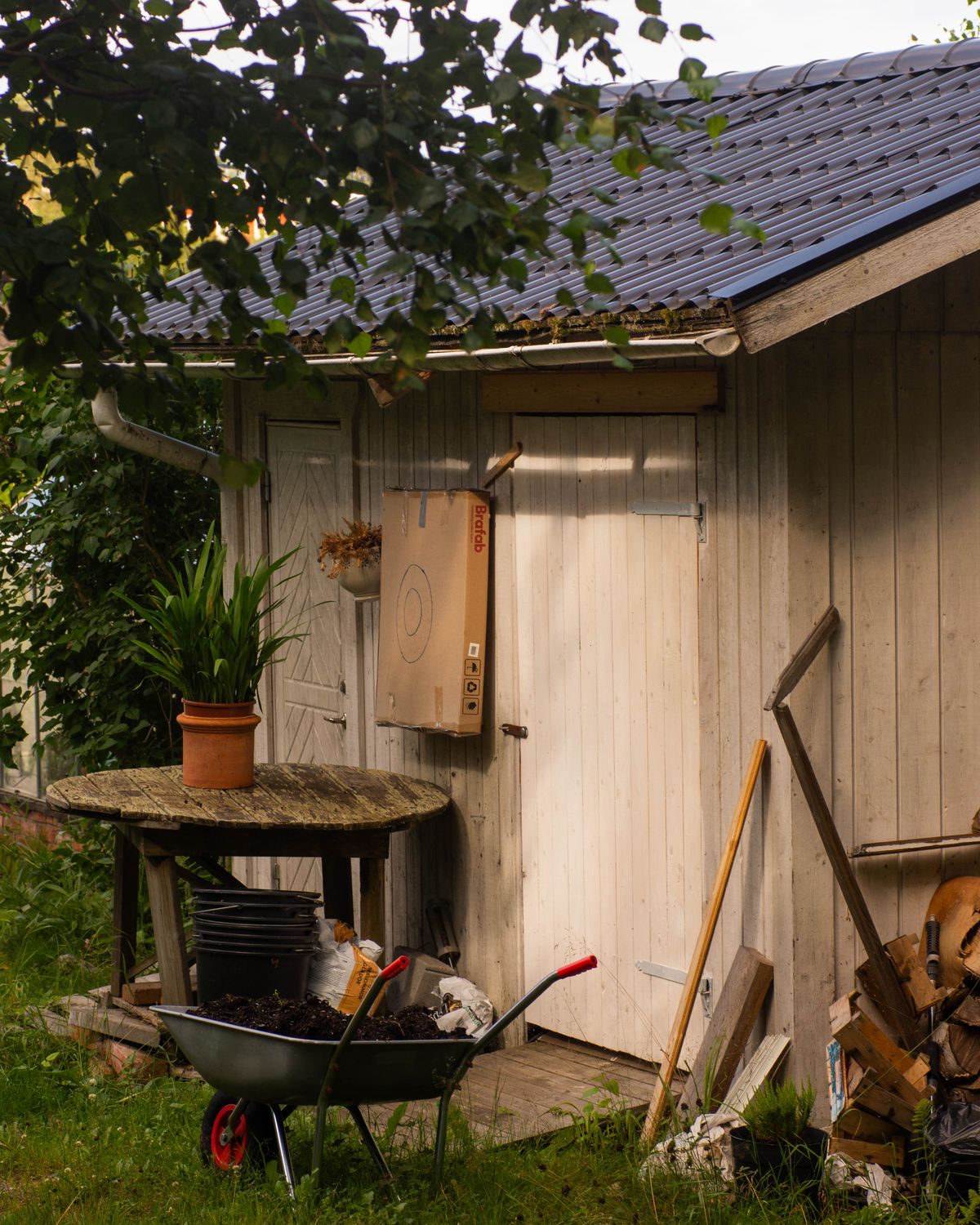
A roomy garden shed is the classic mower home for a reason. I keep mine just inside the door of my shed so I never have to drag it past pots and bags of soil.
If you are shed shopping, bring your mower’s measurements with you. Door width matters more than total floor space — a wide double door makes rolling in and out effortless.
Pro Tip: Lay a few pavers or a sheet of outdoor plywood at the entrance to bridge the gap between ground and shed floor.
3. A Weatherproof Resin or Metal Storage Shed
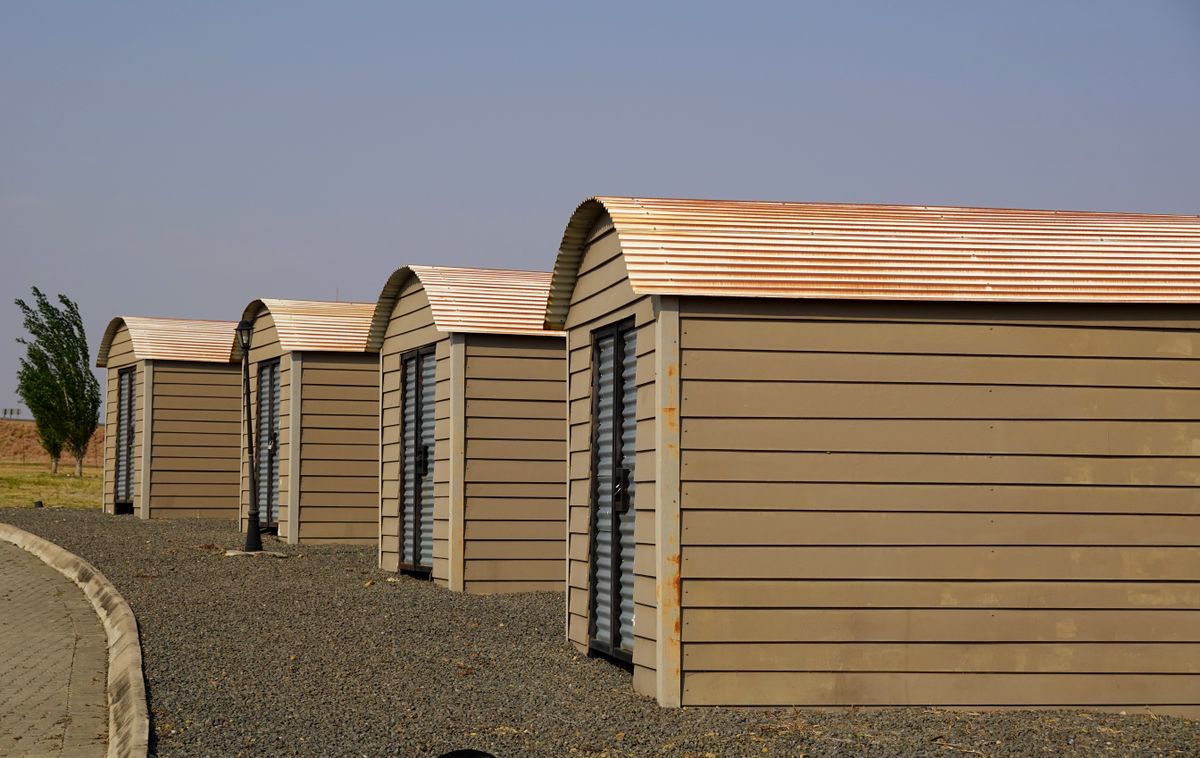
No garage? A modern resin or steel storage shed is the next best thing, and the 2026 models look far better than the rusty boxes I grew up with. Mine sits on a level gravel base behind the house.
These sheds shrug off rain and snow, lock securely, and need almost no upkeep. Just size up — a mower plus a trimmer and a gas can fills a small shed faster than you think.
Pro Tip: Anchor the shed to its base and add a small solar light inside so evening put-aways are not done in the dark.
4. Barn Storage for Riding Mowers

If you run a riding mower, a barn or large outbuilding is honestly the happiest home for it. My neighbor parks hers beside the barn’s wide sliding door, where she can drive straight in after mowing the pasture strip.
Riding mowers are heavy and wide, so ground-level, drive-in access beats any clever small-space trick. Keep the battery on a maintainer through winter and the machine will reward you every spring.
Pro Tip: Park riding mowers on boards or a rubber mat — bare earth and concrete both wick moisture into tires and decks.
5. A Lean-To Added to the Shed

When my shed got too full, I added a simple lean-to along its side: three posts, a sloped panel roof, and suddenly the mower had a dry home of its own. It is the cheapest covered storage I have ever built.
A lean-to works beautifully for the mower and wheelbarrow together. Face the opening away from your prevailing wind and rain, and hang a tarp curtain across the front if your winters are harsh.
Pro Tip: Slope the lean-to roof at least a few inches so rain runs off instead of pooling above your mower.
6. An Outdoor Spot with a Breathable Waterproof Cover
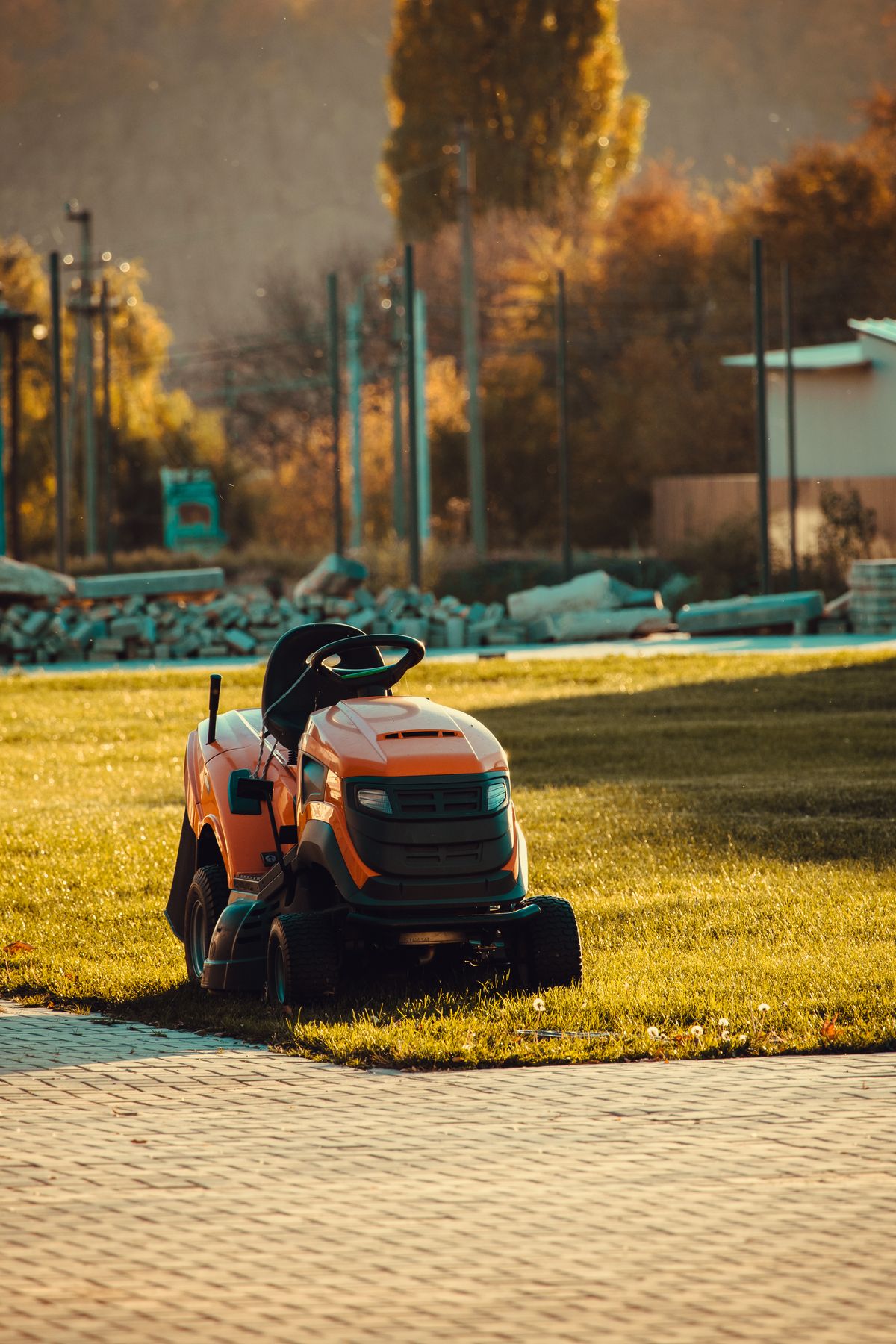
Plenty of us store the mower outside, and a good cover makes it perfectly fine. I use a heavy, breathable waterproof cover — breathable matters, because sealed plastic traps condensation against the metal.
Park on pavers or a deck pad rather than bare grass, and brush off clippings before covering. Stored this way, my old spare mower survived three winters outside and still started on the second pull.
Pro Tip: Bungee the cover snugly at the wheels so wind cannot lift it and turn it into a sail.
7. A Pegboard Wall for Mower Accessories

The mower itself is only half the clutter — there is also the trimmer line, spare blades, oil, funnels, and gloves. I mounted a pegboard on the wall right above where my mower parks, and everything finally has a hook.
Hanging accessories at eye level means I actually see when I am running low on oil or line. It also keeps sharp blades up high, away from curious little hands.
Pro Tip: Outline each tool’s spot with a marker on the pegboard so the whole family puts things back where they belong.
8. A Hanging Rail Inside the Shed
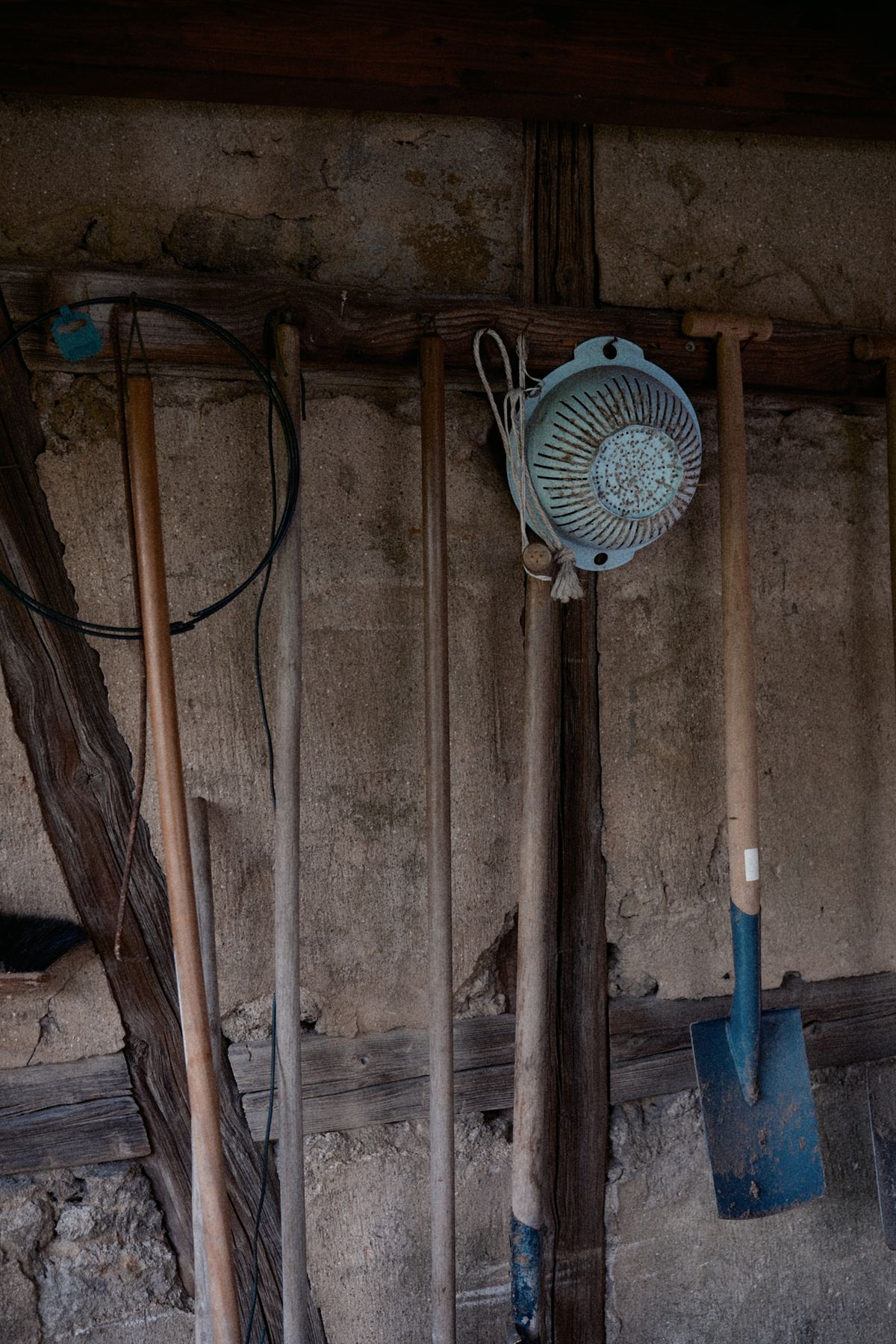
Do not waste the walls of your shed. I screwed a simple rail with S-hooks along one shed wall for the extension cord, the blower tube, and my mower’s grass catcher bag.
The catcher bag is the bulkiest accessory I own, and hanging it freed a whole shelf. Just keep the rail clear of the door swing, and check that your hooks are rated for the weight.
Pro Tip: Hang the grass catcher by its handle so it can air out — a damp bag stored flat is a mildew farm.
9. A Shared Corner for the Mower, Wheelbarrow, and Tools

In a small yard, the mower has to share. I grouped my mower, wheelbarrow, and long-handled tools into one outdoor corner by the shed, roughly in the order I use them on a Saturday.
Grouping by task instead of by object saves real steps over a season. The wheelbarrow nests against the wall, tools stand in a barrel, and the mower rolls out first and back in last.
Pro Tip: Put the items you use most at the front of the corner — in my yard that is the mower, from April to October.
Also read: For the awkward space under the stairs in that same garage, I swear by these Smart Under Stair Storage Ideas — they turned dead space into my tool closet.
10. Fold the Handle and Stand a Push Mower Upright

Many newer push mowers fold nearly flat, and it still surprises me how few people use the feature. I fold my handle down and stand the mower upright against the garage wall between mows.
It takes up about as much floor space as a suitcase. Check your manual first — most four-stroke engines can only tilt one way, air filter side up, so the oil stays where it belongs.
Pro Tip: Add a wall strap or bungee at handle height so an upright mower can never tip forward.
11. A Pre-Storage Clean and Maintenance Routine

Storage is not just parking — how you put the mower away decides whether it starts in spring. Before mine goes into its corner for winter, I brush off the deck, change the oil, and sharpen the blade.
I also run the fuel dry or add stabilizer, and pull the spark plug boot for safety. Twenty minutes in November saves me a repair bill and a very grumpy April morning.
Pro Tip: Photograph the blade and belt setup before you remove anything — reassembly in spring becomes a five-minute job.
12. A Parking Mat to Catch Drips and Rust
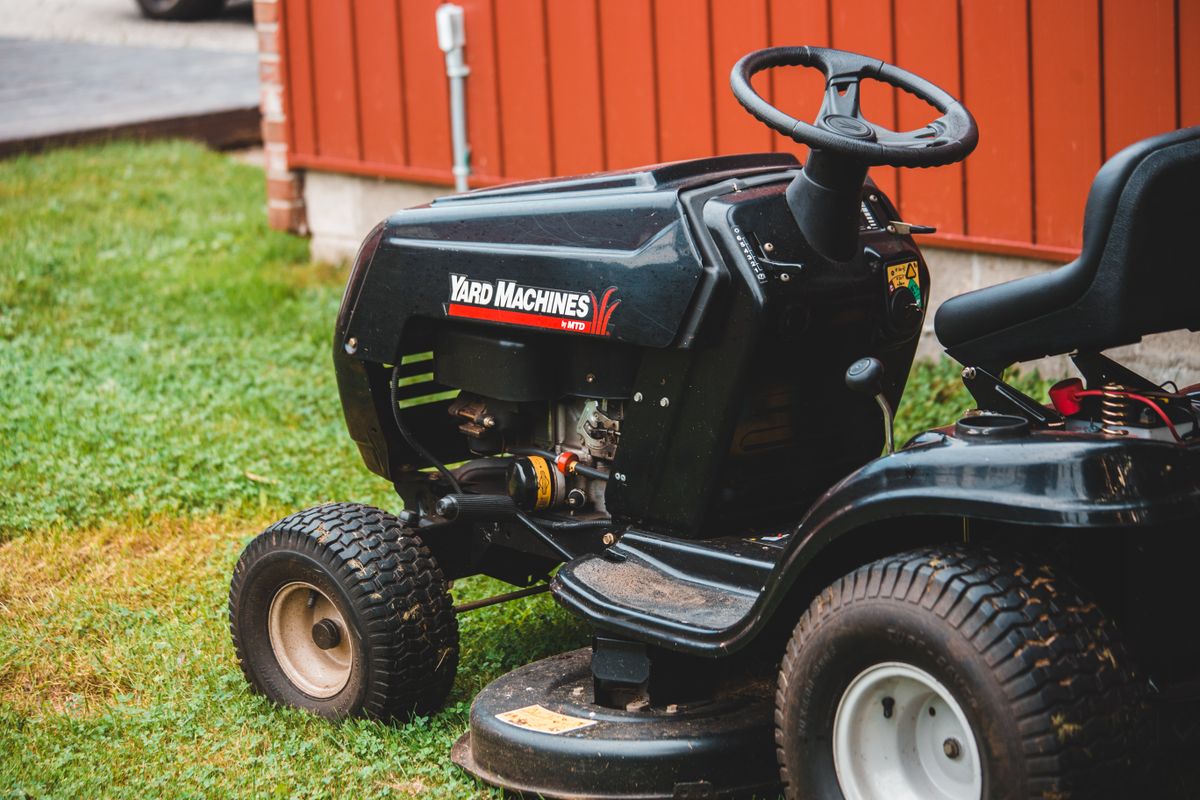
A simple oil-absorbent parking mat under the mower protects garage and shed floors from fuel drips, oil spots, and rust rings off the deck. I rolled mine out once and forgot about it.
Mats also make a clear visual parking spot that keeps the mower from slowly migrating across the garage. For riding mowers, interlocking rubber tiles do the same job and cushion the tires.
Pro Tip: Choose a mat slightly larger than the mower so drips from the deck edges land on it, not beside it.
13. A Rustic Tool Shed Corner Just for the Mower
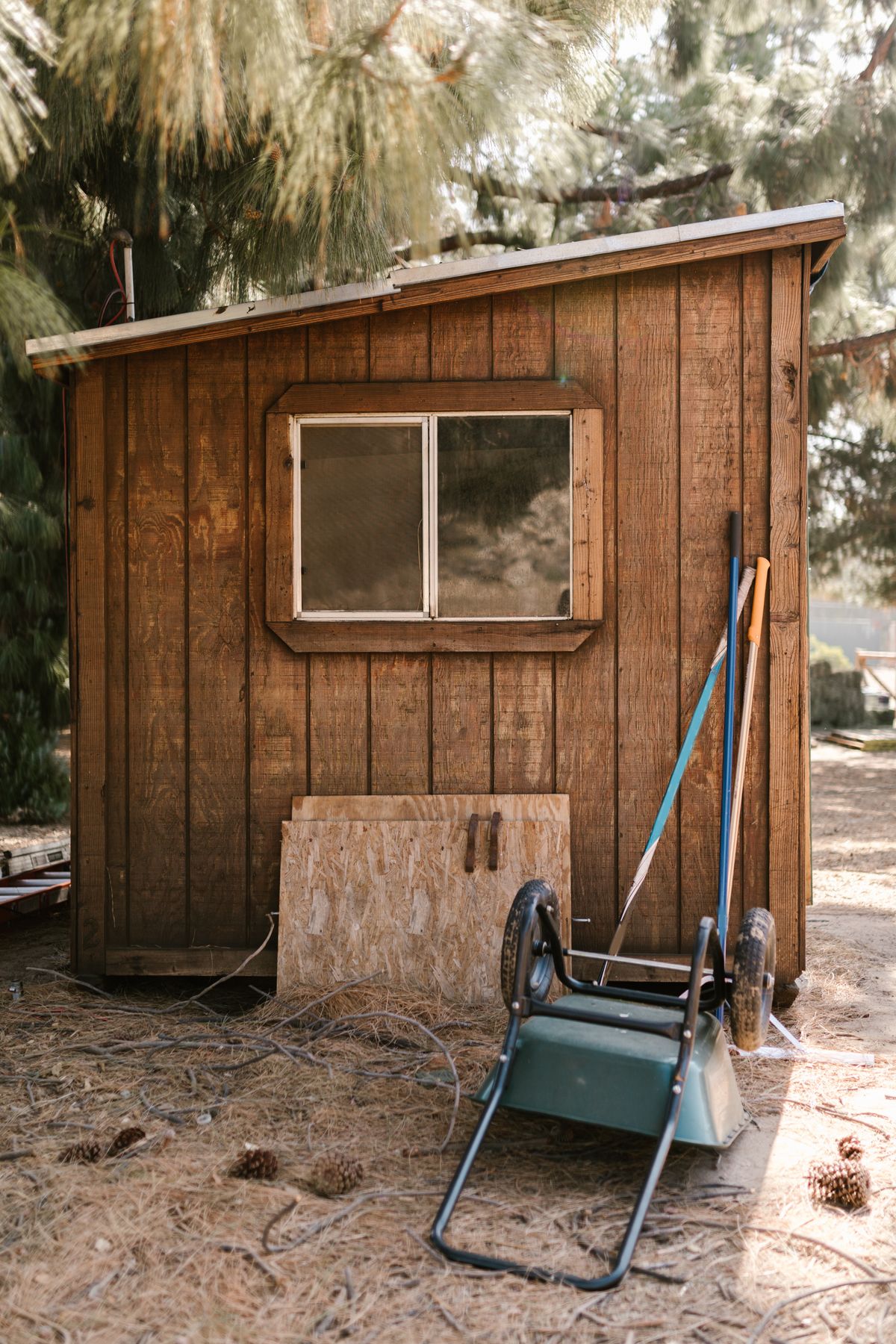
Helping my dad reorganize his old tool shed, we gave the mower the front corner by the door and moved everything else deeper in. It sounds small, but a mower-first layout is the whole trick.
Anything stored behind the mower effectively disappears until mowing day. Keep the path from door to mower completely clear, and even a crowded rustic shed feels workable.
Pro Tip: Hang a battery lantern by the shed door — old sheds are always darker than you remember.
14. A Ventilated Spot for Fuel and Batteries
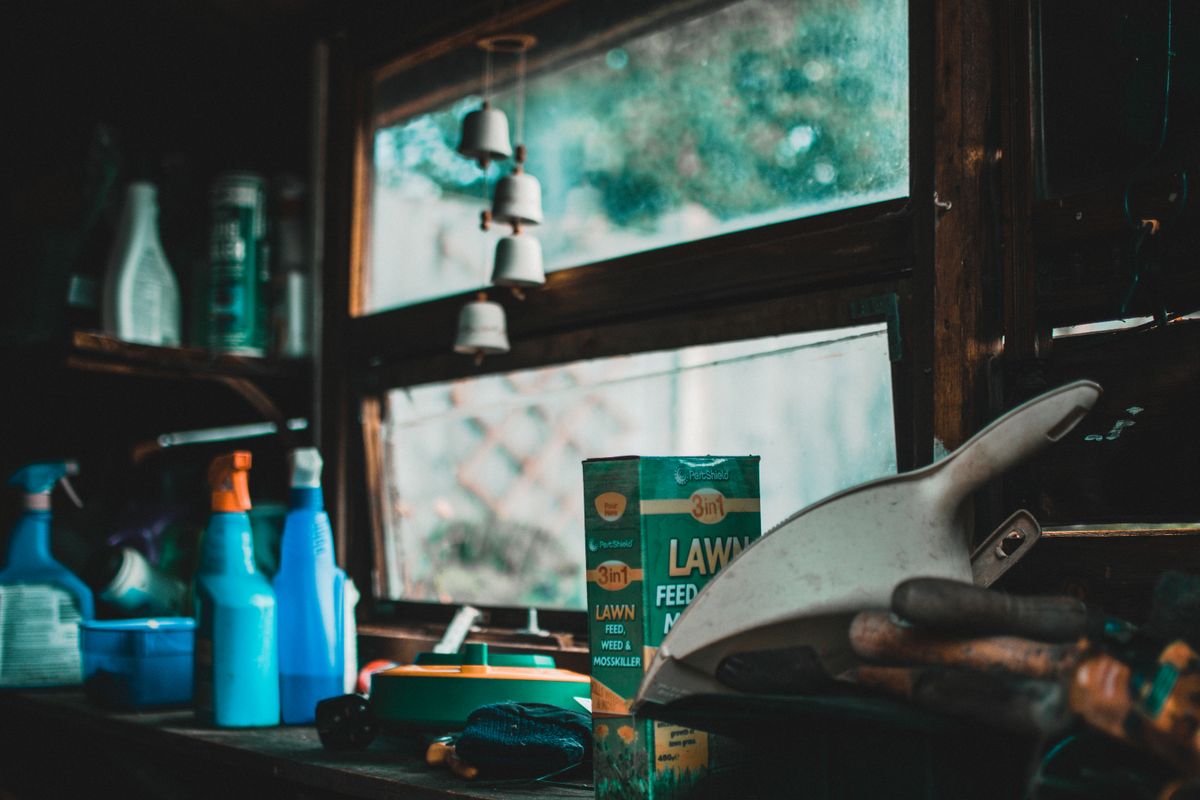
Gas cans and mower batteries should never live right on top of the mower. I keep fuel in a ventilated corner of the shed, away from heat sources, and my cordless mower’s batteries charge on a shelf indoors.
Batteries especially hate freezing sheds — storing them in a mild indoor spot noticeably extends their life. Label the fuel can with the month you filled it, and rotate older fuel into the car.
Pro Tip: Never store a gas can inside the house or near a water heater; a ventilated shed corner is the safe standard.
15. Winterize and Tuck the Mower Away for the Season
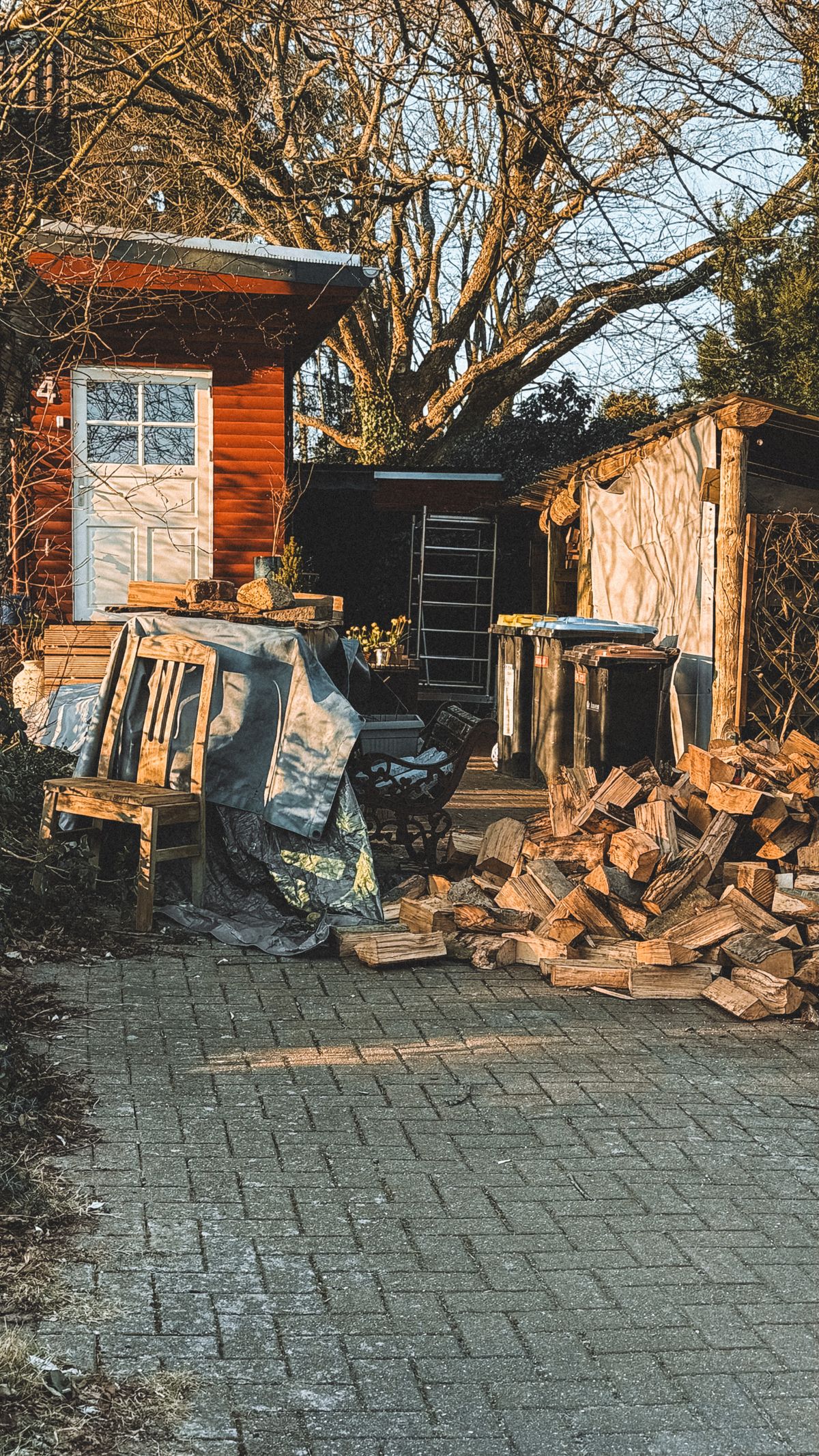
Come autumn, my mower gets the full send-off: clean deck, fresh oil, stabilized fuel, the battery on a tender if it is a rider, and its cover on snug. Then it sleeps in the shed’s back corner until spring.
Winter is also when I move the snow gear and firewood tools forward — swapping seasonal equipment twice a year keeps the shed feeling twice its size.
Pro Tip: Set a phone reminder for the first dry weekend of spring to service the mower before the grass wakes up.
Read this next: The seasonal swap is easier when everything outdoors has a home — my favorite Umbrella Storage Ideas fixed our patio corner in one afternoon.
16. A Mobile Maintenance Kit That Lives Beside the Mower

I keep a small caddy right beside my mower’s parking spot: socket set, spark plug wrench, spare plug, blade sharpener, oil, and work gloves. Every mower job starts and ends in the same square yard of garage.
Before this, every five-minute task involved three trips across the house for tools. A kit that lives with the machine is the storage upgrade I feel most often.
Pro Tip: Add a headlamp and a can of penetrating oil to the caddy — the two things you always need mid-job.
17. Ramp Access for Riding Mower Sheds
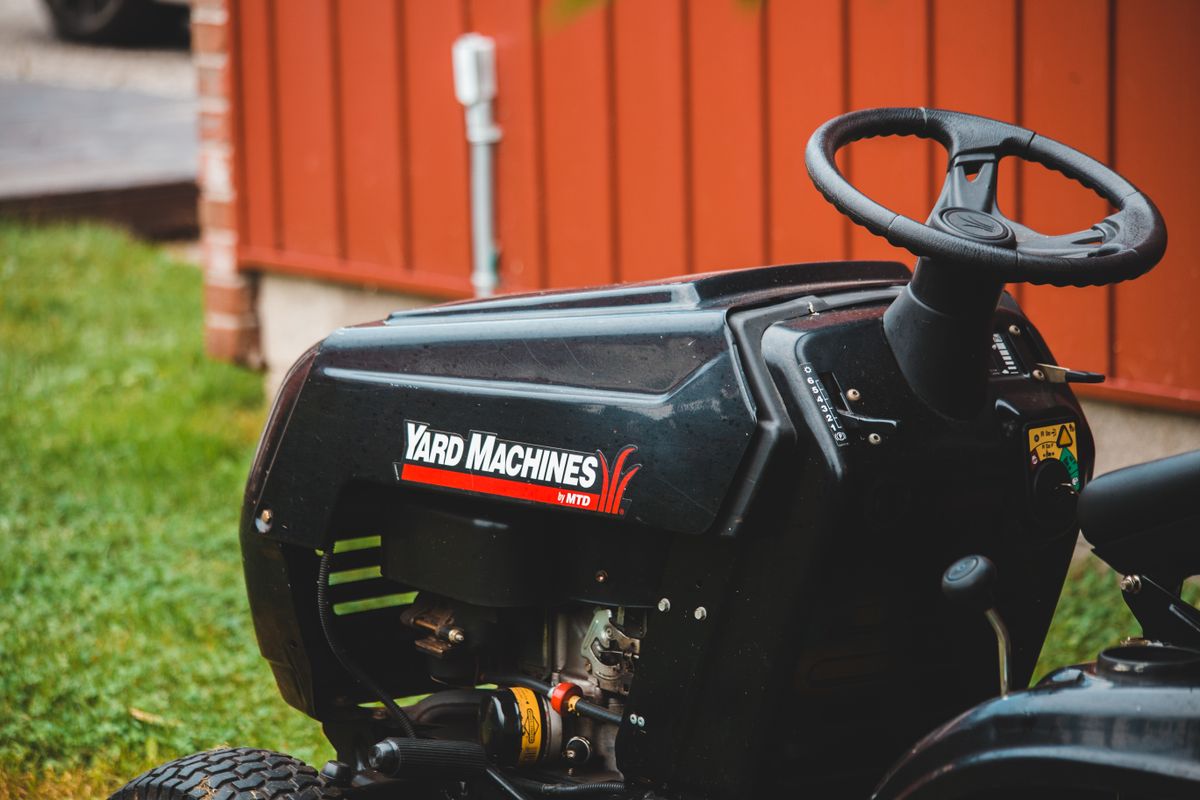
If your riding mower lives in a raised shed, a sturdy ramp is not optional — it is the storage system. I built mine from wide planks with grip strips, at a gentle angle the mower climbs without spinning its wheels.
Store the ramp inside the shed doorway or hinge it so it folds up. And always drive in slowly, deck raised, rather than muscling a heavy rider up by hand.
Pro Tip: Screw-down ramp hinges beat loose boards for safety; a shifting ramp under a riding mower is genuinely dangerous.
18. A Simple Paver Parking Pad in the Backyard
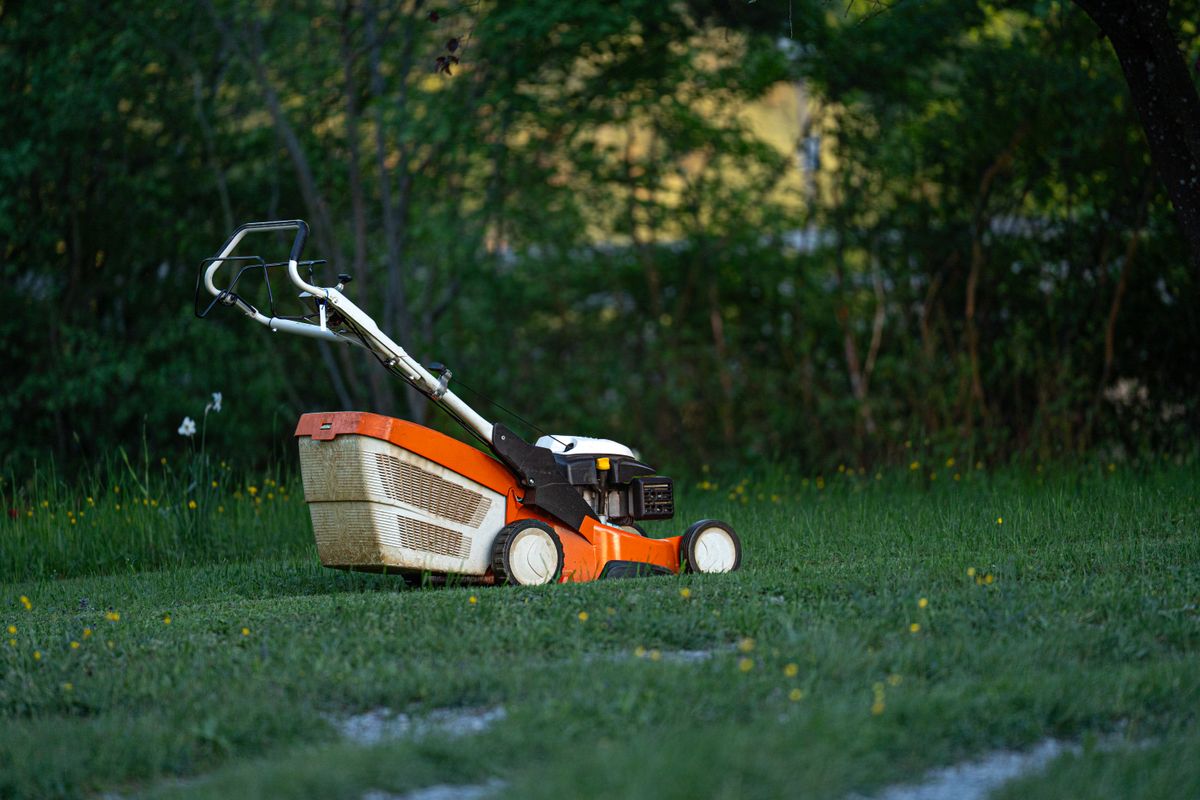
My favorite budget solution of all: a flat pad of pavers or gravel in a shady backyard corner, sized just for the mower, with its cover on top. It costs almost nothing and keeps the machine off damp grass.
Off the lawn means no dead yellow patch underneath and no mud tracked into the shed. Add a low hedge or a fence panel and the pad all but disappears into the garden.
Pro Tip: Level the pad carefully — a mower parked long-term on a slope can let oil pool on one side of the engine.
Frequently Asked Questions About Lawn Mower Storage
Can I store my lawn mower outside all year?
Yes, if you do it properly. Park it on pavers or a pad — never on bare grass — and use a breathable waterproof cover that cannot trap condensation against the metal. Clean off clippings, keep the fuel stabilized in winter, and expect a little more cosmetic wear than a shed-stored mower. My spare mower has wintered outside for years with exactly this setup.
Should I store my push mower vertically?
Only if the manufacturer designed it for vertical storage, as many newer models are. Folding the handle and standing the mower up saves real floor space, but on a standard four-stroke engine, tipping the wrong way floods the air filter with oil. Check the manual, and always tilt with the air filter side up if you must lean it.
Do I need to drain the gas before winter storage?
You have two good options: run the tank dry, or fill it and add fuel stabilizer. I use stabilizer because a full, treated tank resists condensation and keeps seals from drying out. What you should not do is leave untreated gas sitting for months — it gums up carburetors and causes most spring no-starts.
How do I keep mice out of a stored mower?
Start with a clean machine — grass clippings and seed heads under the deck are nesting invitations. I sweep the storage corner, seal shed gaps with steel wool, and check the air filter housing before the first spring start. A few drops of peppermint oil on a cotton ball nearby helps, and I reapply it monthly.
Where should I store cordless mower batteries?
Indoors, at mild room temperature, is best. Cold sheds shorten battery life, and freezing a lithium battery can damage it permanently. I store mine at roughly half charge on a shelf in the laundry room and top them up in spring. Keep them off concrete floors and away from anything flammable while charging.
What size shed do I need for a lawn mower?
For a push mower, plan on at least a 5-by-3-foot clear area with a door you can roll straight through. Riding mowers need more — an 8-by-10 shed with a wide door and a ramp is a comfortable minimum. Always measure your mower’s width with the catcher attached; that is the number that decides the door.
Final Thoughts
If I had to sum it all up: give the mower one dry, level home, keep it clean going in, and store its fuel and accessories like you mean it. None of these ideas needs a big budget — the paver pad and the garage corner cost me almost nothing, and they are the two I rely on most.
Pick the option that matches the space you actually have, not the shed you dream about, and your mower will start easier, rust slower, and stop being the thing you trip over. Happy mowing!




One Comment