
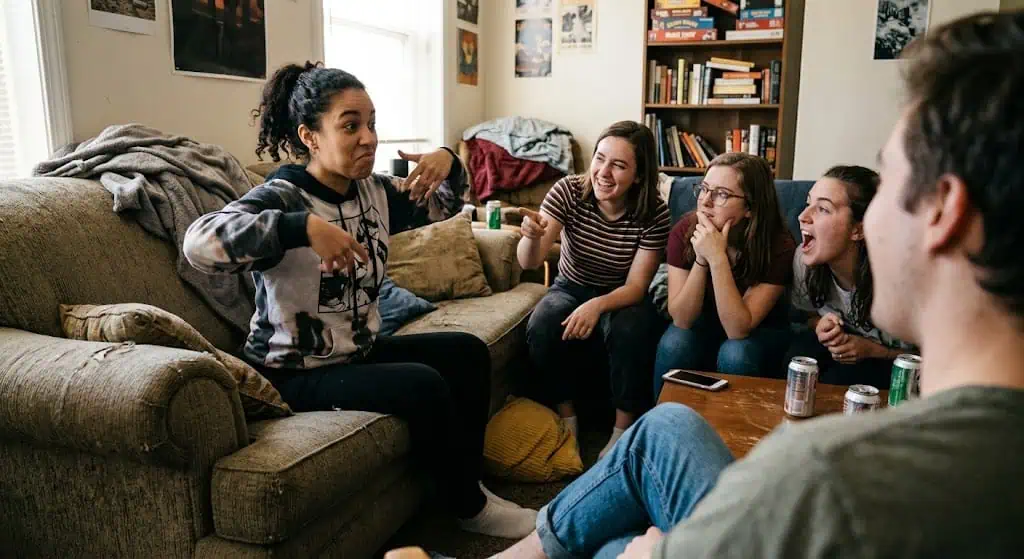
21 Brilliant TikTok Games to Play With Friends (No Props) 2026
I’ve found that an ordinary evening can become a fun game night without buying decorations, cards, prizes, or party supplies. If everyone already has a phone, I have most of what I need to get started.
TikTok provides plenty of inspiration through sounds, trends, filters, videos, challenges, and familiar social-media formats. Some of these games work best with a group, while others are easy to adapt for two people. I can also adjust the content for teens or adults by choosing age-appropriate prompts, sounds, and videos.
For quick guessing games, I’d start with Guess the Sound, Finish the TikTok Audio, Who’s Most Likely To, the Outfit Rating Game, or the Accent Challenge. Most rounds can take about 5–15 minutes, depending on the number of players and how competitive the group becomes.
When everyone needs to get moving, Dance Move Telephone, Freeze Dance, the Mirror Challenge, Tortilla Slap Roulette, and the Invisible Box Challenge offer more active options. For a quieter group, Roman Empire Trivia, Caption This, Trend or Pretend, Guess the Filter, Emoji Story Decode, and the Comment Section Game require less movement.
Save this for later
Table of Contents
“No props” does not mean no technology. Most of these games use at least one phone for sounds, videos, timers, recording, or scoring, although several can be adapted using group-created prompts. I keep recording optional, preview TikTok content for younger players, and skip any physical challenge that feels uncomfortable or unsafe.
Key Takeaways
- These 21 games need little or no physical party equipment.
- One phone is enough for many games; extra phones can make scoring, music, and hosting easier.
- A flexible 5–15 minute limit helps keep individual games moving.
- Alternating guessing, movement, and performance games gives different personalities a chance to participate.
- Playing a TikTok-inspired game does not require anyone to post or share content online.
- Younger players need age-appropriate sounds, videos, comments, and filters.
- Clear floor space matters for movement games, while physical contact should always be optional.
- Four to six games can comfortably provide activities for a two- to three-hour gathering, with plenty of time left for food and conversation.
Related article: 23 Hilarious Prize Ideas for Games Winners
What TikTok Games Can You Play With Just Your Phones?
1. Guess the Sound
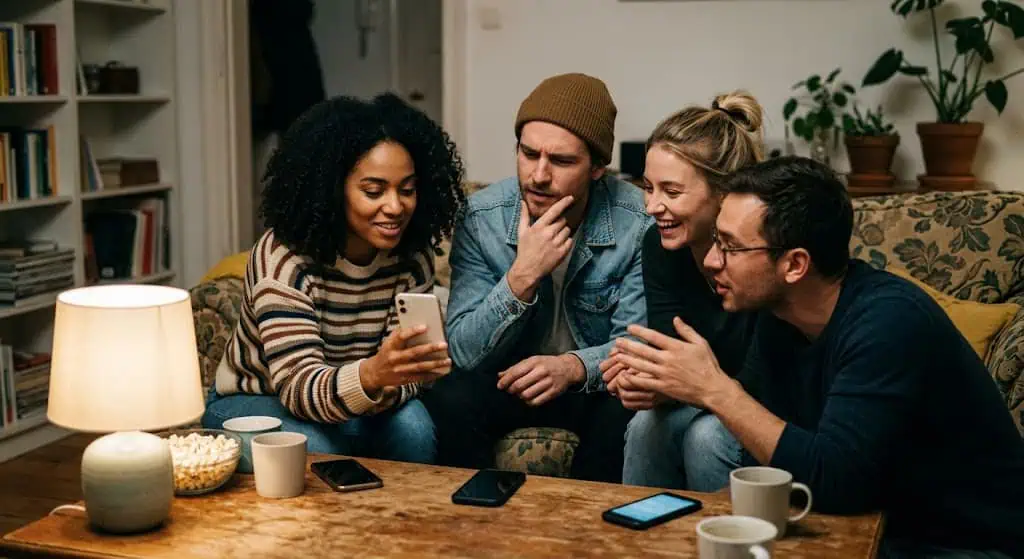
I play only the opening portion of a familiar TikTok sound and stop before it becomes too easy. Everyone then tries to identify the sound, song, quote, or what comes next.
A correct answer earns one point, and I can replay the short clip when there is a dispute. The first player to five points can win, or I can simply play a set number of rounds for a more relaxed group.
Pro Tip: I prepare several suitable sounds before the party so I’m not scrolling through TikTok between every round. I also check the content first, particularly when younger guests are playing.
2. Finish the TikTok Audio
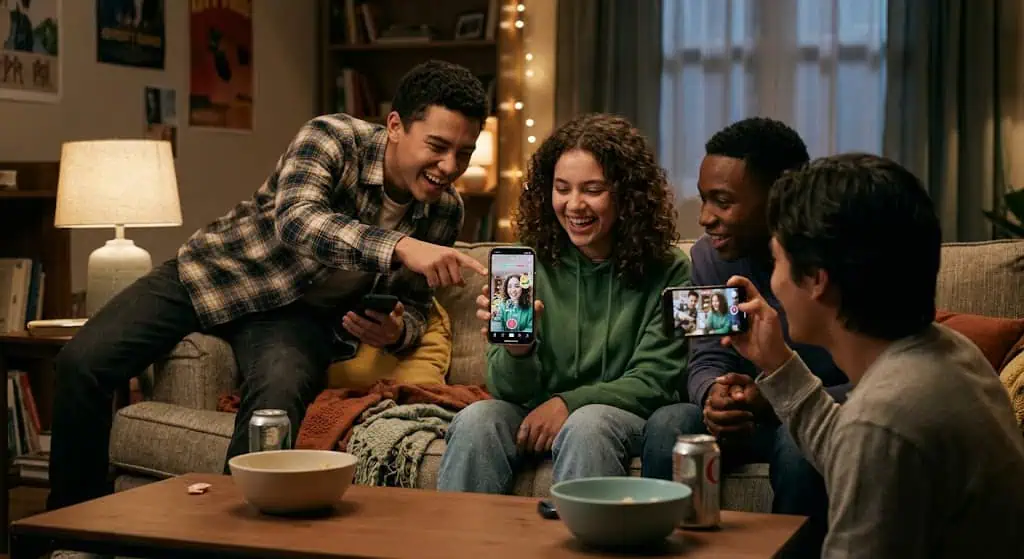
I play the beginning of a recognizable spoken sound or short audio clip and stop it. The selected player then tries to continue from memory.
For a faster version, I give the player about three seconds to respond. If they cannot continue, another person gets the opportunity. Five to ten rounds usually give everyone enough chances to play.
I don’t require anyone to recite long song lyrics. Short spoken phrases, sounds, or brief recognizable sections work just as well and make the game easier to manage for different age groups.
3. Who’s Most Likely To — TikTok Edition
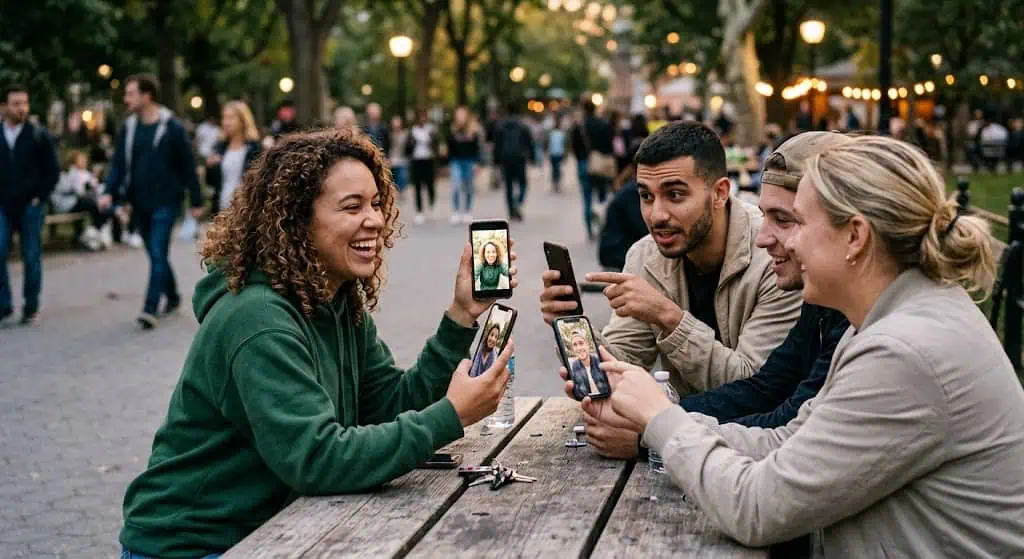
I turn the familiar “most likely to” format into harmless social-media-style questions. Examples include, “Who would accidentally go viral?” or “Who would reply to a celebrity and get noticed?”
Everyone points at the same time, and the person with the most votes can give a funny explanation or simply move on to the next question.
I keep the prompts focused on habits and fictional situations rather than appearance, relationships, finances, private problems, embarrassing secrets, or sensitive personal characteristics. The game works better when teasing stays light.
4. The Outfit Rating Game
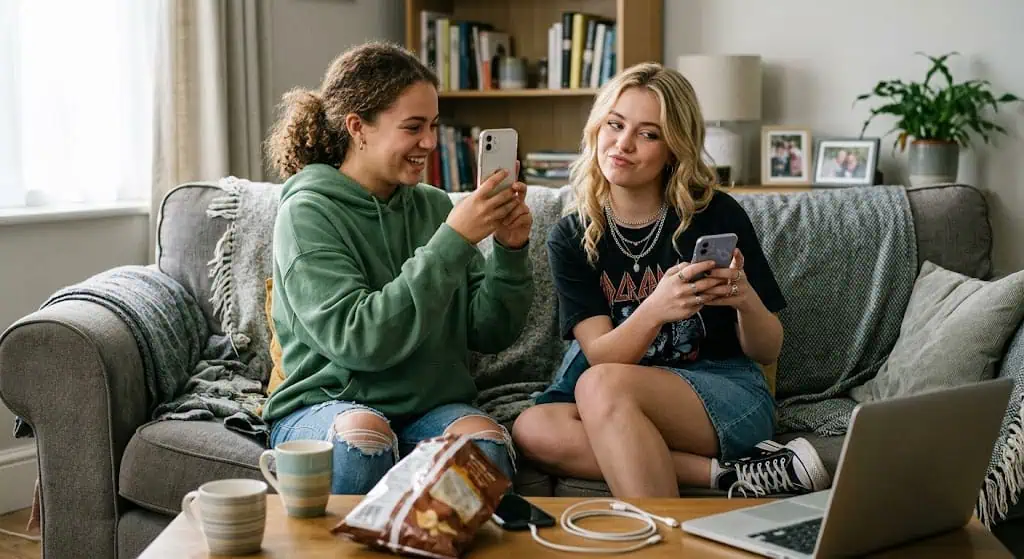
I turn a hallway or open area of the living room into a small runway. One person walks through while the others comment on the outfit or styling.
Instead of judging someone’s appearance, I use categories such as creativity, color combination, party-ready style, or funniest overall look. Scores from 1 to 10 can work, but descriptive awards are a better option if numerical ratings feel uncomfortable.
Pro Tip: I make the outfit the subject of the game, not the person’s body, weight, age, attractiveness, or physical features. That simple boundary keeps the activity much more comfortable for a mixed group.
5. The Accent Challenge
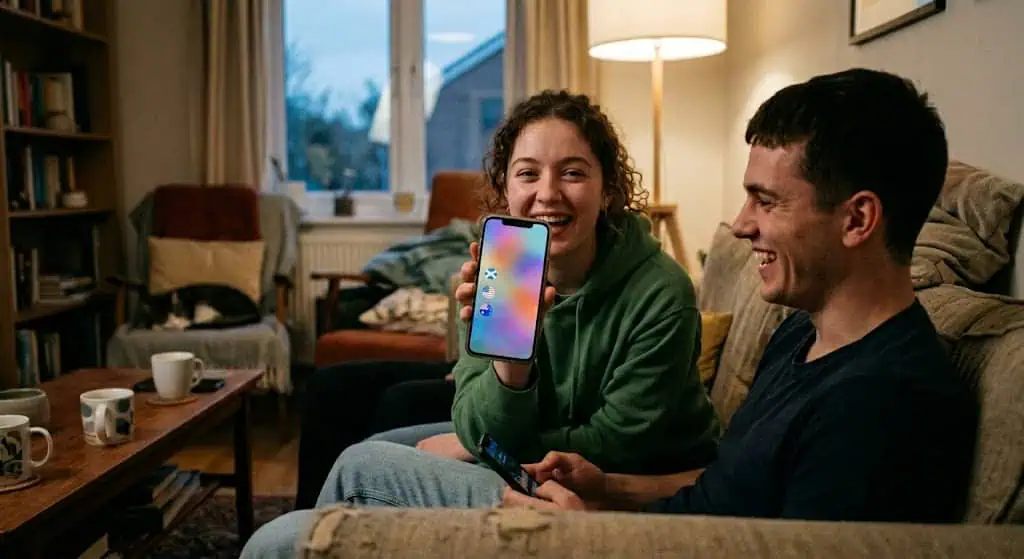
I put a few simple phrases into my notes app and give each player a performance voice to use. A news presenter, game-show host, dramatic movie narrator, robot, or fictional character can be much more entertaining than simply trying to copy a real person’s accent.
Everyone reads the same phrases and the group can vote on the most convincing, dramatic, or unexpected performance.
If regional accents are included, I keep the game respectful and avoid turning a real culture, nationality, or community into the joke. Exaggerated fictional voices are usually enough to make the challenge funny.
6. Roman Empire Trivia
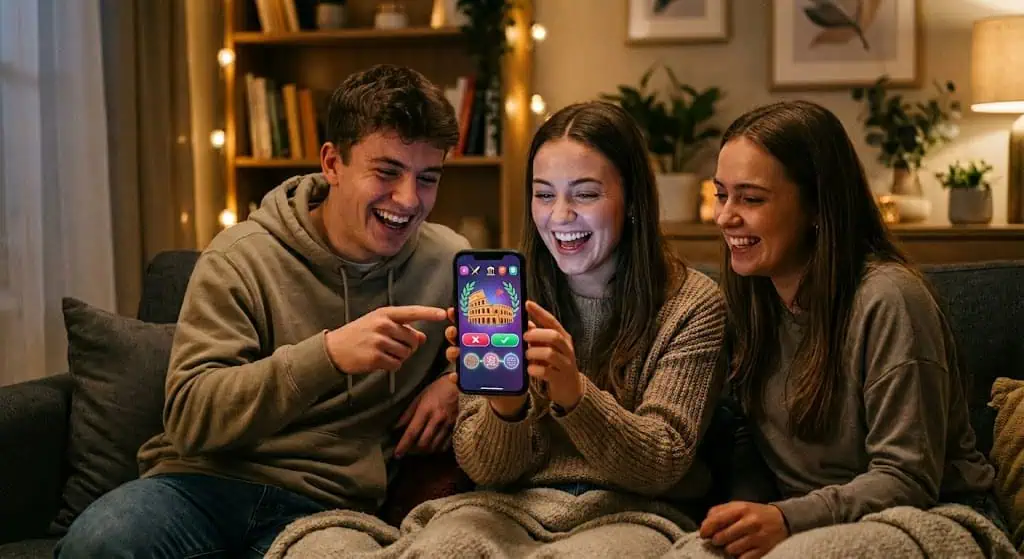
Despite the name, this is not a Roman history trivia game. I use the TikTok-inspired “Roman Empire” conversation trend as a guessing game where players reveal an oddly specific subject they think about frequently.
Each person privately submits one harmless topic, such as history, sports, unusual facts, food combinations, or a hobby. I shuffle the answers, read them aloud, and everyone guesses who wrote each one.
The fun comes from discovering unexpected interests among friends, not from testing anyone’s knowledge of ancient Rome.
7. Silent Library Challenge
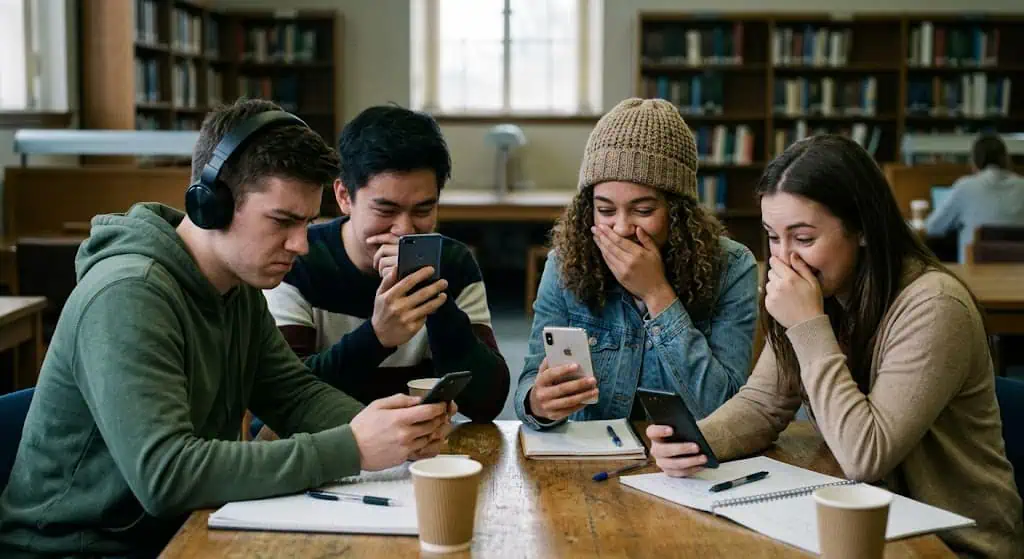
One player watches a funny, preselected TikTok video while everyone else watches their reaction. The goal is to stay completely quiet and keep a straight face.
If the player laughs, smiles, or makes a sound, they lose that round. I continue until one player remains or simply give one point for each successful round.
I select the videos myself rather than relying on whatever TikTok recommends at the moment. For younger teens, I preview the sound, language, visuals, and overall context before showing anything.
8. The Mannequin Challenge Revival
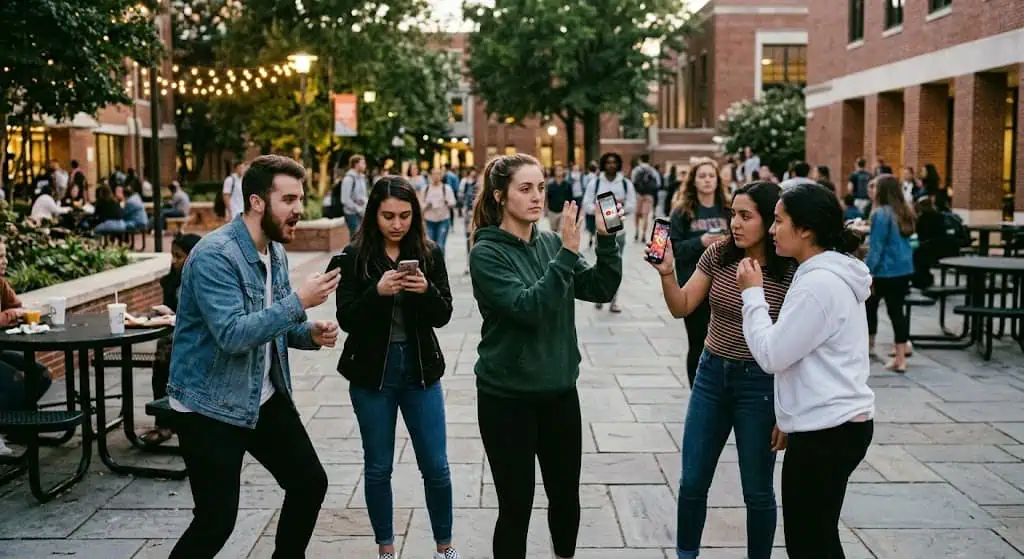
When I call “freeze,” everyone stops where they are and holds their position while another person can record a short walkthrough. The group then votes for the most creative pose.
I prefer simple poses that don’t require anyone to balance awkwardly or hold a physically uncomfortable position. Recording is optional, so the activity can work just as well without saving the footage.
Before starting, I clear the walking route and keep everyone away from stairs, sharp furniture, unstable objects, and crowded areas.
9. Caption This
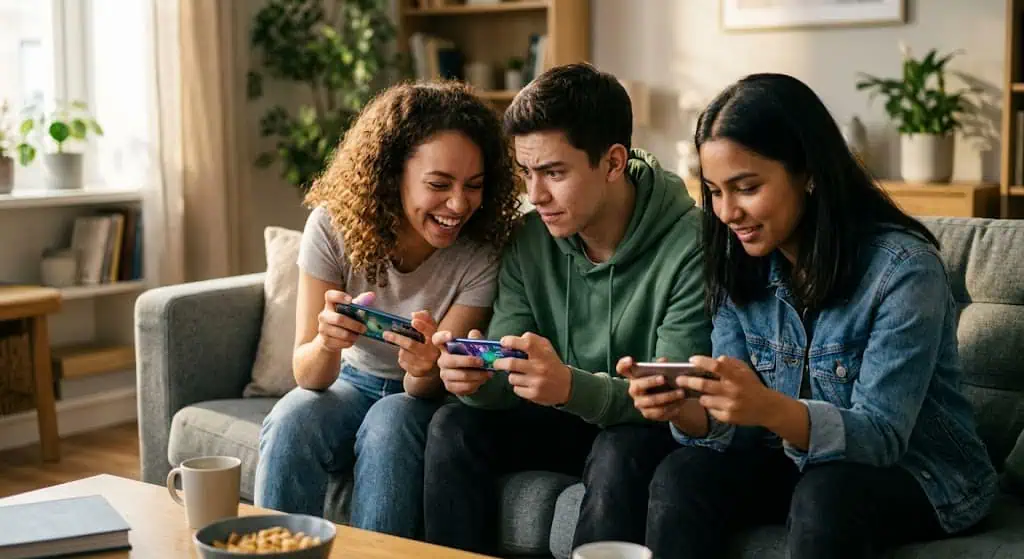
I choose a personal photograph only after getting clear permission from the person who owns or appears in it. Everyone secretly writes a short caption, and the photo owner reads the entries before choosing a favorite.
I usually give the group around 30 seconds to come up with a caption. Three rounds with different photos are plenty for most gatherings.
I never use intimate, private, humiliating, or sensitive photographs for this game. Permission should be part of the rule from the beginning, not something assumed because everyone knows each other.
10. The Duet Reaction Game
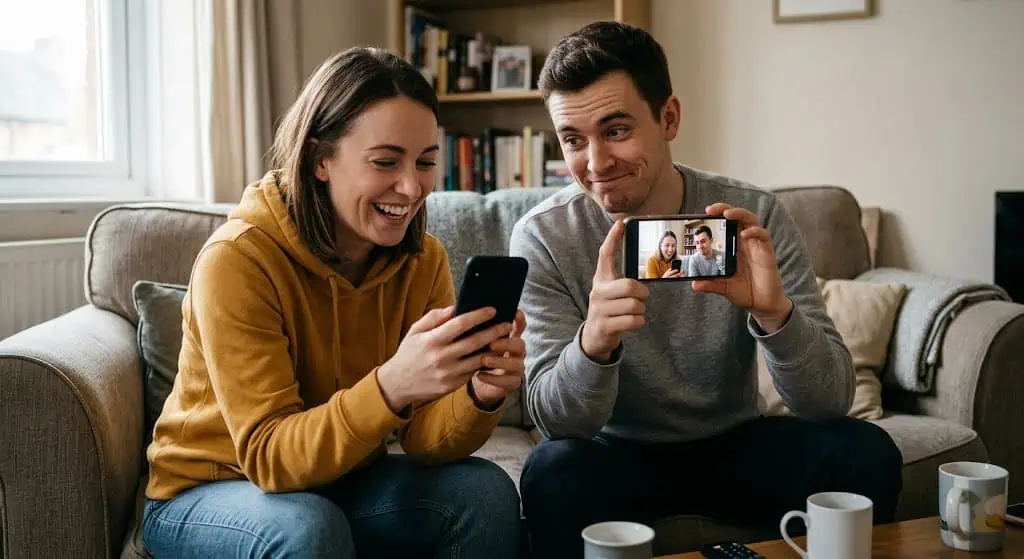
Two people work together: one performs a short pretend TikTok-style scene while the other provides a live reaction. The reactor might act shocked, confused, unimpressed, overly excited, or dramatically amazed.
A 15-second performance keeps the pace quick. Afterward, the audience can judge how well the performance and reaction matched.
Being on camera is never required. Someone can participate as the performer, reactor, audience member, judge, or director, which gives camera-shy guests an easy way to join in.
Which TikTok Games Get Everyone Moving?
11. Dance Move Telephone
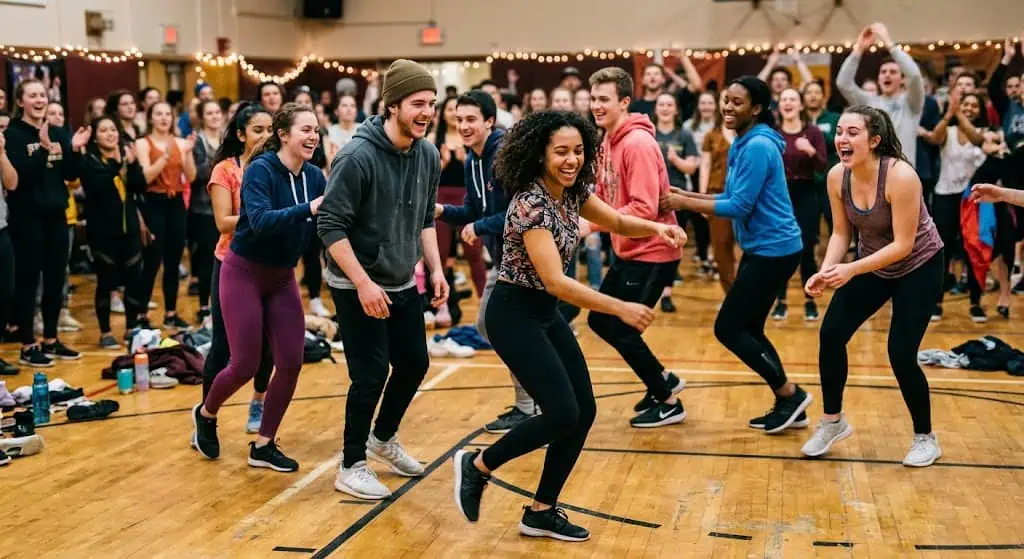
The first player learns a short dance sequence and teaches it to the second person without showing the original again. That player then teaches the next person, continuing down the line.
At the end, the final player performs the version that survived the chain. Comparing it with the original is usually the funniest part.
Pro Tip: I choose movements that fit the room and the players. I clear the floor first and skip jumps, slippery surfaces, furniture, or complicated moves that could lead to collisions. Anyone can sit out a movement they aren’t comfortable performing.
12. Freeze Dance, TikTok Sounds Only
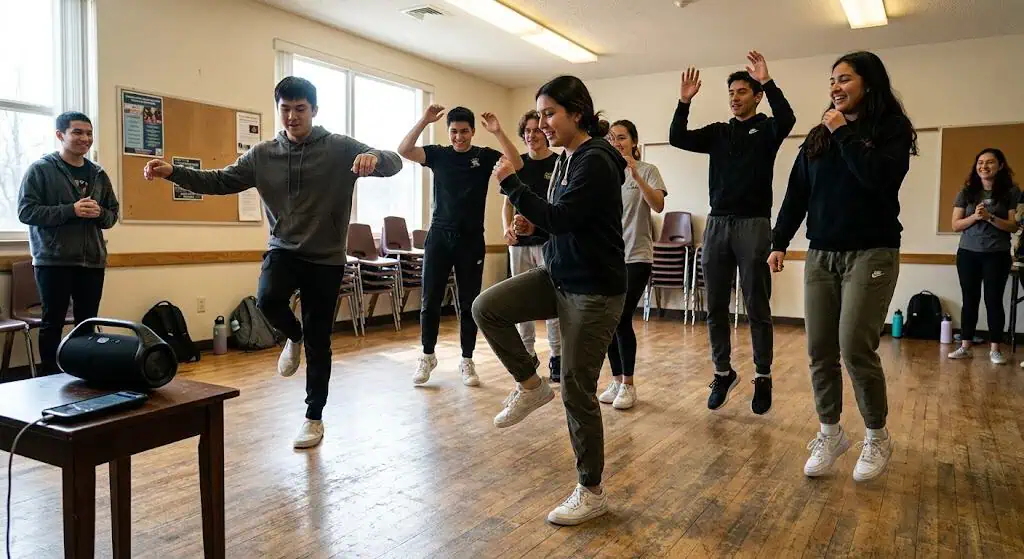
I play a selection of suitable TikTok-inspired sounds while everyone dances or simply moves along at their own comfort level. When the audio stops, everyone freezes.
Players who keep moving can sit out until the next round, or I can avoid elimination entirely and award points for successful freezes. The second version works particularly well with younger players.
I preview the sounds when children or younger teens are involved. Nobody needs to dance energetically; simple movement, hand motions, or even a seated version can work.
Also read: 23 DIY Party games For Kids
13. The Mirror Challenge
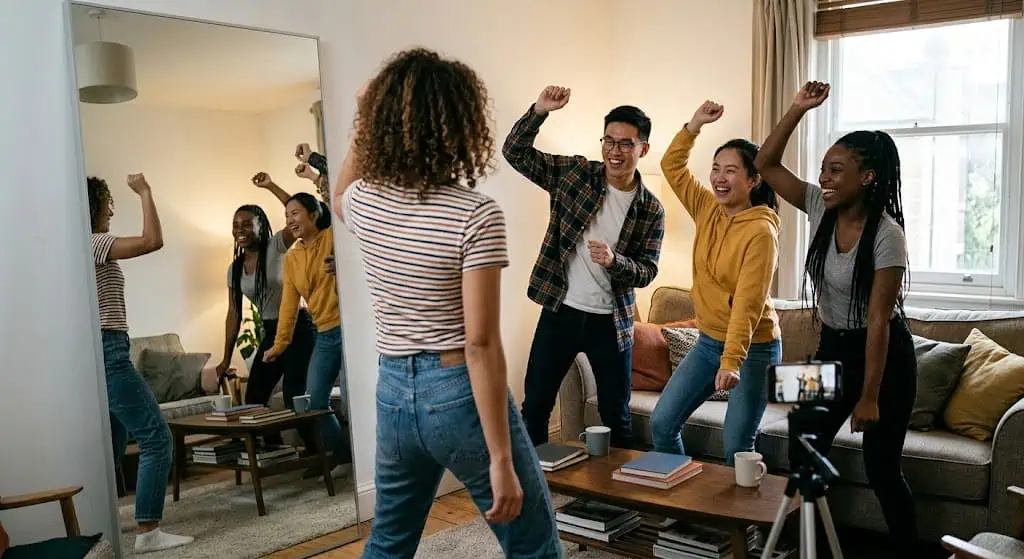
Two players face each other while one leads with slow movements and the other mirrors them. I start slowly because matching a partner in real time is harder than it looks.
After the pair gets comfortable, the leader can gradually increase the pace. The group can time how long they remain synchronized before someone breaks the pattern.
I keep the movements within a clear area of floor space and avoid physically difficult actions. The challenge is about coordination, not athletic ability.
14. Tortilla Slap Roulette — Water-Free Version
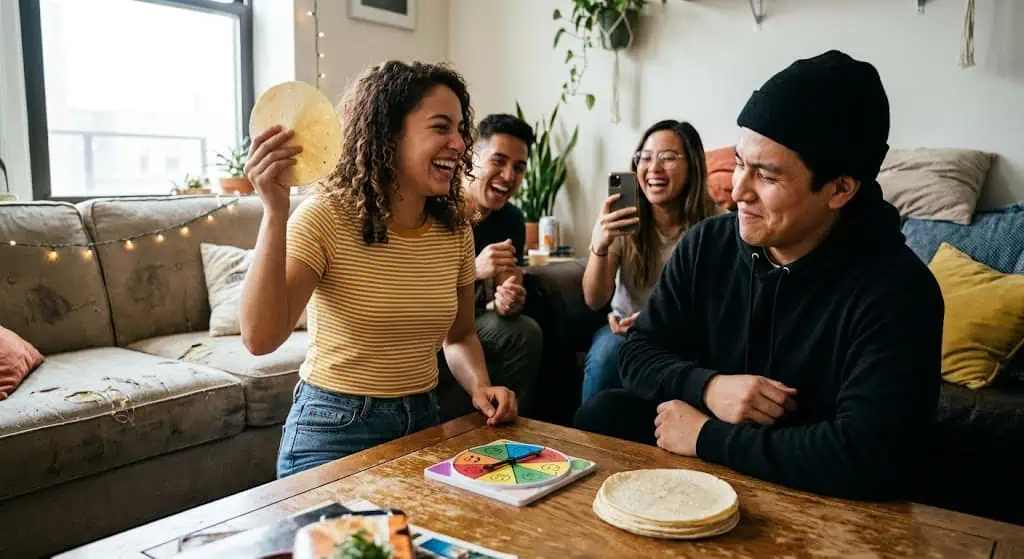
I treat the no-contact version as the safest way to play this TikTok-inspired challenge. Two players use rock-paper-scissors, and the loser pretends to receive a tortilla slap while the other person stops short of making contact.
If everyone explicitly agrees to a physical version, the contact should still be extremely gentle and never become a hit. Nobody should be pressured to participate, and anyone can stop immediately.
I don’t use hard, heavy, rigid, or improvised objects as substitutes. If there is any hesitation about physical contact, I stick with the pretend version; it keeps the joke without turning the game into a hitting challenge.
15. The Invisible Box Challenge
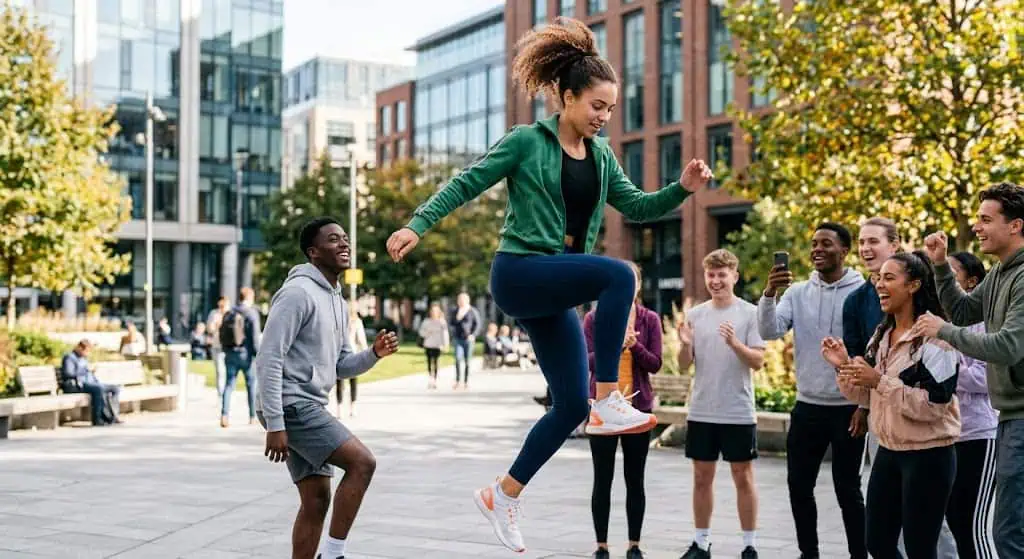
Players attempt to create the illusion that they are stepping over or onto an invisible box. I can record the attempts and use slow-motion playback to compare the performances.
The trick is entirely visual, so there is no reason to use a real box or unstable surface. I keep the floor clear and stay away from stairs, furniture, edges, and other obstacles.
I never ask anyone to jump onto furniture or an actual object to make the illusion more convincing.
What Are the Best TikTok Guessing Games for Groups?
16. Whose Search History?
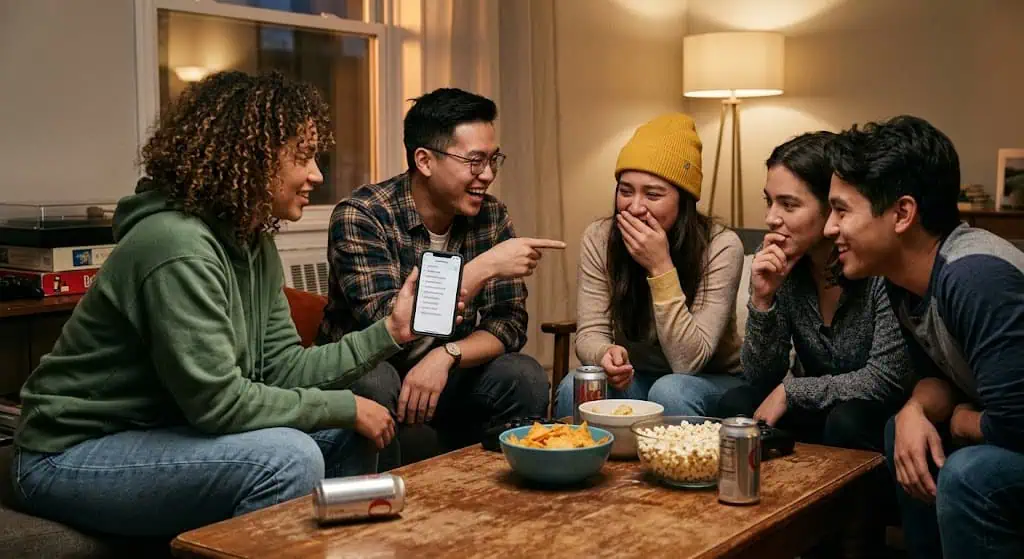
I don’t ask anyone to reveal their actual search history. Instead, each player voluntarily submits one harmless, shareable TikTok search they made recently.
I shuffle the answers and read them aloud while everyone guesses who submitted each one. Anyone who would rather not share can skip the round or submit a fictional answer.
I keep private conversations, health information, financial details, relationship problems, personal issues, and sensitive searches completely out of the game.
17. Trend or Pretend
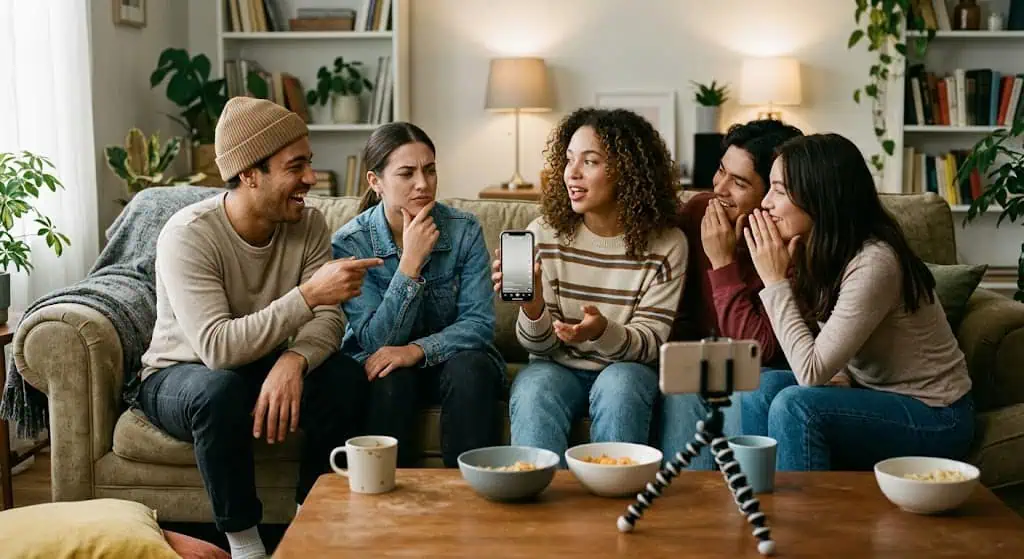
One player describes a supposed TikTok trend, but nobody knows whether it is real or completely invented. Everyone votes on “trend” or “pretend,” and the storyteller reveals the answer.
I rotate the storyteller so everyone gets a chance to create a believable example. Since social-media trends change quickly, I focus on recognizable formats rather than claiming that every example is currently viral.
The invented trends are often just as entertaining as the real ones.
18. Guess the Filter
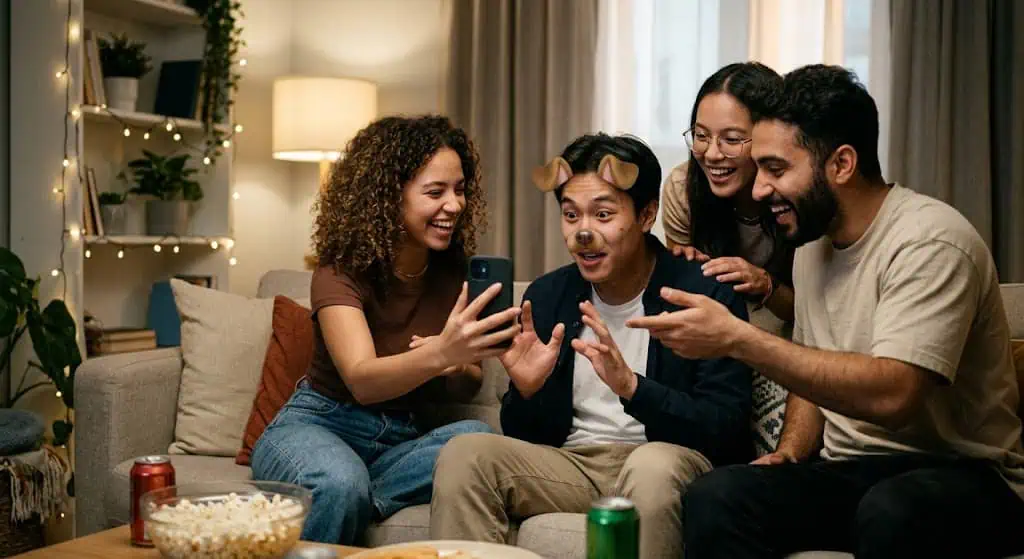
One player uses a TikTok filter while the others try to identify the type of effect from the player’s face and reactions. After everyone votes, the filter is revealed.
I choose effects that are funny without intentionally making someone feel embarrassed or uncomfortable about their appearance.
Recording isn’t necessary for the game. If someone doesn’t want their face captured or shared, the group can simply play the round live and move on.
19. Emoji Story Decode
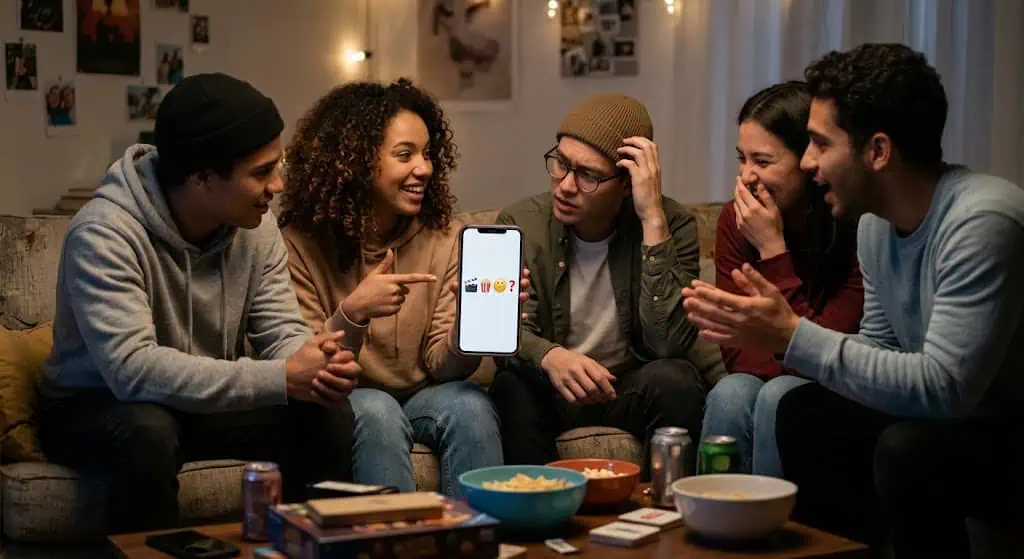
Each player creates an emoji-only clue for a movie, song, famous scene, or recognizable internet moment. The rest of the group races to figure out what it represents.
I allow one hint when a puzzle becomes too difficult. Around three to five puzzles per person is a useful starting point, but I stop sooner if the group starts losing interest.
The clues can identify a work or idea without reproducing long sections of copyrighted lyrics, dialogue, or other material.
20. The Comment Section Game
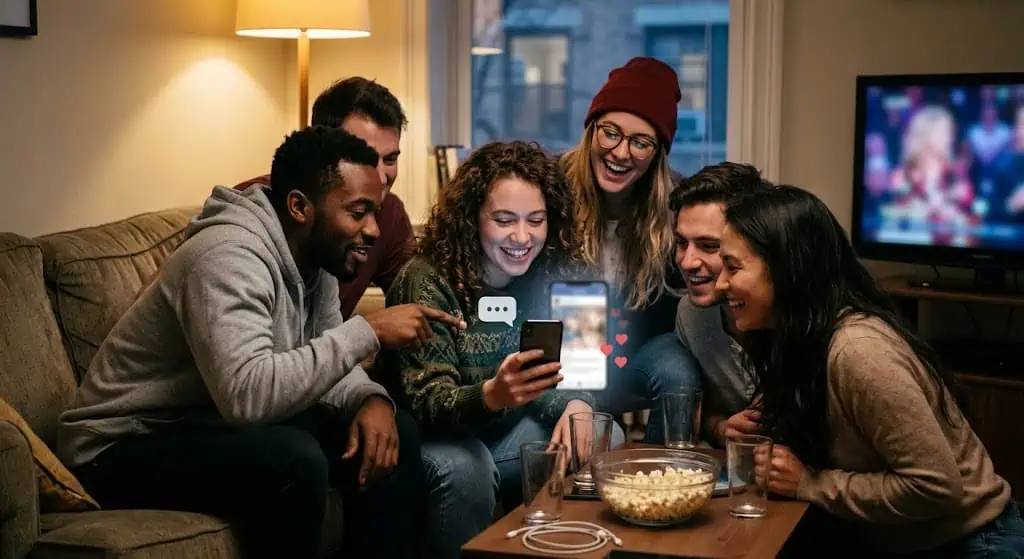
I select a suitable public video and read several comments aloud, including one harmless fake comment created by someone in the group. Everyone votes on which comment is the imposter.
The fake comment should be obviously part of a party game and should not accuse a real person of wrongdoing, imitate someone deceptively, expose private information, or make a harmful allegation.
I find that ordinary-sounding fake comments are harder to identify than exaggerated ones, which makes the guessing more interesting without creating unnecessary risk.
21. POV Charades
I combine charades with fictional POV-style situations. Players act as though they are experiencing a funny scenario rather than simply acting out a single word.
Prompts can include being the last slice of pizza at a party or acting like an alarm clock on a Monday morning. I keep the scenarios fictional rather than asking someone to imitate a real person.
A 30–60 second turn is usually enough. Short rounds keep the game moving and give more people an opportunity to participate.
How Do You Keep Phone-Based Games From Getting Boring?
I don’t try to play all 21 games in one night. A better approach is to choose a handful that match the group, then change the pace when the energy starts to shift.
Rotate the host every round.
Passing the hosting role around keeps one person from controlling the phone all night. The host can select sounds, read prompts, track points, and settle simple ties.
I also find it useful to keep one main phone for the game while other guests use their own phones only when needed. That avoids wasting time passing several devices around.
Set a 15-minute timer per game.
Around 15 minutes is a useful starting point, not a strict rule. A game might finish in five minutes if everyone has had enough, while a particularly funny round may deserve a few extra minutes.
For a two- to three-hour gathering, four to six games can leave plenty of room for snacks, conversation, breaks, and spontaneous activities.
Keep a running scoreboard.
A notes app is all I need for a simple scoreboard. One point per win keeps the system easy to follow, and I can use a short tie-breaker if two players finish with the same total.
Before the party starts, I charge the main phone and make sure the volume is easy to hear. Silencing unnecessary notifications also prevents unrelated messages from interrupting the games.
Mix up the game types.
I avoid playing several guessing games consecutively. A guessing round followed by movement and then a performance activity gives the evening a better rhythm.
Different formats also give different personalities a chance to shine. Someone who doesn’t enjoy dancing may be excellent at Caption This or Trend or Pretend.
Use the camera as a reward, not a requirement.
Some people enjoy recording silly performances, while others would rather participate without appearing on camera. I treat filming and playing as two separate choices.
Before recording someone, I ask for permission. Sharing the footage publicly is another decision entirely, so I don’t assume that a funny party video should automatically be posted to TikTok or another social platform.
End the night with a bang, not a fizzle.
I save an interactive game for the end rather than trying to squeeze every remaining idea into the schedule. POV Charades, Dance Move Telephone, or Silent Library can provide an easy final round.
Stopping while people are still enjoying themselves makes the evening feel more relaxed and leaves room for everyone to talk rather than rushing through one last activity.
Read this next: 21 Easy Luau Party Games With Instructions
Frequently Asked Questions (FAQs)
Q1: What TikTok games can you play with 2 people?
Several games work well with two people, including the Mirror Challenge, Finish the TikTok Audio, Guess the Filter, Caption This, and the Duet Reaction Game.
For a competitive format, I can use best-of-five or best-of-ten rounds. That is optional; two people can also simply play until they’ve had enough.
Q2: Do these games need a TikTok account?
No. Not every game requires TikTok itself. Some use TikTok sounds, filters, or videos, while others only need a phone, notes app, camera, timer, or prompts created by the group.
If a game depends on a TikTok feature, I check access before the party rather than assuming every participant has an account or can use the same feature.
Q3: Are these TikTok games appropriate for younger teens?
Many can be adapted for younger teens, but I wouldn’t assume that every TikTok sound, video, filter, or comment is automatically appropriate.
I preview platform content beforehand and check for language, mature themes, frightening material, and other age-inappropriate content. I also remove personal or uncomfortable prompts and adapt physical activities to the available space.
Q4: How many games should we plan for one night?
Four to six games can provide plenty of entertainment for a two- to three-hour gathering, but there is no required number.
I choose based on the group and leave time for food, conversation, breaks, and games that happen spontaneously. Shorter rounds also make it easier to change plans when something isn’t working.
Q5: What’s the best TikTok game to start the night with?
For an easy opening, I prefer Guess the Sound or Who’s Most Likely To because guests can participate without immediately having to perform on camera.
Here, “best” simply means easiest to use as an opener. Once everyone is comfortable, performance games such as the Accent Challenge or Duet Reaction Game can feel more natural.
Q6: Can these games be played over video call?
Yes, several can be adapted for a video call. Guess the Sound, Finish the TikTok Audio, Trend or Pretend, Emoji Story Decode, and the Comment Section Game are relatively easy to run remotely.
Movement games can be more awkward because of camera framing and audio delays. If I play remotely, I keep the rules simple and accept that technical glitches may become part of the fun.
Conclusion
I don’t need a complicated party setup to create a fun game night with friends. A few phones, suitable prompts, and a willingness to be a little silly can provide plenty of entertainment without buying party supplies.
I’d start with a low-pressure guessing game, then move into movement or reaction challenges as everyone gets comfortable. The important part is matching the games to the people in the room rather than trying to force all 21 into one evening.
I also keep a few simple boundaries in place: filming is optional, private information stays private, younger players get age-appropriate content, and physical challenges remain voluntary and sensible for the space.
Choosing four or five games, keeping the rounds flexible, and leaving time for conversation can make the night feel spontaneous instead of overplanned. That is what makes these TikTok-inspired games easy to bring back the next time friends get together.



One Comment