19 Headphone Storage Ideas for 2026
I like keeping everyday essentials organized, especially items I reach for several times a day. Headphones are easy to overlook when it comes to storage, but leaving them on a desk, tossing them into a drawer, or stuffing them into a bag can lead to tangled cables, dusty ear cushions, and unnecessary clutter.
The good news is that I don’t need a large organizer or an expensive storage system to solve this problem. A simple hook, a compact stand, a fabric pouch, or a dedicated basket can make a noticeable difference in how I keep my headphones organized.
In this guide, I’m sharing 19 headphone storage ideas that work for home offices, gaming desks, bedrooms, classrooms, and shared workspaces. I’ll cover options for different budgets, available spaces, and headphone styles so I can choose a setup that fits my needs.
I can organize headphones at home by giving them a dedicated place instead of leaving them on desks or mixing them with other electronics. Wall baskets, headphone stands, desk hooks, pegboards, storage bins, and protective cases are practical options for different spaces.
For shared rooms, individual pockets and labeled bins help keep multiple pairs separated. For travel, padded cases and drawstring pouches protect headphones from dust and scratches. I can also choose decorative wooden stands or themed holders to make storage part of my room’s design.
Save this for later
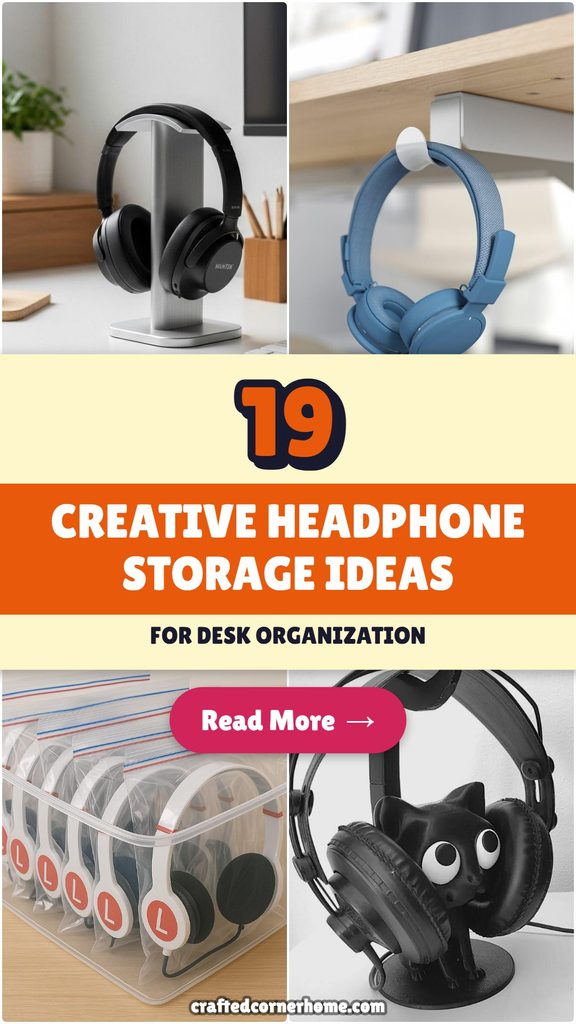
Table of Contents
The best solution depends on how often I use my headphones, whether they have cables, and how much space I have available. A simple routine of putting them away after each use helps maintain an organized setup.
Key Takeaways
- Save desk space: I can use under-desk hooks, wall mounts, or pegboards to keep headphones off my work surface.
- Protect delicate parts: A suitable stand or padded case helps prevent unnecessary pressure, scratches, and damage.
- Organize multiple pairs: Individual baskets, pockets, and labeled storage bins make shared headphones easier to manage.
- Keep cables tidy: I can coil headphone wires loosely and store each pair separately to reduce tangles.
- Match storage to my space: Compact stands work well on desks, while hanging organizers make better use of vertical space.
- Make storage a habit: Returning headphones to their assigned spot after use keeps clutter from building up.
Related article: 20 Genius Book Storage Ideas for 2026
What Is The Best Way To Organize Headphones At Home?
I find that the most practical way to organize headphones is to choose a permanent storage spot near where I usually use them. When headphones have a designated home, I spend less time searching for them and am less likely to leave them lying around.
For a computer desk, I can install a small hook underneath the desktop or place a stand beside my monitor. If I have limited desk space, a wall-mounted holder or a hanging pocket organizer can keep everything accessible without taking up valuable room.
For households with several pairs, I prefer assigning a separate place to each set. Individual pockets, small containers, or labeled baskets help prevent headphones from getting mixed up, especially when children or family members share the same space.
I also consider the type of headphones I own. Over-ear headphones need enough room to rest without being squeezed, while compact earbuds can often be stored in small protective cases. Wired headphones need extra attention because poorly stored cables can become tangled or strained.
Pro Tip: I choose a storage spot close to my charging station or computer. This makes it easier to return my headphones immediately after use instead of leaving them on the nearest surface.
Wall Baskets

I can turn unused wall space into a simple headphone organizer with a few lightweight baskets. This is especially useful when several people share a desk, classroom, gaming area, or family workspace.
I would mount a basket for each pair and place the headphones inside with enough room to avoid squeezing the ear cushions. Depending on the basket’s design, the headband can rest over the rim while the earcups sit inside.
Adhesive hooks can work for lightweight baskets, while screw-mounted brackets may be more suitable for heavier setups. Before installing anything, I check the basket’s weight capacity and make sure the attachment is appropriate for the wall surface.
Spacing the baskets apart makes it easier to identify and retrieve each pair. I can also use different basket colors to distinguish headphones belonging to different family members.
Pro Tip: I choose baskets with smooth edges and enough depth to support the headphones without catching the cable or pressing against the ear cushions.
Headphone Stand

A dedicated headphone stand is one of the simplest ways I can keep my desk organized. Instead of laying my headphones beside the keyboard or stacking them among other accessories, I give them a specific place to rest.
Most stands hold the headband above the desktop while the earcups hang on either side. This arrangement keeps the headphones easy to reach and helps prevent them from being buried under books, cables, or other items.
I would place the stand beside my monitor, laptop, or gaming console so I can put the headphones away as soon as I finish using them. A narrow design is particularly helpful when my desk already holds speakers, notebooks, and chargers.
Some stands also include space for charging cables or small accessories. If I choose one with a broad, stable base, I reduce the chance of it tipping over when I pick up or replace my headphones.
Pro Tip: I look for a stand with a smooth, sufficiently wide support surface rather than a narrow edge that concentrates pressure on one small section of the headband.
Pocket Organizer

When several headphones need to share a small area, I can use a hanging pocket organizer to give each pair its own compartment. This keeps the collection visible and makes it easier to find the right set without searching through a drawer.
Clear pockets are particularly convenient because I can see what’s stored inside without opening every compartment. Fabric organizers offer a softer alternative and may suit bedrooms, classrooms, or home offices where I prefer a less utilitarian appearance.
I can hang the organizer on a wall, a suitable cabinet door, or a storage rack. For shared spaces, I would label each pocket with a name, number, or device type so everyone knows where each pair belongs.
Before storing wired headphones, I make sure the cable is loosely arranged and not trapped in the pocket’s fastening or seams. This small detail helps keep the organizer functional over time.
Pro Tip: I reserve separate pockets for over-ear headphones, on-ear headphones, and smaller audio accessories. This prevents larger headsets from pressing against more delicate items.
Bin Storage

Small storage bins are a useful solution when I need to organize several headphones on a shelf or table. Rather than allowing different pairs to pile up in one container, I assign each pair its own bin.
This method works well in family rooms, classrooms, libraries, and shared workstations. I can choose plastic bins for easy cleaning or fabric containers when I want a softer look.
For wired headphones, I loosely gather the cable before placing the pair in its container. I avoid forcing the headphones into a bin that’s too small, since tight storage can put unnecessary pressure on the headband and ear cushions.
I can line up the bins on a shelf and label them by owner, device, or purpose. This makes it easy to return everything to the correct place, even when several people use the same area.
Pro Tip: I measure the available shelf space before buying containers. Bins that fit neatly side by side make the entire storage station easier to maintain.
Desk Hook

When my desk is already crowded, an under-desk headphone hook is a practical way to free up surface space. It uses an area that often goes unused while keeping my headphones close enough to grab whenever I need them.
I can choose an adhesive hook, a screw-mounted holder, or a hook designed to fit around the desk edge. The right option depends on the desktop material, its thickness, and the weight of the headphones.
I prefer placing the hook near the side of my desk where I naturally reach when finishing a call or taking a break. This makes putting the headphones away feel like part of my normal routine.
I also check the clearance underneath the desk. The headphones should hang without hitting my knees, chair, drawers, or nearby equipment.
Pro Tip: I position the hook away from drink spills and moving desk components. A small change in placement can make the storage spot safer and more convenient.
Cat Stand

I can make a desk feel more personal by choosing a headphone stand with a playful cat design. Instead of treating storage as something purely functional, this option adds a decorative touch while keeping my headphones in a consistent place.
Many cat-shaped stands use the tail or upper body as a support for the headband. I would check that the supporting section is smooth and wide enough for my headphones, with a base that stays steady when I lift them off.
This style can work particularly well in bedrooms, gaming setups, creative studios, and desks used by children or teenagers. Placing the stand beside a laptop or console makes the headphones easy to access without scattering accessories across the desk.
I also consider the material before choosing a design. A sturdy wooden or well-finished plastic stand is generally easier to keep clean than a delicate decorative piece that tips over easily.
Pro Tip: I choose a cat stand for both its appearance and stability. A cute design is most useful when it can hold the headphones securely during everyday use.
Wood Stand

A wooden headphone stand suits my workspace when I want a simple organizer that blends with natural furniture and neutral décor. Its clean shape can make a desk look more intentional without adding another bulky accessory.
The basic design supports the headband above the desk while allowing the earcups to hang freely. I can place it beside my monitor or laptop stand, keeping the headphones within easy reach without taking up much room.
I look for a stable base and a smooth, rounded support surface. These details help prevent the stand from wobbling and reduce the risk of rough edges catching on the headband.
Wooden stands are available in different finishes, from pale natural wood to darker shades. I can choose one that complements my desk, shelves, or other accessories for a coordinated look.
Pro Tip: I check the width of the headband support before buying a wooden stand. A broader, smoothly finished surface is often preferable to a thin support that concentrates pressure in one area.
Travel Case

When I carry headphones to work, school, or on a trip, I prefer using a protective case rather than leaving them loose inside my bag. Keys, chargers, books, and other belongings can scratch the earcups or put pressure on the headband.
A hard-shell case offers a firmer outer layer, while a padded soft case can provide cushioning with less bulk. I choose a size that fits my headphones comfortably without forcing them into a folded position they aren’t designed to use.
Before packing them, I disconnect any detachable cable and arrange it loosely in a separate compartment if one is available. I also check that the zipper doesn’t catch the cable or fabric when I close the case.
Once I return home, I can place the case in a designated drawer, on a shelf, or beside my workstation. This gives my headphones a consistent storage spot even when I’m not traveling.
Pro Tip: I check the manufacturer’s folding instructions before putting headphones into a travel case. Not every model is designed to fold the same way, and forcing the hinges can cause damage.
Fabric Pockets

Fabric wall pockets are a practical option when I need to store multiple headphones but don’t want to fill a shelf with containers. They turn an empty wall into a compact storage area and can be especially useful in classrooms, training rooms, and shared offices.
I would give each pair a separate pocket and position the organizer where everyone can reach it comfortably. If the headphones belong to different people, I can add labels to make ownership clear.
Fabric pockets come in different sizes, so I check the dimensions before selecting an organizer. Larger over-ear models need deeper and wider compartments than lightweight headsets or small accessories.
I also make sure the pockets are secure enough to support the headphones without sagging. If the organizer is mounted behind a door, I check that the pockets don’t interfere with the door closing.
Pro Tip: I choose a washable or easy-to-clean fabric when the organizer will be used by several people. Regular cleaning helps keep dust and everyday grime from building up around the headphones.
Wall Mount

A wall-mounted headphone holder is a good option when I want to keep my desktop completely clear. It gives my headphones a dedicated home while making use of vertical space that might otherwise remain empty.
I can install the mount beside my desk, near a gaming station, or close to a music setup. A curved support is useful because it allows the headband to rest naturally rather than balancing on a sharp edge.
Some holders use screws, while others rely on adhesive mounting systems. I check the manufacturer’s installation guidance and the weight rating before attaching the holder, especially when working with painted walls or delicate surfaces.
I also think about the cable’s position. A holder that allows the wire to hang freely without being pinched against the wall helps keep the area neat and reduces unnecessary strain.
Pro Tip: I test the holder’s placement before permanently mounting it. The ideal spot should be easy to reach without hitting the monitor, knocking into nearby objects, or stretching the cable.
Also read: 18 Charging Station Storage Ideas for 2026
Loop Stand

A loop-style headphone stand gives my desk a modern look while providing a designated resting place for my headphones. Its curved frame supports the headband, leaving the earcups hanging freely on either side.
This design works well in small offices, creative workspaces, and minimalist desk setups. Since the frame is usually open, I can also see the headphones clearly rather than having them hidden behind other accessories.
I would place the stand near the device I use most often, such as a laptop, desktop computer, or audio interface. That way, putting the headphones away requires little effort.
Stability matters with this design, so I check the base and the shape of the upper support. The frame should be broad enough to support the headband without creating a narrow pressure point.
Pro Tip: I keep the stand away from the edge of the desk and arrange any cables so they don’t pull against the headphones when I move around.
Pegboard Wall

A pegboard can become a flexible headphone storage station when I want to organize more than one type of desk accessory. I can add a suitable hook for my headphones and use the remaining board space for cables, adapters, controllers, or small shelves.
This arrangement is especially helpful in gaming rooms, craft spaces, and home offices where equipment tends to accumulate. Instead of adding another organizer to the desk, I move some of those items onto the wall.
I start by choosing a pegboard that fits the available wall area. Then I position the headphone hook at a convenient height, leaving enough room for the earcups and cable to hang without touching the desktop or other equipment.
One benefit of a pegboard is that I can change the layout as my needs change. If I add a second headset or rearrange my desk, I can move the hooks instead of installing an entirely new storage system.
Pro Tip: I check the pegboard’s weight capacity and use compatible hooks. The board and its wall attachments need to support the combined weight of the accessories stored on them.
Storage Basket

A storage basket is a simple choice when I want to keep headphones together in a shared room or family workspace. It works well on a shelf, beside a computer, or in a designated technology corner.
I prefer a basket with enough room for the headphones to sit without being forced into a tight pile. If I store several pairs together, I arrange them so the earcups aren’t pressed against one another and the cables remain easy to separate.
Soft fabric baskets can help reduce contact with hard surfaces, while plastic baskets are often easier to wipe clean. The best material depends on where the basket will be used and how frequently the headphones are handled.
For a family setup, I can assign one basket to each person or use smaller containers inside a larger basket. This keeps the storage area simple without making it difficult to identify each pair.
Pro Tip: I avoid stacking heavy objects on top of headphones inside a basket. Even when the container keeps everything together, excess pressure can damage delicate components.
Color Display

When I own several pairs of headphones, arranging them by color or model can make the collection easier to manage. A simple display also works as part of the room’s décor, especially when the headphones have different finishes or designs.
I can place the headphones on separate stands, use wall hooks, or arrange them across a shelf with enough space between each pair. The main goal is to keep every set visible and easy to remove without disturbing the others.
For a shared workspace, I might group headphones by owner or purpose instead of color. For example, I can keep work headsets together and place gaming headphones on a separate section of the shelf.
I also consider how the display affects dust and sunlight exposure. An open shelf makes the collection easy to see, but I may need to clean it more often than a closed cabinet.
Pro Tip: I use small labels when different headphones look similar. A label identifying the owner or device can save time and prevent mix-ups.
Rack Holder

A rack-style headphone holder is useful when I need to organize several pairs in one location. Rather than spreading the headphones across a table or piling them in a drawer, I can hang them separately along a shared support.
This type of organizer can work well in classrooms, media rooms, computer labs, and family workspaces. Depending on the design, it may hold multiple headphones on individual hooks or along a horizontal bar.
I would place the rack on a stable shelf or table near the equipment where the headphones are used. Leaving a little space between each pair makes it easier to lift one set without catching the neighboring cables.
Before choosing a rack, I check how many headphones it can support and whether the hooks are wide enough for their headbands. A sturdy base or secure mounting system is important when several pairs will be stored together.
Pro Tip: I label the hooks or arrange the headphones in a consistent order. This is particularly helpful in shared spaces where several people need to return their headphones to the correct place.
Clamp Hook

A clamp-style headphone hook is a convenient option when I don’t want to drill holes or attach adhesive strips to my desk. It grips the edge of the desktop and provides a hanging point for my headphones underneath or beside the work surface.
This arrangement is useful for home offices, gaming desks, and temporary workstations. I can usually reposition the hook if I move my equipment or decide that another part of the desk is more convenient.
I check the clamp’s maximum desk thickness and make sure it fits securely without damaging the finish. A protective pad can help prevent scratches where the clamp contacts the desk.
Placement is important, too. I want the headphones to hang within reach without interfering with my legs, chair, drawers, or other desk accessories.
Pro Tip: I make sure the clamp is tightened according to the manufacturer’s instructions and test its stability before hanging my headphones. A loose holder can slide or fall when I remove the headset.
Drawstring Pouch

A drawstring pouch is a lightweight way to protect headphones when I need something compact for a backpack, handbag, or desk drawer. It takes up less room than many rigid cases and helps keep the headphones separate from other belongings.
Soft fabric pouches are particularly useful for lightweight headphones and accessories that don’t require a hard outer shell. I check the pouch dimensions first to make sure my headphones fit without being forced inside.
Before putting wired headphones away, I loosely coil the cable and secure it separately if needed. Then I place the headphones inside and pull the drawstring closed without catching the wire.
A pouch can also be useful for keeping small accessories together. I might use a separate compartment or a second pouch for detachable cables and adapters so they don’t scratch the earcups.
Pro Tip: I choose a padded pouch if I regularly carry my headphones in a crowded bag. A basic fabric pouch helps protect against dust and surface scratches, but it may not provide enough protection from crushing or impact.
Bow Stand

A bow-shaped headphone stand offers a decorative alternative to plain storage accessories. I can use one to add personality to a bedroom desk, vanity table, or study area while keeping my headphones off the work surface.
The stand should support the headband securely and leave enough room for the earcups to hang without pressing against the base. I would check the shape and width of the support before choosing one for larger or heavier headphones.
This design can be particularly appealing in a themed room or a workspace where I want functional items to match the surrounding décor. I can coordinate the stand’s color with my desk accessories or shelving.
Even with a decorative holder, I still focus on stability and everyday convenience. A stand that is awkward to reach or tips over easily is unlikely to be useful in the long run.
Pro Tip: I place decorative headphone stands on a level surface away from the edge of the desk. This keeps the display secure while making it easy to pick up and replace the headphones.
Cabinet Pockets

When I prefer to keep headphones out of sight, I can use hanging pockets inside a cabinet. This makes use of the cabinet door’s interior surface while leaving shelves available for other equipment.
Clear pocket organizers are useful because I can identify each pair without opening every compartment. Fabric versions can also work well when I want a softer storage option or need to accommodate lightweight headsets.
I would check the cabinet’s interior dimensions before installing the organizer. The pockets must fit without obstructing shelves, hinges, or the door’s closing mechanism.
For a classroom or shared media room, I can label each pocket by person, device, or number. This makes it easier for everyone to find the right pair and return it after use.
Pro Tip: I make sure the pockets are securely attached and that the headphones don’t protrude far enough to get caught when the door closes. I also avoid overcrowding the compartments, particularly when storing larger over-ear models.
FAQs
Should headphones be hung or stored flat?
For many over-ear headphones, hanging them on a suitable stand or hook is a practical way to keep them organized and prevent them from being crushed beneath other items. However, the support should be smooth and wide enough to avoid placing excessive pressure on one part of the headband.
Storing headphones flat can also be appropriate when I use a properly sized protective case. The important thing is to avoid stacking heavy objects on top of them or leaving them where they can be knocked off a desk.
I always consider the manufacturer’s storage recommendations, especially for headphones with folding hinges, delicate ear cushions, or unusual headband designs.
How can you keep headphone cables from getting tangled during storage?
I prevent tangled cables by gathering the wire into a loose loop before putting my headphones away. I avoid wrapping the cable tightly around the headband or pulling it sharply near the connector, as repeated strain can damage the wire over time.
Separate bins, wall pockets, cable organizers, and travel cases can also help keep different pairs apart. For a shared workspace, I give each headset its own compartment so the cables don’t become mixed together.
If I use my headphones at a desk every day, I can keep the cable loosely arranged near the hook or stand instead of winding it up after every short listening session.
Pro Tip: I check the cable for knots before putting my headphones away. Removing a tangle gently is better than pulling the wire tight and risking damage to the connectors.
Read this next: 23 Key Storage Ideas for 2026
Conclusion
I don’t need a complicated storage system to keep my headphones organized. A simple stand, a wall hook, a basket, or a protective pouch can make everyday storage easier while helping reduce clutter around my desk.
The best choice depends on my available space, how many headphones I own, and whether I use them mostly at home or while traveling. For a shared workspace, individual pockets or labeled bins can keep different pairs organized. For a compact home office, an under-desk hook or small stand may be all I need.
My most useful habit is to return my headphones to the same place after every use. Once that routine becomes part of my day, it’s easier to keep my workspace tidy and my headphones ready for the next time I need them.