25 Fruit Storage Ideas for 2026
Fresh fruit makes everyday meals and snacks easier, but I know that keeping different varieties organized can be a challenge. Apples may stay firm for weeks in the refrigerator, while delicate berries can develop mold in just a few days if moisture builds up around them. Bananas and avocados also need different handling depending on how ripe they are.
I think good fruit storage starts with two things: choosing the right place for each fruit and making sure I can see what needs to be eaten first. I don’t need an expensive pantry makeover to achieve that. A few baskets, ventilated containers, and clearly organized shelves can make a kitchen more practical and help reduce avoidable food waste.
I have gathered 25 fruit storage ideas that can help make a kitchen more organized while keeping fresh produce accessible. These options include tiered countertop baskets, rolling carts, wooden crates, pantry racks, hanging nets, refrigerator containers, and built-in storage compartments.
I recommend matching each setup to the fruit rather than treating every variety the same way. Bananas and avocados can ripen at room temperature, whole berries generally need refrigeration, and apples and pears often keep longer when chilled. Cut fruit should go into the refrigerator promptly in clean, covered containers.
Save this for later

Table of Contents
The most useful setup is one that allows air to circulate where needed, keeps delicate fruit from getting crushed, and makes older produce easy to find. I also consider available counter space, cleaning requirements, household snacking habits, and the cost of any new organizers before changing my kitchen storage.
Key Takeaways
- I choose storage according to the fruit’s ripeness and whether it needs refrigeration.
- I use open baskets and ventilated racks for suitable whole fruit that can safely remain at room temperature.
- I keep berries dry and refrigerated, and wash them shortly before eating rather than before storage.
- I refrigerate cut fruit in clean, covered containers and avoid leaving it at room temperature for extended periods.
- I keep bananas away from fruit that needs to ripen slowly when practical, because bananas release ethylene gas.
- I use clear containers, labels, and a first-in, first-out routine to make older produce easier to use.
- I avoid placing fruit in direct sunlight or beside heat-producing appliances.
Related article: 26 Under Cabinet Storage Ideas for 2026
How Should Different Fruits be Stored to Stay Fresh Longer?
I start by sorting fruit according to its storage needs. Some varieties can ripen on the counter, while others benefit from refrigeration as soon as I bring them home. The best approach also depends on how quickly I expect to eat them.
For example, I can keep bananas on a counter until they reach the ripeness I prefer. Whole berries, however, generally belong in the refrigerator, where I can keep them dry and protected from crushing. Apples and pears can also benefit from refrigeration when I want them to last longer.
Ethylene is another factor I consider. Some fruits, including apples, bananas, and pears, release this natural plant hormone as they ripen. Other produce is sensitive to ethylene and may ripen or deteriorate more quickly when exposed to it. Separating certain fruits can help, although it does not mean every fruit must always have its own container.
I also pay attention to moisture and airflow. Trapped moisture can encourage mold, while excessive drying can affect some produce. My goal is to choose storage that suits the fruit, keeps it visible, and makes it easy to use before it spoils.
Pro Tip: When I bring groceries home, I check which fruit is already ripe, refrigerate the varieties that need chilling, and put the fruit that needs to ripen on a cool counter away from direct sunlight. I also remove damaged pieces so I can use them promptly rather than letting them affect nearby produce.
Tiered Counter Baskets

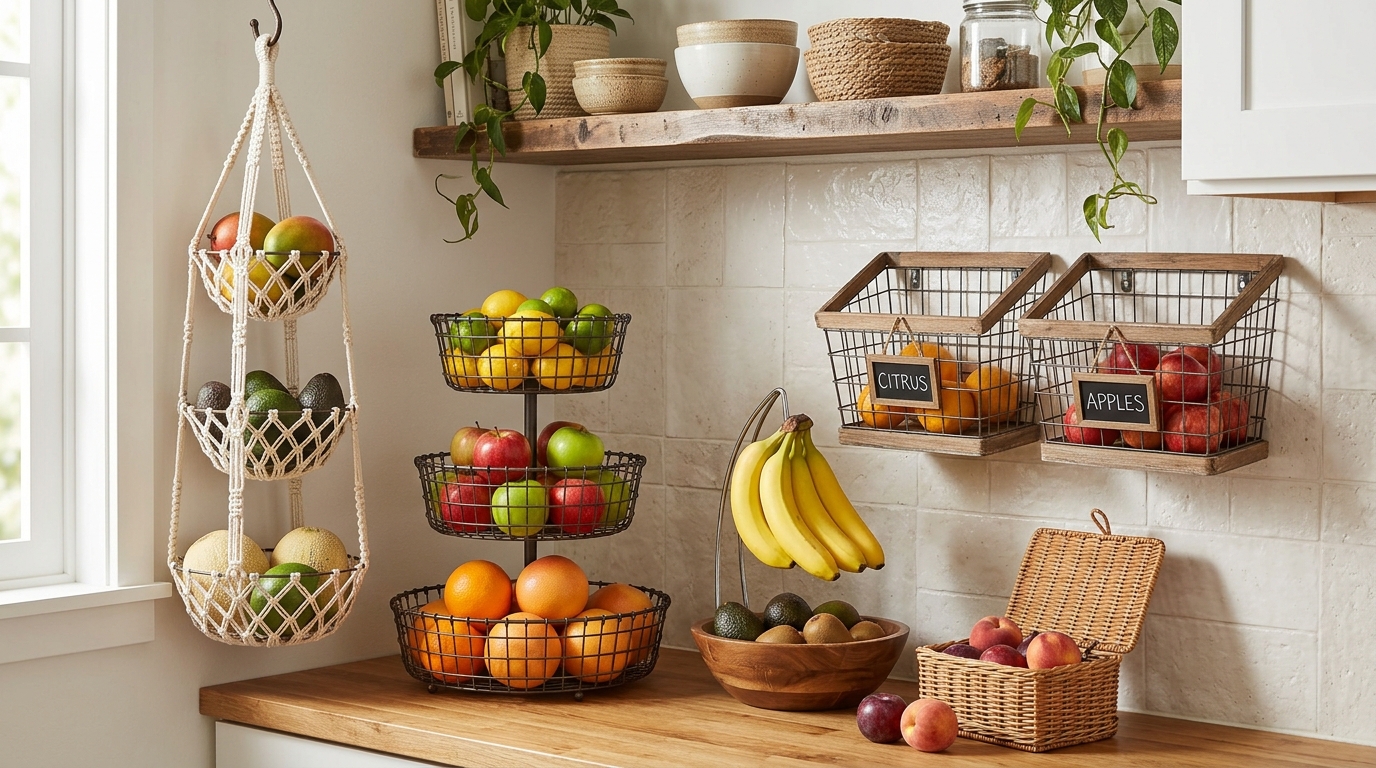
<PRIVATE_PERSON> believes in making use of vertical space, and I find tiered baskets a practical option for kitchens with limited counter room. A two-tier stand gives me separate areas for different fruit without spreading bowls across the entire work surface.
I can use the stand for suitable whole fruit that keeps well at room temperature, such as bananas, citrus for short-term use, or fruit that still needs to ripen. I place heavier fruit where it is less likely to crush delicate pieces and avoid overfilling either level.
I would position the stand in a cool part of the kitchen, away from direct sunlight, the oven, and other sources of heat. A bright spot makes the fruit easy to see, but sunlight itself is not necessary for storage.
Pro Tip: I keep only a few days’ worth of countertop fruit on display and store the rest according to its refrigeration needs. This helps prevent the basket from becoming overcrowded and makes it easier to notice fruit that needs attention.
Rolling Produce Tower
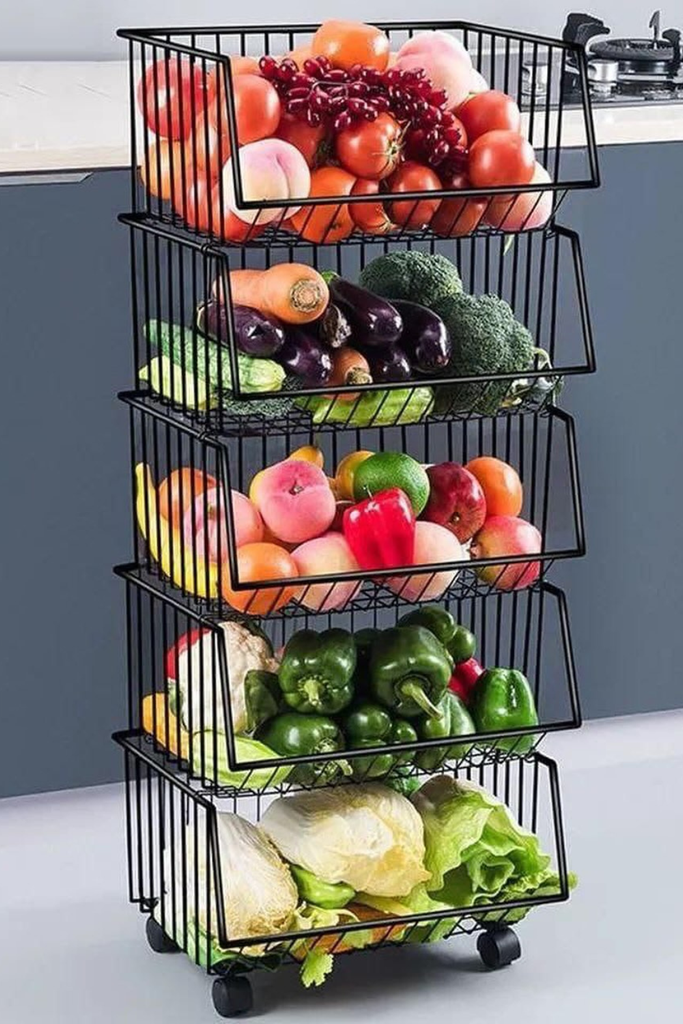
A rolling produce tower is useful when I need flexible storage without permanently dedicating more counter space. Its vertical design can work well in a compact kitchen, pantry, or food-preparation area.
I would use the shelves for whole fruit that is suitable for room-temperature storage, keeping bananas and other ethylene-producing fruit separate from sensitive produce when practical. I would not automatically store every vegetable beside the fruit, since some vegetables also need refrigeration or have different humidity requirements.
The wheels make the cart easy to move when I am cleaning or reorganizing. I would choose a model with sturdy shelves, smooth edges, and enough space between levels to prevent fruit from being squashed.
Pro Tip: Before buying a rolling tower, I measure the available floor space and check the cart’s width, height, and wheel clearance. A narrow model is only useful if I can still reach the fruit comfortably and move the cart without blocking a doorway or cabinet.
Wooden Crate Stack

Wooden crates offer a simple way to organize fruit while adding a warm, natural look to a kitchen or pantry. I like the idea of assigning a separate crate to fruit that can safely remain at room temperature, rather than piling everything into one large container.
Slatted crates allow more airflow than solid-sided boxes, but I would still check the fruit regularly for soft spots, leaks, or mold. I would also avoid stacking heavy crates too high, particularly if children might reach for the fruit or the crates could tip.
I would use a clean, dry crate and keep it away from sinks where splashes can leave the fruit damp. Fruit that needs refrigeration should go into the refrigerator rather than being kept in a decorative crate for appearance.
Pro Tip: I label each crate with the fruit type or the date I bought it. That small change makes it easier to use older produce first and helps prevent a forgotten layer of fruit from sitting at the bottom.
Pantry Crate Rack
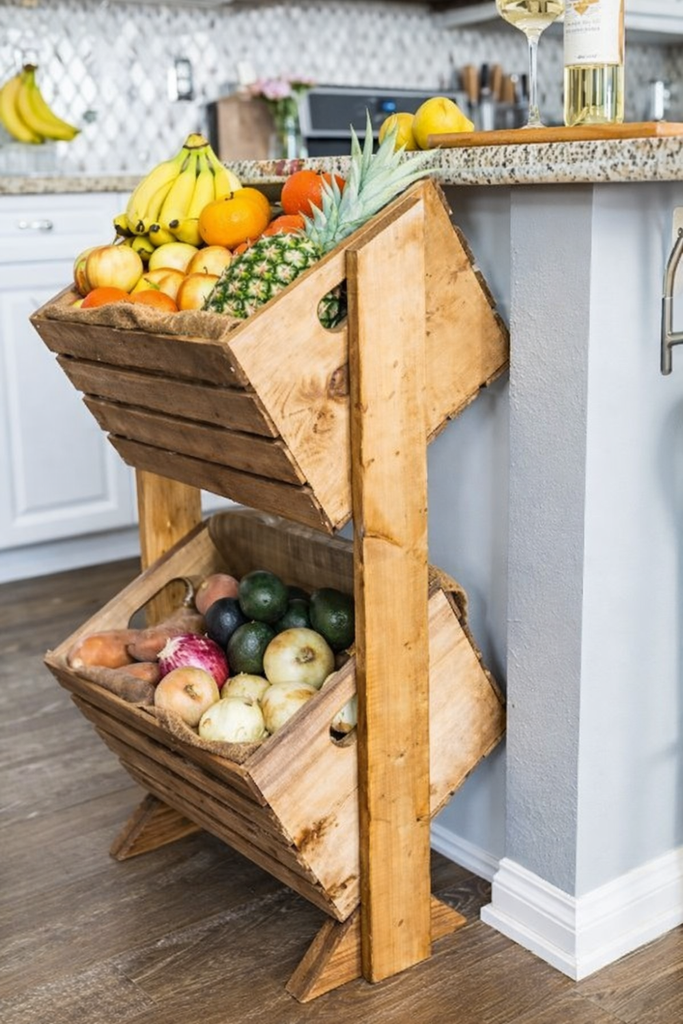
A pantry crate rack can help me organize fruit when the kitchen counter is already crowded. Open crates arranged on a sturdy rack keep suitable whole fruit visible while making better use of vertical space.
I would reserve this setup for fruit that can be stored safely at room temperature for the expected period. Apples and pears may be better kept in the refrigerator if I want to extend their storage life, while bananas can remain on the counter as they ripen.
I would not assume that a higher shelf is the best place for fruit that releases ethylene. Instead, I would consider which varieties are stored together and whether nearby produce is sensitive to that gas. The rack should also remain dry, stable, and easy to clean.
Pro Tip: I place frequently used fruit on the easiest-to-reach shelf. Fruit that is less ripe can occupy another suitable shelf, while refrigerated fruit stays in the refrigerator instead of being stored on the rack simply to make the display look uniform.
Split Level Cart
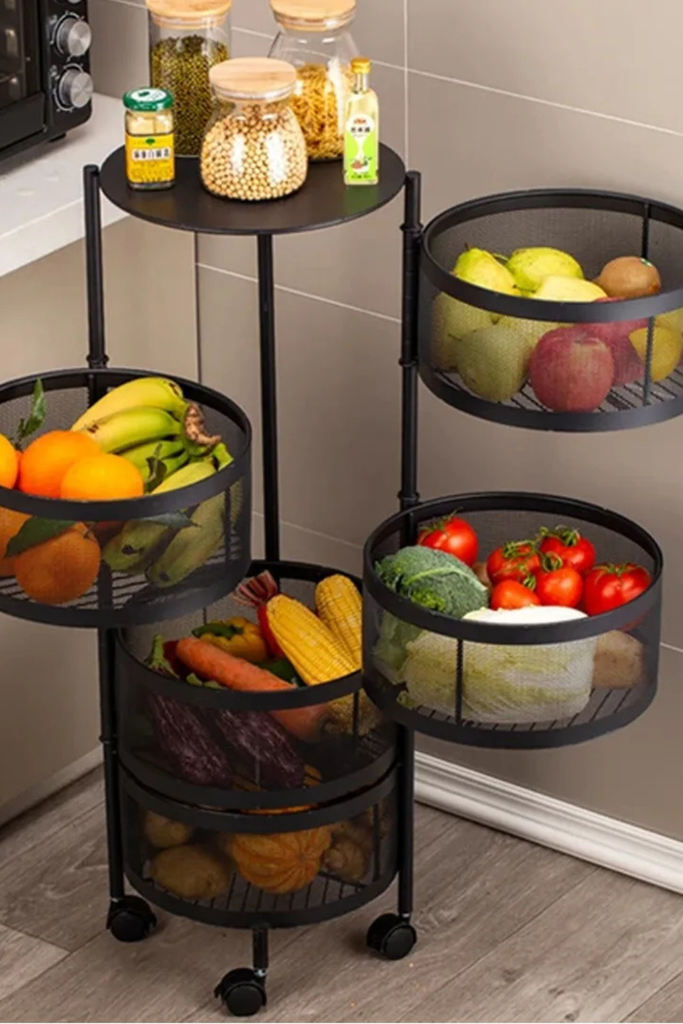
A split-level cart gives me a clear way to organize different types of produce without using several separate counters. I can assign one level to suitable whole fruit and another to produce with compatible storage needs.
I would not use the cart as a reason to keep all fruit and vegetables at room temperature. Leafy greens, cut produce, and many other vegetables need refrigeration, so I would store those items in the refrigerator when appropriate.
Open shelves or mesh baskets can help me see what is available and make cleaning easier. I would also leave enough space around each item to avoid crushing delicate fruit under heavier pieces.
Pro Tip: I treat the cart as a temporary sorting station rather than a universal storage solution. Before placing produce on it, I check whether it belongs on the counter or in the refrigerator.
Angled Bin Rack
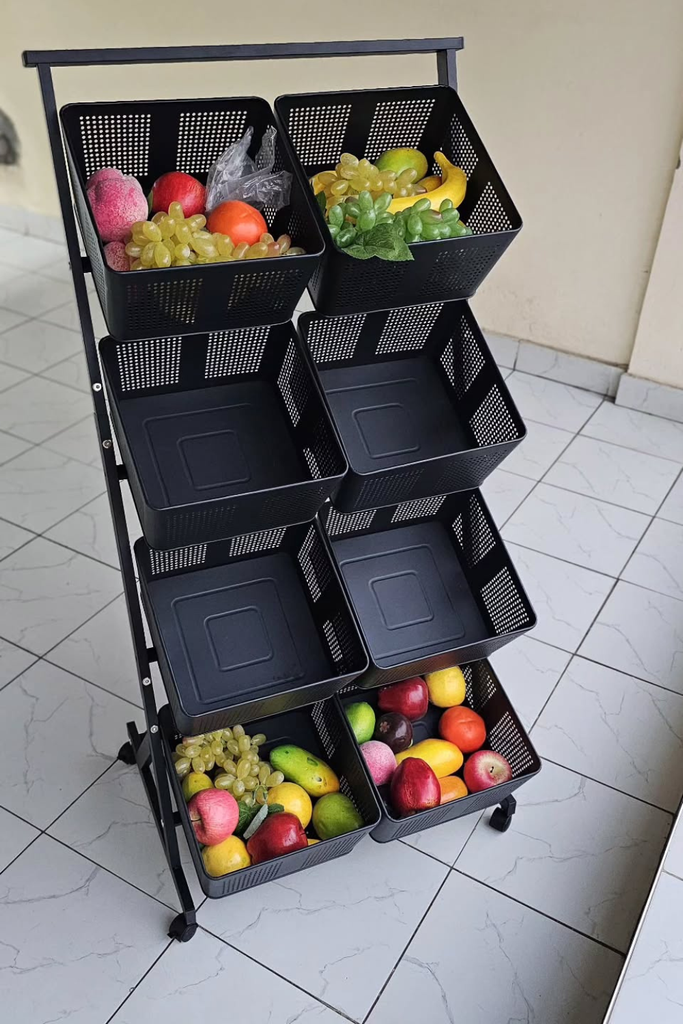
Angled bins can make fruit easier to see, particularly when I have several varieties and tend to forget what is stored at the back. The sloped design brings the contents into view and makes it easier to choose fruit for breakfast or snacks.
I would use this rack for whole fruit that is appropriate for countertop storage. Ready-to-eat fruit can go in an easy-to-reach bin, while fruit that needs more time to ripen can occupy a separate section.
I would avoid filling the bins to the top. Too much weight can bruise fruit near the bottom, and a crowded bin makes it harder to spot spoilage. I would also keep the rack away from heat and direct sunlight.
Pro Tip: I use smaller bins for fruit that I buy in limited quantities and larger ones for varieties my household eats regularly. This keeps the rack manageable and makes it easier to clean between batches.
Lined Crate Storage
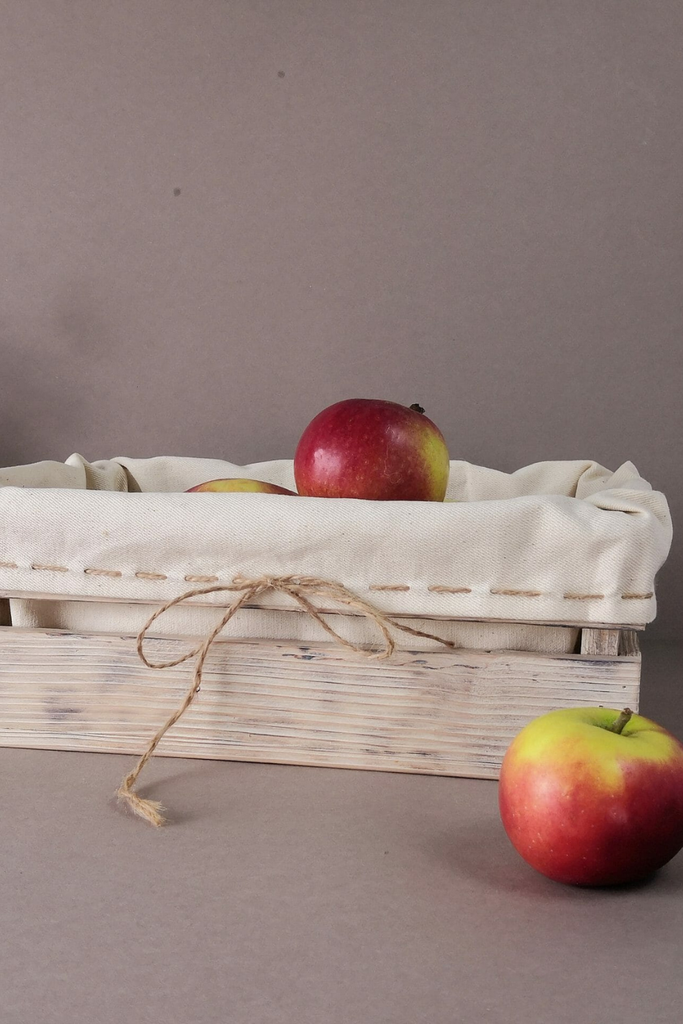
Lined crates can protect delicate fruit from rough wooden surfaces and make the storage area look more finished. However, I would not rely on a fabric liner to solve every moisture problem. A damp liner can hold moisture against fruit and encourage mold.
For whole fruit stored at room temperature, I would use a clean, dry, breathable liner only when it is suitable for the fruit and easy to remove for washing. I would check the crate regularly and replace the liner if it becomes damp or dirty.
I would be more careful with berries, which are particularly vulnerable to moisture and mold. They generally do better in the refrigerator in a suitable ventilated container than in a lined countertop crate.
Pro Tip: I choose washable liners and let them dry completely before reusing them. If a crate or liner develops a musty smell, I clean it thoroughly before putting fresh produce back inside.
Corner Cart Setup
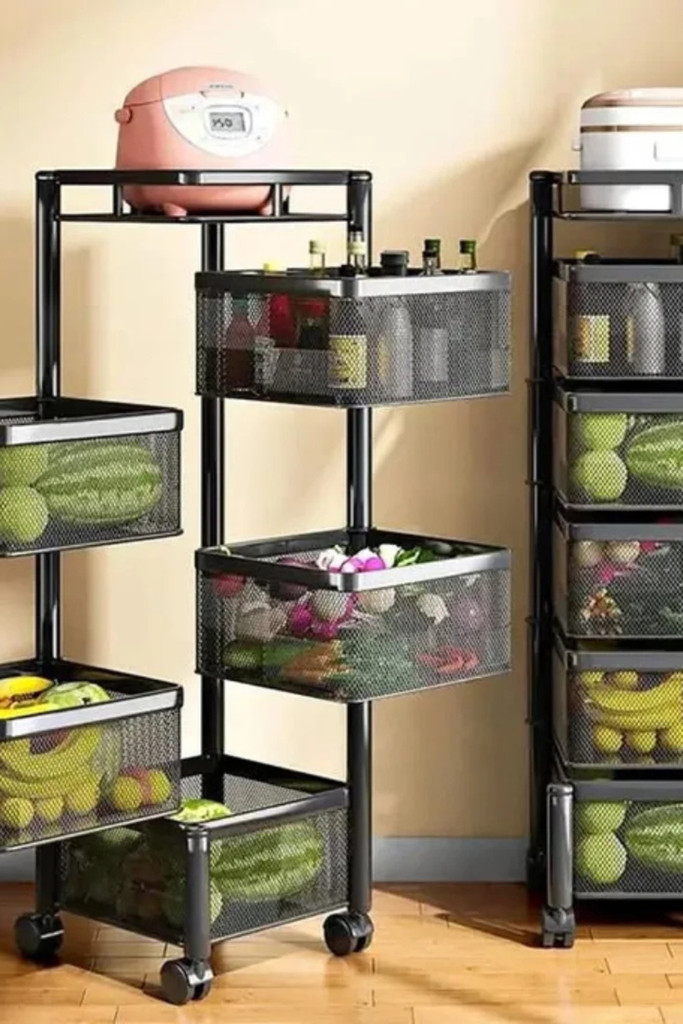
A corner cart can turn an awkward kitchen space into useful storage. I would choose a compact model with open shelves so I can see the fruit without pulling out several containers.
This arrangement works best for fruit that can safely remain at room temperature. I would keep fruit that needs refrigeration in the refrigerator, even if the corner cart has unused space. A separate shelf or basket can help distinguish ripe fruit from fruit that still needs time to ripen.
I would also check the corner for heat from nearby appliances and make sure the cart does not block cabinet doors, walkways, or cleaning access.
Pro Tip: Before setting up the cart, I measure the corner and the full path needed to pull it out. This prevents me from buying a storage unit that fits the space but is awkward to use.
Mixed Tier Stand

A mixed-tier stand can keep a selection of fruit together in one accessible spot. I would use its different levels to organize fruit by storage needs and ripeness, not simply by color or size.
For instance, bananas can sit on a separate level from apples when I want to manage their ripening, while citrus can occupy another area if I plan to eat it soon. I would still refrigerate fruit that needs chilling rather than leaving it on the stand for convenience.
Wire or slatted sides can improve visibility and airflow, but I would make sure the gaps are small enough to support the fruit securely. Delicate items should not rest directly on rough or unstable surfaces.
Pro Tip: I keep the stand away from the stove and sunny windows. I also check the bottom level first, since fruit placed low on a stand can be easier to overlook.
Pull-Out Drawers
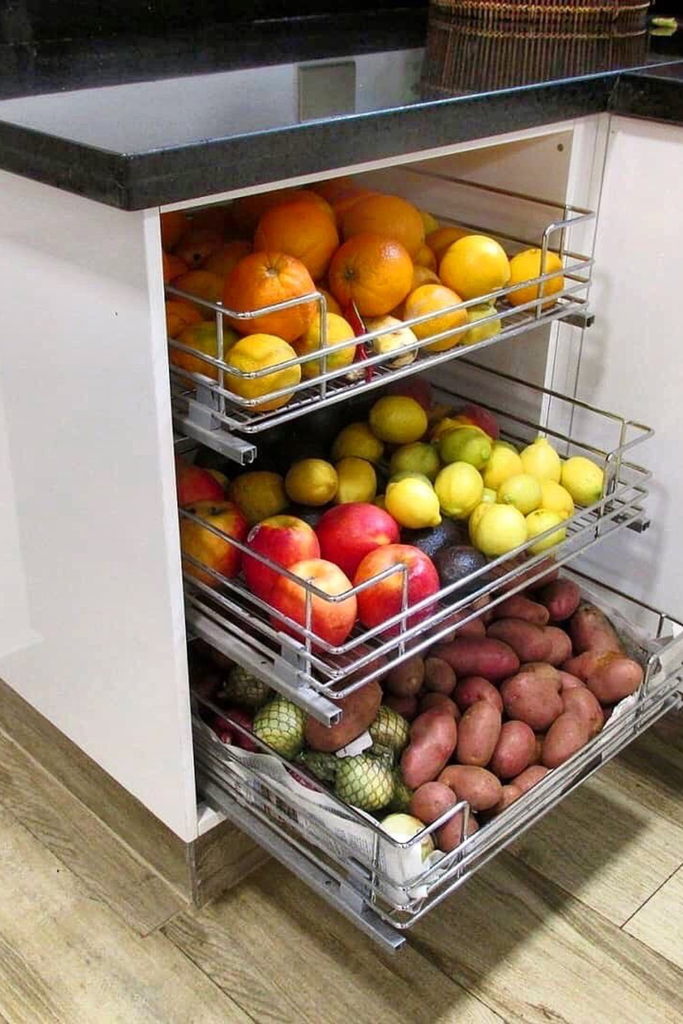
Pull-out drawers are a useful option when I want fruit storage without taking up extra counter space. They work particularly well in a pantry cabinet or a kitchen unit designed for produce storage.
I would use separate, easy-to-clean containers within the drawer to keep fruit organized. However, I would not assume that every drawer is suitable for every variety. A warm, enclosed cabinet may not provide the conditions needed for fruit that should be refrigerated.
For fruit that can be stored in the cabinet, I would choose drawers that allow appropriate airflow and make it easy to inspect the contents. Fruit that needs cold storage should remain in the refrigerator.
Pro Tip: I avoid deep drawers that hide produce behind other items. If I already have deep cabinets, removable baskets can help me bring everything forward and check it without emptying the entire drawer.
Open Wire Bowl
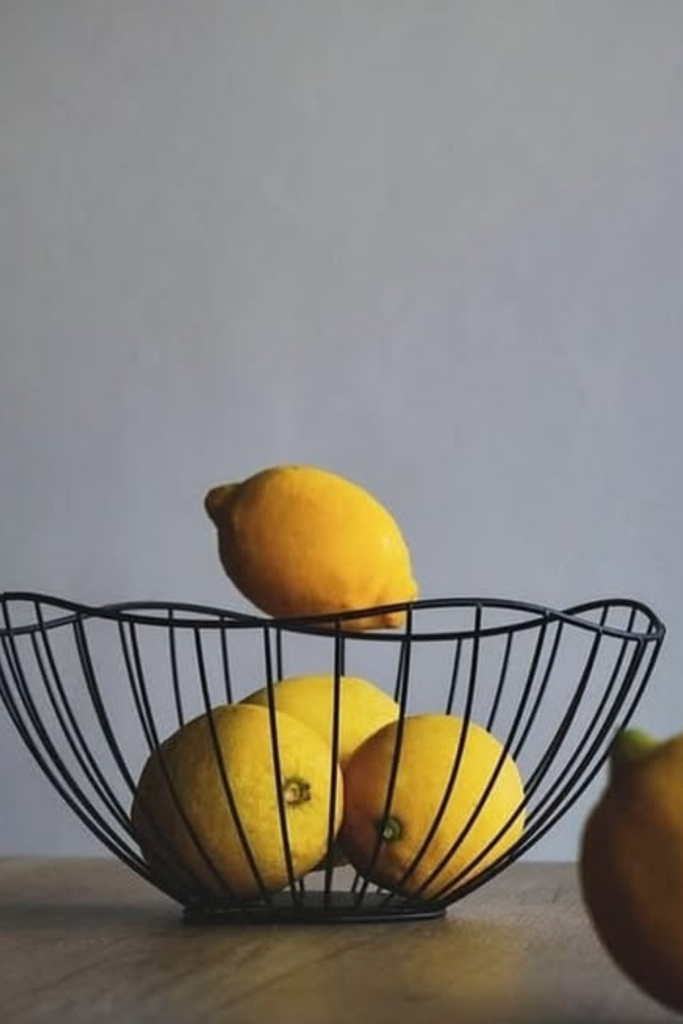
An open wire bowl is a straightforward choice for whole fruit that is suitable for short-term countertop storage. Its open construction lets air circulate and makes the fruit easy to see.
I would use it for citrus that I plan to eat soon or other compatible whole fruit. Citrus can also be refrigerated to extend its storage life, so I choose the location based on how quickly I expect to use it and how much room I have.
I would avoid piling fruit too deeply in the bowl. The weight of fruit on top can bruise softer items underneath, and any damaged fruit should be removed promptly.
Pro Tip: I wash and dry the bowl between batches. I also check the fruit every day or two so that one soft or damaged piece does not go unnoticed among the others.
Mobile Wood Crates

Mobile wooden crates combine the warm appearance of wood with the convenience of movable storage. I would choose a sturdy unit with smooth surfaces, stable wheels, and slatted sides that allow air to circulate.
The crates can be divided by fruit type, but I would still follow each fruit’s storage requirements. Whole bananas and some citrus may suit a countertop crate, while berries and cut fruit generally belong in the refrigerator.
I would avoid stacking crates so high that the bottom layers become difficult to inspect. The unit should be easy to move for cleaning, and its wheels should lock if it might roll on a sloping floor.
Pro Tip: I keep the most frequently used fruit in the top crate and use lower crates only for items that are easy to see and reach. I do not place heavy fruit on top of delicate produce.
Counter Crate Layers

Layered counter crates can make a small work surface more useful by creating separate storage levels. I would use this approach when I want fruit within reach but do not have room for several large bowls.
I would choose a stable design with open tops and enough space for air circulation. Bananas can occupy one section, while other suitable whole fruit can be stored separately according to ripeness and storage needs.
I would avoid positioning the crates beside the sink if water splashes regularly reach the fruit. I would also keep them away from direct sunlight and appliances that produce heat.
Pro Tip: I check the height of each layer before arranging the fruit. If I cannot easily see or reach the bottom level, I choose fewer crates rather than sacrificing access for extra storage.
Also read: 23 Canned Food Storage Ideas for 2026
Citrus Sorting Grid
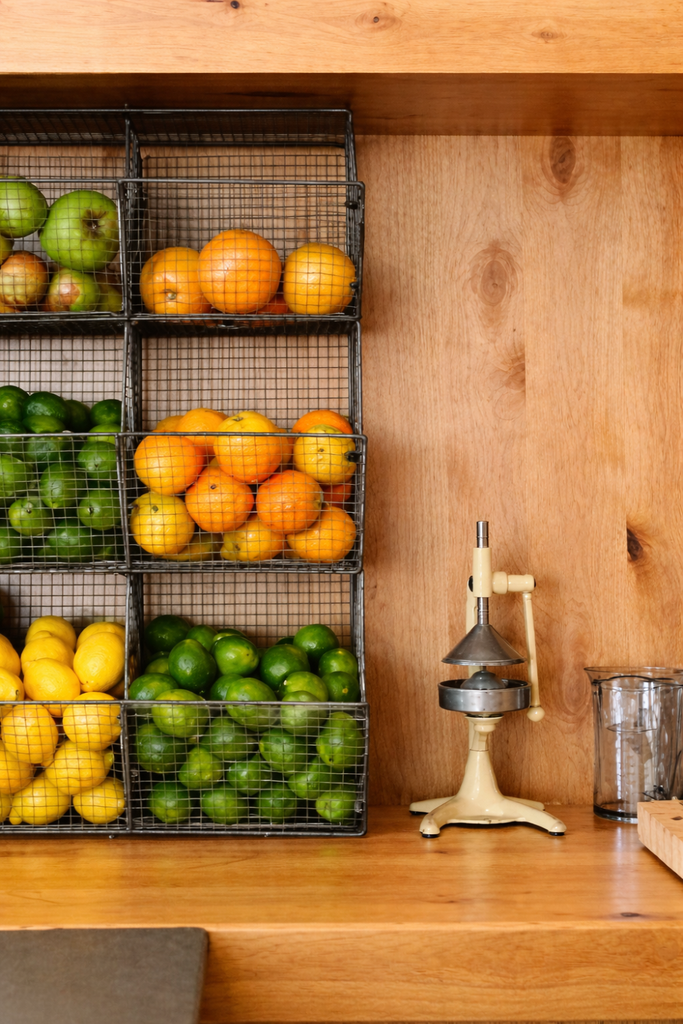
A citrus sorting grid is a practical way to separate lemons, limes, oranges, and other varieties. Individual compartments make it easier to see how much fruit I have and reduce the need to move everything around when I need one piece.
I would use the grid for clean, dry, whole citrus that I plan to store at room temperature for a relatively short period. If I want to keep citrus longer, refrigeration is another useful option.
I would not assume that separating each variety automatically prevents spoilage. The fruit still needs regular inspection, and damaged or moldy pieces should be discarded rather than left in the grid.
Pro Tip: I use a compartment for each citrus variety only if I buy enough of each to justify the space. Otherwise, a simple open bowl or a few smaller baskets can do the same job with less clutter.
Drawer Fruit Zone

A dedicated fruit zone can make a pantry or kitchen cabinet easier to manage. I would divide the space into smaller sections so that fruit does not become buried behind packaging, jars, or other groceries.
The most important step is deciding which fruit actually belongs in the drawer. Whole fruit suitable for room-temperature storage can go there, while berries, cut fruit, and other varieties that need refrigeration should stay chilled.
If I use a slatted drawer, I would check that the gaps do not allow small fruit to fall through. I would also make sure the drawer is clean, dry, and easy to pull out completely for inspection.
Pro Tip: I leave a little empty space around each container. A drawer packed tightly with produce is harder to inspect, and fruit at the back can spoil before I remember it is there.
Hanging Net Storage

Hanging net storage frees up counter space and can work well in a small kitchen. I would use it for suitable whole fruit, provided the net is clean, strong, and positioned where the fruit can be reached safely.
The open weave allows air to circulate, but the net can still bruise fruit if pieces press against one another. I would avoid overfilling it and would not use it for delicate berries or cut fruit.
I would also consider which fruits hang together. If I want bananas to ripen more slowly or want to protect nearby ethylene-sensitive produce, I would store them separately where practical.
Pro Tip: I attach the net to a secure support and keep it away from the stove, direct sunlight, and busy walkways. I would rather use a small wall basket than hang a heavy net where it could fall or swing into people.
Vented Berry Boxes
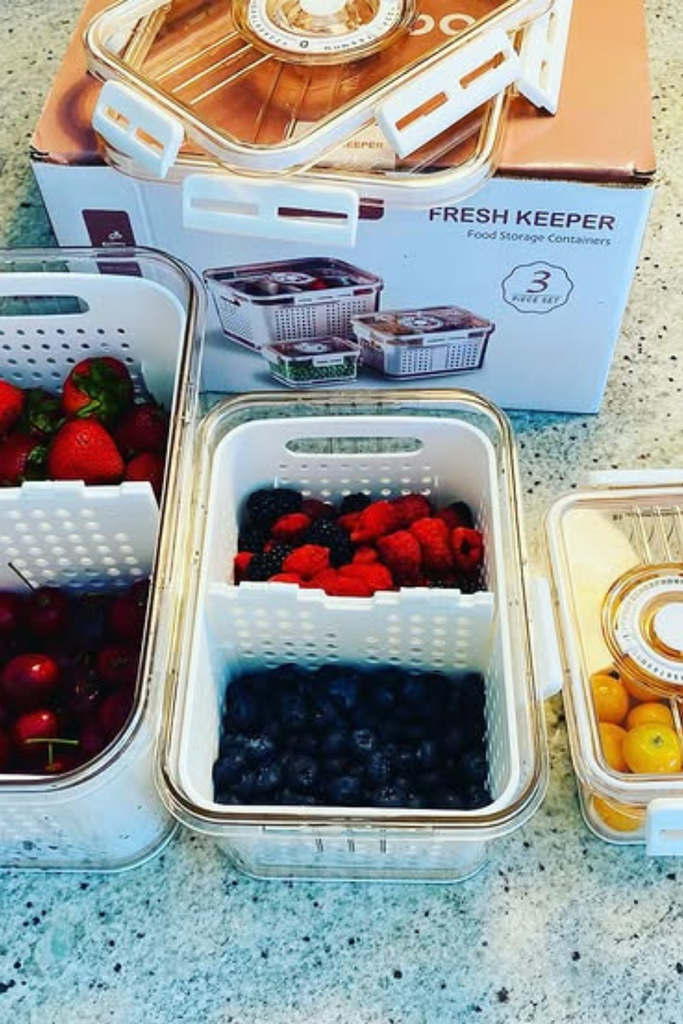
Berries need more careful storage than many firm fruits because trapped moisture and damaged pieces can encourage mold. I would refrigerate whole strawberries, blueberries, raspberries, and similar fruit in a clean container that allows suitable ventilation.
I generally avoid washing berries before storing them unless the container and storage method are designed to handle the added moisture. Instead, I remove damaged berries, keep the remaining fruit dry, and wash it shortly before eating.
A clean paper towel may help absorb excess moisture in some containers, but I would replace it if it becomes damp. I would also avoid sealing wet berries in an airtight container, since trapped moisture can shorten their usable life.
Pro Tip: I place berries where they will not be crushed by heavier groceries in the refrigerator. I check them regularly and remove any moldy or damaged pieces promptly.
Prepped Fruit Boxes
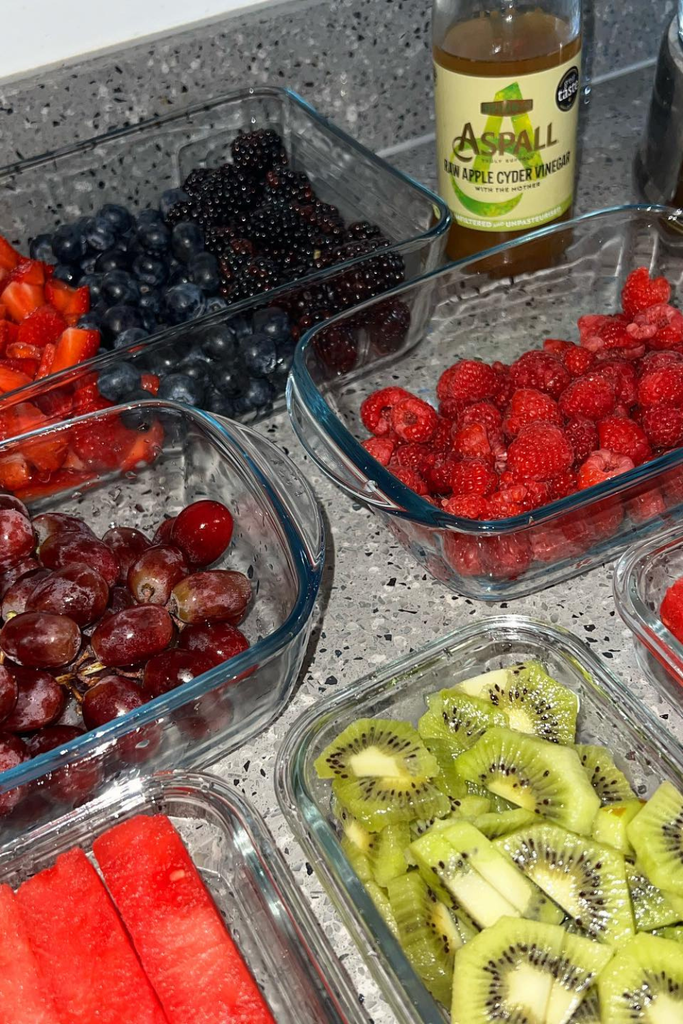
Prepped fruit boxes make snacks and lunch preparation easier because the fruit is ready to serve. I would use clean, food-safe containers with secure lids to keep cut fruit covered and reduce contact with other foods.
After cutting fruit, I would refrigerate it promptly rather than leaving it on the counter for convenience. As a general food-safety rule, perishable cut fruit should not remain at room temperature for more than two hours, or one hour when temperatures are above 90°F (32°C).
I would store different fruit varieties separately when their juices, textures, or flavors could affect one another. Clear containers also help me see what needs to be eaten first, although I would still label the date when preparing several boxes.
Pro Tip: I prepare manageable portions rather than cutting more fruit than my household can use soon. I follow the appropriate storage guidance for each variety and discard cut fruit that has been left out too long or shows signs of spoilage.
Lined Display Bowl

A lined display bowl can make whole fruit look attractive while keeping it easy to reach. I would use it for fruit that is suitable for countertop storage, rather than using the bowl as a permanent home for every variety I buy.
If I add a fabric liner, I make sure it is clean and completely dry. A liner can cushion fruit, but it may also trap moisture, so I would not use it with wet produce or assume that it extends freshness.
I would keep the bowl in a cool location away from direct sunlight and heat. Fruit that needs refrigeration should be stored there instead, even if it means the display contains fewer varieties.
Pro Tip: I display a small quantity of fruit and refill the bowl as needed. This keeps the arrangement neat and makes it easier to notice bruising, mold, or fruit that has become overripe.
Labeled Storage Zones

Labeled storage zones help me keep track of fruit when I shop for several varieties at once. I can use baskets or containers to group produce by type, ripeness, or intended use without mixing everything together.
I would label a basket only after deciding whether the fruit belongs at room temperature or in the refrigerator. A label cannot compensate for unsuitable storage conditions, and not every fruit needs to be separated from every other variety.
For example, I might keep bananas in their own countertop area and use a separate refrigerator container for berries. A simple date label can also help me remember when I bought or prepared the fruit.
Pro Tip: I use short labels such as “Eat First,” “Ripening,” or “Refrigerate.” These are more useful for everyday kitchen routines than a complicated labeling system that takes too much time to maintain.
Tiered Serve Bowls

Tiered serving bowls are useful when I want a selection of whole fruit available for family snacks or guests. The raised levels save surface space and can make fruit easier to see.
I would use the stand for whole fruit that is suitable for room-temperature storage. I would not leave cut citrus, berries, or other prepared fruit sitting out for extended periods simply because the display looks appealing.
I would also keep the portions modest and avoid stacking delicate fruit under heavier pieces. If the stand has removable bowls, I can clean them between uses and store the fruit more appropriately when serving time is over.
Pro Tip: When I serve fruit at a gathering, I put out a smaller batch first and refill it from properly stored supplies. This helps limit the time that perishable fruit spends at room temperature.
Hanging Basket Stack
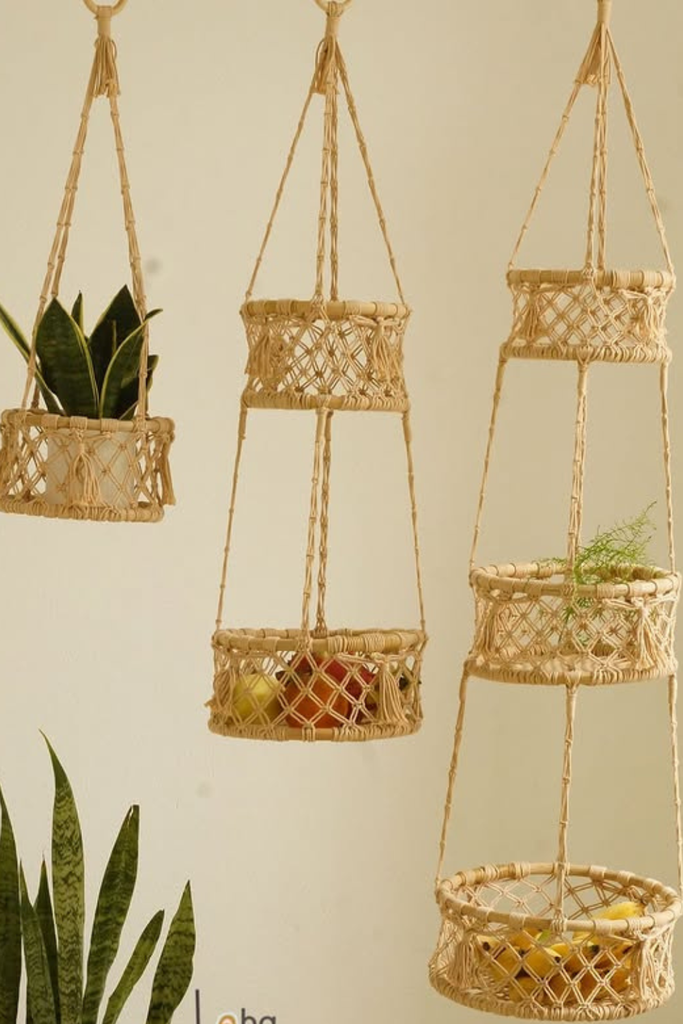
A hanging basket stack can provide extra storage in kitchens where the counters and shelves are already full. I would use it for suitable whole fruit and choose baskets with enough depth to hold the contents securely.
I would avoid treating hanging baskets as a replacement for refrigeration. Berries, cut fruit, and any other produce that needs chilling should remain in the refrigerator, even if the baskets are more convenient.
For countertop fruit, I would group compatible varieties and consider ripeness before placing them together. The baskets should be easy to reach, securely attached, and positioned away from heat sources.
Pro Tip: I check the weight limit of the mounting hardware before installing the baskets. I also leave enough space between levels so fruit can be removed without knocking other pieces onto the floor.
Cubby Shelf Sorting
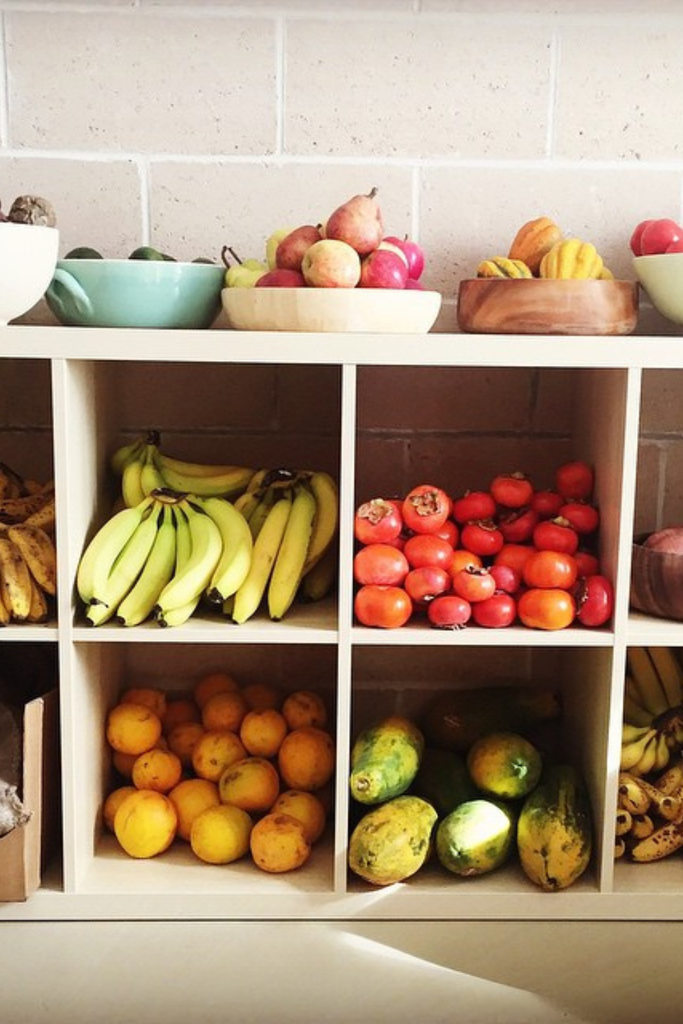
Cubby shelves create separate spaces for fruit and can make an open pantry feel more organized. I would assign compartments based on the fruit I buy most often and the storage conditions each variety requires.
Open fronts make the contents easy to see, but the shelves still need to stay clean and dry. I would use them for suitable whole fruit rather than cut fruit or produce that needs a controlled refrigerator temperature.
I would also avoid assuming that a separate cubby completely prevents ethylene exposure. Air moves between open compartments, so I would use other storage arrangements if keeping certain varieties apart is important.
Pro Tip: I keep the most frequently used fruit in the easiest-to-reach cubbies. I leave less-used spaces empty rather than buying extra fruit just to fill every compartment.
Sectioned Wood Boxes
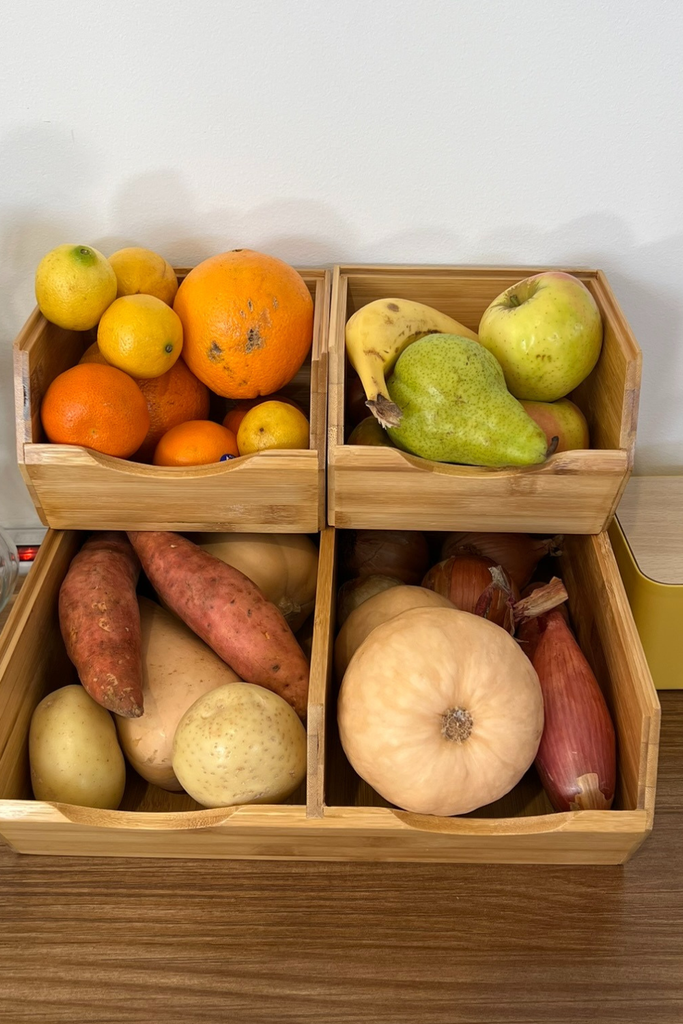
Sectioned wooden boxes offer a simple way to give different fruit varieties their own spaces. They can work on a pantry shelf or counter when the design is stable, clean, and easy to inspect.
I would use the compartments for whole fruit that suits room-temperature storage, while keeping refrigerated varieties elsewhere. Smooth surfaces are important because splinters or rough edges can damage delicate produce.
Although individual sections make organization easier, I would still check each variety for bruising and spoilage. A wooden box should not be left damp, and any removable dividers should be easy to clean.
Pro Tip: I choose a sectioned box that matches the amount of fruit I actually buy. If the compartments are too small, fruit becomes crowded; if they are too large, smaller quantities can get lost at the back.
Built-In Produce Bays
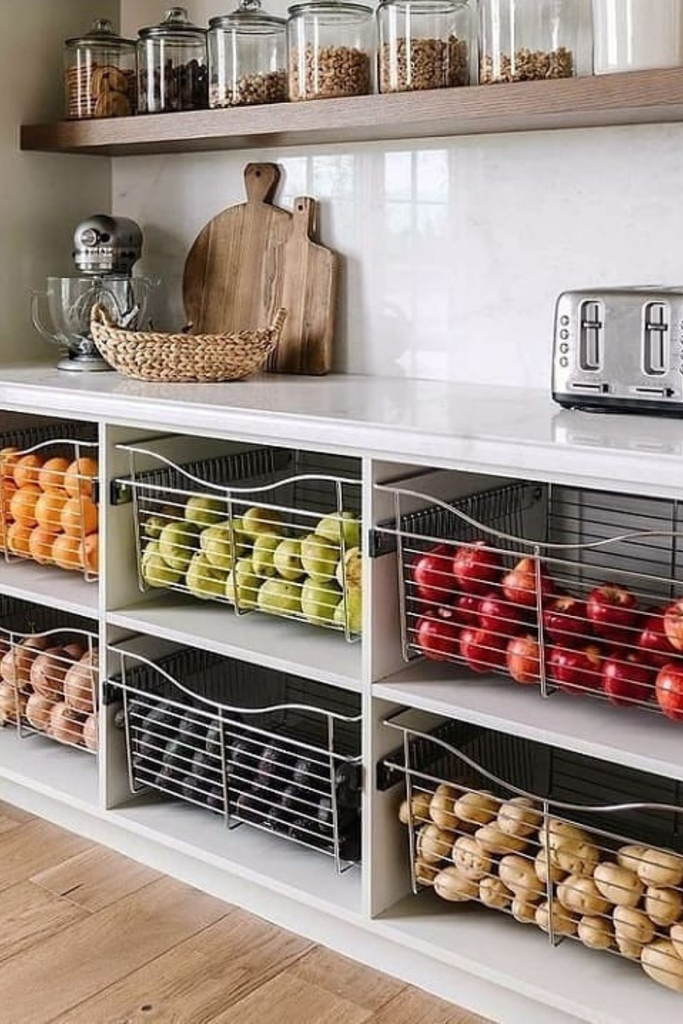
Built-in produce bays can provide a permanent storage solution in a kitchen designed around frequent cooking and fresh ingredients. Wire or slatted compartments make it easier to organize different varieties and see what is available.
I would plan these bays around the fruit my household regularly uses rather than expecting every variety to share the same conditions. Some fruit can be displayed at room temperature for short periods, while other varieties need refrigeration to maintain quality and safety.
I would also think about cleaning access, shelf height, ventilation, and proximity to appliances before choosing the layout. A storage feature is only useful if it is easy to maintain and suited to everyday habits.
Pro Tip: If I were planning a kitchen renovation, I would ask for produce storage that can be removed or cleaned easily. I would keep refrigerator storage available for fruit that needs chilling rather than relying on open shelving alone.
FAQs
Do fruits really need to be stored separately?
Not every fruit needs its own container, but separating certain varieties can help manage ripening and prevent physical damage. Some fruits, including apples, bananas, and pears, release ethylene gas, which can speed up ripening in sensitive produce nearby.
I would pay particular attention to fruit that I want to keep firm for longer. For example, storing bananas separately from some ethylene-sensitive produce can help me manage ripening. I would also keep berries away from heavy items that might crush them.
Storage temperature matters just as much as separation. If fruit needs refrigeration, putting it in a separate countertop basket will not provide the same benefit as chilling it. I choose the storage location first, then organize the fruit within that space.
Is countertop storage bad for fruit?
No. Countertop storage can be suitable for whole fruit that needs to ripen or that I plan to eat soon. Bananas and avocados are common examples of fruit that can ripen at room temperature, while citrus can also be kept on the counter for short-term use.
The important thing is to avoid heat, direct sunlight, overcrowding, and leaving fruit out after it has reached the stage where refrigeration would help maintain its quality. Apples and pears often keep longer in the refrigerator, and berries generally need refrigeration.
I also treat cut fruit differently from whole fruit. Once fruit has been cut, I refrigerate it promptly in a clean, covered container and follow safe food-handling practices.
For me, the best fruit-storage system is not necessarily the most decorative or expensive one. It is the setup that suits the fruit, makes everything easy to find, and helps me use what I buy before it spoils.
Read this next: 26 Vertical Storage Ideas for 2026
Conclusion
I find that keeping fruit fresh is easier when I combine the right storage conditions with a simple organization system. Tiered baskets, rolling carts, wooden crates, hanging nets, and labeled refrigerator containers can all be useful, but each works best when I match it to the fruit I am storing.
I start by checking which fruit needs refrigeration, which can ripen on the counter, and which varieties may affect one another’s ripening. Then I choose containers that are easy to clean and allow me to see what I have. A quick check every day or two helps me spot damaged fruit and plan snacks around what needs to be used first.
I do not need to buy all 25 organizers to make a difference. One suitable basket for countertop fruit and a few well-chosen refrigerator containers may be enough to create a cleaner, more practical kitchen and reduce avoidable waste.







One Comment