
30 Modern Bright Living Room Ideas To Liven Your Space
A bright living room can make my entire home feel more open, comfortable, and welcoming. I especially love modern spaces that use natural light, simple furniture, fresh colors, and a few personal details without making the room feel overdecorated.
When I want to brighten a living room, I don’t rely on one change. I usually look at the whole space, including the wall color, windows, flooring, furniture, lighting, storage, and accessories. Even a small adjustment, such as moving a mirror closer to a window, can change how the room feels during the day.
The best part is that I don’t have to spend a fortune to create a brighter modern living room. I can start with inexpensive changes like lighter textiles, sheer curtains, colorful pillows, plants, or better lighting before taking on larger projects.
In this guide, I’m sharing 30 modern bright living room ideas that I can use to make a space feel lighter, fresher, and more contemporary. The ideas cover everything from neutral color palettes and large windows to mirrors, lighting, plants, storage, artwork, colorful accents, and statement furniture.
I can combine several of these ideas instead of trying to use all 30 at once. For example, light walls, furniture with exposed legs, a large mirror, and sheer curtains can work together to make a smaller room appear more open.
Save this for later
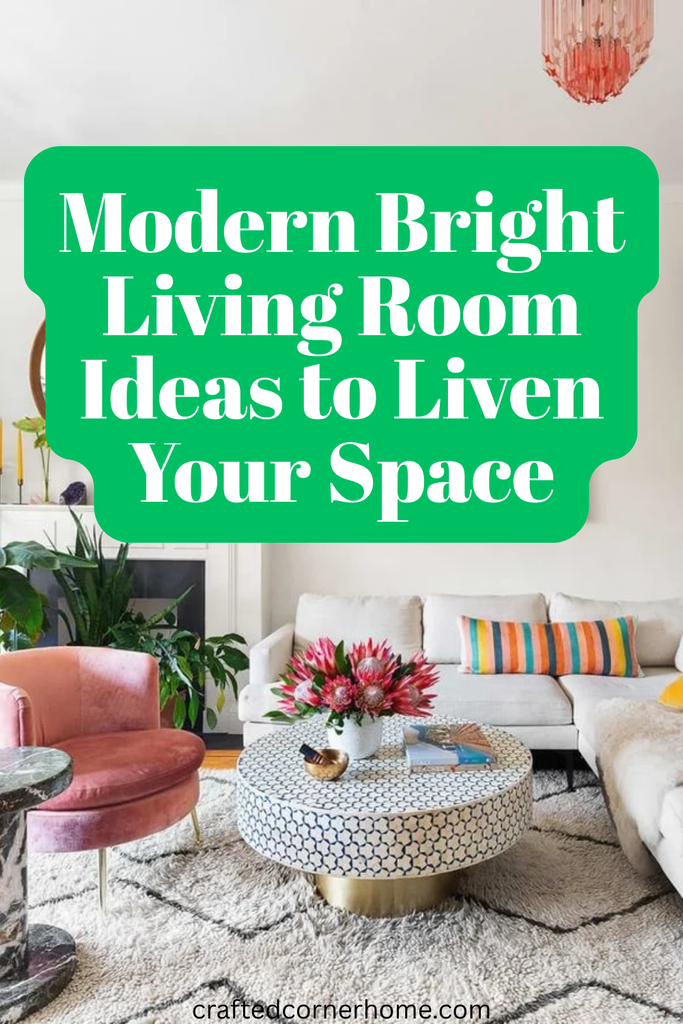
Table of Contents
I also recommend thinking about how I actually use my living room before choosing decor. A family room may need durable fabrics and practical storage, while a formal sitting room may give me more freedom to focus on decorative pieces.
Key Takeaways
- I can make a living room look brighter with both natural and artificial light.
- Light walls, flooring, furniture, and curtains can help create an airy appearance.
- Mirrors and glass surfaces can visually reflect light around the room.
- Bright colors work best when I balance them with calmer neutral shades.
- Furniture with exposed legs can make the floor area feel less crowded.
- Plants, artwork, rugs, and metallic details add personality without requiring a complete makeover.
- Built-in storage and floating shelves can help me keep clutter under control.
- I don’t need to use every trend; choosing a few ideas that suit my room usually creates a more cohesive result.
Related article: 13 Affordable Outdoor Seating Options For Small Spaces
1. Opt for a neutral color scheme with pops of bright colors
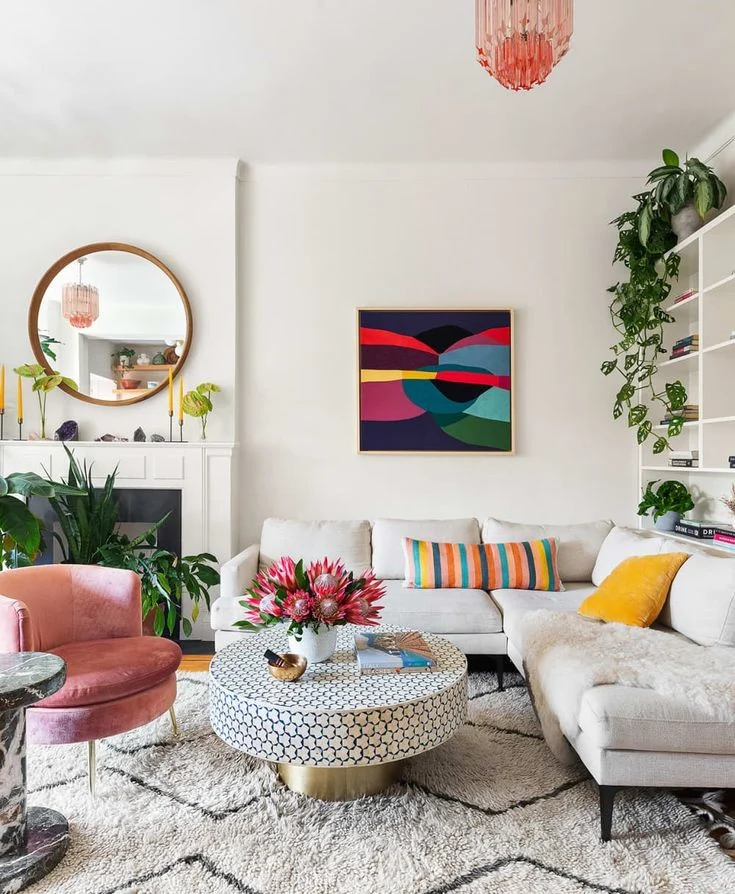
I like using a neutral base when I want flexibility in my living room. Shades such as warm white, beige, cream, soft gray, or greige give me a calm starting point without making the room feel plain.
From there, I can introduce brighter colors through pillows, artwork, throws, vases, or a small accent chair. I don’t have to commit to an expensive colorful sofa when a few replaceable accessories can create the same effect.
For a more modern appearance, I usually choose one or two accent colors and repeat them around the room. This makes the bright details look intentional rather than random.
Pro Tip: I keep large furniture pieces neutral and use smaller accessories for bold colors. That makes seasonal decorating much easier.
2. Install large windows to let in natural light
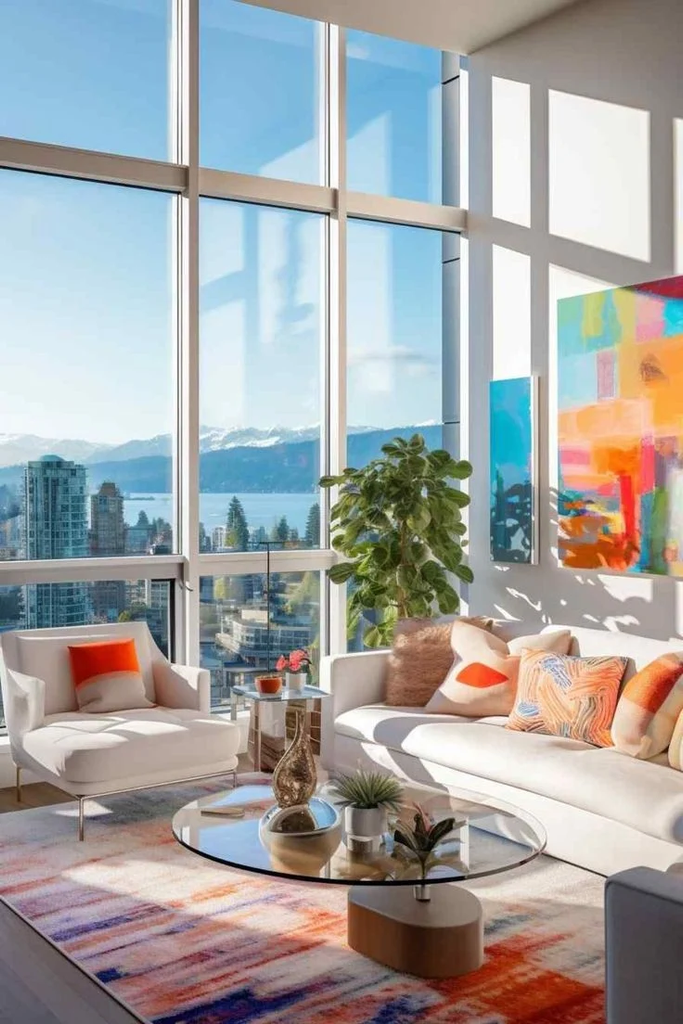
Natural light is one of the easiest ways to make a living room feel brighter during the daytime. If I’m renovating or building, larger windows can make a noticeable difference in how much daylight reaches the room.
If replacing windows isn’t practical, I can still make existing windows work harder by keeping the area around them relatively open. Heavy furniture directly in front of a window can block some of the available light.
I also like lightweight curtains because they soften incoming sunlight without making the room feel closed off.
Pro Tip: I clean my windows regularly and keep bulky decor away from the glass. Sometimes the simplest changes make the biggest difference.
3. Choose light-colored furniture with clean lines
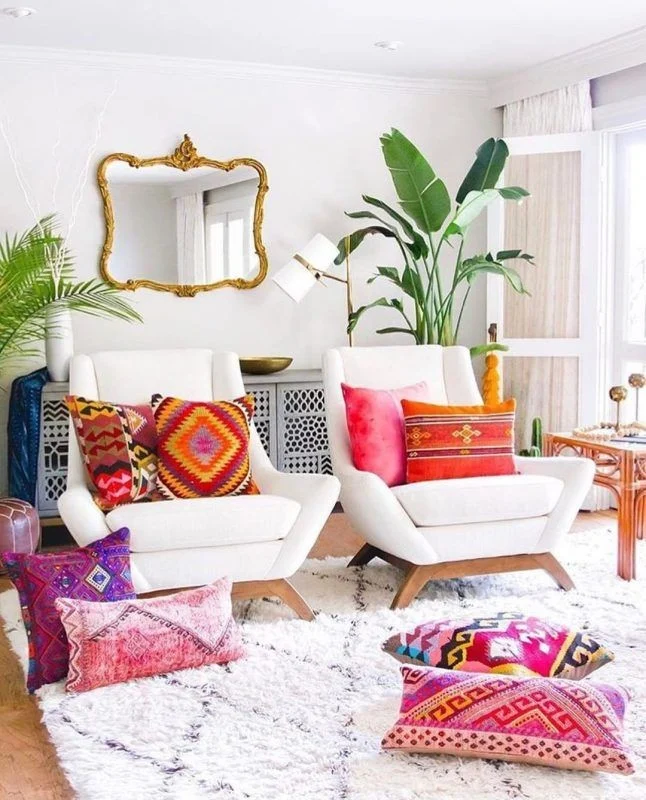
Light furniture can help maintain the airy look I want in a bright living room. Cream, ivory, beige, pale gray, and soft neutral upholstery are easy choices for a modern space.
I also look for sofas and chairs with simple shapes instead of heavy decorative details. Clean silhouettes tend to make the room feel more organized.
If I have children or pets, I consider washable covers or performance fabrics before choosing very light upholstery. A beautiful sofa isn’t useful if I’m constantly worried about every mark.
4. Incorporate metallic accents
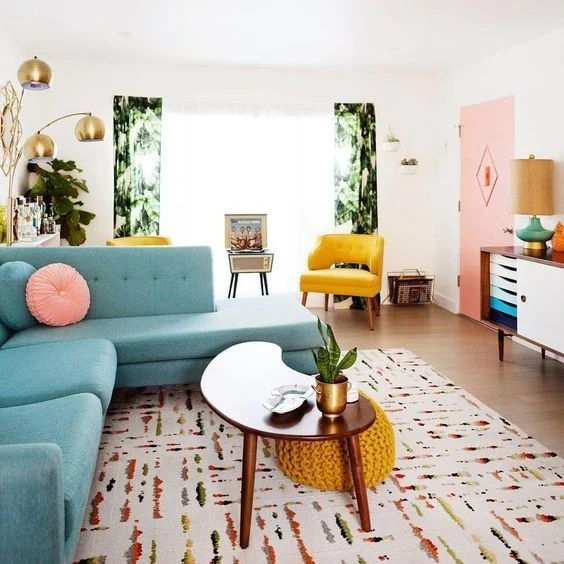
Metallic finishes are an easy way for me to add some shine without introducing another strong color. Brass, brushed gold, chrome, and silver can all work with a bright neutral room.
I might use a metallic lamp, picture frame, side table, vase, or decorative object. These small details catch available light and add another layer of visual interest.
I prefer repeating the same metallic finish in two or three places rather than mixing too many finishes throughout a small room.
5. Hang a statement chandelier or pendant light fixture
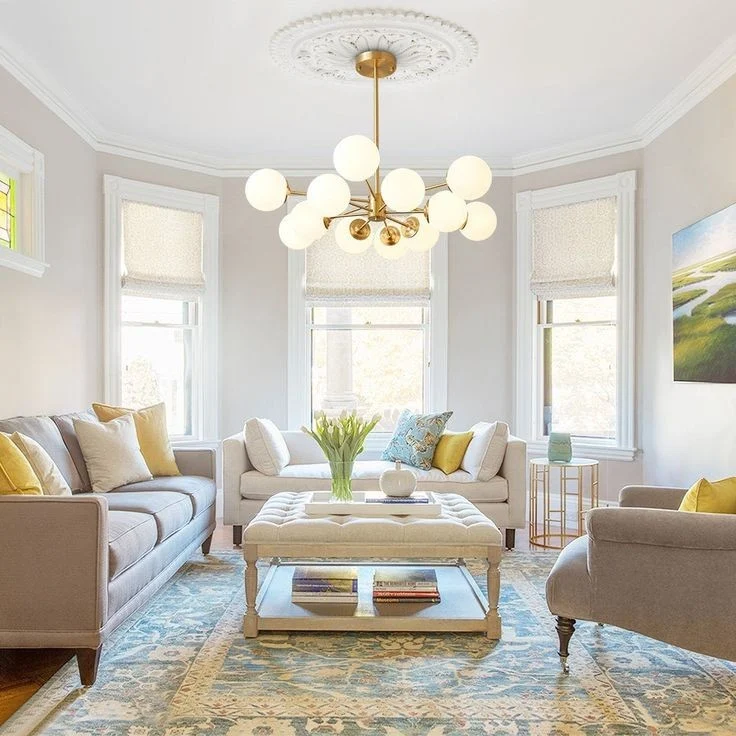
A statement ceiling light can become both a practical lighting source and a decorative focal point. I especially like this option when the rest of my furniture is simple.
For a modern room, I can choose a sculptural pendant, oversized chandelier, globe fixture, or streamlined linear light. The right size matters, though, because an oversized fixture can overwhelm a compact room.
I also think about the height of the ceiling and the furniture underneath before installing a hanging fixture.
Pro Tip: I use multiple light sources instead of expecting one ceiling fixture to illuminate the entire room evenly.
6. Use mirrors strategically to reflect light
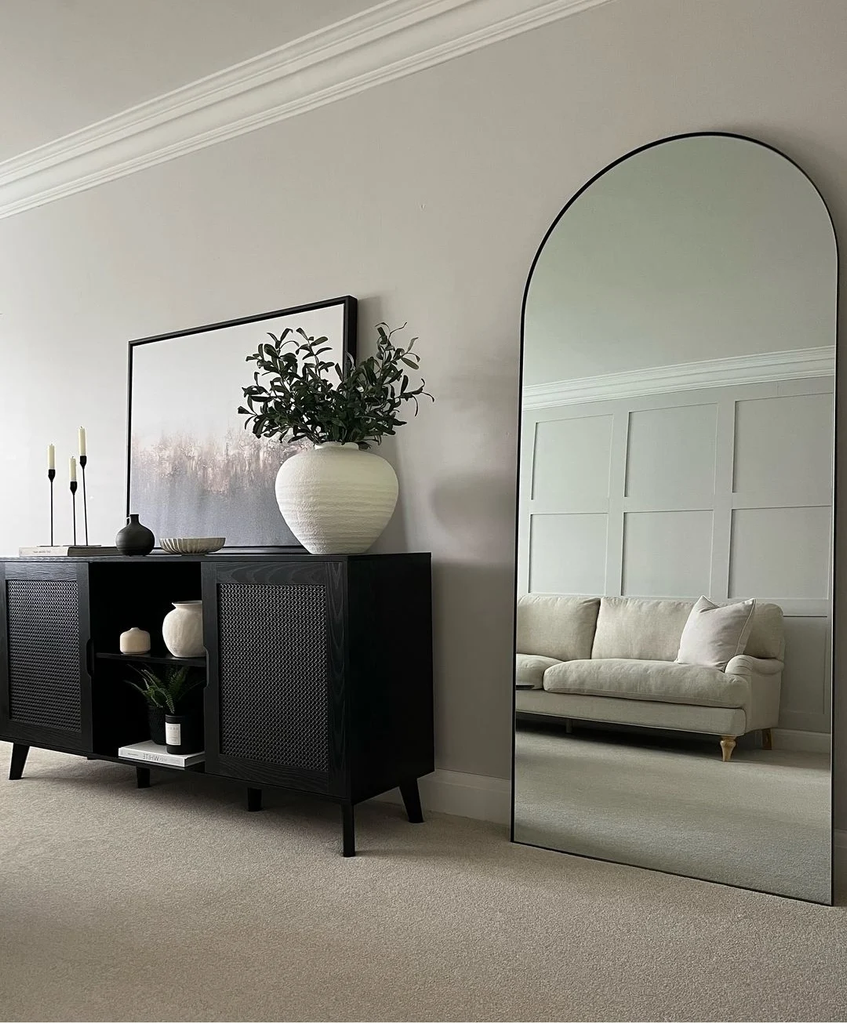
Mirrors are one of my favorite decorating tools when I want a room to feel brighter and more spacious. Instead of placing one wherever there is an empty wall, I think about what the mirror will reflect.
A mirror positioned across from or near a window can reflect daylight back into the room. A large floor mirror can also add height, while several smaller mirrors can create a more collected look.
I always check the reflection before deciding on the final position. A mirror reflecting a beautiful view is much more useful than one reflecting a cluttered corner.
7. Install recessed lighting or track lighting
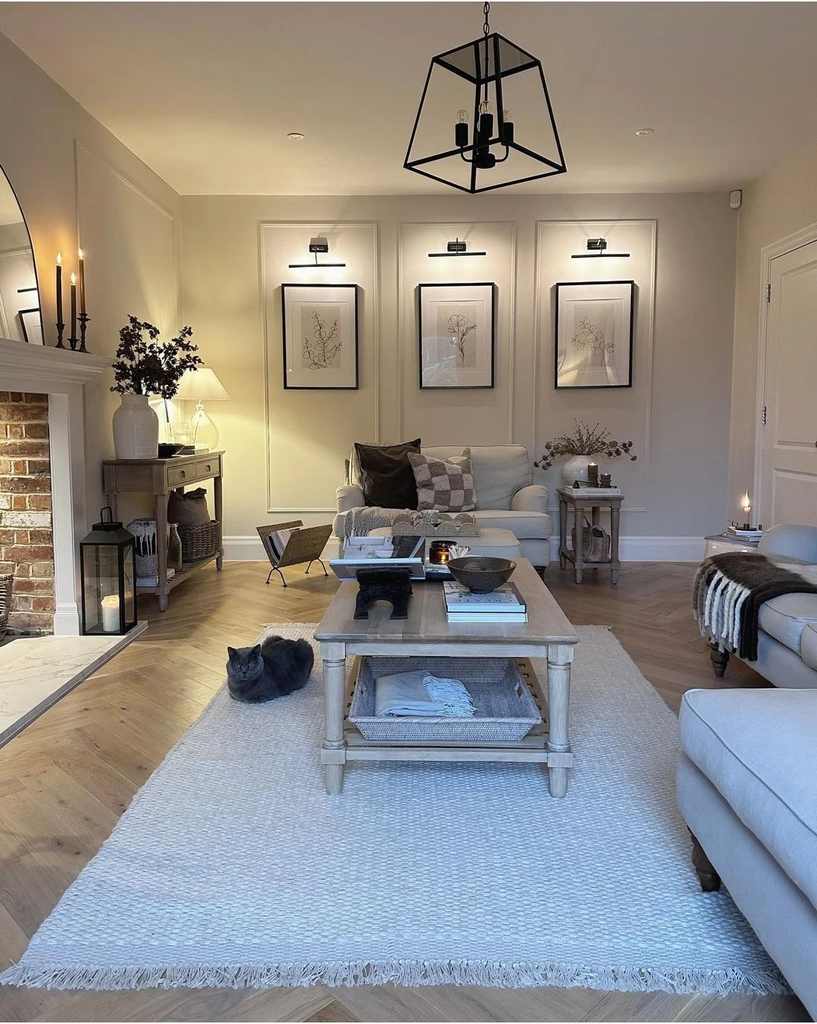
When my living room doesn’t receive enough daylight, I use layered artificial lighting to fill the gaps. Recessed lights are useful for general illumination because they keep the ceiling visually clean.
Track lighting gives me more control because individual fixtures can be directed toward artwork, shelving, seating areas, or architectural details.
I don’t rely on ceiling lights alone. Floor lamps, table lamps, and wall lighting can create softer pools of light and make the room more comfortable at night.
8. Integrate indoor plants
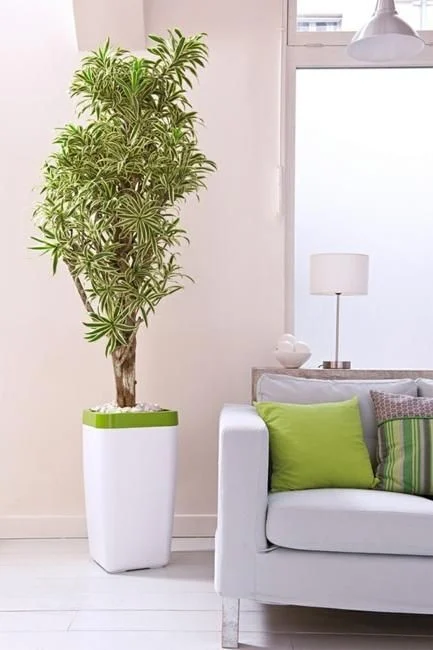
Indoor plants can bring color and natural texture into an otherwise neutral living room. I can use one large plant as a focal point or group several smaller plants on shelves and side tables.
For low-maintenance decorating, I choose plants based on the amount of natural light the room actually receives. A plant that needs bright indirect light may struggle in a dark corner.
Simple ceramic, woven, or neutral planters can also reinforce the modern style without competing with the greenery.
9. Select furniture with legs
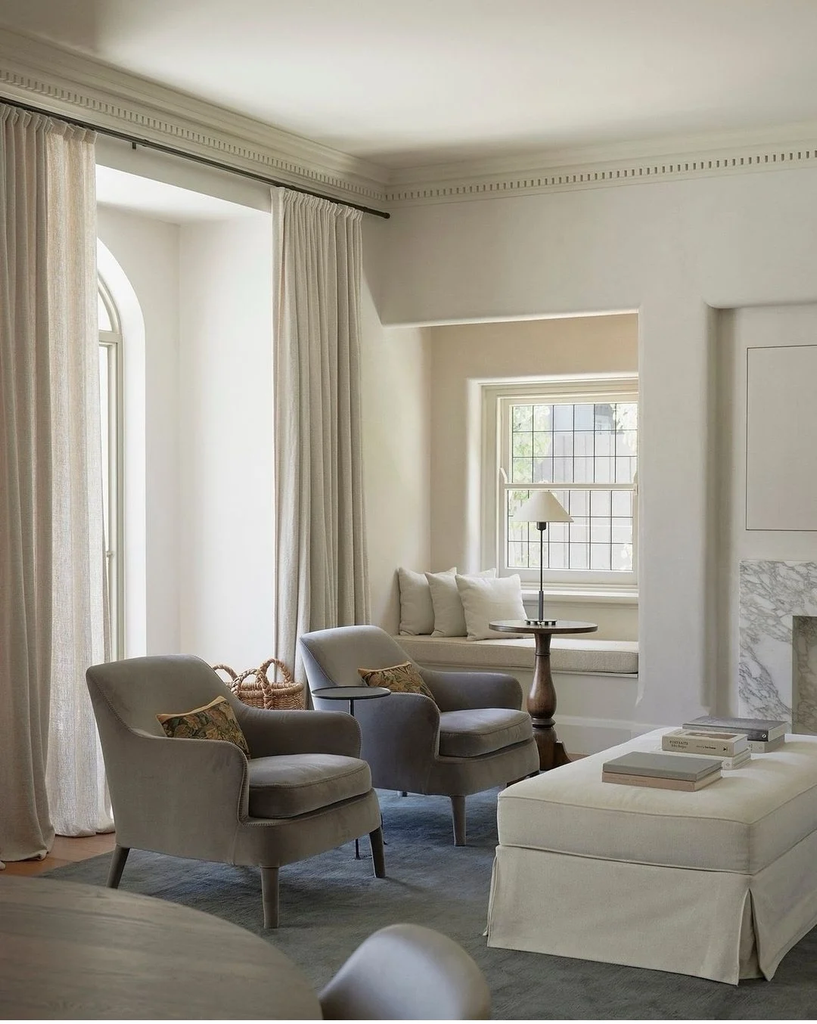
Furniture that sits directly on the floor can sometimes make a room feel visually heavy. When I choose sofas, chairs, consoles, or cabinets with visible legs, more of the floor remains visible.
That small gap underneath furniture can help a compact living room feel less crowded. It also makes cleaning underneath easier.
I especially like this approach in smaller spaces where every visible inch of floor contributes to the overall feeling of openness.
10. Experiment with geometric patterns
Geometric patterns give me an easy way to introduce modern character. I can use triangles, grids, arches, stripes, diamonds, or other structured designs through rugs, pillows, curtains, or artwork.
I don’t need geometric patterns on every surface. One patterned rug paired with mostly solid furniture can be enough to give the room a fresh focal point.
If the room already contains several strong shapes, I keep the pattern scale controlled so the design doesn’t become visually busy.
11. Incorporate pops of neon colors
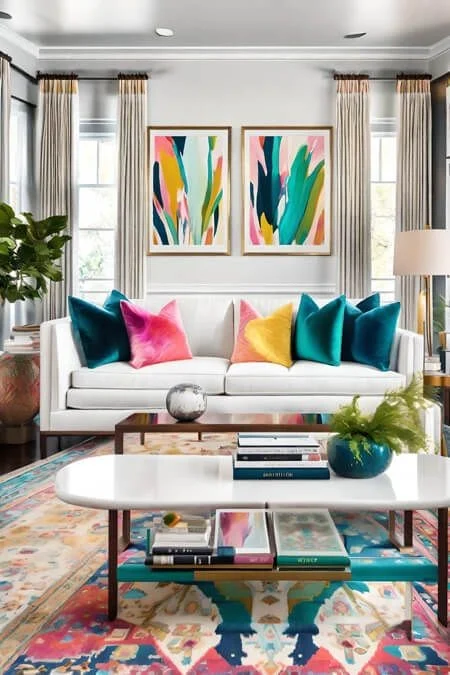
Neon shades aren’t for everyone, but they can create a playful modern look when used carefully. I might introduce neon yellow, pink, green, or orange through a pillow, artwork, throw, or small decorative object.
Because neon colors are naturally attention-grabbing, I prefer using them against a neutral background.
If I’m unsure about the look, I start with inexpensive accessories. That lets me change the color later without replacing major furniture.
12. Choose sleek and minimalist furniture pieces
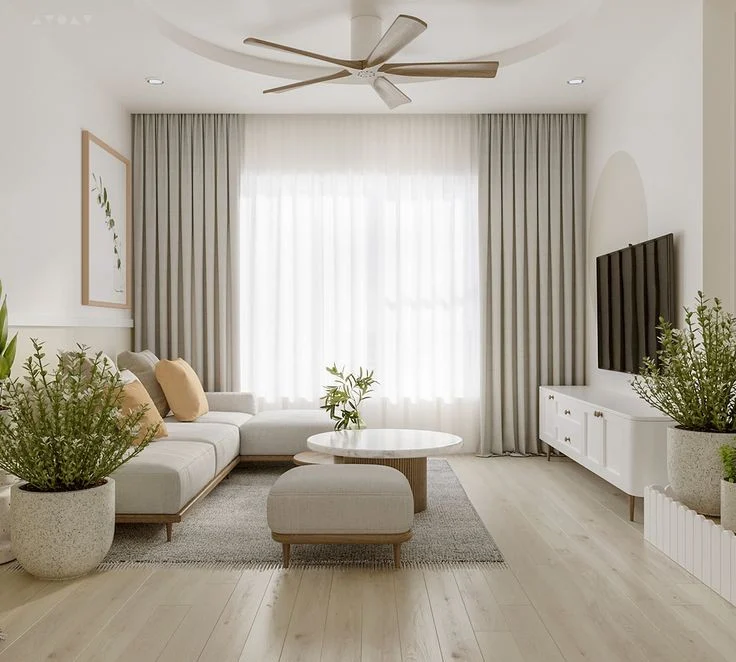
Minimalist furniture helps me maintain a clean appearance while allowing the room’s natural light and decorative details to stand out.
I look for simple silhouettes, practical proportions, and surfaces that don’t have unnecessary ornamentation. This doesn’t mean the room has to feel cold or empty.
I can soften streamlined furniture with cushions, textured throws, plants, books, and warm lighting. The goal is a room that feels uncluttered but still comfortable.
Pro Tip: Before buying another piece of furniture, I measure the available floor space and leave enough room for comfortable walking paths.
13. Create a gallery wall with bright and colorful artwork
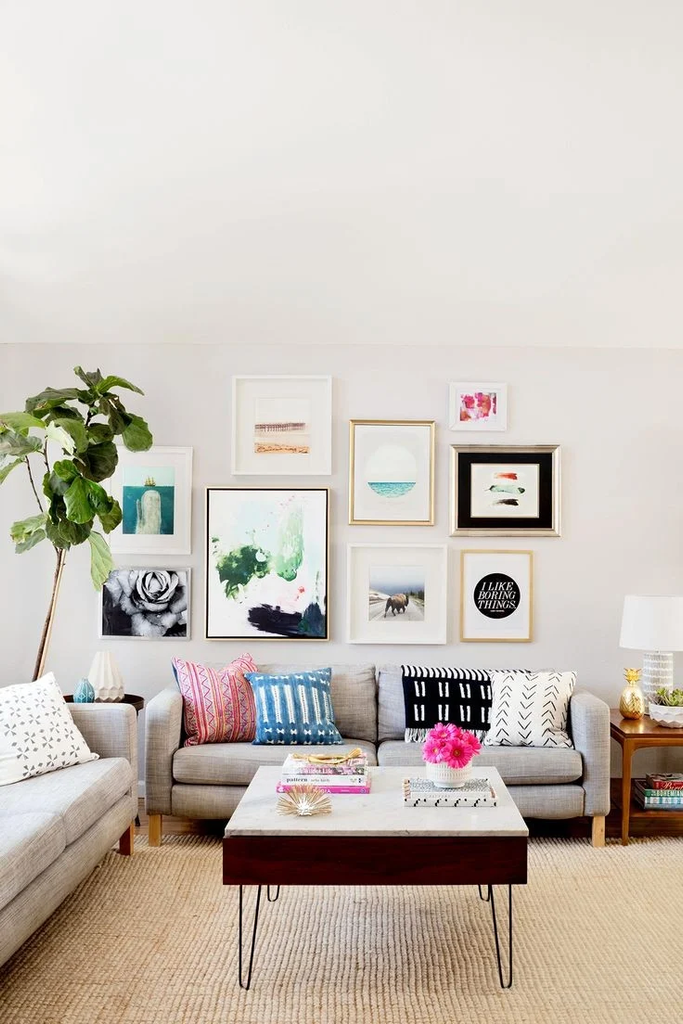
Artwork is one of the easiest ways for me to bring personality and color into a living room. A gallery wall can combine prints, paintings, photographs, illustrations, and other pieces that have meaning to me.
For a more cohesive arrangement, I usually repeat at least one color throughout several pieces. Matching or similar frames can also make different artwork styles feel connected.
Before putting holes in the wall, I arrange paper templates in the intended layout. This helps me test the spacing before committing.
14. Add a cozy and inviting ambiance with a fireplace
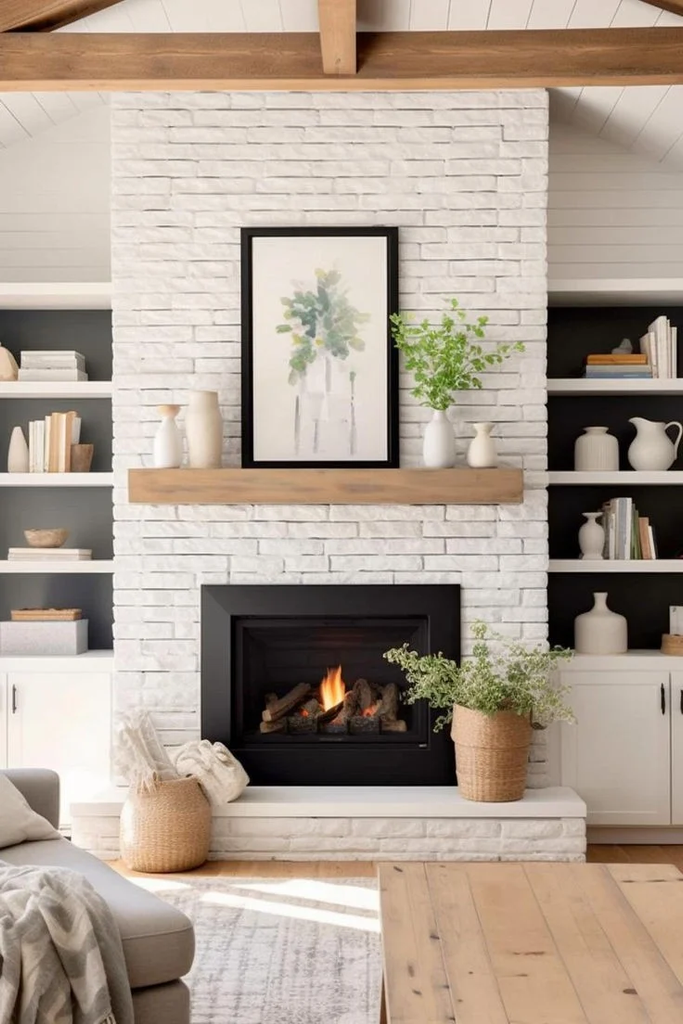
A fireplace can give the living room a strong architectural focal point while making the seating area feel more inviting.
If I don’t have a traditional chimney or don’t want the maintenance of a wood-burning fireplace, an electric model can offer a more convenient alternative. I always check installation requirements and safety instructions for the specific unit.
I can keep the area around the fireplace relatively simple so the feature remains the visual anchor.
15. Opt for a monochromatic color scheme
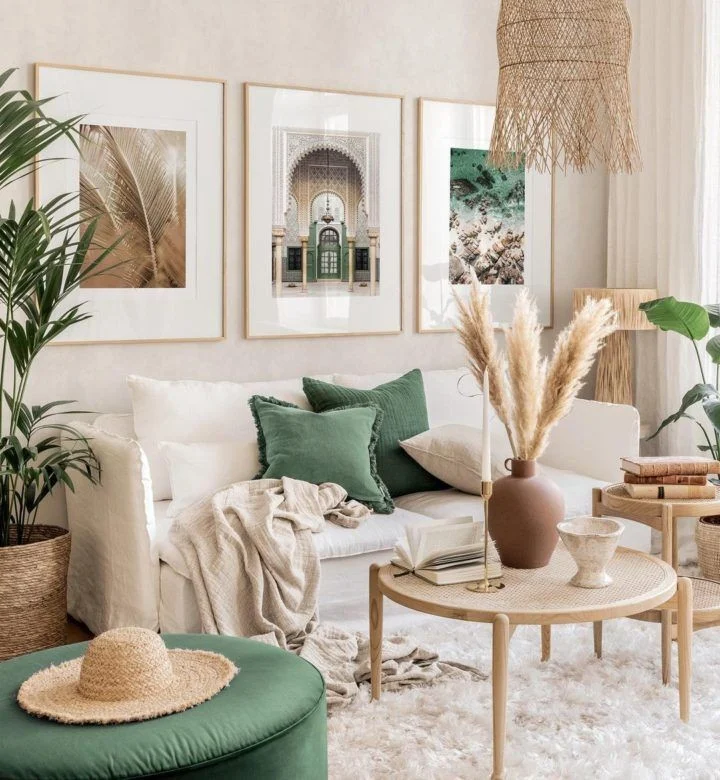
A monochromatic palette uses different shades and tones of one main color. I find this approach useful when I want a modern room that feels coordinated without relying on many contrasting colors.
For example, I could layer ivory, cream, warm white, and beige throughout the room. I can create depth by changing the textures rather than adding lots of different colors.
A monochromatic room doesn’t have to be boring. Fabrics, wood, stone, metal, and woven materials can all add visual variety.
16. Use glass or acrylic furniture pieces
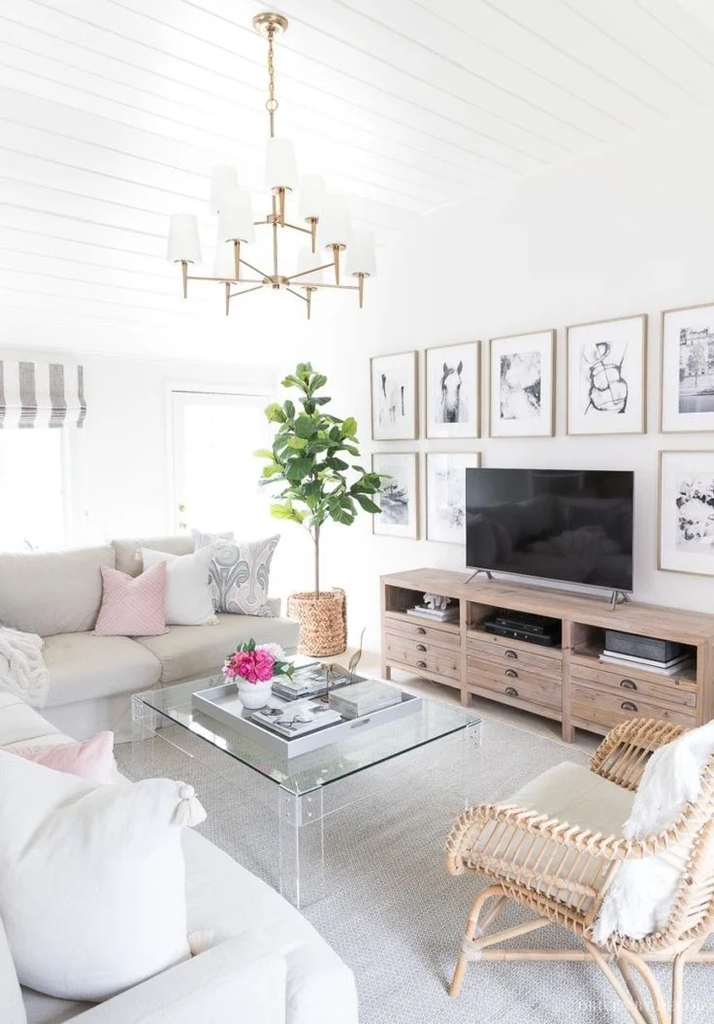
Glass and acrylic can make furniture visually disappear compared with heavier solid pieces. I especially like these materials for coffee tables, side tables, consoles, and occasional chairs.
A glass coffee table, for example, allows more of the flooring to remain visible. That can be helpful when I’m working with a small living room.
I do consider safety and maintenance, particularly if young children use the space. Rounded edges and sturdy construction are important factors.
17. Install floating shelves to display decorative items
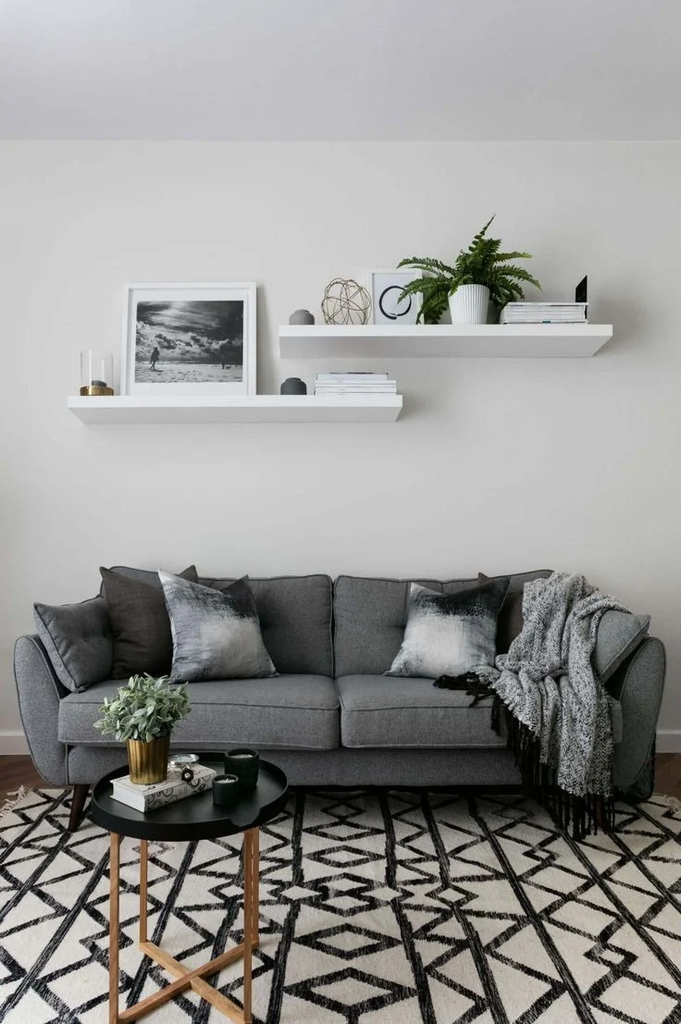
Floating shelves give me a useful place to display books, framed art, plants, candles, and small accessories without taking up floor space.
I try not to fill every inch of the shelf. Leaving some open space makes the arrangement look lighter and keeps the room from feeling cluttered.
I also group objects in different heights and sizes so the display has some visual movement.
Pro Tip: I use floating shelves for a small rotating collection rather than storing everything I own on them.
Also read: 30 Stylish Ways To Organize A Tiny Outdoor Space
18. Incorporate a mix of textures
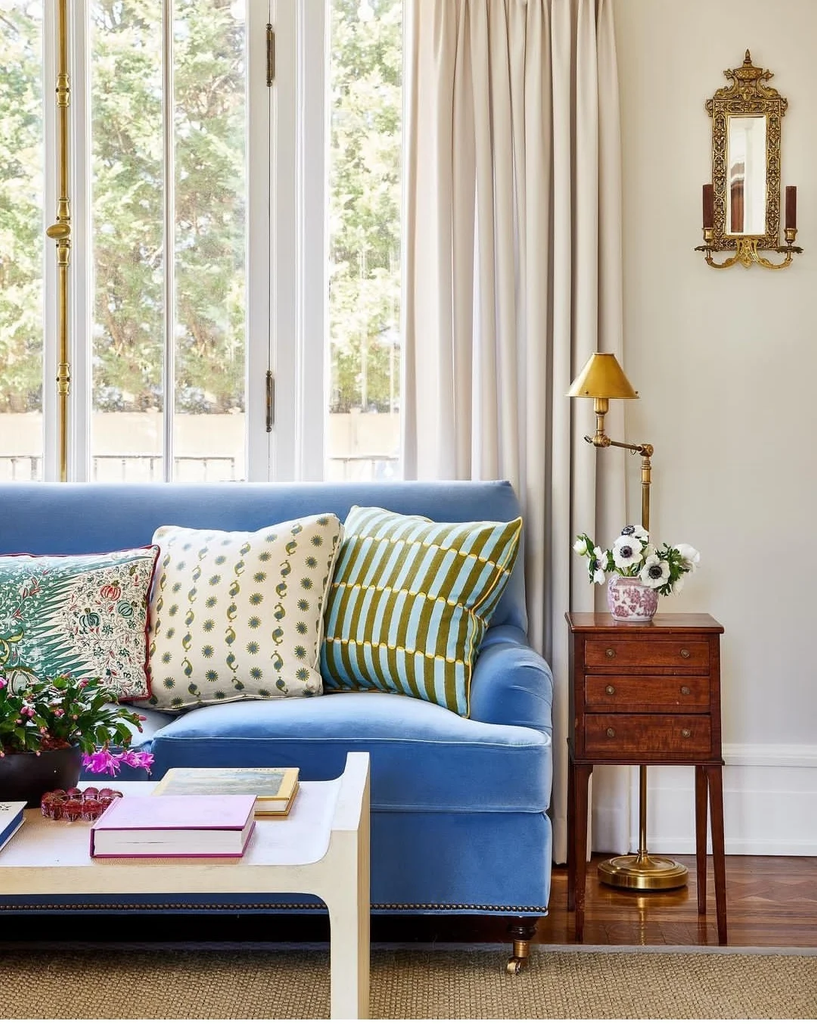
A bright room can sometimes feel flat if everything has the same smooth finish. I add depth by combining different textures throughout the space.
For example, I might pair a soft fabric sofa with a woven basket, a textured rug, linen curtains, a wooden table, and a knitted throw.
The colors can remain simple while the textures provide the visual interest. This is especially useful when I prefer neutral decorating.
19. Choose a statement area rug with bold colors or patterns
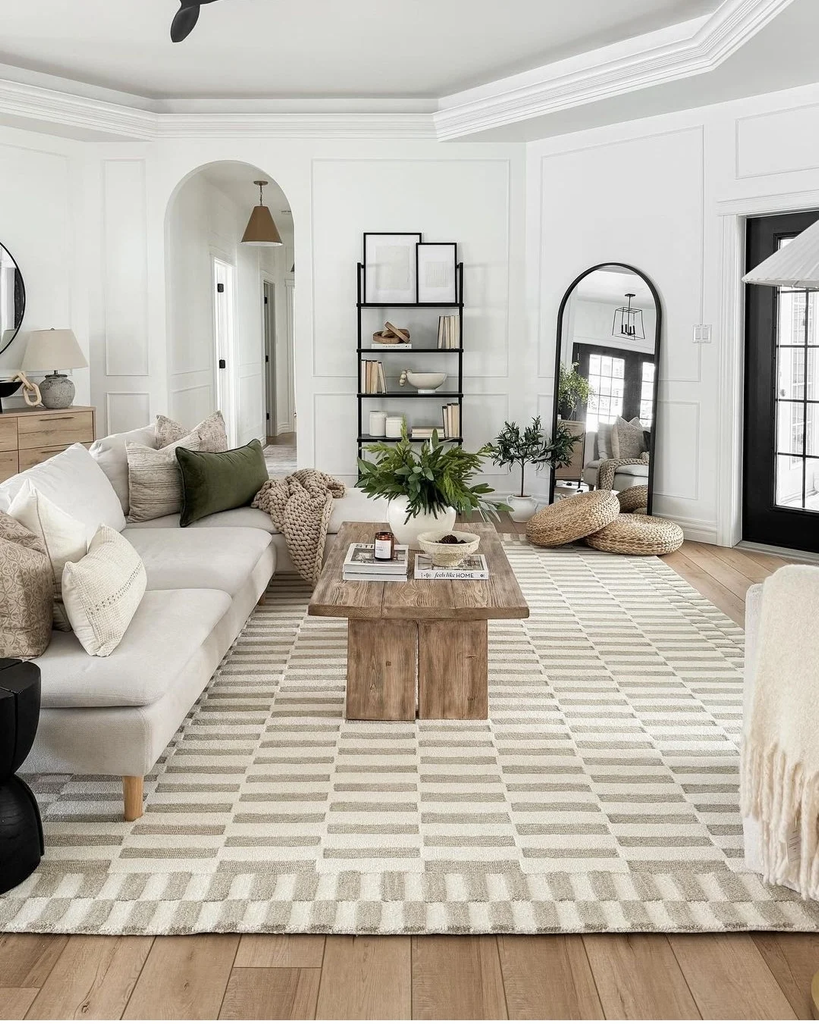
A large area rug can define the seating zone and introduce color without requiring me to repaint the walls.
I might choose a geometric, abstract, floral, or vintage-inspired design depending on the style of the room. The important thing is getting the size right.
A rug that is too small can make the seating arrangement feel disconnected. Whenever possible, I prefer a size that allows at least the front legs of the main seating pieces to sit on the rug.
20. Install built-in shelving units to maximize storage space
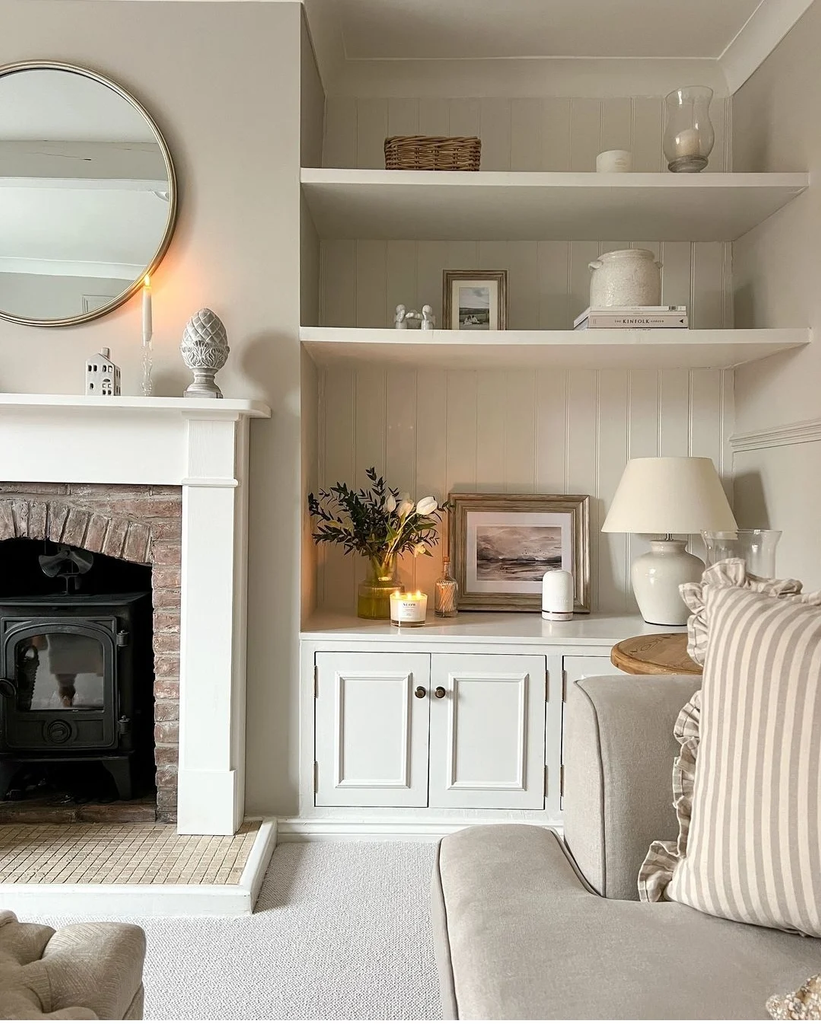
Built-in shelving can be particularly useful when I want my living room to look organized while still displaying books and decor.
I can design the shelves around the room’s dimensions and create specific spaces for electronics, books, baskets, artwork, and decorative objects.
For smaller rooms, I like combining open shelving with closed storage. This gives me somewhere to hide everyday clutter while keeping favorite pieces on display.
21. Hang large-scale artwork or oversized mirrors
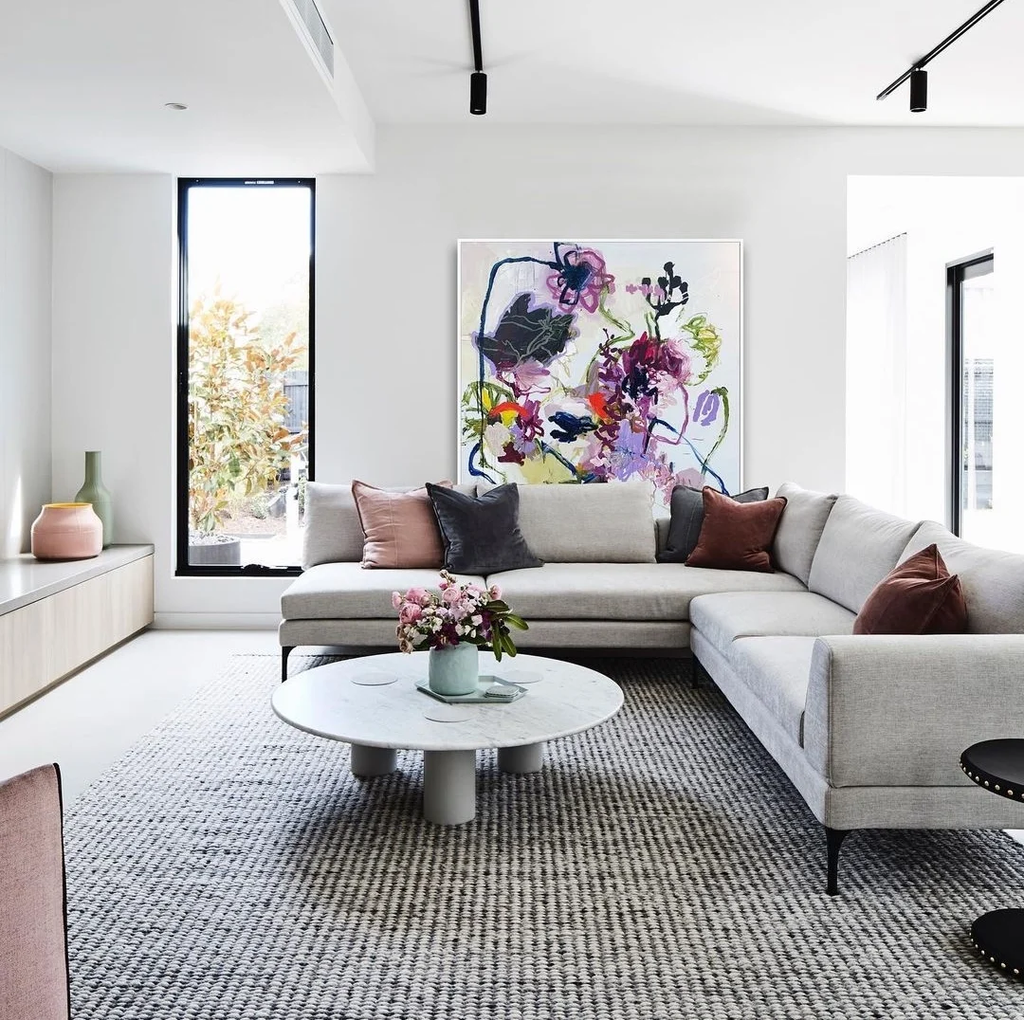
One oversized piece can sometimes have more impact than several small decorations. A large painting, photograph, or mirror can give an empty wall a clear focal point.
If I use a large mirror, I pay attention to what it reflects because that becomes part of the room’s visual composition.
I keep the surrounding decor relatively simple so the statement piece has enough space to stand out.
22. Incorporate pops of citrus colors like orange or lime green
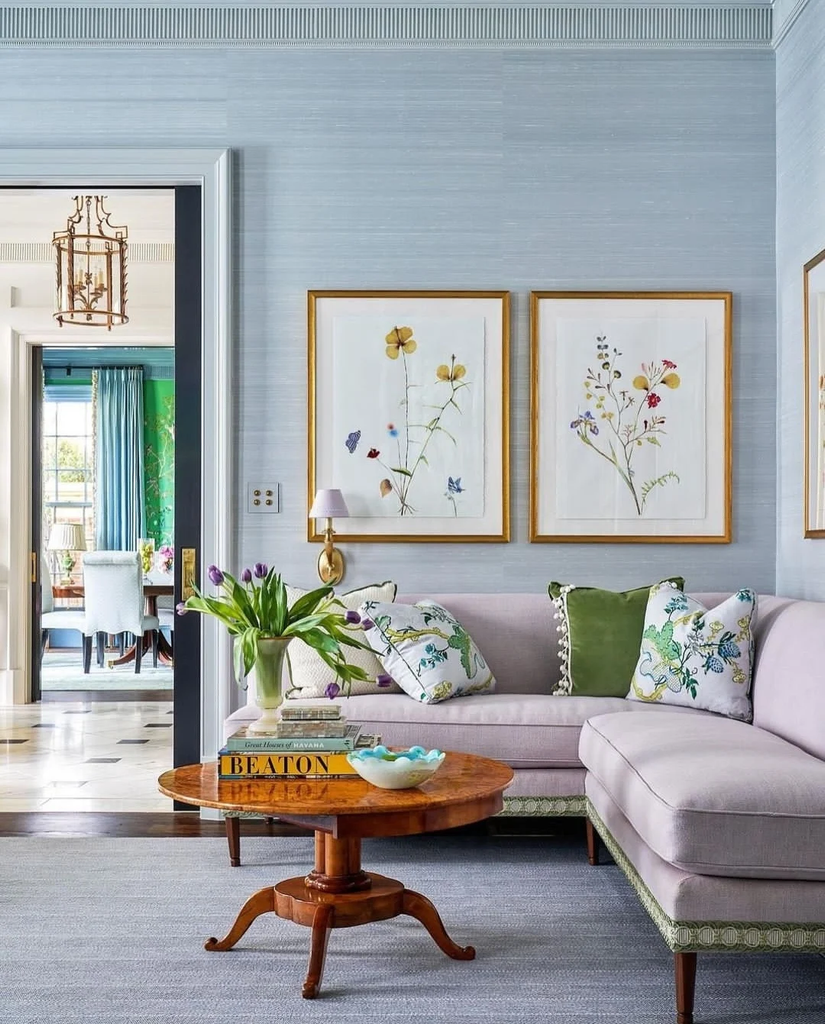
Citrus colors can bring a fresh and energetic feel to a neutral living room. Orange, lime green, lemon yellow, and similar shades work especially well as small accents.
I can use these colors through cushions, artwork, flowers, ceramics, or a small rug.
I find that repeating one citrus shade in a few different places creates a more intentional look than introducing several unrelated bright colors.
23. Use adjustable lighting fixtures like floor lamps or wall sconces
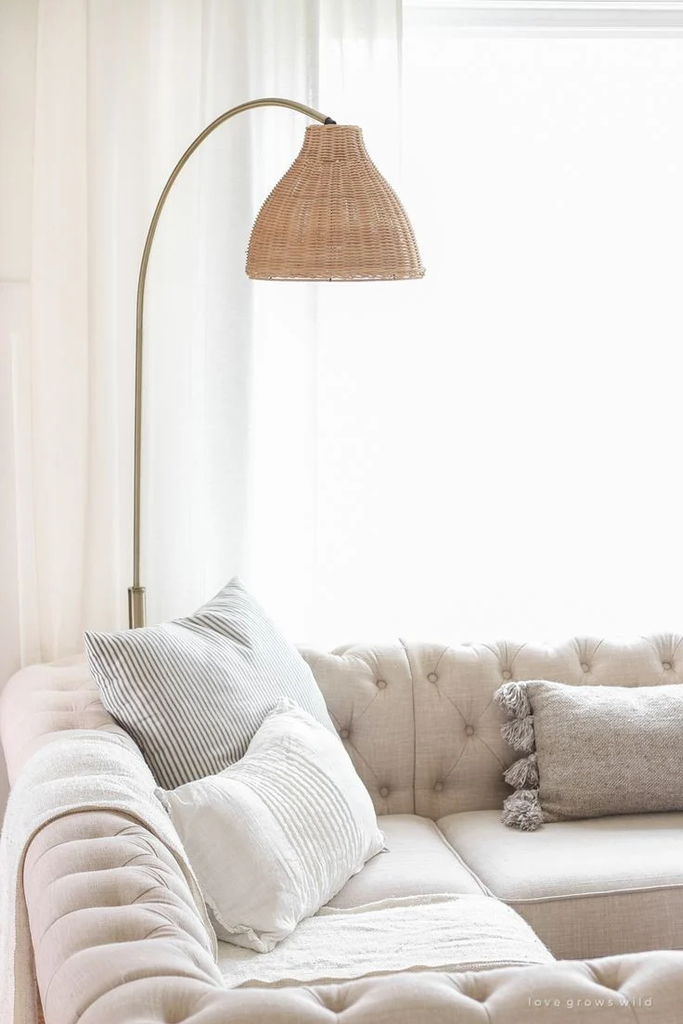
Adjustable lighting gives me more control over how different areas of my living room function.
A movable floor lamp can be angled toward a reading chair, while an adjustable wall light can highlight artwork or provide focused illumination.
I like having separate lighting options for reading, relaxing, entertaining, and general evening use. This makes the room more practical instead of depending on one bright overhead fixture.
24. Incorporate a statement piece of furniture
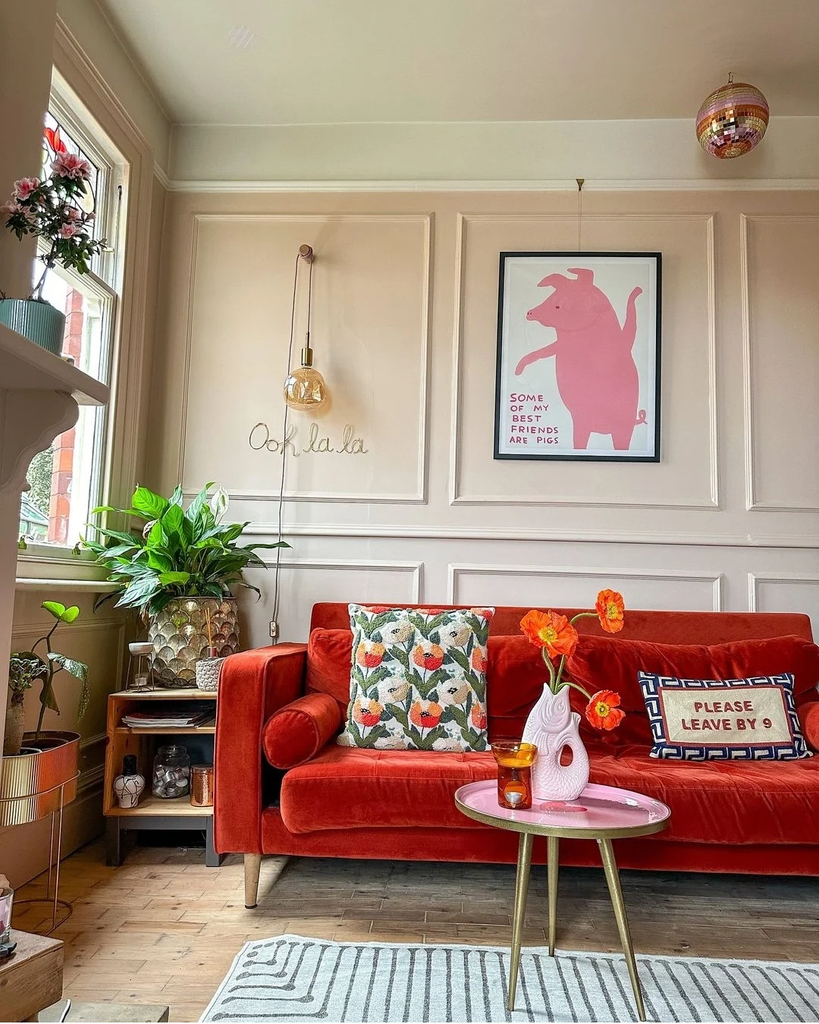
Sometimes I want one piece to do most of the visual work. A colorful sofa, sculptural chair, unusual coffee table, or distinctive console can become that statement piece.
When I choose a bold item, I keep the surrounding furniture fairly restrained. This prevents the room from competing with itself.
I also make sure the statement piece is comfortable and functional because a living room should look good while still working for everyday life.
25. Paint the ceiling a light color
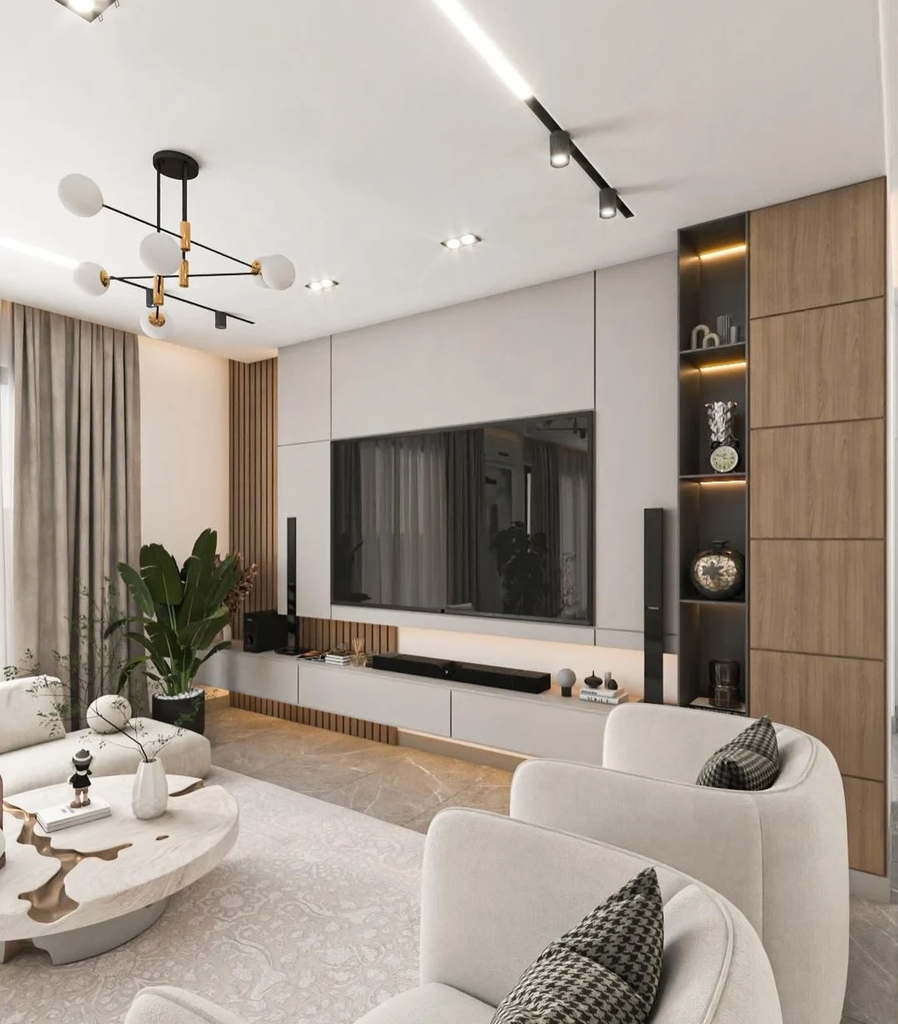
The ceiling is easy to overlook when I’m decorating, but its color can affect how open the room feels.
A soft white, warm white, or very pale neutral can reflect available light and help create a seamless transition between the walls and ceiling.
If my walls are already light, I can use a slightly different shade on the ceiling for subtle contrast while maintaining a bright overall appearance.
26. Choose a light-colored flooring
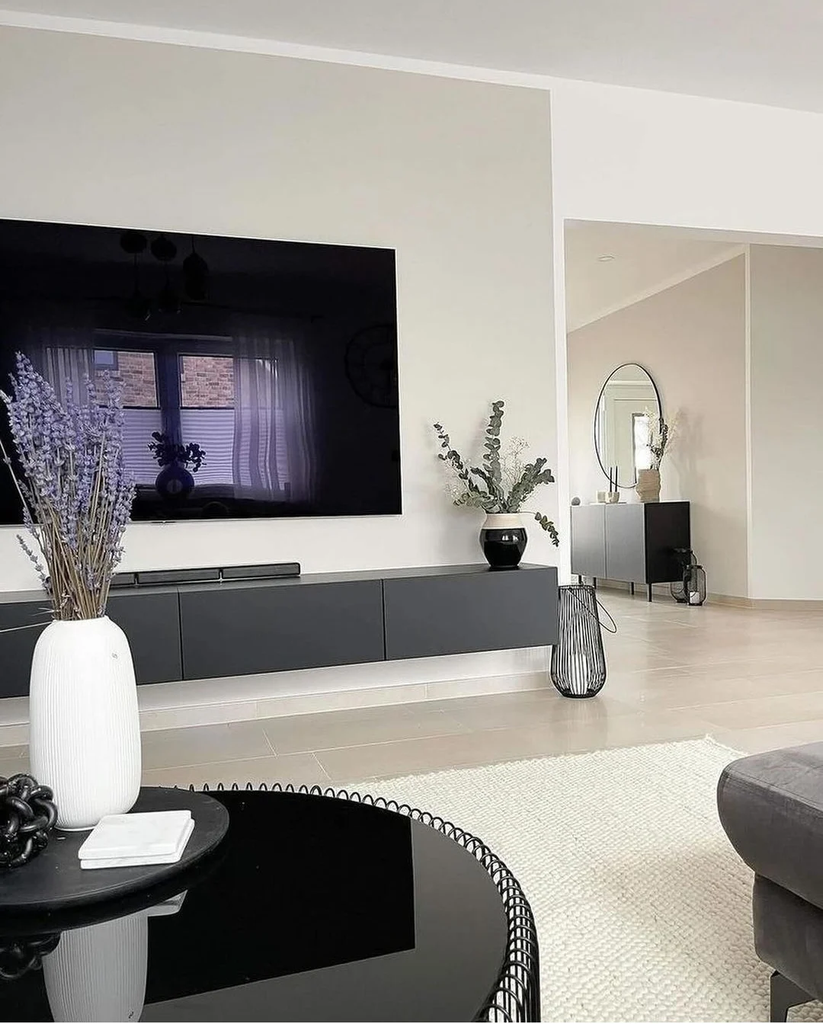
Flooring covers a large visual area, so its color has a major effect on the overall feel of the living room.
Light oak, pale wood tones, light stone, or neutral carpeting can provide a bright foundation for furniture and accessories.
If replacing the floor isn’t realistic, I can achieve a similar effect with a large light-colored area rug. This gives me a much less expensive way to change the visual balance of the room.
27. Create a cozy reading nook
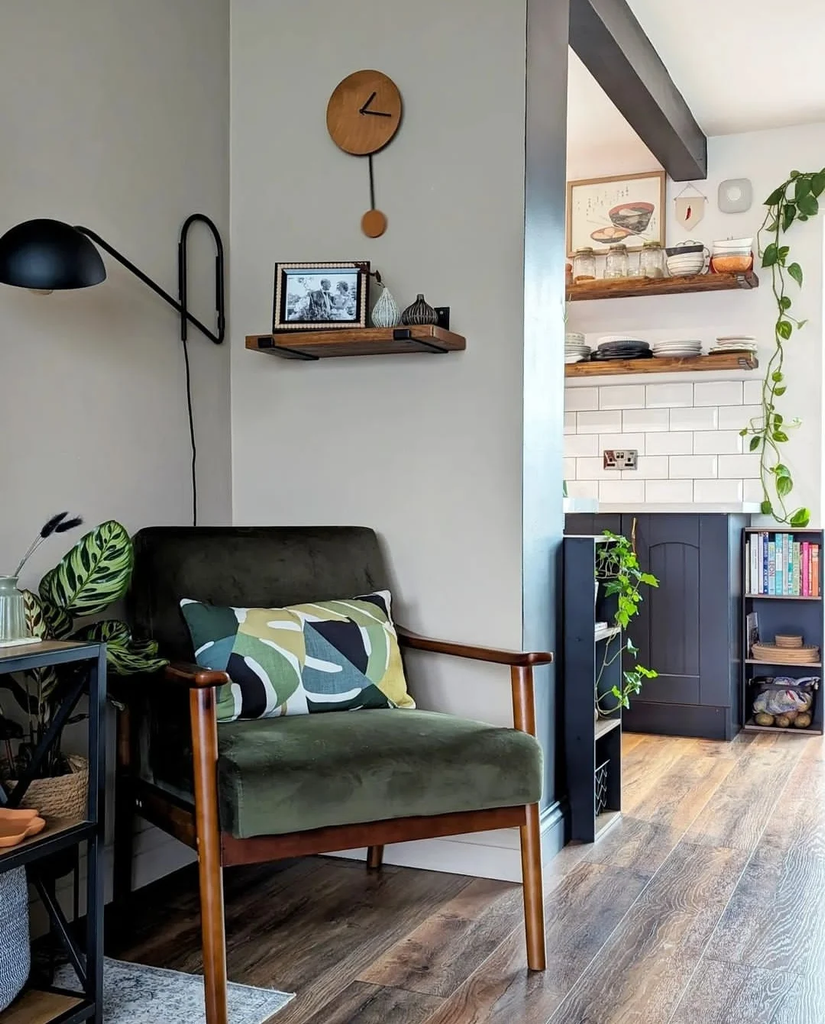
I love the idea of giving even a small unused corner a purpose. A comfortable chair, small side table, floor lamp, and a few favorite books can turn an empty area into a useful reading nook.
If space allows, I can add a footstool or small ottoman for extra comfort.
The lighting matters here. A dedicated lamp positioned close to the chair makes the nook practical in the evening without forcing me to brighten the entire room.
28. Hang sheer curtains behind the sofa
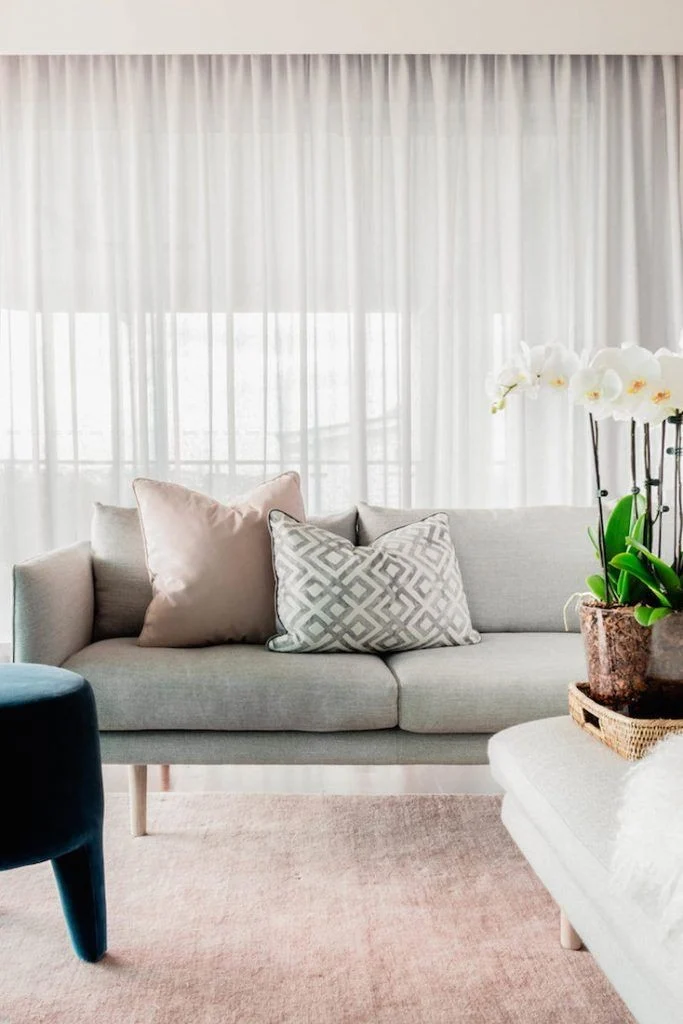
Sheer curtains allow daylight to pass through while giving the windows a softer finished appearance.
I like using them when I want privacy without relying on heavy fabric during the daytime. They can also soften strong sunlight and make the room feel more relaxed.
When hanging curtains, I usually place the rod wider and higher than the window frame when the room allows. This can make the window treatment feel more substantial and help the window appear larger.
29. Incorporate metallic accents
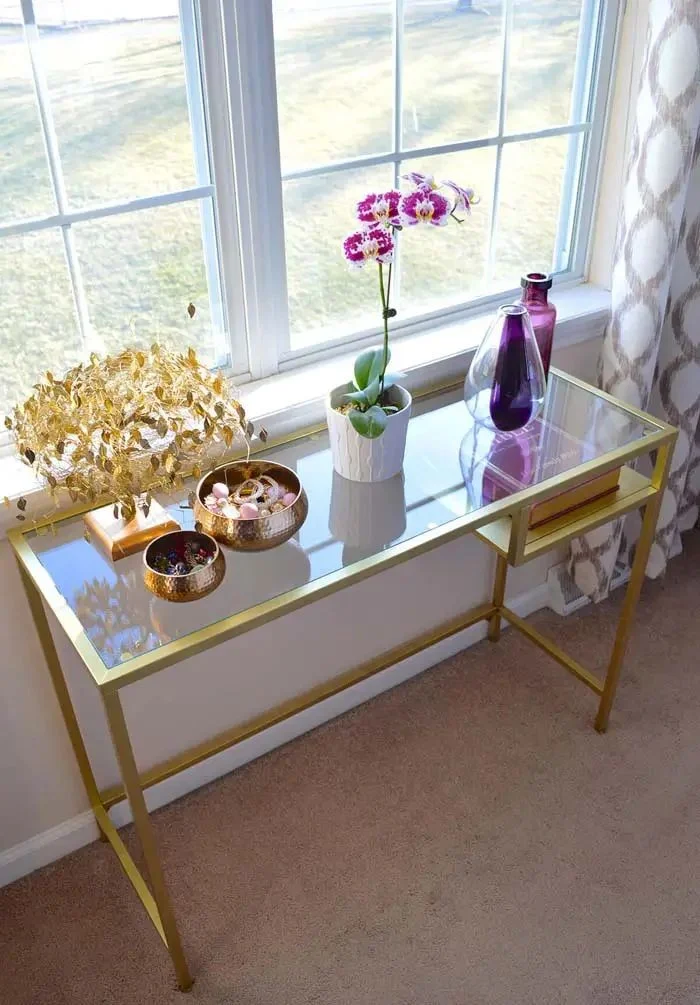
Metallic details can add a subtle polished finish to a bright living room. I can use brass, bronze, chrome, nickel, or another finish through small accessories.
Picture frames, lamps, trays, candle holders, hardware, and decorative objects are easy places to introduce metallic touches.
I don’t need a lot of shine. A few repeated accents are usually enough to connect the room and add a little sophistication.
30. Install a statement wall mural with bright and colorful imagery
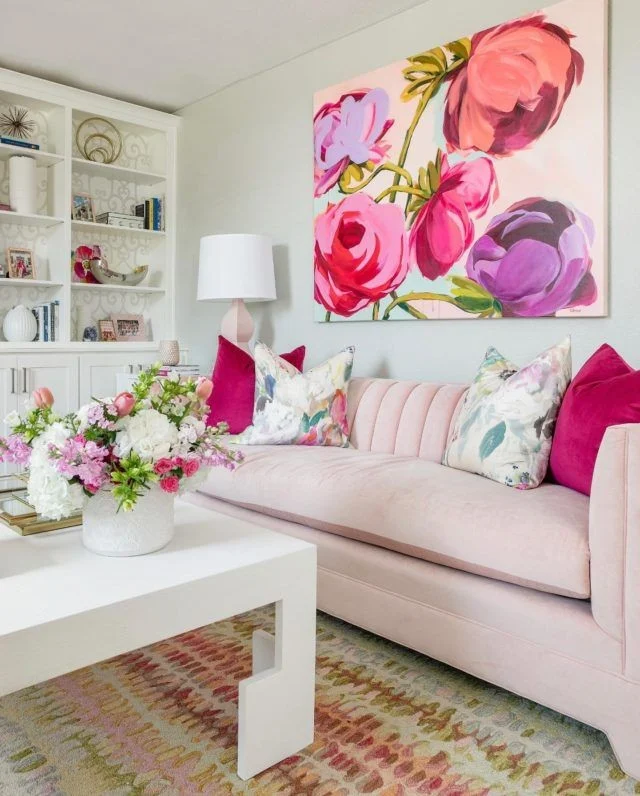
A mural can completely change the personality of a living room without requiring artwork on every wall.
I could choose an abstract pattern, botanical scene, oversized floral design, landscape, or another image that works with my existing furniture.
Because a mural is visually strong, I keep the rest of the room relatively simple. Before installing one, I also order samples when possible so I can see how the colors look under my actual room lighting.
Pro Tip: I test strong wall colors and mural samples at different times of day. Natural daylight and evening lamps can make the same color appear very different.
Read this next: 15 Space Saving Small Kitchen Table Ideas
FAQ’s
How can I make my living room look brighter?
I can use light wall colors, sheer curtains, mirrors, light-colored furniture, and layered lighting to make my living room feel brighter and more open.
What colors make a living room look bright and modern?
I find soft white, cream, beige, light gray, and greige especially useful for a bright modern living room. I can add stronger colors through pillows, rugs, artwork, or accessories.
How can I brighten a small living room?
I can use mirrors, furniture with exposed legs, glass tables, light flooring, and uncluttered decor. Keeping walkways clear also helps the room feel more spacious.
What type of lighting is best for a bright living room?
I recommend combining ceiling lights with floor lamps, table lamps, wall sconces, or adjustable fixtures. Using several light sources gives me better control over the room’s brightness and mood.
Conclusion
When I want a modern bright living room, I focus on creating balance rather than trying to copy one particular decorating trend. Light colors, natural daylight, practical furniture, layered lighting, mirrors, and uncluttered storage can give me a strong foundation.
From there, I can add personality with plants, colorful artwork, patterned rugs, metallic finishes, or one standout piece of furniture. These smaller details are where I can make the room feel like my own.
I also remind myself that a bright living room doesn’t have to mean an all-white space. Warm neutrals, cheerful accent colors, natural wood, greenery, and different textures can all work together to create a room that feels fresh and comfortable.
The best approach is to start with the changes that will make the biggest difference in my particular space. Even a few thoughtful updates can make my living room feel lighter, more organized, and much more inviting.
This post showed me 30 modern bright living room ideas that can help create a stylish, comfortable, and light-filled home.


One Comment