
21 DVD Storage Ideas for 2026
I like keeping my favorite movies close at hand, but DVD collections can quickly become difficult to manage when the cases pile up on shelves, crowd the TV stand, or get pushed into random drawers. I’ve found that a good storage system makes it easier to find a specific movie, protect the discs, and keep the living room looking tidy without giving up too much space.
In this guide, I’m sharing 21 DVD storage ideas that work for different rooms, collection sizes, and decorating styles. From woven baskets and slim binders to built-in cabinets and floor-to-ceiling shelving, I’ll explain how each option can help me organize a collection while making the most of the space I already have.
I can organize DVDs in several ways without investing in a large media cabinet. Baskets, labeled boxes, compact organizers, and DVD wallets work well when I need to save space or keep discs out of sight. Wooden racks, acrylic displays, floating shelves, and vintage cabinets are useful when I want my collection to contribute to the room’s appearance.
Save this for later

Table of Contents
For larger collections, tall cabinets, adjustable shelving, built-in storage, and media walls provide more room and make it easier to sort movies by genre, title, or series. I also consider disc protection when choosing storage. Keeping DVDs away from direct sunlight, excessive heat, moisture, and dust helps preserve them for years.
Key Takeaways
- For small rooms: I use slim sleeves, binders, under-bed boxes, or compact storage cases to reduce clutter.
- For decorative displays: Wooden racks, acrylic organizers, and floating shelves keep favorite movies visible.
- For large collections: Tall media cabinets and adjustable shelving make better use of vertical space.
- For a tidy appearance: Labeled boxes, felt bins, and hidden drawers keep DVD cases out of sight.
- For long-term care: I store discs in clean cases, handle them by the edges, and keep them in a cool, dry location.
- For easier browsing: I sort movies alphabetically, by genre, or by series and use consistent labels.
Related article: How to Store Fabric – 12 Genius Hacks to Organize
1. What type of storage is DVD?
DVD stands for Digital Versatile Disc. It is an optical storage format that uses a laser to read information encoded on the disc. Unlike a USB flash drive or hard drive, a DVD does not need electricity to retain its recorded data while it is stored.
When I organize DVDs, I think about two things: protecting the discs and making the collection easy to use. Scratches, dirt, excessive heat, and unsuitable storage conditions can affect playback or contribute to deterioration over time.
I prefer keeping DVDs in their original cases when space allows. If I need to reduce bulk, I use disc sleeves designed for optical media and store them in a sturdy organizer. I also avoid stacking loose discs directly on top of one another because rubbing can scratch their surfaces.
A simple storage system can make a noticeable difference. I keep frequently watched movies within easy reach and place seasonal favorites or rarely watched titles on higher shelves or in labeled boxes.
Pro Tip: Before buying storage furniture, count your DVDs and measure the available space. Standard DVD cases are approximately 7.5 inches tall and 5.3 inches wide, although dimensions vary slightly. Measuring first helps me choose shelves with enough clearance and avoid wasting money on an organizer that does not fit.
1.1. Woven Basket DVD Sleeve Storage

A woven basket is a practical choice when I want to keep DVDs organized without adding another piece of furniture. It works especially well beside a TV stand, on a bookcase, or inside an open cabinet.
To make this idea work, I place discs in protective sleeves and arrange them upright inside the basket. This reduces the space required compared with storing every movie in its original plastic case. I can also divide the collection into sections using small cardboard separators.
I choose a basket that is sturdy enough to hold the weight of the collection without bending or tipping. A fitted basket keeps the arrangement neat, while a handle makes it easier to move when I need to clean.
For a coordinated look, I match the basket’s color and texture with nearby furniture. Natural wicker, seagrass, and neutral fabric baskets can blend nicely with many living room styles.
Pro Tip: Add a small label to the basket so everyone knows where the DVDs belong. If the basket holds sleeved discs, choose one with a smooth interior or add a fabric liner to prevent snags.
1.2. Labeled Box Storage System

Labeled boxes are one of the easiest ways I can organize a collection without leaving DVD cases scattered around the house. They fit inside closets, bookcases, cabinets, and some under-bed storage spaces.
I begin by grouping movies into categories such as comedy, drama, animation, documentaries, and family films. Then I place each group in a separate box and label the front or lid. If I have a large collection, I number the boxes and keep a simple list of the titles in each one.
Sturdy cardboard boxes work for everyday organization, while durable plastic containers can be useful in locations where extra protection from dust is needed. Whatever material I choose, I make sure the DVDs are not packed so tightly that removing them becomes difficult.
Uniform boxes also give shelves a cleaner appearance. Using matching containers makes it easier to stack them safely and identify each category at a glance.
Pro Tip: Keep a small inventory on your phone or in a notebook. I find this especially useful when DVDs are stored in closed boxes, because I can check where a movie belongs without opening every container.
1.3. Clear Acrylic Display Rack

When I want my favorite movies to remain visible, I consider a clear acrylic rack. Its transparent design creates a light, uncluttered appearance and lets the DVD covers provide the color.
I can place a small rack on a TV console, office desk, or sturdy sideboard. It works best for a curated selection rather than a very large collection, especially when I want easy access to frequently watched titles.
Before choosing a rack, I check its dimensions and weight capacity. The slots should hold DVD cases securely without making them difficult to remove. I also place the organizer away from direct sunlight to reduce unnecessary exposure to light and heat.
For a polished setup, I keep only my favorite films or current watchlist on display and store the remaining collection elsewhere. This prevents the surface from looking crowded.
Pro Tip: Clean acrylic with a soft microfiber cloth and a suitable cleaner. Avoid rough paper towels and abrasive products that can leave visible scratches.
1.4. X-Frame Wooden Organizer

An X-frame wooden organizer gives DVD storage a more decorative look while keeping the cases accessible. Its crossed supports create separate sections, which can help me divide movies into categories without adding individual boxes.
I like this option for a media console, a home office, or a dedicated entertainment corner. The open structure makes it easy to see the collection, and the wooden finish can complement rustic, modern, or traditional furniture.
I arrange DVDs upright rather than piling them horizontally. If the organizer has several compartments, I assign each one a category or use a small divider to separate different series.
Stability is important with open shelving. I check that the frame sits level, the shelves can support the weight, and the unit will not wobble when I remove a case.
Pro Tip: Measure the height and depth of the compartments before loading the rack. A snug fit helps keep cases upright, but there should still be enough room to pull them out comfortably.
1.5. Floating Wall Shelf Display

Floating shelves help me use vertical wall space instead of filling the floor with another cabinet. They are a good choice when I want to display DVDs above a media console or create a dedicated movie area.
I can arrange several shelves in a straight line or stagger them to create a more relaxed layout. Grouping movies by genre or series keeps the display visually organized and makes individual titles easier to locate.
The main consideration is weight. DVDs can become surprisingly heavy when stored in large numbers, so I select shelves and mounting hardware rated for the intended load. I also check the wall construction and follow the installation instructions carefully.
For a balanced appearance, I leave some empty space between groups instead of filling every inch of the shelves. A few decorative objects can work alongside the DVDs, provided they do not interfere with access.
Pro Tip: Before drilling, mark the shelf positions with painter’s tape and check the layout from across the room. This lets me adjust the spacing before making permanent holes.
1.6. Vintage Wooden Media Cabinet

A vintage wooden media cabinet offers both storage and character. I find this style useful when I want to keep DVDs out of sight while adding a traditional furniture piece to the living room.
Cabinets with doors help limit everyday dust exposure, and interior shelves provide space for organizing movies by genre, title, or series. Some older cabinets also have drawers that can hold remotes, cables, and other entertainment accessories.
Before using a vintage piece, I inspect its condition and measure the interior shelves. The cabinet should have enough depth for the cases, and the shelves must be sturdy enough to support the collection.
I avoid placing the cabinet near radiators, fireplaces, or windows that receive strong direct sunlight. A stable indoor environment is better for preserving both the discs and the furniture.
Pro Tip: If the shelves are widely spaced, use adjustable dividers or sturdy bookends to prevent DVD cases from leaning over. This keeps the collection neat and makes individual movies easier to remove.
1.7. Minimal Box Storage

A plain storage box can solve a DVD clutter problem without requiring much money or effort. I use this approach when I want a simple arrangement inside a closet, cupboard, bookcase, or under a bed.
The key is choosing the right size. A box that is too large can become heavy and difficult to move, while a box that is too small may waste space. I prefer containers that allow the DVDs to stand upright and remain easy to browse.
If I use slim disc sleeves instead of full cases, I can fit more discs into the same area. However, I label the box clearly and use dividers so the sleeves do not become a disorganized stack.
For under-bed storage, I check the clearance first and choose a container that slides out easily. I also avoid storing DVDs directly on a damp floor or in a location where condensation is likely.
Pro Tip: Use one box for movies you watch often and another for titles you rarely use. Keeping everyday favorites separate means I do not have to move the entire collection whenever I want to choose a film.
1.8. Compact Case Organizer

A compact case organizer is useful when I want to keep a smaller collection together in one place. Depending on the design, it may have individual slots, removable dividers, or fitted compartments for discs and their cases.
I can place this type of organizer inside a cabinet, on a shelf, or in a desk drawer. It works well for favorite movies, children’s DVDs, travel selections, or discs that I use regularly.
I look for smooth edges, secure compartments, and enough space to remove each disc without bending or forcing it. If the organizer stores loose discs, I make sure the sleeves are suitable for optical media and do not rub against the recording surface.
A compact organizer is also helpful when I am separating a small collection from a larger household library. I can keep one category in the living room and store everything else elsewhere.
Pro Tip: Give the organizer a clear purpose, such as family movies or workout DVDs. A defined category makes it easier to maintain the system instead of gradually filling every slot with unrelated items.
1.9. Hidden Drawer Storage

Hidden drawer storage is a good option when I prefer a clean TV console or living room without visible DVD cases. The collection remains nearby, but the furniture keeps it out of sight when not in use.
I can use drawers in an entertainment unit, sideboard, or suitable coffee table. Before placing DVDs inside, I measure the drawer’s height and depth and check that the cases will fit without obstructing the drawer mechanism.
For better organization, I arrange movies in rows and use dividers to separate categories. If the drawer is deep, I avoid piling cases too high because the lower titles become harder to reach.
I also keep the drawer away from sources of heat and moisture. A closed drawer helps reduce dust, but it does not automatically protect discs from unsuitable storage conditions.
Pro Tip: Reserve the front section of a drawer for frequently watched movies and place less-used titles toward the back. This simple arrangement saves time when choosing a film.
1.10. Minimal Wooden Rack Storage

A simple wooden rack gives me an open storage solution without making the room feel dominated by furniture. Depending on its design, it can sit on a desk, TV stand, shelf, or side table.
I prefer this option when I want to keep a manageable collection visible and easy to reach. Horizontal supports or individual slots help hold the cases upright, while a compact frame takes up less space than a full media cabinet.
Wooden racks come in different finishes, so I can choose a light natural tone for a bright room or a darker finish to match existing furniture. I keep the surrounding surface relatively clear so the organizer remains the main feature.
For a larger collection, I use several racks or combine one with closed storage. This gives me the convenience of an open display without requiring every DVD to remain visible.
Pro Tip: Use bookends or fitted dividers if the rack is only partially filled. A few cases spread across a long shelf can lean over, which makes the display look untidy and increases the chance of cases falling.
1.11. DVD Binder Storage

A DVD binder can save considerable shelf space when I have a large collection and do not need to keep every original case. The binder holds discs in individual sleeves and allows me to flip through the titles much like a photo album.
I choose a binder with sleeves made for DVDs and enough capacity for my collection. I then arrange the discs alphabetically or by genre and add a contents sheet so I can find each movie quickly.
The main trade-off is that removing discs from their original cases means losing some packaging, artwork, and printed information. For special editions, collectible releases, or movies with important inserts, I prefer to keep the original packaging.
I also avoid overcrowding the binder. Sleeves should hold discs securely without placing unnecessary pressure on them, and the binder should close without forcing the pages together.
Pro Tip: Before transferring any discs, decide which titles deserve their original cases. I keep collector’s editions and sentimental favorites intact while using binders for ordinary movies that I watch frequently.
1.12. Portable Zipper DVD Wallet

A zipper DVD wallet is convenient when I need to carry a selection of movies or keep discs together in a small space. Its enclosed design makes it easy to store the collection in a drawer, cupboard, travel bag, or entertainment cabinet.
I look for soft, well-finished sleeves that hold each disc securely. A wallet with a sturdy zipper and a protective outer cover is useful when I move DVDs between rooms or take them on trips.
To make browsing easier, I arrange the discs by genre or place the most frequently used titles near the front. If the wallet includes space for labels or a contents list, I use it to keep track of the movies inside.
For valuable or collectible DVDs, I still prefer their original cases. A portable wallet is most practical for everyday discs that I want to keep compact and accessible.
Pro Tip: Never place a loose disc directly against another loose disc. Keep each one in its own protective sleeve, and store the wallet somewhere it will not be crushed under heavy luggage or other objects.
Also read: 21 Vinyl Record Storage Ideas for 2026
1.13. Vintage Disc Holder Tower

A vintage disc holder tower can make efficient use of vertical space while giving a media corner a distinctive look. Its narrow footprint is useful when I want to store DVDs without adding a wide cabinet.
I place a tower in a suitable living room or entertainment area where it is easy to reach. If the design includes enclosed compartments or a cover, it may also help limit everyday dust exposure.
Before choosing one, I check the size of its slots and the type of media it accommodates. Some older disc holders were designed for CDs rather than standard DVD cases, so I make sure the format is compatible.
I also consider stability. A tall, narrow unit should sit on a level surface and be secured according to the manufacturer’s instructions when necessary.
Pro Tip: Arrange the tower by category or use small removable labels to identify sections. This is especially helpful when the design stores discs vertically and the titles are not immediately visible.
1.14. Angled Branch Storage Rack

An angled, branch-style wooden rack turns DVD storage into a decorative feature. Its sculptural shape can work well in a reading nook, entertainment room, or creative home office where I want storage to feel less ordinary.
This design is best for a smaller selection of DVDs because its angled spaces may not accommodate every case size. I choose titles with attractive covers or movies I watch often and store the rest in a cabinet or box.
I check that each branch or support is smooth, stable, and wide enough to hold the cases securely. The rack should not tip forward when I remove a DVD, and the discs should not slide out easily.
Since this is an open display, I also keep it away from direct sunlight and dusty areas. Regular cleaning helps maintain the appearance of both the wood and the DVD cases.
Pro Tip: Use the rack for a rotating selection of favorites instead of trying to fit your entire collection into it. Changing the displayed titles occasionally keeps the area fresh and prevents overcrowding.
1.15. Paper Sleeve Box Storage

Paper sleeves and a sturdy storage box provide a space-saving alternative to keeping every DVD in its original case. This arrangement can be helpful when I need to organize a large collection in a small closet or cabinet.
I choose sleeves designed specifically for optical discs, preferably with a soft interior and a secure opening. I then place them upright in a box and use dividers to separate genres, alphabetic sections, or television series.
Although paper sleeves reduce bulk, they offer less structural protection than rigid cases. I handle discs carefully when removing them, keep the sleeves clean, and avoid placing heavy objects on top of the box.
I also label the box clearly so I can identify its contents without opening it. If I have several boxes, numbering them and keeping a simple inventory makes the collection much easier to manage.
Pro Tip: Keep original cases for valuable releases, discs with special artwork, or movies that include booklets and inserts. Use sleeves for standard titles when saving space is more important than preserving the original packaging.
1.16. Tall Standing Media Cabinet

A tall media cabinet makes good use of vertical space, especially when my DVD collection has grown beyond what a small rack can hold. It offers multiple shelves while taking up less floor area than a wide storage unit.
I choose a cabinet with adjustable shelves whenever possible. That flexibility lets me accommodate standard DVD cases, box sets, and other media without leaving large unused gaps.
I organize the shelves by genre, series, or alphabetical order. If the cabinet has doors, I can keep the collection out of sight; if it is open, I can use the DVD covers as part of the room’s display.
Before buying, I measure the available height, width, and depth and check the cabinet’s weight capacity. A tall unit should be placed on a level surface and anchored when appropriate to reduce the risk of tipping.
Pro Tip: Keep the most frequently watched movies at eye level. Store rarely used titles on higher shelves, but avoid putting heavy boxes in places that are difficult or unsafe to reach.
1.17. Archival Box Storage

Archival boxes are worth considering when I want to protect DVDs that I do not access often. They are useful for keeping collections organized in a home office, closet, or dedicated storage area.
I select boxes made from suitable archival-quality materials and ensure that the discs remain in individual protective cases or sleeves. A sturdy box can help keep the collection together and reduce exposure to dust, but it cannot compensate for excessive heat, humidity, or direct sunlight.
I label each box with its category and, when necessary, a list of the titles inside. This is especially helpful for older movies, family recordings, or discs that I want to preserve for long-term use.
I avoid storing archival boxes in attics, damp basements, or locations with large temperature changes. A clean indoor cupboard with a relatively stable environment is usually a better choice.
Pro Tip: If the DVDs contain irreplaceable home videos or important personal recordings, consider making a separate digital backup where legally and technically appropriate. Physical storage is useful, but keeping another copy can reduce the risk of losing valuable content if a disc becomes unreadable.
1.18. Vintage Suitcase Storage

An old suitcase can become an unexpected DVD storage solution while adding a nostalgic touch to a room. I like this idea when I want a storage container that also works as a decorative accent.
I first check the suitcase’s interior for dust, odors, loose lining, or signs of moisture. After cleaning it, I add a removable liner or dividers and arrange the DVDs in small groups so they do not slide around when the case is moved.
This approach works best for a modest collection. A suitcase filled with DVDs can become heavy, so I avoid overloading it and choose a stable location where I can open the lid comfortably.
For a more organized setup, I use labeled sleeves or small containers inside the suitcase. That makes it easier to find a movie without removing the entire collection.
Pro Tip: Keep the suitcase in a dry indoor area rather than a garage or basement where moisture and temperature changes may damage the discs. If the suitcase is only decorative, store it somewhere easy to access instead of placing it beneath heavy furniture.
1.19. Floor-to-Ceiling Media Wall

A floor-to-ceiling media wall can turn a large DVD collection into an organized part of the room’s design. It is particularly useful when I have a dedicated entertainment area and need space for hundreds of cases, books, games, or other media.
I plan the layout around the size of the collection and the furniture already in the room. Adjustable shelves make it easier to accommodate different DVD box sets, while a mixture of open and closed sections gives me room for both displays and hidden storage.
I arrange the DVDs in consistent groups so the shelves remain easy to browse. Keeping similar case sizes together also helps create a more orderly appearance.
Safety is important with tall shelving. I make sure the unit is properly secured, the shelves can handle the expected weight, and heavier items are stored lower down. I also avoid placing valuable discs in areas exposed to direct sunlight or nearby heating equipment.
Pro Tip: Leave some room for future additions rather than filling every shelf immediately. A little extra capacity helps prevent the entire system from becoming crowded as the collection grows.
1.20. Built-In Cabinet Storage

Built-in cabinets are a practical solution when I want DVD storage to blend seamlessly into the room. They can fit around a television, occupy an alcove, or make use of wall space that would otherwise remain empty.
I can combine closed cupboards with open shelves to suit different needs. Frequently watched movies can sit on accessible shelves, while less-used titles remain behind cabinet doors.
Inside the cupboards, I use small boxes, dividers, or labeled baskets to separate genres and series. This keeps the shelves organized and prevents loose accessories from mixing with the DVDs.
Because built-ins are designed for a particular space, careful planning matters. I measure the cases, consider shelf depth, and leave enough clearance to remove DVDs easily. For a large or custom installation, professional help may be worthwhile.
Pro Tip: Plan for more than just DVDs if the cabinet will serve as a complete entertainment center. Leaving room for remotes, game accessories, cables, and other equipment helps keep the entire area organized.
1.21. Felt Bin Storage System
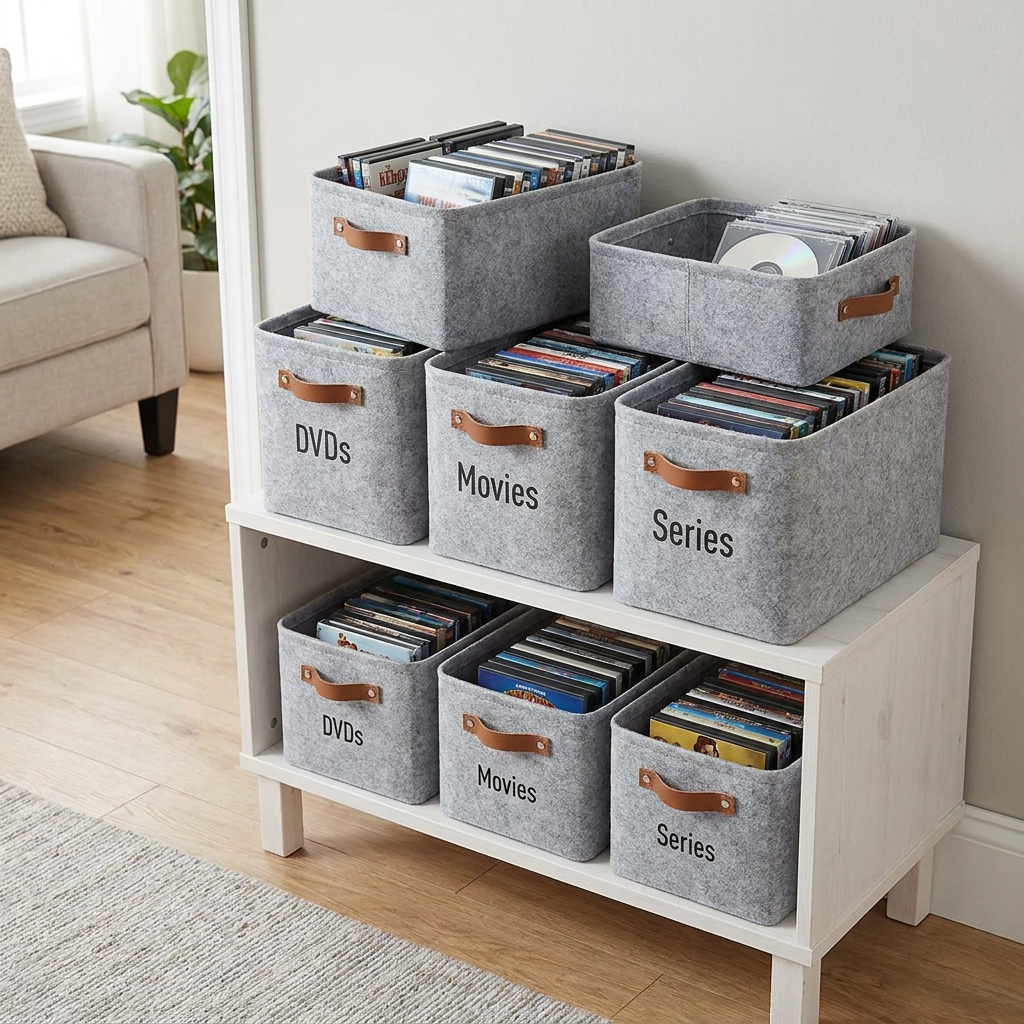
Felt bins offer a soft, simple way to store DVDs without displaying every case. I can place them on bookcase shelves, inside a media cabinet, or beneath a suitable console.
I choose bins with firm sides so they maintain their shape when filled. DVDs can be heavy in large quantities, so I avoid oversized bins that become difficult to lift or carry.
To make the system practical, I assign each bin a category or alphabetical range and attach a clear label to the front. If the collection is small, one bin may be enough; a larger collection can be divided across several containers.
Felt bins are particularly useful when I want a softer look than plastic storage boxes provide. However, they do not offer the same rigid protection as a hard-sided case, so I keep the DVDs in their original cases or protective sleeves inside the bins.
Pro Tip: Check the bottom and handles before loading a felt bin with a heavy collection. A sturdy design is easier to move and less likely to sag or lose its shape over time.
2. FAQs
2.1. What is the use of DVD storage?
DVD storage keeps my movie collection organized, accessible, and protected from avoidable damage. A suitable cabinet, shelf, box, binder, or storage wallet gives each disc a designated place instead of leaving cases scattered around the house.
A well-planned system also saves time because I can find movies by title, genre, or series. When I choose protective sleeves or cases and keep the collection away from excessive heat, moisture, and direct sunlight, I can help preserve the discs for longer.
The best solution depends on the size of the collection, the space available, and whether I want to display the movies or keep them hidden.
2.2. What are the different types of DVD storage?
There are several DVD storage options, and I choose one based on how much space I have and how I use my collection.
- Shelves and racks: Useful for displaying movies and keeping frequently watched titles accessible.
- Media cabinets: Suitable for larger collections and for keeping DVDs out of sight.
- Boxes and baskets: Practical for closets, cupboards, and other compact storage areas.
- Binders and zipper wallets: Reduce bulk when I do not need to retain every original case.
- Floating shelves: Use wall space and can create a dedicated movie display.
- Built-in storage: Provides a tailored solution for entertainment rooms and large collections.
- Archival boxes: Helpful for organizing DVDs that need careful, long-term storage.
I also use dividers and labels to make any storage method easier to maintain. The most effective system is one that fits the available space and makes it simple to put each DVD back where it belongs.
Read this next: 21 Bathroom Towel Storage Ideas for 2026
Conclusion
I don’t need a large entertainment room or expensive furniture to keep a DVD collection organized. A few well-chosen baskets, boxes, sleeves, or shelves can make a small collection easier to manage, while tall cabinets and built-in storage provide room for larger libraries.
When choosing between these 21 DVD storage ideas, I consider my available space, how often I watch my movies, and whether I want the collection visible or hidden. I also pay attention to disc protection by using suitable cases, avoiding excessive heat and moisture, and keeping the collection away from direct sunlight.
The best storage system is one I can maintain without much effort. Once every movie has a place, finding a favorite becomes easier and the room stays more organized.







One Comment