
15 Last-Minute Halloween Party Ideas: Throw It Together in 3 Hours (Under $50)
A Halloween party doesn’t need weeks of planning, expensive decorations, or homemade snacks to feel festive. When time is short, I focus on a few things that make the biggest difference: warm lighting, a spooky backdrop, easy food, and activities that get guests talking.
With a simple shopping list and a little organization, I can plan a casual Halloween gathering for around 10–15 guests in approximately three hours. A $50 budget is a useful target, although actual costs depend on local prices, what I already have at home, and the number of people attending.
I can organize a last-minute Halloween party in three hours by dividing the work into shopping, decorating, and food preparation. A dollar store and a grocery store can cover most supplies, while household lamps, reusable string lights, and a few inexpensive decorations create a festive atmosphere.
Save this for later
Table of Contents
For food, I rely on chips, dips, a snack board, candy, and a simple sherbet punch. I also plan free games such as Halloween charades, costume voting, ghost stories, and freeze dance. The goal is to create a welcoming space without spending time on elaborate recipes, party favors, or cleaning rooms guests won’t use.
Key Takeaways
- Budget: Aim for around $50 for 10–15 guests, depending on local prices and supplies already available.
- Timeline: Set aside about an hour for shopping, an hour for decorating, and the remaining time for food, music, and final checks.
- Decorations: Use warm lamps, battery-operated LED tea lights, and one eye-catching wall instead of decorating every corner.
- Food: Choose ready-to-serve snacks, a simple punch, and candy that require little or no cooking.
- Entertainment: Prepare free Halloween games that guests can join without complicated instructions.
- Stress-free hosting: Clean the main party area, keep the shopping list short, and reserve the final 15 minutes for yourself.
Related article: 21 Halloween Party Themes for Adults (2026: Decor, Food & Budget Per Theme)
Last-Minute Halloween Party Ideas
When I plan a party at the last minute, I start by deciding what guests will actually see, eat, and do. A decorated entryway, a well-lit snack table, and music playing when people arrive can make a bigger impression than lots of small decorations scattered around the house.
My approach is to work with what I already own and buy only the missing essentials. Black fabric or a tablecloth, a few balloons, paper streamers, and inexpensive LED lights can create a recognizable Halloween look without taking over the entire room.
I also keep the menu simple. Instead of preparing themed food from scratch, I arrange ordinary snacks in a festive way and choose one special drink to serve as the centerpiece.
The following plan covers the shopping list, decorating schedule, food, and activities I would prioritize when preparing a Halloween gathering on short notice.
👉 Pull the whole party together with these related ideas:
Halloween party food ideas for adults • Halloween party themes for adults • Easy Halloween drink ideas
How Do You Throw a Halloween Party in One Day?
I begin by dividing the available time into manageable tasks. Rather than switching between shopping, cleaning, and decorating, I finish one job before moving to the next.
For a three-hour preparation window, I would aim to spend approximately 60 minutes shopping, 60 minutes decorating, and 45 minutes assembling food. The remaining 15 minutes are for music, checking the room, and getting ready before guests arrive.
The biggest time saver is knowing what not to do. I skip complicated recipes, handmade favors, elaborate costumes, and decorations that require special tools or multiple trips to the store.
Guests generally need a comfortable place to gather, enough food and drinks, a festive atmosphere, and something fun to do. I make those essentials my priority.
The 3-Hour Countdown
T-Minus 3 Hours: The Two-Stop Shopping Run (60 minutes)
I would start with a short, written shopping list and visit a dollar store and a grocery store if both are conveniently located. Shopping without a list can eat into the decorating time, so I avoid browsing for extra items.
Dollar store shopping list — estimated $18–$20:
- Two rolls of orange and black streamers
- Two black plastic tablecloths
- One bag of artificial spiderweb decorations
- Twelve white balloons
- One black marker
- Glow sticks for games
- Two packs of battery-operated LED tea lights
- A small pack of plastic spiders
- One inexpensive costume accessory, if the budget allows
Grocery store shopping list — estimated $28–$30:
- Chips and two dips
- A ready-made vegetable tray
- Cheese and crackers
- Cookies
- Two bags of Halloween candy
- Lemon-lime soda
- Orange juice
- Sherbet for the punch
The combined target is about $48, leaving a small amount for price differences or an extra bag of snacks. These are planning estimates rather than guaranteed prices; I would check local costs and adjust the list before shopping.
I also check my kitchen and decoration box first. If I already have streamers, string lights, bowls, or serving boards, I can use that money for extra drinks or food instead.
Pro Tip: Write down the exact quantities before leaving home. If an item is unavailable or costs more than expected, choose a simple substitute instead of making a second shopping trip.
T-Minus 2 Hours: The Decor Blitz (60 minutes)
I would begin with lighting because it changes the feel of a room quickly. I switch off harsh overhead lights when safe to do so, move existing lamps into useful positions, and arrange battery-operated LED tea lights on shelves or the snack table.
If I already own decorative string lights, I use them along a wall or doorway. Warm white lights work well with orange and black decorations, so buying special Halloween lighting isn’t necessary.
Next, I create one focal wall behind the food table. A black tablecloth can serve as a temporary backdrop, while white balloon ghosts add a playful touch. I draw simple faces on the balloons and attach them securely at different heights.
I finish with a few streamers around the main doorway, some artificial webbing in a corner, and a bowl of candy near the entrance. I avoid stretching webbing across walkways or placing decorations where guests might trip.
One well-arranged area gives the room a clear Halloween theme without requiring decorations on every wall.
Pro Tip: Keep balloon decorations away from young children, and promptly collect popped balloons. Uninflated and broken balloon pieces can pose a choking hazard.
T-Minus 1 Hour: Food Assembly (45 minutes, zero cooking)
For the food table, I choose snacks that can be served straight from their packaging or arranged in bowls and on platters. This leaves more time for the decorations and reduces the amount of washing up afterward.
Graveyard dip: I place a savory dip in a shallow serving dish and arrange crackers around it. For a graveyard effect, I can stand a few crackers upright as tombstones, provided they are sturdy enough to stay in place.
Snack board: I arrange cheese, crackers, vegetables, and cookies on a large cutting board or serving platter. Grouping similar foods together makes the display look organized without requiring detailed food styling.
Sherbet punch: I scoop sherbet into a large punch bowl, then slowly add orange juice and lemon-lime soda. The mixture foams as the sherbet melts, creating a colorful drink that fits the Halloween theme.
Candy bowls: I place small bowls of candy around the main snack area rather than filling every available surface. This keeps the table tidy and makes it easy for guests to help themselves.
Before serving, I check ingredient labels for common allergens, use clean serving utensils, and keep perishable foods chilled until needed. I also provide water and a non-carbonated drink option if guests prefer something different.
Pro Tip: Keep a little extra soda and sherbet refrigerated rather than mixing the entire batch in advance. A fresh batch later in the evening will usually look and taste better than punch that has been sitting out for hours.
T-Minus 0 Hours: Music and Final Touches (15 minutes)
I would prepare the playlist before the party starts so I don’t have to search for songs while welcoming guests. A ready-made Halloween playlist lasting three to four hours is an easy option, and I keep the volume low enough for people to talk comfortably.
Next, I walk through the party area with the lighting arranged as it will be during the event. I check that the food is accessible, drinks are ready, walkways are clear, and decorations aren’t blocking doors or exits.
For a quick costume, I can add a witch hat, cat ears, a cape, or another accessory to ordinary clothes. There’s no need to spend an hour putting together an elaborate outfit when the rest of the party still needs attention.
Finally, I set out napkins, serving spoons, cups, and a rubbish bin where guests can find them easily. I leave the last few minutes free to get dressed and greet everyone without rushing.
Pro Tip: Clean the room guests will use and close the doors to other rooms. This keeps the preparation manageable without making whole-house cleaning part of the party schedule.
Last-Minute Halloween Party Ideas
Why Lighting Does 80% of the Work
Lighting is one of the easiest ways to make an ordinary room feel different for Halloween. I wouldn’t treat the claim that lighting does 80% of the work as a measured statistic, but I would make it an early priority because it can change the mood without requiring many supplies.
Bright overhead lighting can make decorations look flat, while a combination of lamps and small accent lights can create a warmer, more inviting setting. The same paper streamers and balloons can look more coordinated when the room has a consistent lighting scheme.
My basic setup would include:
- Existing lamps positioned around the seating area.
- Battery-operated LED tea lights on stable surfaces.
- String lights I already own.
- Orange or warm-white bulbs, if a suitable replacement is available and needed.
- A clear, well-lit path to the entrance, bathroom, and other essential areas.
I would avoid placing real candles near paper decorations, balloons, fabric, or artificial spiderwebs. Battery-operated lights offer a simpler option for a room filled with flammable decorations.
The cost can be close to zero if I use household lamps and existing string lights. If I need to buy LED lights or an extra bulb, I check the price before adjusting the rest of the budget.
Pro Tip: Concentrate the decorations and accent lighting around the entrance and food table. These are natural gathering points, and decorating them well can make a small space feel ready for a party.
15 Zero-Prep Activities
I like party games that need little equipment and don’t require guests to stop what they’re doing for a long explanation. The following activities use everyday objects, phones, or simple verbal instructions, so they work well when preparation time is limited.
1. The Phone-Vote Costume Contest

A costume contest is an easy way to get guests talking as soon as they arrive. I would choose three categories, such as funniest costume, most creative costume, and best last-minute look.
Guests can vote by raising their hands or sending their choices in a group chat. If several people win, I can announce a winner in each category rather than trying to rank everyone’s outfit.
Setup: Almost none.
Cost: Free.
Best for: Groups of friends, adult parties, and mixed-age gatherings.
Pro Tip: Keep the categories lighthearted and make participation optional. Guests who arrive without costumes should still feel welcome.
2. Two Truths and a Scare
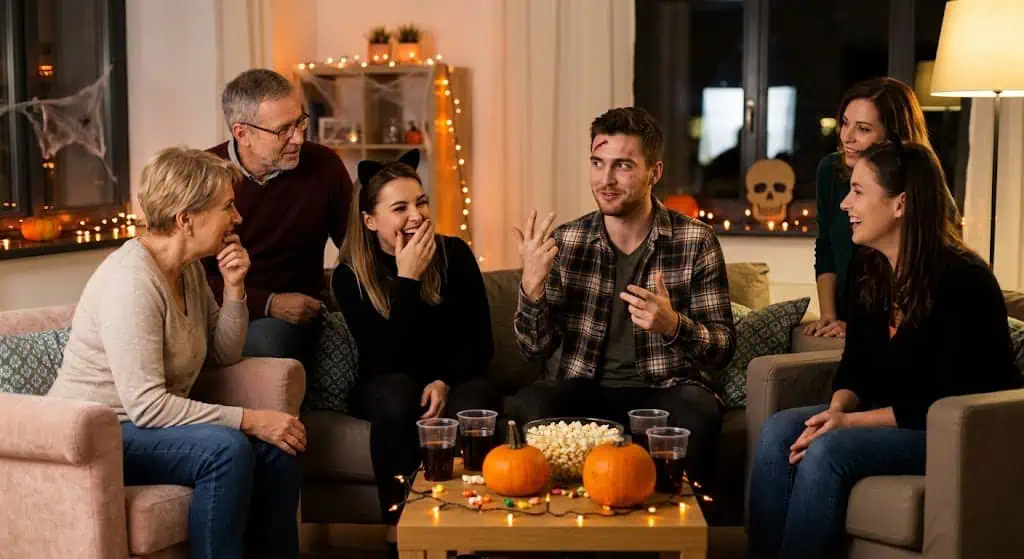
This game puts a Halloween twist on the familiar storytelling activity. Each person shares three statements about spooky experiences, unusual events, or fictional encounters. Two statements should be true, and one should be made up.
The rest of the group guesses which story is fictional. Guests can keep their stories funny or mysterious instead of making them frightening.
Setup: None.
Cost: Free.
Best for: A relaxed gathering when people are sitting together and chatting.
Pro Tip: Let anyone pass when it’s their turn. Keeping the game casual helps guests who aren’t comfortable telling personal stories enjoy the activity too.
3. The Scary Movie On Low
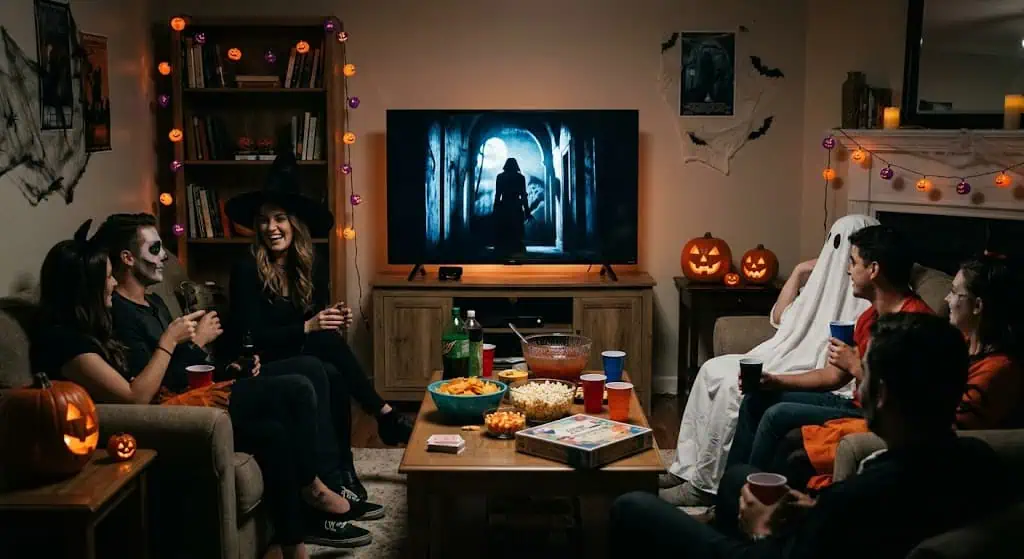
A Halloween movie can provide background atmosphere without becoming the main event. I would choose a suitable horror classic, animated Halloween film, or spooky comedy and keep it at a low volume.
Subtitles can make the film easier to follow without competing with conversations. Guests can watch a scene when they want or ignore it while enjoying the food and games.
Setup: A television or other screen and a movie already available to watch.
Cost: Free if I use a service or movie I already have access to.
Best for: Parties where guests prefer a relaxed, informal atmosphere.
Pro Tip: Check the film’s content and rating beforehand, especially when children or guests who dislike frightening scenes will be attending.
4. The Candy Guess Jar
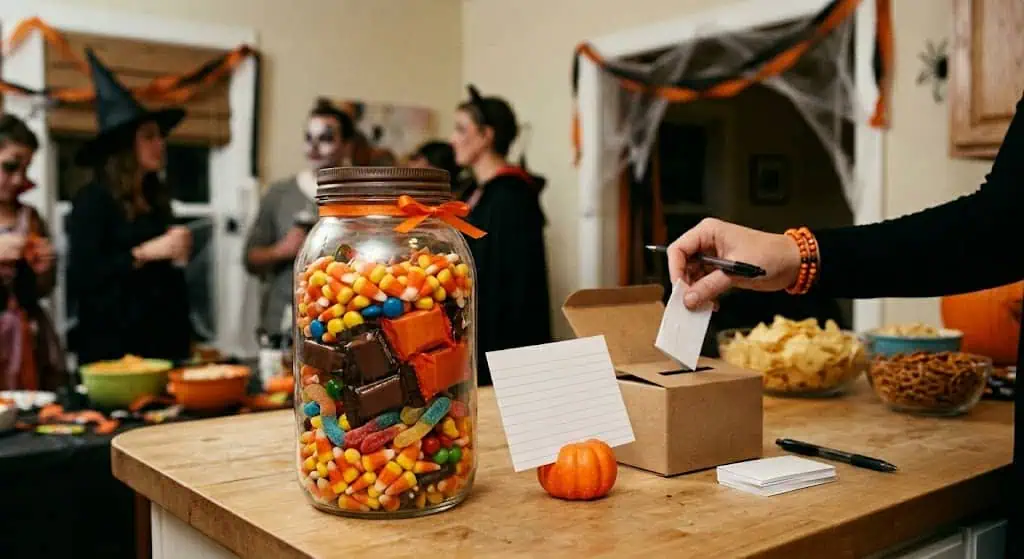
I fill a clear jar with individually wrapped sweets and ask guests to estimate how many pieces it contains. Everyone writes down a guess, and the closest answer wins the jar or a share of the candy.
I count the sweets as I fill the jar so I have an accurate answer at the end. A simple note kept out of sight prevents arguments about the final count.
Setup: About two minutes, plus the time needed to fill the jar.
Cost: The price of the candy, which can be part of the regular snack budget.
Best for: An entry table or a game guests can participate in whenever they arrive.
Pro Tip: Keep the jar away from very young children if it contains small sweets or other choking hazards.
5. Flashlight Ghost Stories
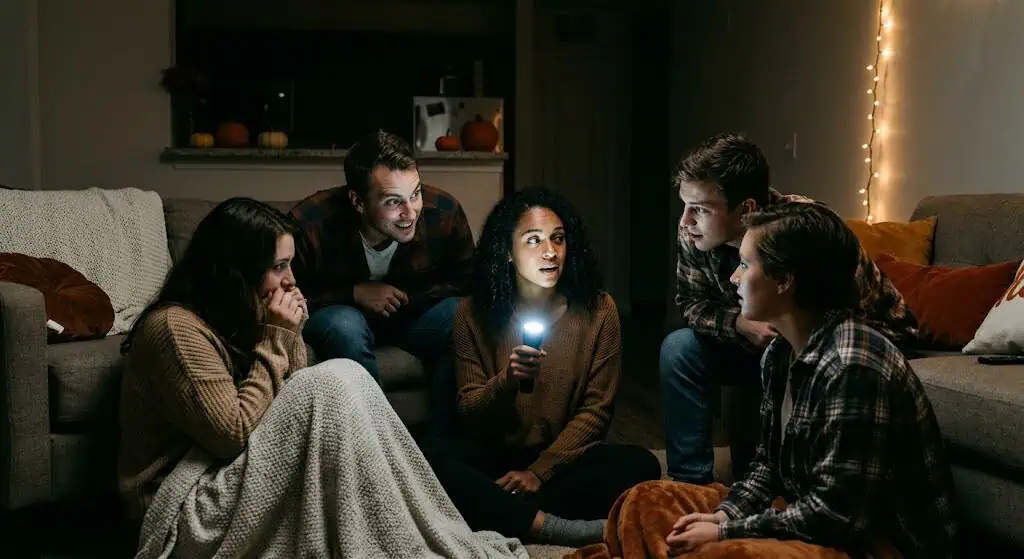
For this game, I lower the room lighting while keeping the main walking areas safe and visible. One person starts a ghost story, then passes a flashlight to the next person, who adds another sentence or continues the story.
I can use a phone flashlight, although a small torch is easier to pass around without worrying about someone’s phone. The stories can be spooky, silly, or completely ridiculous.
Setup: One flashlight.
Cost: Free if I already have one.
Best for: A quieter part of the evening or a group that enjoys storytelling.
Pro Tip: Skip jump scares and frightening stories if younger children are present. The aim is to entertain everyone, not make someone uncomfortable.
6. Halloween “Most Likely To”

I prepare a short list of Halloween-themed questions and read them aloud. Guests point to the person they think best fits each prompt.
Ideas include:
- Most likely to survive a horror movie.
- Most likely to befriend a friendly ghost.
- Most likely to get lost in a haunted house.
- Most likely to organize a Halloween party every year.
- Most likely to investigate a strange noise.
Setup: Around five minutes to prepare a few prompts.
Cost: Free.
Best for: Friends or family members who already know one another.
Pro Tip: Keep questions playful rather than personal. Avoid prompts that single out someone for an embarrassing trait or make them the target of the group.
7. Monster Freeze Dance

I play a Halloween playlist and invite everyone to dance like a monster, zombie, vampire, or other spooky character. Whenever the music stops, everyone freezes in place.
Anyone who moves can perform a silly monster pose or help restart the music instead of being eliminated. This keeps the game moving and allows more people to participate.
Setup: A playlist and enough open floor space.
Cost: Free.
Best for: Families, mixed-age parties, and guests who enjoy energetic games.
Pro Tip: Move chairs and bags out of the dancing area before starting. Use a non-slip floor and adjust the movements for the ages and abilities of the guests.
8. Halloween Charades

I write Halloween-related words or phrases on slips of paper and place them in a bowl. Players take turns acting out a prompt without speaking while their teammates guess what it is.
Easy prompts include a vampire, a mummy, a black cat, a haunted house, or a witch stirring a cauldron. I can add harder phrases if the group enjoys a challenge.
Setup: Around five minutes.
Cost: Free if I use paper and a pen from home.
Best for: The middle of the party, when guests are ready for something more active.
Pro Tip: Divide larger groups into teams and set a short time limit for each turn. This prevents one round from taking over the entire evening.
Also read: 19 Vintage Halloween Decoration Ideas to Haunt Your Home
9. The Mummy Wrap Race

For this game, I divide guests into teams and give each team a roll of toilet paper. One volunteer becomes the mummy while teammates carefully wrap the paper around their arms, legs, and torso.
I set a short time limit and judge the results based on creativity rather than how tightly the paper is wrapped. Players should be able to move and breathe freely throughout the game.
Setup: A few minutes to divide teams and explain the rules.
Cost: The price of the toilet paper if I don’t already have enough.
Best for: Energetic groups that don’t mind a little mess.
Pro Tip: Never wrap paper around anyone’s neck or face, and don’t cover the eyes or restrict movement. Clear the floor before starting and collect loose paper afterward to prevent slips.
10. The Phone-Photo Corner
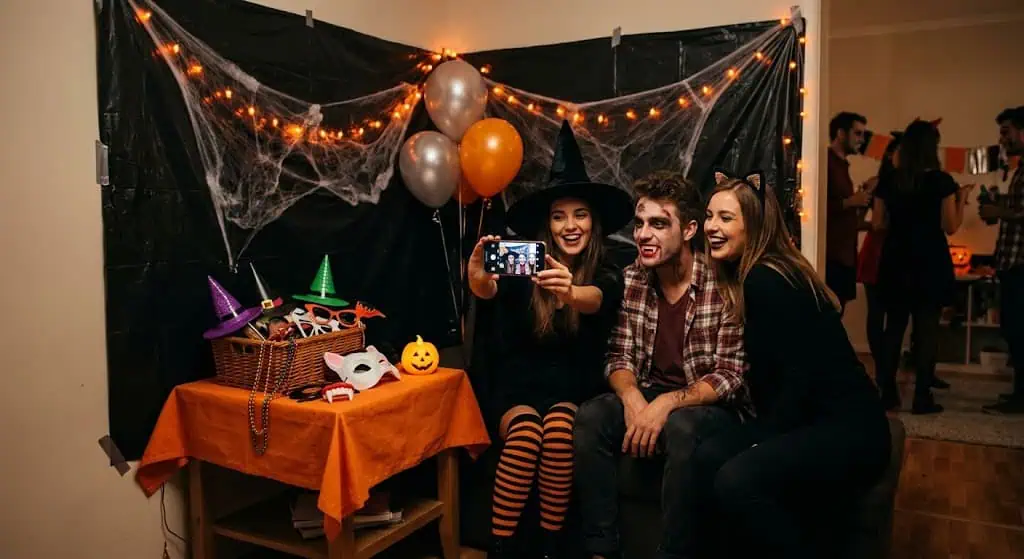
I use the decorated focal wall as a photo spot instead of building a second backdrop. A chair, a few carefully placed decorations, and a clear area for standing are often enough.
Guests can take pictures in their costumes or pose with friends. I would keep the arrangement simple so people can use the space without moving decorations around.
Setup: Minimal if the focal wall is already decorated.
Cost: Free.
Best for: Parties where guests enjoy taking group pictures.
Pro Tip: Ask before posting photos of other guests online, especially when children are included. Keep the area away from doorways and serving tables.
11. Pumpkin Pass
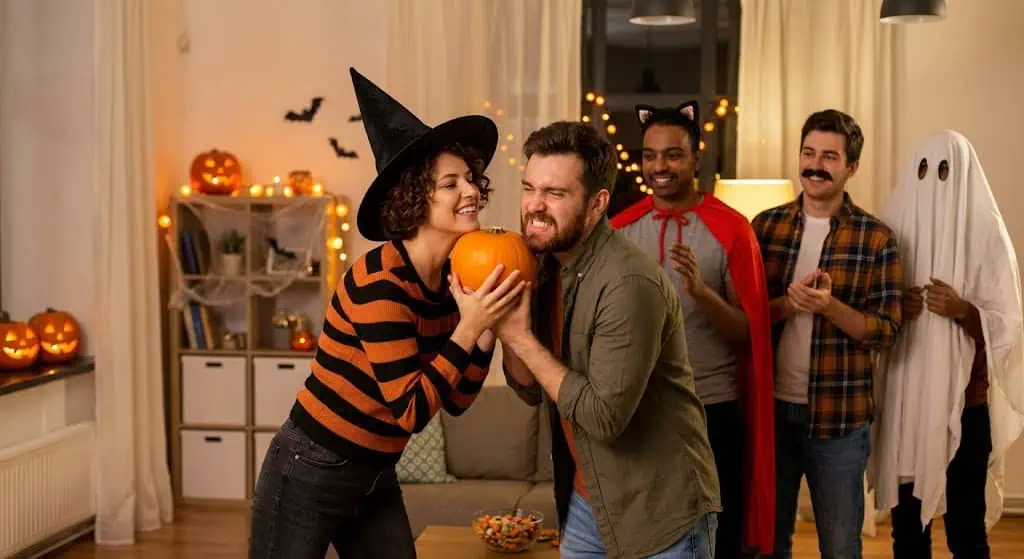
I pass a small, lightweight pumpkin or soft orange ball around the group while music plays. When the music stops, the person holding it chooses a prompt from a bowl or answers a Halloween-themed question.
Possible prompts include naming a favorite Halloween candy, inventing a monster name, or sharing a favorite spooky movie. I prefer silly questions over embarrassing dares.
Setup: A small object and optional slips of paper.
Cost: Free if I use something already available.
Best for: Breaking the ice between guests who haven’t met before.
Pro Tip: Use a soft object instead of a heavy pumpkin when children are playing or when the group is seated close together.
12. Glow Stick Ring Toss
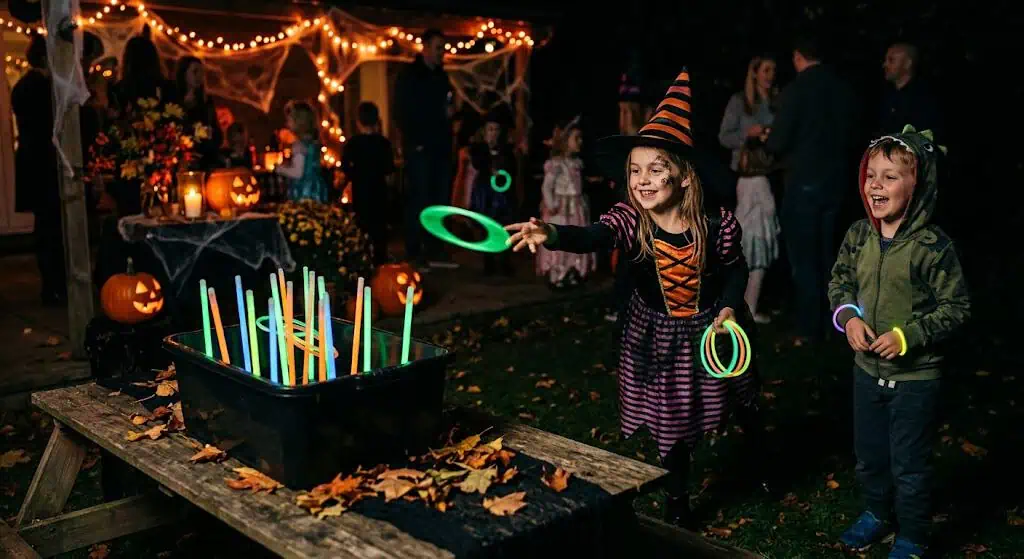
I connect glow sticks into rings according to the package instructions and set up a few sturdy bottles or cones as targets. Guests take turns tossing the rings and trying to land them over the targets.
I would use a clear, level playing area and keep the targets a comfortable distance away. This is a simple game that can run in the background while other guests chat.
Setup: A few minutes.
Cost: Depends on whether glow sticks and targets are already available.
Best for: A casual game corner or an outdoor gathering after dark.
Pro Tip: Follow the glow-stick packaging instructions. Don’t cut open or bend damaged sticks, and keep them away from children’s mouths. Use an adult-supervised setup for younger players.
13. Who Am I? (Sticky Note Edition)
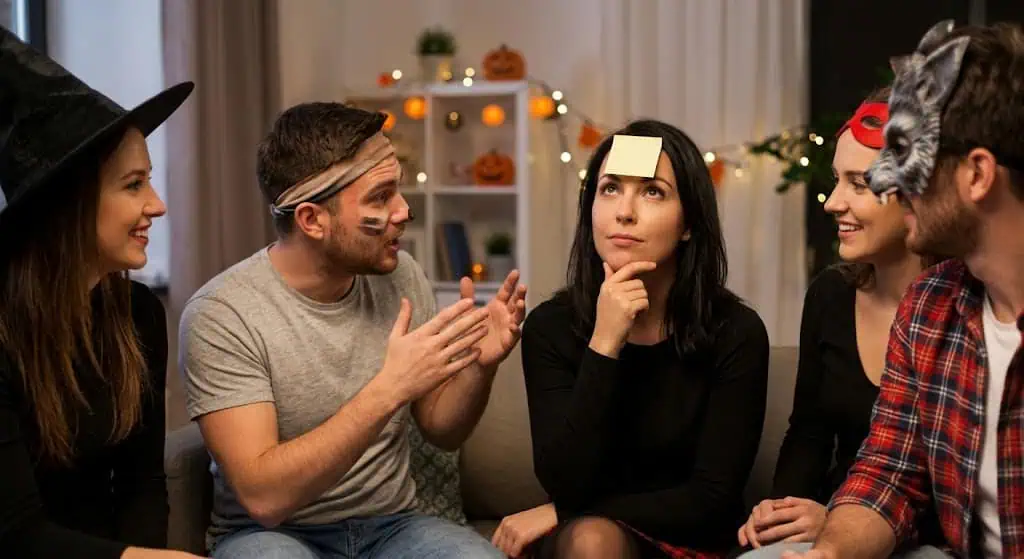
I write the name of a Halloween character on each sticky note and attach one note to each player’s forehead without letting them see it. Players take turns asking yes-or-no questions to figure out their assigned character.
I use familiar choices such as a witch, vampire, ghost, werewolf, or black cat. Guests can ask questions about what the character does, wears, or is known for.
Setup: About five minutes.
Cost: Free if I have sticky notes and a pen.
Best for: Guests sitting around a table or gathering near the snack counter.
Pro Tip: Use skin-safe adhesive and avoid placing notes near the eyes. Players can hold the note above their head instead if they prefer not to stick anything to their skin.
14. The Midnight Snack Reveal
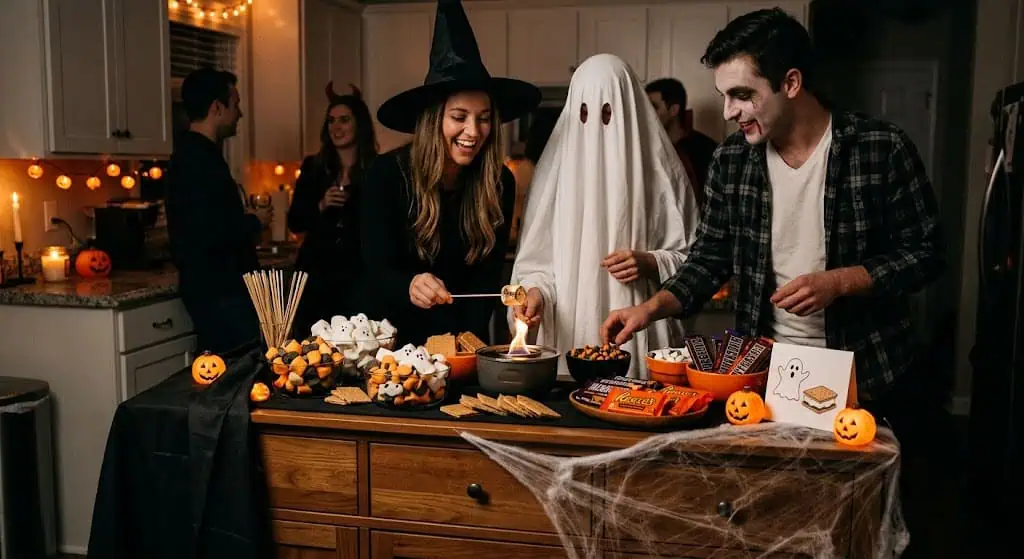
I save a tray of cookies or another favorite treat for later in the evening. When the party starts to slow down, I bring it out as a small surprise.
There’s no need for a special recipe or elaborate presentation. A covered plate and a little timing can make an ordinary snack feel like a planned part of the evening.
Setup: A few minutes to reserve the snack.
Cost: Included in the food budget.
Best for: Longer gatherings where guests may want something sweet later.
Pro Tip: Don’t leave perishable food sitting out for hours. Store it safely and bring it out when it’s time to serve.
15. The Group Playlist Takeover
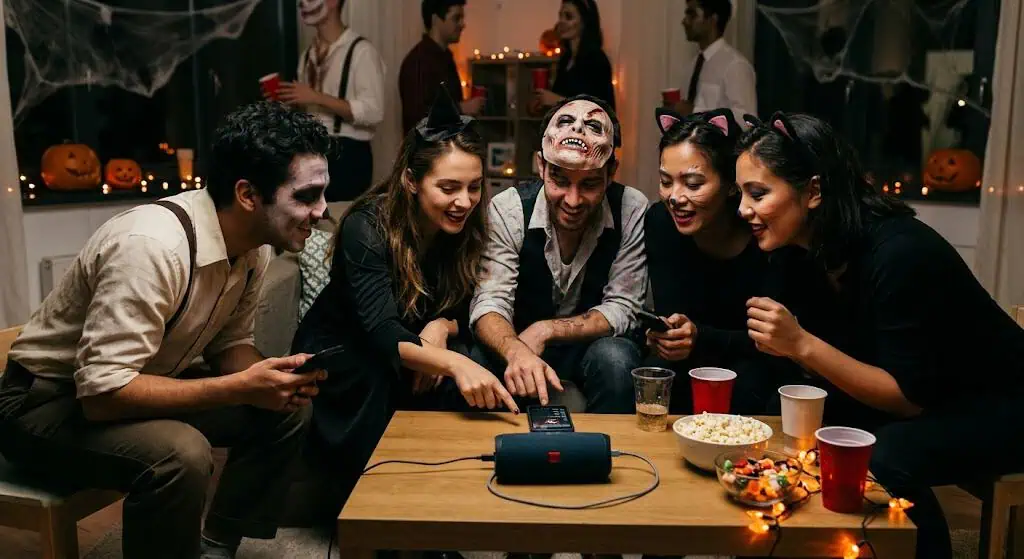
I invite guests to suggest songs for the final part of the party. They can add tracks to a shared queue or tell me their choices if I prefer to control the music.
I keep the Halloween theme flexible enough to include dance songs, familiar favorites, and funny tracks that match the group’s mood.
Setup: A few minutes to explain how guests can suggest songs.
Cost: Free if I use an existing music service.
Best for: Ending the evening with a shared activity that doesn’t require more supplies.
Pro Tip: Keep control of the volume and skip songs that aren’t suitable for the group. A collaborative playlist works best when everyone can still talk comfortably.
What Should You Skip for a Last-Minute Party?
When time is limited, I would skip anything that requires more effort than the guests are likely to notice. Handmade party favors, complicated food decorations, and a separate photo backdrop can all be enjoyable, but they aren’t essential to a successful gathering.
I also wouldn’t clean rooms guests won’t enter. I would focus on the main party space, the bathroom guests will use, and the route between them. Other rooms can wait until the next day, provided they don’t contain hazards or anything guests need to access.
A few other things I would leave off the list include:
- Elaborate costumes that require multiple purchases or complicated makeup.
- Homemade snacks that need baking, cooling, and detailed decorating.
- Invitations that require designing and printing when a group message will do.
- Decorations that need special tools or complicated installation.
- A second shopping trip for something that isn’t essential.
- Excessive disposable decorations when reusable items will work just as well.
The key is to decide what the party needs before starting. If I have food, drinks, a welcoming space, music, and a few activities, I can stop adding tasks and use the remaining time to prepare comfortably.
Spend Your Time On vs. Skip Entirely
| Element | Verdict | Guest Impact |
|---|---|---|
| Lighting with lamps and battery-operated LED lights | Spend about 20 minutes | High visual impact |
| One focal wall and the food table | Spend about 20 minutes | Creates a clear party area |
| Music queued before arrival | Spend about 10 minutes | Helps establish the atmosphere |
| Punch bowl and snack board | Spend about 45 minutes | Gives guests food, drinks, and a gathering point |
| Party favors | Skip if time is short | Usually not essential |
| Elaborate themed food art | Skip | Requires extra preparation |
| Whole-house cleaning | Focus on the rooms guests use | Saves preparation time |
| Complicated costumes | Choose a simple accessory instead | Keeps the host’s preparation manageable |
My recommendation is to make the punch bowl or snack table the main feature of the food area. A colorful drink, a few organized platters, and suitable lighting can bring the display together without requiring a large collection of decorations.
Common Panic-Party Mistakes
Cleaning the whole house. I would clean the party room, guest bathroom, and necessary walkways first. Other rooms can wait if guests won’t need to use them.
Cooking too much food. Complicated recipes can quickly take over the schedule. Ready-to-serve snacks and simple assembled dishes leave more time for the parts of the party guests will enjoy.
Browsing every store aisle. A shopping list helps me avoid buying decorations that look appealing but don’t contribute much to the plan. If an item isn’t on the list, I ask whether I genuinely need it.
Forgetting the music. I would prepare a playlist before the party begins and test the volume. This removes one more task from the final minutes.
Leaving no time to get ready. I reserve the final 15 minutes for changing clothes, checking the room, and getting drinks ready. If the schedule slips, I would simplify a decoration rather than sacrifice every minute of that buffer.
Trying to make everything match perfectly. A few coordinated colors are enough. Black, orange, white, and warm lighting work well together, and I don’t need matching plates, napkins, cups, and decorations to create a festive space.
Ignoring food safety and accessibility. I would label foods containing common allergens where practical, keep perishable items chilled, and make sure walkways and exits remain clear. A party feels more welcoming when guests can move around safely and find what they need.
People Also Ask
What can I do for Halloween with no time to prepare?
I would start with the quickest essentials: adjust the lighting, put on a Halloween playlist, and serve chips, candy, ready-made dips, and an easy punch. Then I would choose a few free games, such as costume voting, Halloween charades, or ghost stories.
Even a short preparation window can produce a fun gathering if I use household decorations and avoid complicated cooking. The budget will depend on what I already have and how much food I need.
How do you decorate for Halloween fast?
I would start by arranging lamps and battery-operated LED lights, then create one focal wall using a dark tablecloth, white balloon ghosts, and a little artificial spiderwebbing. A few streamers around the main doorway can complete the look.
This approach concentrates the decorations in one visible area rather than spreading limited supplies around the entire house. I would keep all decorations away from open flames, exits, and walking paths.
What’s a good last-minute Halloween costume for the host?
A simple accessory is often enough. I could wear ordinary black clothes with a witch hat, cat ears, a cape, or a spooky headband.
I would choose something comfortable that I can put on quickly without needing complicated makeup or additional supplies. That way, I can finish preparing the food and greet guests without feeling rushed.
What food works for a Halloween party with no cooking?
I would serve a snack board with cheese, crackers, vegetables, and cookies, alongside chips, dips, candy, and a sherbet punch. These options require little preparation and can be arranged on platters or in bowls.
For a more festive presentation, I could use Halloween-colored serving dishes or arrange crackers to resemble tombstones. I would still keep ingredient labels available and handle refrigerated foods safely.
🎃 Quick Summary
- Best for: A same-day Halloween gathering with approximately 10–15 guests.
- Budget: Around $50, depending on local prices and what is already available at home.
- Preparation time: Approximately three hours for shopping, decorating, food, and final checks.
- Best decorations: Warm lighting, one focal wall, and a few simple Halloween accents.
- Easy food: Chips, dips, a snack board, candy, and sherbet punch.
- Free entertainment: Costume voting, storytelling, charades, freeze dance, and a shared playlist.
- Don’t forget: Queue the music, keep walkways clear, check food safety, and reserve a few minutes for yourself.
Last-Minute Halloween Party FAQ
Can you really throw a Halloween party in 3 hours?
Yes, a simple Halloween party can be prepared in roughly three hours if I keep the guest list manageable, use ready-made food, and limit the decorations. A practical schedule includes about an hour for shopping, an hour for decorating, 45 minutes for food assembly, and 15 minutes for final checks.
This timeline works best when the stores are nearby and the shopping list is realistic. If I need to travel farther, cook food, or prepare a larger space, I would allow more time.
What exactly do I buy for under $50?
I would divide the budget between inexpensive decorations and ready-to-serve groceries.
At the dollar store, I would look for streamers, black tablecloths, artificial spiderwebbing, white balloons, a marker, LED tea lights, plastic spiders, and glow sticks. At the grocery store, I would buy chips, dips, a vegetable tray, cheese, crackers, cookies, candy, soda, orange juice, and sherbet.
The combined target is approximately $48 using the estimates in this guide. Because prices vary by location, I would prioritize food, drinks, and a few reusable decorations if the total goes over budget.
How do I make the balloon ghosts?
I inflate white balloons according to their instructions and draw simple ghost faces on them with a black marker. Then I attach them securely to a wall or backdrop at different heights.
I would avoid placing the balloons near candles, hot bulbs, or anything sharp. If young children are attending, I would keep the decorations out of reach and collect broken balloon pieces immediately.
What’s the punch recipe?
For a simple orange sherbet punch, I would start with:
- About 1 quart of orange sherbet.
- About 2 liters of lemon-lime soda.
- About 1 quart of orange juice.
I add the sherbet to a large punch bowl, pour in the chilled liquids slowly, and stir gently once or twice. The sherbet creates a foamy top as it melts, giving the drink a festive appearance.
This quantity can provide roughly 15 modest servings, depending on cup size and how much ice or extra liquid is added. I would keep the ingredients chilled, serve the punch promptly, and prepare another batch if needed.
How do I get drinks right for adults with no time?
I would offer the punch, chilled water, and a few additional nonalcoholic choices. If guests are comfortable bringing their own beverages, I can mention that in the invitation rather than trying to stock every possible option.
I would also have cups, ice, and a clear serving area ready before guests arrive. If alcohol is part of the gathering, I would keep it optional and provide appealing nonalcoholic alternatives.
What music should I queue?
I would search for a Halloween party playlist on a music service I already use and choose one long enough to cover the event. A mix of recognizable songs, spooky soundtracks, and upbeat dance tracks works well for many casual gatherings.
I would test the volume before the first guest arrives. The music should create atmosphere without making it difficult for people to talk.
How do I invite people same-day without it feeling thrown together?
I would send a friendly, direct message with the time, location, and basic plan. For example:
“Having a spontaneous Halloween get-together at my place tonight at 7! Costumes are welcome but completely optional. I’ll have snacks and spooky punch ready. Let me know if you can make it!”
A simple message is enough for an informal gathering. I would include any useful details about parking, food contributions, or whether children are welcome so guests know what to expect.
What if more people show up than planned?
I would keep a small part of the budget available for extra chips, drinks, or another bag of candy. Simple snacks are easier to stretch than individually portioned dishes, and most of the games in this article can accommodate additional players.
I would also make sure there are enough cups, seats, and safe places to stand or gather. If the space becomes too crowded, I would adjust the setup rather than blocking exits or walkways.
Can this work for a kids’ last-minute party?
Yes, with a few changes. I would keep the same general preparation plan but choose age-appropriate games such as freeze dance, a costume parade, a candy guessing game, or simple Halloween charades.
The sherbet punch can be offered as a nonalcoholic drink, with water available as well. I would check food allergies, supervise activities involving small objects, and avoid small sweets or loose decorations that could pose choking hazards for young children.
What do I do with 30 minutes instead of 3 hours?
I would skip shopping if possible and use whatever is already at home. Turn on suitable lamps, arrange a few decorations in one visible area, put chips and other ready-to-serve snacks into bowls, and start a Halloween playlist.
For entertainment, I would choose games that need no equipment, such as storytelling, costume voting, or verbal Halloween trivia. The goal is a relaxed gathering, not a perfectly styled event.
How do I keep my stress from showing?
I would reduce the task list instead of trying to finish everything. Guests don’t need every decoration to be perfect, and a simple snack table can be just as useful as an elaborate spread.
I would protect the final few minutes for changing clothes, checking the room, and taking a breath before answering the door. Greeting guests warmly and helping them feel comfortable matters more than whether every corner is decorated.
Read this next: 15 Indoor Halloween Decoration Ideas That Actually Create Atmosphere (2026)
Three Hours Is Enough
A successful last-minute Halloween party comes down to a manageable shopping list, a few well-placed decorations, easy food, and activities guests can enjoy without much preparation. I would concentrate on lighting and one focal wall, then use the snack table as both a practical serving area and part of the decor.
A $50 budget can be a reasonable target for a small gathering when I shop carefully and use supplies I already own. If local prices are higher, I would cut optional decorations before cutting back on essential food, drinks, or safety supplies.
Most importantly, I wouldn’t let the preparation take over the evening. A welcoming space, a good playlist, and a host who has time to enjoy the party can make a simple Halloween gathering feel special.
Happy Halloween!



3 Comments