
23 Halloween Party Ideas for Kids at Home (Ages 4–12, Full Party Plan)
Planning a Halloween party at home is easier when I match the activities to the children’s ages, the space available, and the time I have. Younger children usually do better with simple games and short breaks, while older kids may enjoy team challenges, costume contests, and more detailed crafts. I would rather prepare a handful of activities that work well than fill the schedule with games nobody has time to enjoy.
These kids’ Halloween party ideas combine easy arrival activities, Halloween games, crafts, quiet corners, and a few finishing touches. With a little preparation, I can create a cheerful Halloween setting without buying decorations for every room or spending the whole party managing supplies.
For a home Halloween party, I recommend planning around 90 minutes for children ages 4–6 and approximately two hours for older children. A group of 10–15 guests can enjoy a mix of arrival activities, three or four games, one craft station, a snack break, and a costume parade.
Save this for later

Table of Contents
A budget-friendly party can include homemade decorations, simple snacks, and crafts that double as favors. The ideas below include options for indoor and outdoor spaces, with practical adjustments for different ages and safety needs.
Key Takeaways
- Party length: About 90 minutes for younger children or two hours for older guests, adjusted to suit the group.
- Guest count: Around 10–15 children is a useful starting point, depending on space and supervision.
- Activities: Combine arrival games, movement activities, a craft, snacks, and a short finale.
- Budget: Plan according to local prices, the number of guests, and the supplies you already own.
- Decorations: Paper bats, streamers, balloon ghosts, and a simple photo backdrop can create a festive atmosphere.
- Safety: Check allergies, secure decorations, clear walkways, and choose age-appropriate materials and treats.
Related article: 19 Toddler Halloween Party Ideas (Ages 1–4: Cute, Calm & Not Scary)
How Long Should a Kids’ Halloween Party Be?
I would use 90 minutes as a starting point for ages 4–6 and two hours for ages 7–12. These are planning suggestions rather than strict rules. Some groups will be ready to finish sooner, while others may happily spend longer on a favorite activity.
For a two-hour party, I would organize the activities around five stages: arrival, games, crafts, snacks, and a costume parade. Keeping the main activities in a predictable order makes it easier to manage transitions and helps guests understand what comes next.
For younger children, I would shorten the schedule by removing an activity instead of rushing everyone through it. Parents or caregivers may also need to stay, particularly when children require help with crafts, food, or unfamiliar surroundings.
The 2-Hour Party Plan at a Glance
| Time | Activity | What to Prepare |
|---|---|---|
| 0:00–0:20 | Arrival activities | Name tags, guessing jar, photo booth, or bingo cards |
| 0:20–1:00 | Game block | Three or four short games with clear rules |
| 1:00–1:25 | Craft station | One main craft with supplies ready for each child |
| 1:25–1:45 | Snack break | Food, drinks, ingredient labels, and seating |
| 1:45–2:00 | Costume parade and favors | Music, awards, and prepared favor bags |
I would prepare the supplies before guests arrive and allow a little flexibility between activities. If a game takes longer than expected, I would shorten the next activity rather than make children feel rushed.
For a 90-minute party, I would allow 15 minutes for arrivals, 25 minutes for games, 20 minutes for crafts, 15 minutes for snacks, and 15 minutes for the finale.
Arrival Activities (Minutes 0–20)
Arrival activities give children something to do while guests come in at different times. I would set up one or two simple choices near the entrance so children can get started without waiting for the entire group.
1. Monster Name Tags

Set out blank name tags, washable markers, and large Halloween stickers. Each child can invent a funny monster name, such as Captain Pumpkin, Count Giggles, or Wiggly Worm.
Younger children can draw a face, while older guests can add a character name and a silly superpower. Keep the table away from the doorway so arriving families can move through without crowding.
What I need: Blank name tags, markers, large stickers, and a table.
Best for: Ages 4–12, especially when children do not all know one another.
2. Pumpkin Guessing Jar
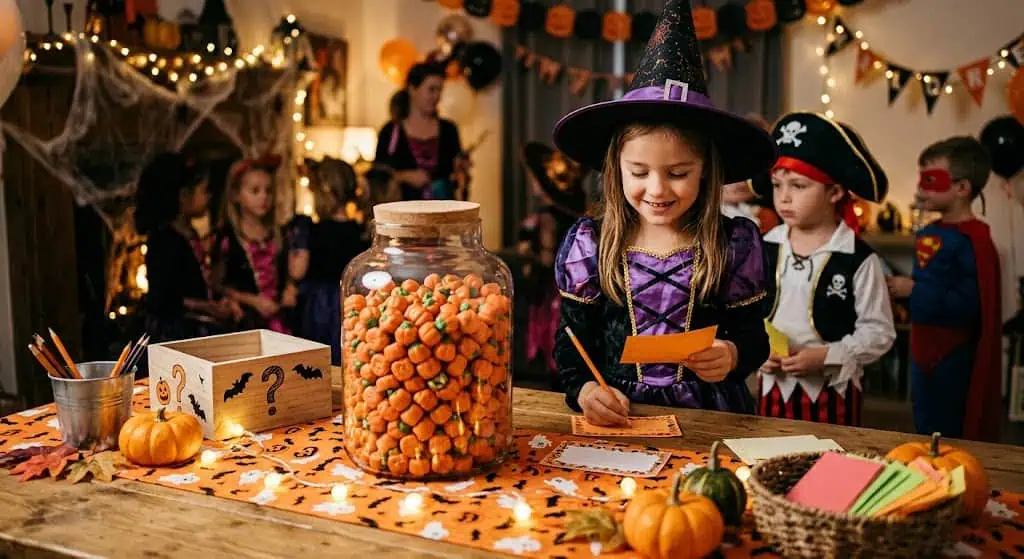
Fill a clear, sturdy container with an age-appropriate item and ask guests to estimate how many are inside. Each child writes a guess on a slip of paper or tells an adult, and the closest estimate wins a small prize at the end.
For a party with younger children, I would use large paper pumpkins or another non-food counting item instead of loose sweets. Keep small objects and candy inaccessible to children who may put them in their mouths.
What I need: A sturdy container, counting items, paper slips, and pencils.
Best for: Ages 5–12, with a picture-based version for younger children.
3. Photo Booth Entry

Create a photo area with orange streamers, a black backdrop, or friendly paper ghosts. Put a few lightweight props in a basket, such as paper hats, large glasses, and simple costume signs.
Parents can take pictures as children arrive. Keep props free from sharp edges and small detachable pieces, and avoid masks or accessories that block vision. Secure the backdrop firmly and leave enough room for children to stand without tripping over decorations.
What I need: A backdrop, secure decorations, simple props, and a camera or phone.
Best for: Ages 4–12 and parties where families want costume photos.
4. Costume Bingo Cards
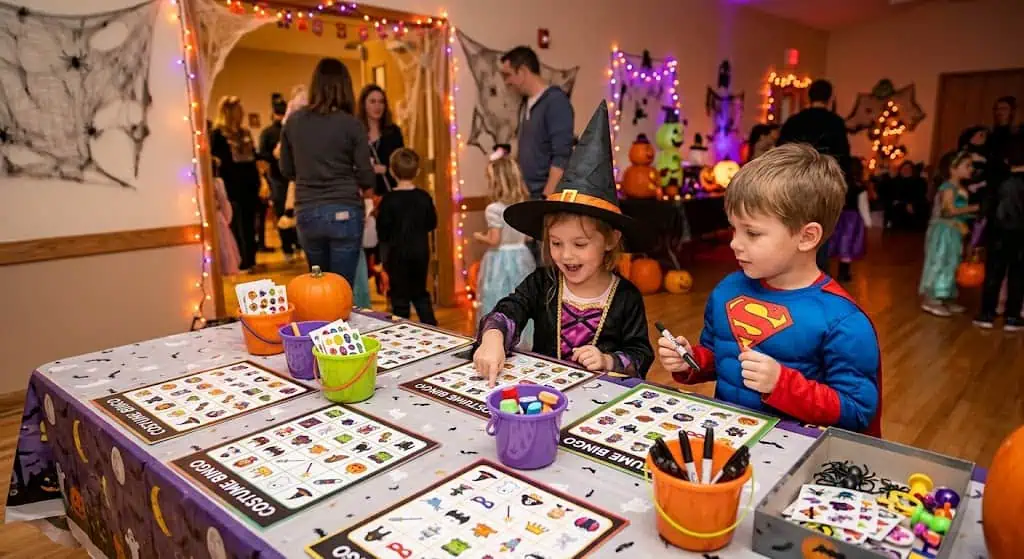
Prepare bingo cards with pictures or words describing things children might spot at the party, such as a cape, pumpkin, witch hat, or friendly ghost. Children mark a square whenever they see a matching item.
For younger guests, use large pictures and offer help reading the cards. Older children can play independently or compete in small groups. Keep the game available during arrivals so it does not need a separate time slot.
What I need: Printed bingo cards, pencils, and a few small prizes if desired.
Best for: Ages 6–12, with picture cards for younger children.
The Game Block (Minutes 20–60)
I would choose three or four Halloween games rather than try to fit all five into the schedule. Start with a movement activity, then offer a team challenge and a quieter game if the children need a change of pace.
For mixed-age groups, use short rounds and avoid eliminating children for making mistakes. Demonstrating the rules before starting is often easier than giving a long explanation.
5. Monster Freeze Dance
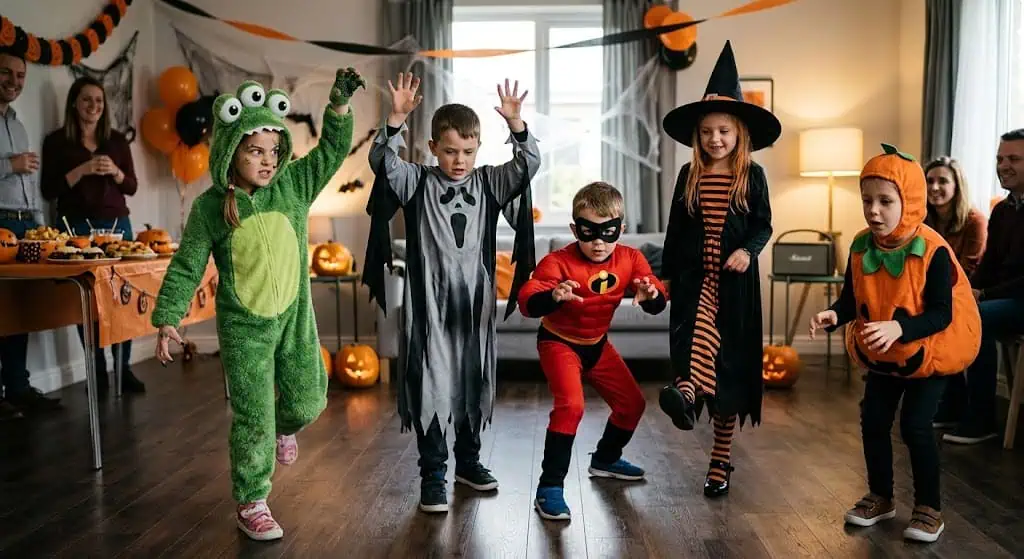
Play upbeat Halloween music and invite children to dance like monsters. They can stomp, shuffle, flap their arms, or make silly poses. When the music stops, everyone freezes until it starts again.
I would keep every child in the game rather than sending players out when they move. For younger guests, play short rounds and leave plenty of room between dancers.
What I need: A music player and a clear area.
Best for: Ages 4–10 and indoor parties where children need a chance to move.
6. Mummy Wrap Relay

Divide the children into small teams and give each team a few rolls of toilet paper. One volunteer stands still while teammates gently wrap the paper around their arms and torso to create a mummy costume.
Set a short time limit, then let each team show off its finished mummy. Keep paper away from faces, necks, and feet, and stop immediately if wrapping restricts movement or breathing. Children should never run while wrapped.
What I need: Toilet paper, a timer, and enough space for each team.
Best for: Ages 5–12, with close adult supervision and a stationary wrapping activity.
7. Pumpkin Roll Race

Set up a short, wide course in a clear yard, garage, or suitable indoor space. Children roll lightweight pumpkins toward the finish line using their hands, keeping their pumpkins within their own lanes.
For younger children, use small pumpkins and a short course. I would avoid hard sticks or broom handles around moving children because they can cause accidental injuries. If the floor is slippery or the pumpkins are too heavy, choose a different game.
What I need: Lightweight pumpkins, floor markers, and a clear course.
Best for: Ages 5–12, especially at parties with outdoor space.
8. Ghost Hunt

Cut out large paper ghosts and hide them in visible, easy-to-reach places around the approved party area. Give children a simple checklist or ask them to find a set number of ghosts together.
For younger children, place the ghosts at eye level or in obvious spots. Keep the search away from stairs, kitchens, roads, and rooms containing hazards. I would also make sure children know which areas are off-limits before the game begins.
What I need: Paper, markers, and optional collection bags.
Best for: Ages 4–8 and indoor Halloween parties.
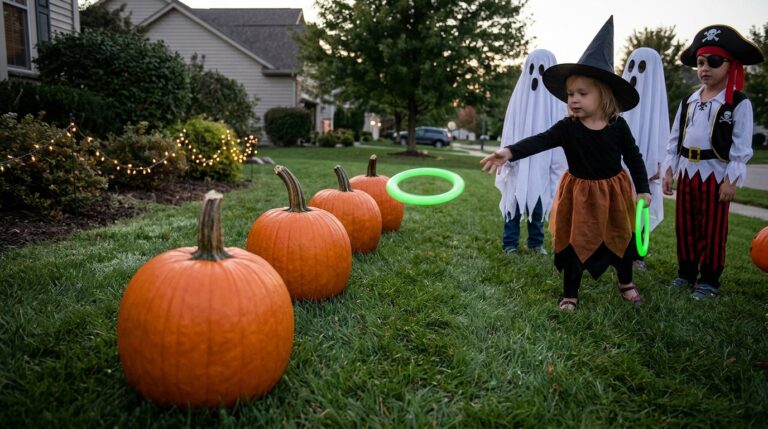
9. Witch Hat Ring Toss
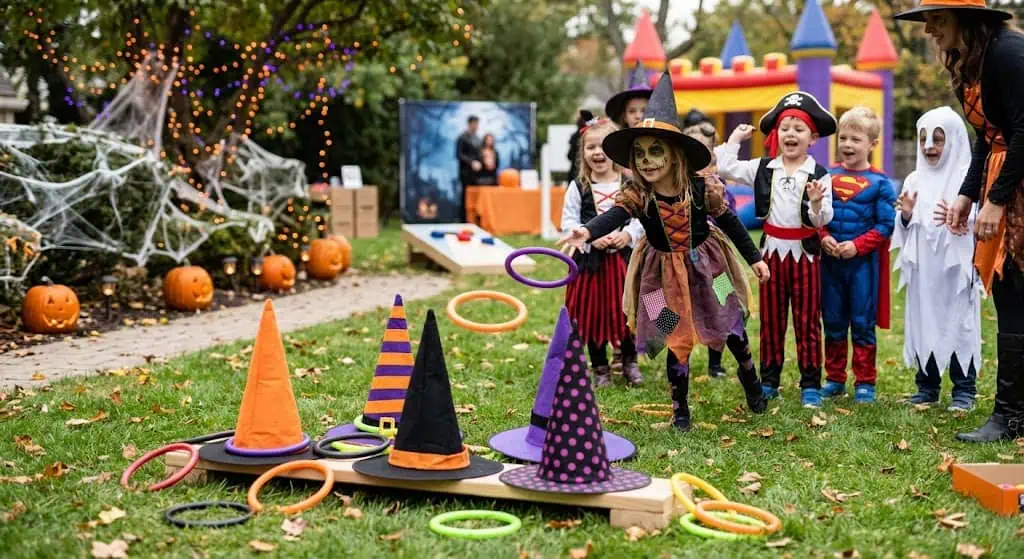
Make witch hats from sturdy cardboard or use stable cone-shaped targets. Place them on the floor and give children lightweight rings to toss from a marked line.
Move the line closer for younger players and farther away for older children. Give each child a few turns before rotating to the next player, and use soft rings rather than breakable glow accessories.
What I need: Stable witch-hat targets, lightweight rings, and floor markers.
Best for: Ages 4–12 and small groups that enjoy simple challenges.
Pro Tip: I would run games in small teams or short rotations instead of making every child wait for a long individual turn. Keep the rules simple, demonstrate one round, and have a backup game ready in case the group loses interest.
The Craft Station (Minutes 60–85)
After the games, I would move the children to a table for a seated activity. Choose one main craft and prepare individual sets of supplies before the party begins.
For younger children, use large materials and prepare any difficult cutting in advance. Adults should handle sharp tools and supervise the use of paints, adhesives, and other craft products.
10. Paper Plate Monsters
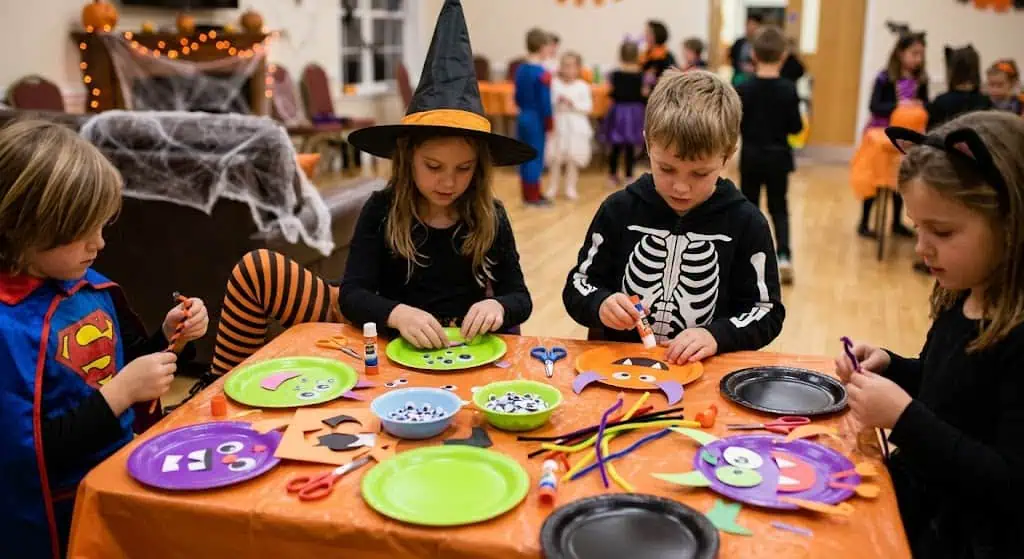
Give each child a paper plate, washable crayons or paint sticks, paper shapes, and glue sticks. They can turn the plate into a monster by adding eyes, a mouth, paper hair, and funny teeth.
Prepare larger paper shapes for younger children. Older guests can design a more detailed monster or give their creation a name and personality.
What I need: Paper plates, washable coloring supplies, paper scraps, and glue sticks.
Best for: Ages 4–9 and a low-cost craft that needs little explanation.
11. Mini Pumpkin Painting

Provide one mini pumpkin per child, suitable washable paint, brushes, and a protected table. Children can paint faces, stripes, dots, or patterns without using carving tools.
I like this option because it works for different ages and creates a take-home item. Write each child’s name on a small label before painting starts, and leave enough time for the paint to dry before packing the pumpkins.
What I need: Mini pumpkins, suitable paint, brushes, table covering, and labels.
Best for: Ages 4–12, with adult supervision for younger children.
Pro Tip: Put old shirts or washable aprons over children’s clothes before painting. Keep a damp cloth nearby for spills, and use individual paint palettes when possible to make cleanup easier.
12. Spider Headbands

Prepare black paper strips for headbands and additional strips for spider legs. Children can fold the legs into accordion shapes, decorate the headband with paper eyes, and attach the pieces using tape or glue.
An adult should prepare any difficult cutting in advance and check that the headbands fit comfortably. Avoid exposed staples or sharp fasteners, and make sure the finished accessory does not obstruct vision.
What I need: Construction paper, tape or glue, markers, and prepared leg strips.
Best for: Ages 4–8 and children who want an easy costume accessory.
13. Treat Bag Decorating
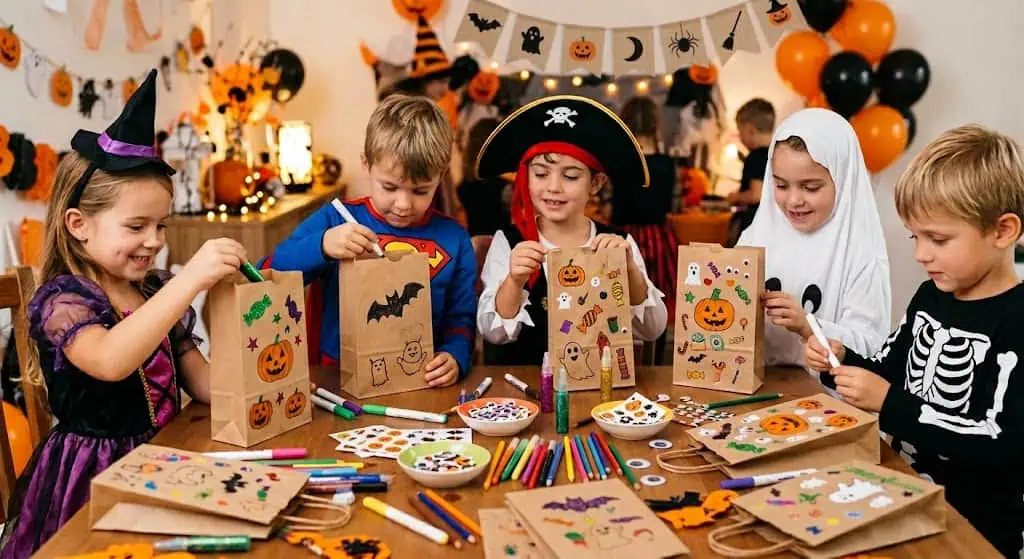
Give each child a plain paper bag and let them decorate it with Halloween stamps, large stickers, and washable markers. Write each child’s name on the bag before the activity starts.
The bags can later hold a few age-appropriate treats or small gifts. I would keep the finished bags in a separate place until departure so they do not get mixed up or opened too early.
What I need: Paper bags, washable markers, large stickers, and stamps.
Best for: Ages 4–12 and parties where the craft can double as favor preparation.
14. Sticker Scene Boards

Prepare a simple Halloween scene featuring a house, trees, pumpkins, and a moon. Give each child a sheet of suitable stickers to complete the picture.
Younger children can place large stickers on the scene, while older guests can create more detailed designs. Keep small stickers and loose pieces away from children who still mouth objects, and supervise the activity as needed.
What I need: Printed or drawn scenes and age-appropriate stickers.
Best for: Ages 3–7, younger siblings, and children who prefer a quieter activity.
Also read: 15 Last-Minute Halloween Party Ideas: Throw It Together in 3 Hours (Under $50)
Quiet Corners and Extras
Not every child wants to join a loud game throughout the party. I would keep a quiet corner available where guests can sit, look at books, or take a short break without having to leave the celebration.
These activities can run alongside the main schedule, so children have a choice when they need a change of pace.
15. Spooky Story Corner
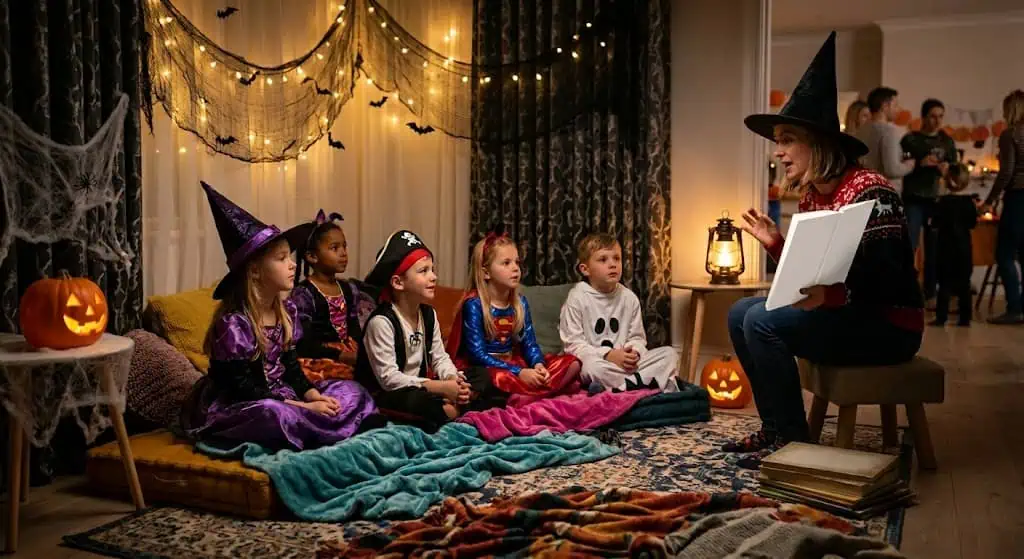
Arrange floor cushions, a few picture books, and a flashlight for an adult-led story session. Choose cheerful Halloween stories with silly characters rather than frightening scenes.
Keep the area well lit and allow children to join or leave quietly. This corner can be particularly helpful for younger guests who need a break from music and movement.
What I need: Cushions, picture books, and a flashlight.
Best for: Ages 4–7 and children who enjoy calm, seated activities.
16. Glow Dance Corner
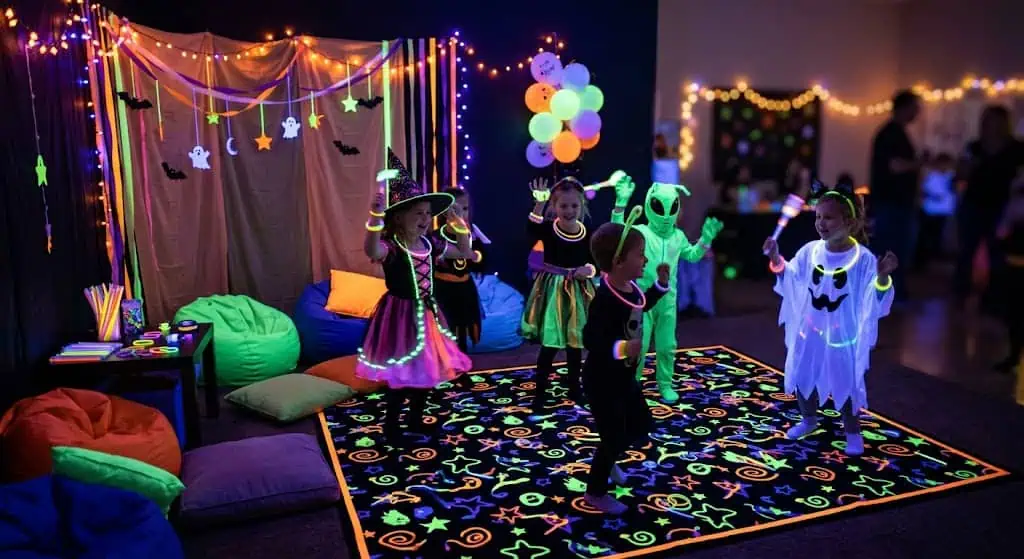
Set up a small dance area with music and age-appropriate glow accessories if desired. Keep enough lighting for children to see the floor, furniture, and other guests.
Check glow products for damage and follow the manufacturer’s instructions. Keep them away from children who may bite or chew them, and clean up any broken pieces immediately. Battery-powered lights are another option for creating a colorful corner.
What I need: A music player, clear floor space, and optional suitable glow accessories.
Best for: Ages 5–12 and indoor parties with limited room for running.
17. Face Paint Station
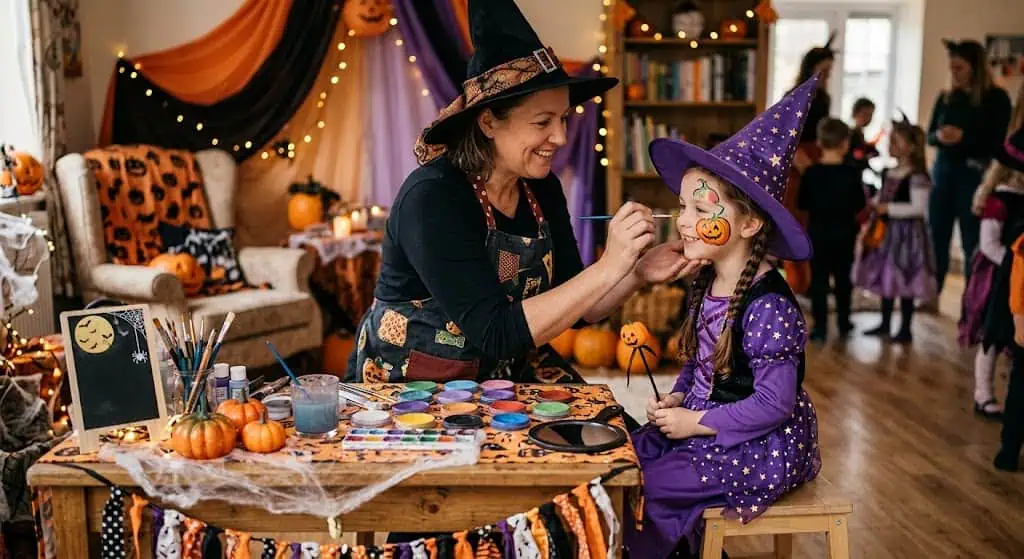
Choose face paints specifically designed for skin application and follow the product directions. An adult can offer simple designs such as pumpkin faces, whiskers, or small spiders, using clean applicators for each child.
Ask parents about allergies and skin sensitivities before applying paint. Avoid the eyes and mouth, do not use products on irritated skin, and stop if a child experiences discomfort.
What I need: Suitable face paints, clean applicators, a mirror, and wipes.
Best for: Ages 4–12 and children who want a simple costume detail.
18. Movie Wind-Down Corner
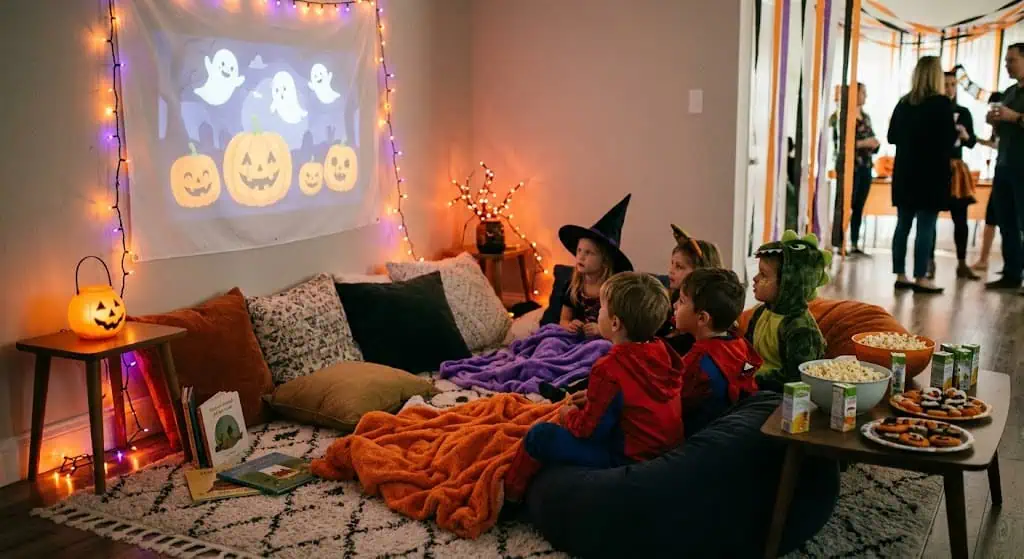
Set up a family-friendly Halloween film or a short collection of seasonal cartoons in a separate room. Add cushions and blankets, and keep the volume low enough that the main party can continue.
I would make this an optional activity rather than asking every child to sit through a movie. It can provide a quieter choice for children who are tired or prefer less activity.
What I need: A screen, an age-appropriate film, and comfortable seating.
Best for: Mixed-age groups and quieter periods near the end of the party.
The Finale (Minutes 105–120)
I would keep the ending simple and predictable. A costume parade gives children a chance to show off their outfits, and a small award or favor makes the transition to going home easier.
19. Costume Parade and Awards
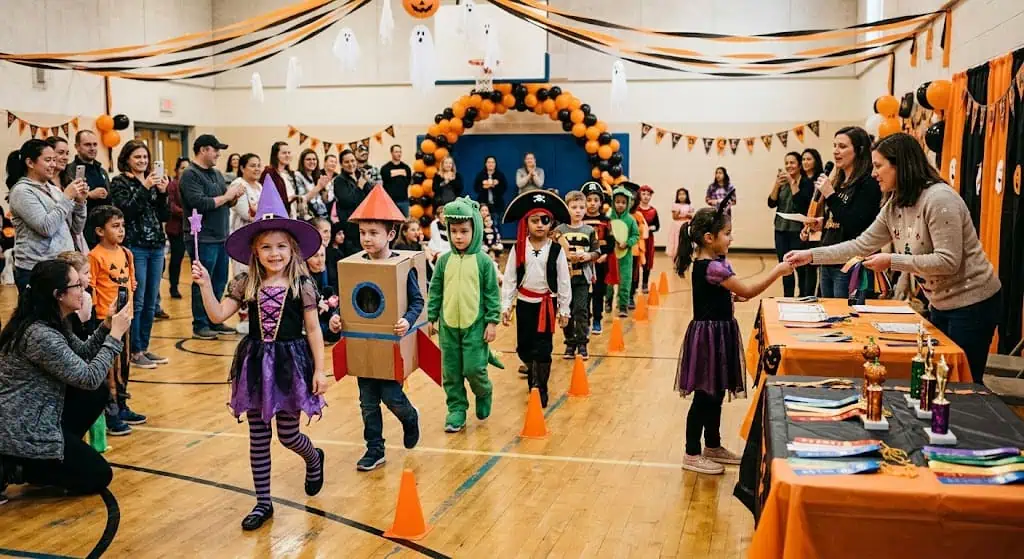
Choose a clear route through the living room, hallway, or yard. Play a cheerful song and let each child walk, dance, or pose in their costume.
Prepare friendly award categories such as Most Colorful Costume, Funniest Monster, Best Handmade Accessory, or Best Pumpkin Style. Give every child an award without comparing children or making anyone feel that their costume is less impressive.
What I need: Music, paper certificates or ribbons, and a clear parade route.
Best for: Ages 4–12 and a friendly party finale.
20. The Piñata Moment
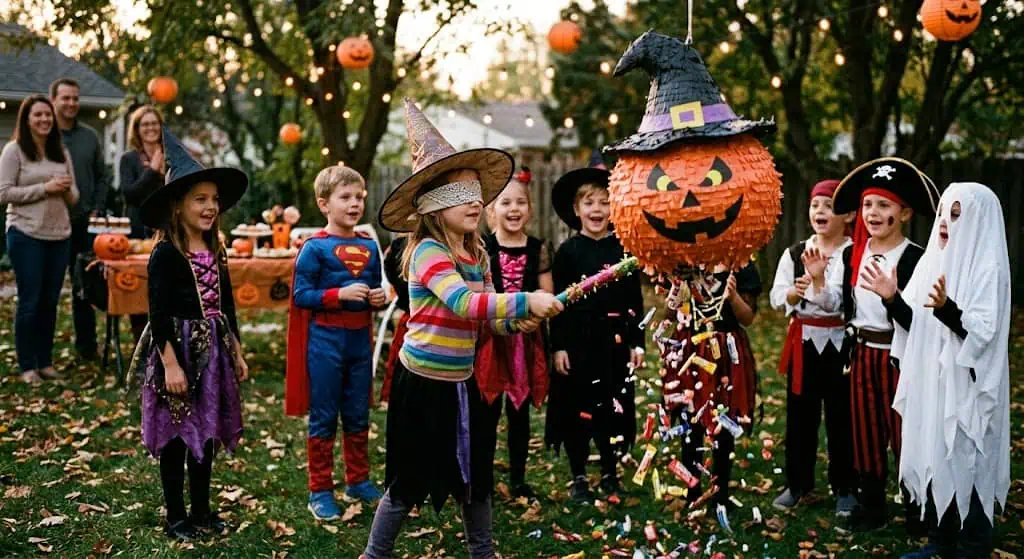
A pumpkin-shaped piñata can be a fun shared activity, but I would choose the style according to the ages attending. A pull-string piñata is often a better fit for mixed-age groups because children do not need to swing a stick.
If using a traditional piñata, keep waiting children well outside the striking area and allow only one participant at a time under adult supervision. Check all treats and toys for age suitability, choking hazards, and food allergies.
What I need: A suitable piñata, age-appropriate fillings, and a designated activity area.
Best for: Groups that enjoy taking turns in a supervised finale.
21. Favor Bags at the Door

Fill each child’s decorated bag with a few simple items, such as stickers, a coloring sheet, a suitable toy, or a wrapped treat. A painted mini pumpkin can serve as the main favor, reducing the need for extra purchases.
I would keep the bags out of reach until families leave. Check small toys, detachable parts, and treats carefully when young children are attending, and label bags if guests have different dietary needs.
What I need: Decorated bags and a small selection of age-appropriate favors.
Best for: An organized exit and a practical way to finish the party.
The $25 Decor Shortlist
I would focus decorations in the main party area rather than trying to decorate the whole house. A few coordinated colors and homemade details can make the space feel festive without creating too much cleanup.
22. The 30-Minute Decor Plan

Use orange and black streamers across a wall or doorway, add paper bats, and make friendly balloon ghosts with simple faces. Finish with a small spiderweb decoration and a Halloween banner above the snack table.
Here is an example budget:
- Orange and black streamers: $4
- Paper bat decorations: $3
- Balloon ghosts and markers: $5
- Spiderweb decoration: $2.50
- Halloween banner: $4
Estimated total: $18.50. That leaves $6.50 in a $25 budget for tape or other small supplies, provided the listed prices match what is available locally.
I would secure hanging decorations and keep cords, ribbons, and detachable pieces out of children’s reach. If using balloons, keep uninflated balloons and broken pieces away from children, and remove damaged balloons promptly.
Best for: A simple Halloween look for the main party area with about 30 minutes of preparation.
23. The DIY Photo Backdrop
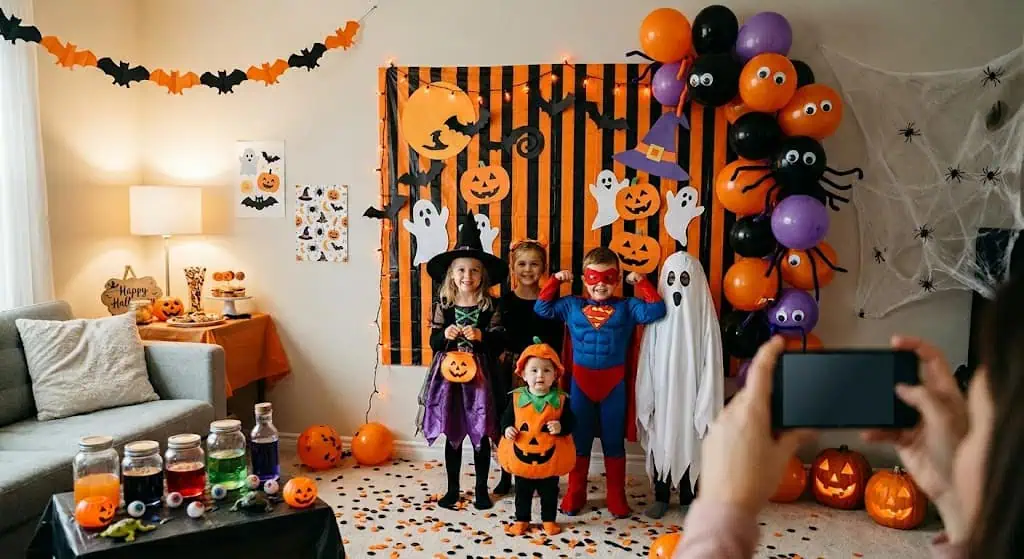
Hang a black fringe curtain or dark paper backdrop in a stable location, then add paper moons, stars, pumpkins, or friendly ghosts. Secure it firmly so it cannot fall, and keep the surrounding floor clear.
The backdrop can serve as both an arrival photo area and the background for the costume parade. Reusing materials from previous parties can lower the cost.
What I need: A backdrop, paper decorations, suitable tape or fasteners, and a clear photo area.
Best for: Families who want a simple photo spot without buying a separate backdrop for every activity.
How Do You Keep a Halloween Party Not Scary for Little Kids?
I would use a playful theme with smiling pumpkins, friendly ghosts, colorful streamers, and silly monster faces. Children can enjoy the Halloween atmosphere without needing frightening props or sudden noises.
Keep the main party area well lit and avoid decorations that jump out or make unexpected sounds. If a child seems nervous, let them look around with a parent before joining the group.
A story corner or quiet craft table also gives children a place to take a break. For ages 4–6, I would keep instructions simple and let children decide how much they want to participate.
What About the Food?
For a party of 12 children, I would start with a simple menu of fruit, one savory snack, drinks, and a small Halloween treat. An approximate food budget of $25–$35 may be workable, depending on local prices, portion sizes, and whether adults are eating too.
Ask parents about allergies and dietary requirements before shopping. Keep ingredient packaging available, label foods where appropriate, and use separate serving utensils when needed to reduce cross-contact.
Choose food that is appropriate for the ages attending. For younger children, avoid choking hazards such as whole grapes, hard sweets, and popcorn when they are not developmentally ready for them. Cut foods into suitable pieces, supervise children while eating, and provide water throughout the party.
I would schedule a snack break after the main games, but food and drinks should always be available when children need them rather than being restricted to a fixed minute.
How Much Does a Kids’ Halloween Party Cost?
I would use $8–$12 per child as an initial planning estimate, not a guaranteed price. For 12 children, that works out to $96–$144 in total spending.
One example budget for 12 children is:
| Category | Estimated Cost |
|---|---|
| Decorations | $19–$25 |
| Games and craft materials | $30–$40 |
| Snacks and drinks | $25–$35 |
| Piñata and favors | $30–$35 |
| Estimated total | $104–$135 |
These categories add up to a range of $104–$135. Dividing that by 12 children gives approximately $8.67–$11.25 per child.
The estimate assumes the host is buying the listed supplies and does not include major purchases such as costumes or equipment. Actual spending will depend on local prices, adult guests, food choices, and how many materials can be reused.
To reduce costs, I would choose a craft that doubles as a favor, reuse decorations, and run games that need little equipment. For a party under $100, consider inviting 8–10 children, using supplies already at home, choosing free games, and keeping the food menu simple. Check the local costs first rather than relying on a fixed total.
Backyard vs. Living Room vs. Garage
The best venue depends on the weather, the ages attending, and how much clear space is available. I would choose a location where children can move comfortably and adults can supervise without obstacles.
The estimates below are illustrative budgets for around 10–15 children, assuming a modest menu and mostly simple activities. They are not verified local prices.
| Format | Approximate Cost | Preparation | Main Consideration | Best Ages |
|---|---|---|---|---|
| Backyard party | $105–$140 | Outdoor setup and cleanup | Weather and outdoor hazards | 5–12 |
| Living room party | $105–$140 | Move furniture and protect surfaces | Limited floor space | 4–8 |
| Garage party | $105–$140 | Clear and prepare the space thoroughly | Ventilation, flooring, and stored hazards | 4–12 |
A backyard gives children more room for movement games, but I would prepare an indoor backup for rain, cold weather, or strong wind. A living room can work well for younger children if furniture is moved safely and walkways remain clear.
A garage can provide extra floor space, but it needs careful preparation. Remove tools, chemicals, and trip hazards, ensure safe ventilation, and keep exits clear. Never run a vehicle or use a fuel-burning heater in an enclosed garage.
Common Kids’ Party Mistakes
Planning too many activities. I would prepare a few games and let children repeat their favorites rather than make them move from one station to another every few minutes.
Using frightening decorations without considering the guests. Children have different comfort levels. Friendly decorations are a good starting point for younger children, and parents can let the host know about particular fears or sensitivities.
Treating snack timing as a strict rule. A planned snack break helps organize the party, but children should have access to water and food when needed. Check allergies and choose age-appropriate portions.
Assuming one adult can manage every station. Supervision needs depend on the children’s ages, group size, and activities. Assign helpers clear roles for crafts, food, and games rather than relying on vague offers to help.
Handing out favors too early. I would store favor bags separately and give them to children as they leave. This reduces distractions and helps keep the party organized.
Skipping the safety check. Before guests arrive, secure cords, remove breakable items, check exits, and keep sharp tools and hazardous products out of reach. Make sure there is enough room for the planned activities and that adults know which areas are off-limits.
Kids’ Halloween Party FAQ
How long should a kids’ Halloween party last?
I would plan around 90 minutes for ages 4–6 and approximately two hours for older children. Shorten the schedule if younger guests become tired, and remove an activity rather than rushing everyone through it.
How many children should I invite?
Around 10–15 children is a useful starting point for a home party, depending on available space and adult supervision. For younger children, consider whether parents or caregivers will stay and whether the room can comfortably accommodate everyone.
How much does a kids’ Halloween party at home cost?
A modest party might cost around $8–$12 per child, depending on supplies, food, decorations, and favors. For 12 children, that suggests approximately $96–$144. Reusing materials and choosing crafts that double as favors can help lower spending.
What games work best for children ages 4–12?
Monster freeze dance, a visible ghost hunt, witch hat ring toss, and costume bingo are flexible options. For older children, a mummy wrap challenge or pumpkin roll can add variety. Choose games according to the group’s abilities and the space available.
How do I plan activities for different ages?
Use simple instructions and large materials for younger children, with close adult supervision. Older children can try optional challenges or help prepare activities when appropriate. Keep small craft pieces, glow products, and tiny favors away from children who may put them in their mouths.
What food and safety details should I check?
Ask parents about allergies and dietary requirements, keep ingredient labels available, and take precautions against cross-contact. Choose age-appropriate food, supervise children while eating, secure decorations, and remove trip hazards before the party starts.
What if children arrive without costumes?
Keep a small basket of simple accessories, such as paper hats or suitable capes, near the entrance. The spider headband craft or face-paint station can also provide an optional finishing touch. Children should be welcome to participate in their regular clothes if they prefer.
What should I do if bad weather affects an outdoor party?
Prepare an indoor backup before sending invitations. Move activities into a suitable living room or properly prepared garage, and replace games that need a large outdoor course with freeze dance, ring toss, or a craft. Tell parents about the backup plan in advance.
Read this next: 21 Halloween Party Themes for Adults (2026: Decor, Food & Budget Per Theme)
You’ve Got the Plan — Now Go Host It
I would start with a manageable schedule, choose a few games suited to the children’s ages, and prepare one craft that can go home with each guest. Add simple decorations, a snack break, and a short costume parade, and the party has a clear structure without needing an elaborate setup.
Before guests arrive, check the activity area, sort the supplies, confirm food allergies, and arrange enough adult supervision. With those basics covered, it becomes easier to enjoy the celebration instead of spending the whole afternoon managing the details.




3 Comments