35 Minute to Win It Games for Kids That Bring Instant Laughter
When I need a quick activity for a group of kids, I often turn to minute-to-win-it games. They are easy to explain, inexpensive to set up, and most of them use things I already have around the house.
I especially like these games for birthday parties, family gatherings, classroom breaks, sleepovers, and rainy afternoons. The one-minute limit keeps each activity moving, so kids rarely have time to get bored.
I have included a mix of quiet challenges, movement games, teamwork activities, food challenges, and simple building tasks. That makes it easy for me to choose games based on the children’s ages, available space, and the supplies I have.
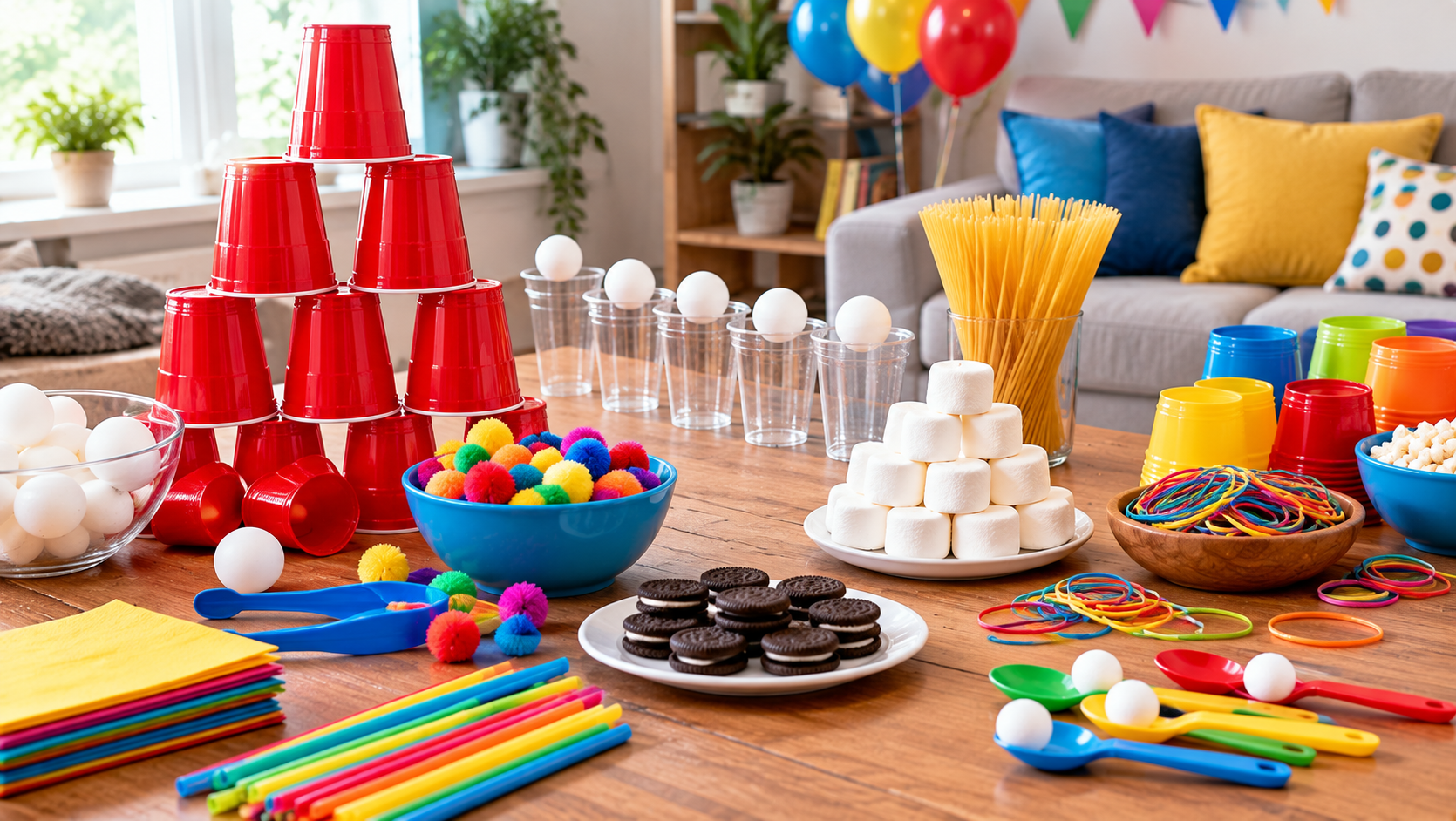
These 35 minute-to-win-it games give me plenty of quick options for entertaining children without spending much money or preparing complicated activities. Most challenges take about 60 seconds and use everyday household or party supplies.
I can use games such as cup stacking, balloon challenges, ping-pong games, balancing activities, races, and simple STEM-style building challenges for different age groups. For younger children, I usually simplify the rules and focus more on participation than winning.
Save this for later
Table of Contents
For parties, I like combining several types of games instead of choosing five activities that all require the same skill. A good mix keeps the energy changing and gives different children a chance to shine.
Key Takeaways
- Most of these games can be prepared with inexpensive household supplies.
- A one-minute timer makes even simple challenges feel exciting.
- I adjust the rules, distance, and materials to suit the children’s ages.
- Team games are useful when I want children to work together instead of competing individually.
- I keep safety in mind around balloons, small objects, food, slippery floors, and physical games.
- For a party, I usually choose 8–10 games rather than trying to use all 35.
Related article: 16 Halloween Minute to Win It Games: No Guesswork, Just Supplies & Instructions
1. Stack It Up
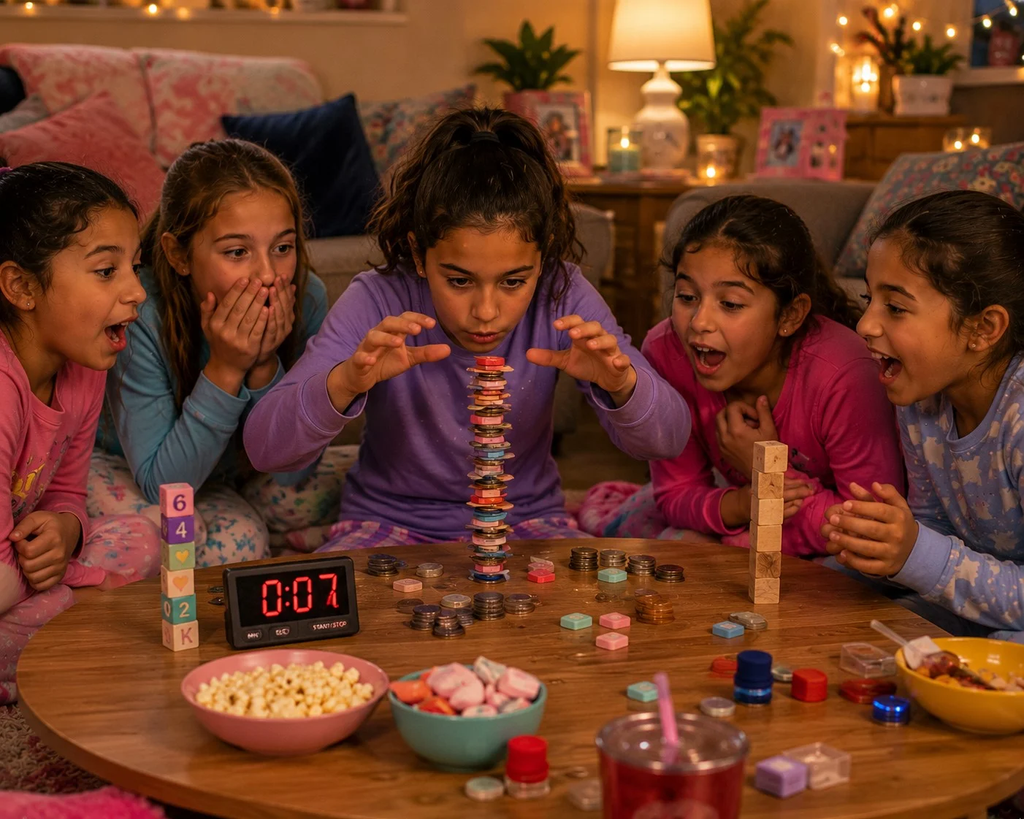
I give each child a collection of small objects such as building blocks, plastic counters, erasers, or large coins. The goal is to create the tallest stable tower they can manage before the 60-second timer ends.
I like this one because it looks simple but quickly becomes a concentration challenge. As the stack gets taller, children have to slow down and think about where each piece should go.
For younger children, I use larger blocks instead of tiny objects. That makes the activity easier to handle and reduces the risk of small items becoming a problem.
Pro Tip: I place each player’s supplies in a separate tray before starting. It keeps the game organized and makes resetting much faster.
2. Cotton Ball Nose Push
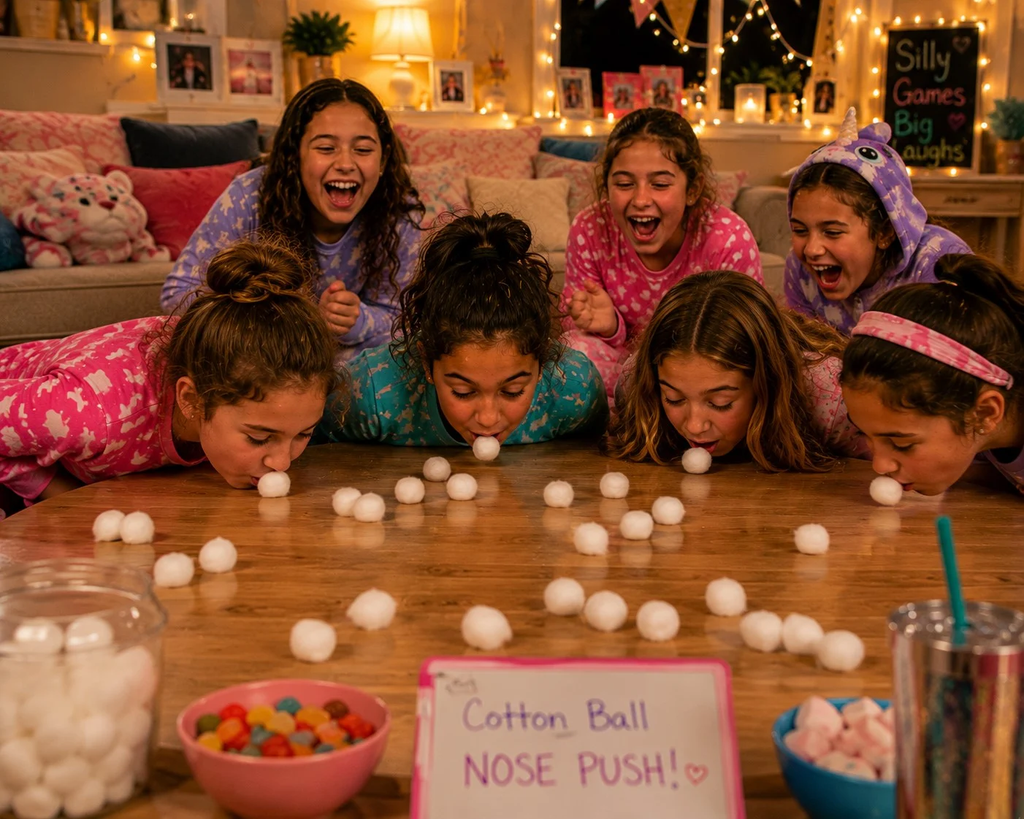
I place cotton balls on one side of a table and give each child a starting pile. Using only their nose, they have to move the cotton balls toward the finish line before time runs out.
The light weight of cotton makes this much harder than I expect. A small breath or change in direction can send one rolling somewhere completely different.
I use a smooth, clean table and leave enough space between players so their cotton balls do not get mixed together.
Pro Tip: I use larger cotton balls for younger children because they are easier to see and control.
3. Balloon Waddle Race
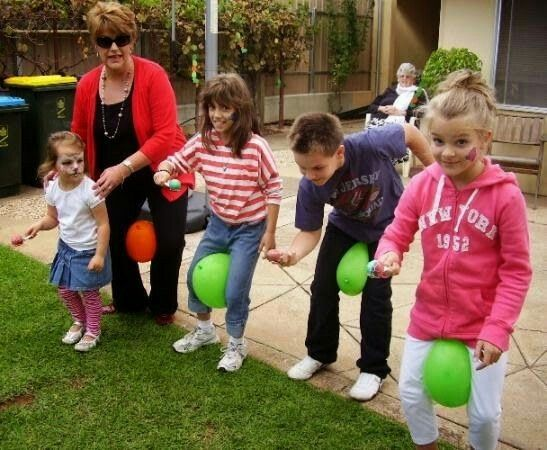
I place a balloon between each child’s knees and mark a start and finish line. Players have to waddle across the space while keeping the balloon in place.
I find that walking too quickly usually makes the balloon fall, while a controlled pace works much better. That makes the game funny and surprisingly strategic at the same time.
I run several short rounds rather than making one long race. This gives everyone another chance if their balloon slips out early.
Pro Tip: I play this on a clear, non-slippery surface and remove furniture from the race path before starting.
4. Cereal Box Tower
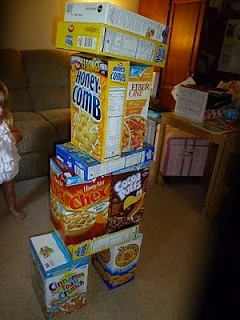
For this challenge, I save empty cereal boxes and give each player a small stack. The goal is to build the tallest tower possible while using only one hand.
The boxes are light, so they can shift easily. I find that children soon realize they need to create a wider base instead of simply piling boxes on top of each other.
This is a fun option when I want something competitive without requiring children to run around the room.
Pro Tip: I use empty, clean boxes of similar sizes when I want the challenge to be more evenly matched.
5. Junk in the Trunk
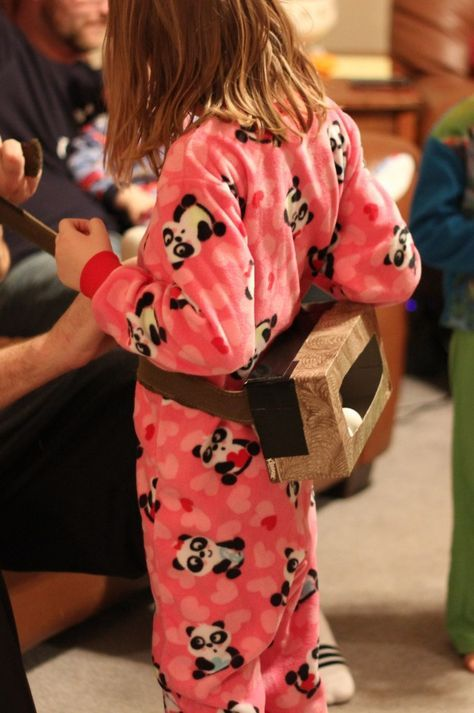
I put several lightweight balls into an empty tissue box and secure the box around the player’s waist with a belt or sturdy strap. The goal is to shake, move, and wiggle until the balls fall out.
This game usually changes the mood of the room instantly. I see children trying different movements to work out which shaking pattern gets the balls out fastest.
I make sure the tissue box is securely attached but not tight around the child’s body.
Pro Tip: I use lightweight ping-pong balls rather than heavier objects. They are easier to move and safer for this type of activity.
6. Keep It Up
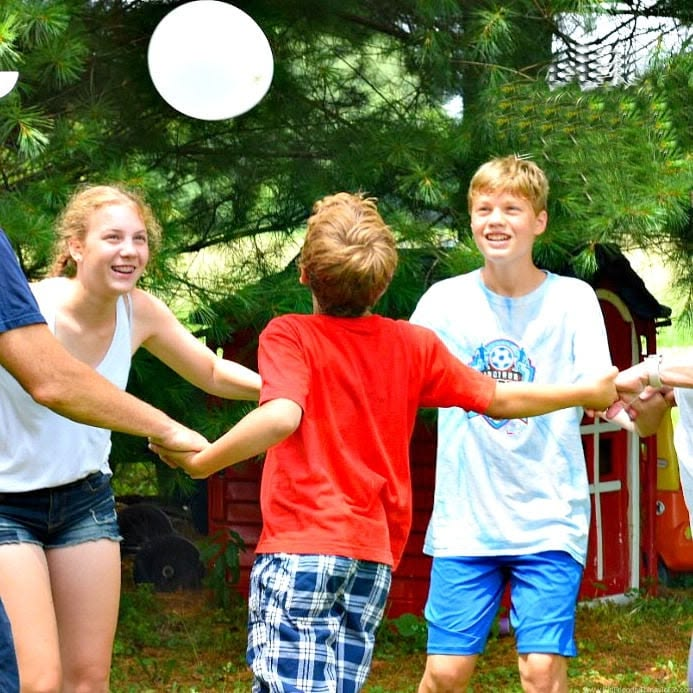
I give each child a balloon and start the one-minute timer. Their job is to keep the balloon off the floor using their hands, arms, head, feet, or any other safe part of the body.
I like watching how quickly a relaxed game turns into a frantic rescue mission when the balloon starts dropping. Children have to react quickly and keep moving.
For older children, I sometimes introduce a second balloon. That small change makes the challenge considerably harder.
Pro Tip: I always keep extra balloons nearby because a few are almost certain to pop during an energetic round.
7. Noodle Pick Up
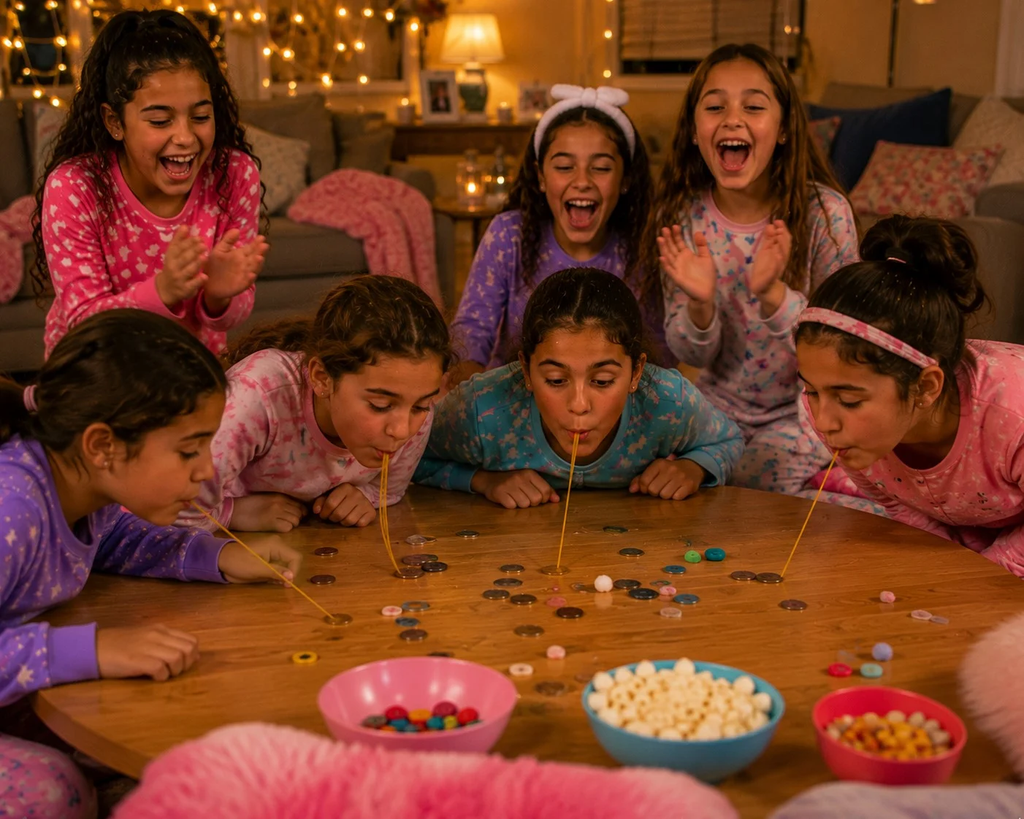
I scatter larger lightweight objects across a table and give each player a dry piece of spaghetti. They hold the spaghetti in their mouth and try to pick up as many objects as possible without using their hands.
The flexible spaghetti makes this a real coordination challenge. I find that children quickly discover they need gentle movements rather than trying to rush.
For hygiene, I give every child their own piece of spaghetti and avoid sharing food-contact materials.
Pro Tip: I use larger objects that are easy to clean and supervise closely with younger children.
8. Oreo Face Challenge

I place a cookie on the player’s forehead and ask them to move it toward their mouth using facial movements only. Hands stay away from the face throughout the challenge.
I love this game for older children because there is no complicated setup, yet everyone’s facial expressions become part of the entertainment.
I make sure children are seated or standing in a stable position and use appropriately sized food pieces.
Pro Tip: I have a napkin ready for every player. Cookies rarely travel in a perfectly straight line.
9. Tissue Box Empty
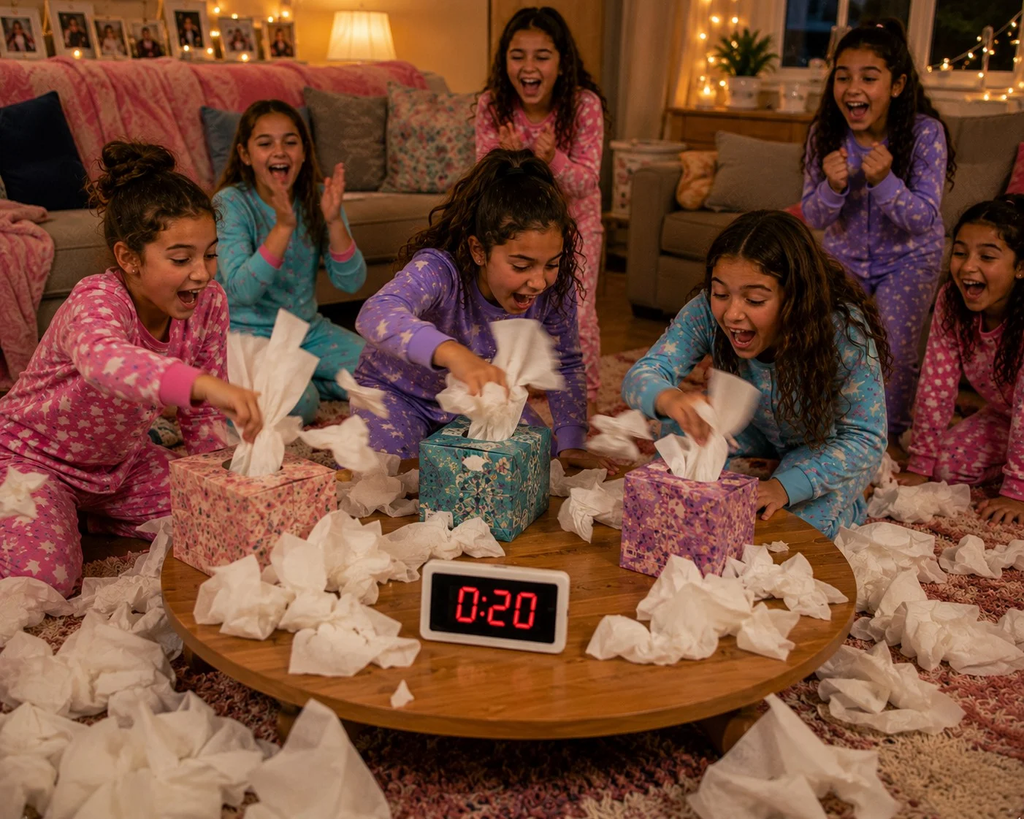
I give each player a tissue box and challenge them to remove the tissues as quickly as possible using one hand. The person who empties their box first, or removes the most tissues within a minute, can win.
The increasing pile of tissues creates a funny visual as the timer gets closer to zero. I also like that the activity does not require much explanation.
If I want to avoid wasting tissues, I fill the box with reusable fabric squares or pieces of scrap paper instead.
Pro Tip: I use the same number of tissues in each box so everyone starts with an equal challenge.
10. Rubber Duck Fishing
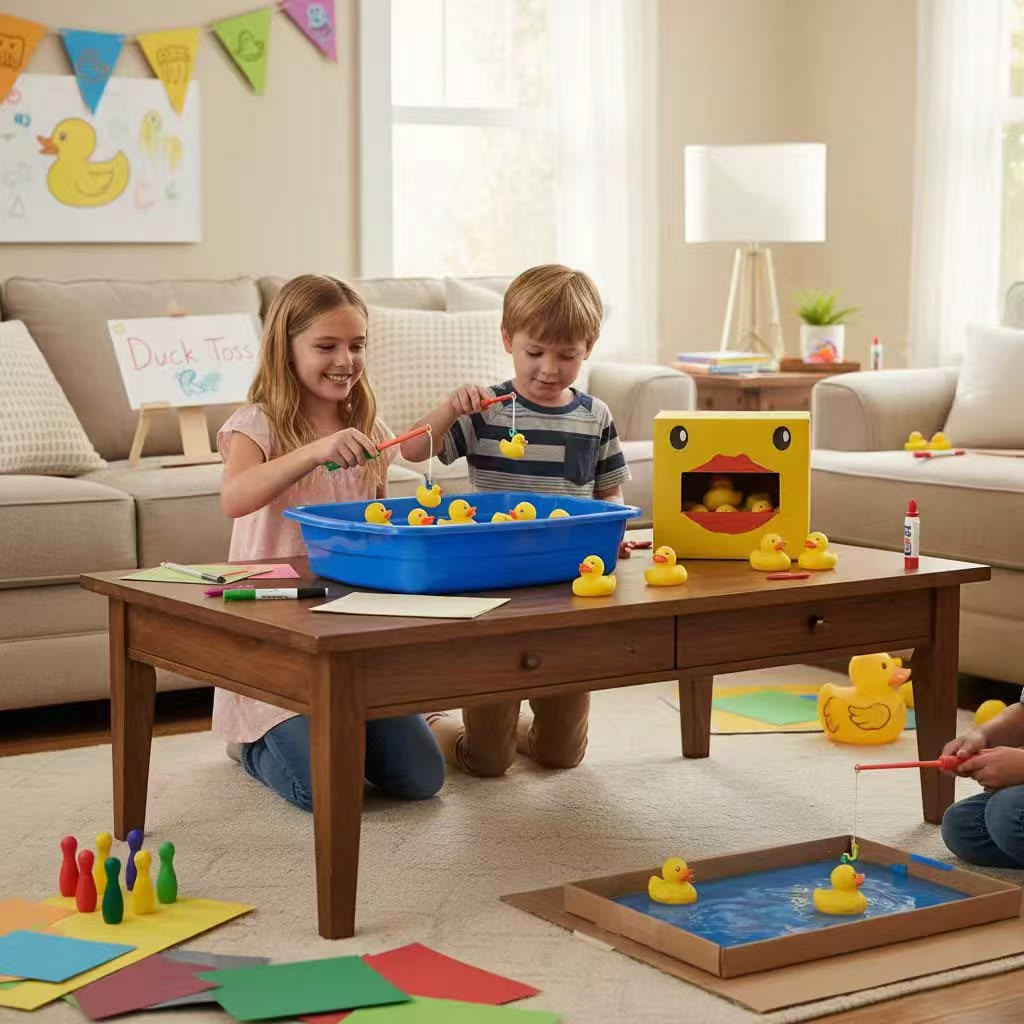
I fill a shallow container with water and add floating rubber ducks. Each child gets a spoon and another container where they have to move the ducks.
The ducks are difficult to control because they float and change direction whenever the spoon touches them. I usually put a towel or waterproof mat underneath the activity.
This works especially well outdoors during warm weather, although I can also use very little water indoors to reduce mess.
Pro Tip: I use shallow containers rather than deep buckets so children do not have to lean far into the water.
11. Stack Attack
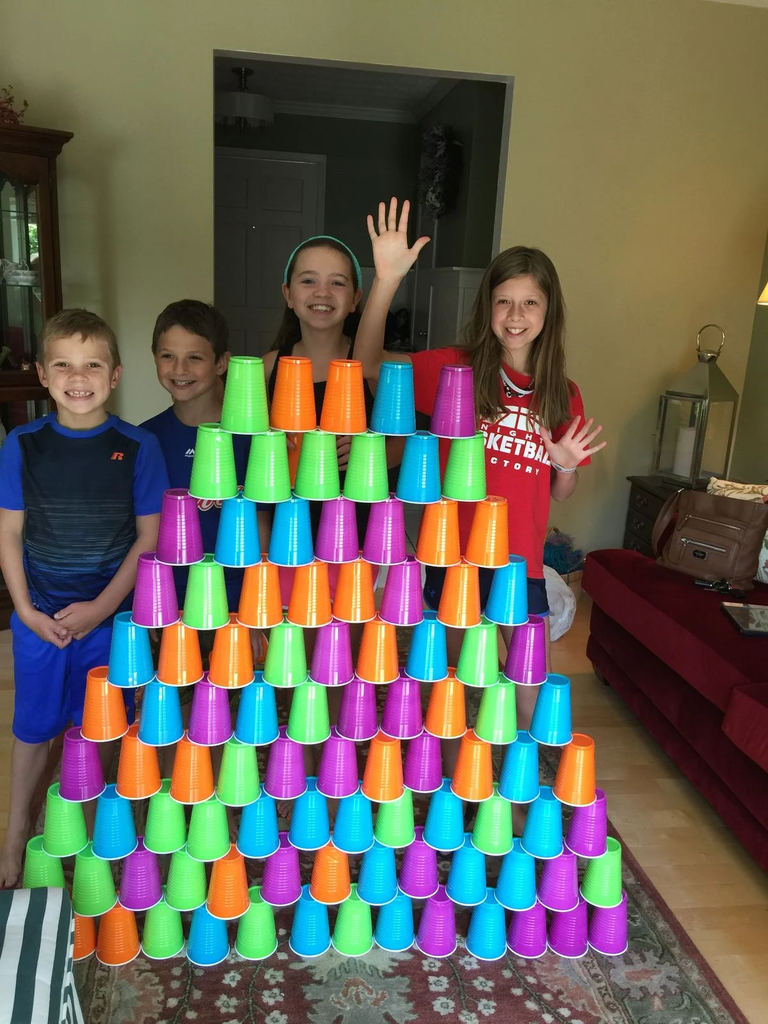
I give each player a group of plastic cups. They build a cup pyramid and then return all the cups to one stack before the minute ends.
The first attempt is often messy, but I notice that children become faster once they understand the movement pattern. It is an easy game to repeat because resetting takes almost no time.
I can make the challenge easier by using fewer cups or harder by increasing the number.
Pro Tip: I use lightweight plastic cups rather than glass or ceramic for obvious safety reasons.
12. Penny Tower
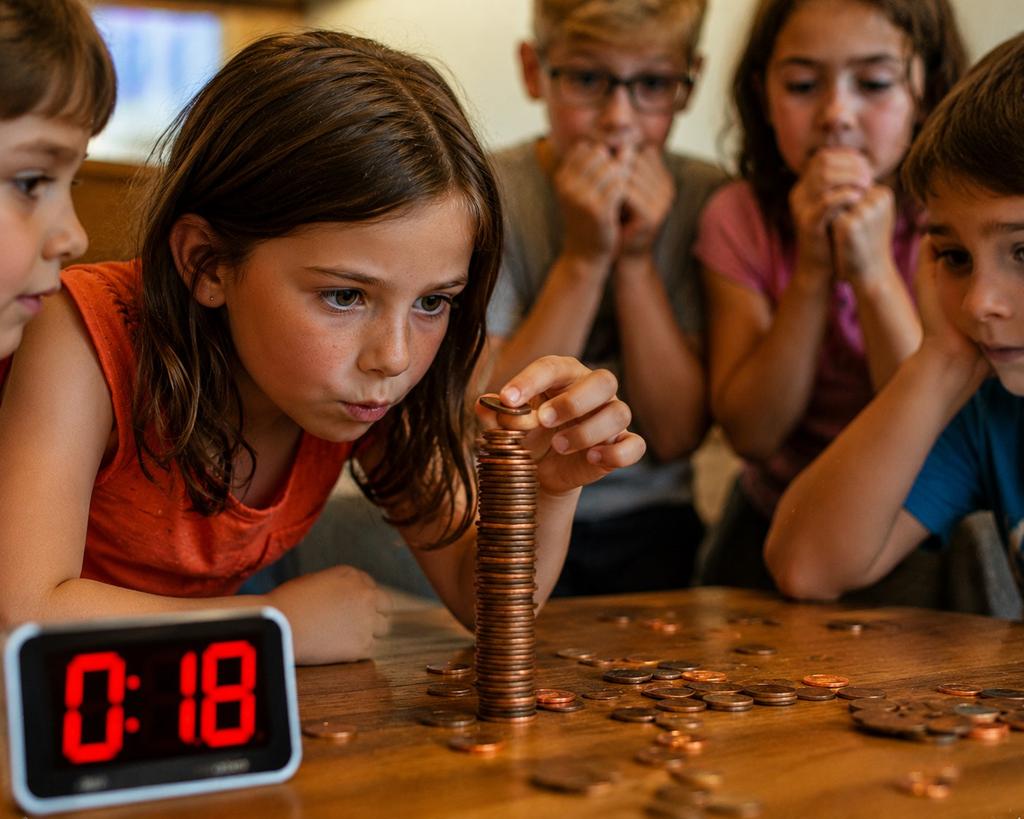
I place a pile of coins in front of each player and ask them to build the tallest stack they can using one hand during the timed round.
This is one of my quieter options. Children have to control their movements and avoid bumping the table because even a small shake can bring down the stack.
For younger children, I replace small coins with larger stacking pieces to make the activity easier to handle.
Pro Tip: I count the coins only after the timer stops so children can focus on building rather than counting while they work.
13. Elephant March
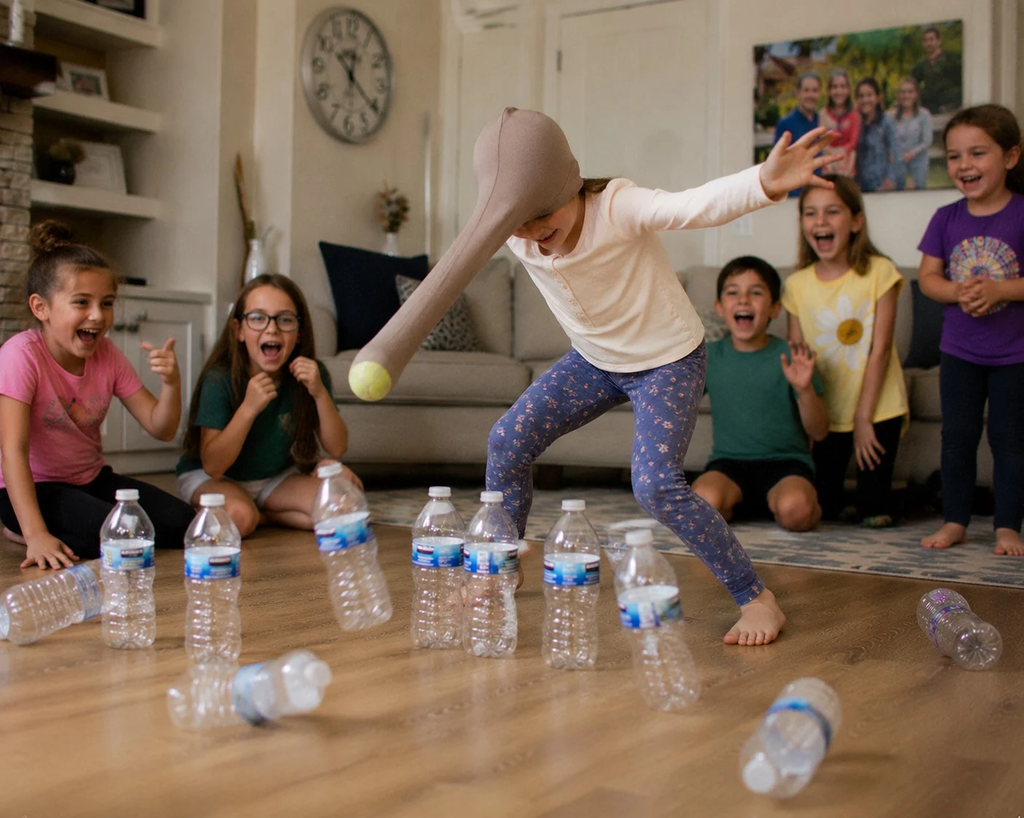
I put a soft ball inside the toe of a clean stocking and secure the stocking carefully around the player’s head. The child then swings the stocking like a trunk to knock over empty plastic bottles.
I keep the bottles lightweight and give every player plenty of open space. The challenge becomes much more entertaining when children realize that their entire body affects the swing.
This is one of my favorite choices when I want a silly movement game that does not require complicated equipment.
Pro Tip: I use empty plastic bottles instead of anything hard or breakable.
14. Face the Cookie
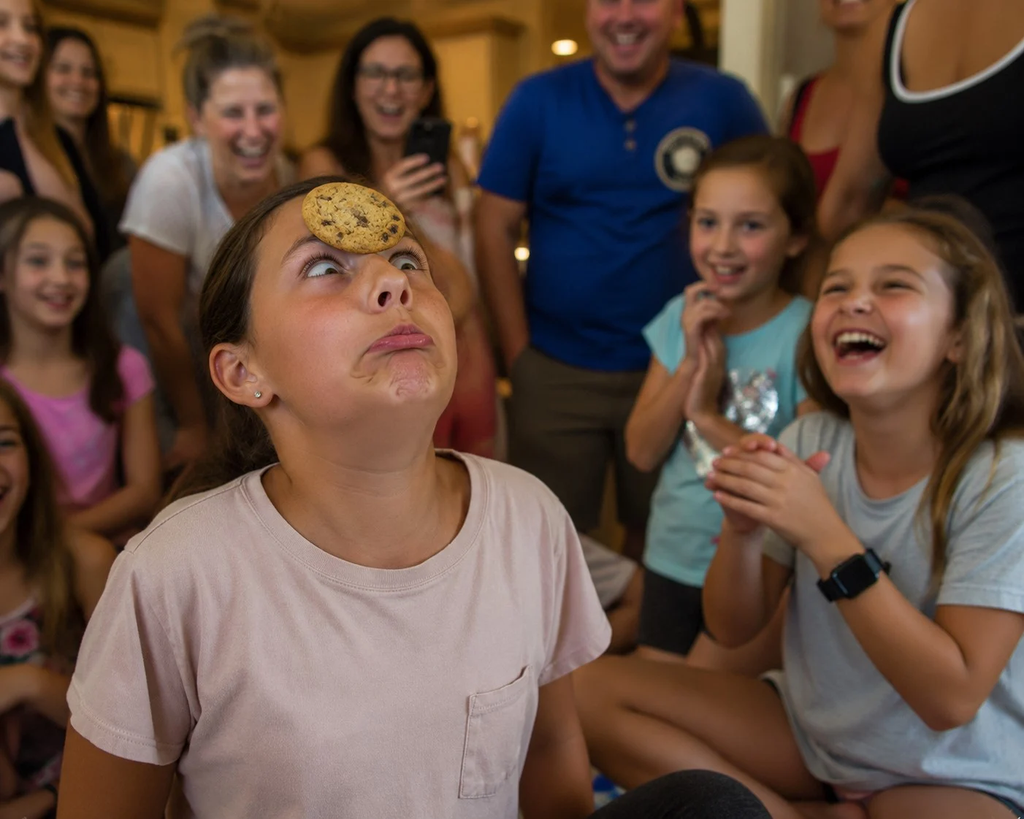
I place a cookie on the child’s forehead and challenge them to move it down toward their mouth using only facial movements.
I find this game works particularly well as a quick filler between larger party activities. Each attempt is short, so children can have another turn without making the party schedule complicated.
I choose cookies that are not overly crumbly and keep water or napkins available afterward.
Pro Tip: I use smaller, lightweight cookies when younger children are playing because they are easier to control.
15. Balloon Blow
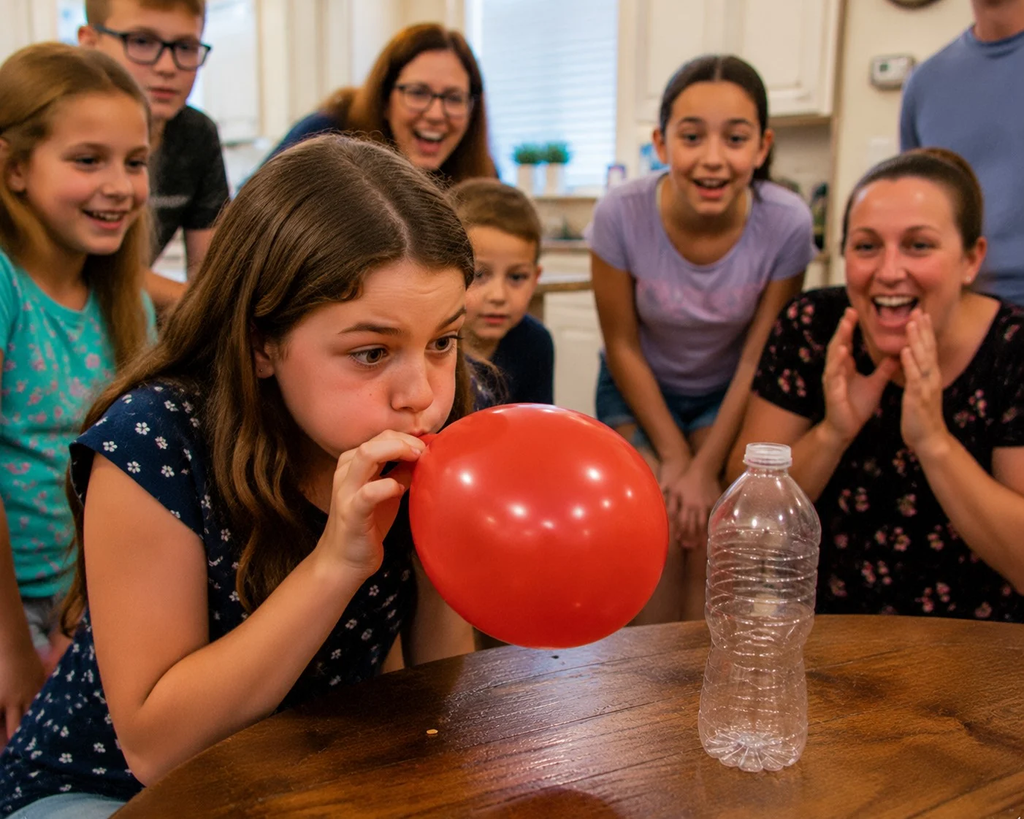
I place an empty plastic bottle on a table and give the player a balloon. After inflating it, the child releases the balloon so that the escaping air pushes the bottle over.
The trick is controlling where the air goes. At first, many children simply let the balloon fly in a random direction, but they soon start experimenting with how they hold it.
I use lightweight plastic bottles and keep the playing surface clear.
Pro Tip: I place a small piece of tape on the table to mark the bottle’s starting position so each round begins consistently.
16. Marshmallow Tower
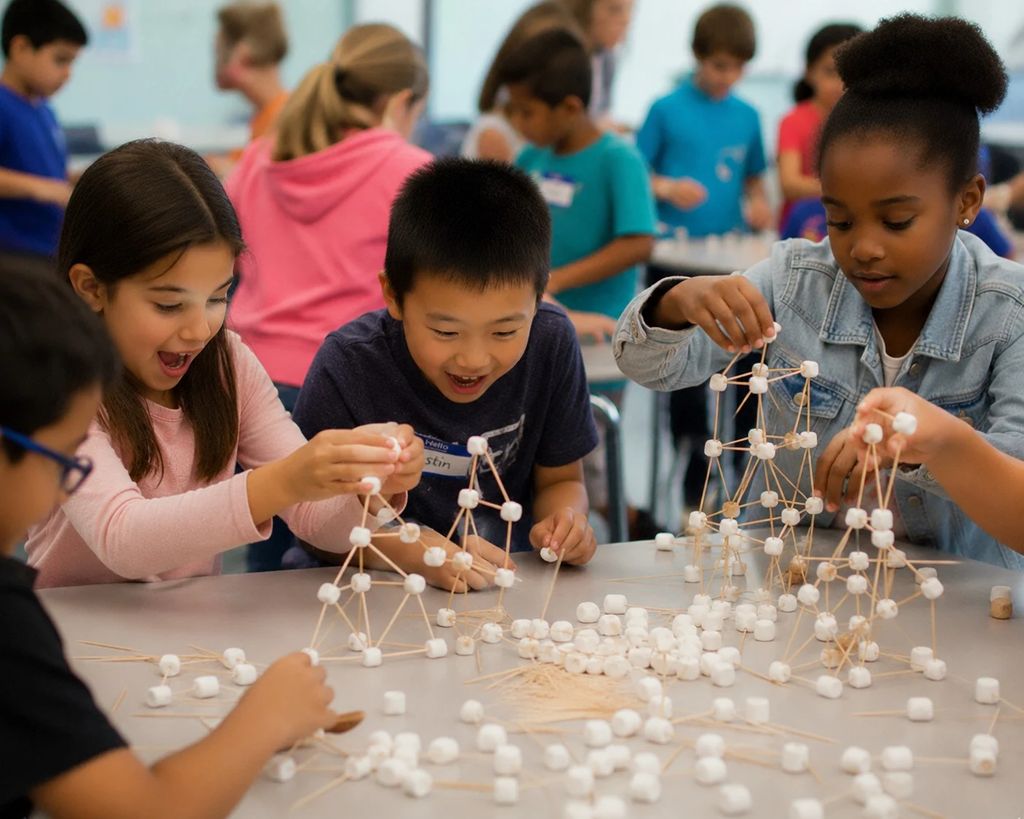
I give each player marshmallows and toothpicks and ask them to build the tallest freestanding structure they can before the timer ends.
I like this because it combines creativity with a basic engineering challenge. Children quickly learn that a stable base and connected shapes matter more than simply adding height.
For younger kids, I provide fewer toothpicks and demonstrate how to connect two marshmallows safely.
Pro Tip: I supervise toothpick use closely and replace them with uncooked spaghetti for a softer alternative when appropriate.
17. Hula Hoop Pass
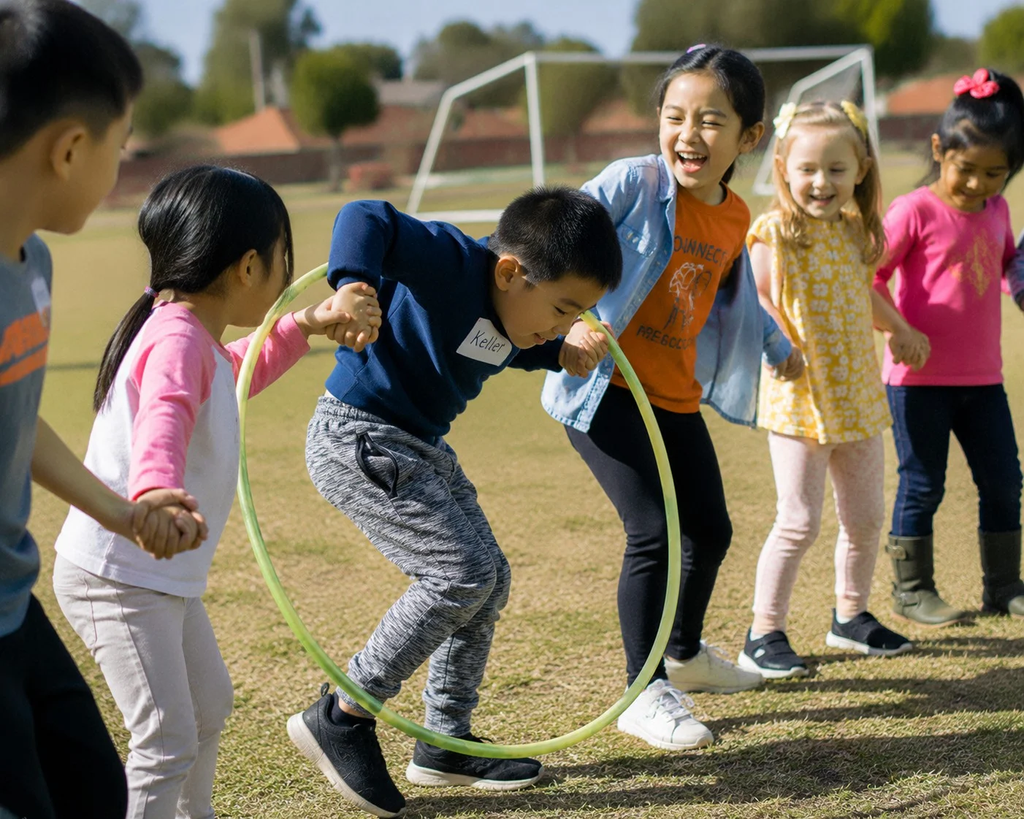
I have the children form a circle and hold hands. I place a hula hoop over the joined hands of two players, then challenge the group to move it all the way around the circle without breaking their handhold.
This is a teamwork game rather than a solo contest. Children need to communicate and coordinate their movements to get themselves through the hoop.
I time each attempt and let the group try again to beat its previous time.
Pro Tip: I use a lightweight hula hoop and make sure there is enough room around the circle for children to move safely.
18. Book Balance Relay
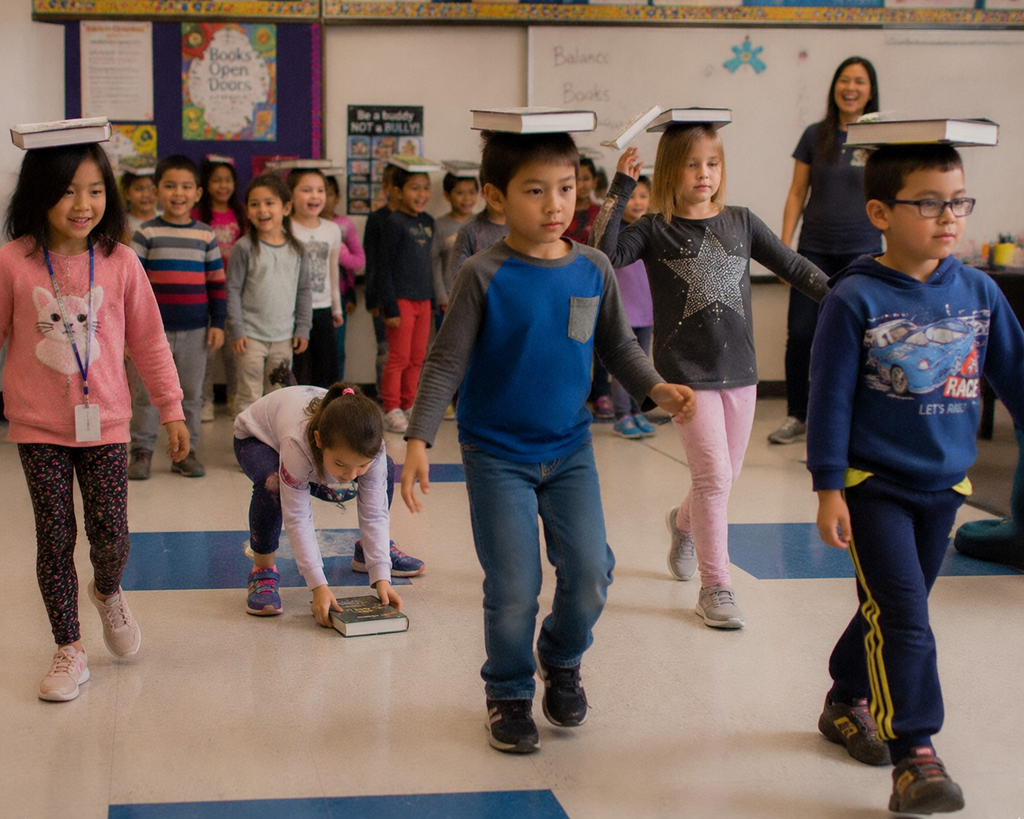
I give each child a lightweight book to balance on their head. They walk to a marked point and return while trying not to drop it.
I find that children often discover that walking slowly works much better than rushing. The game naturally encourages concentration, posture, and controlled movement.
Paperback books work well for younger children because they are lighter and easier to manage.
Pro Tip: I use a clear, level floor and remove anything that could cause a child to trip.
19. Ping Pong Bounce
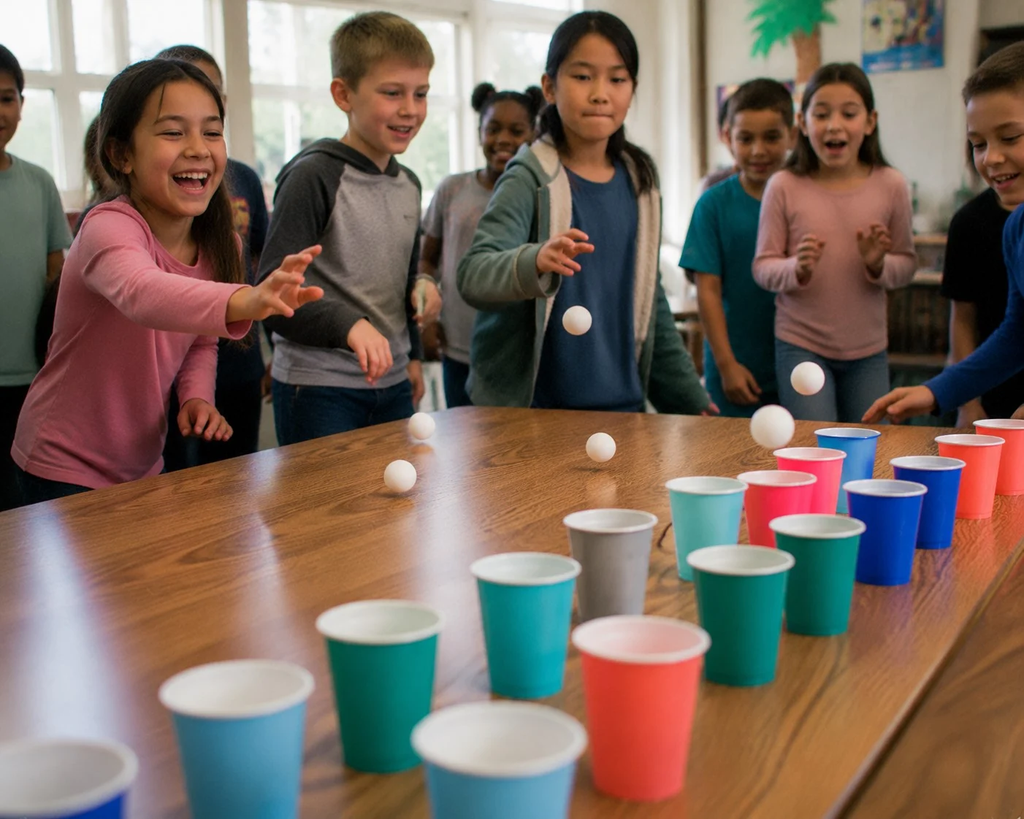
I line up cups on a table and give players ping-pong balls. The child has to bounce each ball off the table and try to land it inside one of the cups.
This game rewards patience and aim. The amount of force used can make a big difference, so children often start experimenting after a few missed shots.
I can award one point for every successful cup landing or simply count the total number of successful shots.
Pro Tip: I use cups with the same size opening so the scoring stays consistent.
20. Noodle Joust
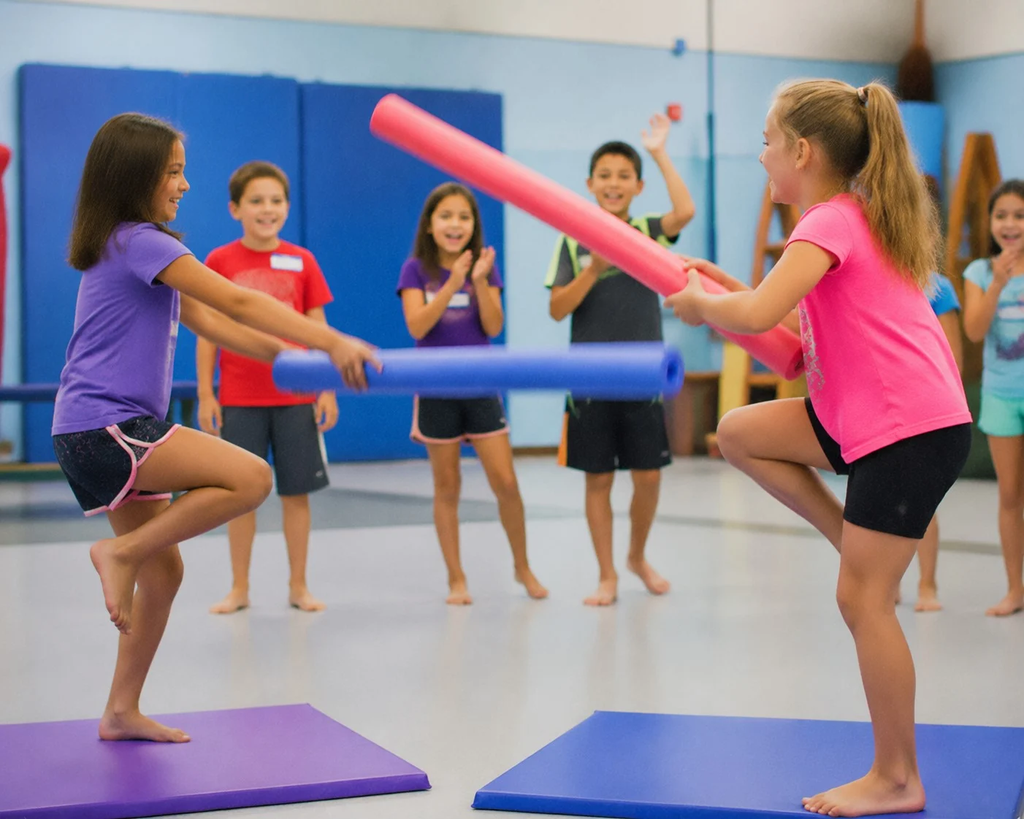
I give two players soft pool noodles and ask them to stand on one foot while gently trying to make the other player’s foot touch the ground.
Because the players are balancing at the same time, this requires more control than simply swinging a noodle. I establish the rules before beginning and keep the contact light.
I always leave plenty of space around the players and stop the game if the activity becomes too rough.
Pro Tip: I use this only with children who can follow the safety rules and keep the noodle movements controlled.
21. Cereal Spoon Race
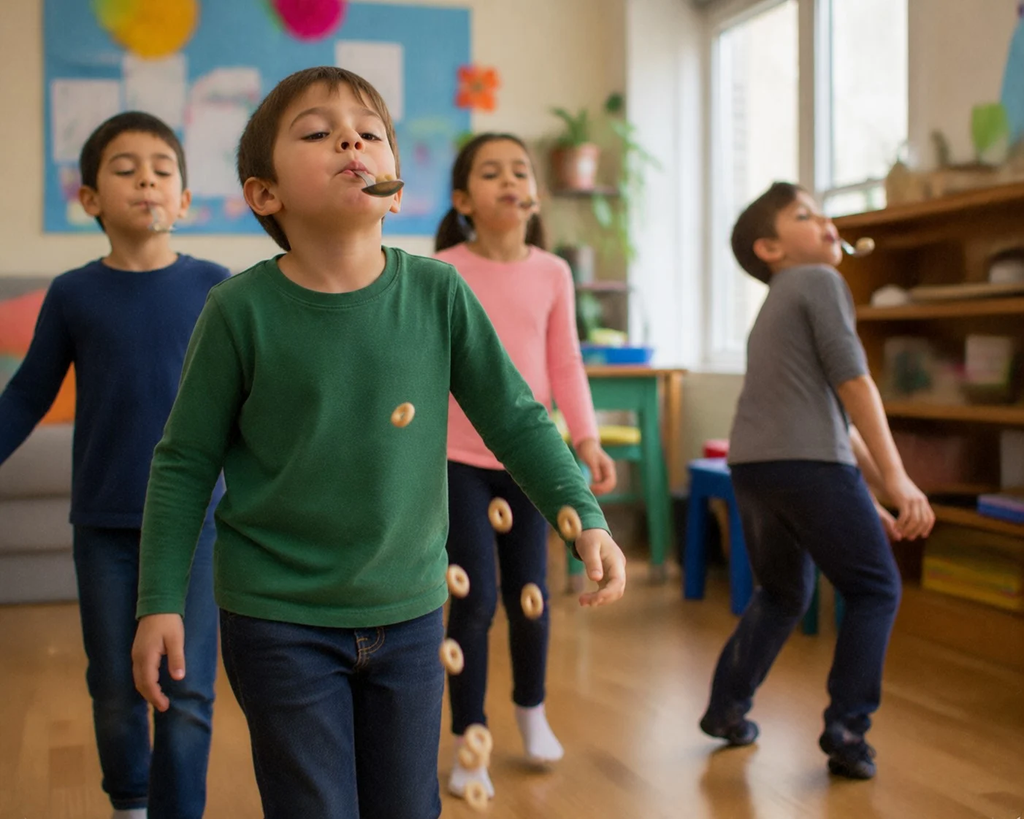
I place one piece of dry cereal on a spoon and have the child hold the spoon in their mouth. They then walk to a marked point and return without dropping the cereal.
The tiny piece of cereal can be surprisingly difficult to keep balanced while walking. Turning around is often the hardest part.
I use dry, appropriately sized cereal and avoid this activity with children who are too young to safely manage the food.
Pro Tip: I give every child a fresh spoon and separate food portion rather than reusing either.
Also read: 19 Ugly Christmas Sweater Party Games To Play
22. Tower of Hanoi With Cups
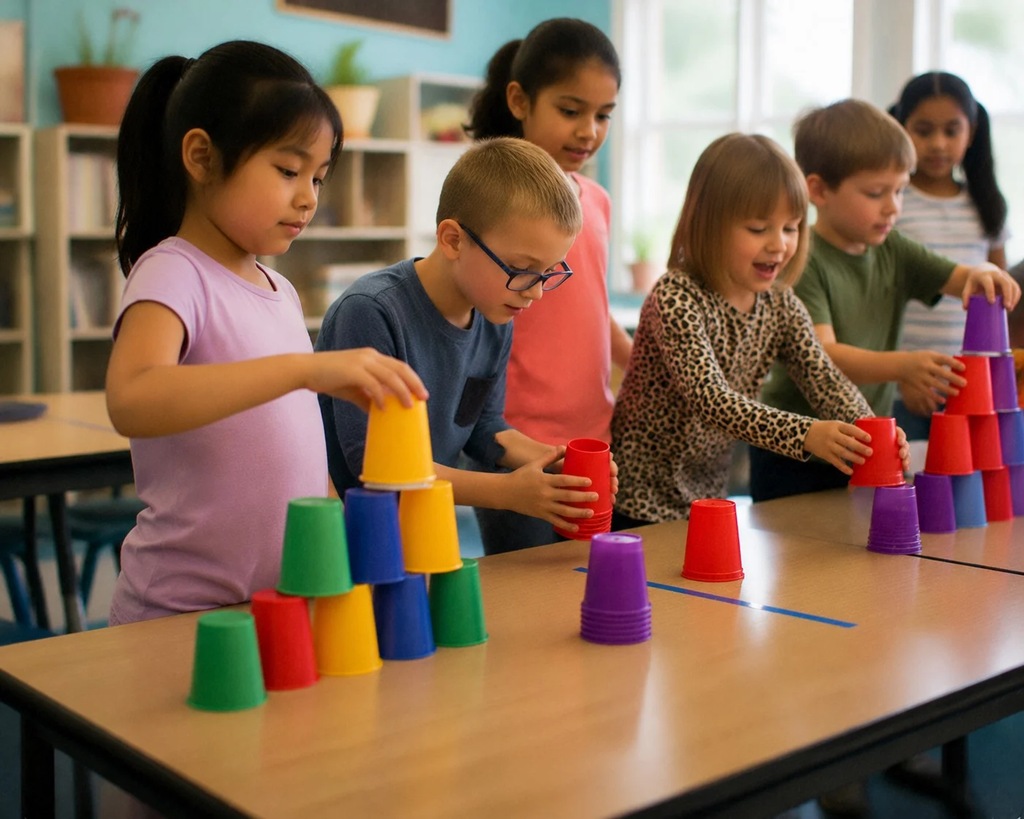
I arrange cups into a simple pyramid and challenge players to move the structure to another location while following a set movement rule.
For older children, I make the challenge more strategic by requiring them to move one cup at a time and follow a size-order rule. For younger children, I simplify the puzzle.
I like this variation because it adds problem-solving to the usual cup-stacking format.
Pro Tip: I demonstrate one complete move before starting so children understand the rules instead of losing time figuring them out.
23. Sticky Note Scramble
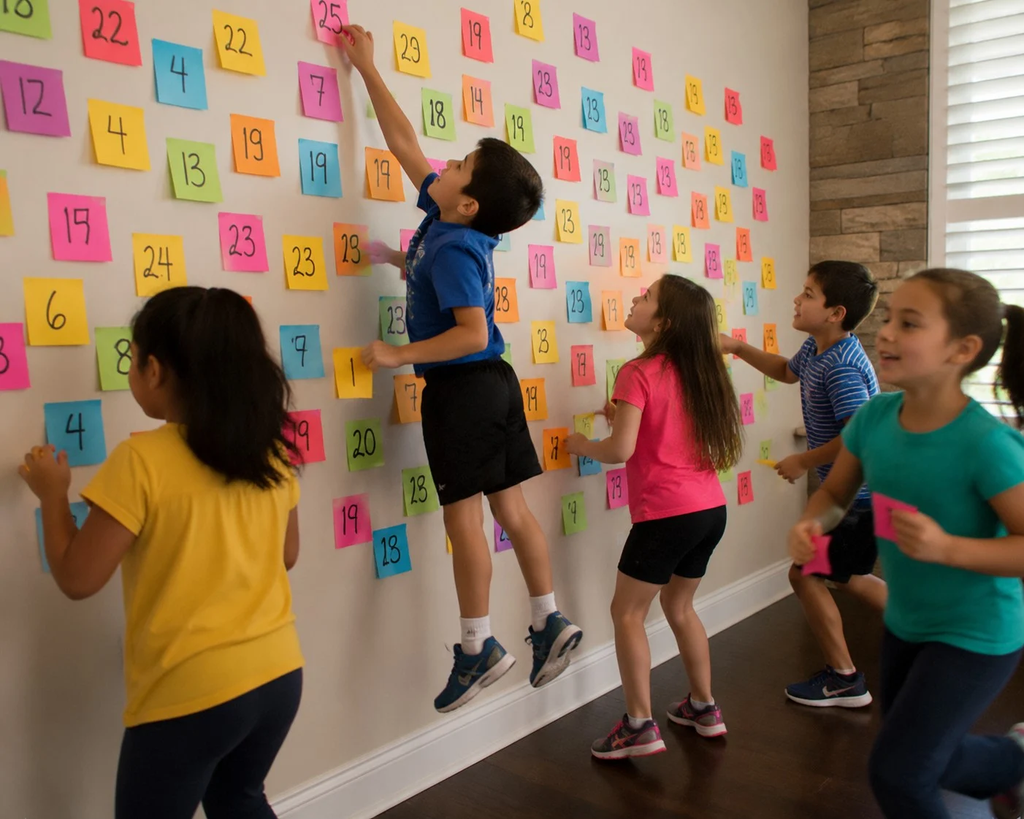
I place numbered sticky notes around a wall in mixed-up positions. The player must locate them and collect them in numerical order before the timer finishes.
This gets children moving while also requiring them to scan the wall and remember which number they need next.
I leave enough space between the notes so the numbers can be seen clearly and avoid placing them somewhere children would need to climb.
Pro Tip: I use large numbers written with a thick marker for younger children.
24. Toilet Roll Tower
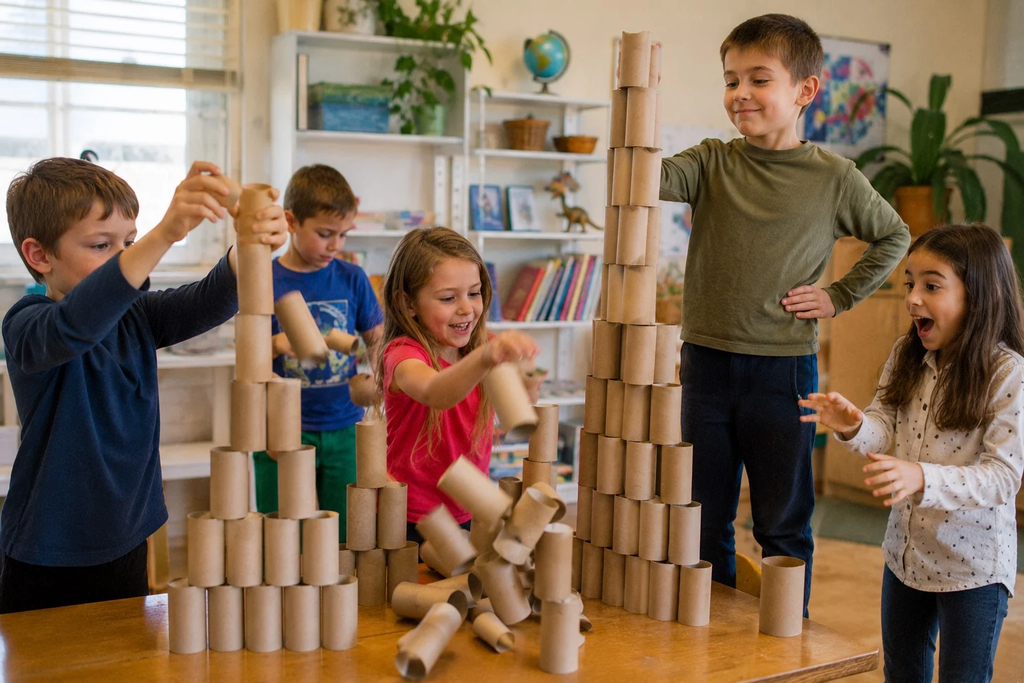
I give each player several empty toilet paper rolls and ask them to construct the tallest freestanding tower possible within one minute.
The rolls are light and cylindrical, which makes balance difficult. I often see children discover that alternating the direction of the rolls gives them a more stable structure.
This is a good no-cost activity because I can save the cardboard tubes instead of buying special supplies.
Pro Tip: I place the tubes on a flat surface and give each child the same number before starting.
25. Lemon Roll
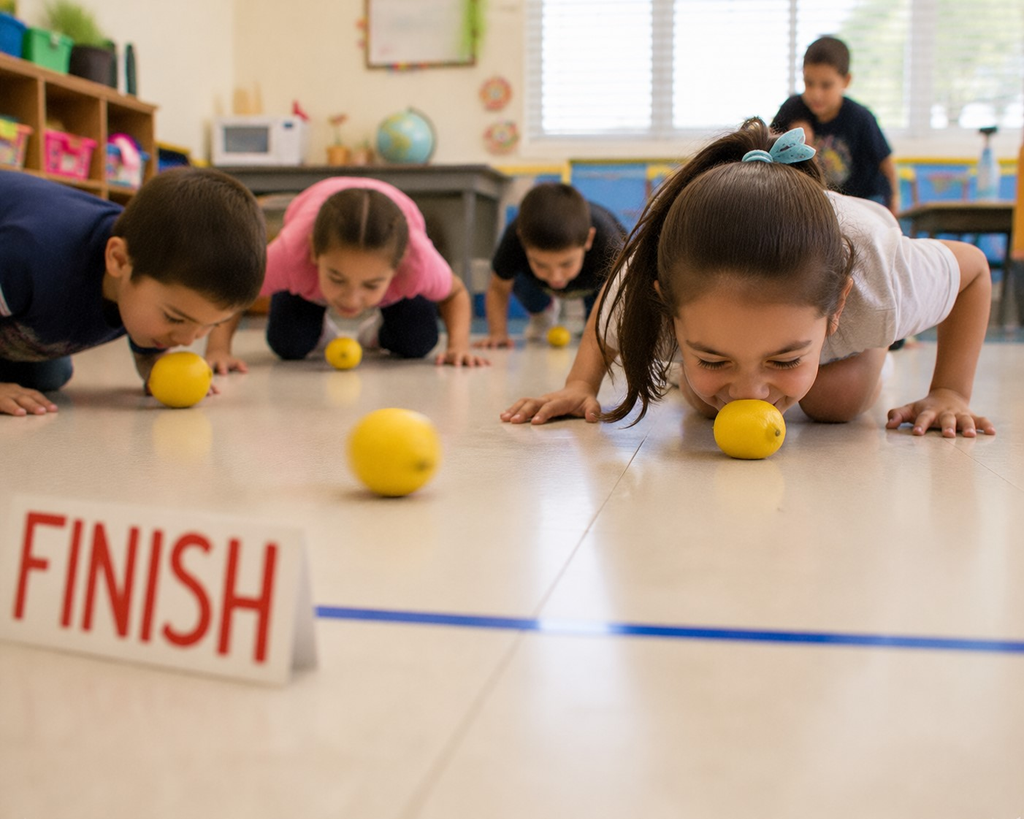
I place a lemon at a starting line and challenge the player to move it across the floor using only their nose.
This is definitely one of the sillier games on my list. The lemon does not always travel where the child expects, so players have to keep adjusting their position.
I use a clean, smooth floor and wash the lemon before and after the activity.
Pro Tip: I use a designated play area rather than a carpet that could be difficult to clean if the lemon gets dirty.
26. Balloon Stomp Sprint
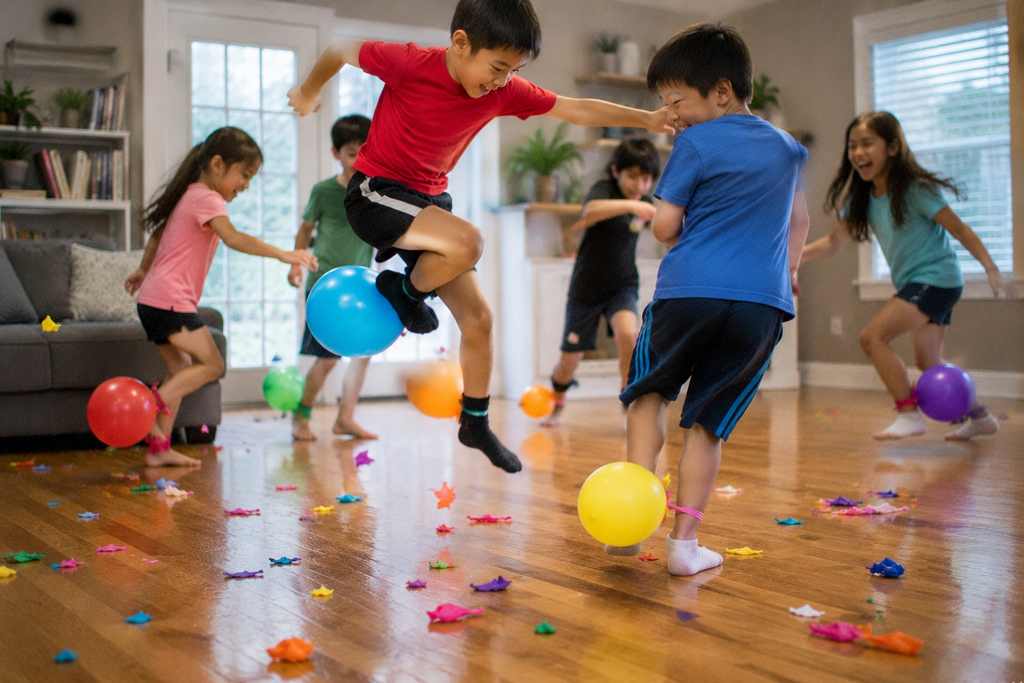
I tie one balloon loosely to each player’s ankle and give everyone one minute to try to pop other players’ balloons while protecting their own.
This can become very energetic very quickly, so I use a large open area and establish boundaries before starting.
I also keep extra balloons ready because popped balloons can bring a round to an early end.
Pro Tip: I avoid this game around children who may be startled by loud popping sounds and immediately remove broken balloon pieces.
27. Apple on a String
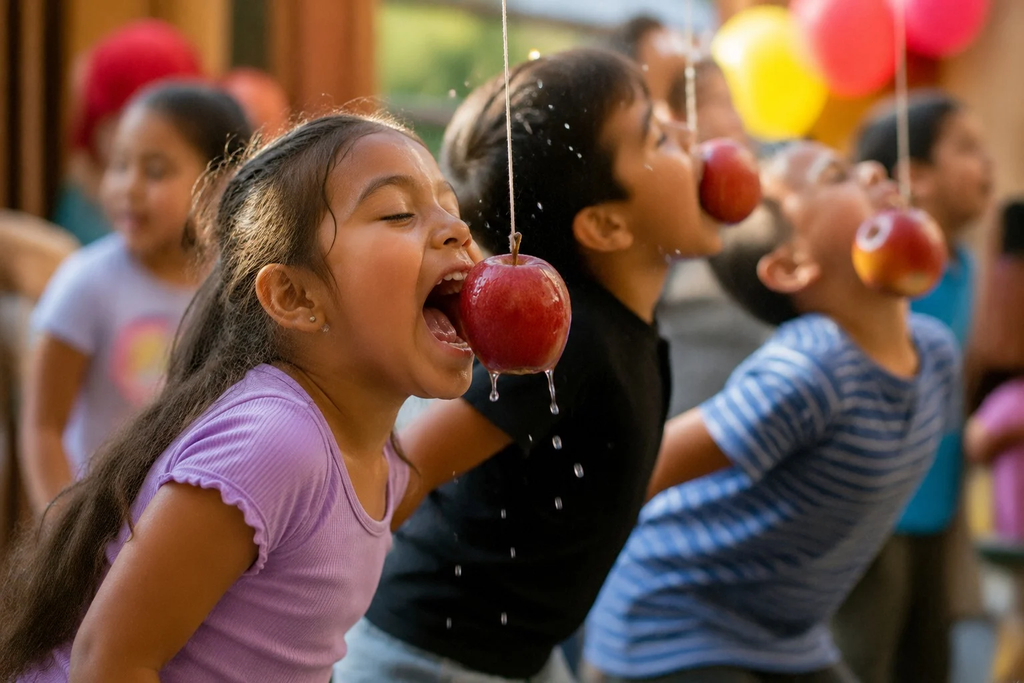
I suspend apples from sturdy strings at an appropriate height and ask players to take bites without holding the apple.
The apple moves away whenever the child gets close, making the challenge much harder than it first appears.
I use individually prepared apples, secure the strings carefully, and make sure the height is suitable for the children playing.
Pro Tip: I cut the activity short if the setup becomes unstable rather than trying to continue with a poorly secured hanging apple.
28. Flip and Stack
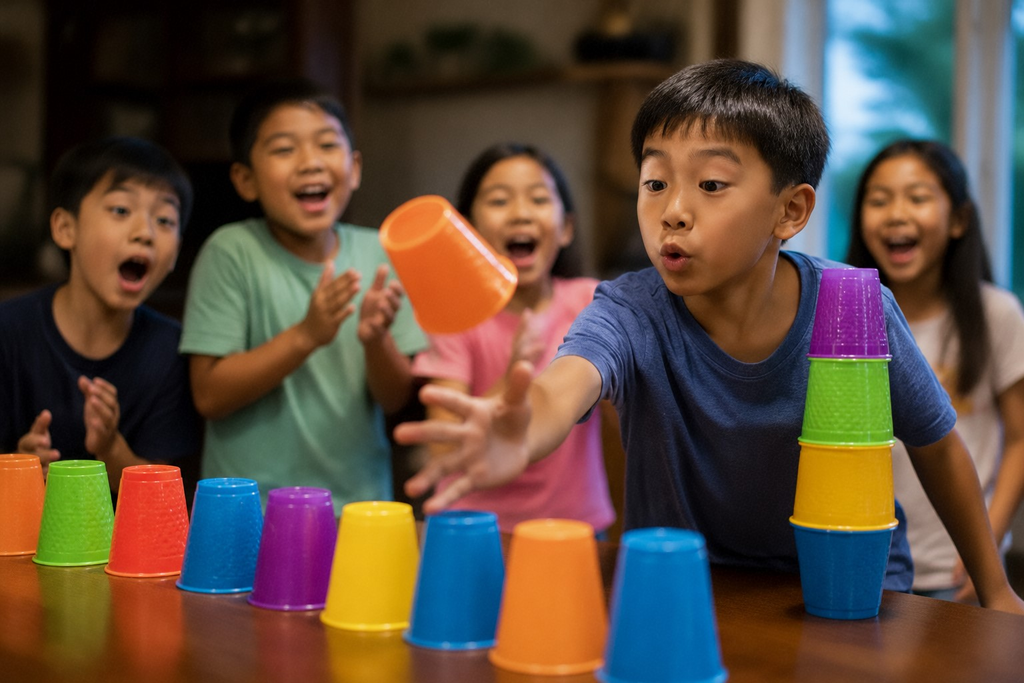
I give each child several plastic cups and show them how to flip a cup from the edge of a table and catch it before stacking it.
The movement takes practice. Children often spend the first few attempts learning how much force is needed to get the cup to rotate properly.
I like using plastic cups because they are lightweight and unlikely to cause damage if they fall.
Pro Tip: I let children practice the flip a few times before starting the official one-minute round.
29. Cotton Ball Sort
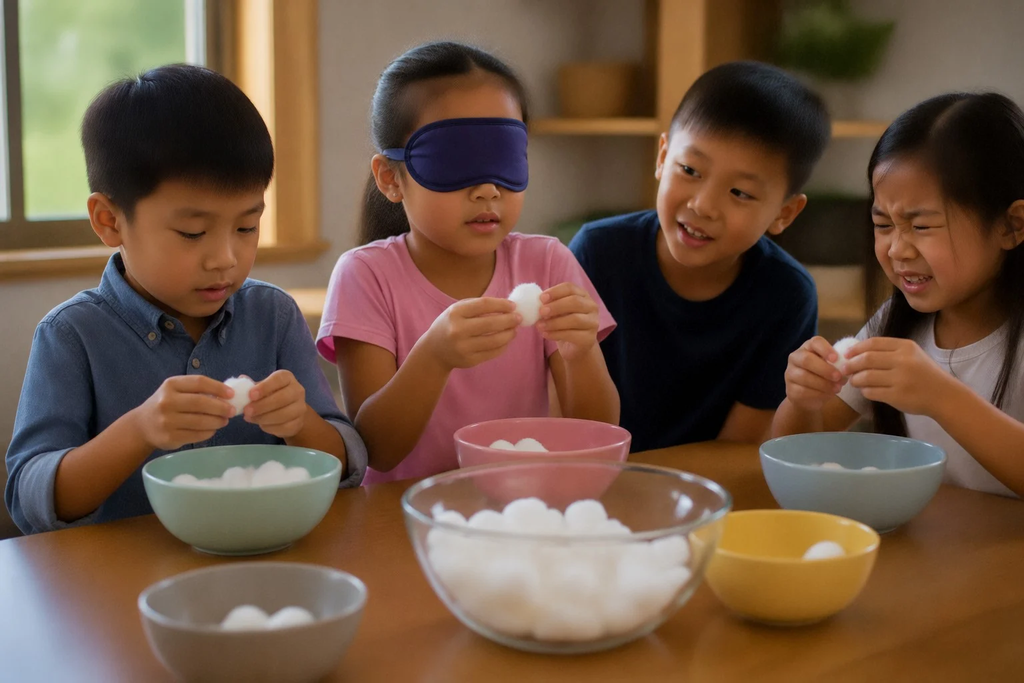
I provide a bowl containing cotton balls of different sizes and ask players to separate them by size while wearing a blindfold and relying on touch.
This gives me a quieter sensory game that still feels like a timed competition. Children have to pay attention to texture and size rather than relying on sight.
For younger children, I remove the blindfold and simply ask them to sort the cotton balls visually.
Pro Tip: I supervise this activity closely and never leave young children alone with a blindfold or small loose materials.
30. Ping Pong Balance Beam
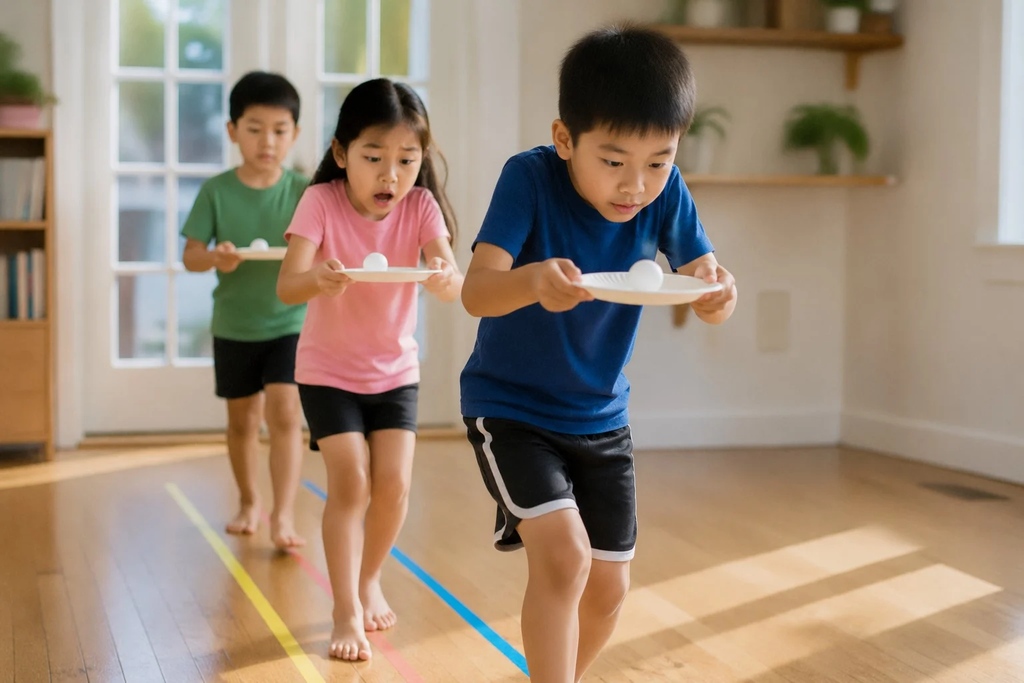
I make a straight line on the floor with painter’s tape and place a ping-pong ball on a paper plate. The player walks along the taped path while trying to keep the ball on the plate.
The challenge combines balance, walking control, and hand stability. I find that rushing usually makes the ball roll away.
I count how many successful trips each child completes during the minute.
Pro Tip: I use painter’s tape that can be removed easily and check the floor first to make sure it is not slippery.
31. Minute Selfie Challenge
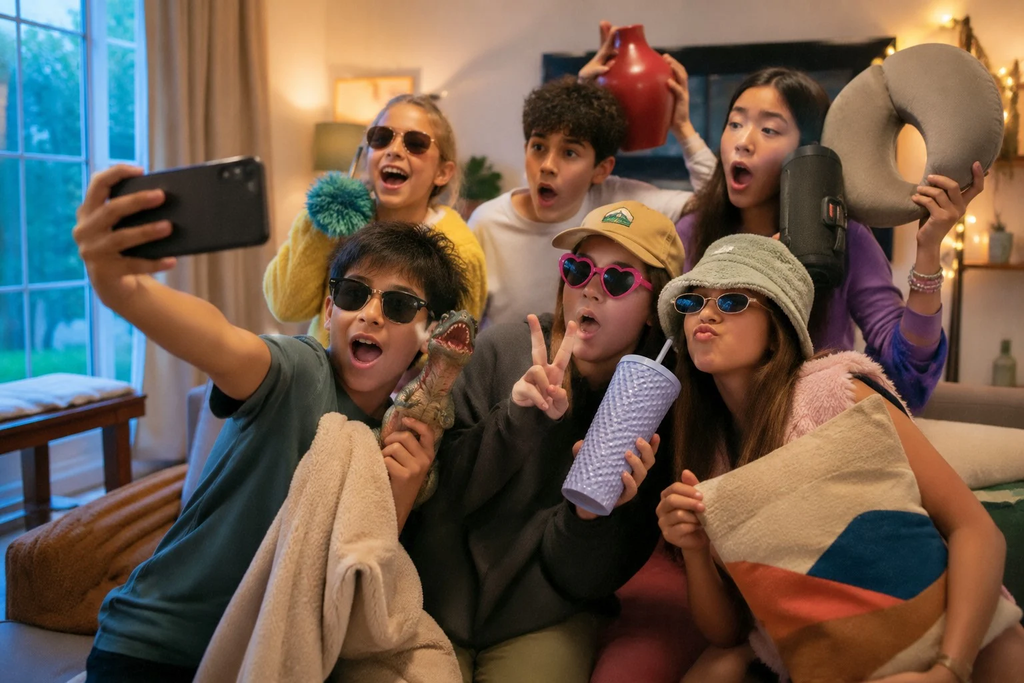
For older children, I give them one minute to create a funny or creative photo using safe props they can find in the room.
I like this as a party activity because it encourages imagination rather than athletic ability. Children can work alone or in small groups depending on the space and the type of event.
If I use phones or cameras, I make sure parents or guardians are comfortable with photos being taken and decide beforehand whether the pictures will be saved or shared.
Pro Tip: I provide a small box of approved props so children do not start grabbing fragile or private household items.
32. Speed Stacking With Cards
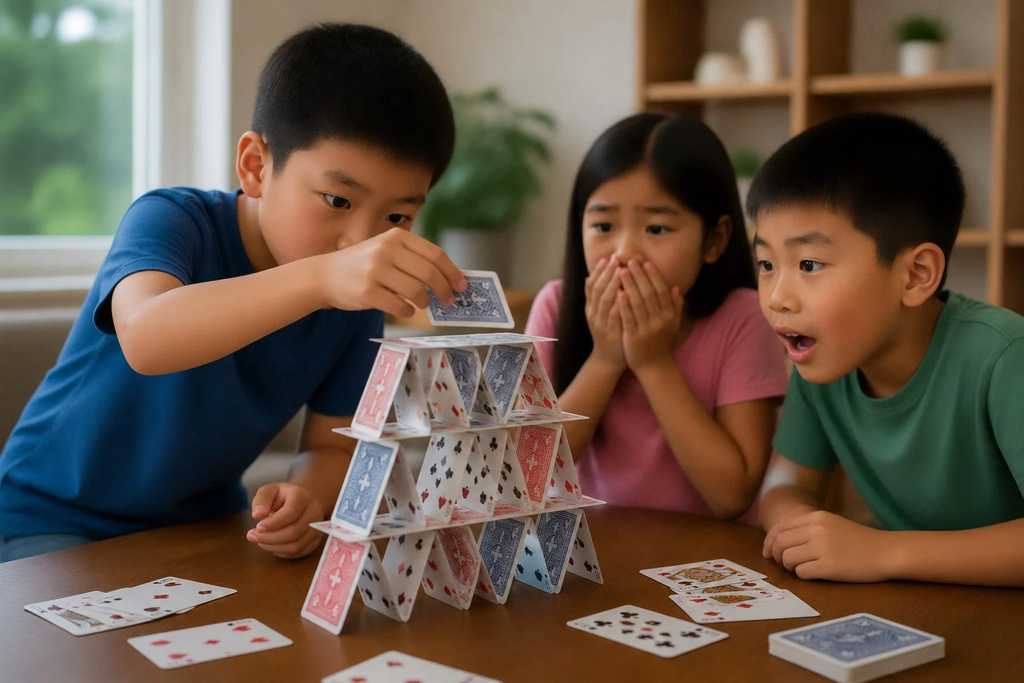
I give each player a deck of playing cards and ask them to create the tallest freestanding card structure they can within one minute.
Cards are surprisingly difficult to balance because they are light and can slide easily. I find that children improve once they understand how to create stable pairs and support points.
This works particularly well for older children who enjoy patience-based challenges.
Pro Tip: I use the same number of cards for every player and build on a completely flat surface.
33. Pencil Drop
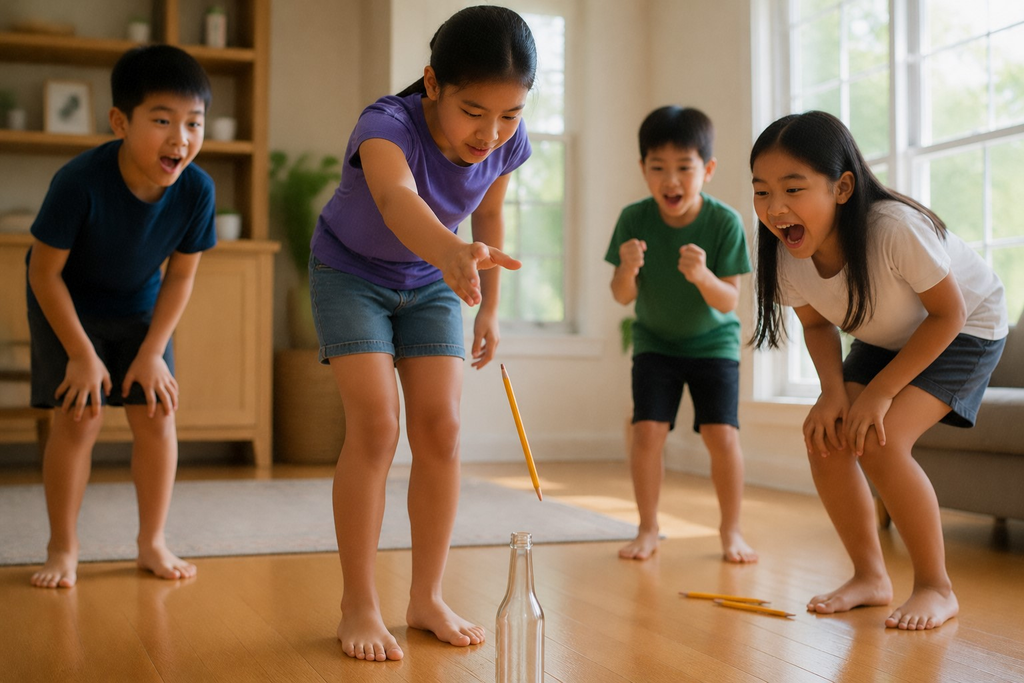
I place an empty bottle on the floor and have the player hold a pencil above it. They drop the pencil and try to get it into the bottle as many times as possible during the one-minute round.
The small opening makes this a simple but effective accuracy challenge. Children soon realize that dropping from the same position each time can improve their chances.
I use empty plastic bottles rather than glass containers.
Pro Tip: I mark a standing position on the floor so each player has approximately the same starting point.
Read this next: Simple Indoor Games Ideas For Kids
34. Shoe Kick
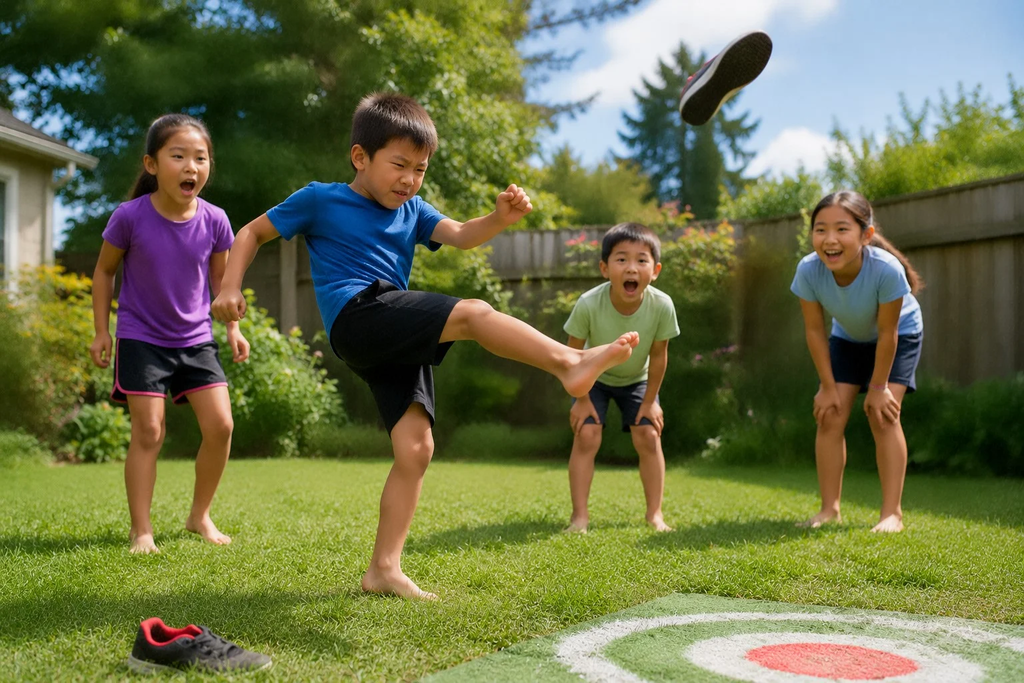
I have the player loosen one shoe slightly and kick it toward a designated target area. Points can be awarded based on whether the shoe lands inside the marked zone.
This game requires more control than I initially expect. The angle and amount of force both affect where the shoe lands.
I keep everyone else well away from the target area and make sure players use a shoe that can be removed safely.
Pro Tip: I use a large target area for younger children and increase the distance for older kids.
35. Balloon Sandwich Race
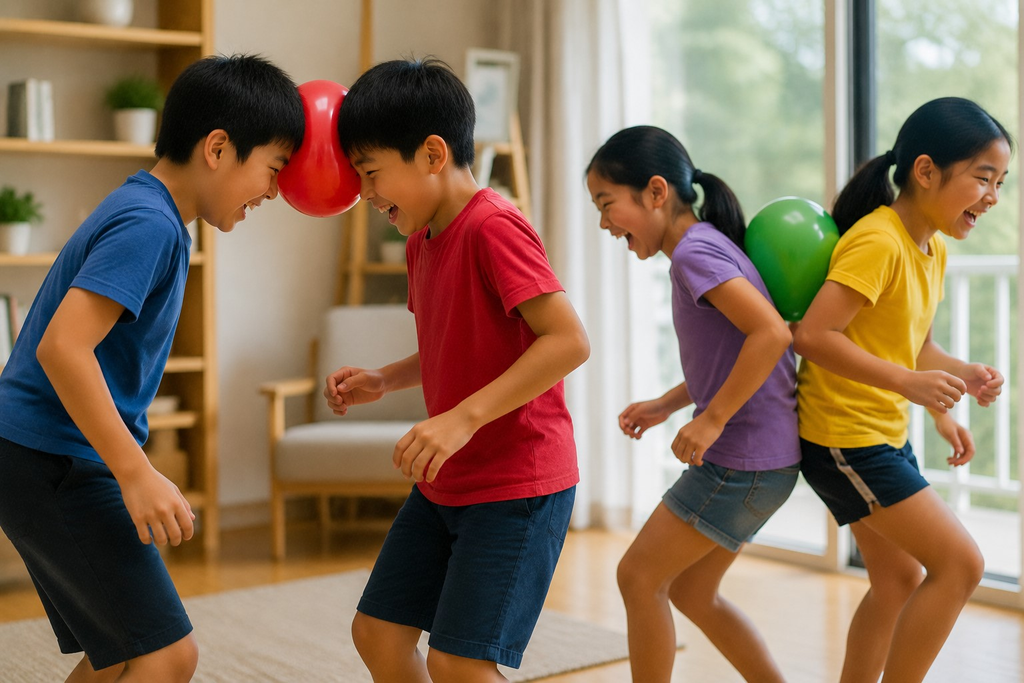
I pair children together and place a balloon between them. They have to keep the balloon in place without holding it while moving from the starting point to the finish line.
I let pairs decide whether they want to use their backs, shoulders, sides, or another safe position. The main challenge is getting both people to move at the same pace.
This makes a fun final activity because it changes the focus from individual competition to teamwork.
Pro Tip: I keep the course short and clear so the pairs can concentrate on coordinating their movements instead of navigating obstacles.
FAQ’s
What are Minute to Win It games for kids?
Minute to Win It games are short challenges that usually give kids about 60 seconds to complete a task. They often use simple household or party supplies.
What supplies do I need for these kids’ games?
Many of these games use inexpensive items such as balloons, plastic cups, cotton balls, ping-pong balls, paper plates, cards, and empty boxes.
What age are Minute to Win It games suitable for?
Most games can be adapted for different ages. I simplify the rules and use larger, safer materials for younger children, while older kids can handle more challenging versions.
How many Minute to Win It games should I play at a party?
I usually choose around 8–10 games for a party. This gives kids enough variety without making the activity session feel too long.
Final Thoughts
I keep minute-to-win-it games in my activity toolbox because they solve a very common problem: keeping kids busy without spending hours preparing entertainment.
The biggest advantage for me is flexibility. I can use a few of these games for a birthday party, choose quieter challenges for an afternoon at home, or build a longer competition for a classroom or family gathering.
I also do not worry about using all 35. I usually choose a mixture of active, creative, balance, accuracy, and teamwork games so children with different interests get something they enjoy.
With a timer, a small collection of household supplies, and a little preparation, I can turn an ordinary afternoon into a lively activity session. I just make sure the games match the children’s ages and that safety comes before the competition.


2 Comments