
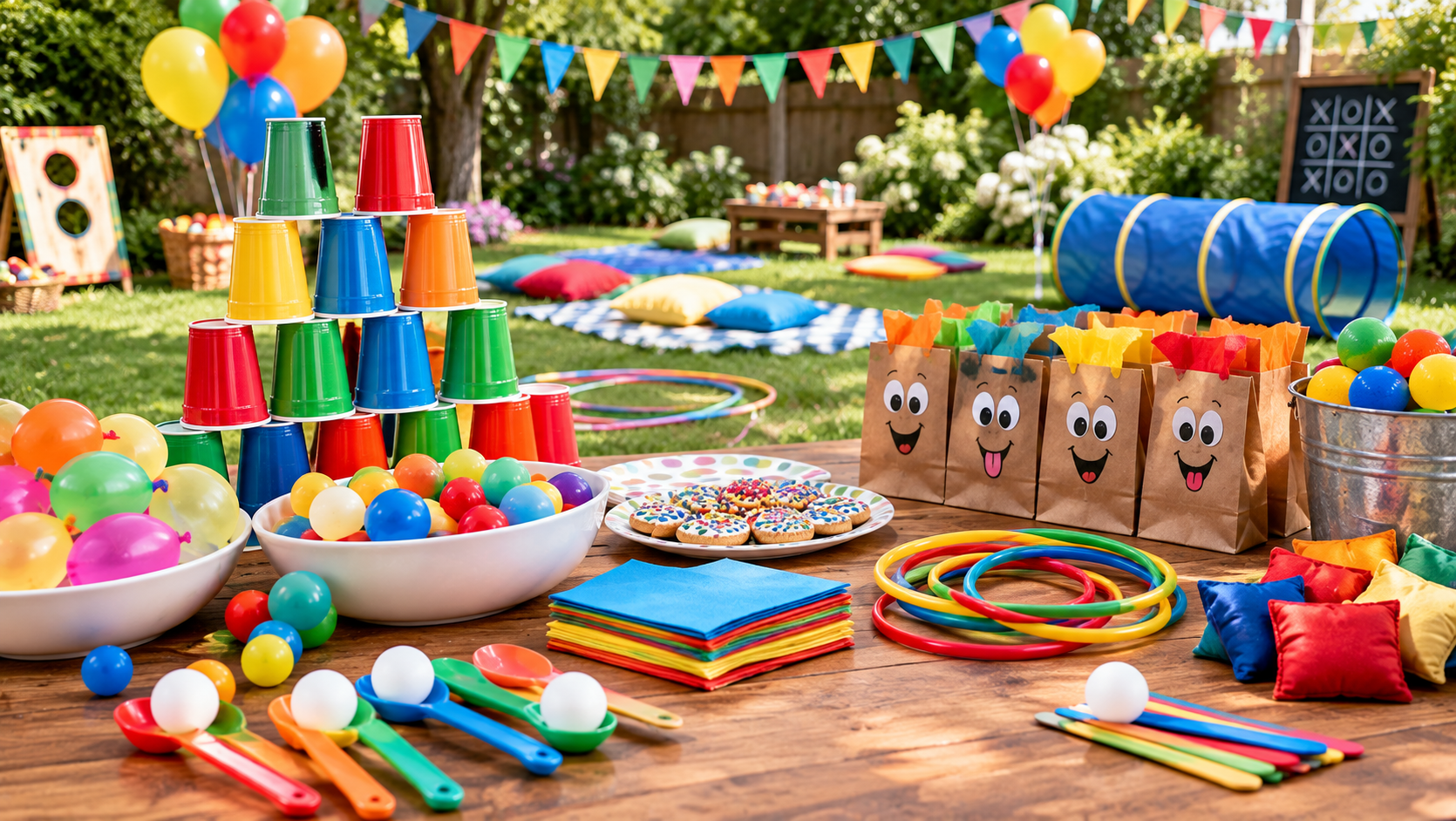
23 Party Games for Kids That Everyone Will Be Talking About
Planning a kids’ party can be exciting, but I know how quickly the pressure builds when I need to keep a whole group entertained. I have found that the right party games can make a bigger difference than expensive decorations, entertainers, or complicated activities.
When I plan games for children, I like to mix active games with quieter activities. That gives kids plenty of chances to run, laugh, compete, create, and then slow down when they need a break.
I also try to choose games that use things I already have at home. Music, balloons, paper, chairs, spoons, cushions, and a few simple craft supplies can turn into hours of party entertainment.
In this collection, I’m sharing 23 fun party games for kids that work for birthday parties, family celebrations, school parties, and indoor or outdoor gatherings. I’ve included active games, classic favorites, team challenges, creative activities, and quieter options.
Some games, such as Musical Statues, Freeze Tag, and Balloon Stomp, are great when kids need to burn off energy. Others, including Sleeping Lions and a craft station, give everyone a chance to settle down between energetic rounds.
Save this for later
Table of Contents
I have also included simple preparation tips and safety ideas so you can choose games based on the children’s ages, available space, and party theme. Most of these activities require inexpensive supplies or items you probably already own.
Key Takeaways
- I recommend mixing high-energy and calm games instead of playing active games for the entire party.
- Simple supplies can create plenty of entertaining party activities without a large budget.
- I always consider the children’s ages and abilities before choosing a game.
- Indoor games are useful when weather or limited outdoor space becomes a problem.
- Team games can encourage cooperation while still keeping the party playful.
- I like having a few backup games ready in case an activity finishes sooner than expected.
Related article: 35 Minute to Win It Games for Kids That Bring Instant Laughter
1. Musical Statues
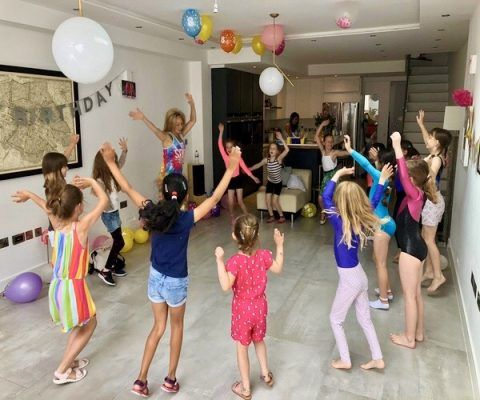
I can get this game started in seconds. I simply play music and let the children dance however they like. As soon as I stop the music, everyone has to freeze completely.
Anyone who moves can sit out for the next round, or I can skip the elimination and simply restart the music so younger children do not feel disappointed.
I like changing the length of each music section so the children cannot predict when they need to freeze. Funny poses make this even more entertaining.
Pro Tip: For younger children, I prefer keeping everyone in the game rather than eliminating players. It keeps the whole group involved and avoids unnecessary tears.
2. Pass the Parcel
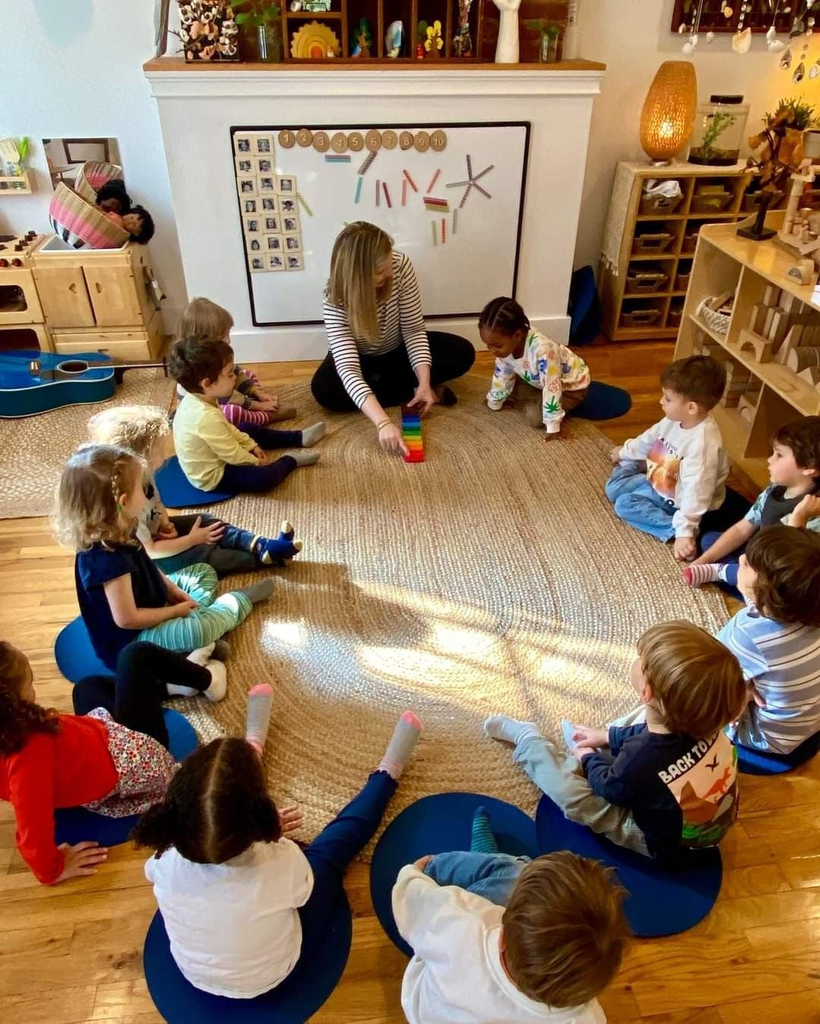
For this classic game, I wrap a small prize in several layers of paper. The children sit together while music plays and pass the parcel around the circle.
When the music stops, the child holding it removes one layer. I can add stickers, small treats, jokes, or simple challenges between layers to give everyone something to look forward to.
I find this works particularly well when I need a game that does not require children to run around the room.
Pro Tip: I prepare the parcel before guests arrive. That way, I am not trying to wrap layers while supervising excited children.
3. Freeze Tag
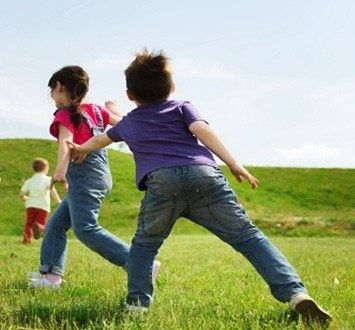
I choose one child to be “it.” That child tries to tag everyone else, and anyone who gets tagged has to stand still until another player frees them.
Depending on the children’s ages, I can make the rescue rule simple, such as tapping a frozen player on the shoulder. For older kids, I can introduce a slightly harder rescue challenge.
I always check the playing area before starting because running games need clear floors and enough room to move safely.
Pro Tip: I set clear boundaries before the game begins. A simple rule such as “stay inside the yard” helps prevent children from running into unsafe areas.
4. Duck Duck Goose
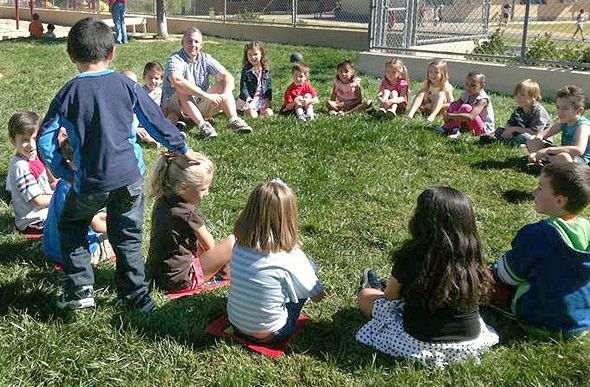
I have the children sit in a circle while one player walks around the outside, gently tapping heads and saying “duck.” Eventually, that child chooses someone as “goose.”
The goose gets up and chases the first child around the circle. The goal is to reach the empty spot before being tagged.
This is one of the games I like for younger children because the rules are easy to explain and the children can watch other players before taking their turn.
The waiting also adds a fun element of anticipation because nobody knows when they will be chosen.
5. Limbo
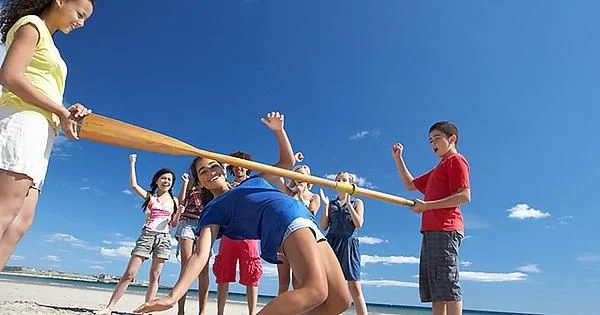
For limbo, I hold a lightweight stick, pool noodle, or rope horizontally while the children take turns moving underneath it without touching it.
After everyone has had a turn, I lower the height slightly. The last player who can pass underneath without touching the bar wins.
I prefer using something flexible or lightweight rather than a hard object, especially when younger children are playing.
I also keep the mood relaxed because not every child will have the same flexibility or balance.
Pro Tip: Music makes the game more exciting, but I keep the playing area clear so children can concentrate on moving underneath the bar.
6. Hot Potato
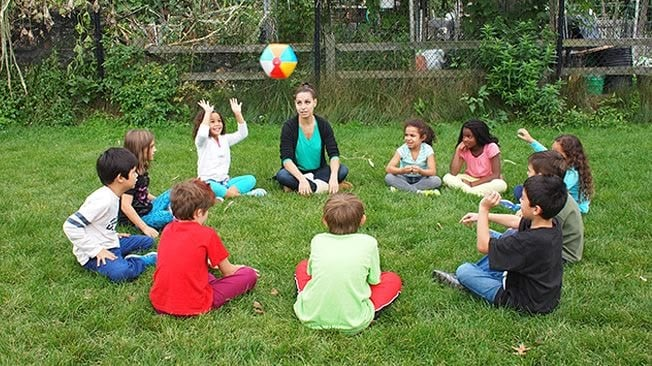
I use a soft ball, stuffed toy, or another child-safe object as the “hot potato.” The children sit or stand in a circle and pass it while music plays.
When I stop the music, whoever is holding the object can sit out or complete a funny challenge. I continue until one player remains, or I simply restart the game to keep everyone involved.
I like using a themed soft toy when the party has a particular character or color scheme.
The game is especially useful when I want something simple that can be organized with almost no preparation.
7. Egg and Spoon Race
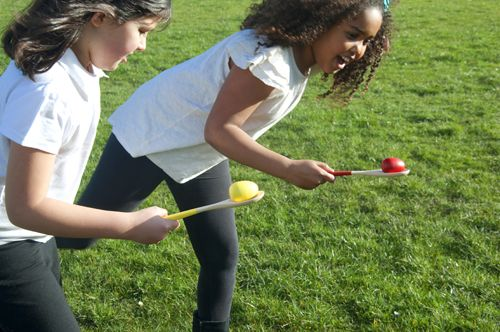
For this race, I give each child a spoon and either a hard-boiled egg or a plastic egg. Players walk or run toward a finish line while trying not to drop it.
If an egg falls, I can have the child stop, pick it up, and continue rather than automatically removing them from the race.
For younger children, I use plastic eggs because they are easier to clean up. I can also create a relay version for larger groups.
Pro Tip: I keep the course short for younger children. A shorter distance makes the game easier to manage and reduces frustration.
8. Sack Race
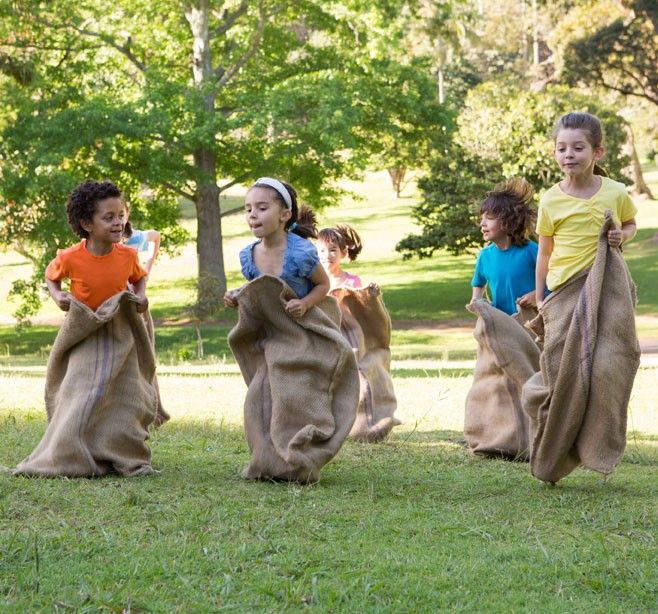
I use sturdy pillowcases or proper race sacks for this traditional outdoor game. Each child climbs inside, holds the sides, and hops toward the finish line.
The game becomes even more fun when I organize several short heats instead of putting every child on the course at once.
I prefer grass or another suitable outdoor surface because children can lose their balance while jumping.
For mixed ages, I can create separate races so younger children are not competing directly against much older kids.
9. Pin the Tail on the Donkey
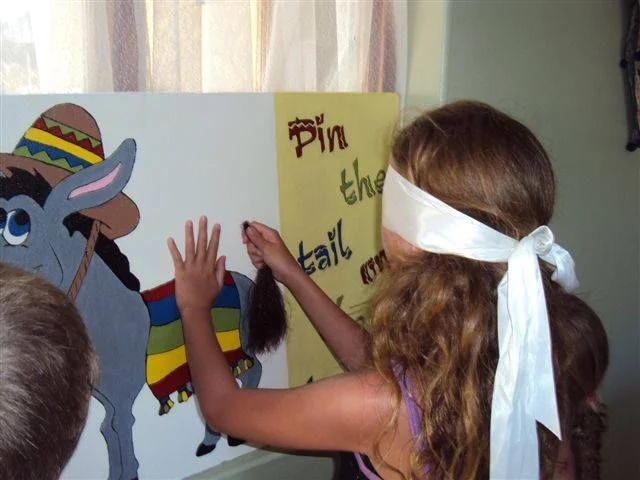
I place a large donkey picture on the wall and prepare paper tails with removable adhesive. Each child takes a turn trying to place the tail in the correct position while blindfolded.
I gently spin the player a few times and then let them make their attempt. The final positions are usually much funnier than anyone expects.
I can easily change the idea to match the party theme. For example, I might use a unicorn, dinosaur, superhero, or fairy instead of a donkey.
Pro Tip: I avoid strong adhesives that could damage walls. Removable decorating tape or reusable poster putty is a better choice.
10. Musical Chairs
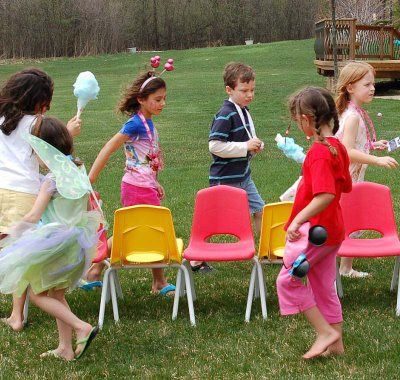
I arrange chairs in a circle with one fewer chair than the number of players. The children move around the chairs while music plays, then quickly find a seat when the music stops.
The player without a chair leaves the game, and I remove another chair before starting the next round.
For younger children, I sometimes remove the elimination rule and simply have everyone walk around the chairs and find a seat. This keeps the game playful without focusing on losing.
I choose upbeat music and make sure there is enough space around the chairs for children to move safely.
11. Balloon Stomp
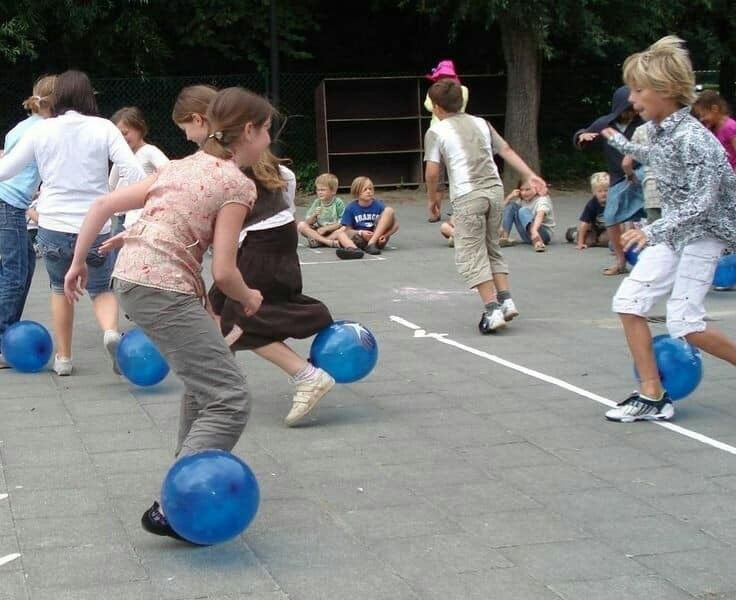
I tie one balloon securely to each child’s ankle and have everyone try to pop the other players’ balloons while protecting their own.
This game can become energetic almost immediately, so I only use it when I have a suitable open area and children who can follow boundaries.
I keep extra balloons nearby because several rounds can go by very quickly.
For younger children, I may change the game into a balloon-tapping activity instead of having them stomp near one another.
Pro Tip: I explain that the goal is to pop balloons, not bump or push other players. That small rule makes a big difference with an excited group.
12. Three Legged Race
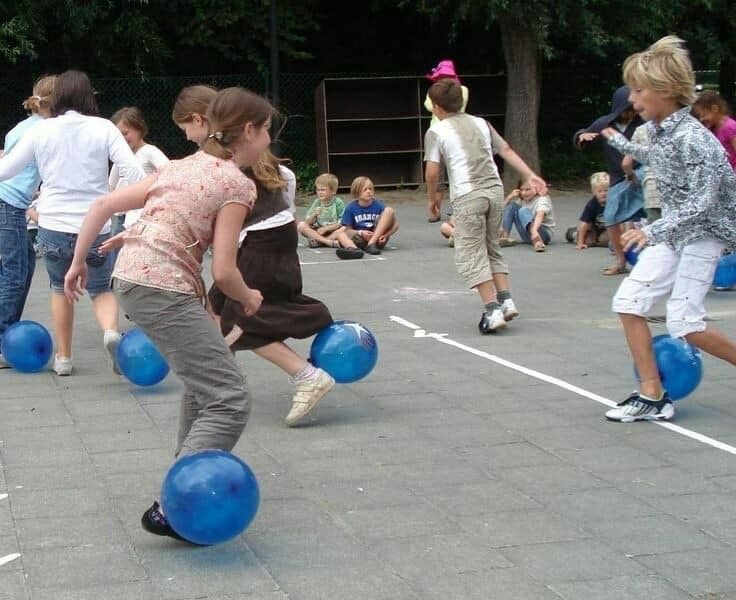
I pair the children and gently secure their inside legs together with a soft fabric strip. Each pair then works together to reach the finish line.
The trick is communication. If both players try to move at different speeds, they usually lose their balance, but once they find a rhythm, they can move surprisingly quickly.
I keep the course short and give the pairs plenty of room so they do not collide with one another.
This is one of my favorite choices when I want a party game that involves teamwork rather than individual competition.
Also read: 16 Halloween Minute to Win It Games: No Guesswork, Just Supplies & Instructions
13. Treasure Hunt

I create a simple trail of clues and hide them around the party area. Each clue leads the children closer to a final prize or treasure box.
For a small group, I can let each child follow the clues individually. With a larger group, I prefer teams so everyone has something to do.
I also like matching the clues to the party theme. A pirate party could use treasure maps, while a space party could turn the clues into a mission.
A well-prepared treasure hunt can easily become one of the longer activities at a party, so I use it when I need to fill more time.
Pro Tip: I check every hiding place before the party starts and keep clues away from areas that are off-limits or unsafe.
14. Sleeping Lions
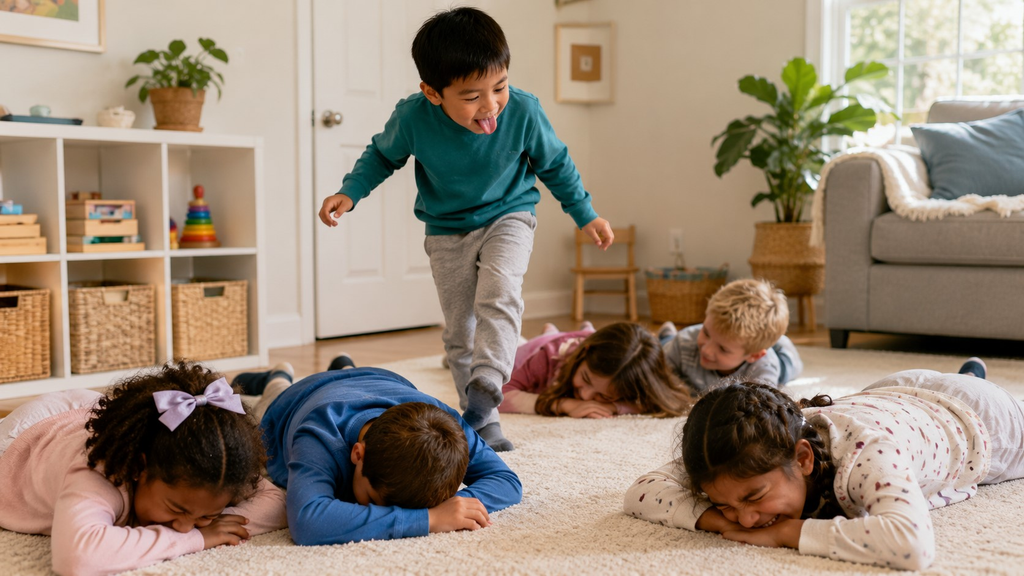
When the children have been running around for a while, I use Sleeping Lions as a quieter option. Everyone lies down and pretends to be asleep.
One or two children walk around trying to make the “lions” laugh or move without touching them. Anyone who moves can become part of the group trying to make others laugh.
I love this game for the middle or later part of a party because it gives children a chance to settle down without completely ending the fun.
It can also be helpful when younger guests are becoming tired or overstimulated.
15. Wink Murder
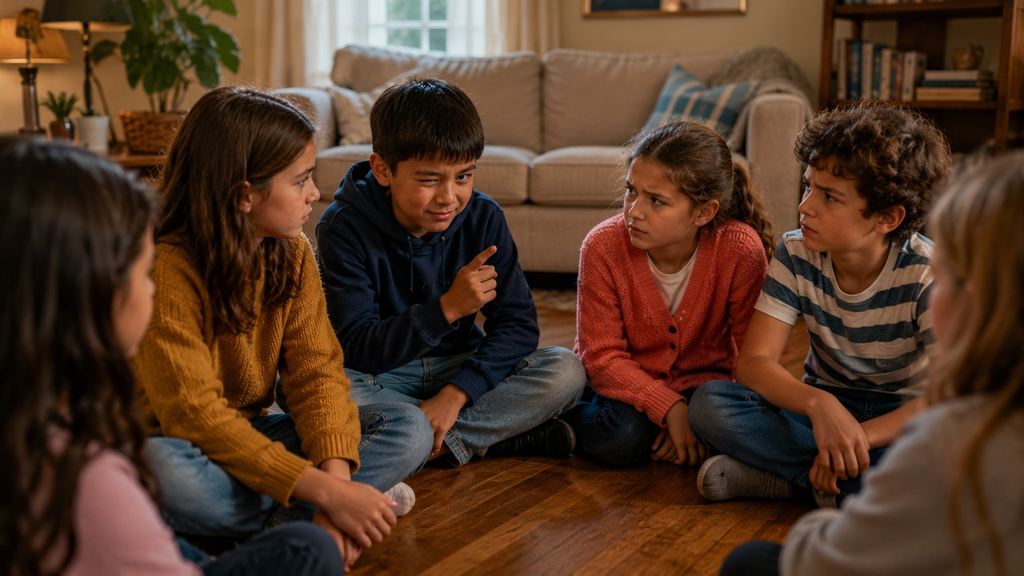
I have the children sit in a circle and secretly choose one person to be the “murderer.” That player quietly winks at other participants, who then pretend to be eliminated.
Everyone else tries to figure out who the mystery player is.
I generally save this game for older children who understand the rules and enjoy mystery-style games. Younger children may need a simpler version.
I keep the pretend element light and make sure everyone understands that it is simply a make-believe party game.
Pro Tip: For children who are not comfortable with the word “murder,” I rename it “Wink Detective” and change the eliminated players into “sleeping spies.”
16. Relay Races With Challenges
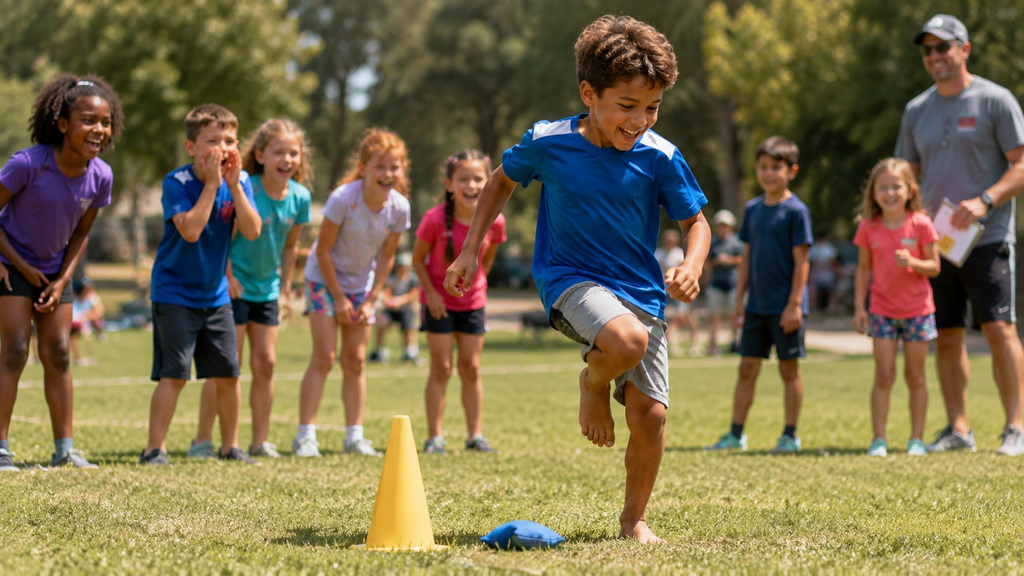
I turn an ordinary relay race into something much sillier by adding a challenge to each trip. Children might hop on one foot, carry a ball, wear an oversized hat, or move a balloon between their knees.
I like these variations because they put less emphasis on pure running speed. Children with different abilities can still contribute to their team.
For larger groups, I divide everyone into small teams and keep each challenge short.
The silly movements often become more entertaining than the actual race, which is exactly what I want from a kids’ party game.
17. Scavenger Hunt Indoors
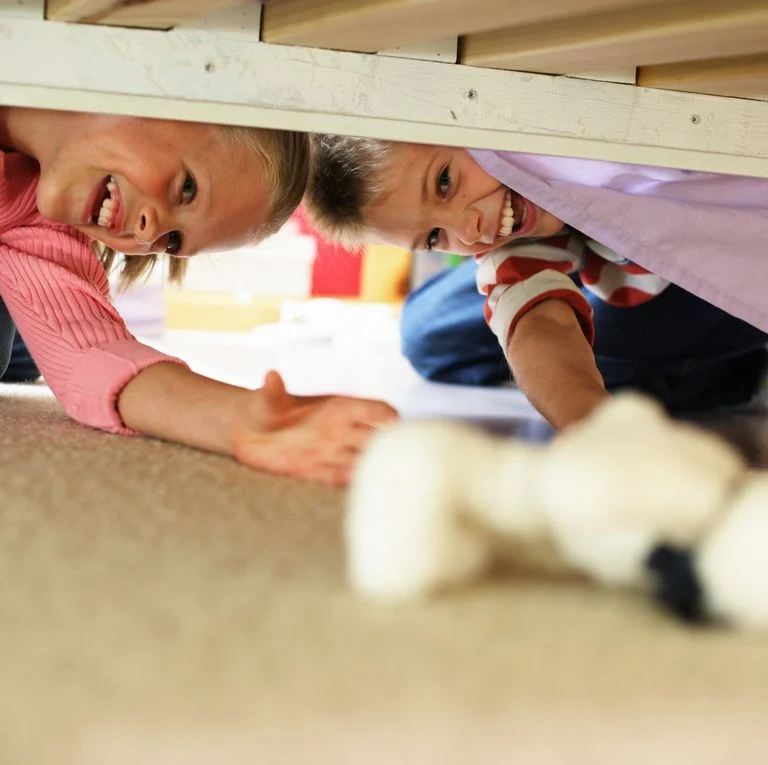
When an outdoor party is not possible, I can turn the house or party room into a scavenger hunt area.
I make a list of simple things to find, such as something soft, something blue, an object with a number, or something that makes a sound.
For preschoolers, I prefer using pictures instead of written clues. Older children can handle more detailed descriptions or riddles.
I also set boundaries so children know which rooms, drawers, and areas they are allowed to search.
Pro Tip: I give each child or team a checklist and pencil. It makes the activity feel more organized and prevents everyone from searching the same spot repeatedly.
18. Obstacle Course Race
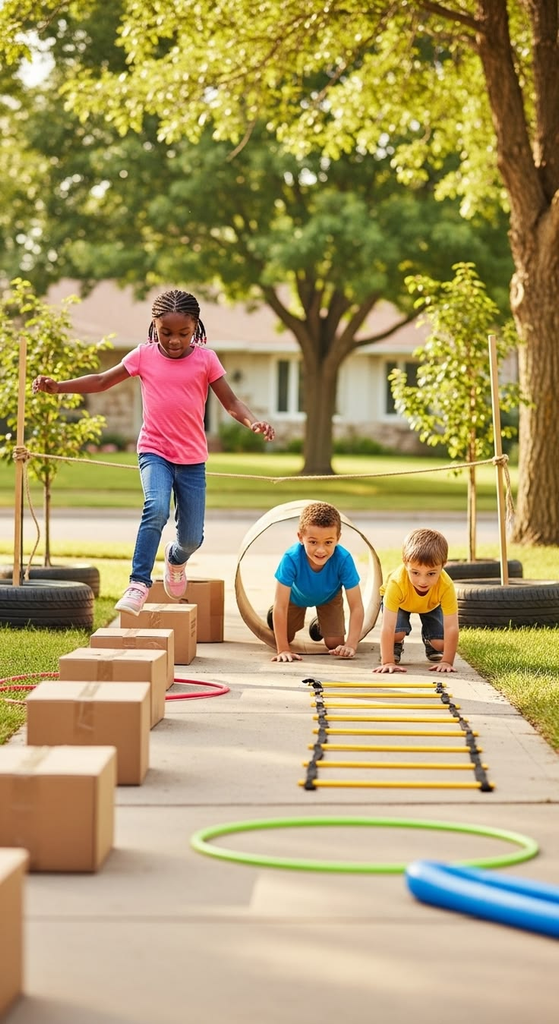
I can build a simple obstacle course with household items such as cushions, chairs, hula hoops, and painter’s tape.
Children can crawl under something, step through hoops, follow a taped line, or weave around safe objects before crossing the finish line.
I like giving children more than one attempt because they usually learn the course after the first try and improve their time.
I keep the obstacles low and stable, remove anything with sharp edges, and leave plenty of space between activities.
Pro Tip: Instead of making the course harder by adding height, I add simple movement challenges. It keeps the activity fun without creating unnecessary risks.
19. Balloon Pop Relay
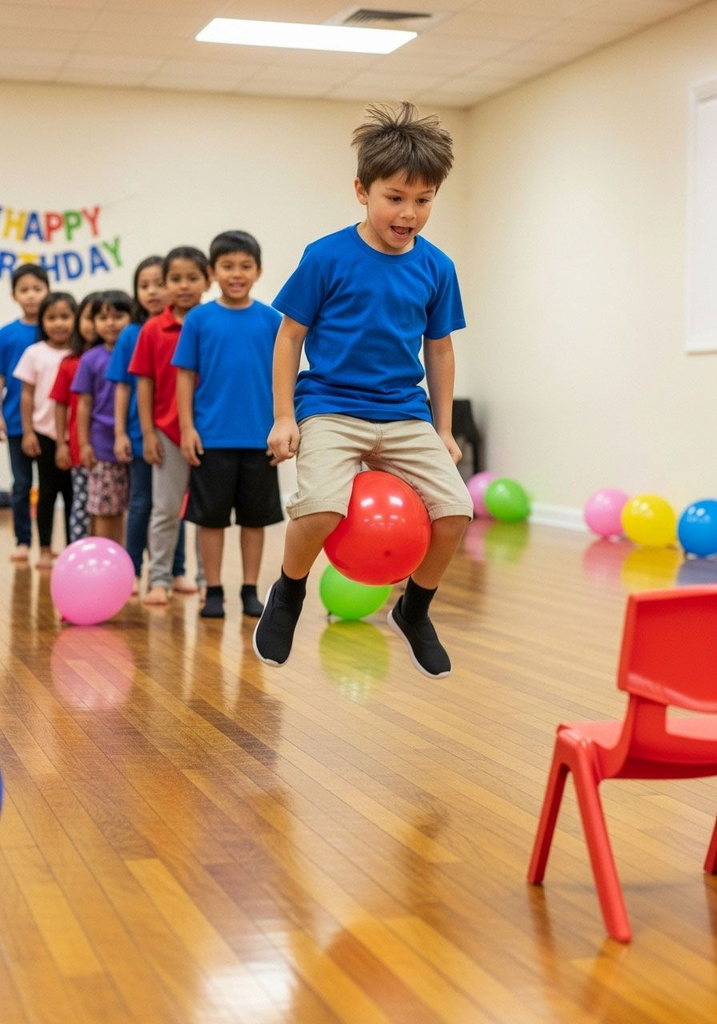
I prepare balloons ahead of time and place a small surprise or simple challenge inside some of them. Teams then take turns popping their balloons and completing the activity inside.
Small stickers, paper jokes, temporary tattoos, or simple party challenges work well for this idea.
Because popping balloons can be loud, I consider the children’s ages and sensitivities before choosing this activity.
I also make sure adults clean up broken balloon pieces promptly, especially when younger children are present.
20. Tug of War
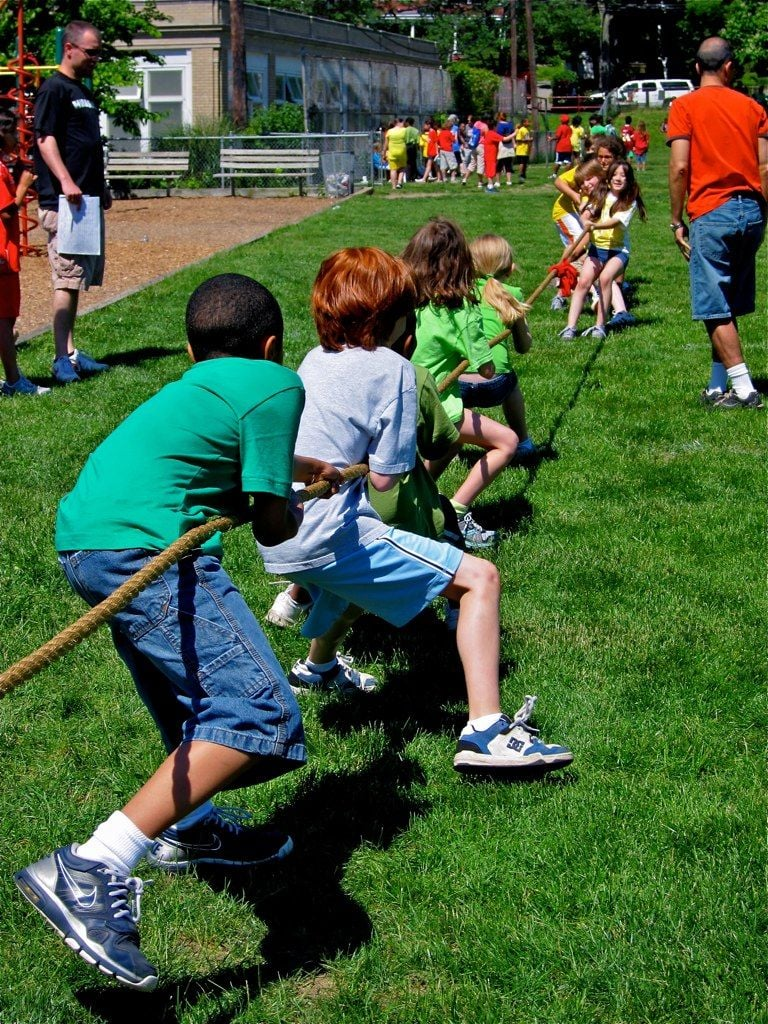
I divide the children into two teams and use a suitable rope for a simple tug-of-war contest.
I focus on having reasonably balanced teams rather than simply putting the oldest or strongest children together. That keeps the game more enjoyable for everyone.
I choose a clear, open area and avoid hard or slippery surfaces where possible.
After one round, I usually allow a rematch. The children often become more interested in trying a different team strategy than in the first result.
Pro Tip: I never wrap the rope around a child’s hands or body. Everyone should hold the rope normally, with an adult supervising the activity.
21. Craft Station Activity
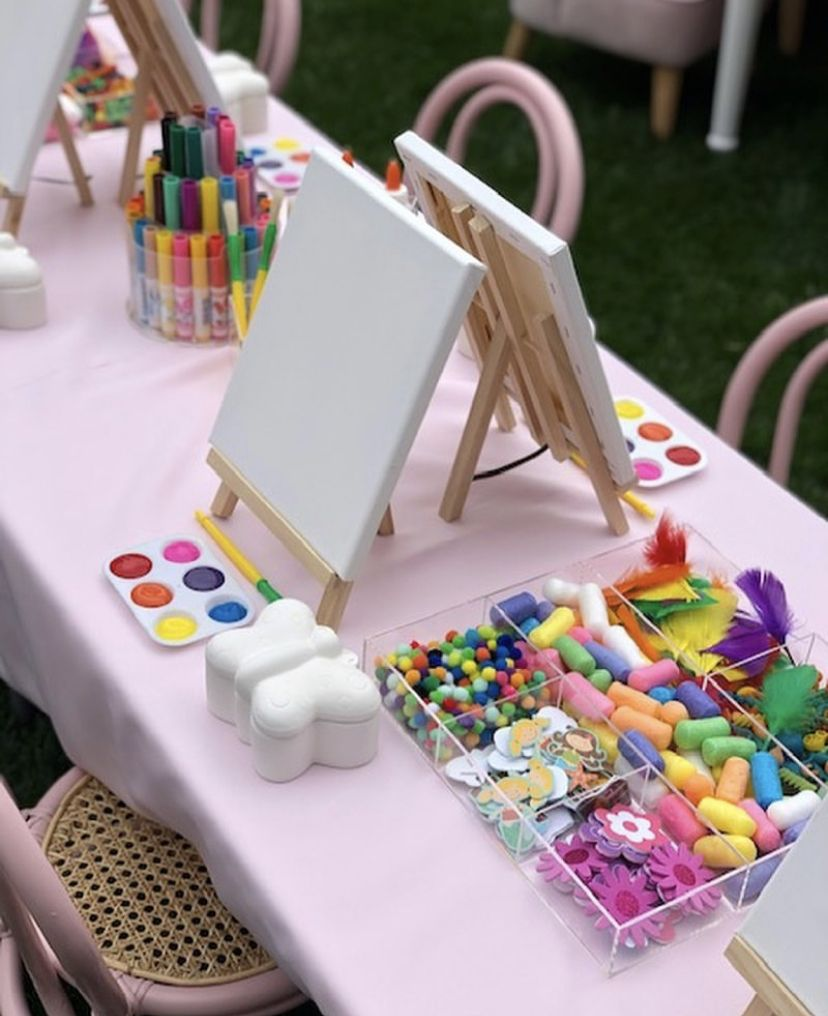
I like having a craft station available because not every child wants to spend an entire party running around.
I can set out supplies for decorating a small picture frame, painting a mini flowerpot, creating a party-themed card, or making a simple paper craft.
I keep the project short and straightforward so children can finish it without needing constant adult help.
The finished craft also becomes a small party favor that children can take home, which means the activity serves two purposes.
Pro Tip: I put each child’s supplies into a small tray or cup before the party begins. It makes cleanup much easier and prevents everyone from reaching across the table for the same materials.
22. Newspaper Dance
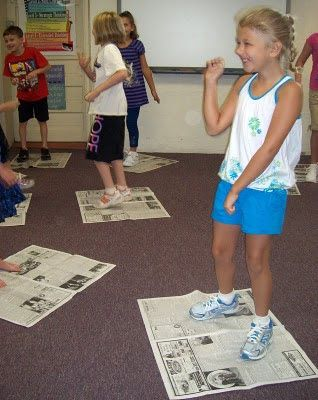
I give each pair a sheet of newspaper and have both children stand on it while music plays.
When the music stops, they step off briefly while I fold the newspaper smaller. The music starts again, and the pair has to figure out how to fit on the reduced space.
The game becomes increasingly challenging as the paper gets smaller. Children often come up with funny ways to balance while working together.
I use fresh sheets for each pair so the activity stays simple and fair.
Read this next: 19 Ugly Christmas Sweater Party Games To Play
23. The Chocolate Game
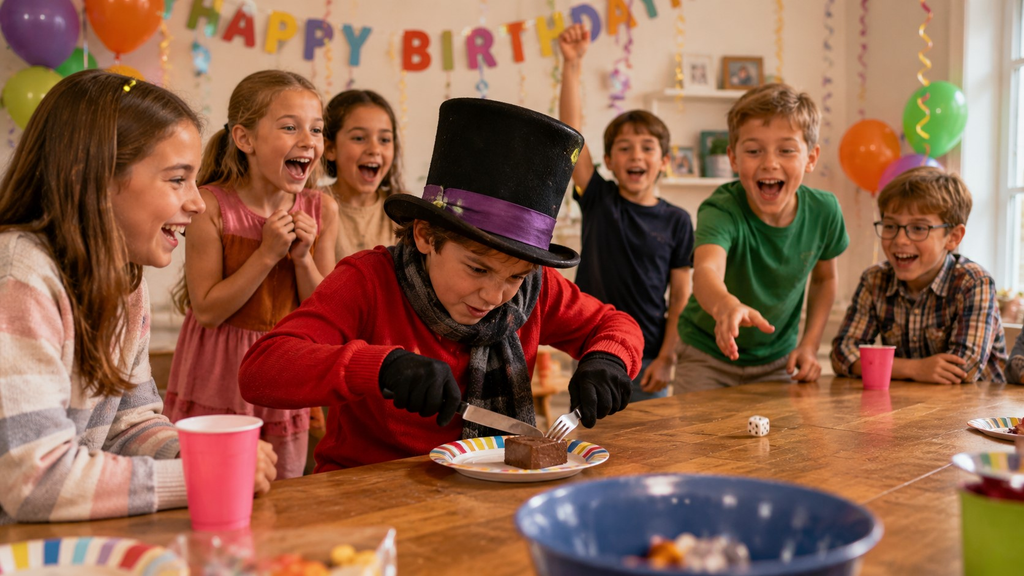
For this game, I place a chocolate bar on a tray along with child-safe utensils and a few oversized clothing items, such as a hat, scarf, or gloves.
Children take turns rolling a die. When someone rolls the chosen number, they put on the clothing and try to eat the chocolate using the utensils before another player takes their turn.
I use a wrapped or appropriately sized chocolate bar and supervise closely, particularly with younger children.
This game works best with children who can safely handle the utensils and understand the rules. I can also replace the chocolate with another small treat if needed.
FAQ’s
What are some easy party games for kids?
Musical Statues, Duck Duck Goose, Hot Potato, and Pass the Parcel are easy options that need little preparation or equipment.
What are the best indoor party games for kids?
I recommend Musical Chairs, Sleeping Lions, Indoor Scavenger Hunts, Newspaper Dance, and a Craft Station when outdoor space is limited.
How do I keep kids of different ages entertained at a party?
I like mixing simple games with more challenging activities and letting children play in small groups when needed. This gives everyone a chance to participate comfortably.
How many party games should I plan for kids?
I usually prepare several games but avoid scheduling every minute. Having around 5–8 activities ready gives me flexibility to adjust based on the party length and children’s energy.
Final Thoughts
When I plan a kids’ party, I have learned that I do not need dozens of expensive activities to keep everyone happy. A few well-chosen games, simple supplies, and a little preparation can create a party children genuinely enjoy.
I like starting with an active game, moving into another group activity, and then adding something quieter such as Sleeping Lions or a craft station. This gives the children different ways to participate throughout the celebration.
I also keep two or three backup games ready. Party energy can change quickly, and having an extra activity prepared saves me from trying to invent something while everyone is waiting.
Most importantly, I choose games based on the children who are actually attending. Their ages, interests, number of guests, available space, and comfort levels all matter more than following a rigid party schedule.
With these 23 party games for kids, I can build a flexible mix of movement, teamwork, creativity, and laughter without making party planning unnecessarily complicated.



3 Comments