Relaxing Crafts for Adults That Turn Ordinary Moments Into Self-Care
Life can get busy enough that I sometimes forget how important it is to simply slow down. Between daily responsibilities, screens, errands, and endless to-do lists, finding a quiet moment for myself can feel surprisingly difficult.
That is one reason I love relaxing crafts for adults. A simple creative activity can give me a break from the usual routine without requiring a big budget, special skills, or hours of free time.
Whether I am painting, folding paper, working with clay, or making something useful for my home, crafting gives my hands something to do while allowing my mind to settle. I do not always need to create something perfect. Sometimes I just need a peaceful activity that helps me enjoy the moment.
Relaxing crafts for adults can be an easy and affordable way to add more calm and creativity to everyday life. In this article, I share 15 simple craft ideas that range from watercolor painting and candle making to crochet, embroidery, soap making, origami, and nature journaling.
Most of these projects are beginner-friendly and can be done at home with basic supplies. I also explain what makes a craft relaxing, how to create a better self-care crafting routine, and how to choose a project based on your mood and available time.
Save this for later
Table of Contents
The goal is not to become an expert artist. I believe the best relaxing crafts are the ones that help me put down my phone, focus on something enjoyable, and give myself permission to create without pressure.
Key Takeaways
- Relaxing crafts can help adults create intentional breaks from busy routines.
- You do not need artistic experience to enjoy creative hobbies.
- Repetitive activities like crochet, embroidery, and Zentangle can feel especially calming.
- Sensory crafts such as candles, clay, and bath products create a hands-on experience.
- Many adult craft projects require only inexpensive and basic materials.
- Choosing a craft based on your mood can make the experience more enjoyable.
- The creative process can be just as rewarding as the finished project.
Related article: 19+ Creative Valentine’s Day Crafts for Adults
Why Relaxing Crafts Are the Self-Care Habit More Adults Are Falling in Love With
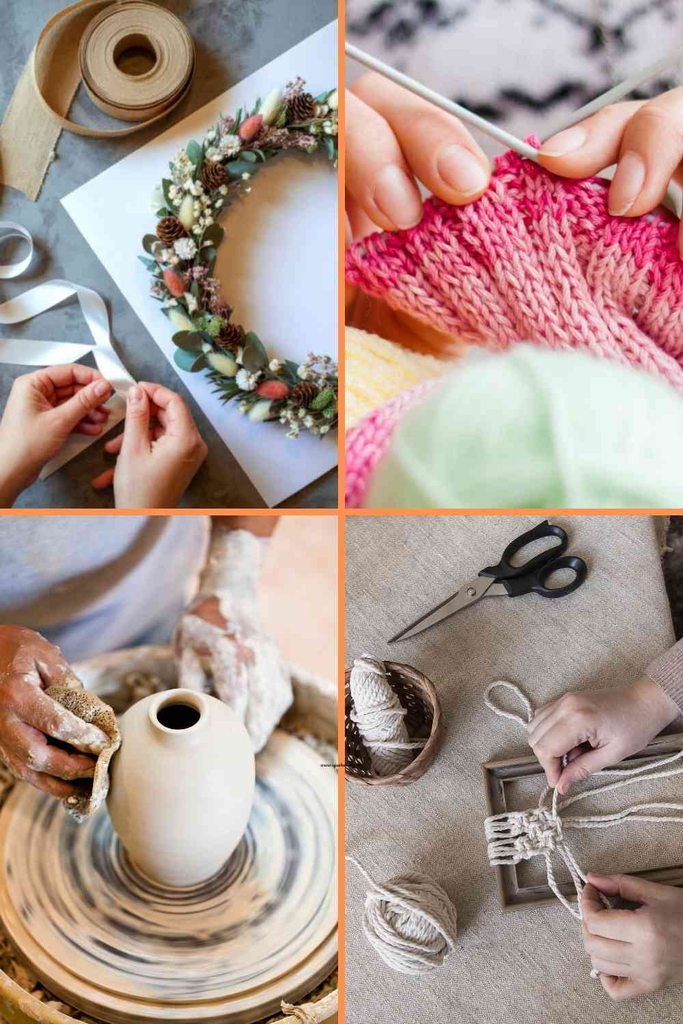
I think more adults are starting to realize that self-care does not always need to involve expensive products, appointments, or complicated wellness routines.
Sometimes the simplest activities are the easiest to stick with.
Relaxing crafts for adults offer a chance to step away from constant notifications and spend time doing something physical and creative. Instead of scrolling through another screen, I can focus on paint, yarn, paper, fabric, or another material right in front of me.
Research on creative activities has also suggested that making art and participating in hobbies can support relaxation and emotional well-being. Even short periods spent doing an enjoyable activity can help create a welcome mental break.
They work on a level that surprises people
Crafting can naturally encourage me to focus on one task at a time. Repeating a stitch, folding paper, painting shapes, or arranging materials gives my attention somewhere specific to go.
I often notice that when my hands are occupied, it becomes easier to stop thinking about everything else I need to do.
The finished project is nice, but for me, the real value often comes from the time spent making it.
It fits around real life
One of the biggest benefits of creative hobbies is flexibility.
I do not need to join a class or completely change my schedule. I can work on a small project at the kitchen table for 20 or 30 minutes.
That makes relaxing crafts for adults a practical option for busy people.
It’s not about being artistic
I believe one of the biggest myths about crafting is that you need natural talent before you begin.
You really do not.
Stress-relieving crafts are more about participating than performing. I can make mistakes, change my mind, start over, or create something imperfect.
That freedom is part of what makes crafting enjoyable.
Pro Tip: Start with a project that looks simple rather than choosing the most impressive one. A quick success can make you more excited to try another craft.
Relaxing Crafts for Adults When You Need to Slow Down and Recharge
1. Watercolor Painting
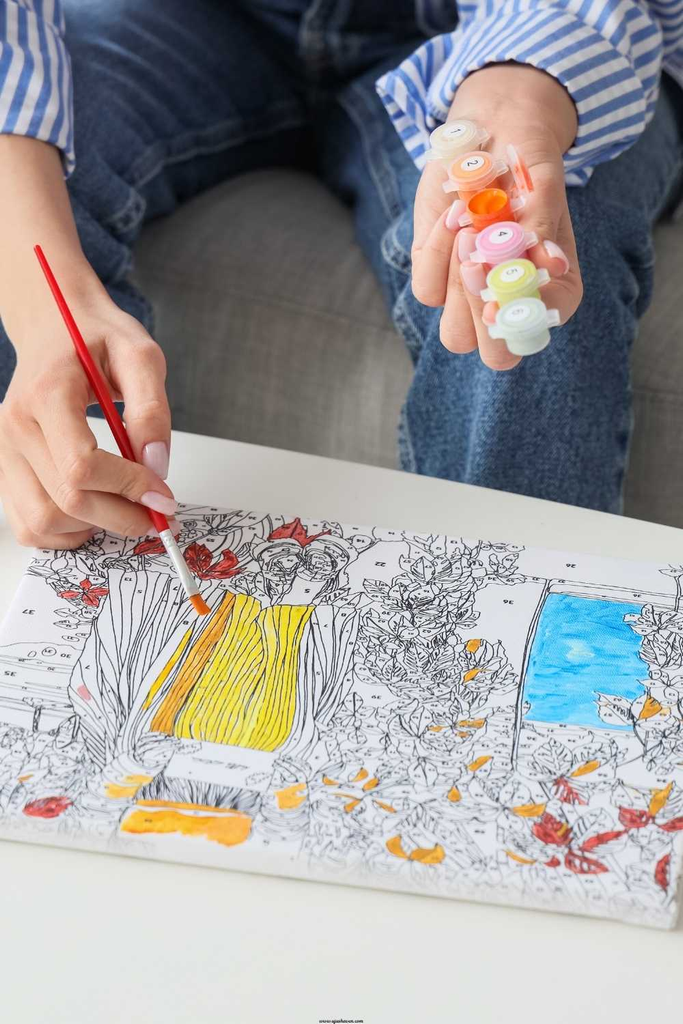
Watercolor painting is one of my favorite relaxing craft ideas because it encourages me to loosen up and accept unexpected results.
The colors move across the paper in their own way, and I do not always know exactly how the finished piece will look.
That little bit of unpredictability can make painting feel freeing rather than stressful.
What you’ll need
- A beginner watercolor paint set
- Watercolor paper
- A few paintbrushes
- Clean water
- A paper towel or soft cloth
How to make it
Start with something very simple.
I like painting loose washes, circles, leaves, skies, flowers, or abstract color combinations. Wet the paper or brush, add color, and watch how it spreads.
Try mixing two shades together without worrying about creating a specific picture.
The more I let go of perfection, the more enjoyable watercolor painting becomes.
Why you’ll love it
Every painting turns out differently, so there is no single version that I need to copy.
Watercolor is a beginner-friendly craft that can be done for just a few minutes or enjoyed for an entire afternoon.
Pro Tip: Play quiet background music and keep your first painting session focused on experimenting rather than creating a finished artwork.
2. Hand-Lettering and Journaling Art
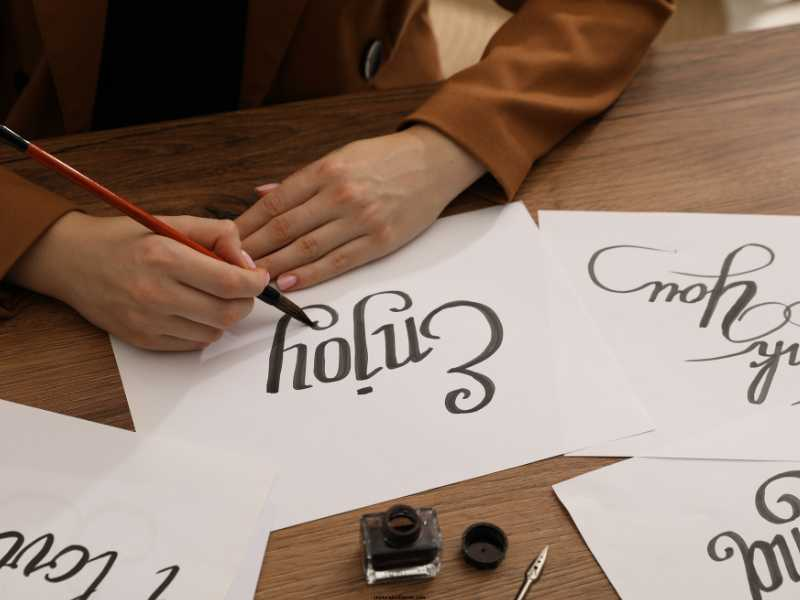
Hand-lettering gives me a reason to slow down and pay attention to every movement of my hand.
Writing a word carefully can feel very different from quickly typing on a keyboard.
I also like combining lettering with small drawings, colors, patterns, or personal thoughts.
What you’ll need
- A blank notebook or thick paper
- Brush pens or fine-tip markers
- A pencil
- An eraser
How to make it
Choose a word, quote, or short phrase that feels meaningful to you.
I usually begin with a light pencil outline before tracing over the letters slowly with a pen.
Practice thick and thin strokes, then add simple decorations around the words if you like.
Leaves, dots, stars, borders, and tiny flowers all work well for beginners.
Why you’ll love it
Hand-lettering combines creativity with personal reflection.
I can create pages around encouraging words, favorite sayings, goals, memories, or anything else I want to remember.
It is also an easy craft to pick up whenever I have a few quiet minutes.
Pro Tip: Keep a small notebook and a few pens in an easy-to-reach place so starting does not require setting up a full craft area.
3. Candle Making
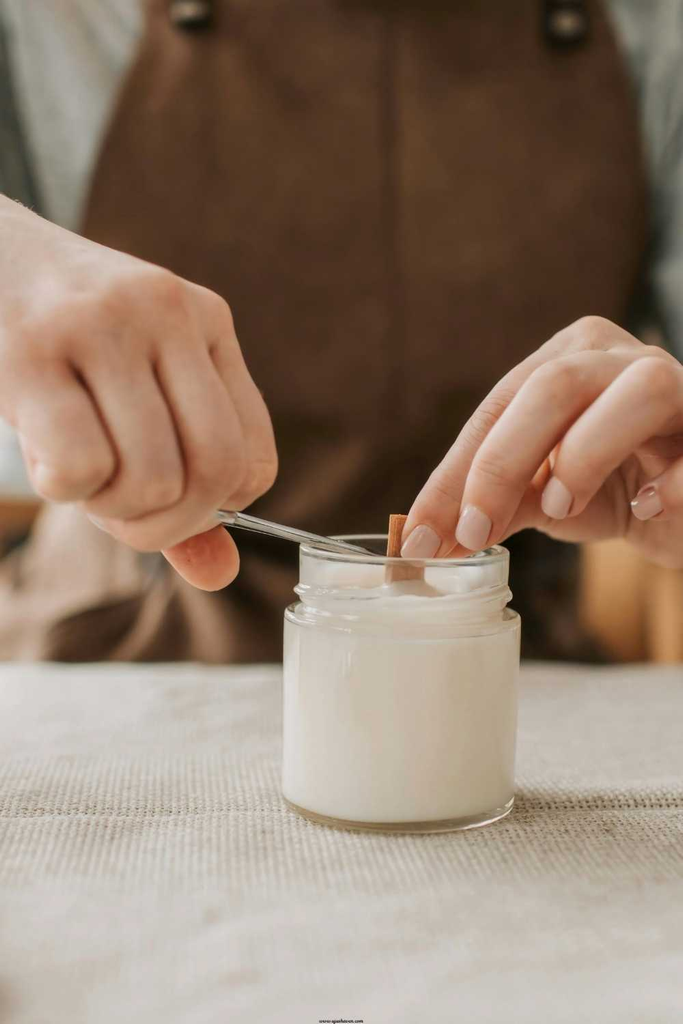
Candle making is a wonderful sensory craft because I get to work with texture, warmth, color, and fragrance.
I enjoy the slower pace of measuring, melting, mixing, pouring, and waiting.
The finished candle can also become something useful for my home.
What you’ll need
- Soy wax or beeswax
- A heat-safe pouring container
- Candle wicks
- Suitable candle jars or tins
- Candle-safe fragrance oil
- A thermometer
How to make it
Melt the wax according to the manufacturer’s instructions.
Once the wax reaches the recommended temperature, add your candle-safe fragrance and stir gently.
Secure the wick in the center of your container and slowly pour in the wax.
Allow the candle to cool and cure based on the instructions for the specific wax you are using.
Why you’ll love it
I love that candle making gives me something practical at the end of the project.
I can choose scents I enjoy and create candles that match different seasons or rooms in my home.
Pro Tip: Always follow the temperature and safety instructions provided for your specific wax and fragrance products.
4. Paper Collage
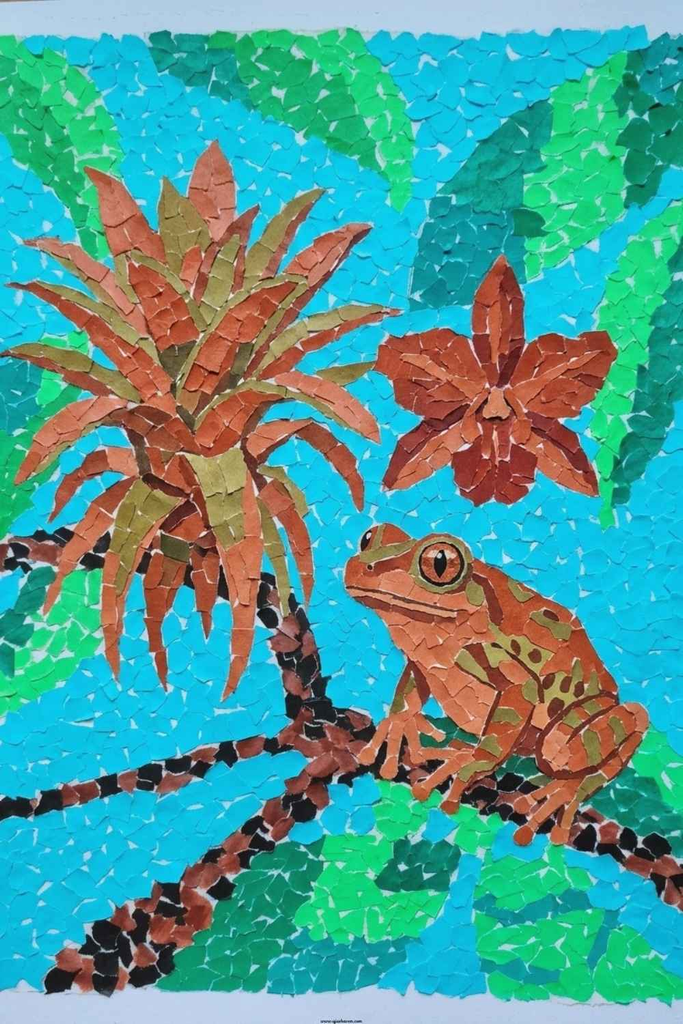
Paper collage is one of the easiest ways I know to create something without worrying about drawing or painting skills.
I can cut, tear, layer, rearrange, and experiment until I like what I see.
There are very few rules, which makes this craft especially fun.
What you’ll need
- Old magazines or newspapers
- Printed pictures
- Thick paper or cardstock
- Scissors
- Glue
- Optional markers or washi tape
How to make it
Look through magazines and collect images, patterns, colors, and textures that catch your attention.
I do not try to plan everything at first.
Arrange the pieces on your paper and move them around until the composition feels balanced.
Once you are happy with the layout, glue everything into place.
Why you’ll love it
Collage can turn ordinary materials into something completely personal.
It is playful, inexpensive, and easy to customize based on your interests.
I also like using collage pieces in journals, cards, and handmade home decor.
Pro Tip: Save interesting paper scraps in a small container so you always have materials ready for your next project.
5. Air-Dry Clay Sculpting
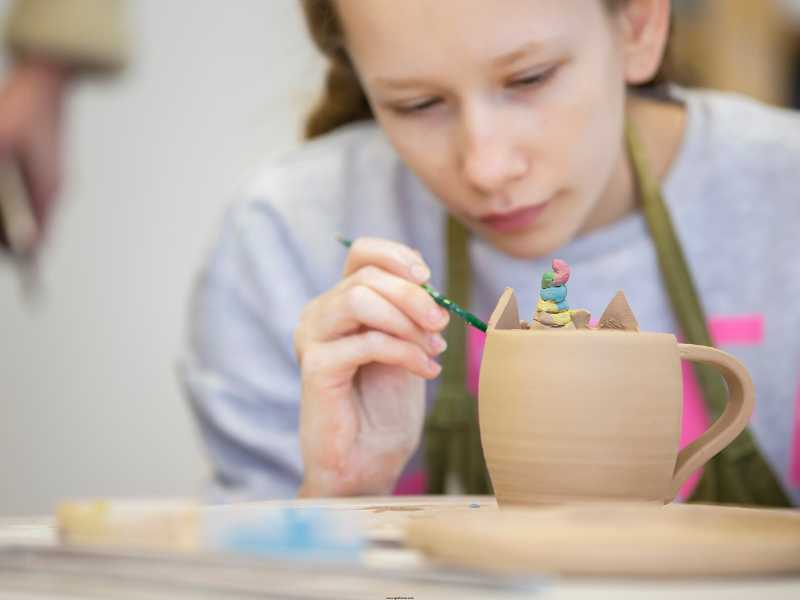
Working with clay can be incredibly satisfying because the material responds directly to my hands.
I can squeeze it, roll it, flatten it, shape it, and smooth it.
That hands-on experience makes air-dry clay a great choice when I want a break from screens.
What you’ll need
- Air-dry clay
- A smooth work surface
- Basic shaping tools
- Fine-grit sandpaper
- Optional paint
How to make it
Begin by kneading the clay until it feels soft and easy to shape.
Try making a small bowl, ring dish, trinket tray, ornament, or decorative shape.
Smooth rough areas with slightly damp fingers.
Allow the project to dry completely according to the clay manufacturer’s instructions before sanding or painting.
Why you’ll love it
I find it rewarding to hold something that I made entirely by hand.
Small imperfections often make clay projects look more personal and handmade.
Pro Tip: A small trinket dish is an excellent first clay project because it is simple, useful, and does not require advanced shaping skills.
What Makes a Craft Truly Relaxing?
Not every creative project feels relaxing.
Some crafts require detailed measurements, complicated instructions, or lots of concentration. Those projects can still be enjoyable, but they may not be what I want when I need to unwind.
For me, the best relaxing crafts usually have a few things in common.
They usually have these things in common
Repetitive movement. Activities like stitching, folding, painting, and knot tying can create a comfortable rhythm.
Low pressure. There is no deadline, competition, or need to impress anyone.
Sensory materials. Texture, color, fragrance, and movement can help me stay focused on the present.
Visible progress. Seeing a project slowly come together can provide a satisfying sense of accomplishment.
What they don’t need
- Expensive materials
- Professional experience
- A dedicated craft room
- Hours of free time
I have learned that even a small creative session can feel worthwhile.
A simple 30-minute project may be enough to help me reset before returning to the rest of my day.
Pro Tip: If a craft starts feeling frustrating, simplify it. Choose fewer colors, easier steps, or a smaller project.
Creative Self-Care Crafts That Help You Unwind and Be Present
6. Macramé Knot Tying
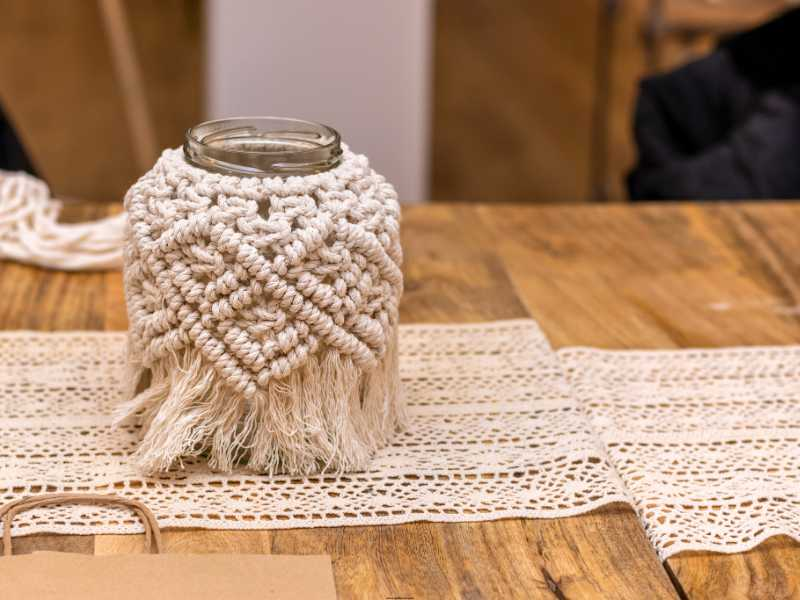
Macramé is built around repeating knots, which can make it especially enjoyable once I learn the basic movements.
At first, I focus on understanding one or two knots.
After a little practice, my hands start to remember what to do.
What you’ll need
- Cotton macramé cord
- A wooden dowel or branch
- Scissors
- A place to hang or secure your project
How to make it
Cut your cords longer than the finished piece because knotting shortens them.
Attach the cords to your dowel using beginner-friendly knots.
Practice a basic square knot and repeat it across the row.
Continue building your design and trim the ends when you are finished.
Why you’ll love it
Macramé can become very rhythmic once the basic techniques feel familiar.
I also like that a simple practice project can eventually become wall decor or a handmade gift.
Pro Tip: Practice your first knots with inexpensive cord before starting a larger project.
7. Pressed Flower Art
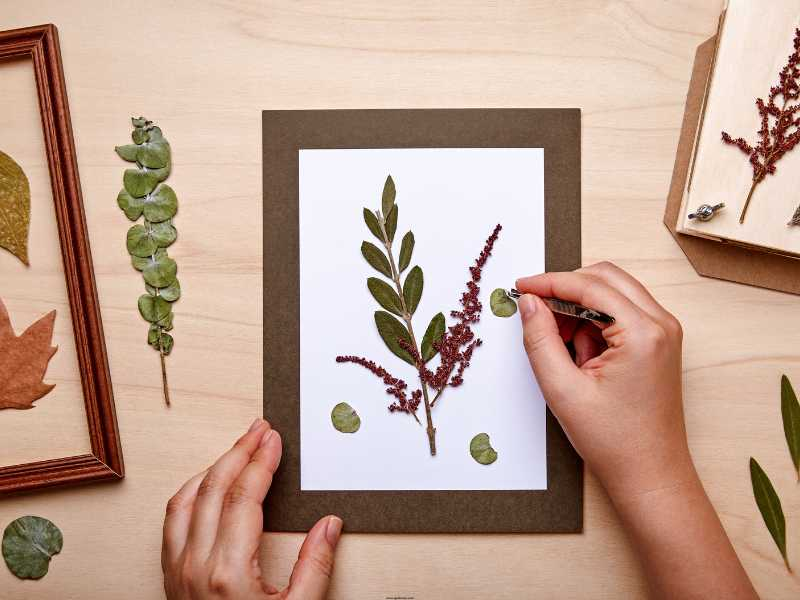
Pressed flower art gives me a way to preserve a little piece of nature.
I enjoy collecting flowers and leaves, but the arranging process is just as relaxing.
Each finished piece reflects the colors and plants I happened to find.
What you’ll need
- Fresh flowers or leaves
- Parchment or absorbent paper
- Heavy books or a flower press
- Thick paper
- Craft glue
- Optional frames
How to make it
Place flowers between sheets of suitable paper and press them inside a heavy book or flower press.
Leave them until they are fully dry and flat. Drying time can vary depending on the plant and method.
Arrange the pressed flowers on paper before applying glue.
Once you like the layout, carefully secure each piece.
Why you’ll love it
Every design feels unique because natural materials never look exactly the same.
I also enjoy turning pressed flowers into handmade cards and framed art.
Pro Tip: Thin flowers and leaves usually press more easily than thick or moisture-heavy plants.
8. Beginner Embroidery
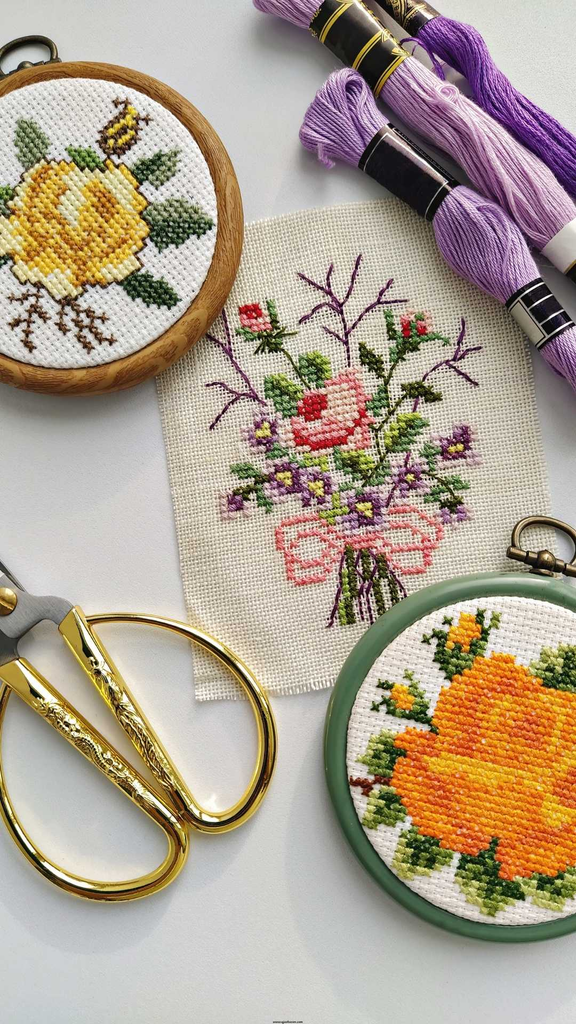
Embroidery gives me the chance to work slowly and see progress one stitch at a time.
A project can be completed gradually, which means I do not have to finish everything in one sitting.
Even a few minutes of stitching can move the design forward.
What you’ll need
- An embroidery hoop
- Cotton fabric
- Embroidery floss
- An embroidery needle
- Small scissors
- An optional design pattern
How to make it
Place your fabric securely inside the hoop.
Thread your needle and begin with a simple stitch such as a running stitch or backstitch.
Follow your pattern slowly and focus on one section at a time.
Secure the thread on the back when you finish.
Why you’ll love it
Embroidery rewards patience.
I enjoy looking back at a project and seeing how dozens of small stitches became one complete design.
Pro Tip: Simple floral and leaf patterns are beginner-friendly because they do not require perfectly straight lines.
Also read: 16+ Unique Home Decor Crafts for Adults
9. DIY Bath and Body Products
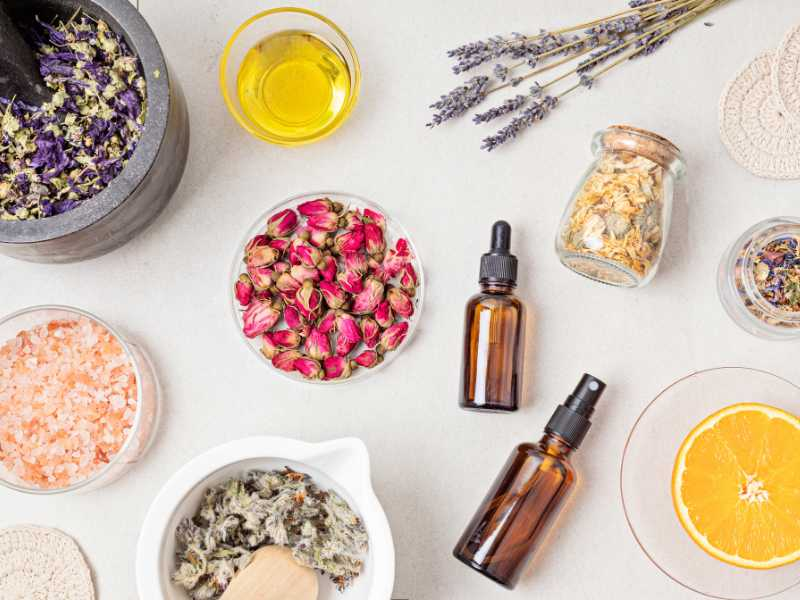
Making simple bath and body products can turn crafting into a useful part of my self-care routine.
I like choosing the textures and scents that I personally enjoy.
However, I always make sure to use skin-safe ingredients and follow proper instructions.
What you’ll need
- A suitable base ingredient
- Skin-safe oils or butters
- Epsom salt or another appropriate ingredient
- Skin-safe fragrance or essential oil used properly
- Clean containers
How to make it
Choose a simple recipe from a reliable source and measure the ingredients carefully.
Mix small batches so you can test the texture and fragrance.
Use clean, dry containers and label them with the ingredients and preparation date.
Avoid adding ingredients that may irritate your skin.
Why you’ll love it
I enjoy knowing exactly what I included in a simple homemade product.
These projects can also make thoughtful gifts when prepared safely and packaged nicely.
Pro Tip: Always research proper dilution rates and skin safety before using essential oils or fragrances in homemade body products.
10. Nature Journaling
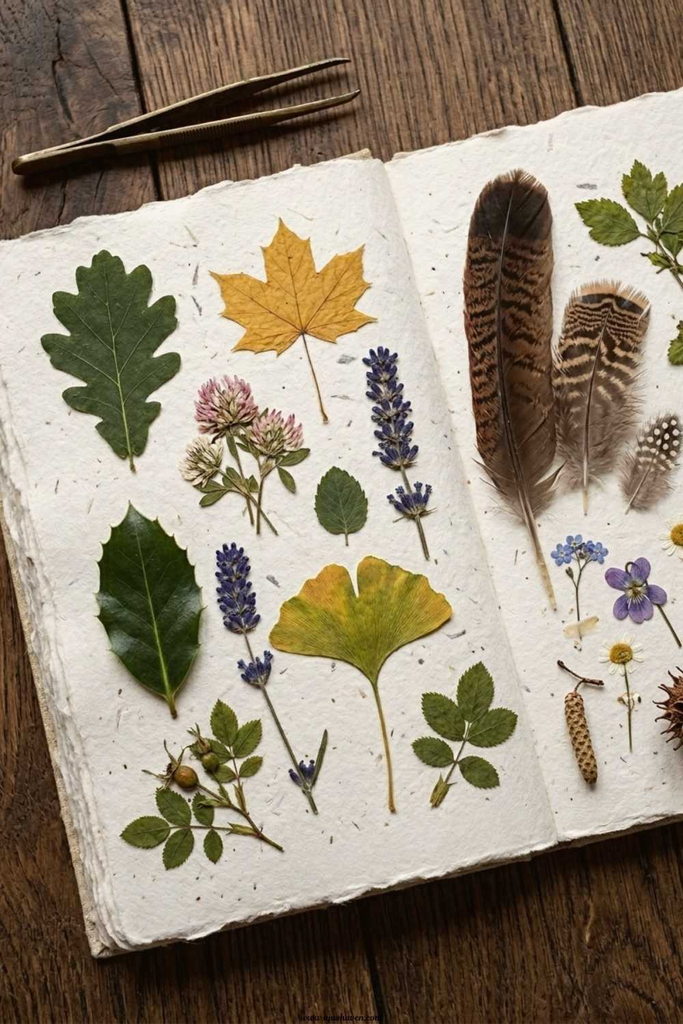
Nature journaling encourages me to pay closer attention to ordinary things.
A leaf, cloud, flower, bird, or houseplant can become the focus of a page.
I do not need to create a perfect scientific drawing. I just need to notice what is around me.
What you’ll need
- A blank journal
- Pencils or pens
- Optional watercolors
- Something from nature to observe
How to make it
Choose one natural object or view.
Start by sketching the basic shape.
Add a few details, colors, or written observations.
I also like recording the date, weather, location, and anything interesting I noticed.
Why you’ll love it
Nature journaling combines observation, drawing, and writing.
It helps me slow down and look more carefully at things I might normally pass without noticing.
Pro Tip: You do not need to visit a park. A houseplant, balcony view, or flower near your window is enough.
Simple Ways to Make Craft Time Feel More Like Self-Care
The project itself matters, but the environment can also change the experience.
I can rush through a craft while checking messages and thinking about five other things.
Or I can create a small period of time that feels intentionally separate from the rest of my day.
Set the scene before you start
I like opening a window, playing quiet music, or making a warm drink before I begin.
Small changes can help signal that it is time to slow down.
I also try to move my phone out of reach so I am less tempted to interrupt myself.
Protect the time like it matters
Creative time deserves space on the schedule too.
Even if I only have 30 minutes, I try to treat that time as an actual break.
I avoid multitasking when possible and remind myself that I do not have to finish the project.
Let go of the result
This is one of the most important parts of relaxing crafting for me.
I do not need every project to look professional.
The purpose is to enjoy making something.
Sometimes the best part of crafting is simply realizing that I spent an hour doing something without constantly checking the time.
Pro Tip: Create a small craft basket with your favorite supplies so you can easily start whenever you have free time.
Easy Relaxing Crafts for Adults to Enjoy at Their Own Pace
11. Zentangle Drawing
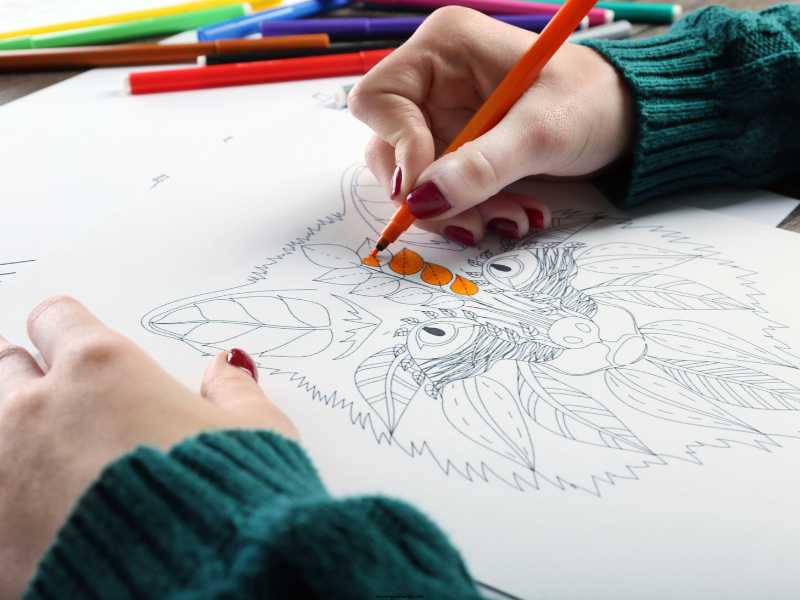
Zentangle-style drawing uses small repeated patterns to fill sections of a design.
I like that the process gives me enough structure to stay focused while still allowing creativity.
A simple pen and paper are all I need to begin.
What you’ll need
- Thick white paper
- A fine-tip pen
- A pencil
- Optional shading tools
How to make it
Lightly draw a border around your paper.
Divide the space into smaller sections using curved or straight lines.
Choose one repeating pattern for each section.
Continue until the page is filled, then add gentle shading if desired.
Why you’ll love it
I do not need advanced drawing skills to create an interesting pattern.
The repeated movements can make this activity feel especially absorbing.
Pro Tip: Keep your finished drawings and date them. Looking back at your collection can show how your style changes over time.
12. Soap Making
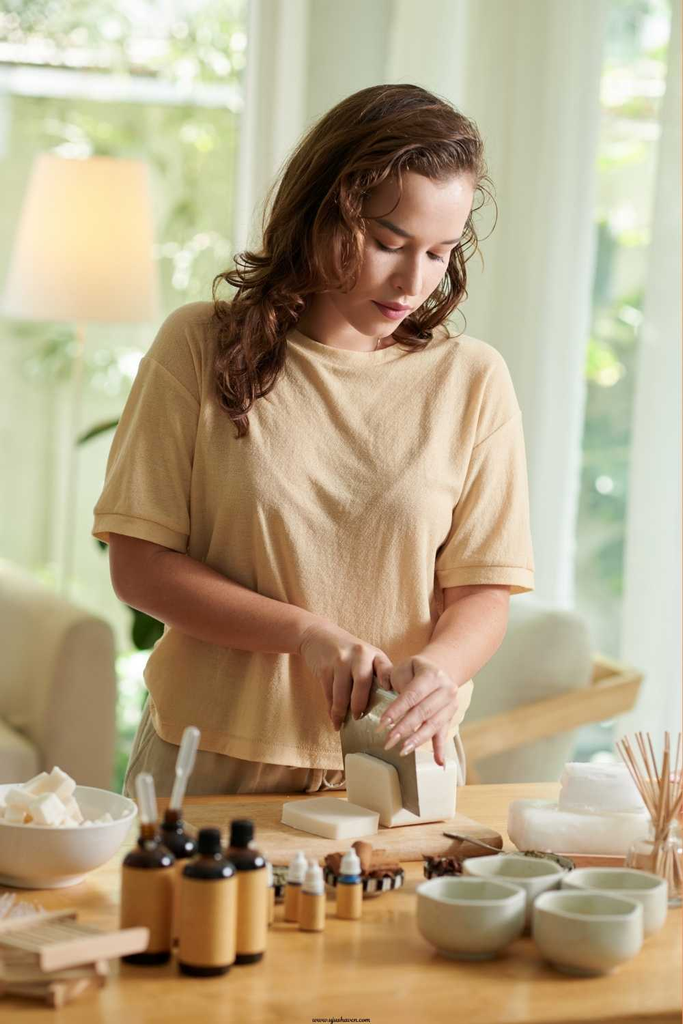
Soap making can be a fun beginner project when I use a melt-and-pour base designed for easy home crafting.
It allows me to experiment with colors, shapes, and approved fragrances without handling the chemicals required for traditional cold-process soap.
What you’ll need
- Melt-and-pour soap base
- A microwave-safe or heat-safe container
- Soap molds
- Skin-safe fragrance
- Soap-safe colorants
- Optional decorative ingredients
How to make it
Cut the soap base into smaller pieces.
Melt it slowly according to the product instructions.
Add approved color and fragrance, then carefully pour the mixture into molds.
Allow the soap to fully harden before removing it.
Why you’ll love it
I like that a simple afternoon project can become part of my everyday routine.
Homemade soap can also make a useful gift.
Pro Tip: For beginners, melt-and-pour soap is generally easier and safer to start with than methods involving sodium hydroxide.
13. Crochet for Beginners
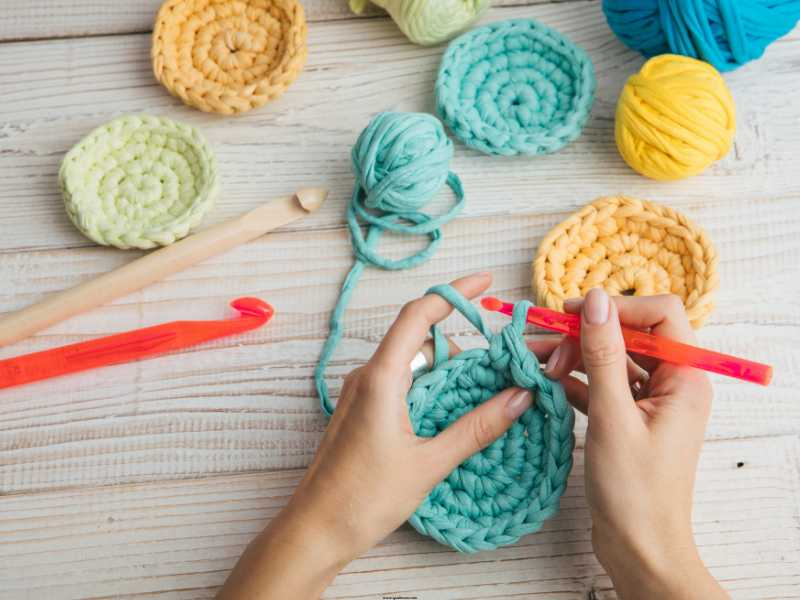
Crochet can look difficult at first, but learning one basic stitch at a time makes the process much easier.
Once I become comfortable with the movement, I can focus more on the rhythm.
It is also easy to pause and continue later.
What you’ll need
- Yarn
- A crochet hook sized for your yarn
- Scissors
- A yarn needle
How to make it
Begin by making a slip knot and practicing chain stitches.
Next, learn one basic stitch, such as single crochet.
Work in small rows and try to keep your tension comfortable.
Finish the project by securing the yarn and weaving in loose ends.
Why you’ll love it
Crochet keeps my hands busy while allowing me to create something useful.
I can start with a small square and eventually work toward scarves, blankets, bags, and other projects.
Pro Tip: Choose light-colored yarn for your first project because it is usually easier to see individual stitches.
14. Vision Board Making
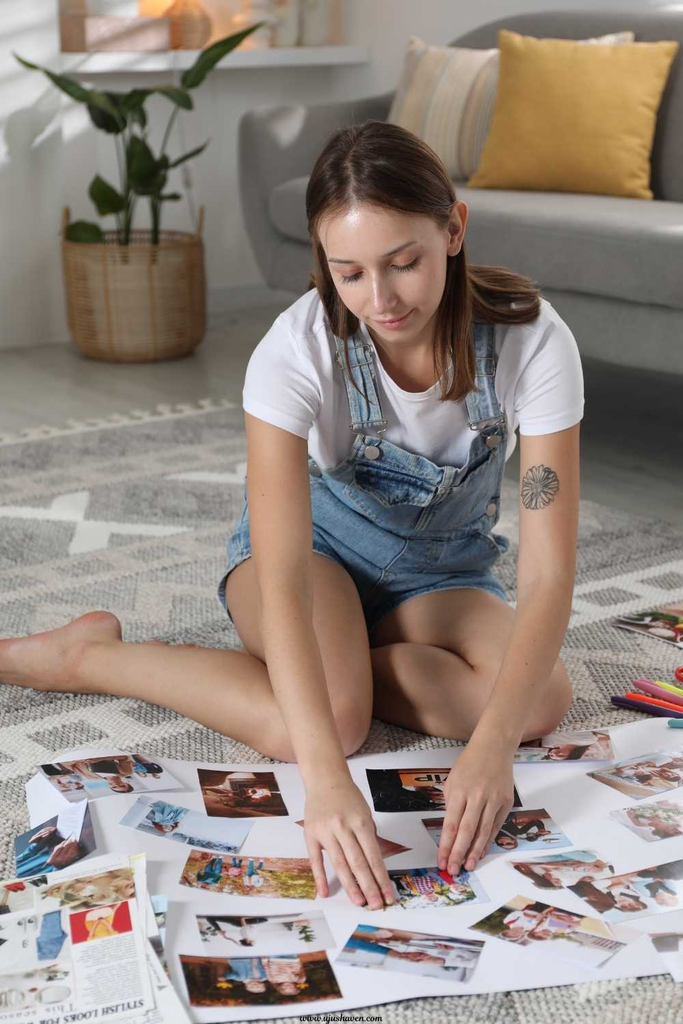
Vision boards combine creativity with personal reflection.
I enjoy choosing images, colors, words, and materials that represent things I care about.
There is no correct layout, which makes every board personal.
What you’ll need
- Poster board or corkboard
- Magazines or printed images
- Scissors
- Glue or pins
- Markers
- Optional decorative materials
How to make it
Collect images and words that connect with your goals, interests, or current priorities.
Spread everything out before attaching the pieces.
Group materials in a way that feels meaningful to you.
Add handwritten words or small details and stop when the board feels complete.
Why you’ll love it
Vision board making gives me time to think while keeping my hands busy.
The finished board can also serve as a visual reminder of what I want to focus on.
Pro Tip: Place your finished vision board somewhere you naturally see often instead of storing it away.
15. Origami
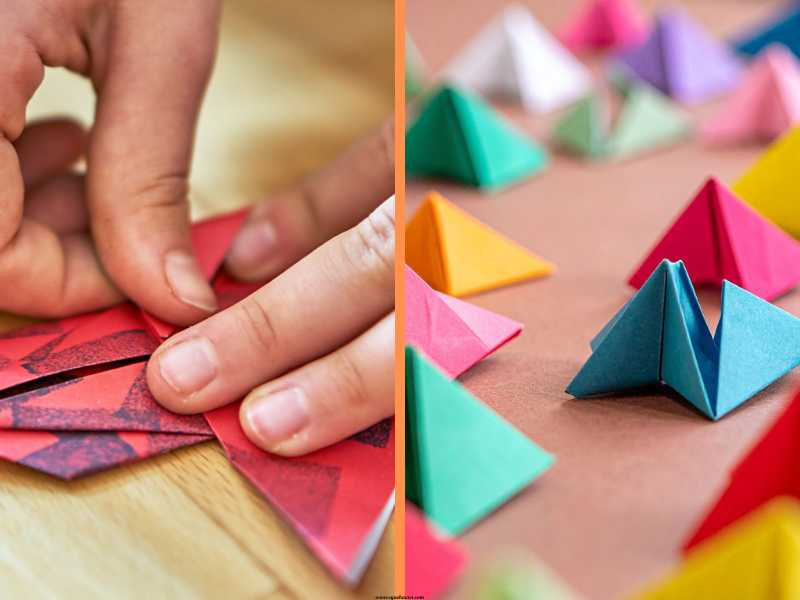
Origami is one of the most affordable relaxing crafts because paper is the main material.
Each step requires attention, but beginner projects can be simple enough to follow without feeling overwhelming.
I love watching a flat piece of paper slowly change into something new.
What you’ll need
- Square paper
- A clean, flat surface
- A beginner-friendly pattern
How to make it
Choose an easy project such as a box, flower, or simple animal.
Follow each fold in order and crease the paper carefully.
If you make a mistake, unfold the paper gently and try again.
Continue until the shape is complete.
Why you’ll love it
Origami takes very little space and requires almost no expensive equipment.
It is perfect when I want a quick creative project.
Pro Tip: Start with larger paper because small sheets can make beginner folds more difficult.
Read this next: 16+ Creative Arts and Crafts Birthday Party Ideas
How to Choose the Right Relaxing Craft for Your Mood
I do not think every craft works for every mood.
Sometimes I want repetition. Other times I want color, texture, or complete creative freedom.
Choosing the right project can make a big difference.
When your mind won’t stop racing
I usually choose a repetitive craft.
Crochet, embroidery, Zentangle drawing, and simple origami all provide patterns that give my attention a clear direction.
I can focus on the next stitch or fold instead of trying to solve everything at once.
When you’re feeling emotionally heavy
Sensory crafts can be a good option.
Clay, candle making, and other hands-on projects involve texture and physical movement.
I find that working directly with materials can help me feel more connected to the present moment.
When you need a creativity boost
I prefer open-ended projects.
Watercolor, collage, and vision boards allow me to experiment without following strict rules.
These are good choices when I want to play with ideas rather than follow precise instructions.
When you only have a little time
I choose projects that can be completed quickly.
A small origami piece, a Zentangle drawing, or a simple journal page can provide a sense of completion without taking an entire afternoon.
When you just want company with yourself
Nature journaling, hand-lettering, and pressed flower projects work especially well for quiet time.
These activities encourage me to notice, observe, and create at a slower pace.
For me, the right relaxing craft is not necessarily the one that looks the most impressive.
It is the one that helps me become so involved in the activity that I stop reaching for my phone.
That is often a good sign that I found something I genuinely enjoy.
Relaxing Crafts for Adults – Your Questions Answered
What are relaxing crafts for adults to do at home?
Some great relaxing crafts for adults include watercolor painting, paper collage, candle making, crochet, air-dry clay projects, and Zentangle drawing.
Most can be done at home with basic supplies and a small workspace.
Are there relaxing crafts for adults at home that don’t need many supplies?
Yes. Origami can be started with paper, while Zentangle drawing only requires paper and a pen.
Nature journaling can also be very simple if you already have a notebook and pencil.
What relaxing crafts are best for adults with no artistic experience?
Paper collage, candle making, soap making, origami, and basic clay projects are great for beginners.
You do not need to be an artist. Choosing a simple project and learning as you go is enough.
How do I make craft time actually feel relaxing and not like another task?
I recommend choosing projects without deadlines and avoiding the pressure to create something perfect.
Set aside your phone, make your space comfortable, and give yourself permission to stop whenever you want.
If a craft begins to feel like work, simplify the project or choose another activity.
Conclusion
I believe relaxing crafts for adults are about much more than filling free time.
A creative hobby can give me a chance to step away from screens, slow down, and focus on something enjoyable with my own hands.
From watercolor painting and pressed flowers to crochet, clay, and origami, there are plenty of simple projects to try. I do not need expensive supplies or professional skills to get started.
The best craft is simply the one that feels enjoyable to me.
Sometimes self-care can be as simple as sitting down with a few supplies, giving myself permission to create without pressure, and enjoying a quiet moment that belongs entirely to me.



One Comment