33 Under the Sea Craft Ideas to Keep Kids Busy
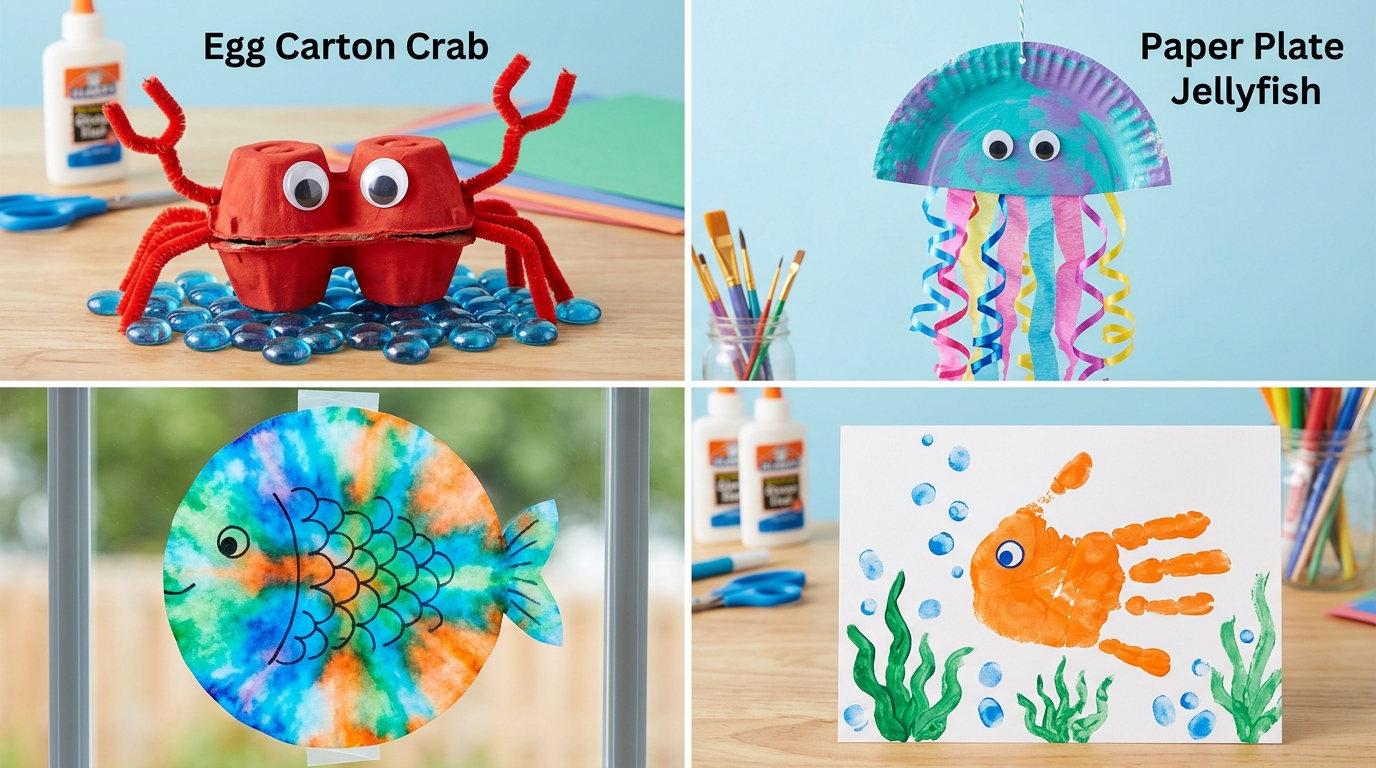
I’ve always found ocean-themed crafts to be an easy way to turn an ordinary afternoon into something creative. Kids can make colorful fish, jellyfish, turtles, sharks, whales, and other sea creatures while using materials that are often already sitting in a craft drawer or recycling bin.
What I like most about these projects is that they can work for different ages and skill levels. Younger children can paint, glue, and stamp, while older kids can try paper folding, sculpting, puppets, and more detailed scenes.
These 33 under the sea craft ideas give kids plenty of ways to create their own underwater world. I’ve included simple paper crafts, recycled-material projects, painting activities, sensory crafts, puppets, keepsakes, and larger displays.
Many projects use inexpensive supplies such as paper plates, cardboard tubes, paper bags, egg cartons, yarn, rocks, cupcake liners, and paint. That makes this collection useful for rainy-day activities, summer projects, classroom lessons, ocean units, or a themed kids’ party.
Save this for later
Table of Contents
I also like that several crafts can become learning activities. While making a turtle or whale, for example, I can talk about the animal, its habitat, body features, and role in the ocean. That gives the craft a purpose beyond simply making something cute.
Key Takeaways
- I can use recycled household materials for many of these ocean crafts.
- Simple projects such as jellyfish and paper fish work well for younger children.
- Older kids can try origami, watercolor, rock painting, and dioramas.
- Sensory projects provide opportunities to explore textures, paint, paper, and sand.
- Handprint crafts make especially nice keepsakes because they capture a child’s size at a particular age.
- Adult supervision is important when projects involve scissors, hot materials, small pieces, or craft sealants.
Related article: 19 Rainbow Crafts for Kids That Brighten Any Rainy Day
1. Paper Plate Jellyfish
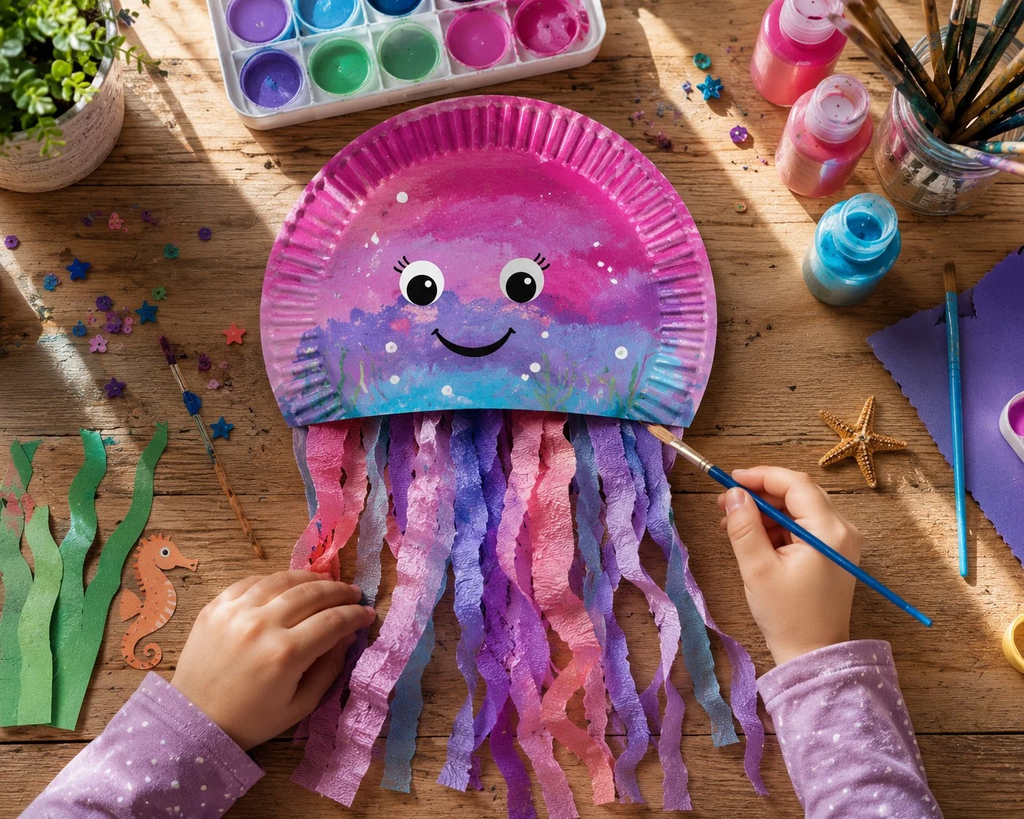
I like paper plate jellyfish when I need a craft that has very few steps. A paper plate becomes the rounded body, while strips of crepe paper create the long tentacles underneath.
I usually let kids choose their own colors rather than trying to make the jellyfish look realistic. Blues, pinks, purples, and even bright rainbow colors can work beautifully for an underwater display.
After painting the plate, I attach several paper streamers underneath. Younger children can help with painting and gluing, while an adult can handle any cutting that is needed.
Pro Tip: Punch a small hole near the top and add string so finished jellyfish can hang from a bedroom ceiling, classroom display, or ocean-themed party area.
2. Toilet Roll Octopus
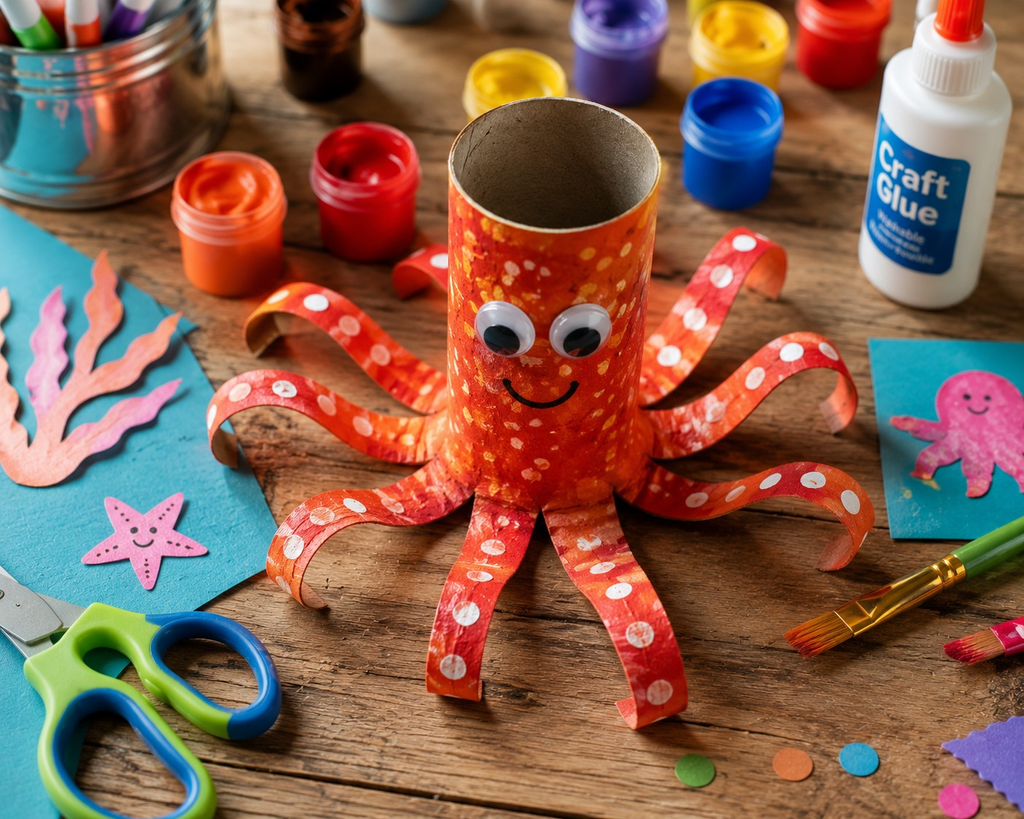
An empty toilet paper tube makes a surprisingly good starting point for an octopus. I like this idea because it gives kids a simple introduction to crafting with recycled materials.
After painting the tube, I cut the lower section into eight strips. The strips can be gently curled around a pencil to create rounded tentacles.
A couple of googly eyes and a drawn smile are enough to finish the face. Kids can also add spots, stripes, or suction-cup details with markers.
Pro Tip: If you are making this craft with a group, pre-cut the tentacles before the activity begins. It makes the project much easier to manage with younger children.
3. Handprint Crab
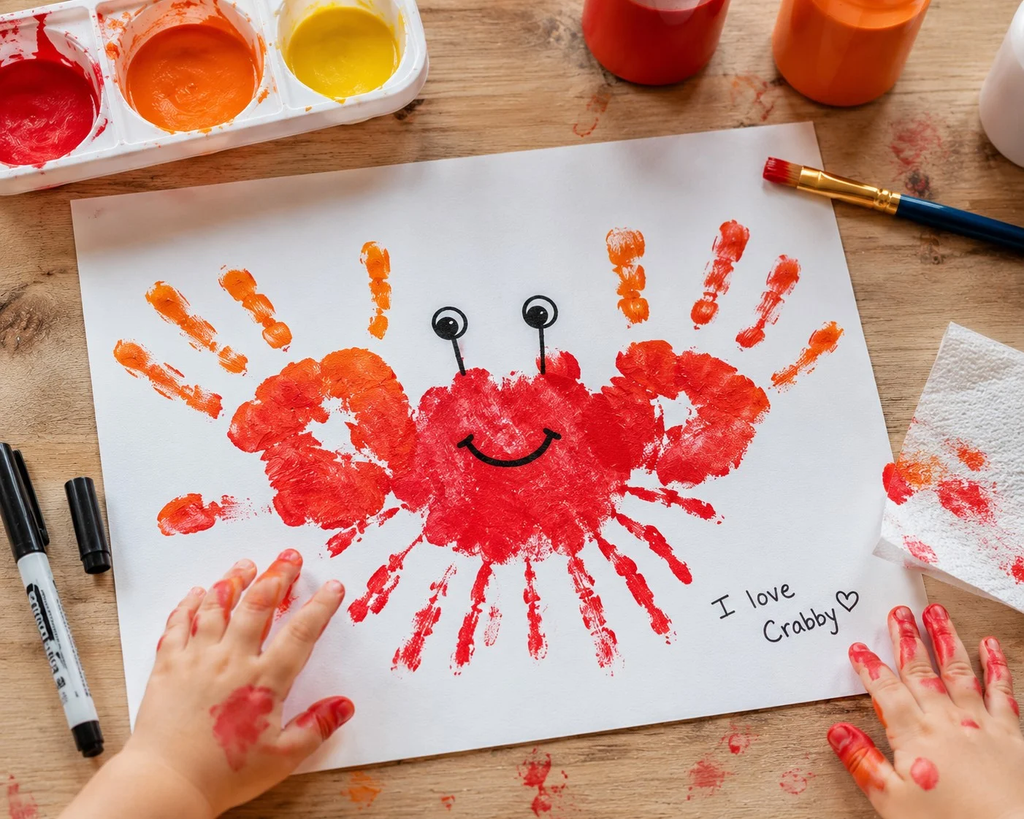
Handprint crafts have a special place in my craft ideas because the finished artwork becomes a record of how small a child’s hands once were.
For a crab, I use washable red or orange paint and white paper. Two painted handprints can form the crab’s body and claws, with the fingers creating the legs.
Once the paint dries, I add eyes and small facial details with a marker. Children can also paint sand, bubbles, shells, or waves around their crab.
I would keep a few of these handprint projects from different years because comparing the hand sizes later can make the artwork even more meaningful.
4. Sock Puppet Fish
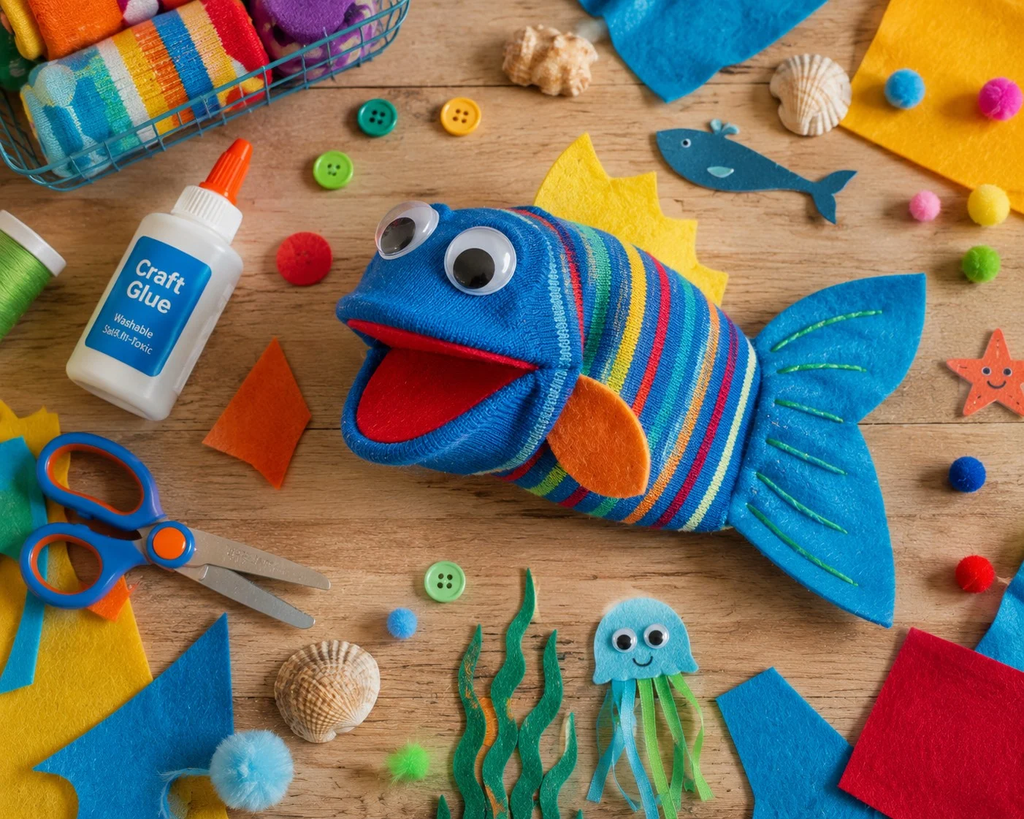
An old clean sock can become a colorful fish puppet with just a few additional materials. I like this craft because the activity does not stop when the fish is finished.
I use felt for the fins and tail, then attach googly eyes and other decorations to the sock. Children can choose unusual colors and patterns instead of copying a real fish.
Once the glue has dried properly, the puppet can become part of an ocean story. Kids can create several fish and act out their own underwater adventure.
Pro Tip: Make one simple background from blue paper or fabric. It gives children a defined stage for their puppet show without requiring a complicated setup.
5. Paper Bag Octopus
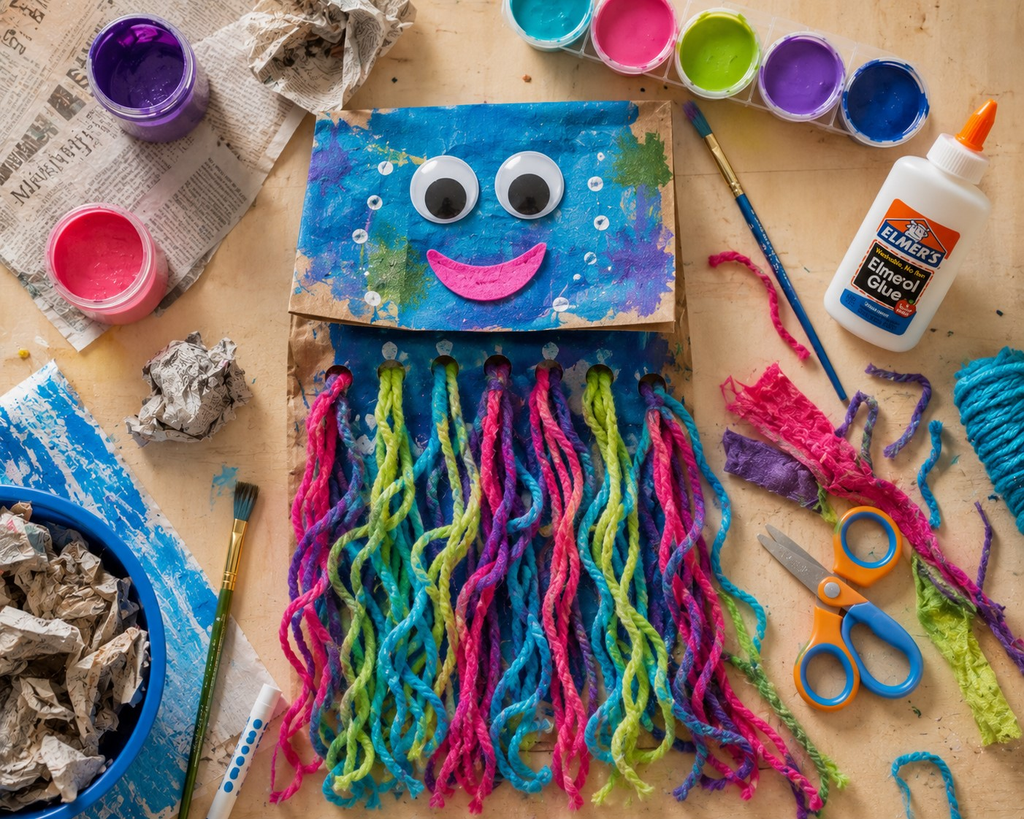
Paper lunch bags are another useful craft material that can be turned into sea creatures. For this octopus, I stuff the bag lightly with crumpled paper before closing it.
The outside can be painted any color the child chooses. Yarn, ribbon, or strips of paper can then be attached underneath to represent the eight tentacles.
I find this especially useful for group activities because each child can personalize the same basic design differently. One child might make a purple octopus, while another creates a striped orange one.
For a classroom, the finished octopuses can be displayed together as a colorful underwater collection.
6. Watercolor Fish Painting
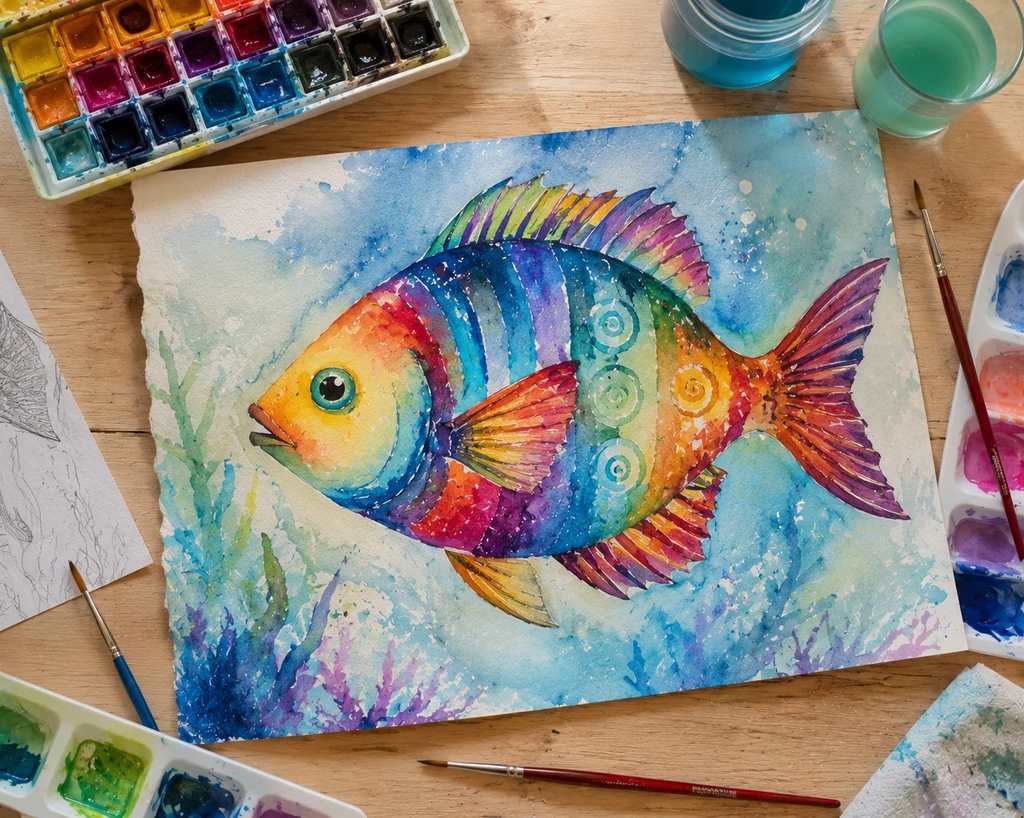
Watercolor fish give older children more freedom to experiment with patterns, blending, and color. I usually start with a simple fish outline so the child can focus on the painting rather than drawing a complicated shape.
They can fill the body with stripes, dots, scales, waves, or completely imaginary patterns. A blue or green background can then turn the individual fish into part of an ocean scene.
Thicker watercolor paper is worth using because lightweight printer paper can buckle when it becomes wet. I also recommend giving children a separate area for mixing colors so the main painting stays cleaner.
Pro Tip: Leave some white space around the fish. A painting does not need to be covered completely to look finished and balanced.
7. Clothespin Shark
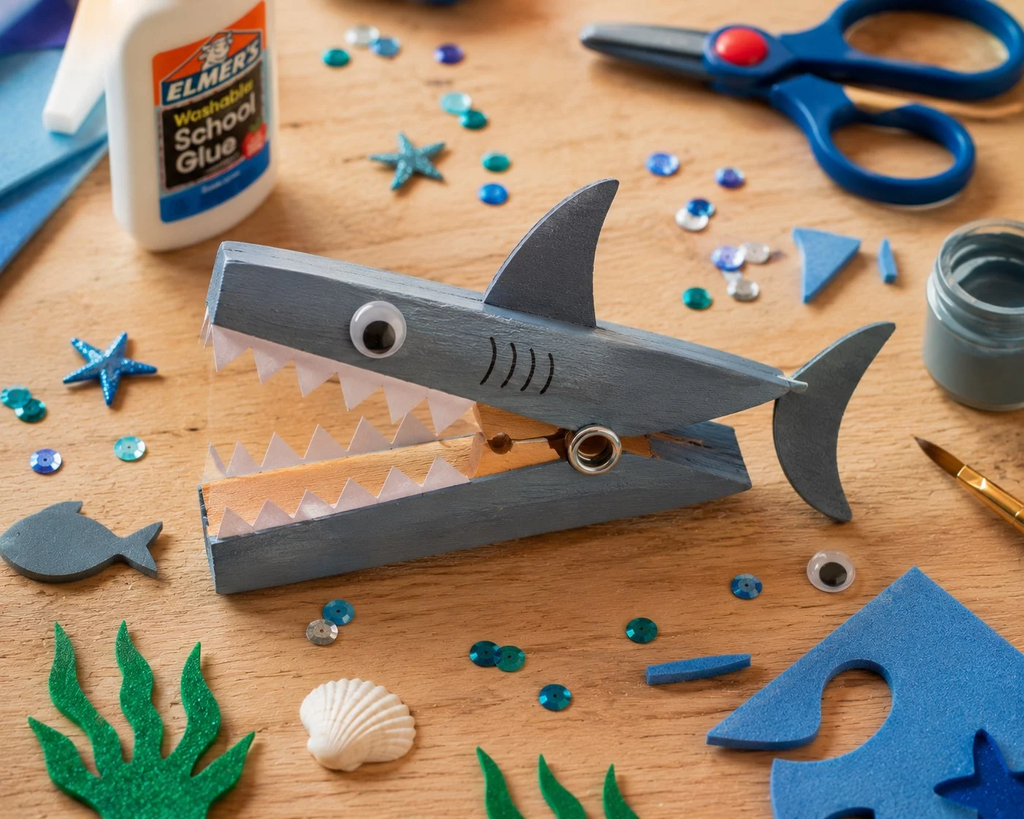
A wooden clothespin can become a small shark with a working mouth. I like this craft because children can actually play with the finished creation.
After painting the clothespin gray, I add a small fin and white paper teeth. The opening of the clothespin naturally creates the shark’s mouth.
Googly eyes complete the face, but older children can also draw gills and fins with a fine marker. The finished sharks can “bite” paper fish or pretend objects during imaginative play.
Pro Tip: Use cardstock rather than very thin paper for the teeth. It holds its shape better when children repeatedly open and close the clothespin.
8. Egg Carton Sea Turtle
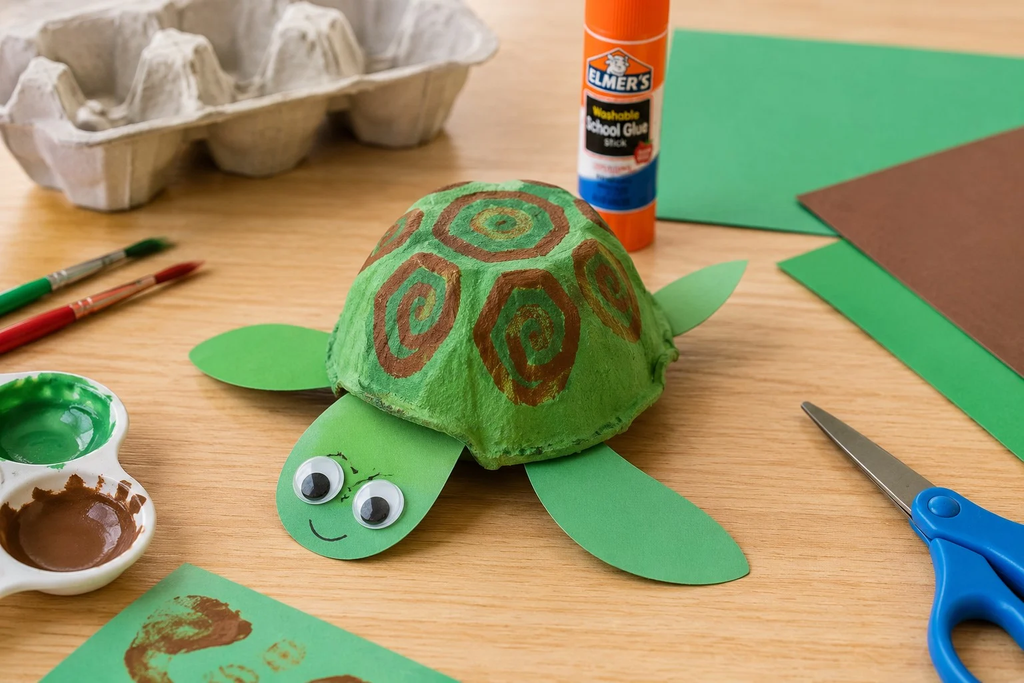
An egg carton cup makes a great textured turtle shell. I like this project because it combines crafting with a simple recycling lesson.
I cut one cup from the carton and paint it green or brown. The turtle’s head, flippers, and tail can be cut from cardstock and attached underneath the shell.
Kids can add spots or patterns to the shell with paint. If you are working with preschoolers, an adult can prepare the cardboard pieces beforehand so children can concentrate on painting and assembly.
This is also an easy opportunity to talk about how everyday packaging can sometimes be reused instead of immediately thrown away.
9. Bubble Wrap Jellyfish Printing
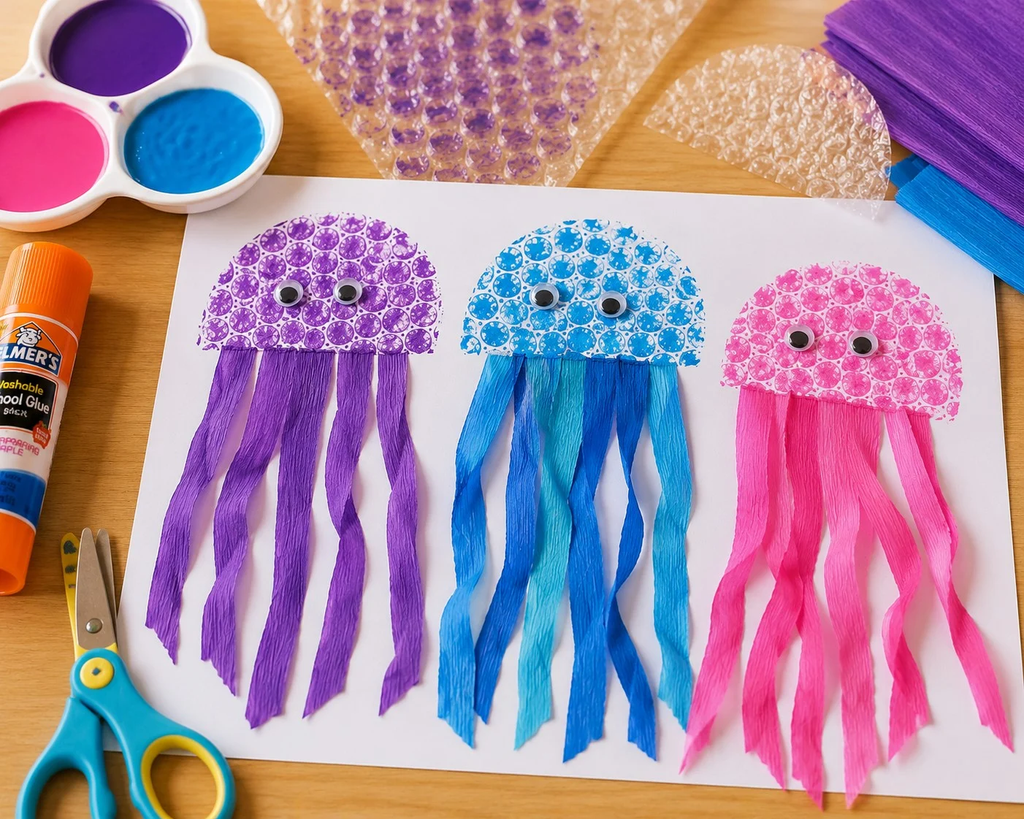
Bubble wrap creates an interesting texture that works especially well for jellyfish bodies. I cut a rounded piece of bubble wrap, apply paint to it, and press it onto paper.
The small raised bubbles leave a patterned print behind. After the paint dries, I add long paper or crepe-paper tentacles underneath.
I like making several prints in different colors because the collection quickly becomes an underwater scene. It is also a nice way to introduce the basic idea of printmaking without complicated equipment.
Pro Tip: Use washable, child-friendly paint and protect the table before starting. Bubble wrap can slide around more than a regular sponge.
10. Salt Dough Sea Shells
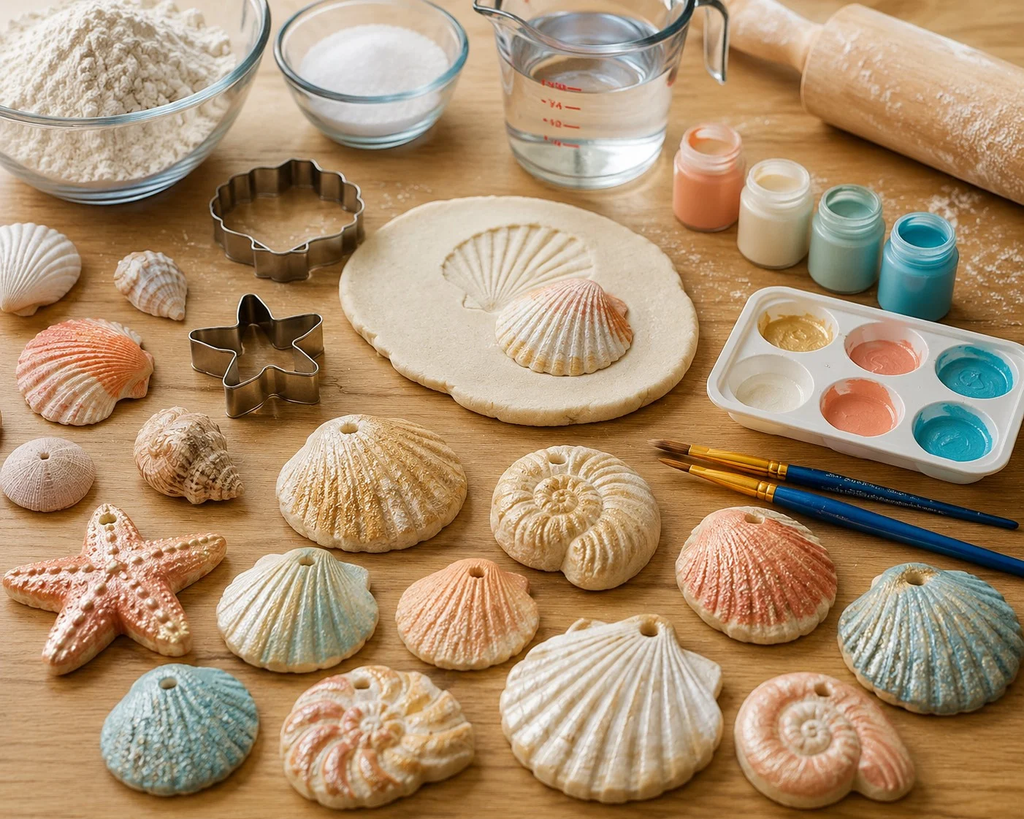
Salt dough shells give kids an opportunity to make something that feels more like a small sculpture than a flat craft.
A basic dough can be made with flour, salt, and water. For a simple batch, I use two parts flour, one part salt, and roughly one part water, adding the water gradually until the dough comes together.
The dough can be rolled out and pressed with clean shells or textured objects to create impressions. Children can then cut individual shell shapes before the pieces are dried according to the recipe and oven instructions being used.
Afterward, I like using soft beach-inspired shades such as cream, peach, tan, and pale blue.
Pro Tip: Let the finished pieces cool completely before painting. They are much easier for children to decorate once they are firm and cool to the touch.
11. Paper Chain Sea Snake
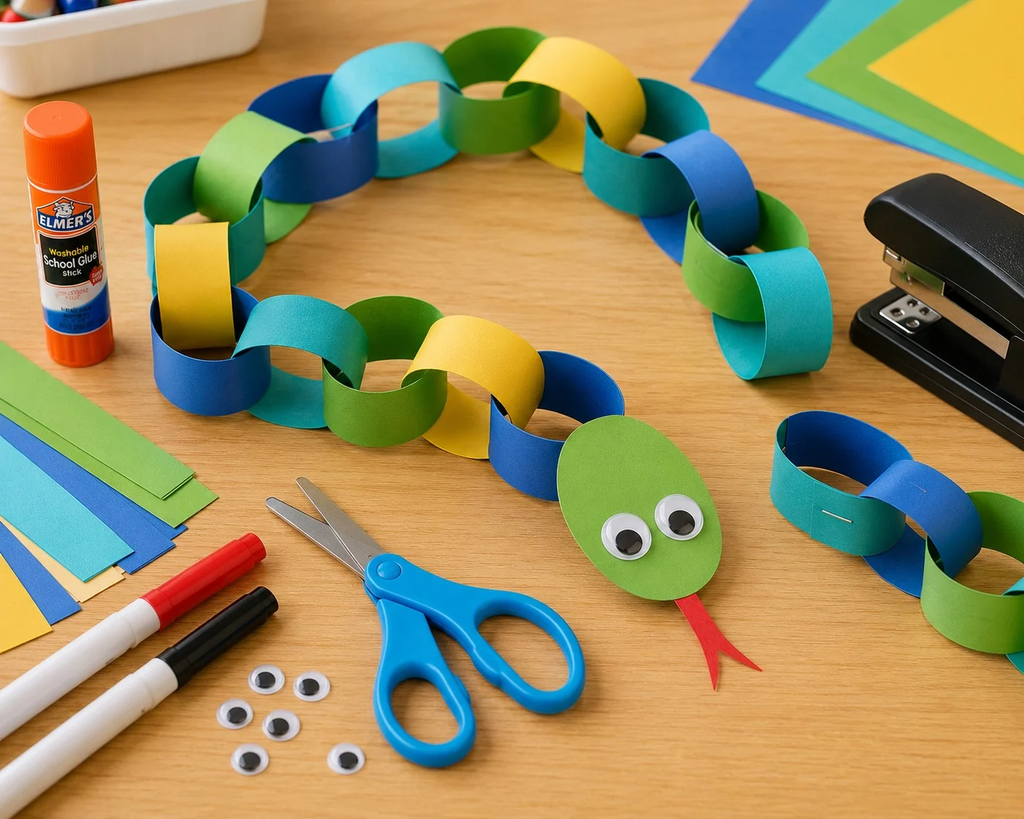
Paper chains are simple enough for younger children while still giving them plenty of room to make creative choices.
I use strips of colored paper and connect them into loops to create the snake’s long body. A larger paper shape at one end can become the head.
After adding eyes and a forked tongue, I can make the snake as short or long as I want. This makes it easy to adapt the activity to the amount of paper available.
For a classroom, several paper snakes can be hung across a bulletin board as part of an ocean-themed display.
12. Sponge Painted Coral Reef
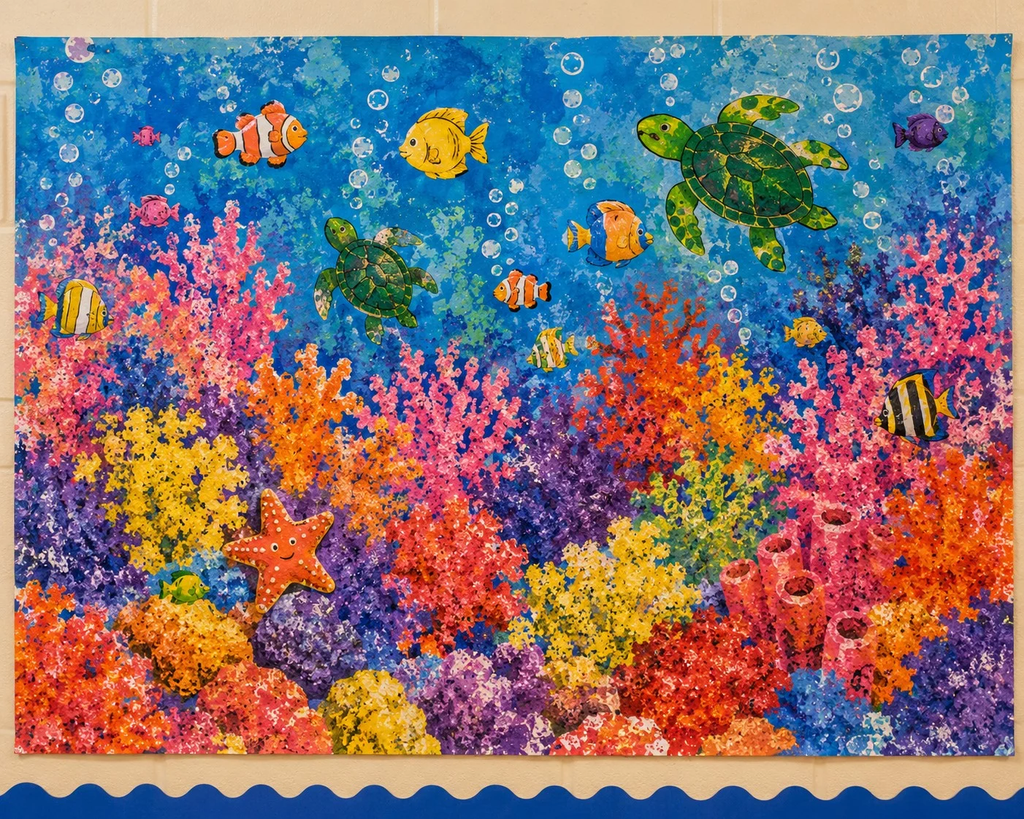
A coral reef scene is a good choice when several children need to contribute to one large project. Instead of giving every child a separate sheet, I like creating one large ocean background.
Different sponge shapes can be dipped into paint and pressed onto the paper to form coral. Bright colors such as pink, orange, purple, and yellow make the reef stand out.
Children can then add fish, turtles, bubbles, seaweed, and other details. The result becomes a collaborative piece of artwork rather than a collection of separate crafts.
Pro Tip: Give each child a specific section of the mural or a particular sea creature to decorate. This helps prevent everyone from painting over the same area.
13. Origami Fish
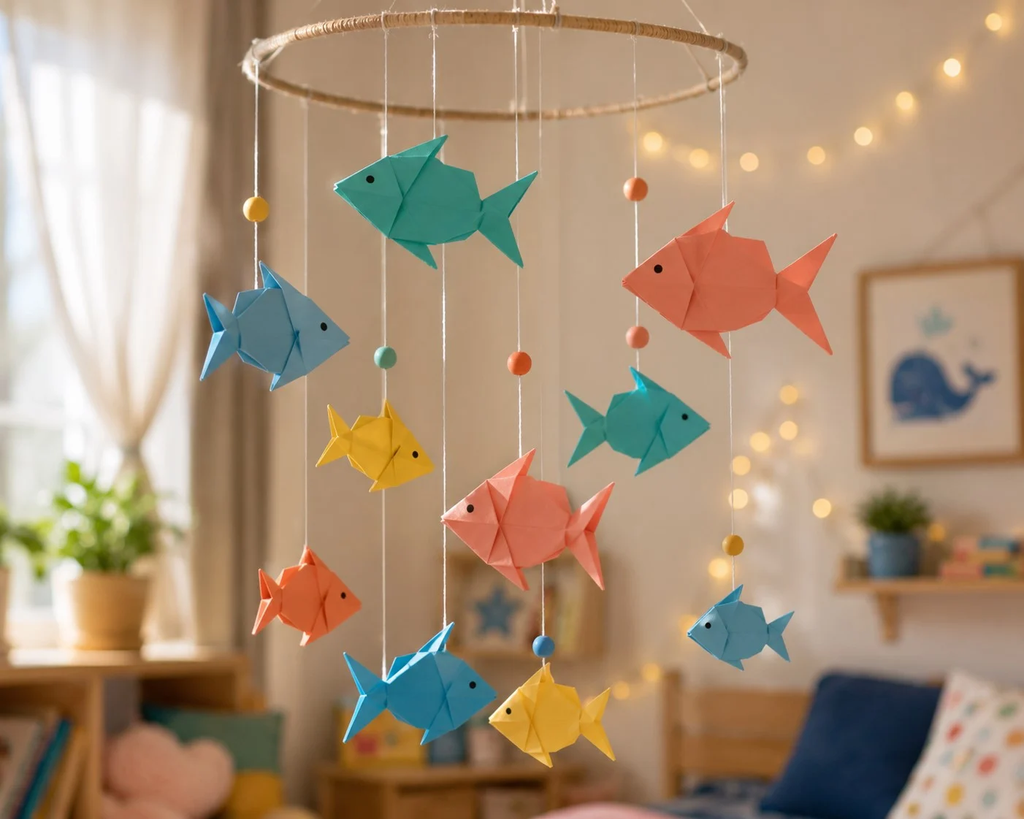
Origami fish are a good step up for children who are comfortable following several folding instructions.
I start with square pieces of paper and demonstrate each fold slowly. Once the basic fish shape is complete, children can add eyes, scales, fins, and patterns with markers.
The finished fish can also become part of a hanging mobile. Making fish in several sizes creates a simple underwater display with plenty of movement.
I would choose thicker origami paper for beginners because it generally holds folds more clearly than very thin paper.
14. Paper Plate Shark
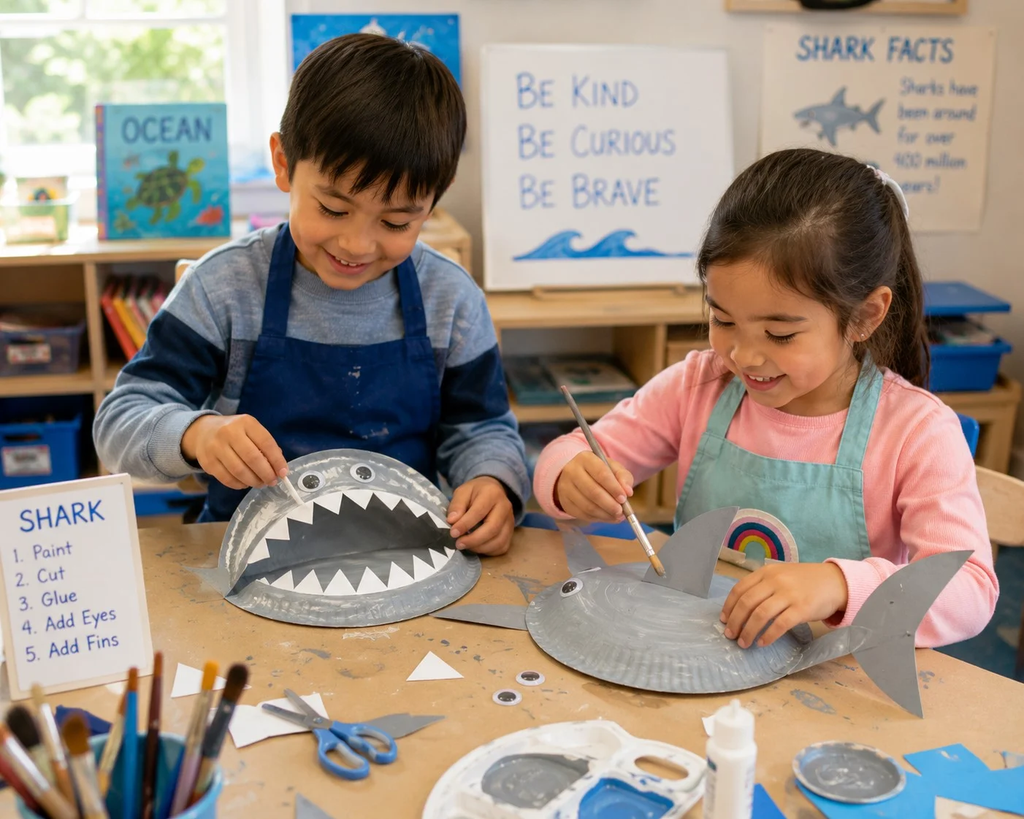
Paper plate sharks can look dramatic without requiring advanced crafting skills. I use paper plates as the main body and create a large mouth with a row of paper teeth.
Gray paint gives the shark a traditional look, but children can choose another color if they want to create a fictional shark.
The finished shark can become a wall decoration or a prop for pretend play. I especially like this project for an ocean-themed classroom or children’s party because the supplies are inexpensive and easy to prepare in advance.
15. Yarn Wrapped Starfish
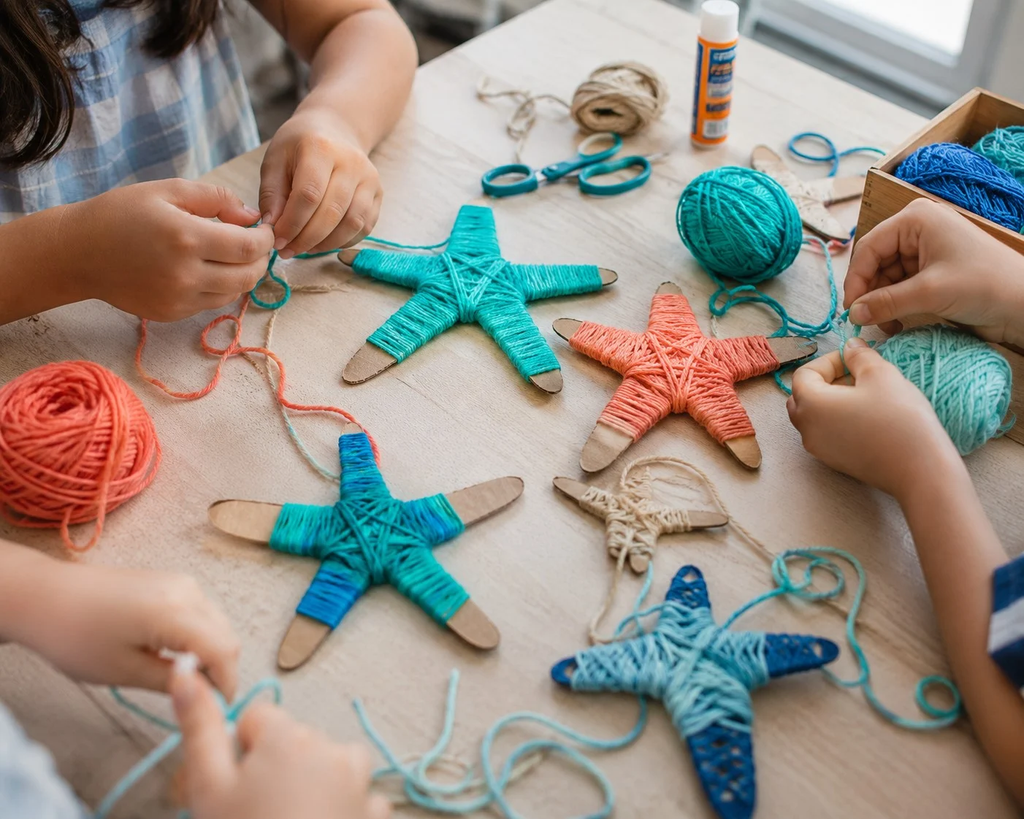
A cardboard starfish covered in yarn gives kids a completely different texture from the usual paint-and-paper projects.
I cut a five-armed starfish from sturdy cardboard and make small notches near the tips. These notches help hold the yarn while children wrap it around the shape.
Different colors can be layered together to make stripes or sections. Once the cardboard is covered, I secure the loose end and use the finished starfish as a hanging decoration.
This craft can also help younger children practice controlled hand movements as they guide yarn around the cardboard.
16. Rock Painting Sea Creatures
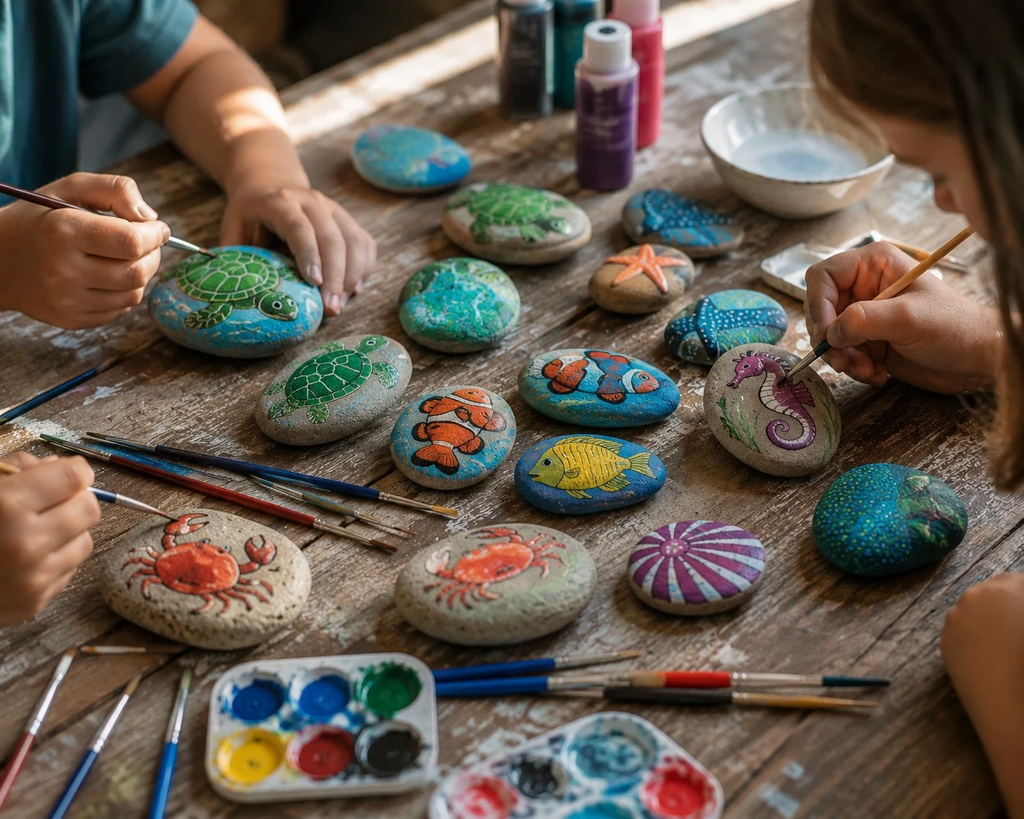
I enjoy rock painting because the craft starts with something found outdoors and ends with a completely personalized piece of art.
Smooth, clean rocks work best. Kids can paint fish, turtles, crabs, whales, seahorses, or even imaginary underwater creatures.
Acrylic paint gives good coverage, but I would keep the activity in a well-ventilated area and follow the instructions on the specific paint or sealant being used.
Pro Tip: If you plan to place painted rocks outdoors, use a sealant labeled for outdoor projects and allow everything to dry fully according to the manufacturer’s directions.
Also read: 23 Fun and Easy DIY Candles to Make at Home
17. Cupcake Liner Jellyfish
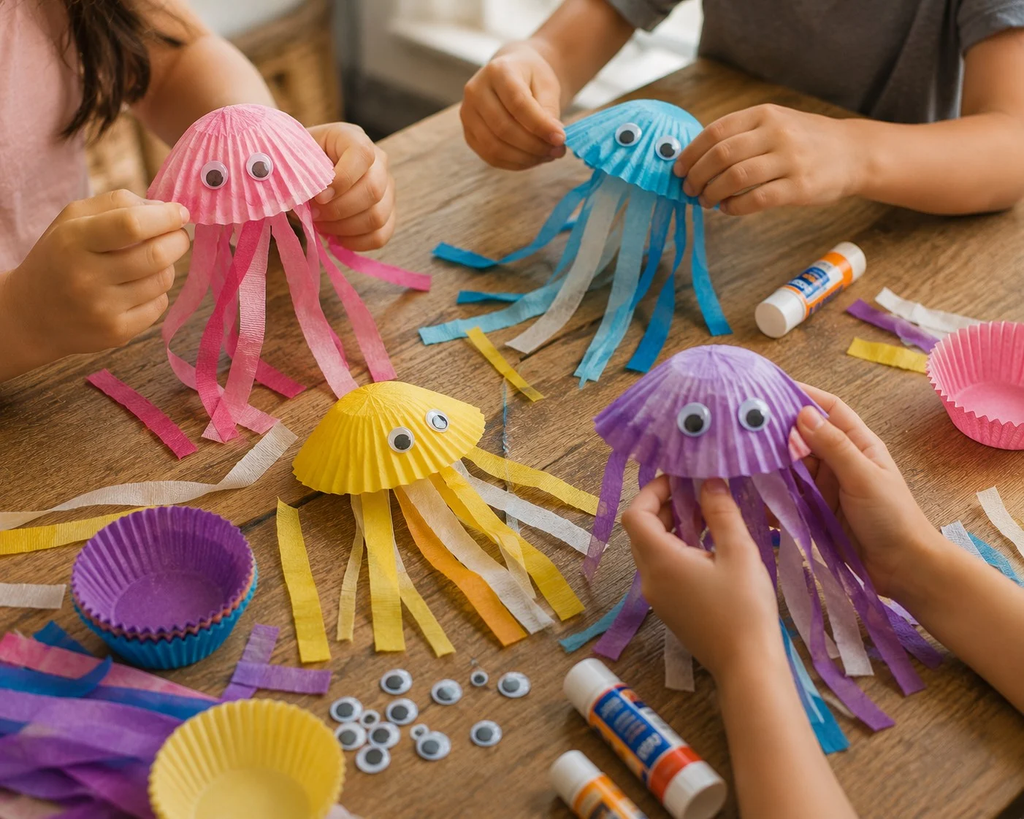
Cupcake liners make an easy jellyfish body because their shape already resembles a rounded dome.
I flatten a liner slightly, then add strips of crepe paper underneath for the tentacles. Googly eyes and a small drawn smile finish the face.
A piece of string through the top turns each jellyfish into a hanging decoration. Because the basic craft is quick, I find it useful when children want to make several creatures rather than spending a long time on one.
This could also work well as a short activity at an ocean-themed party.
18. Cardboard Tube Submarine
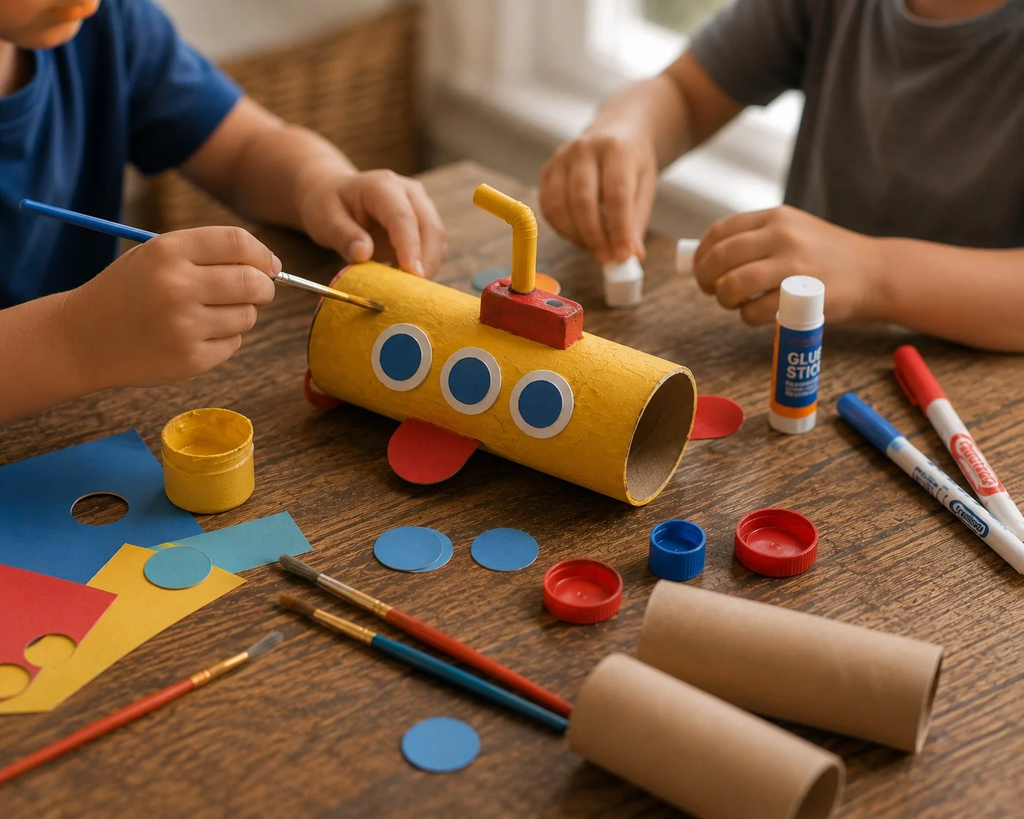
A cardboard tube can become a playful little submarine with some paint and cardstock details.
I usually paint the tube yellow, red, or another bright color before adding round portholes along the sides. A small cardstock periscope on top gives the submarine its recognizable shape.
Kids can draw buttons, control panels, windows, and other imaginary equipment. Once finished, the submarine becomes a prop for stories about exploring the ocean.
I like pairing this craft with an age-appropriate book or lesson about submarines and underwater exploration.
19. Coffee Filter Blowfish
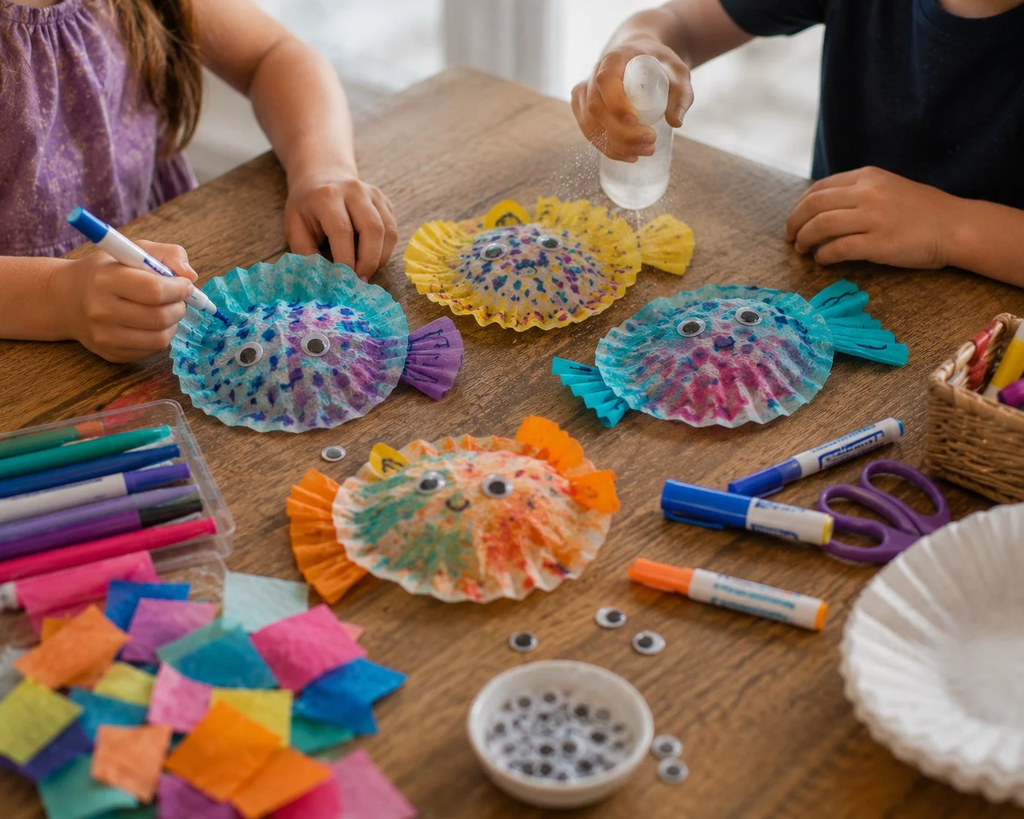
Coffee filters are excellent for creating soft, blended colors. I let children cover a flat filter with washable markers in different shades.
A light mist of water causes the marker colors to spread into one another. Once the filter has dried, it can be gathered into a rounded shape to resemble a pufferfish.
Paper or tissue details can be added around the outside, followed by eyes and other facial features.
Pro Tip: Place the filter on a tray or protected surface before spraying it. The colors can travel farther than expected as the paper becomes wet.
20. Pipe Cleaner Crabs
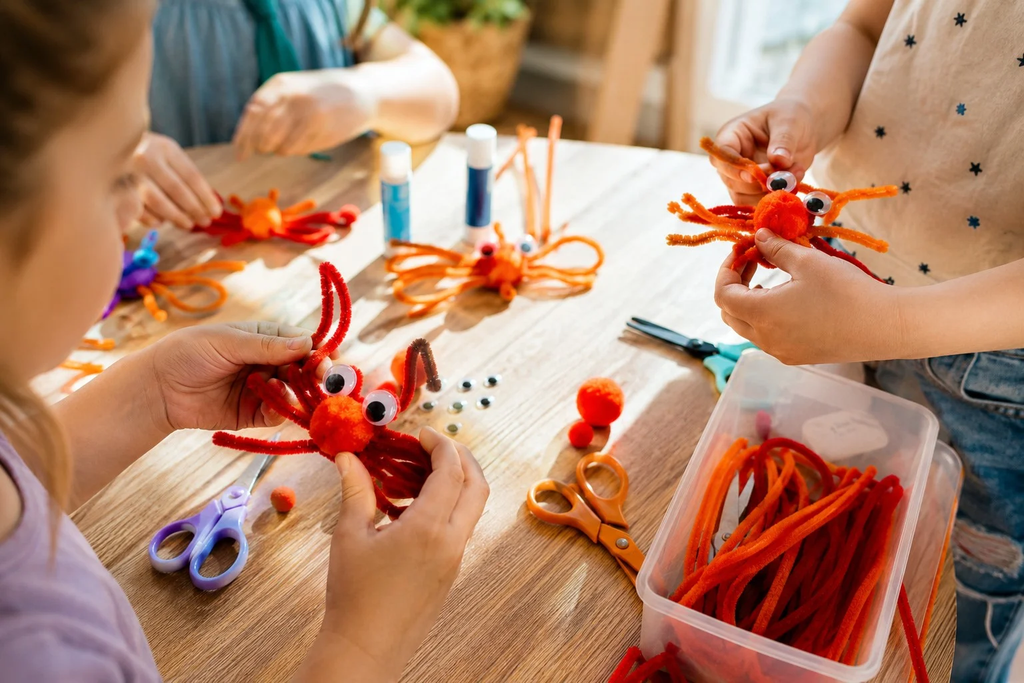
Pipe cleaners are flexible enough for children to bend into simple sea creatures without complicated construction.
For a crab, I form the body in the center and use additional pipe cleaners for the legs. The front pieces can be bent upward to create claws.
A small pom-pom can provide the body, with googly eyes attached on top. I like this project for younger children because the bending and twisting provide plenty of hands-on activity.
Adults should check the finished pieces for sharp ends before children use them for play.
21. Paper Bag Puppet Dolphin
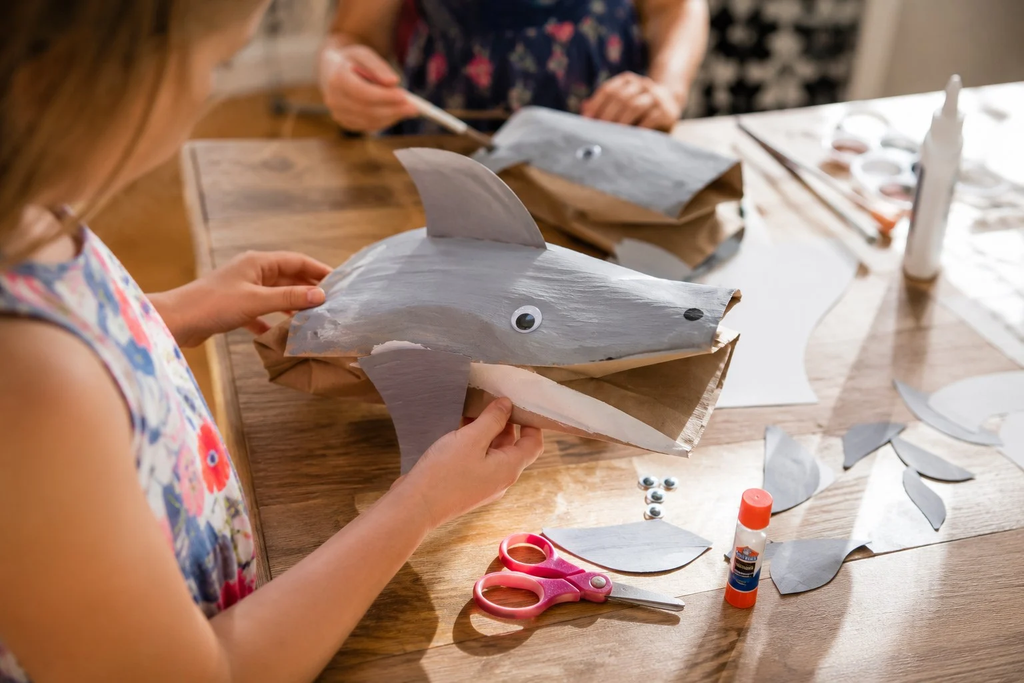
A paper lunch bag can become a dolphin puppet with a little paint and cardstock.
I use gray for the main body and add a lighter belly. Cardstock fins and a dorsal fin give the dolphin its shape, while the bottom flap can be used as the mouth.
Once the puppet is dry, children can create their own ocean story. Making several sea animal puppets at the same time can turn the activity into a small puppet theater.
I especially like this idea when the craft needs to lead naturally into imaginative play.
22. Handprint Whale
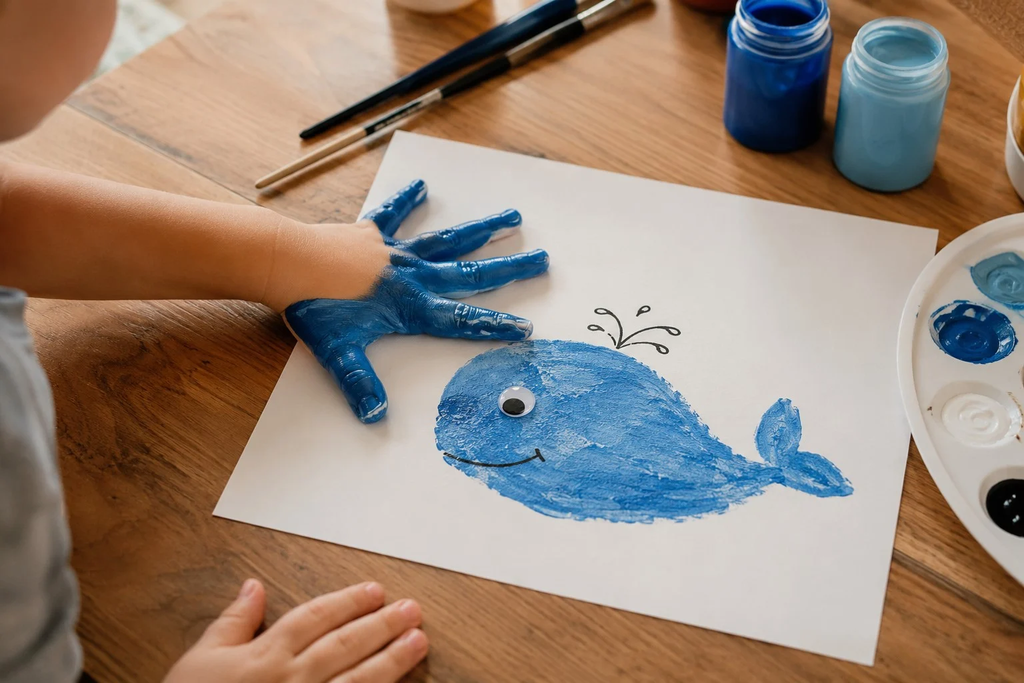
Handprint whales are another keepsake I would save rather than immediately putting away with ordinary artwork.
A painted handprint can form the whale’s body, with the thumb or fingers helping create the tail depending on the design. Once the paint dries, I add an eye, mouth, and water spout.
Children can paint waves and bubbles around the whale to complete the scene.
I recommend writing the child’s name and date on the back. Years later, that small detail can make the artwork much more meaningful.
23. Straw Blown Octopus
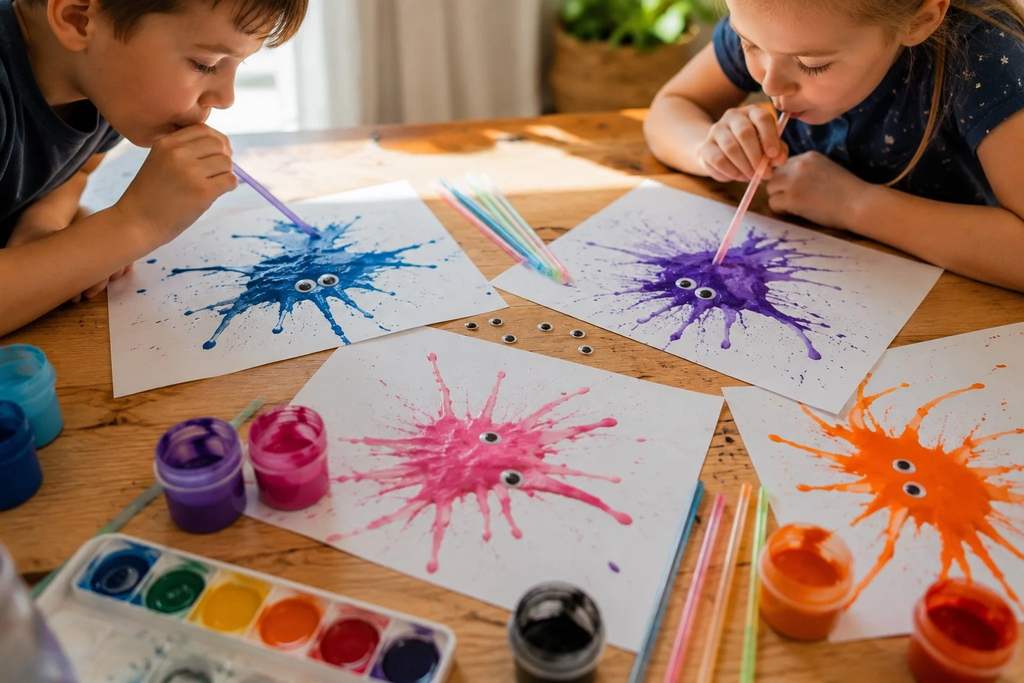
This is one of those crafts where the final result is different every time. I place a small amount of washable paint on paper and let the child blow it outward through a straw.
The spreading paint creates irregular tentacle-like lines. Once the paint dries, googly eyes can be added near the center.
Adult supervision is important here because children should blow through the straw rather than accidentally inhale paint. I would also use washable, child-appropriate paint and demonstrate the technique first.
The unpredictable shapes are part of the fun, so I would not worry about making every octopus look the same.
24. Tissue Paper Fish Bowl
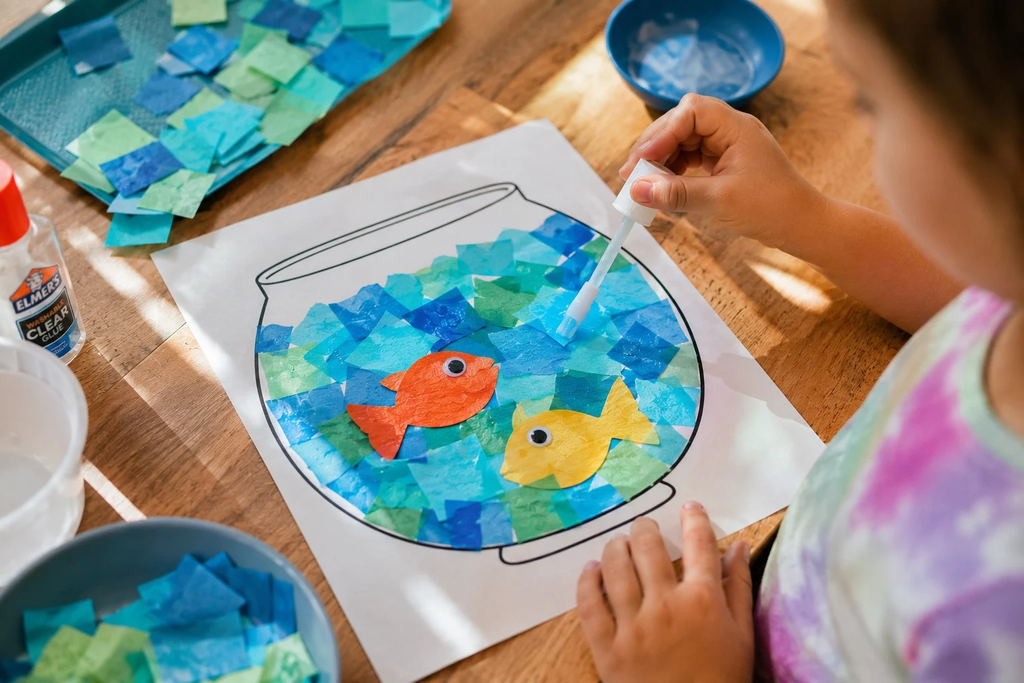
Tissue paper can create a colorful transparent effect when layered inside a fish bowl outline.
I use blue, green, and aqua pieces for the water, then add small orange or yellow fish. The pieces are attached to a cardstock outline with liquid glue.
Once everything dries, the artwork can be displayed near a window where natural light passes through the thinner areas.
For younger children, tearing the tissue paper into small pieces can become part of the activity itself.
25. Foam Sea Horse
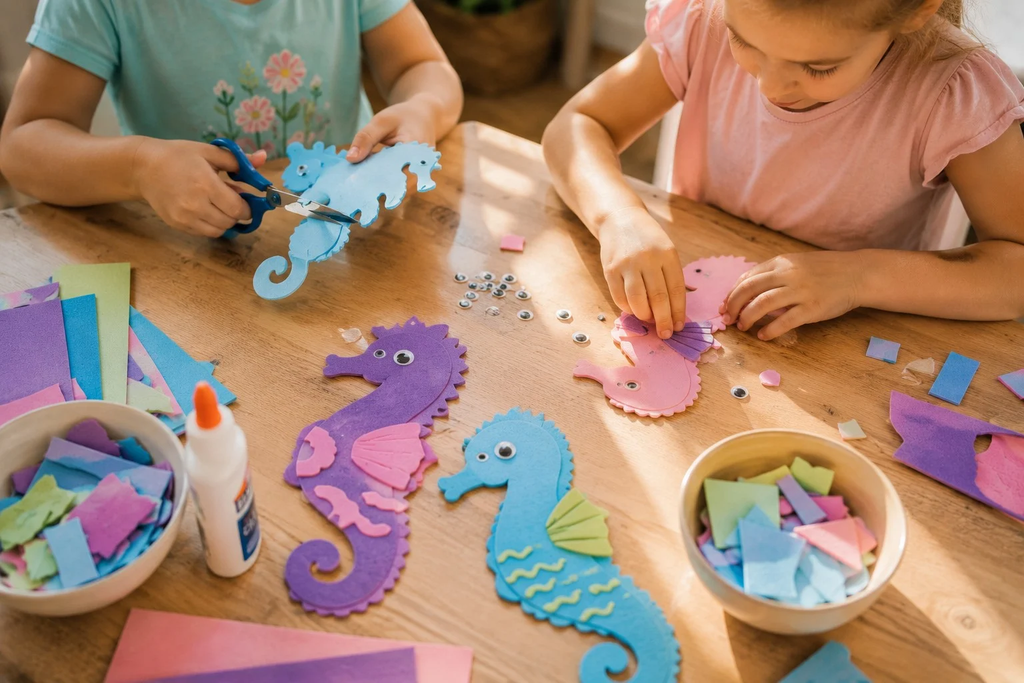
Seahorses have a distinctive shape that makes them fun for kids to recreate with craft foam.
I draw a simple seahorse outline and cut it from a foam sheet. Smaller pieces of contrasting foam can be added as spots, fins, and decorative patterns.
A googly eye completes the face, while gently curling the tail helps emphasize the familiar seahorse shape.
This is also a nice opportunity to share a few age-appropriate facts about seahorses while the children work. Craft time can easily become a small ocean science lesson.
26. Newspaper Whale
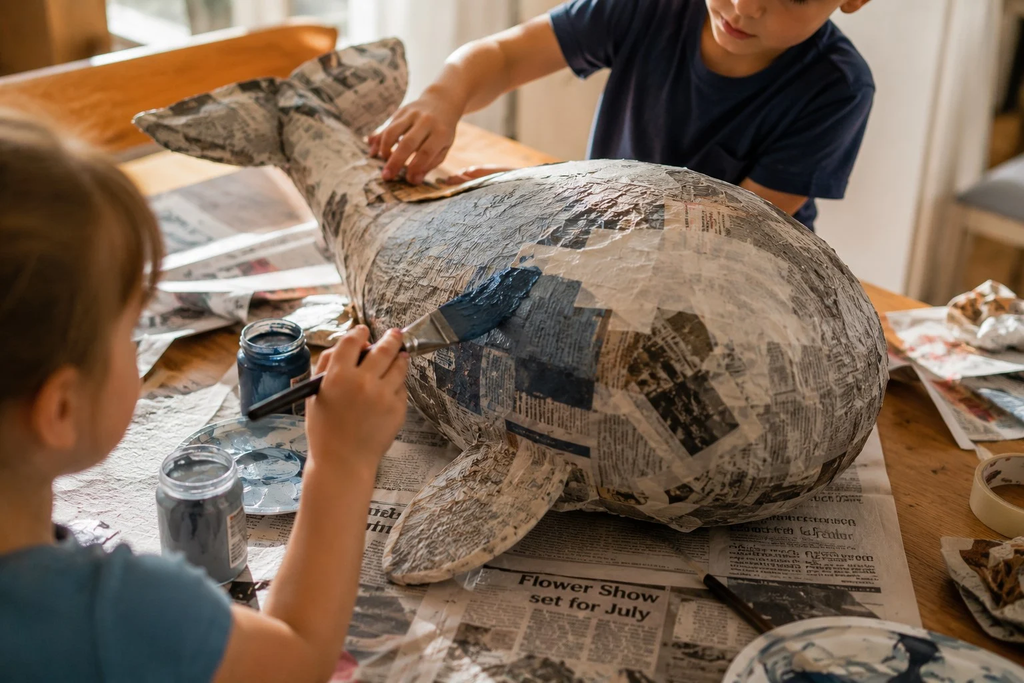
Old newspaper can be turned into a lightweight whale sculpture with some shaping and paint.
I crumple and layer newspaper into a rough whale form, then secure the pieces with masking tape. Once the shape is stable, I paint it in blue or gray.
Children can add a large eye, smile, fins, and a water spout. The three-dimensional shape makes this project feel different from a typical paper craft.
I like it as a recycling activity because the newspaper gets a second use before becoming waste.
27. Paper Plate Crab
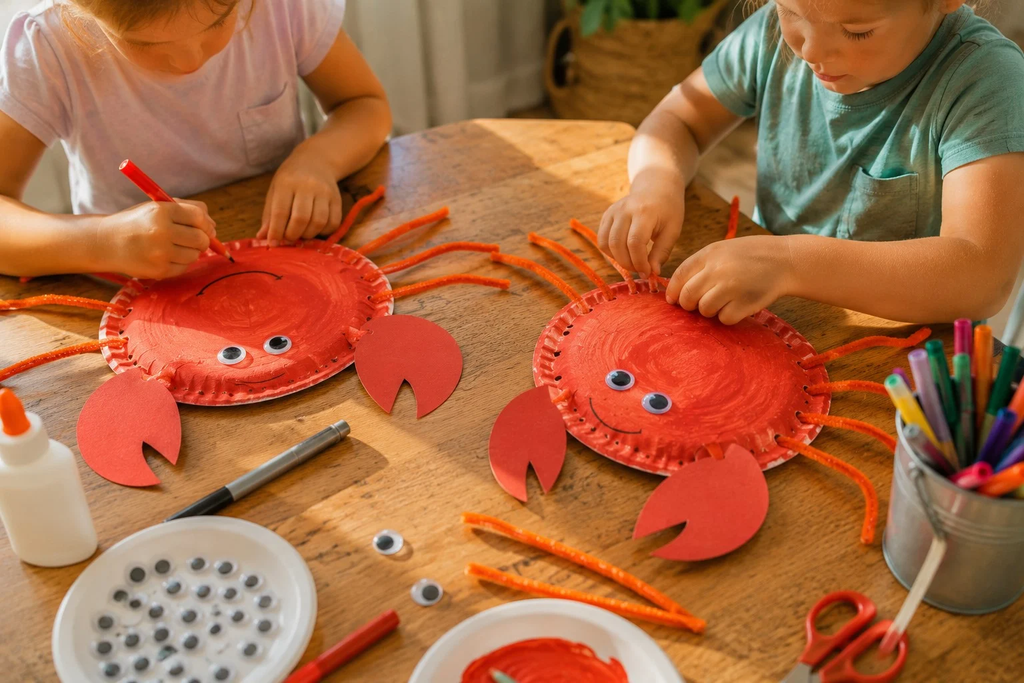
Paper plate crabs are bright, simple, and easy to adapt for a group activity.
I paint the main plate red or orange and use another plate to create the claws. Pipe cleaners can be attached around the sides to form the legs.
Large googly eyes give the crab a playful expression. Children can also add sand, shells, bubbles, or a blue ocean background around the finished crab.
This craft pairs nicely with a children’s story about the beach, tide pools, or marine life.
28. Clothespin Clownfish
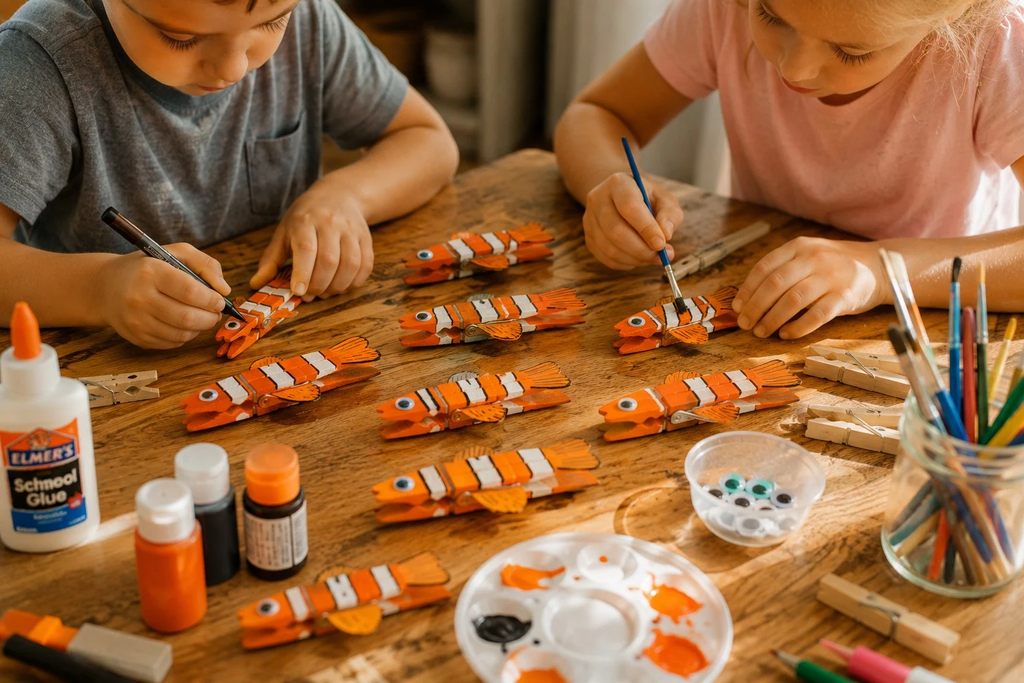
Clothespin clownfish are small enough that children can make several of them without needing much material.
I paint the wooden clothespin orange, then add the familiar white bands. A thin black outline around the bands makes the pattern easier to see.
A tiny googly eye finishes the face. Once dry, the fish can clip onto paper, a card, or another safe surface.
This craft also gives me an easy opening to talk about how clownfish live around sea anemones and coral reef environments.
29. Sand Art Seascape
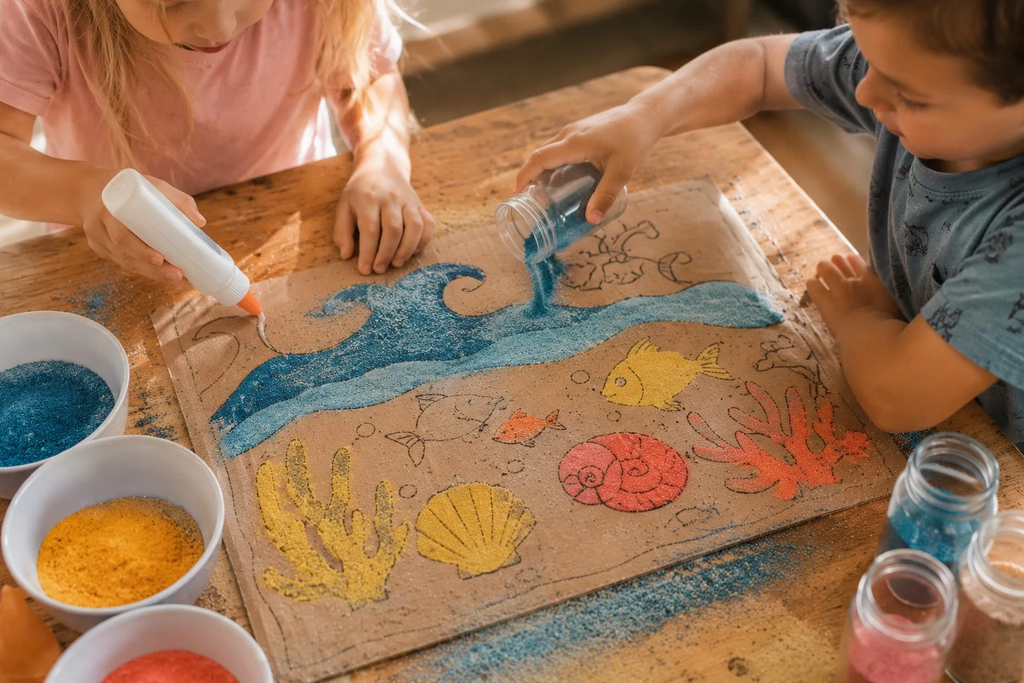
Sand art adds a strong sensory element to an ocean craft. I start by sketching a basic underwater scene onto sturdy cardboard.
I apply glue to one section at a time and sprinkle colored sand over it. Blue can represent the water, while yellow or tan can create the sandy ocean floor.
Kids can add fish, coral, shells, and seaweed using different colors. I recommend working over a tray so excess sand can be collected and reused instead of ending up across the table.
Pro Tip: Keep the glue sections relatively small. If too much glue is spread at once, it can become difficult for children to control where the sand lands.
30. Painted Rock Crab
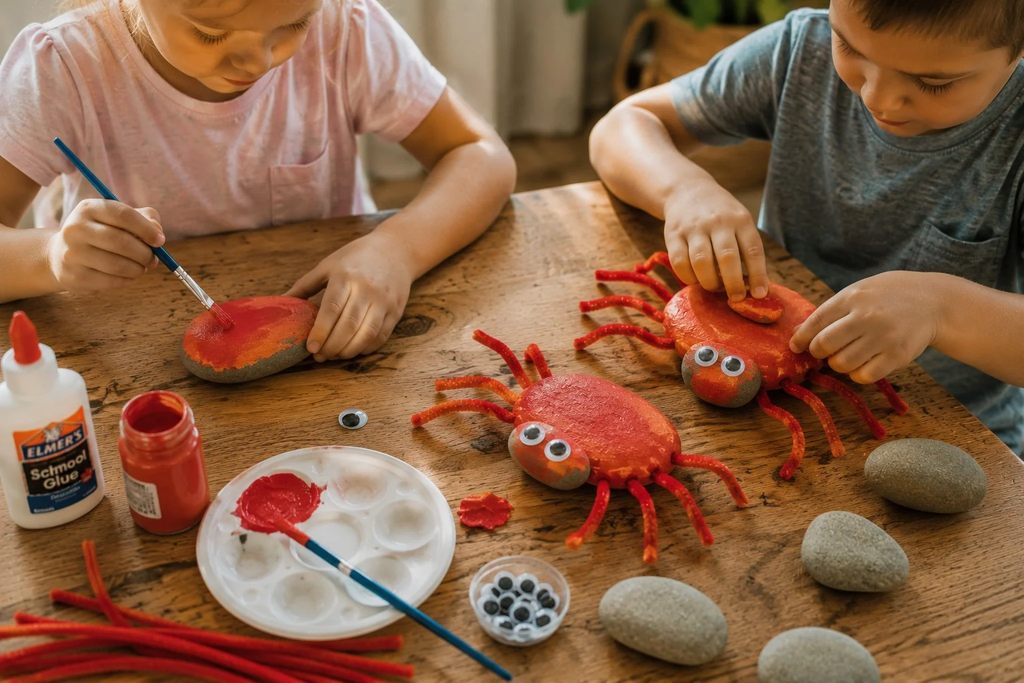
A couple of smooth rocks can be combined to make a sturdy little crab.
I paint the larger stone for the body and use a smaller stone for the head. Once both are completely dry, they can be attached with an adhesive appropriate for the materials and intended use.
Pipe cleaners work well for the legs and claws, while googly eyes add a playful finishing touch.
For outdoor decorations, I would choose materials specifically designed for outdoor exposure and allow the adhesive and paint to cure according to their product directions.
31. Accordion Fold Jellyfish
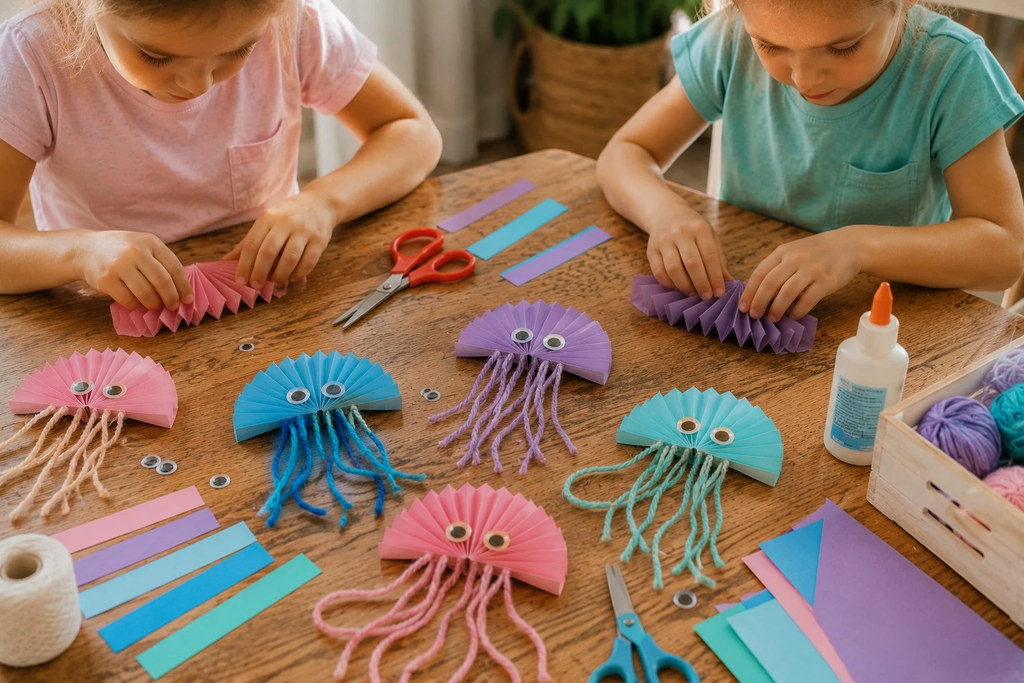
Accordion folding creates a pleated jellyfish body with very little material.
I fold a strip of paper back and forth into even sections, then gather and shape the folds into the rounded top of the jellyfish.
Long strips of paper can be attached underneath as tentacles. A piece of string at the top makes the finished craft ready to hang.
I like making several jellyfish in different colors and sizes. Grouping them together can create a simple underwater ceiling display without needing complicated decorations.
32. Felt Finger Puppet Sea Animals
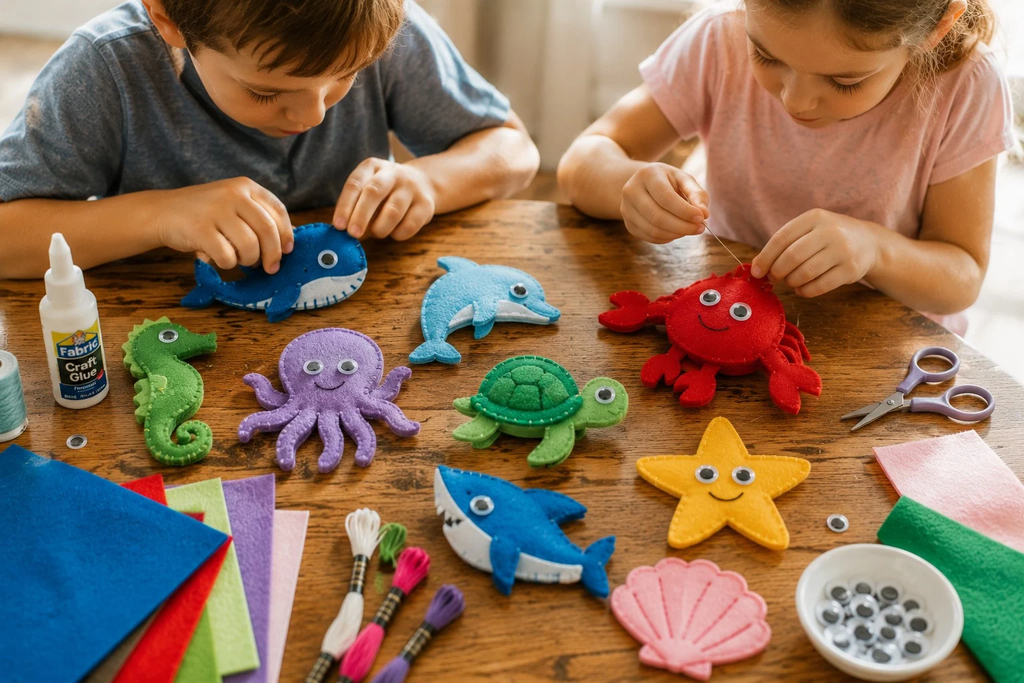
Felt finger puppets are useful when I want a craft that can turn into a longer play activity.
I cut two small pieces of felt for each animal and attach them around the edges, leaving the bottom open for a finger. Fabric glue can simplify the project when sewing is not practical.
Kids can make crabs, turtles, fish, octopuses, or seahorses. Each animal can have its own colors and details.
Once the puppets are ready, I like encouraging children to create a short underwater story. The finished puppets can be reused instead of becoming one-time decorations.
33. Underwater Shoebox Diorama
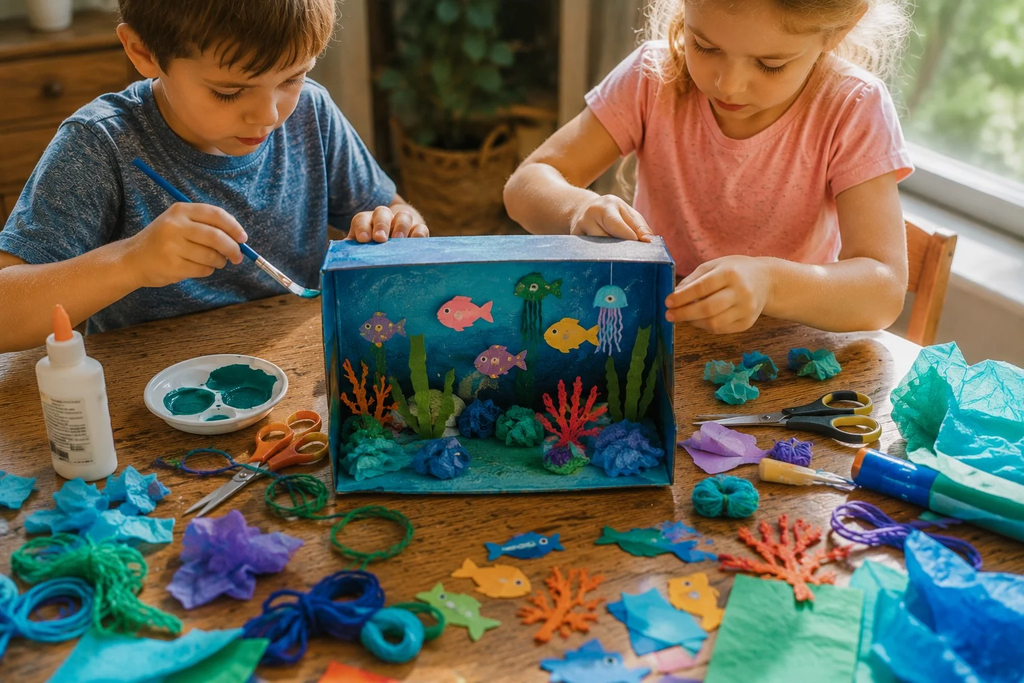
A shoebox diorama is one of my favorite choices when kids want to build an entire underwater world instead of making one animal.
I paint the inside of the box in shades of blue and add green paper or tissue paper for seaweed. Paper fish, coral, shells, and other decorations can be suspended from the top using string.
For the ocean floor, I can use yellow paper or another suitable material to represent sand. Small toy sea creatures can also be added if they are appropriate for the child’s age.
The open front gives kids a little stage for viewing their underwater scene. This makes the project especially useful for a school ocean unit, science display, or creative storytelling activity.
Pro Tip: If small pieces are being used, keep them away from children who may put craft materials in their mouths. For younger children, larger paper decorations are a safer option.
Read this next: Easy Bee Paper Craft for Kids with Simple Steps to Make at Home
Frequently Asked Questions
What are some easy under the sea crafts for kids?
Paper plate jellyfish, toilet roll octopuses, handprint crabs, and cupcake liner jellyfish are simple choices for younger children.
What materials do I need for ocean crafts?
Common supplies include paper plates, cardboard tubes, paint, glue, googly eyes, paper, yarn, pipe cleaners, and recycled materials.
Are these ocean crafts suitable for preschoolers?
Yes. Many are suitable for preschoolers with age-appropriate materials and adult supervision, especially when scissors or small pieces are involved.
How can I make ocean crafts educational?
I like pairing each craft with simple facts about the animal, its habitat, diet, or ocean environment. This turns craft time into a fun learning activity.
Final Thoughts
I like these under the sea crafts because they give kids much more than a finished decoration. They can paint, cut, fold, glue, bend, print, build, and tell stories while learning about different ocean animals.
Some projects take only a few minutes, while others, such as the shoebox diorama, can become a longer afternoon activity. I would choose the craft based on the child’s age, attention span, available materials, and how much adult help is practical.
If I were planning an ocean-themed craft day, I would start with a few simple projects such as the paper plate jellyfish, clothespin shark, or handprint crab. Older children could then move on to rock painting, origami, watercolor, or the full underwater diorama.
The best part is that there is no need for a large collection of expensive supplies. With paper, recycled materials, paint, glue, and a little imagination, kids can create an entire underwater world of their own.


2 Comments