Mindfulness Crafts for Adults: Slow, Simple Ideas for When Your Mind Feels Loud
There are days when my mind feels full before I even get out of bed. I have things to remember, tasks to finish, messages to answer, and thoughts that seem to keep repeating themselves.
During those moments, I don’t always want another complicated wellness routine. Sometimes, I simply need to put my phone down and do something with my hands.
That’s why I love simple mindfulness crafts. A quiet creative activity can help me slow my pace, focus on one small task, and take a break from the constant mental noise.
I don’t need to be artistic, buy expensive supplies, or create something perfect. For me, the real value is in the process. Even 10 to 20 minutes of crafting can create a welcome pause in a busy day.
Mindfulness crafts for adults are simple, hands-on activities that encourage me to focus on the present instead of everything waiting on my to-do list. In this article, I’m sharing 12 calming craft ideas for different moods and needs.
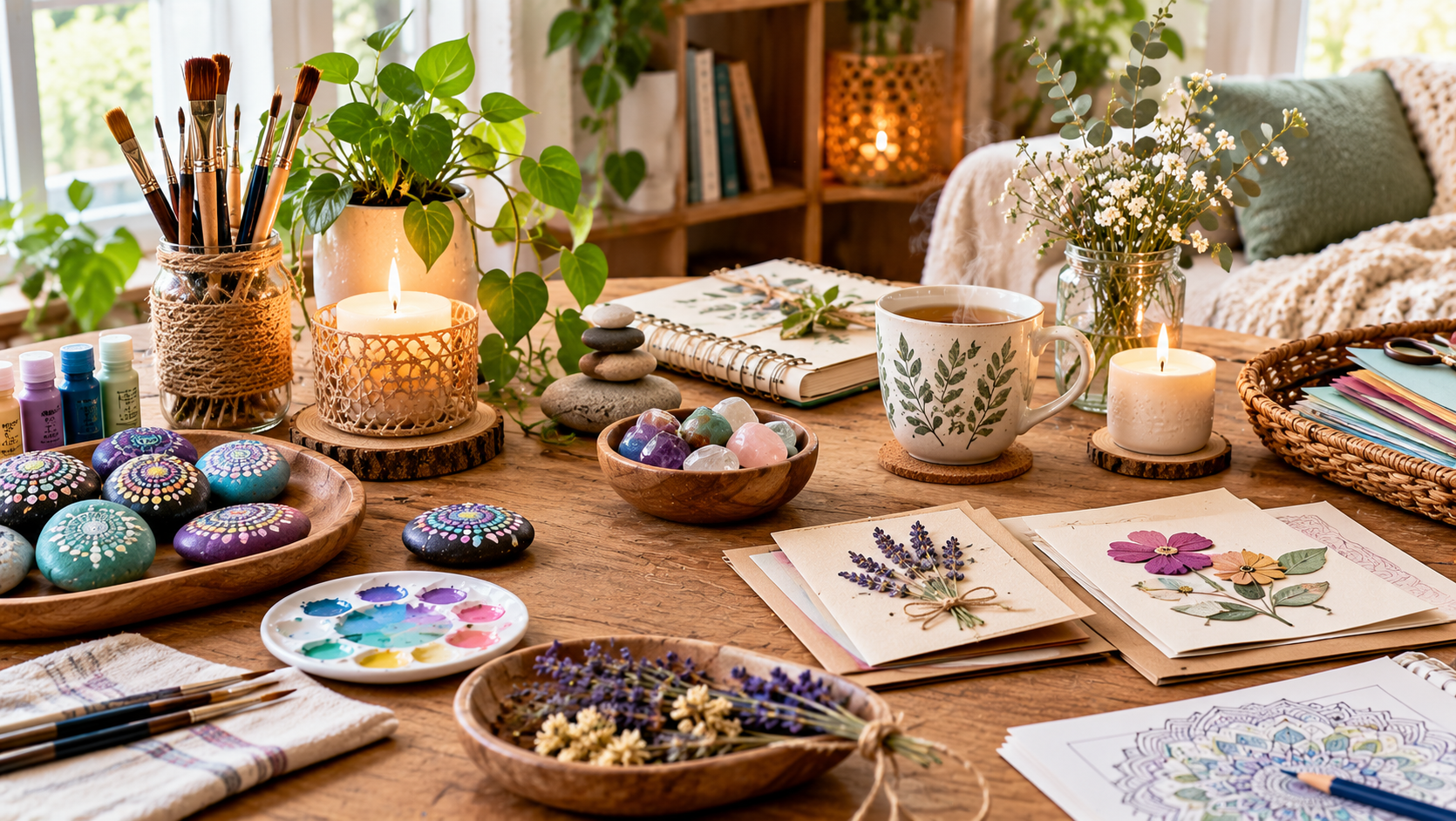
If my thoughts are moving too quickly, I can try activities like clay shaping, yarn looping, or paper folding. When I need visual focus, watercolor blending, doodling, and mandala coloring can keep my attention on colors and patterns.
Nature-based projects such as leaf pressing and dried flower journaling help me slow down and notice the world around me. Repetitive crafts like beading, stitching, and thread wrapping can also provide a steady rhythm for busy days.
Save this for later
Table of Contents
The best part is that many of these mindfulness crafts use inexpensive materials I may already have at home. The goal isn’t productivity or perfection. It’s simply taking a few quiet minutes for myself.
Key Takeaways
- Mindfulness crafts help me focus on one activity at a time.
- I don’t need creative experience to enjoy these projects.
- Repetitive motions can make crafts feel calming and easy to follow.
- Many ideas take just 10 to 20 minutes.
- Paper, yarn, thread, and natural materials are enough for several projects.
- The process matters more than creating a perfect finished item.
- Different crafts can work better depending on my mood and energy level.
Related article: Relaxing Crafts for Adults That Turn Ordinary Moments Into Self-Care
What Mindfulness Crafts Are (And Who They’re For)
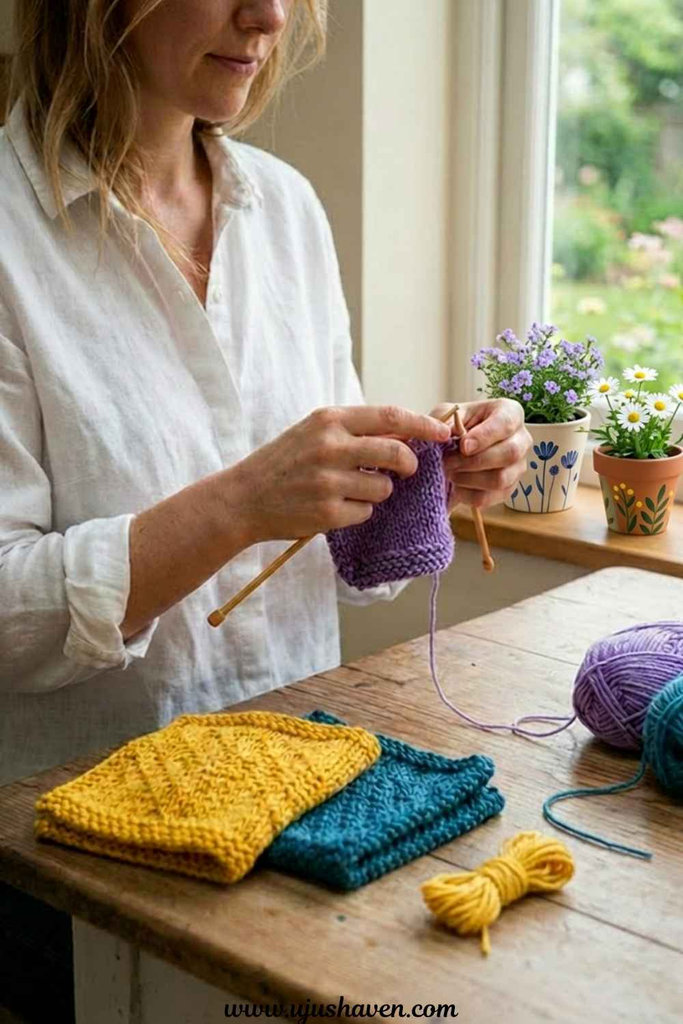
Mindfulness crafts for adults are creative activities that help bring my attention back to what I’m doing right now.
Instead of thinking about tomorrow’s responsibilities or replaying something from earlier, I focus on a simple movement, texture, color, or pattern.
For me, the finished craft is only a bonus. The real purpose is spending a few minutes doing something slowly and intentionally.
This type of activity may be especially helpful if:
- My thoughts continue racing when everything around me is quiet.
- I want a screen-free way to spend part of my evening.
- I enjoy steady, repetitive movements.
- I prefer easy projects over learning complicated techniques.
- I need something simple to keep my hands occupied.
- I want a hobby without pressure to improve or perform.
Research into creative activities has also found connections between making art and improvements in mood and stress management. While crafting isn’t a replacement for professional mental health care, I find it can be a useful part of a relaxing routine.
If I enjoy turning ordinary creative time into a simple form of self-care, relaxing crafts for adults can also give me plenty of easy ideas to explore.
How to Use This List
I like to choose a mindfulness craft based on how I’m feeling instead of picking the most impressive project.
This list is organized around the type of calm each activity may offer. That makes it easier for me to find something that fits my mood.
If my thoughts are racing and I need physical activity, I start with the first group. When I want something visual and quiet, I choose one involving color or patterns.
On days when I feel disconnected or stuck indoors, I often prefer one of the nature-inspired projects.
I don’t need to try every idea. I simply pick one that feels manageable today.
Pro Tip: I keep a small box with basic supplies like paper, colored pencils, yarn, thread, glue, and scissors. Having materials ready makes it much easier for me to start without overthinking it.
Mindfulness Crafts for When Your Hands Need Something to Do
for when your thoughts feel too fast
Sometimes I don’t feel tired at all. Instead, I have restless energy and nowhere useful to put it.
During those moments, giving my hands one simple job can help me focus on something other than the thoughts running through my mind.
These crafts are easy to start and don’t require much planning.
1. Air-Dry Clay Shaping
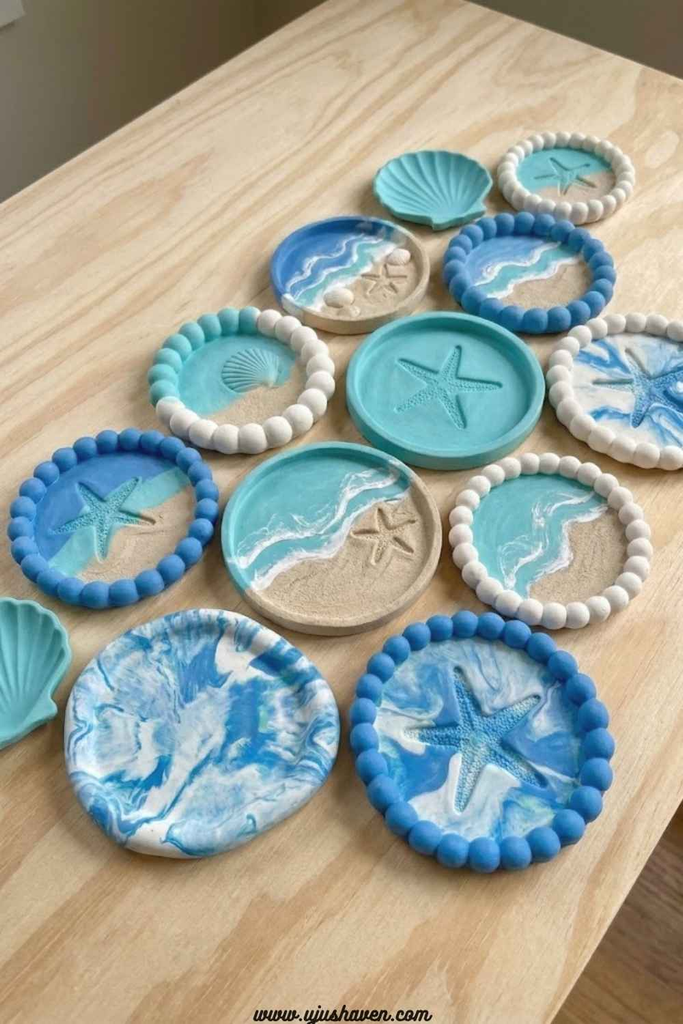
I like air-dry clay because there are almost no rules.
I can tear off a small piece, roll it between my hands, press it flat, or slowly turn it into a tiny bowl or simple shape.
Some days, I don’t make anything recognizable at all. I just focus on how the clay feels and moves in my hands.
That freedom takes away the pressure of trying to create something beautiful. I can simply work with the material for 10 or 15 minutes and stop whenever I want.
Air-dry clay is also beginner-friendly and doesn’t usually require a kiln or special equipment.
Pro Tip: I start with a small amount of clay rather than opening a large project. A palm-sized piece is enough for a short, relaxing craft session.
2. Simple Yarn Looping
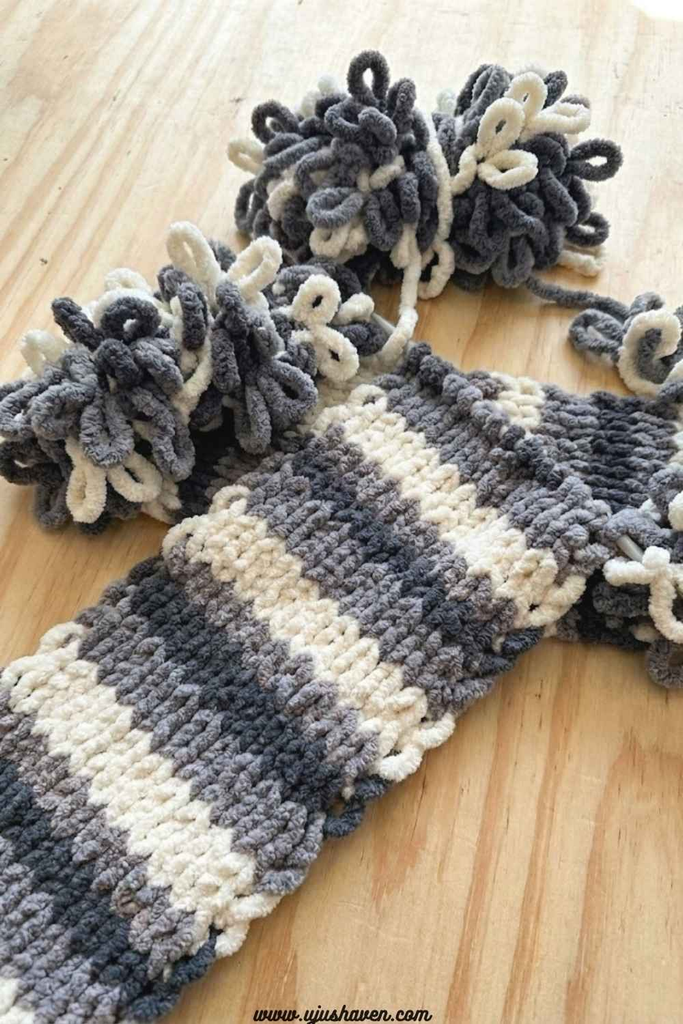
Simple yarn looping gives me the repetitive feeling of fiber crafts without needing to learn knitting or crochet first.
I can wrap yarn around my fingers, pull loops through, twist it into loose shapes, or create a small coil.
After repeating the motion for a few minutes, I often find that my hands naturally understand what to do next.
I don’t need hooks, needles, or a pattern. A leftover ball of yarn is enough to begin.
This makes it one of my favorite low-pressure mindfulness crafts for adults when I want something repetitive but uncomplicated.
3. Basic Paper Folding
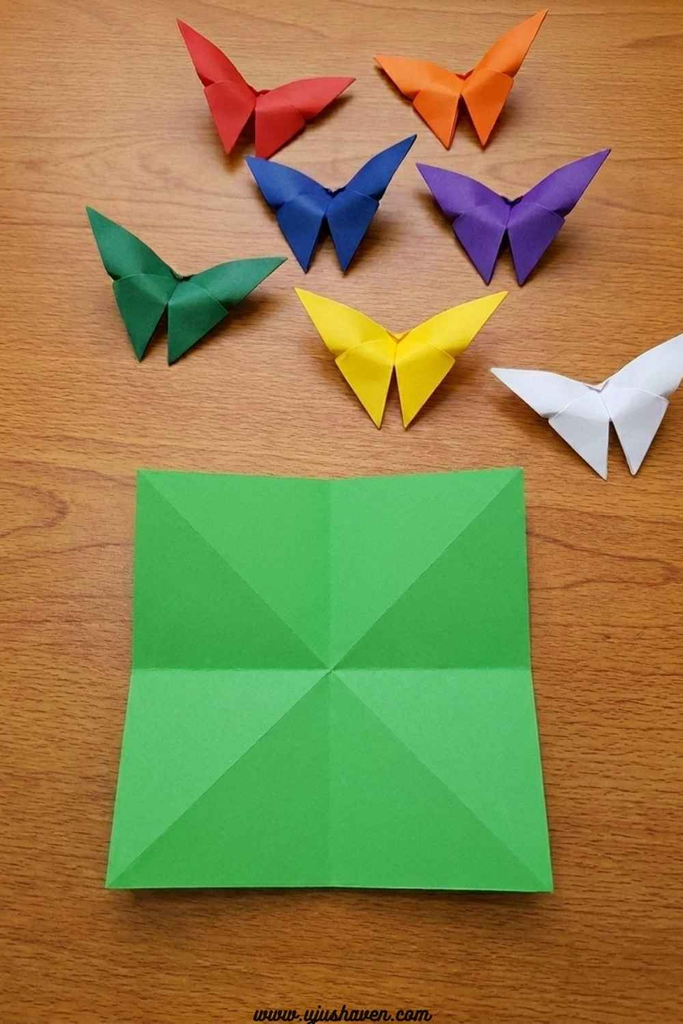
Paper folding helps me focus because I have to pay attention to one small step at a time.
I might make a simple box, folded star, card, envelope, or another easy shape.
Each fold gives me one clear thing to do. That can be helpful when my thoughts feel scattered and I don’t want to commit to a long project.
I also love that basic paper crafts can often be completed in less than 10 minutes.
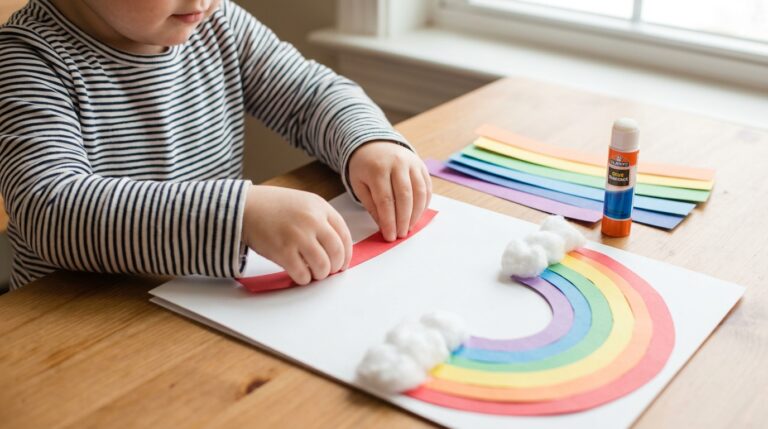
Old magazines, scrap paper, colored sheets, and leftover wrapping paper can all work for simple projects.
Pro Tip: I avoid complicated origami when I’m crafting specifically to relax. Easy folds are usually more enjoyable than projects that make me frustrated.
Mindfulness Crafts for Slowing Down Your Eyes, Not Just Your Hands
for quiet, visual focus
Not every calming craft needs a lot of movement.
Sometimes I feel more settled when I can focus my attention on colors, shapes, and patterns.
Watching a page slowly change in front of me can give my mind something peaceful to follow.
4. Watercolor Blending
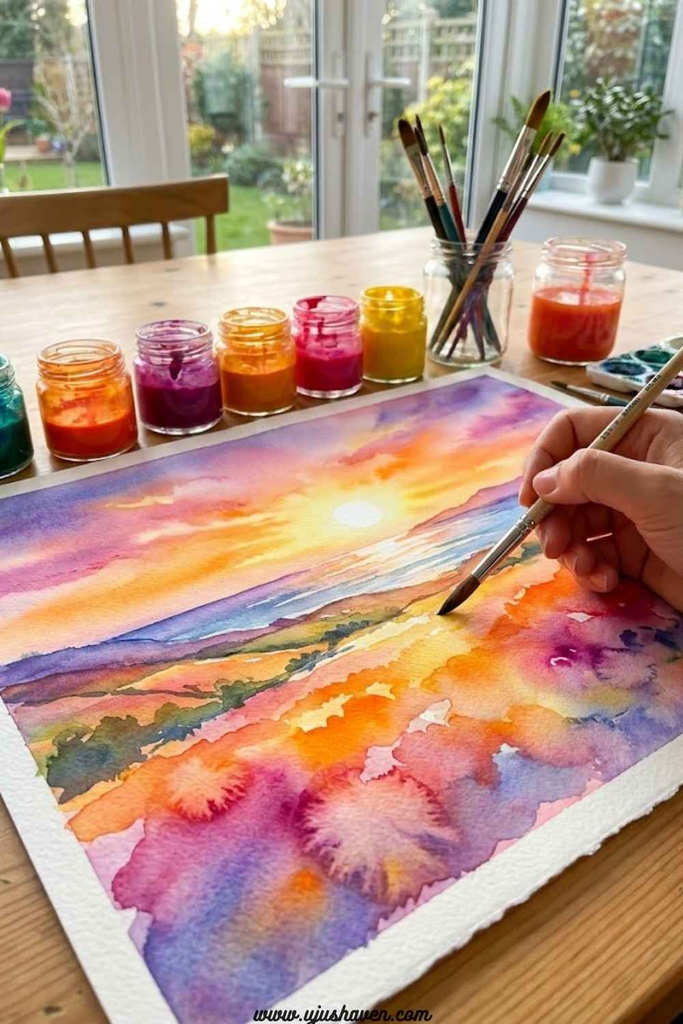
I don’t need to know how to paint to enjoy watercolor blending.
I wet the paper, add a little color, and watch it spread naturally across the surface.
Then I introduce another shade and let the colors meet, mix, and move on their own.
One thing I enjoy about this craft is that I can’t control every detail. The paint behaves differently depending on the amount of water and pigment I use.
After spending a busy day trying to organize everything, letting the colors move freely can feel surprisingly relaxing.
A basic watercolor set and suitable paper are enough to get started, and a short 15-minute session can create something beautiful.
5. Layered Doodling
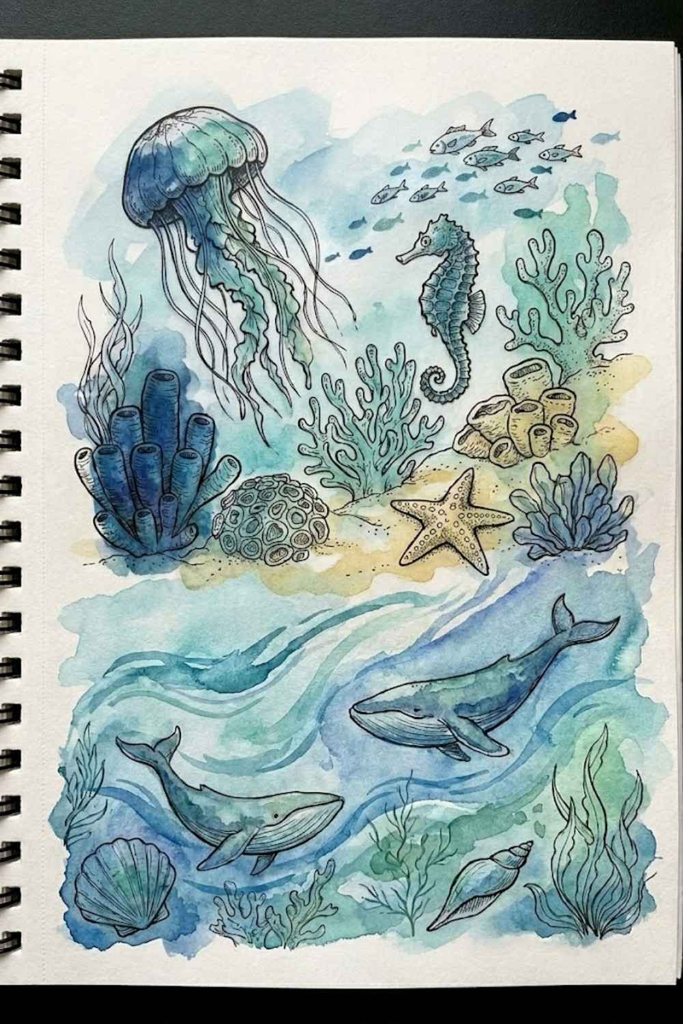
Layered doodling is one of the easiest mindfulness crafts because I can begin with almost nothing.
I grab a pen and paper, then start making one repeated shape.
I might fill the page with circles, lines, waves, dots, squares, or tiny leaves. After one layer, I add another without worrying about what the finished page should look like.
The repetition gives me something steady to focus on.
I also like that every page looks different, even when I use the same simple shapes.
Pro Tip: I set a timer for 10 minutes and keep doodling until it ends. This helps me enjoy the process instead of constantly checking whether the page looks good.
6. Mandala Coloring
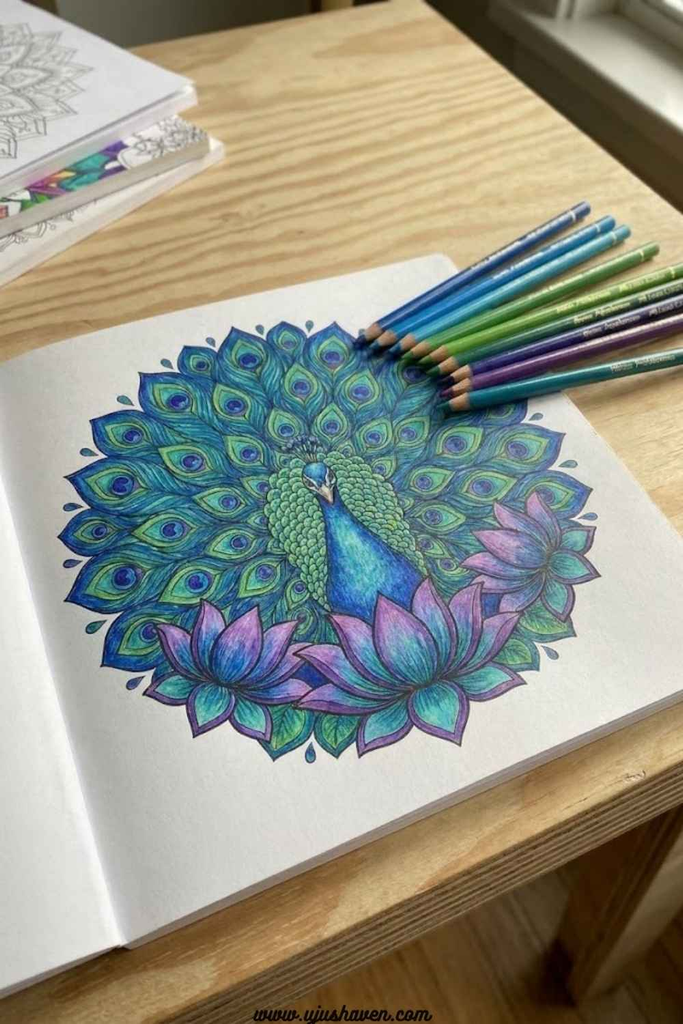
Mandala coloring is a great option when I want structure without having to design anything myself.
The pattern is already prepared, so I only need to choose colors and work through the sections.
I usually begin near the center and slowly move outward. Coloring small areas one by one helps me stay focused on the page.
This type of project can easily turn into a 20-minute break without feeling like another task.
There are plenty of printable mandala pages available, or I can use an adult coloring book.
I find that limiting myself to a few colors also prevents me from spending too much time deciding what to use.
Mindfulness Crafts for Getting Outside Your Own Head
for grounding, nature-inspired calm
When I spend too much time thinking, I sometimes need an activity that encourages me to look outward.
Nature-based crafts do that in a simple way.
They give me a reason to notice leaves, flowers, shells, textures, and small details I might normally walk past.
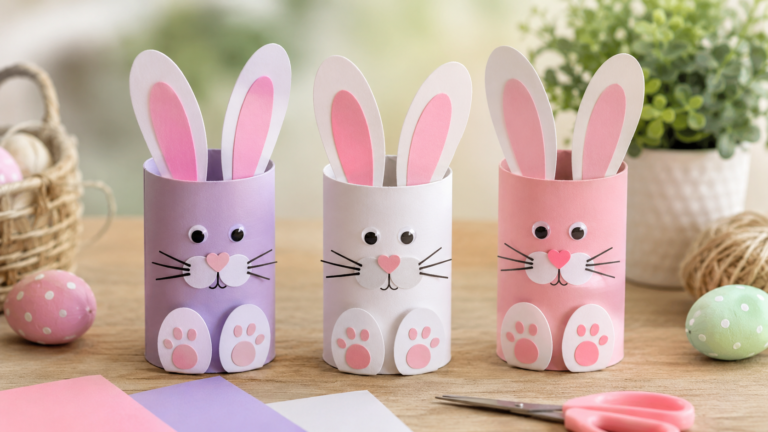
Also read: 23+ Creative Bunny Craft Ideas for Your Home
7. Leaf Pressing
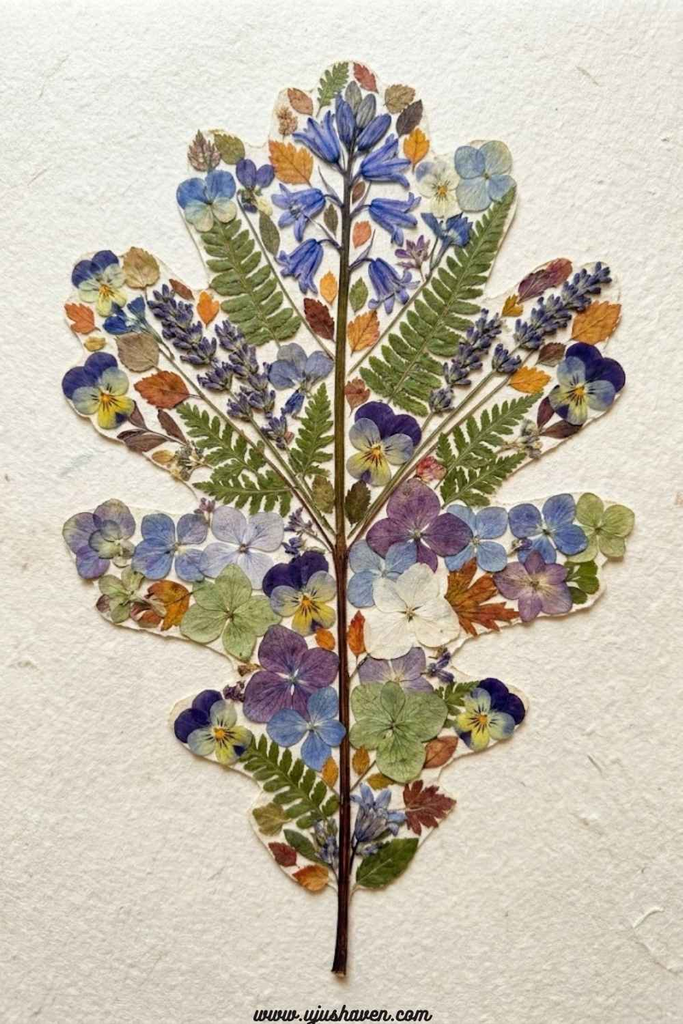
Leaf pressing begins before I actually start crafting.
I first take a slow walk and look for leaves that catch my attention.
I might collect different sizes, colors, and shapes, especially during fall when there is plenty of variety.
At home, I place the leaves between sheets of absorbent paper and press them inside a heavy book.
The waiting is part of the experience. I can’t rush the leaves, which reminds me that not every activity needs immediate results.
Once dry, I can use my pressed leaves for bookmarks, cards, framed art, or journaling.
Pro Tip: I make sure leaves are dry and free from moisture before pressing them. Damp leaves can develop mold during the drying process.
8. Seashell Arranging
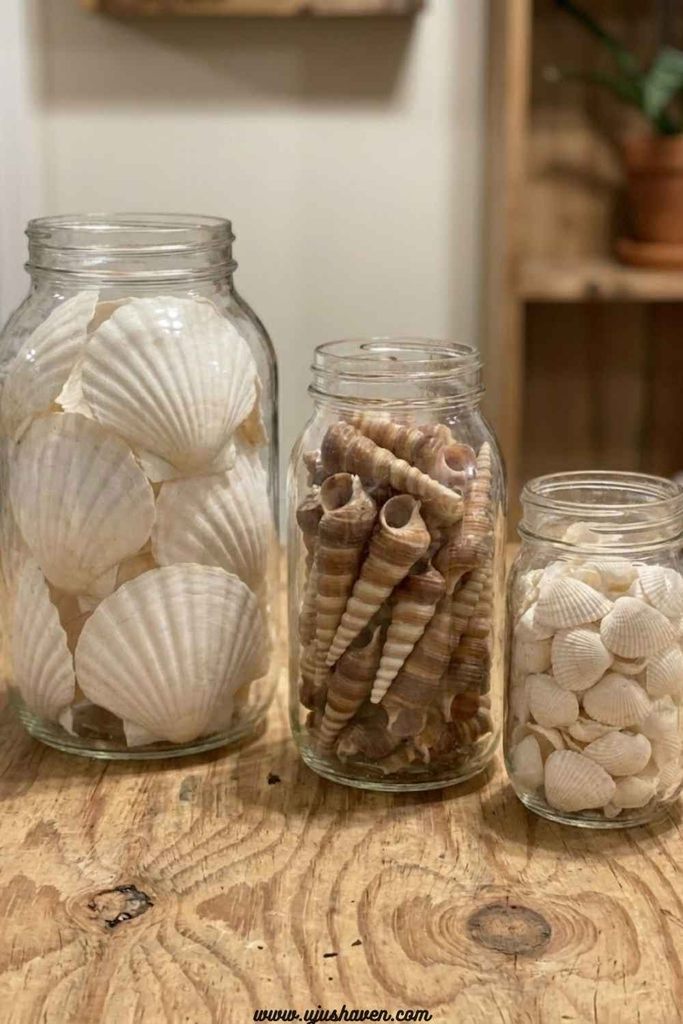
Seashell arranging is simple, but that’s exactly why I enjoy it.
I can use shells collected during a trip or buy a small bag for crafting.
Then I sort them by color, size, shape, or texture.
After sorting, I arrange them on a tray, place them in a clear jar, create a pattern, or simply line them along a shelf.
For me, the sorting process is often more relaxing than the final display.
There is no right arrangement, and I can take everything apart and start again whenever I want.
9. Dried Flower Journaling
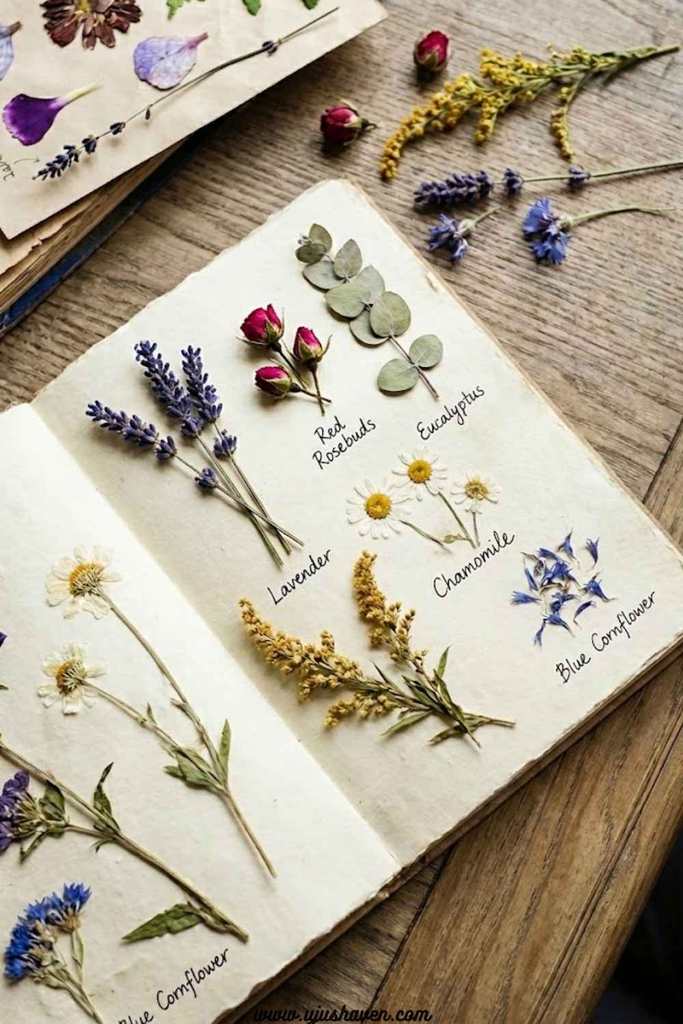
Dried flower journaling combines natural materials with a little personal reflection.
I press small flowers and allow them to dry completely before attaching them to notebook pages.
Next to each flower, I might write where I found it, the date, a short memory, or a few thoughts about my day.
This gives me something physical to focus on while also creating space for simple writing.
I don’t pressure myself to fill an entire journal page. Even two or three sentences can feel meaningful.
The combination of crafting and writing makes this project especially personal.
Pro Tip: I use a glue stick or archival-safe adhesive for delicate dried flowers and handle them carefully because the petals can become fragile.
Mindfulness Crafts for the Days Your Mind Won’t Quiet Down
for repetitive, soothing focus
There are days when visual activities aren’t enough to hold my attention.
That’s when I prefer crafts with a stronger sense of repetition.
Doing the same small movement again and again gives me a rhythm to follow and keeps my hands busy.
10. Beading Patterns
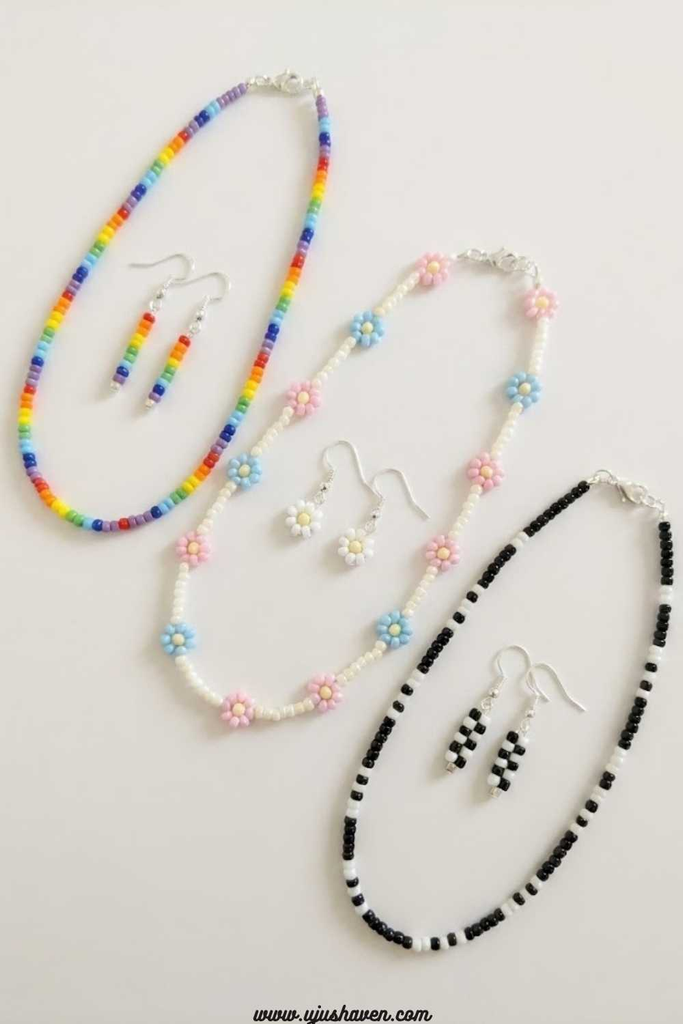
Beading is one of my favorite repetitive crafts because the steps are so simple.
I choose a few beads, decide on an easy pattern, and thread them one at a time.
It might be as simple as repeating three colors across a bracelet.
After several minutes, the motion becomes familiar and I can focus on the small task in front of me.
I don’t need an elaborate jewelry design to enjoy the process.
A small amount of beads and string is enough for a short session.
For beginners, larger beads are often easier to handle and can make the process less frustrating.
11. Simple Stitching
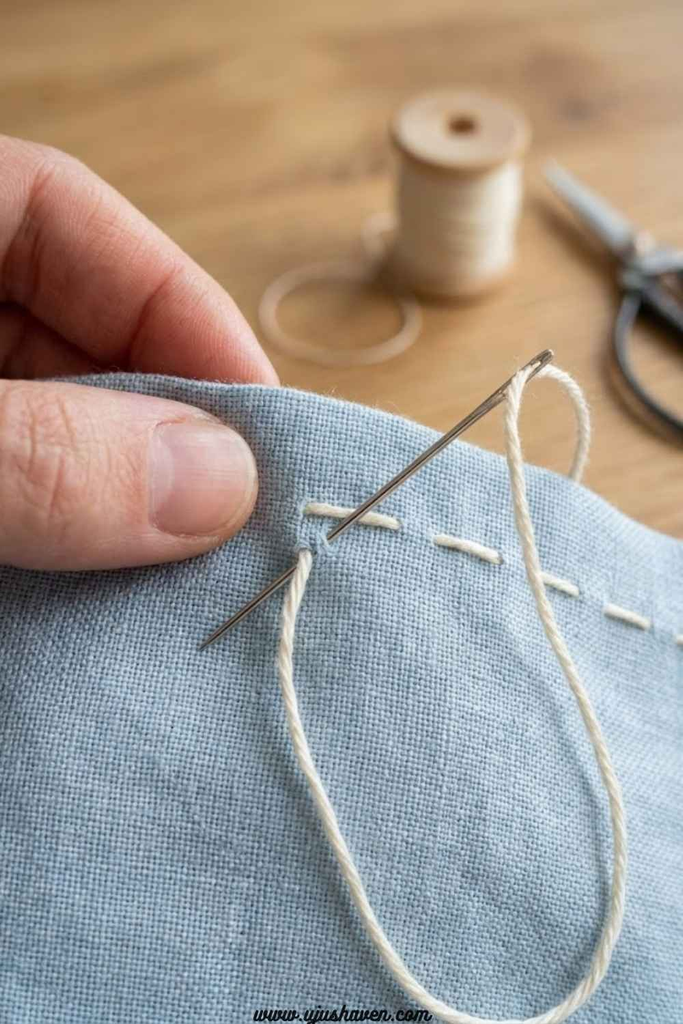
Simple stitching gives my hands a slow and predictable job.
I can use a needle and thread to make basic lines through a small piece of fabric.
My stitches don’t need to be perfectly spaced. I remind myself that this project isn’t about showing off a finished piece.
It’s about repeating one movement and paying attention to what I’m doing.
Even a few minutes of stitching can feel more focused than scrolling through my phone.
An embroidery hoop can help hold the fabric in place, but I can also begin with a simple scrap of cotton.
Pro Tip: I choose a blunt tapestry needle when working with certain beginner projects or thicker fabrics. It can make handling the material feel easier.
12. Thread Wrap Art
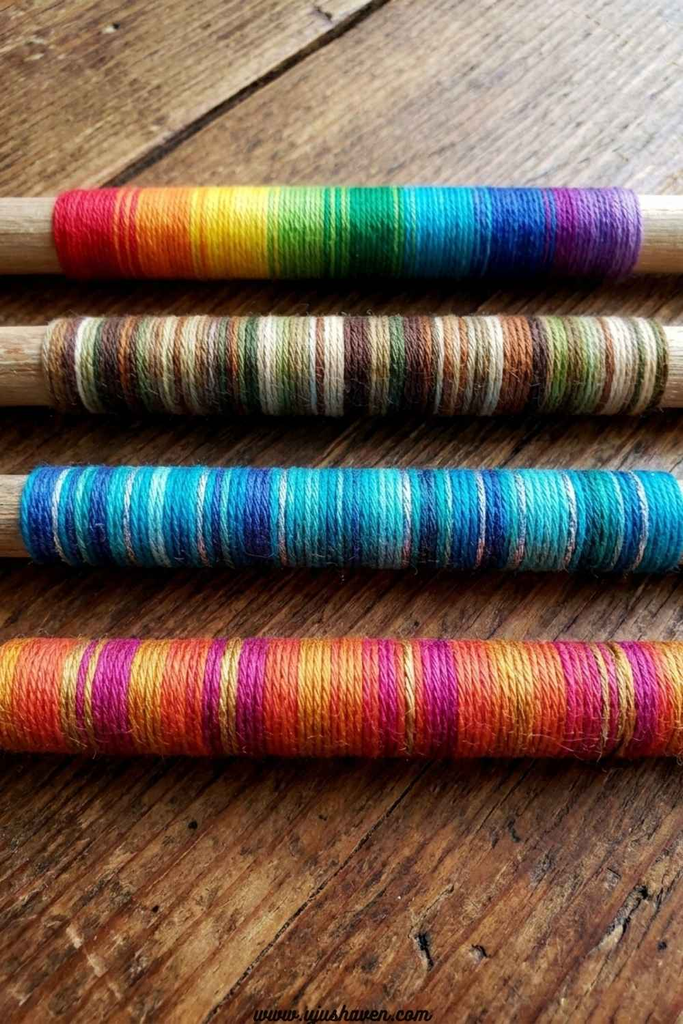
Thread wrap art is another easy craft that builds slowly.
I wrap colorful thread around a small frame, branch, cardboard shape, or another sturdy base.
Each pass adds another line of color.
I don’t need to follow a strict pattern. Sometimes I wrap randomly, while other times I repeat the same direction.
The steady motion can make it easy to focus on the craft instead of everything else demanding my attention.
A small project can be completed in around 20 minutes, depending on the size and amount of detail.
Embroidery floss and yarn both work well, so I can often use supplies already in my craft collection.
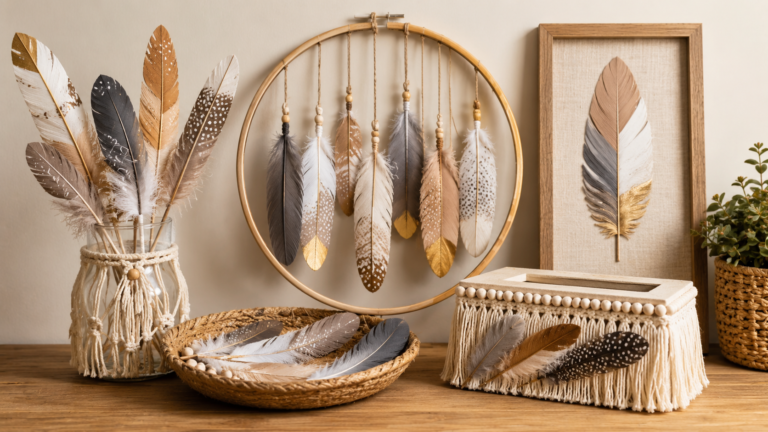
Read this next: 12+ Creative Feather Craft Ideas for Your Home
How to Start Mindfulness Crafts For Adults (No Pressure)
When I want to try mindfulness crafts for adults, I start with one project.
I don’t make a long list of supplies or plan an entire afternoon.
Instead, I choose something simple and give myself around 10 to 15 minutes.
I try to use materials I already have because removing extra preparation makes it easier to begin.
Most importantly, I let go of the idea that the project needs to look good.
The purpose is spending time with the activity, not producing something I need to keep or display.
If one craft doesn’t feel relaxing, I don’t assume crafting isn’t for me.
I simply try another type.
Some people may prefer repetitive movement, while others enjoy color, natural materials, or quiet visual activities.
Pro Tip: I treat the first few minutes as a transition period. My mind may still feel busy at the beginning, so I don’t expect instant calm.
Frequently Asked Questions
Is crafting good for mindfulness?
Yes, crafting can be a useful way to practice focused attention.
When I repeat a simple movement or concentrate on a small creative task, I have less mental space to jump between unrelated thoughts.
The craft itself doesn’t have to be special. What matters is giving my attention to one activity at a time.
Do I need experience to try these crafts?
No. I can try every idea on this list without advanced crafting skills.
Most mindfulness crafts for adults work best when I keep the project simple.
I don’t need professional tools or a polished result. I only need a willingness to spend a few quiet minutes making something.
What if I don’t think of myself as a creative person?
I don’t need to consider myself creative to enjoy these activities.
Many of these projects are based on repeating simple actions rather than drawing, designing, or inventing something original.
I can follow a pattern, repeat a shape, or simply work with the materials.
What crafts are good for mental health?
Simple creative activities can support relaxation and provide a positive outlet, especially when they involve steady, repetitive movements.
Beading, stitching, coloring, folding, and yarn work are good examples.
However, I view crafting as a supportive wellness activity rather than a replacement for professional mental health care when that support is needed.
How long should I spend on one of these crafts?
I don’t need a long session.
Even 10 minutes can give me a short break from screens and daily responsibilities.
If I have more time and I’m enjoying the activity, I can continue for 20 minutes or longer.
I focus more on how the activity feels than on reaching a specific amount of time.
Can I do these without buying special supplies?
Yes, many of these projects use common materials.
I can start with paper, pencils, old magazines, thread, yarn, leaves, or flowers.
Other activities may require a small purchase, but I don’t need expensive craft supplies to create a relaxing experience.
Quick Recap to Save for Later
When I need a simple break, mindfulness crafts for adults give me an easy way to slow down without adding another demanding activity to my day.
I can shape clay, fold paper, doodle, blend watercolors, color mandalas, press leaves, arrange shells, journal with dried flowers, bead, stitch, or wrap thread.
Most of these ideas require little time and very few supplies.
The main thing I remember is that I don’t have to make anything perfect.
I just need to give myself permission to slow down and enjoy one small activity at a time.
More Slow, Simple Ideas
If I enjoy quiet creative projects, there are plenty of other ways to make everyday time feel less rushed.
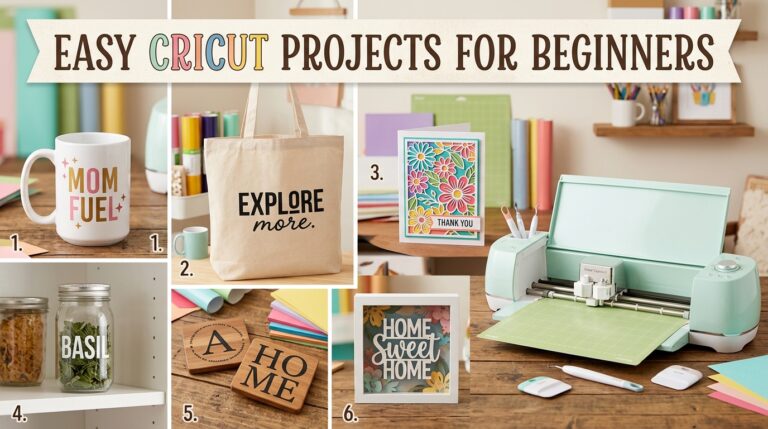
I can try relaxing crafts, plan a casual craft night with friends, work on simple seasonal projects, or choose an easy DIY idea for a peaceful weekend.
Crafting doesn’t always need a purpose.
I don’t have to sell it, display it, photograph it, or finish it in one sitting.
Sometimes I simply need a few minutes where my hands are busy, my phone is away, and nothing is demanding my attention.
For me, those small moments can be enough to make the day feel a little quieter.
Conclusion
Mindfulness crafts for adults don’t need to be complicated or time-consuming. I find that even a few quiet minutes spent folding paper, coloring, stitching, or working with my hands can help me slow down and reset. The goal isn’t to create something perfect—it’s simply to enjoy the process and give myself a peaceful break from the noise of everyday life.


2 Comments