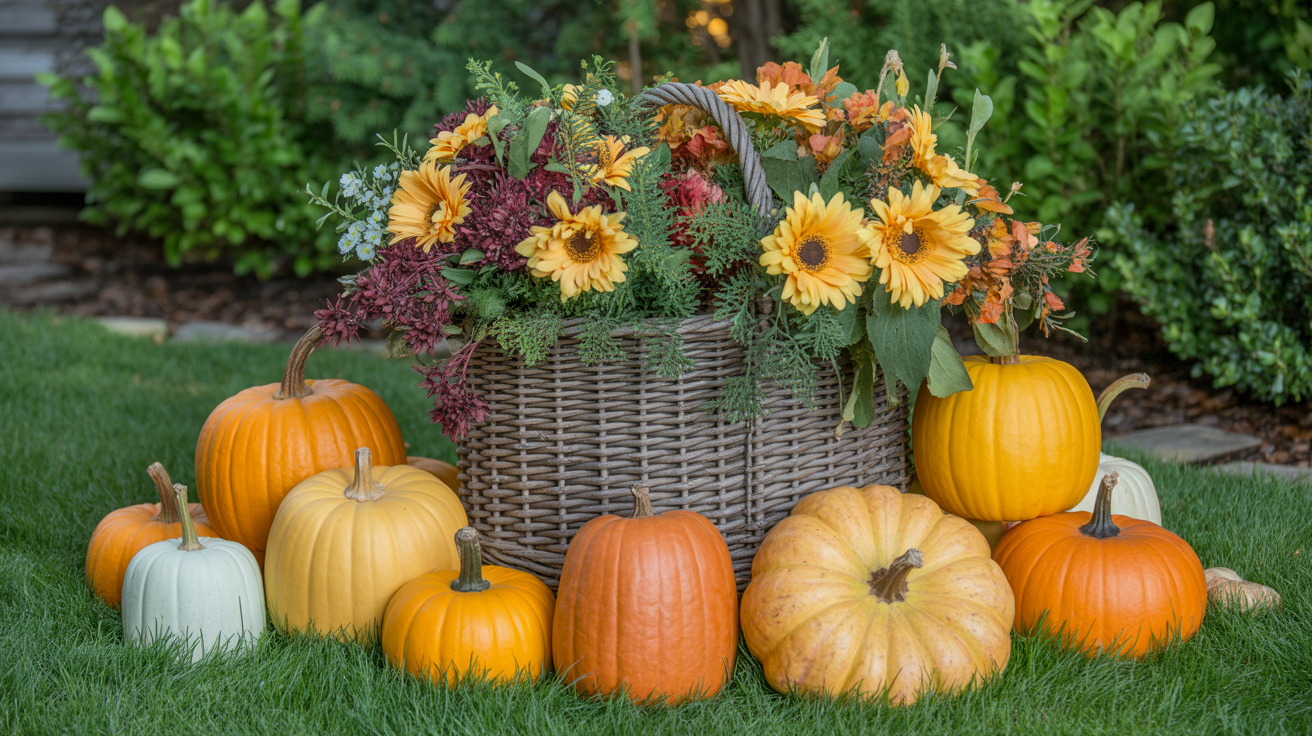
20 Fall Garden Decor Ideas To Brighten Outdoor Beds
When I start decorating my garden for fall, I like to work with what the season already gives me: pumpkins, late-blooming flowers, dried grasses, warm lighting, and natural textures. A few well-placed pieces can make even a small garden bed feel colorful and inviting.
I also find that fall garden decorating works best when I mix practical plants with decorative accents. Instead of filling every corner with seasonal decorations, I prefer to create a few strong focal points and repeat the same colors throughout the yard.
In this guide, I’m sharing 20 fall garden decor ideas that can make outdoor beds, pathways, entryways, and patios feel ready for autumn. I cover easy plant-based options such as chrysanthemums, pansies, ornamental kale, and asters, along with pumpkins, gourds, hay bales, scarecrows, wagons, cornstalks, garden stakes, and outdoor lighting.
I’ve included ideas for both large yards and smaller spaces, so you can choose what fits your garden, budget, and maintenance level. I also explain how I would combine different heights, textures, and colors to create displays that look intentional rather than overcrowded.
Save this for later
Table of Contents
For the best results, I recommend starting with one main focal point, such as a pumpkin grouping or container garden, and then adding smaller accents around it. This keeps the display balanced while making seasonal decorating much easier to manage.
Key Takeaways
- I use mums, pansies, ornamental kale, and asters to keep real color in the garden as summer flowers fade.
- I combine pumpkins, gourds, hay, dried plants, and wooden accents for natural fall texture.
- I use lanterns, pathway lights, and string lights to keep the garden attractive after sunset.
- I vary the height of containers and decorations so garden beds do not look flat.
- I choose weather-resistant materials for anything that will remain outdoors for several weeks.
- I prefer repeating two or three fall colors instead of using every seasonal color at once.
- I refresh displays throughout the season by replacing smaller accents rather than rebuilding everything.
Related article: 25 Fall Bedroom Decor Ideas for A Warm and Inviting Look
1. Chrysanthemum Container Gardens
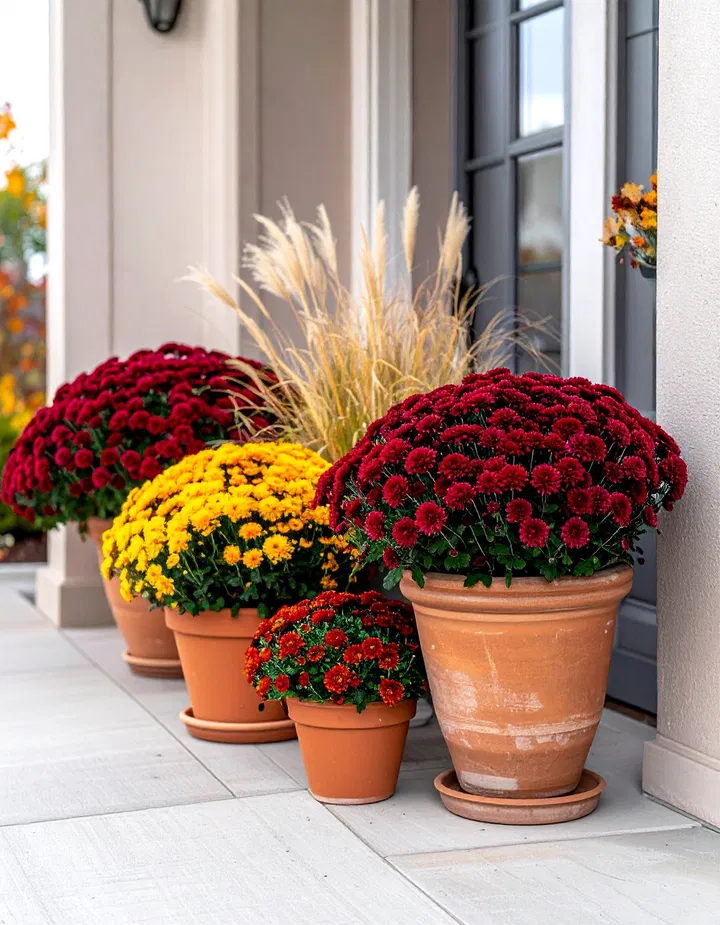
I always consider chrysanthemums one of the easiest ways to give a garden an immediate fall update. Their dense blooms bring strong seasonal color just when many summer flowers are starting to fade.
I like grouping mums in pots near garden entrances, steps, patios, or along the edge of a flower bed. Orange, burgundy, yellow, bronze, white, and purple varieties give me plenty of options for matching the rest of my outdoor decor.
For a fuller display, I combine mums with ornamental grasses or trailing plants. I also prefer containers with good drainage because soggy roots can quickly cause problems, especially when fall rain increases.
Pro Tip: I buy mums with plenty of unopened buds rather than choosing pots that are already in full bloom. This usually gives me a longer period of color to enjoy.
2. Pumpkin Display Arrangements
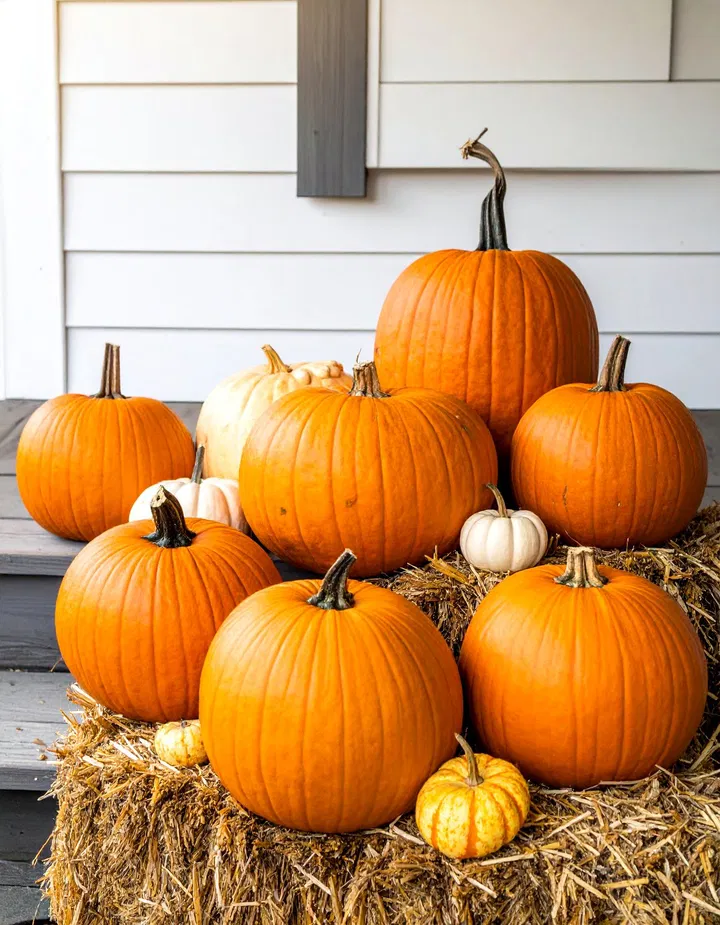
Pumpkins are an easy starting point when I want my garden to have an unmistakable fall feel. I rarely use only one pumpkin because mixing different shapes and sizes creates a much more interesting arrangement.
I like placing large pumpkins at the back and smaller pumpkins and gourds toward the front. White pumpkins can soften a display, while green, tan, and traditional orange varieties add natural variation.
For extra height, I place pumpkins on a low wooden crate, planter, step, or hay bale. I also leave some pumpkins close to the ground so the arrangement feels connected to the garden rather than looking like a store display.
Pro Tip: I keep pumpkins off constantly damp soil when possible. A raised surface such as a wood board or decorative tray can help reduce direct contact with wet ground.
3. Hay Bale Seating Areas
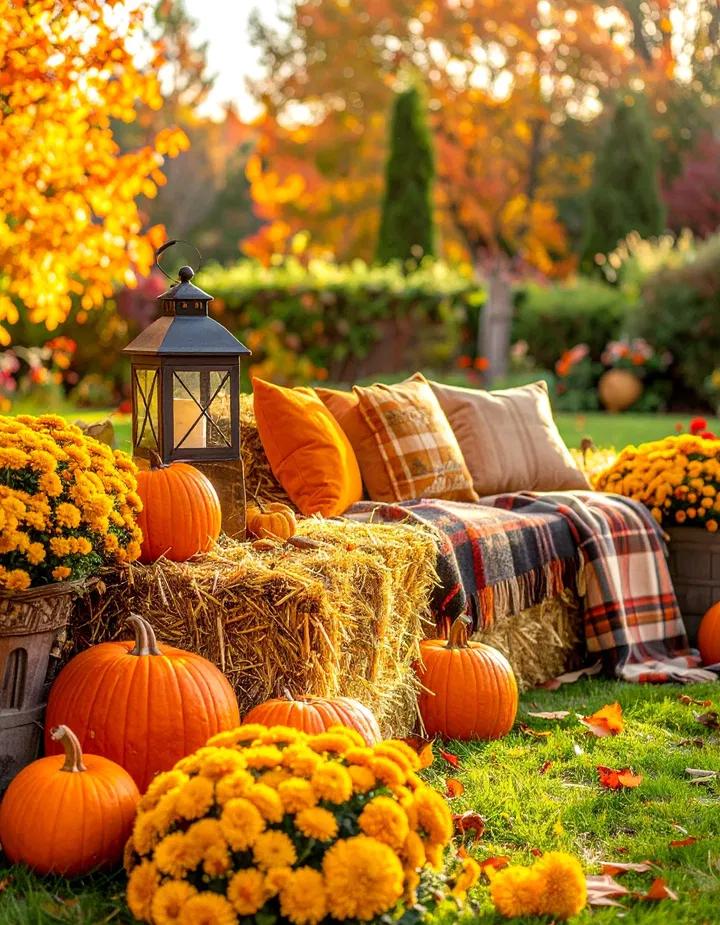
Hay bales can serve as both decoration and useful outdoor seating. I especially like this idea for larger yards where I have enough space to create a small gathering area.
I arrange several bales around a fire pit or outdoor table and cover them with weather-appropriate blankets and cushions. If I’m using them mainly as decor, I stack a few pumpkins, mums, or lanterns on top instead.
Their golden color works naturally with orange, brown, cream, and burgundy decorations. I can also move the same bales around the yard as my seasonal display changes.
One thing I keep in mind is moisture. I place hay bales somewhere reasonably dry because prolonged exposure to rain can cause them to deteriorate quickly.
4. Outdoor Lantern Lighting
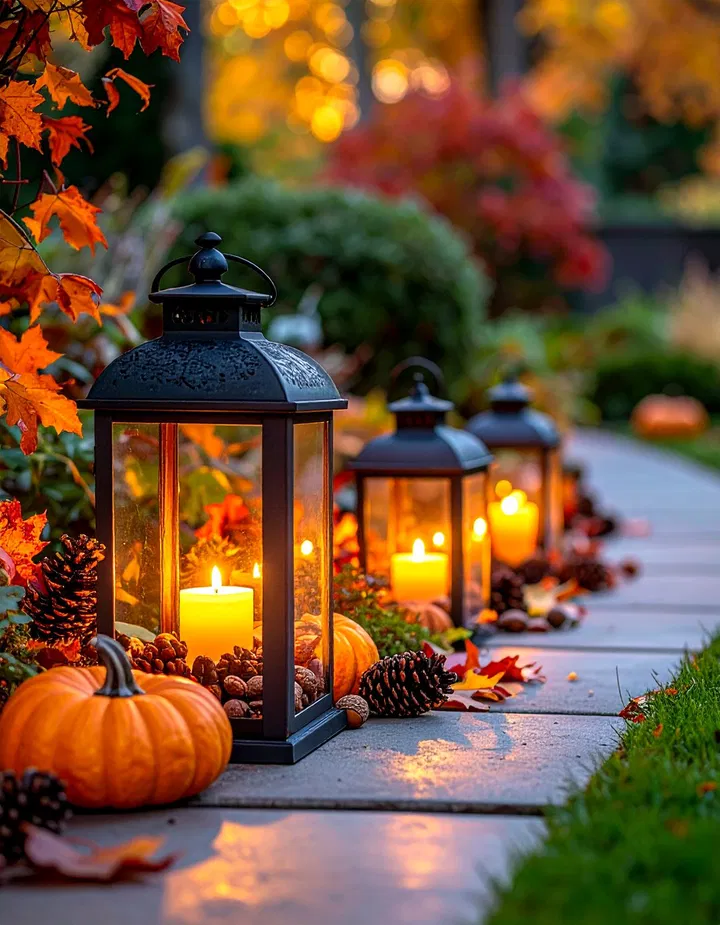
Fall gardens look completely different after sunset, so I like adding lanterns to areas that I normally enjoy during the evening. They provide a warm glow without requiring major changes to the garden itself.
I use battery-operated LED candles when I want the look of candlelight without an open flame. Lanterns can sit beside pumpkins, on steps, along a covered porch, or near a seating area.
I also like filling larger lanterns with pinecones, faux leaves, small gourds, or other seasonal accents. Mixing two or three lantern sizes helps create a more natural arrangement.
Pro Tip: I avoid placing candles or electrical decorations where falling leaves and dry plant material can collect around them. Safety matters more than decoration, especially in dry weather.
5. Fall Wreath Entryways
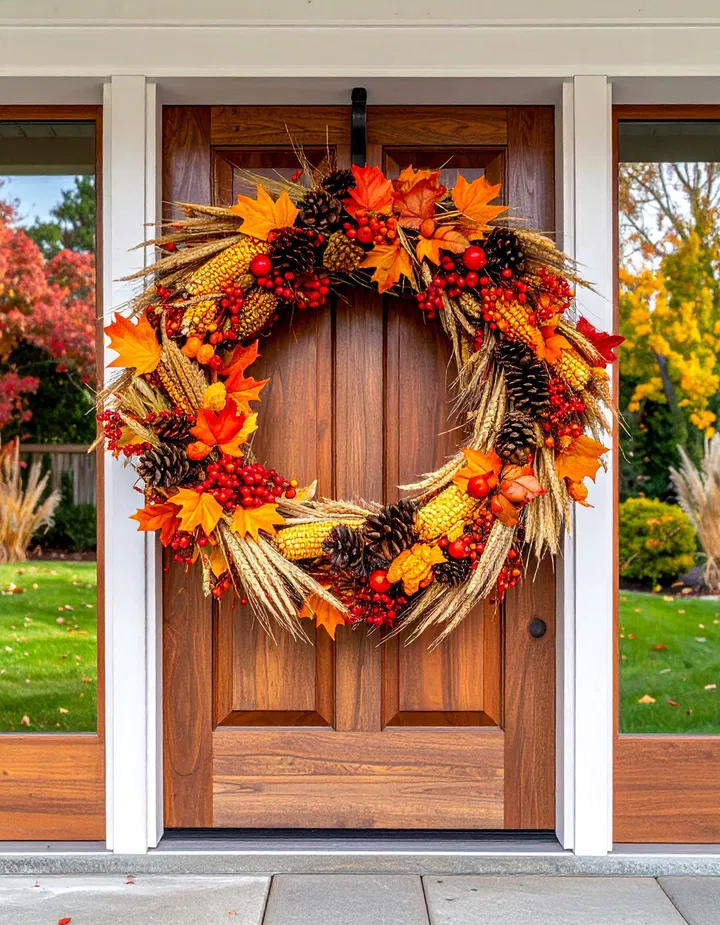
I like extending my fall decorating beyond the garden beds by adding a seasonal wreath near the main entrance. A wreath creates a visual connection between the landscaping and the front of the house.
For an outdoor wreath, I look for combinations of dried leaves, wheat, berries, pinecones, eucalyptus, and other materials that can handle outdoor conditions. Faux foliage is another practical choice when I want the arrangement to stay consistent for several weeks.
I don’t limit wreaths to front doors. Garden gates, sheds, porch walls, windows, and covered outdoor structures can all become part of the seasonal display.
A larger wreath can make a strong statement on a wide door, while a smaller design works better on a narrow gate or shed.
6. Ornamental Kale Planters
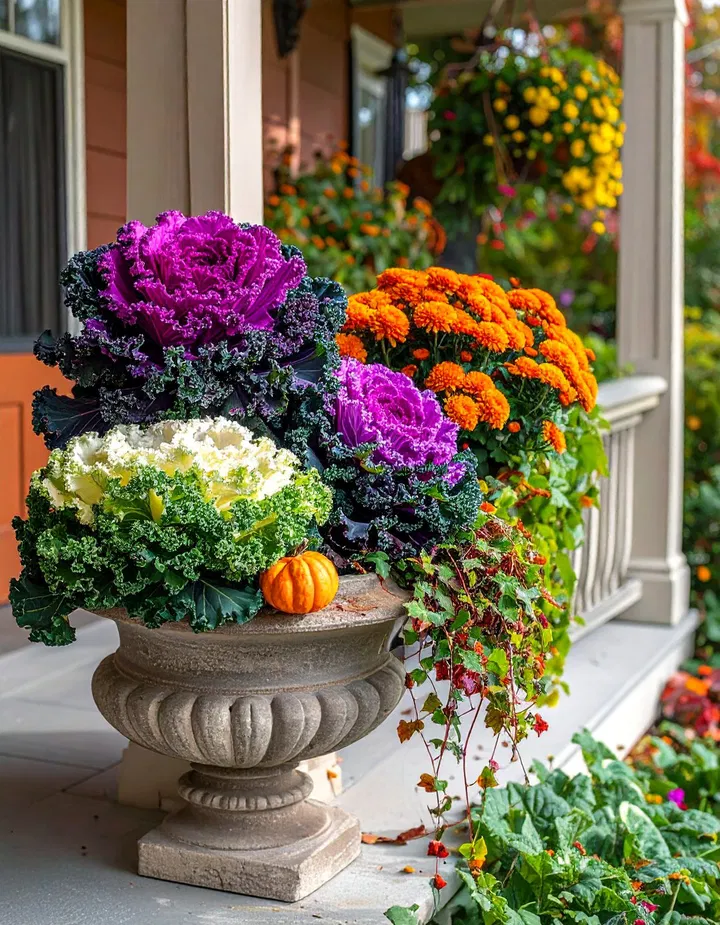
When I want fall containers that continue looking good as temperatures drop, ornamental kale and cabbage are two of my favorites. Their colorful leaves can add interest even when flowering plants begin to slow down.
I like combining purple, green, pink, and creamy white varieties with mums and pansies. The ruffled foliage also gives the container a different texture from traditional flowers.
These plants work especially well in large pots, window boxes, borders, and containers near entryways. Their compact growth also makes them useful for filling the lower portion of a mixed planter.
Pro Tip: I check the mature size of the plants before combining them in one container. Giving each plant enough room helps prevent the arrangement from becoming crowded.
7. Scarecrow Garden Accents
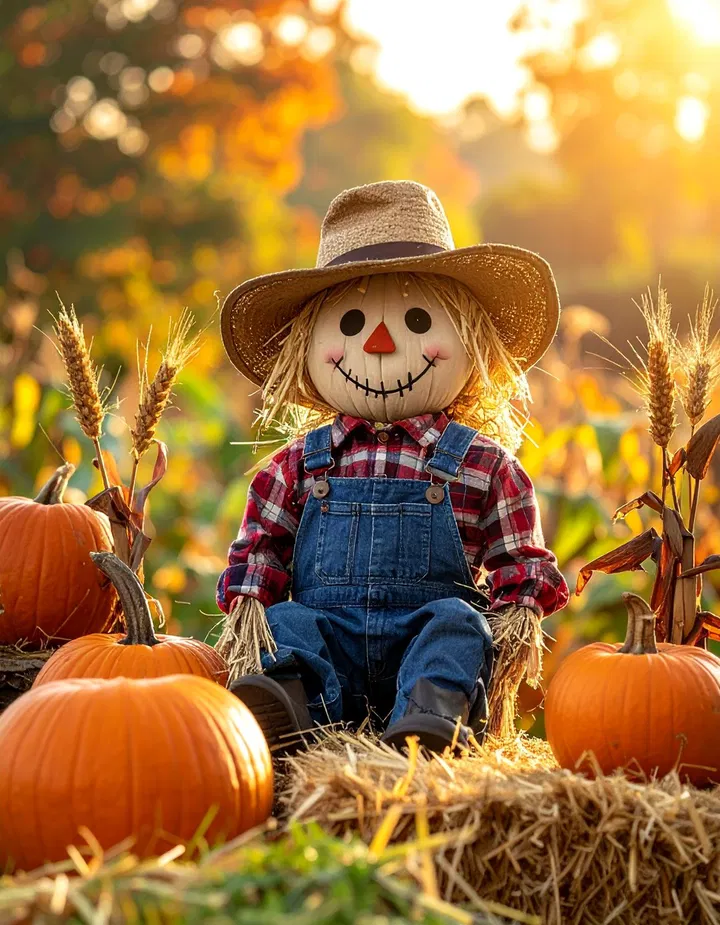
A scarecrow can give a garden a playful harvest-season personality without requiring much space. I like positioning one near pumpkins, among taller plants, or beside a garden path.
For a homemade version, I can use simple wood, straw, an old hat, and weather-resistant fabric. Smaller scarecrows are useful for containers or smaller flower beds where a full-size figure would feel oversized.
I also like choosing a color scheme for the scarecrow that repeats colors already found elsewhere in the garden. This makes the decoration look intentional instead of randomly added.
If I want the display to last beyond October, I keep the design more harvest-focused rather than heavily Halloween-themed.
8. Autumn Window Box Gardens
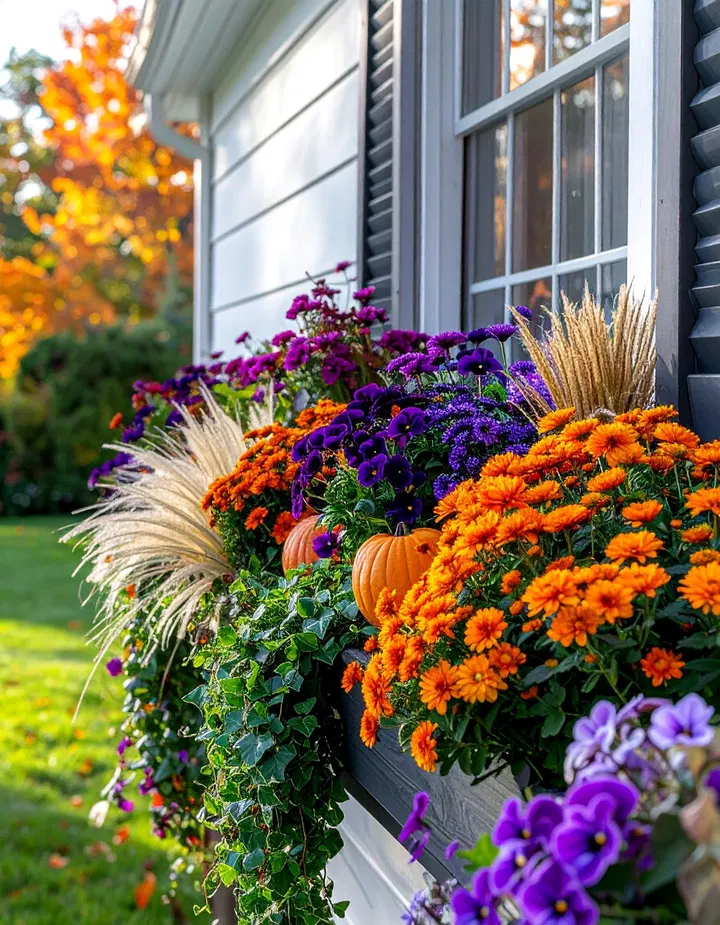
Window boxes give me a chance to add fall color at eye level instead of keeping every decoration down near the ground. They can make the exterior of a home feel more connected to the garden.
I usually combine upright plants with trailing varieties. Mums provide flowers, pansies add smaller blooms, and trailing greenery can soften the edges of the box.
Small pumpkins, gourds, dried stems, and seasonal branches can be tucked between plants as decorative accents. I avoid packing too many hard decorations into the planter because the plants should remain the main feature.
Pro Tip: I make sure the window box has proper drainage before planting. Fall containers can receive heavy rain, and excess water can damage roots.
9. Gourd and Squash Collections
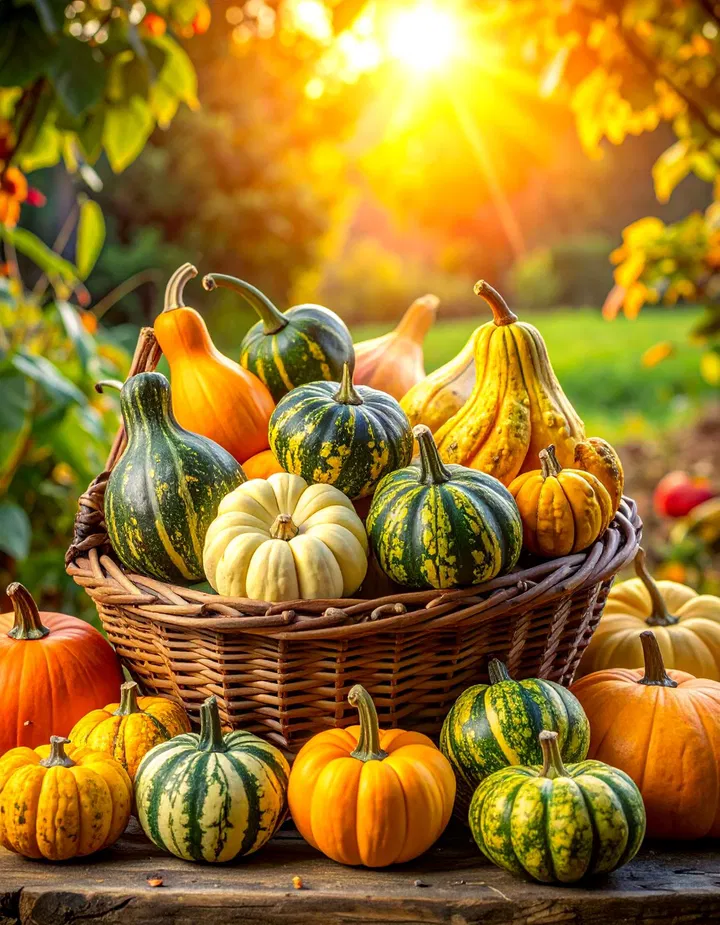
I like using gourds and decorative squash when I want more variety than traditional pumpkins can provide. Their unusual shapes and natural colors make them interesting even when displayed very simply.
I arrange them in baskets, wooden crates, wheelbarrows, urns, or directly around larger pumpkins. Mixing smooth squash with bumpy or textured gourds gives the display more visual contrast.
I also use different sizes to create a sense of depth. Larger pieces work best toward the back while smaller gourds can fill gaps around the front.
If I plan to keep them outside for several weeks, I choose firm, undamaged pieces and keep them as dry as possible.
10. String Light Canopies
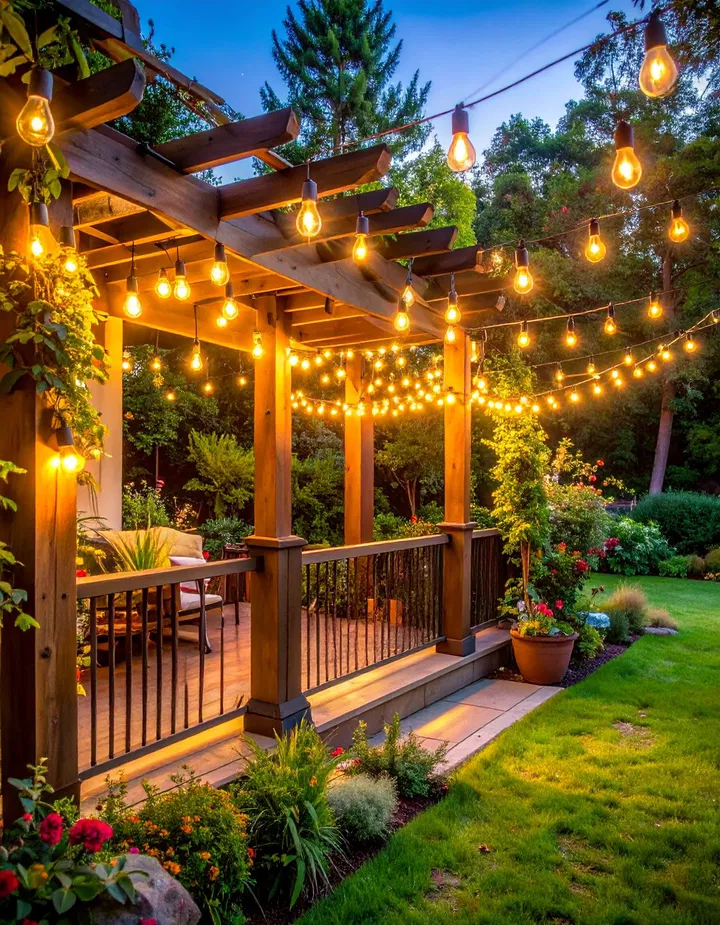
String lights are one of my favorite ways to make an outdoor space feel inviting once the days become shorter. I can use them around a pergola, across a patio, along a porch railing, or above an outdoor seating area.
Warm-white lights work particularly well with fall colors because they add a soft glow without competing with pumpkins and plants. Larger bulb styles can create a farmhouse look, while smaller lights feel more subtle.
I also like combining string lights with lanterns rather than relying on one light source. Using lighting at different heights makes the outdoor area feel more layered.
Pro Tip: I secure outdoor-rated string lights properly and keep cords away from walkways where people could trip. Solar options can also be useful when I want to avoid running extension cords.
Also read: 29 Halloween Decor Ideas for 2026 to Create a Spooky Home.
11. Pansy Border Gardens
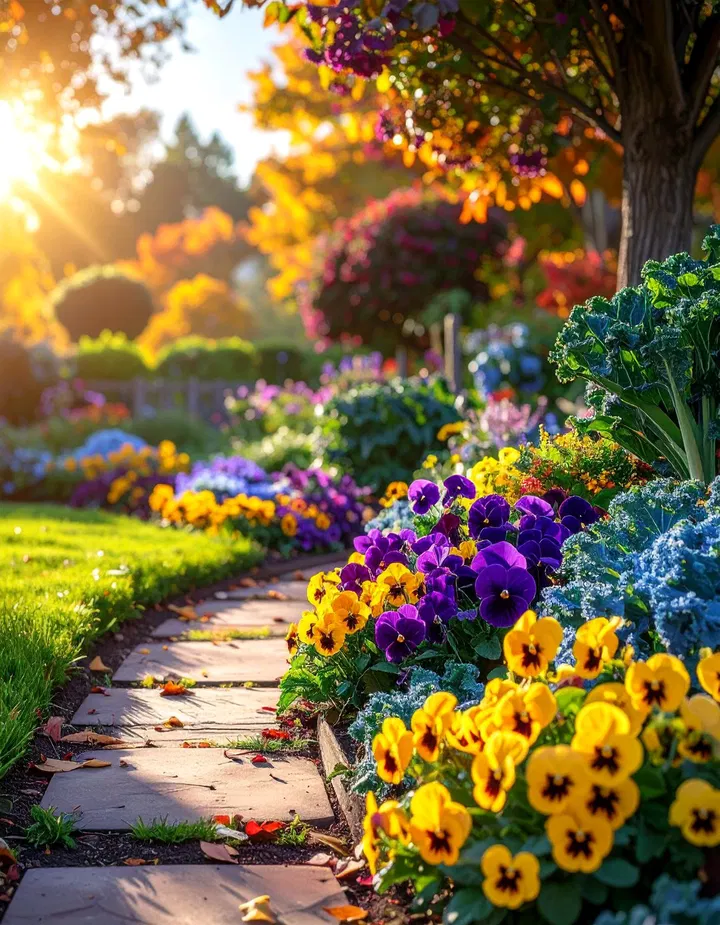
Pansies are a great choice when I want colorful flowers during cooler weather. Their compact growth makes them useful for garden edges, containers, window boxes, and spaces between larger plants.
I like using purple, yellow, blue, white, and mixed-color varieties to create small pockets of color around a garden. They also pair naturally with ornamental kale and mums.
Instead of using pansies as the only plant, I often treat them as the lower layer of a mixed display. This gives me different heights and textures while keeping the flowers easy to see.
Pro Tip: I remove faded flowers when needed and keep the soil reasonably moist without leaving it waterlogged. Consistent care can help maintain flowering as conditions change.
12. Cornstalks and Dried Arrangements
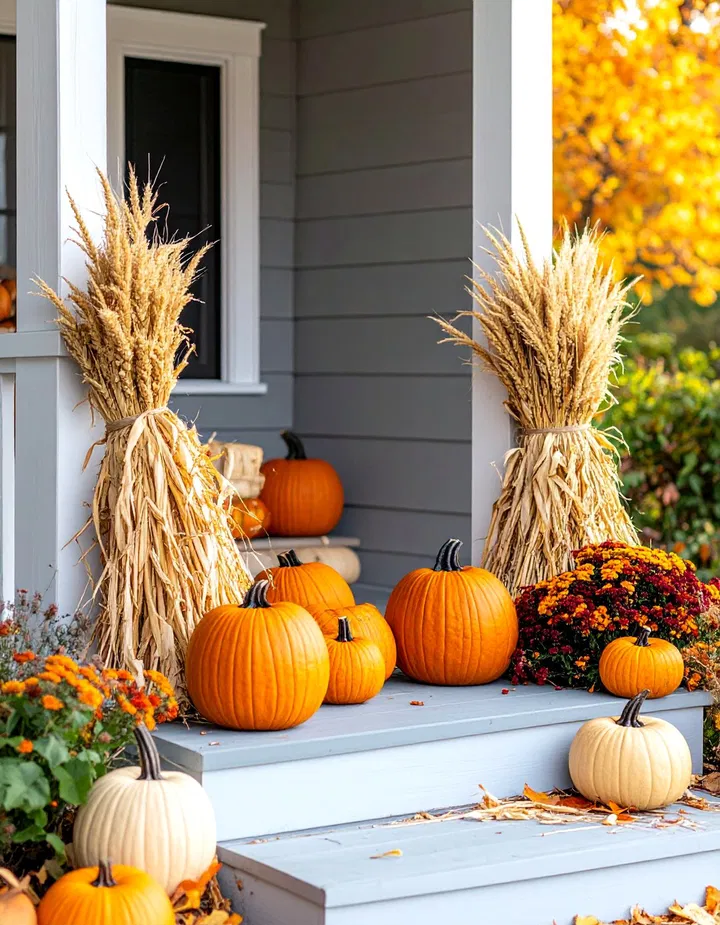
Dried cornstalks are useful when I need height in a fall display. I like placing bundles beside doors, porch posts, garden gates, or large planters.
I can tie several stalks together with twine and combine them with dried grasses, wheat, branches, or other natural materials. The vertical shape makes them especially helpful beside shorter pumpkins and flower containers.
For a more finished appearance, I wrap the base with burlap or a simple seasonal ribbon. I make sure taller bundles are securely anchored because wind can easily knock them over.
After the season, natural dried materials can often be reused in crafts or composted if they have not been treated with unsuitable chemicals.
13. Fall Container Groupings
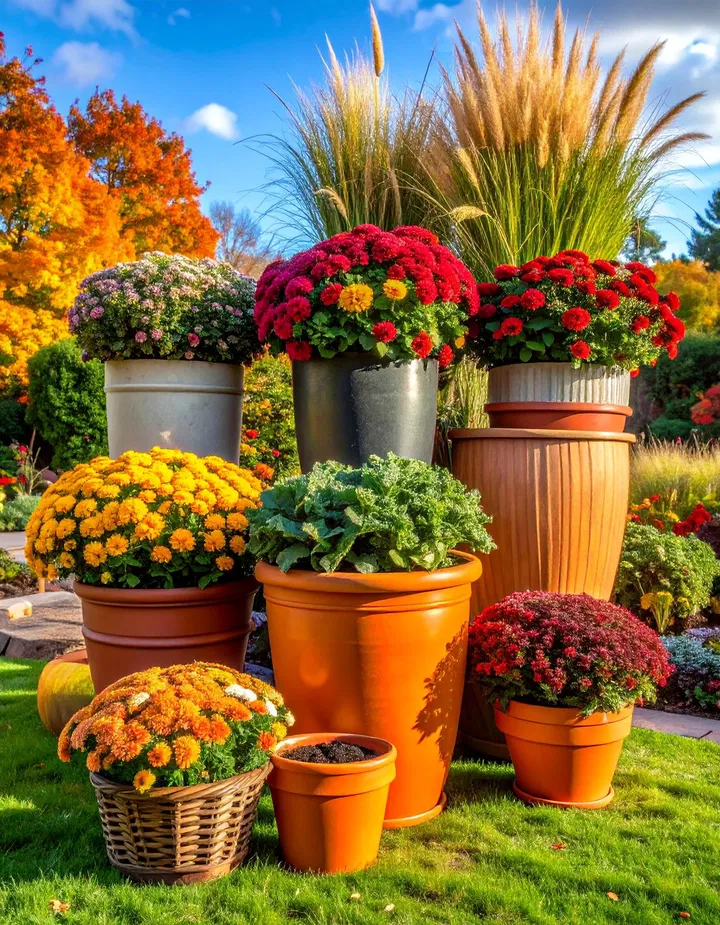
Instead of decorating with one large planter, I often get a better result by grouping several containers together. Different pot heights create a layered look without requiring permanent changes to the garden.
I mix plants such as mums, ornamental kale, pansies, grasses, and trailing greenery. I can also add a few pumpkins or gourds between the pots to connect the individual containers.
I prefer keeping the color palette consistent even when the pots themselves are different. For example, repeating orange, cream, and burgundy throughout the grouping can make mismatched containers look like part of one display.
Pro Tip: I place the tallest container toward the back and shorter pots toward the front. This keeps every plant visible and makes the grouping easier to appreciate from a distance.
14. Mailbox Post Decorating
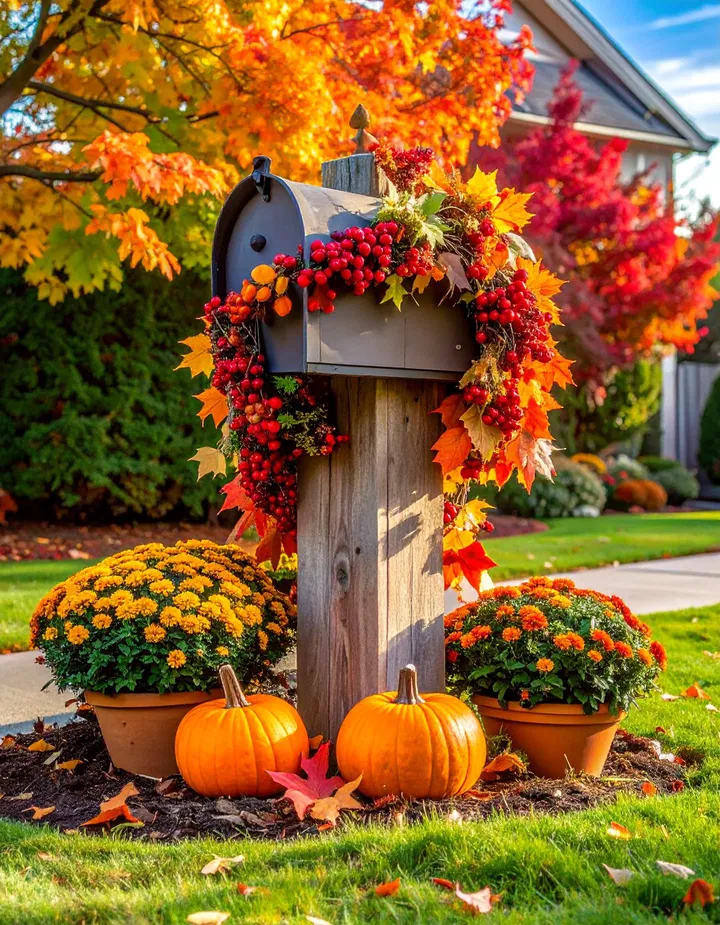
The mailbox is one of the first things people see from the street, so I think it deserves some seasonal attention. Even a simple decoration can make the entire front yard feel more finished.
I like wrapping the post with a weather-resistant fall garland or adding a small wreath to the mailbox itself. Mini pumpkins and containers of mums can also work around the base if they do not interfere with access.
For a softer look, I can plant pansies around the mailbox post. This gives me living color instead of relying entirely on decorations.
I always make sure anything attached to the mailbox does not interfere with the mail carrier’s access or block visibility around the roadside.
15. Aster Garden Beds
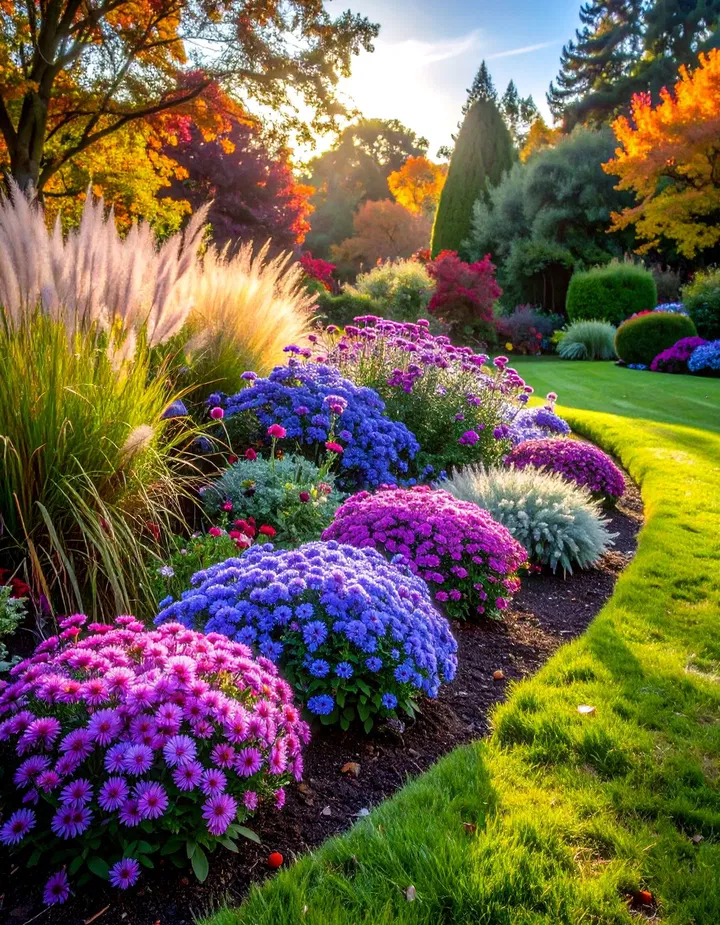
Asters are one of the fall flowers I recommend when I want something that can become a long-term part of the garden. Depending on the variety, they can provide purple, pink, blue, or white blooms when many summer plants have finished.
I like placing asters among ornamental grasses or other late-season plants so the bed continues to have movement and color. Their daisy-like flowers also provide food for pollinators late in the growing season.
Because asters include many perennial varieties, I can enjoy them year after year instead of replacing the entire display each autumn.
Pro Tip: I choose varieties suited to my local growing conditions and give them adequate sunlight and drainage. Plant performance depends heavily on matching the plant to the site.
16. Rustic Wagon Displays
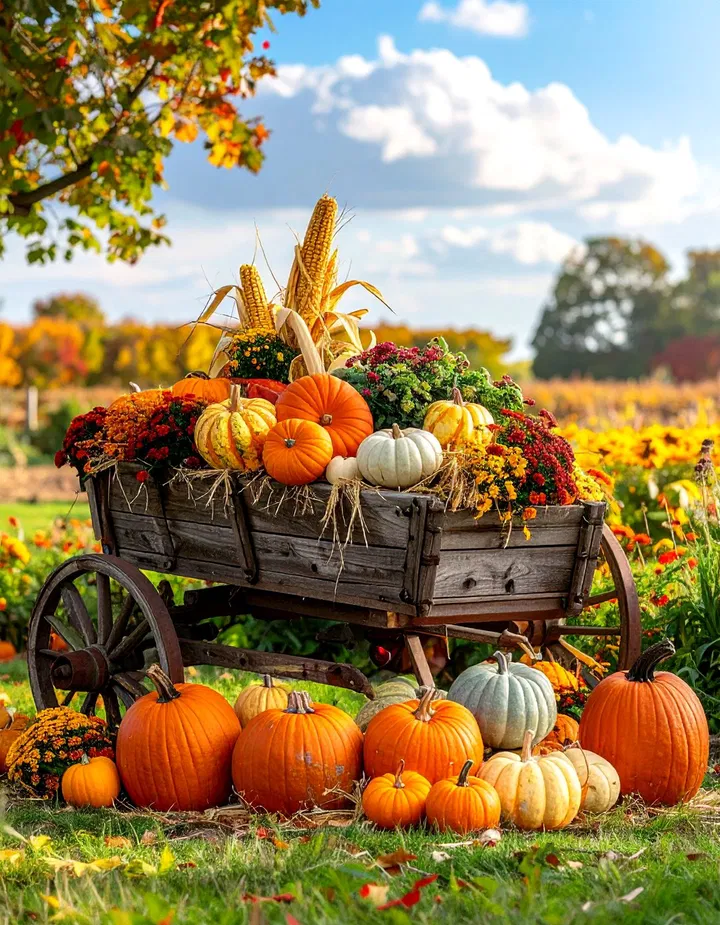
A rustic wagon gives me a ready-made container for a large fall arrangement. I can fill it with pumpkins, gourds, mums, dried corn, and other harvest decorations without needing to build a complicated structure.
I like placing a wagon near a porch, garden path, lawn edge, or entrance where it can act as a focal point. Smaller wagons can work on covered patios or porches.
The weathered wood and wheels add texture, while the colorful contents provide the seasonal contrast. I can also change a few items during the season rather than starting over completely.
For a practical setup, I make sure the wagon is stable and positioned where it will not block walkways or become a hazard during wet or windy weather.
17. Pathway Border Lighting
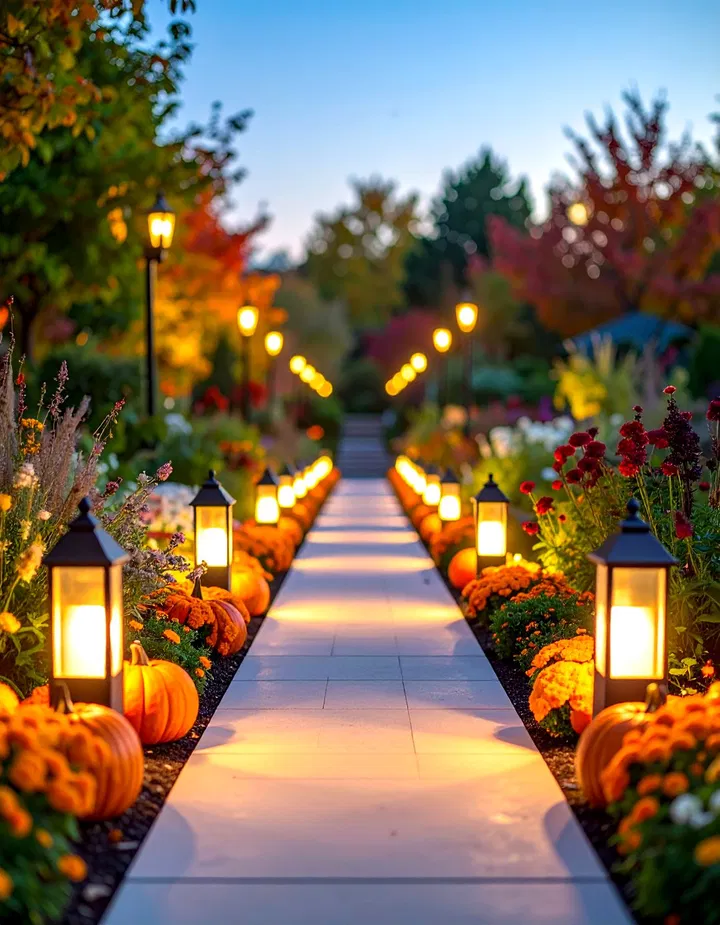
I like pathway lighting because it serves two purposes: it makes the garden more attractive at night and helps people see where they are walking.
Solar stake lights are especially convenient because I don’t need to run electrical cords through the garden. I place them along walkways, garden borders, and driveways with reasonably even spacing.
Warm lighting can highlight pumpkins, flower beds, and other seasonal features without making the entire yard overly bright. Decorative lantern-style stakes can also add more fall character.
Pro Tip: I check the position of pathway lights after dark rather than judging them only during the daytime. The nighttime view tells me whether the path is actually illuminated where I need it.
18. Fireside Seating Arrangements
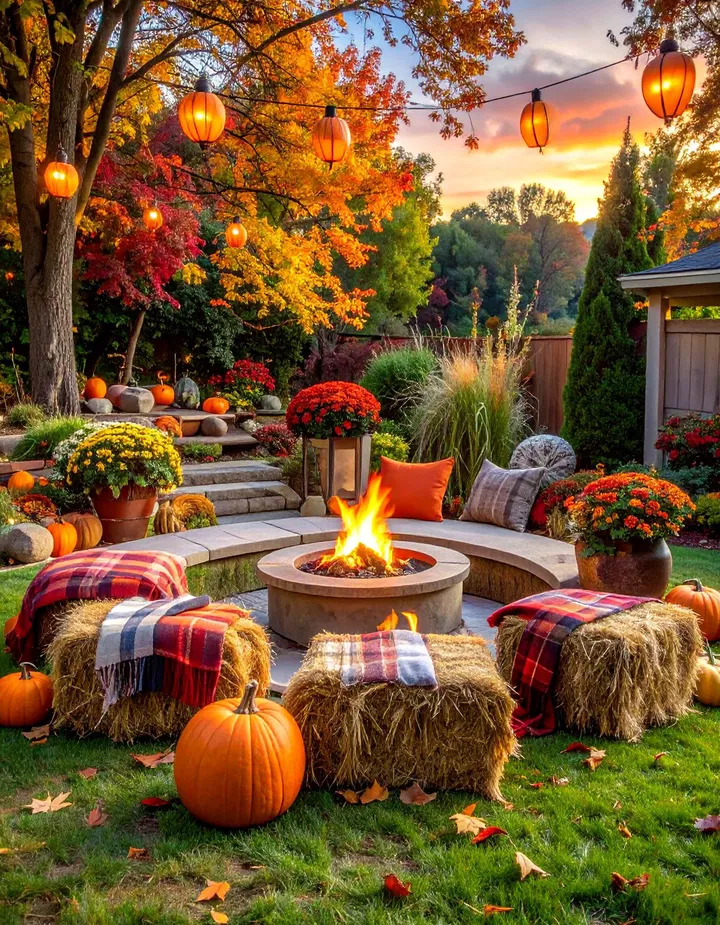
Cooler autumn weather is one of my favorite reasons to spend more time outside. If I have a suitable fire pit, I create a comfortable seating zone around it and decorate the surrounding area with fall touches.
I arrange chairs or sturdy outdoor seating so people can comfortably talk while facing the fire. Hay bales can work for casual gatherings when protected from moisture and positioned safely away from flames.
I add pumpkins, lanterns, mums, outdoor pillows, and an outdoor rug around the area to make it feel like a separate destination within the garden.
Safety is my first priority here. I keep decorations, dry grasses, hay, and other flammable materials well away from the fire and follow the fire pit manufacturer’s instructions and local rules.
19. Succulent and Cactus Fall Displays
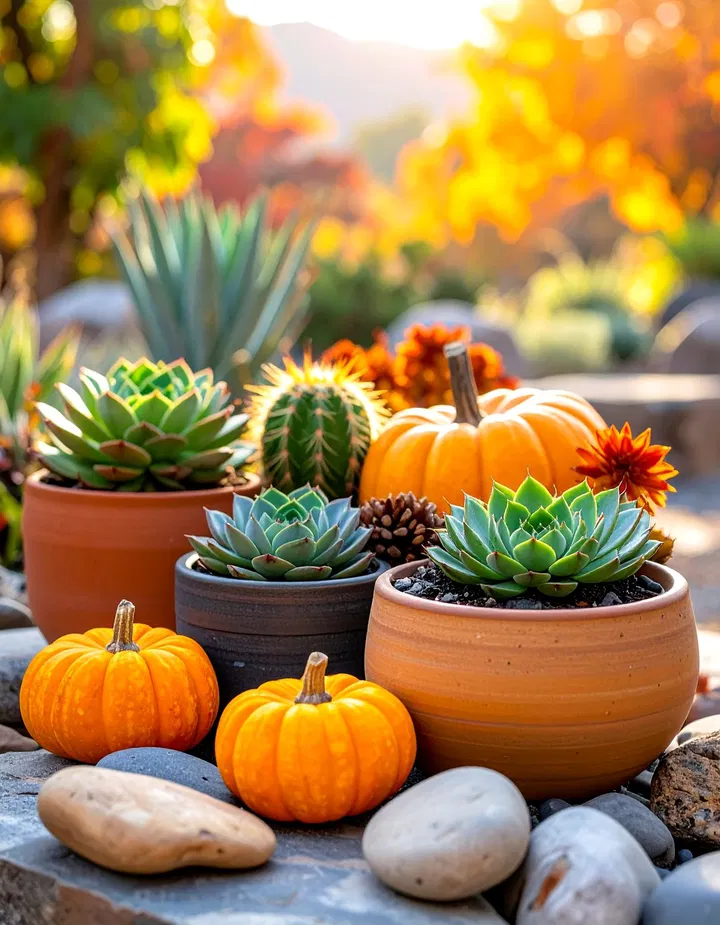
I don’t think every fall display needs to use traditional flowers. Succulents can create a more modern garden arrangement while still fitting beautifully into the autumn season.
I like placing hardy succulents in decorative containers and adding small pumpkins, pinecones, stones, or other natural accents around them. Some varieties develop deeper tones as temperatures change, which can work nicely with fall colors.
Hens-and-chicks and some sedum varieties can be useful in cooler conditions, but I always check the hardiness of a particular plant before leaving it outdoors.
These displays are especially practical for covered patios or areas where I want lower-water plants. I avoid assuming that every cactus or succulent can tolerate cold weather because temperature tolerance varies significantly by species.
Read this next: 25 Fall Living Room Decor Ideas To Cozy Up Your Space in 2026
20. Decorative Fall Garden Stakes
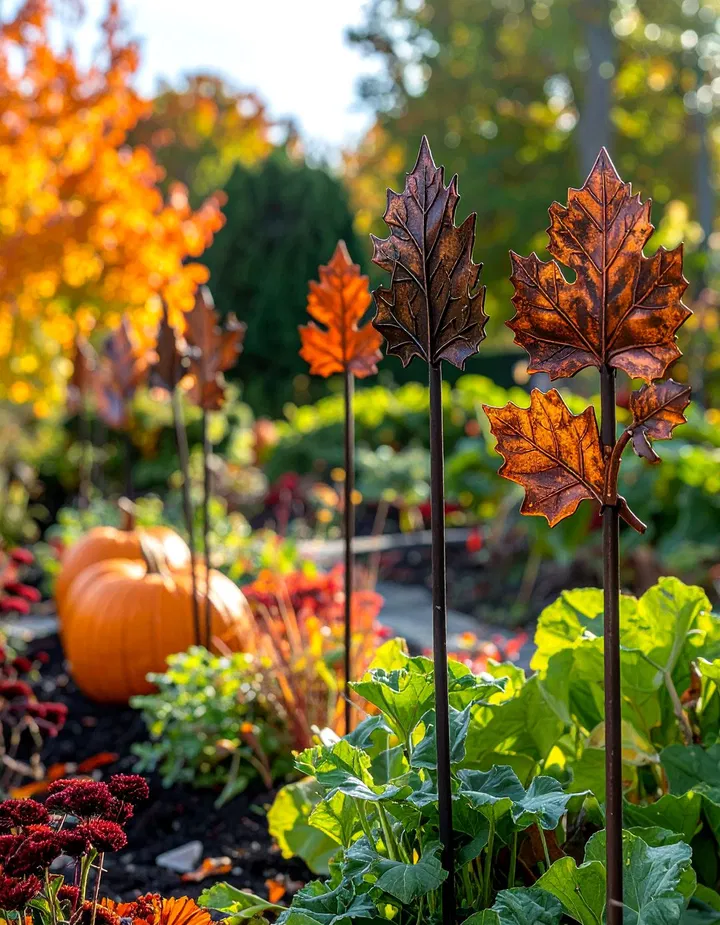
Garden stakes are a simple way for me to add vertical decoration to areas where flowers have finished blooming. They take up very little ground space while helping fill empty areas within a garden bed.
I can choose metal leaves, pumpkins, harvest designs, wooden signs, or solar-powered stakes. I like using several heights rather than placing every stake at the same level.
Rust, bronze, copper, wood, and dark metal finishes tend to work naturally with autumn foliage and garden materials.
I also use stakes sparingly. A few well-positioned pieces usually look better than filling an entire flower bed with decorations, especially when I want the remaining plants to stay visible.
FAQ’s
What are the best fall decorations for a garden?
I like using pumpkins, mums, gourds, hay bales, lanterns, and dried cornstalks because they add seasonal color and texture with little effort.
How can I decorate my garden for fall on a budget?
I reuse existing planters and garden items, then add inexpensive pumpkins, dried leaves, gourds, and DIY accents to create a seasonal display without spending much.
What flowers are best for a fall garden?
I recommend mums, pansies, ornamental kale, and asters. They can provide strong color as summer flowers fade and many varieties handle cooler fall temperatures well.
Conclusion
Fall garden decorating does not have to mean buying dozens of new decorations. I can make a noticeable difference by combining a few seasonal plants with pumpkins, natural materials, and practical outdoor lighting.
My favorite approach is to start with one focal area and build outward. I might begin with a group of mums and pumpkins near the entrance, then repeat the same colors with pansies, lanterns, or small garden accents elsewhere.
I also try to think about how each decoration will handle weather, watering, wind, and changing temperatures. That small amount of planning helps my fall garden stay attractive for longer and keeps seasonal decorating from becoming difficult to maintain.
Whether I have a large backyard or only a few garden beds, I can use these ideas to create a warm autumn setting that feels personal. The best fall garden is not necessarily the biggest one—it is the one that feels welcoming, balanced, and enjoyable to live with throughout the season.


5 Comments