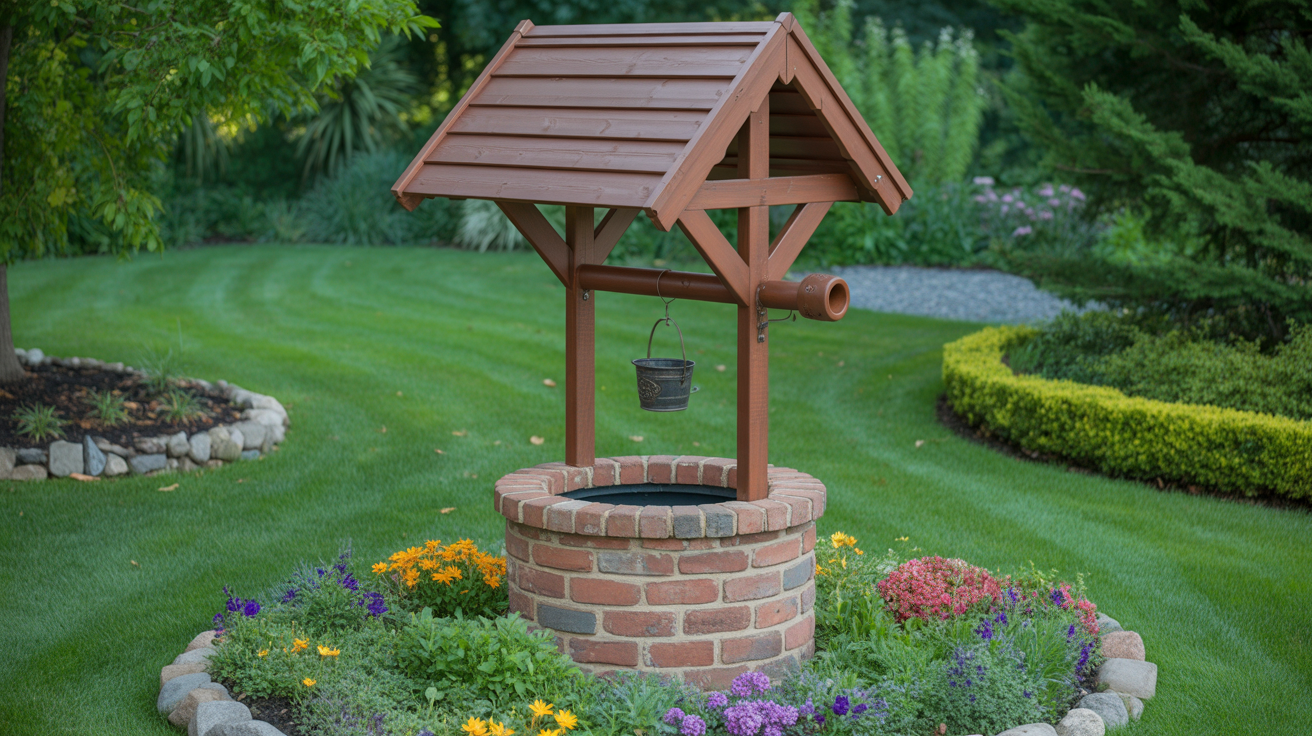
15 Outdoor Wishing Well Garden Ideas for Garden Charm
I love garden features that add personality without making an outdoor space feel crowded, and a wishing well is one of my favorites. It can turn an empty corner, flower bed, or pathway into a memorable focal point while giving me plenty of room to personalize the look.
I can use a wishing well as a planter, lighting feature, water accent, seating area, or simply as decorative garden art. The right material and placement also make a big difference, especially when the well will stay outdoors through changing weather.
In this guide, I’m sharing 15 outdoor wishing well garden ideas that work with different garden styles, sizes, and budgets. I’ll cover rustic wooden wells, small planter versions, stone designs, fairy-tale features, lanterns, DIY options, modern metal styles, benches, mosaics, thatched roofs, Zen-inspired designs, vintage finishes, solar lighting, circular stone planters, and classic rope-and-bucket displays.
Save this for later
Table of Contents
I’ll also explain where I would place each style and how I’d make it more useful. Whether I have a small patio or a larger backyard, I can adapt many of these ideas to suit the available space.
Key Takeaways
- I can use a wishing well as a planter, focal point, light feature, water feature, or seating accent.
- Wood and stone work especially well for traditional and cottage-style gardens.
- Metal is a good option when I want a cleaner, more contemporary appearance.
- Solar lights can add evening interest without requiring an electrical connection.
- A DIY wishing well gives me more control over its size, color, and materials.
- I should choose weather-resistant materials if the well will remain outside year-round.
- Placement matters just as much as the design, so I prefer locations that are visible without blocking garden paths.
Related article: 20 Fall Garden Decor Ideas To Brighten Outdoor Beds
1. Rustic Wooden Wishing Well
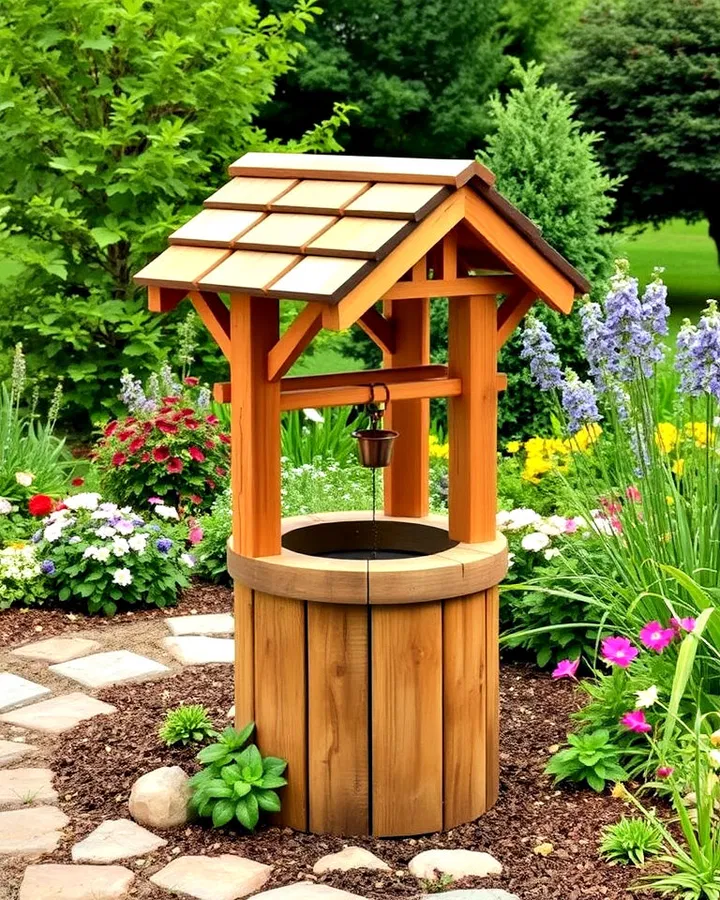
A rustic wooden wishing well is one of the easiest styles for me to work into a cottage, farmhouse, or country garden. Natural timber immediately gives the feature a warm appearance, especially when I place it among flowers, grasses, or low-growing shrubs.
I can keep the wood in its natural finish or use an exterior-rated stain to protect it from moisture and sunlight. A small roof, wooden crank, and hanging bucket can make the design look more authentic.
For placement, I like the idea of setting it beside a pathway or slightly inside a flower bed. This lets the well become a focal point without taking over the entire garden.
Pro Tip: If I’m using real wood outdoors, I choose an exterior wood finish and keep the base raised slightly from consistently wet soil. This can help reduce moisture-related deterioration.
2. Miniature Wishing Well Planter
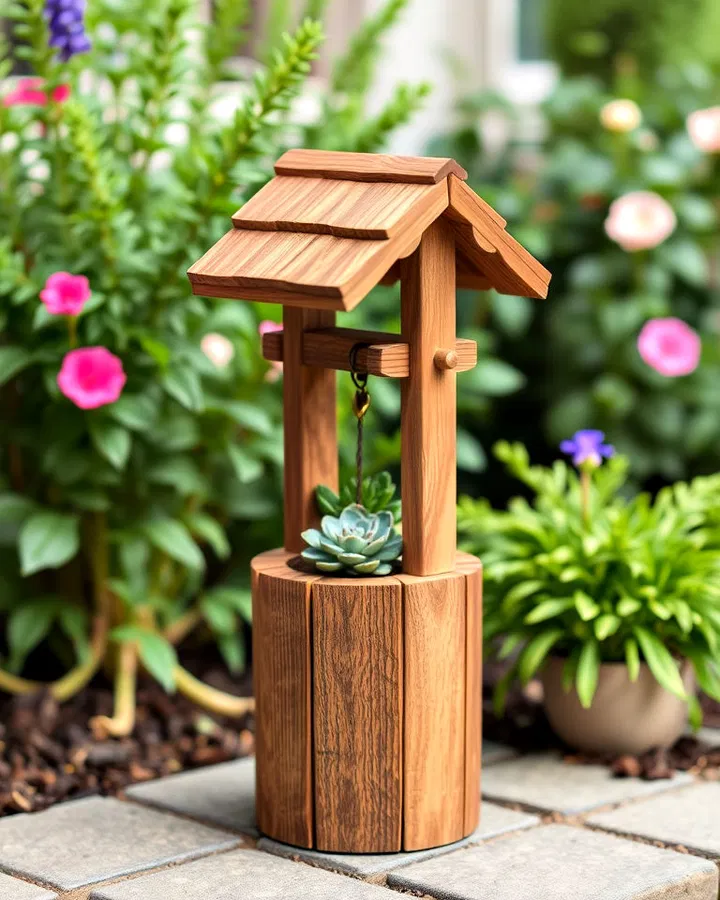
When I have limited outdoor space, I don’t need a full-size wishing well. A miniature version can give me the same decorative effect while fitting comfortably on a patio, balcony, porch, or small garden.
I can use the opening as a planter for compact flowers, herbs, or succulents. I would choose plants according to the amount of sunlight the location receives rather than selecting them only for appearance.
A small wishing well also works nicely beside an outdoor chair or garden table. Because it takes up less space, I can move it around when I want to change my outdoor arrangement.
3. Stone Wishing Well with Water Feature
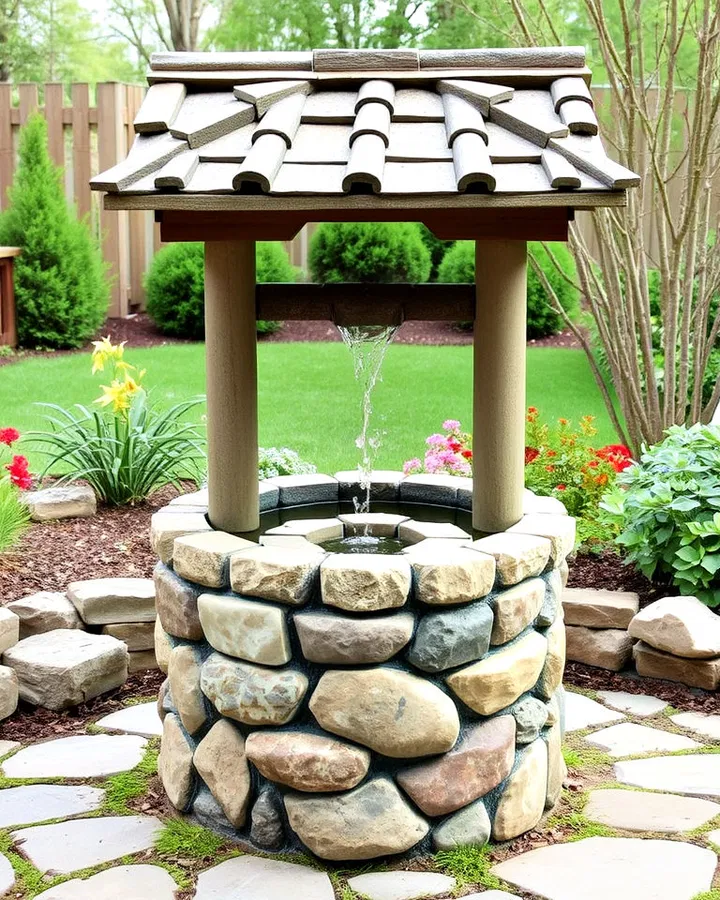
A stone wishing well with moving water can become both a visual feature and a relaxing sound source. I particularly like this idea for a seating area where I can hear the gentle movement of water while spending time outdoors.
Natural-looking stone gives the structure a permanent, grounded appearance. A recirculating fountain pump can move the same water through the feature, so I don’t need a traditional water supply.
Before installing one, I would make sure the pump is suitable for outdoor use and that the water feature can be maintained easily. I’d also keep standing water clean to discourage unwanted insects.
4. Fairy-Tale Inspired Wishing Well
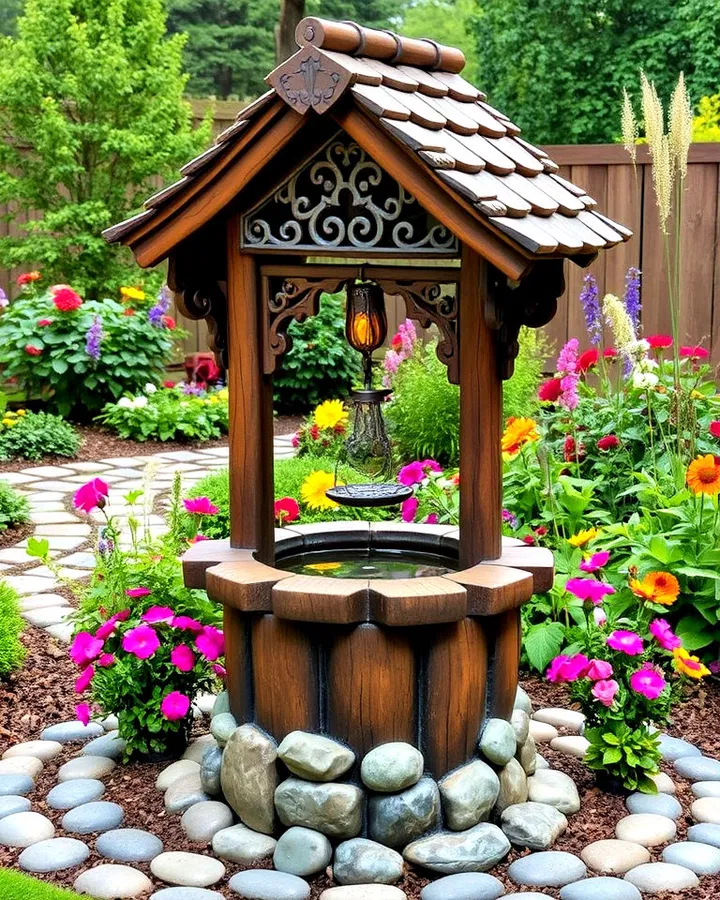
For a playful garden, I would choose a wishing well with storybook details. A curved roof, decorative trim, climbing flowers, and soft lighting can make the structure feel like it belongs in a fantasy garden.
I can create this look without making every element overly colorful. Natural wood paired with flowering plants and a few decorative details can give me a more tasteful fairy-tale effect.
This style is especially fun in family gardens. I’d place it where it can be seen from a patio or garden seating area rather than hiding it behind tall plants.
Pro Tip: I prefer using a limited color palette when creating a themed garden feature. Two or three coordinating colors usually look more intentional than many unrelated shades.
5. Wishing Well with Hanging Lanterns
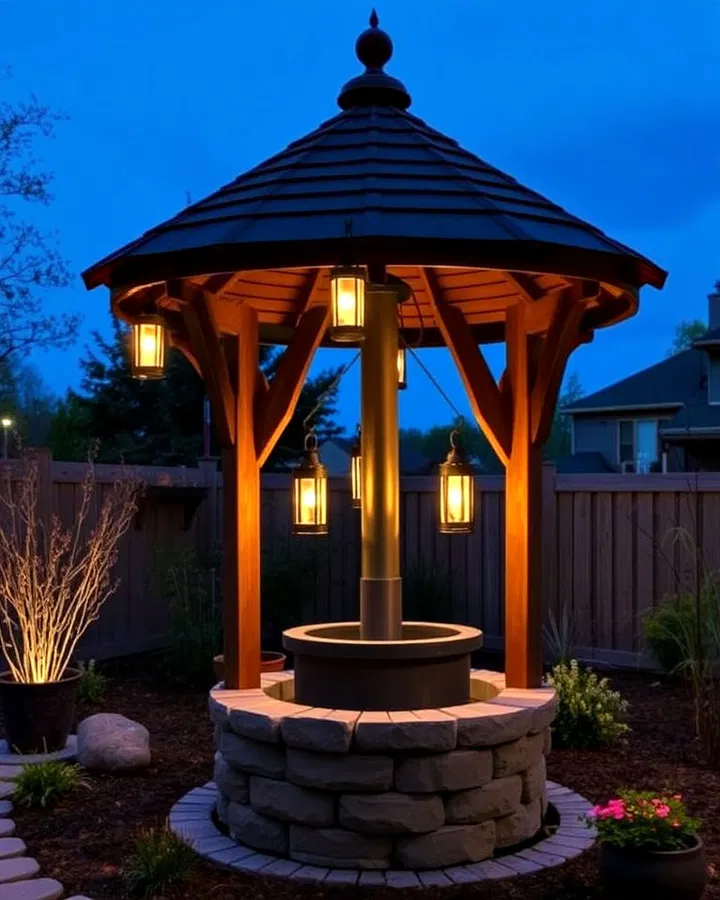
Adding lanterns can make a simple wishing well useful after sunset. I can hang small lanterns from the roof or mount lights around the structure to create a soft evening glow.
For an easy installation, I would choose outdoor-rated solar or LED lighting. Solar options are particularly convenient because I don’t need to run a new electrical cable to the garden.
I’d place the well along a walkway, near an outdoor dining space, or where it can be seen from the house. That way, the lighting contributes to the overall nighttime garden atmosphere.
6. DIY Painted Wishing Well
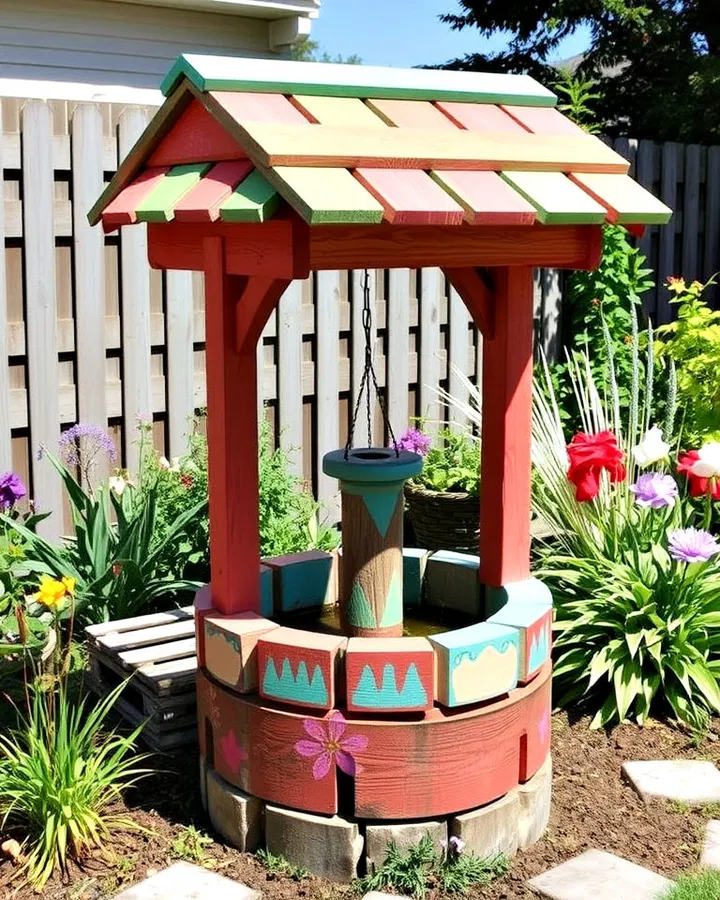
A painted wishing well is a great project when I want something that feels personal rather than store-bought. I can build a simple structure from suitable outdoor wood or repurpose safe, sturdy materials that I already have.
I could paint it in white, green, muted blue, terracotta, or another color that connects with the surrounding garden. Simple floral patterns, stripes, or hand-painted details can make it unique.
Before painting, I would clean and prepare the surface properly and use paint designed for exterior conditions. This helps the finish hold up better against rain and sunlight.
Pro Tip: I always test my paint colors on a small section first. Outdoor light can make a color look very different from how it appears indoors.
7. Metal Wishing Well for Modern Gardens
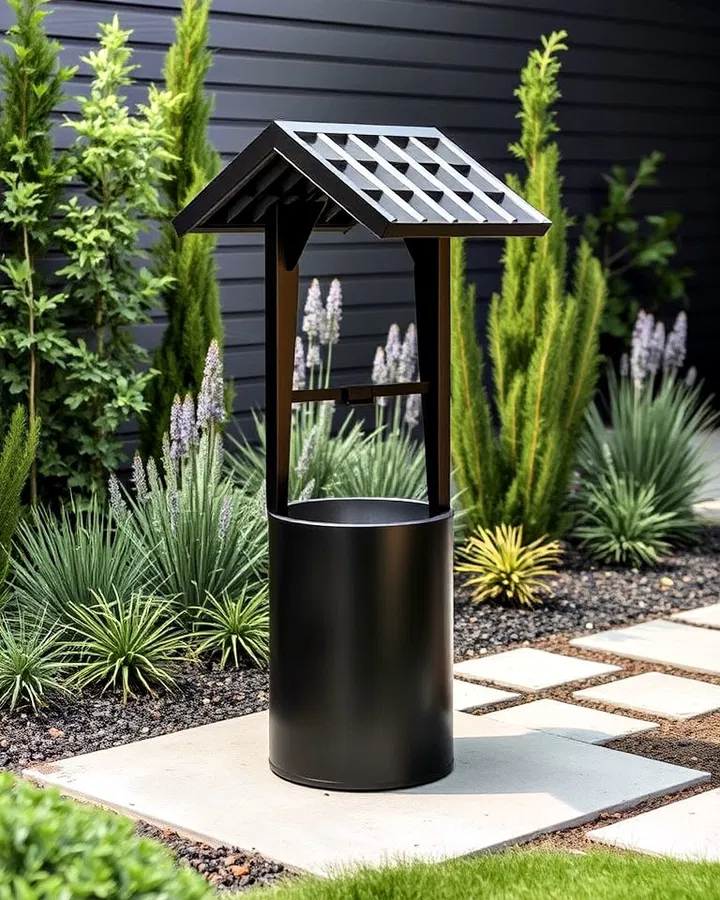
If my garden has a contemporary design, I would look for a metal wishing well with simple lines and minimal decoration. Steel, aluminum, and other outdoor-suitable metals can give the feature a much cleaner appearance than heavily ornamented wooden designs.
Black, charcoal, bronze, or natural metallic finishes can work well with modern landscaping. I can pair the well with gravel, concrete edging, ornamental grasses, or neatly arranged planting beds.
For long-term outdoor use, I would pay attention to the metal’s corrosion resistance and the manufacturer’s outdoor-use recommendations. A beautiful finish is only useful if it can handle the local weather.
8. Wishing Well with Integrated Bench
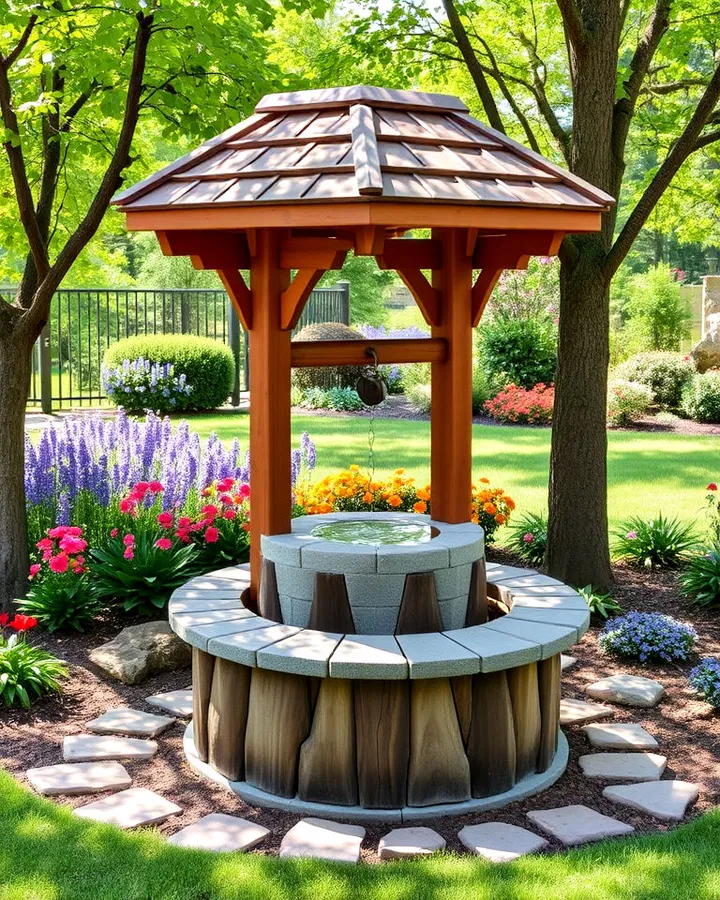
A wishing well with a built-in bench gives me more than a decorative feature. It creates a small place where I can sit and enjoy the garden.
I would position this type of well somewhere with a pleasant view, such as beside flowering plants or beneath a suitable shade tree. The bench should also have enough surrounding space so it doesn’t make the area feel cramped.
Wood works particularly well for a relaxed garden setting, while stone can create a more permanent architectural appearance. Outdoor cushions can add comfort, provided they are stored or protected from rain when necessary.
9. Decorative Mosaic Wishing Well
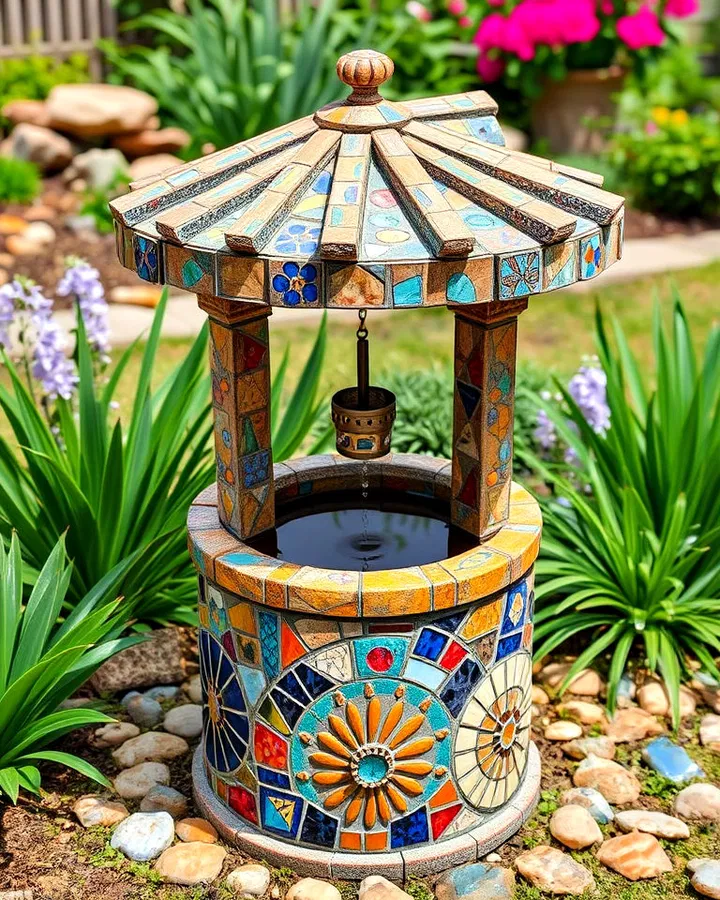
A mosaic wishing well gives me an opportunity to bring color and pattern into an otherwise green outdoor space. Small pieces of tile, ceramic, glass, or suitable stone can be arranged into geometric or botanical designs.
I would use a pattern that relates to the rest of my garden instead of treating the well as a completely separate feature. Blue and earthy tones can work beautifully in Mediterranean-inspired spaces, while brighter combinations can suit a playful garden.
Because outdoor conditions can affect adhesives and grout, I would choose products specifically rated for exterior applications. Proper preparation matters if I want the mosaic to remain attractive over time.
10. Traditional Thatched-Roof Wishing Well
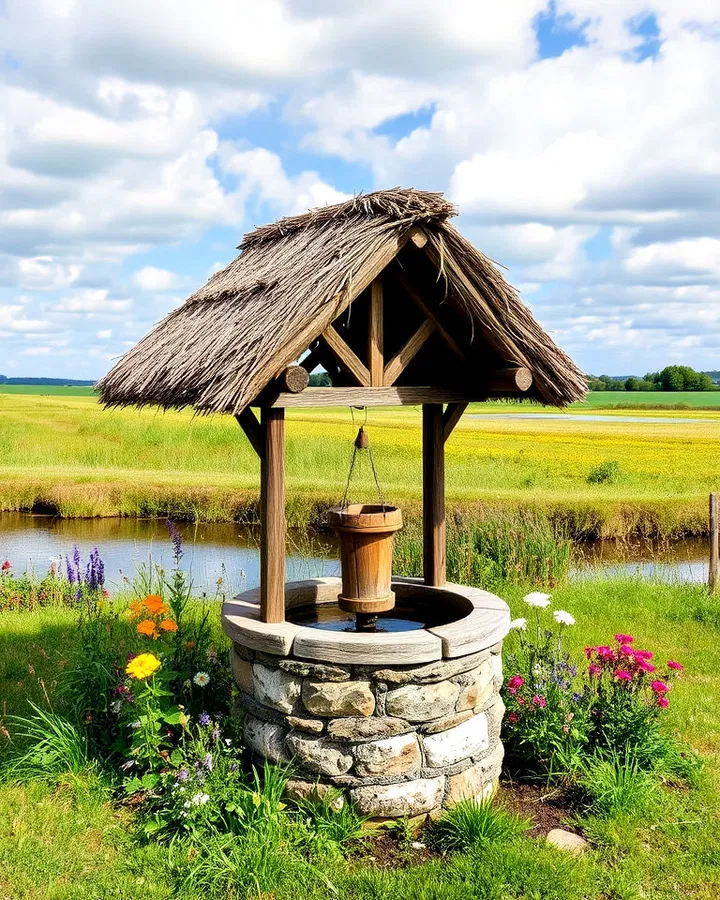
A thatched-style roof gives a wishing well an old-fashioned countryside character. The natural texture of the roof contrasts nicely with green grass, flowering plants, and informal planting.
I would use this style when my garden already has a cottage or rustic feel. Wild-looking flowers and softly growing grasses can make the well appear more naturally connected to the landscape.
The roof needs particular attention because it is exposed to rain, wind, and sunlight. I would select an outdoor-rated material or decorative roofing product rather than assuming any natural thatching material will remain durable outside.
Also read: 23 Fall Entryway Table Decor Ideas That Make A Warm Impression In 2026
11. Japanese Zen-Inspired Wishing Well
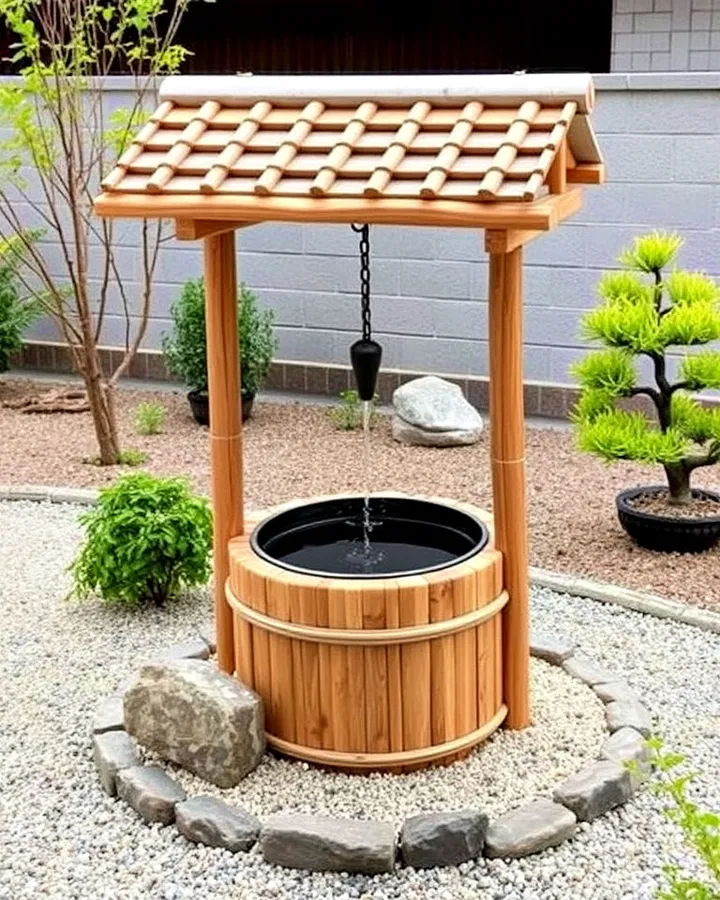
For a calmer garden, I like the idea of a simple wishing well inspired by Japanese garden design. I would focus on natural materials, clean shapes, restrained decoration, and a quiet color palette.
Stone, bamboo, and wood can work well together. I can surround the feature with gravel, carefully placed stones, moss-friendly areas, or neatly pruned plants to keep the setting peaceful rather than busy.
I would avoid adding too many decorative objects. The beauty of this approach comes from keeping the arrangement simple and giving each element enough space.
12. Vintage Wishing Well with Weathered Finish
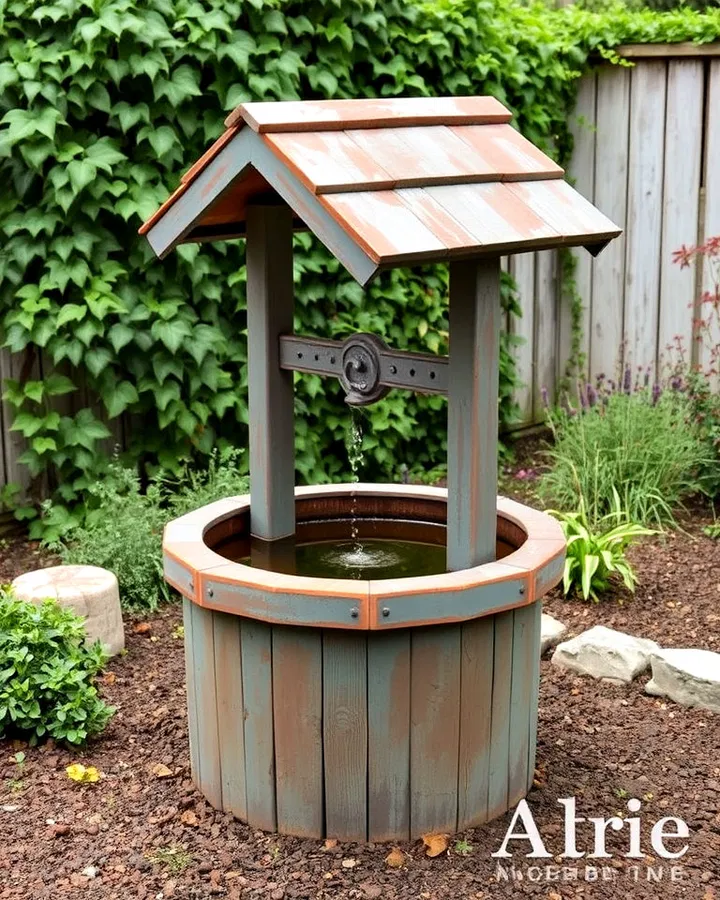
A weathered wishing well can give my garden an established, collected-over-time appearance. Distressed wood, aged-looking metal, and climbing greenery can create plenty of character without requiring elaborate decoration.
I can place it beside an old-style fence, cottage planting, or a garden path. Vines and flowering plants can soften the edges and help the structure feel like part of the landscape.
If I’m creating a weathered look myself, I would distinguish between intentional aging and actual structural damage. The well should look old while remaining stable and safe.
Pro Tip: I focus decorative distressing on visible surfaces while keeping the main supporting structure strong. There’s no need to weaken the material just to achieve an aged appearance.
13. Solar-Powered Light-Up Wishing Well
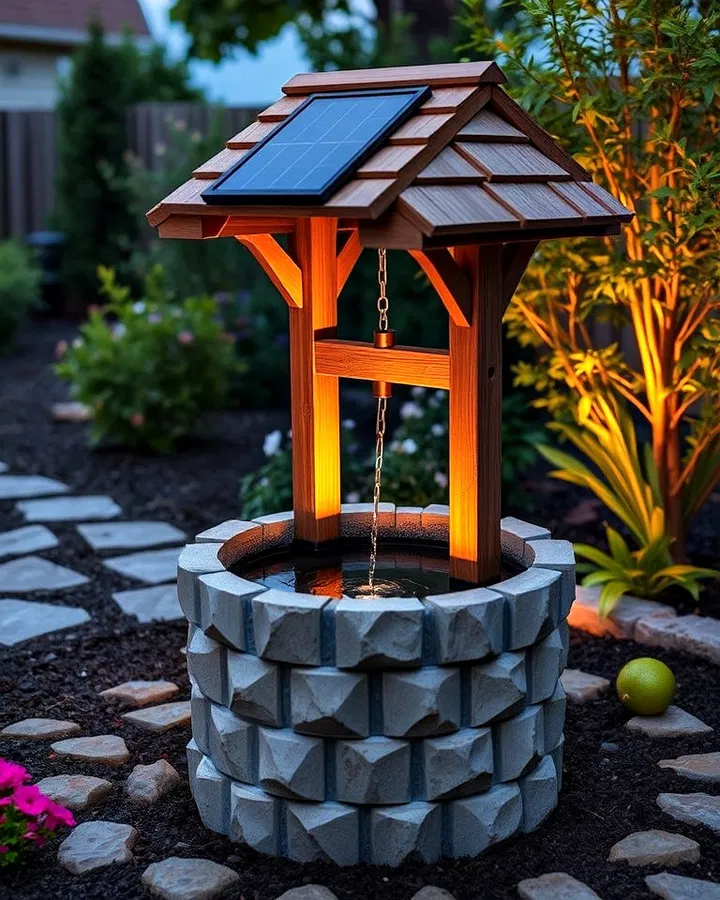
A solar-powered wishing well is useful when I want garden decoration that also provides evening illumination. Small solar panels can collect energy during daylight and power integrated or attached LED lights after dark.
I would place the well somewhere that receives enough direct sunlight during the day. A shaded location may not provide enough charging time for the lights to perform well at night.
This is also a practical choice for areas where I don’t want to install wiring. I can use the lights to highlight the roof, planting area, or surrounding garden without adding a permanent electrical connection.
14. Circular Stone Wishing Well Planter
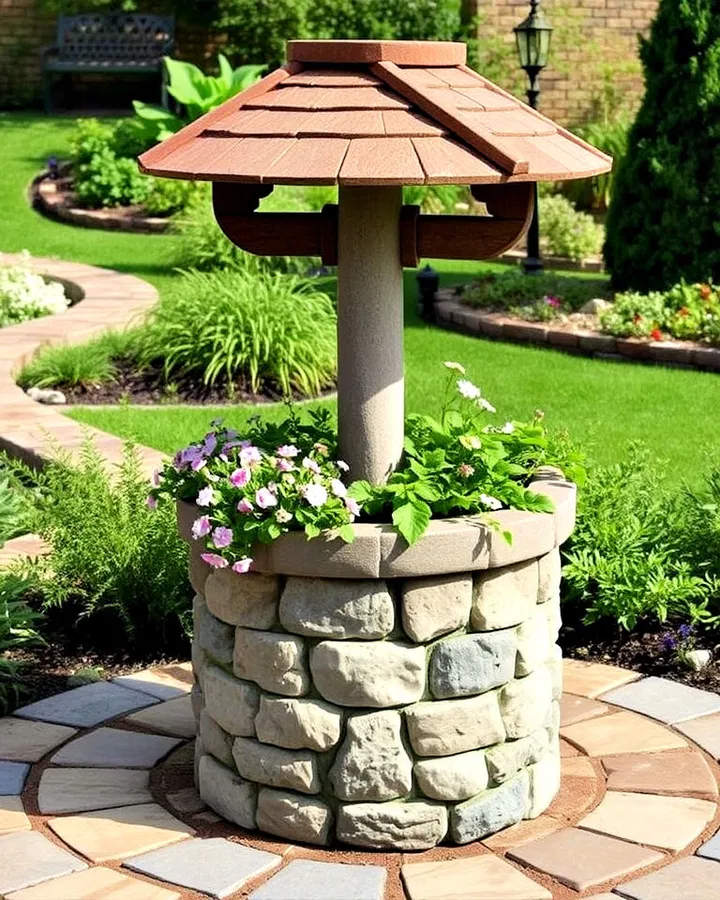
A circular stone wishing well planter gives me a substantial centerpiece for a flower bed or larger garden. Its open interior can hold trailing plants, flowering annuals, or compact greenery.
Stone or stone-look materials can blend naturally with pathways, retaining walls, and other hardscape elements. I particularly like using similar textures nearby so the well doesn’t look like an isolated object.
I would make sure the planter has adequate drainage. Excess water sitting around plant roots can create problems for many common garden plants, so drainage holes or a properly designed planting insert are worth considering.
15. Wishing Well with Rope and Bucket Display
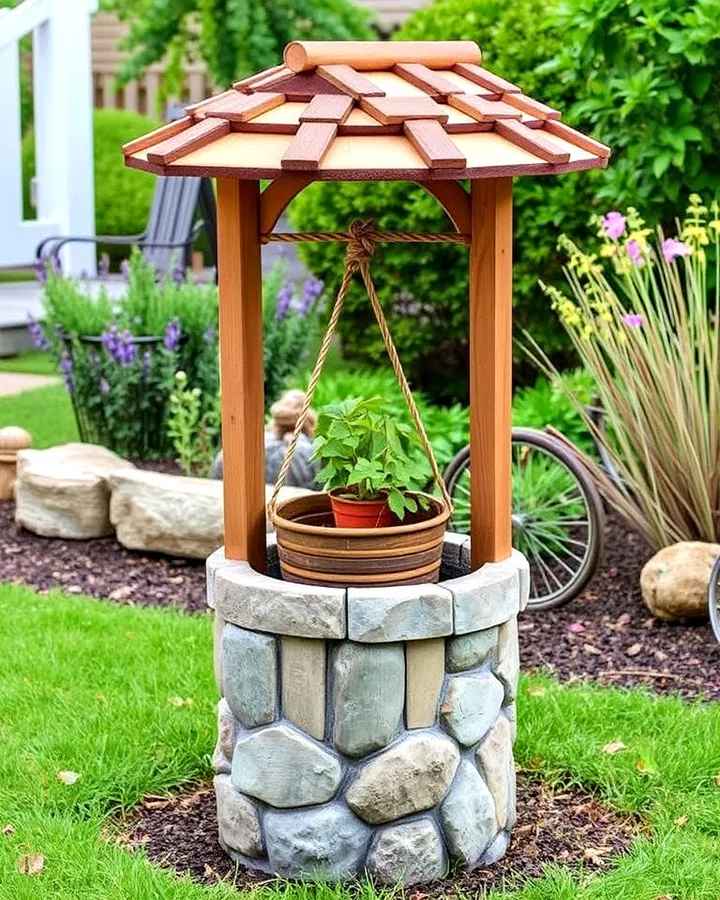
A rope-and-bucket wishing well gives me one of the most recognizable traditional garden looks. The bucket can remain purely decorative, or I can use a lightweight container inside it for a small plant.
I would keep the bucket securely attached and use materials that can tolerate outdoor conditions. If I add a real plant, I’d make sure the container can drain rather than allowing water to collect inside.
This style works especially well near pathways, flower beds, and seating areas. A few surrounding plants can soften the structure while keeping the classic well visible.
Read this next: 20 Cozy Fall Kitchen Decor Ideas to Make Your Home Feel Warm and Inviting
What to Do Next
- Identify Your Garden’s Style
I would start by looking at the features I already have. A rustic wooden well may suit a cottage garden, while a simple metal version can work better with contemporary landscaping.
- Choose a Purpose
Next, I’d decide whether I want the wishing well mainly for decoration, planting, lighting, water, or seating. Knowing its purpose makes it much easier to choose the right design.
- Explore Materials
I would compare wood, stone, metal, resin, and other outdoor materials based on durability and maintenance. My local weather should be part of this decision, especially if the well will stay outside throughout the year.
- Plan Placement
I’d choose a visible location without placing the well where it blocks walkways or competes with a major garden feature. Near a path, flower bed, patio, or seating area are all practical options.
- Consider DIY Projects
If I enjoy weekend projects, I could make a simple wishing well myself. A DIY version lets me control the dimensions, finish, colors, and decorative details.
- Incorporate Additional Features
I can add solar lights, suitable plants, a small recirculating water feature, decorative rope, or mosaic details. I would add features gradually so the finished well doesn’t become visually cluttered.
- Finalize Budget and Timeline
Finally, I’d set a realistic budget before buying materials. A simple decorative well may need little more than a basic structure and plants, while stone, water pumps, custom lighting, and elaborate finishes can increase the overall cost.
FAQ’s
What is the best place for a wishing well in a garden?
I like placing a wishing well near a garden path, flower bed, patio, or seating area where it can act as a visible focal point without blocking movement.
What can I use a garden wishing well for?
I can use a wishing well as a planter, decorative feature, lighting accent, small water feature, or even a seating area depending on its design.
What material is best for an outdoor wishing well?
I usually recommend weather-resistant wood, stone, or metal. The best choice depends on my garden style, local weather, maintenance needs, and budget.
Conclusion
I find wishing wells useful because they can do much more than simply fill an empty garden corner. With the right design, one can become a planter, seating feature, water accent, lighting element, or colorful piece of garden art.
My first step would be to decide what role I want the wishing well to play. From there, I can choose the material, size, style, and location that fit my garden rather than buying a feature that feels out of place.
Whether I prefer rustic wood, modern metal, natural stone, a colorful mosaic, or a simple Zen-inspired design, I can make the wishing well feel like a natural part of my outdoor space. Good placement, suitable outdoor materials, and a little personalization can make a surprisingly big difference.



3 Comments