
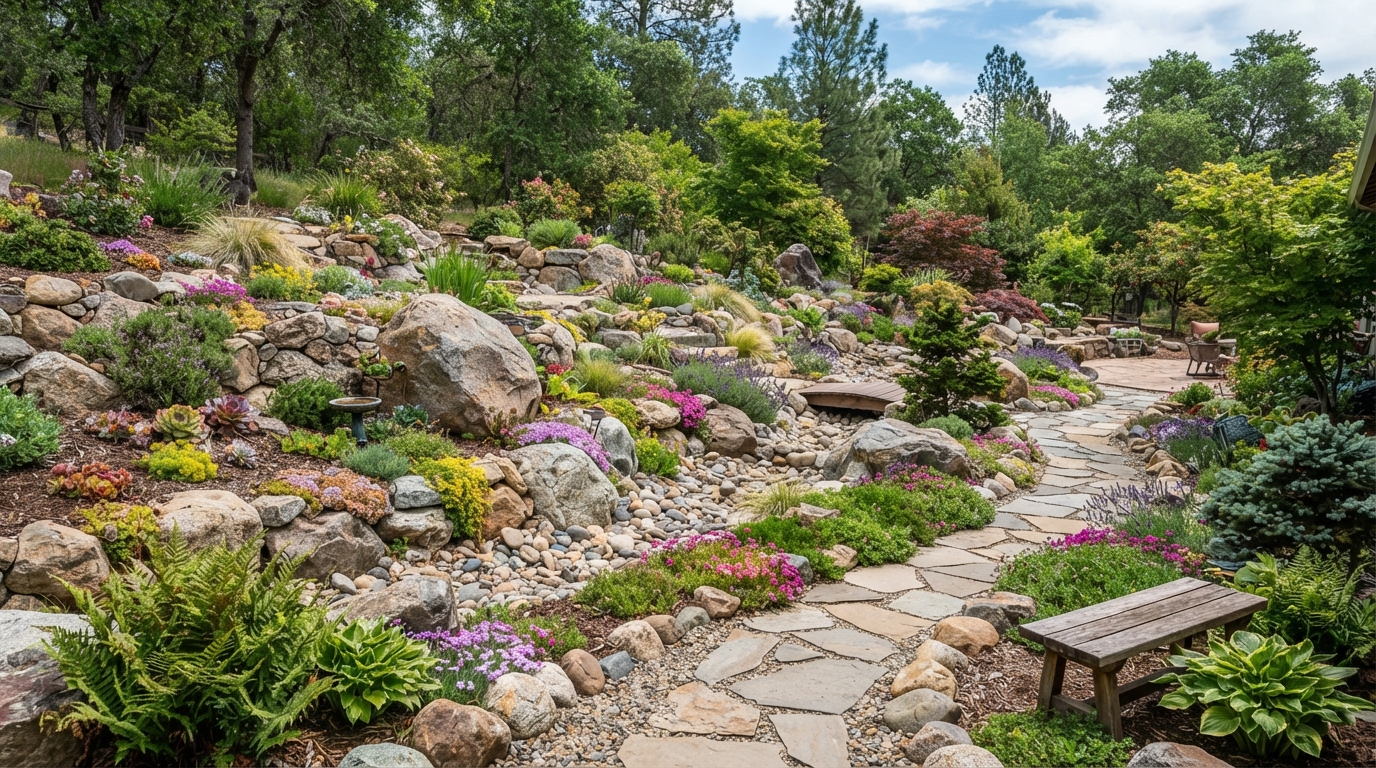
18 Rock Garden Landscaping Ideas
I’ve always liked landscaping that looks beautiful without turning into a full-time job. Rock gardens are one of my favorite ways to create that balance because stones add structure while many rock-garden plants need less water and maintenance than a traditional lawn.
Whether I’m working with a small courtyard, a sloped backyard, or a sunny front garden, rocks can help define the space and improve drainage. I can also combine them with drought-tolerant plants, groundcovers, shrubs, or flowers to create a garden that looks intentional throughout the year.
I can use rock garden landscaping ideas to create a low-maintenance outdoor space with plenty of texture and structure. Gravel, river rocks, boulders, stone borders, and stacked rocks can all serve different purposes, from controlling erosion to creating a focal point.
I don’t need a huge yard to make this work. A small gravel garden, a few strategically placed stones, or a narrow rock border can completely change the appearance of an outdoor area.
For sloped properties, rocks can help create terraces and slow down soil movement. In sunny areas, I can pair stones with drought-tolerant plants, while shaded spots work well with moisture-loving ferns and hostas.
Save this for later
Table of Contents
The key is to choose materials and plants that match my local growing conditions. Good drainage, proper stone placement, and plants suited to the amount of sunlight are what make a rock garden easier to maintain.
Key Takeaways
- Rock gardens can reduce the amount of lawn, mowing, and watering I need to maintain.
- Gravel and stone can help create defined planting areas and improve drainage.
- Large boulders work well as natural focal points.
- Slopes can be transformed into terraces that help manage runoff and erosion.
- Drought-tolerant plants are useful for sunny, dry rock gardens.
- Shade-loving plants can turn darker corners into attractive stone gardens.
- I get better results when I choose rocks and plants that naturally suit my local climate.
Related article: 17 Raised Garden Bed Ideas
Zen Gravel Garden
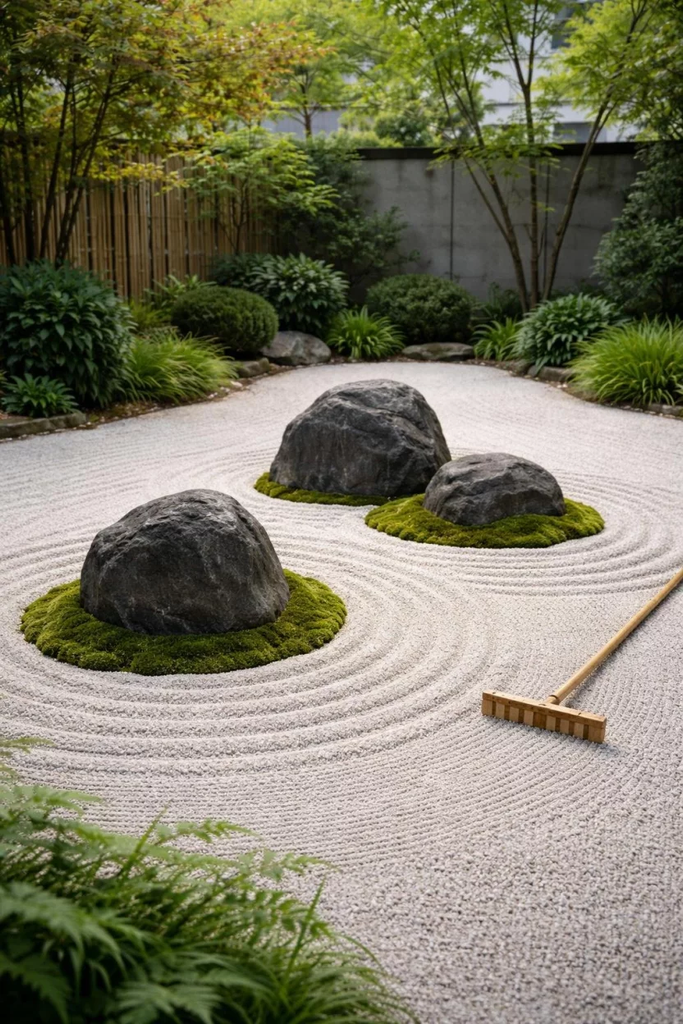
I can turn even a small outdoor corner into a peaceful gravel garden with very little space. Fine gravel or small decorative stones create a simple surface that feels clean and uncluttered.
I like using a rake to create curved or flowing lines through the gravel. Larger rocks can then be positioned as visual anchors, giving the arrangement more depth without adding lots of plants.
For a small amount of greenery, I can add moss, creeping thyme, or another low-growing plant that suits my climate. The plants should stay secondary so the stone pattern remains the main feature.
Before spreading gravel, I recommend installing landscape fabric where appropriate and preparing the ground properly. This can reduce weed growth and make future maintenance easier.
Pro Tip: Use three or five main stones instead of scattering many small rocks everywhere. Grouping creates a stronger focal point and keeps a small garden from looking cluttered.
River Rock Stream Bed
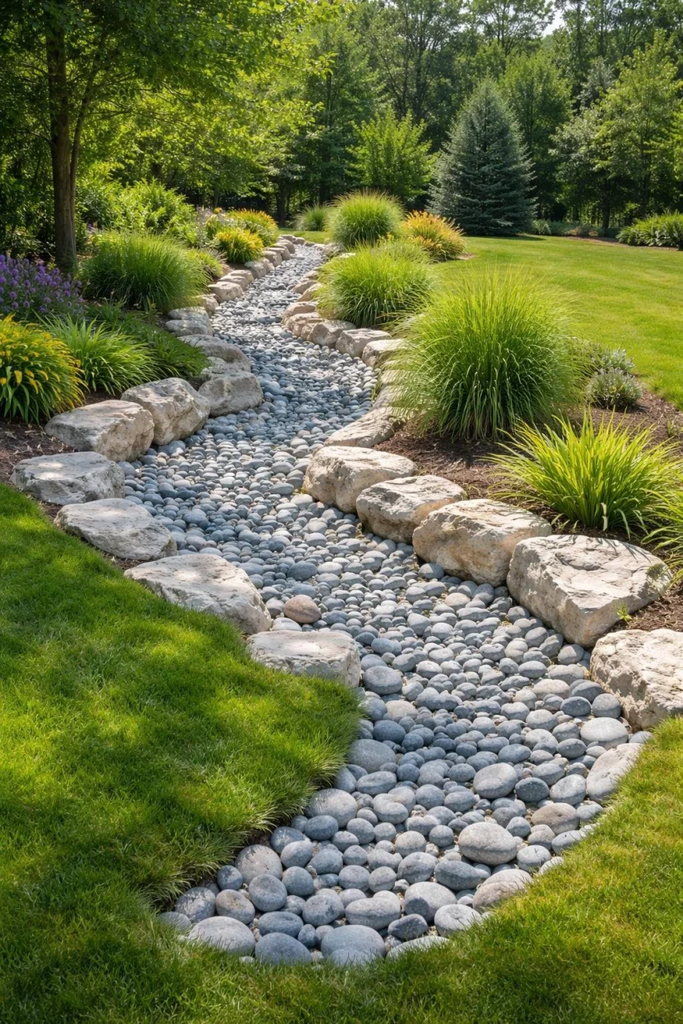
A dry creek bed is one of my favorite ways to make a drainage area look like an intentional part of the landscape. Instead of allowing rainwater to carve random paths through the yard, I can guide it through a planned stone channel.
I can use smooth river rocks in several natural shades and place larger stones along the edges. Mixing stone sizes makes the creek bed look more realistic than using one uniform rock.
Plants such as ornamental grasses, sedums, or other moisture-tolerant or drought-tolerant choices can soften the edges. The right plant selection depends on whether the area stays wet after rainfall or dries quickly.
A properly planned dry creek bed can also help slow water movement and reduce soil erosion. For significant drainage problems, I would have the site assessed before building anything permanent.
Pro Tip: Make the creek bed wider at curves and narrower in some straight sections. Natural waterways rarely have perfectly uniform sides.
Boulder Focal Point Landscape
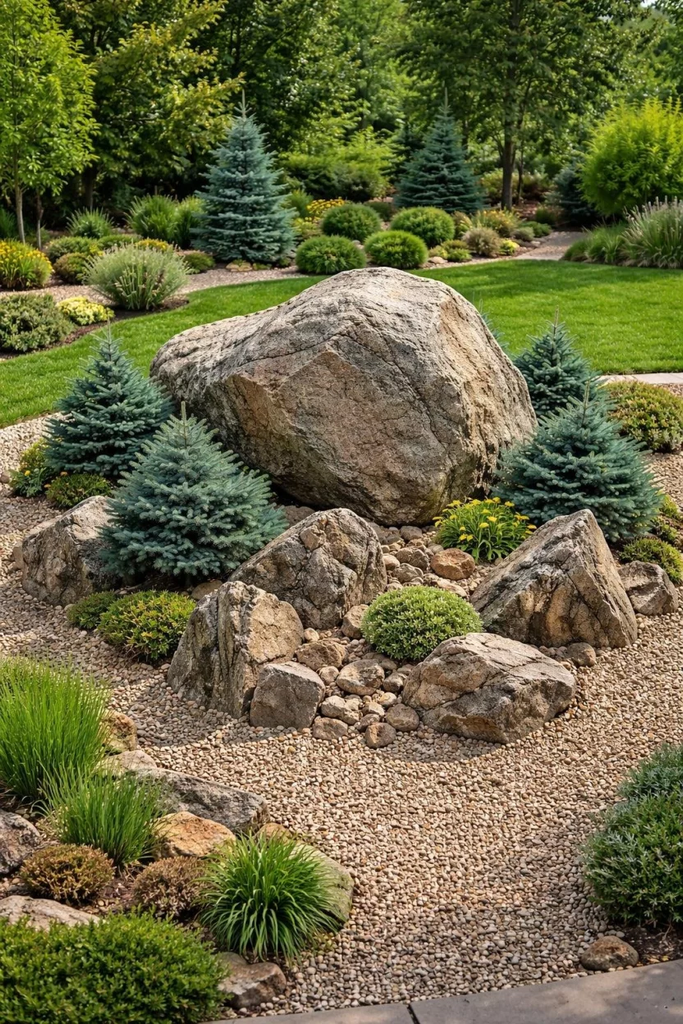
Large boulders can give a garden an immediate sense of structure. Instead of filling every area with plants, I can use one or two impressive stones as the main visual feature.
I like combining oversized rocks with smaller gravel and compact plants. Dwarf conifers, yuccas, ornamental grasses, and other architectural plants can provide contrast without hiding the stone.
Placement matters just as much as the rock itself. I prefer setting a large portion of the boulder below ground level so it appears naturally settled instead of simply dropped onto the lawn.
This approach works particularly well in open yards where the landscape needs a strong anchor. The boulder can remain attractive even when flowers are not in bloom.
Pro Tip: Look at the shape of a boulder from several directions before placing it. The most interesting side should face the area from which it will usually be viewed.
Succulent Crevice Planting
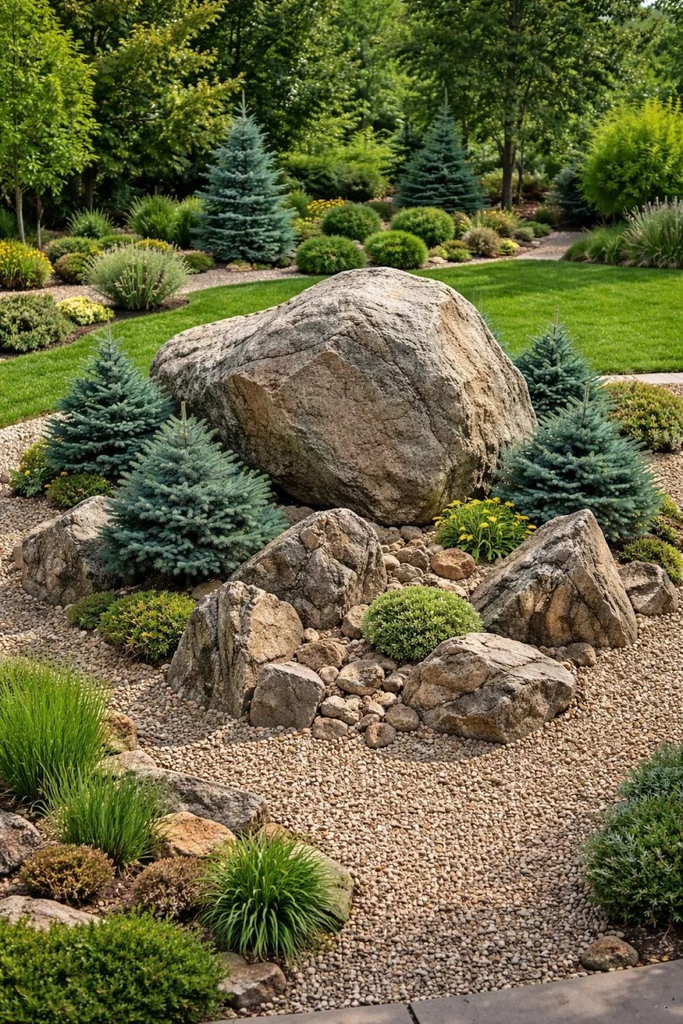
I can create a miniature mountain-style garden by placing succulents into narrow spaces between rocks. This works especially well for plants that dislike constantly wet soil.
Hens and chicks, ice plants, and other suitable succulents can fit into cracks between flat stones. Their compact roots and low-growing forms make them natural partners for rocky settings.
I would use a gritty, fast-draining planting mix rather than heavy garden soil. Good drainage is especially important because many succulents can suffer when their roots remain wet for too long.
This idea is useful around sunny entryways, rock walls, containers, and small slopes. The stones also absorb and hold heat, creating a warm microenvironment around the plants.
Pro Tip: Check the mature size of each succulent before planting. A tiny plant can quickly fill a narrow crevice, so giving it enough room prevents crowding later.
Terraced Hillside Garden
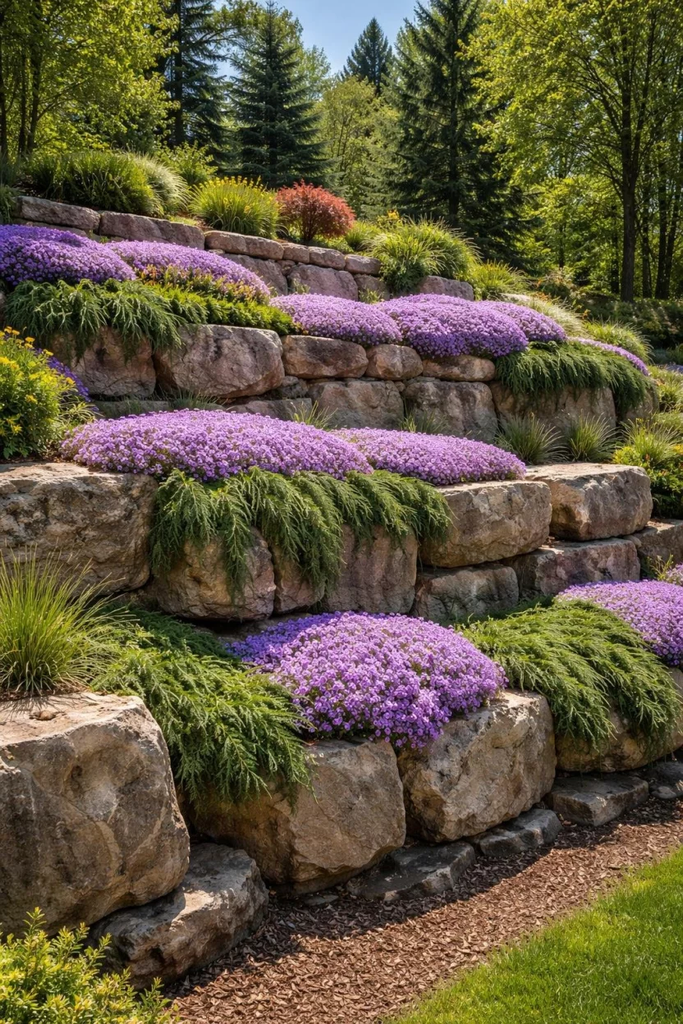
A steep slope can be difficult to mow and vulnerable to soil erosion, but I can turn it into a series of planted levels with rocks. Terracing creates flatter areas where plants can establish more easily.
I can use sturdy stones or properly constructed retaining materials to form each level. The foundation needs to be stable because poorly placed rocks can shift under soil and water pressure.
For planting, I like low-growing choices such as creeping phlox, junipers, and other plants suited to the site’s sunlight and drainage. Their spreading growth can help cover exposed soil.
Terracing can also make maintenance easier because I no longer have to work across one continuous steep surface.
Pro Tip: Never rely on decorative stones alone for a tall retaining wall. Larger slopes may require professional design and proper drainage behind the wall.
Drought Tolerant Xeriscape
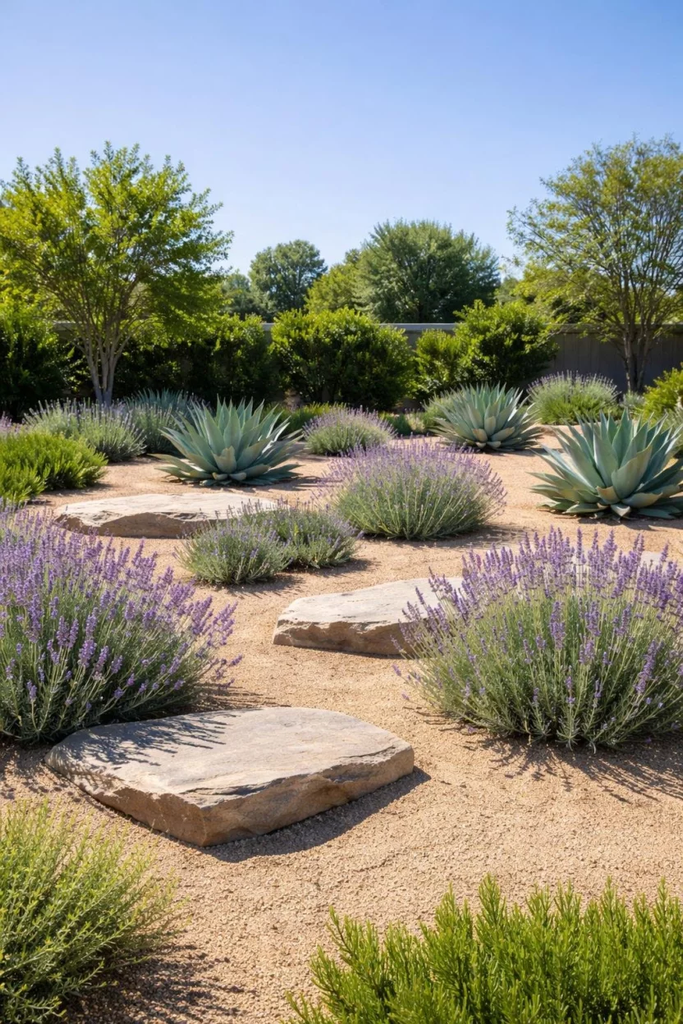
I can replace part of a thirsty lawn with gravel, decomposed granite, or another suitable landscape material to create a water-conscious garden. This approach is especially useful in areas where summer watering is a concern.
Plants such as lavender, agave, and artemisia can work well in appropriate climates, but I always check whether a plant is actually suited to my local conditions before buying it.
Leaving enough space between plants can reduce competition for water while also creating the open appearance that many xeriscape gardens are known for.
Once established, the right drought-tolerant plants can require considerably less supplemental water than a conventional lawn. However, newly planted areas still need regular watering while roots become established.
Pro Tip: Choose plants based on your local climate zone rather than appearance alone. A plant labeled drought tolerant may still struggle if winter temperatures or humidity are unsuitable.
Japanese Inspired Rock Arrangement
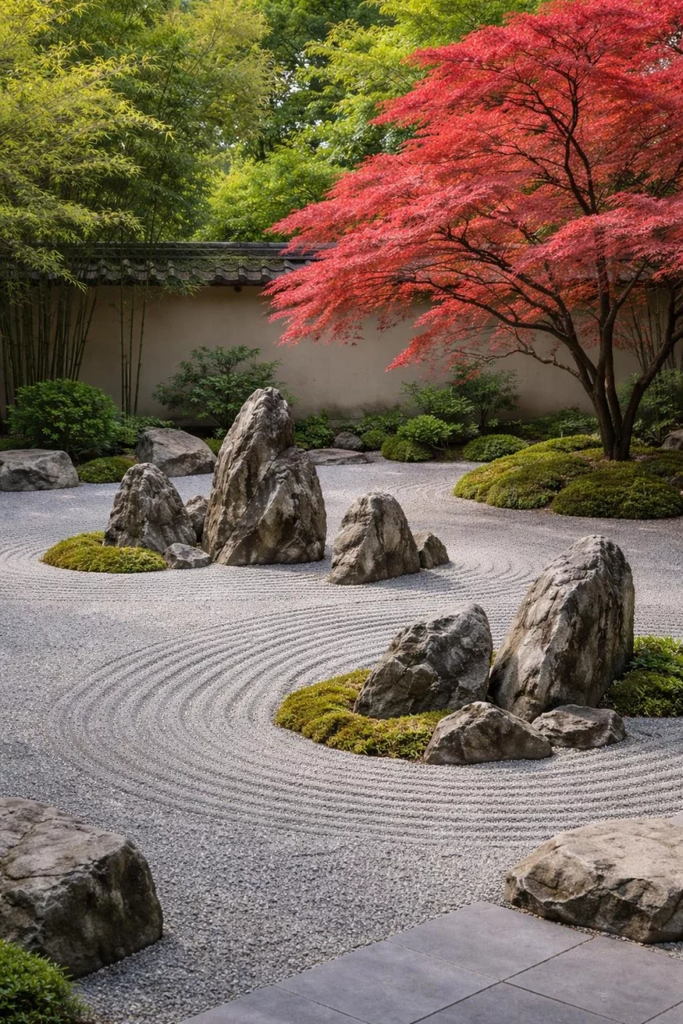
I can create a Japanese-inspired garden by focusing on balance, simplicity, and carefully chosen materials. The goal is not to make everything perfectly symmetrical.
I like arranging rocks in uneven groupings and leaving open areas around them. Gravel or small pebbles can provide a calm background while a carefully positioned tree or shrub adds height.
Plants such as ferns, mosses, and other shade-tolerant groundcovers can soften the stonework when the site provides the right conditions.
A simple rake pattern through the gravel can also create visual movement. I find this style particularly useful for courtyards, patios, and other compact outdoor spaces.
Pro Tip: Resist the temptation to fill every empty spot. Open space is an important part of a minimalist garden design.
Front Yard Rock Border
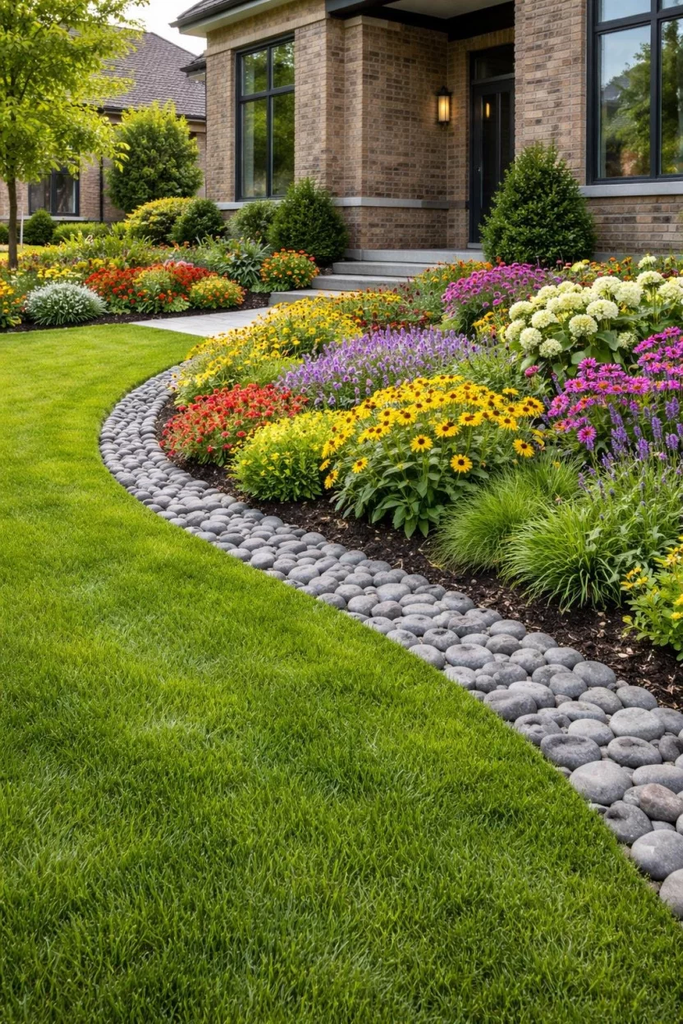
A rock border gives me a simple way to separate a lawn from flower beds. It creates a clear edge and can make the entire front yard appear more organized.
I can use river stones, flat rocks, or another material that complements the house. Keeping the stone color connected to the home’s exterior usually creates a more cohesive appearance.
Low-growing flowers can be planted close to the border to soften the transition. The stones can also help keep mulch contained, although they do not completely prevent grass roots from spreading.
For a polished result, I would first create a clean, consistent edge before installing the rocks.
Pro Tip: Avoid making the border unnecessarily wide. A narrow, well-defined stone edge often looks cleaner than a thick strip of rocks competing with the plants.
Modern Minimalist Pebbles
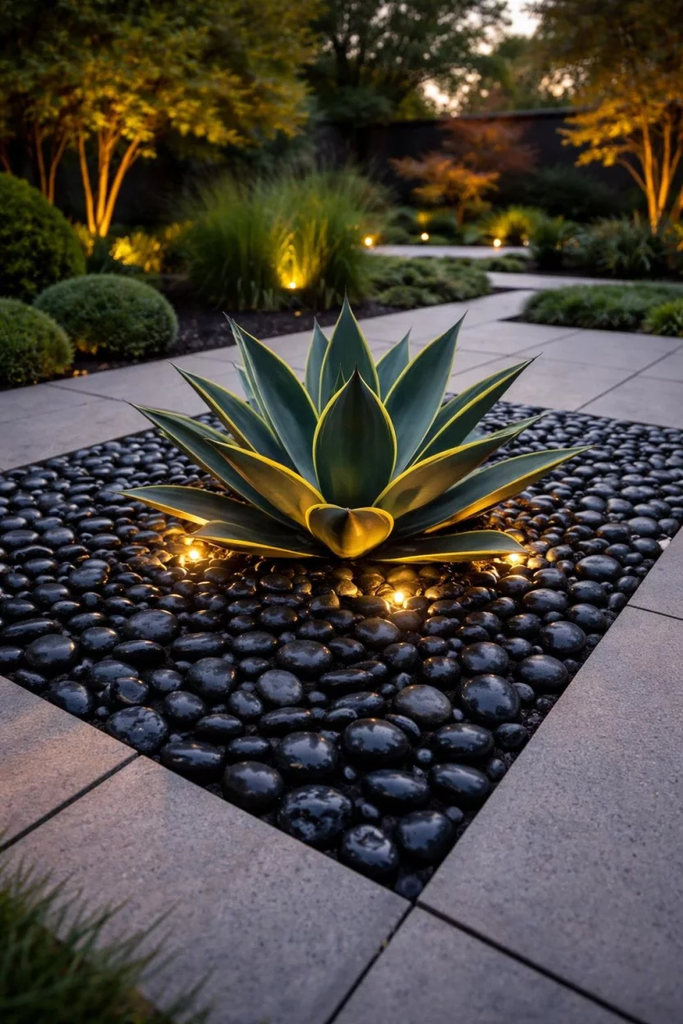
For a modern home, I can use smooth pebbles or decorative aggregate to create a simple landscape with strong visual lines. This works especially well when I want less lawn and a more architectural appearance.
Dark stones can provide contrast against pale walls, concrete, or light-colored plants. Alternatively, light gravel can make a compact garden feel brighter.
I like using one or two sculptural plants rather than filling the space with many varieties. Agaves, compact evergreens, and other architectural plants can work well where the climate supports them.
Low-voltage landscape lighting can highlight the texture of the rocks after sunset and make the garden useful in the evening.
Pro Tip: Use weed barrier and a properly prepared base beneath decorative gravel when suitable. It can help prevent the stones from mixing into the soil over time.
Waterfall Rock Feature
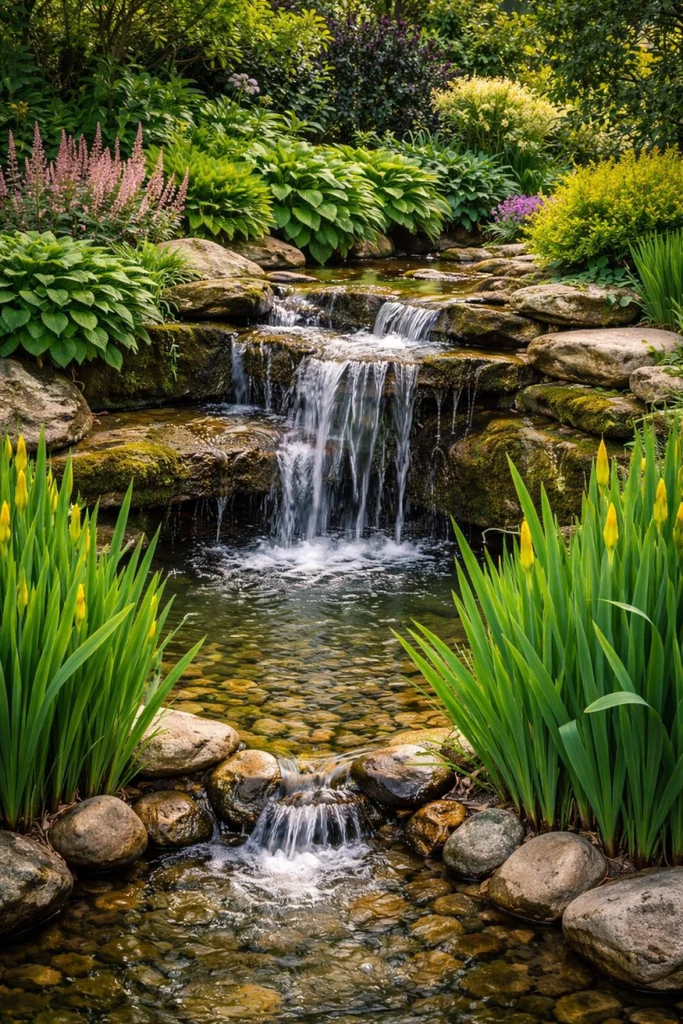
A small waterfall can bring movement and sound into an otherwise quiet garden. I can create one with flat rocks, a water basin, tubing, and a properly sized pump.
The rocks should be arranged so the water follows a controlled path instead of escaping around the sides. I like using irregular stones because they make the feature feel more natural.
Plants that tolerate consistently moist conditions can be placed near the water’s edge. The exact plant choices should depend on the amount of sunlight and local climate.
A pump with the correct flow rate is important because an oversized or undersized pump can make the feature difficult to control.
Pro Tip: Leave enough access around the pump and basin for cleaning. Water features look beautiful when maintained, but hidden equipment can become frustrating to service.
Also read: 15 Outdoor Wishing Well Garden Ideas for Garden Charm
Alpine Dwarf Conifer Garden
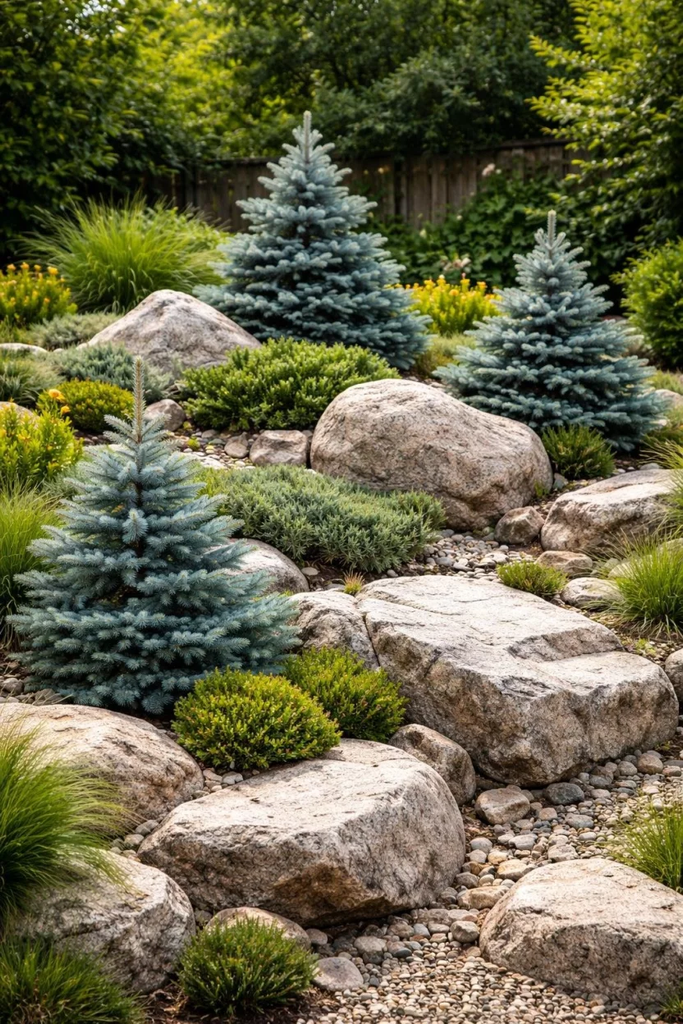
I can recreate the feel of a mountain landscape on a much smaller scale by combining compact conifers with rocks. This is particularly effective when I want a garden that looks good even outside the main flowering season.
Dwarf spruce, junipers, and other slow-growing evergreens can provide structure among pale or weathered stones. Their smaller mature size helps the garden remain proportional.
I would use soil that drains well because many alpine-style plants do not perform well in constantly wet conditions.
The evergreen foliage also means I can keep some color and structure during colder months when many flowering plants have disappeared.
Pro Tip: Check the mature height and width before purchasing a dwarf conifer. “Dwarf” describes relative growth and does not always mean the plant will stay tiny.
Colorful Perennial Rock Mix
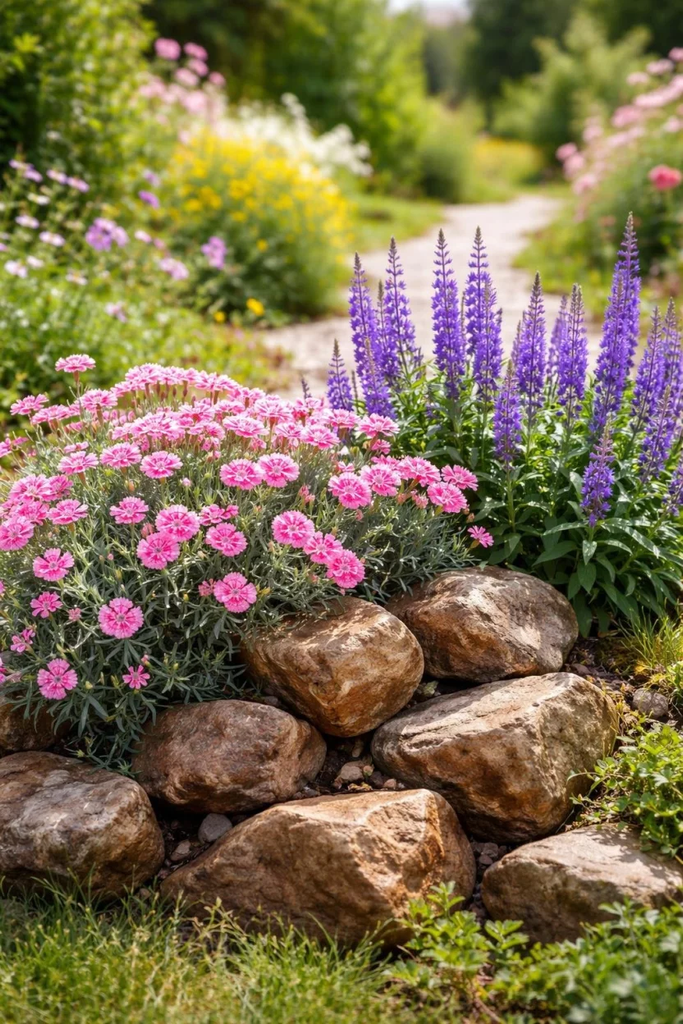
A rock garden can be colorful rather than strictly neutral. I can use flowering perennials to introduce pinks, purples, whites, yellows, or other colors between the stones.
Dianthus, columbine, and other suitable perennials can spill over rocks and create a softer cottage-garden appearance. The best plant choices will depend on sunlight, soil, moisture, and local growing conditions.
Gravel provides a simple background that allows flowers to stand out. I also like repeating a few flower colors rather than using too many unrelated shades.
Removing spent blooms can encourage some flowering plants to produce additional flowers and keeps the garden looking tidy.
Pro Tip: Repeat the same flower in several locations instead of planting one of everything. Repetition makes a mixed rock garden feel more intentional.
Shade Rock Fern Garden
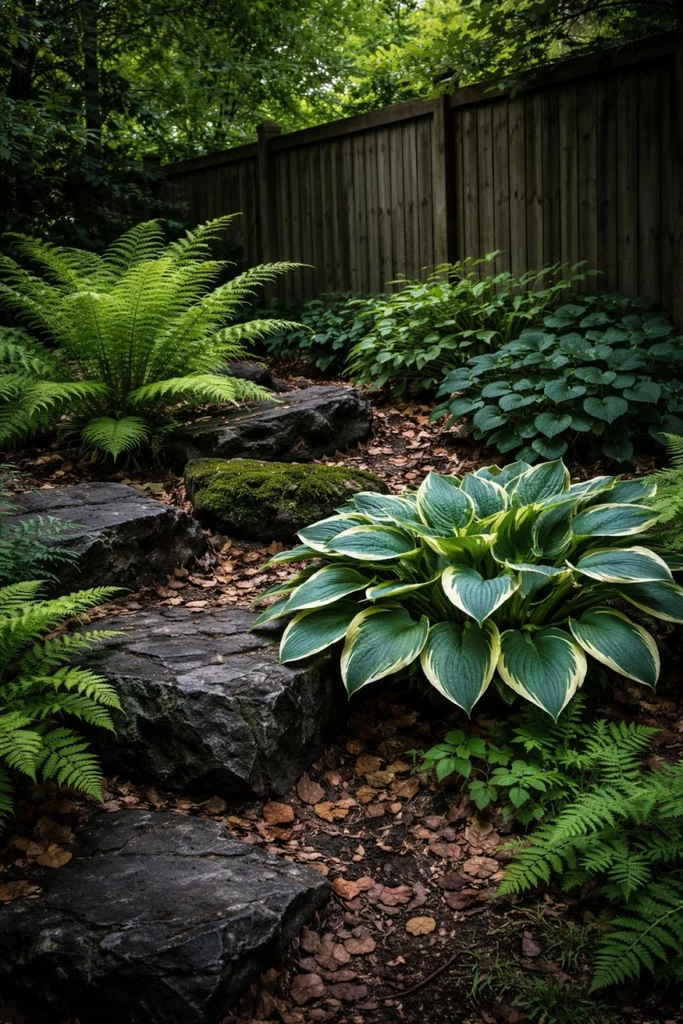
I don’t have to give up on a dark corner simply because grass or sun-loving flowers struggle there. A shaded rock garden can become one of the most interesting areas of the yard.
I can combine slate or darker stones with ferns, hostas, hellebores, and other plants that tolerate the available light. Moisture levels should also guide my choices.
Large stones can add structure beneath trees or beside fences where planting space is limited. Their shapes provide visual interest even when flowering is minimal.
This approach can create a cool, woodland-style corner that feels completely different from a sunny rock garden.
Pro Tip: Check whether the shade is dry or naturally moist before planting. Shade under large trees can actually be quite dry because tree roots compete heavily for available water.
Painted Rock Garden Accents
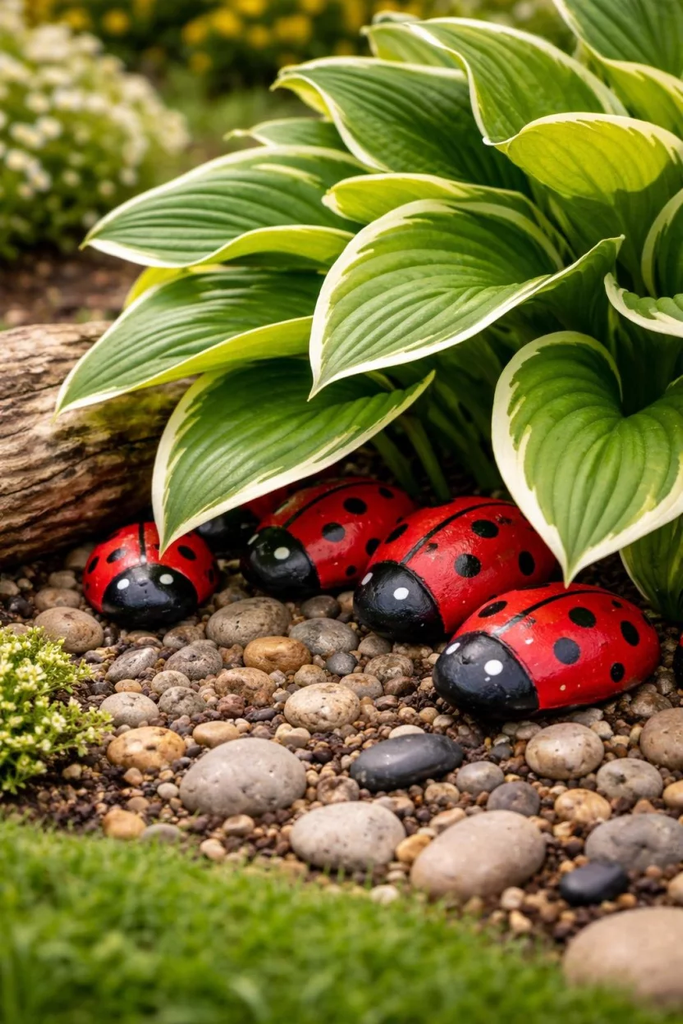
I can make a rock garden more personal with a few hand-painted stones. This is an easy DIY project that can also be a fun weekend activity for children.
Small rocks can become ladybugs, bees, flowers, mushrooms, or simple plant markers. I prefer placing only a few painted pieces among natural stones so the garden still feels balanced.
For outdoor use, I would choose paint and a protective finish designed to withstand weather. Even then, painted rocks may eventually fade from sun and rain.
The best part is that I can change the designs whenever I want without altering the rest of the landscape.
Pro Tip: Clean and completely dry the stones before painting. A clean surface helps the paint adhere more evenly.
Raised Rock Bed Design
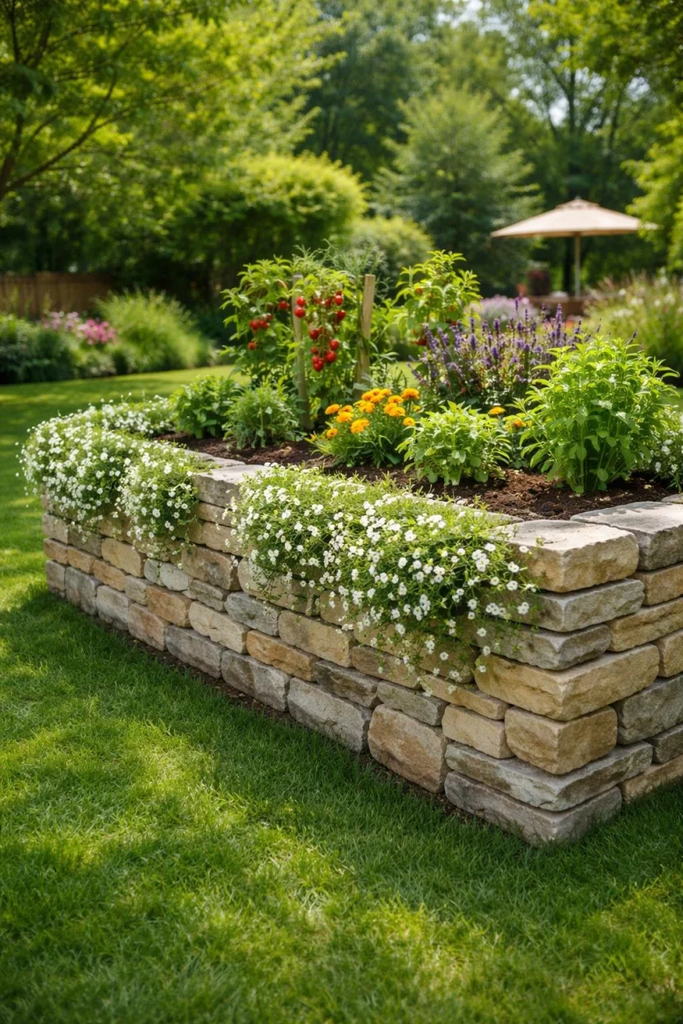
A raised stone bed can combine attractive landscaping with practical planting space. I can use it for suitable flowers, herbs, vegetables, or alpine plants depending on the size and location.
Stone walls naturally provide good drainage when constructed correctly, while the raised height can make planting and maintenance more comfortable.
I would build the base on stable, well-prepared ground and make sure the wall is appropriate for its height and soil load. Taller retaining structures need more careful construction than a simple low garden border.
Trailing plants can soften the sides and help blend the stonework into the surrounding garden.
Pro Tip: Before building a raised stone bed, plan where excess water will go. Good drainage protects both the plants and the structure.
Sloped Rock Terrace
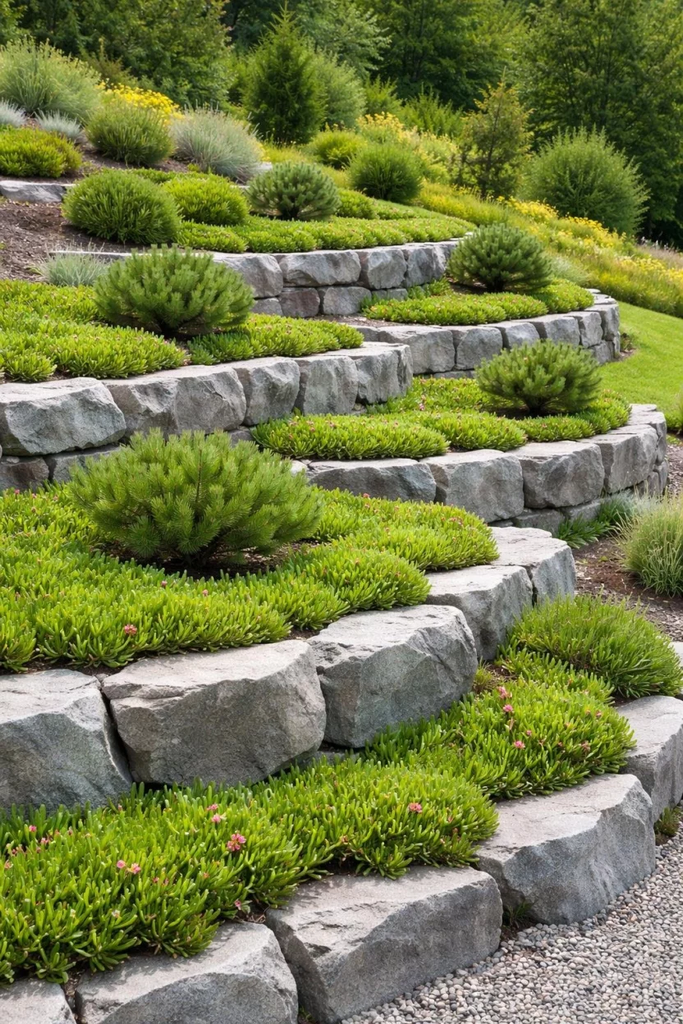
I can turn a gently sloping part of my yard into a series of small planting pockets by placing rocks across the incline. This breaks up the slope and creates areas where plants can establish.
Low-growing plants with spreading roots can help cover exposed soil. Suitable choices might include ice plant or compact conifers where local conditions allow them.
The rocks should be positioned securely rather than simply sitting on top of loose soil. Heavy rain can shift poorly installed stones and wash away soil.
Terracing can also make watering more manageable because the landscape is divided into smaller sections instead of one continuous slope.
Pro Tip: Watch how water moves across the slope during a heavy rain before deciding where to place terraces. Natural drainage patterns can guide a much better layout.
Groundcover Softened Rockscape
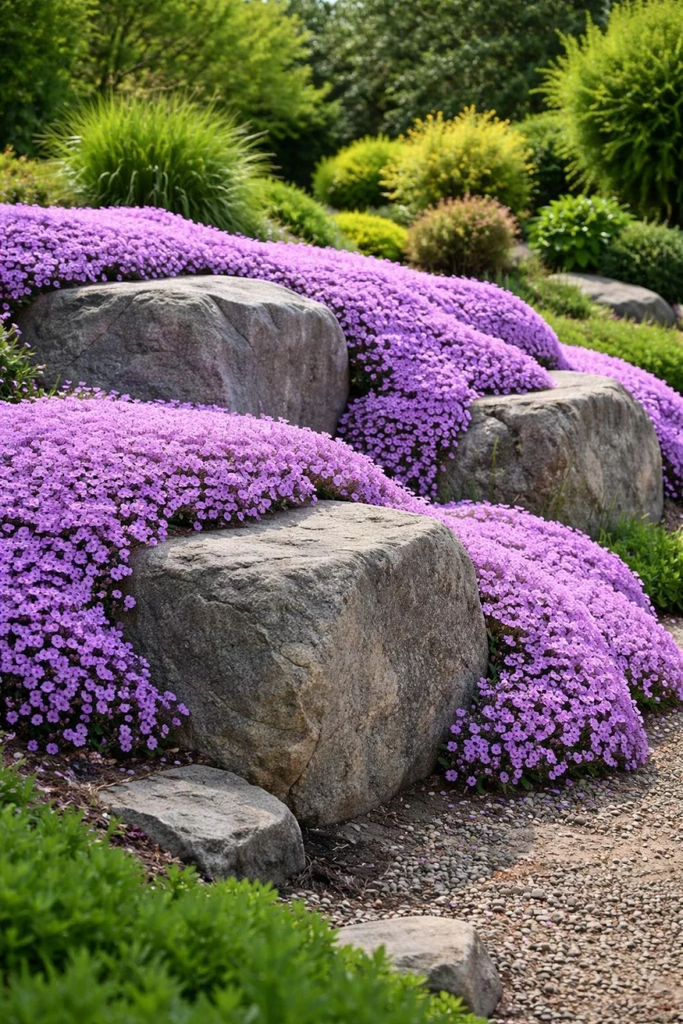
Sometimes I want the rocks to look less formal and more like they have always belonged in the landscape. Groundcovers are an easy way to soften large stones and fill bare spaces.
Plants such as creeping thyme, creeping phlox, or other suitable low-growing groundcovers can spread around the base of rocks.
As these plants fill in, they can reduce exposed soil and compete with some weeds for growing space. Many groundcovers can also be divided or propagated once they are established.
I like this approach when I want a natural-looking garden rather than a highly structured arrangement.
Pro Tip: Give groundcovers enough space to spread according to their mature size. Planting too closely can create unnecessary competition and increase maintenance.
Sculptural Stacked Stone Feature
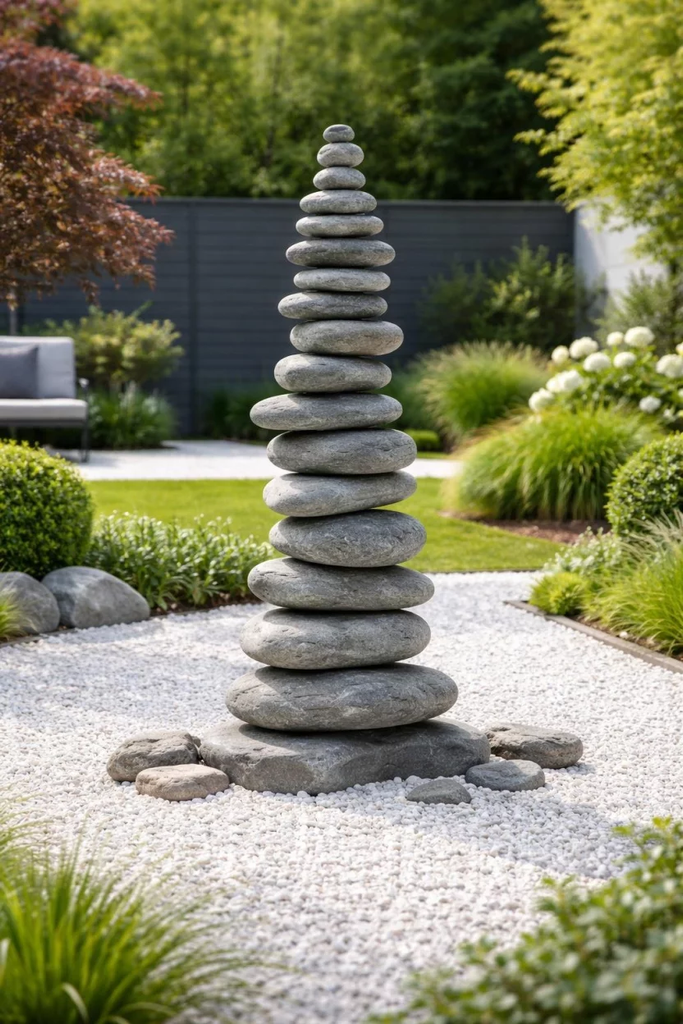
Stacked stones can work almost like outdoor sculpture. I can create a vertical feature from flat stones and place it against gravel or a simple planting bed.
For safety, the stones need to be stable and appropriate for the feature. I would not create a tall freestanding stack where it could fall onto a walkway, seating area, or play space.
Low-growing plants around the base can help connect the sculpture to the rest of the garden. Moss may develop naturally in damp, shaded conditions, although I would not force it into a location where it cannot thrive.
This is a useful idea when I want a strong focal point without adding another high-maintenance plant.
Pro Tip: Keep stacked stone features away from areas where children or pets could knock them over, and use a stable base from the beginning.
Read this next: 20 Fall Garden Decor Ideas To Brighten Outdoor Beds
Frequently Asked Questions
What plants work well in a rock garden?
I like using drought-tolerant and low-growing plants such as succulents, creeping thyme, sedums, dianthus, and compact evergreens, depending on the climate and sunlight.
How do I maintain a rock garden?
I mainly remove weeds, clear fallen leaves, trim overgrown plants, and occasionally refresh displaced gravel or stones. Choosing suitable plants keeps maintenance lower.
Are rock gardens good for sloped yards?
Yes. I can use rocks and properly built terraces to divide a slope into smaller planting areas, helping manage runoff and reduce soil erosion.
How deep should rock garden gravel be?
For many decorative areas, a few inches of gravel is commonly used, but the ideal depth depends on the stone size, soil conditions, drainage, and whether a landscape fabric or base is installed.
Conclusion
I’ve found that the best rock garden is not necessarily the one with the most stones. It is the one where the rocks, plants, drainage, and available space all work together.
I can use a few large boulders for a focal point, gravel for a modern garden, river stones for drainage, or terraces for a slope. Adding the right plants gives the landscape softness while keeping the stonework from feeling too harsh.
Before starting, I recommend studying the sunlight, drainage, soil, and water movement in the area. Once I understand those conditions, choosing the right rock garden style becomes much easier.
A well-planned rock garden can give me year-round structure, reduce maintenance, and make even an awkward outdoor area feel purposeful.



One Comment