17 Raised Garden Bed Ideas
A raised garden bed can make growing vegetables, herbs, and flowers much easier, especially when my backyard soil is compacted, rocky, or drains poorly. I also like raised beds because I can control the soil mix instead of trying to improve a whole yard at once.
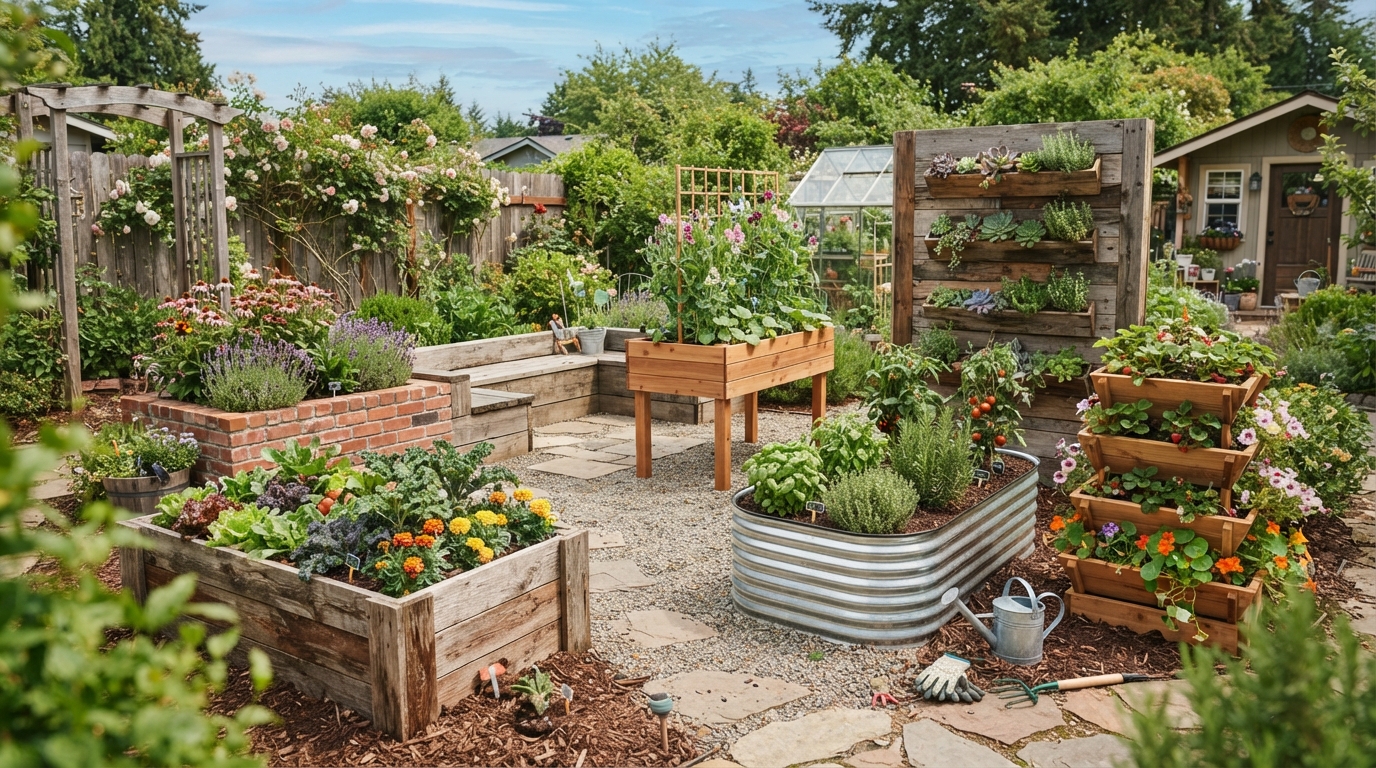
When I plan a raised garden, I think about more than just the box itself. The height, width, materials, walking paths, drainage, sunlight, and access to water all affect how useful the finished garden will be.
I can build raised garden beds in many styles, from inexpensive pallet projects and reclaimed wood boxes to galvanized metal containers and decorative spiral designs. I can also add trellises, arches, gravel paths, and lighting to make the garden both productive and attractive.
For most vegetables, I want a location with plenty of direct sunlight, good drainage, and easy access to water. A bed around 3 to 4 feet wide is usually practical because I can reach the center without stepping into the soil.
Save this for later
Table of Contents
I can start small with one or two beds and expand later. Whether I have a large backyard, a deck, or only a compact outdoor corner, these ideas give me several ways to create a productive growing space.
Key Takeaways
- I choose a sunny location with good drainage before building my beds.
- I keep raised beds narrow enough to reach the center comfortably.
- I can save money by using suitable reclaimed or leftover materials.
- I use trellises and arches when I want to grow climbing plants vertically.
- I leave enough space between beds for watering, harvesting, and maintenance.
- I choose untreated, garden-safe materials for anything that will hold my growing soil.
- I plan the soil depth around the crops I want to grow.
- I can use decorative paths, lighting, and different materials to make the garden look intentional.
Related article: 15 Outdoor Wishing Well Garden Ideas for Garden Charm
1 Repurpose Old Wooden Pallets
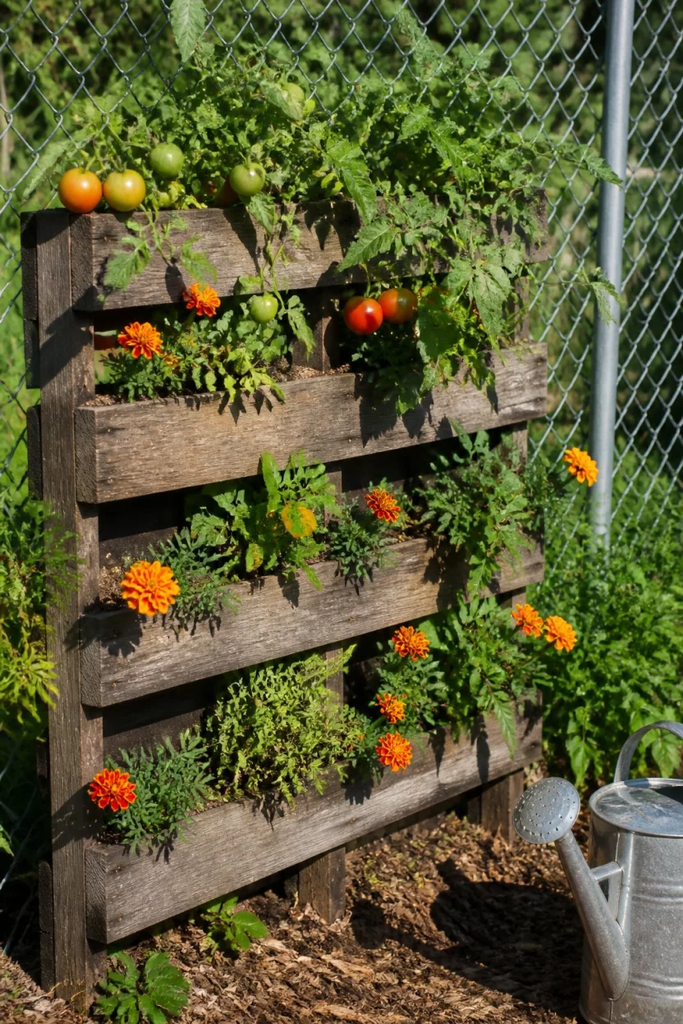
I can turn a suitable wooden pallet into a compact raised planter instead of letting it take up space in storage. Pallets can work well for herbs, flowers, and some shallow-rooted vegetables when they are clean and made from appropriate untreated wood.
Before using one, I always check the markings and condition. I avoid pallets that have been chemically treated or are visibly contaminated because I do not want questionable materials near edible crops.
A pallet can also help me make use of vertical space. I can position it upright or adapt it into a low planter, depending on my available space.
I especially like pairing herbs or vegetables with flowers such as marigolds. Besides adding color, flowers can attract pollinators and beneficial insects, making the garden feel more lively.
Pro Tip: I never use a mystery pallet for food gardening. If I cannot confirm that the wood is suitable, I choose another material.
2 Save Money With Creative Materials
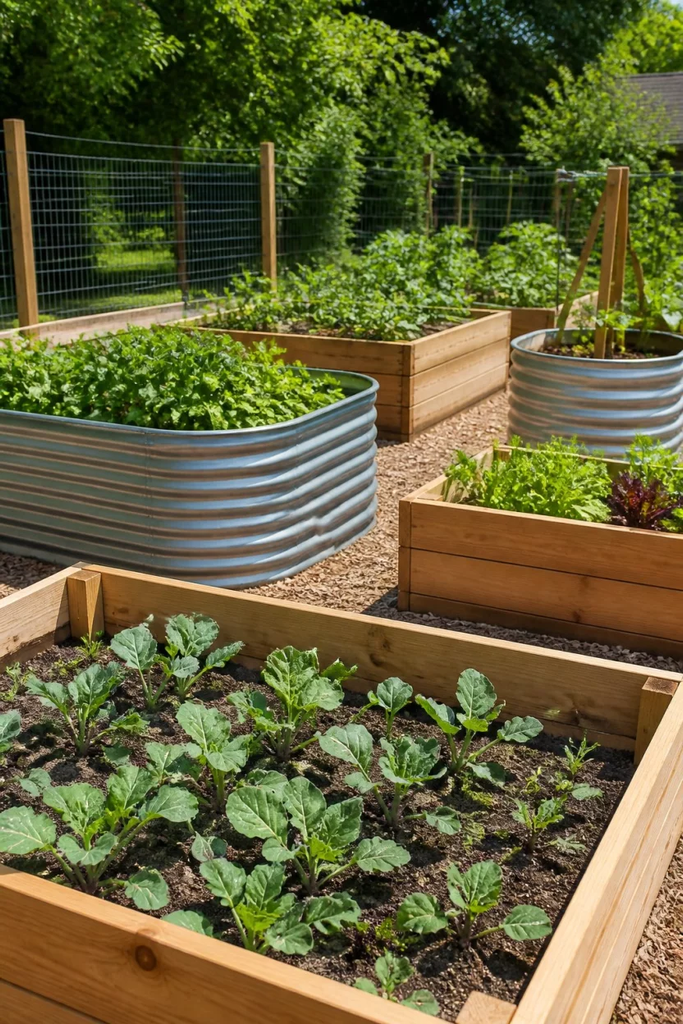
I do not need an expensive raised-bed kit to start gardening. Reclaimed bricks, untreated boards, stones, and other suitable leftover materials can help me create simple planting areas at a much lower cost.
I usually begin by deciding the size and shape of the bed before buying anything. This prevents me from collecting random materials that do not work together.
Mixing materials can also give my garden more personality. Wood provides a warm, traditional appearance, while metal can give the space a cleaner contemporary feel.
The important part is making sure the materials are safe, stable, and able to withstand outdoor conditions. I also leave enough room around each bed so I can comfortably weed and harvest.
3 Create An Elegant Gravel Oasis
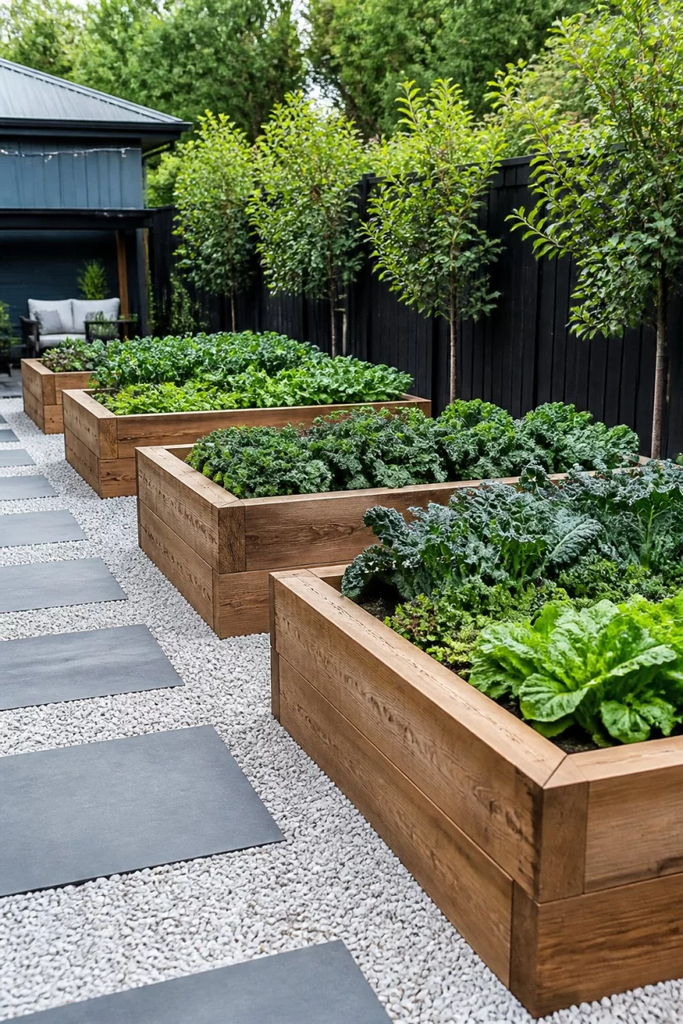
I can make raised garden beds feel more polished by surrounding them with gravel. A gravel surface gives me a defined walking area and is especially useful where muddy pathways become a problem after rain.
I like using contrasting colors between the planting boxes, foliage, and gravel. Dark green vegetables can stand out beautifully against a lighter stone surface.
Gravel also gives me a practical path between beds without covering the entire yard with concrete. I can walk around the garden while watering, pruning, and harvesting.
For a productive garden, I still make sure the beds receive enough sunlight. Most common vegetables perform best with roughly 6 to 8 hours of direct sun each day, although individual crops vary.
4 Organize With Dark Wood Aesthetics
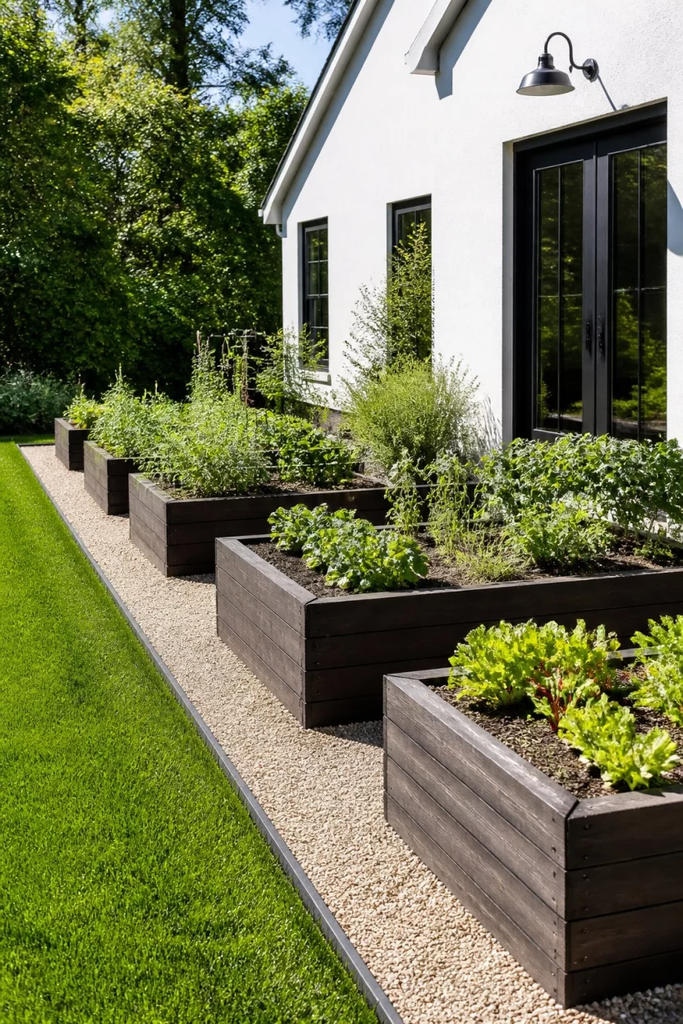
Dark-stained raised beds can give my garden a structured and modern appearance. When several beds are arranged in rows or a simple grid, I can divide crops into manageable growing areas.
I like this approach when I want to practice crop rotation from season to season. Instead of planting the same type of crop in exactly the same location every year, I can move plant families between beds.
I also avoid making the beds too wide. If I cannot comfortably reach the center from the path, I am more likely to step into the soil, which can compact it.
A neat layout makes everyday gardening easier because I can quickly see where vegetables, herbs, flowers, and seedlings belong.
5 Add Magic With Evening Lighting
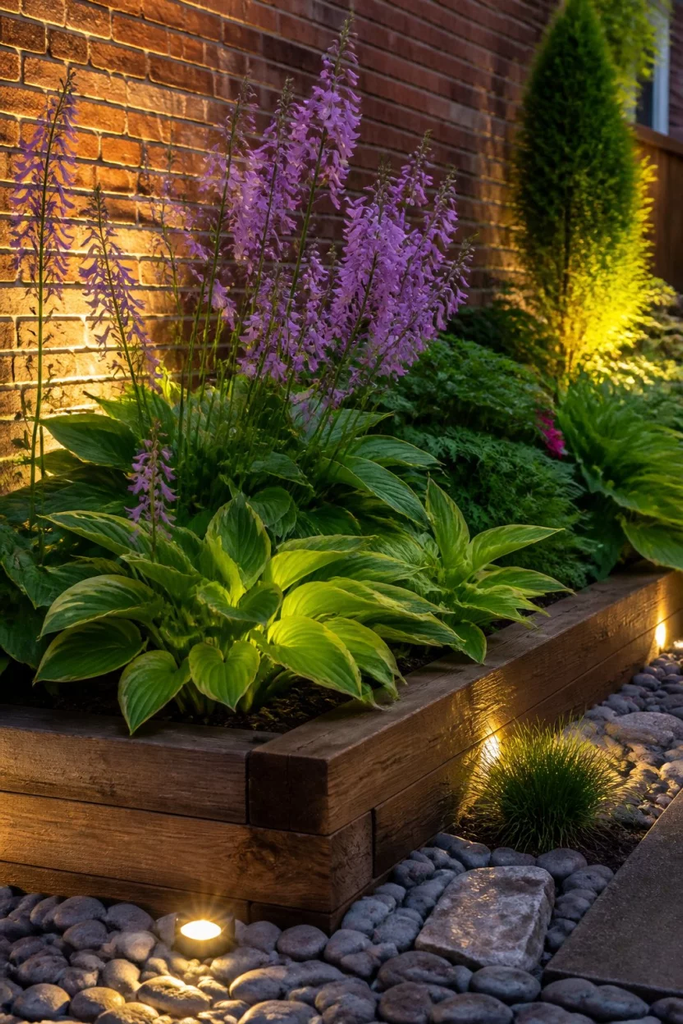
My raised garden does not have to disappear visually once the sun goes down. Small outdoor lights can highlight the edges of beds, paths, flowers, or architectural features.
I prefer subtle lighting rather than placing bright fixtures directly over the plants. Solar path lights can be an easy option when I want simple installation without running electrical wiring.
I can also use decorative stones around the garden to give the planting area a finished appearance. The combination of foliage, texture, and soft lighting can make the garden feel like part of my outdoor living space.
If I grow edible crops, I keep decorative lighting positioned so it does not interfere with normal watering and maintenance.
6 Build Foundations For Arbors
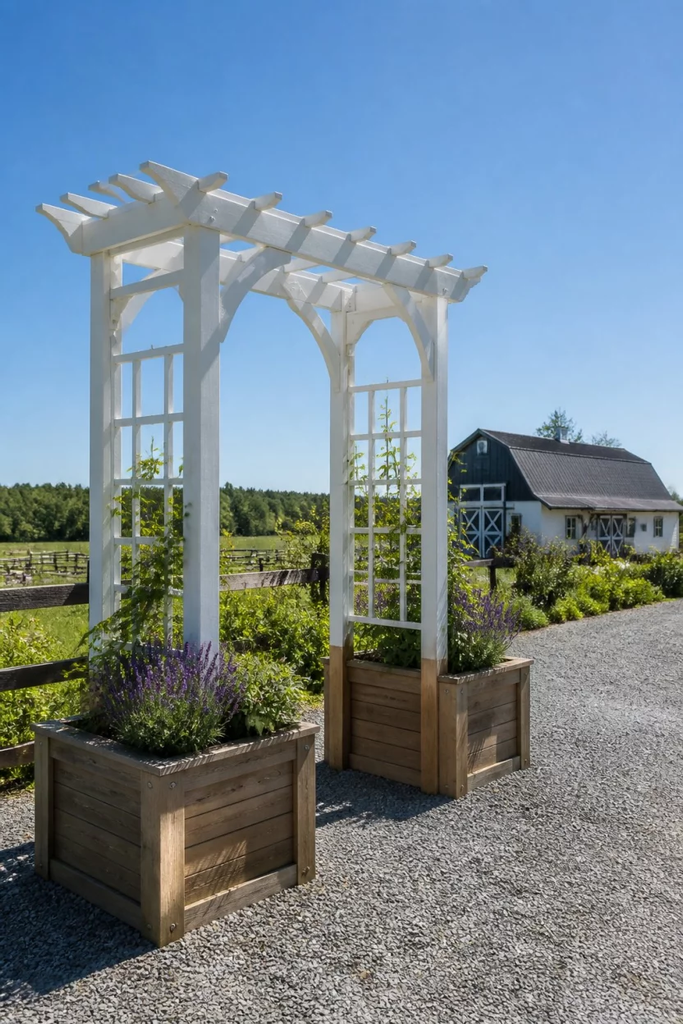
An arbor can turn an ordinary raised bed into a vertical garden feature. I can attach a properly supported structure between or behind beds and train climbing plants upward.
Beans, peas, cucumbers, and some flowering vines can make good use of vertical supports. Growing upward allows me to use the space above the bed instead of spreading every plant across the ground.
I make sure the arbor is firmly anchored because mature vines can become surprisingly heavy. I also check the mature size of the plants before deciding how tall or wide the support should be.
A gravel or other stable pathway around the structure makes harvesting easier and helps me avoid walking through wet soil.
7 Prepare With Landscape Fabric
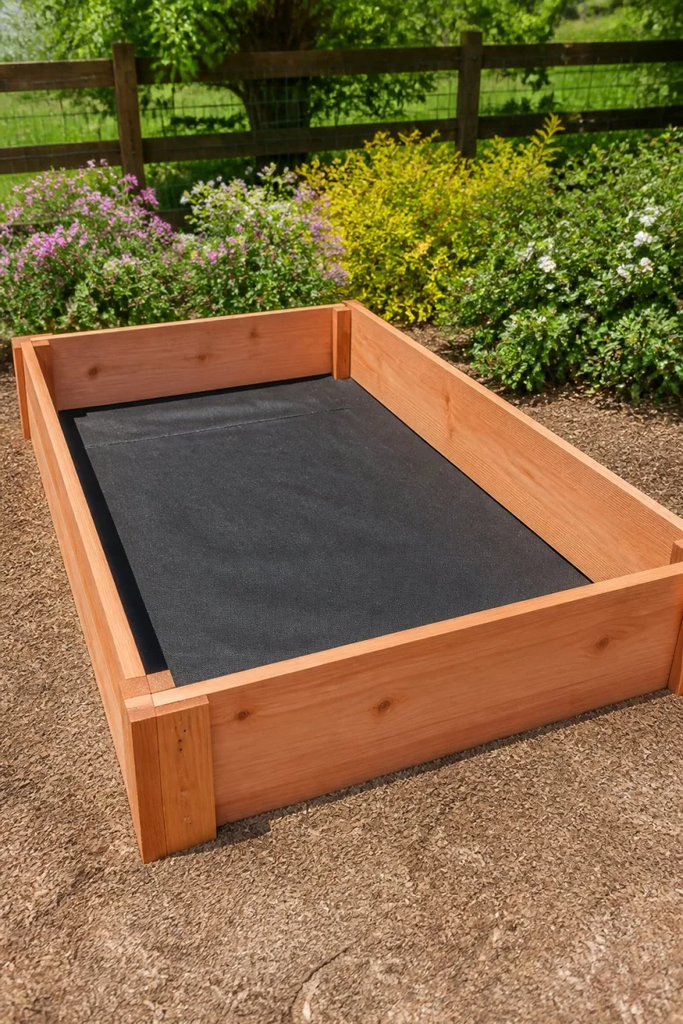
Weed control is much easier when I plan for it before filling my raised beds. If I am building over an area with grass, I can first remove the existing vegetation or use a suitable barrier underneath the structure.
For many backyard situations, I prefer using plain cardboard under a new bed placed over grass, especially when I want the material to break down naturally over time. I make sure overlapping sections cover the area well before adding the growing mix.
I also avoid treating a barrier as a substitute for good soil preparation. Drainage still matters, and I want excess water to leave the bed rather than collect around plant roots.
Starting with a clean foundation saves me from fighting unwanted grass and weeds throughout the growing season.
Pro Tip: I leave the bottom of a raised bed open when drainage and site conditions allow it. This lets plant roots and beneficial soil organisms interact with the ground below.
8 Incorporate Dramatic Metal Arches
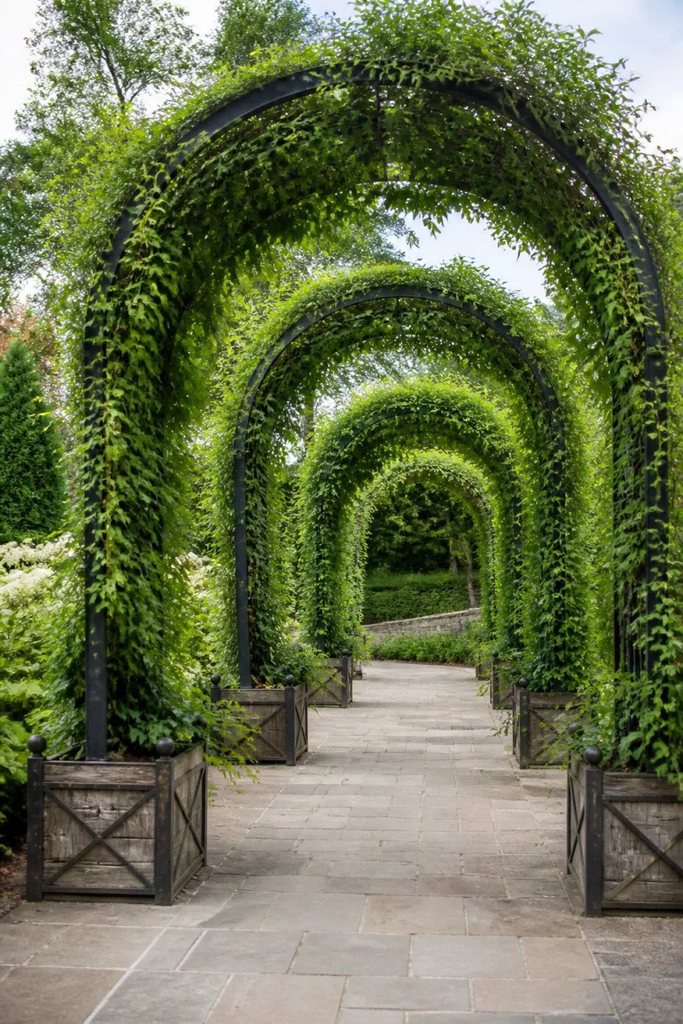
Metal arches can give my raised garden beds both function and visual height. Instead of allowing climbing plants to spread across the ground, I can train them over a sturdy arch.
Cucumbers, peas, beans, and other suitable climbers can make attractive living tunnels. I like the idea of walking underneath a leafy arch while harvesting vegetables.
The support needs to be strong enough for the mature plant. I also make sure the arch is firmly secured to the ground or bed structure so wind and plant weight do not cause it to tip.
This is one of my favorite ways to combine productive gardening with a strong landscape feature.
9 Design A Geometric Layout
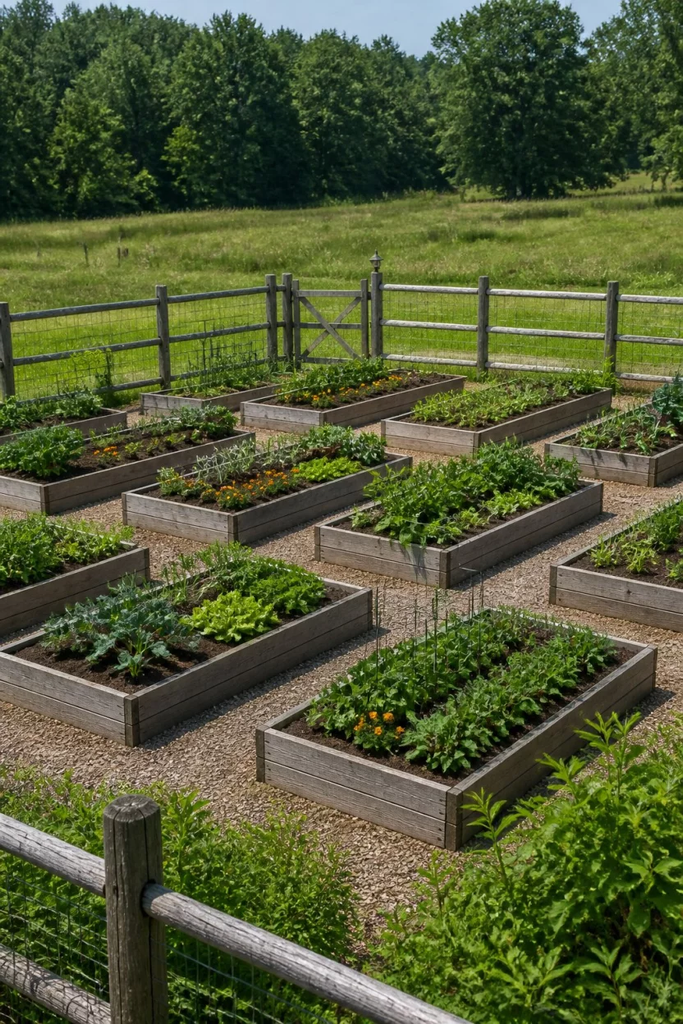
If I have enough backyard space, I can arrange multiple raised beds into a repeating geometric pattern. Straight lines and consistent spacing make a larger garden easier to navigate.
I can dedicate individual beds to different vegetables or plant families. This gives me a simple system for organizing seeds, watering schedules, harvests, and seasonal planting.
If animals such as deer regularly visit my yard, I can also add appropriate fencing around the growing area. The fence should be high and secure enough for the animals I am trying to keep away.
I find that a planned layout makes even a large vegetable garden feel less overwhelming because every bed has a clear purpose.
Also read: 20 Fall Garden Decor Ideas To Brighten Outdoor Beds
10 Switch To Galvanized Metal
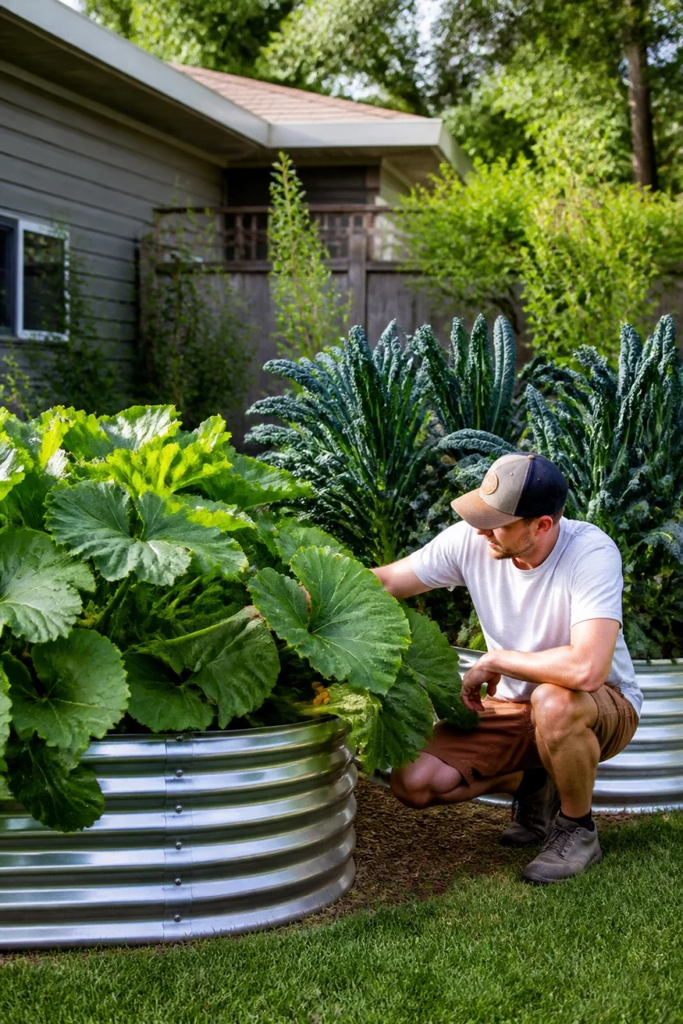
Galvanized metal beds are another practical option when I want a long-lasting alternative to traditional wood. They do not rot like untreated timber, and their clean lines can work well in modern outdoor spaces.
I can find these beds in different shapes and heights. Taller versions can reduce how much I need to bend while planting and harvesting, which is useful if I prefer a more accessible gardening setup.
Metal can also warm more quickly than some other materials, so I pay attention to the climate and keep plants adequately watered during hot weather.
I always check the manufacturer’s information before purchasing a metal bed for edible gardening. I want to know what the material is designed for and whether it is appropriate for growing food.
11 Build Directly On Your Deck
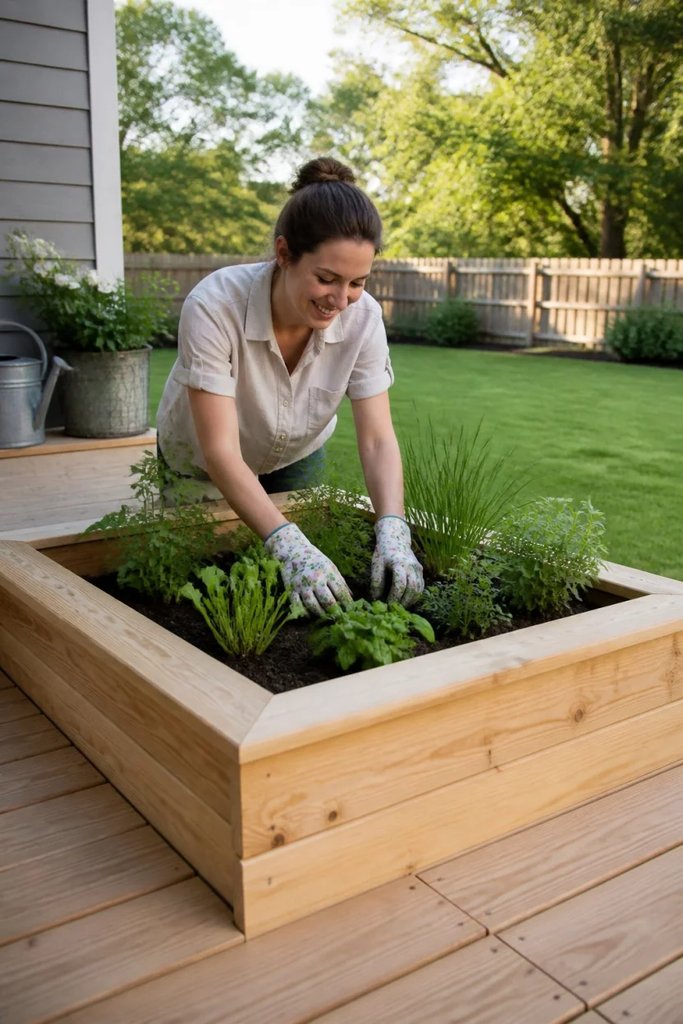
I can grow herbs, flowers, and compact vegetables even without a traditional backyard garden. A properly designed planter placed on a deck can bring edible plants much closer to my kitchen.
Before doing this, I check the deck’s condition and make sure the structure can safely handle the added weight. Wet soil, containers, plants, and water can become much heavier than they initially appear.
I also protect the deck surface from trapped moisture and make sure water can drain without damaging the structure.
For a small space, I might grow herbs, lettuce, radishes, or compact tomato varieties rather than large spreading crops.
Pro Tip: I measure the finished planter and its location before building. I want enough room to walk around it, water it, and access the door without creating a cramped passage.
12 Style With Trellis Accents
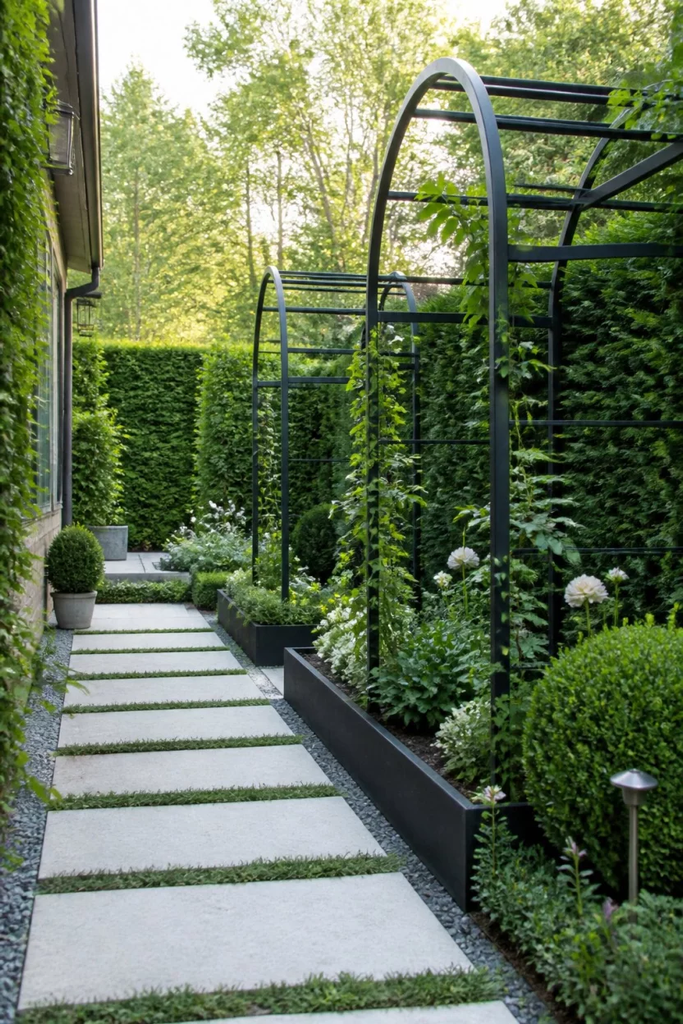
A trellis can make a basic raised bed look more finished while giving climbing plants a place to grow. I can use wood, metal, or another sturdy outdoor material depending on the style of my garden.
I particularly like dark trellises against green foliage because they create a strong visual outline. Even when the plants are dormant, the structure can still add interest.
Adding stepping stones between beds also gives me a reliable route for gardening tasks. I can keep my feet out of the planting soil while moving from one section to another.
I make sure the trellis is appropriate for the mature height and weight of the plants. A small decorative trellis will not necessarily support a large climbing vegetable.
13 Mix Corrugated Metal And Wood
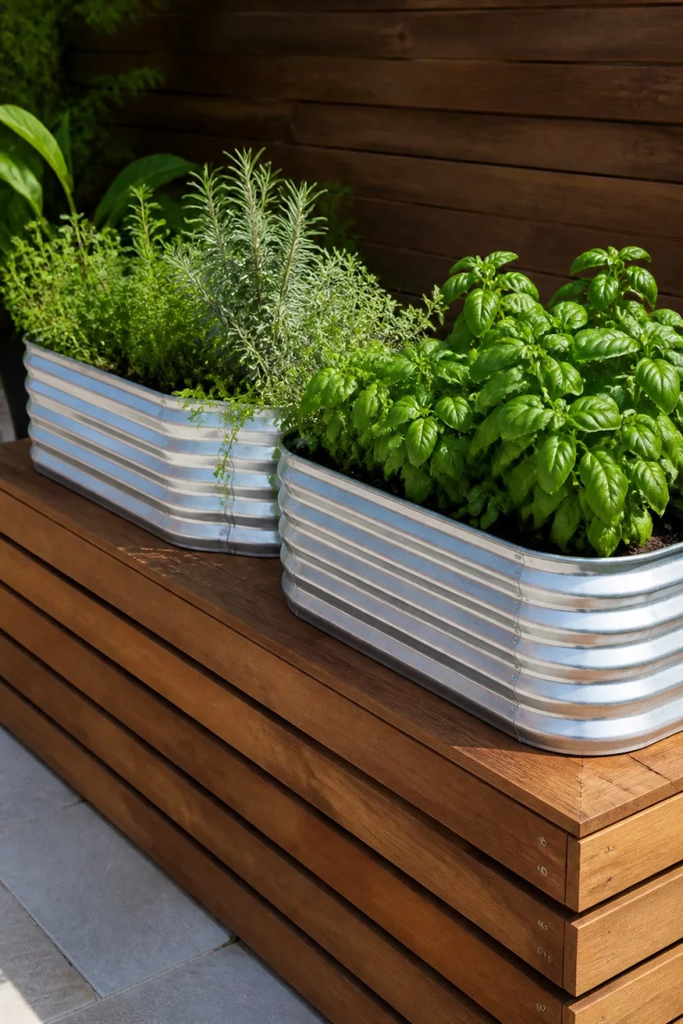
Combining corrugated metal with wood can give my raised garden a more layered appearance. The contrast between smooth timber and ridged metal adds texture without requiring complicated landscaping.
I can use smaller containers for herbs and larger, deeper beds for crops that need more root space. This allows me to create several growing zones within a relatively small footprint.
When choosing materials, I consider how much direct sun each surface receives. Metal can become quite warm in hot weather, so I monitor moisture and plant stress during summer.
A mixed-material garden can also help me match the style of my home, deck, fence, or patio instead of looking like a separate feature dropped into the yard.
14 Layout With White Gravel Paths
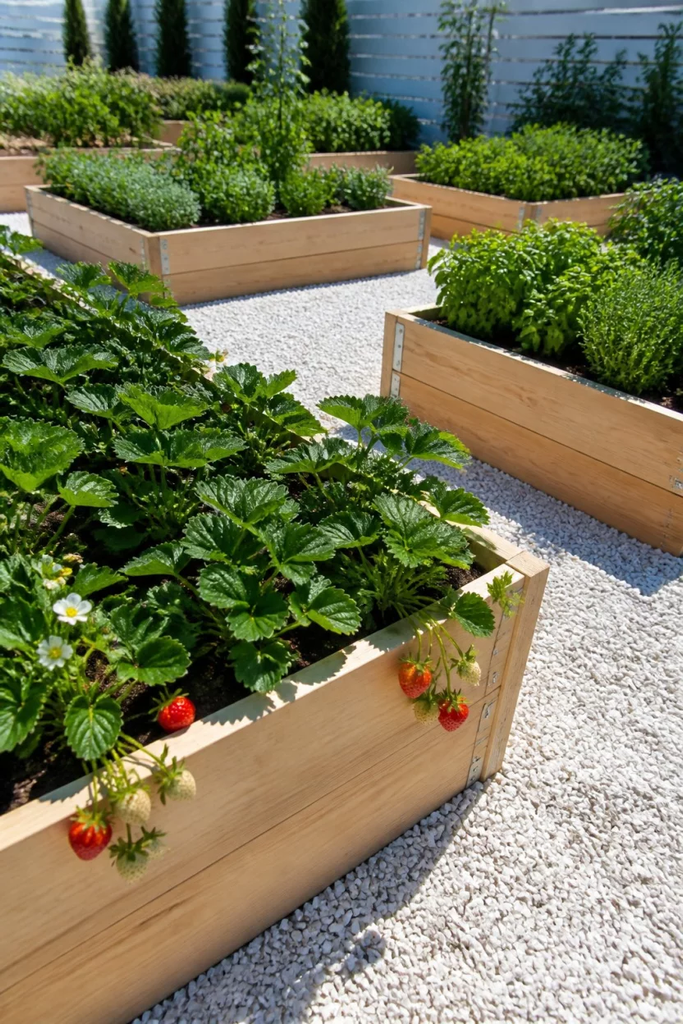
White gravel can make the area around my raised beds look bright and organized. It also gives me a defined walking surface between planting areas.
I like using gravel where grass paths become difficult to maintain. It keeps the garden visually separate from the lawn and gives me a stable place to stand while watering and harvesting.
For edible crops such as strawberries, keeping soil from splashing onto the plants during rain can also be helpful for keeping the growing area cleaner.
I make sure the gravel layer is deep enough to remain useful but not so deep that it becomes difficult to walk through or move garden equipment across.
15 Harvest From Mid Sized Boxes
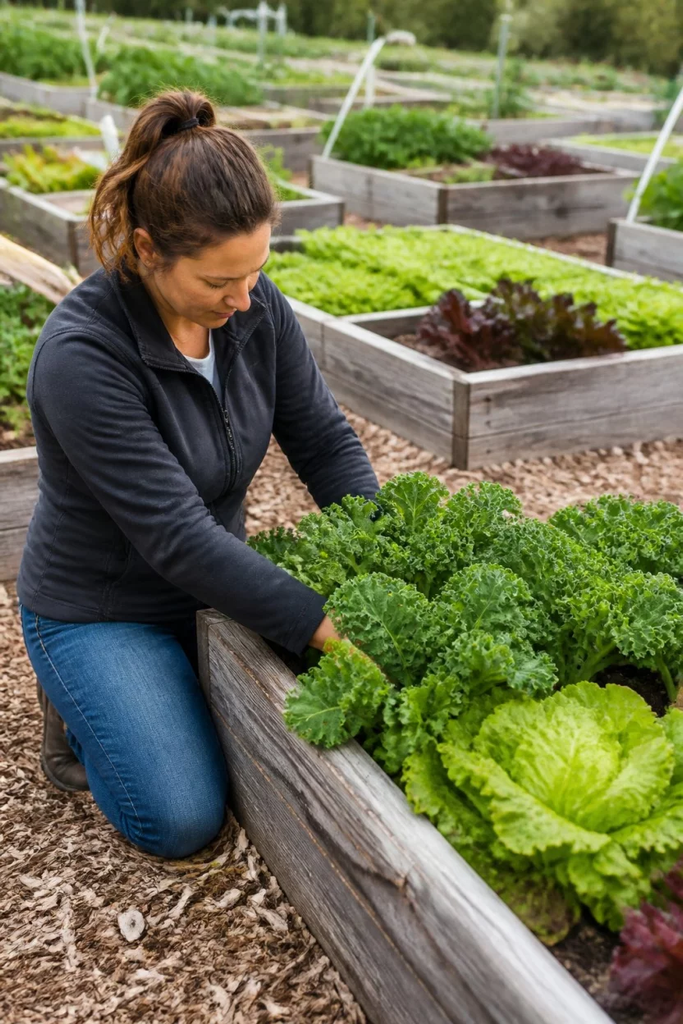
Medium rectangular raised beds are one of the easiest designs for me to work with. They give me enough planting area without making the center difficult to reach.
I can dedicate one bed to leafy greens, another to herbs, and another to vegetables such as peppers or tomatoes. This organization makes it easier for me to track what I planted and when.
I also consider the mature size of each crop before filling the bed. Crowding plants may reduce airflow and make watering, harvesting, and pest inspection harder.
For a first raised-bed garden, I would rather build two manageable beds than create a huge garden that becomes difficult to maintain.
16 Balance Heights With Arches
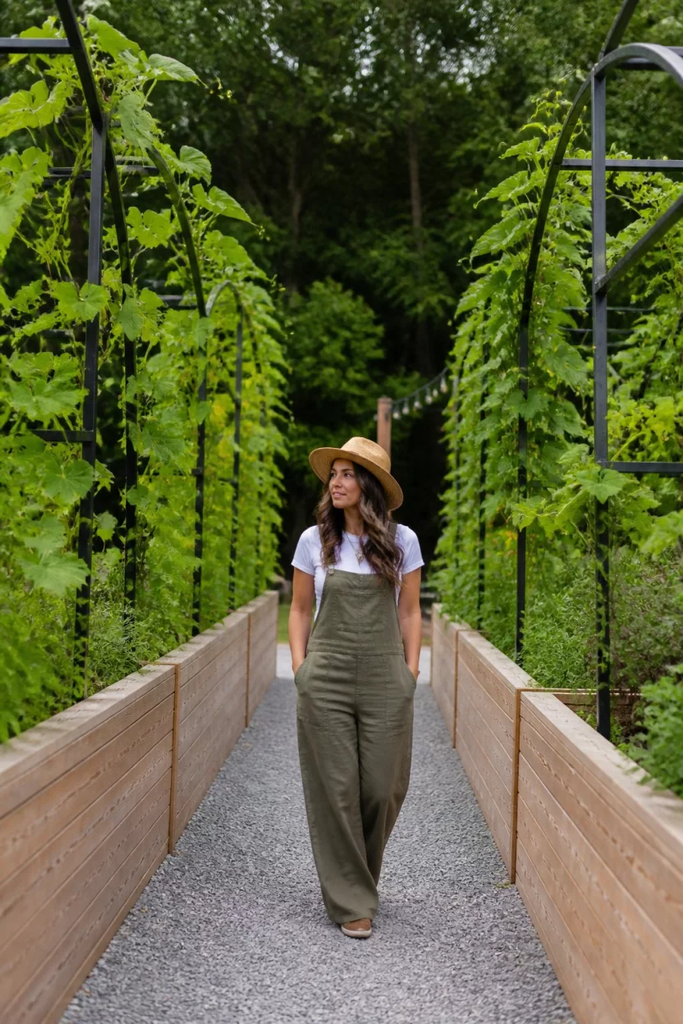
Placing two raised beds opposite each other gives me a natural walkway between them. Adding an arch across the pathway creates a strong focal point while providing support for climbing plants.
I can train beans, peas, cucumbers, or suitable flowering vines over the structure. As the plants grow, the walkway can develop into a leafy tunnel.
I like this arrangement because I can reach both sides of the beds without stepping into the soil. That makes routine jobs such as pruning, harvesting, and checking leaves much easier.
I also leave enough clearance beneath the arch for comfortable walking. A beautiful garden feature is not very useful if I have to duck every time I pass through it.
17 Try A Creative Spiral Design
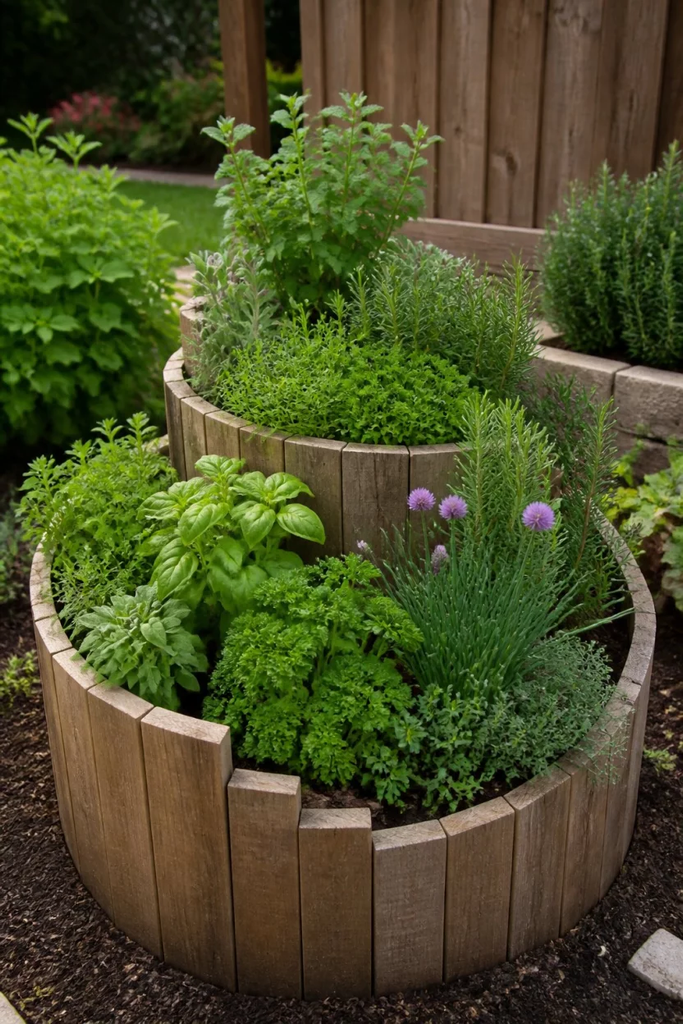
A spiral raised bed gives me a different option when traditional rectangles feel too predictable. The changing height can create slightly different growing conditions within one compact garden feature.
I can use the higher sections for plants that prefer excellent drainage and the lower areas for herbs or other plants that tolerate more moisture. I still check the individual needs of each plant because a spiral does not automatically create perfect microclimates.
This design can be especially useful when I want herbs close to my kitchen. I can grow several varieties within one visually interesting structure instead of spreading small containers throughout the yard.
I also like the decorative quality. A spiral bed can become a focal point in the garden while still serving a practical purpose.
Read this next: 18 Summer Garden Decor Ideas
Frequently Asked Questions About Raised Garden Beds
What is the best size for a raised garden bed?
I usually recommend keeping a raised bed about 3 to 4 feet wide so I can reach the center without stepping into the soil.
What should I put under a raised garden bed?
I can use cardboard or a suitable weed barrier over grass, depending on the site. I also make sure the bed has good drainage.
How deep should a raised garden bed be?
For many vegetables, I aim for at least 8 to 12 inches of soil, while deeper-rooted crops may need more growing depth.
What materials are best for raised garden beds?
I can use untreated wood, suitable galvanized metal, bricks, or stone. For edible crops, I always choose materials intended to be safe for food gardening.
Conclusion
Raised garden beds give me a simple way to make better use of my outdoor space while having more control over soil, layout, and plant placement. I can keep the design inexpensive with reclaimed materials or create a more finished look with wood, metal, gravel, trellises, and arches.
I do not need to build all 17 styles at once. I can start with one practical bed, learn how much maintenance it requires, and expand when I am ready.
For me, the best raised garden is one that I can easily reach, water, weed, and harvest. A thoughtful layout will always make gardening more enjoyable than a complicated design that looks good but is difficult to maintain.

One Comment