19 Modern Garden Decor Ideas
I like a modern garden best when it feels intentional without becoming too formal. A few strong materials, simple shapes, comfortable seating, and thoughtful lighting can completely change how a backyard looks and functions.
When I plan an outdoor space, I try to balance appearance with everyday use. A beautiful garden still needs practical paths, places to sit, useful storage, and features that can handle changing weather. These 19 modern garden decor ideas can help me create that balance without making the yard feel crowded.
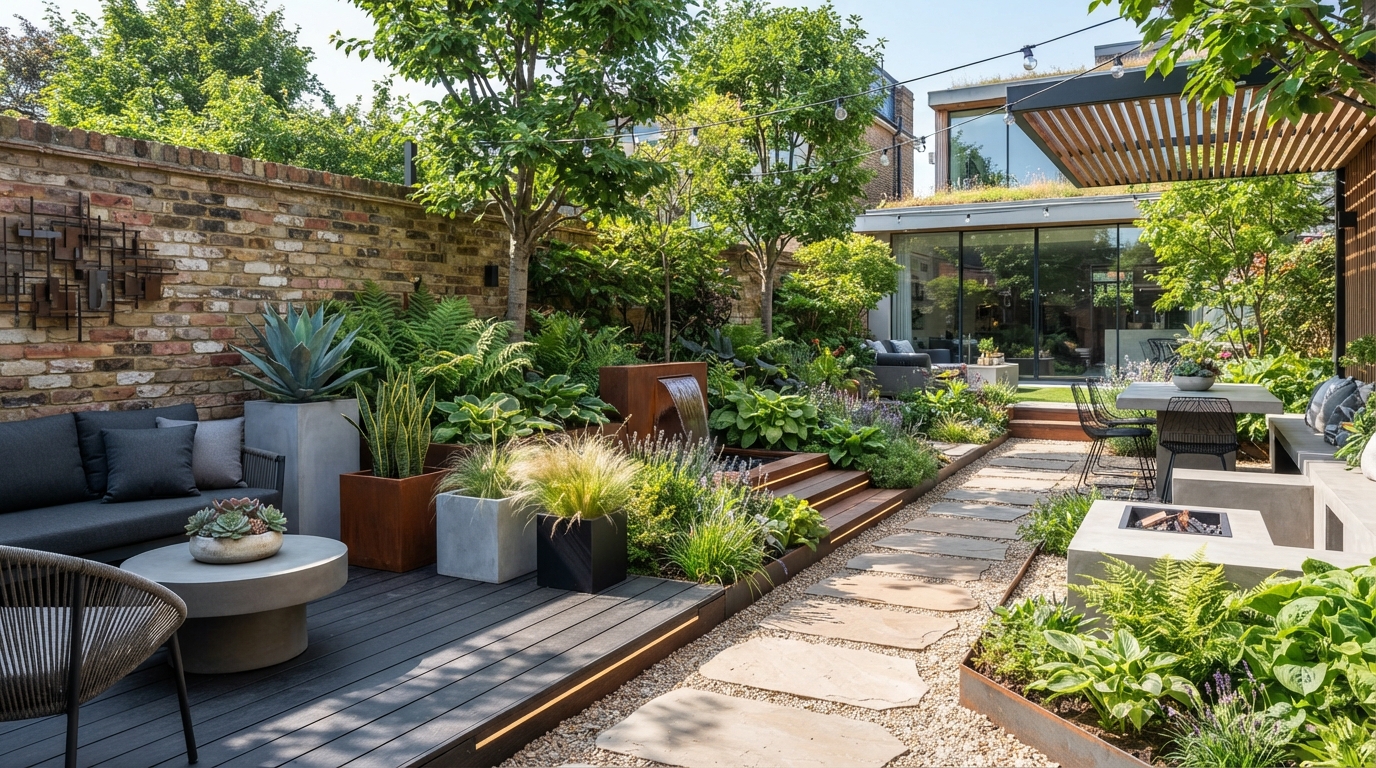
I can make a modern garden feel more polished by focusing on clean lines, durable materials, controlled lighting, and a limited color palette. Corten steel, concrete, dark fencing, stone, timber, and metal are all useful materials for this style.
For smaller gardens, I can save floor space with vertical herb walls, mirrors, trellises, and carefully positioned lighting. For larger yards, features such as sunken seating, floating decks, fire pits, saunas, and water features can create separate zones.
I also like including practical details that are easy to overlook, such as attractive trash-bin storage, comfortable pathways, bird baths, and child-friendly garden features. These small additions can make the entire outdoor space feel more complete.
Key Takeaways
- I use a small number of strong materials instead of mixing too many finishes.
- Dark fencing and black metal can make green plants stand out.
- Vertical planting works especially well when floor space is limited.
- Outdoor lighting should create atmosphere while also improving visibility.
- Durable materials such as stone, concrete, and properly finished metal can reduce ongoing maintenance.
- I always consider drainage, weather exposure, safety, and maintenance before adding a permanent feature.
- Modern garden design does not have to mean expensive. Simple changes can have a noticeable visual effect.
Related article: 18 Rock Garden Landscaping Ideas
1 Architectural Corten Steel Planters
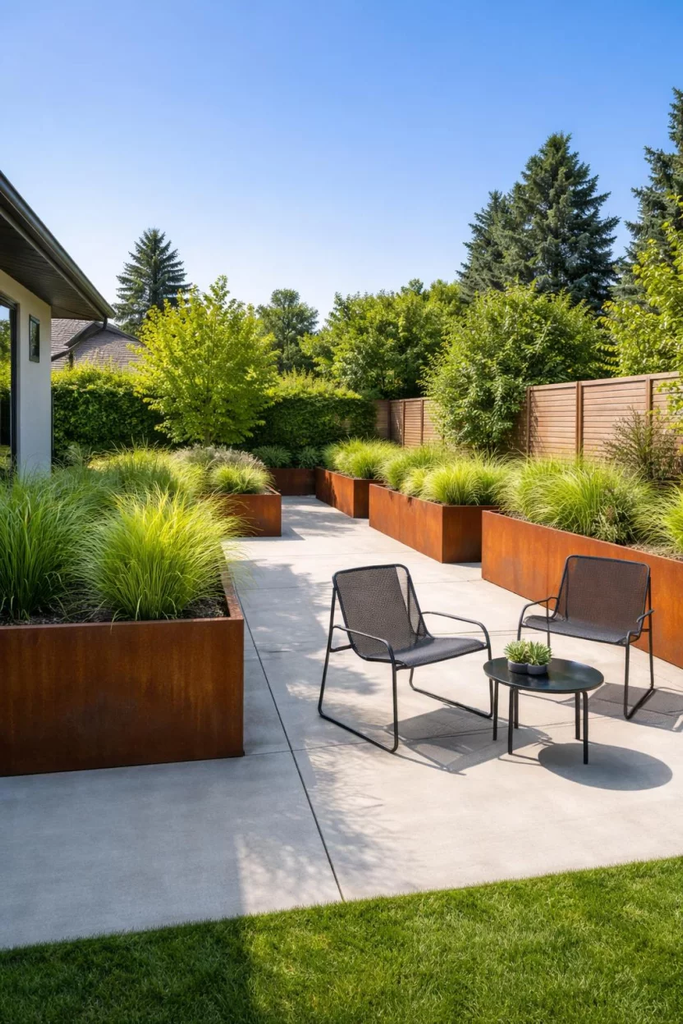
I love using Corten steel when I want planters to become part of the architecture rather than simply containers for plants. Its naturally weathered orange-brown surface creates a strong contrast with green grasses, shrubs, and leafy plants.
The material develops a protective weathered layer over time. That patina is one reason Corten steel works so well outdoors because the changing finish becomes part of the design.
I would place several rectangular planters together to define a patio edge, separate a seating area, or create a low privacy screen.
For plants, I would choose simple varieties with strong shapes rather than filling every container with different colors.
Pro Tip: Before installing large metal planters, check drainage and protect nearby paving from runoff. Water collecting around the base can create problems even when the planter itself is weather resistant.
2 Floating Wooden Deck Islands
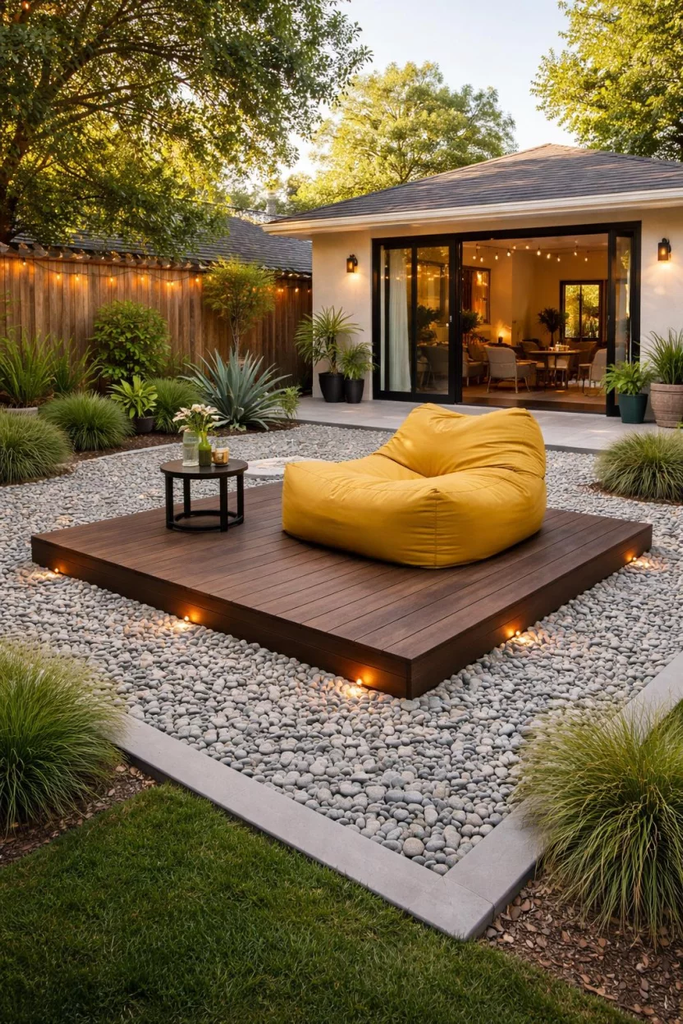
A small deck does not always have to connect directly to the house. I can use a freestanding wooden platform in the garden to create a separate destination for relaxing, reading, dining, or enjoying a morning coffee.
I like low-profile platforms because they have less visual weight than a large raised deck. Placing gravel or stone around the edges can make the timber platform look even more intentional.
A compact deck island can also divide a large lawn into useful zones without building permanent walls.
I would keep the furniture simple and choose one strong accent color rather than filling the platform with too many pieces.
Pro Tip: Leave enough clearance around the deck for water to drain and air to circulate. Good drainage is especially important when timber sits close to soil or lawn.
3 Geometric Concrete Fire Pits
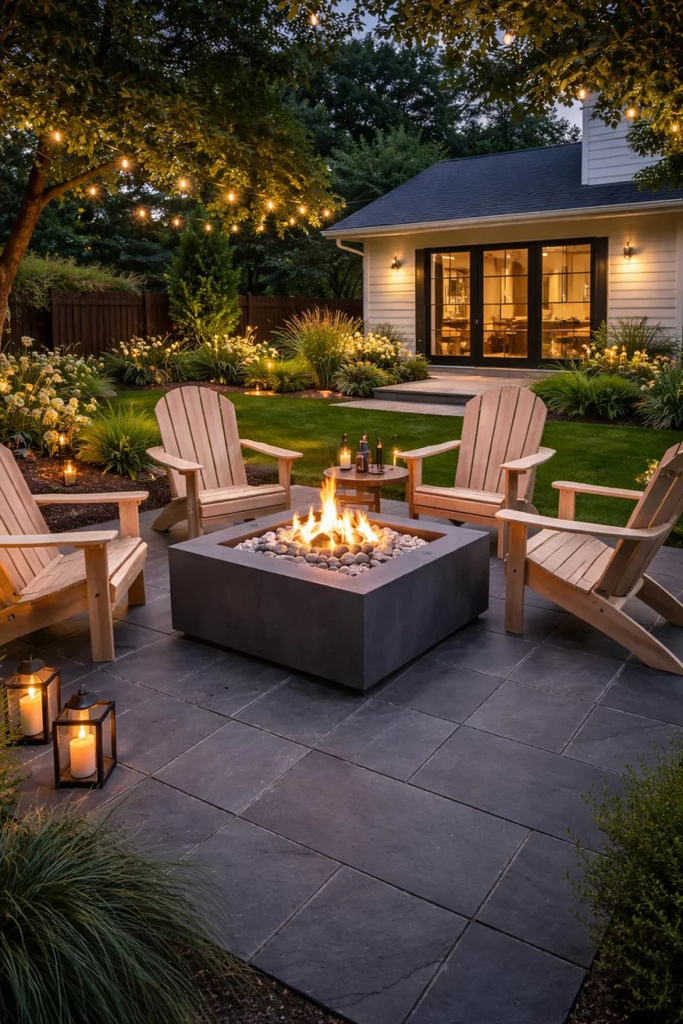
A concrete fire pit can give a modern garden a strong central feature while providing useful warmth during cooler evenings.
I prefer simple square, rectangular, or circular designs with clean edges. The neutral appearance allows the surrounding furniture, plants, and lighting to provide most of the personality.
Heat-resistant decorative media can also change the appearance of the fire feature. However, I always follow the manufacturer’s instructions rather than assuming that any stone or glass is safe around an open flame.
A fire pit can turn an unused corner of the garden into a place where people naturally gather.
Pro Tip: I always check local fire regulations, keep combustible furniture at the recommended distance, and place the fire feature on a stable, non-combustible surface.
4 Backlit Privacy Screens
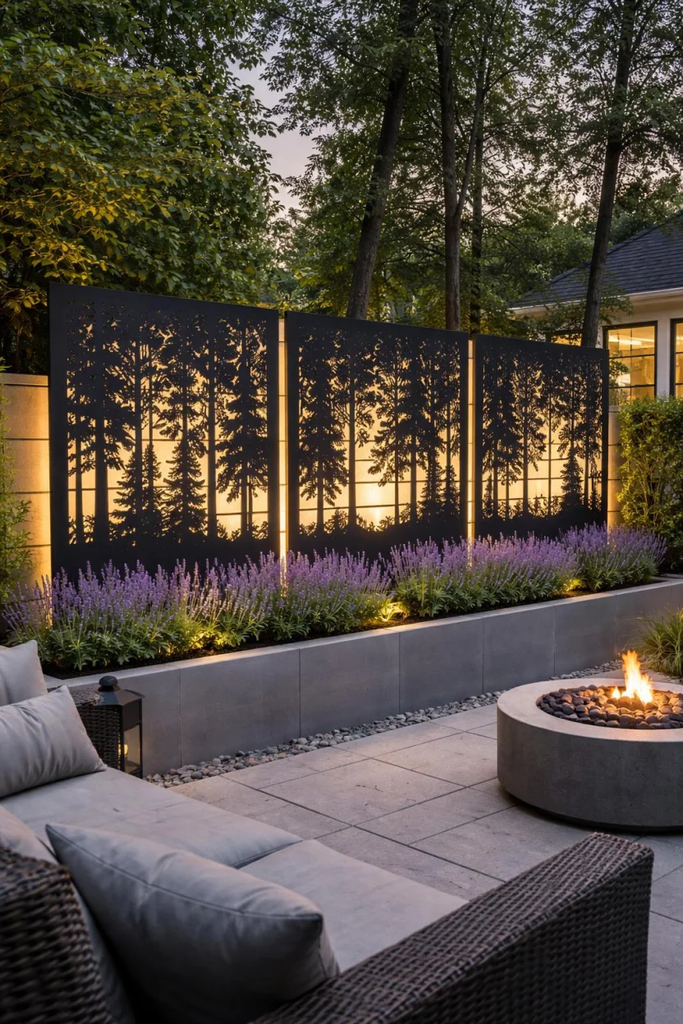
I do not think privacy screens need to look like ordinary fences. Decorative metal panels can separate one garden zone from another while also becoming an outdoor design feature.
Laser-cut or patterned screens are particularly useful because they can provide privacy without creating a completely solid wall.
Adding concealed outdoor lighting behind the panel can create a soft pattern after sunset. I would use warm, low-glare lighting so the screen feels decorative rather than overly bright.
This approach works especially well around patios, outdoor dining areas, and seating corners.
Pro Tip: Before choosing a screen, check how much privacy you actually need from different angles. A beautiful pattern may still leave large sightlines open.
5 Modern Vertical Herb Walls
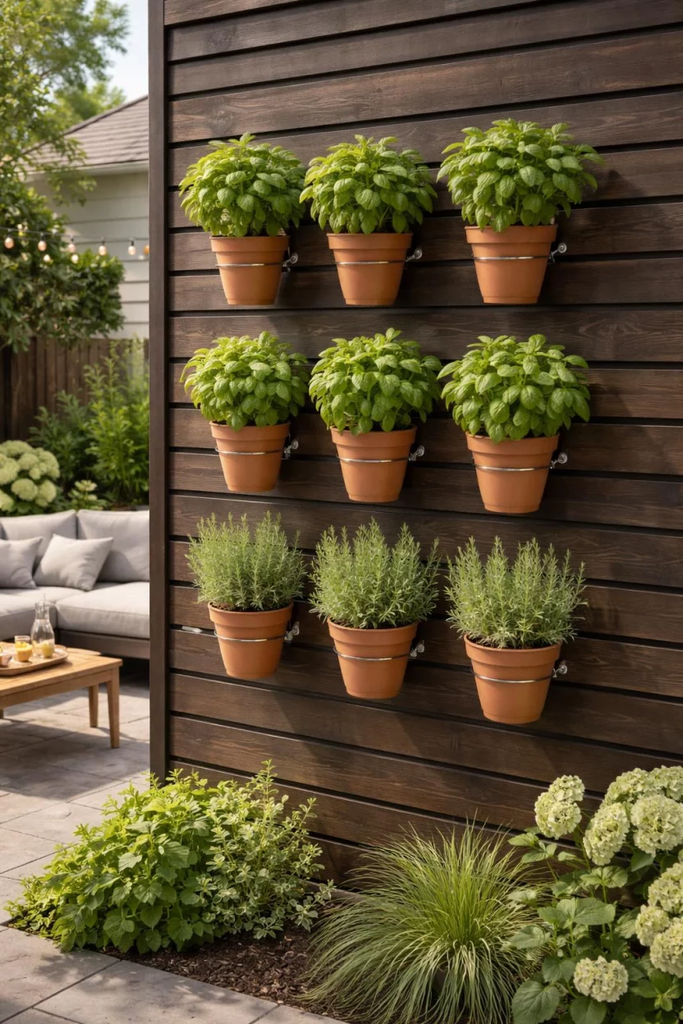
When I am working with a small patio or garden, I look upward before trying to squeeze more pots onto the floor.
A vertical herb wall can hold useful plants such as basil, thyme, rosemary, mint, and parsley while keeping the growing area organized.
I prefer a simple wood or metal frame with containers arranged at comfortable heights. Besides saving space, the greenery can soften a plain exterior wall.
The biggest consideration is sunlight. Herbs generally need suitable light conditions, so I would position the wall according to the plants I plan to grow rather than choosing the location based only on appearance.
Pro Tip: Give each container proper drainage and group plants with similar watering needs. This makes maintenance much easier.
6 Black Pebble Pathways
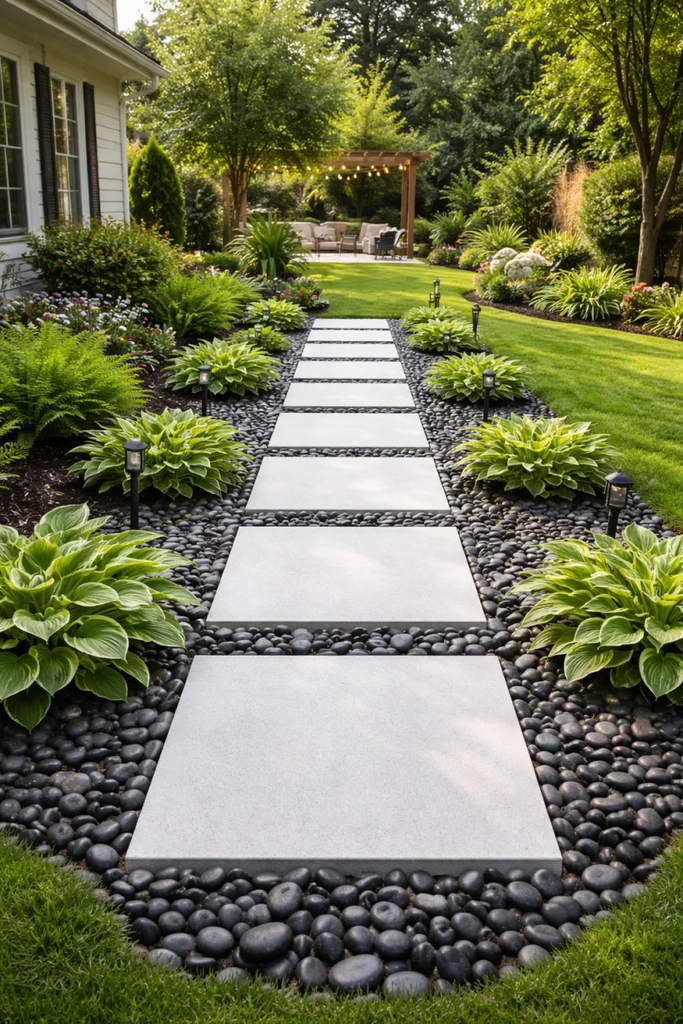
I can give a garden a more contemporary appearance by replacing ordinary mulch around a pathway with decorative stone.
Black or charcoal pebbles look particularly striking next to pale concrete, limestone, or light-colored pavers. The contrast creates a clean visual line without requiring complicated landscaping.
I like using larger stepping stones through the pebble area because they provide a clear walking route while keeping the overall design relaxed.
Stone can also be a practical choice because it does not decompose like organic mulch.
Pro Tip: Use landscape edging to keep loose pebbles from spreading into lawns or planting beds. It saves time when I am maintaining the garden later.
7 Sunken Seating Areas
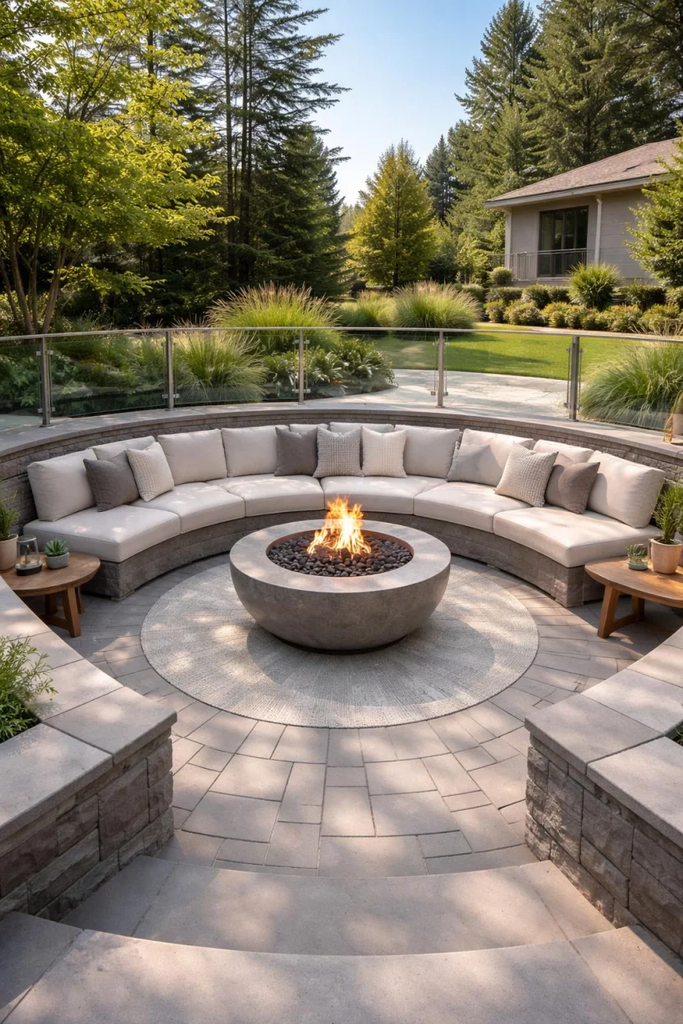
A sunken seating area can make a large garden feel more layered and intimate.
Instead of placing every piece of furniture on the same level, I can lower one section to create a dedicated conversation area. Built-in seating can make good use of the available space and can sometimes incorporate hidden storage.
The change in level also helps visually separate the seating zone from the rest of the garden.
This is a larger landscaping project, though, so I would think carefully about drainage, retaining structures, accessibility, and local construction requirements before starting.
Pro Tip: Never treat drainage as an afterthought with a sunken space. Water needs a planned route away from the seating area before construction begins.
8 Industrial String Lighting Poles
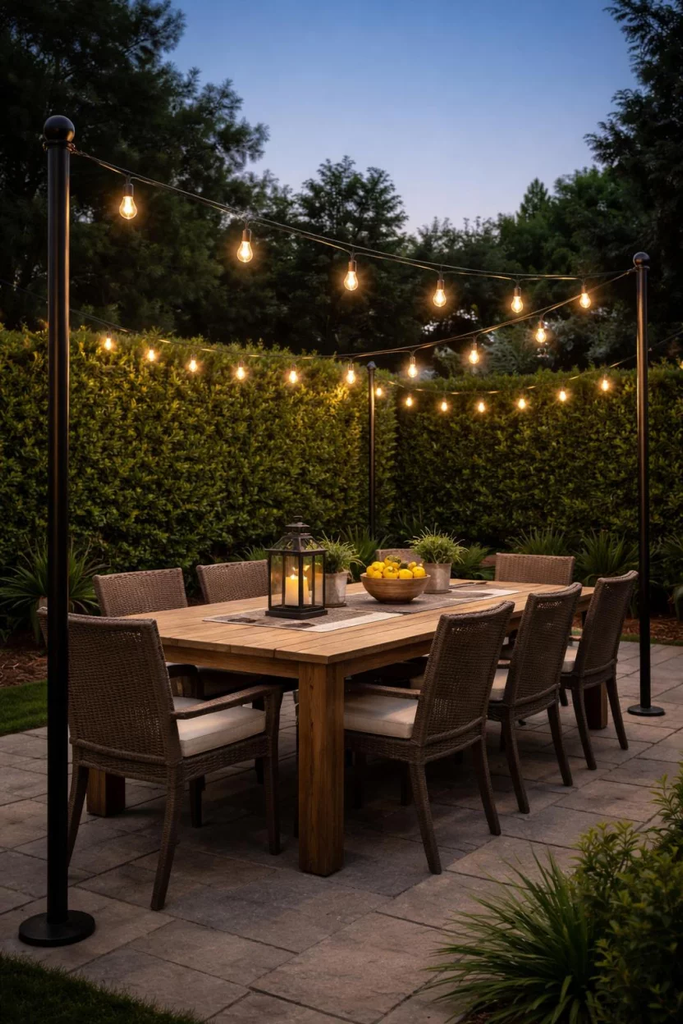
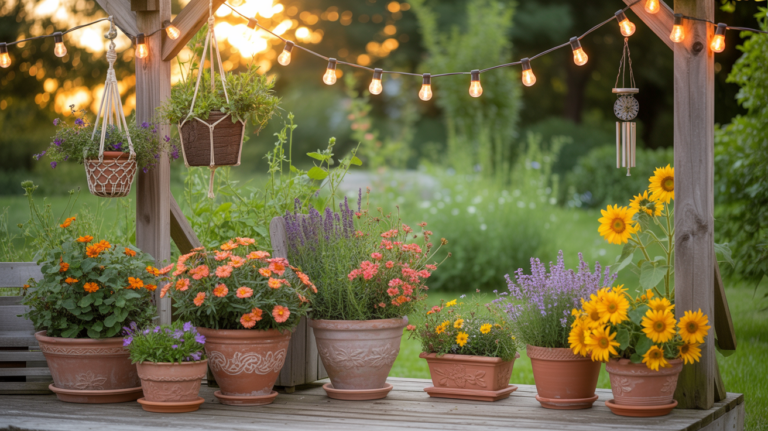
I do not need mature trees to hang outdoor string lights. Freestanding poles can give me the same flexibility while allowing me to decide exactly where the lights go.
Black metal poles work particularly well with modern furniture and dark fencing. I can position them around a dining area, seating zone, or deck and create a defined outdoor room after sunset.
Warm-toned bulbs usually create a more relaxed atmosphere than extremely bright white lighting.
I also like this approach because the lighting can be changed or removed without altering the garden structure.
Pro Tip: Use outdoor-rated lighting, weatherproof connections, and properly installed supports. Do not rely on ordinary indoor extension cords for permanent outdoor use.
9 Minimalist Mirror Installations
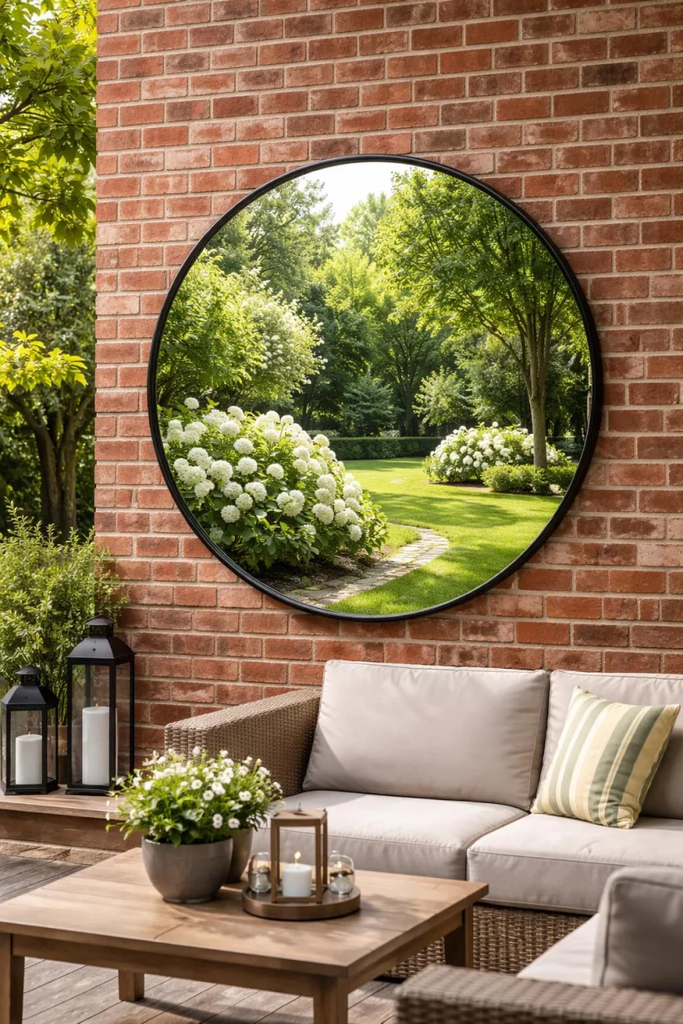
A carefully positioned outdoor mirror can make a compact garden appear visually deeper.
I like using a simple round or rectangular frame rather than an ornate indoor-style design. The mirror can reflect plants, architectural details, or natural light and make a plain wall more interesting.
Placement matters more than size. I would first stand in several parts of the garden and see what the mirror would reflect before mounting it.
I also avoid positioning reflective surfaces where concentrated sunlight could create glare or a heat hazard.
Pro Tip: Choose a mirror specifically suited to outdoor conditions or one with appropriate weather protection. Ordinary indoor mirrors can deteriorate quickly when exposed to moisture.
10 Sleek Black Fencing
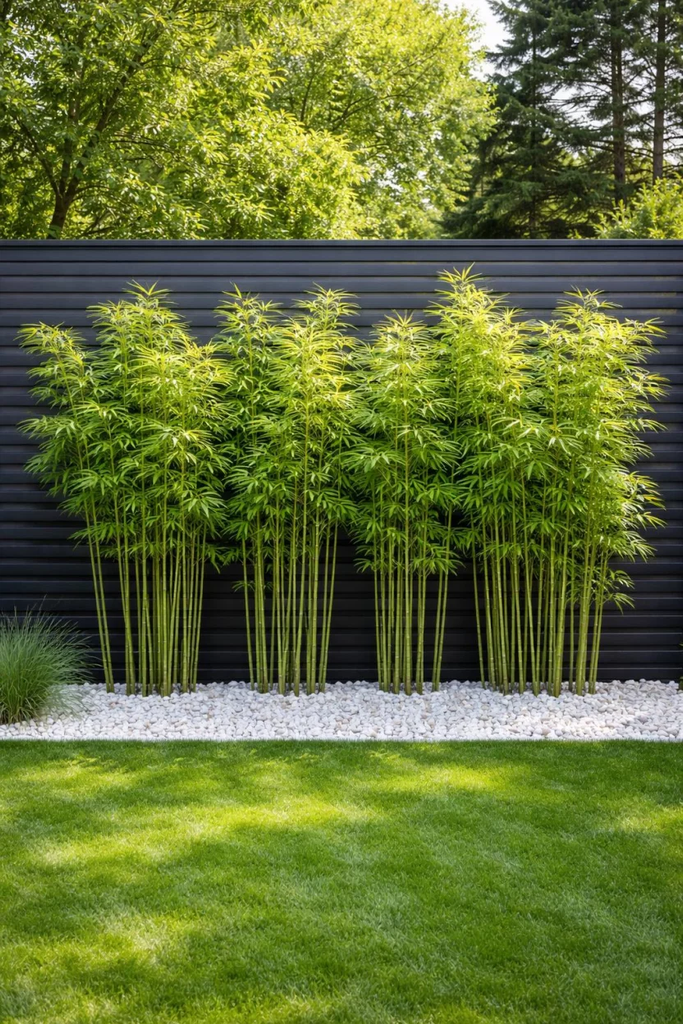
Black fencing creates a strong backdrop for green foliage, especially when I use plants with different leaf shapes and heights.
Horizontal slat fencing can give a garden a contemporary architectural feel, while the dark color often becomes visually quieter behind planting.
I like this approach because it can make the greenery feel like the main feature rather than competing with a brightly colored fence.
Before installing new fencing, I would check property boundaries, local regulations, and any neighborhood requirements that apply.
Pro Tip: If a completely black fence feels too heavy, soften it with layered planting. Grasses, climbing plants, shrubs, and trees can break up a large dark surface.
11 Contemporary Water Blades
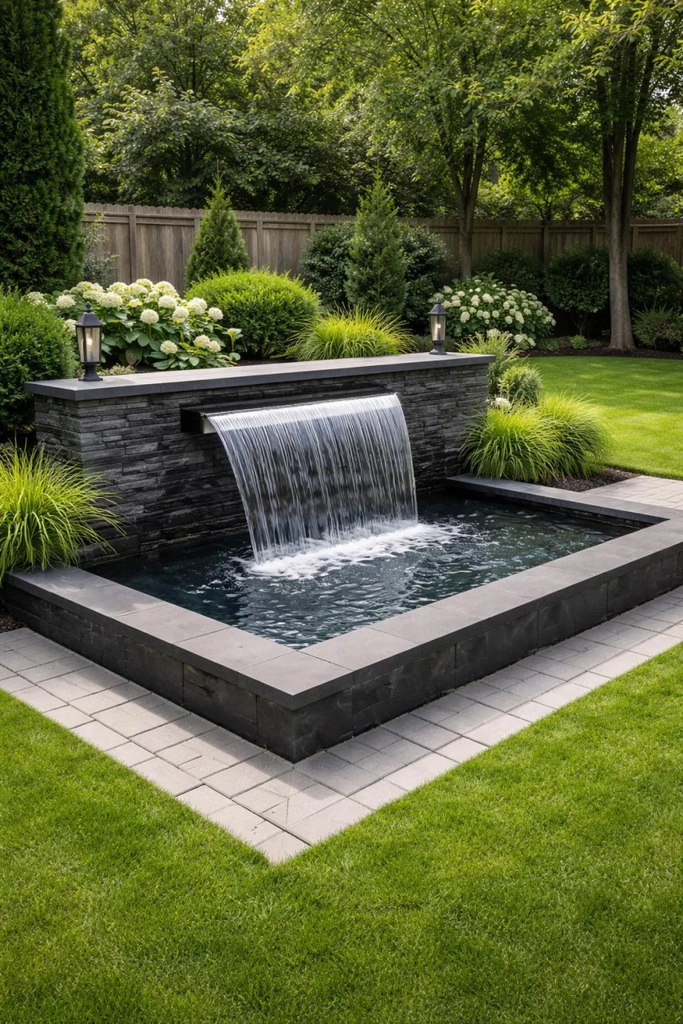
I can add movement and sound to a modern garden without installing a large traditional pond.
A water blade creates a controlled sheet of water that falls into a basin or reservoir. Stainless steel works especially well with concrete, stone, and other contemporary materials.
The sound of moving water can also help mask traffic or other background noise, depending on the size and placement of the feature.
I would choose a recirculating system so the same water can be used repeatedly rather than constantly adding fresh water.
Pro Tip: Plan access to the pump and filtration components before installation. A water feature is much easier to maintain when I can reach its equipment without dismantling the surrounding landscaping.
Also read: 17 Raised Garden Bed Ideas
12 Scandinavian Outdoor Saunas
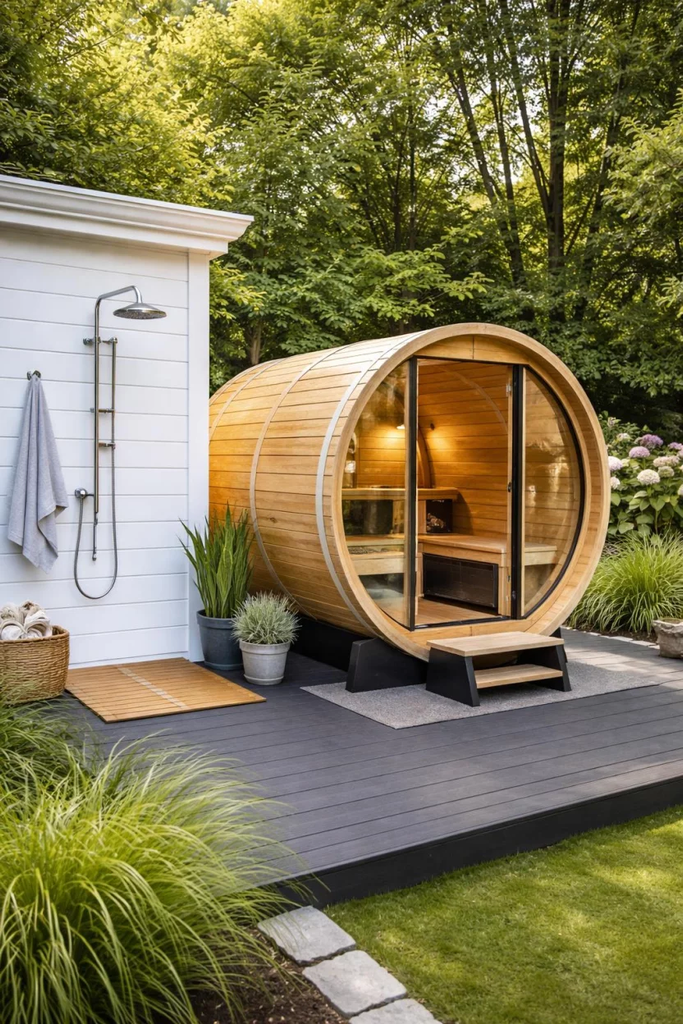
If I have enough space and the budget allows for a larger garden feature, an outdoor sauna can turn the backyard into a year-round relaxation area.
I like the Scandinavian-inspired look because natural timber and simple forms fit naturally into modern landscaping.
A compact sauna can sit beside a deck, planting bed, or outdoor shower while remaining visually simple.
Because this is a significant installation, I would check local building requirements, electrical needs, ventilation, drainage, and the manufacturer’s installation instructions before purchasing one.
Pro Tip: Think about the route from the house to the sauna before installation. A practical path, lighting, and privacy screening can make the feature much more enjoyable to use.
13 Asymmetrical Paver Patterns
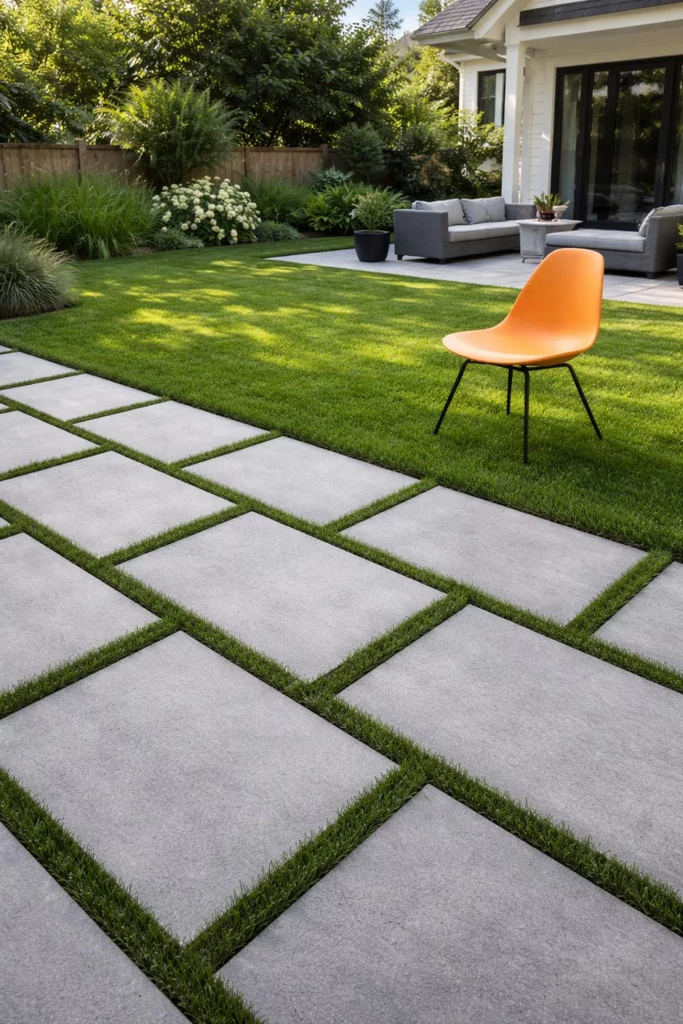
I do not always need perfectly aligned pavers to create a polished garden. A staggered arrangement can make a patio or pathway feel more relaxed and contemporary.
Large-format pavers with carefully planned gaps can also help connect hard landscaping with surrounding greenery.
I would avoid making the pattern look completely random. Even an informal layout needs consistent spacing, a clear walking route, and proper preparation underneath.
This is one of the ideas I would consider when I want a custom appearance without using unusually shaped materials.
Pro Tip: Sketch the layout before buying the pavers. Measuring the area first can reduce waste and help me calculate how many full and cut pieces I will need.
14 Spherical Solar Lanterns
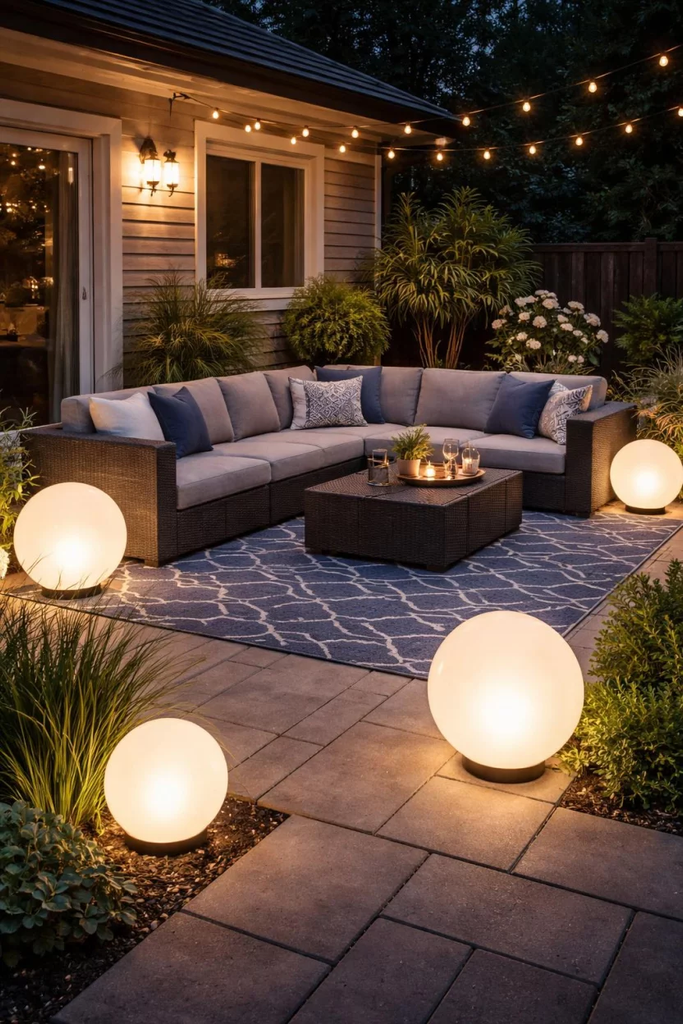
I like globe-shaped outdoor lights because their simple form works with many modern garden styles.
Placing several lanterns at different points around a patio can create pools of soft light instead of one harsh source overhead.
Solar versions can be convenient where running electrical wiring is difficult. Their performance will depend on the amount of sunlight available during the day, so I would place the panels where they can receive adequate light.
Frosted surfaces are useful when I want a softer glow rather than a sharp exposed bulb.
Pro Tip: Clean solar panels regularly and replace batteries when needed. A well-positioned light can still perform poorly when the panel is dirty or shaded.
15 Dark Wood Slat Trash Covers
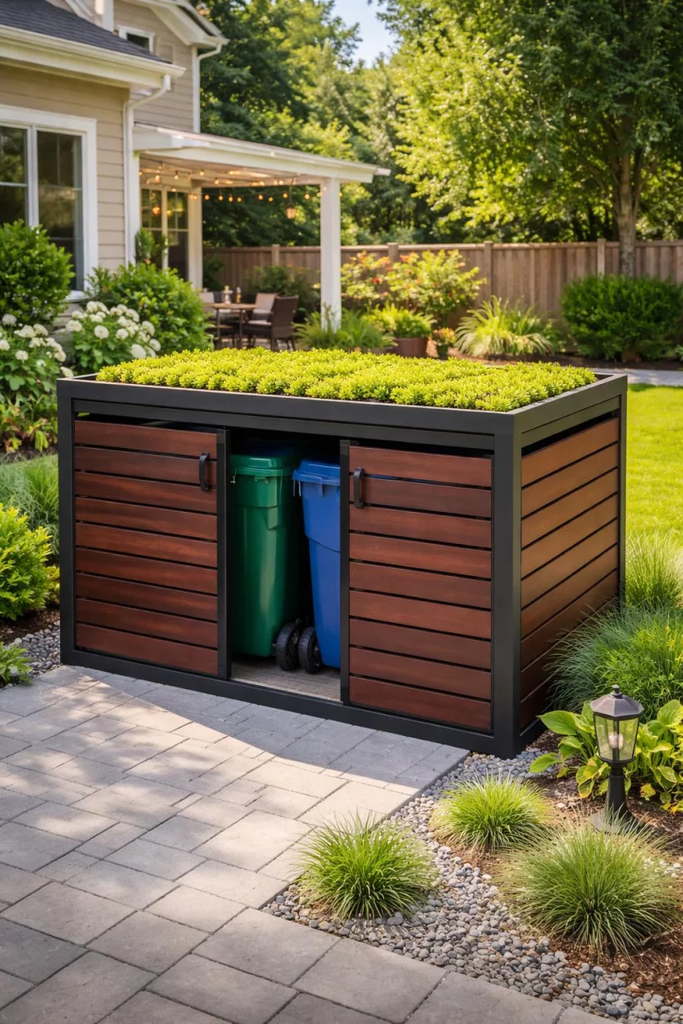
Outdoor bins are necessary, but they do not need to become the first thing I notice when I look at the garden.
A slatted enclosure can hide bins while still allowing ventilation. Dark timber or another weather-resistant material can make the enclosure look like part of the landscape rather than an afterthought.
I would also leave enough space for the bins to be removed easily. A cover that looks great but is awkward on collection day is not a useful design.
A small green roof or planter can further integrate the enclosure with the surrounding garden.
Pro Tip: Keep the enclosure accessible from the collection route. I would measure the bin width, height, lid clearance, and door swing before building anything.
16 Matte Black Bird Baths
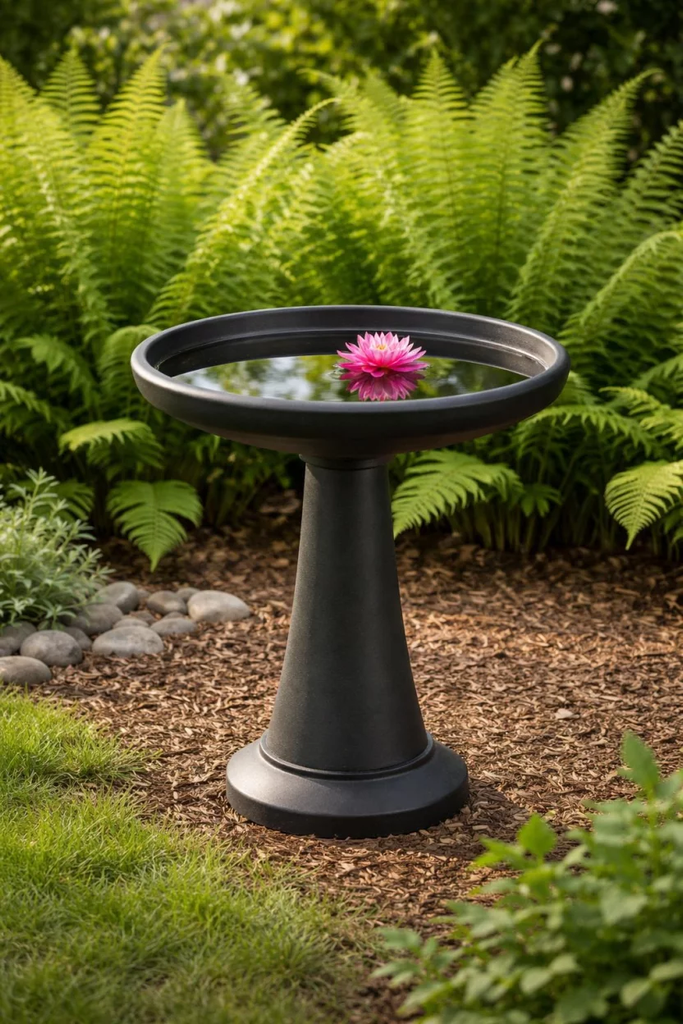
A bird bath can serve a practical purpose while also working as a simple garden sculpture.
I like matte black designs because they provide a strong contrast against grasses, ferns, and lighter foliage.
Clean water is important for visiting birds, so the feature needs regular maintenance rather than being treated as a set-and-forget decoration.
I would place it somewhere visible from a window while keeping it reasonably close to natural cover where birds can feel secure.
Pro Tip: Change the water regularly and clean the basin. A shallow design is generally easier to maintain and safer for smaller birds than a very deep basin.
17 Monolithic Stone Benches
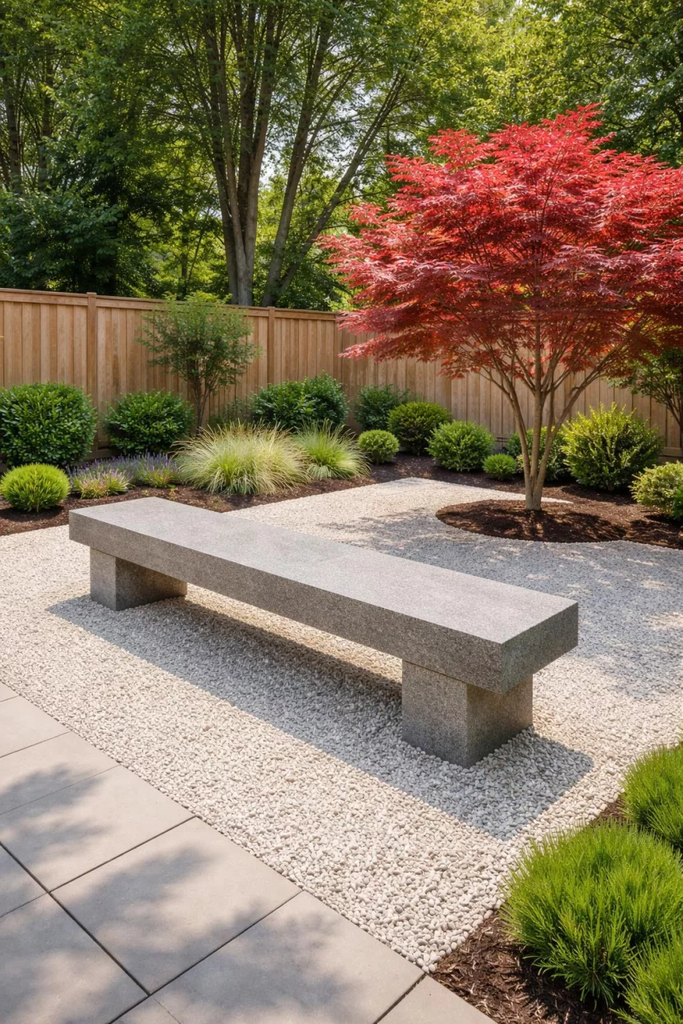
A solid stone bench can add a sense of permanence to a modern garden.
Granite, concrete, and other durable materials can work well against delicate planting, ornamental grasses, or small trees. I particularly like the contrast between heavy hardscape and softer natural foliage.
Because these benches can be extremely heavy, I would decide on the exact location before bringing one onto the property.
The seat should also be comfortable enough for actual use. A beautiful bench that is too cold, hard, or exposed will quickly become decoration rather than furniture.
Pro Tip: Position the bench with the view in mind. I like facing seating toward a focal tree, planting bed, water feature, or another part of the garden rather than simply placing it against a wall.
18 Geometric Trellis Designs
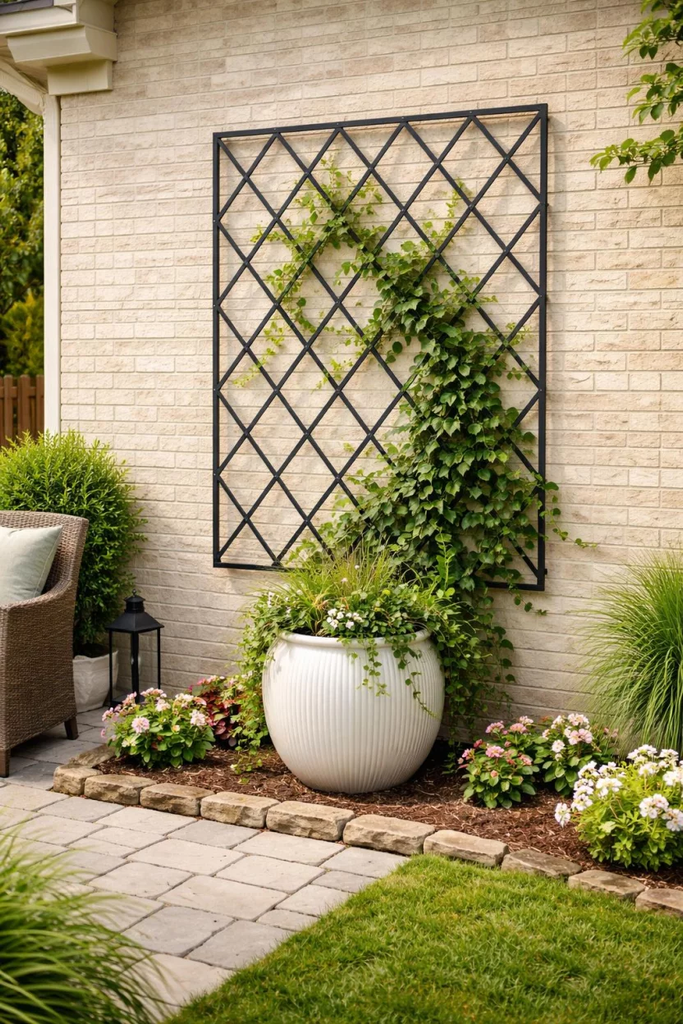
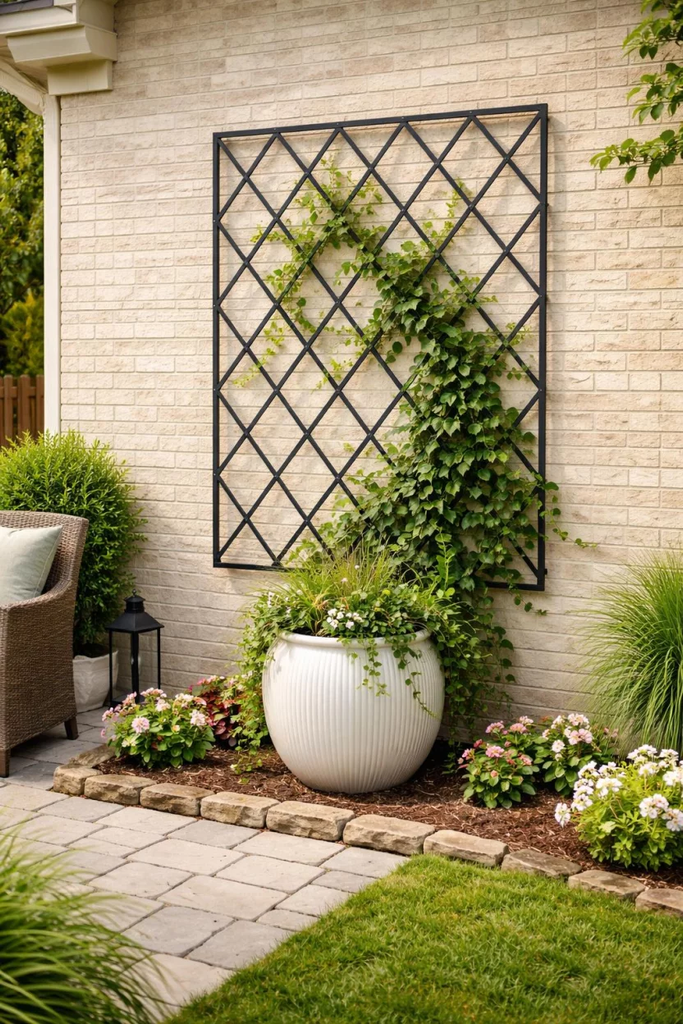
A trellis can do more than support climbing plants. I can use one as an architectural feature that adds structure even when the plants are not fully grown.
Black metal or dark timber works well with contemporary gardens, especially when the geometric pattern is kept simple.
As vines grow across the structure, the hard lines gradually combine with natural shapes.
I would choose climbing plants according to the amount of sunlight, available support, mature size, and local growing conditions.
Pro Tip: Check how heavy the mature plant will become before choosing the trellis. A lightweight decorative frame may not be suitable for a vigorous climber.
19 Sunken Trampoline Gardens
When children use the garden, a trampoline can easily become the largest visual feature in the yard.
A flush or recessed installation can reduce the amount of equipment visible above ground and help the trampoline blend into the surrounding landscape.
However, I would treat this as a safety and construction project rather than simply a landscaping trick. Proper drainage, structural support, safe access, and the trampoline manufacturer’s installation requirements all matter.
Soft landscaping around the area can also help connect the play zone with the rest of the garden.
Pro Tip: I would never remove or modify safety components simply to improve the appearance. The manufacturer’s safety instructions should take priority over the visual design.
Read this next: 15 Outdoor Wishing Well Garden Ideas for Garden Charm
FAQ’s
What makes a garden look modern?
I use clean lines, simple furniture, neutral colors, and materials such as concrete, metal, stone, and dark wood to create a modern garden.
How can I make a small garden look modern?
I recommend vertical planters, simple pathways, wall-mounted trellises, mirrors, and compact furniture. These ideas add style without taking up much floor space.
What are the best materials for modern garden decor?
I like durable materials such as concrete, natural stone, treated timber, metal, and weather-resistant outdoor fabrics. They provide a clean look while handling outdoor conditions.
Conclusion
I do not think a modern garden needs to be filled with expensive features to look finished. I can create a strong foundation with a few consistent materials, clean shapes, comfortable furniture, and well-planned lighting.
For a smaller budget, I would start with one visible improvement such as dark fencing, a vertical herb wall, updated pathway materials, or better outdoor lighting. Larger gardens can gradually add features such as a fire pit, water blade, sunken seating area, or outdoor sauna.
Most importantly, I would design around how I actually use the space. When style, comfort, maintenance, and safety all work together, the garden becomes much more than an attractive view—it becomes a part of my everyday living space.