

18 Pillow Storage Ideas for 2026
Extra pillows can make a bedroom or living room feel much more comfortable, but they can quickly become clutter when I have nowhere to put them. I’ve had those moments when decorative pillows end up on a chair, shoved into a corner, or scattered across the floor.
The problem is usually not having too many pillows. It’s not having a storage spot that fits the way I actually use them. Daily-use pillows need to stay accessible, while seasonal and decorative ones can be stored farther away.
I’ve found that the easiest solutions often use space I already have, such as the area under my bed, an empty closet shelf, a storage bench, or a basket beside the sofa.
In this guide, I’m sharing 18 pillow storage ideas that help me keep extra cushions organized without making a room feel crowded.
I can store extra pillows without adding bulky furniture by using vertical space, closet shelves, under-bed storage, baskets, benches, cabinets, and other existing areas. For pillows I use regularly, I prefer open or easy-access storage. Seasonal pillows can go into closets, drawers, or other protected spaces.
Save this for later

Table of Contents
The main thing I consider is airflow. Pillows should be completely dry before I store them, and I avoid keeping them compressed for long periods unless the manufacturer specifically allows it.
Key Takeaways
- I keep frequently used pillows somewhere I can reach without moving other items.
- Under-bed drawers and lift-up beds are useful for pillows that I only need occasionally.
- Baskets and storage benches can hide everyday pillow clutter while still looking attractive.
- Fabric storage bags can help protect spare pillows while allowing some airflow.
- I avoid tightly compressing delicate or foam pillows because compression can affect their shape.
- Labeling bins makes seasonal and guest pillows much easier to find.
- A little unused wall or vertical space can provide surprisingly useful pillow storage.
Related article: 22 Fabric Storage Ideas for 2026
How Can You Store Extra Pillows Without Taking Up Too Much Space?
When I’m trying to organize extra pillows, I first look at the storage space I already have instead of immediately buying another piece of furniture.
The space underneath a bed is one of the easiest places to start. A shallow container or rolling drawer can hold spare pillows while keeping them completely out of sight.
A storage bench or ottoman is another practical choice. I can use it as seating during the day and keep decorative or spare pillows inside when they aren’t needed.
For closets, I like breathable fabric bags or open shelving. They keep pillows together without forcing me to stack them tightly or lose track of what I have.
Pro Tip: Before choosing a storage container, measure the pillow when it is naturally fluffed. A container that is too small can force the pillow into an uncomfortable shape.
Closet Shelves
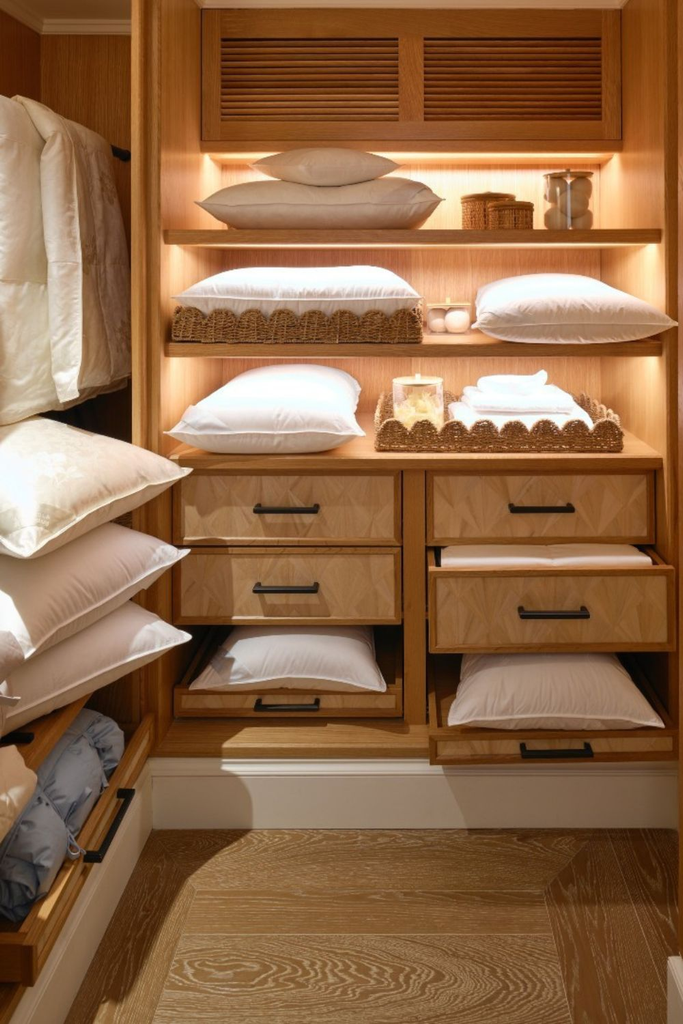
Closet shelves are one of my favorite solutions because they use storage space I already have. I can dedicate one section to sleeping pillows and another to decorative or seasonal cushions.
I avoid making very tall, heavy stacks. Instead, I leave enough room to remove one pillow without causing the entire pile to fall over.
If the shelves are deep, I can place less frequently used pillows toward the back and everyday options toward the front. Matching pillow sizes together also makes the shelf easier to manage.
I find that a small amount of empty space between groups makes the closet feel much more organized.
Pro Tip: Keep heavier pillows lower on the shelf and lighter decorative cushions toward the top. This makes the stack easier to handle.
Wall Display

Some decorative pillows are attractive enough to become part of the room’s decor. Instead of hiding them in a closet, I can place them on sturdy wall-mounted shelves.
This works especially well when the pillows have interesting colors, patterns, or textures. I like arranging them with enough space between each group so the display looks intentional rather than crowded.
I usually place pillows that I use frequently on lower shelves. Seasonal or occasional pieces can go higher where they are still visible but less likely to get in the way.
This option works particularly well in bedrooms, reading spaces, and living rooms where decorative storage can serve two purposes.
Pro Tip: Make sure the shelf is rated to support the combined weight of the pillows and anything else you plan to display.
Vertical Rack
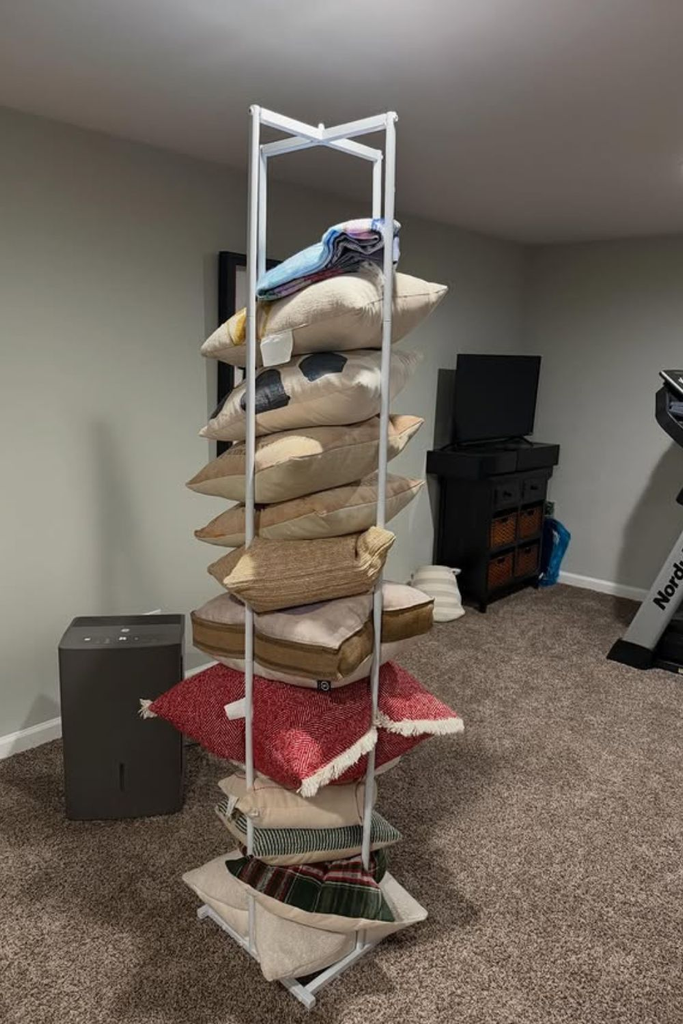
When floor space is limited, I like looking upward. A tall storage rack can use vertical space that would otherwise remain empty.
I can place several lightweight pillows on the rack without filling an entire chair or section of the floor. It also makes each cushion relatively easy to remove.
I would avoid overloading a narrow rack because a top-heavy setup can become unstable. A sturdy rack with a wide enough base is a better choice.
This idea can work in bedrooms, guest rooms, dressing areas, or even a basement where extra cushions need a dedicated location.
Bed Bench
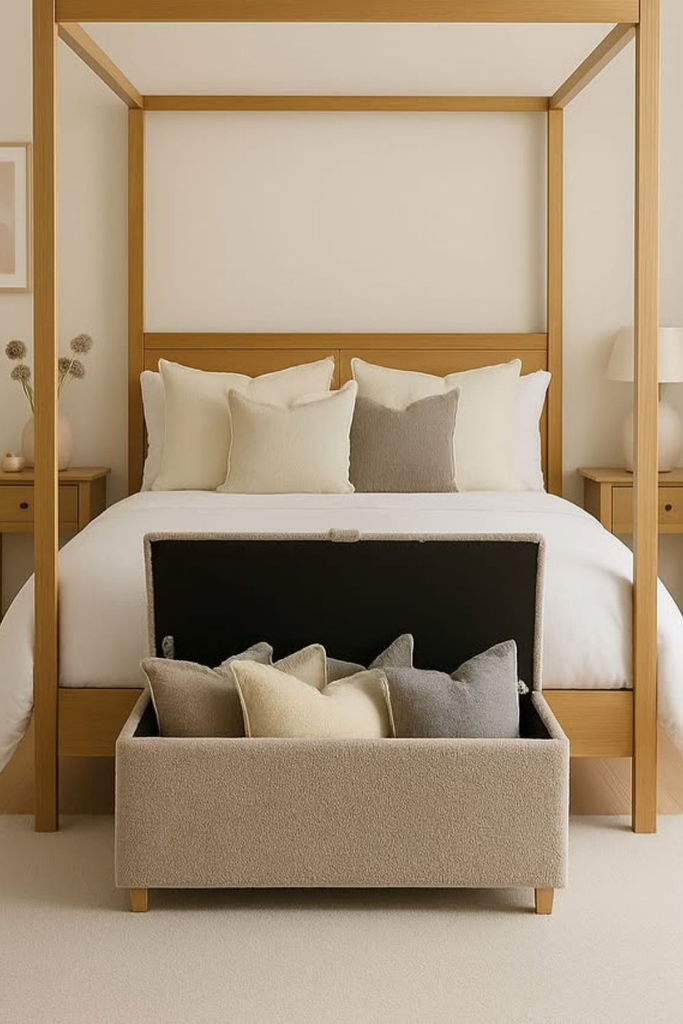
A storage bench at the foot of my bed gives me two useful functions in one piece of furniture. I can sit on it while getting dressed and use the interior for extra pillows.
I particularly like this option when I have several decorative pillows on the bed at night. Instead of moving them to the floor, I can place them directly inside the bench.
I look for a bench with enough interior depth that the pillows can sit naturally without being forced into a tight space.
For bedrooms with limited closet storage, this can be a practical way to add hidden storage without taking up an entire additional cabinet.
Pro Tip: Choose a bench with ventilation or a breathable interior if you plan to store pillows inside it for long periods.
Labeled Bins
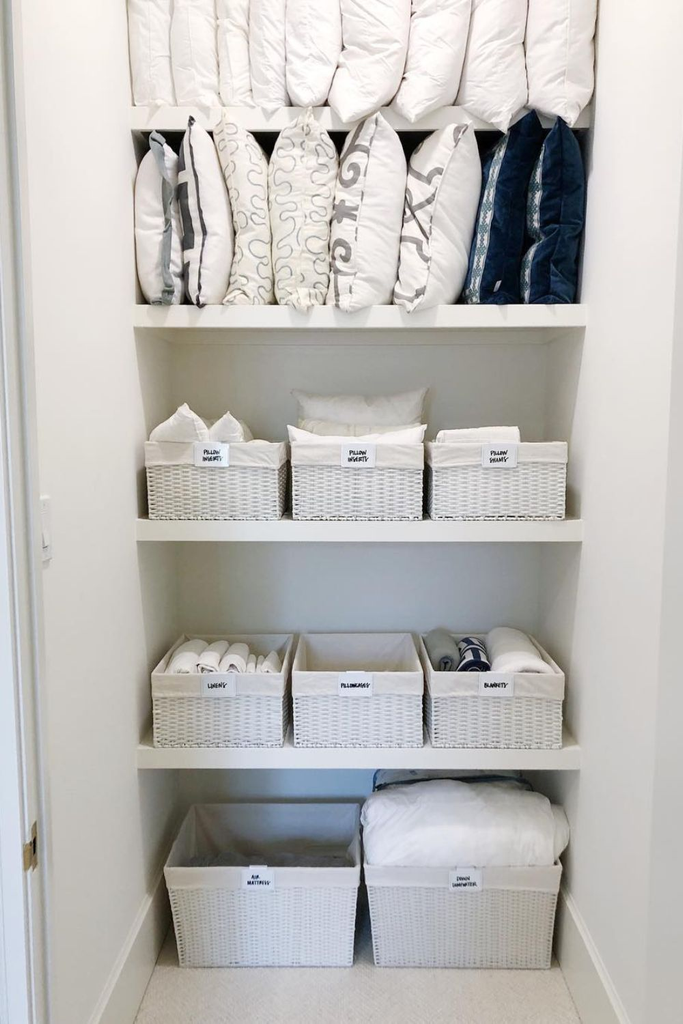
Once I have more than a few types of pillows, labels make a noticeable difference. I can separate guest pillows, seasonal cushions, decorative covers, and other bedding accessories.
Instead of opening every container, I know exactly where to look. This becomes especially helpful when pillows are stored on high closet shelves or in less frequently used areas.
I prefer breathable baskets or fabric containers when possible. For items that need protection from dust, I choose containers designed for fabric storage rather than sealing damp pillows inside airtight plastic.
I also keep frequently used items around eye level and reserve higher or lower storage for things I only need occasionally.
Cube Organizer
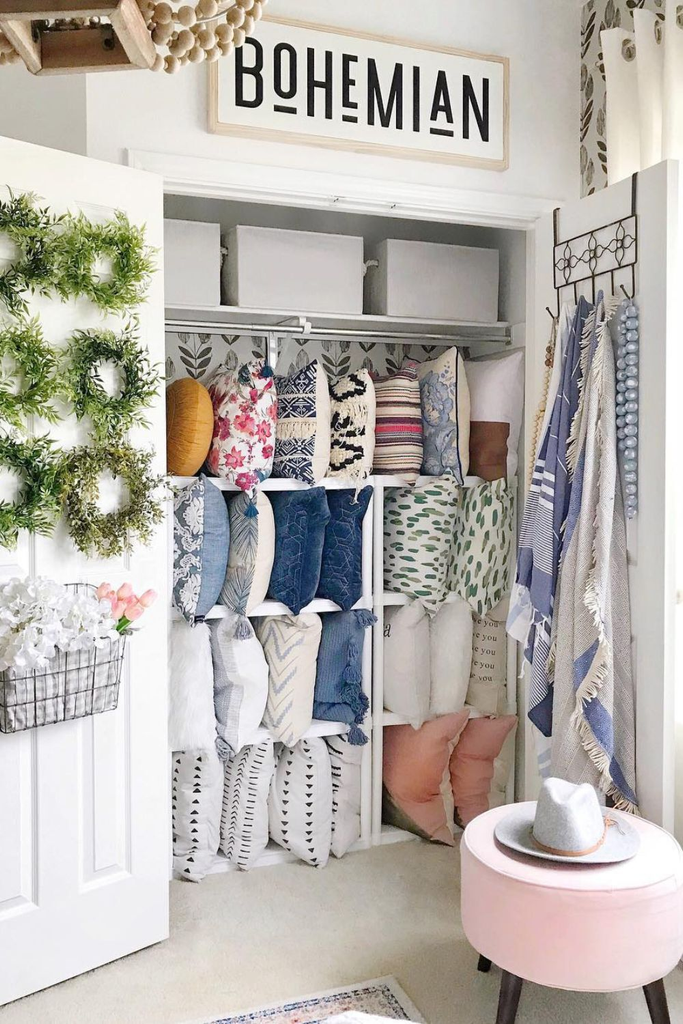
A cube organizer gives each pillow a defined compartment, which can be much easier to manage than one large pile.
I like placing decorative pillows upright inside the cubes because I can see the different designs without pulling everything apart.
This method works particularly well when I rotate pillow covers throughout the year. Each compartment can hold a particular style, season, or room.
The organizer can sit inside a closet or against a wall, depending on how much visible storage I want.
Pro Tip: Measure the cube openings before buying an organizer. Some larger decorative pillows may not fit comfortably into standard cube compartments.
Carry Basket
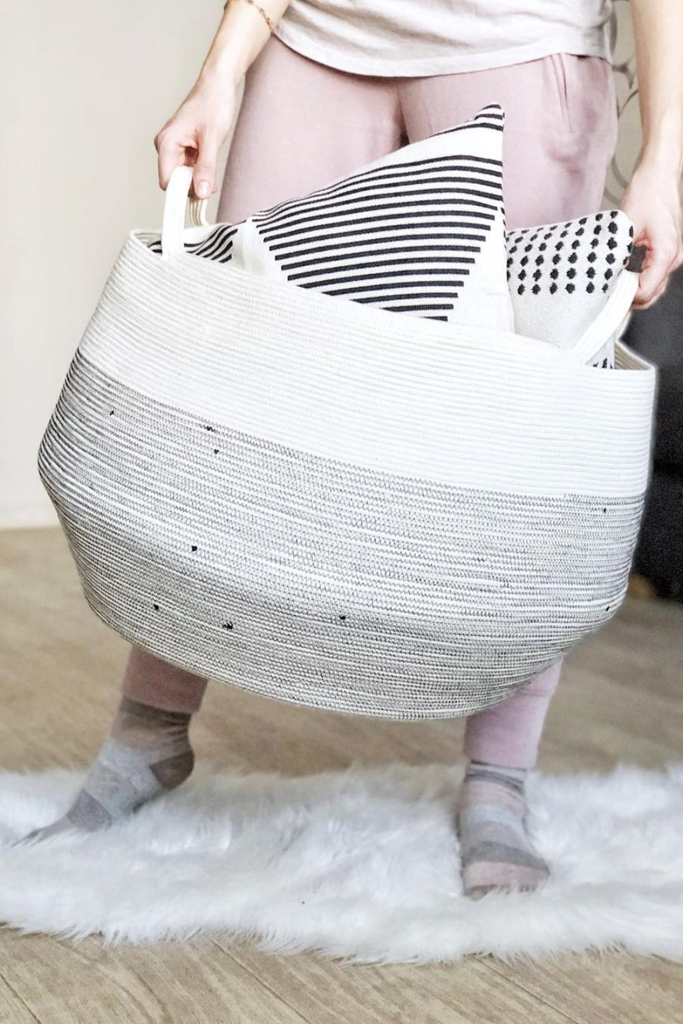
A large basket with handles is ideal when pillows move around the house frequently. I can collect the cushions from the sofa, carry them to the bedroom, and put everything away in one trip.
I prefer a basket that is wide enough to hold pillows loosely. An oversized basket is usually more useful than a narrow one because it reduces the need to squash the cushions together.
A basket beside the sofa can also become part of the room’s decor instead of looking like a storage container.
This is one of the easiest options for everyday pillow storage because there is no drawer to open or lid to remove.
Fabric Bags
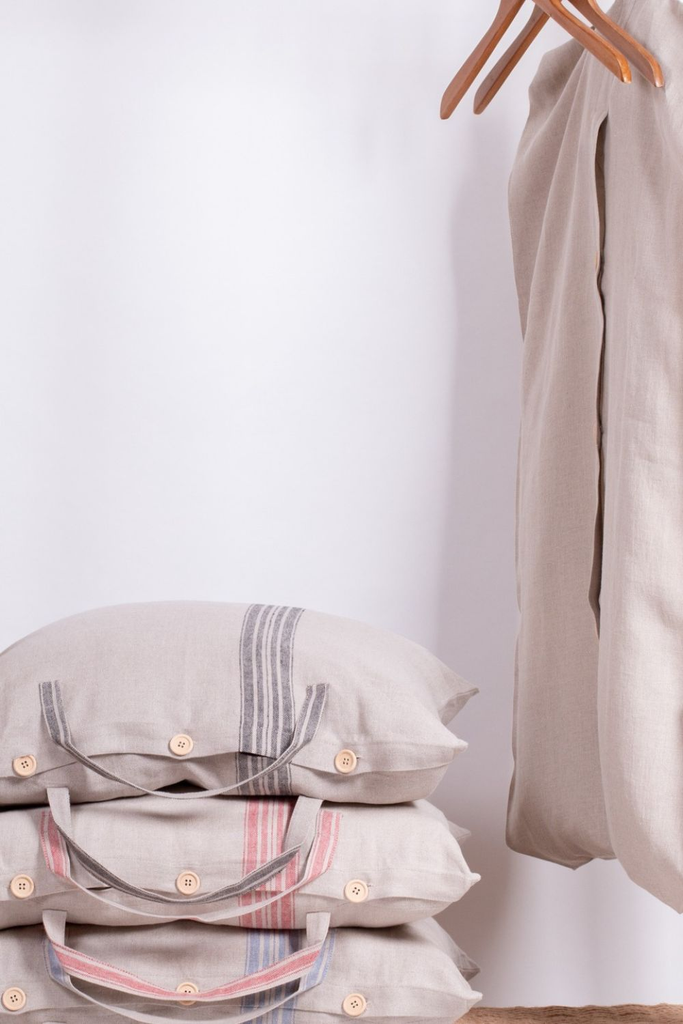
Fabric storage bags are useful for pillows that I don’t need every day, particularly seasonal designs or guest cushions.
I like bags made from breathable materials because pillows should not be stored while damp or in conditions where moisture can become trapped.
Handles make these bags easier to move when I need to reorganize a closet. I can also place them on a shelf instead of taking up valuable floor space.
Before storing a pillow, I make sure it is clean and completely dry. This simple step helps reduce the chance of musty odors developing during storage.
Pro Tip: Don’t pack a fabric bag so tightly that the pillow becomes permanently flattened.
Floating Shelf
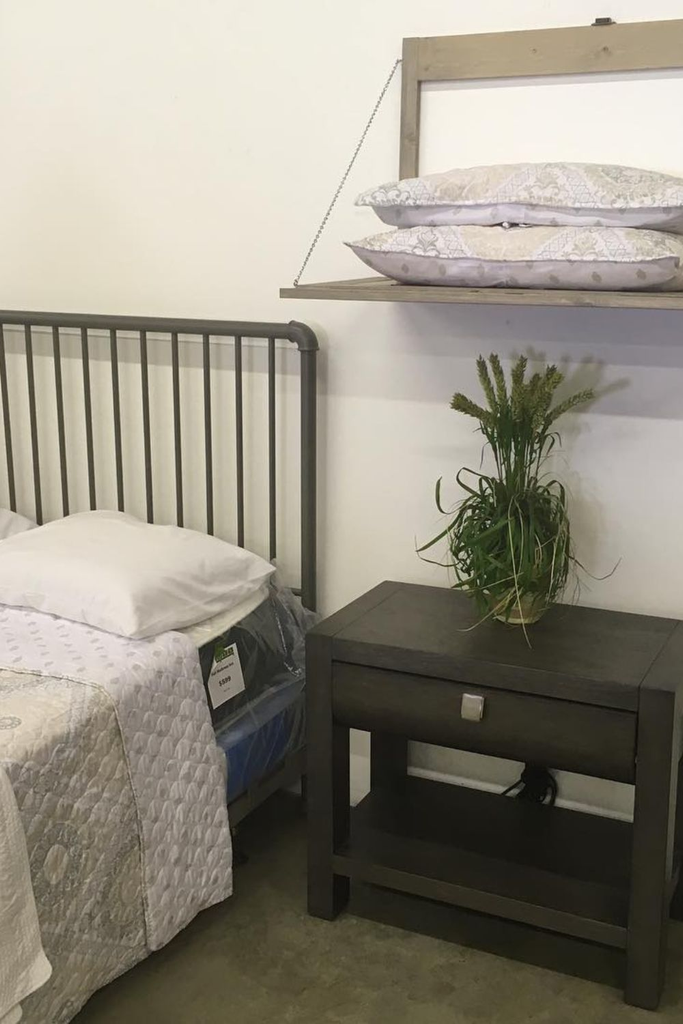
Wall space beside a bed is often overlooked. A sturdy floating shelf can turn that unused area into a convenient place for one or two spare pillows.
I like this idea for guest rooms and small bedrooms because it provides storage without adding another cabinet or table.
The shelf needs to be deep enough to support the pillows securely. I also make sure it is properly anchored to the wall rather than relying on a decorative mounting system that cannot handle the load.
For a cleaner appearance, I usually keep the shelf limited to a small number of pillows instead of treating it like a full closet.
Also read: 25 Mop And Broom Storage Ideas for 2026
Underbed Storage
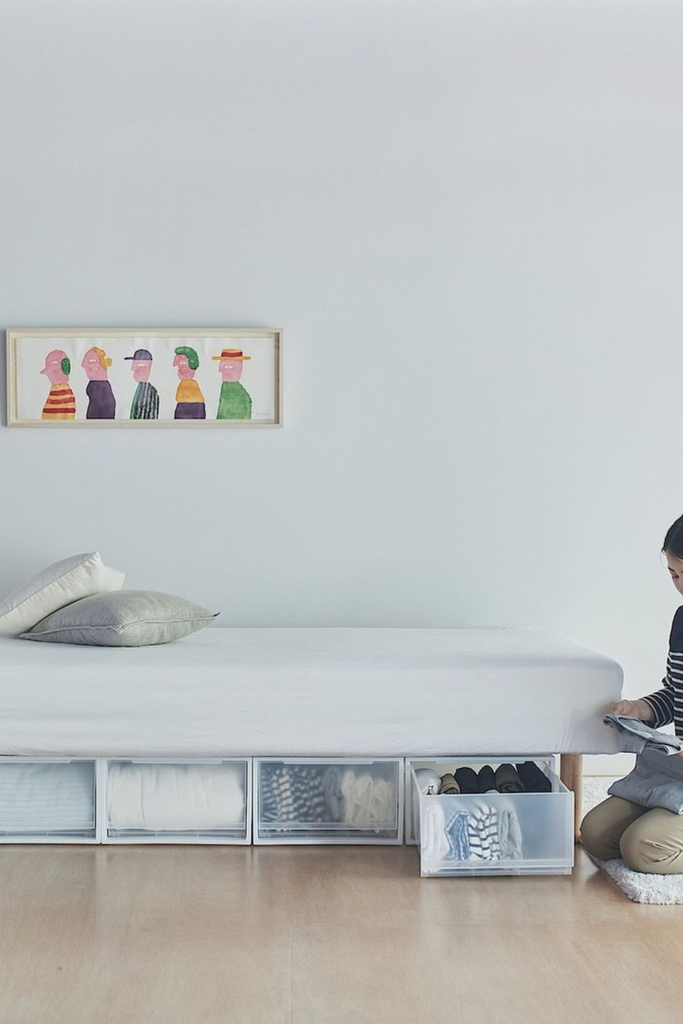
The space beneath a bed can provide a surprisingly useful storage area. I can use shallow containers, drawers, or rolling boxes to keep spare pillows hidden.
Clear containers are helpful when I want to see what is inside without opening everything. Fabric-covered options can work better when I prefer a softer appearance.
I avoid tightly folding or crushing pillows simply to make them fit. Giving them enough room to retain their normal shape is more important than filling every inch.
This storage area is especially useful for guest pillows, holiday cushions, and designs that I only bring out during certain seasons.
Pro Tip: Check under the bed for dust before placing pillows there, and use a covered container if the space is prone to collecting debris.
Rolling Drawer
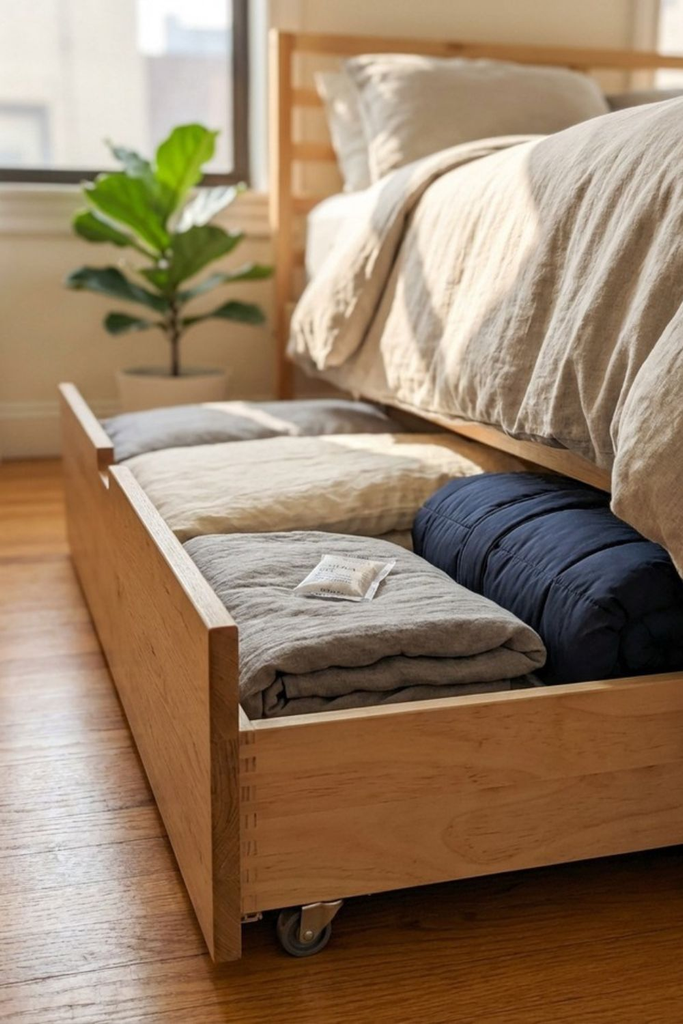
A rolling drawer makes under-bed storage much easier to access. Instead of reaching deep beneath the bed, I can simply pull the drawer toward me.
I like keeping pillows laid naturally inside rather than forcing them into a narrow container. A wide, low drawer can make good use of the entire space beneath the bed.
The wheels are particularly helpful when I need to access stored pillows regularly. For occasional storage, a stationary box may be enough.
This is a good choice for bedrooms where closet space is limited but there is useful clearance beneath the bed.
Vacuum Bags
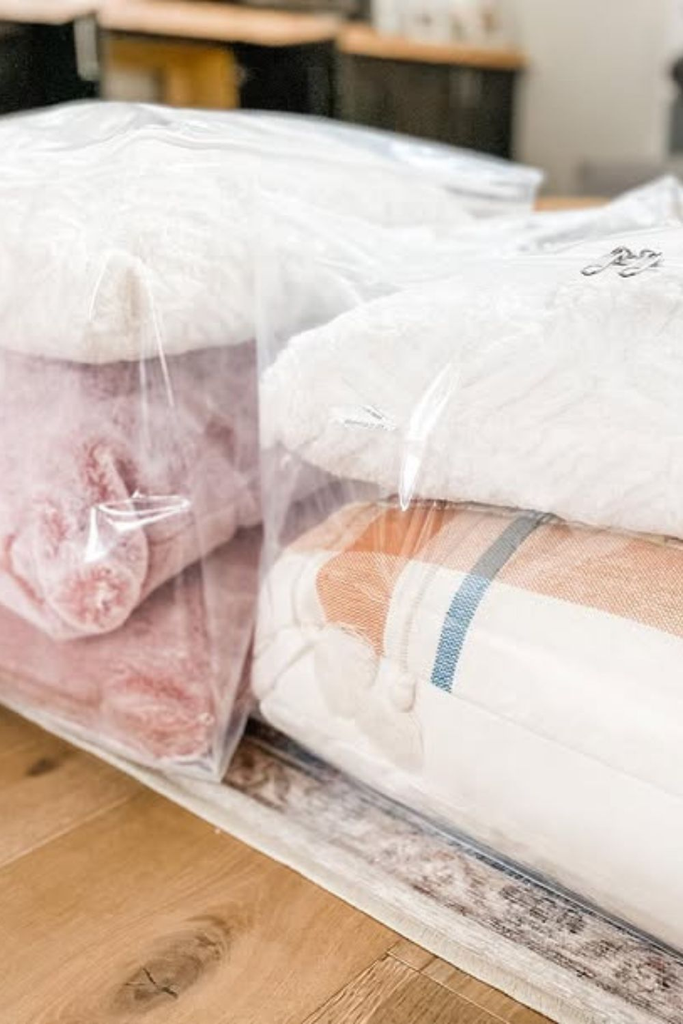
Vacuum storage bags can dramatically reduce the amount of space some pillows occupy, but I use them carefully.
They can be useful for soft, compressible pillows that are stored for a limited period. I would not automatically use vacuum storage for every type of pillow because materials react differently to prolonged compression.
Memory foam and other specialty pillows should be checked against the manufacturer’s storage recommendations before being compressed.
I also make absolutely sure the pillow is clean and completely dry before sealing it. Trapping moisture inside a sealed bag can create problems later.
Pro Tip: Treat vacuum bags as a space-saving option for suitable pillows, not as the default storage method for every cushion in the house.
Stool Stack
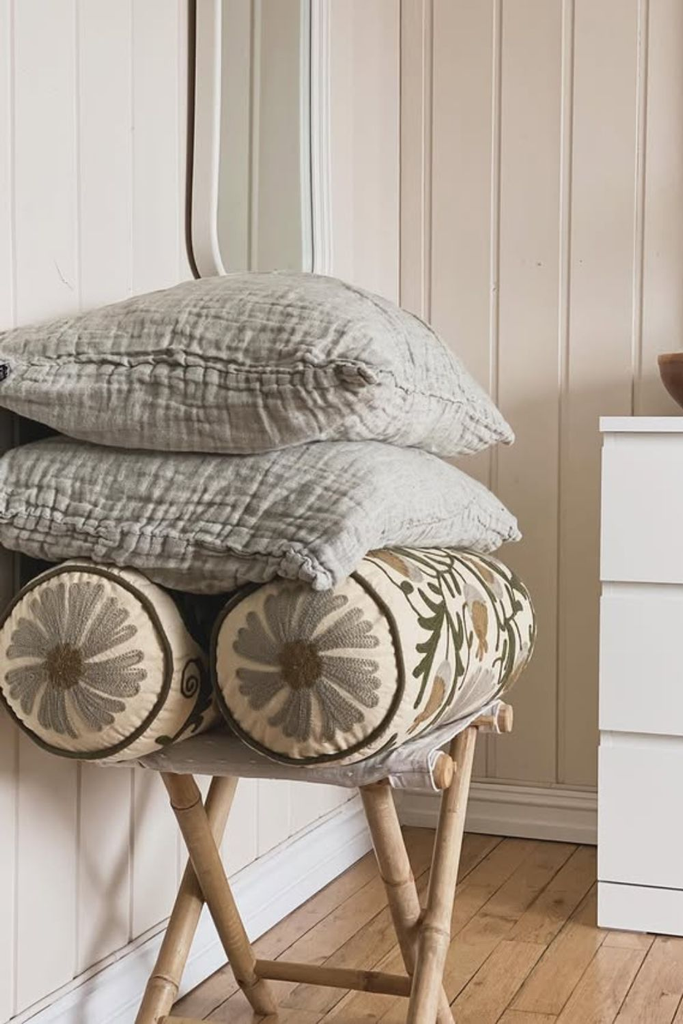
A simple stool can become an unexpected pillow storage spot. If I have a sturdy stool sitting unused in a bedroom corner, I can use it as a small open storage station.
I keep the stack loose enough that the pillows aren’t crushed. Mixing different pillow sizes can also make the stack more stable and visually interesting.
This works particularly well beside a dresser, in an unused bedroom corner, or near a reading chair.
The advantage is that I don’t necessarily need to buy a new storage product. I can repurpose furniture I already own.
Open Shelves
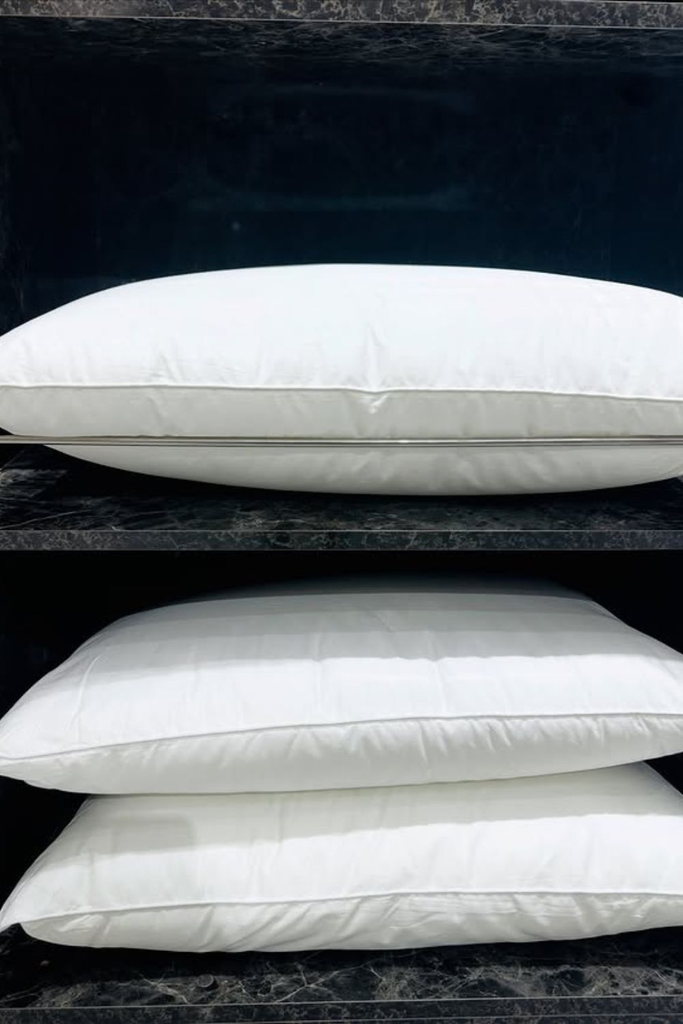
Open shelving gives pillows plenty of visibility and makes it easy to grab the one I want.
I prefer loose, organized stacks instead of pushing too many cushions into a single shelf. This helps prevent the pillows from becoming flattened or difficult to remove.
Deep shelves are useful when I need to store several cushions together, but I still leave enough room to reach the back without pulling out the entire stack.
Grouping similar sizes together gives the shelf a cleaner appearance and makes it easier for me to maintain.
Pro Tip: Store the pillows I use most often between waist and eye level. Reserve harder-to-reach shelves for seasonal or occasional pieces.
Closet Stack
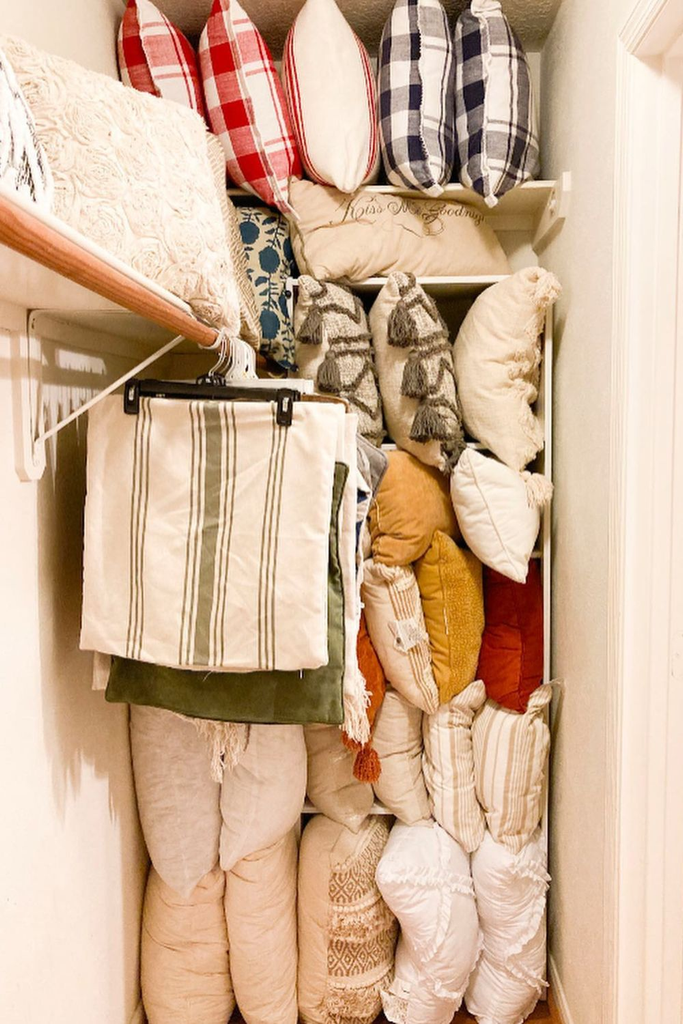
A closet can hold more pillows than I expect when I make better use of its height.
I usually place larger or heavier cushions lower in the stack and lighter pillows above them. This reduces the pressure placed on delicate decorative cushions.
The back corner of a closet can be particularly useful when the main shelves are already occupied.
I don’t try to make every stack perfectly uniform. My main goal is to keep the pillows together, easy to retrieve, and protected from unnecessary crushing.
This approach works well for extra bedding, seasonal pillows, and guest cushions that aren’t part of my everyday routine.
Cabinet Stack
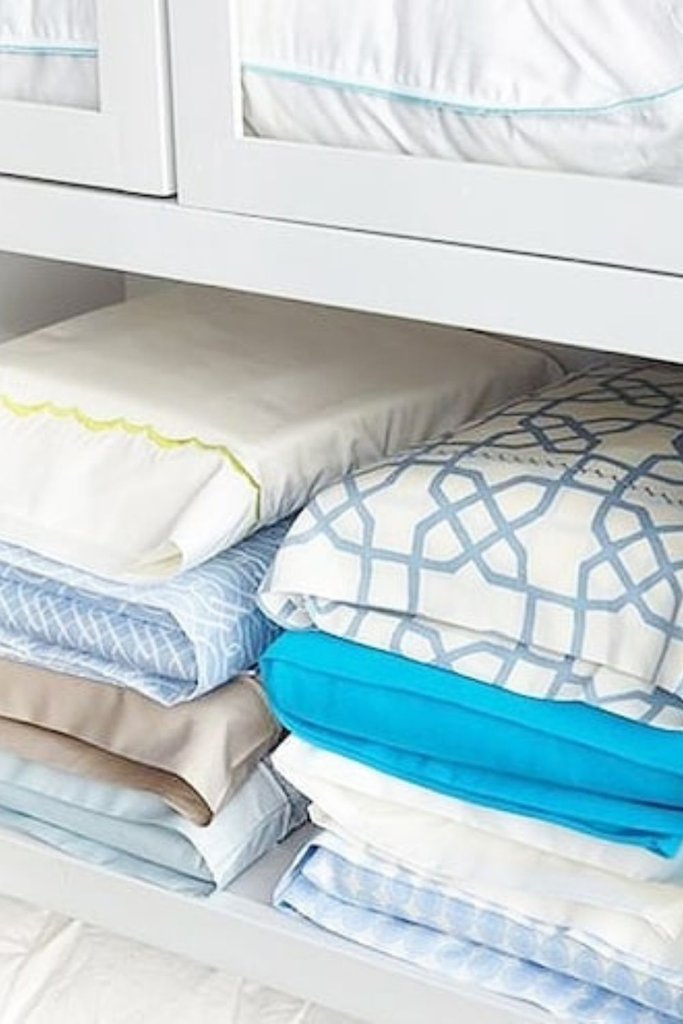
A closed cabinet provides a simple way to keep spare pillows protected from everyday dust.
I can dedicate one shelf to pillows and arrange them by size or purpose. Keeping similar cushions together makes the stack easier to remove without disturbing everything else.
If the cabinet is deep, I avoid pushing pillows too far toward the back. Otherwise, the items I rarely use can become forgotten.
This solution works especially well in bedrooms, hallway cabinets, and linen storage areas where I want the pillows completely out of sight.
Pro Tip: Don’t use a cabinet as pillow storage if it regularly becomes humid or poorly ventilated. A dry storage environment matters more than simply hiding the cushions.
Display Cabinet
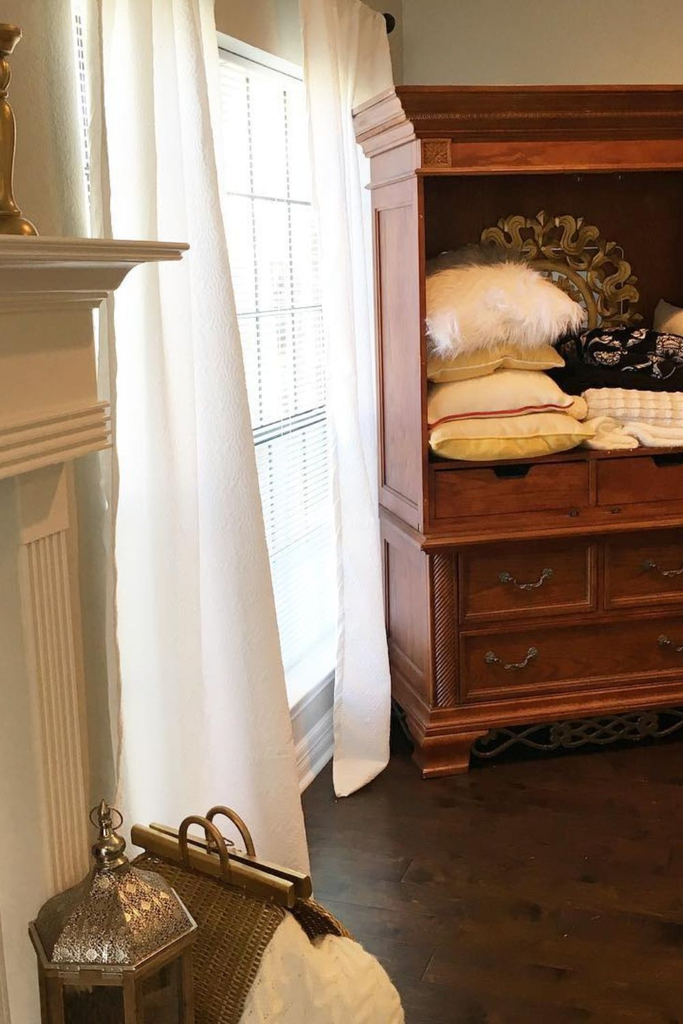
A display cabinet or open hutch can combine decoration and storage in one area.
I can arrange decorative pillows loosely alongside blankets or other fabric accessories so the cabinet looks styled rather than packed.
This works especially well when the pillows have colors or patterns that complement the room. Instead of treating them as clutter, I can make them part of the overall decor.
I like this idea for living rooms and guest rooms where storage needs to remain visible.
The key is restraint. Leaving some empty space around the pillows helps the cabinet look intentional and prevents the display from feeling overcrowded.
Lift Storage
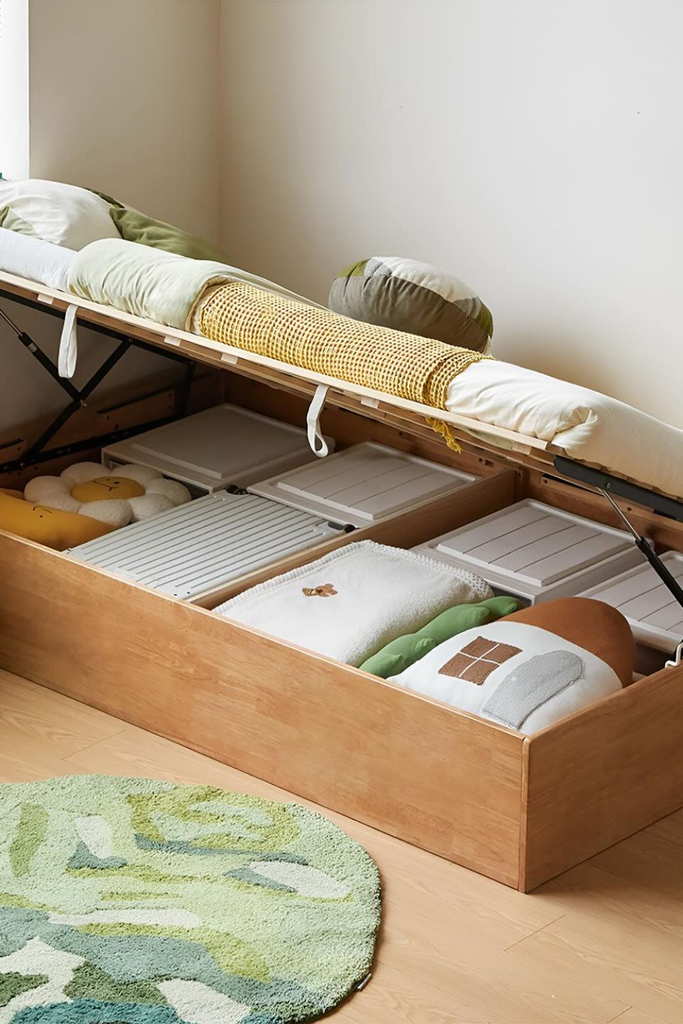
A lift-up bed can provide a large hidden storage area without requiring another piece of furniture.
I can store bulky guest pillows, seasonal cushions, and other soft items underneath the mattress while keeping them completely out of sight.
Instead of throwing everything into one large compartment, I prefer using smaller fabric bins or organizers to divide different types of pillows.
I also avoid packing the compartment so tightly that pillows become compressed. A little breathing room makes it easier to remove individual items and keeps the storage area manageable.
For bedrooms with limited closets, this type of built-in storage can make use of a large amount of otherwise unused space.
Read this next: 30 Bathroom Storage Ideas to Keep Your Space Organized
FAQs
Where should you store pillows when not in use?
I store everyday pillows in places that are easy to reach, such as a basket, storage bench, open shelf, or nearby cabinet.
For seasonal or occasional pillows, I prefer a closet shelf, under-bed drawer, or lift-up bed compartment. Whatever location I choose, I make sure it stays dry and reasonably well ventilated.
What is the best way to store pillows without ruining them?
I try to store pillows in their natural shape rather than forcing them into small containers. Breathable fabric bags, open shelves, cabinets, and spacious storage bins are good options.
I only use vacuum storage when the pillow’s material is suitable for compression and the manufacturer doesn’t advise against it. For foam or specialty pillows, checking the care instructions first is the safer approach.
Conclusion
I’ve found that pillow storage doesn’t have to mean adding another bulky piece of furniture to the room. The best solution is often a space I already have but wasn’t using effectively.
For pillows I use every day, I prefer baskets, benches, open shelves, or nearby cabinets. For seasonal and guest pillows, under-bed storage, closets, fabric bags, and lift-up beds keep them organized and out of sight.
The most important thing is to avoid unnecessary compression, protect pillows from moisture and dust, and choose storage that matches how often I actually use them.
Once every pillow has a designated place, putting the room back together at the end of the day becomes much quicker and easier.



4 Comments