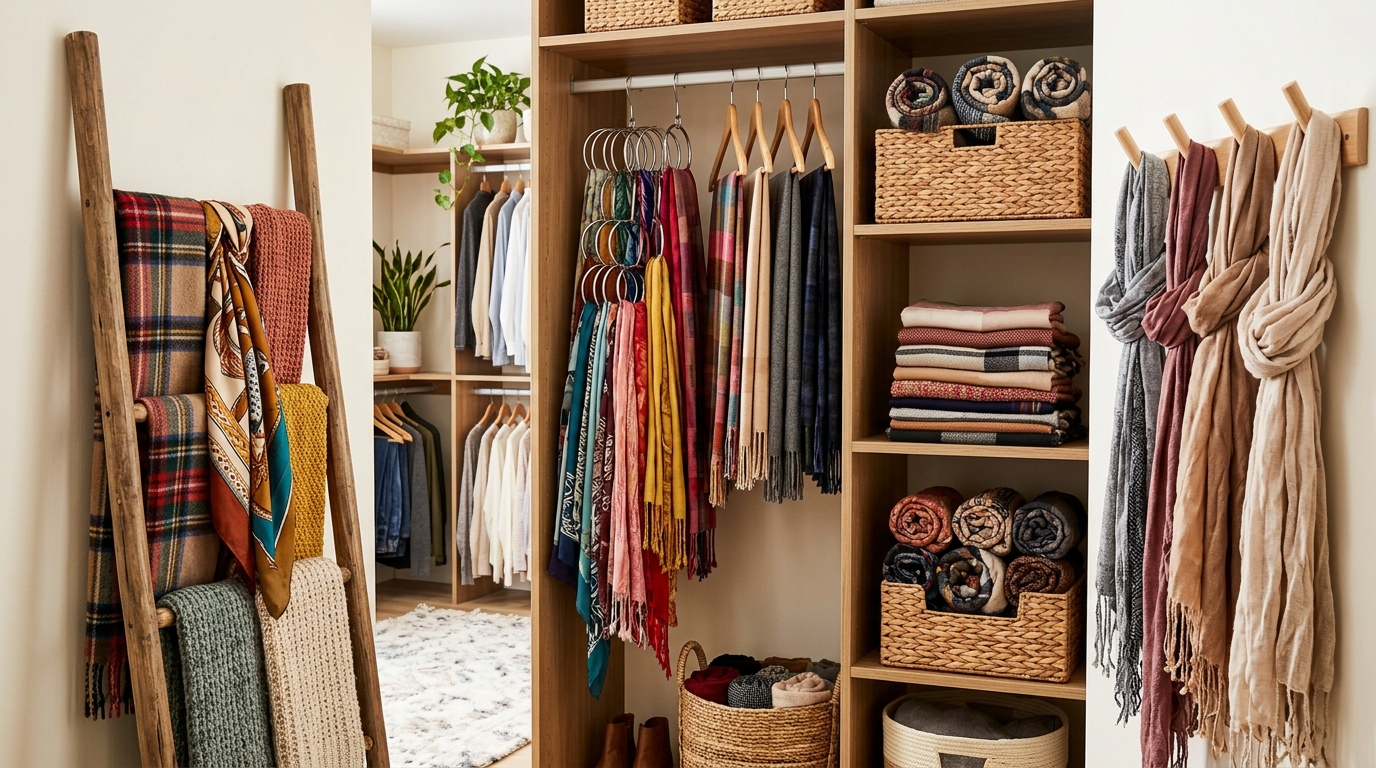
15 Scarf Storage Ideas for 2026
I used to think scarves would be one of the easiest things to organize because they are soft and don’t take up much room. That changed once a few folded scarves turned into a slippery pile and several hanging together became difficult to sort through.
A scarf can look perfectly neat until I pull one from the middle and everything around it shifts. Delicate fabrics can also need more care than a basic clothing hanger provides, while thick winter scarves take up far more space than their size suggests.
I’ve found that the easiest approach is to give each scarf a defined place. The right setup depends on the fabric, how often I wear it, whether I have drawers or closet space available, and how much room I can use.
I can keep scarves much easier to manage when I separate them instead of storing the whole collection in one pile. Hanging rings, tiered racks, drawer dividers, door pockets, open cubes, shelf rods, and simple DIY tube compartments all solve the problem in different ways.
For silk, satin, chiffon, and other lightweight fabrics, I look for smooth storage surfaces and avoid tight folds or rolls. Chunky knits and heavier winter scarves need wider compartments so they aren’t unnecessarily compressed.
Save this for later

Table of Contents
The way I organize them matters, too. A small collection may only need a section for everyday scarves and another for seasonal pieces. A larger collection is easier to search when I group it by color, fabric, season, or frequency of use.
Key Takeaways
- Give individual scarves their own space whenever possible to reduce tangling and messy piles.
- Loose rolls or relaxed folds can work well for many lightweight scarves, depending on the fabric’s care instructions.
- Bulky wool and knitted scarves need wider storage and should not be packed tightly.
- Vertical storage makes good use of limited closet space.
- Smooth hooks, rings, dividers, and finished surfaces help reduce the chance of snags.
- Keep frequently worn scarves where I can reach them without moving other clothing.
- Choose one useful sorting method, such as color, season, fabric, or frequency of use, rather than overcomplicating the system.
- Before installing anything, check door clearance, shelf clearance, available wall space, and the appropriate hardware for the surface.
Related article: 21 Bedside Storage Ideas for 2026
How to Choose the Right Scarf Storage
I don’t think there is one storage method that works equally well for every scarf collection. I start with the space I already have and then consider the fabric and how often each scarf is used.
Small closet: Vertical options make the most sense here. I would look at hanging systems, over-the-door pockets, individual rings, or a slim rod beneath an existing shelf before giving up more floor space.
Drawer space available: Divider boxes and shallow trays make it easier to keep individual scarves visible. I avoid filling the drawer with oversized organizers that leave little usable room for the scarves themselves.
Delicate scarves: Smooth surfaces are important. I use relaxed folds or loose rolls where appropriate and avoid rough wood, exposed wire, sharp edges, and anything that can catch the fabric. When I’m unsure about a particular material, I follow its care label.
Bulky wool or knitted scarves: These need more room than thin fashion scarves. Wider compartments, open shelves, or generously sized drawer sections prevent me from having to force thick fabric into a small opening.
Frequently worn scarves: Open storage is usually more convenient because I can see and grab individual pieces quickly. There’s little benefit in creating a beautiful storage system if I have to unpack it every morning.
Large collection: I find it easier to choose one main category first. Color works well when I have many different shades, while season or fabric can make more sense for a collection that includes both summer and heavy winter scarves.
Rental or limited wall modifications: I would start with over-door organizers, existing closet rods, shelf-based storage, or a freestanding rack. These options can add capacity without requiring permanent wall changes.
Multi-Hook Hanger
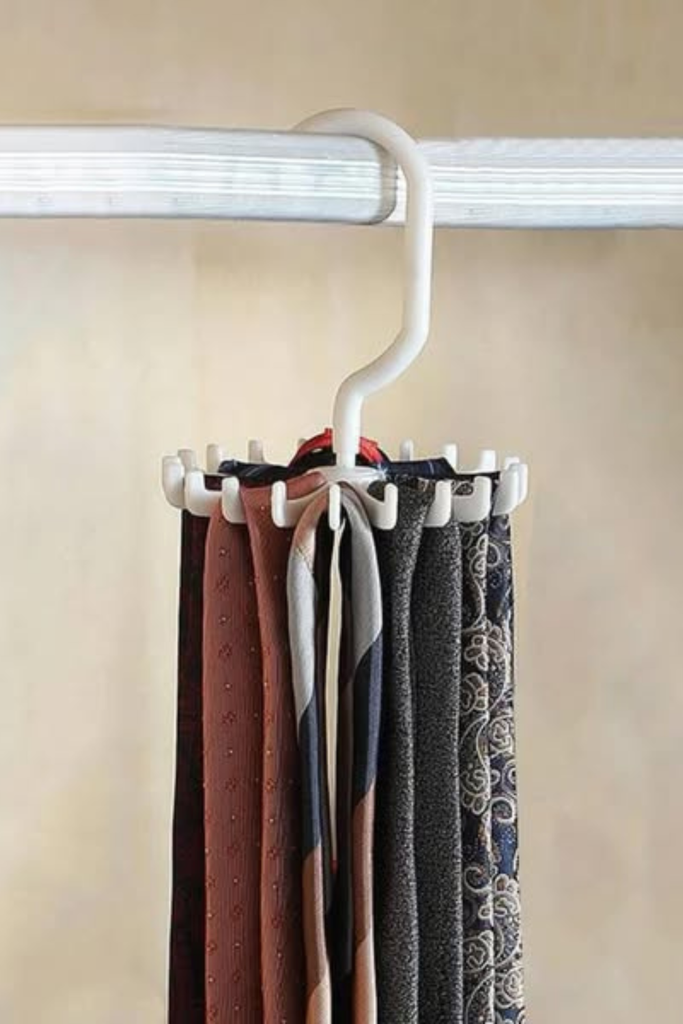
A multi-hook hanger lets me keep several scarves on one section of the closet rod while giving each piece a separate hanging point. I place one scarf on each hook when there is enough room rather than piling several onto the same one.
This is especially useful in a narrow closet where horizontal rod space is limited. The hanger uses vertical space while keeping the scarves close together.
For delicate scarves, I look for rounded, smooth contact points. A narrow opening that requires me to pull fabric through forcefully is not worth using, particularly with slippery or fine material.
Thicker scarves need more breathing room, so I don’t try to fill every hook just because it is available.
Pro Tip: I put the scarves I wear most often on the easiest-to-reach hooks. It saves me from searching through the entire hanger when I need one quickly.
Tiered Loop Rack
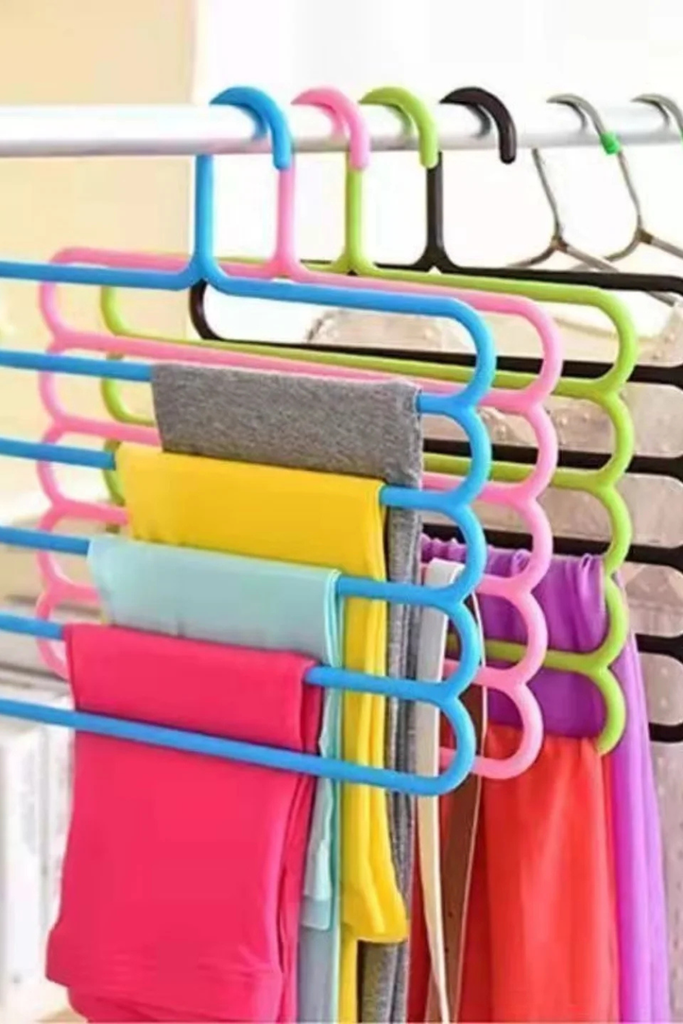
A tiered loop rack is useful when the main problem is a lack of vertical storage rather than a lack of total closet space. Its multiple levels let me use the height around one section of the closet rod.
I place individual scarves through the separate loops or bars and leave enough room for thicker pieces to sit naturally. This gives me more storage capacity without creating one crowded horizontal row.
I particularly like this approach for a larger collection of lightweight scarves. Heavy winter scarves can make a tiered system bulky, so I would check the rack’s construction and weight capacity before loading it heavily.
The main advantage here is vertical capacity. It makes better use of the space below the closet rod instead of spreading scarves across several hangers.
Drawer Divider Boxes

A deep drawer can become difficult to use when scarves are simply folded and stacked. Divider boxes create individual sections so I can separate the collection rather than digging through one fabric pile.
I usually roll lightweight scarves loosely or stand them upright when the fabric and drawer allow it. Seeing several pieces at once makes it much easier to choose one without disturbing the others.
Before buying dividers, I measure the drawer’s width, depth, and usable height. I also check how much space the dividers themselves occupy. An organizer that takes up too much room can actually reduce the drawer’s useful capacity.
Seasonal scarves can have their own section, or I can separate everyday pieces from those I only wear occasionally.
Rolled Tray System

A shallow tray inside a wide drawer gives each scarf a defined compartment while keeping the collection visible from above. I find this more useful than a deep container where scarves disappear underneath one another.
For suitable fabrics, I use relaxed rolls rather than tightly winding the material. With delicate scarves, I pay attention to the care label and avoid assuming that rolling is appropriate for every fabric.
The shallow compartments make patterns and colors easy to identify. I can usually spot the scarf I want without unfolding several others first.
I would avoid making the tray too deep. The purpose is quick visual access, so a compartment that hides the scarf underneath another layer defeats the point.
Door Pocket Organizer
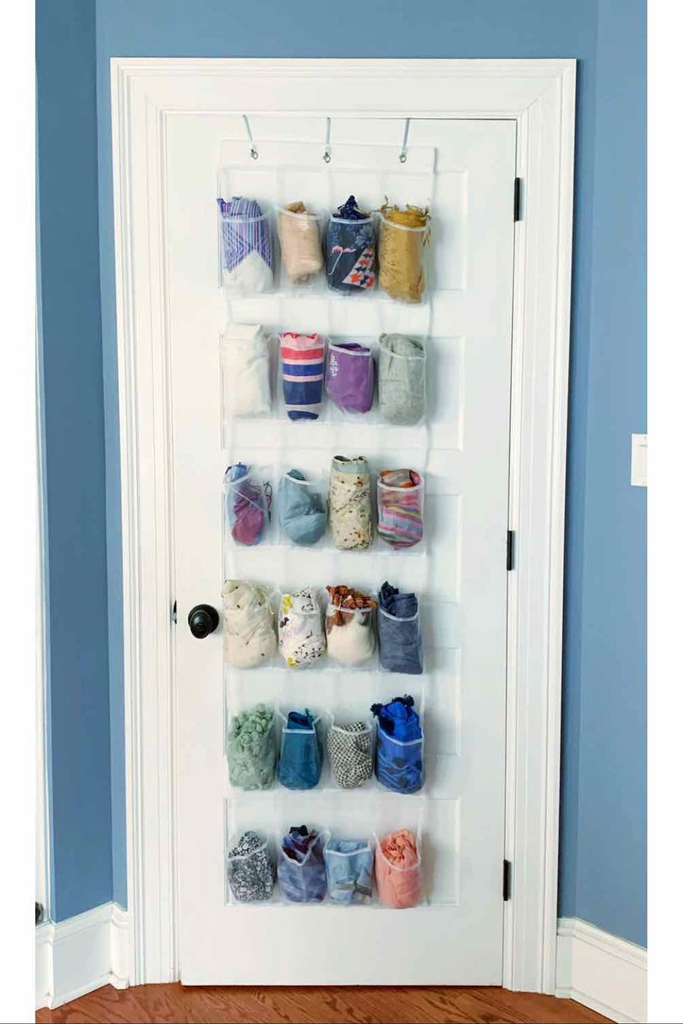
An over-the-door pocket organizer can turn otherwise unused door space into scarf storage. I like clear or open-front pockets because I can see what is inside before reaching for anything.
This works particularly well for lightweight scarves and for small rooms where closet rod space is already full. Each scarf can have its own pocket, or similar pieces can share a compartment if the pocket is large enough.
Before installing one, I check that the door still closes comfortably with the organizer attached. I also consider the added weight and use hardware or a hanging system appropriate for the door and organizer rather than assuming every door can support the same load.
For renters, this can be a practical starting point when permanent wall installation isn’t desirable.
Color-Sorted Cubes
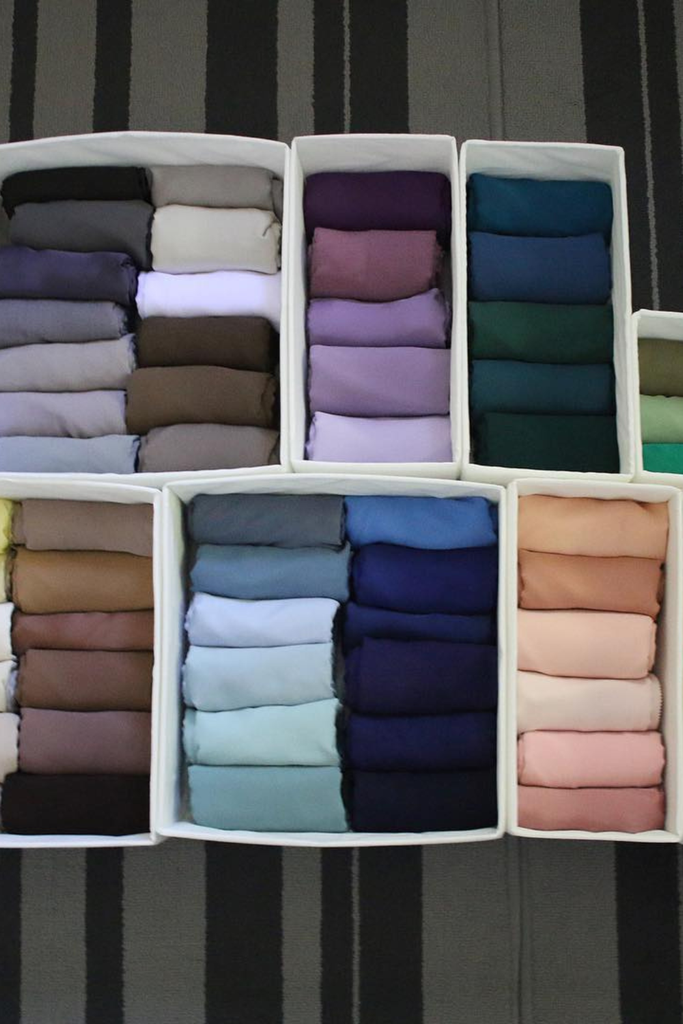
If I already have cube shelving or a wardrobe unit, I can turn one or more compartments into scarf storage. Sorting by color makes sense when I have enough scarves that finding a particular shade has become difficult.
I use loose rolls or upright placement instead of creating a tall, unstable stack. That way, removing one scarf doesn’t require taking several others out first.
For seasonal collections, I might combine color sorting with a separate winter or summer section. I don’t try to use every possible category at once because that can make a simple storage system harder to maintain.
Pro Tip: If I most often search for scarves by color, I sort by color first. It is usually more useful than organizing by fabric when I’m trying to match a scarf to an outfit.
Ring Bar Hanger

A ring bar hanger uses a sturdy hanger fitted with individual rings. I thread one scarf through each ring, giving the scarves separate openings while keeping the entire group on one hanger.
The hanger-based format makes this particularly useful in narrow wardrobes. Instead of installing a separate rack, I can use the existing closet rod.
I inspect the rings before using them with delicate fabrics. Smooth edges and rounded seams are preferable to rough metal or sharp joins that could catch fibers.
Because heavier winter scarves can add up quickly, I also check the hanger’s construction and avoid overloading it. This system is better suited to a manageable group of lightweight or medium-weight scarves.
Also read: 20 Glove Storage Ideas for 2026
Freestanding Rack Display

Sometimes the simplest way to create more scarf storage is to move a portion of the collection outside the closet. A slim freestanding garment rack can provide hanging space without requiring a wall installation.
I would use this mainly for scarves that are in regular rotation. Open storage makes them easy to see and grab, but it also exposes them to more dust than an enclosed drawer or cabinet.
Slim hangers help keep the rack from becoming crowded. I also position the rack away from doorways, narrow walking paths, and heating vents so the storage doesn’t create a new household problem.
For scarves that won’t be used for a while, enclosed or covered storage is usually more practical. A light cover can help limit dust when appropriate.
Wooden Hole Hanger
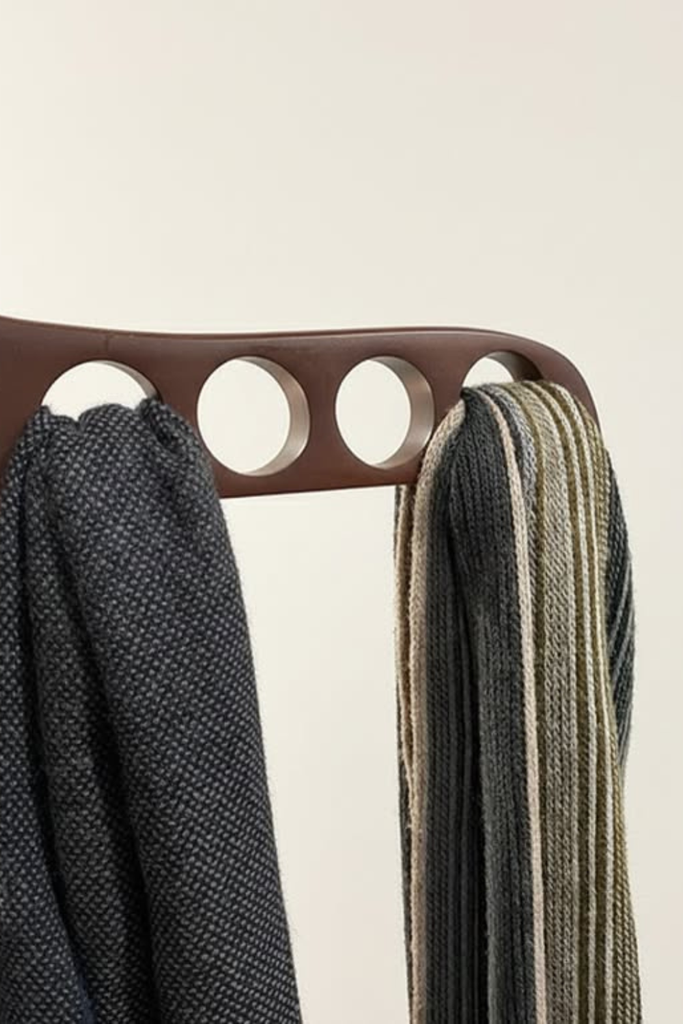
A wooden hanger with large cut-out openings works especially well for thick scarves that don’t fit comfortably through small rings. I place one bulky scarf through each opening rather than forcing several pieces into the same space.
The larger openings are useful for wool and chunky knits because they allow the material to sit without being squeezed into a narrow gap.
I check the finish before putting any scarf on the hanger. Smooth, well-finished wood is preferable to unfinished areas, splinters, or rough edges.
If a scarf doesn’t slide through an opening easily, I don’t force it. Choosing a hanger with larger openings is a better option for thick material.
Multi-Ring Organizer
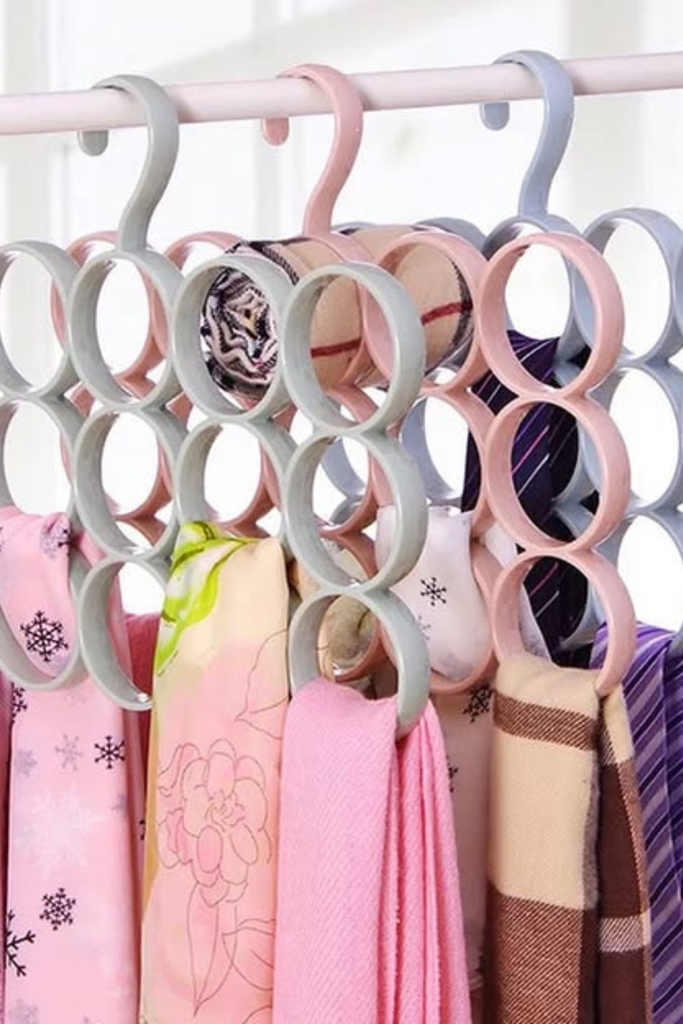
A dedicated multi-ring organizer gives lightweight scarves individual hanging spaces without relying on a standard clothes hanger. I find this particularly helpful for thin scarves that tend to slip from ordinary hangers.
The key difference from a ring bar hanger is the organizer itself: this design is built around multiple ring openings as the primary storage structure rather than adapting a basic hanger with separate rings.
I place scarves through the rings without pulling them tightly. That keeps each piece accessible while avoiding unnecessary pressure where the fabric bends.
Because the rings are open, I can scan the collection quickly. This makes the setup practical for lightweight scarves that I reach for often.
Hanging Cubby Grid
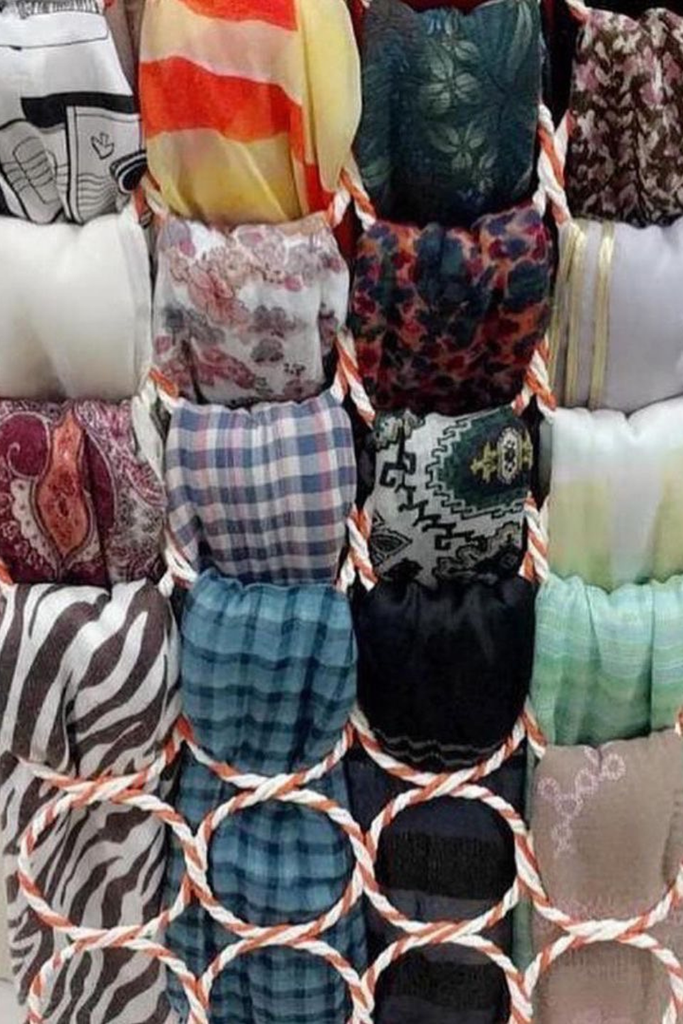
A hanging cubby grid adds multiple compartments to vertical space. I roll suitable scarves loosely and place them into separate cubbies so they don’t become one large drawer-like pile.
I like this arrangement when a bedroom or closet has vertical room but not much furniture space. The individual compartments make colors and patterns easier to see.
If the organizer is designed to hang from an existing rod, I follow its installation instructions and don’t exceed its intended load. If it requires wall mounting, I use hardware suited to the wall type rather than treating all walls as the same.
The system doesn’t have to be permanently mounted in every situation. The important part is that the finished organizer remains stable and doesn’t shift when I remove a scarf.
Circular Ring Hooks

Individual circular ring hooks give me a flexible system that can grow as my scarf collection changes. Instead of committing to one large organizer, I can add or reposition hooks as needed.
I generally give each scarf its own hook when space allows. That makes the system especially useful for scarves I wear regularly because I can remove one without disturbing the rest.
Smooth, rounded surfaces are important here, particularly for lightweight fabrics. I avoid hooks with exposed seams or edges that could catch material.
I also install the hooks at a practical height. If I have to stretch or reach awkwardly every time I want a scarf, the storage isn’t as useful as it looked on paper.
The biggest benefit is flexibility. I can start with a few hooks and expand the arrangement later instead of buying a large storage system for a collection that may change.
Shelf Rod Display
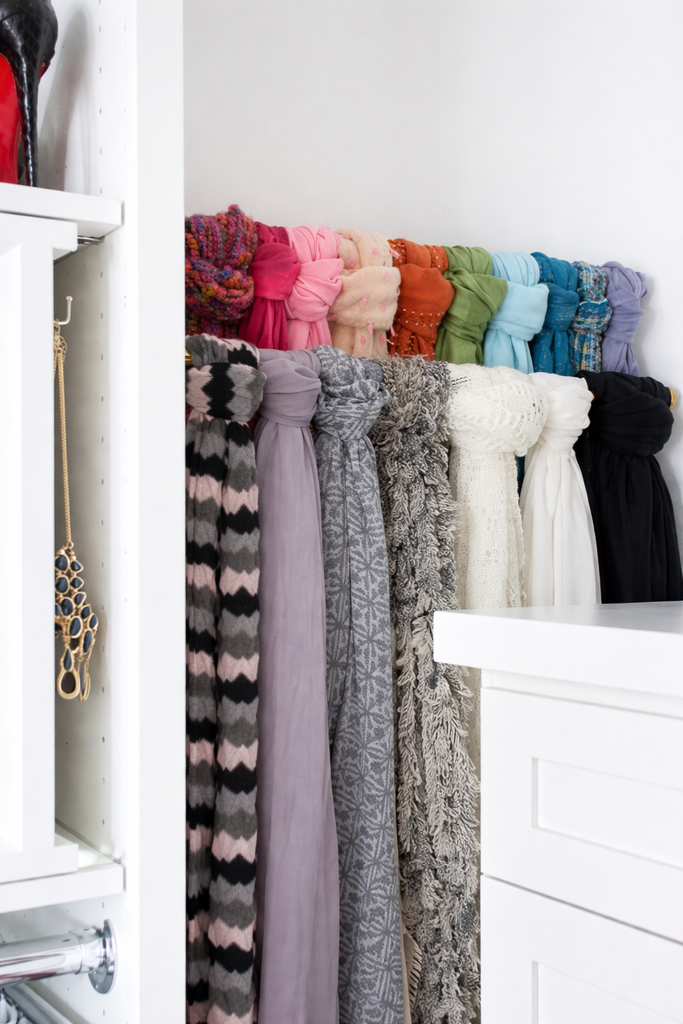
A slim rod beneath an existing closet shelf can turn unused vertical clearance into scarf storage. I like this option because it works with space that might otherwise sit empty.
Depending on the scarf and rod design, I can drape scarves over the bar or use rings to create separate spaces. Grouping similar colors together can also make the collection easier to scan.
Before installing the rod, I measure the space between the shelf and the clothing or storage below it. The scarves need enough clearance to hang without interfering with other items.
I also secure the rod according to the manufacturer’s instructions and the surface being used. I wouldn’t rely on unsuitable adhesive alone for a setup carrying a significant load.
Ladder Style Rack
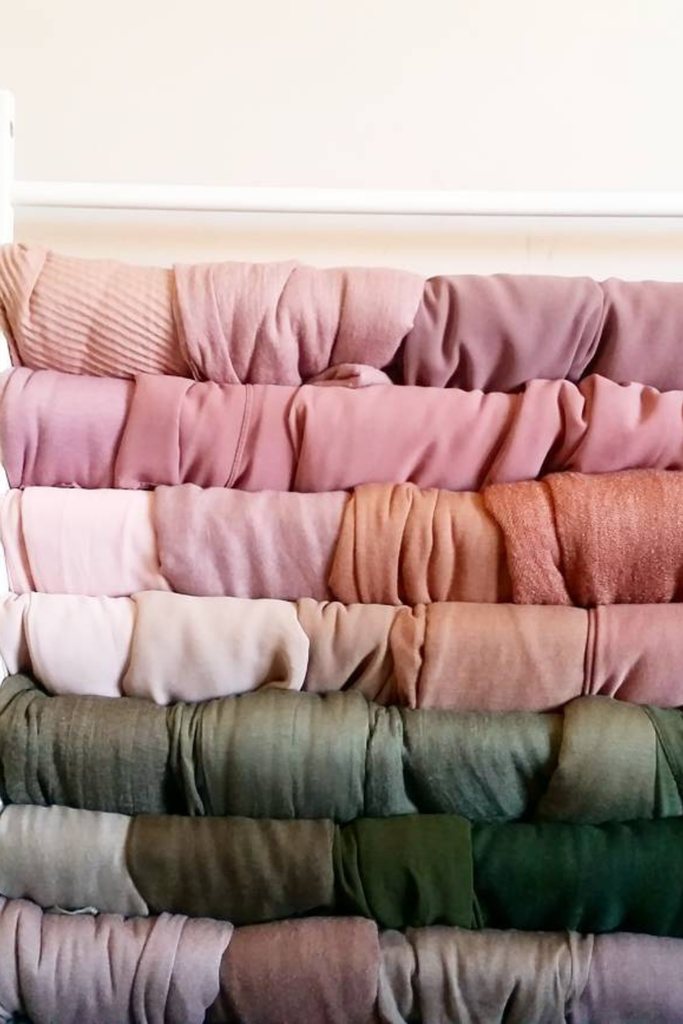
A narrow ladder-style rack can provide scarf storage when I have an unused wall section but don’t want a wide cabinet or shelf. I fold scarves over the rungs, keeping similar weights together where practical.
The narrow footprint makes it useful in bedrooms and dressing areas where floor space is limited. It can also keep frequently worn scarves visible instead of hiding them in a drawer.
Stability matters more than appearance. I position a leaning rack on a stable surface and keep it out of the main walking path. If the design or location calls for additional securing, I follow the manufacturer’s instructions.
For delicate scarves, the rungs should have a smooth finish. Rough or unfinished wood can catch fine fibers, so I would smooth or cover a questionable surface before using it.
PVC Tube Organizer
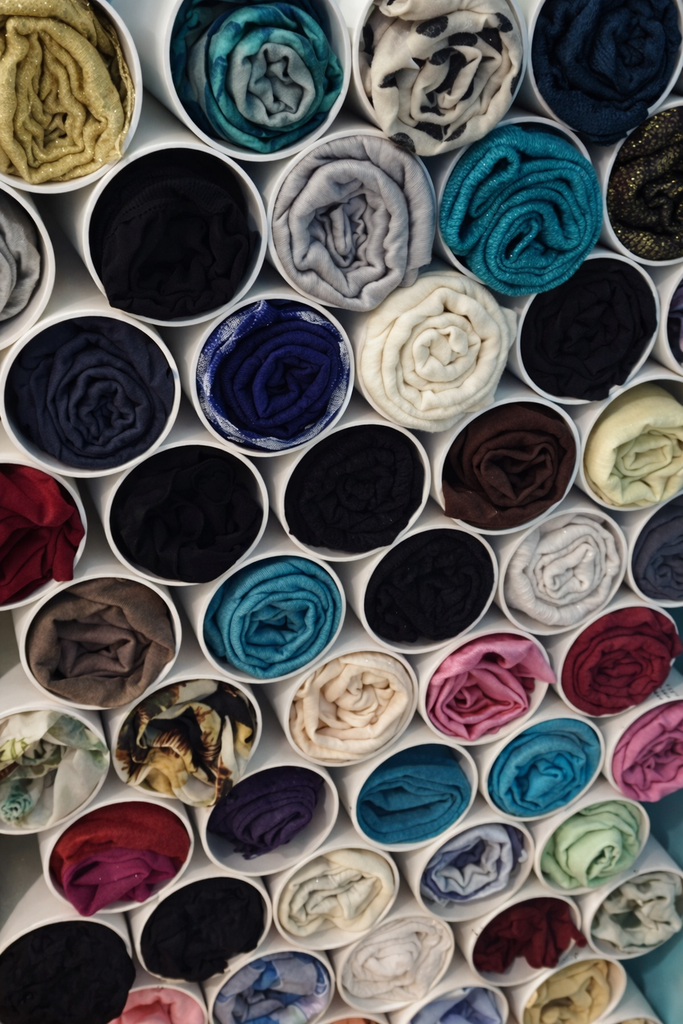
Short sections of PVC pipe can be turned into individual scarf compartments inside an existing shelf or cubby. I like this as a simple DIY option when I want defined storage without buying a specialized organizer.
I measure the shelf first and choose tube sections that fit the available space. Each scarf can be rolled loosely and placed in its own compartment, making the collection easy to scan.
The cut edges need attention before fabric goes anywhere near them. I clean the tubes and smooth or deburr every cut edge so there are no rough spots that could catch a scarf.
I also avoid packing too many tubes into a shelf or stacking them in a way that could shift. If the arrangement could slide or fall, I secure or reposition it rather than relying on the weight of the scarves to keep everything stable.
FAQs
How do you store scarves without wrinkles?
I use a loose roll or relaxed fold when it suits the fabric rather than pressing scarves into tight stacks. Repeated sharp folds can leave visible lines, so I vary the fold position when appropriate.
For delicate fabrics, I check the care label before deciding how to store them. Smooth storage surfaces and enough room to remove one scarf without pulling against the others also help.
What is the best way to store scarves in a small closet?
I usually look for vertical space first. Hanging rings, tiered systems, an over-the-door organizer, or a slim rod below an existing shelf can add storage without using much additional floor space.
If drawers are available, dividers or shallow compartments can keep scarves visible and easier to reach.
Should scarves be rolled or folded?
Either method can work, depending on the fabric and the available storage space. I use loose rolls when I want to see individual scarves in a drawer or cubby, while a relaxed fold can make more sense for some larger pieces.
I avoid very tight rolls and repeated sharp folds, especially when the care instructions call for gentler handling.
How do you store bulky winter scarves?
I give thick wool and knitted scarves more space than lightweight scarves. Wide drawer sections, open cubbies, shelves, and generously sized compartments can prevent unnecessary compression.
I also avoid forcing bulky scarves through small rings or hanger openings. If the fabric has to be squeezed into the storage, the compartment isn’t the right size.
How do you organize a lot of scarves?
I start with the category that will actually help me find them. For a smaller collection, frequency of use may be enough. With a larger collection, color, season, or fabric can make the storage easier to search.
I don’t think every scarf needs multiple labels or categories. A simple system that I can maintain is more useful than an elaborate one that becomes mixed up after a few weeks.
How do you store delicate scarves?
I choose smooth storage surfaces and avoid rough wood, exposed wire, sharp edges, and damaged plastic. Depending on the fabric, I use a relaxed fold or loose roll rather than compressing it tightly.
Care instructions can vary between fabrics and garments, so I follow the scarf’s care label when it gives specific storage or handling advice.
Read this next: 22 Clothing Organization Ideas for 2026
Conclusion
I’ve found that scarf organization becomes much easier when I stop treating every scarf as if it needs the same type of storage. Lightweight pieces can work well with individual rings, compartments, or loose rolls, while bulky wool and chunky knits need wider spaces and less compression.
For a small closet, I’d start by using vertical space through hanging systems, door storage, or a shelf rod. If I have a useful drawer, dividers and shallow compartments can keep the collection visible without taking up another part of the room.
The best system is the one I can keep using. When each scarf has a clear place and the pieces I wear most are easy to reach, I spend less time searching and have a much easier time keeping the storage neat.





4 Comments