15 Easy But Fun Halloween Party Games For Little Kids
Halloween parties with toddlers, preschoolers, and young children can become wonderfully chaotic in the best way. Costumes, music, treats, crafts, and excited little guests create plenty of energy, so I plan games that are easy to explain and quick to reset.
For this age group, complicated rules rarely add anything. Short turns, simple equipment, and activities that allow children to participate at different ability levels usually make the party easier for everyone.
I also keep a quiet activity available. A child who has had enough noise or running should have somewhere to switch gears without feeling as though they are missing out.
These 16 Halloween party games include active races, creative projects, guessing games, sensory-friendly choices, and quieter activities for toddlers, preschoolers, kindergarteners, and other young children. Balloon tennis, pumpkin painting, picture bingo, ring toss, scavenger hunts, and imaginative games can all be adjusted for different ages.
Save this for later
Table of Contents
Most activities need inexpensive supplies and can be prepared before guests arrive. I recommend combining a few energetic games with calmer choices rather than trying to run every activity in one party. Keeping backup activities ready is also useful if the weather changes or a planned outdoor game is no longer practical.
Key Takeaways
- Choose games with instructions young children can understand quickly.
- Keep active games in a clear, uncluttered space.
- Adjust distances, rules, and equipment instead of expecting every age group to play identically.
- Use picture clues and cooperative play for children who are not reading yet.
- Keep small objects, candy, balloon pieces, and craft supplies away from children who may put things in their mouths.
- Avoid putting blindfolds, string, paper, toilet paper, or costume pieces around a child’s face or neck.
- Offer a quiet activity or break area for children who become overstimulated.
- Prepare supplies and backup games before the party starts to reduce last-minute scrambling.
Related article: 25 Fun Family Games To Play On Father’s Day For Unforgettable Memories
Super Fun Halloween Party Games for Little Ones
When I organize activities for younger children, I try to alternate between high-energy games and activities that let everyone slow down. A simple schedule might include one active game, a craft or seated activity, another movement game, and then a snack or free-play break.
That approach also gives parents and younger children a chance to reset instead of keeping the entire group moving continuously.
1) Balloon Tennis
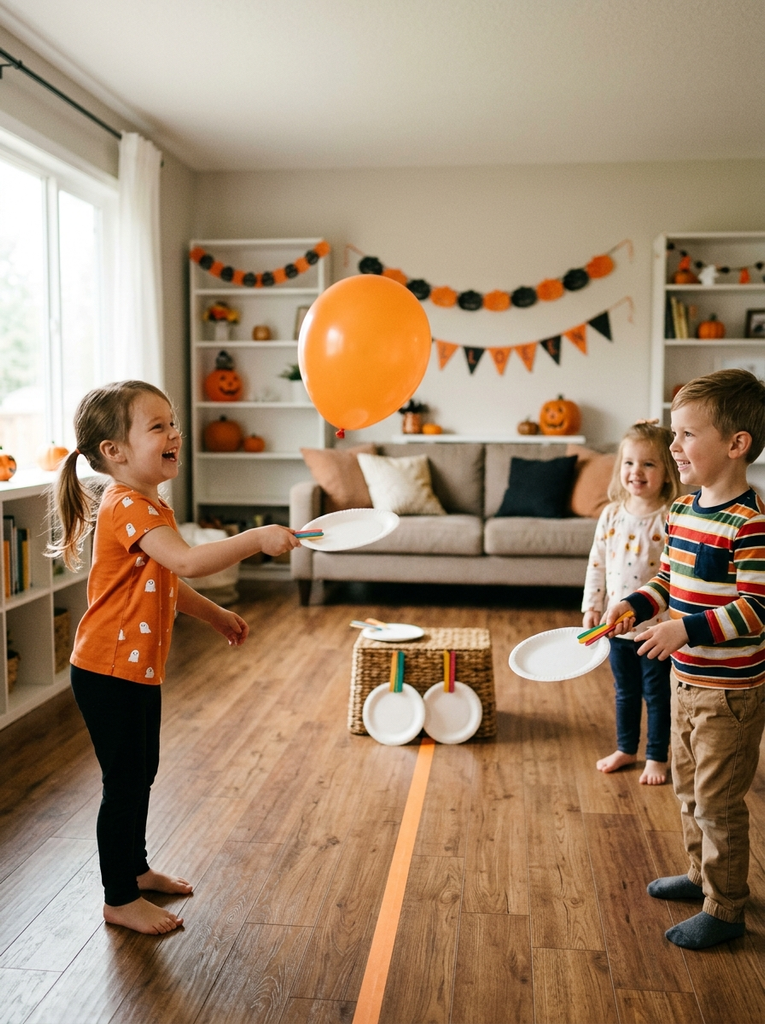
Balloon tennis gets children moving without the speed and unpredictability of a regular ball. It is especially useful for a living room, playroom, or other open indoor area when outdoor weather is unreliable.
What You Need
- Orange, black, white, or Halloween-print balloons
- Paper plates and craft sticks for optional paddles
- Painter’s tape for a center line
If you make paddles, prepare them ahead of time and make sure there are no sharp edges, loose pieces, or exposed ends that could hurt a child.
Set Up
Move furniture and breakable decorations away from the playing area. Put painter’s tape on the floor to mark the middle of the space rather than using a rigid object as a net.
For toddlers, skip the paddles if they are difficult to hold and let them gently tap the balloon with their hands.
How to Play
Divide children into two sides and have them keep the balloon from touching the floor. They can tap it over the center line and continue until it drops.
Keep each round short. With several young children, rotating players between rounds prevents one child from taking over the balloon.
Tip
Balloon games require close supervision because broken or deflated balloon pieces can be a choking hazard. If a balloon pops, stop play and remove every piece before the children continue.
2) Halloween Scavenger Hunt (Indoor)
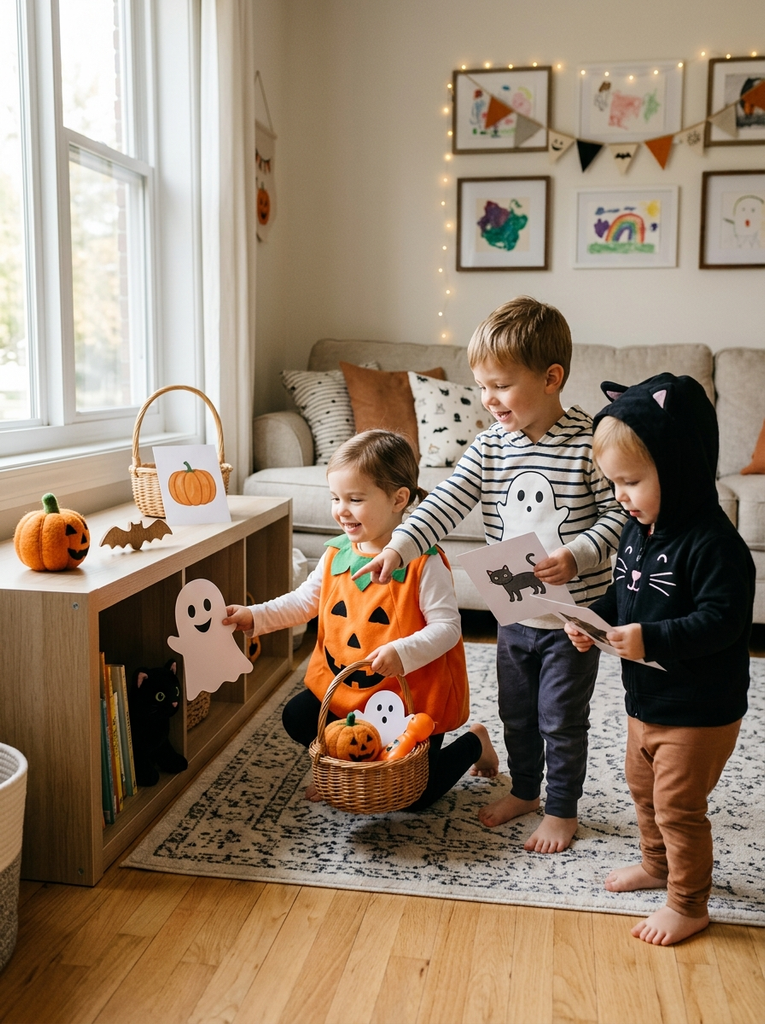
An indoor Halloween scavenger hunt gives children a reason to explore without needing a large outdoor space. For toddlers and preschoolers, the clues should be more about recognition and movement than reading ability.
What You Need
- Simple clue cards
- Halloween-themed objects
- A basket or container
- Optional small, age-appropriate prize
Set Up
Hide Halloween objects in safe, accessible locations around one or two rooms. I avoid hiding anything near stairs, electrical equipment, fragile decorations, or places where children would need to climb.
Picture clues are particularly useful for children who cannot read. Older children can receive simple written clues instead.
How to Play
Read or show the first clue and let the children search together. Once they find the object, move on to the next clue.
For a mixed-age group, pairing an older child with a younger child turns the hunt into a cooperative activity instead of a race.
Why It Works
Children get to practice observation, listening, movement, and basic problem-solving while working toward a shared goal.
Pro Tip: Do the entire hunt before guests arrive. Check every hiding place from a child’s height and remove anything fragile, sharp, tiny, or difficult to reach.
3) Pumpkin Painting
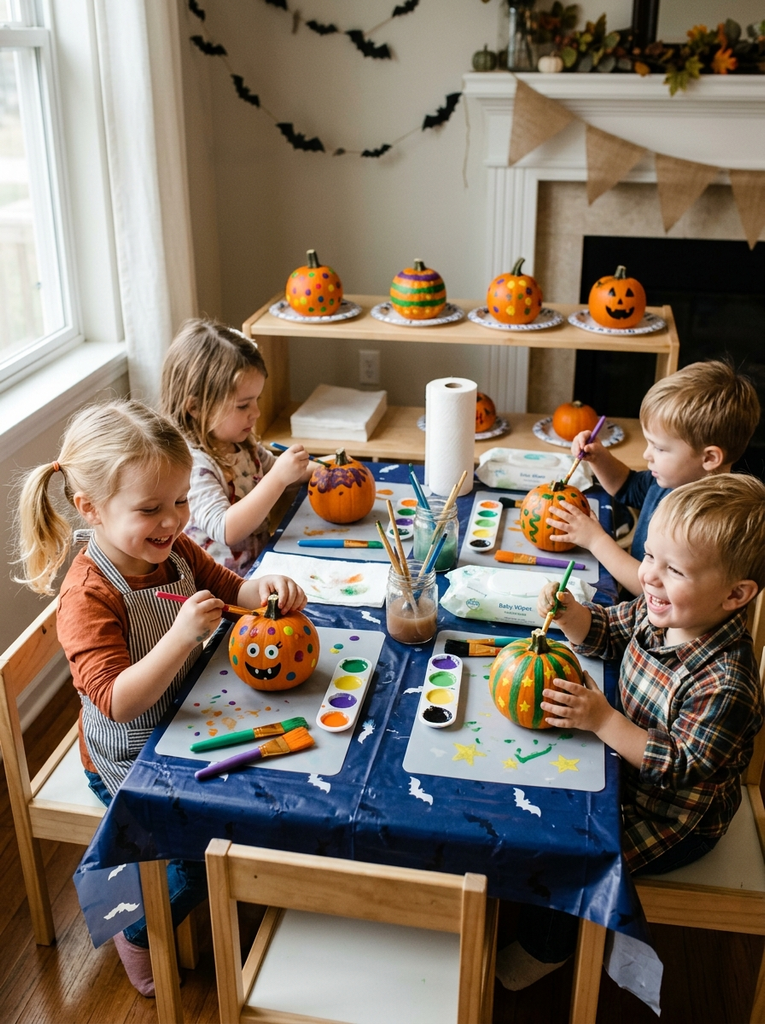
Pumpkin painting gives young children a creative Halloween activity without asking them to handle carving tools. It also doubles as a decoration that families can take home after the party.
What You Need
- Small pumpkins
- Child-safe, non-toxic washable paint or appropriate paint markers
- Brushes
- Aprons or old shirts
- Table covering
- Paper towels and wipes
Set Up
Cover the table and place one pumpkin at each child’s spot. Put out a limited selection of colors and tools to keep the table manageable.
Simple patterns such as dots, stripes, stars, or friendly faces give younger children an easy starting point.
How to Play
Children decorate their pumpkins freely or follow a simple theme such as a friendly monster, silly face, or colorful pattern.
Allow enough drying space before placing the finished pumpkins near food or other party supplies.
Bonus
For toddlers who are still likely to put craft materials in their mouths, choose larger, age-appropriate decorating materials and provide close adult supervision. Stickers and large paper shapes can be alternatives to small embellishments.
Pro Tip: Avoid loose glitter and tiny decorative pieces around very young children. They add cleanup and can create an unnecessary choking risk.
4) Mummy Wrap Race
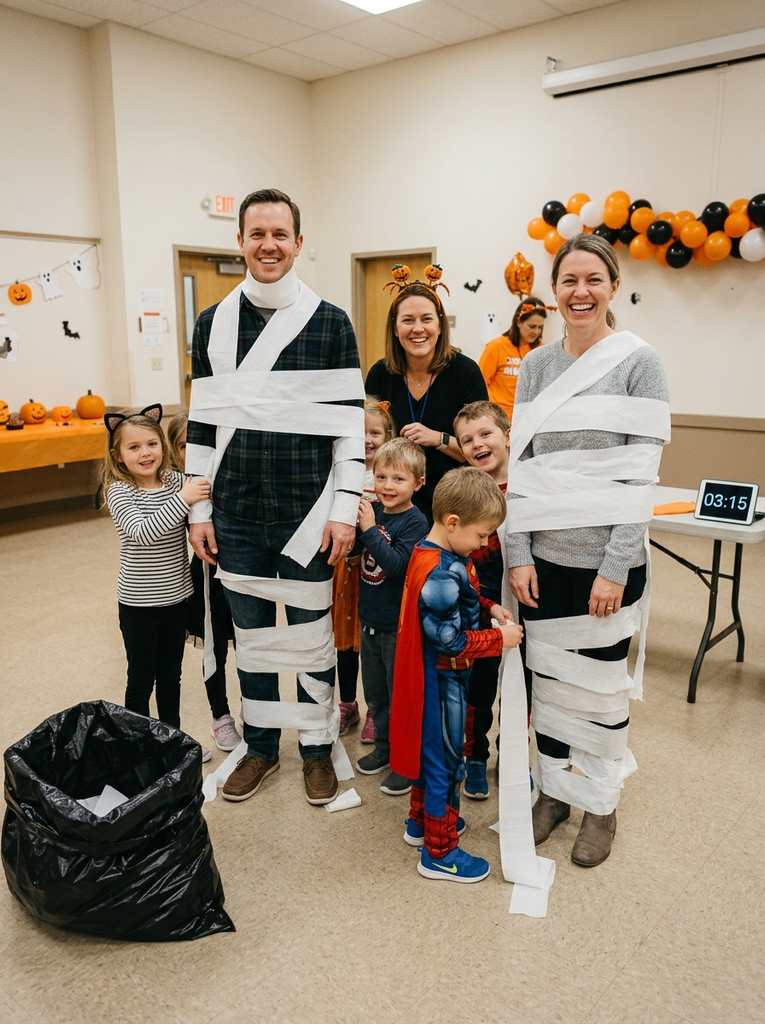
A mummy wrap race is best treated as a team activity rather than a competition between young children. The person being wrapped should always be an adult or an older participant who can comfortably stand still.
What You Need
- Toilet paper or paper streamers
- An adult or older participant for each team
- Timer
Set Up
Divide children into small teams and have each team choose an adult or older child to be the mummy.
Keep the wrapping loose and comfortable. Nothing should be placed around a child’s face or neck, and children should never be wrapped so tightly that movement or breathing could be restricted.
How to Play
Start the timer and let each team gently cover as much of its mummy as possible. After a short round, stop and admire the creations.
For younger children, making the funniest or most creative mummy can be more enjoyable than declaring one team the winner.
Tip
An adult volunteer makes the activity easier to manage because children can concentrate on wrapping without needing to stand still themselves. Have a trash bag nearby for quick cleanup afterward.
5) Halloween Bingo (Picture Version)
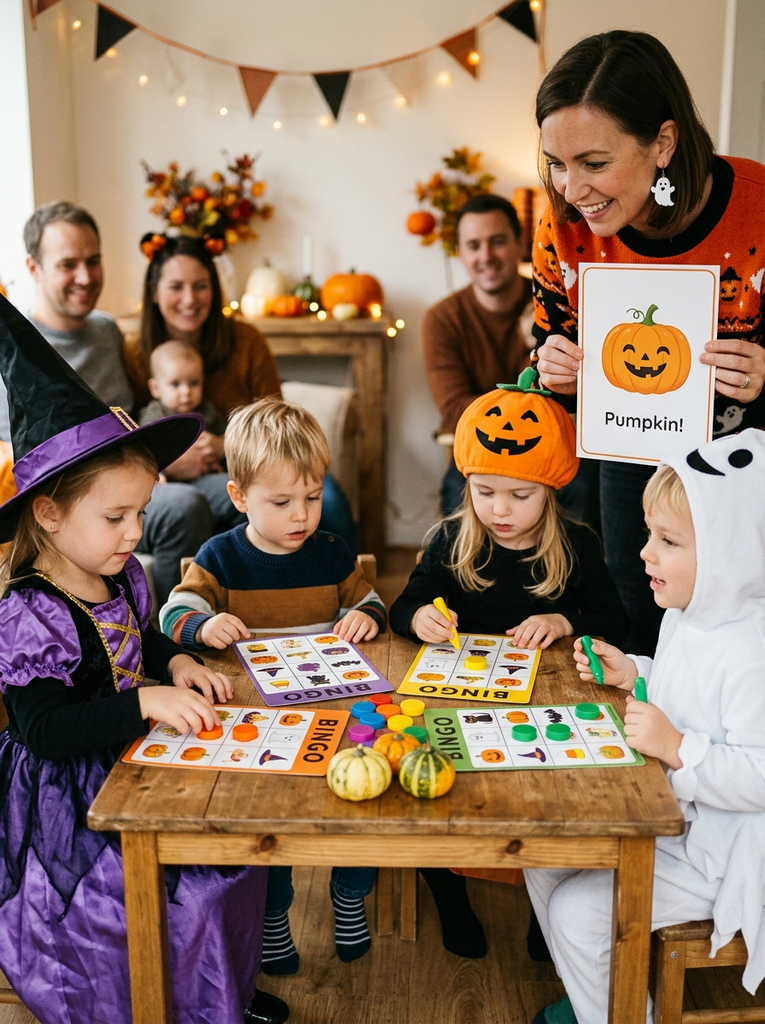
Picture bingo is a useful transition game when children need to move from energetic play to something quieter. Pictures also allow preschoolers to participate without needing reading skills.
What You Need
- Halloween picture bingo cards
- Large, easy-to-handle markers
- Matching caller cards
How to Play
Show one picture at a time and let children find the matching image on their cards.
For younger children, play until they complete one row. Older children can play for a full card if they have the attention span for a longer round.
Use larger markers rather than tiny tokens with toddlers.
6) Candy Corn Counting
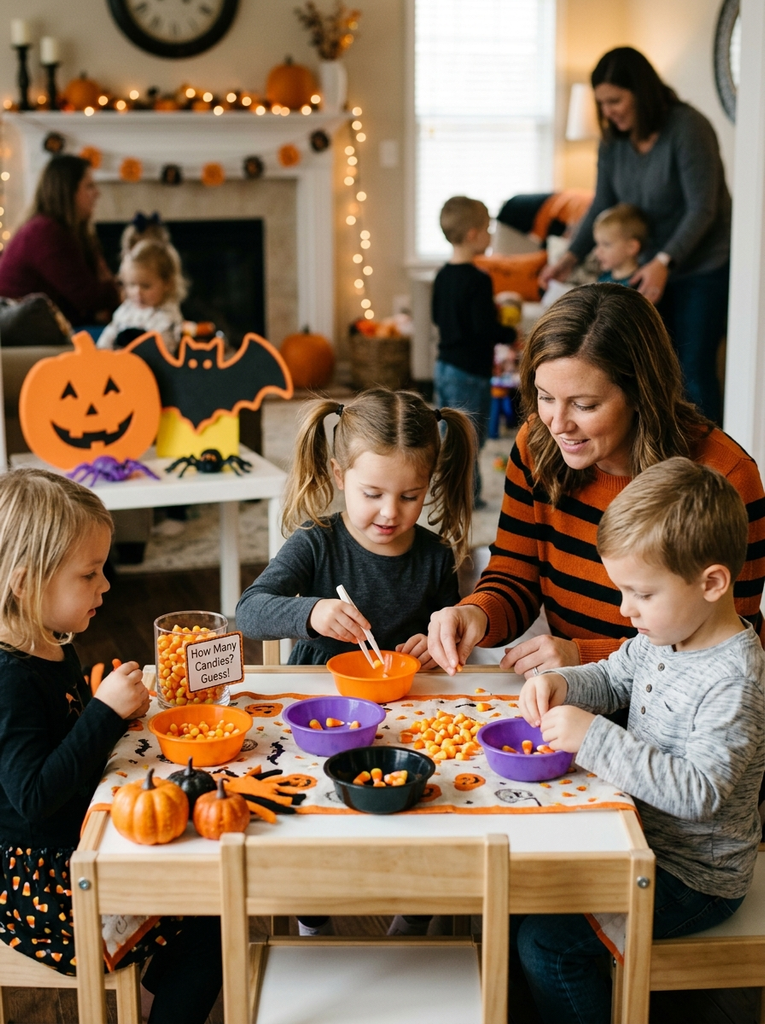
Candy corn counting combines a Halloween treat with basic sorting and counting practice, but the materials should match the child’s age.
What You Need
- Candy corn for children who are developmentally ready to eat it safely
- Small bowls for older children
- A clear container for a guessing game
- Larger non-food counters as an alternative
How to Play
Older preschoolers can count, sort, or arrange the treats into simple groups. Another option is to fill a transparent container and let children guess how many pieces it contains.
For toddlers or children who are too young for small candy, replace the candy completely with larger objects that are appropriate for their age, such as large foam shapes or other child-safe counting pieces that cannot be easily swallowed.
Safety Tip: Small food pieces can present a choking risk for young children. Follow age-appropriate feeding guidance, and never make candy the required material for this activity.
7) Groove and Freeze on Command
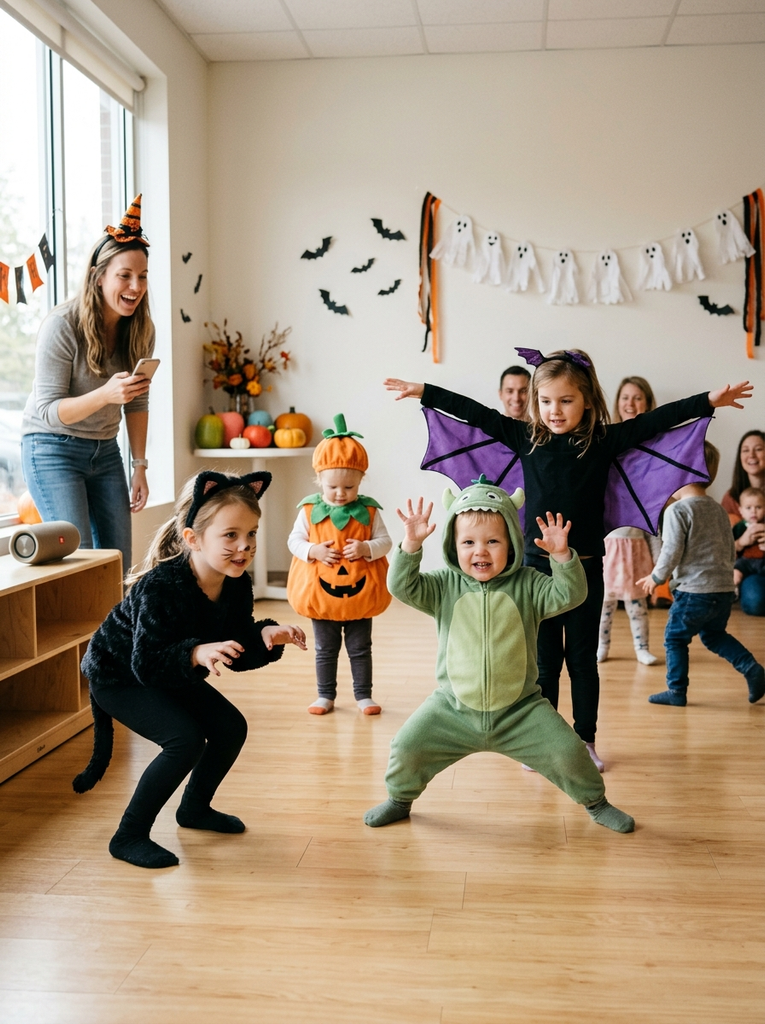
Freeze dance gives children an opportunity to burn off energy while practicing listening and stopping when the music pauses.
What You Need
- Halloween-friendly music
- Speaker
- Clear dancing area
How to Play
Play the music while everyone dances. Stop the music and have the children freeze in place until it starts again.
Rather than eliminating children who move, give them a silly movement to perform and then let them rejoin. This keeps younger children from becoming upset about being “out.”
Variation
Use themed movements such as:
- Stomp like a monster
- Flutter like a bat
- Creep like a cat
- Wobble like a pumpkin
- Crawl like a friendly spider
8) Halloween Relay Races
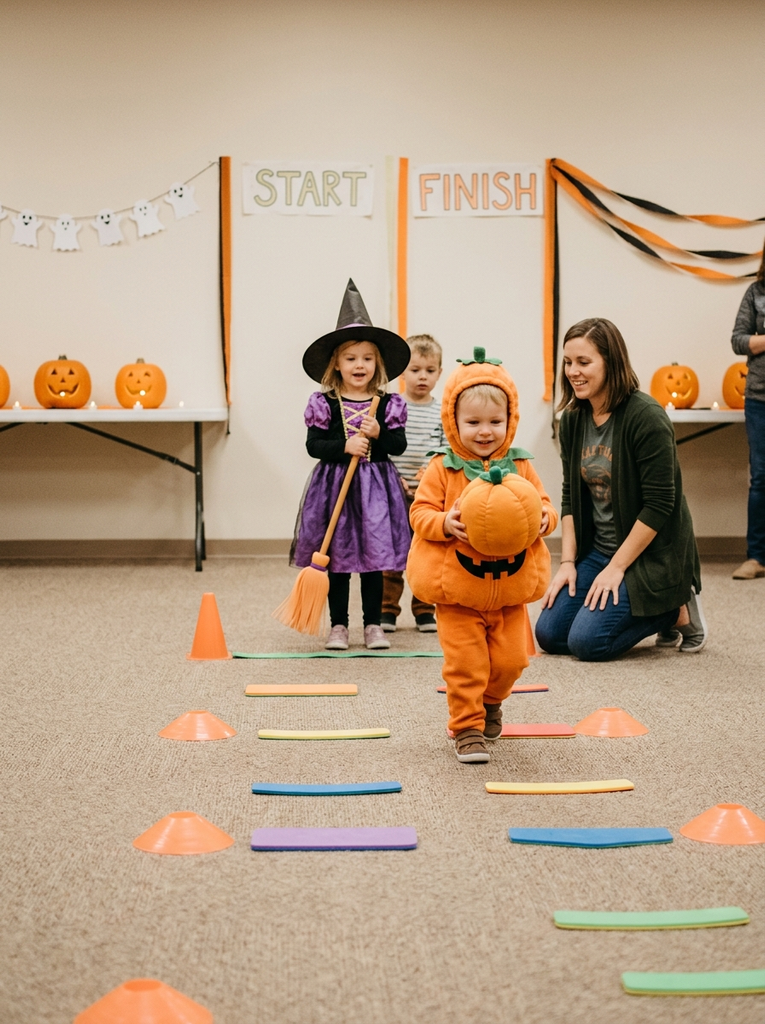
Relay races are a good choice when you have a clear indoor or outdoor route. The course should be short enough that young children can complete it without becoming tired or crashing into other players.
What You Need
- Clearly marked start and finish points
- Soft Halloween-themed objects
- Cones or visible markers
- Optional child-safe obstacles
How to Play
Split children into small teams. One player travels to the marker and returns before passing the object to the next player.
For toddlers, walking quickly can replace running. This is particularly helpful indoors where furniture and walls create tighter boundaries.
Make It Themed
Try:
- Witch’s broom: Carry a lightweight prop while walking.
- Ghost glide: Take slow steps along the course.
- Pumpkin carry: Carry a soft ball or lightweight object.
- Bat walk: Move while gently flapping your arms.
Avoid rigid sticks, long strings, or props that could create a trip or entanglement hazard.
Pro Tip: A 10–15-foot course is usually plenty for a young children’s party. Older children can use a longer route or an extra challenge rather than competing directly against toddlers.
Also read: 24 Fun and Easy Birthday Party Games Everyone Will Love
9) Imaginative Games
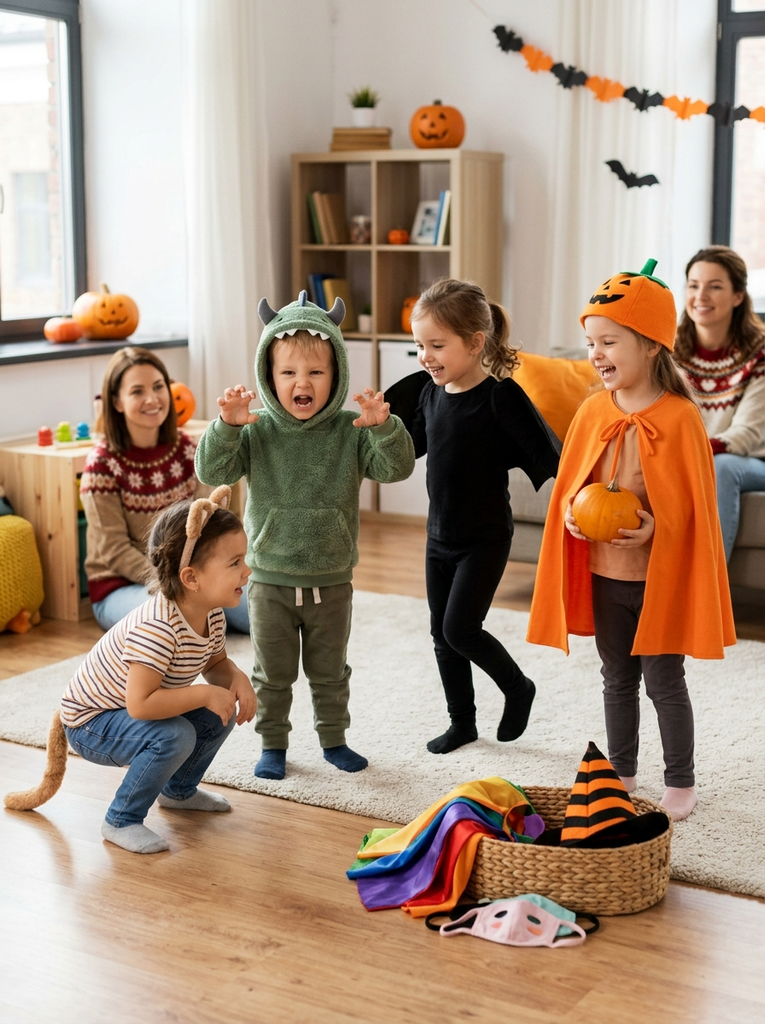
Imaginative play gives children a break from scoring and winning. It is also one of the easiest categories to adapt because the children can contribute at their own developmental level.
Cooperative Storytelling
Start a Halloween story with a friendly character and let each child add an idea. A toddler can contribute a sound or character while an older child can add a sentence.
Imaginative Charades
Give children easy Halloween characters or actions to act out. Friendly monsters, bats, cats, pumpkins, and ghosts are easier for young children to recognize than complicated scenarios.
Dress Up Relay Race
Place a small selection of safe costume accessories in a basket. Children take turns choosing an item, putting it on, and returning to the starting point.
Avoid anything that covers the eyes, restricts breathing, has long loose cords, or could become wrapped around a child’s neck. Keep small costume accessories away from toddlers who may mouth them.
10) Sensory Friendly Party Games
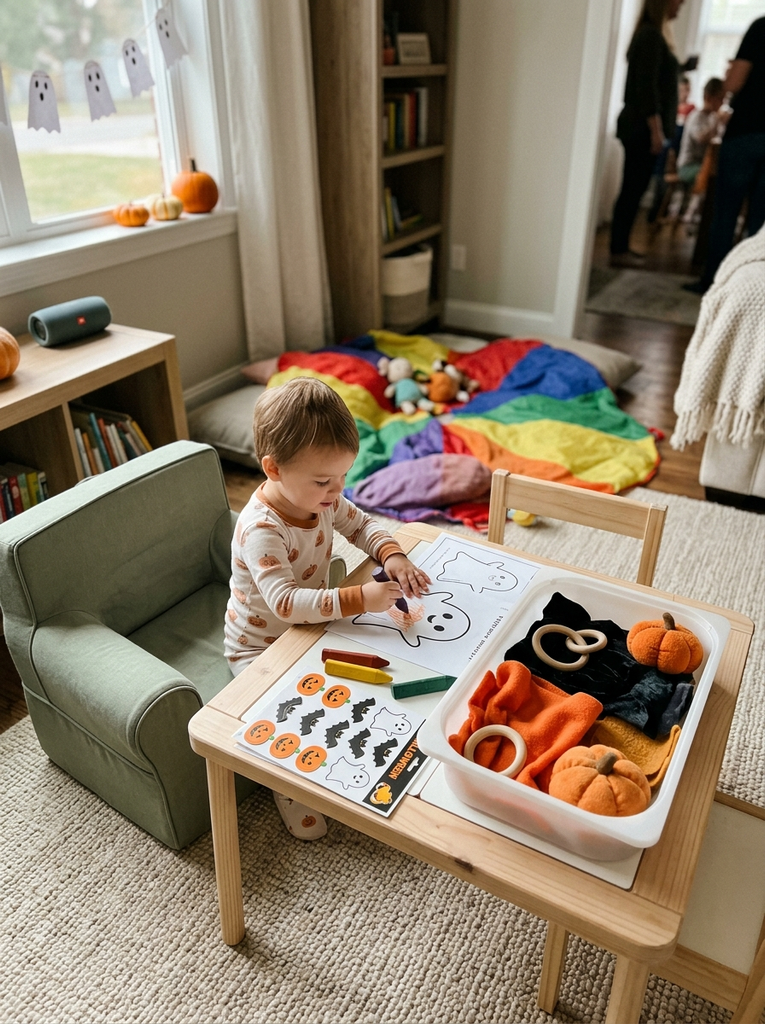
A busy Halloween party can be a lot for young children. Having quieter options available lets children participate without requiring them to stay in a noisy, high-energy activity.
Ideas to Include
- An age-appropriate sensory bin with safe, larger materials
- Gentle parachute play
- Halloween coloring pages
- Soft background music
- A quiet corner with comfortable seating
- A simple table activity such as stickers or large crayons
Children should be able to move to a quieter activity or take a break when they become overstimulated. There is no need to make every child participate in every game.
For toddlers, avoid sensory-bin fillers and loose materials that can be swallowed or placed in the nose or ears. Choose materials specifically suited to the children’s ages and developmental abilities.
Pro Tip: Set up the quieter station before the party begins rather than creating it after children become overwhelmed. A calm space works best when it is already available.
11) Pumpkin Bowling
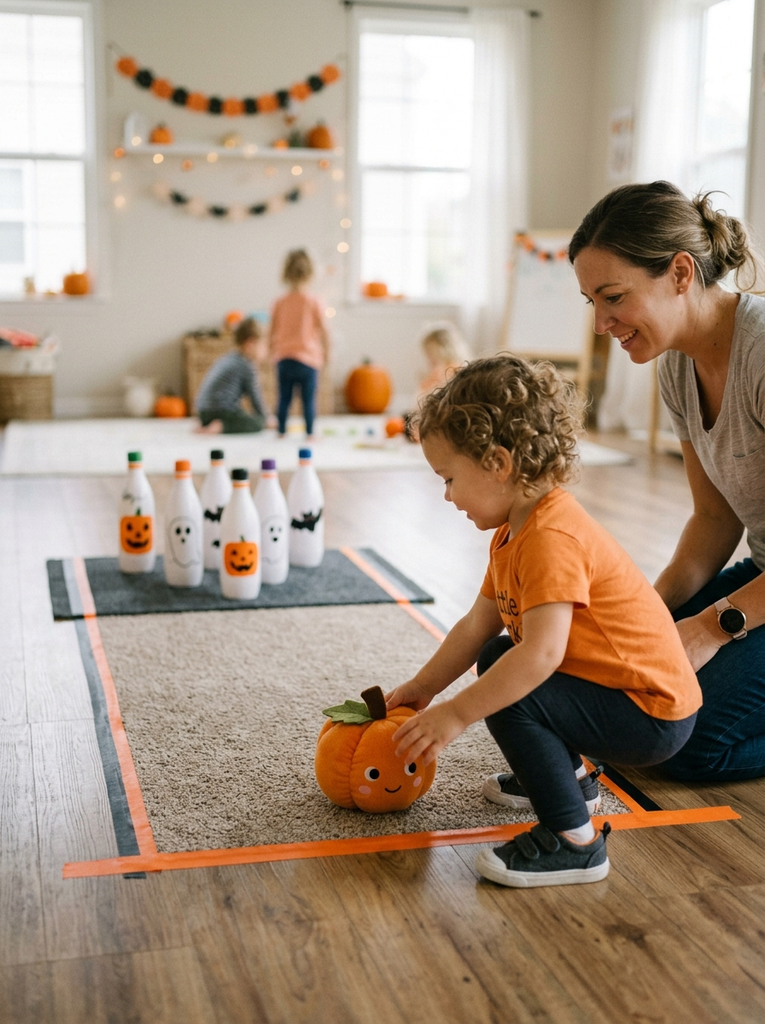
Pumpkin bowling turns a familiar rolling game into a Halloween activity without requiring real pumpkins to be thrown or rolled.
What You Need
- Lightweight pumpkin-shaped ball or soft ball
- 6–10 lightweight plastic bottles
- Halloween decorations for the bottles
How to Play
Arrange the bottles like bowling pins and have children roll the ball from behind a marked line.
Toddlers can stand closer to the pins, while older children can move farther back. If the bottles slide too easily, place them on a surface where they can stand securely without creating a tripping hazard.
12) Witch Hat Ring Toss
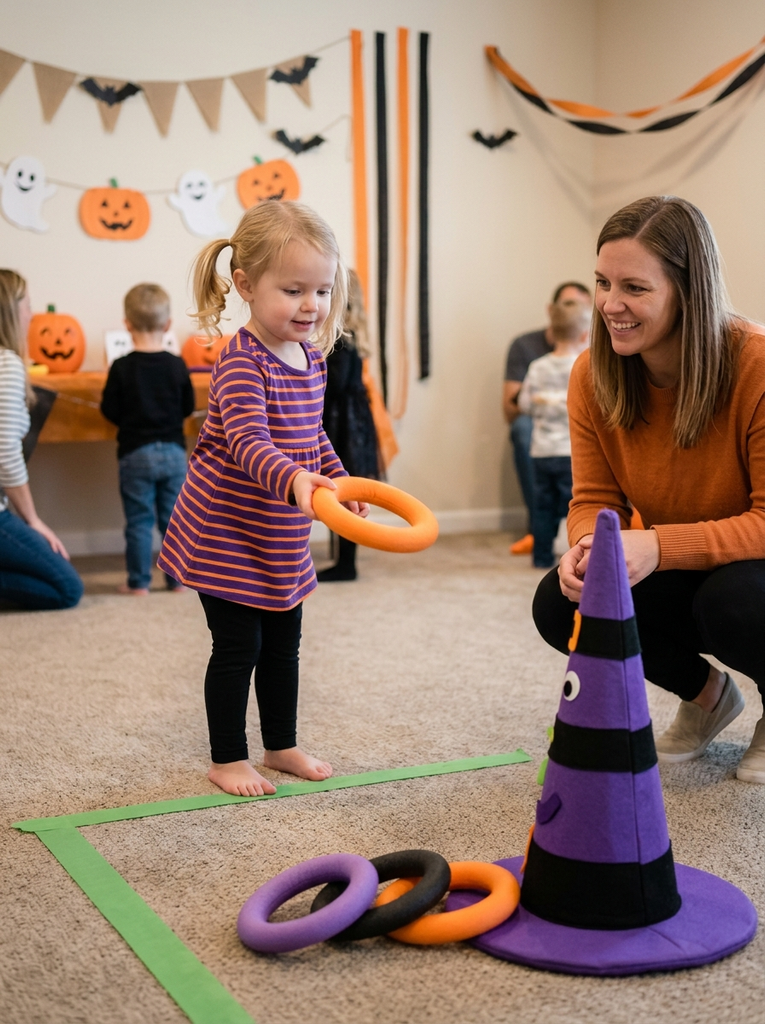
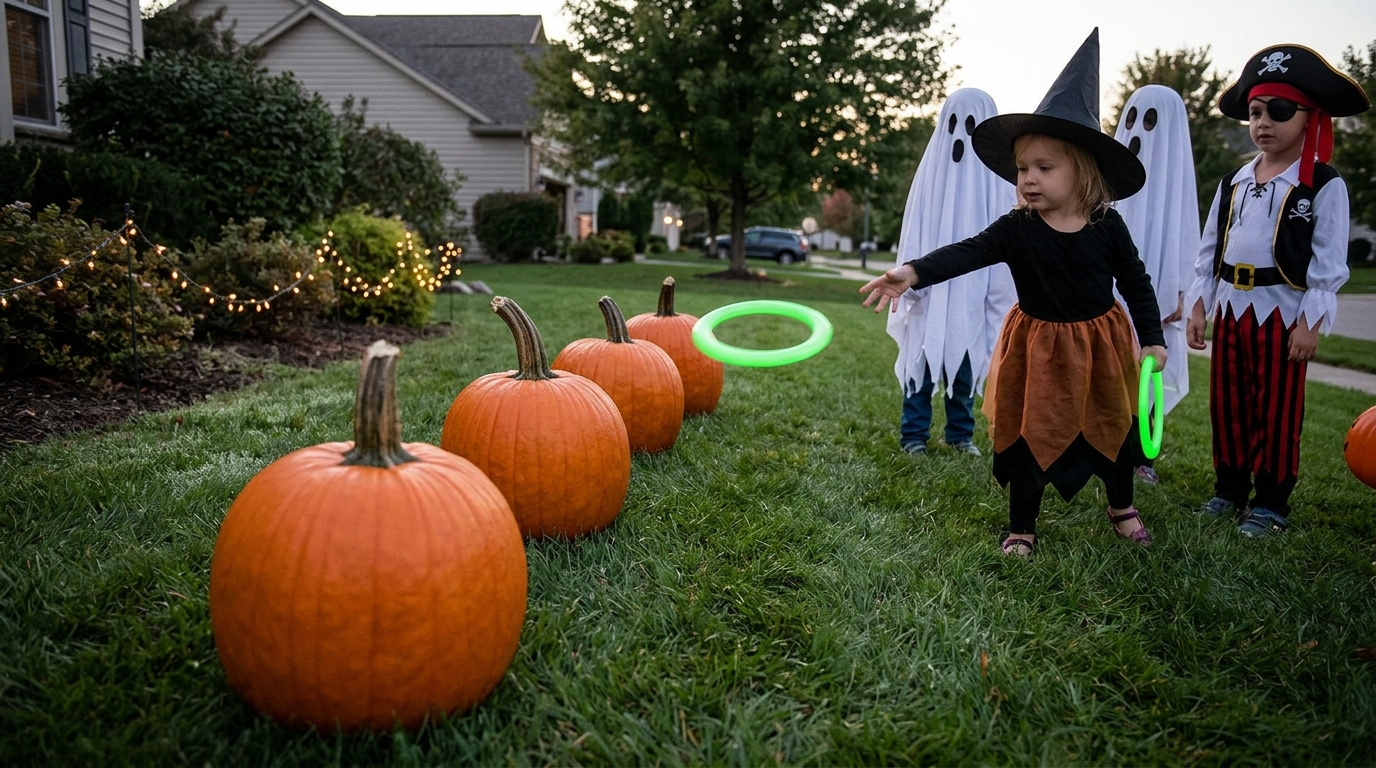
Ring toss gives children a straightforward target game and can be adjusted simply by changing the throwing distance.
What You Need
- Stable witch hat, cone, or similar target
- Soft foam rings or other age-appropriate rings
- Painter’s tape for the throwing line
How to Play
Children take turns standing behind the line and tossing a ring toward the target.
Move the line closer for toddlers and farther away for older children. Use soft rings and a stable target so an enthusiastic throw does not create an injury or falling-object problem.
13) Pin the Spider on the Web
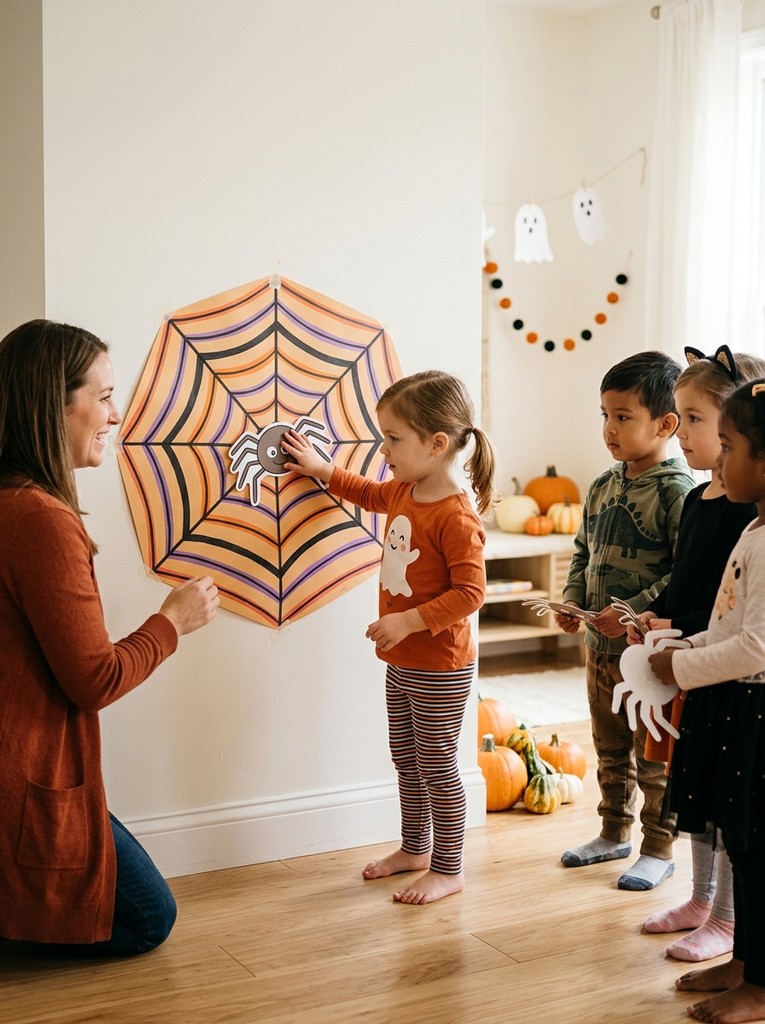
This turn-taking game gives children a quieter Halloween activity while still involving movement and a little challenge.
What You Need
- Large paper spiderweb
- Paper spiders
- Removable adhesive
- Optional blindfold for children who are comfortable using one
How to Play
Give each child a paper spider and let them place it on the web, aiming for the center.
For toddlers, preschoolers, or any child who does not want a blindfold, leave it off. Children can play with their eyes open and still enjoy trying to place the spider in the right spot.
Do not use a blindfold if it causes distress or prevents a child from moving safely. Keep the playing area clear of furniture and obstacles.
14) Eyeball Spoon Race
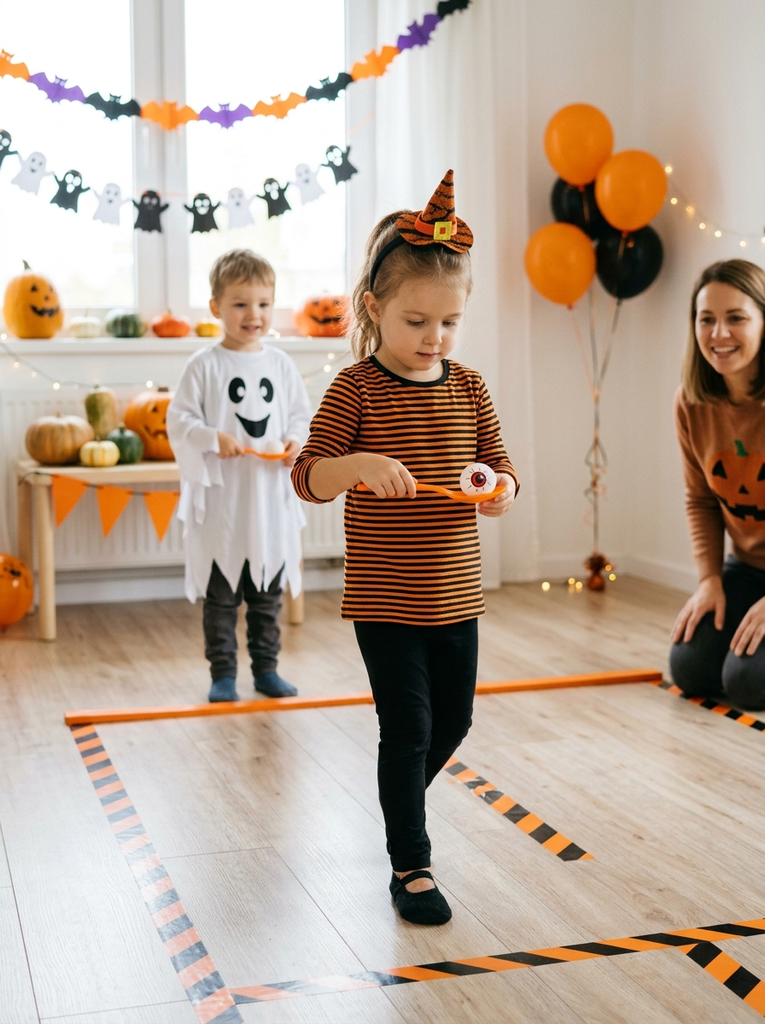
The spoon race format is easy to understand and gives children a small balance challenge. Using a lightweight ball rather than a real food item keeps the activity cleaner and easier to manage.
What You Need
- Plastic spoons
- Ping-pong balls or other lightweight balls
- Start and finish markers
How to Play
Children balance the ball on a spoon and walk from one marker to the other.
For younger children, shorten the route and allow them to use both hands. Older children can use one hand or take a slightly longer route.
If several ages are playing, separate rounds by age or ability rather than making toddlers compete against much older children.
15) Ghost Balloon Pop
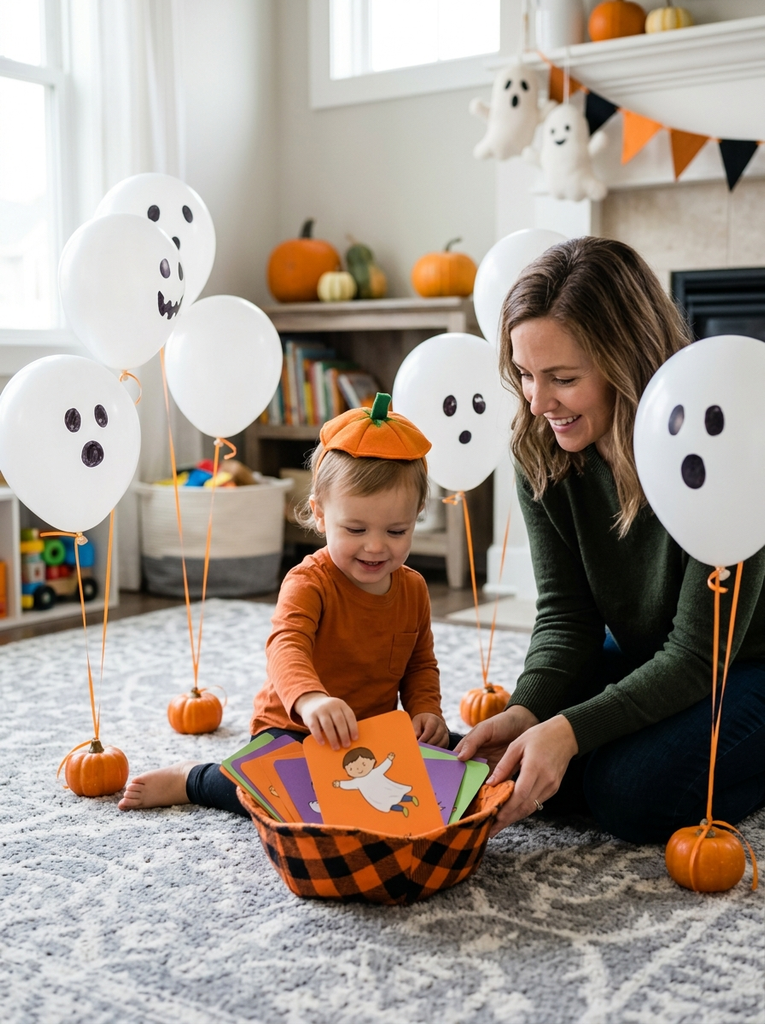
Balloon popping can be exciting for some children, but the noise and broken balloon pieces make this an activity that needs extra care. For toddlers, I recommend using a no-pop version instead.
What You Need
- White balloons for an appropriate age group
- Marker for simple ghost faces
- Paper activity cards
- Basket or container for the cards
How to Play
For children who are old enough for the activity and comfortable with the noise, place a simple action card inside each balloon before inflating it.
An adult should handle the popping rather than having young children hold or bite balloons. After each balloon is popped, collect every fragment immediately before continuing.
The children can then perform the action written on the card, such as making a friendly ghost sound or pretending to fly.
Safer Alternative for Toddlers
Skip the balloons completely. Put the same action cards into a Halloween bowl or basket and let children draw one card at a time.
This keeps the surprise element while removing the popped-balloon pieces and loud popping sounds.
16) Halloween Truth or Scare
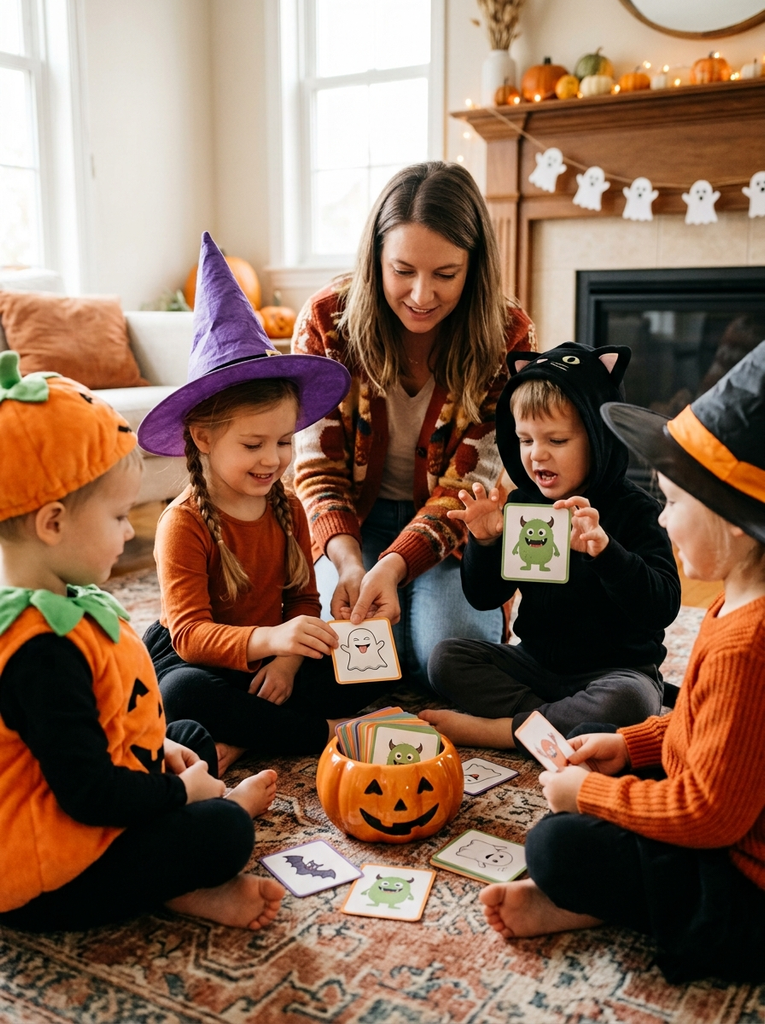
This seated game works nicely when children need a slower activity after running games. The “scare” element can remain playful and silly rather than genuinely frightening.
What You Need
- Halloween-themed question and challenge cards
- Scissors for preparation
- Bowl, basket, or plastic cauldron
Set Up
Prepare the cards before guests arrive and place them in the container.
Choose questions and challenges that suit the youngest child attending. Avoid dares involving running, climbing, eating unknown foods, touching strangers, or using potentially unsafe props.
How to Play
Each child draws a card and chooses between answering a lighthearted question or completing a silly challenge.
Keep turns brief so younger children do not lose interest while waiting.
Why It Works
There is very little setup, the activity requires limited space, and the rules can be simplified for preschoolers.
Tip
This makes a good transition into snack time. Children can sit together, answer a few questions, and settle down after more active games.
Ready to Play?
A little preparation makes these Halloween party games much easier to manage. Before guests arrive, I would group each game’s supplies in separate containers or bags and label them so there is no searching for materials between activities.
I also keep one or two backup activities ready. A printable coloring activity, picture bingo, or simple scavenger hunt can save the party schedule when rain cancels outdoor play or children finish an activity sooner than expected.
For a party lasting around an hour or two, there is no need to schedule all 16 games. A few active games, one craft, one quiet activity, snack time, and some free play can provide plenty of variety for young children.
If you are also planning the rest of the celebration, related Halloween decorations, kid-friendly Halloween food, and easy Halloween crafts can be prepared around the same simple theme. Keeping the number of activities manageable also leaves more time for cleanup and family photos.
Read this next: 21 Simple Indoor Games for Kids That Work for Any Age
Hosting for Bigger Kids Too?
Older siblings can participate without turning the party into a competition between age groups. The easiest solution is to give older children more challenging versions of the same activities.
For example, older children can receive written scavenger hunt clues while younger children use pictures. They can stand farther away for ring toss, complete a longer relay route, or add extra rules to a game.
Cooperative teams are another useful option. An older child can help a younger child read a clue, count objects, or complete a challenge instead of simply racing against them.
The goal is to give everyone something appropriate to their abilities without making a toddler keep pace with a much older child.
Want more Halloween ideas?
The games are only one part of a successful Halloween party for young children. I usually get better results when the celebration includes room for free play, snacks, crafts, and short breaks instead of filling every minute with organized activities.
A simple Halloween craft table can give children something to do while others finish a game. Likewise, having themed snacks ready before the party starts means you are not trying to prepare food while supervising a relay race.
Weather is another reason to have a backup plan. If an outdoor scavenger hunt or relay becomes impractical, an indoor bingo game, storytelling activity, pumpkin decorating station, or printable Halloween activity can keep the party moving without requiring a complete change of theme.
Conclusion
The most successful Halloween games for little kids are not necessarily the most elaborate. They are activities with clear rules, manageable equipment, short turns, and enough flexibility for different ages and personalities.
Balloon tennis, pumpkin painting, picture bingo, relay races, ring toss, imaginative play, and quieter sensory-friendly activities give you plenty of ways to balance energy levels throughout the celebration.
With supplies prepared ahead of time, a safe play space, age-appropriate materials, and a couple of backup activities, you can spend less time troubleshooting and more time enjoying the party with the children.



3 Comments