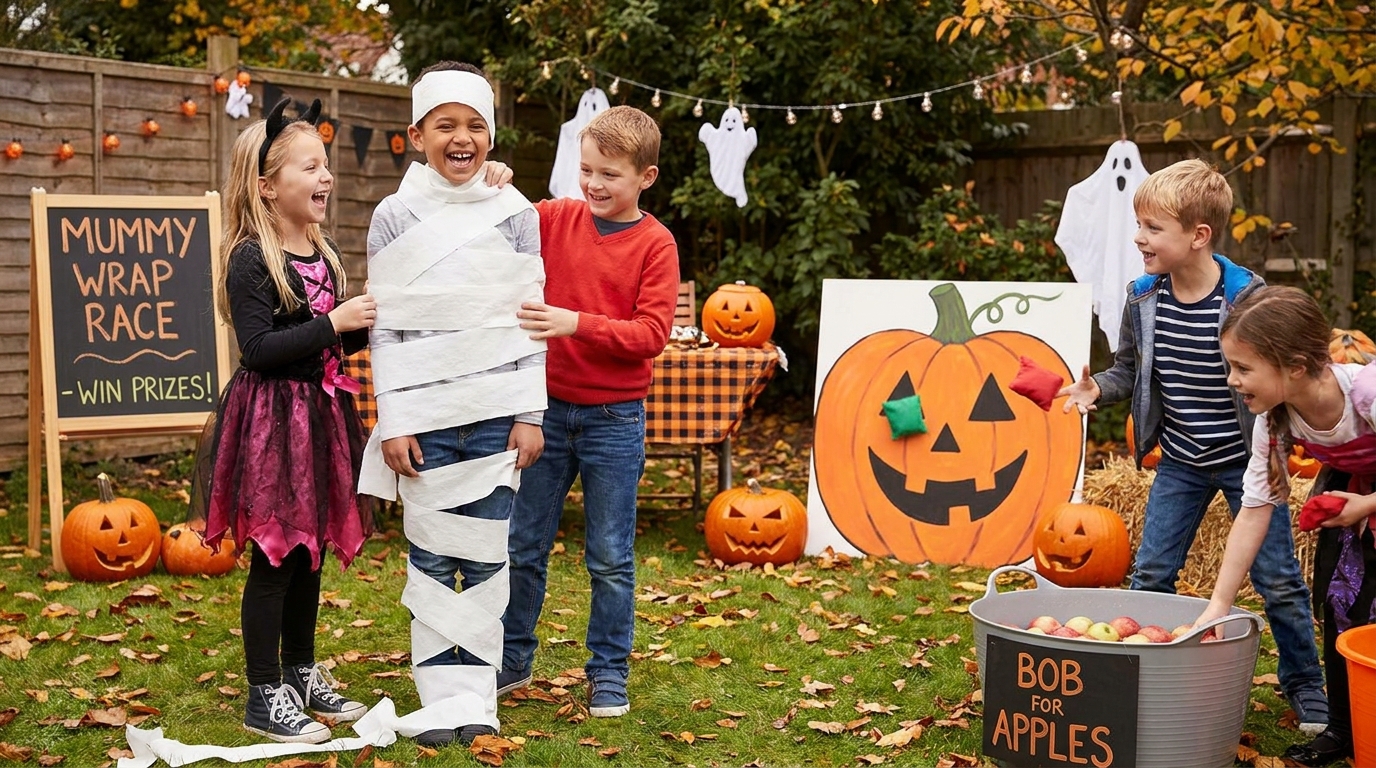
29 Best Halloween Games for Kids – Fun, Spooky & Easy to Play!
I love having Halloween games ready before a kids’ party starts because costumes, treats, and decorations can make the room exciting very quickly. Without a few planned activities, that excitement can turn into children running in different directions while I try to figure out what comes next.
I don’t think a good Halloween party needs expensive supplies or a picture-perfect setup. Many of these games use things I already have at home, along with a few inexpensive craft or party supplies. I also like mixing active games with quieter ones so the pace of the party can change naturally.
This collection includes 29 Halloween games for kids that can work for birthday parties, classroom celebrations, family gatherings, backyard parties, and neighborhood get-togethers. The list includes active races, guessing games, crafts, team activities, music games, creative challenges, and quieter activities.
I wouldn’t try to play all 29 at one party. For a typical two-hour gathering, I usually plan around five or six main games and keep one or two simple backups nearby. That gives me enough structure without making the party feel like a tightly timed schedule.
Save this for later

Table of Contents
I’ve included options for younger children, older kids, tweens, and mixed-age groups, along with indoor and outdoor choices. You’ll also find inexpensive supply ideas, ways to adapt games when space is limited, and practical reminders about costumes, food ingredients, small pieces, open flames, strings, water, and adult supervision.
Key Takeaways
- Choose about five or six games for a typical two-hour party rather than trying to use all 29.
- Match the rules, pace, and physical challenge to the children’s ages and abilities.
- Alternate active games with quieter activities to give the party a natural change of pace.
- Keep prizes simple; stickers, pencils, glow sticks, and small craft items can work without making candy the focus.
- Prepare an indoor backup if any of your main activities depend on outdoor space or weather.
- Check costumes, floors, furniture, decorations, food labels, and small game pieces before play begins.
- Keep a quiet area available for any child who wants a break from the noise and activity.
Related article: 15 Easy But Fun Halloween Party Games For Little Kids
Why Halloween Party Games Matter (A Quick Word)
I’ve found that the first part of a Halloween party can take care of itself for a while. Children arrive in costumes, look at the decorations, talk about treats, and explore the space. Eventually, though, having a planned activity gives everyone something to do together.
Games can also make introductions easier when some children don’t know one another. A simple group activity gives them a shared starting point instead of expecting them to immediately socialize on their own.
I also use games to change the rhythm of the party. After a running game, I might bring everyone to the table for bingo or Pictionary. Later, I can move outside for a scavenger hunt or another activity that gives them more room.
I don’t need a huge schedule to make that work. Five dependable games, plus one or two backups, are much easier for me to manage than a long list of activities that all need complicated preparation.
Tips Before You Start Planning
Before choosing the games, I look at the children’s ages, the amount of available space, and how much preparation I can realistically finish before guests arrive.
Age matters, but I don’t assume every child in an age group will enjoy the same thing. A simple ring toss may suit some preschoolers, while older children may want a competitive scavenger hunt. With a mixed-age group, I can change the throwing distance, simplify the rules, or use teams.
I also keep backup games that are easy to start or stop. Children can finish an activity sooner than expected, lose interest in something I thought would be popular, or need a change of pace.
For prizes, I keep things inexpensive and optional. Stickers, temporary tattoos, pencils, glow sticks, themed erasers, and small craft supplies can all work. I don’t make every round depend on a prize.
Finally, I check my own cupboards before shopping. Paper, markers, tape, containers, yarn, reusable decorations, and other basic supplies can cover several games.
Older children can certainly help with simple tasks such as handing out materials or demonstrating a game, but I don’t use them as substitutes for adult supervision.
Halloween Party Games for Kids
1. Mummy Wrap Race
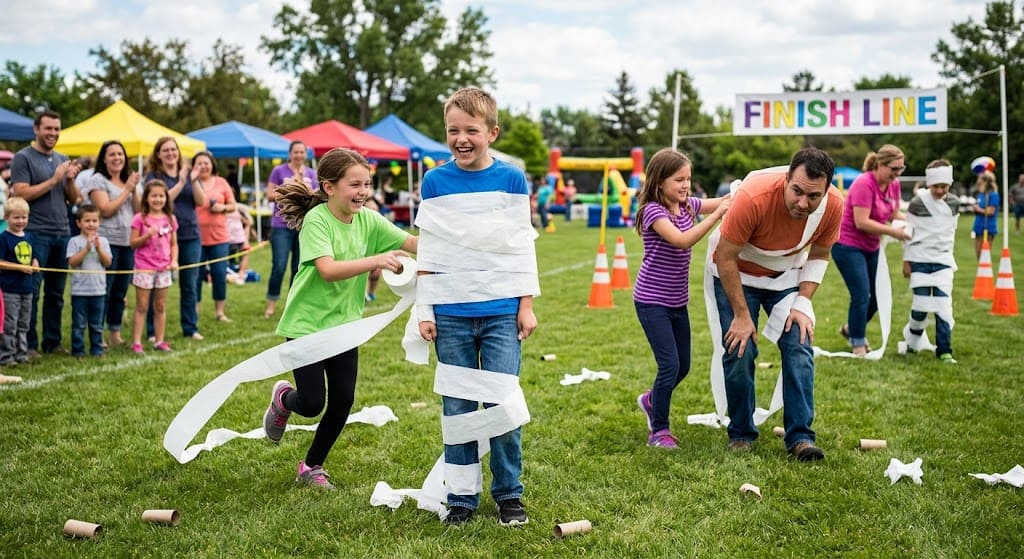
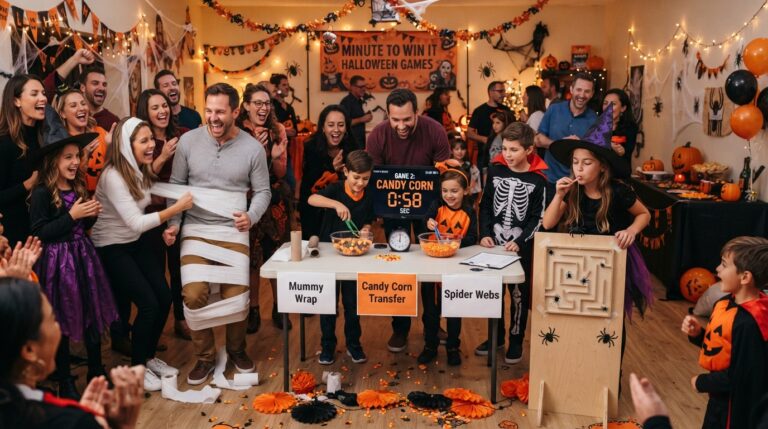
For this pair-based game, one child becomes the mummy while their teammate does the wrapping. I give each pair one or two rolls of toilet paper and set a short time limit, such as two minutes.
The goal can be to cover as much of the mummy as possible before time runs out, or I can skip judging entirely and let the children focus on completing the challenge together.
I keep the wrapping loose and never allow toilet paper to go around a child’s face or neck. It should not restrict breathing, movement, or circulation, and I don’t wrap tightly around the legs. An adult should stay nearby throughout the activity.
For younger children, I make the game less competitive and give them more time. Older children may enjoy a timed team challenge.
Pro Tip: I keep a large trash or recycling bag beside the play area. Toilet paper cleanup is much faster when I can gather the loose paper in one place before moving on.
2. Pumpkin Bowling

I set up six lightweight plastic bottles as bowling pins and give them simple ghost faces with a marker. A small, reasonably round pumpkin can serve as the bowling ball, although a soft ball is another option if I’m playing indoors.
I test the setup before the party. Smaller pumpkins tend to be easier to control than large, uneven ones, and I want enough space for the pumpkin to roll without hitting furniture or decorations.
A level patio, smooth floor, or another clear surface works best. I move fragile objects out of the area and make sure children waiting for a turn are behind the rolling path.
For younger children, I place the pins closer together and let them roll from a shorter distance. Older kids can stand farther back.
3. Halloween Bingo

Halloween bingo is one of the quieter activities I keep ready for the middle of a busy party. I use picture cards with familiar images such as pumpkins, bats, ghosts, witches, black cats, or candy.
Picture-based cards are especially useful for children who are not reading independently yet. I can call out the picture while showing it to the group so everyone has a clear visual cue.
I prefer reusable tokens or paper markers rather than making candy markers necessary. If I use small pieces, I keep the age of the group in mind because loose markers can be a choking concern for toddlers and young children.
Food markers are optional, not required. If I use them, I make sure the ingredients are known and appropriate for the children attending.
4. Pin the Spider on the Web

I make a large spider web from poster board or paper and place it on a clear section of wall. Each child gets a paper spider that they try to position on the web.
I keep the traditional blindfold-style idea, but a tight blindfold isn’t necessary. For younger children, I can simply ask them to close their eyes while an adult stays beside them.
I clear toys, furniture, cords, and other obstacles from the playing area. I also avoid spinning children excessively or pushing them toward the wall. The child should be able to move at their own pace.
The closest spider to the center can win, or I can make it cooperative by seeing how close the group can get all of their spiders to the middle.
5. Witch’s Hat Ring Toss
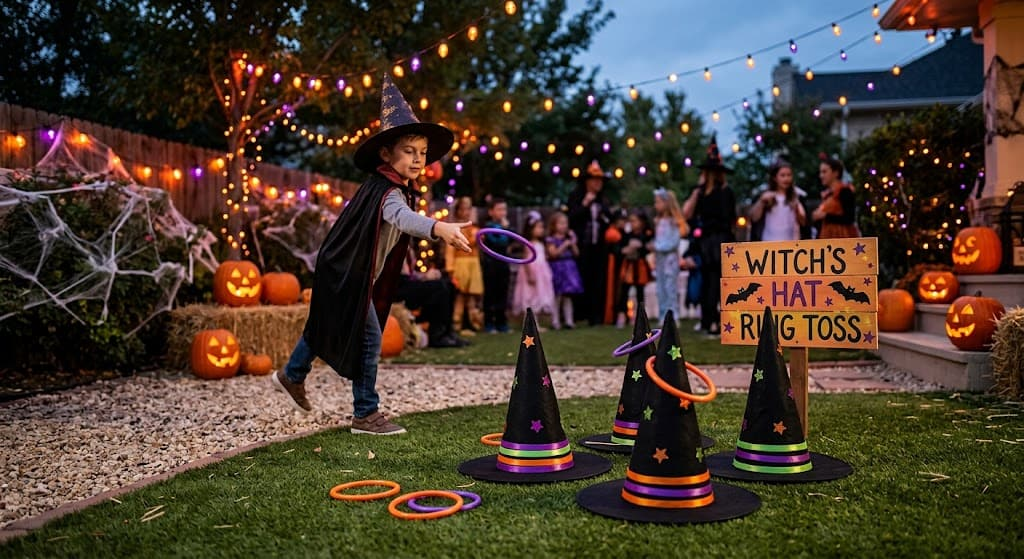
I arrange lightweight witch hats on the floor and use large plastic rings for tossing. Each child gets a set number of attempts, such as three, and I can award more points for hats placed farther away.
The throwing distance is the easiest part to adjust. Younger children can stand closer, while older children can move the line back.
I keep spectators behind the throwing line and make sure no one enters the target area while a child is tossing. Rings should be retrieved only after the throwing turn is finished.
A clear, level area works best, and I avoid heavy or rigid props that could become a problem if a child trips over them.
6. Donut on a String

I hang individual donuts from a secure horizontal line or sturdy setup at a comfortable height and have children try to eat them without using their hands.
Before starting, I check the hanging points and make sure the line and attachments are secure. The string should never be placed around a child’s neck, and children should remain in their assigned spots rather than running while participating.
Because this is a food activity, I check for known allergies and keep ingredient information available. I also choose an easy-to-clean area and keep wipes or napkins nearby.
If the line becomes loose or unstable, I stop the activity and reset it before continuing.
For younger children, I may skip this activity in favor of a less messy food-free game.
7. Halloween Scavenger Hunt

I hide small Halloween-themed objects around a defined area and give each child a list. Younger children can use picture clues, while older children can follow written clues or solve simple riddles.
I can run it individually, divide the children into teams, or make it cooperative by having everyone collect the complete set together.
The boundaries matter more than how many objects I hide. I don’t place items near stairs, traffic, unsafe storage areas, breakable objects, pools, or places where children aren’t supposed to go.
For outdoor hunts, I establish the exact play area before starting. For indoor hunts, I close off rooms or spaces that aren’t part of the game.
Pro Tip: I take a quick photo of the hiding spots before the children start searching. It makes cleanup much easier when I need to remember where every item went.
8. Monster Freeze Dance

I play Halloween music and let the children dance like monsters, ghosts, witches, or zombies. When the music pauses, everyone freezes.
For younger children, I don’t eliminate them for moving. Instead, I can call out another silly movement and restart the music. Older children may enjoy the traditional elimination version if they understand the rules.
I clear the floor of toys, cords, bags, and other obstacles before starting. The children also need enough room to move without bumping into furniture or one another.
I keep the music at a reasonable volume and check that costumes allow children to move comfortably.
9. Pumpkin Toss
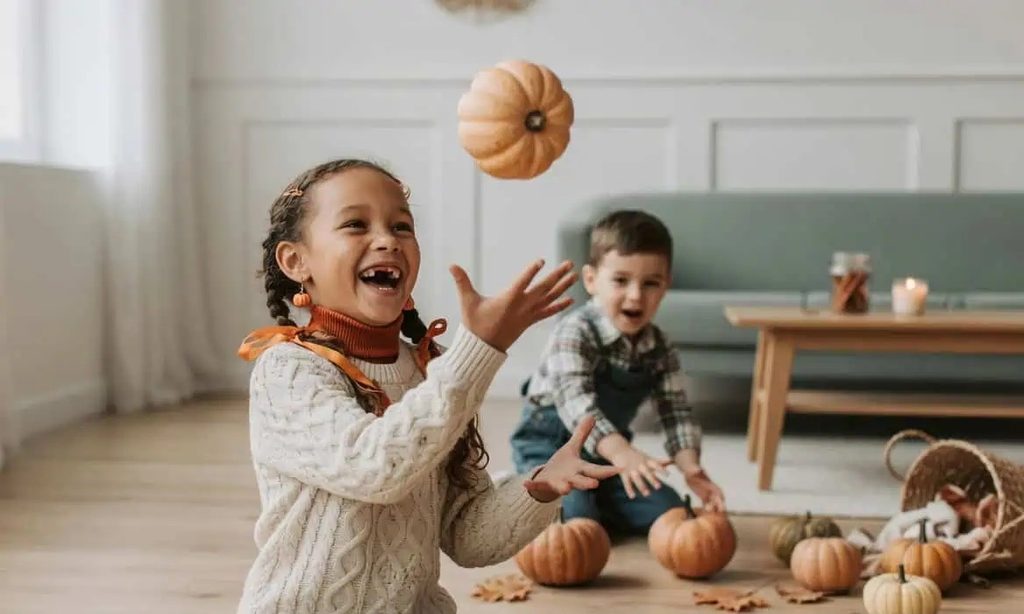
I place a lightweight plastic pumpkin bucket on the floor and mark a throwing line. Each child gets several soft bean bags or another soft throwing item and tries to land them in the bucket.
I adjust the distance depending on the group. Younger children can stand close to the bucket, while older children can move farther away.
Only one child throws at a time, and I make sure the area in front of the line is clear before each turn. I avoid hard objects that could hurt someone if a throw goes off target.
This game works indoors or outside as long as there is enough clear space.
10. Ghost Bowling
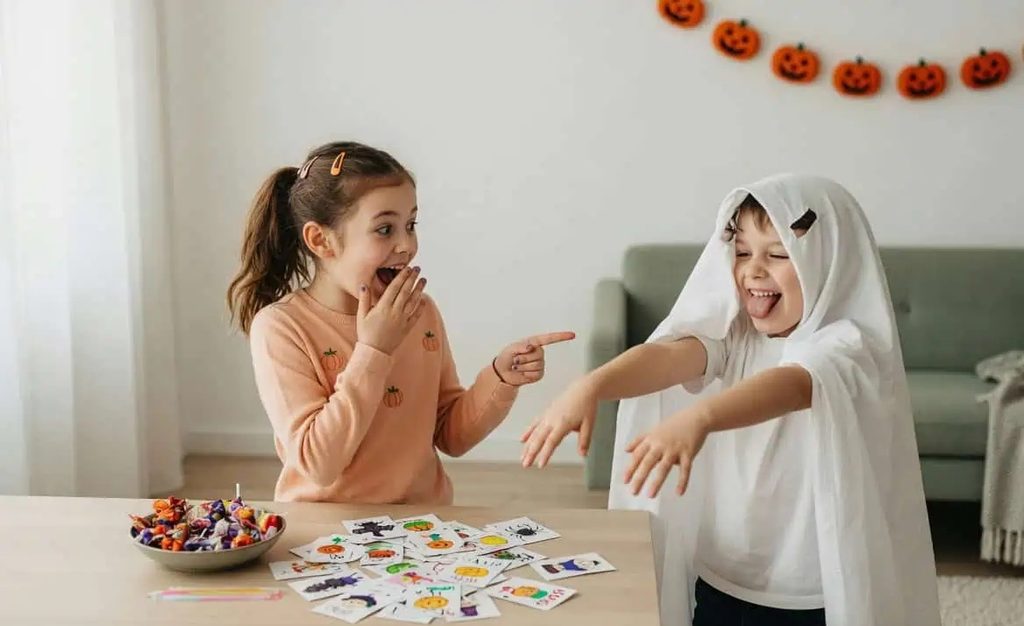
This is my ghost-themed variation on bowling. Instead of using pumpkins as the main visual feature, I cover lightweight bottles or cardboard tubes with white paper and draw simple ghost faces on them.
I use a small pumpkin or, preferably indoors, a soft ball that is easy for children to roll. I test the pins and ball beforehand so I know how much room the setup needs.
For younger children, I move the pins closer and shorten the rolling distance. I keep fragile decorations and furniture away from the bowling path.
It can also work as a small individual activity for children waiting for another game.
11. Spider Web Walk

I create a simple pretend spider web using black yarn or string in a controlled area. Children move through the opening by stepping over or around the strands without touching them.
I keep the arrangement simple and make the strands clearly visible. I don’t create a web that can catch around a child’s neck, wrap around their legs, or create a hidden tripping hazard.
An adult should supervise the activity, especially when younger children are participating. I also leave enough room around the web so children aren’t forced into furniture or walls.
For younger kids, I use fewer strands and wider openings. Older children can try a slightly more challenging path without making the string arrangement complicated.
12. Eyeball Spoon Race

I decorate ping-pong balls as eyeballs and place one on a spoon for each player. Children walk from the starting line to the finish and try to keep the ball balanced.
I make this a walking race rather than a running race, especially indoors. If the ball falls, children can either return to the starting point or pick it up and continue, depending on the rules I choose.
For older children, I can turn it into a relay with teams. For younger children, a short straight path is easier to manage.
The activity needs relatively little space, which makes it useful when I’m working with a crowded party room.
13. Halloween Charades
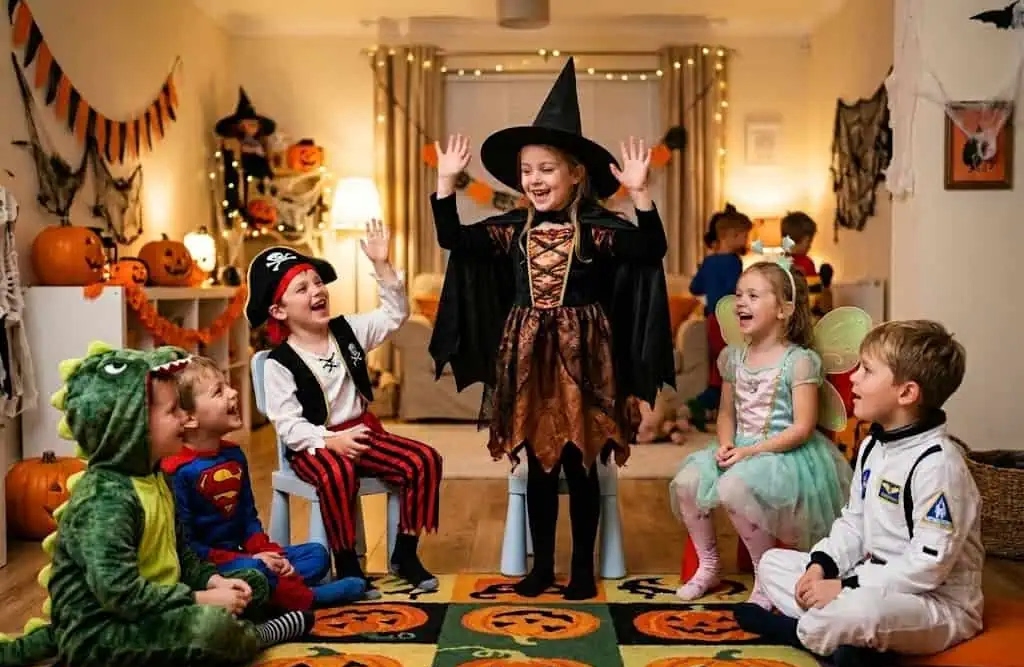
I prepare simple Halloween prompts such as ghost, pumpkin, witch, bat, mummy, skeleton, black cat, or broomstick. One child acts out the prompt without speaking while the others guess.
Children who aren’t reading yet can use picture cards instead of written words. I also let younger players demonstrate the idea with help rather than expecting them to follow a complicated set of rules.
For older children, I may use a 30- to 60-second timer. With younger children, I remove the timer if it makes the activity feel rushed.
I keep the prompts familiar so children can participate even if they don’t know many Halloween characters.
14. Toilet Paper Mummy (Group Edition)

This is different from #1 because it isn’t a pair race. Here, one volunteer becomes the mummy while the whole group works together to wrap them.
I choose a volunteer who is comfortable with the activity and explain the rules before the toilet paper comes out. The group works around the volunteer rather than competing against another pair.
The paper stays loose and away from the face and neck. I don’t allow wrapping that restricts breathing, movement, or the ability to step away easily.
For younger children, I make it a simple cooperative challenge rather than a timed competition. An adult or older child can volunteer as the mummy if that helps the group get started.
15. Candy Corn Guessing Jar

I fill a clear jar with candy corn and let children estimate how many pieces are inside. They can write down their guesses, and I compare them at the end.
I like this as an arrival or between-games activity because children don’t all need to participate at the same moment.
Candy isn’t essential. I can use another countable item if I want to avoid food or reduce the amount of candy at the party.
If candy is involved, I keep ingredient information available and consider the ages of the children. Small pieces should be supervised around toddlers and other young children who may put objects in their mouths.
16. Halloween Pictionary
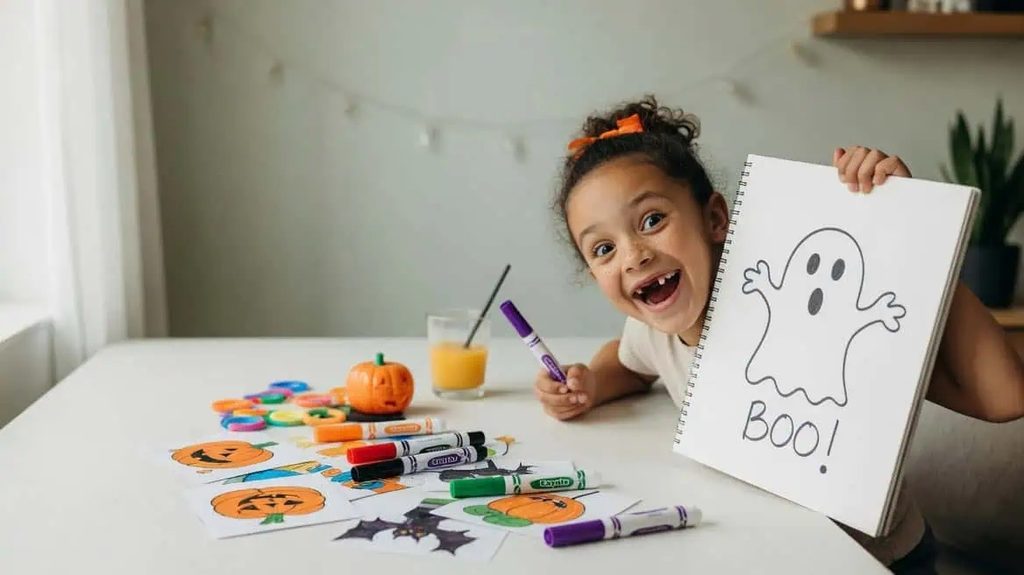
I give the children paper and markers or use a small whiteboard with a stack of simple Halloween prompts. One player draws while everyone else tries to guess the object.
I keep the emphasis on guessing rather than artistic ability. A pumpkin doesn’t need to look like a perfect pumpkin for the game to work.
For older children, I can use a one-minute timer. For younger children, I give them more time and use easier prompts.
Picture prompts or simple demonstrations can help children who cannot read yet participate without being left out.
Also read: 23 Boo Basket Ideas for 2026 (Kids, Teens, Adults & Couples)
17. Pumpkin Decorating Contest
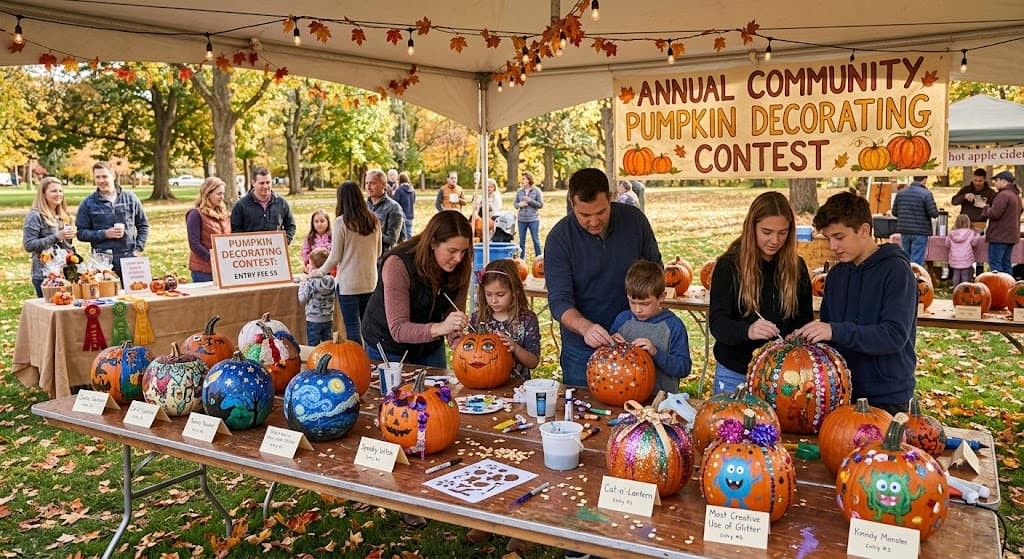
For children, I prefer decorating pumpkins rather than carving them. Each child can have a small pumpkin and age-appropriate materials such as washable markers, suitable paint, adhesive decorations, paper pieces, or other craft supplies.
I protect the table with newspaper, a washable covering, or craft paper before anything messy comes out. I also check the age recommendations on paint pens, adhesives, googly eyes, and other supplies rather than assuming every craft material is suitable for toddlers.
I like giving playful categories such as funniest, most colorful, most unusual, or best monster. That gives me a way to recognize everyone’s work instead of making the activity depend on one overall winner.
The decorated pumpkins can also serve as take-home party favors.
Pro Tip: Small pumpkins are easier to fit on a children’s craft table and usually need fewer decorating materials. I also find them easier for younger hands to hold while working.
18. Trick-or-Treat Trail Mix
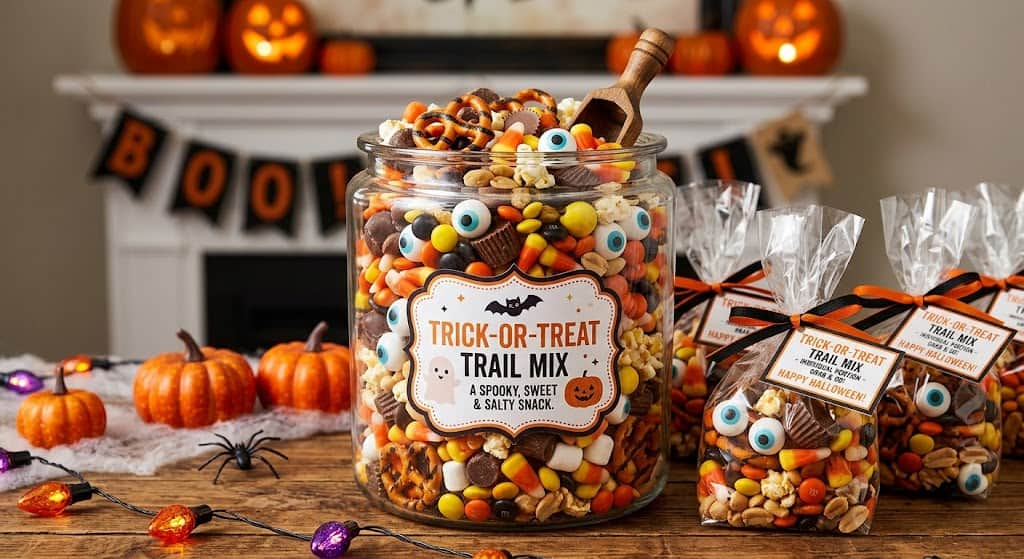
I set up separate containers of snack ingredients and let children create their own Halloween-themed mix. The exact foods can vary depending on the group, and I don’t assume that any particular ingredient is suitable for every child.
I keep each ingredient in its own container with a separate serving utensil. Before the party, I ask parents about known allergies or dietary restrictions and keep ingredient labels available.
For a lower-sugar version, I can make the mix mostly cereal, pretzels, crackers, dried fruit, or other foods that fit the needs of the group, with candy as an optional ingredient rather than the foundation.
I also supervise the serving area so children aren’t grabbing handfuls from shared containers.
19. Halloween Hot Pumpkin
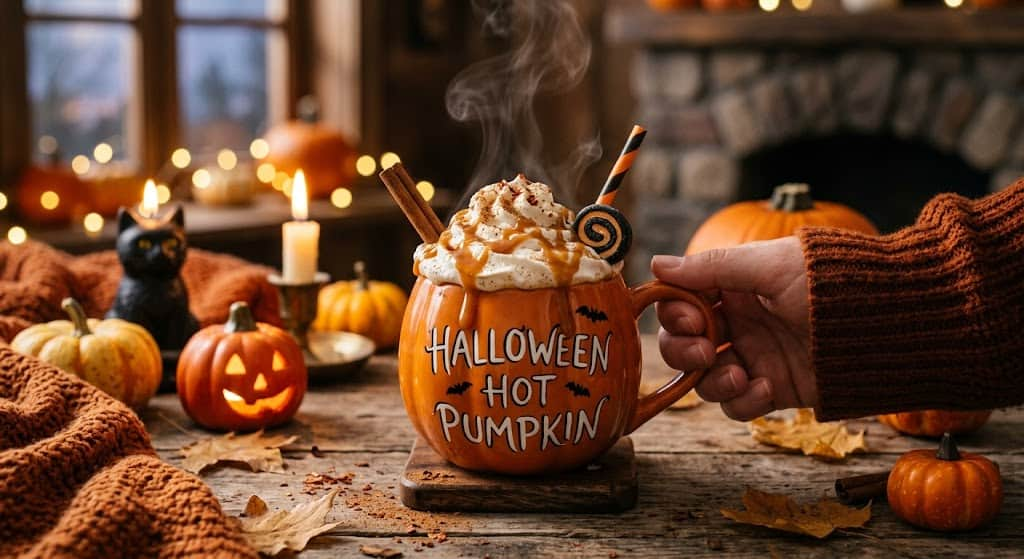
I have the children sit or stand in a circle and pass a small pumpkin or lightweight plastic pumpkin while Halloween music plays. When the music stops, the child holding it can complete a silly action or, for older children, sit out for that round.
For younger children, I prefer keeping everyone involved. The child holding the pumpkin can make a monster face, perform a funny movement, or simply start the next round.
The game needs very little preparation, which makes it useful when I need a quick activity between larger games.
20. Spooky Story Circle
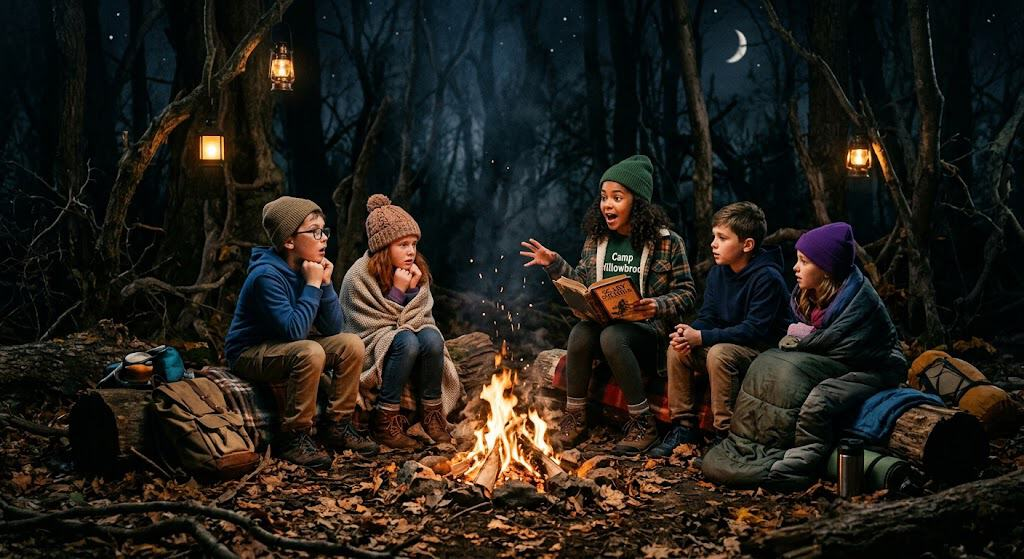
I have the children sit together and build one Halloween story, with each person adding a sentence. One child starts the story, and the next child continues it.
I keep the tone funny, silly, or mildly spooky depending on the group. Younger children may prefer friendly ghosts and silly monsters, while older kids can handle a little more mystery if they enjoy it.
I don’t force a child to contribute a scary idea. They can add something funny, change the direction of the story, or pass their turn if needed.
A flashlight or two can add to the atmosphere without making the room completely dark.
21. Witch’s Brew Potion Making

I keep this activity simple and make a clear distinction between pretend potions and drinks that children will actually consume.
For pretend play, I can provide cups, colored water, ice, safe decorations, and other age-appropriate materials. I label the activity as pretend and make sure the children know not to taste or drink it.
If I want the children to make an edible drink, I use only food-safe ingredients and identify what is in each cup. I also consider allergies and supervise the children while they prepare and serve the drinks.
I don’t use dry ice, hot liquids, chemicals, sharp tools, or unsafe reactions for a children’s party. A simple juice-based drink or pretend mixture is enough to create the potion theme.
22. Skeleton Bone Hunt
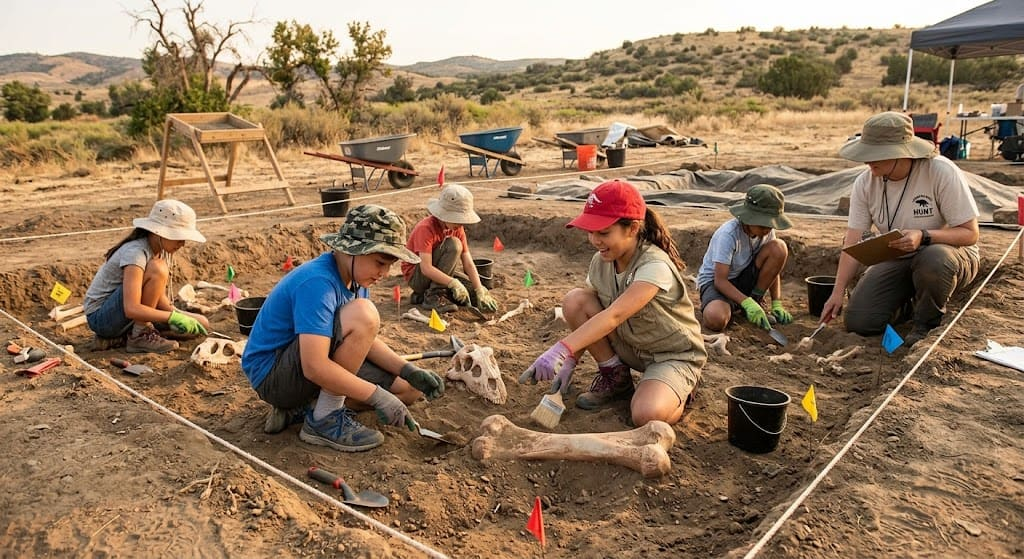
I hide lightweight plastic skeleton pieces around a defined area and ask the children to find them. Once all the pieces are collected, they work together to rebuild the skeleton.
Before the hunt starts, I count the pieces so I know exactly how many should be found. For younger children, I choose larger pieces and avoid skeleton decorations with tiny detachable parts.
I keep the hiding locations easy to reach and away from stairs, fragile objects, or areas children shouldn’t enter.
The game can be competitive with teams or cooperative with everyone working toward one complete skeleton.
23. Bobbing for Apples
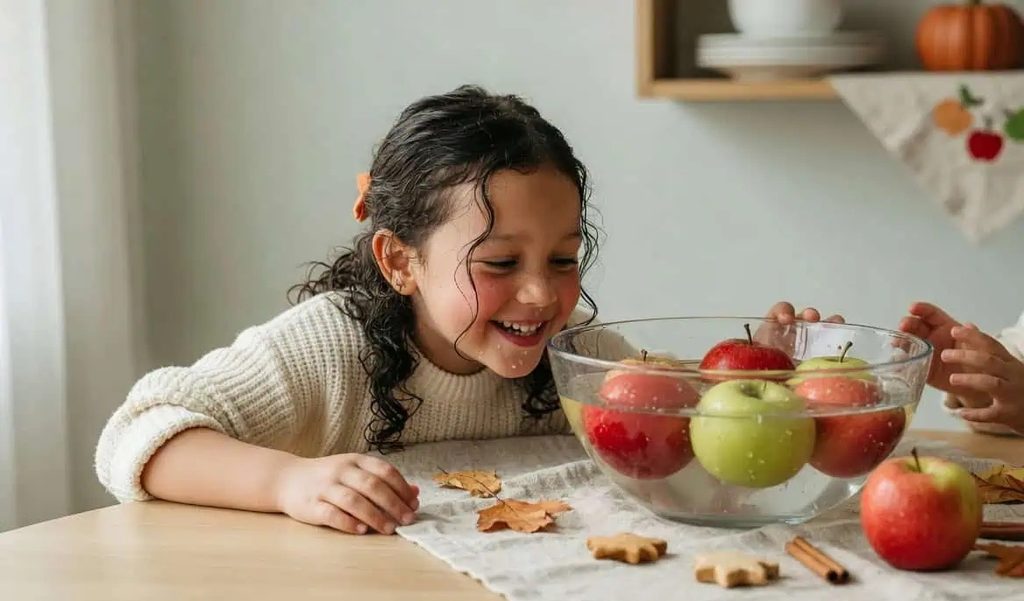
Traditional bobbing for apples involves several children putting their faces into the same container of water, so I treat it cautiously because of hygiene and sharing concerns.
If I want the same idea, I prefer giving each child a clean individual container with water and one washed apple. I keep towels nearby because spills are likely.
I also check food ingredients and dietary needs before serving apples or other food-based activities.
For younger children, I prefer changing the challenge altogether. An apple-toss game or a simple apple-pickup activity can keep the fall theme without requiring children to put their faces into water.
24. Halloween Musical Tombstones
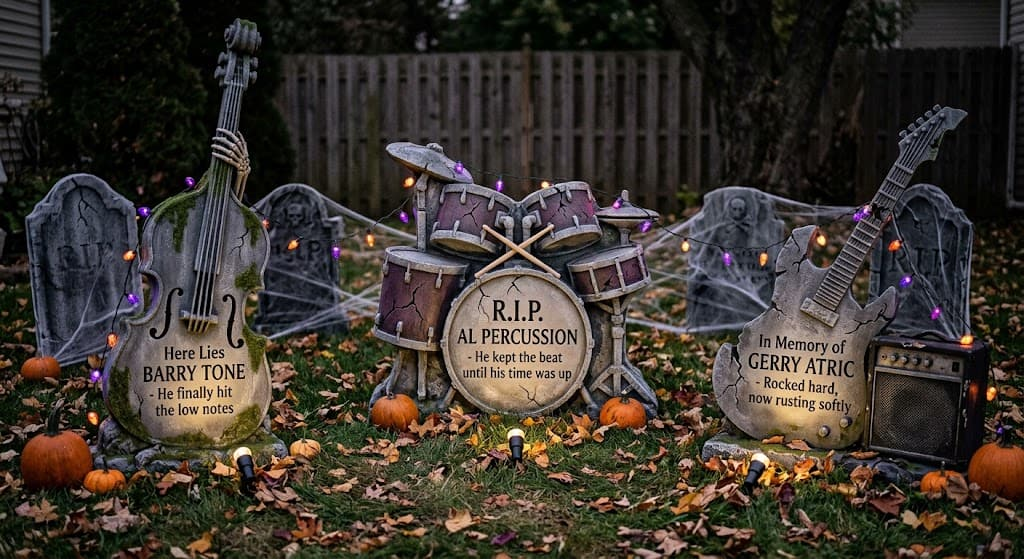
I turn musical chairs into a Halloween game by using lightweight paper or cardboard tombstones as the spaces. Children move around the circle while Halloween music plays.
When the music stops, everyone finds an available tombstone. If I’m playing with younger children, I can avoid elimination and simply change the movement challenge from round to round.
The tombstones should be lightweight and positioned so they don’t become tripping obstacles. I keep the walking or moving area clear of toys, cords, bags, and fragile decorations.
25. Pumpkin Roll Race
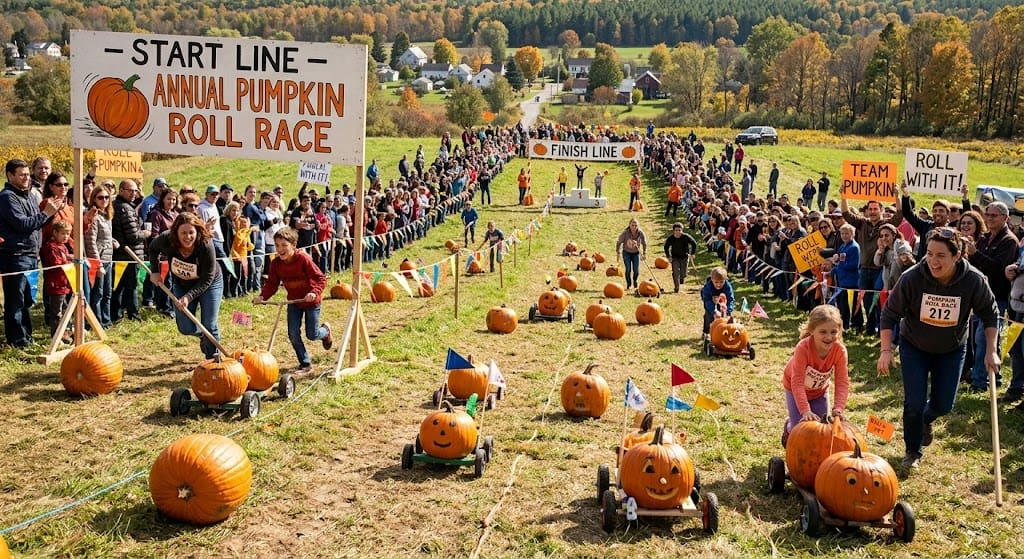
I give each child a small pumpkin and mark a simple track with painter’s tape. The goal is to move the pumpkin toward the finish without picking it up.
I don’t have children push pumpkins with their noses. Instead, I let them guide the pumpkin with their hands while staying behind it, which is easier for me to supervise and keeps faces away from the floor.
I test the pumpkins before the race because their uneven shapes can make them roll in unexpected directions. A clear, level surface gives children more room to control them.
For younger children, I shorten the track and focus on completing the course rather than racing.
26. Ghost in the Graveyard
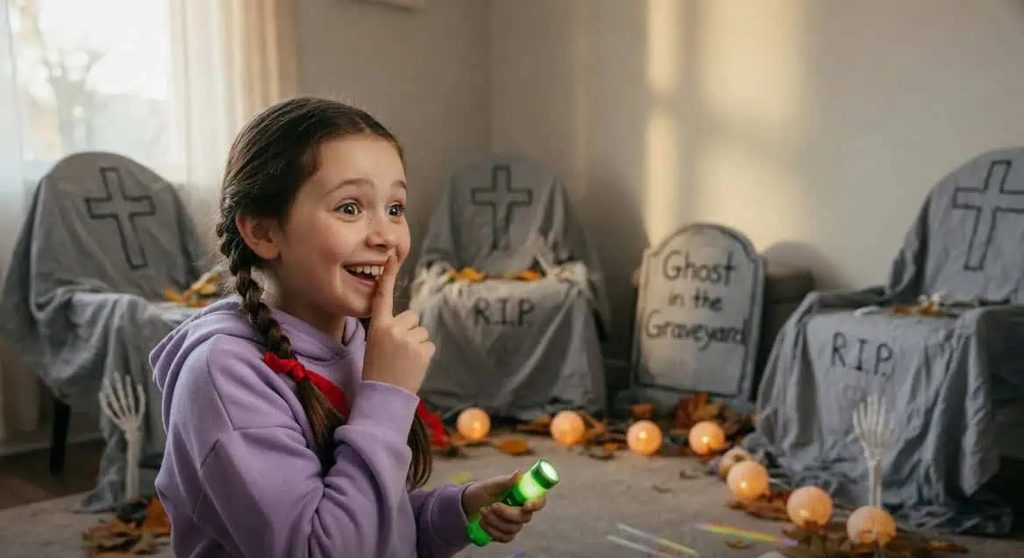
I use this as an outdoor movement game with one child designated as the ghost and the rest of the group starting at a clearly marked home base.
Before the game begins, I establish boundaries and make sure everyone knows where they can run. I keep the play area away from roads, active driveways, pools, steep areas, and other hazards.
Adequate lighting is important, particularly if the game is played near dusk. I also check costumes before starting because long capes, trailing fabric, oversized shoes, or masks that restrict vision can make running harder.
The yard should be free of obstacles such as hoses, toys, garden tools, and uneven areas that could cause a fall.
27. Halloween Photo Booth Hunt

I create a small photo area with simple Halloween props such as witch hats, capes, glasses, cardboard accessories, or other lightweight decorations.
Instead of taking random pictures, I turn the booth into a game by preparing photo challenges. Children might need to create a silly monster pose, take a group picture, make a funny face, or pose like a ghost.
I have an adult handle the camera so children aren’t passing a phone around while moving between activities.
The challenges can be completed individually or in groups, and I can keep the rules flexible for younger children who may not want to follow a long list.
28. Mystery Box (Feel and Guess)
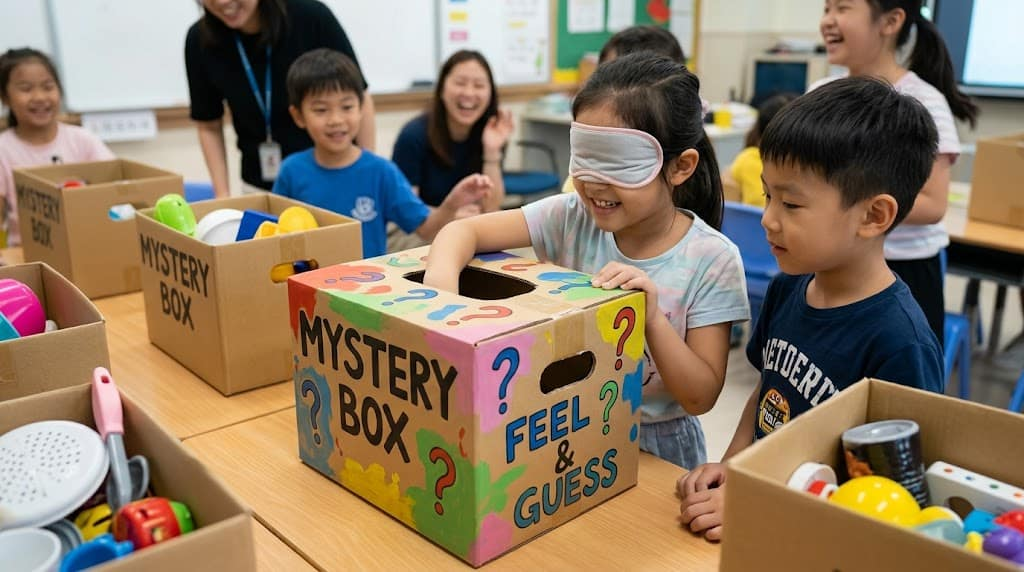
I prepare boxes with openings large enough for a child’s hand and place harmless, age-appropriate objects inside. The children reach in without looking and try to identify what they feel.
For a Halloween theme, I might use familiar textures such as cooked spaghetti for pretend worms, a peeled grape for an eyeball, or a soft sponge for a pretend brain.
I check every item before using it. I don’t put sharp objects, toxic materials, hot objects, choking hazards, or anything that could cause an allergic reaction into the boxes.
If I use food as a sensory prop, I identify it clearly and consider the children’s allergies and dietary needs. With younger children, I stick with larger, familiar, harmless textures and supervise them closely.
Halloween Games for Kids
29. Costume Parade
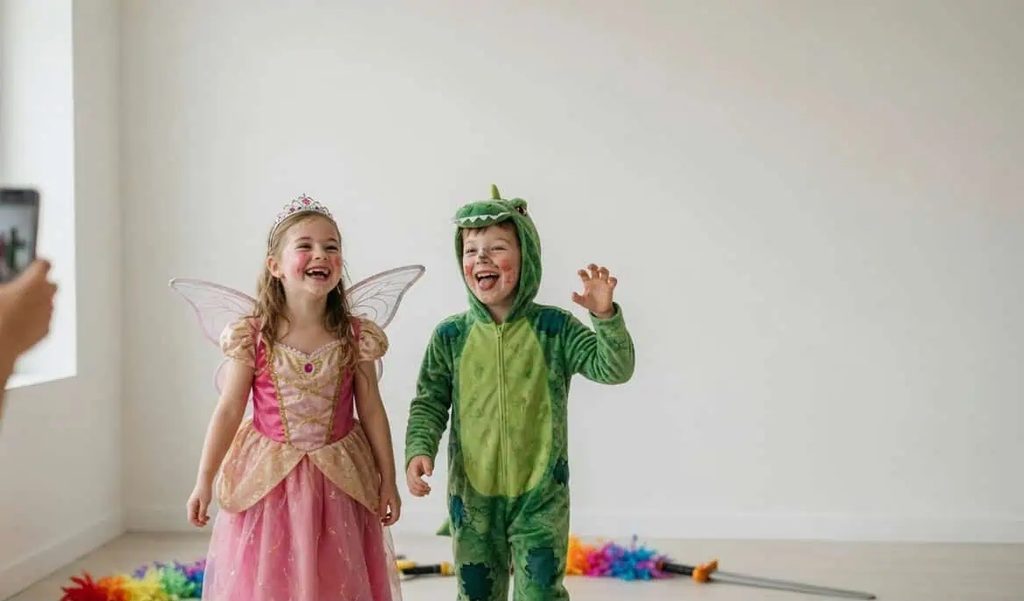
I like ending the party with a costume parade because it gives each child a chance to show their costume without turning the activity into a serious competition.
I line the children up and let them walk through a simple runway while Halloween music plays. The hallway, living room, classroom, or another clear area can work as long as there is enough room to move comfortably.
I can use playful categories such as Most Creative, Funniest, Most Colorful, Best Homemade Costume, or Cutest Costume. I make sure every child receives some kind of recognition rather than focusing on one overall winner.
After the parade, I can move naturally into group photos, goodie bags, snacks, or parent pickup.
How to Pick the Right Games for Your Party
I don’t try to fit all 29 games into one party. For most two-hour gatherings, five or six main activities are enough, especially when I also allow time for food, photos, free play, bathroom breaks, and unexpected pauses.
For children around ages 3 to 6, I tend to choose simple games such as pumpkin toss, Halloween bingo, freeze dance, pin the spider on the web, and pumpkin decorating. Many children in this age range do better with short instructions and activities that can be adjusted quickly.
For ages 7 to 10, I can add more movement and competition depending on the group. The mummy race, scavenger hunt, bowling, mystery box, and outdoor games can work well when there is enough space and adult supervision.
For tweens, I lean more toward social activities such as charades, Pictionary, photo challenges, and the story circle. Depending on the group, they may prefer activities that give them more room to joke, create, and interact with friends.
For mixed-age groups, teams can help me adjust a game without creating completely different activities. Older children can demonstrate a game or help with simple tasks, but they should not be treated as substitutes for adult supervision.
Indoor vs. Outdoor Halloween Games
I choose the location based on more than whether a game technically can be played indoors or outside. I look at floor space, furniture, fragile decorations, lighting, the condition of the ground, and how easily children can move in their costumes.
For indoors, I often choose Halloween bingo, pin the spider on the web, charades, Pictionary, the mystery box, mummy games, hot pumpkin, and freeze dance.
For outdoors, pumpkin bowling, scavenger hunts, pumpkin races, ghost in the graveyard, and other movement-based games can be easier when there is enough open space.
I always think about a backup plan if an activity depends on being outside. Rain, wind, cold temperatures, wet ground, or changing light can affect whether an outdoor game is practical.
If the ground becomes slippery or visibility is poor, I move the activity indoors or choose a quieter game instead.
Cheap Supplies You’ll Need
I can cover most of these activities with a basic collection of supplies:
- Toilet paper
- Small pumpkins
- Lightweight plastic bottles
- Plastic spiders
- Large plastic rings
- Lightweight witch hats
- Paper and markers
- Soft bean bags
- Painter’s tape
- Black yarn or string
- Halloween decorations
- Glow sticks
- Age-appropriate craft supplies
- Cups and spoons
- Simple prizes
I check what I already have before shopping. Party supplies tend to overlap, so I don’t need a separate kit for every game.
For example, painter’s tape can mark a throwing line, create a pumpkin race track, identify team areas, or establish a boundary for a scavenger hunt.
I also avoid buying supplies simply because they look festive. If an item doesn’t serve a specific activity, I usually leave it off my shopping list.
Quick Safety Tips for Halloween Party Games
Before the games begin, I do a quick walk through the play area. I look for anything children could trip over, bump into, knock down, or accidentally pick up during an activity.
Costumes
I check for long capes, trailing fabric, oversized shoes, loose accessories, and masks that interfere with vision. Costumes should allow children to walk and move comfortably, particularly before running or chasing games.
I also remove loose costume pieces when they aren’t needed for an activity. A child can put them back on when the active game is finished.
Food
I ask parents about known food allergies before the party and keep ingredient labels available for snacks. I don’t assume that a small amount of an ingredient is safe for everyone.
When foods are served separately, I use separate utensils where practical and avoid letting children mix serving tools between containers.
Small Objects
I pay particular attention to plastic rings, small decorations, detachable craft pieces, small game parts, and small candy around toddlers and other young children who may put objects in their mouths.
If a game requires small pieces, I consider whether the age group can use them appropriately and keep an adult nearby.
Open Flames and Lights
I don’t use real candles in pumpkins or other open flames around active children. Battery-operated or LED lights are a practical alternative for creating the same Halloween glow.
I also keep matches, lighters, and other ignition sources away from the activity area.
Strings and Yarn
For games using yarn or string, I keep the setup controlled and visible. I don’t place string around children’s necks or create arrangements that can wrap around legs or become difficult to escape.
The spider web activity should remain simple enough that an adult can supervise the entire setup.
Water and Craft Materials
Water games need a surface that can handle spills and should be supervised. I also check craft supplies for their age recommendations and follow the product label rather than assuming a material is appropriate for every child.
I don’t use dry ice, hot liquids, hazardous chemicals, or sharp tools as casual ingredients for children’s Halloween activities.
Quiet Space
I keep a small quiet area available with a chair, blanket, books, or another calm activity. Some children may simply need a few minutes away from the noise before deciding whether they want to rejoin the group.
I treat this as part of the party setup, not as a punishment or a requirement to participate.
Adult Supervision
Rules help, but they don’t replace an adult watching the activity. I try to assign adults to specific areas when possible.
Pro Tip: One adult can focus on running the game while another keeps an eye on the surrounding children, food table, entrance, or nearby play area. That division of attention is much more practical than expecting one person to monitor everything at once.
Frequently Asked Questions
What are the best Halloween party games for small kids?
For younger children, I tend to choose Halloween bingo, pumpkin toss, freeze dance, simple ring toss, pumpkin decorating, and the costume parade. I can shorten the games and simplify the rules depending on the children.
How many games should I plan for a 2-hour Halloween party?
I plan around five or six main games for a two-hour party and keep one or two quick backups available. I also leave time for snacks, bathroom breaks, photos, costumes, free play, and transitions between activities.
What are some good Halloween games for the classroom?
For classroom parties, I look for games that use limited space and create manageable cleanup. Halloween bingo, charades, Pictionary, the candy corn guessing jar, and pin the spider on the web can all be adapted to a classroom setting. I would also check the teacher’s rules before bringing food or messy supplies.
How do I make Halloween games less scary for younger kids?
I use friendly pumpkins, silly ghosts, colorful decorations, and funny characters instead of frightening ones. I avoid jump scares, dark rooms, frightening masks, and activities that could genuinely upset a child. I also let children skip an activity if they aren’t comfortable with it.
What prizes should I give for Halloween games for kids?
I keep prizes small and inexpensive. Stickers, pencils, temporary tattoos, glow sticks, themed erasers, and small craft supplies are useful options. I can also give participation awards or fun categories so winning isn’t the only way children receive recognition.
Can I play these games for a Halloween party with no candy?
Yes. Most of these games don’t require candy. I can use stickers, glow sticks, small toys, certificates, or craft supplies as prizes and replace candy-based activities with bingo, drawing, races, storytelling, decorating, or guessing games.
What are the easiest Halloween games for kids to set up at the last minute?
Freeze dance, the mummy wrap race, and pumpkin toss are among the quickest options. Freeze dance needs music and clear space, while the mummy race mainly needs toilet paper. Pumpkin toss only needs a lightweight bucket and soft throwing items.
Read this next: 21 Halloween Birthday Party Ideas (October Birthdays Done Right)
Final Thoughts
I don’t think a good children’s Halloween party needs the biggest decorations, the most elaborate food, or the longest activity list. What matters to me is having enough planned structure to keep the gathering moving without making the host feel like they are following a minute-by-minute schedule.
I would choose five or six games that fit the children’s ages and the available space, then prepare one or two backups. I also leave room for snacks, photos, free play, bathroom breaks, and those unexpected pauses that happen at almost every kids’ party.
The funny moments are often the ones that stand out: a crooked toilet-paper mummy, a silly costume pose, an unexpected answer during Pictionary, or a group story that takes a completely different turn.
So I keep the planning practical, check the play area before each activity, and let the party breathe. A little preparation gives me the structure I need while leaving plenty of room for children to simply enjoy being together on Halloween.



4 Comments