21 Simple Group Games for Kids to Play Anytime, Anywhere
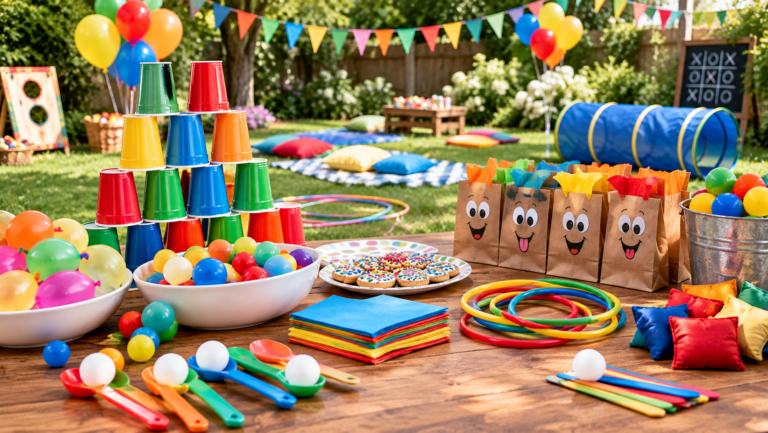
When I’m organizing a group activity for children, I’ve found that simple games are often easier to manage than complicated activities. Kids usually need enough room to move, clear instructions, and something engaging to keep everyone involved. That can be enough to turn a birthday party, classroom activity, family gathering, or playdate into a fun experience.
Group games also give children opportunities to move, communicate, take turns, and cooperate. Some are better for getting extra energy out, while others work well when the group needs a quieter activity. I consider the children’s ages, group size, available space, and energy level before choosing what to play.
This list includes classic circle games, races, guessing activities, music games, team challenges, and imaginative play. Most need very little preparation, so I can adapt them for an indoor room, backyard, classroom, or larger outdoor space.
These 21 simple group games give me plenty of options when I need a low-preparation activity for children. Active choices such as Freeze Tag, Capture the Flag, and Red Light, Green Light work well when there is room to move, while Telephone, Charades, and Heads Up, Seven Up are useful when I need something calmer.
Age makes a difference when choosing a game. Younger children generally do better with short rules, demonstrations, and activities that let them keep participating. Older children may enjoy more challenging team games, guessing activities, and treasure hunts.
Save this for later
Table of Contents
I also check the playing area before starting. Indoor games may need furniture moved out of the way, while outdoor games require clear boundaries and a suitable surface. If the weather changes or the group loses interest, having a quieter backup activity ready can make the gathering much easier to manage.
Key Takeaways
- Match the game to the children’s ages, group size, space, and energy level.
- Most activities use simple supplies that are already available at home, school, or a party venue.
- Demonstrate unfamiliar rules instead of relying only on verbal instructions.
- For younger children, consider participation-based alternatives when elimination would create long waiting periods.
- Check floors, grass, furniture, and outdoor boundaries before active games begin.
- Supervise balloons, ropes, chairs, small prizes, and other equipment appropriately for the children’s ages.
- Keep a backup activity available for weather changes, limited space, or shorter attention spans.
Related article: 35 Halloween Party Food Ideas for Kids (Easy, Spooky and Fun)
1. Duck, Duck, Goose

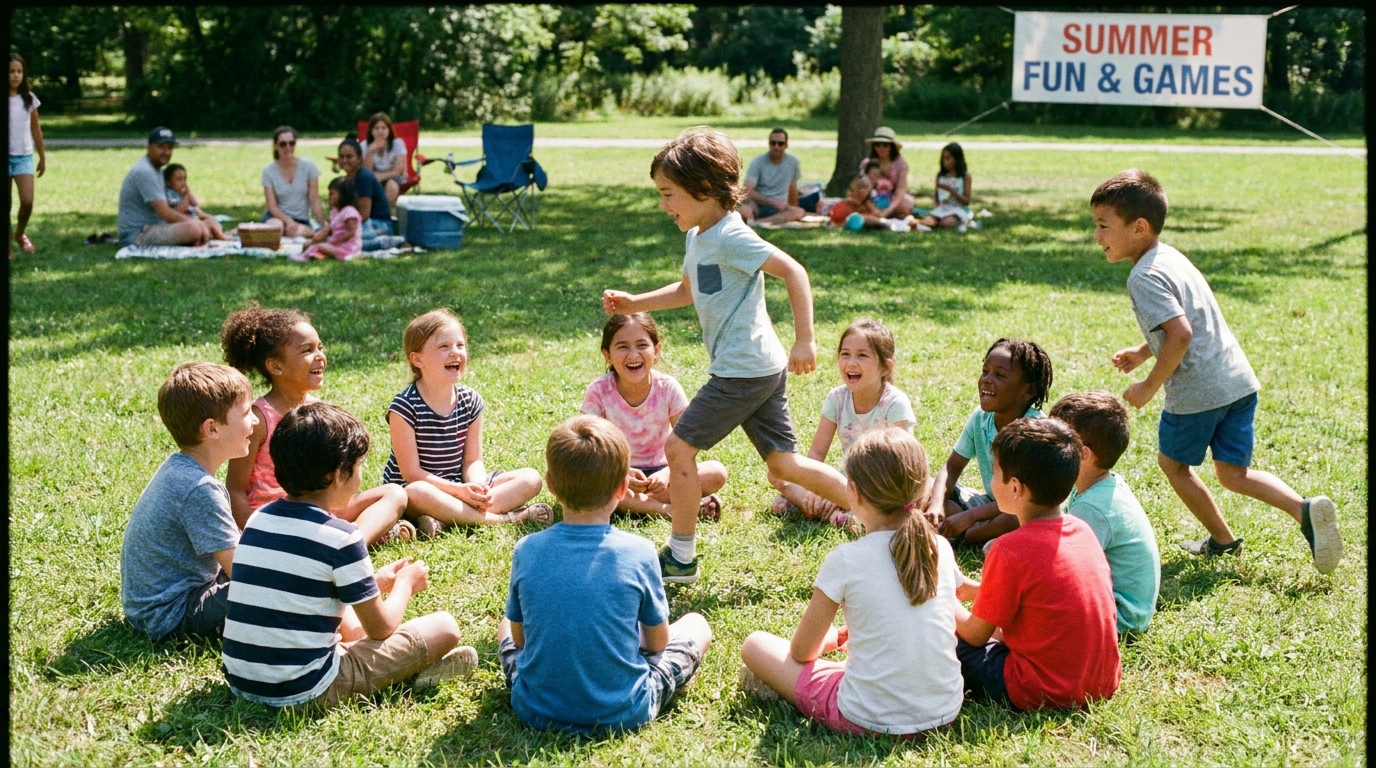
Duck, Duck, Goose is an easy circle game that requires almost no equipment. The children sit in a circle while one player walks around the outside, gently tapping each child and saying “duck” until choosing someone as the “goose.”
When the player says “goose,” that child stands and tries to tag the first player before they reach the empty place in the circle. If the runner gets there first, the selected child becomes the next player walking around the circle.
I find this works particularly well with younger children because the rules are easy to demonstrate. Everyone also gets a turn without needing teams, scoring, or complicated preparation.
Pro Tip: I make the circle large enough for children to move comfortably and remind everyone to use gentle taps. Before starting, clear toys, bags, and other objects from the running path.
2. Freeze Tag
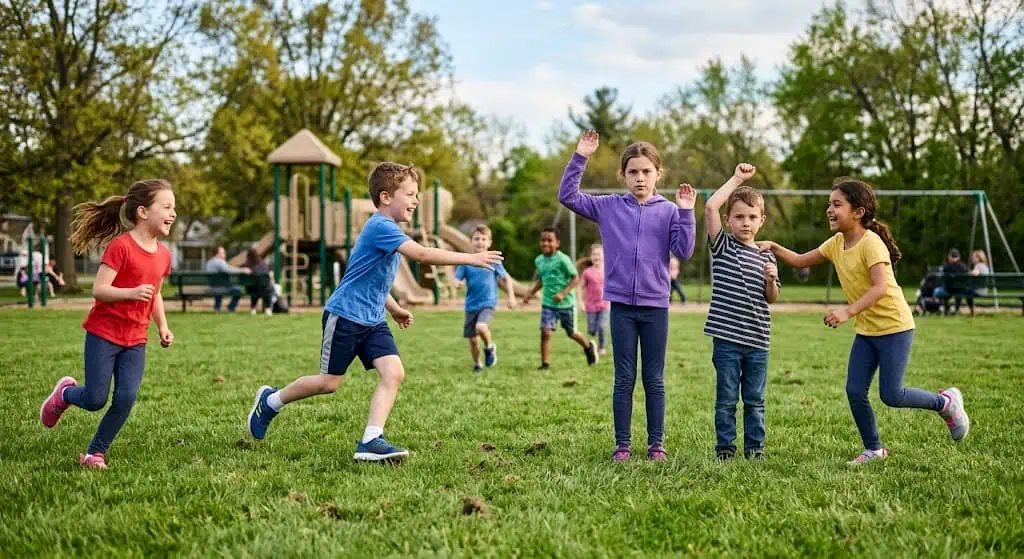
Freeze Tag gives ordinary tag a teamwork element. One child starts as “it” and tries to tag the other players. Anyone who is tagged freezes in place until another player reaches them and tags them free.
The game works best in an open area where children can see the boundaries clearly. I explain beforehand that tagging means a gentle touch and that pushing, grabbing, or blocking another player is not part of the game.
For a mixed-age group, I keep the boundaries manageable so younger children are not constantly trying to keep up with much older players. A designated no-tag area can also give children an optional place to pause.
Pro Tip: A no-tag zone is especially useful during longer rounds. I mark it clearly and let children use it briefly when they need a break before returning to the game.
3. Simon Says
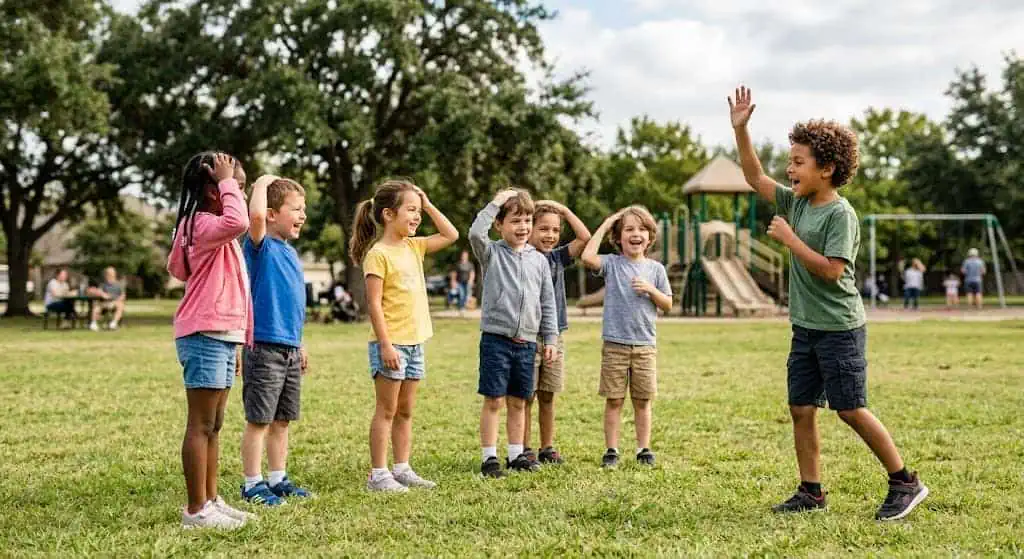
Simon Says is a simple listening game that works for both small and larger groups. One child becomes “Simon” and gives instructions such as clapping, hopping, touching their toes, or turning around.
The catch is that players should only follow a command when it begins with “Simon says.” If the leader gives an instruction without those words, players should stay still.
For younger children, I stick with familiar one-step movements. Older children can handle quicker commands or combinations that require more attention.
Pro Tip: I keep every command age-appropriate and avoid anything involving furniture, unsafe heights, dangerous movements, or unwanted physical contact. Demonstrating a few examples first helps younger players understand the rule.
4. Red Light, Green Light
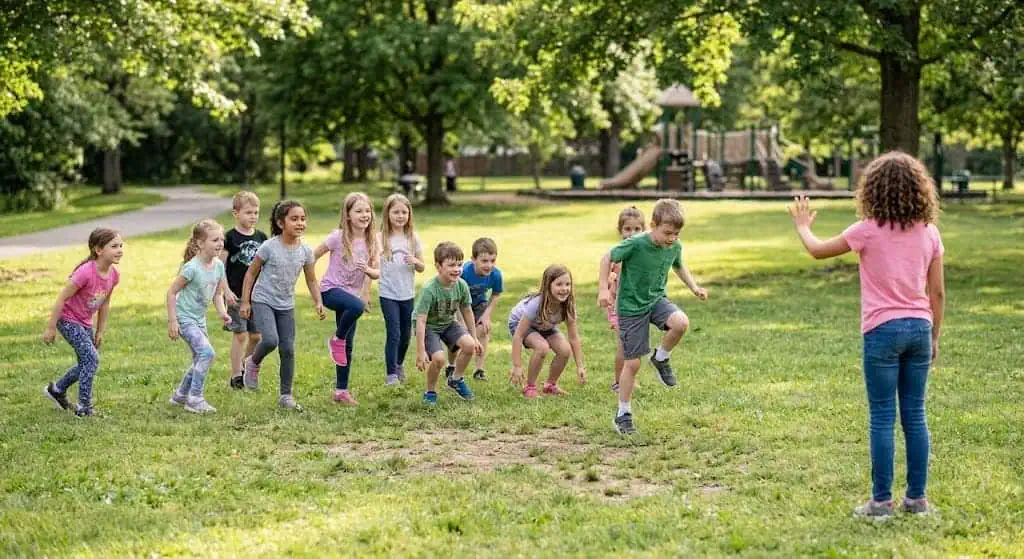
Red Light, Green Light needs only a starting point, a finish point, and one child to act as the traffic light. When the leader calls “green light,” the other players move forward. When “red light” is called, they stop where they are.
If someone continues moving after the red light, the host can send them back to the starting line or have them take a small step backward. I treat this as part of the game rather than a punishment.
The first player to reach the traffic light wins the round. I prefer controlled movement over maximum-speed running, especially when several children are playing together.
Pro Tip: A flat, clear surface makes this game much easier to supervise. Before starting, remove obstacles and explain where children can and cannot move.
5. Musical Chairs
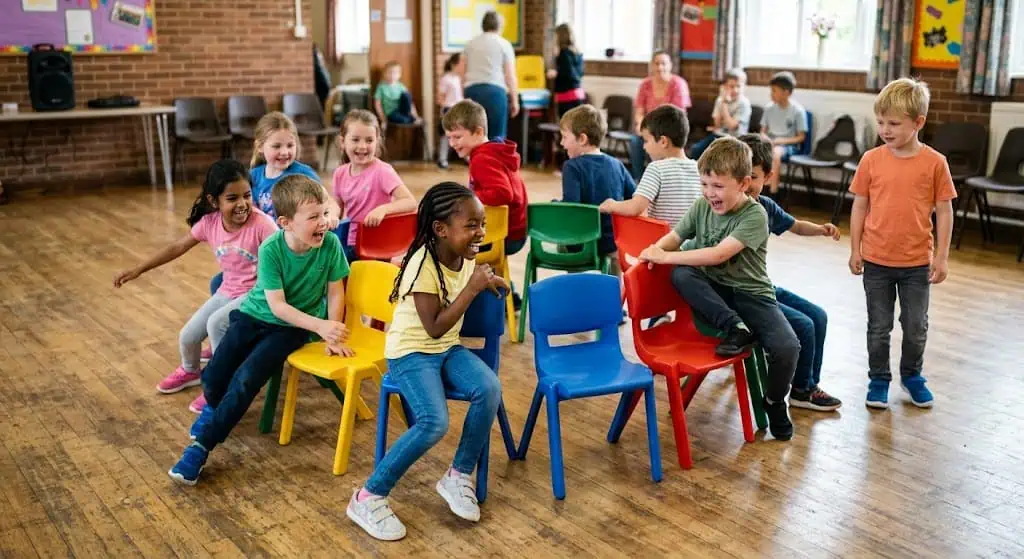
For traditional Musical Chairs, I arrange chairs in a circle with one fewer chair than the number of players. Children walk around the chairs while music plays and find a seat when the music stops.
The player without a chair normally leaves the round, and another chair is removed before the next round. That continues until one player remains.
With younger children, I sometimes keep everyone involved instead of eliminating players. Sharing seats, changing the movement rule, or giving the child without a chair a quick action to complete are simple ways to keep the activity moving.
Pro Tip: Use stable chairs on a level surface and have children walk rather than push or race around the furniture. Leave enough space around the chairs for comfortable movement.
6. Hot Potato
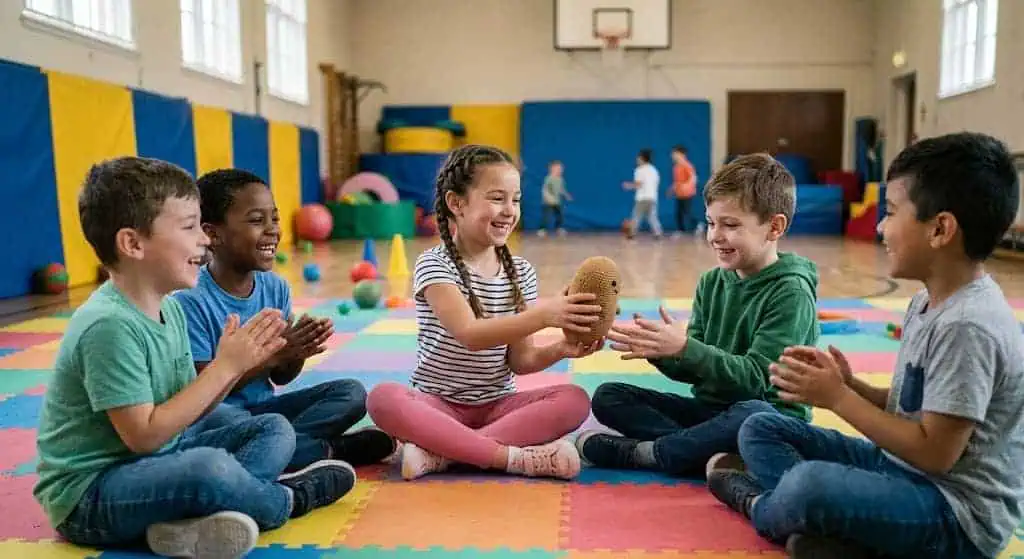
Hot Potato is a quick passing game that needs only a soft, lightweight object and some music. The children sit or stand in a circle and pass the object from one person to the next while the music plays.
When the music stops, the child holding the object can either leave the round or complete a simple challenge and continue. For younger children, I prefer the second option because it reduces waiting.
Changing the length of the music between rounds keeps players from knowing exactly when the music will stop.
Pro Tip: Use something soft that can be passed easily, and remind children to hand it to the next player rather than throwing it across the circle.
7. Capture the Flag
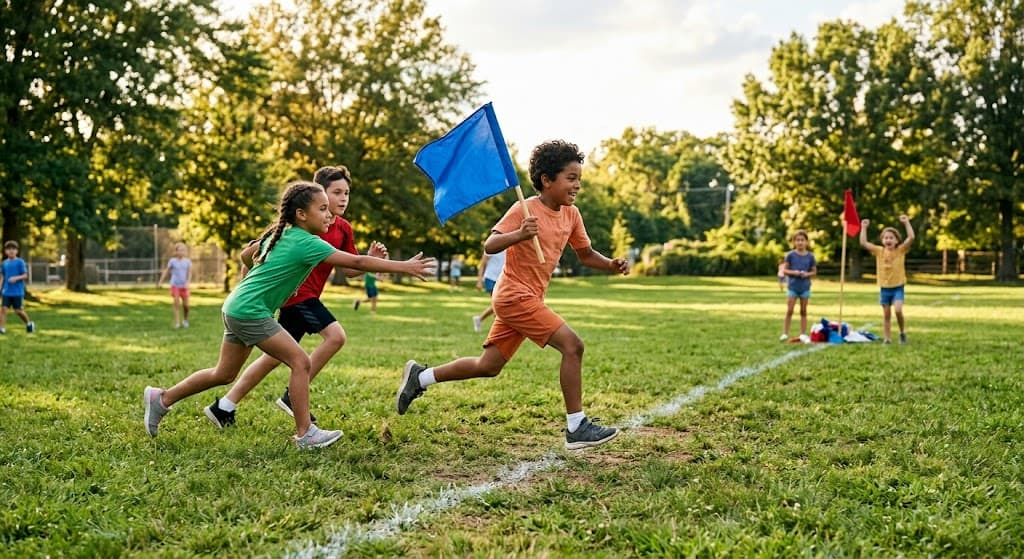
Capture the Flag is a better fit for larger groups with enough outdoor room to establish two clearly defined areas. I divide the children into two teams and give each side a flag or another visible marker.
The objective is to enter the other team’s area, take its flag, and return to your own side without being tagged. I explain the boundaries and what happens after a player is tagged before the game starts.
Teams do not have to be perfectly equal, but I try to avoid a large mismatch in age or ability when organizing them. This helps keep the game manageable and gives both sides a reasonable chance to participate.
Pro Tip: Use a clear, suitable playing surface and keep the game away from roads, driveways, water, and restricted areas. I also make the no-rough-contact rule clear before anyone starts running.
8. Hide and Seek
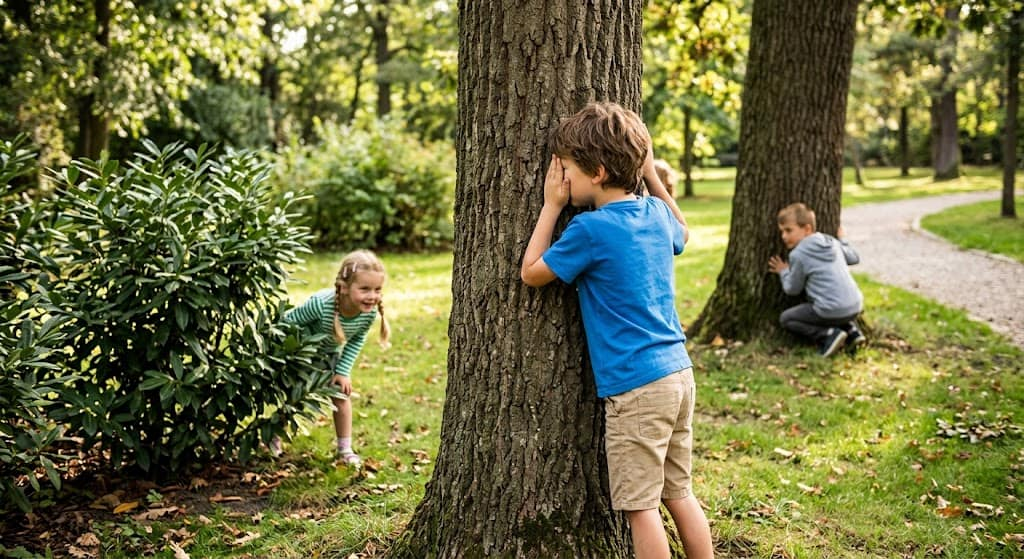
Hide and Seek remains one of the easiest games to organize. One child becomes the seeker and counts while everyone else finds an approved hiding place. When counting is finished, the seeker searches for the hidden players.
Depending on the version, the first person found can become the next seeker, or the last person found can take the role. I explain the version I’m using before the round begins so everyone knows what to expect.
Clear boundaries matter even more when children are playing somewhere unfamiliar. Hiding should never involve locked rooms, vehicles, enclosed cabinets, areas where a child could become trapped, or locations near roads or water.
Pro Tip: I walk through the approved play area before the game starts and point out places that are off-limits. This takes only a minute and prevents children from choosing unsafe hiding spots later.
9. Balloon Pop Relay
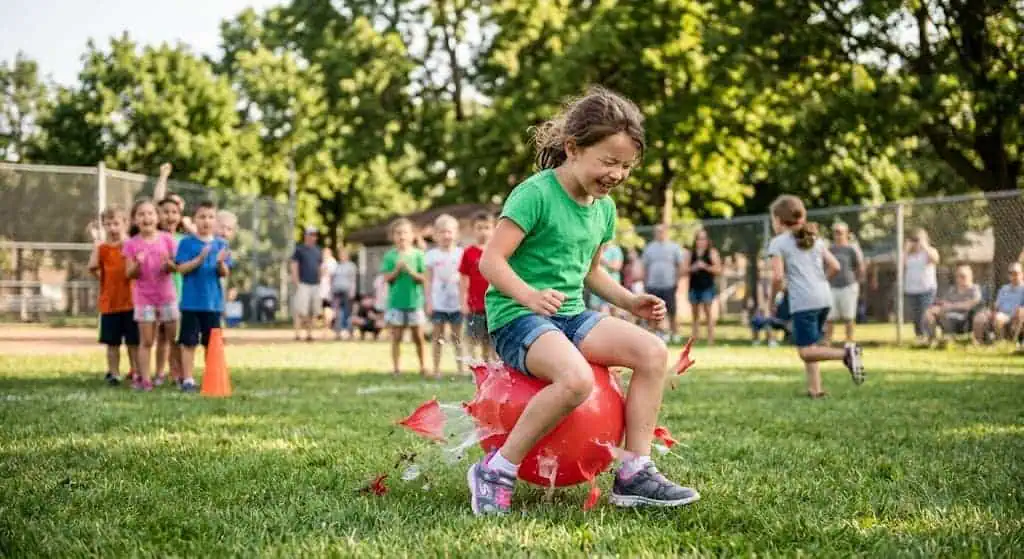
Balloon Pop Relay adds a balloon challenge to a basic team relay. I divide the children into teams and place the balloons at a designated point. One player at a time moves to the balloon area, completes the agreed task, and returns so the next teammate can take a turn.
If the activity involves sitting on or otherwise popping the balloon, close supervision is especially important. Broken balloon pieces can be a choking hazard, and uninflated balloons should also be kept away from young children.
I collect popped pieces immediately rather than leaving them scattered around the playing area. If younger children or siblings are nearby, the popping part can be replaced with balloon carrying, balancing, or a beanbag relay.
Pro Tip: I prepare a container or trash bag nearby so broken balloon pieces can be picked up right away. If I cannot supervise the balloons closely, I skip the popping portion.
10. Tug of War
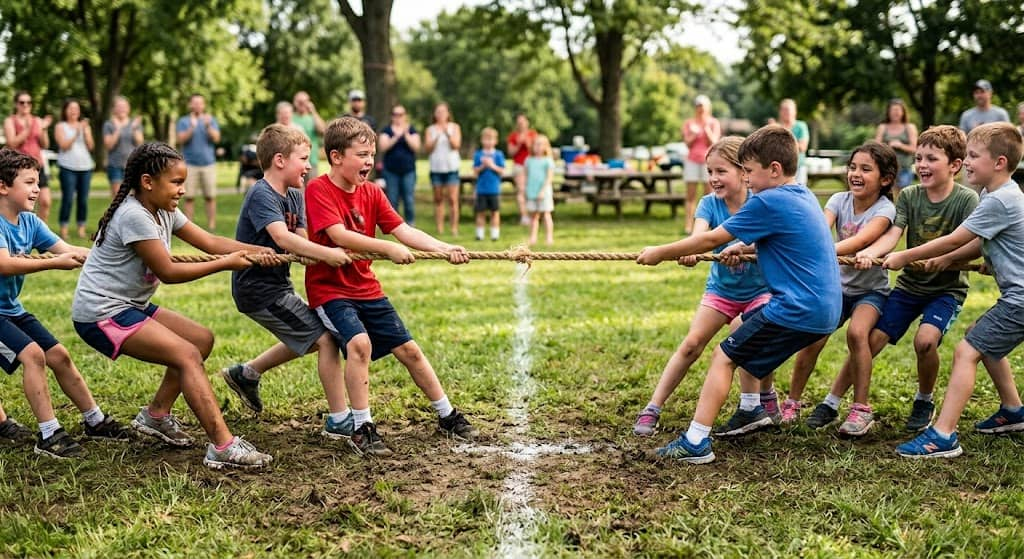
Tug of War can be exciting, but I give this game more attention to setup and supervision than many of the quieter activities. Two teams hold opposite ends of a suitable rope and pull toward their side of a clearly marked center line.
I try to make the teams reasonably balanced by age, size, and ability rather than putting all of the strongest or oldest players together. The goal is to avoid a major mismatch that could make the game difficult to control.
A suitable outdoor surface with enough space behind each team is important. I stop the game if someone falls, becomes tangled, loses their grip, or moves into an unsafe position.
Pro Tip: Never wrap the rope around a child’s hands, wrists, body, or clothing. I also tell players not to jerk the rope suddenly and make sure there is plenty of clear space behind both teams.
11. Pass the Parcel
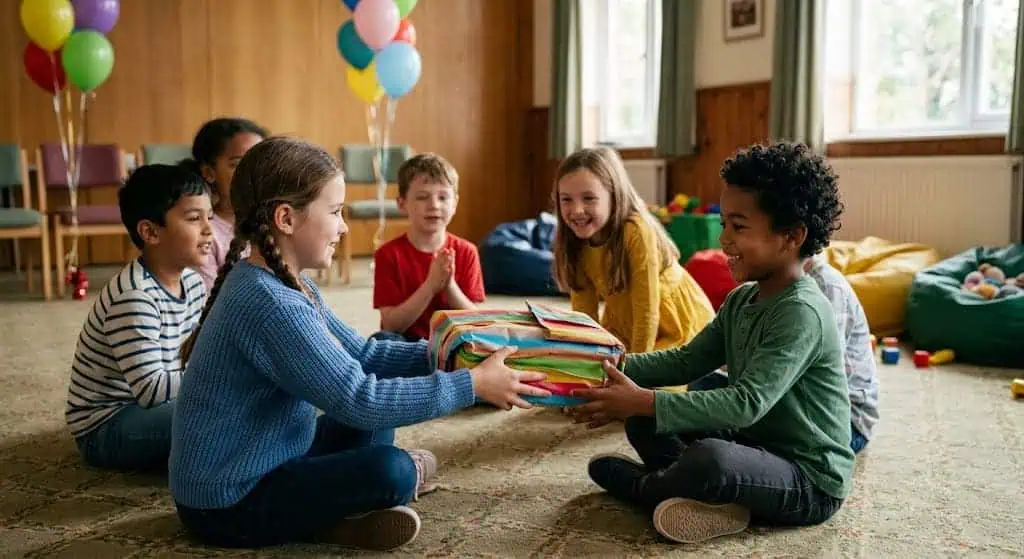
Pass the Parcel is a simple choice for birthdays and other seated group activities. I prepare one parcel with several layers of wrapping and have the children pass it around while music plays.
When the music stops, the child holding the parcel removes one layer. The process continues until the final layer reveals the main prize.
I can add notes between layers with simple actions, compliments, or party challenges instead of small physical prizes. If I do use prizes, they need to be appropriate for the ages of the children playing.
Pro Tip: I avoid tiny objects for young children and keep any small prizes away from children who may put objects in their mouths. A paper challenge or fun action can be just as effective as a prize.
Also read: 17 Pipe Cleaner Crafts for Kids That Are Fun to Twist Together
12. Relay Races
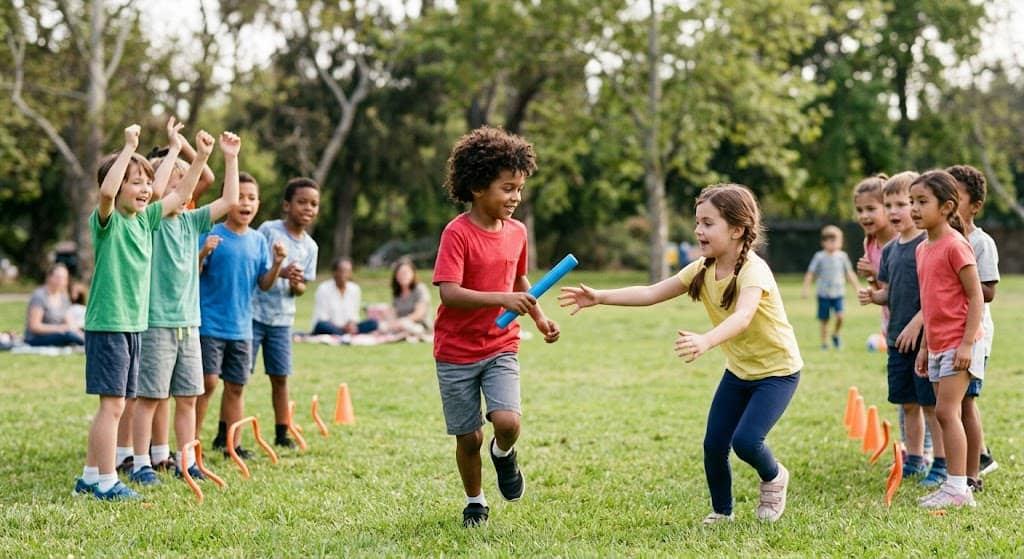
Relay races are easy to adjust to different ages and group sizes. I divide the children into teams and create a short course with simple tasks, such as walking between markers, hopping a short distance, or carrying a lightweight object.
The activities can change from round to round, which helps prevent the game from becoming repetitive. For younger children, the focus can be on completing their turn and cheering for teammates rather than finishing first.
I avoid tasks that involve unstable objects, unsafe balancing, dangerous jumping, or carrying sharp or heavy items.
Pro Tip: Give teams reasonably comparable distances and tasks. If one course is clearly harder than another, the game can feel frustrating even when winning is not the main goal.
13. Sardines
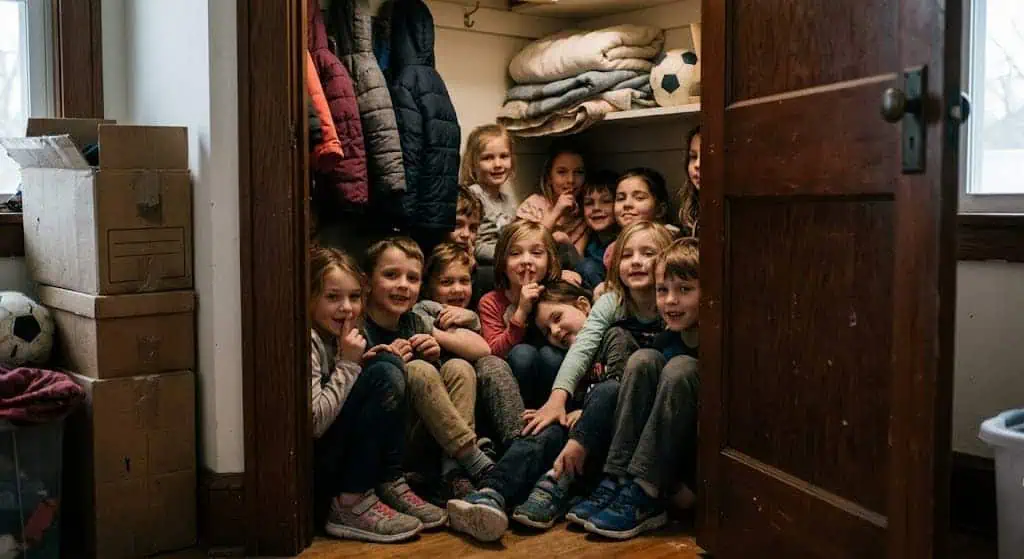
Sardines is a reverse version of Hide and Seek. One child hides while everyone else searches. When a player finds the hidden child, they quietly join them in the hiding location instead of announcing the discovery.
The group gradually grows in the hiding area until only one person remains searching. That player becomes the hider for the next round, depending on the version being played.
I choose a location with enough room for several children to stand comfortably. A crowded closet, vehicle, locked space, or enclosed area is not an appropriate hiding place.
Pro Tip: I decide the hiding boundaries before the game begins and set a limit on where children can go. If a hiding spot becomes crowded, the round ends rather than asking children to squeeze into it.
14. Charades
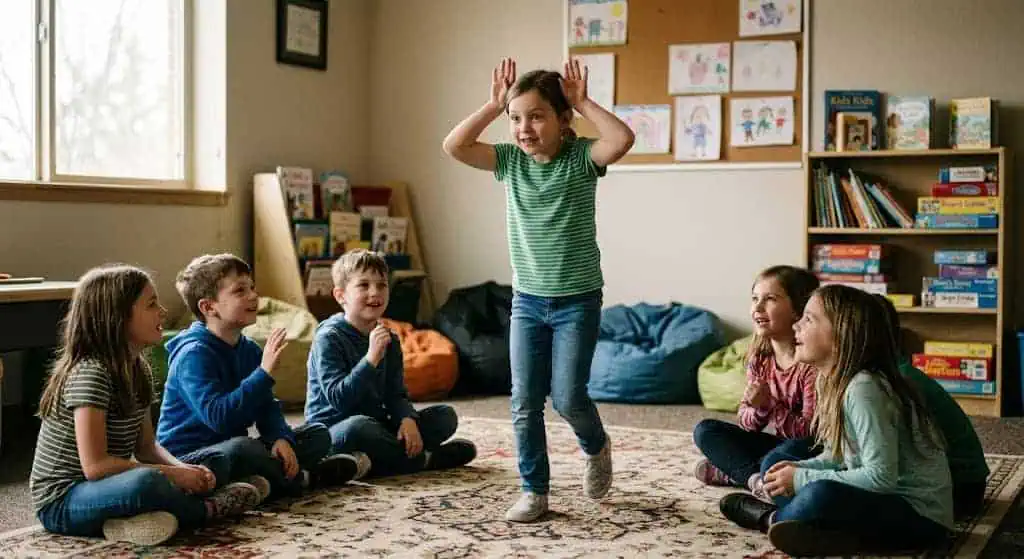
Charades gives children a chance to act and guess without needing a running area. One player receives a prompt and acts it out without speaking while the rest of the group tries to identify it.
For younger children, I use familiar prompts such as animals, foods, toys, and everyday activities. Older children can handle more detailed prompts or themed categories.
This game also works nicely with party themes. Halloween, animals, holidays, sports, and favorite story themes can all provide easy sources of prompts.
Pro Tip: I prepare the prompts before the activity starts. It keeps the game moving and prevents long pauses while children try to decide what to act out.
15. Statues
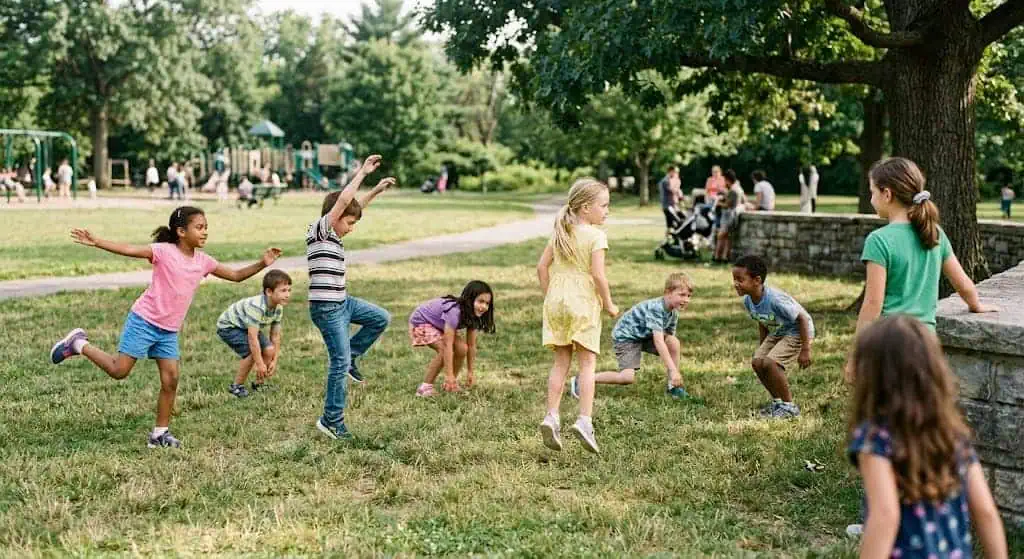
Statues, also called Freeze Dance, combines music with simple movement. I play music while the children dance or move around an open area. When the music stops, everyone freezes in place.
The traditional version eliminates anyone who moves, but I often let younger children stay in the game. Another option is to have children simply restart dancing when the music begins again.
The main setup requirement is enough room for everyone to move without bumping into furniture or one another.
Pro Tip: Keep the music at a comfortable volume so children can still hear instructions. I also leave space between players and remove objects that could become trip hazards.
16. Follow the Leader
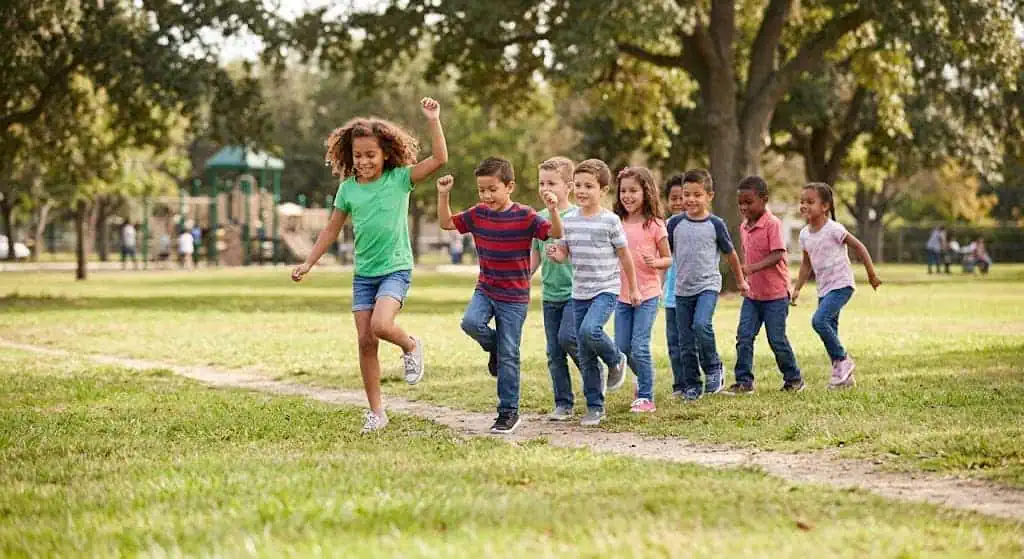
Follow the Leader works almost anywhere because the activity can be adjusted to the available space. One child leads while the rest of the group copies the movements, and the leader changes after a short turn.
Simple actions such as clapping, marching, hopping, stretching, or making gestures are easy for most groups to follow. I rotate the leader role so several children have an opportunity to guide the activity.
It also makes a useful transition game when moving from an active activity to something calmer.
Pro Tip: I set movement boundaries before starting. Climbing furniture, running into walls, unsafe jumping, or performing stunts are not part of the game.
17. Limbo
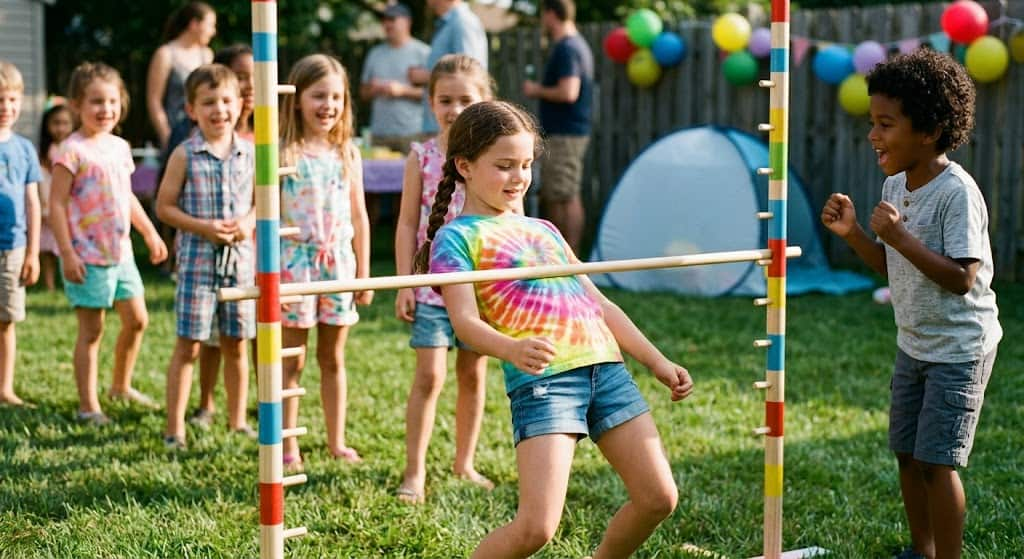
Limbo is a simple party activity that challenges children to move underneath a horizontal object without touching it. Two adults or older children can hold a lightweight, flexible item such as a foam pool noodle.
Each child takes a turn, and the height can be lowered gradually if the group wants to continue. There is no need to make the bar extremely low; once the movement becomes uncomfortable, I end the round.
The floor should be clear and dry, with enough space around the players to move without bumping into furniture or other children.
Pro Tip: A flexible, lightweight object is easier to manage than a heavy or rigid pole. I never pressure a child to bend farther than feels comfortable or continue after losing balance.
18. Heads Up, Seven Up
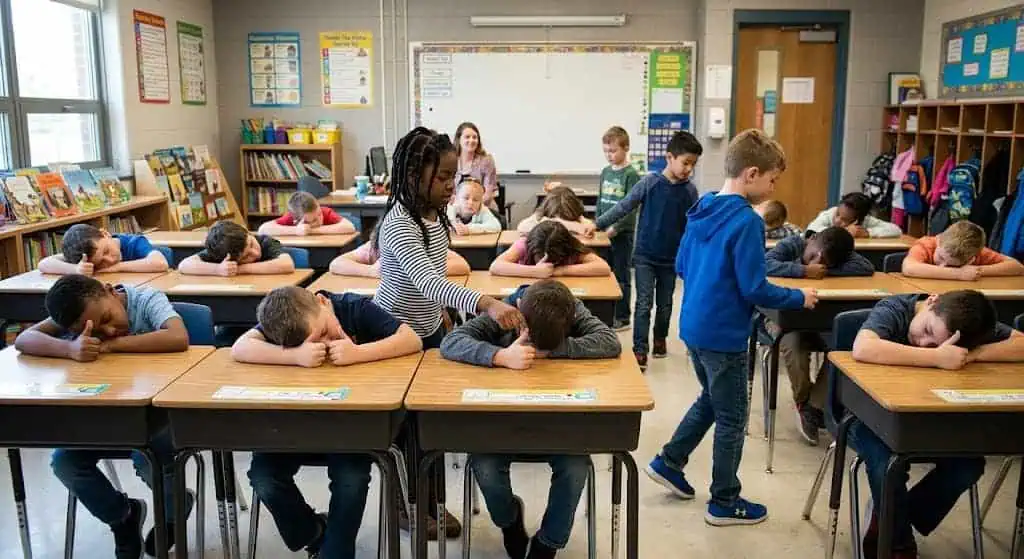
Heads Up, Seven Up is a quieter group game that fits naturally into classrooms, organized children’s groups, and indoor gatherings. Several selected players stand at the front while the remaining children put their heads down.
The selected players quietly tap one child each and return to the front. The tapped children then try to guess which player tapped them.
I find this works best when everyone understands the roles before the game begins. With younger children, I simplify the instructions because remembering several roles can make the activity unnecessarily difficult.
Pro Tip: Demonstrate one practice round before playing for real. I also remind the selected players that tapping should be gentle and that the game is about guessing, not tricking someone in a mean-spirited way.
19. Four Corners
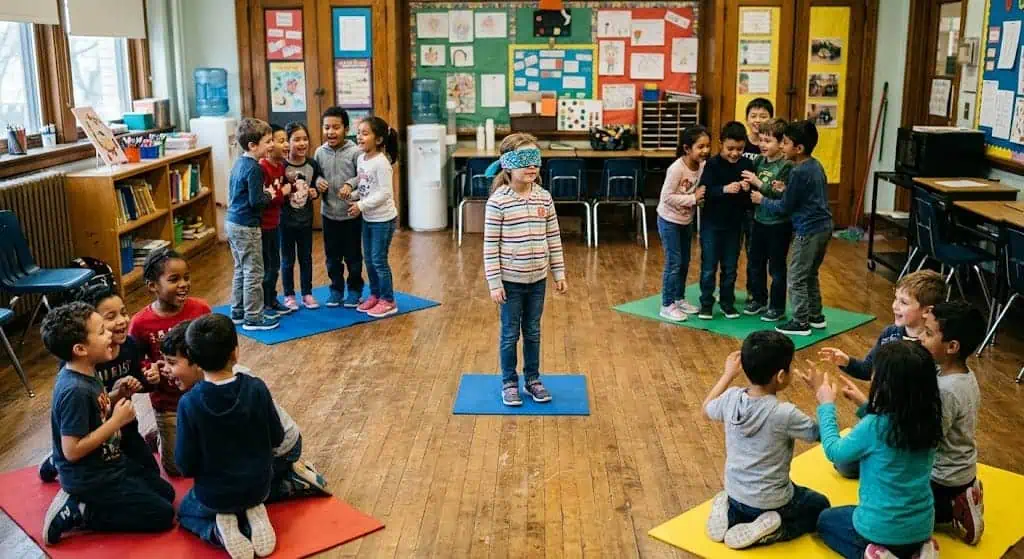
Four Corners uses four marked areas of a room, with one child standing in the middle. The remaining players quietly choose one of the four corners while the middle player closes their eyes.
Once everyone has selected a corner, the middle player calls out a number. Players standing in that corner leave the round or complete a small challenge, depending on the version being used.
The middle player stays in place while the other children move quietly to their chosen corners. This keeps the game more predictable and helps prevent collisions.
Pro Tip: Move chairs, bags, toys, and other objects away from the playing area. I have children walk rather than sprint, especially when the middle player has their eyes closed.
20. Telephone

Telephone is a quiet game that can produce plenty of laughs without requiring any equipment. The children sit in a circle, and the first player whispers a short sentence to the person next to them.
Each player passes the message along by whispering it once to the next person. When it reaches the final player, they say the message aloud so the group can compare it with the original.
For younger children, I use short, familiar sentences rather than complicated phrases. If someone genuinely cannot hear the message, I allow it to be repeated once rather than turning the game into a guessing test.
Pro Tip: Keep the starting sentence simple enough for the youngest player in the group. The fun comes from seeing how the message changes, not from making the original sentence difficult.
21. Treasure Hunt
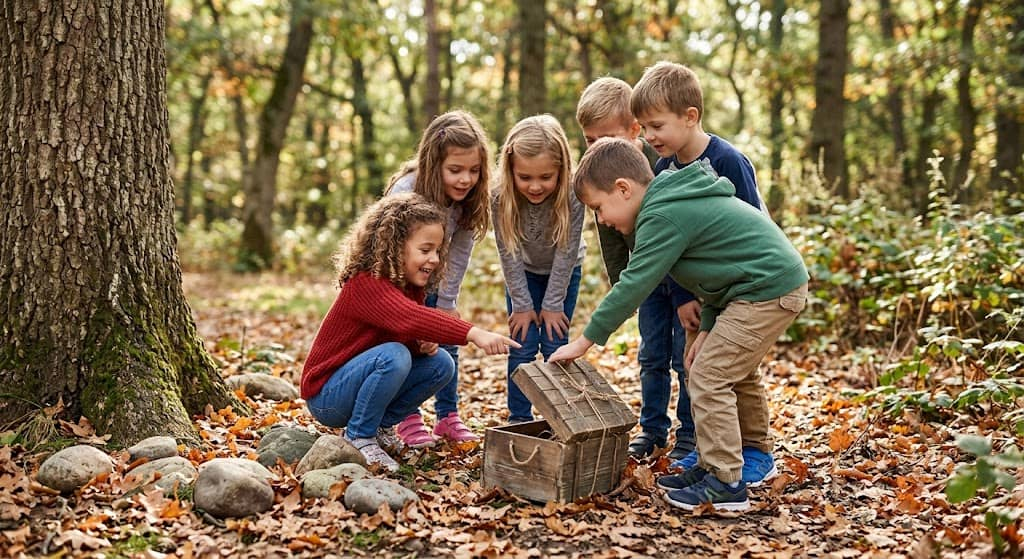
A Treasure Hunt can turn an ordinary home, classroom, backyard, or party space into a simple adventure. I hide a series of objects or clues and give the children a path to follow until they reach the final treasure.
Younger children can follow pictures, colors, shapes, or simple movement clues. Older children can handle short written clues or basic puzzles that lead them from one location to the next.
I focus on cooperation rather than making the prize the whole point of the activity. A small, age-appropriate prize, shared treat, sticker, or final party activity can be enough.
Pro Tip: Check every hiding location before the hunt begins. I keep clues away from electrical equipment, sharp objects, medication, cleaning products, roads, water, and other hazards.
Frequently Asked Questions
What are some easy group games for kids?
Some easy group games include Duck, Duck, Goose, Simon Says, Freeze Tag, Musical Chairs, Hot Potato, Charades, and Follow the Leader. Most need little preparation and can be adjusted for different ages and spaces.
What group games can kids play indoors?
For indoor play, I like options such as Simon Says, Musical Chairs, Hot Potato, Charades, Statues, Heads Up, Seven Up, Four Corners, and Telephone. Before starting, I clear furniture and other obstacles from the playing area.
What are good group games for a large group of kids?
Capture the Flag, Relay Races, Freeze Tag, Red Light, Green Light, and Treasure Hunt can work well with larger groups. I divide children into manageable teams or smaller groups when the activity becomes difficult to supervise.
How can I make group games suitable for younger children?
I simplify the rules, demonstrate each activity, shorten rounds, and avoid long elimination periods. For games involving balloons, ropes, small prizes, or running, I also adjust the setup and supervision to suit the children’s ages.
Read this next: 15 Easy But Fun Halloween Party Games For Little Kids
Conclusion
Simple group games can be some of the easiest activities to organize because they do not require expensive supplies or complicated preparation. These 21 options give me choices for active play, quiet indoor time, teamwork, music, guessing, movement, and imaginative activities.
The right game depends on the children who are actually playing it. Before starting, I consider their ages, the number of players, the available space, the weather, and the group’s energy level. I also adjust rules when needed so younger children are not left waiting for long periods.
A few minutes of preparation can make a big difference. Once the boundaries are clear, the equipment is appropriate, and everyone understands the basic rules, a simple game can keep a group of children happily involved without making the host’s job unnecessarily complicated.