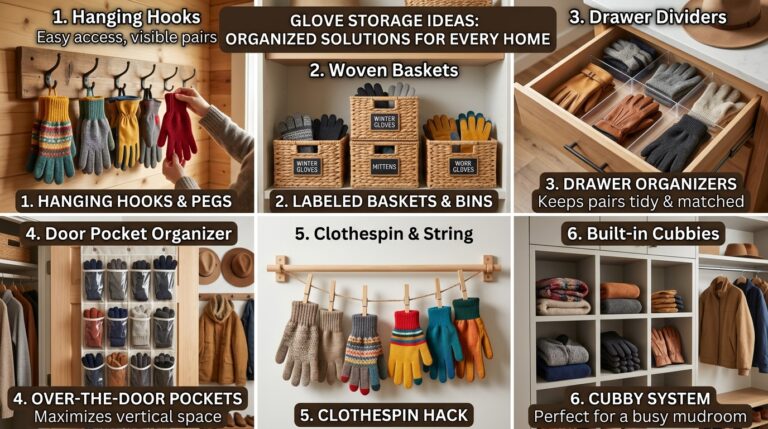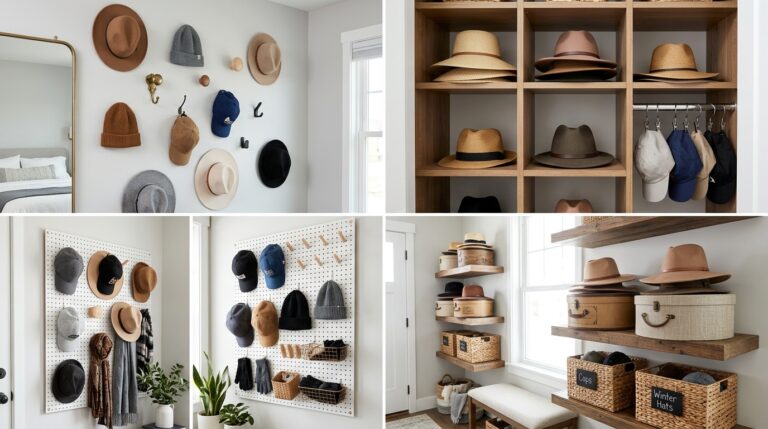
19 Jacket Storage Ideas for 2026
Jackets are one of those things that can make a closet feel full very quickly. A few bulky winter coats can take up more room than an entire row of lightweight layers, and long coats need completely different vertical clearance from short jackets.
When I organize outerwear, I look at more than how much can fit. The storage needs to match how often each jacket is worn, how heavy it is, how long it is, and whether the material has special care requirements.
Moisture is another part of the equation. I never put a damp jacket into a closed closet, drawer, or storage bin. A clean, completely dry garment has a much better starting point for seasonal storage.
The most useful jacket storage setup depends on the size of the space and the type of outerwear being stored. Double rods make use of vertical closet space, while dedicated closet zones and divided hanging sections help separate long coats, short jackets, and seasonal pieces.
For small entryways and apartments, wall hooks, door-mounted storage, compact closets, and freestanding coat stands can provide useful hanging space without requiring a large wardrobe.
Seasonal jackets need a little more planning. I clean garments according to their care labels, let them dry completely, avoid unnecessary compression, and store them in a clean, dry location. Accessories can go into labeled or clear bins so they are easy to find when the season changes.
Save this for later

Table of Contents
The goal is not to fill every available inch. Good outerwear storage makes frequently worn jackets easy to reach while giving heavier, longer, and less frequently used pieces the support and clearance they need.
Key Takeaways
- I give everyday jackets the easiest access because storage should follow real household routines.
- Long coats need enough vertical clearance to hang without bunching at the bottom.
- Heavy outerwear requires suitable hangers, rods, hooks, and mounting hardware.
- Short jackets can make better use of a second hanging level when the closet has enough height.
- Seasonal garments should be clean and completely dry before enclosed storage.
- Leather, suede, wool, down, and technical fabrics may require different storage methods, so I follow the care label.
- Small entryways benefit from vertical, door, or compact storage rather than bulky floor furniture.
- Before adding more hardware, I review whether unused or unsuitable jackets are contributing to the space problem.
- A storage system only works long-term when the household can easily return jackets to their designated spots.
Related article: 20 Makeup Brush Storage Ideas for 2026
How Can I Store Jackets Without Them Smelling Musty?
The first thing I check is whether the jacket is actually ready for storage. Sweat, body oils, dirt, rain, and other moisture should not be left on a garment that will sit in an enclosed space for weeks or months.
I clean each jacket according to its care label and make sure it is completely dry before putting it into a closet, cabinet, or seasonal container. Down, leather, suede, wool, and technical fabrics can have very different cleaning and storage requirements, so I do not treat them all alike.
The storage environment matters just as much. If a closet, basement, or storage room has a recurring moisture problem, I address the source of that problem rather than trying to cover odors with fragrances.
For everyday jackets, open hooks or a hanging rod near the entrance can be useful because recently worn outerwear has room to dry before it is returned to more enclosed storage.
I also avoid packing a closet or bin to its absolute limit. Space makes garments easier to access and reduces unnecessary compression, while giving recently worn pieces somewhere to hang before enclosed storage.
Pro Tip: Before storing any jacket for a season, check its care label first. A storage method that works for a cotton jacket may not be suitable for leather, suede, down, wool, or coated technical fabric.
1. Double Rod Layout
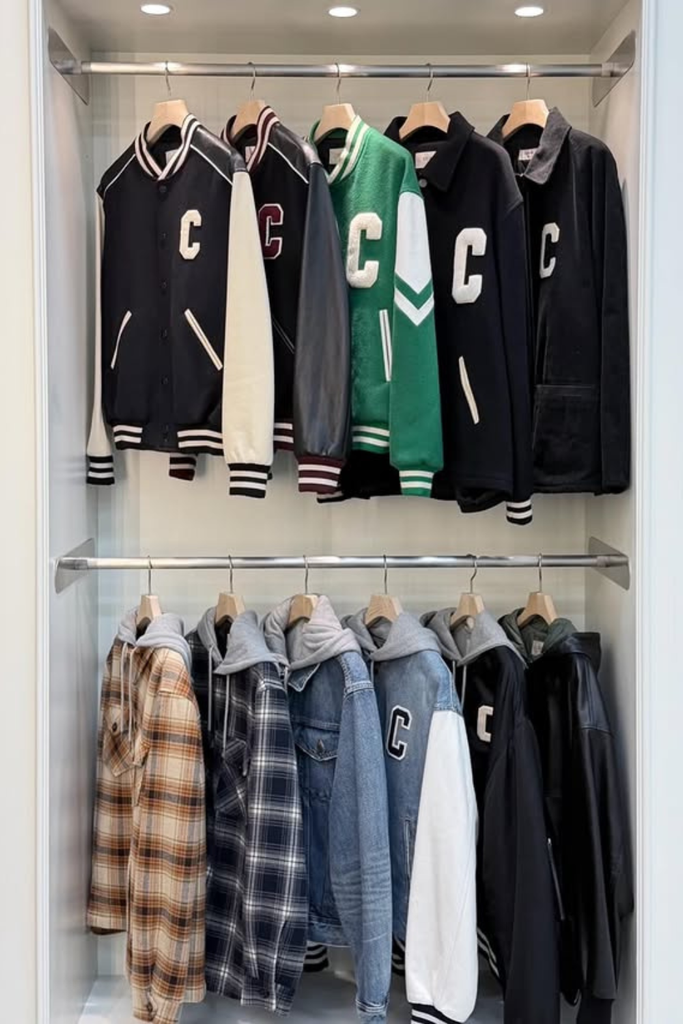
A double rod can make use of unused vertical height in a closet, but it only works when the closet has enough clearance for both levels.
I use the upper level for shorter jackets or less frequently worn outerwear and reserve the lower level for pieces that need to be reached regularly. This is particularly useful when I have many short jackets but do not want to expand the closet footprint.
Before installing a second rod, I measure my longest coat, the distance between the existing rod and shelf, and the available height below the upper rod. Closet doors and drawers also need enough clearance to operate normally.
The hardware and closet structure matter as well. I follow the manufacturer’s installation and weight guidance rather than assuming an existing closet can safely support another loaded rod.
Pro Tip: I test the proposed rod heights with a measuring tape before drilling. A few minutes of planning can prevent the second rod from being placed too low for jackets or too high to reach comfortably.
2. Industrial Pipe Rack
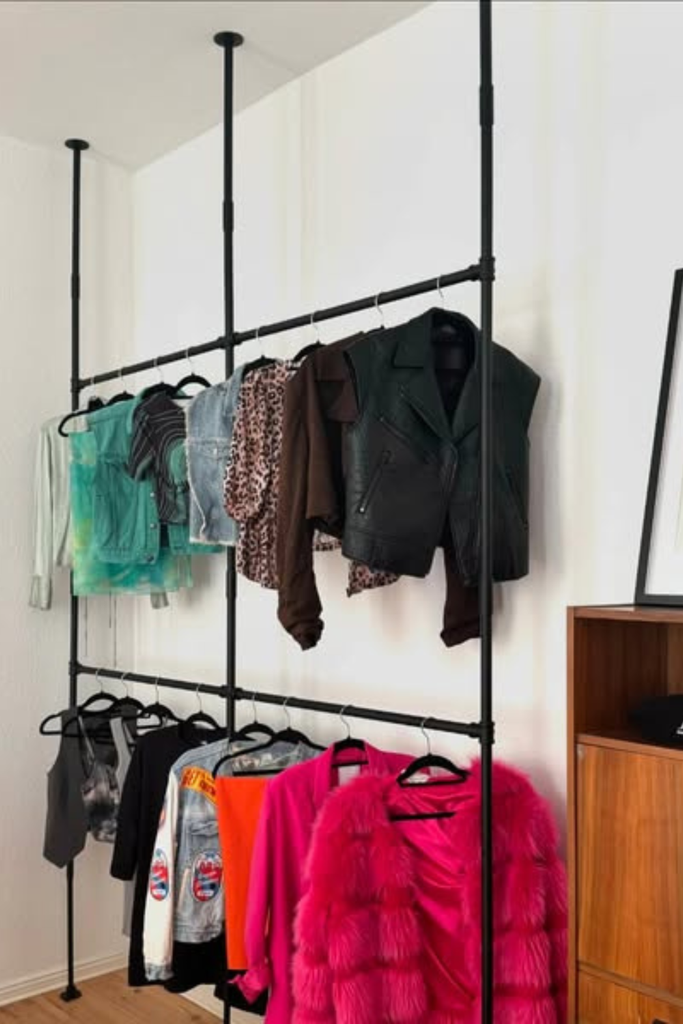
An industrial pipe rack provides open, high-capacity hanging storage when a closet does not offer enough rod space.
This style works well for a large outerwear collection because I can see several jackets at once instead of stacking folded garments or squeezing everything into a narrow closet.
The open structure also makes it practical for everyday jackets that need to be grabbed quickly. Longer coats should have enough vertical clearance, while heavier winter pieces need a rack designed to handle their weight.
Stability is especially important with tall or narrow racks. I follow the manufacturer’s instructions, check the stated weight capacity, and distribute garments rather than loading one side heavily.
I also place the rack where it does not narrow a walking path or interfere with doors. High-capacity storage is not useful if it makes the room harder to move through.
3. Ladder Shelf Rack
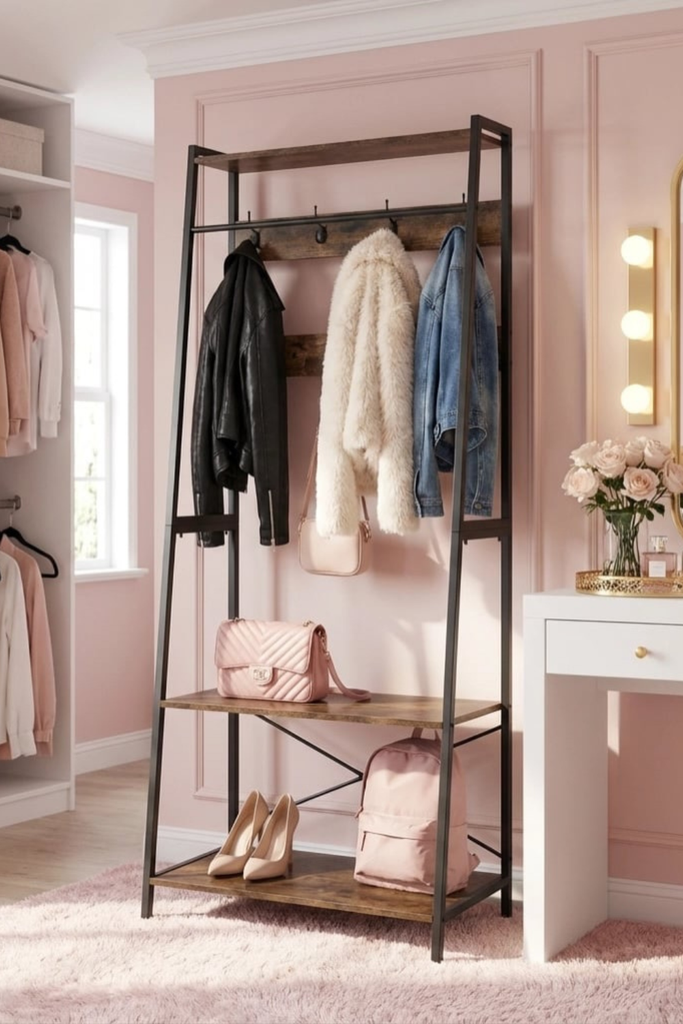
A ladder-style rack combines hanging space and shelves, making it useful when I need a compact jacket station rather than a full closet.
Short jackets can hang from the middle section while the shelves hold shoes, baskets, gloves, scarves, or other entryway items.
I like this arrangement for bedrooms and small entryways where a single piece of furniture needs to perform several jobs. It can also work well in an apartment where adding built-in storage is not practical.
The lower shelf should not interfere with jackets hanging above it. I measure the jacket length and shelf depth before deciding what belongs in each section.
Pro Tip: I reserve the most accessible hooks for jackets worn several times a week. Seasonal accessories can move to the upper shelf so daily storage stays easy to reach.
4. Labeled Bin System
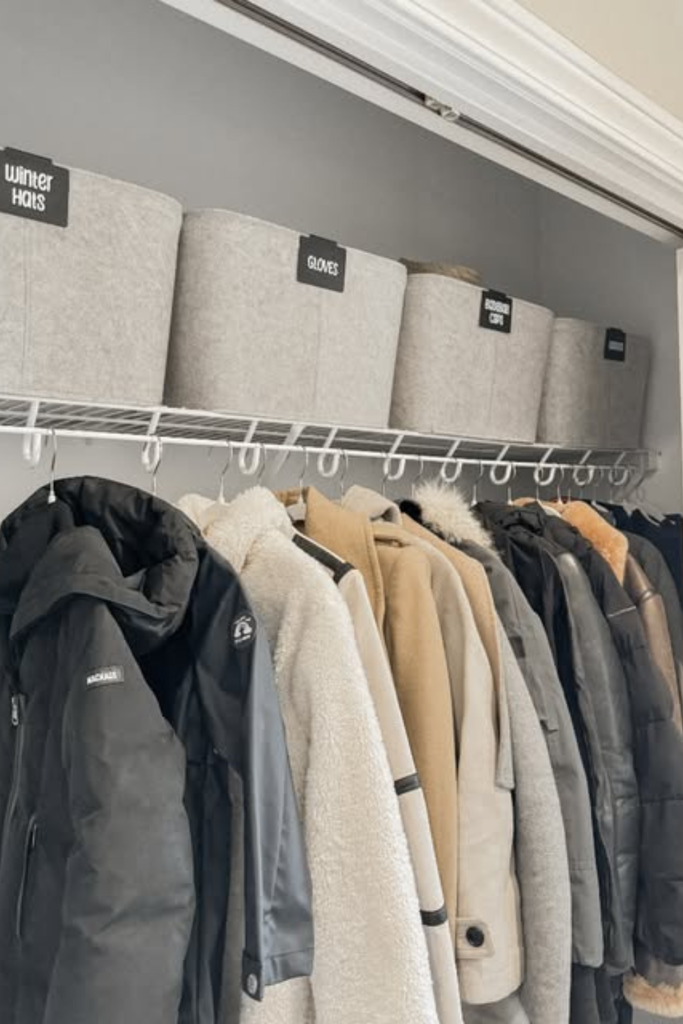
A labeled bin system works particularly well when the main problem is seasonal rotation rather than everyday jacket access.
I group winter accessories, lightweight layers, and other seasonal pieces into clearly identified containers so I do not have to open every box when the weather changes.
Bulky jackets need more consideration than scarves or gloves. I check the manufacturer’s storage instructions before folding or compressing insulated outerwear for an extended period.
The bins belong in a clean, dry storage area, and I avoid filling them so tightly that removing one item means unpacking the entire container.
For households with multiple people, labels can also make shared storage easier to maintain because everyone knows where seasonal categories belong.
Pro Tip: I label containers by their actual contents rather than by a vague season. “Winter accessories” is more useful at storage time than a label that simply says “Winter.”
5. Maxed Closet Rail
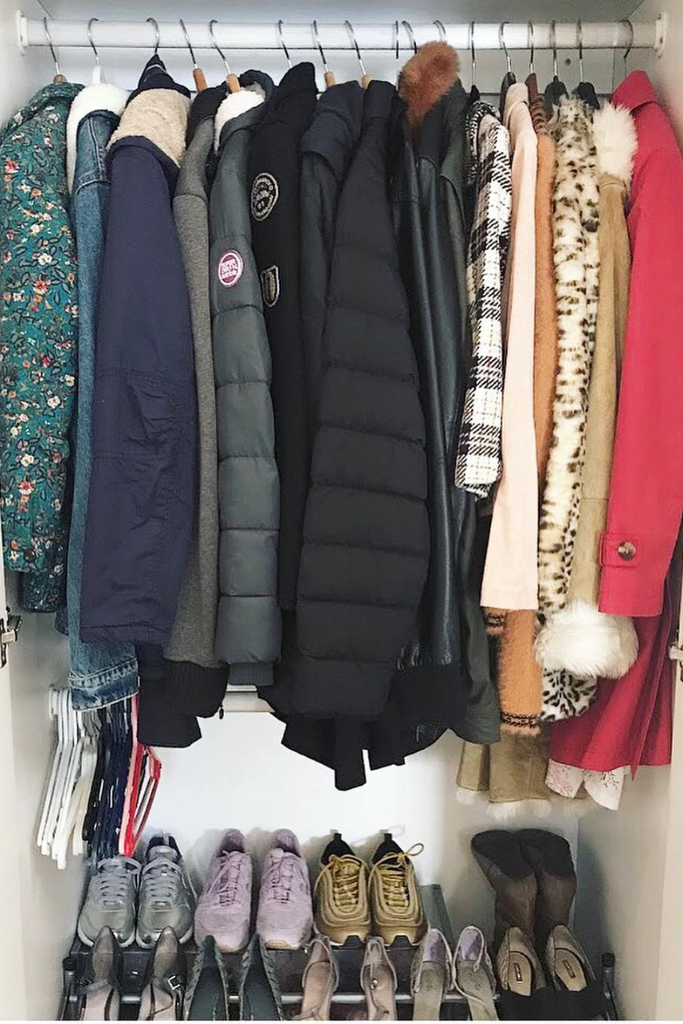
Before adding another rod or buying a larger organizer, I look at how effectively the existing rail is being used.
A single rod can become difficult to manage when jackets are packed tightly, especially when heavy coats have bulky sleeves and shoulders. I arrange outerwear by type and frequency of use so the most-worn pieces are easiest to reach.
Strong hangers are important for structured jackets and heavier coats. The hanger should support the garment without forcing the shoulders into an awkward shape.
I also check the space below the rail. A narrow shoe rack or designated accessory basket can make use of that area without interfering with the hanging garments.
Most importantly, I declutter before expanding the system. I review jackets that no longer fit, are no longer worn, are damaged beyond practical repair, or no longer meet the household’s needs. That does not mean getting rid of everything that is not used regularly; it simply gives me a clearer picture of the storage I actually need.
6. Built-In Closet Zone
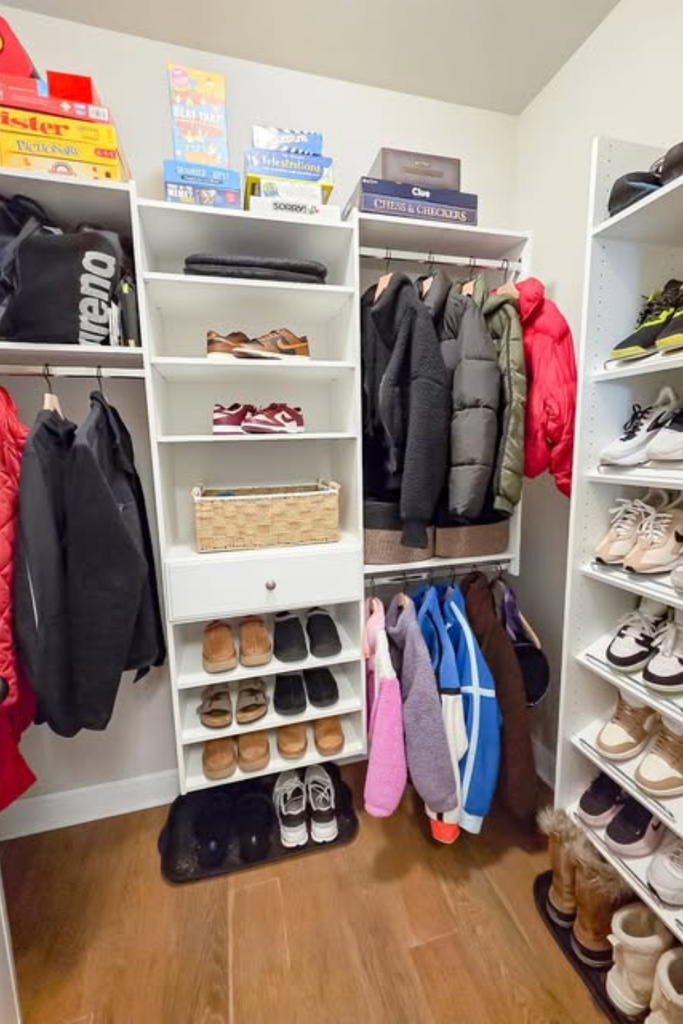
A built-in closet zone gives outerwear its own section inside a larger multi-purpose closet.
Instead of mixing coats with unrelated clothing, I dedicate one area to jackets and use nearby shelves or drawers for shoes, bags, hats, and other accessories.
This arrangement works particularly well for families or shared closets because each category has a defined location. Everyday coats can stay at a comfortable height while seasonal outerwear moves to a less accessible section.
The amount of rod space should reflect the household’s actual collection. A dedicated zone is only useful when it has enough room for the jackets it is expected to hold.
For larger closets, this approach can also support a useful hierarchy: everyday outerwear at the easiest reach, seasonal pieces higher or farther back, and special-use coats in less convenient areas.
Pro Tip: Measure the closet width, depth, and vertical clearances before adding modular components. Outerwear often needs more depth than lightweight clothing because of bulky shoulders and sleeves.
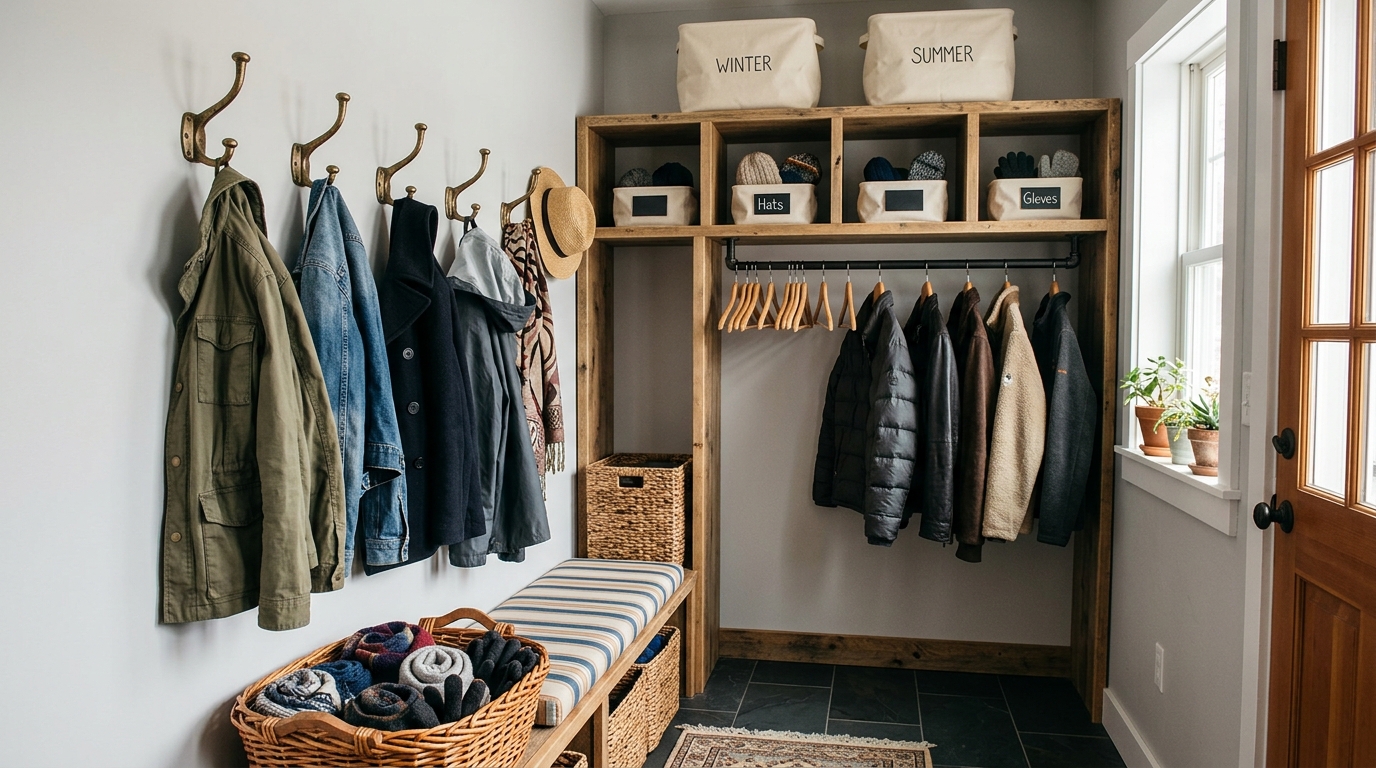
7. Hidden Mudroom Nook
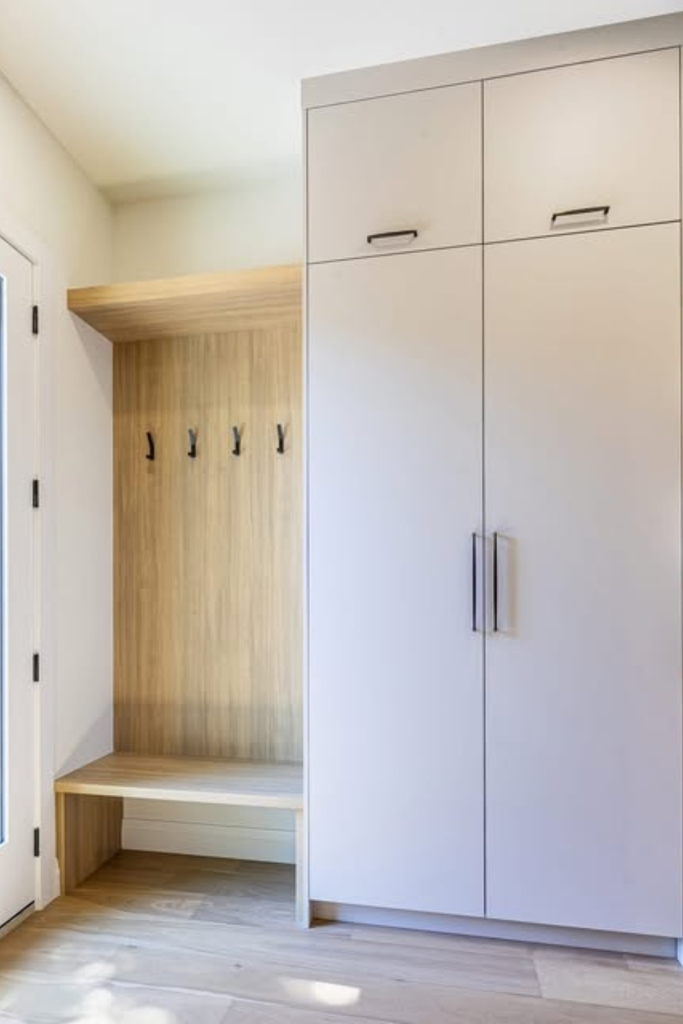
A hidden mudroom nook combines open daily storage with concealed storage for seasonal or less frequently used outerwear.
I use hooks for jackets that are currently in rotation and reserve cabinets or closed compartments for pieces that do not need to stay visible.
That makes this option different from a simple entry bench. The goal is to separate what the household uses every day from the larger collection of coats that would otherwise crowd the entrance.
A bench below the hooks can handle shoes or bags, while the closed portion keeps seasonal items contained.
If the area is near an exterior door, wet jackets should remain in an appropriate open area until they are dry rather than being put directly into a closed cabinet.
8. Wall Hook Grid
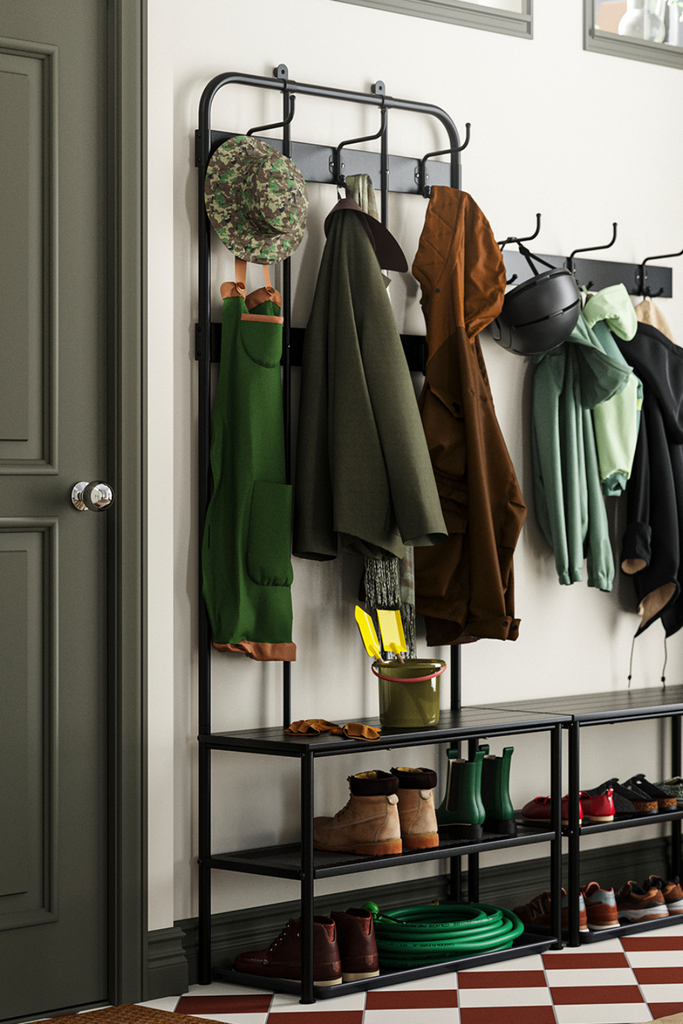
A wall hook grid is useful for families and shared entryways because individual hooks can be assigned to people or categories.
Instead of creating one large pile of coats, each person has a defined location. That small organizational decision can make a busy entry easier to reset at the end of the day.
I consider the wall construction before mounting the rail or individual hooks. The appropriate fasteners depend on the wall material and the expected load, so I follow the hardware manufacturer’s recommendations.
A slim bench or shoe shelf below can complete the station without taking up much floor space.
For children’s jackets, hook height can be adjusted to suit the household while keeping heavier adult coats on hardware designed for their greater weight.
Pro Tip: I count the jackets that will normally be stored there before deciding how many hooks to install. A hook wall becomes less useful when every hook is overloaded.
9. Clear Bin Storage
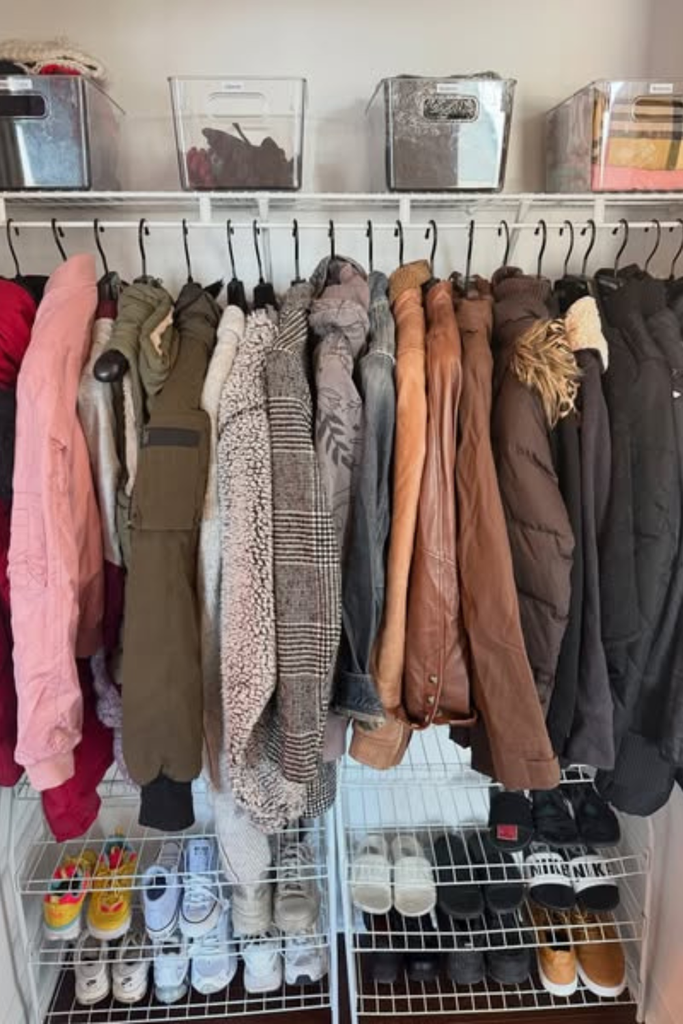
Clear bins are particularly useful for smaller outerwear accessories and lightweight seasonal layers because I can see the contents without opening every container.
Gloves, hats, scarves, and compact accessories are good candidates for this approach. Bulky coats usually need more consideration because forcing them into a small bin can create unnecessary compression.
I label the bins even when they are transparent. The label helps maintain the system when several people add and remove items over time.
For shelving, I check that the shelf is appropriate for the loaded container and avoid placing excessively heavy bins where they could become difficult or unsafe to remove.
This method is most useful as an accessory-storage solution rather than a replacement for proper hanging space for structured or bulky outerwear.
Also read: 18 Storage Bin Rack DIY Ideas for 2026
10. Panelled Entry Bench
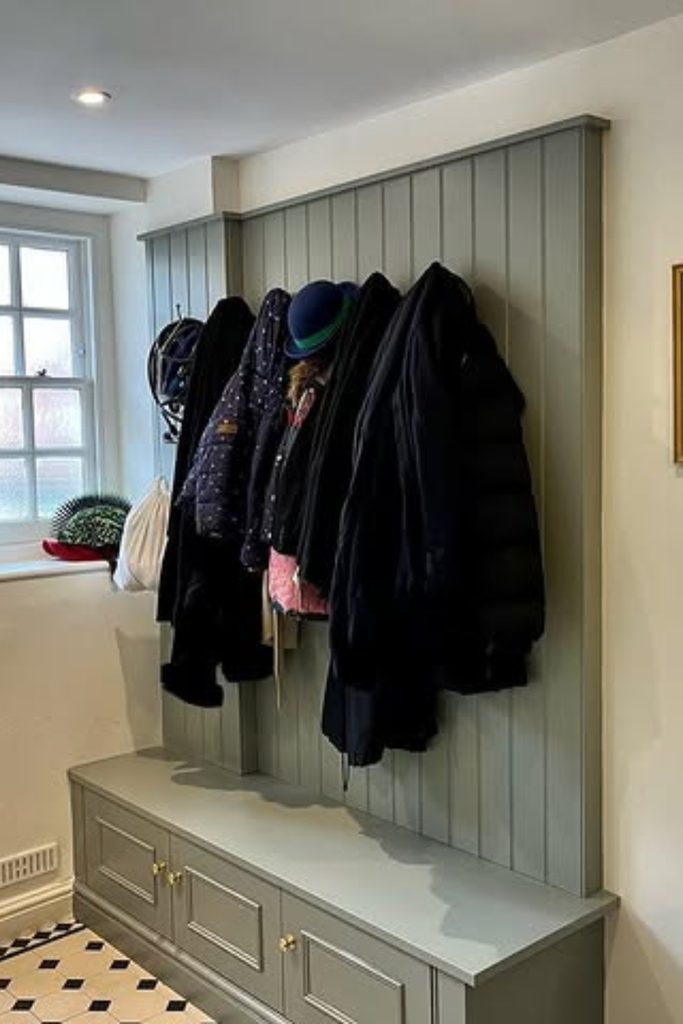
A panelled entry bench creates a defined landing area for jackets, shoes, bags, and everyday accessories.
Hooks above the bench give frequently worn jackets a clear home, while drawers or cabinets beneath can handle smaller items that would otherwise spread across the floor.
This setup suits a small entryway when I want the storage to feel like one coordinated station rather than several unrelated organizers.
I pay attention to the depth of the bench and the walking path in front of it. A storage piece that extends too far into a narrow entrance can make everyday movement uncomfortable.
Heavy jackets should go on hooks and hardware that are appropriate for their weight. Decorative appearance comes second to secure installation.
Pro Tip: I measure the entryway’s usable width before choosing a bench. Leave enough clearance for doors to open and people to pass without brushing against the furniture.
11. Open Utility Shelving
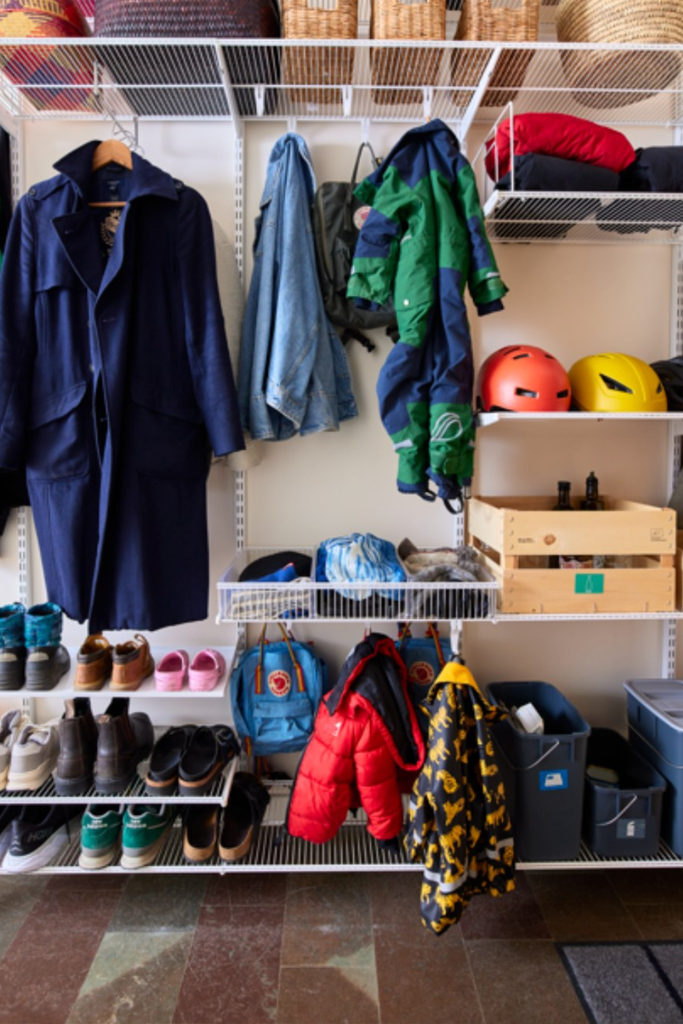
Open utility shelving is useful when outerwear needs to share space with shoes, bags, equipment, and other household gear.
Adjustable shelving allows the layout to change throughout the year. A section with enough vertical clearance can handle longer coats, while shelves elsewhere can store folded accessories or lightweight jackets when appropriate.
This is a practical option for larger households, mudrooms, utility areas, or storage rooms where flexibility matters more than having a traditional closet appearance.
I keep heavier items on shelving that is designed to support them and follow the manufacturer’s guidance for anchoring and weight limits.
Because everything is visible, the system also makes it easier to notice when the household has accumulated more outerwear than the available storage can comfortably handle.
12. Closet Nook Setup
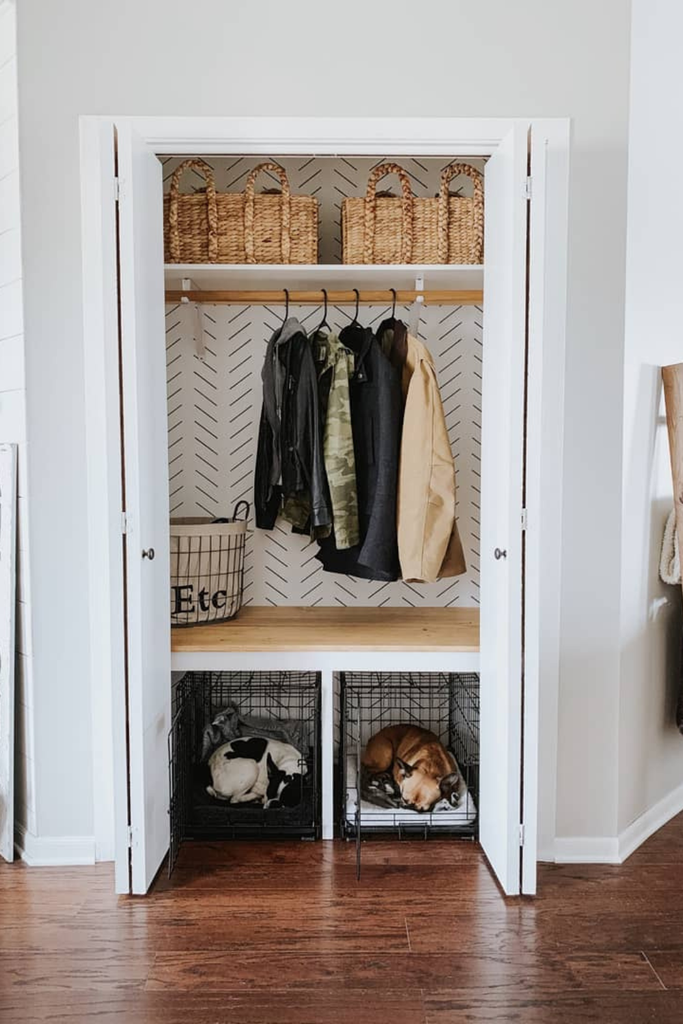
A closet nook is different from a full closet system because its strength is making a small, dedicated area work for everyday jackets.
One rod can be enough when the collection is limited. A shelf above can hold baskets for gloves, hats, and scarves without taking up additional floor space.
This setup works well in a bedroom, small apartment, or compact hallway where a full-size wardrobe would be excessive.
I give the most accessible part of the nook to daily jackets and move seasonal pieces to the upper shelf or another storage area.
If doors, drawers, or nearby furniture compete for the same space, I measure those clearances before adding organizers. The storage needs to work when everything around it is being used.
Pro Tip: I organize a compact nook around frequency of use rather than garment color. The jacket I reach for every morning should not be hidden behind a coat I wear twice a year.
13. Freestanding Coat Stand
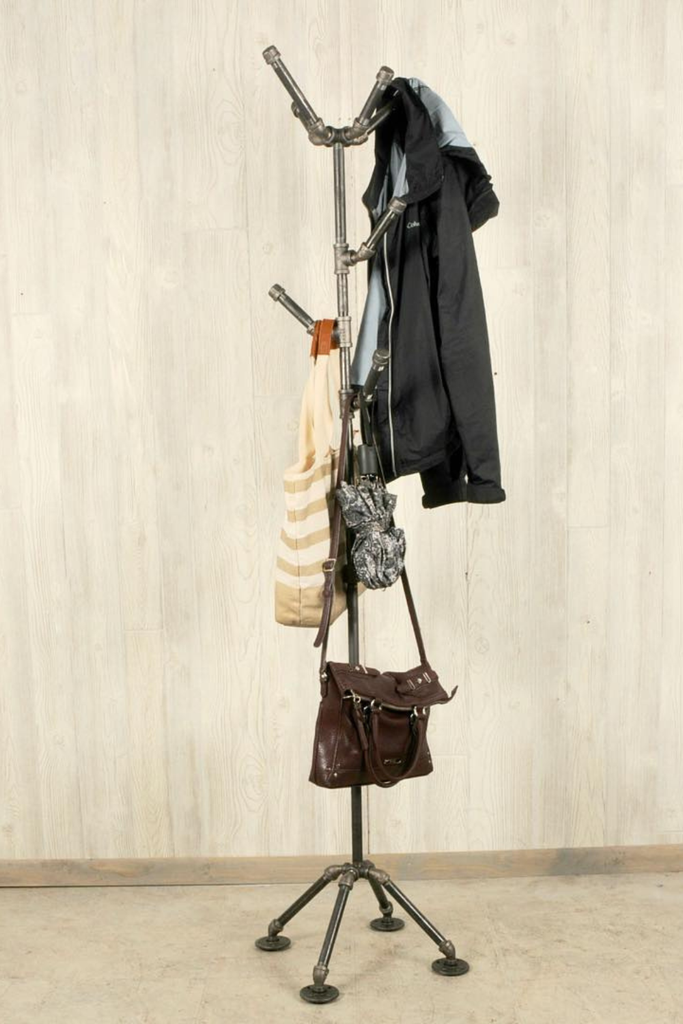
A freestanding coat stand is useful when I need movable storage for a smaller number of everyday jackets and do not want to drill into the wall.
It suits rentals, apartments, and temporary setups where permanent changes to the room are not practical.
Unlike a high-capacity pipe rack, a coat stand is better suited to a modest collection. I spread jackets across the available hooks and keep heavier pieces where the stand’s design provides appropriate support.
Stability matters because a tall, narrow stand can become unbalanced if too much weight is placed on one side. I check the manufacturer’s weight guidance and position it away from busy walking paths and door swings.
Its mobility is also useful when the room layout changes. I can relocate the stand without rebuilding the storage system.
14. Slim Wall Hooks
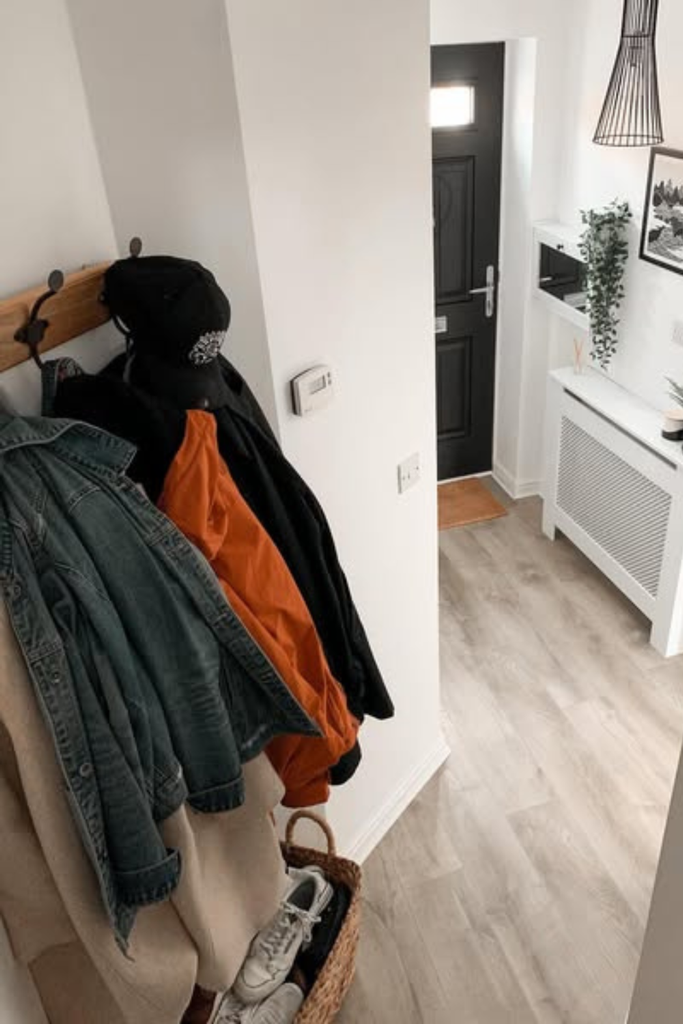
Slim wall hooks make sense when floor space is limited and the hallway is too narrow for a coat rack or bench.
Their minimal footprint keeps jackets close to the wall while leaving the walking path mostly open. I use them for a small rotation of everyday outerwear rather than trying to store an entire seasonal collection on one narrow rail.
Mounting method matters, especially for heavy winter coats. I use hardware suitable for the wall construction and the expected load instead of assuming an adhesive hook can handle every type of jacket.
Spacing also affects usability. Several jackets hanging from closely packed hooks can quickly become one bulky mass, so I allow enough room to remove individual garments comfortably.
This approach is particularly useful in apartments and narrow hallways where every inch of floor space matters.
15. Door Hook Solution
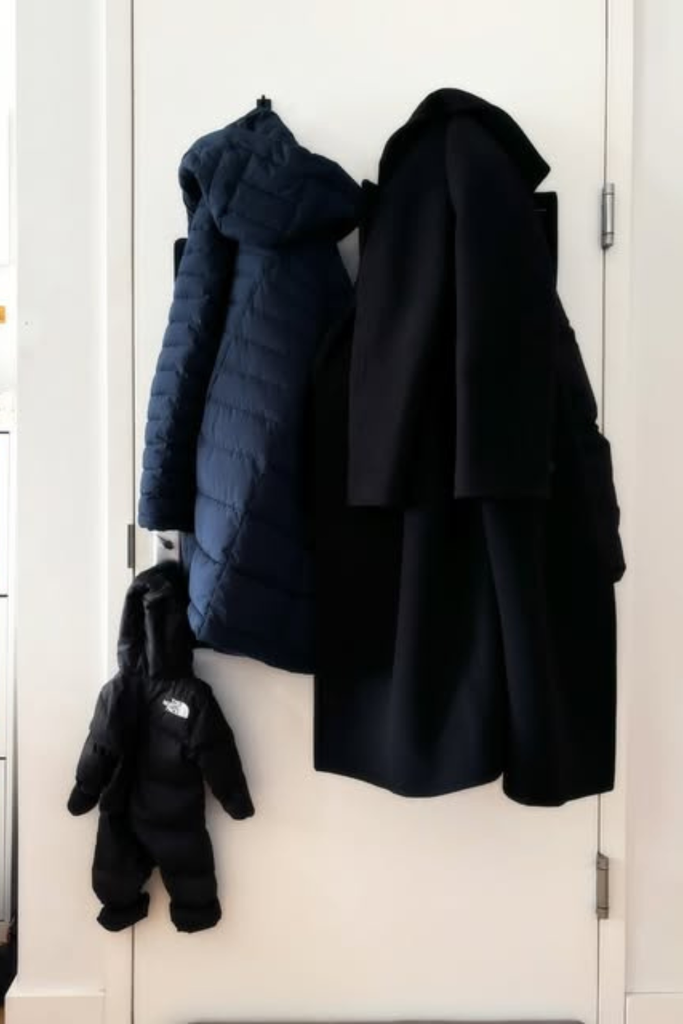
The back of a door can provide useful jacket storage when both wall and floor space are limited.
Over-the-door organizers are particularly convenient for bedrooms, apartments, and small entry spaces, but I check the product dimensions before installation.
The hooks should not interfere with the door closing, the door frame, or nearby hardware. I also avoid loading the organizer with more weight than the manufacturer allows.
This option works best for a small rotation of everyday jackets rather than a full collection of bulky winter coats.
For renters, I choose a removable or permitted solution when the property rules limit permanent mounting. Even a no-drill organizer still needs to be compatible with the door and safely used within its stated capacity.
16. Sectioned Closet System
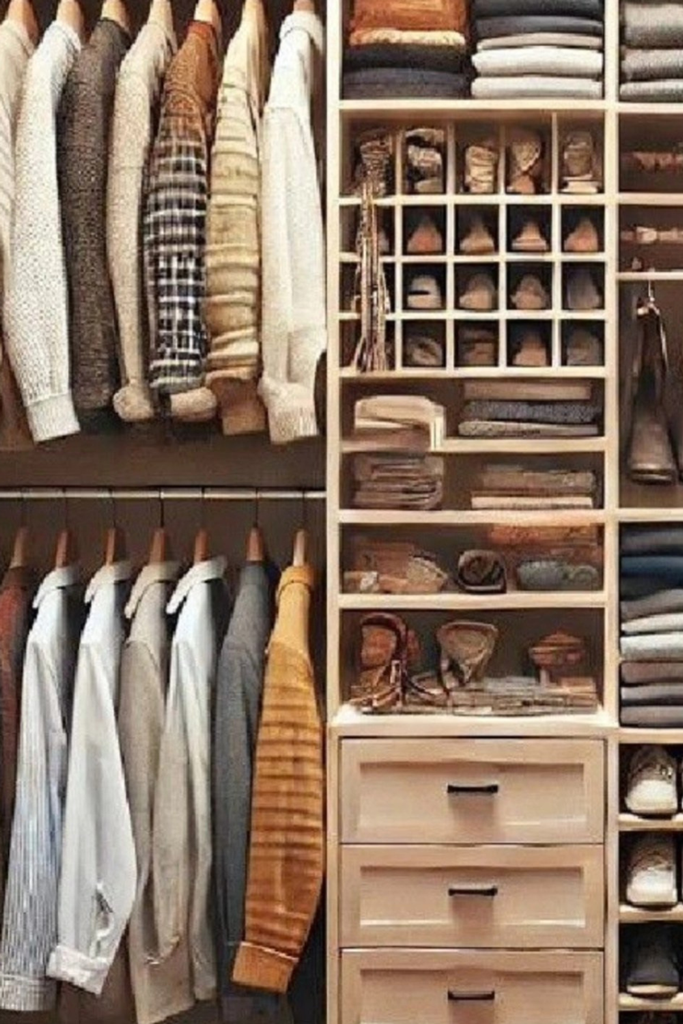
A sectioned closet system divides outerwear by category instead of putting every jacket into one undifferentiated row.
I might assign separate areas to long coats, short jackets, lightweight layers, and accessories. This is particularly useful for a large outerwear collection where finding one particular piece has become difficult.
Long coats need uninterrupted vertical clearance, while short jackets can share space with shelves or another hanging level when the closet dimensions allow it.
Structured jackets also benefit from hangers that properly support the shoulders. Heavy garments should not be placed on flimsy hangers simply because they save a little rod space.
The main advantage is retrieval. When I know exactly which section holds rain jackets, winter coats, or everyday layers, I spend less time moving unrelated garments around.
Pro Tip: I organize the sections around real household habits. If everyone reaches for the same group of jackets every morning, that group deserves the easiest access regardless of how neat another category looks.
17. Mini Mudroom Closet
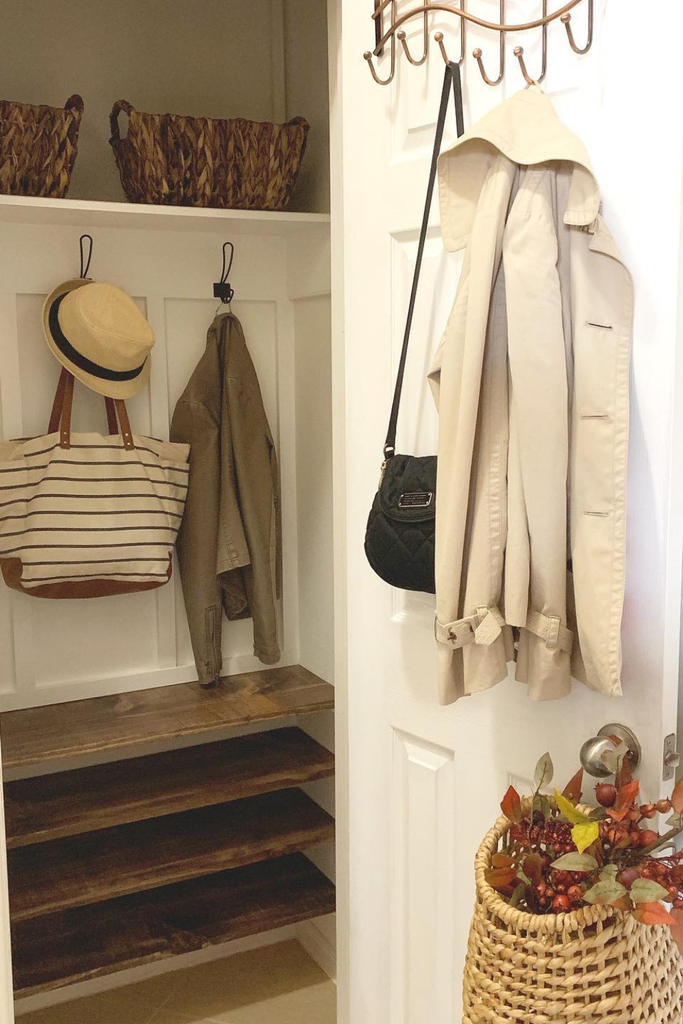
A mini mudroom closet creates a dedicated jacket station when there is just enough room for a compact combination of hooks, shelves, and a bench.
It works well for small homes and apartments where a traditional mudroom would be unrealistic. A few sturdy hooks can handle daily jackets while a shelf stores accessories.
The important distinction is that this setup creates a small, dedicated zone rather than simply adding one more coat rack to an already busy entry.
I keep the floor as clear as possible so shoes and bags do not obstruct the entrance. Seasonal jackets can move elsewhere when they are not part of the current rotation.
If a bench or shelving unit is freestanding, I follow the manufacturer’s assembly and stability instructions and avoid placing heavy storage where it could create a tipping hazard.
18. Compact Entry Closet
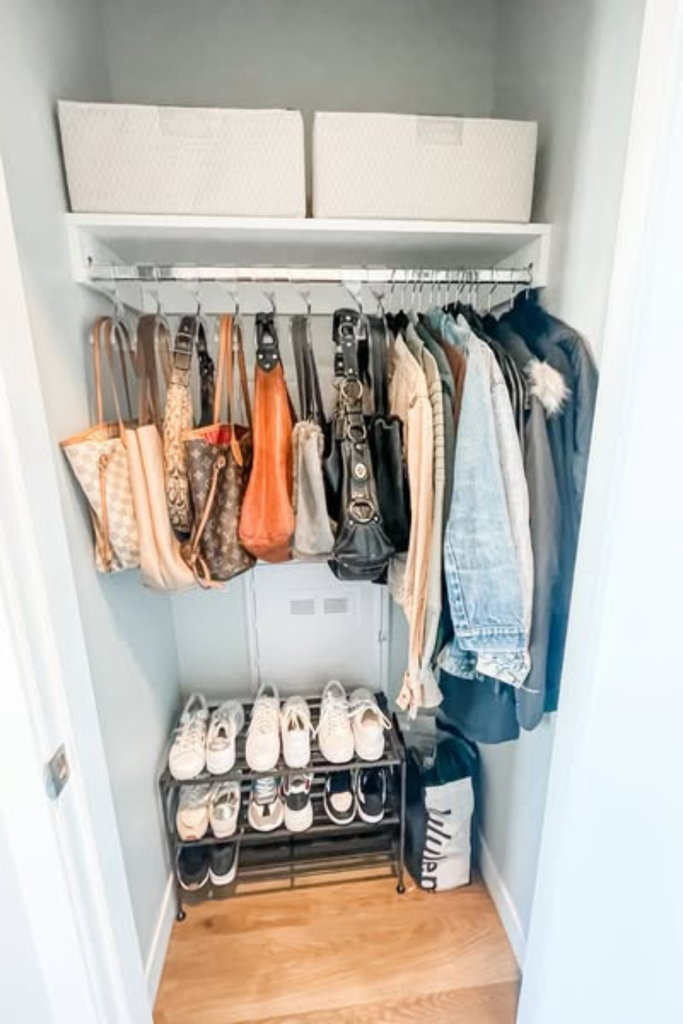
A compact entry closet can hold a surprising amount of useful outerwear when the interior is divided according to function.
I use the main rod for jackets and coats that are currently being worn, then use the upper shelf for seasonal accessories or properly stored items.
A narrow shoe rack below can keep footwear contained, provided it does not interfere with the hanging garments or the closet door.
This setup differs from a closet nook because it focuses on making a traditional small entry closet more functional rather than creating an additional open station.
For a shared household, I may also reserve one small section for bags or frequently used accessories so the entire entry routine stays in one place.
Pro Tip: I measure the longest coat and the full door swing before adding lower storage. A shoe rack that looks compact can still make a small closet awkward if it blocks the coat hem or door.
19. Divided Hanging Zones
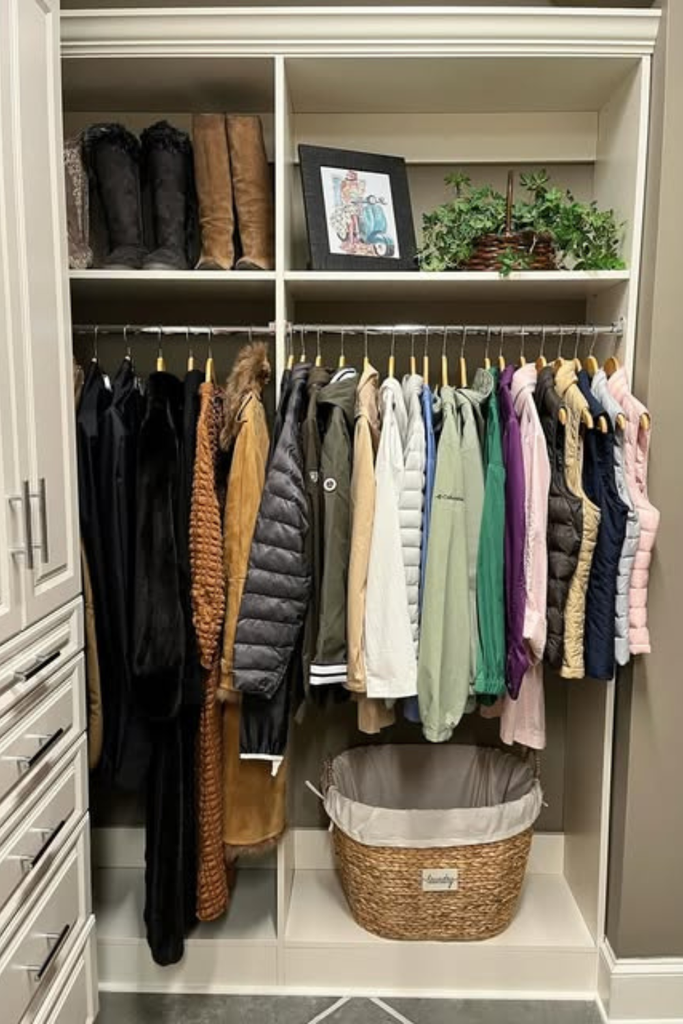
Divided hanging zones make better use of vertical space by giving long and short outerwear different amounts of clearance.
Full-length coats need an uninterrupted drop, while shorter jackets can leave useful space underneath for shelves, baskets, or shoes.
This approach is particularly useful for a large closet where mixing every coat length together creates wasted vertical space.
I separate the zones according to garment length and frequency of use rather than simply dividing jackets into arbitrary groups.
A center divider or separate rods can make the categories visually obvious. I also make sure each section has enough width for the number and bulk of jackets assigned to it.
Pro Tip: I measure from the rod to the floor before planning each zone. A layout that works for cropped jackets may not provide enough clearance for a long wool coat or full-length winter outerwear.
Read this next: 16 Cast Iron Wall Storage Ideas for 2026
FAQs
Can I Store Jackets in Plastic Bins?
Plastic bins can work for some jackets and accessories, provided the garments are clean, completely dry, and stored according to their care requirements.
I avoid over-compressing bulky outerwear, especially when the manufacturer recommends a particular storage method. A bin should be large enough for the garment to fit without unnecessary pressure.
Leather, suede, wool, down, and specialty or insulated jackets may have specific cleaning, drying, folding, or storage requirements. The care label or manufacturer’s instructions should take priority.
I also keep storage bins in a clean, dry location rather than using them to solve an underlying moisture problem.
How Do I Store Winter Jackets Long-Term?
I start by cleaning winter jackets according to their care labels and making sure they are completely dry before seasonal storage.
The storage method depends on the garment. Structured coats may need suitable hangers, while bulky insulated jackets should not be unnecessarily compressed if their care instructions recommend otherwise.
I choose a clean, dry storage location away from recurring moisture problems and keep seasonal containers clearly labeled so they are easy to retrieve.
Every few months, I check long-term storage when practical. That gives me an opportunity to notice moisture, unusual odors, damaged containers, or other problems before the next season begins.
Conclusion
Good jacket storage starts with matching the system to the outerwear and the way the household actually uses it. I give everyday jackets the easiest access, reserve secondary areas for seasonal pieces, and make sure heavy or structured garments have appropriate support.
Once I account for coat length, weight, available vertical space, moisture, and storage frequency, it becomes much easier to choose between rods, hooks, bins, racks, and dedicated closet zones. The most useful setup is the one that protects the jackets while making them easy to reach and return to their proper place.