
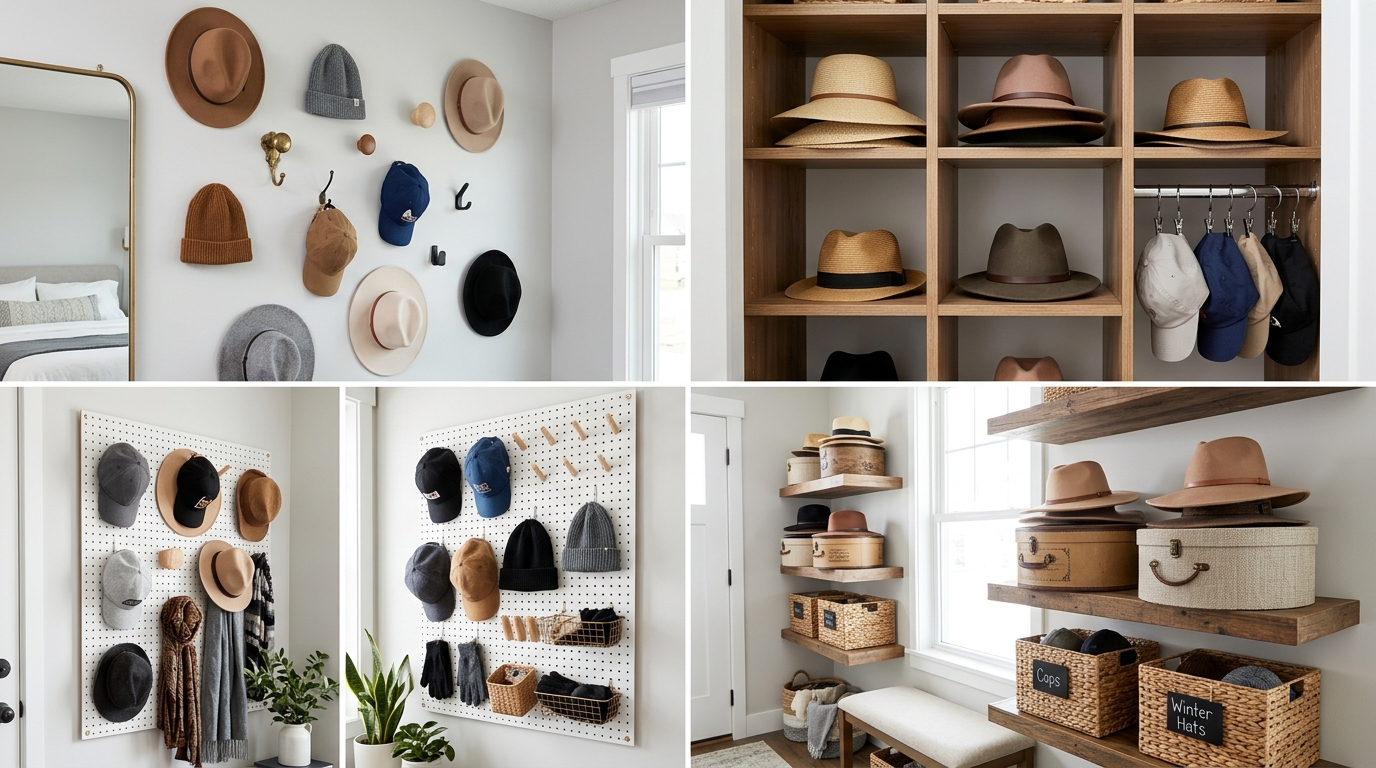
24 Hat Storage Ideas for 2026
Hats are easy to collect and surprisingly difficult to organize. Baseball caps can disappear into drawers, while wide-brim and structured hats need more room to keep their shape. When several styles share one closet, simply stacking everything together usually creates more problems than it solves.
When organizing accessories, I look at the hat material, how often it is worn, and how much space is actually available before choosing a storage method. A daily cap needs quick access, while a delicate felt hat may need individual support and less handling.
The good news is that hat storage doesn’t always require another piece of furniture. Walls, closet doors, unused shelf space, and narrow corners can all become useful storage areas when the method matches the hat.
I’ve put together 24 hat storage ideas for different collections and living situations, including small bedrooms, walk-in closets, entryways, rentals, and homes with large numbers of caps or wide-brim hats.
For baseball caps, hanging clips, shelf hooks, pegboards, and vertical organizers make good use of limited space. Structured and wide-brim hats need more careful support, so individual stands, shelves, and properly positioned wall hooks are better choices.
Save this for later
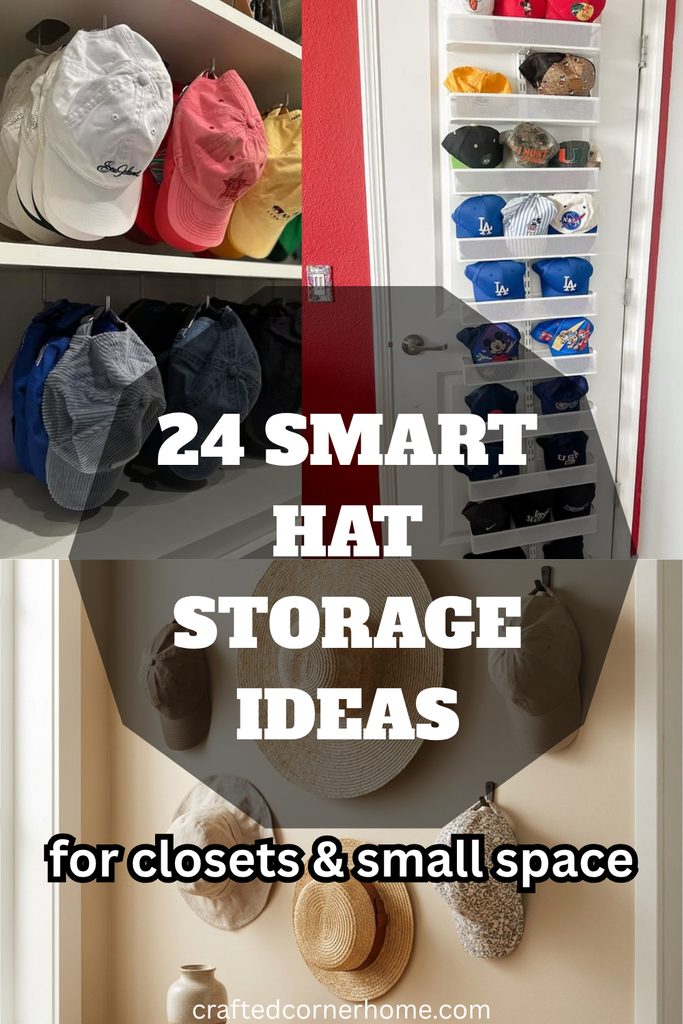
Table of Contents
Before buying an organizer, I measure the available width, depth, and height as well as the largest hat in my collection. That simple step prevents a storage system from being too shallow, too crowded, or difficult to access.
Key Takeaways
- Match the storage method to the shape and construction of the hat.
- Use vertical areas when closet or floor space is limited.
- Baseball caps work well with clips, hooks, pegboards, and hanging organizers.
- Wide-brim and structured hats need enough support and room to avoid distortion.
- Measure your largest hat and available storage area before purchasing an organizer.
- Use removable hardware for renter-friendly setups when the wall or door allows it.
- Keep everyday hats at easy-to-reach heights and less-used pieces in secondary storage.
- A storage system is easier to maintain when every hat has a specific home.
Related article: 21 Cutting Board Storage Ideas For 2026
What Is The Best Storage Solution For A Large Hat Collection?
There isn’t one storage method that works equally well for every hat. A collection of baseball caps has very different needs from one made up of structured fedoras, sun hats, or other wide-brim styles.
For caps, I usually look for ways to use vertical space because several hats can fit in a relatively narrow area. For structured hats, I pay more attention to crown support and make sure nothing is pressing down on the brim.
Frequency of use matters too. Hats worn several times a week should be stored where they can be reached without moving other accessories. Seasonal or occasional hats can take less convenient shelf or closet positions.
I also avoid treating a large collection as one storage problem. Dividing it into everyday, seasonal, formal, and rarely used categories often makes the available space much easier to manage.
Pro Tip: Measure your widest and tallest hats before purchasing storage. Then measure the shelf, wall, door, or closet section where the organizer will go. The measurements should account for both the storage hardware and enough clearance to remove the hats comfortably.
Hat Gallery
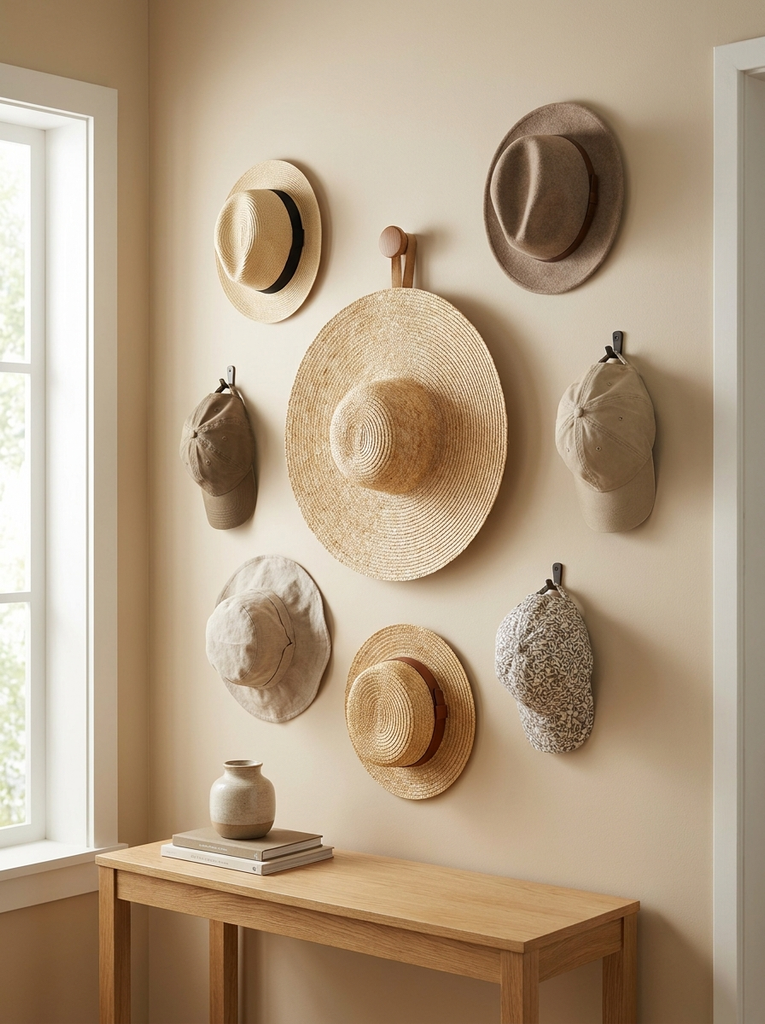
A hat gallery turns an empty wall into visible storage and works especially well when the hats are attractive enough to contribute to the room’s decor.
I usually start by laying the hats on the floor in the arrangement I’m considering. A larger hat can act as an anchor, with smaller styles positioned around it to create a balanced composition.
This is a particularly good solution for woven, straw, and decorative wide-brim hats that would otherwise take up considerable shelf space.
An entryway, bedroom, dressing area, or hallway can work well. If the wall is in a busy walkway, however, I leave enough clearance so people and furniture won’t repeatedly bump the brims.
For permanent installation, I choose wall hardware based on the wall construction rather than simply using whatever hook is available.
Shelf Hooks
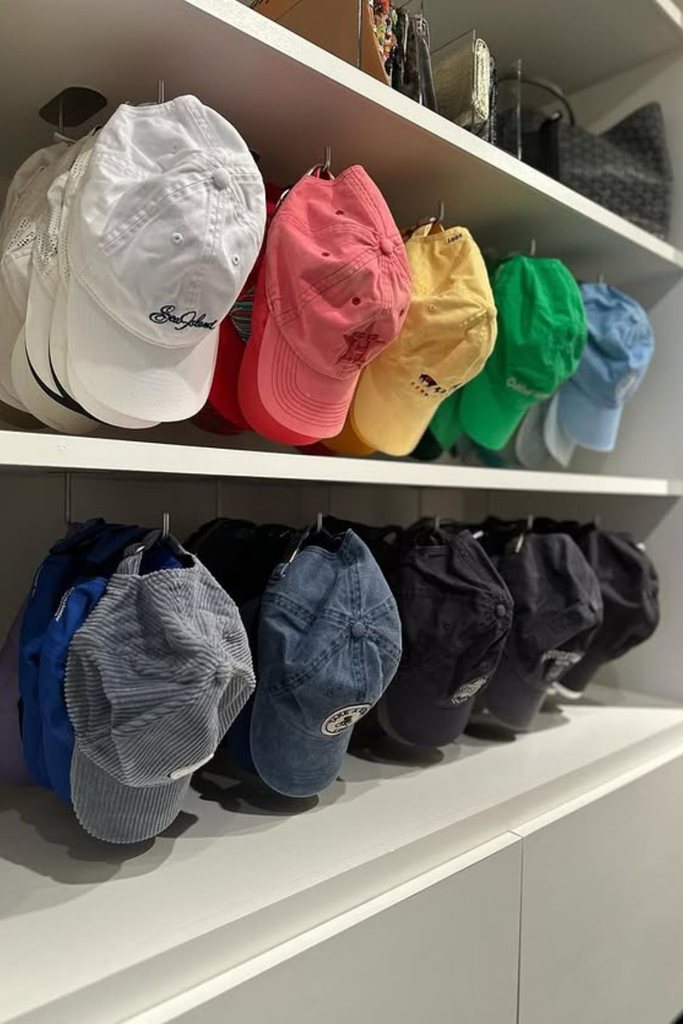
The underside of a closet shelf can become useful storage for baseball caps when small hooks are installed beneath it.
This is a good solution when the top of the shelf is already occupied by folded clothes or storage bins. The caps hang below the shelf instead of competing for the surface.
Caps with adjustable rear straps are particularly convenient for this method. Each hat can have its own hook, making the collection easy to see and retrieve.
I first check the shelf thickness and the clearance underneath it. The hooks need enough room for the cap to hang without interfering with clothing stored below.
This method is best for caps rather than heavy or delicate structured hats. It also works well as part of a larger closet organization system when accessories need their own dedicated area.
Door Organizer
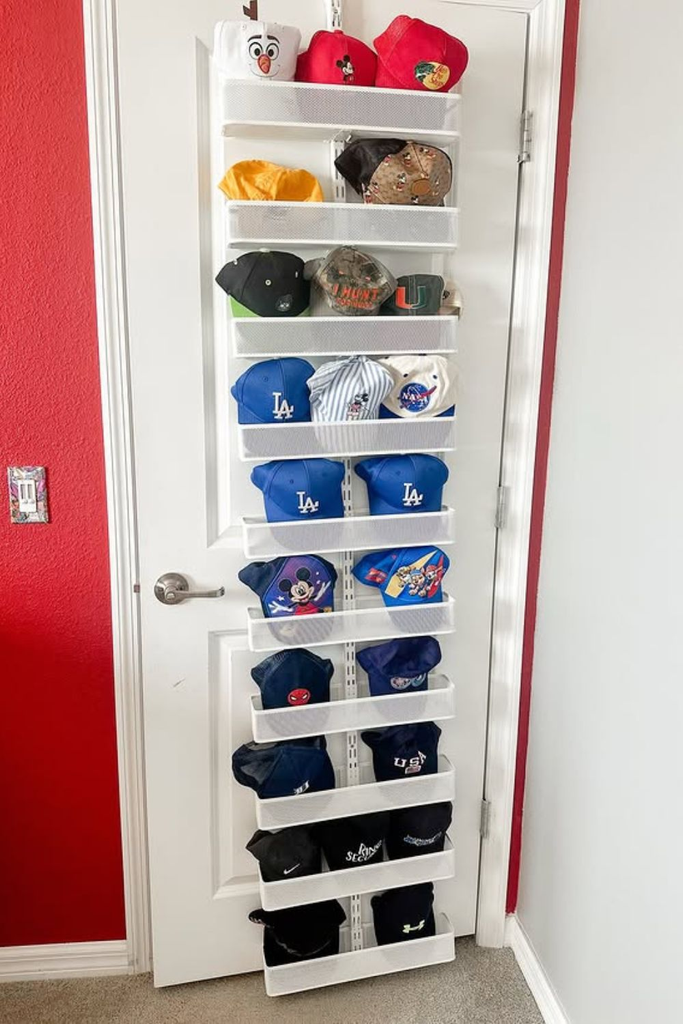
An over-the-door organizer can add substantial vertical storage without using another shelf or taking up floor space.
For baseball caps, I look for shallow compartments or baskets that keep the hats visible and prevent them from being buried underneath one another.
This is particularly useful in small bedrooms, apartments, dorm rooms, and closets where every shelf is already occupied.
Before installing one, I check the door clearance and frame. The organizer should not prevent the door from closing or scrape against nearby trim.
I also consider the total weight. The door, hanging hardware, and organizer all need to handle the combined load of the stored hats.
Pro Tip: Put frequently worn caps around eye or shoulder level and reserve the upper compartments for seasonal styles. This turns an otherwise crowded organizer into a system that follows your daily routine.
Clip Board
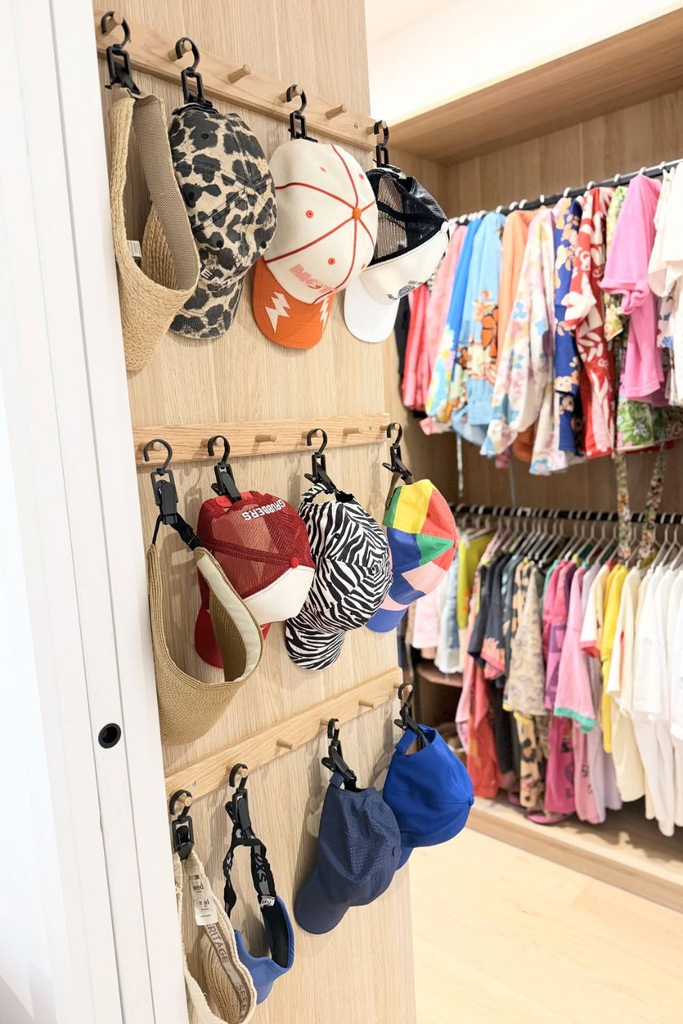
A pegboard fitted with clips gives me a flexible storage system for a growing cap collection. Unlike fixed hooks, the clips can be repositioned when the number or size of the hats changes.
I find this particularly useful inside a closet or on an unused wall where I want to customize the layout rather than commit to a fixed row of hooks.
The clips should grip the hat securely without damaging the fabric, stitching, or adjustable strap. For valuable or delicate caps, I test the clip tension on one hat before installing a full collection.
Pegboard also provides room for other lightweight accessories, making it useful when I’m working on broader bedroom or accessory organization.
For permanent installations, I select fasteners appropriate for the wall material and the combined weight of the board, clips, and hats.
Hat Stands
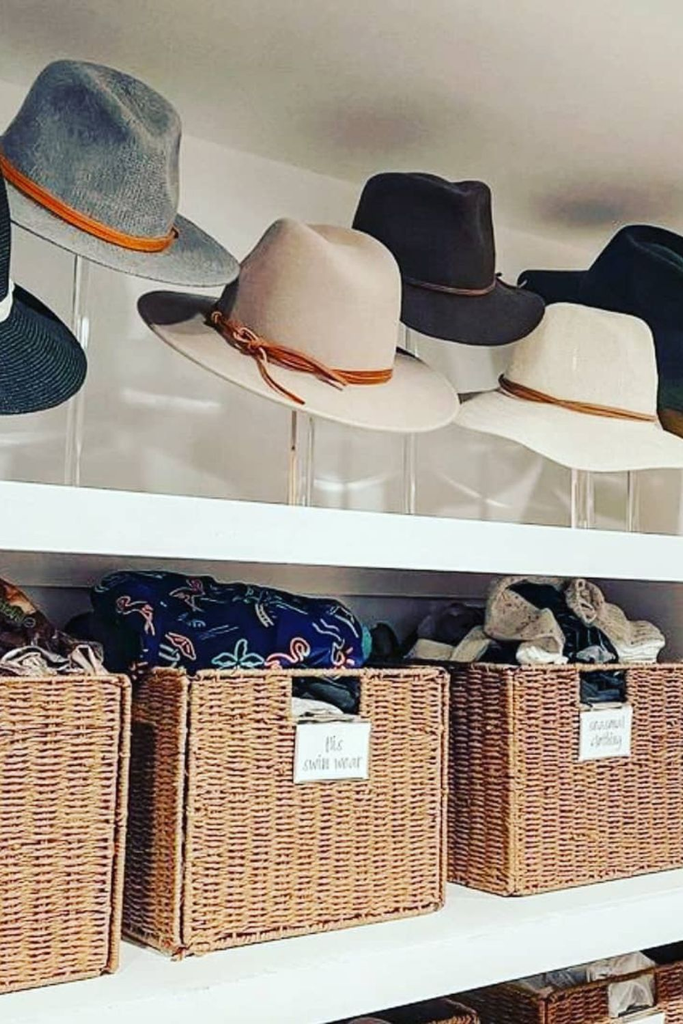
Individual stands are a practical choice for structured hats that need support rather than pressure from above.
Each stand keeps the crown supported while allowing the brim to remain in its intended position. This is much safer for structured styles than building a tall stack.
I use this approach on closet shelves, dressing-room shelving, and other flat surfaces where there is enough depth for the entire brim.
Before purchasing stands, I measure the shelf depth and the largest brim. A stand can support the crown correctly but still be unsuitable if the brim extends beyond the shelf or interferes with the closet door.
Clear supports can also keep the storage visually quiet when I want the hats themselves to be the main feature.
Strap Hanger
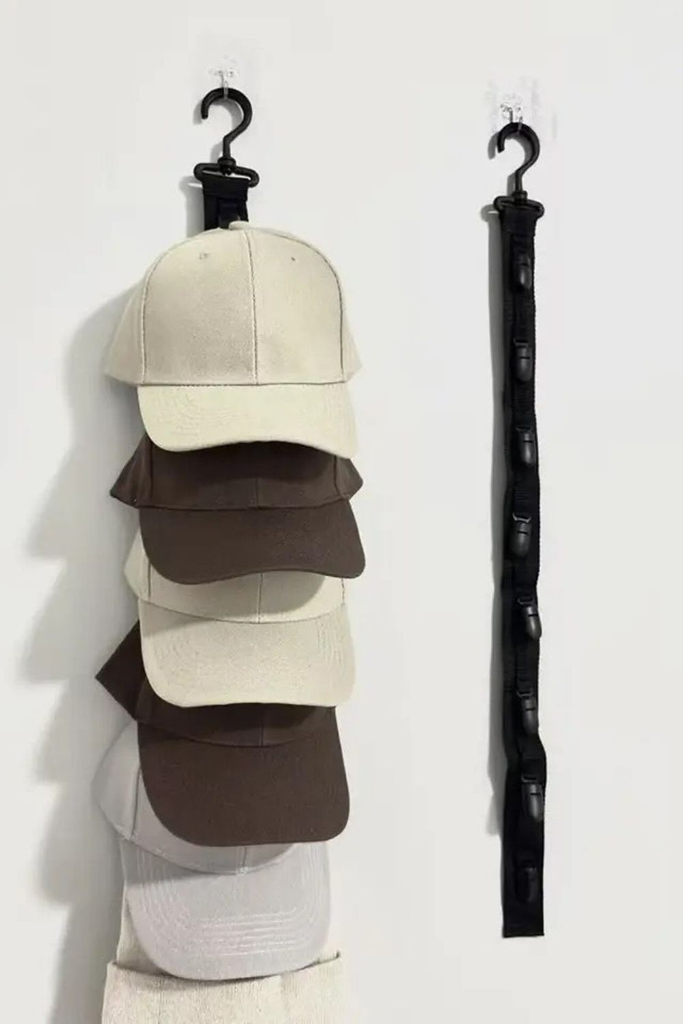
A multi-clip strap hanger is a compact way to store a large number of baseball caps vertically.
Instead of placing caps in a pile, each hat hangs separately from a clip. This makes the collection easier to browse and reduces the need to move several hats to reach one underneath.
I use this type of system in narrow closet sections, on suitable doors, or along unused wall space.
The mounting point is important because the weight increases as more caps are added. For adhesive hooks, I follow the manufacturer’s stated load limit and consider the combined weight rather than just the empty hanger.
This is a space-efficient solution for soft caps, but it isn’t my first choice for delicate structured hats.
Closet Shelf
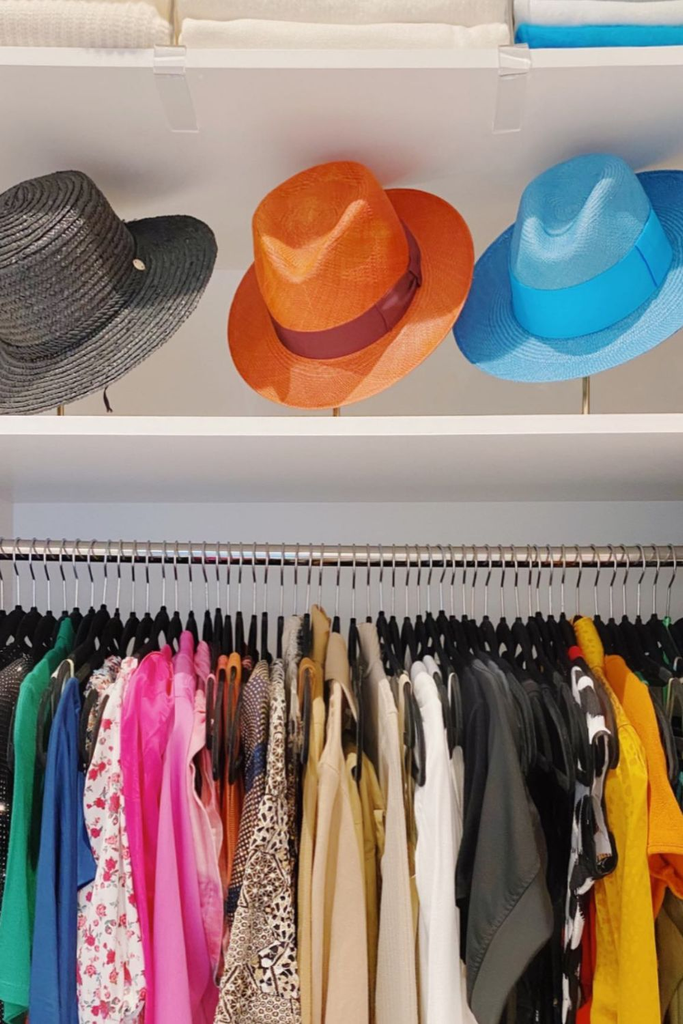
A dedicated closet shelf works well for hats that need more horizontal room than a hanging cap organizer provides.
I avoid making one large stack. Instead, each structured or wide-brim hat gets its own area so the crown and brim aren’t compressed by neighboring pieces.
Shelf depth is especially important. A wide hat should sit securely on the shelf rather than having much of the brim hanging unsupported over the edge.
This setup is useful in walk-in closets and wardrobes with generous upper shelving. It also keeps hats protected from busy areas where they might be knocked off a wall.
For seasonal collections, the highest shelf can work well, provided the hats are protected from excessive dust and can still be retrieved safely.
Pocket Organizer

A hanging pocket organizer makes use of vertical space and is particularly convenient for smaller caps and lightweight accessories.
I choose pockets that are large enough for the hat rather than forcing a bulky cap into a compartment that compresses it.
Clear pockets can make the collection easier to see at a glance, which helps prevent the classic problem of buying another hat simply because an existing one was forgotten.
The back of a closet or bedroom door is often the easiest location. For a narrow wardrobe, a hanging organizer can also use space that would otherwise remain empty.
This method has a limitation: individual pockets may not be deep or wide enough for large structured hats. I reserve it mainly for compact, flexible headwear.
Shelf-and-Hook Station

A narrow shelf with hooks underneath combines display and everyday storage in one area.
The upper shelf can hold small baskets, sunglasses, decorative pieces, or other accessories, while the hooks below provide quick access to frequently worn hats.
I especially like this arrangement for entryways because it keeps the hats associated with the items used when leaving the house.
The shelf and hooks should be installed securely, particularly if the shelf will hold additional objects. Wall anchors should match the wall type, and the installation should account for the combined load.
This setup is also useful in a bedroom when I want hats accessible without dedicating an entire wall to them.
Also read: 18 Pillow Storage Ideas for 2026
Hat Tapestry

A cord-based vertical display gives a large collection a more decorative presentation while still functioning as storage.
Several individual cords can hang from a sturdy upper rail, with each cord assigned to a hat. This works well when the goal is to make the collection part of the room rather than hide it inside a closet.
I would use this for lightweight and decorative hats where the hanging method does not place damaging pressure on the crown or brim.
A stairway wall, dressing area, or large bedroom wall can provide enough room for this style. The installation needs to be secure because all of the hats place their combined load on the upper support.
The main limitation is accessibility. A display mounted high on a wall may look attractive but is less practical for hats used every day.
Rack Hooks

A freestanding coat rack with dedicated hooks can provide hat storage without permanent wall installation.
This is particularly useful in an entryway or rental home where drilling may not be desirable. Hats can share the rack with lightweight bags, scarves, or outerwear.
I position the rack outside the main walking path so the protruding hats and accessories do not become obstacles.
For wide-brim hats, I check the distance between hooks and the surrounding furniture. A crowded rack can cause brims to collide whenever another item is removed.
A stable, wide enough base is also important, especially when several accessories are hanging from one side.
Hanger Rack
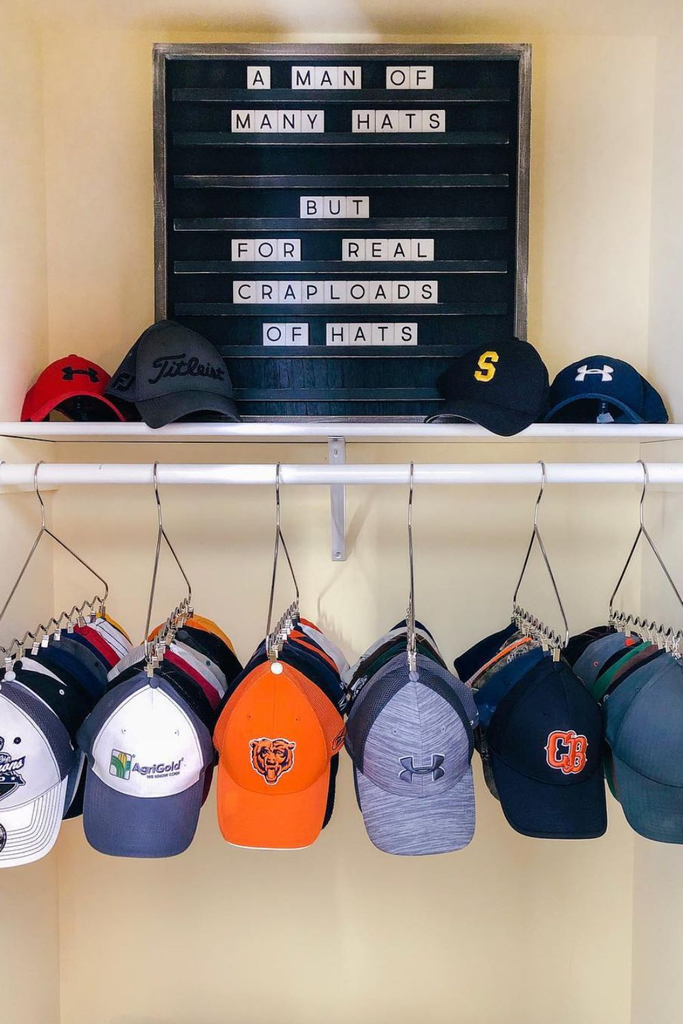
A closet rod combined with multi-clip hangers creates vertical storage for a large cap collection.
This approach is especially useful when the closet has hanging space but very little spare shelf area. Several caps can occupy one vertical section without taking over the clothing shelf.
I group the caps by type or frequency of use so the system remains practical as the collection grows.
The hanger and rod need to support the combined weight. If the existing closet rod is already heavily loaded with clothing, I avoid adding another storage layer without checking its capacity and stability.
This is primarily a cap solution. Structured wide-brim hats generally need a different support system.
Wall Rack
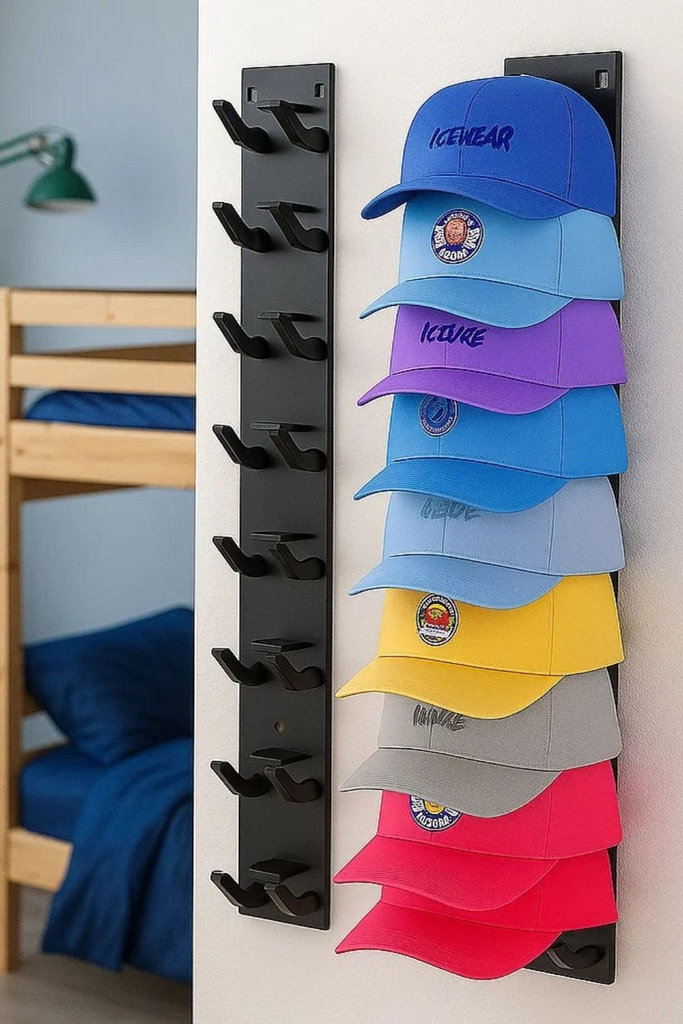
A narrow wall rack can solve a different problem from a decorative hat display: it creates a compact, dedicated home for a large number of baseball caps.
I use this type of rack when wall width is limited but vertical height is available. It can fit beside a closet, on a bedroom wall, or in a small entry area.
Each hook should provide enough room for one cap, and the rack should be mounted at a height that allows comfortable access.
Before installation, I check whether the wall is drywall, wood, masonry, or another material because the correct anchors and screws depend on the surface.
This is a strong option for people who want a dedicated cap station without giving up an entire shelf.
Bar Holder
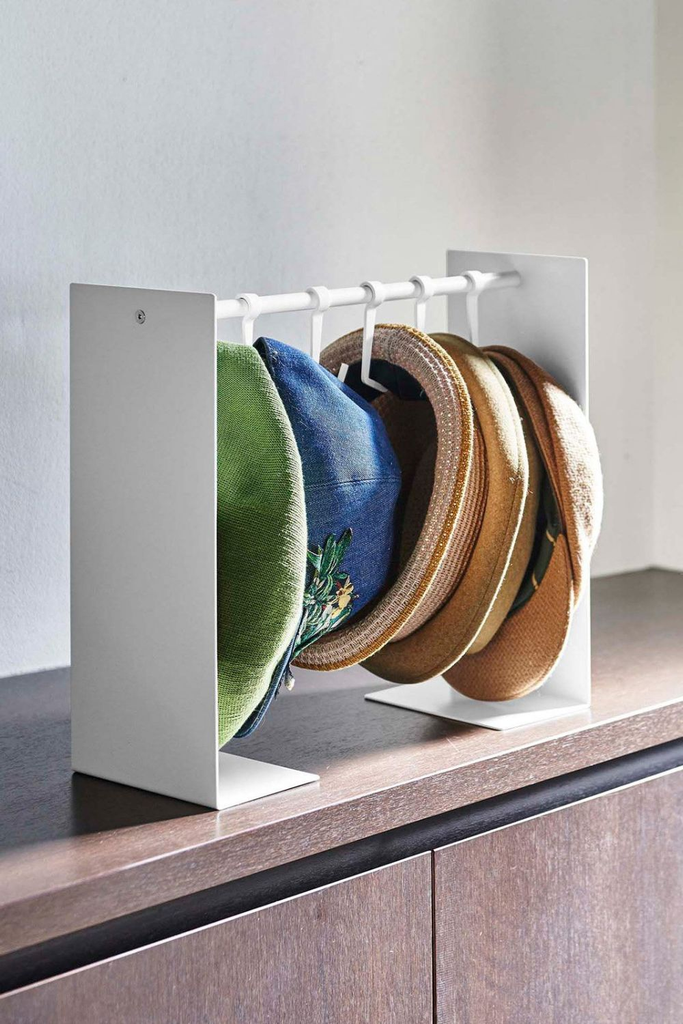
A compact bar holder works well when I have a dresser, console, or closet shelf with some unused horizontal space.
Lightweight hats can be positioned along the bar rather than piled together, making the collection easier to see.
This method is most appropriate for soft or flexible hats. I would not use a narrow bar system if it forces a structured crown into an awkward position.
The holder also needs a stable base. A top-heavy arrangement can tip when one hat is pulled away, so I check the footprint and overall balance before filling it.
This is a useful small-space solution when wall installation isn’t practical.
Macrame Holder
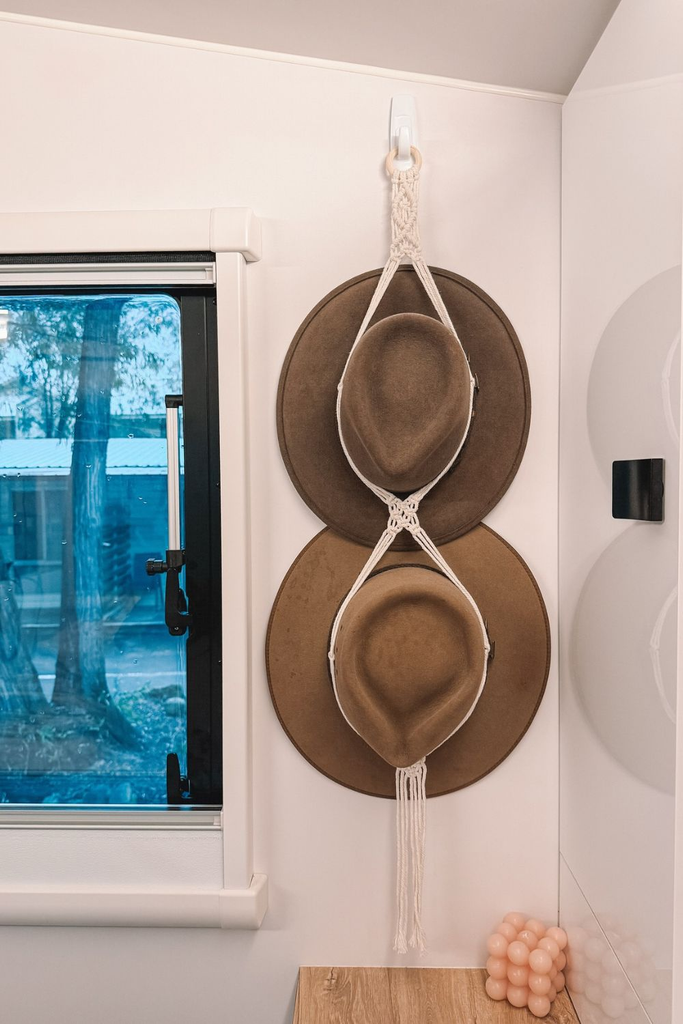
A narrow macrame holder is suited to a small vertical area where conventional shelving will not fit.
The woven sections can create individual spaces for lightweight hats while adding a decorative element to a bedroom or dressing corner.
This is especially useful beside a closet, dresser, or window where there is limited width but some available wall height.
Because the material is flexible, I pay attention to how the hat sits inside the holder. The loops should support the hat without forcing a structured crown into an unnatural shape.
For renters, the mounting point may be removable if the chosen hardware is specifically designed for the wall surface and rated for the total load.
Rod Rack
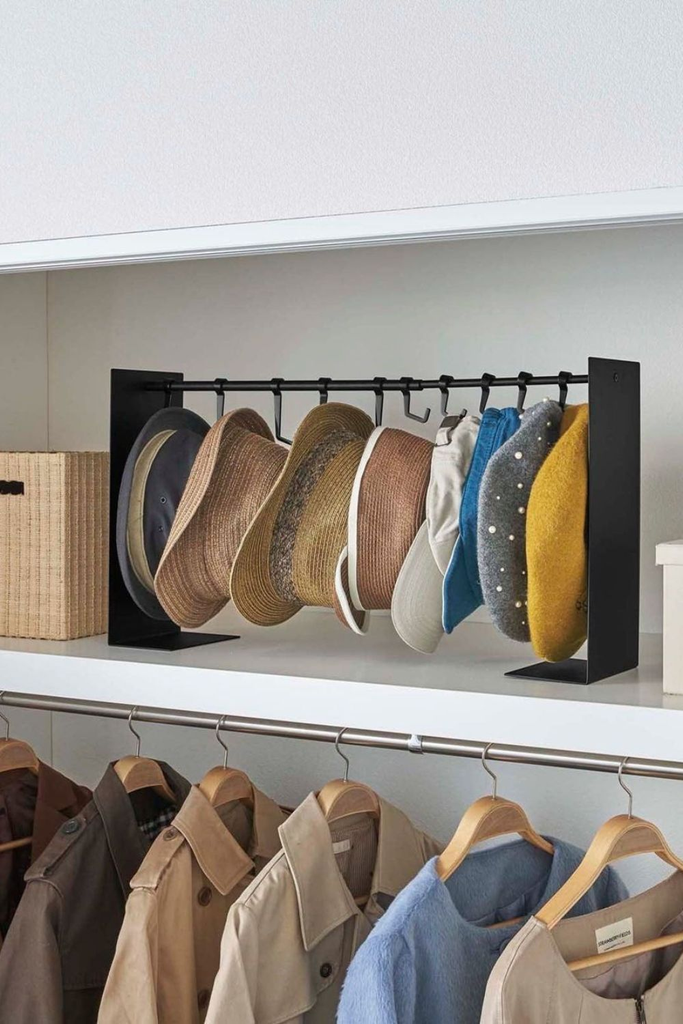
A rod rack installed inside a closet can make use of unused vertical or shelf space without requiring a large organizer.
Unlike a wall display, the main purpose here is compact closet storage. Hats can be positioned along the rod so they remain separate and easy to inspect.
I find this useful when a wardrobe has awkward leftover space that isn’t deep enough for another full shelf.
The rod should be securely supported at both ends, and I measure the available width before buying one. I also check the closet door clearance if the rack is installed near the front.
For delicate hats, I make sure the rod supports the hat in a way that doesn’t place concentrated pressure on one part of the crown.
Decor Hooks
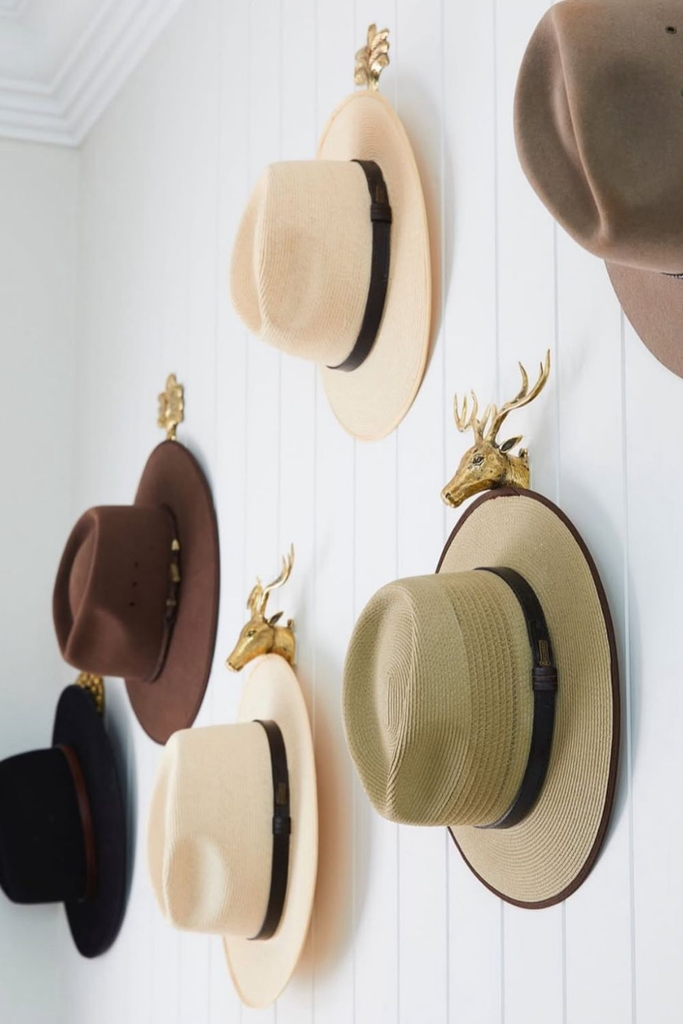
Decorative hooks can turn functional hat storage into part of the room’s design.
I use them when the wall is visible and the hats are attractive enough to serve as a display. Wood, metal, or other finishes can be selected to complement the surrounding furniture and hardware.
This works especially well in an entryway, bedroom, or dressing area where hats are frequently used.
The decorative appearance should not replace practical considerations. Each hook still needs appropriate wall hardware and enough support for the hat.
For wide-brim styles, I position the hooks so the crown is supported naturally and the brim isn’t forced against nearby furniture.
Ball Hooks
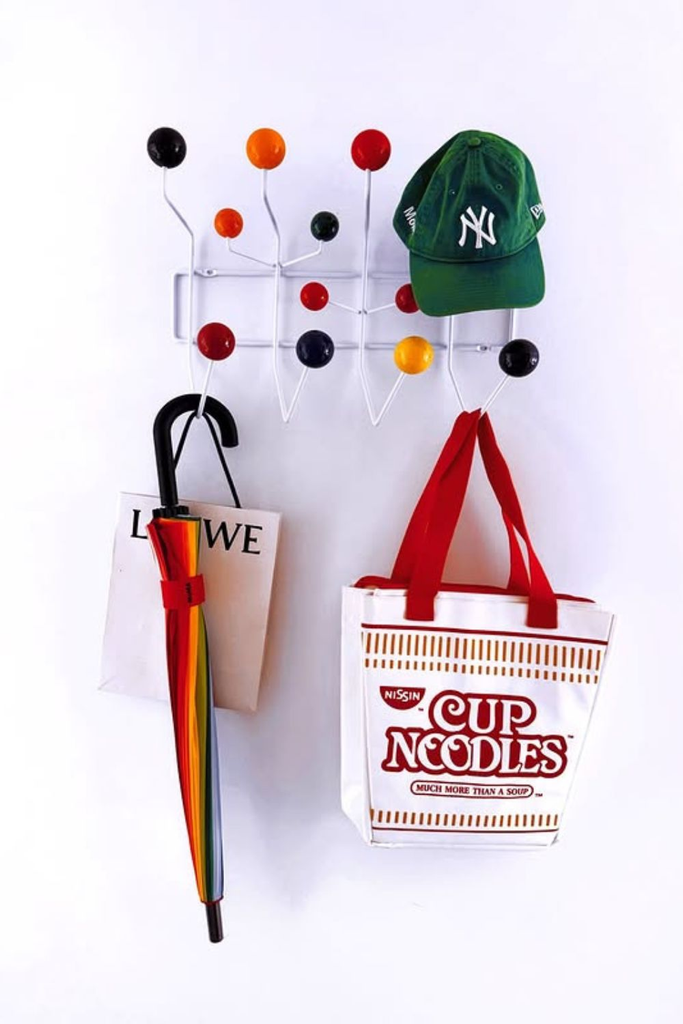
Rounded peg-style hooks provide compact storage for baseball caps and other lightweight accessories.
This method works well in bedrooms, dorms, apartments, and entryways because several hooks can occupy a relatively small wall area.
I use one hook per cap when the goal is quick access and visibility. The same wall section can sometimes accommodate lightweight bags or other accessories, but I avoid overloading it.
The installation surface matters. A small hook may hold one cap easily but may not be suitable for several heavier items.
This is a simple option when I want everyday storage rather than a large decorative display.
Window Hooks
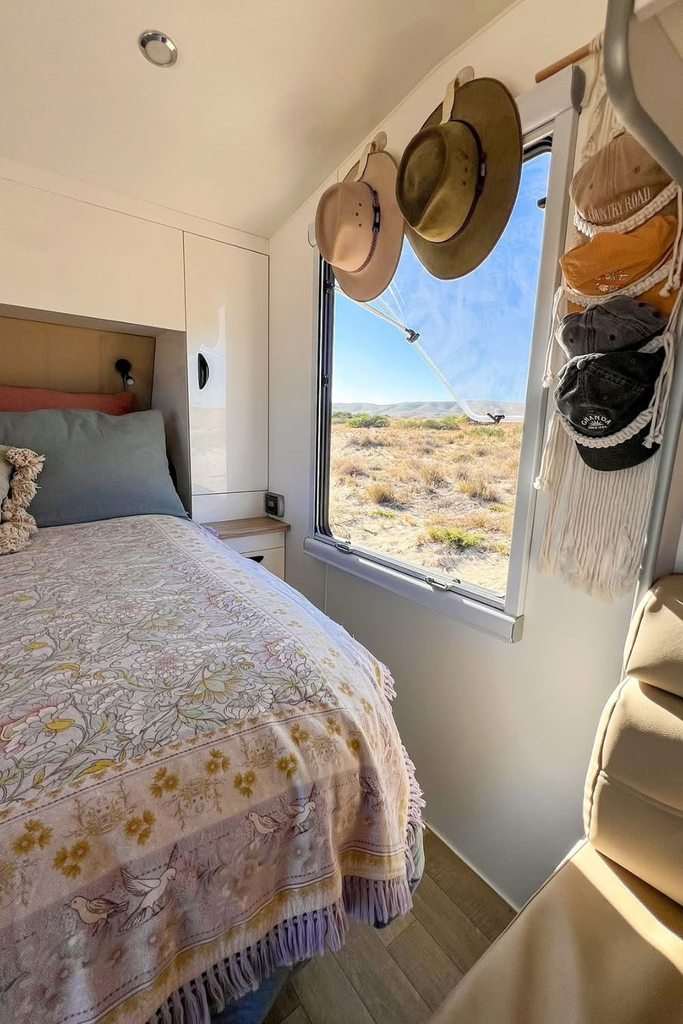
The wall above a window can provide useful storage when closet and floor space are already limited.
I consider this option in small bedrooms, RVs, campers, and compact apartments where unused wall height is valuable.
Wide-brim hats can work particularly well here because the horizontal area above the window provides room for a row of individual storage points.
Before installing anything, I measure the space above the window and check the curtain rod, blinds, trim, and window operation. Hats should not interfere with opening or closing the window treatment.
This is best for hats that aren’t needed constantly, since reaching above a window may be less convenient than using a nearby wall or closet.
Pro Tip: Treat the area around a window as functional space, not just leftover space. If hooks are installed there, keep enough clearance for curtains and blinds to move normally.
Read this next: 22 Fabric Storage Ideas for 2026
FAQs
What is the best way to store hats without ruining their shape?
I match the support to the hat. Baseball caps can usually work with clips, hooks, or hanging straps, while structured and wide-brim hats benefit from individual shelf spaces, stands, or appropriately positioned hooks.
I avoid heavy stacking because pressure from other hats can change the shape of crowns and brims. Delicate hats also deserve storage away from areas where they will be repeatedly bumped or handled.
How can you store a large hat collection in a small space?
I start with vertical areas such as closet doors, bedroom walls, the backs of doors, and suitable space above windows. Hanging systems can work particularly well for caps because they use height instead of valuable shelf depth.
For a mixed collection, I separate caps from structured hats rather than forcing every style into one organizer. Everyday hats stay accessible, while seasonal pieces can use higher or less convenient storage.
Conclusion
Good hat storage starts with the hat itself. A baseball cap, a structured fedora, and a large straw sun hat may all need completely different support to remain useful and attractive over time.
I also consider the space before choosing the organizer. A small bedroom may benefit from vertical or door storage, while a walk-in closet can accommodate dedicated shelves or stands. In an entryway, easy access usually matters more than maximum capacity.
The most practical system is the one that matches hat type, available space, and frequency of use. Once each hat has a suitable home, the collection becomes easier to maintain, easier to see, and much less likely to end up in a pile.






One Comment