17 Pipe Cleaner Crafts for Kids That Are Fun to Twist Together
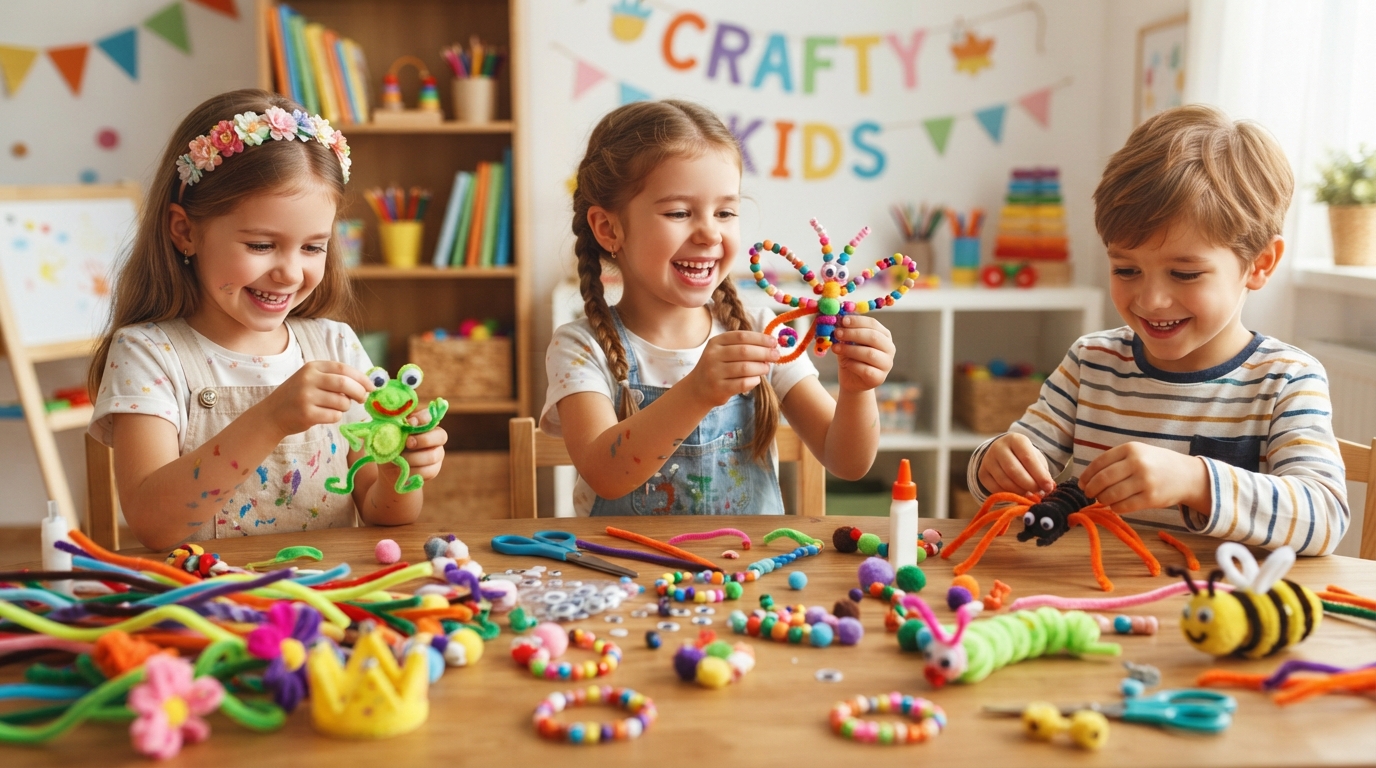
I keep a small supply of pipe cleaners in my craft box because they are inexpensive, flexible, and ready to use with almost no preparation. A few bends and twists can turn them into animals, flowers, letters, decorations, or simple toys.
What makes them especially useful for kids is the freedom to change the design. There is usually no single correct result, so children can choose colors, adjust shapes, and add simple details from supplies already at home.
I use these crafts for quiet afternoons, rainy days, playdates, classroom activities, and holiday projects. Before starting, I check the pipe cleaners for loose or pointed wire ends and choose decorations that are appropriate for the child’s age.
This collection includes 17 pipe cleaner crafts for kids, covering creative projects, learning activities, pretend-play props, decorations, wearable crafts, and a simple maze game.
Some ideas are quick enough for a short activity, while others can lead into longer creative play. Alphabet and name crafts add a learning element, animals and puppets encourage storytelling, and ornaments and hearts work well for seasonal or gift-making projects.
I adapt the designs according to age and ability. Younger children can work with large, simple shapes and paper or felt details, while older kids can handle more detailed designs and construction challenges.
Save this for later
Table of Contents
Safety is important because pipe cleaners contain flexible wire. I check every finished piece for exposed ends, and I keep beads, googly eyes, pom-poms, and other small decorations away from children who are not developmentally ready for them because these items can be choking hazards.
Key Takeaways
- Pipe cleaners are inexpensive, flexible, and require very little setup.
- Bending, twisting, and positioning give children opportunities to practice controlled hand and finger movements.
- The same material can become a craft, decoration, learning tool, game, or pretend-play prop.
- I simplify designs for younger children and add more construction challenges for older kids.
- Wire ends should be secured and checked before finished crafts are handled or worn.
- Beads, googly eyes, pom-poms, and other small parts require age-appropriate use and close supervision.
- These projects work well for screen-free afternoons, classrooms, playdates, and family craft time.
Related article: 21 Cute Summer Crafts for Preschoolers
The best part of working with pipe cleaners is how quickly children can see an idea take shape. A simple twist can become a leg, petal, letter, loop, or corner, so the activity can stay open-ended instead of feeling like a project that has to look exactly like a sample.
The 17 ideas below include both finished crafts and activities that continue after the making is done. That makes it easy to choose something based on the child’s interests, available time, and the type of play or learning you want to encourage.
1. Pipe Cleaner Animals
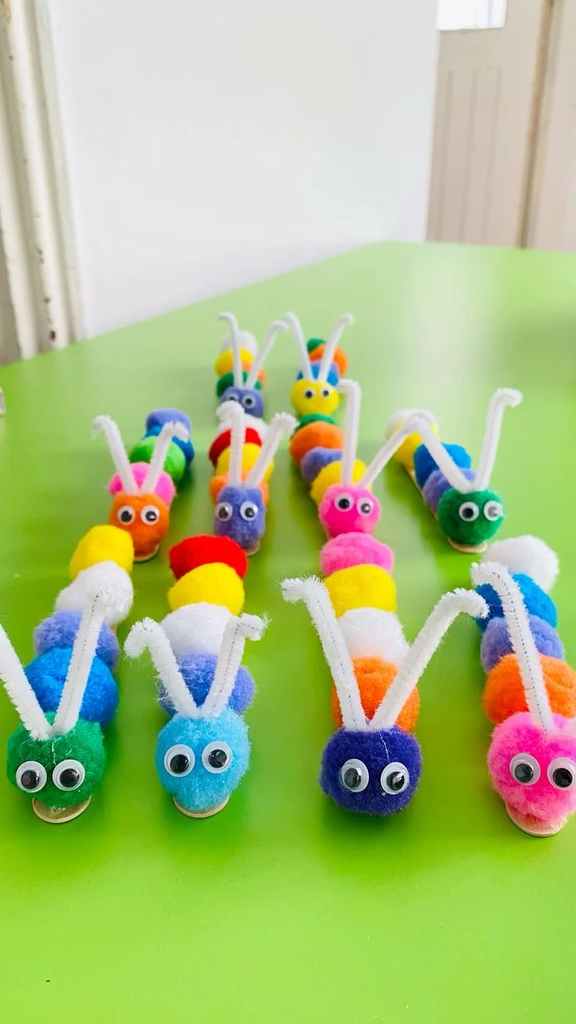
I start with simple animals when a child is new to pipe cleaner crafting. The basic idea is to build a body and then add recognizable features such as legs, ears, a tail, or antennae.
How to Make It
Twist one or more pipe cleaners into a body shape, then bend additional pieces into legs, ears, tails, or other features. Paper circles or larger age-appropriate craft pieces can provide eyes and facial details.
For beginners, I recommend starting with an animal that uses only a few basic shapes, such as a snake, caterpillar, or simple four-legged animal.
Why Kids Love It
The finished animals can be realistic, colorful, or completely imaginary. Children can give each creature a name, decide where it lives, and turn a simple craft session into open-ended storytelling.
Pro Tip: Let children choose their own colors rather than trying to make every animal look realistic. For younger kids, skip tiny decorations and concentrate on large, easy-to-bend shapes.
2. Pipe Cleaner Bracelets
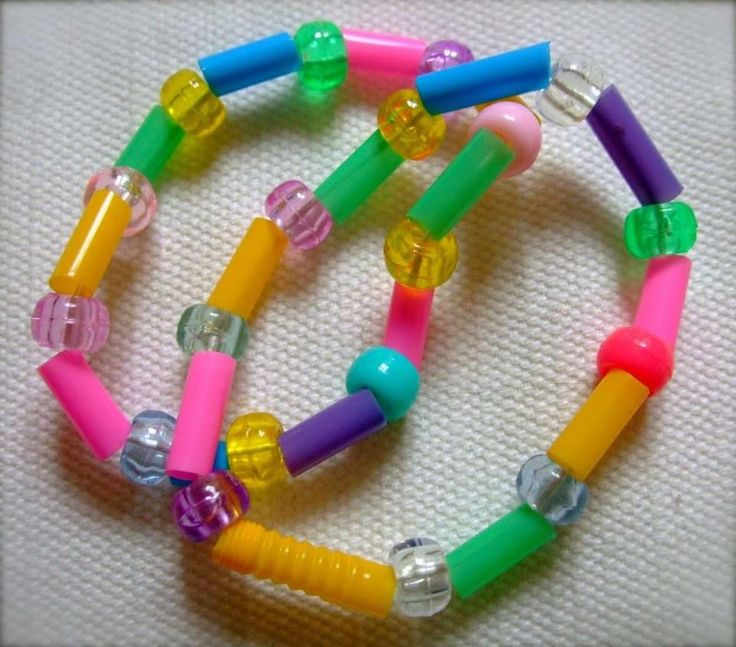
Bracelets make a quick wearable project when children want to finish something in a short amount of time. I find them particularly useful for simple color-pattern activities or small group craft sessions.
How to Make It
Gently curve a pipe cleaner around the wrist without making it tight, leaving enough room for comfortable movement and easy removal. Twist the ends together securely, then tuck or position the twisted section so no pointed wire is exposed.
Two colors can be twisted together before forming the bracelet to create a simple striped effect.
Why Kids Love It
Children get an immediate result they can show off or give to a friend. They can also experiment with different color combinations instead of making every bracelet the same.
Pro Tip: Always check the finished bracelet for exposed wire. A wearable pipe-cleaner craft should be loose enough to remove easily and should not be left on a young child without supervision.
3. Pipe Cleaner Flowers
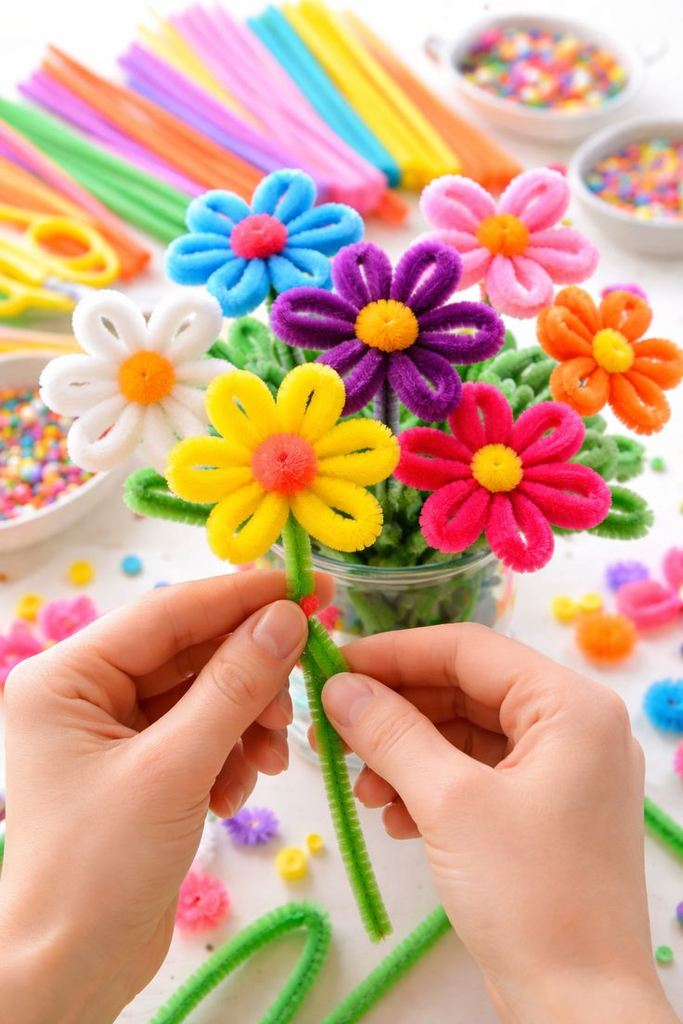
Pipe cleaner flowers are simple enough for beginners but still leave plenty of room for color and shape choices. They can become individual flowers, a small bouquet, or part of another craft.
How to Make It
Bend several pipe cleaners into rounded or pointed petal shapes and twist them together at the center. Use another pipe cleaner for the stem and add a larger paper or felt center if desired.
The petals do not have to match perfectly. Slight differences can make each flower look handmade rather than identical.
Why Kids Love It
Kids can make flowers in favorite colors and create a small bouquet as a handmade gift. The project also works nicely for spring crafts, Mother’s Day activities, or a nature-themed craft session.
Pro Tip: For younger children, make fewer, larger petals. This reduces the amount of twisting they need to manage and makes the finished flower easier to hold.
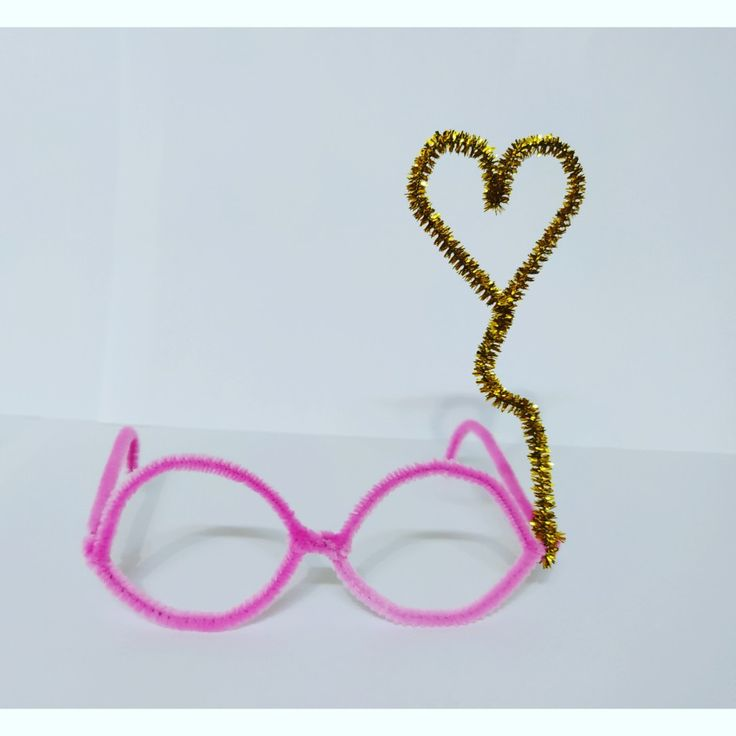
4. Pipe Cleaner Glasses
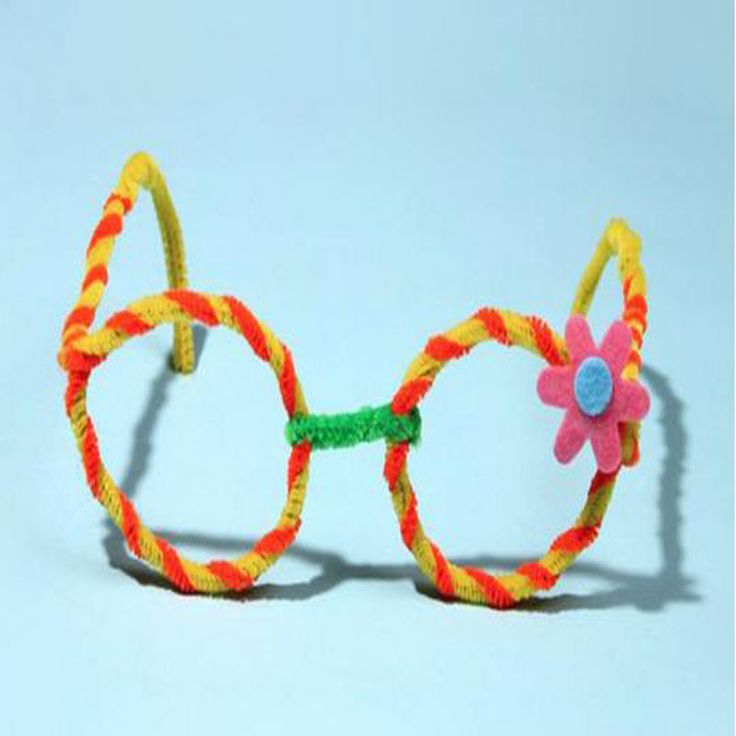
Pipe cleaner glasses are mainly a pretend-play prop rather than a functional pair of eyewear. They are fun for children who enjoy dressing up and creating characters.
How to Make It
Shape two rounded loops for the lenses and connect them with a short bridge. A separate piece can form the side arms, with the ends twisted securely into the frame.
Keep the design loose and check every section before allowing a child to hold it near their face.
Why Kids Love It
The glasses can become part of a scientist, inventor, superhero, teacher, or silly character costume. Making the prop gives children something they can immediately use in imaginative play.
Pro Tip: I use these primarily as supervised pretend-play props. Check carefully for pointed wire ends and avoid designs that press against the face or eyes.
5. Pipe Cleaner Rings
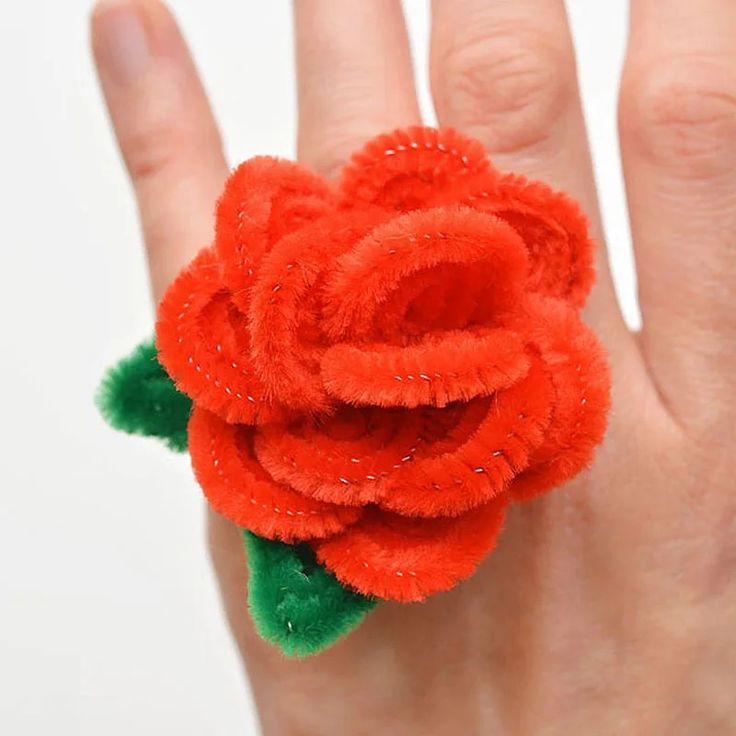
Rings give children a smaller project to make when they want something wearable but do not need a large craft. The main challenge is forming a secure loop without making it too tight.
How to Make It
Loosely curve a pipe cleaner around a finger to estimate the size, then twist the ends together. A small loop, spiral, or larger shape can be added to the top for decoration.
The ring should slide off easily rather than fitting snugly.
Why Kids Love It
Kids can make several rings in different colors or create simple matching sets for friends. The project also works well as a short activity during a playdate or party.
Pro Tip: Never make a tight finger loop. Check that the ring can be removed easily, secure the wire ends, and supervise young children while wearable crafts are being used.
6. Pipe Cleaner Stars
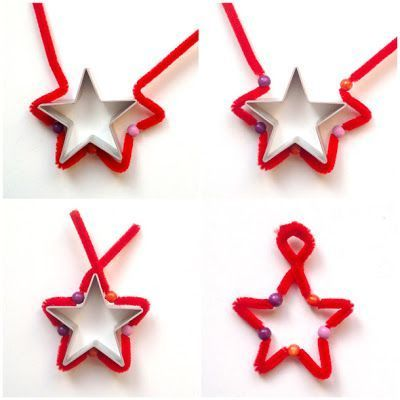
Stars have a completely different use from the geometric-shape activity later in the article. Here, I treat them as decorative or imaginative designs that can fit space themes, celebrations, or holiday projects.
How to Make It
Bend a pipe cleaner into several points and twist the sections together so the star keeps its shape. For a larger star, connect additional pipe cleaners at the points rather than forcing one short piece to do all the work.
Why Kids Love It
Stars can become decorations, space-play props, or pieces of a larger craft scene. Children can also experiment with making small and large versions in different colors.
Pro Tip: If the shape keeps collapsing, add another pipe cleaner rather than twisting one piece excessively. Secure the final end and position it away from little fingers.
7. Pipe Cleaner Bugs
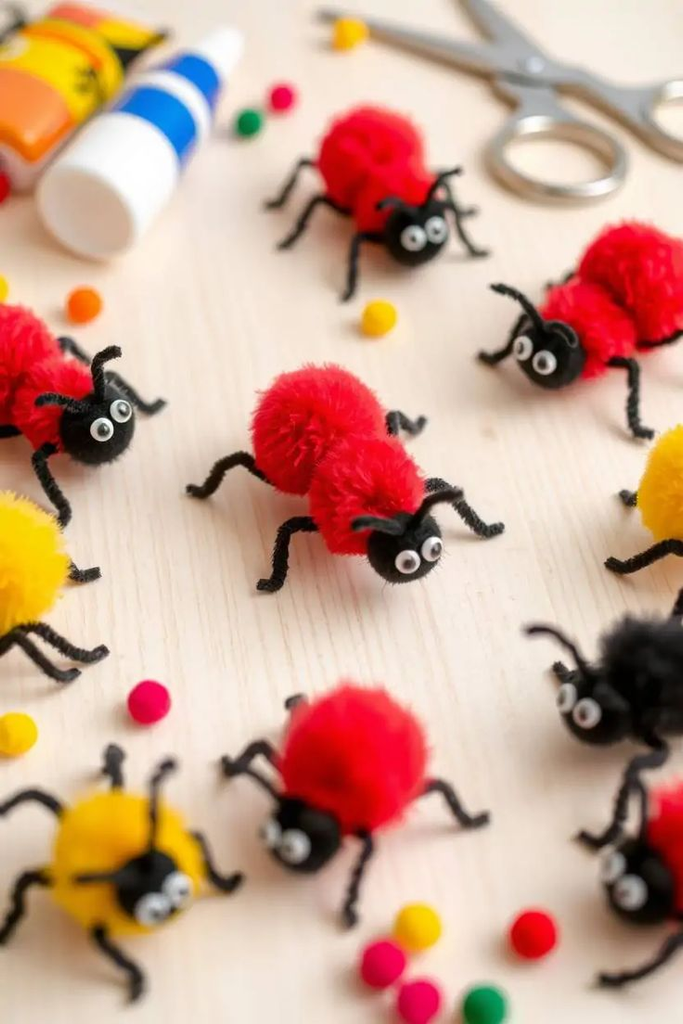
Bug crafts give children a chance to explore insects and nature while working with a more specific type of animal shape. I use this idea when the goal is less about general animal building and more about creating an insect-themed activity.
How to Make It
Shape a pipe cleaner into a small insect body, then add separate pieces for legs, antennae, or other features. Paper or felt can provide larger wings or spots without requiring lots of tiny decorations.
Why Kids Love It
Children can make ladybugs, beetles, caterpillars, spiders, or imaginary insects with unusual colors and features. The finished bugs can lead to simple conversations about real insects, habitats, movement, and body parts.
Pro Tip: For younger children, use larger paper details instead of beads or other tiny decorations. Cutting pipe cleaners should be done by an adult or with age-appropriate supervision.
8. Pipe Cleaner Hearts
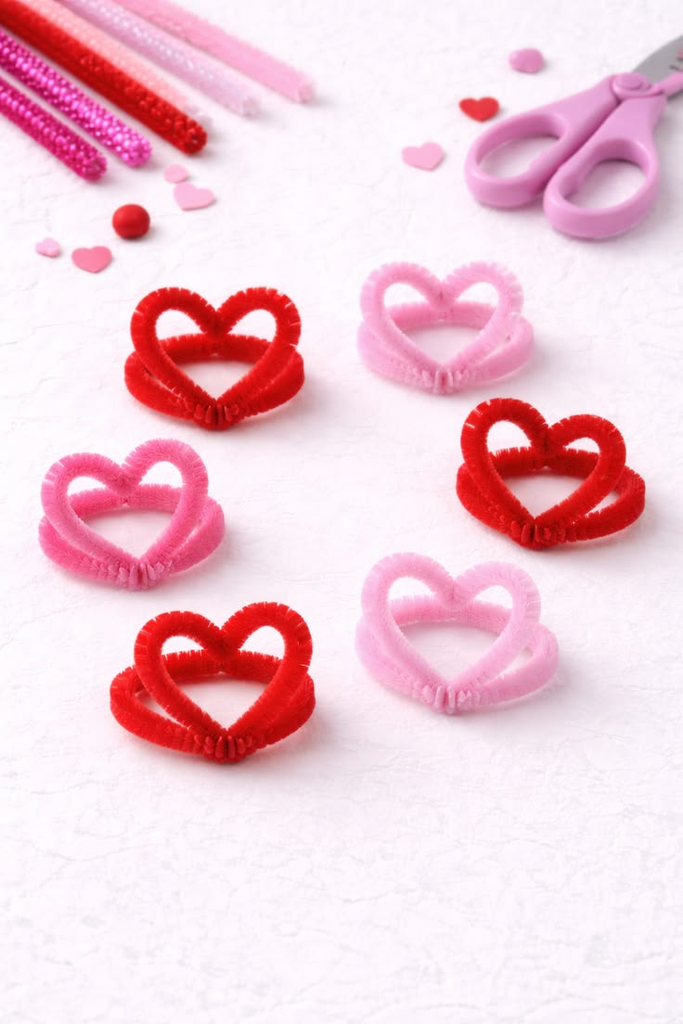
Heart shapes are an easy choice for Valentine’s Day, Mother’s Day, friendship crafts, or any activity where children want to make a small handmade gift.
How to Make It
Curve the pipe cleaner into two rounded sides, bring the center together at the top, and shape the lower section into a point. Twist the joining section securely so the heart holds its form.
Several hearts can also be connected to make a simple garland.
Why Kids Love It
Children can choose colors that match their own ideas and give the finished hearts to family members or friends. The craft also gives them a simple way to create something connected to kindness and appreciation.
Pro Tip: If the heart will be used as a decoration, attach a ribbon loop to the finished piece rather than leaving a sharp wire end exposed.
9. Pipe Cleaner Swords
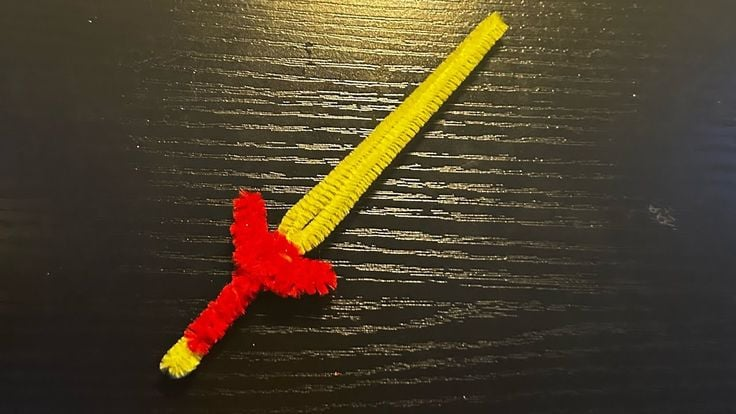
Pipe cleaner swords can be used as lightweight pretend-play props for simple adventure stories. I keep the focus on imagination rather than fighting and use clear boundaries during play.
How to Make It
Twist pipe cleaners together to create a thicker central shape, then form one end into a handle and the other into a simple blade. Secure and bend the ends so there are no pointed sections sticking out.
Why Kids Love It
The finished prop can become part of a pirate, knight, explorer, or superhero story. Children can use it to act out imaginary scenes without needing complicated costumes.
Pro Tip: These should be used only for gentle, supervised pretend play. No hitting, swinging at people, chasing, or pointing toward faces or bodies. Stop the activity if the play becomes rough.
Also read: 21 Fun Pinecone Christmas Crafts
10. Pipe Cleaner Alphabet Shapes
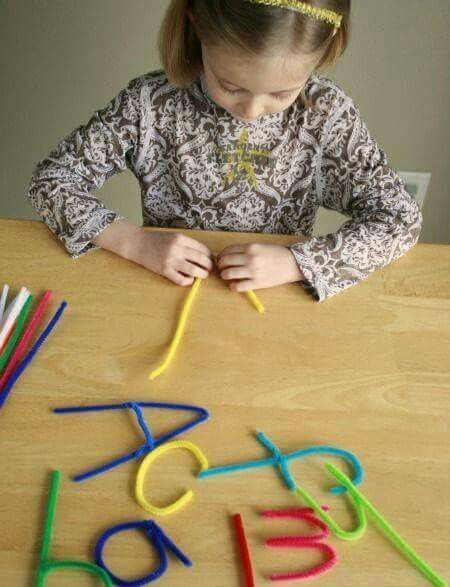
This project focuses on general letter learning rather than making one specific word. It can work as a hands-on activity for recognizing letter shapes and comparing uppercase and lowercase forms.
How to Make It
Bend pipe cleaners into individual letters, beginning with simple straight-line shapes. After children become comfortable with those, move to letters with more curves and bends.
The letters can be placed side by side to make short words or sorted into uppercase and lowercase groups.
Why Kids Love It
Children get to physically build the shapes they are learning about. I can ask them to identify a letter, find its matching lowercase or uppercase form, or use several letters to spell a familiar word.
Pro Tip: Keep the lesson short and playful. One or two letters may be enough for younger children, while older kids can try spelling names, simple words, or themed vocabulary.
11. Pipe Cleaner Butterflies
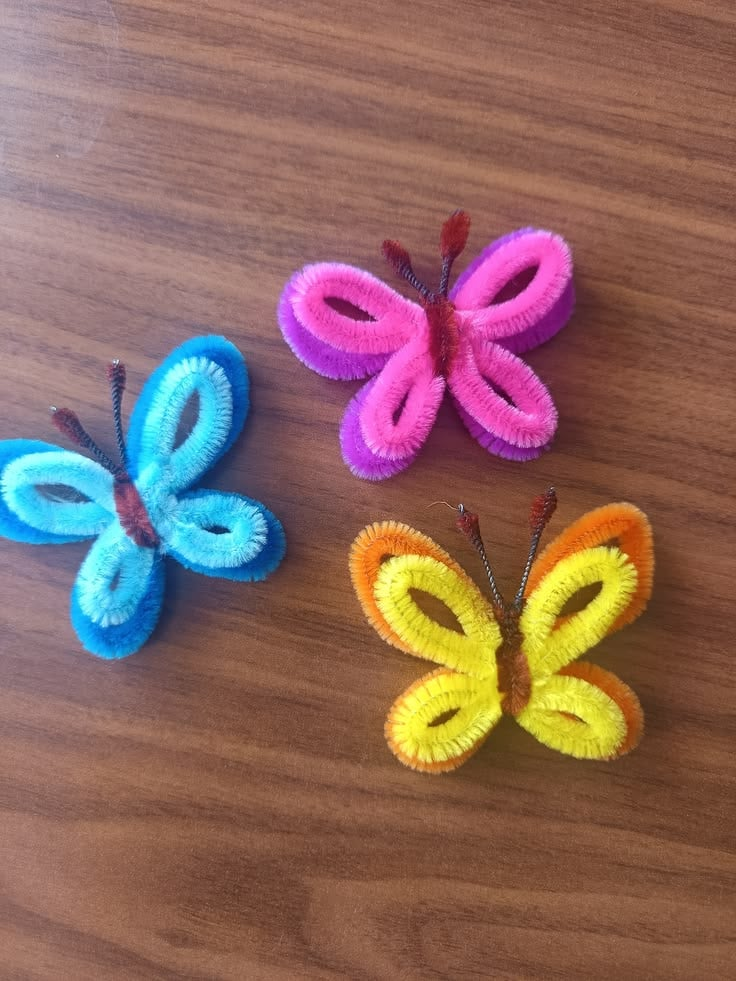
Butterflies deserve their own project because their wing structure creates a useful opportunity to explore symmetry and color. Instead of simply making another animal, this craft focuses on building matching wing shapes around a central body.
How to Make It
Bend pipe cleaners into two similar wing shapes and join them around a central piece that forms the body. Add a smaller piece for antennae and use paper or felt for larger decorative details if needed.
Try making both sides of the wings similar, then experiment with different colors and patterns.
Why Kids Love It
Children can see how changing the shape or size of one wing affects the whole butterfly. Creating several butterflies also makes a fun color-matching or pattern activity.
Pro Tip: Fold or bend the wing sections gradually instead of making sharp kinks. This helps the curves stay smoother and makes the butterfly easier for children to handle.
12. Pipe Cleaner Glass Shapes
This craft is about geometry and construction rather than making a star decoration. Children can build individual shapes and then combine them to see how basic forms work together.
How to Make It
Bend pipe cleaners into circles, triangles, squares, rectangles, and other simple forms. Connect several shapes at their corners to create larger structures, patterns, or pictures.
For a classroom activity, I can call out a shape and have children build it before combining their pieces.
Why Kids Love It
The hands-on format gives children a chance to recognize shapes while experimenting with how pieces connect. Older kids can use several forms to create structures and then modify them when the design does not hold together.
Pro Tip: Change the size of one shape and compare it with another. This creates an easy opportunity to talk about sides, corners, size, and patterns without turning the activity into a formal lesson.
13. Pipe Cleaner Christmas Ornaments
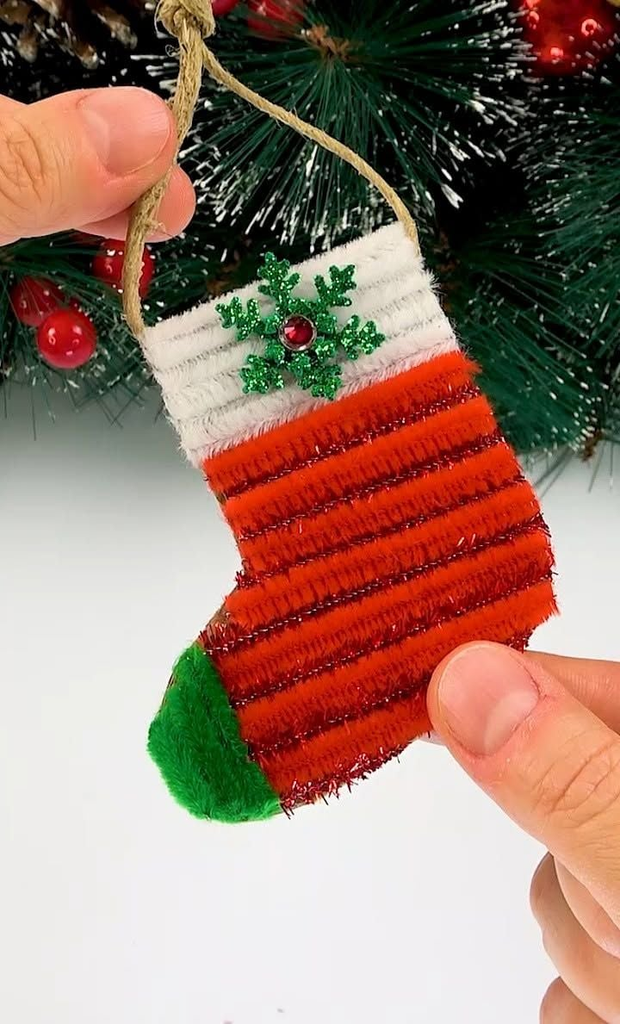
Pipe cleaner ornaments are lightweight enough for children to make and personalize. Simple designs such as stars, trees, candy canes, and snowflakes work particularly well.
How to Make It
Shape one or more pipe cleaners into the chosen holiday design and twist the ends together securely. Add larger beads, paper pieces, ribbon, or other age-appropriate decorations if desired.
A small loop can be formed at the top so the finished ornament can hang from a suitable branch or display area.
Why Kids Love It
Children enjoy seeing something they made become part of the holiday decorations. I also like keeping handmade ornaments from different years because they provide a simple record of changing interests and crafting abilities.
Pro Tip: Check every ornament before displaying it. Keep beads and other small decorations away from children who are not developmentally ready for them, and make sure no wire end is exposed.
14. Pipe Cleaner Fruit Shapes
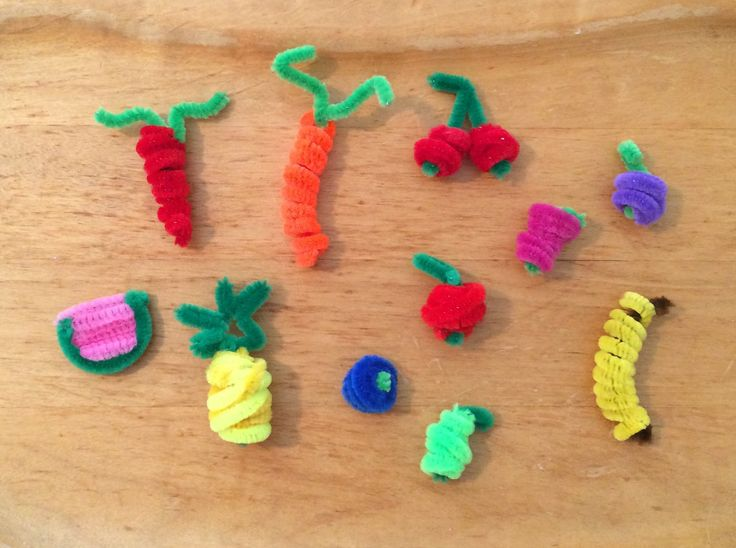
Fruit shapes turn a simple craft into an opportunity for color recognition, sorting, and pretend play. The designs do not need to be perfectly realistic to be recognizable.
How to Make It
Twist pipe cleaners into simple versions of apples, bananas, grapes, oranges, or other familiar fruits. Choose colors that help children identify each fruit and add a small leaf or stem if the design needs one.
Why Kids Love It
The finished pieces can be placed in a pretend kitchen, used for a play grocery store, or sorted by color and type. Older children can make a small fruit basket or create a pretend market.
Pro Tip: Use larger, simpler shapes for younger children. If you are discussing healthy foods, keep the conversation about real fruit separate from the craft materials rather than treating the models as food.
15. Pipe Cleaner Name Craft
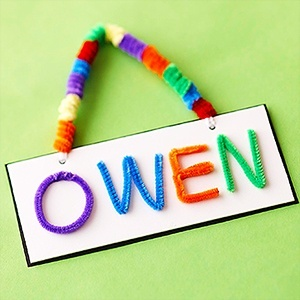
The name craft gives the alphabet activity a personal purpose. Instead of practicing letters in general, children build the letters in their own name and arrange them in the correct sequence.
How to Make It
Shape individual pipe cleaners into each letter of the child’s name and place the letters from left to right on cardboard or sturdy paper. Larger letters are easier for beginners to handle and display.
For younger children, an adult can prepare some of the more difficult letters while the child helps identify and arrange them.
Why Kids Love It
Children often enjoy seeing something familiar, such as their own name, turned into a colorful piece of artwork. Once finished, the name can be displayed in a bedroom, playroom, or craft area.
Pro Tip: For a longer name, work on two or three letters at a time. This keeps the project manageable and gives younger children clear opportunities to practice sequencing.
16. Pipe Cleaner Animals on Sticks
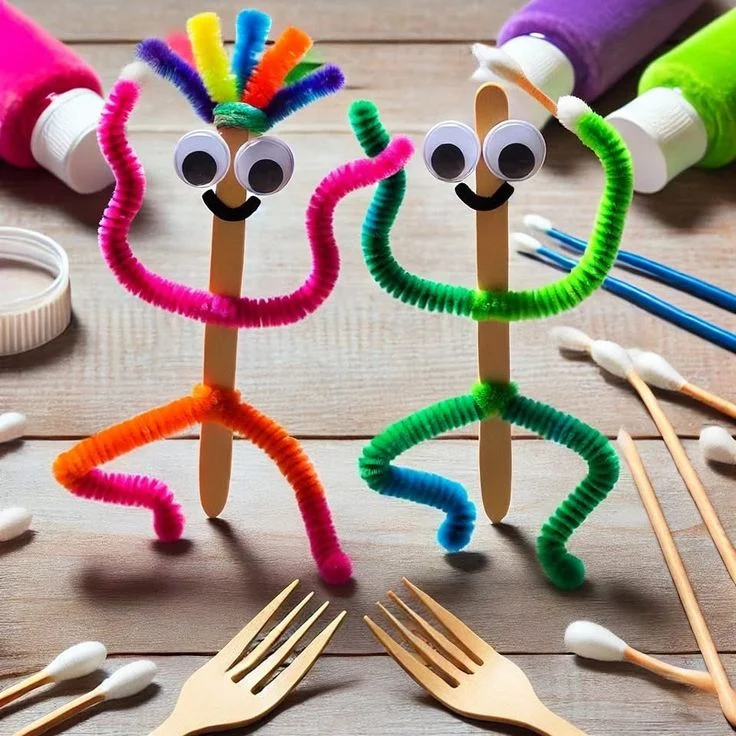
This version changes the purpose of the animal craft completely: the finished creature becomes a puppet or storytelling prop. It works particularly well for pretend play and small-group activities.
How to Make It
Make a simple pipe cleaner animal, then attach it securely to a craft stick or another suitable handle. Paper or felt can be used for larger facial details.
Check every attachment before play and make sure the stick is not being used as a toy sword or pointing object.
Why Kids Love It
Once several characters are ready, children can create a story, act out a scene, or put on a small puppet show. This gives the craft a second stage instead of ending when the animal is complete.
Pro Tip: Prepare the animal bodies before a classroom or group activity if time is limited. Children can then concentrate on decorating their characters and creating the story.
17. Pipe Cleaner Maze Game
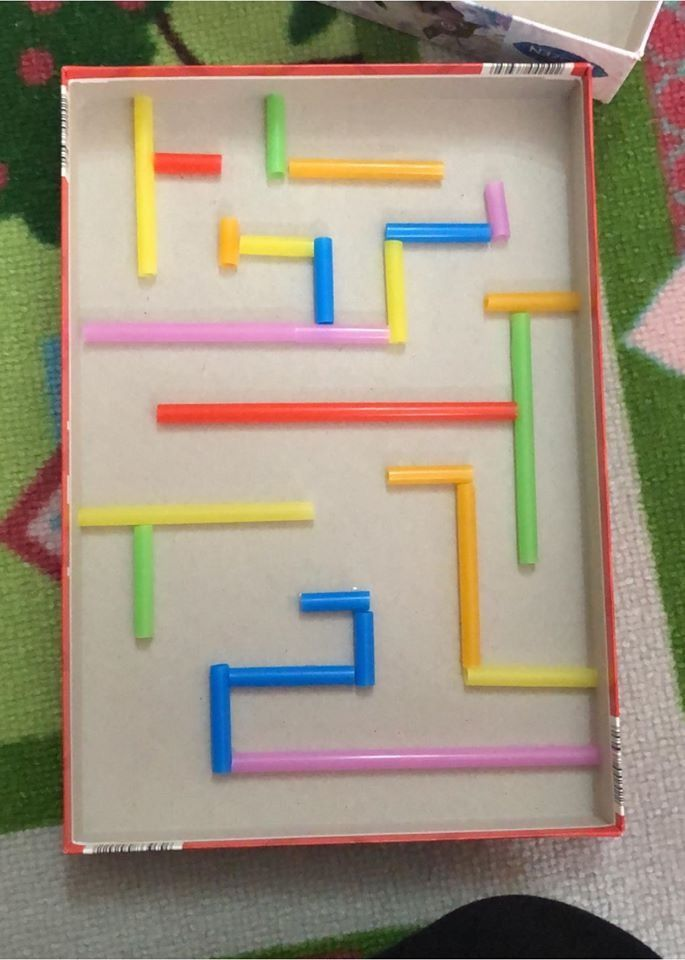
The maze turns pipe cleaners into both a building material and a simple problem-solving game. I like this option when children have already made a few crafts and are ready for something more interactive.
How to Make It
Arrange pipe cleaners on sturdy cardboard to create walls and pathways, securing them where needed so they do not move during play. Leave a clear route from the starting point to the finish.
A larger bead or another age-appropriate object can be guided through the maze. For children who are not ready for small pieces, use a larger object instead.
Why Kids Love It
Children get to design their own maze and then test whether it works. If the path is too easy, they can add turns or change the walls and try again.
Pro Tip: Start with a short maze containing only a few turns. Let the child redesign it after solving the first version so the activity becomes both a construction challenge and a game.
Benefits of Pipe Cleaner Crafts for Kids
Pipe cleaner crafts provide plenty of hands-on practice because children have to bend, twist, pinch, position, and sometimes connect flexible materials. These movements give children opportunities to work on controlled hand and finger movements while concentrating on a meaningful project.
The creative side is just as important. A pipe cleaner can become almost anything, which gives children room to make choices about color, size, shape, and purpose. I try not to correct unusual designs when there is no safety concern because the freedom to experiment is part of the value of an open-ended craft.
These projects can also provide practice with persistence and simple problem-solving. A shape may collapse or a connection may come loose, requiring the child to adjust the design. Instead of immediately fixing it, I often ask what could be bent, moved, or reinforced.
Several of the crafts connect naturally with early learning. Alphabet and name projects offer practice with letter recognition and sequencing, geometric shapes can support shape identification, and fruit crafts can be used for sorting colors or types.
Pretend play adds another layer. Animals, glasses, swords, and stick puppets can become props for stories and role-play. Children can decide what their characters say, where they go, and what happens next.
Group crafting can also create opportunities for sharing materials, explaining ideas, comparing designs, and working on a common activity. For classrooms or parties, preparing materials ahead of time helps keep the actual craft session focused.
Age adaptation is important. Younger children generally need simpler shapes, larger decorative pieces, and closer adult supervision. Older children can handle more detailed construction and can take on projects that involve patterns, letters, structures, or maze design.
Safety should remain part of the setup. Pipe cleaners contain flexible wire, and exposed or poorly positioned ends can scratch or poke. I check finished crafts before use and make sure twisted ends are secure.
Small decorations such as beads, googly eyes, pom-poms, and tiny paper pieces can also be choking hazards for young children. I only introduce these materials when they are appropriate for the child’s developmental stage and use larger paper or felt details when a smaller piece would not be suitable.
Frequently Asked Questions
Are pipe cleaners safe for young children?
Pipe cleaners contain flexible wire, so exposed ends can scratch or poke. I supervise young children closely and check every craft before use.
What age are pipe cleaner crafts best for?
They can work for different ages. I use simple, larger shapes for younger children and more detailed designs for older kids.
Can pipe cleaner crafts help with learning?
Yes. Crafts such as alphabet letters, names, and geometric shapes give children hands-on opportunities to practice letter recognition, sequencing, shapes, and creative problem-solving.
Read this next: 20 Fun Crafts for Kids That Will Keep Them Busy
Final Thoughts
Pipe cleaner crafts have earned a regular place in my craft supplies because they give children a lot of creative freedom without requiring a complicated setup. A small collection of colorful stems can support making, decorating, learning, pretend play, and simple games.
I also appreciate how easily the projects can be adjusted. A younger child might make a basic heart or large flower, while an older child can build a detailed animal, spell a name, design a maze, or create a group of puppets for a story.
The finished project does not have to be perfect. In many cases, the most useful part is the process of deciding how to bend the material, fixing a shape that does not hold, choosing colors, and turning a basic idea into something personal.
For family craft time, classrooms, parties, and rainy-day activities, these projects are easy to scale up or down. A little preparation also goes a long way, especially when several children are crafting together.
I keep safety simple but consistent: check wire ends, secure connections, supervise wearable and stick-based crafts, and keep small decorations away from children who are not ready for them.
For me, that is the lasting appeal of pipe cleaners. They are inexpensive, flexible, require little preparation, and give children enough freedom to make the final project their own.