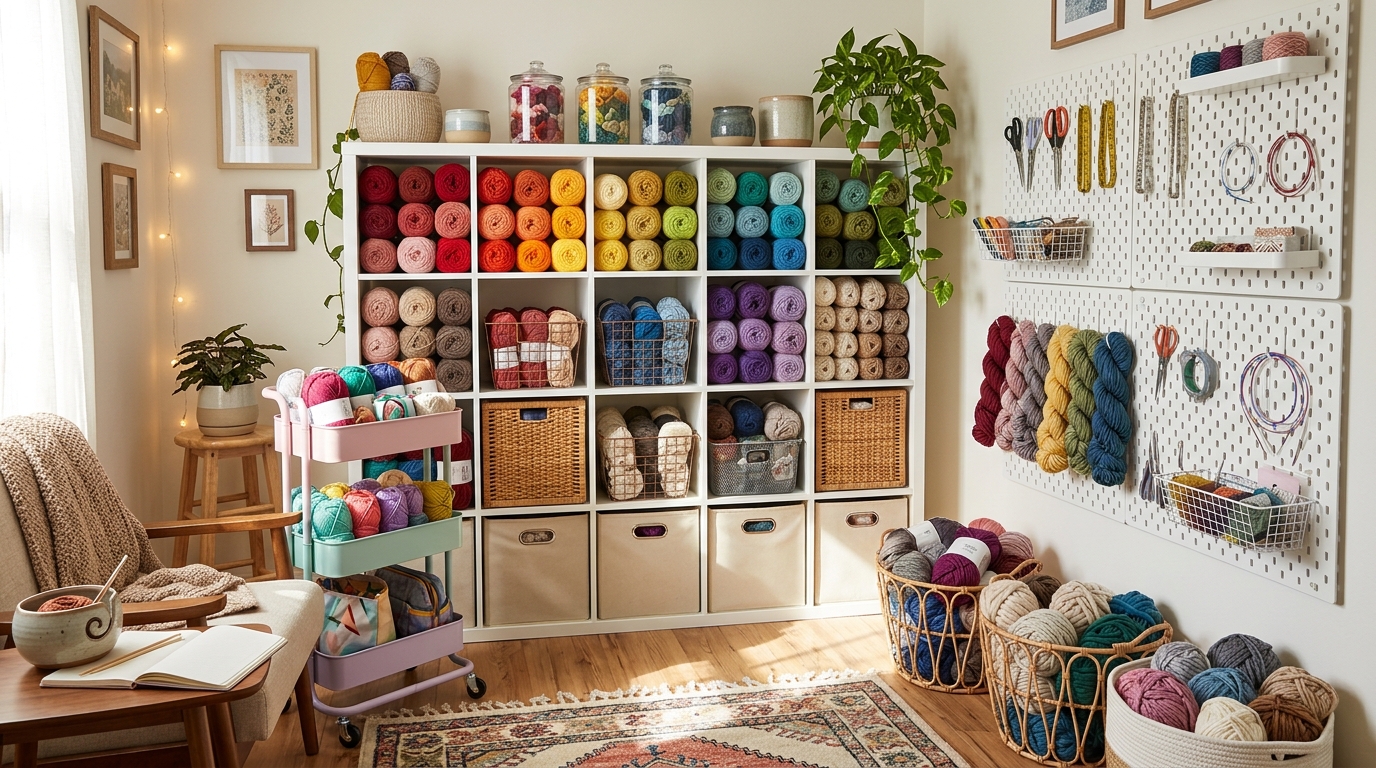
22 Yarn Storage Ideas for 2026
Yarn collections can grow quickly when I save leftover skeins, buy colors for upcoming projects, or keep specialty fibers for a later date. Before long, bags fill up, shelves become crowded, and finding the right yarn takes longer than expected. A good storage system makes it easier to see what I own without sacrificing valuable space.
The best yarn storage ideas work with the room and the collection I already have. I can use an existing bookcase, repurpose baskets, organize a closet, or add vertical storage when floor space is limited. The goal is to make yarn easy to find, simple to put away, and suitable for the way I knit or crochet.
These 22 yarn storage ideas cover practical options for craft rooms, bedrooms, closets, home offices, and small apartments. From color-sorted cube shelves and wall-mounted organizers to project baskets and enclosed cabinets, each approach offers a different way to manage skeins, partial balls, and crafting supplies.
Save this for later
Table of Contents
I would start by sorting yarn into useful categories, measuring the available space, and deciding which supplies need to stay within reach. Open shelves suit yarn I use regularly, while baskets and cabinets help separate smaller leftovers and less frequently used materials. With a combination that fits my collection, I can keep my supplies accessible without letting them spread throughout the house.
Key Takeaways
- Use the space you already have: Repurpose shelves, baskets, drawers, and closets before buying new furniture.
- Choose a sorting method: Group yarn by color, weight, fiber type, or project, depending on how you select supplies.
- Make small spaces work harder: Use suitable vertical organizers, compact cubes, and corner shelving.
- Separate active projects: Keep each project’s yarn and tools together so they do not mix with the main collection.
- Protect the fibers: Store clean, dry yarn away from dampness, contamination, and prolonged direct sunlight.
- Keep the system manageable: Leave room for new supplies and review forgotten skeins before shopping for more.
Related article: 23 Backpack Storage Ideas for 2026
What is the Most Space-Efficient Way to Store Yarn?
The most space-efficient yarn storage system depends on the size of my collection, the available floor and wall space, and how often I craft. A large collection may benefit from a dedicated shelving unit, while a small apartment might need only a closet shelf and a few labeled baskets.
Before choosing an organizer, I would measure the available area and compare it with the dimensions of the skeins, bins, and baskets I plan to store. Shelf depth matters, too. Deep shelves can accommodate bulky yarn, but shallow shelves often make individual skeins easier to see and retrieve.
Next, I would separate active projects from backup yarn and small leftovers. Frequently used yarn belongs in accessible storage, while extra skeins can go in cabinets, drawers, or suitable containers. This approach helps me choose the right mix of open and closed storage instead of trying to fit everything into one type of organizer.
Existing furniture can often do the job. A bookcase may become a yarn shelf, a spare drawer may hold partial skeins, and an unused closet can accommodate labeled bins. Whatever arrangement I choose, I would check weight limits, keep heavier supplies lower, and make sure frequently used materials remain within comfortable reach.
Pro Tip: Set aside one small section for newly purchased yarn that has not yet been sorted. Once you have checked its label and decided where it belongs, move it into the appropriate category. This prevents new skeins from gradually taking over the nearest empty surface.
Color-Sorted Cubes
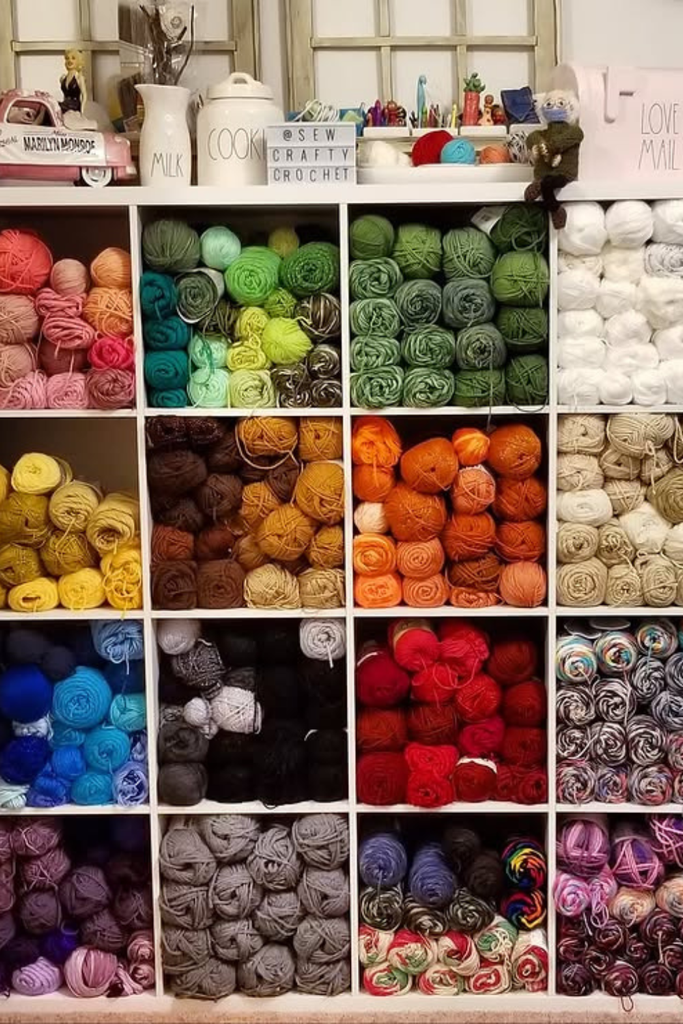
Color-sorted cube shelves make it easier to choose yarn for projects that depend on a particular palette. I would group shades into families, such as blues, greens, neutrals, and warm colors, rather than placing every skein wherever it fits.
Each cube can hold one color family, with room for several shades of the same color. This works well in a craft room or a spare corner where the organizer can remain visible. I would arrange skeins so I can identify their colors and labels without pulling out the entire section.
The main limitation is that color alone does not tell me the yarn’s weight or fiber content. Similar-looking skeins may behave differently in a finished project.
Pro Tip: Keep the yarn labels with the skeins whenever possible. If you remove a label, record the fiber content and yarn weight before storing the ball with similar colors.
Open Shelf Storage
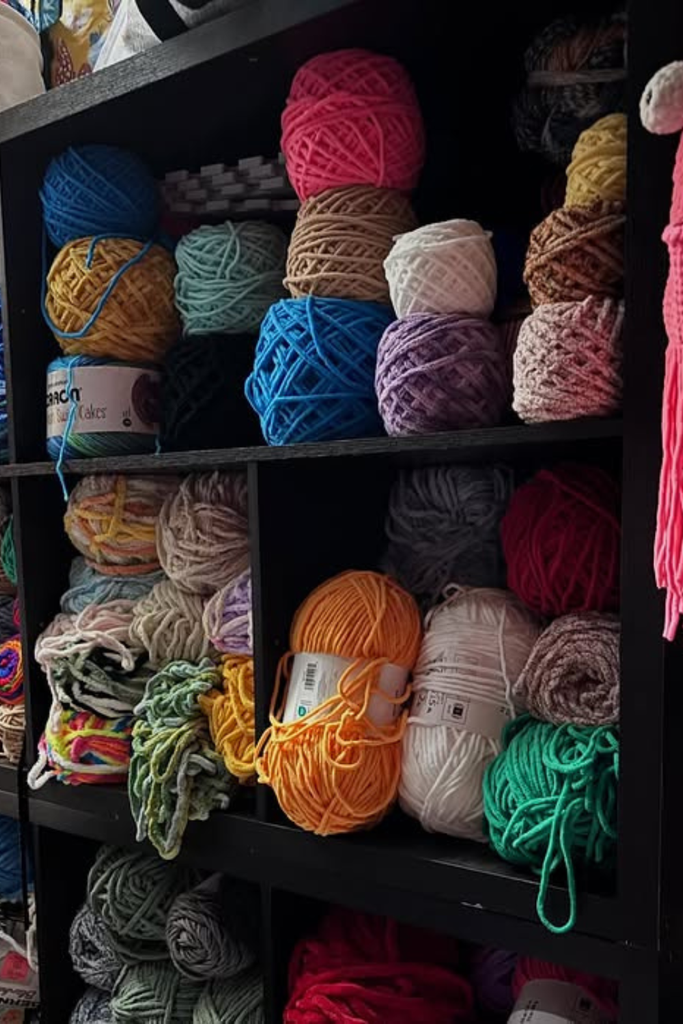
Open shelving is useful for yarn I reach for regularly. A straightforward bookcase or existing shelf can hold full skeins in rows, with separate levels for different yarn weights, fibers, or everyday projects.
I prefer a layout that allows me to see the yarn without moving several layers around. Shallow shelves can help with this, especially when the collection includes many colors. Deep shelves may be more suitable for bulky skeins, provided the yarn at the back remains accessible.
Open storage is convenient, but it does leave yarn exposed to household dust and light. The location matters if the shelves are near a sunny window or a busy cooking area.
Pro Tip: Keep the most frequently used yarn on the middle shelves, where it is easy to reach. Reserve less convenient spaces for supplies you use only occasionally.
Wall-Mounted Shelves
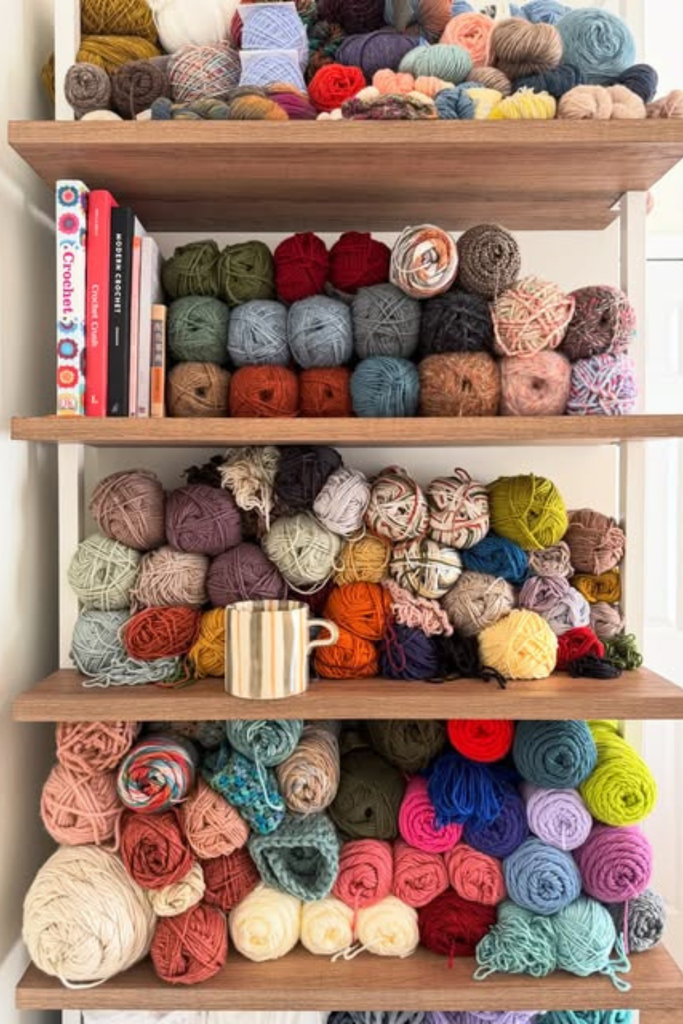
Wall-mounted shelves help reclaim floor space in small bedrooms, apartments, and compact craft rooms. I would consider installing them above a worktable or along an otherwise unused wall rather than adding another floor-standing organizer.
Before choosing the shelves, measure the wall and check the intended load, including the combined weight of the yarn and containers. The wall material determines which fixings are suitable, so I would follow the shelf manufacturer’s installation instructions and use appropriate brackets or anchors.
This option requires more planning than repurposing a bookcase. Shelves placed too high may be difficult to use, and a poorly secured installation can become a safety concern.
Pro Tip: Mark the proposed shelf positions with removable tape before drilling. This helps you check clearance around doors, windows, desks, and nearby furniture.
Modular Cube Units
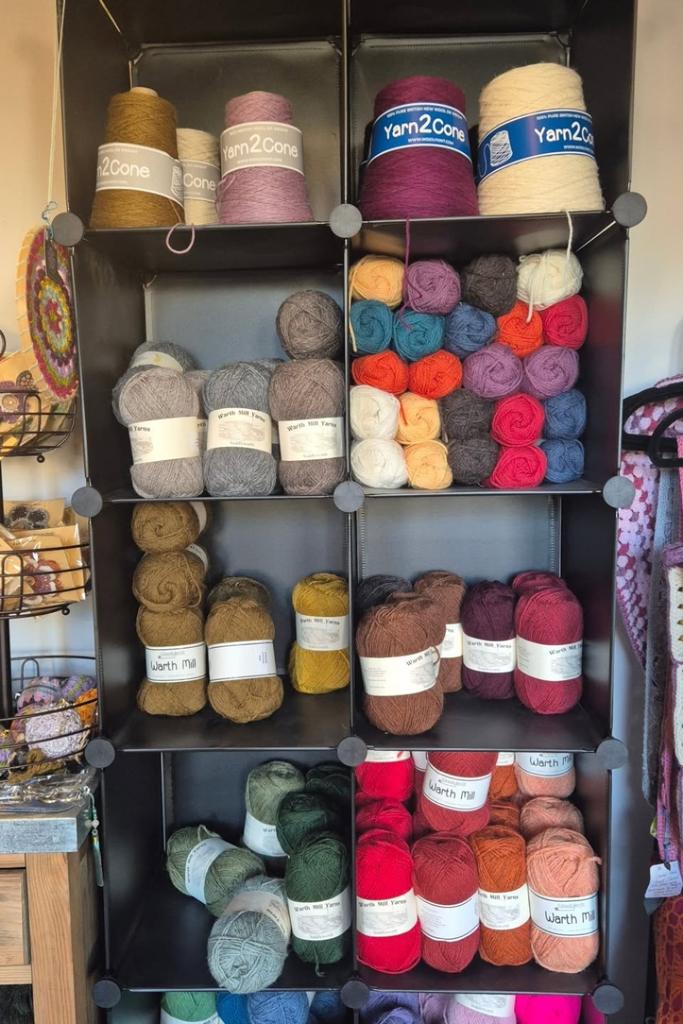
Modular cube units offer flexibility when a yarn collection changes over time. I could begin with a small unit for everyday yarn and add compatible sections if the collection grows, provided the system is designed for the intended configuration.
The cubes can serve different purposes: one for cotton yarn, another for acrylic, and another for specialty fibers or project supplies. Giving each section a clear role makes it easier to notice when a category is becoming crowded.
Modular does not automatically mean stackable. Some units are intended to stand separately, so I would check the product’s design and stability requirements before connecting or stacking sections.
Pro Tip: Choose a layout that leaves enough room to remove individual skeins without shifting neighboring cubes. A storage unit is more useful when the contents are easy to reach.
Compartment Wall Shelves
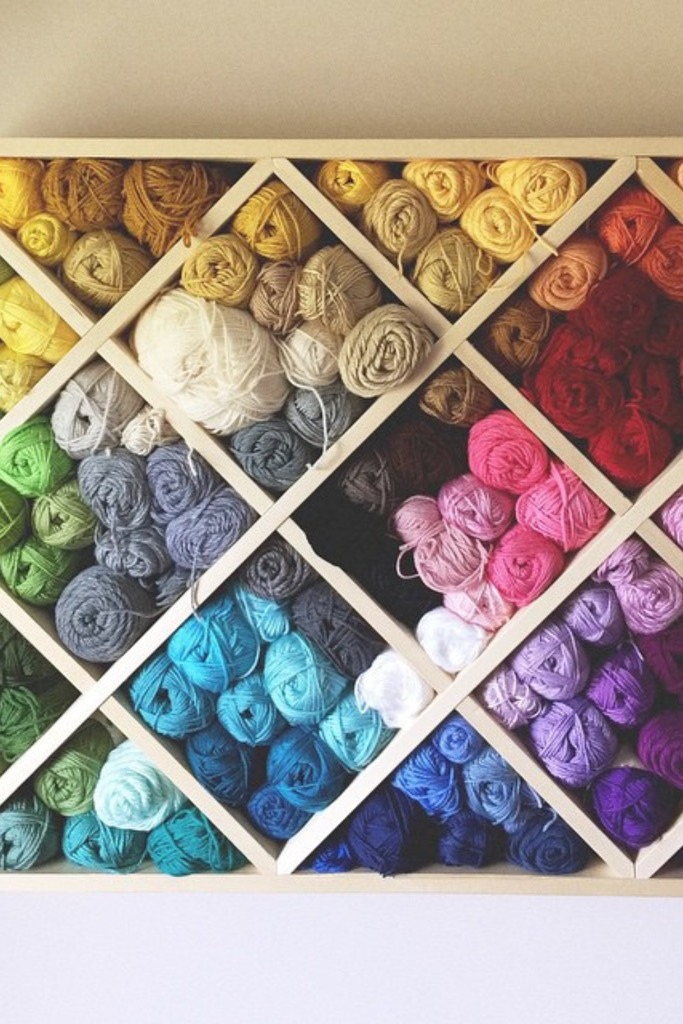
Compartment wall shelves divide a storage area into smaller sections, making them useful for collections with many different yarn sizes and categories. Unlike a broad, uninterrupted shelf, each compartment gives me a defined place for a particular group of supplies.
I would use smaller sections for partial skeins or compact balls and wider sections for bulky yarn. This arrangement can work on a narrow wall or in a craft corner, especially when I want to separate specialty fibers from everyday supplies.
The compartments need to fit the yarn properly. Sections that are too small can compress the skeins, while oversized openings may allow loose balls to roll around.
Pro Tip: Keep partial skeins in a small pouch or basket within their assigned compartment. This stops loose strands from catching on neighboring yarn.
Shelves With Baskets
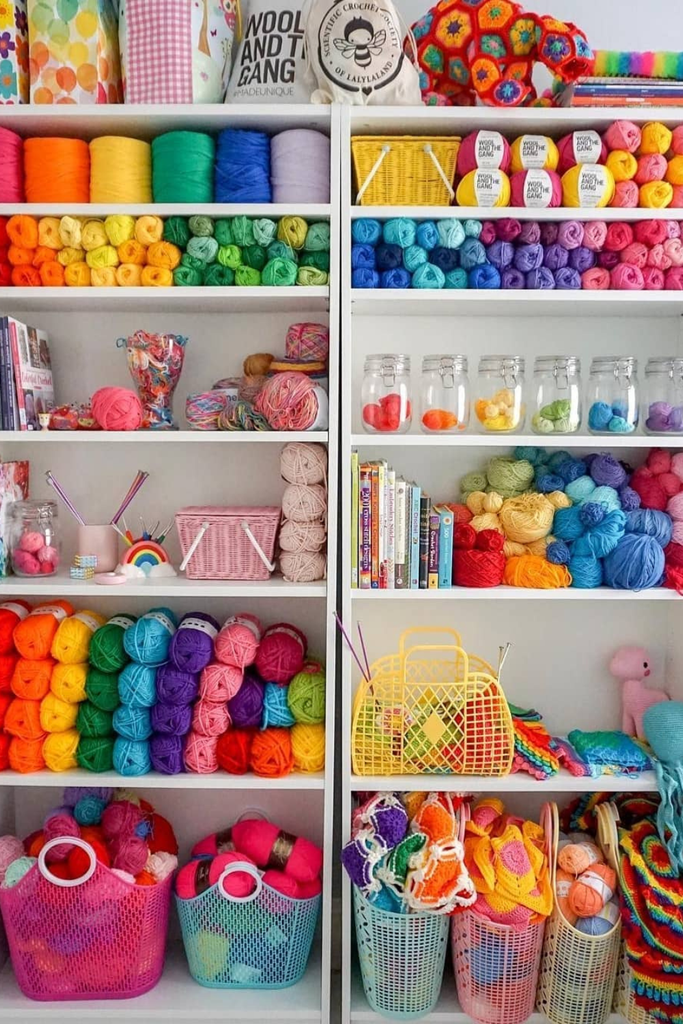
Shelves with baskets are a practical way to separate supplies that do not need to be displayed individually. I would place full skeins directly on the shelves and use baskets for small leftovers, crochet hooks, knitting accessories, or materials for upcoming projects.
This arrangement works well in shared living spaces because baskets create a more contained appearance. It also lets me remove a whole category at once instead of searching through a crowded shelf.
Basket size matters. Oversized baskets can waste shelf space, while very small ones may become difficult to sort through. I would choose containers that fit the shelf and allow easy access to the contents.
Pro Tip: Dedicate one small basket to partial skeins and label it accordingly. It gives leftover yarn a clear home without mixing it into unopened supplies.
Stacked Crate Storage
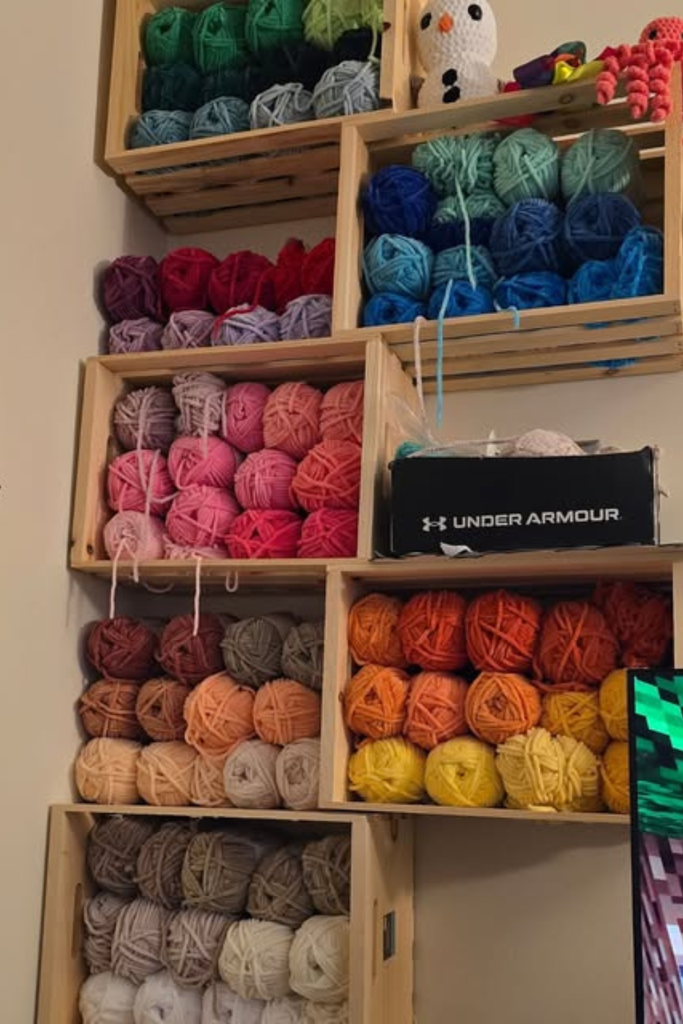
Crates can provide a budget-friendly alternative to a new shelving unit. I would use them in a craft corner, spare room, or beside a desk, with each crate assigned to a different yarn category or project type.
Choose crates with smooth interiors that are unlikely to snag fibers. If the design allows stacking, follow the manufacturer’s instructions and check that the arrangement remains stable when a crate is removed. Some crates are better used side by side than in a tall stack.
The biggest drawback is access. If I place frequently used yarn in a crate at the bottom of a large stack, I may need to move other supplies each time I craft.
Pro Tip: Keep everyday yarn in the easiest-to-reach crate and store backup skeins in the less accessible sections.
Open-Closed Storage
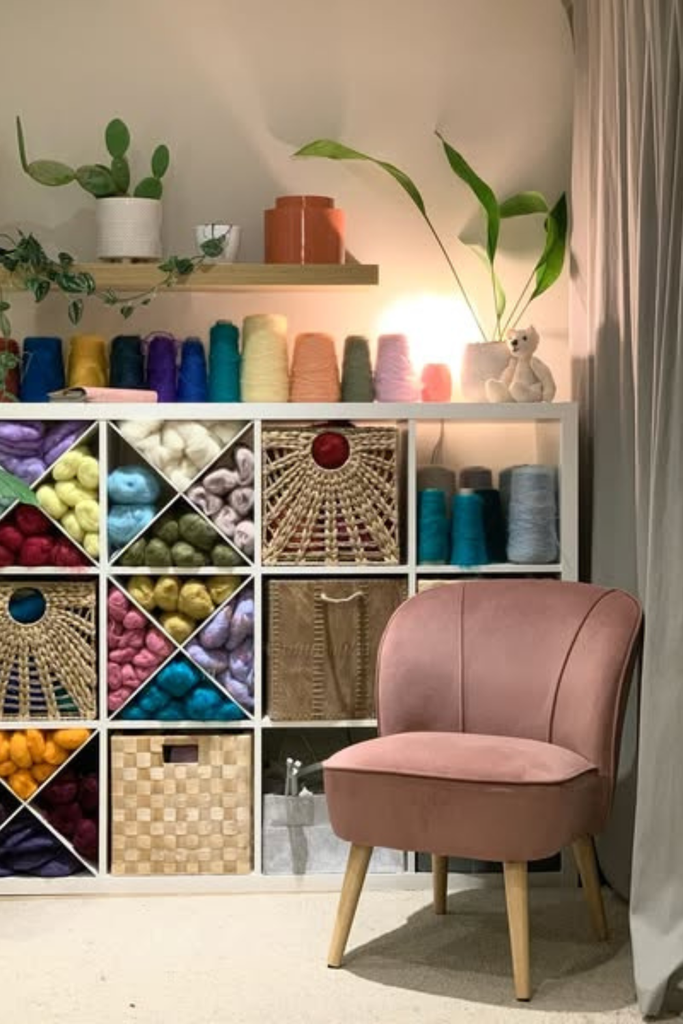
Combining open and closed storage allows me to keep current favorites visible while tucking away extra supplies. Open shelves can hold yarn for ongoing projects, while drawers, baskets, or cabinet doors conceal backup skeins and accessories.
I find this arrangement useful in multipurpose rooms where I want crafting supplies to remain accessible without dominating the space. It also allows me to store different categories according to how frequently I use them.
Closed storage reduces exposure to dust, but it is still important to keep the area clean and dry. Yarn should never be put away damp, and stored supplies need occasional checks.
Pro Tip: Keep a simple inventory of the yarn stored behind cabinet doors. A note listing colors, weights, or quantities can prevent forgotten skeins from becoming duplicate purchases.
Tall Yarn Cabinet
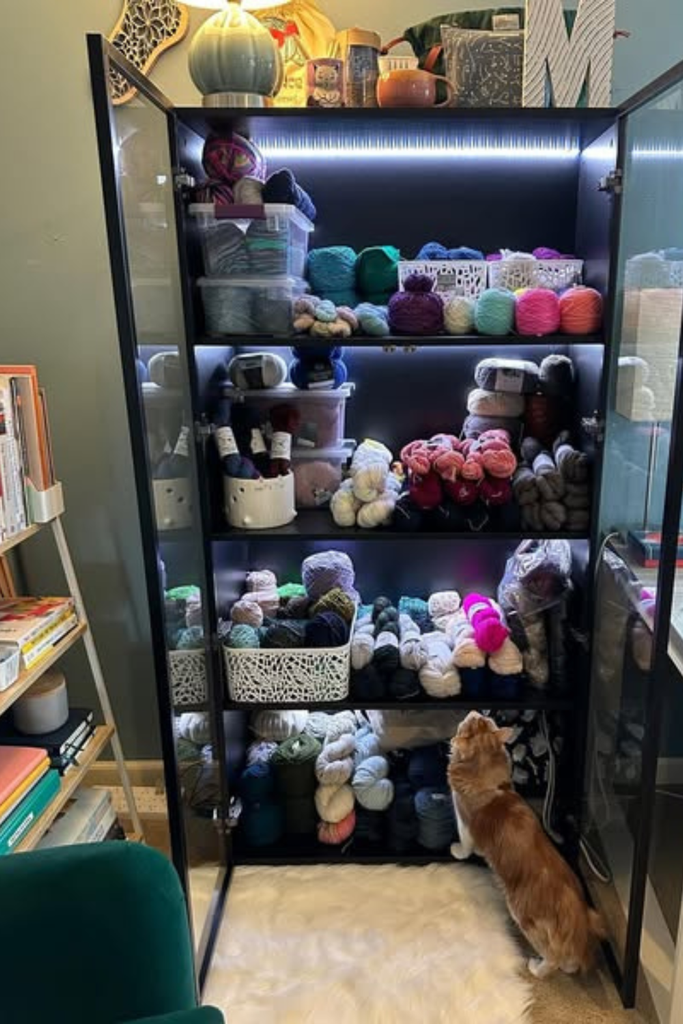
A tall yarn cabinet is worth considering when the collection needs enclosed storage but the room has limited floor space. Doors help reduce dust exposure, and adjustable shelves can accommodate different skein sizes, baskets, and yarn-related supplies.
I would place heavier containers on lower shelves and use upper sections for lighter materials that I do not need every day. Before choosing a cabinet, check its overall dimensions, shelf capacity, door clearance, and stability.
A cabinet is not a substitute for suitable storage conditions. If the room is damp or the cabinet has a musty smell, the yarn may still be affected by moisture.
Pro Tip: Leave enough clearance for the doors to open fully without blocking a walkway. This makes it easier to remove baskets and inspect the contents.
Grid Shelf System
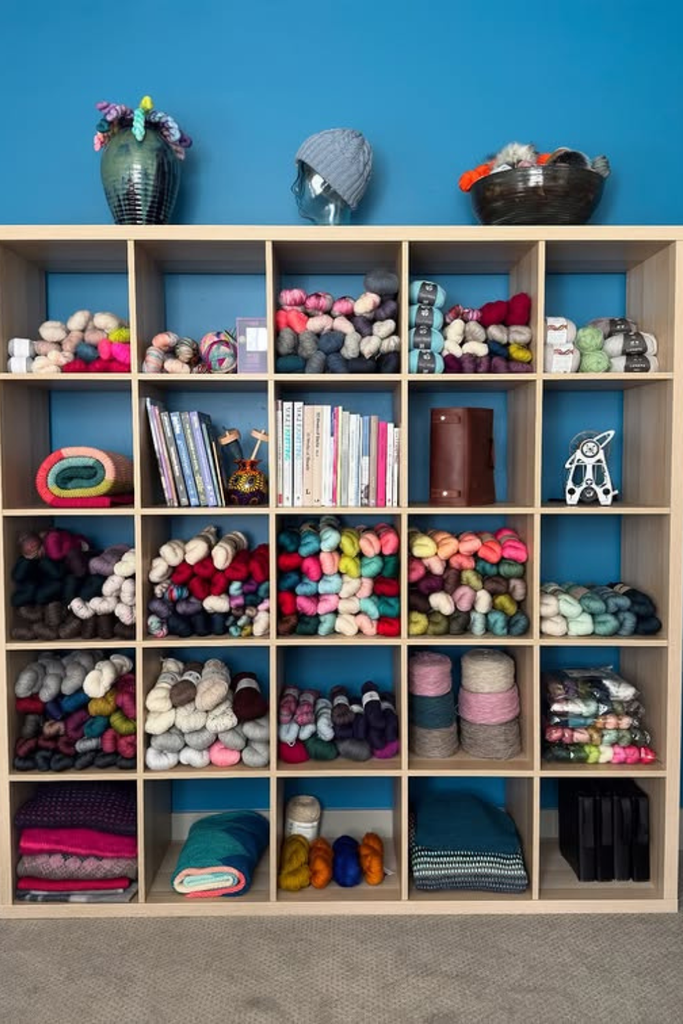
A grid shelf system works well when I want every category to have a consistent place. Each compartment can be assigned to a yarn weight, fiber type, color family, or project category, creating a repeatable system for the whole collection.
This arrangement is especially useful for a dedicated craft room with a wide selection of yarn. I would decide what belongs in each section before filling the shelves, rather than letting categories develop randomly as new skeins arrive.
The compartment dimensions and load rating should suit the yarn and any containers being used. Small squares may not accommodate bulky skeins, and overfilled sections can make supplies difficult to retrieve.
Pro Tip: Place a small category label on each compartment if several sections look alike. This is particularly helpful when different family members share the crafting supplies.
Hanging Yarn Holders
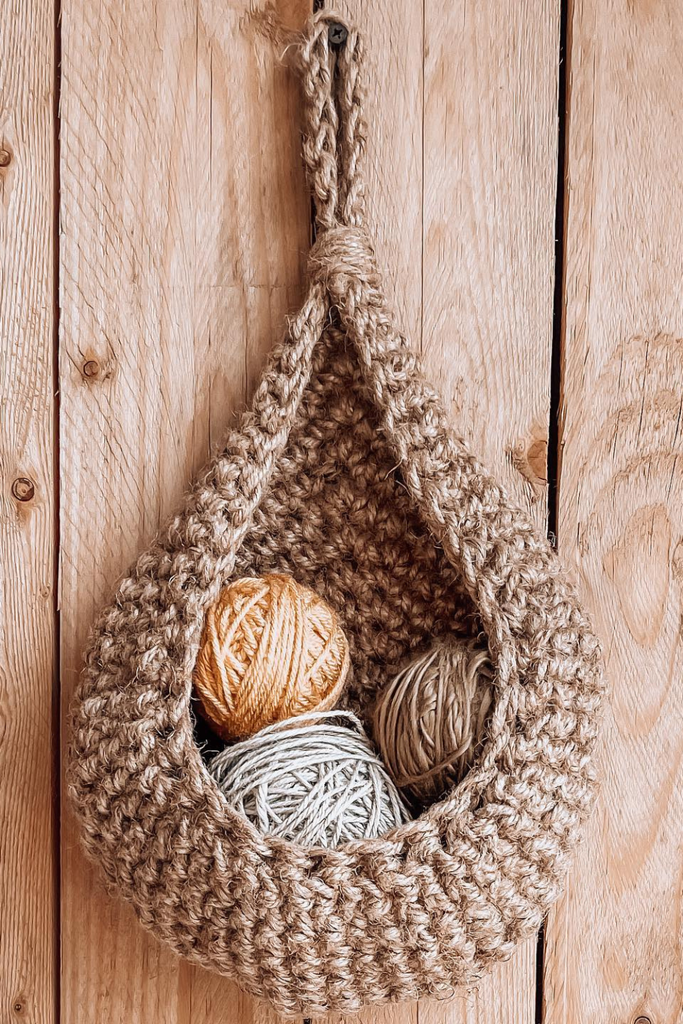
Hanging yarn holders make use of vertical space near a crafting chair, desk, or sofa. Pocketed fabric or mesh organizers can hold selected lightweight skeins, small balls, and project accessories without taking up a shelf or table.
I would use this method for yarn I want close at hand rather than for my entire collection. The pockets should be large enough for their contents, and the organizer’s hooks or mounting points must support the intended load.
Mesh and fabric pockets can collect dust and may snag delicate fibers if they have rough seams. I would check the material and construction before storing specialty yarn in them.
Pro Tip: Reserve one pocket for the small tools associated with an active project. Keeping stitch markers or a measuring tape nearby reduces the need to search through other containers.
Also read: 24 Basement Storage Ideas for 2026
Yarn Rail Storage
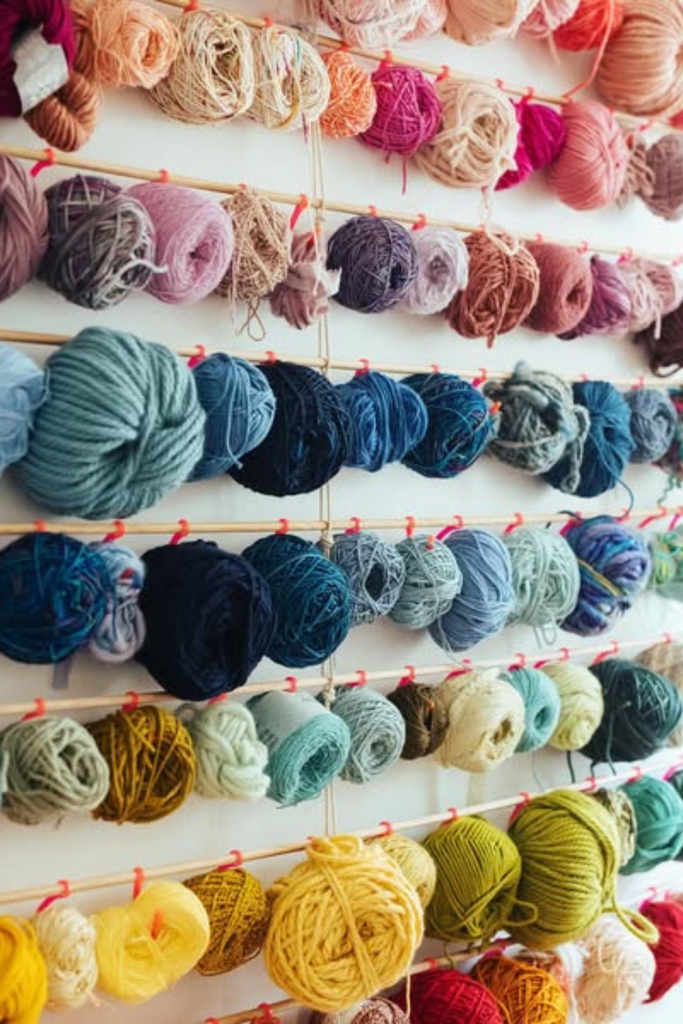
A yarn rail can create a compact display for a small selection of frequently used skeins. A purpose-built rail or suitable rod arrangement above a worktable may keep chosen colors visible without using much floor space.
I would check that the rail, brackets, and wall fixings are suitable for the intended load. Yarn should be supported in a way that prevents it from slipping off, and the arrangement should not interfere with doors, windows, or the workspace below.
This method is better for a curated selection than for a large stash. Exposed yarn may collect dust, and some skeins are easier to store flat than to hang.
Pro Tip: Test the rail with a few skeins before adding more. Check that removing one ball does not pull neighboring yarn off the holder.
Hidden Closet Storage
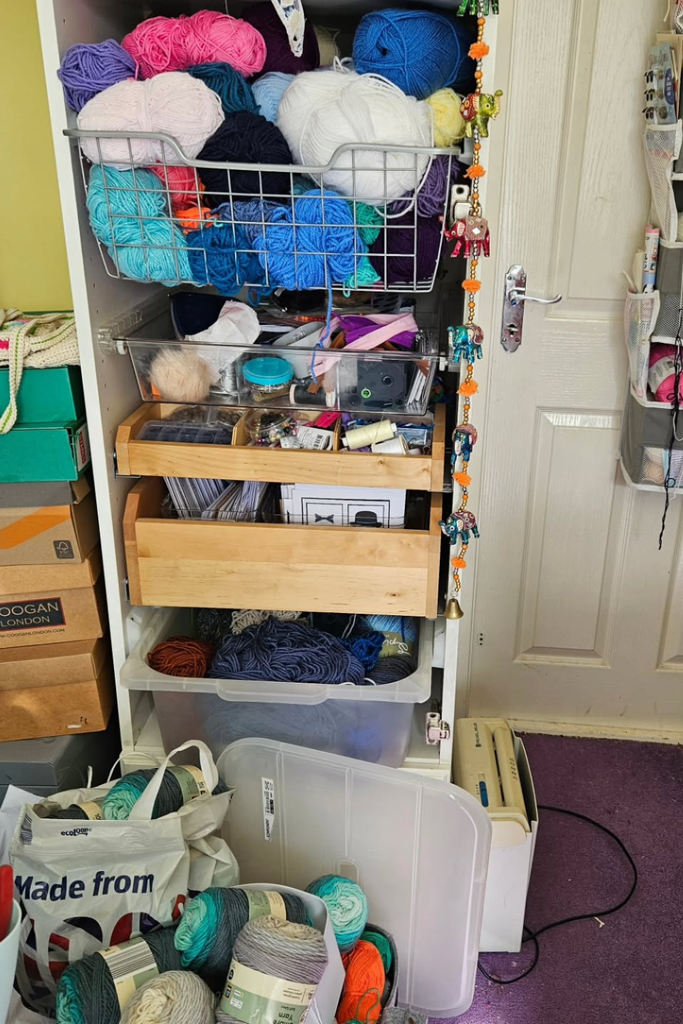
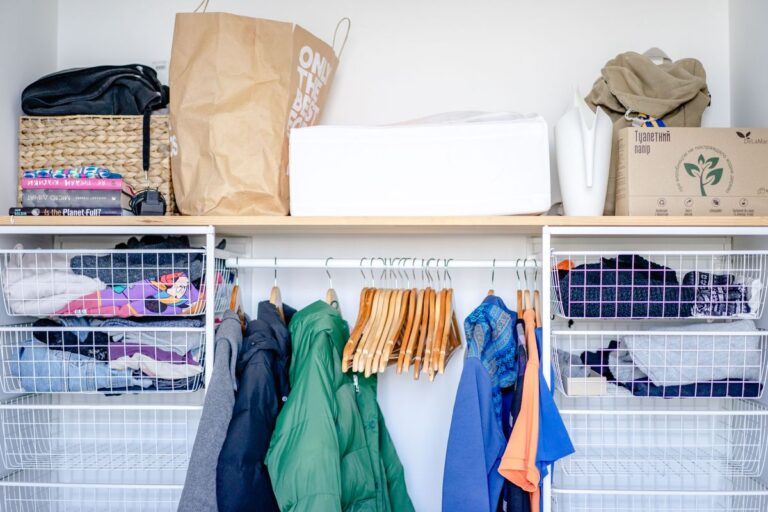
Closets often have useful storage space that goes unnoticed. I would use existing shelves for yarn containers, hanging organizers for small supplies, and the upper sections for lightweight backup materials that I rarely need.
Clear bins help me identify the contents, while labels are useful for opaque containers. I would measure the closet shelf depth and height before choosing bins so they can be removed without disturbing the rest of the storage.
Closets can become crowded quickly, and closed doors may hide problems until I inspect the contents. Keep yarn away from damp floors, leaking products, and strong-smelling cleaning supplies.
Pro Tip: Leave a little room at the front of each shelf so containers can slide out easily. A bin that fits perfectly but cannot be removed comfortably is not a practical choice.
Lightweight Cube System
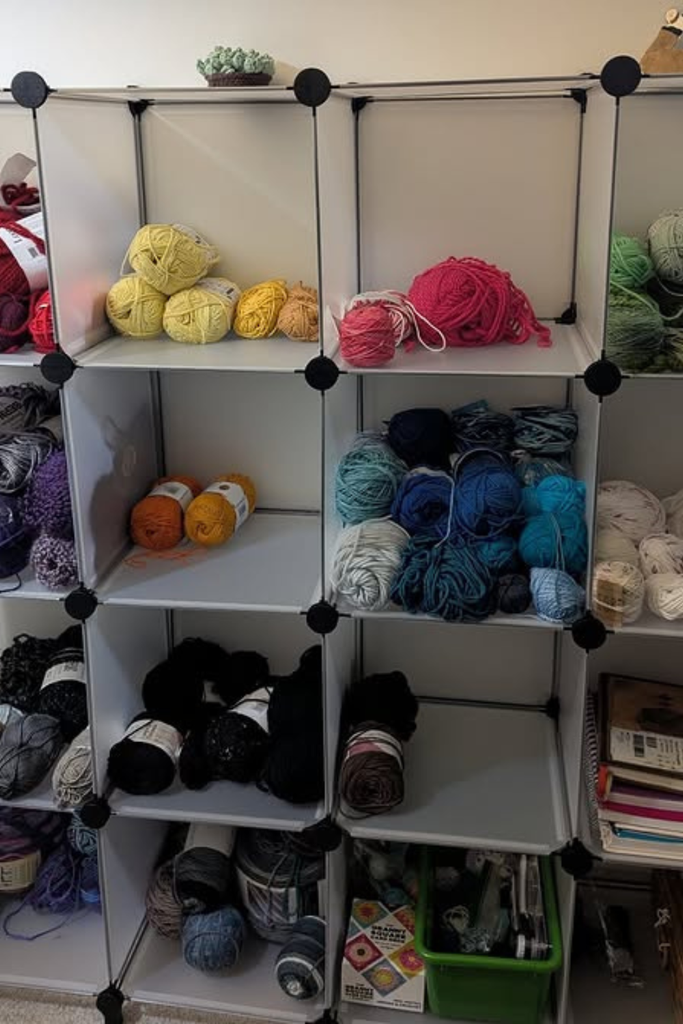
A lightweight cube system suits small rooms, rentals, and shared spaces where a bulky cabinet may not be practical. Smaller units are easier to reposition when the layout changes, and they can provide dedicated spaces for different yarn categories.
I would choose a design that stands securely on a level surface and use it according to its intended configuration. Not every lightweight organizer is suitable for stacking or for carrying heavy containers.
These units may offer less protection from dust than an enclosed cabinet, so I would consider baskets or suitable covers for yarn that needs to remain out of sight.
Pro Tip: Before moving a loaded unit, remove the yarn and accessories if the design is not intended to be moved while full. This reduces strain on the organizer and helps prevent items from falling.
Deep Cube Shelves
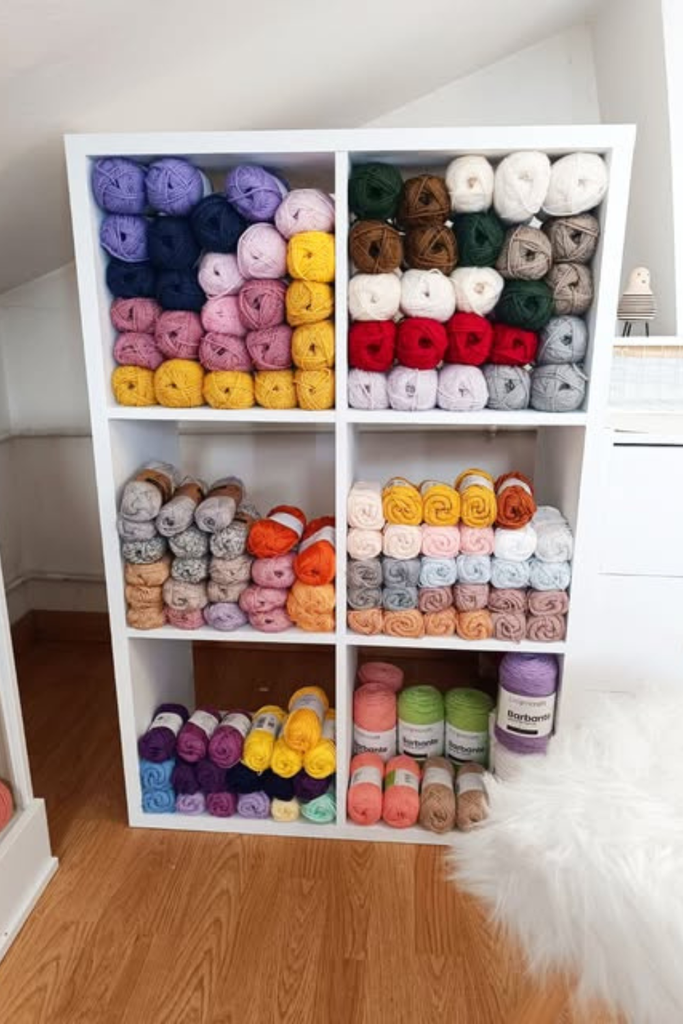
Deep cube shelves provide room for bulky skeins and larger quantities of yarn. They can be useful when shallow organizers cannot hold the sizes I buy or when I want to store several related skeins together.
The challenge is that yarn at the back can become difficult to see and reach. I would place frequently used skeins near the front or use removable baskets to separate the contents into manageable groups.
Deep compartments also make it easier to forget what is already stored there. Keeping categories distinct helps prevent the back of each cube from becoming a place for random leftovers.
Pro Tip: Measure your largest skeins before selecting the organizer. Compare their size with the usable compartment dimensions rather than relying only on the unit’s external measurements.
Corner Cube Storage
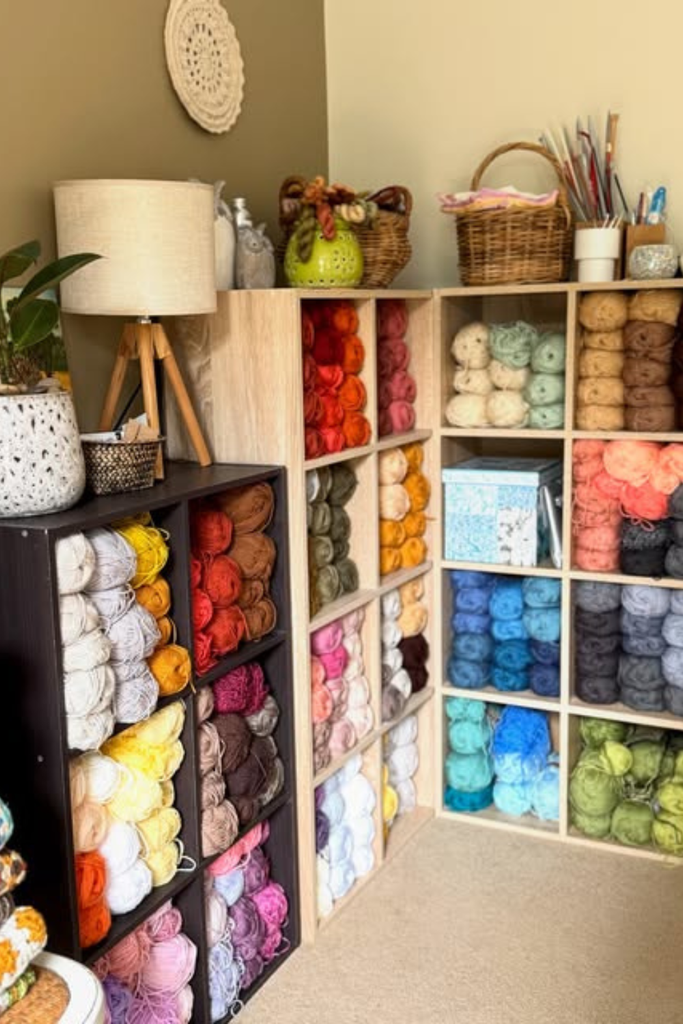
Corner cube storage can turn two adjoining walls into one compact yarn station. It may work well in a bedroom or craft room where a straight shelving unit would take up space needed for a desk, chair, or walkway.
I would measure both walls and account for doors, windows, baseboards, and nearby furniture. If two units meet at a right angle, check that the shelves remain accessible and that the arrangement does not create an awkward gap where yarn becomes difficult to retrieve.
Corner layouts can be less convenient when the deepest sections are hidden behind other supplies. I would keep the most frequently used yarn on the accessible sides.
Pro Tip: Use removable baskets for the harder-to-reach corner sections. You can pull out a whole category without moving the rest of the storage.
Tall Shelf Storage
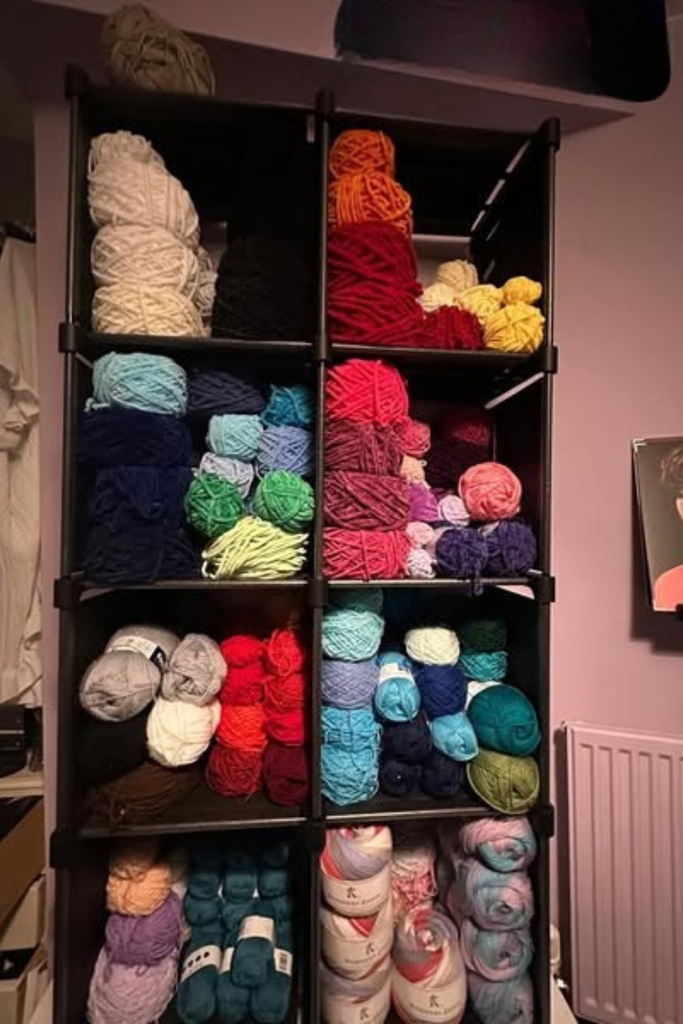
Tall open shelving is a useful option for a large yarn stash when I want to keep the collection in one vertical footprint. Separate shelves can hold yarn weights, fiber types, or color groups, with room for a few small containers of accessories.
I would place heavier supplies on lower shelves and keep lightweight yarn or infrequently used materials higher up. The unit should be assembled correctly and secured as recommended by the manufacturer, particularly if it is narrow or tall.
Open shelving makes the collection easy to scan, but it also exposes the yarn to household dust and light. The location should suit the fibers being stored.
Pro Tip: Keep everyday yarn within comfortable reaching distance. Avoid climbing on chairs or unstable furniture to retrieve skeins from the highest shelf.
Workspace Yarn Storage
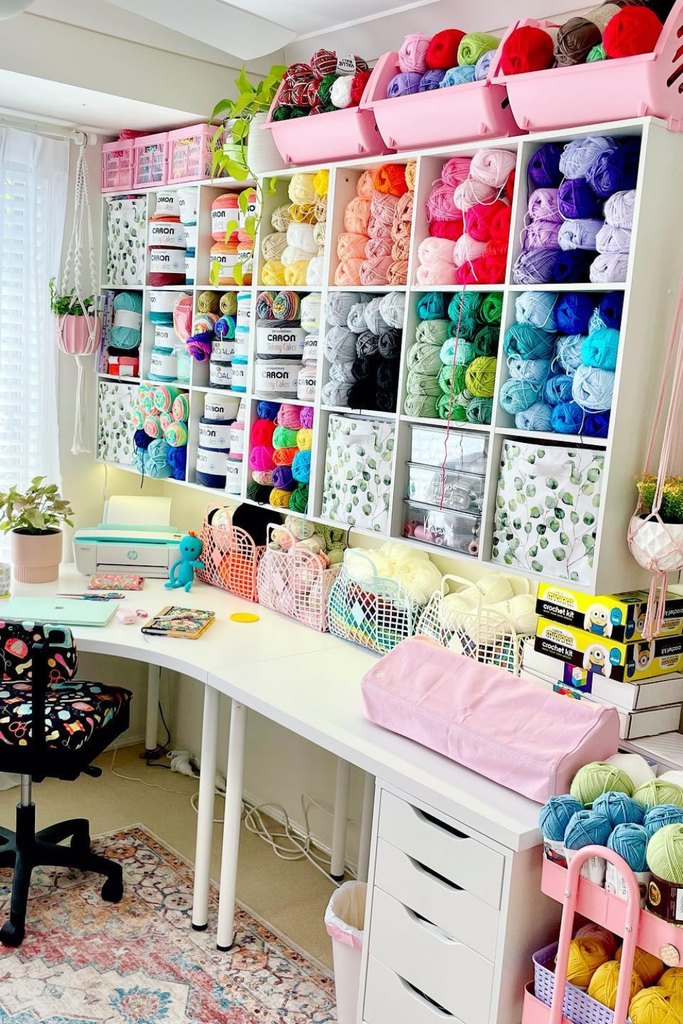
A dedicated workspace is easier to use when the supplies for current projects are close by. I would place a compact cube organizer, small shelf, or rolling cart near the crafting desk and keep only the yarn and tools needed for current work there.
This prevents the desk from becoming a permanent storage surface. Once a project is finished, unused yarn can return to the main collection, leaving the workspace clear for measuring, stitching, and sorting.
The available desk space matters, especially in a shared home office. A large organizer beside the chair may make it harder to move comfortably or reach other equipment.
Pro Tip: Keep one small tray or container for the tools used most often, such as stitch markers, scissors, and a measuring tape. Store sharp tools securely when children or pets share the room.
Display And Storage
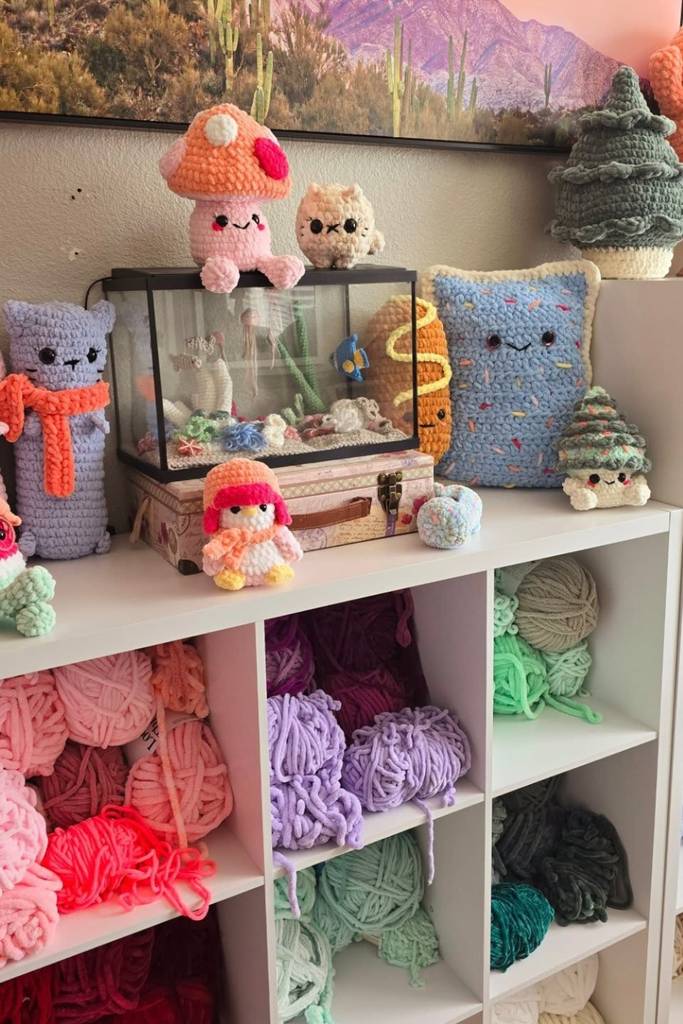
Display and storage can work together when I want to show a selection of yarn colors without putting the entire collection on view. A cube shelf or bookcase can hold a small color display on one section and practical storage in the remaining compartments.
I would choose yarn that I use regularly or that fits a particular color scheme for the visible section. Backup skeins can stay in baskets or a cabinet, where they are less exposed to dust and direct sunlight.
Decorative items can reduce the amount of space available for supplies, so I would keep the display simple. The arrangement should still function as storage rather than becoming a shelf that is difficult to use.
Pro Tip: Rotate the yarn on display when your projects change. This keeps the selection relevant and gives you a chance to check the condition of the stored skeins.
Project Yarn Baskets
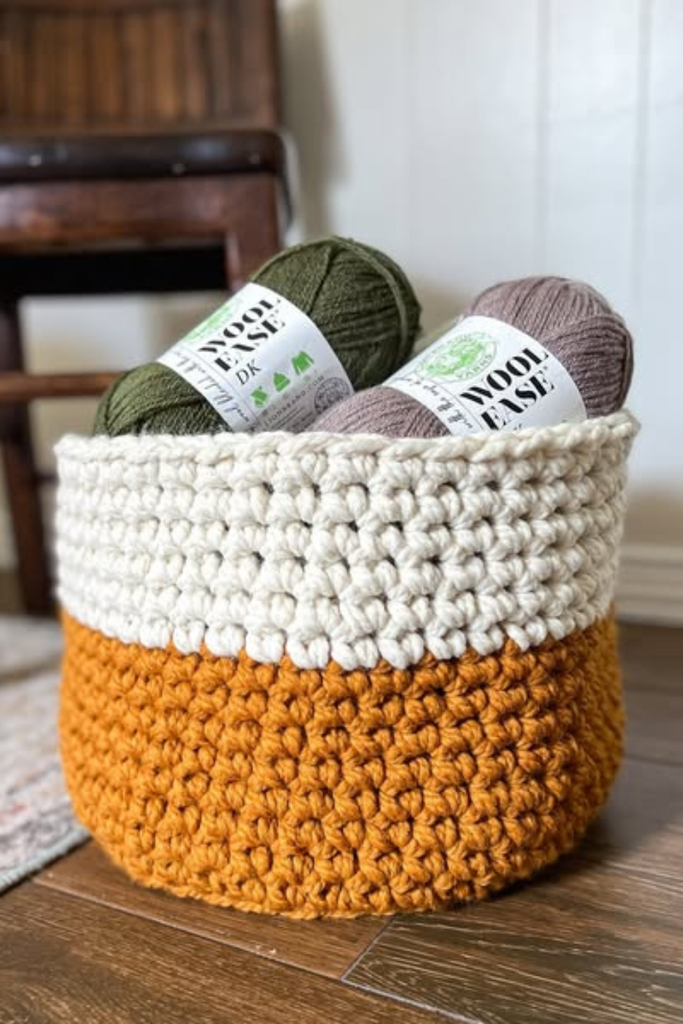
Project baskets help keep unfinished knitting and crochet projects separate from the main yarn stash. I would place the yarn for one project, its pattern, and related tools together so I can return to the work without searching through multiple containers.
A shallow, lightweight basket works well beside a sofa, desk, or crafting chair. For several ongoing projects, labels or small tags can identify each basket and help prevent yarn from being used for the wrong pattern.
The basket should be large enough to hold the project without crushing the yarn or catching loose strands. If pets or young children share the home, keep small accessories and sharp tools in a secure compartment.
Pro Tip: Before storing a project, tuck loose yarn ends into the basket and check that they cannot catch on handles or rough edges.
Mixed Storage Zones
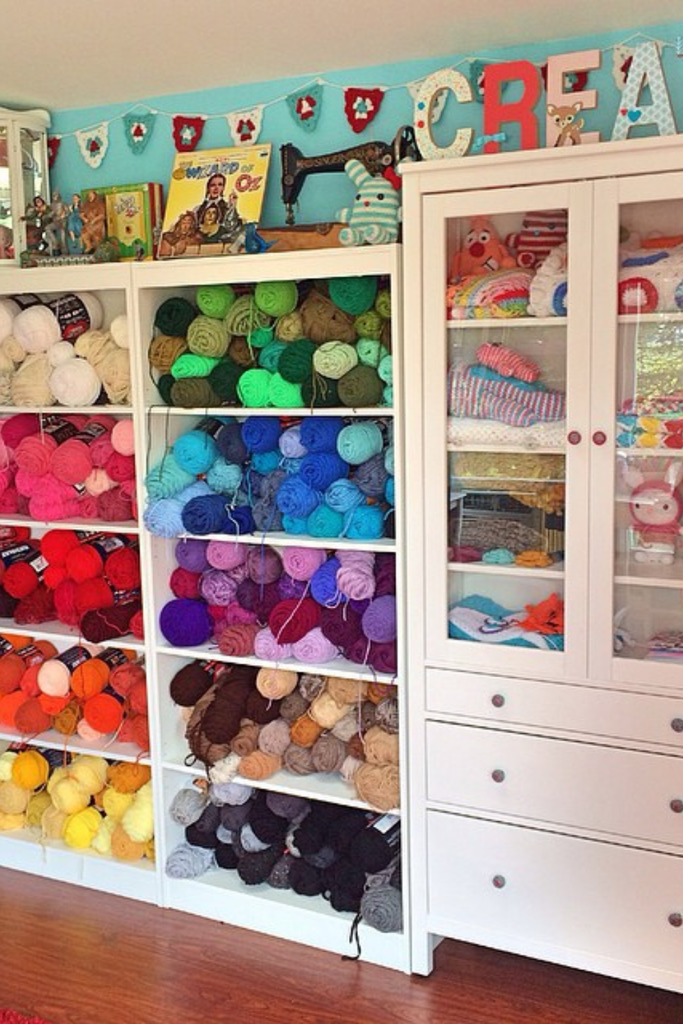
Mixed storage zones are useful when a collection includes everyday yarn, unfinished projects, backup skeins, and a growing supply of accessories. Rather than treating the room as one large stash, I would divide it into functional areas based on how I use each category.
Open shelves can hold yarn for current projects, a nearby basket can contain active work, and cabinets or bins can store backup supplies. Hooks, drawers, or a small container can hold tools separately from the yarn itself.
This arrangement works in craft rooms and multipurpose spaces, but the zones need to remain distinct. Otherwise, extra supplies may gradually spread back onto the worktable.
Pro Tip: When a project ends, return its unused yarn to the appropriate category before starting the next one. This small reset helps keep the zones useful over time.
Angled Yarn Compartments
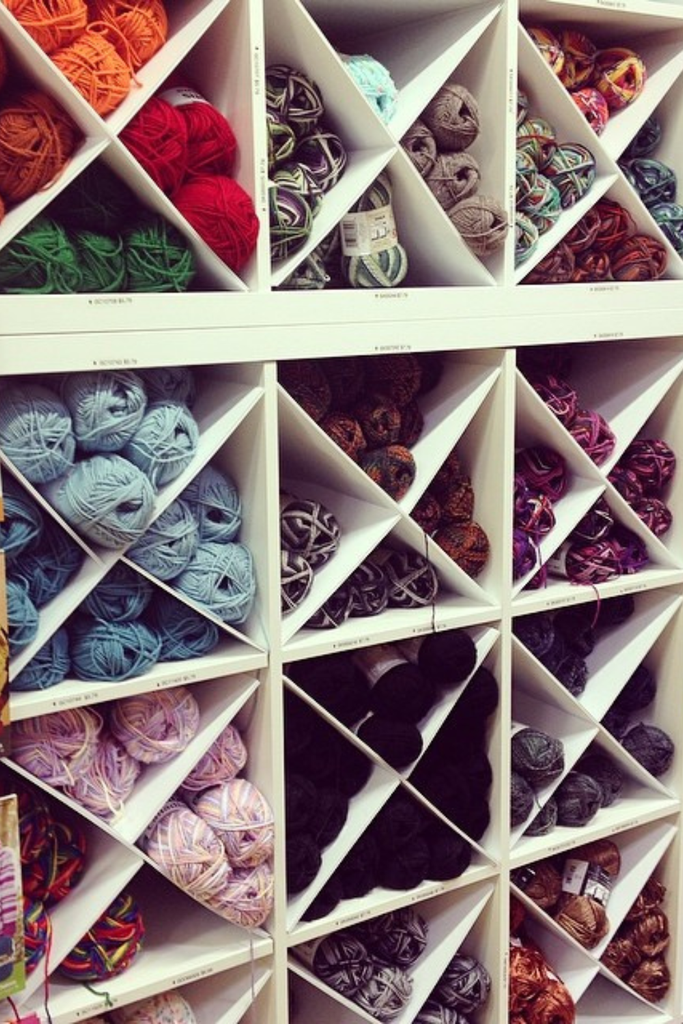
Angled yarn compartments can make a selected collection easier to view, particularly when I want to see several skeins at once. Purpose-designed slanted shelves may help keep yarn positioned toward the front, depending on their shape and retaining edges.
I would choose compartments that support the skeins securely rather than relying on the angle alone to stop them from rolling. The shelf’s load capacity and the size of each section should suit the yarn being stored.
Angled display storage is best for a selection I use or reference often. It may be less suitable for a large backup collection that would be better protected in baskets or cabinets.
Pro Tip: Test a compartment with a few skeins first. Check whether the yarn stays in place when you remove a neighboring ball and whether the arrangement is easy to maintain.
FAQs
How can you keep yarn storage from getting messy again?
Give each category a designated place and return yarn after each project. I would keep active projects, full skeins, partial balls, and accessories separate so that putting supplies away takes only a few minutes.
When a shelf or bin becomes full, review its contents before adding another container. Using older supplies and checking what you already own can help keep the collection manageable.
Is it better to store yarn in bins or on shelves?
Shelves work well for yarn I use regularly because the skeins remain visible and easy to retrieve. Bins are useful for backup supplies, partial skeins, and fibers that need more protection from dust.
A combination of both often provides a practical balance. Choose clean, dry containers that suit the yarn and the storage environment, and avoid packing them so tightly that the fibers become difficult to remove.
What is the best way to organize yarn in a small space?
Start by measuring the space and making use of storage you already have. Wall-mounted shelves, compact cube units, closet organizers, and baskets can help keep yarn off the floor.
Choose one sorting method that fits your crafting habits, such as color or yarn weight. Keep current projects within easy reach and store backup supplies in less prominent locations without blocking walkways or overloading shelves.
How should you organize leftover yarn and partial skeins?
Gather partial skeins in one designated basket or compartment, then sort them by yarn weight, fiber type, or color if the collection is large enough. Keep the original labels when possible so you can identify the yarn’s care instructions and composition.
For unlabeled leftovers, record any known details before storing them with similar yarn. Keeping small balls contained also helps prevent loose strands from tangling with full skeins.
How can you protect stored yarn from dust and pests?
Store clean, completely dry yarn in a clean location away from dampness, direct sunlight, and potential sources of contamination. Baskets and open shelves provide convenient access, while suitable closed containers can reduce dust exposure.
Inspect stored yarn periodically, especially if it remains untouched for long periods. Look for moisture, musty smells, damaged fibers, or signs of pests, and address any storage problem before returning the yarn to its container.
Read this next: 24 Storage Ideas For Small Spaces in 2026
Conclusion
The best yarn storage ideas depend on the space available, the size of the collection, and how often I use each type of yarn. Open shelves, baskets, cabinets, and compact organizers can all work well when they have a clear purpose and suit the storage conditions.
I would start with one manageable improvement, such as sorting partial skeins into a basket or using an existing shelf more effectively. Once that area works well, it becomes easier to organize the rest of the collection without buying more storage than I need.




2 Comments