
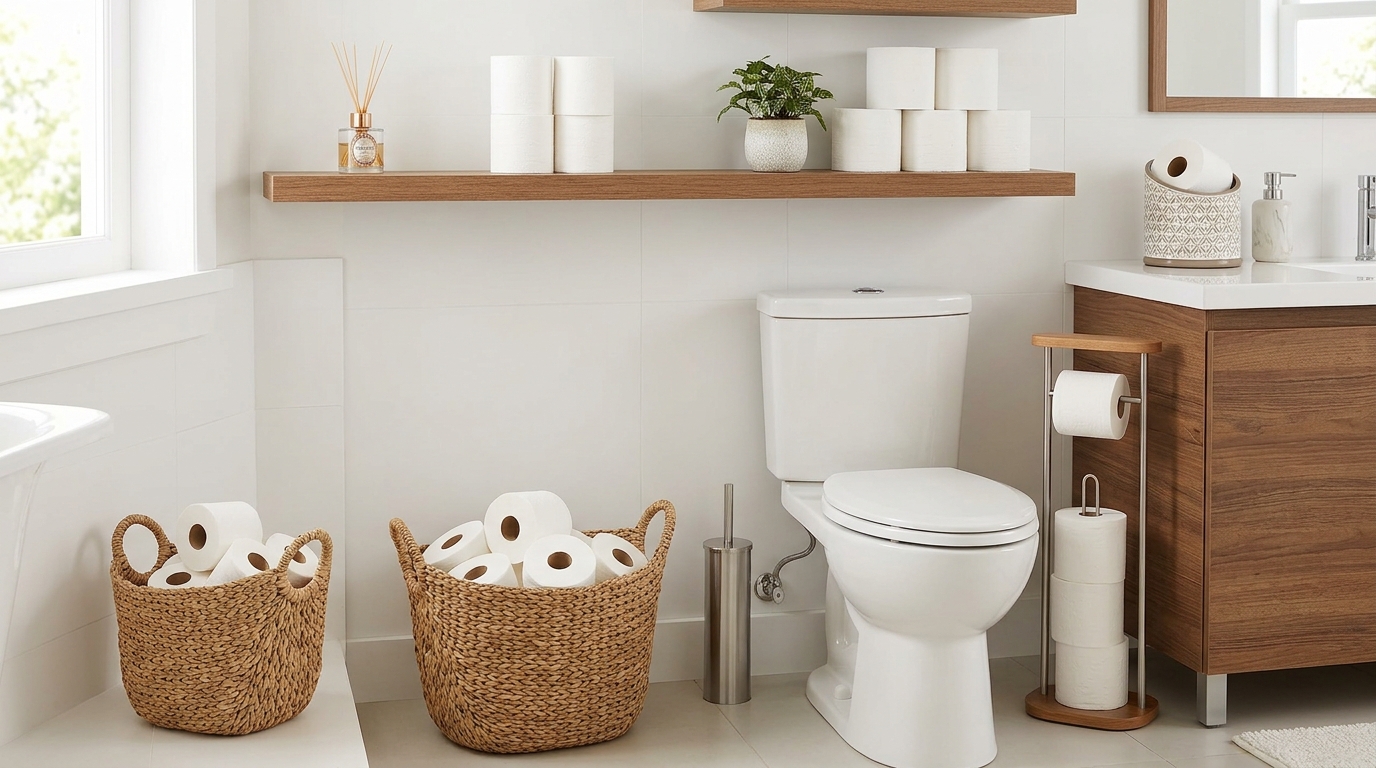
26 Toilet Paper Storage Ideas for 2026
I usually notice a toilet paper storage problem when a bulk package has nowhere to go. A few rolls end up on the toilet tank, another stack gets pushed under the sink, and the unopened package stays in a corner. The bathroom may be clean, but the supplies can still make it feel crowded.
Good toilet paper storage does not require a bathroom remodel. In many homes, the answer is a narrow gap, an unused wall, a small basket, or a shelf that already has room for a few extra rolls.
When organizing this area, I pay attention to more than appearance. The storage needs to stay away from leaks and regular splashes, leave enough clearance around the toilet, and remain accessible when a replacement roll is needed.
These 26 toilet paper storage ideas cover everything from compact holders for tiny bathrooms to larger systems for families that buy toilet paper in bulk. Some keep rolls visible, while others conceal them inside cabinets, boxes, baskets, or narrow organizers.
For a small bathroom, I first look at unused vertical space and narrow gaps. A wall shelf, slim organizer, pull-out unit, or over-the-toilet rack can hold several rolls without spreading supplies across the floor.
Larger bathrooms offer more choices, including floor racks, storage towers, baskets, and multi-purpose stands. Guest bathrooms may benefit from attractive open storage, while a shared family bathroom may need a larger refill capacity.
Save this for later
Table of Contents
I also separate the everyday supply from the bulk household supply. A few replacement rolls can stay in the bathroom, while larger packages can go in a dry linen closet, utility cupboard, or another suitable storage area.
Key Takeaways
- Measure width, depth, height, and door or cabinet clearance before choosing storage.
- Keep toilet paper away from direct splashes, leaks, wet floors, and damp surfaces.
- Use narrow or vertical storage when floor space is limited, but choose based on the actual layout.
- Freestanding storage should remain stable and should not obstruct the bathroom’s walking path.
- Wall-mounted storage needs hardware suited to the wall and the manufacturer’s weight limits.
- Keep a reasonable refill supply in the bathroom and store bulk packages elsewhere when possible.
- Choose storage that still allows the floor, toilet, and surrounding surfaces to be cleaned properly.
Related article: 20 Glove Storage Ideas for 2026
What Is the Best Way to Store Extra Toilet Paper Rolls?
For me, the best storage method depends on the bathroom rather than on one particular product. A solution that works beside a large vanity may be completely unsuitable for a narrow powder room.
I start by looking near the toilet because replacement rolls should be easy to reach. Then I check whether there is enough room beside the toilet, above it, inside a cabinet, or along an unused wall.
The rolls should stay away from direct water, plumbing leaks, wet floors, and regular splash zones. A decorative basket does not protect paper simply because it looks substantial, and a mesh bag provides visibility but no moisture barrier.
I also consider how many rolls actually need to stay in the bathroom. There is rarely a reason to fill every available shelf with the entire household supply when a dry closet can hold the bulk package.
Pro Tip: Measure the available space before shopping, including baseboards, plumbing, toilet clearance, and the direction a nearby door or cabinet opens. Those small details often determine whether an organizer will work.
Cabinet Surround
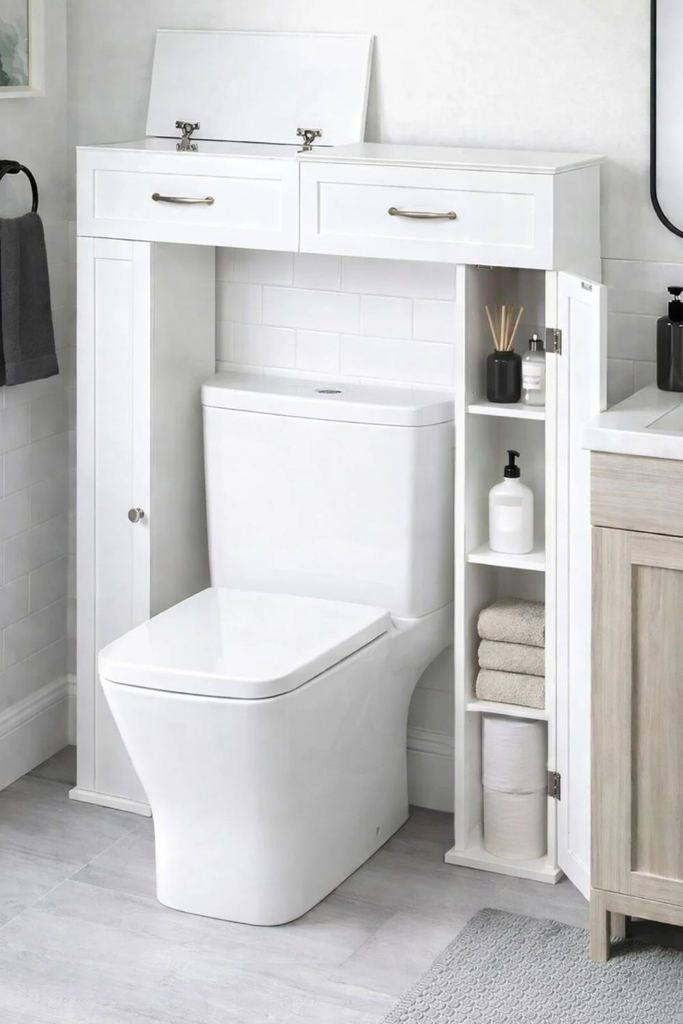
The wall around a toilet can provide more storage than its unused appearance suggests. A cabinet surround makes use of that area with a combination of shelves, drawers, or enclosed compartments.
Open shelves can hold a small number of toilet paper rolls and hand towels, while closed storage can keep cleaning products and less attractive supplies out of sight.
This arrangement suits bathrooms with enough wall width to accommodate a larger installation. It is less suitable when the toilet already sits close to another wall or fixture.
A built-in appearance can be achieved by coordinating the cabinet finish with the vanity or other bathroom furniture. I would still leave enough room around the toilet to clean behind and beside the unit.
For more ideas that combine storage with bathroom styling, this type of setup can also work as part of a broader bathroom decor plan.
Slim Organizer
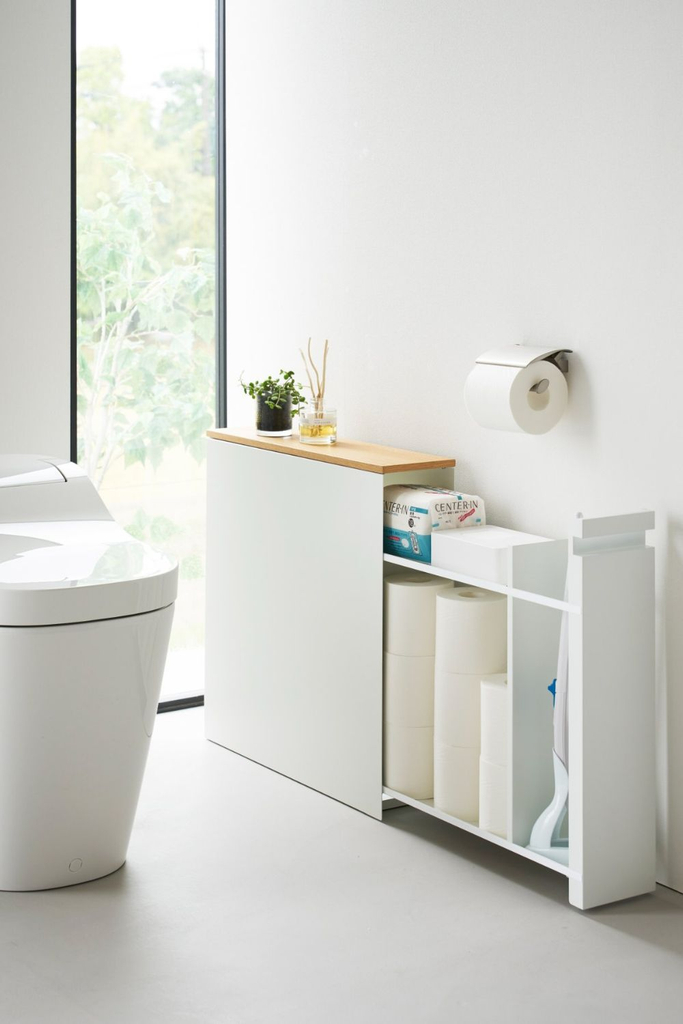
A slim organizer is designed for the narrow unused gap that often appears beside a toilet, vanity, or wall.
Unlike a larger cabinet, its main advantage is the small footprint. Several rolls can be kept together vertically without spreading them across the floor.
Some models include multiple compartments, making the unit useful for wipes, toiletries, or other small supplies in addition to toilet paper.
Before choosing one, I measure the entire gap rather than estimating it by eye. Baseboards, plumbing, and the width of the organizer’s frame can reduce the usable space.
Sheep Holder
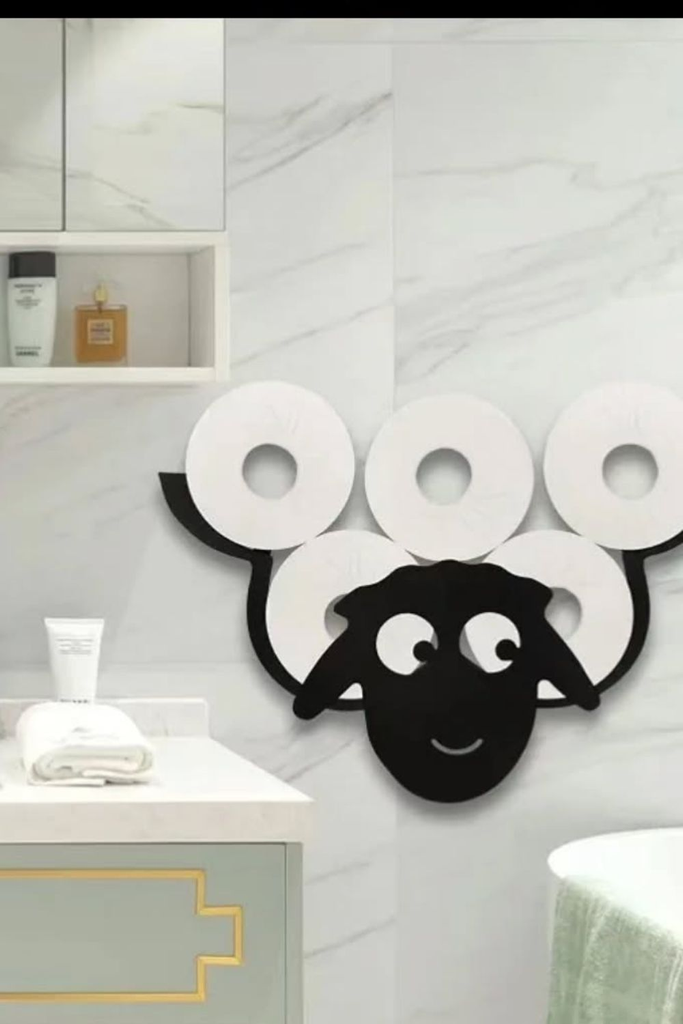
A sheep-shaped toilet paper holder is a deliberately decorative choice rather than a conventional storage solution. It turns the spare rolls into part of the bathroom’s visual character.
I can see this working particularly well in a whimsical guest bathroom, farmhouse-style space, country bathroom, or children’s bathroom where a playful detail makes sense.
The curved holder can keep several rolls together while leaving them visible. That makes it more of a display-oriented solution than concealed storage.
For a wall-mounted novelty holder, secure installation still matters. Use hardware appropriate for the wall material and make sure the holder does not loosen when rolls are removed or replaced.
Hidden Bin
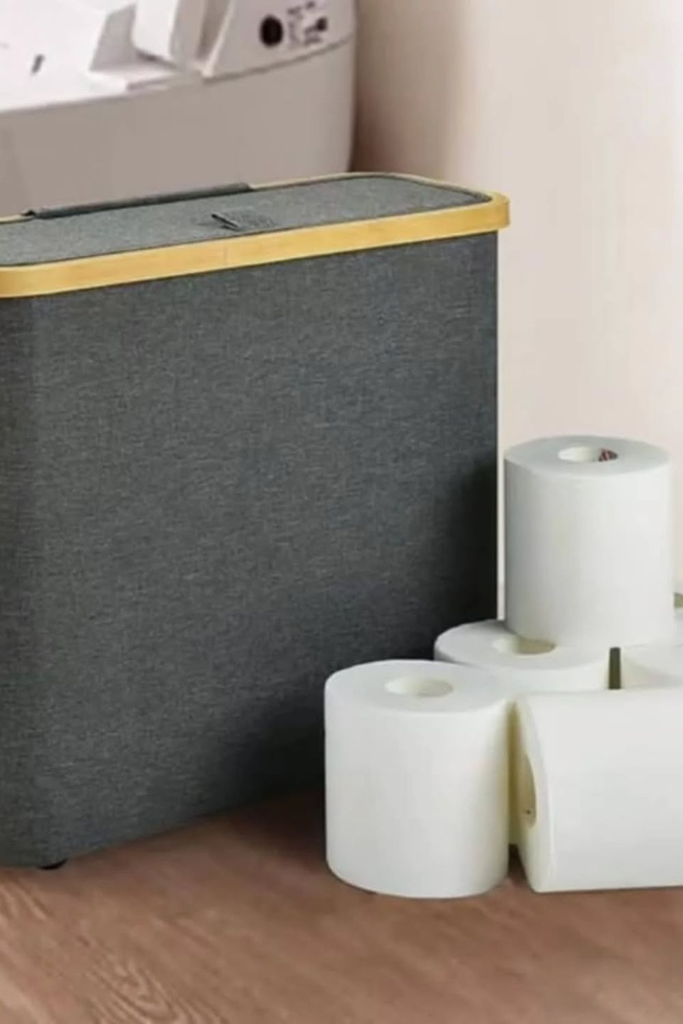
A covered bin is useful when I want spare toilet paper nearby without seeing a stack of rolls.
Fabric, canvas, woven, and similar containers can hold several rolls in one defined location. A lid can also make the storage look less like a household supply area.
Placement matters more than the material itself. Fabric and woven bins should be kept away from regular splashes and damp floors, since they do not make the paper moisture-proof.
A bin beside a vanity or in a dry corner can work well, provided there is enough room to remove the rolls and clean underneath it.
Stand Holder
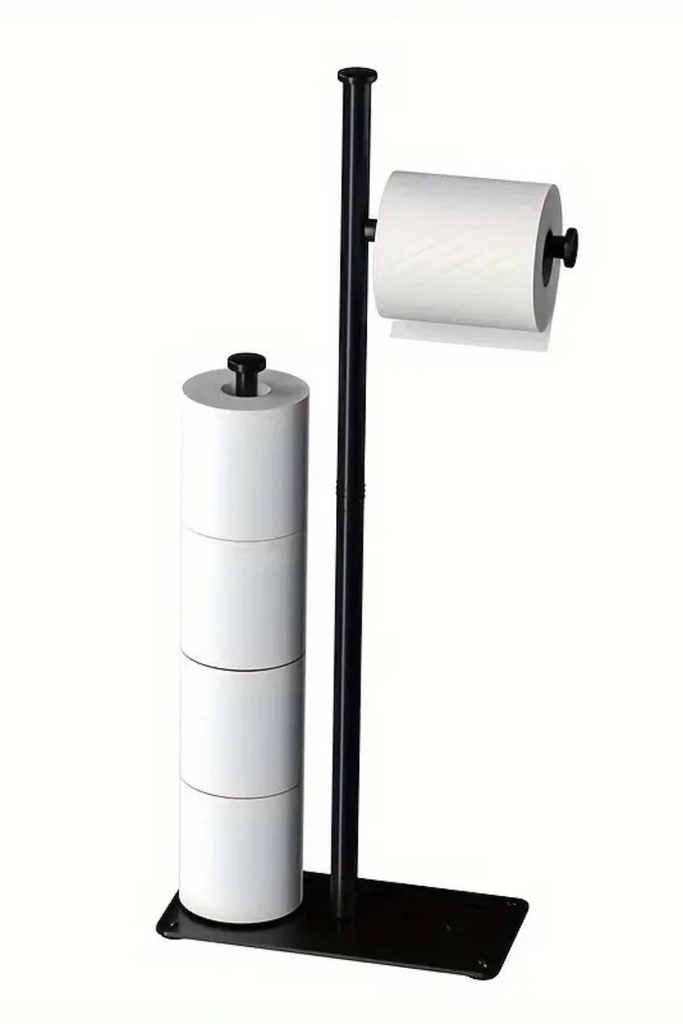
A freestanding stand combines the active toilet paper roll with a small reserve supply. This makes it particularly useful when wall mounting is not an option.
It can work well in rental bathrooms, older bathrooms with limited wall space, or homes where drilling into tile is undesirable.
Before positioning one, I check the base and the available walking space. A narrow holder should not become an obstacle between the toilet, vanity, or doorway.
I also prefer a stable base over a very lightweight design. The holder needs to remain upright when someone removes the active roll or reaches for a replacement.
Mesh Bag

A mesh bag makes use of an existing wall hook, door hook, or other suitable hanging point. Several rolls can remain visible, making it easy to tell when the supply is getting low.
The open construction is lightweight and flexible, but it should not be treated as moisture protection. Toilet paper still needs to hang well away from the shower, sink splash zone, or any location where water regularly reaches it.
The hook must also be appropriate for the loaded weight. A small decorative hook may not be designed to support a bag filled with several rolls.
This is best suited to a dry, low-splash area where visibility and minimal floor use are more important than concealed storage.
Wall Baskets
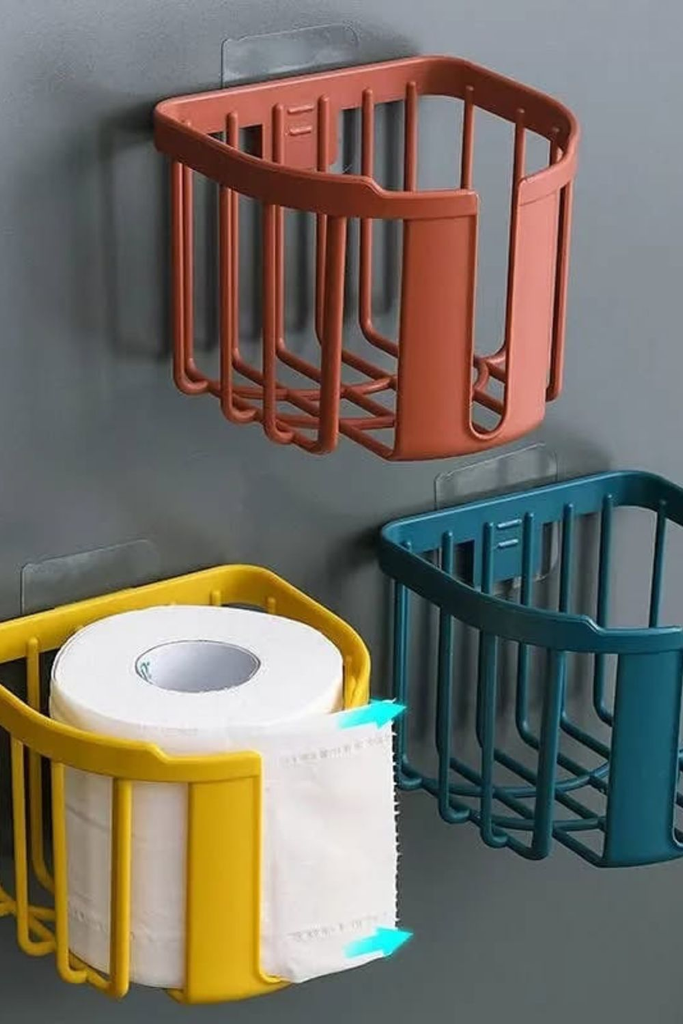
Wall baskets turn unused wall space into small compartments for spare rolls. Several baskets can be arranged vertically when the wall allows enough height.
I like this approach when a bathroom has almost no floor storage but still has an open wall beside the toilet or vanity.
Each basket does not need to hold a large quantity. Keeping only a few rolls in each one can make the bathroom look more organized while leaving the rest of the household supply elsewhere.
Adhesive mounting can be useful in some rental situations, but it is not automatically suitable for every wall or load. Check the mounting product’s weight rating and surface requirements before relying on it.
Basket Holder
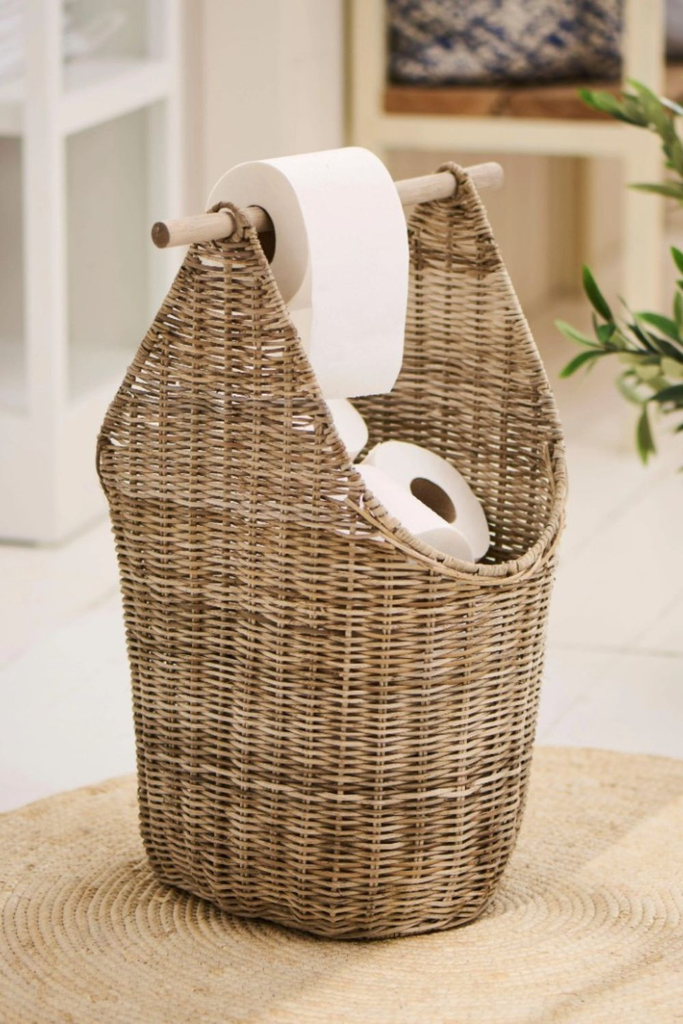
A basket holder combines a woven storage basket with a place for the active toilet paper roll. The result keeps the current roll and replacement rolls together.
This arrangement fits naturally into bathrooms with farmhouse, rustic, or warm neutral decor. The basket becomes part of the room rather than looking like a purely utilitarian organizer.
A sturdy basket can also hold a few additional rolls without taking up the space required by a cabinet.
If making a similar setup with a dowel or other hardware, make sure the basket and mounting points can support the load. The storage should remain stable when a roll is pulled from the top.
Ladder Shelf
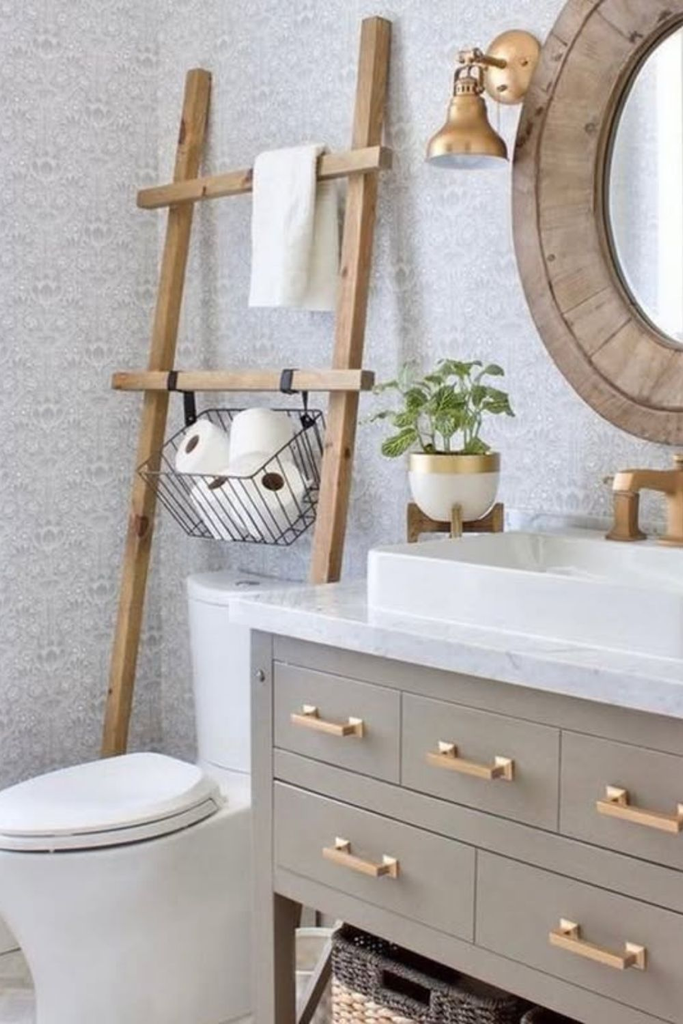
A leaning ladder shelf uses vertical wall space while providing several levels for different bathroom supplies.
A basket on one shelf can hold spare toilet paper, while another level can accommodate folded towels or toiletries. The rungs may also provide a place for lightweight towels.
This option works well when there is unused space above or beside the toilet but permanent wall shelving is not desirable.
Stability is the main consideration. A tall ladder-style unit should be positioned according to the manufacturer’s instructions, and anti-tip hardware may be appropriate, especially in a household with children.
Roll Tower
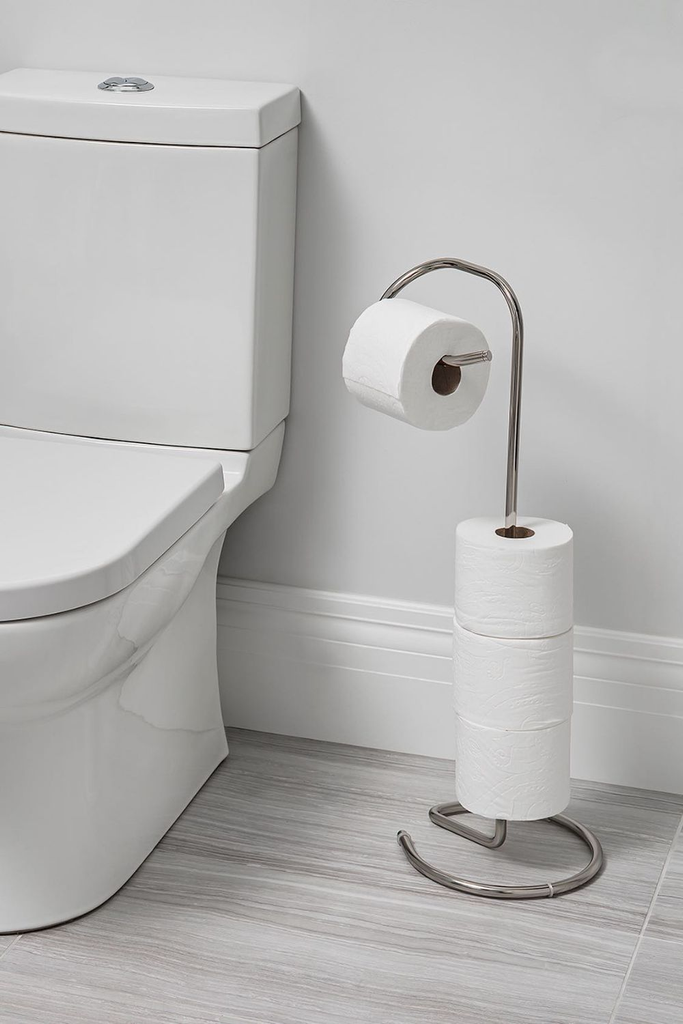
A roll tower is dedicated specifically to vertical toilet paper storage. Unlike a multi-purpose shelf, its purpose is to keep several rolls together in one compact structure.
This makes sense when I want the replacement supply immediately beside the toilet without adding a cabinet or using a decorative basket.
The design works particularly well for bathrooms where the available floor area is narrow but there is enough height for a dedicated stand.
I check the tower’s footprint and stability before choosing one. A tall, narrow structure should not be placed where someone could easily bump into it while moving around the bathroom.
Storage Column
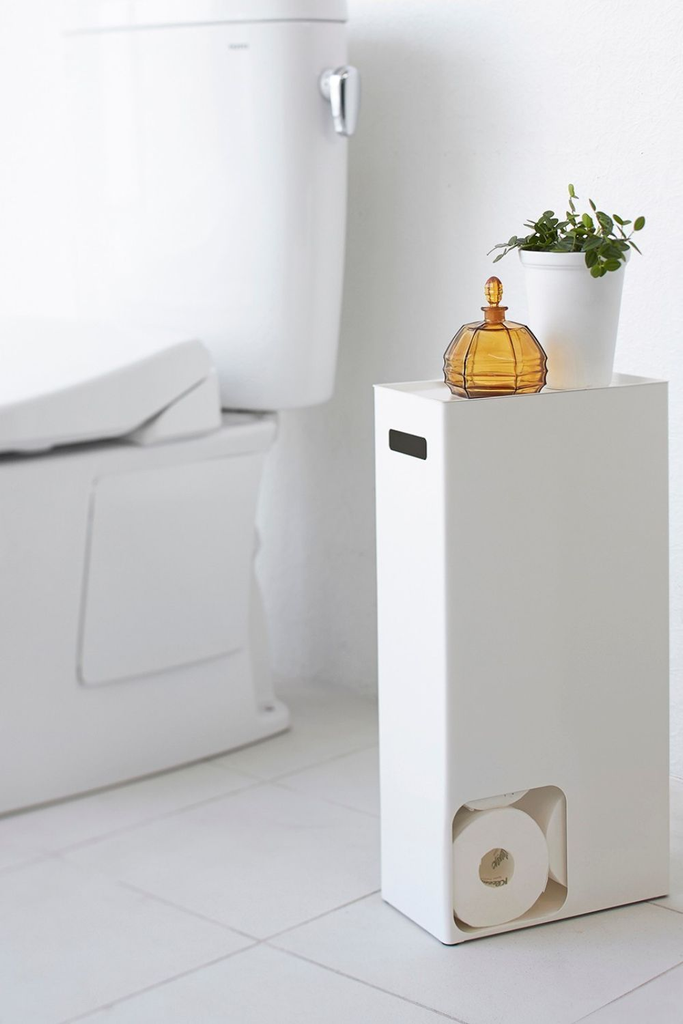
A storage column takes the vertical concept one step further by concealing the toilet paper inside a tall, narrow compartment.
This is the option I would choose when visible rolls do not fit the look of the bathroom. The enclosed design keeps several rolls together while maintaining a more streamlined appearance.
Some columns have an opening that allows one roll to be removed without opening the entire unit. That can be helpful in a shared bathroom where supplies need to be readily accessible.
Because these units can be tall, I pay attention to stability and the weight distribution. A narrow column should not be overloaded with heavy items on top.
Slim Cabinet
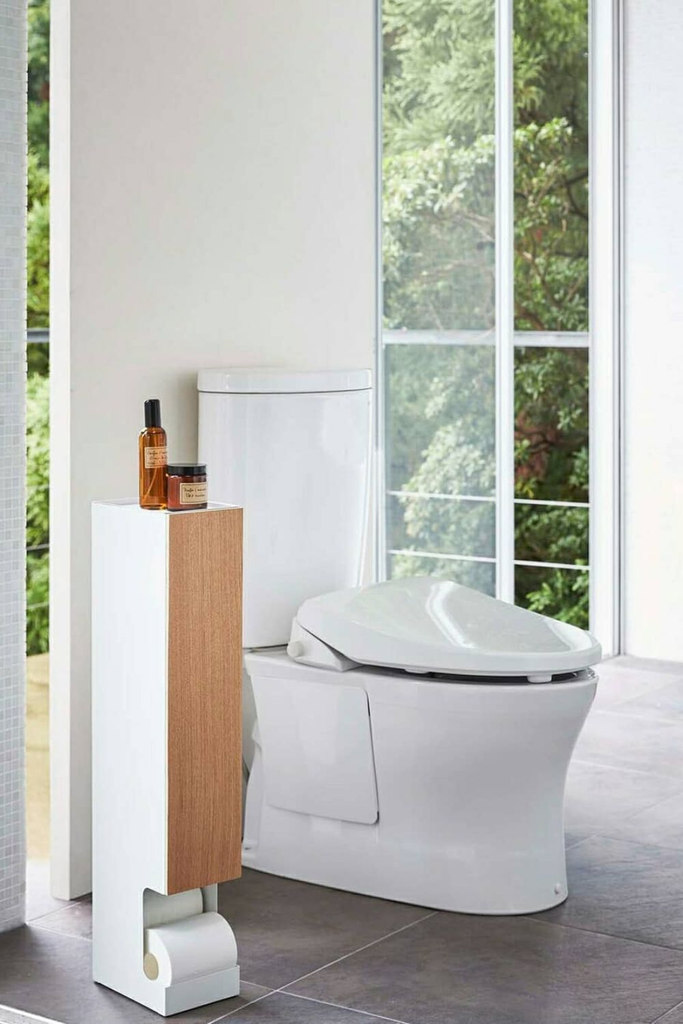
A slim cabinet is different from an open roll tower because it provides concealed storage behind a door. It can fit beside a toilet, vanity, or another fixture where a wider cabinet would not.
This makes it particularly useful when I want toilet paper hidden while still keeping several rolls within the bathroom.
Accurate measuring is important here. I check the width of the gap, the depth available beyond the baseboard, nearby plumbing, and whether the cabinet door can open fully.
The cabinet should also leave enough space for cleaning around the toilet. Storage that technically fits but blocks access to the floor quickly becomes frustrating.
Roll Rack
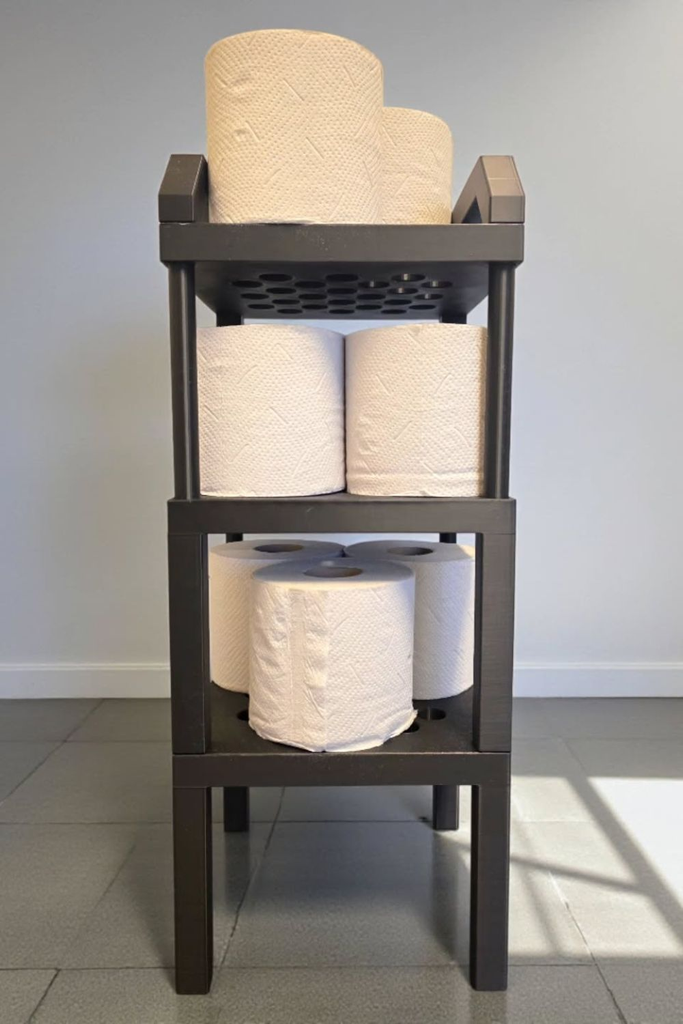
A tiered roll rack gives each group of toilet paper rolls a defined place instead of leaving a bulk package on the floor.
The open shelves make the remaining supply visible, which is helpful when I want to monitor how much is left.
This option makes more sense for a larger bathroom, linen closet, utility area, or other dry storage location where several rolls need to be kept together.
For a household that buys in bulk, I would rather use a rack outside the bathroom than fill the bathroom with the entire package. That keeps the daily space manageable while maintaining a larger reserve.
Also read: 24 Hat Storage Ideas for 2026
Wire Tower
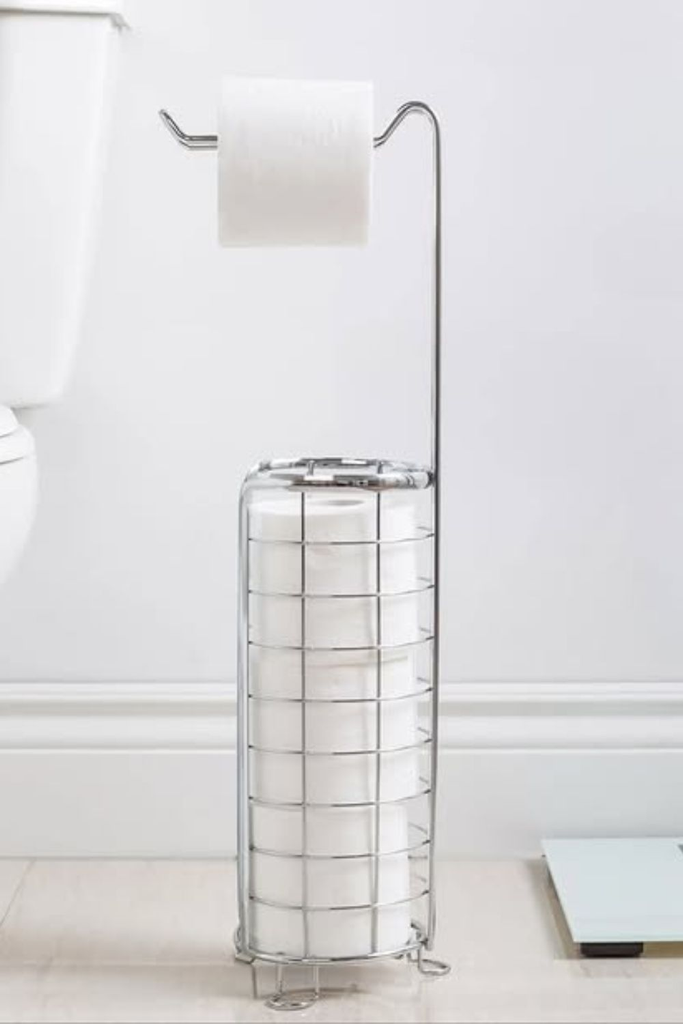
A wire tower provides vertical toilet paper storage with a more open visual appearance than a solid cabinet or column.
The wire construction allows the rolls to remain visible, so checking the remaining supply takes only a glance.
This is useful in modern bathrooms where metal fixtures are already part of the design and an open organizer fits the overall look.
Because the frame is open, dust can still collect around the rolls and the unit. Regularly wiping the frame and cleaning the floor underneath keeps the storage area from becoming difficult to maintain.
Clear Bins
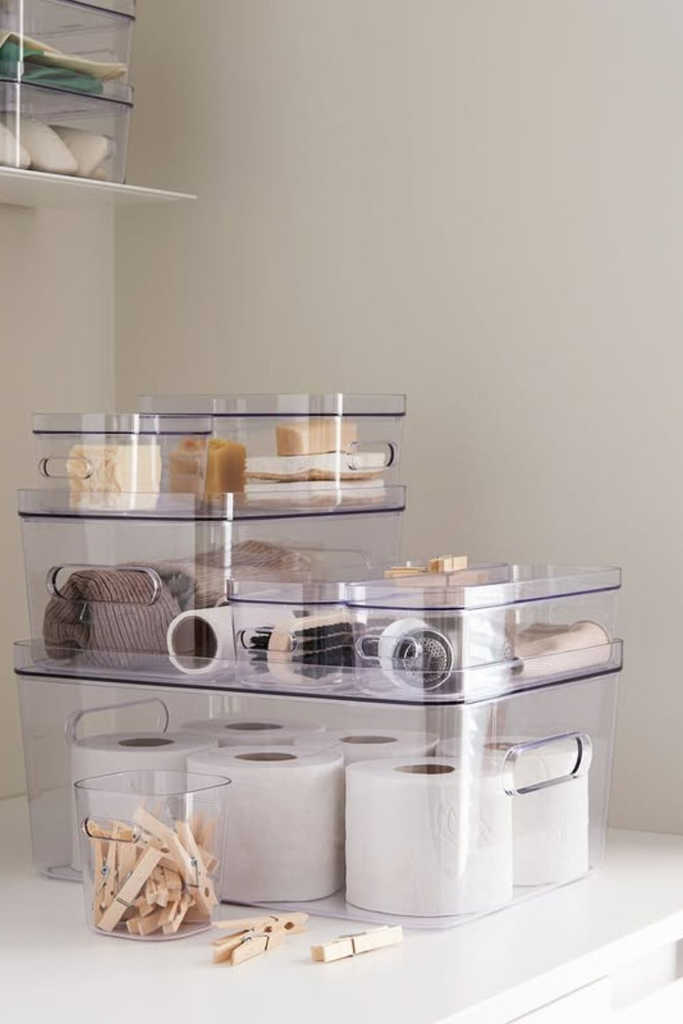
Clear bins are particularly useful when toilet paper is stored inside a vanity, linen closet, or bathroom cabinet.
The transparent sides make it possible to check the supply without pulling every roll forward. That is helpful when several household products share the same storage area.
Suitable bins can also be stacked when the shelf height allows it, making better use of otherwise wasted vertical space.
I would leave enough clearance to remove each bin completely. A container that fits tightly from wall to wall may technically use every inch but can make restocking and cleaning unnecessarily difficult.
For a broader linen closet organization system, the same container approach can separate toilet paper from towels, toiletries, and cleaning supplies.
Wood Tower
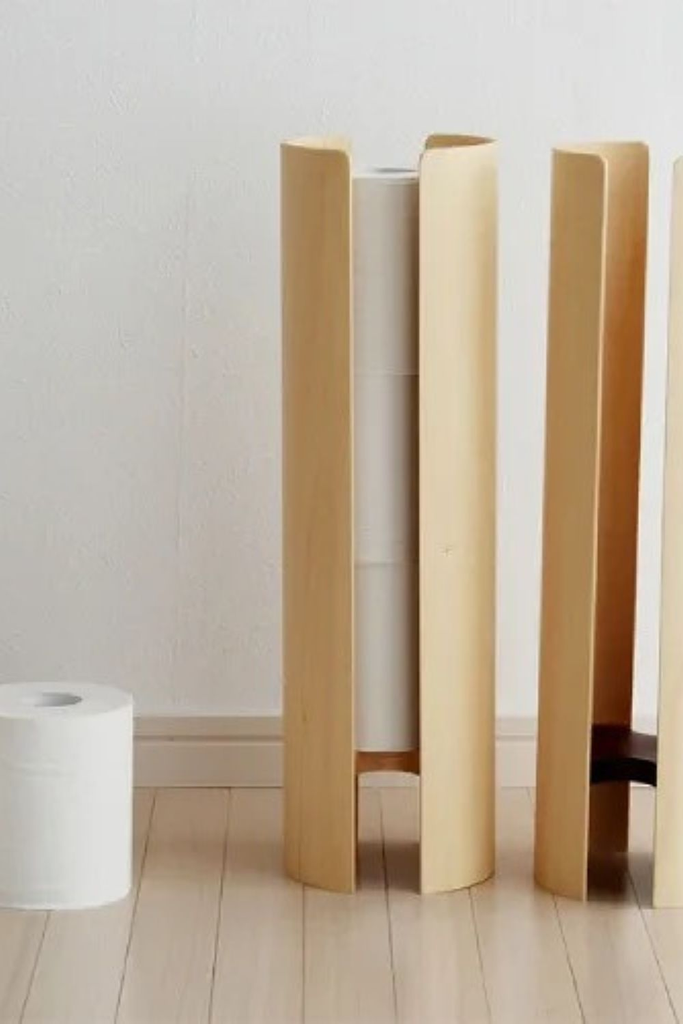
A wood tower provides toilet paper storage while contributing a decorative element to the bathroom.
The vertical form keeps rolls contained, while the natural material can complement bathrooms with rustic, farmhouse, Scandinavian, or warm neutral finishes.
This makes it different from a concealed column: the storage itself is intended to remain visible and become part of the room’s decor.
Wood still needs sensible placement in a bathroom. I keep it away from direct water and wet floors and follow the care instructions for the specific finish.
Shelf Rack
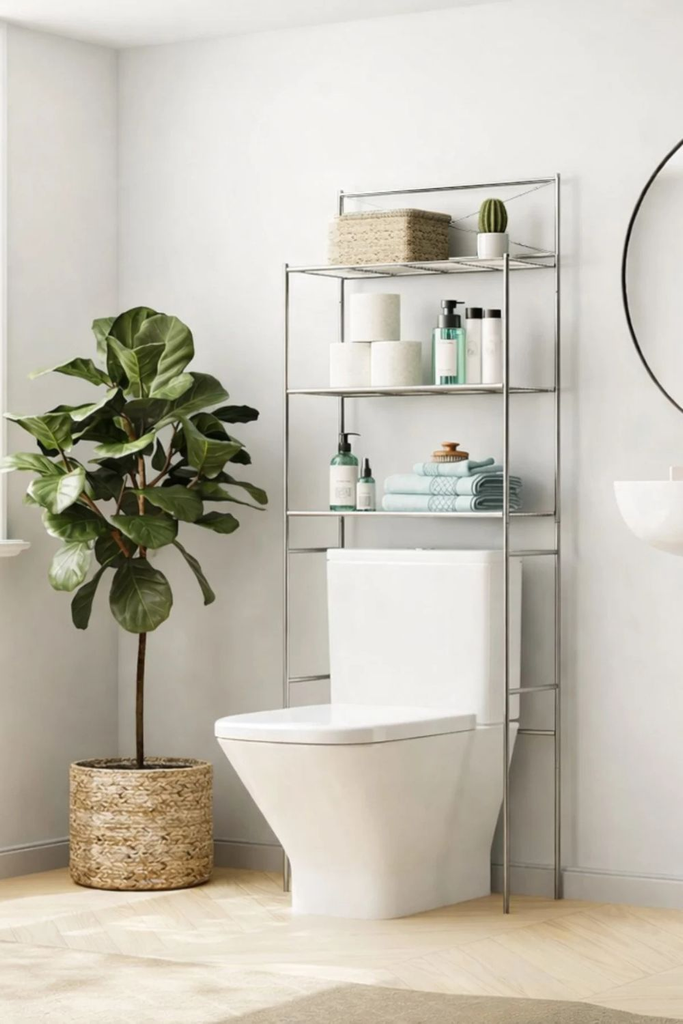
A shelf rack provides several levels of storage rather than a dedicated place for toilet paper alone.
One shelf can hold replacement rolls, another can accommodate towels or toiletries, and higher levels can be used for baskets or lightweight decorative pieces.
This makes the design particularly useful when the bathroom has no built-in storage and several categories of supplies need homes.
If positioned above the toilet, I make sure the unit is securely installed and that its depth does not interfere with movement. Heavy objects should not be placed on a poorly supported shelf.
Combo Stand
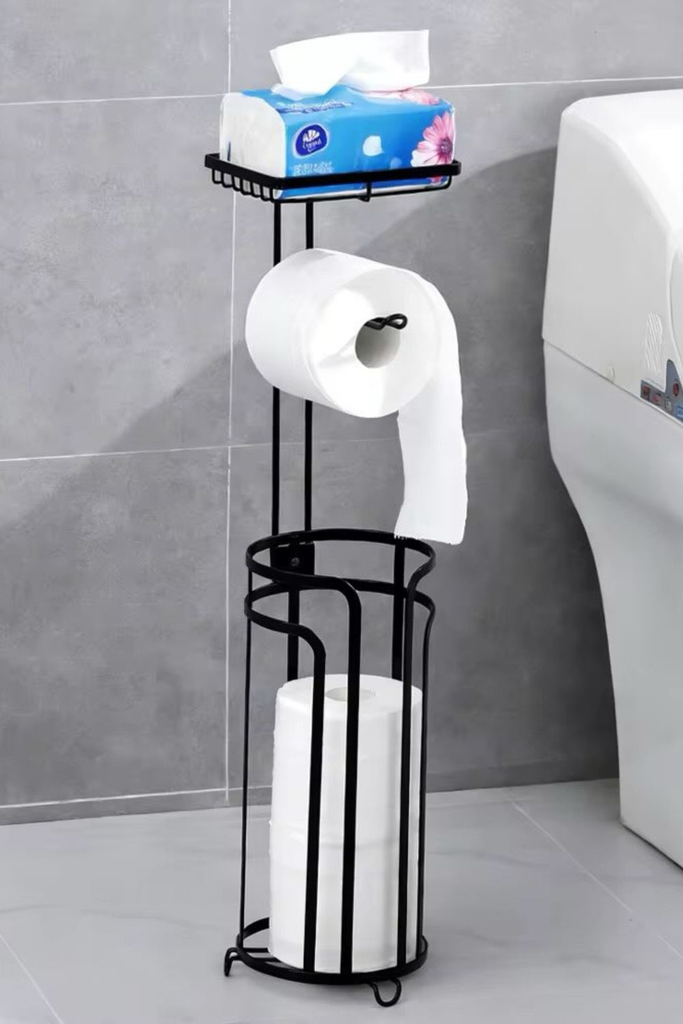
A combo stand brings the active toilet paper roll, spare rolls, and a small shelf together in one freestanding unit.
This can be a useful solution for a compact family bathroom because the storage performs several jobs without requiring separate pieces of furniture.
The upper shelf can hold a lightweight bathroom accessory, while the lower area handles replacement rolls.
I would avoid filling every surface simply because it is available. Keeping the top shelf relatively clear makes the stand easier to wipe and prevents the toilet area from becoming another clutter collection point.
Wall Shelf
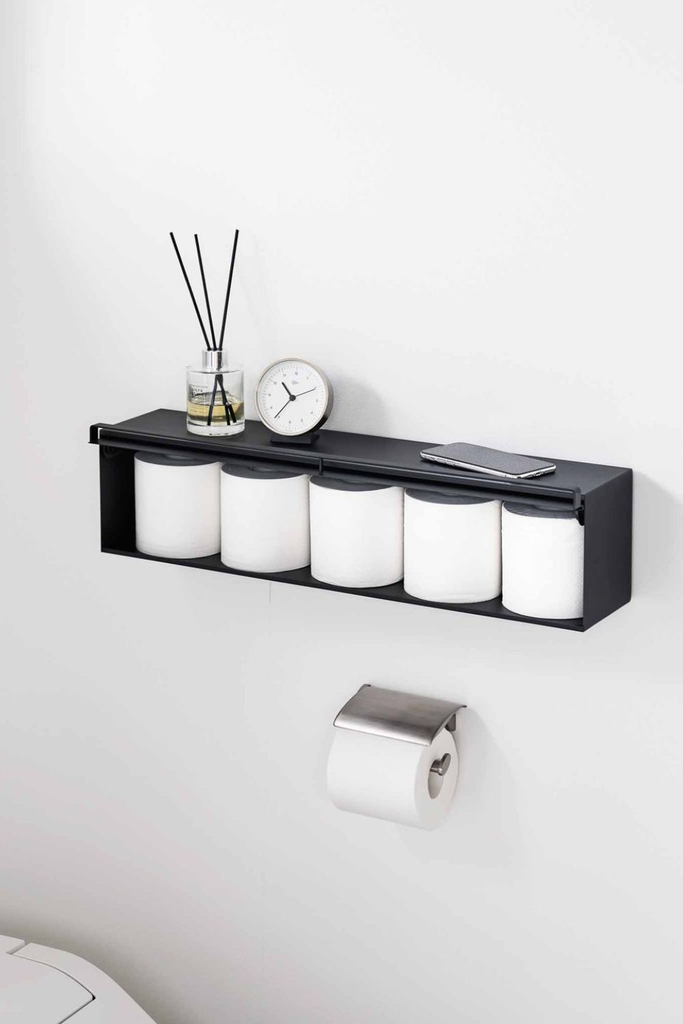
A wall shelf creates storage without taking up any floor footprint. It works particularly well when there is an unused section of wall beside or above the toilet.
Several rolls can sit on the shelf while the remaining surface holds a small bathroom item, depending on the shelf depth and load rating.
The main advantage here is not simply vertical storage; it is freeing the floor underneath for cleaning and movement.
For installation, I use wall hardware suited to the actual wall construction and stay within the shelf’s stated weight limit. The shelf should be secure enough that removing a roll does not cause it to shift.
Tank Basket
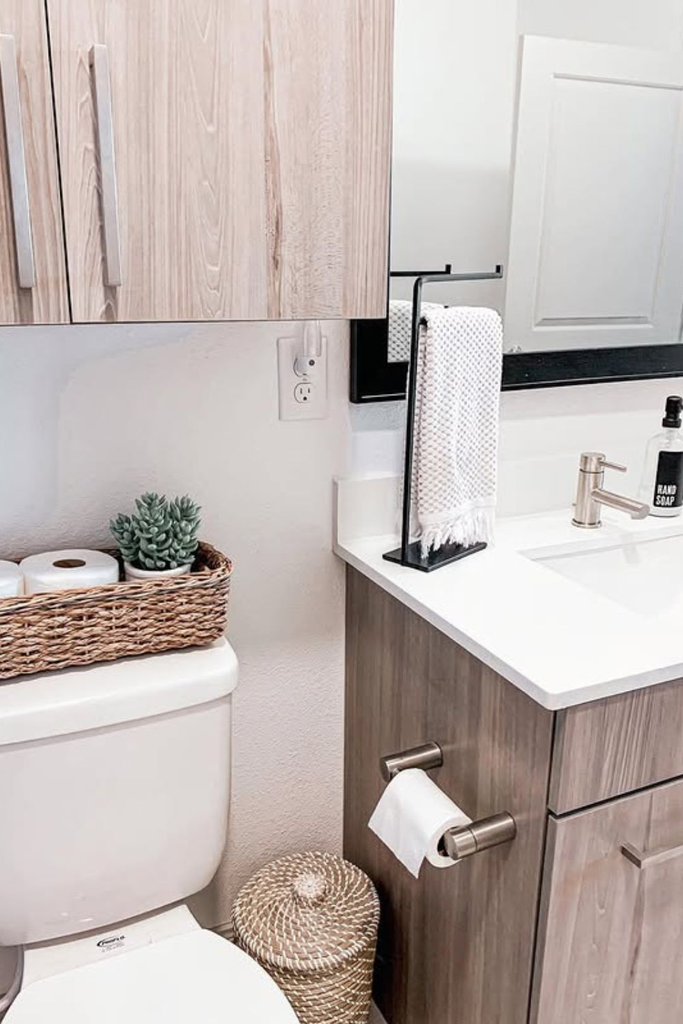
A toilet tank can provide a small amount of storage, but I treat this as a limited option rather than a universal solution.
First, I measure the tank and make sure a basket will not interfere with the lid, flush mechanism, plumbing, or access needed for maintenance.
A narrow, lightweight basket can hold a few spare rolls when the tank top is dry and away from regular splashing. It should not become a place to pile a large household supply.
I also leave enough room to remove the basket when the toilet needs cleaning or servicing. If the tank is frequently splashed or the available surface is too small, another storage location is a better choice.
Double Holder
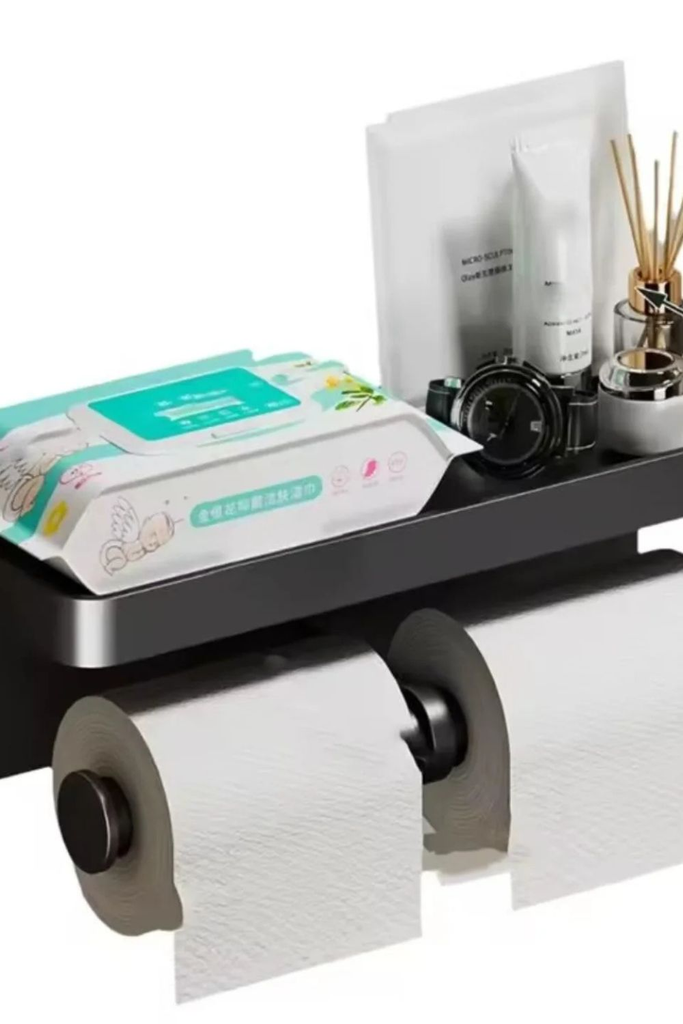
A double holder keeps two toilet paper rolls immediately available. For a shared bathroom, that can reduce the need to search for a replacement every time one roll runs out.
Some models include a small shelf, which adds another function without requiring a separate storage unit.
This is most useful when the bathroom has little room for backup storage but there is enough wall or fixture space for a wider holder.
I keep the shelf lightly loaded and make sure the mounting hardware is appropriate for the wall. The holder should not become a heavy accessory simply because it includes a small surface.
Storage Box
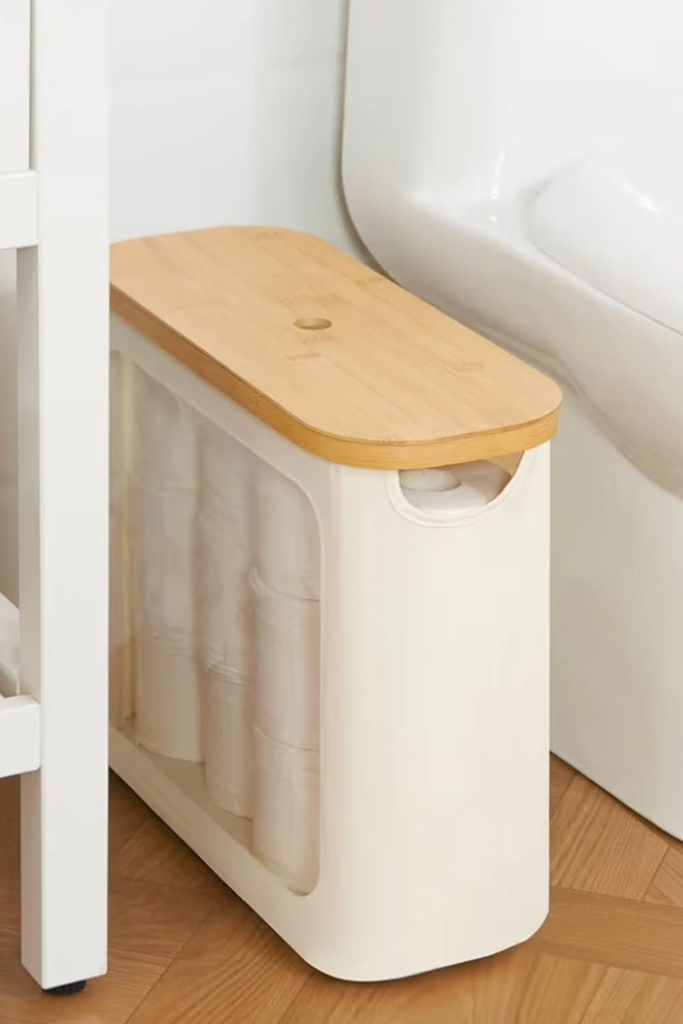
A storage box gives a few spare rolls a dedicated, contained location without requiring a full cabinet.
It can sit beside a vanity, under an appropriate shelf, or inside a bathroom cabinet depending on the available space.
A clear panel or open section makes it easier to check the remaining supply, while a lid provides a more concealed appearance.
The most useful size is one that matches the household’s normal refill quantity. Oversizing the box simply to accommodate a bulk package can take up space that the bathroom needs for other purposes.
Closet Storage
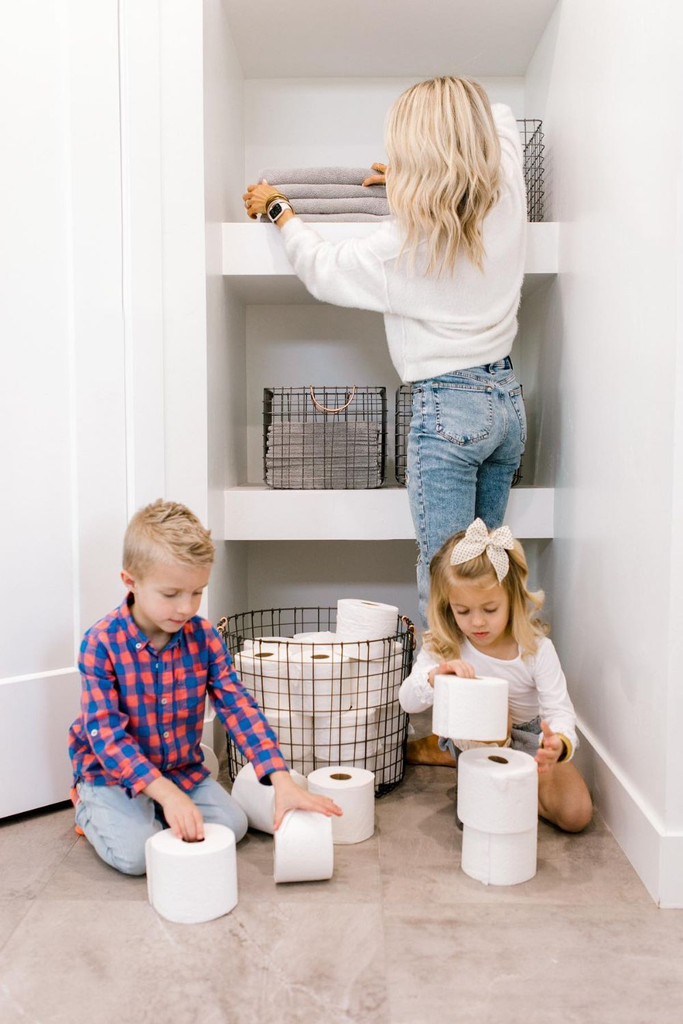
For bulk household supplies, a dry closet is often more sensible than filling the bathroom with every package of toilet paper.
A linen closet, utility cupboard, or suitable hallway storage area can hold the larger reserve while a smaller quantity remains in the bathroom.
I like this two-level system because the bathroom stays easier to navigate and the household still has plenty of backup supply.
The storage area should remain dry and accessible. I also keep heavier bulk packages on shelves that can safely support them rather than placing a large load on a high or unstable shelf.
If you are organizing several household categories at once, this same principle works well with broader home organization and small-space organization systems.
Pull Organizer
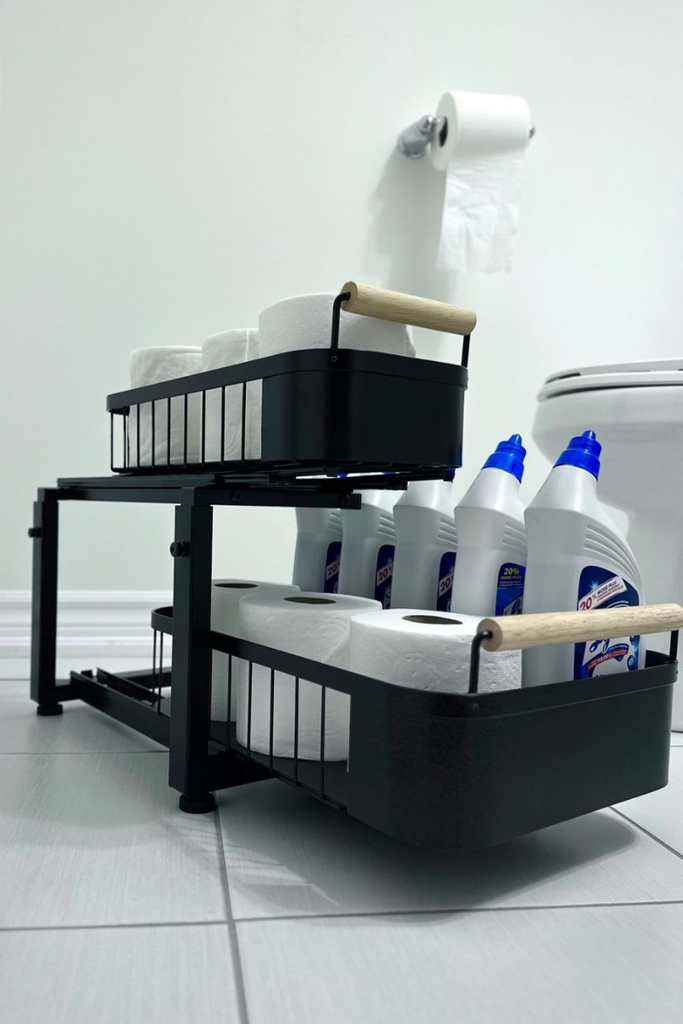
A pull-out organizer makes use of a narrow gap where a standard cabinet or basket may not fit.
The important difference is access: the entire organizer slides outward, bringing the rolls toward me instead of requiring me to reach into a deep space.
Lower sections can hold toilet paper while upper compartments accommodate lightweight bathroom supplies.
Before installing one, I measure both the storage gap and the clearance needed for the unit to pull completely forward. Nearby vanities, toilets, doors, and walls can prevent a narrow organizer from opening properly.
A rolling design also needs a reasonably smooth floor so the unit can move without catching on uneven surfaces or debris.
Shelf Holder
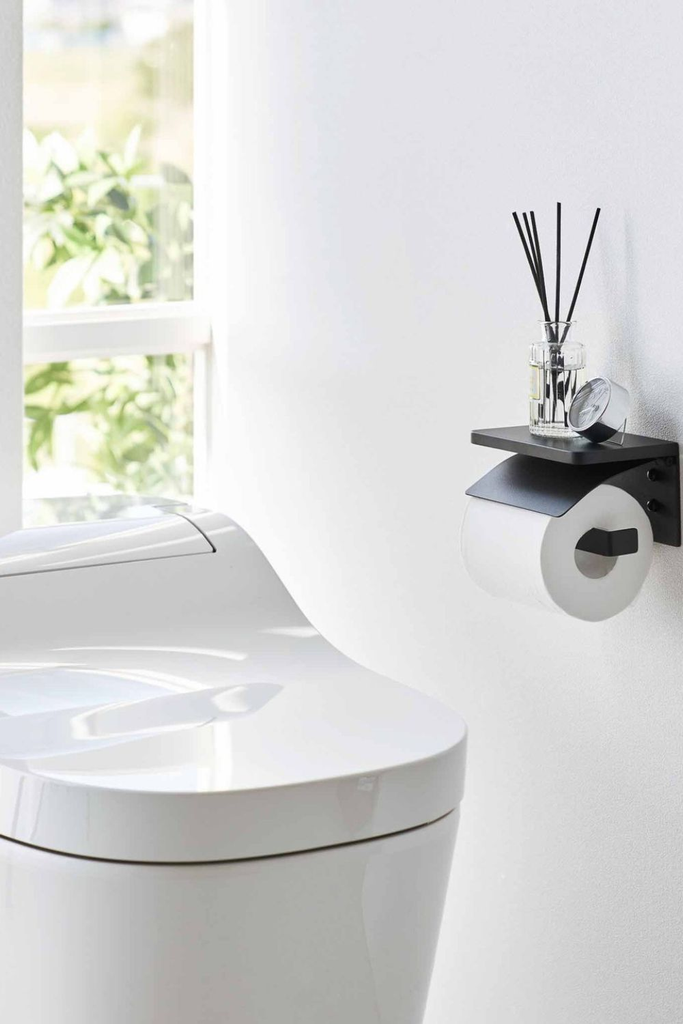
A shelf holder combines a toilet paper holder with a small surface above it.
This can be helpful in bathrooms without much counter space because a lightweight item, such as a phone or small bathroom accessory, has a designated place.
I would keep the shelf relatively uncluttered. The main job is still to hold toilet paper, and adding too many objects can make the fixture harder to wipe.
This style works especially well in modern bathrooms where a compact metal fixture can coordinate with existing hardware.
Floor Rack
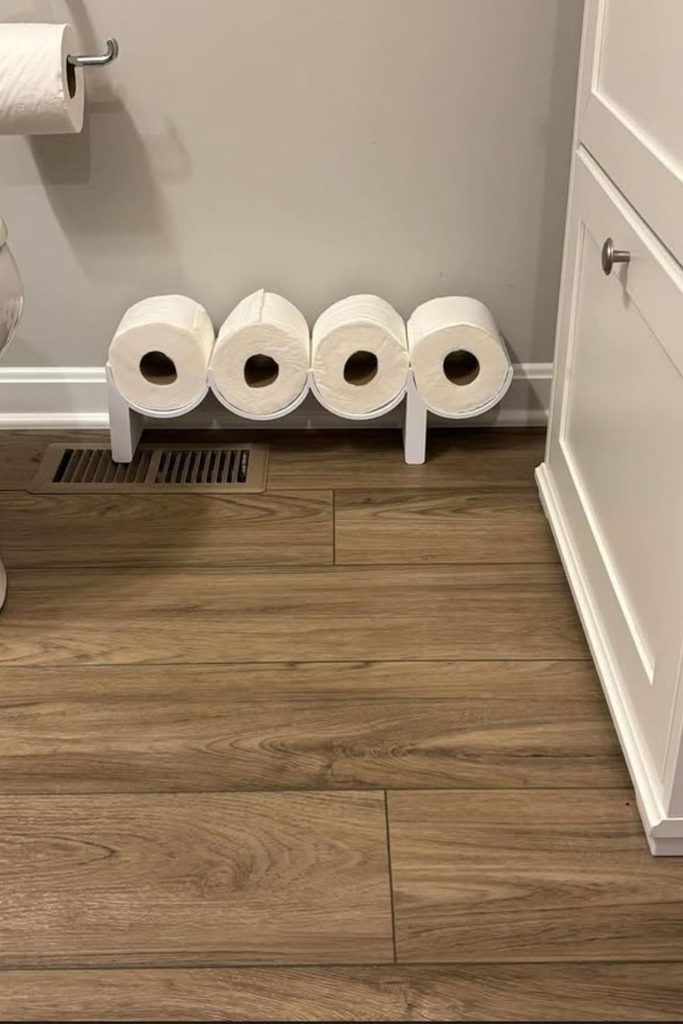
A low floor rack provides horizontal storage along a wall or beside a vanity without introducing a tall piece of furniture.
This makes it distinct from the roll tower: the rack stays close to the floor and is useful when there is limited height or when a low visual profile suits the bathroom better.
Several rolls can be lined up and reached directly from the toilet.
Because the rack sits near the floor, I pay particular attention to wet areas and cleaning access. It should be positioned away from splash zones and leave enough room to mop, vacuum, or wipe beneath and around it.
Read this next: 21 Cutting Board Storage Ideas For 2026
FAQs
Where is the best place to store extra toilet paper in a small bathroom?
I start by looking for unused space close to the toilet but outside direct splash areas. A narrow gap beside the toilet, an appropriate wall section, or a nearby cabinet can often hold a few replacement rolls.
Vertical storage can help when floor space is limited, but the unit still needs to leave enough clearance for cleaning, walking, and opening nearby doors or cabinets.
If the bathroom cannot comfortably hold the household’s refill supply, I keep a smaller quantity there and store the bulk package in a dry closet.
How many extra toilet paper rolls should you keep in the bathroom?
There is no single number that suits every household. The right amount depends on the number of people using the bathroom, how frequently it is used, and how often household supplies are restocked.
A guest bathroom may need only a few readily available replacements, while a busy family bathroom may need a larger refill supply.
I generally think in terms of accessibility rather than a fixed number: keep enough rolls nearby to avoid frequent emergencies, then store the larger reserve elsewhere if the bathroom starts feeling crowded.
Conclusion
The most effective toilet paper storage system is the one that fits the actual bathroom rather than forcing the room to accommodate a particular organizer.
I look at the available width, depth, height, clearance, moisture exposure, and cleaning access before deciding where the rolls should go. A tiny bathroom may need a wall basket or narrow organizer, while a larger household may benefit from a separate linen-closet supply.
The biggest organizational improvement often comes from separating everyday bathroom storage from bulk household storage. Keeping a manageable refill quantity within reach while storing the larger reserve in a dry, suitable location keeps the bathroom easier to use and maintain.



One Comment